
The best ecommerce SEO tools combine technical site crawling, product-level keyword data, schema validation, and revenue tracking inside one workflow. For online stores, the right software shortens the path between organic visibility and qualified, buyer-intent traffic that converts.
Choosing tools without a strategy wastes budget and produces dashboards no one acts on. The right stack should map to your store size, platform, and competitive landscape.
This guide compares eight leading ecommerce SEO tools, the features that actually matter, how to choose them, and the mistakes online stores make when relying on software alone.
What Ecommerce SEO Tools Do for Online Stores
Ecommerce SEO tools are specialized software platforms that help online stores audit technical health, research buyer-intent keywords, optimize product and category pages, monitor rankings, and measure organic revenue impact. They translate search engine signals into operational tasks that merchandisers, developers, and marketers can act on.
Generic SEO tools were built for blogs and lead-generation sites. Ecommerce stores have unique challenges that demand specialized capabilities. Faceted navigation creates thousands of crawlable URLs. Out-of-stock products trigger soft 404 issues. Category pages compete on transactional intent. Product schema controls how rich results appear in search.
A purpose-fit ecommerce SEO platform handles these patterns natively rather than as afterthoughts. It surfaces duplicate variants, flags missing structured data, tracks rankings at the product level, and connects organic sessions to revenue inside one interface.
Software only matters once the underlying strategy is clear, and our ecommerce SEO fundamentals walkthrough covers how stores actually earn organic visibility before any tool enters the workflow.

How We Evaluated the Best Ecommerce SEO Software
Each tool below was assessed across five practical dimensions. Feature depth measured how well the platform handles ecommerce-specific tasks such as product crawling, schema audits, and category keyword mapping. Data quality covered keyword database size, crawl accuracy, and freshness of SERP tracking.
Ecommerce fit weighted whether the tool integrates with major platforms like Shopify, WooCommerce, BigCommerce, and Magento. Usability accounted for onboarding speed and the learning curve for non-technical users. Pricing measured value relative to store size, with attention to per-project and per-user cost models.
Tools were prioritized by their ability to support sustainable organic growth rather than short-term ranking gains.
Best Ecommerce SEO Tools for Online Stores in 2026
Semrush
Semrush remains a comprehensive all-in-one platform with strong ecommerce coverage. Its position tracking handles thousands of product keywords, the site audit module flags technical issues at scale, and the Keyword Magic Tool surfaces transactional and commercial-investigation queries for category pages.
The Ecommerce Booster add-on specifically targets Shopify stores with product page recommendations and competitor monitoring. Pricing starts at the Pro tier for solo operators and scales to Business for agencies running multiple stores.
Best for: Mid-size to enterprise stores needing rank tracking, competitive analysis, and content optimization in one platform.
Ahrefs
Ahrefs is widely regarded for backlink data and keyword research depth. Its Site Explorer reveals competitor product pages earning links, Site Audit catches crawling and indexation issues across large catalogs, and Keywords Explorer estimates traffic potential for category-level terms.
Rank Tracker handles location-based monitoring useful for stores with regional distribution. Ahrefs is particularly strong for link prospecting and content gap analysis against direct competitors.
Best for: Stores prioritizing backlink acquisition and competitive intelligence.
Google Search Console
Google Search Console is free and indispensable. It reports the exact queries driving impressions and clicks to product and category pages, flags coverage issues, and surfaces Core Web Vitals data directly from Google’s index.
For ecommerce specifically, the Enhancements section validates product structured data, merchant listings, and review snippets. Performance reports filtered by page type reveal which categories and product templates are scaling versus stagnating.
Best for: Every online store, regardless of size or budget.
Screaming Frog SEO Spider
Screaming Frog is a desktop crawler favored by technical SEO teams for deep audits. It crawls JavaScript-rendered product pages, exports redirect chains, identifies missing canonical tags, and validates structured data at scale.
The free version covers up to 500 URLs. The paid license unlocks unlimited crawling and integrations with Google Analytics, Search Console, and PageSpeed Insights. For stores with thousands of SKUs and faceted navigation, it remains the standard.
Best for: Technical audits and developer-led SEO workflows.
Surfer SEO
Surfer SEO focuses on on-page content optimization. Its Content Editor scores product descriptions, category copy, and blog posts against top-ranking pages, recommending term coverage, heading structure, and word count targets grounded in SERP analysis.
For ecommerce, it is most useful for optimizing buying-guide content and category page descriptions that need to rank for commercial-investigation queries.
Best for: Content teams optimizing category pages and buying guides.
Sitebulb
Sitebulb is a desktop crawler designed for visual reporting. It scores crawl results across hundreds of issues and groups problems by severity, making it easier to prioritize fixes on large stores.
The Hint system explains why each issue matters and how to fix it, which shortens onboarding for new SEO hires. Sitebulb pairs well with Screaming Frog for teams that want both raw data and prioritized recommendations.
Best for: Agencies and in-house teams running technical audits with prioritized output.
Moz Pro
Moz Pro offers keyword tracking, site auditing, and link analysis with a straightforward interface. Its Domain Authority and Page Authority metrics remain a common shorthand for competitive comparison.
For ecommerce, Moz’s keyword difficulty scoring and SERP analysis help category pages target winnable queries. Link Explorer identifies linking opportunities specific to product and resource pages.
Best for: SMBs needing approachable SEO tooling without enterprise complexity.
SE Ranking
SE Ranking is a value-focused platform offering rank tracking, site audits, backlink monitoring, and competitor research at a lower price point than enterprise tools. Its white-label reporting suits agencies managing multiple ecommerce clients.
The platform supports keyword tracking by location and device, useful for stores with mobile-heavy traffic and regional storefronts.
Best for: Startups, SMBs, and agencies needing full-stack SEO at accessible pricing.

Core Features Every Ecommerce SEO Tool Should Include
Not all SEO platforms are built equally for online stores. Five capabilities separate ecommerce-ready software from generic tools.
Technical crawling at scale is the foundation. Stores routinely run thousands or tens of thousands of URLs once filters and parameters are counted. The tool must crawl JavaScript-rendered content, identify duplicate variants, flag soft 404s on out-of-stock pages, and detect redirect chains that bleed link equity.
Crawling and indexation issues quietly sabotage product pages, so pairing your software with this technical SEO checklist helps you verify what the tool flags and prioritize fixes that move revenue.
Keyword research with commercial intent filtering matters because product pages target buyer-stage queries, not informational ones. The platform should distinguish “best running shoes” from “running shoes size 10” and surface long-tail variations tied to attributes like color, size, and brand.
Product schema validation ensures rich results display correctly in SERPs. The tool should flag missing or malformed Product, Offer, AggregateRating, and Review markup before Google reports errors in Search Console.
Performance tracking tied to revenue separates dashboards from decisions. The platform should integrate with Google Analytics 4 or your ecommerce platform’s reporting layer to show which organic landing pages produce sessions, conversions, and revenue.
Competitive intelligence specific to your category reveals what is actually working. The tool should surface competitor product page structures, schema use, internal linking patterns, and the keywords driving their organic traffic.
Category and product targeting demands more than autocomplete suggestions, and this keyword research methodology explains how to translate tool data into a buyer-intent map your store can actually rank for.
How to Choose the Right Ecommerce SEO Tool for Your Store
The right tool depends on three variables: store size, technical capacity, and growth stage.
Small stores under 500 SKUs typically need Google Search Console plus one affordable all-in-one platform such as SE Ranking or Moz Pro. The priority is identifying winnable keywords, fixing obvious technical issues, and tracking a focused list of product and category pages.
Mid-size stores between 500 and 5,000 SKUs benefit from Semrush or Ahrefs paired with a dedicated crawler like Screaming Frog or Sitebulb. At this scale, faceted navigation and inventory churn create technical complexity that lighter tools miss.
Enterprise stores above 5,000 SKUs usually combine multiple platforms. Search Console for ground truth, a crawler for technical depth, a research platform for keyword and competitor intelligence, and a content optimization tool for category and blog content. Budget shifts from per-seat licenses to data API access.
Match the tool to your team. A solo founder cannot operate Screaming Frog and Sitebulb effectively without technical support. A developer-led team will get more from raw crawl data than from prioritized dashboards.
When internal capacity is the bottleneck rather than the tool, a professional SEO audit from our team identifies the highest-impact fixes and turns software output into a prioritized roadmap.
Mistakes Online Stores Make When Using SEO Software
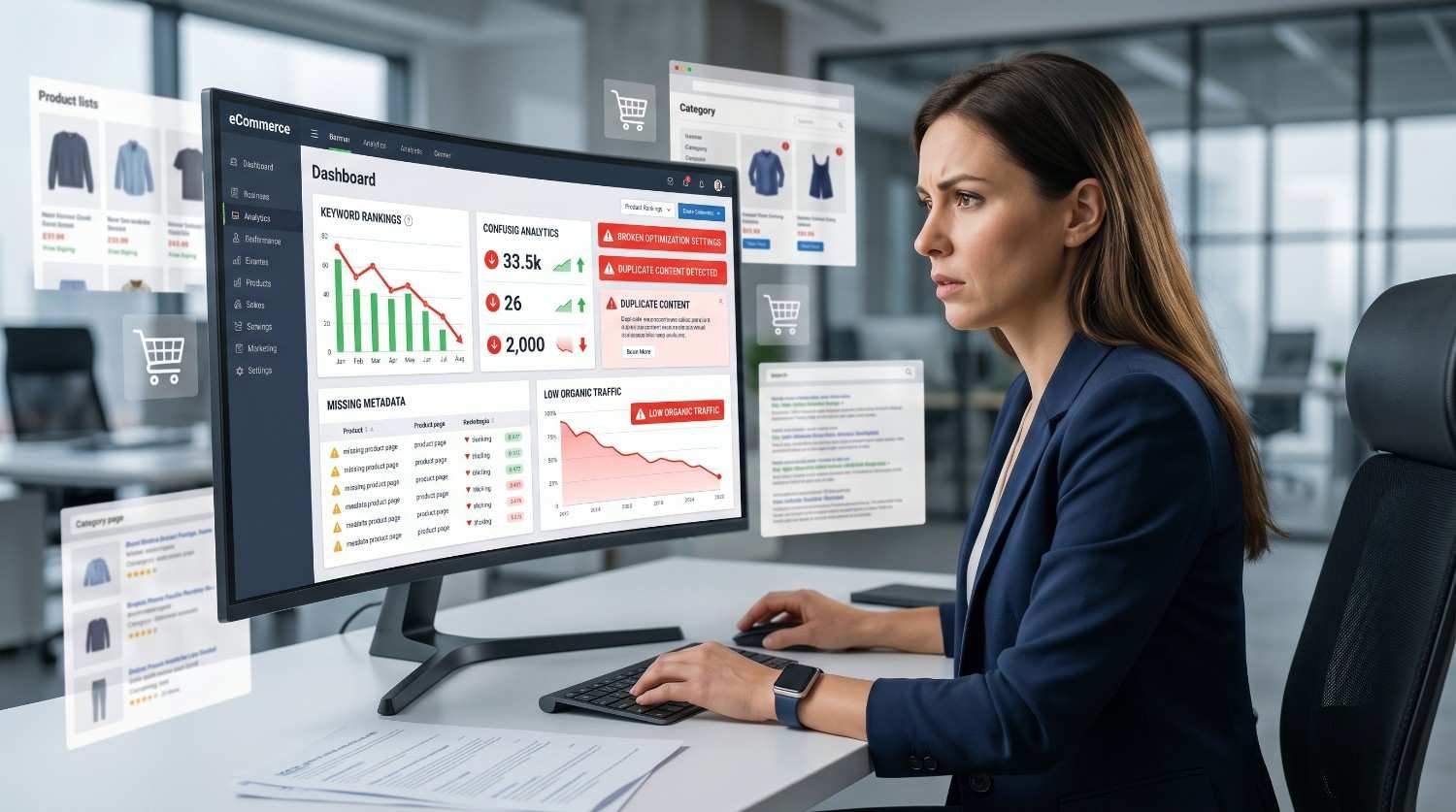
The most common mistake is treating tools as a strategy. Software surfaces problems and opportunities. It does not decide which ones matter for your business. Stores that chase every flagged issue burn cycles on low-impact fixes while category pages remain unoptimized.
Most tool misuse traces back to missing direction, and this content strategy framework shows how to align category pages, blog content, and product descriptions around topical authority.
Tracking too many keywords dilutes attention. A focused list of 50 to 200 commercial and category-level queries produces better decisions than tracking 5,000 long-tail terms no one acts on.
Ignoring Google Search Console in favor of third-party tools is another costly mistake. Search Console reports the actual queries Google associates with your pages, while third-party tools estimate. Both have value, but Search Console data should anchor the analysis.
Confusing rank tracking with revenue tracking misleads stakeholders. Position three for a query nobody searches is worthless. Position eight for a query with strong buyer intent can drive meaningful revenue. Tie keyword tracking to landing page sessions and conversion data.
Buying enterprise tools for a small catalog wastes budget. The platform’s power matters less than your team’s ability to act on its output.
Conclusion
Ecommerce SEO tools accelerate the work, but the strategy decides the outcome. The right software gives online stores the visibility, technical depth, and competitive intelligence to grow organic revenue with confidence.
As Google continues to weight buyer-intent signals and product experience metrics, store operators who pair specialized tools with disciplined execution will hold a durable advantage in commercial SERPs.
We help ecommerce brands build sustainable organic growth through audits, content strategy, and ongoing performance tracking. Partner with White Label SEO Service to turn your tool stack into measurable revenue.
Frequently Asked Questions
What is the best free ecommerce SEO tool?
Google Search Console is the best free tool for online stores. It reports actual search queries, indexing issues, Core Web Vitals, and product structured data validation directly from Google’s index.
Do I need multiple SEO tools for my online store?
Most stores benefit from combining Google Search Console with one all-in-one platform like Semrush or Ahrefs. Larger catalogs often add a dedicated crawler such as Screaming Frog or Sitebulb for technical depth.
How much should I budget for ecommerce SEO software?
Small stores can operate effectively for under 150 dollars per month. Mid-size stores typically spend 300 to 800 dollars across two or three platforms. Enterprise budgets often exceed 2,000 dollars per month with API access included.
Are paid SEO tools worth it for small online stores?
Paid tools become worthwhile once your store has 100 or more products and competes for commercial keywords. Below that scale, Google Search Console plus a low-cost rank tracker usually covers core needs.
Which ecommerce SEO tool is best for Shopify stores?
Semrush offers a dedicated Shopify integration through its Ecommerce Booster add-on. Ahrefs and SE Ranking also work well, while Google Search Console remains essential regardless of platform choice.