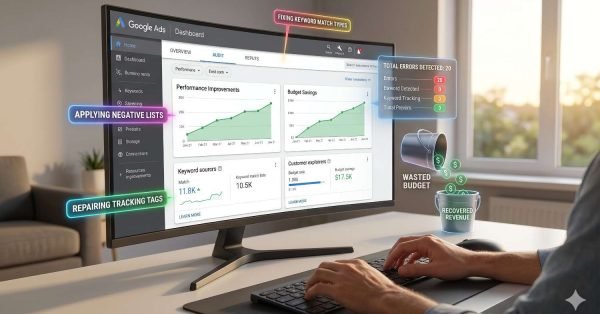
Most small and mid-sized businesses spend between $1,000 and $10,000 per month on PPC, with typical cost-per-click ranging from $1 to $8 on Google Ads depending on industry, competition, and platform.
PPC costs vary widely because pricing depends on auction dynamics, not fixed rates, making accurate budgeting essential before any campaign launch. Understanding these variables protects your investment.
This guide breaks down PPC pricing models, real platform costs, industry benchmarks, agency fees, and budget strategies so you can plan paid advertising spend with confidence and clarity.
How Much Does PPC Cost on Average?
Average PPC costs for small to mid-sized businesses fall between $1,000 and $10,000 per month, while enterprise advertisers routinely spend six or seven figures monthly. The single biggest cost driver is cost-per-click (CPC), which varies from under $1 in low-competition niches to over $50 per click in industries like legal, insurance, and financial services.
Most advertisers experience a blended CPC between $2 and $5 across campaigns. Total spend depends on click volume, conversion rates, and how aggressively you bid for high-intent keywords. PPC is auction-based, meaning costs rise as more advertisers compete for the same audience at the same time.
PPC Pricing Models Explained
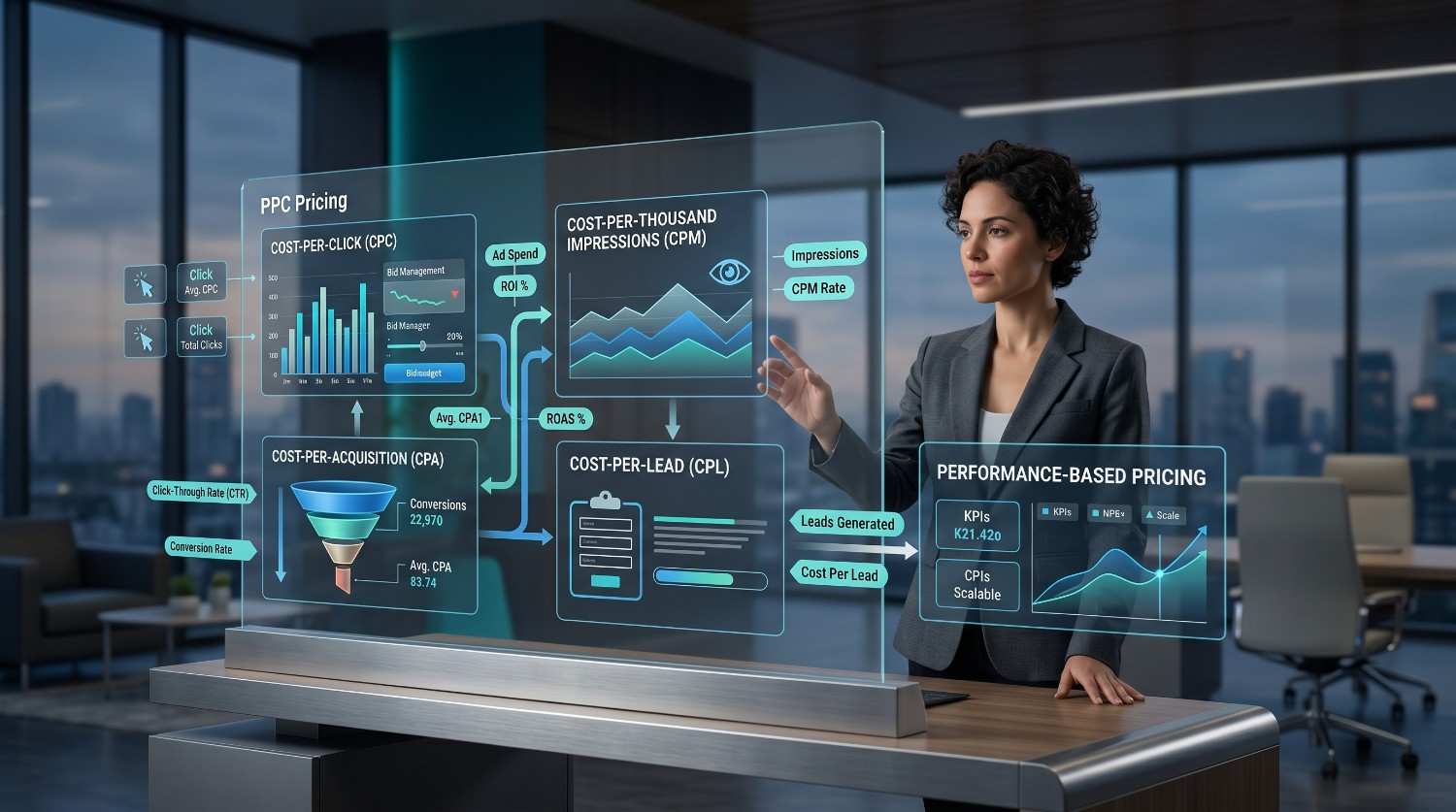
Three pricing models dominate paid advertising, each suited to different campaign goals and stages of the buyer journey.
Cost-Per-Click (CPC)
You pay each time someone clicks your ad. CPC is the standard model for search ads on Google and Microsoft, ideal for capturing high-intent traffic ready to take action.
Cost-Per-Mille (CPM)
You pay per 1,000 impressions regardless of clicks. CPM works best for brand awareness campaigns on display networks and social platforms, where visibility matters more than direct response.
Cost-Per-Acquisition (CPA)
You pay only when a specific conversion occurs, such as a lead or purchase. CPA bidding shifts risk toward the platform’s algorithm but requires sufficient conversion data to optimize effectively.
Choosing the right model affects both spend and measurable outcomes, and our PPC vs SEO comparison breaks down how paid channels stack up against organic growth on cost, timeline, and long-term ROI.
Average PPC Costs by Advertising Platform
Each ad network charges differently based on its audience, format, and competitive landscape.
Google Ads
The largest PPC platform, Google Ads averages $2 to $5 CPC on the Search Network across most industries. Display Network campaigns run far cheaper, often under $1 per click, but convert at lower rates.
Microsoft Advertising (Bing)
Microsoft’s ad platform typically costs 20 to 35 percent less than Google Ads for comparable keywords. Lower competition makes it attractive for B2B and older demographics, though click volume is smaller.
Meta Ads (Facebook and Instagram)
Meta CPCs average $0.50 to $2.00, with CPM between $8 and $15 for most consumer audiences. Costs spike during Q4 retail seasons when competition surges.
LinkedIn Ads
LinkedIn commands premium pricing because of its professional targeting. Expect $5 to $12 CPC and CPM exceeding $30, justified for high-value B2B lead generation.

Factors That Influence Your PPC Costs
Several variables shape what you actually pay per click and per conversion.
Keyword competition and bid prices
High-commercial-intent keywords cost more because more advertisers bid for them. Long-tail variations typically reduce cost by 30 to 50 percent while maintaining intent, and our keyword research guide walks through identifying lower-cost, high-intent terms that improve ad efficiency.
Quality Score and ad relevance
Google rewards relevant ads with lower CPCs. A Quality Score of 8 or above can cut click costs by half compared to scores below 5. Ad copy, landing page experience, and click-through rate all feed Quality Score.
Industry and target audience
B2B and regulated industries (legal, finance, healthcare) face higher CPCs due to customer lifetime value and bidding competition.
Geographic targeting and seasonality
Major metro areas cost more than rural targeting. Costs also climb during peak seasons like Black Friday, tax season, or back-to-school periods.
PPC Costs by Industry
PPC pricing varies dramatically by sector. Legal services and insurance face some of the highest CPCs in paid search, with averages above $8 per click and competitive terms exceeding $50. Finance, healthcare, and home services follow closely with $4 to $8 CPC ranges. E-commerce, travel, and dining sit in the $1 to $3 CPC range, while B2B SaaS averages $3 to $6 depending on niche.
These ranges reflect customer value: industries with high transaction values can sustain higher acquisition costs and still profit.
PPC Management and Agency Fees
Most businesses hire agencies or consultants to manage campaigns rather than running them in-house. Common pricing structures include:
- Flat monthly fees: $500 to $5,000 per month, scaled by ad spend and campaign complexity.
- Percentage of ad spend: 10 to 20 percent of monthly budget, common for spend above $10,000.
- Performance-based fees: Tied to conversions, ROAS, or CPA targets — typically combined with a base fee.
In-house management saves agency fees but requires expertise in bid strategy, audience segmentation, conversion tracking, and creative testing. Most SMBs find professional management pays for itself through reduced wasted spend.
How to Reduce PPC Costs Without Losing Performance
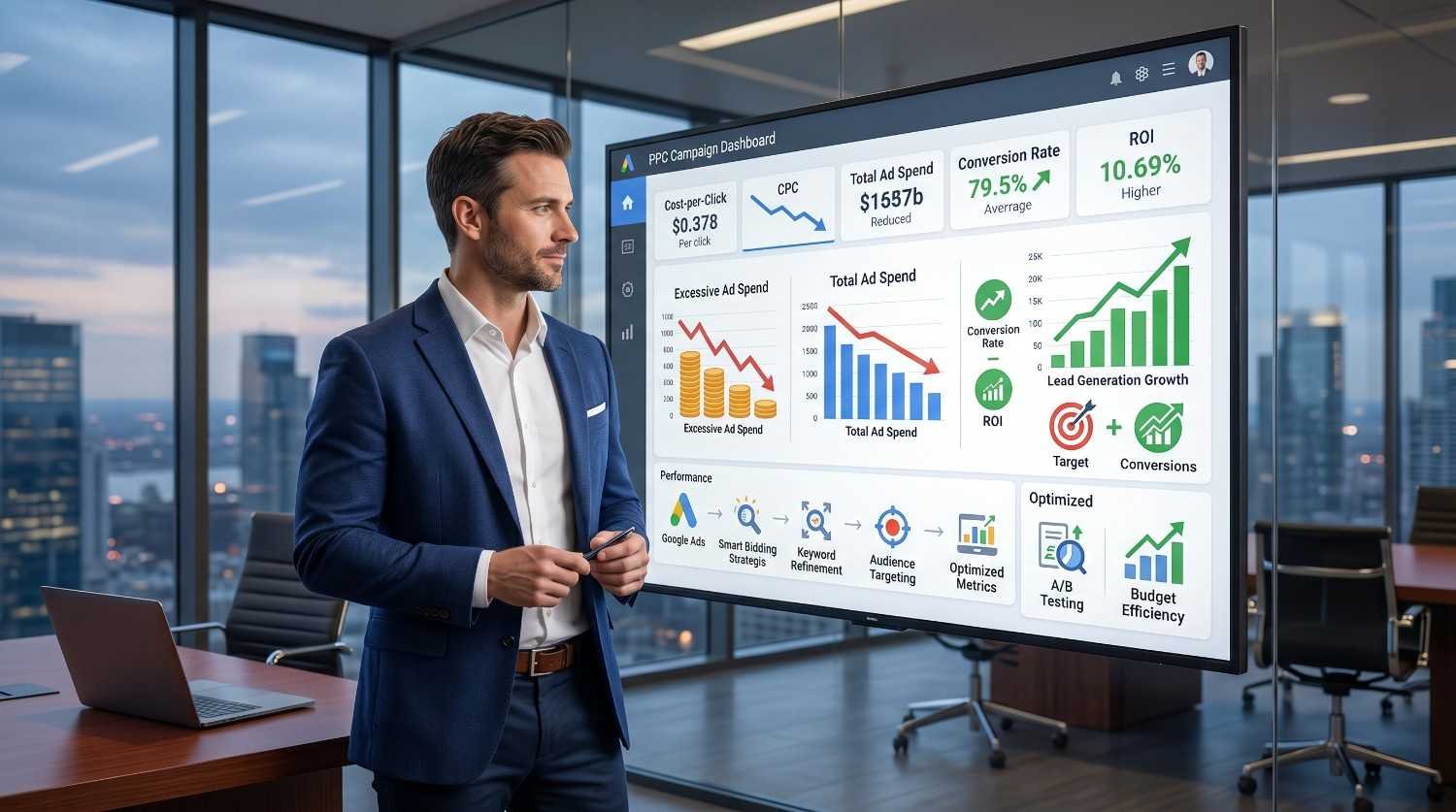
Lower costs come from efficiency, not from cutting investment blindly. Focus on these levers:
- Improve Quality Score with tighter ad groups and relevant landing pages.
- Use negative keywords to block irrelevant traffic and wasted clicks.
- Refine audience targeting by location, device, time of day, and demographics.
- Test ad creative continuously to raise click-through rates and lower CPC.
- Shift budget toward long-tail keywords with higher intent and lower competition.
- Build organic visibility alongside paid campaigns to reduce dependency on ads.
Reducing PPC dependency long-term often means building organic visibility alongside paid campaigns, and our sustainable SEO services help businesses lower customer acquisition costs by capturing traffic that does not require ongoing ad spend.
Setting a Realistic PPC Budget
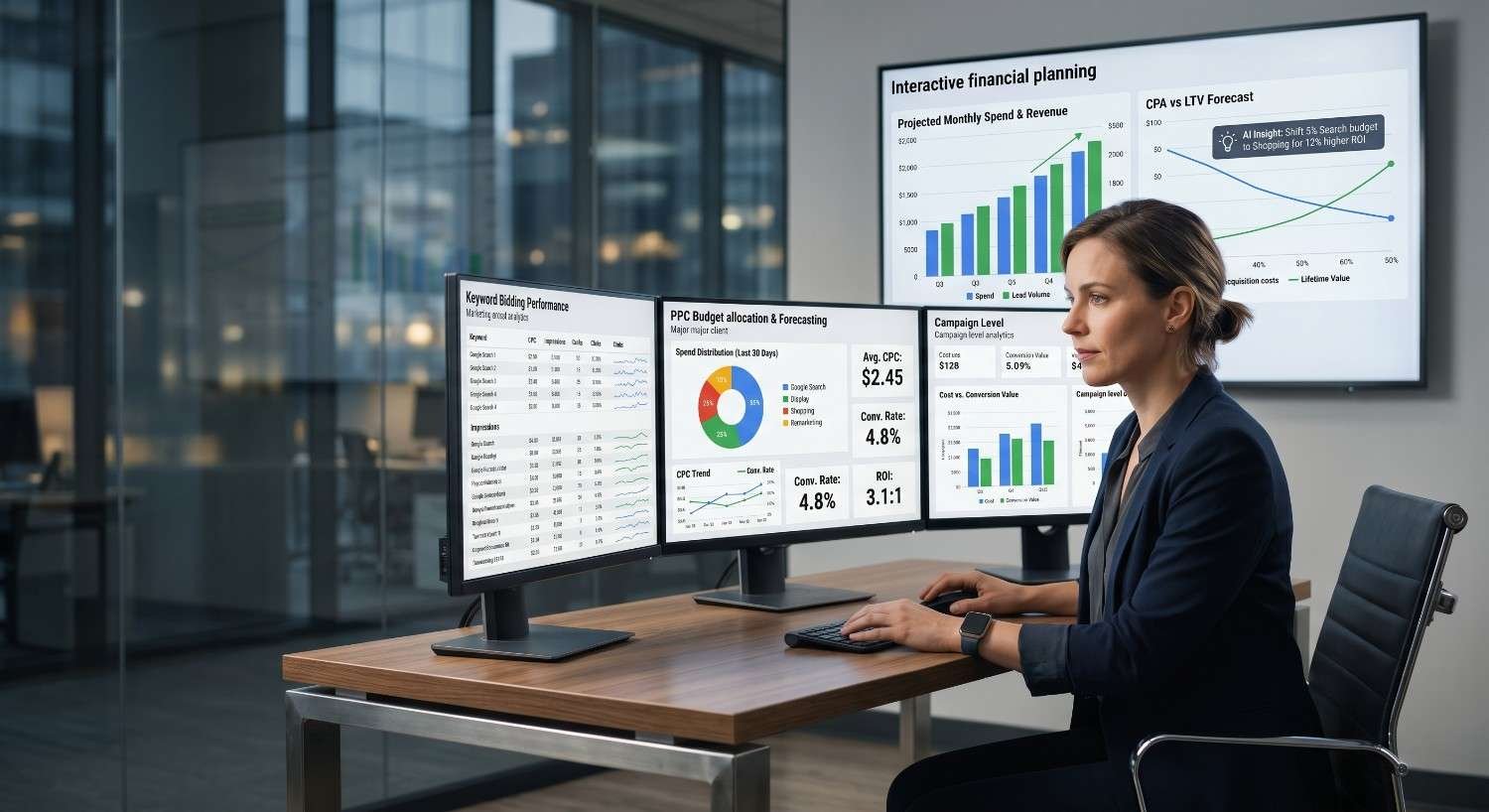
A realistic PPC budget starts with three numbers: your target cost per acquisition, your conversion rate, and the average CPC for your target keywords. Multiply expected clicks by CPC to estimate monthly spend, then validate against your CPA goal.
Most businesses should plan for a 60- to 90-day testing window before judging campaign performance. Initial spend funds data collection; optimization happens after that. A healthy PPC budget also sits within a broader allocation, and our marketing budget guide shows how to distribute spend across paid, organic, and content channels for predictable growth.
Conclusion
PPC costs depend on platform, industry, keyword competition, Quality Score, and bid strategy, with most SMBs investing $1,000 to $10,000 monthly to drive meaningful traffic and conversions.
The real measure is not what PPC costs, but the return it delivers against your customer acquisition targets and lifetime value, especially when paired with sustainable organic channels.
At White Label SEO Service, we help businesses build the organic foundation that lowers paid acquisition costs over time, turning short-term ad spend into long-term sustainable growth.
Frequently Asked Questions
Is PPC worth the cost for small businesses?
PPC delivers fast, measurable results and works well for small businesses with clear conversion goals. It pays off when customer lifetime value comfortably exceeds the cost per acquisition.
How much should I spend on PPC per month?
Most small businesses start with $1,000 to $3,000 monthly to gather meaningful data. Scale up only after campaigns prove positive return on ad spend over a 60- to 90-day window.
What is a good cost-per-click for PPC?
A good CPC depends on industry, but most advertisers aim for $1 to $5. Anything that delivers your target cost per acquisition profitably is considered efficient.
How long until PPC starts generating results?
PPC can drive clicks within hours of launch, but profitable optimization typically takes 30 to 90 days as the platform gathers conversion data and refines bidding.
Are PPC costs increasing every year?
Yes. PPC costs rise annually as more advertisers compete for the same audiences, making Quality Score, targeting precision, and conversion optimization increasingly critical for ROI.
Can I run PPC campaigns without an agency?
Yes, but expect a learning curve. Self-managed campaigns work for simple budgets under $2,000 monthly. Larger budgets usually benefit from professional management.