
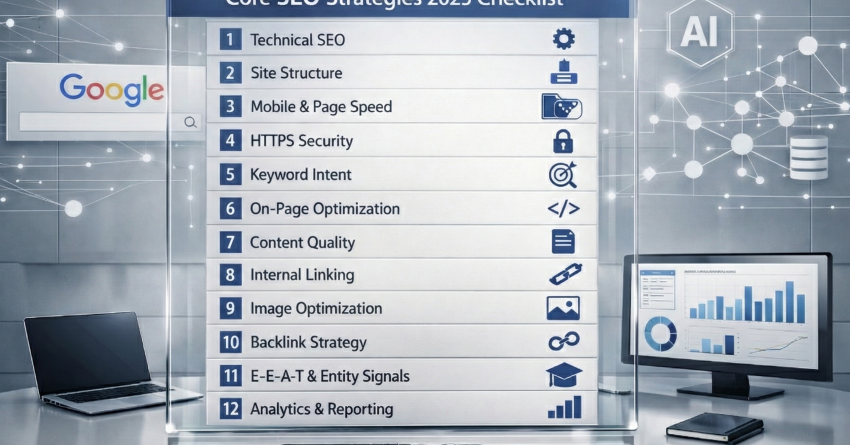
SEO in 2026 is not “secret hacks.”
It’s doing the fundamentals really well and keeping up with how Google and AI search engines actually work.
Top SEO and white label providers all lean on the same basics: technical health, search intent, content quality, and authority.
This guide gives you a simple 12-step checklist you can use for every website, plus how White Label SEO Service helps agencies and businesses actually implement it.
Want this checklist done-for-you for all your client sites?
Partner with White Label SEO Service and get full technical, on-page, and content optimization handled under your brand.
How Top White Label SEO Competitors Work (and Where They Miss)
Recent guides that compare top white label SEO agencies in 2024–2026 (The HOTH, DashClicks, SEOReseller, WebFX, Softtrix and others) show they mostly focus on:
- Keyword research & on-page optimization
- Link building & digital PR
- White label dashboards and reporting
- Local SEO and content production
What’s often missing:
- A clear, simple, repeatable checklist that agencies can share with clients
- Strong focus on AI-search visibility and entity SEO (how brands show up in AI answers)
- Step-by-step implementation that non-technical clients can understand
White Label SEO Service fills that gap with:
- A 12-step checklist that becomes your internal standard
- Templates, SOPs, and reports branded as your agency
- Extra focus on AI-era fundamentals like entities, E-E-A-T, and structured data
The 2026 Core SEO Checklist: 12 Tactics Every Website Needs
1. Make Your Site Crawlable & Indexable
If search engines can’t reach your pages, nothing else matters.
Quick Checks
- Valid XML sitemap submitted in Google Search Console
- Clean robots.txt (not blocking important pages)
- No random “noindex” tags on pages that should rank
- Main pages reachable in 3 clicks or less from the homepage
Google’s own SEO starter guide still lists crawlability and basic structure as a top priority.
2. Use a Logical Site Structure
Think “library shelves,” not “pile of papers.”
Best Practices
- Organize pages into clear categories (services, locations, blog topics)
- Use clean URL paths (e.g., /services/local-seo/ instead of /p?id=123)
- Keep navigation simple and consistent across the site
This helps users and search engines understand how everything connects.
3. Be Mobile-First and Fast
Most traffic is mobile, and speed is still a big ranking and UX factor. Checklists for 2025+ keep page speed and Core Web Vitals at the top.
Core Tasks
- Use a responsive design (no horizontal scrolling)
- Compress images and lazy-load where possible
- Fix massive JavaScript/CSS files slowing down pages
- Aim for good Core Web Vitals (especially LCP and CLS)
4. Lock in HTTPS & Basic Security
Google expects sites to use HTTPS by default.
Essentials
- SSL certificate active and valid
- No mixed content errors (secure + insecure items on same page)
- Clear, visible privacy policy and terms (helps trust and E-E-A-T)
5. Do Real Keyword & Intent Research
Top checklists and SEO trends stress search intent understanding why someone searches, not just what they type.
What to Do
- Group keywords by topic, not just by exact phrase
- Separate informational (learn), commercial (compare), and transactional (buy) intents
- Map each main page to a primary keyword and a few related phrases
- Avoid stuffing; focus on helpfully answering the query
6. Nail On-Page Basics (Titles, Metas, Headings, URLs)
Recent on-page SEO checklists still treat these as core ranking factors.
Title Tags
- One unique title per page
- Use the main keyword naturally
- Stay around 50–60 characters
- Make it clickable and human-friendly
Meta Descriptions
- Unique description per page
- Around 120–155 characters
- Explain the benefit and invite the click
Headings & URLs
- Only one H1 per page (page’s main topic)
- Use H2/H3/H4 to make content scannable
- Short, readable URLs (no keyword stuffing)
7. Write Helpful, In-Depth Content (Not Fluff)
Modern guides and Google documentation keep pushing helpful, people-first content that actually answers questions.
Content Checklist
- Cover the topic completely, but use a clear structure
- Use simple language, bullets, and short paragraphs
- Add real examples, screenshots, or mini-case studies
- Keep content updated as things change (especially in tech and SEO)
Don’t have time to create all this content?
White Label SEO Service researches, writes, and optimizes blog posts, service pages, and guides 100% under your brand, so you look like the expert.
8. Use Smart Internal Linking
Internal links help search engines understand which pages matter most and how topics connect.
How to Do It
- Link from high-traffic pages to important money pages
- Use descriptive anchor text (e.g., “local SEO services” not “click here”)
- Add related articles sections to blogs
- Make sure no important page is isolated (0 internal links)
9. Optimize Images & Media
Visuals matter, but they can slow things down if you’re not careful.
Image Best Practices
- Compress images before upload
- Use descriptive file names (e.g., local-seo-dashboard.png)
- Add alt text that describes the image and supports context (not spammy)
- Use WebP or similar modern formats when possible
Bonus for 2026
- Add captions where helpful
- Use images that actually explain something, not just “pretty stock.”
10. Build Authority with Links & Brand Mentions
Top SEO checklists still show backlinks and brand authority as huge ranking signals.
Authority Actions
- Get links from relevant, real sites, not spam directories
- Publish guest posts, case studies, or data pieces worth linking to
- Earn reviews and mentions on trusted platforms in your niche
- Avoid shady link schemes and private blog networks
White Label SEO Service can handle outreach, digital PR, and authority building while you stay the face of the relationship.
11. Show E-E-A-T and Strong Entity Signals
In an AI-search world, Google and other engines care about who is behind a site.
Practical E-E-A-T Steps
- Clear About page explaining who you are and what you do
- Real author names and bios on content
- Display reviews, testimonials, and case studies
- Consistent name, address, and phone (NAP) across web profiles
- Use structured data (schema) where possible (Organization, Local Business, FAQ, Article)
12. Measure, Test, and Improve
The best checklists treat SEO as an ongoing process, not a one-time setup.
Must-Have Tools
- Google Analytics 4 (GA4) tracks user behavior and conversions
- Google Search Console shows queries, clicks, and errors
- SEO tools for rank tracking, site audits, and reporting
Continuous Improvement
- Check performance monthly (or more often for busy sites)
- Fix errors and warnings from audits
- Update underperforming content with better examples and answers
- Double down on pages that already perform well
Need a team to run this entire 12-step checklist for all your sites?
White Label SEO Service becomes your behind-the-scenes SEO department – doing the technical work, content, and reporting while you keep full control of the client relationship.
Who Is This Service For?
White Label SEO Service is perfect if you are:
- A digital marketing agency that wants to offer SEO without hiring a big in-house team
- A web design or dev agency that wants to add ongoing SEO retainers
- A local marketing agency that needs better rankings and calls for clients
- A B2B or SaaS company that wants reliable organic growth but doesn’t have the time or skills internally
If you care about long-term visibility, not just short-term tricks, this checklist and service are for you.
Key Takeaways
- The best white label SEO companies all rely on strong fundamentals: technical SEO, on-page optimization, and authority.
- Many don’t give agencies a simple, reusable checklist to show clients – or focus enough on AI-era basics like entities and E-E-A-T.
- This 12-step SEO checklist covers everything a website needs in 2026 to be crawlable, fast, helpful, and trustworthy.
- White Label SEO Service can implement this list for you at scale, under your brand, with reporting your clients actually understand.
Lessons Learned
- SEO is not one big trick. It’s a set of small, repeatable actions done correctly over time.
- Fundamentals beat hacks. Site structure, speed, content quality, and authority still win in 2026.
- Checklists keep teams aligned. When everyone works from the same 12 steps, you get fewer mistakes and faster results.
- White label partners multiply your output. You don’t need to do all 12 steps alone for every client.
FAQs
1. Do I really need all 12 tactics, or can I skip some?
You can start with the biggest problems (like crawl issues or no title tags), but long-term success usually needs all 12 tactics working together. Skipping basics like speed, content, or internal links will hold rankings back.
2. How long until I see results after using this checklist?
It depends on competition and how bad things are now, but many sites see:
- Cleaner indexing and fewer errors in 2–4 weeks
- Noticeable ranking and traffic changes in 2–3 months
- Strong, compounding growth in 6–12 months
3. Can this checklist work for local businesses and eCommerce stores?
Yes. The fundamentals are the same.
Local sites will lean more on local signals and GBP, while eCommerce sites will focus more on category structure, product pages, and internal links but the 12 steps still apply.
4. How does White Label SEO Service plug into my existing offers?
You stay the face of the work. We:
- Run audits using this 12-step checklist
- Fix technical issues and optimize content
- Build links and authority
- Send white label reports you can share directly with clients
You keep the relationship, the brand, and the margin.