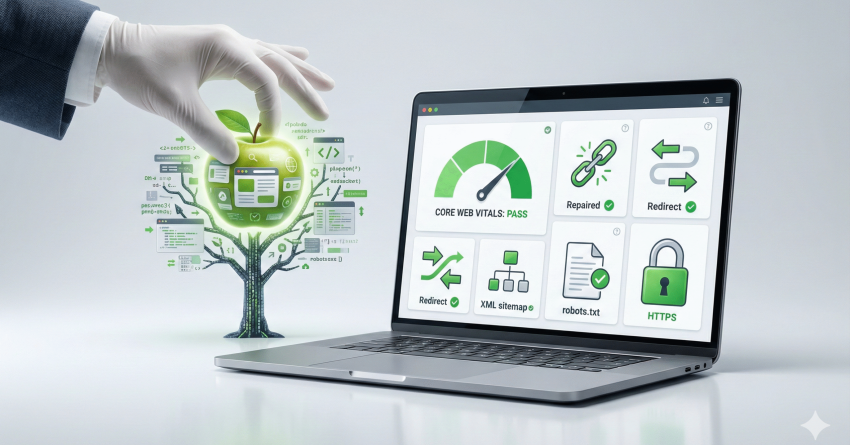
You can write amazing content, build backlinks, and still… not rank.
Why?
Because hidden technical errors are quietly blocking your site from performing.
The good news: many of these problems are low-hanging fruit. Fix them once, and you unlock fast wins in visibility and traffic.
In this guide, we’ll show:
- The most common technical SEO errors you can fix quickly
- What top white label SEO competitors are doing
- Where they stop (and where White Label SEO Service goes further)
- A simple, low-stress plan for agencies and site owners
Want a done-for-you “quick win” technical SEO sweep?
White Label SEO Service offers white-labeled technical audits that find and fix your fastest ranking blockers under your brand.
What Top White Label SEO Competitors Are Doing Today
Recent comparisons of white label SEO providers (Boostability, HigherVisibility, The HOTH, Semify, WebFX, etc.) all show a strong focus on:
- Technical SEO audits
- On-page optimization
- Link building and content
- Reporting and dashboards for agencies
Specialized providers and tools also sell white label technical SEO audits that scan for crawl errors, 4xx/5xx status codes, orphan pages, deep URLs, and other technical issues.
Where They Fall Short (The Gap)
From the research, we see big gaps:
- Lots of heavy 50-page audit PDFs, not simple “do this first” priority lists.
- Not enough focus on low-hanging fixes that can be done in days, not months.
- Technical reports that overwhelm clients, instead of helping agencies sell quick wins.
- Limited emphasis on making repeatable, white-labeled “fix packs” that agencies can roll out across many clients.
White Label SEO Service is positioned to own this space:
Quick-win technical fixes, clearly prioritized, branded as your own service.
Why Low-Hanging Technical Fixes Matter So Much
Technical SEO guides from tools like Semrush, Softtrix, and others all say the same thing: even great content won’t rank if crawlers hit technical roadblocks.
Google’s own documentation highlights:
- Crawl and index issues
- Core Web Vitals
- Page experience
- Security (HTTPS)
…as key pieces for long-term search success.
The upside?
Many of the worst problems are:
- Easy to find
- Clear to explain
- Quick to fix
- Big in impact
Perfect for “quick wins” that impress clients.
Low-Hanging Technical Fixes Checklist
1. Fix Broken Links (4xx Errors)
Broken pages (404 errors) and broken internal links tell both users and Google that your site is messy.
Why It Hurts
- Wastes crawl budget
- Frustrates users who hit a dead end
- Weakens internal linking
Quick Fix
- Crawl your site with a technical SEO tool.
- Export all 4xx URLs and broken links.
- Either:
- Redirect them (301) to a relevant live page, or
- Remove / update the broken internal links.
2. Clean Up Redirect Loops and Chains
Redirects are normal. But long chains and loops are not.
Why It Hurts
- Slows down page loading
- Confuses crawlers
- Can stop important pages from getting properly indexed
Quick Fix
- Identify URLs with multiple redirects (A → B → C → D).
- Update internal links to point straight to the final URL.
- Fix redirect loops by making sure the redirect chain ends at a live page, not another redirect.
3. Fix Indexing Issues (Blocked or “Noindex” Pages)
If a page isn’t in Google’s index, it can’t rank.
Simple, but often ignored.
Technical SEO checklists always begin with crawlability and indexation checks.
Common Issues
- “Noindex” tags accidentally placed on important pages
- Pages blocked in robots.txt
- Pages missing from the XML sitemap
- Canonical tags pointing to the wrong URL
Quick Fix
- Use Google Search Console → Coverage / Pages report to see which URLs are excluded.
- Remove “noindex” from pages you want to rank.
- Update robots.txt so it doesn’t block money pages.
- Add key pages to your XML sitemap and resubmit it.
Want a fast indexation sweep across all client sites?
White Label SEO Service runs technical audits, fixes low-hanging issues, and delivers simple before/after reports you can send straight to your clients.
4. Repair XML Sitemap and Robots.txt
Search engines use your sitemap and robots.txt file to understand the structure of your site.
Common Errors
- Sitemaps with tons of 404 or redirected URLs
- Old sitemaps still listed in Search Console
- robots.txt blocking important sections by mistake
Quick Fix
- Generate a fresh sitemap from your CMS or SEO plugin.
- Make sure it only contains live, canonical URLs.
- Update robots.txt to allow access to main content areas.
- Submit the updated sitemap in Google Search Console.
5. Improve Core Web Vitals on Key Pages
Core Web Vitals (LCP, INP, CLS) measure how fast and stable your page feels to users. Google says good Web Vitals contribute to better search performance.
Why It Hurts
- Slow load times increase bounce rate
- Layout shifts annoy users (buttons jumping around)
- Poor metrics can hold rankings back
Quick Fixes (Low-Hanging)
- Compress large images and serve them in modern formats (like WebP).
- Limit heavy third-party scripts (chat widgets, unused trackers).
- Set image and video dimensions to reduce layout shifts.
- Prioritize fixes on top traffic and top revenue pages first.
6. Make Sure Everything Is on HTTPS (No Mixed Content)
Google has long recommended secure HTTPS and browser warnings scare users away from non-secure content.
Typical Mixed Content Issues
- Some images or scripts still loading on http:// instead of https://
- Old hard-coded links in templates or page content
Quick Fix
- Crawl for mixed-content issues (most tools highlight this).
- Update internal links and script URLs to https://.
- Set HTTP → HTTPS redirects at the server level if not already done.
7. Fix Duplicate Content from Parameters and Variants
Duplicate content often comes from:
- URL parameters (?sort=price, ?color=blue)
- HTTP vs HTTPS versions
- Trailing slash vs non-trailing slash
- “www” vs non-”www”
Technical SEO guides highlight canonicalization as a core technical task
Quick Fix
- Choose a preferred domain version (with or without www, always HTTPS).
- Use 301 redirects to unify versions.
- Add proper canonical tags on pages with similar content.
- Block messy parameter URLs from being indexed if they don’t need to rank.
8. Mobile Usability Errors
More traffic is mobile, and mobile usability problems can reduce both rankings and conversions.
Common Issues
- Text too small
- Tappable elements too close together
- Content wider than screen
Quick Fix
- Use responsive design (flexible layouts, fluid images).
- Test key pages on your phone (and in Google’s mobile tools).
- Fix CSS so buttons, menus, and forms are easy to use on small screens.
9. Clean Up Orphan Pages
Orphan pages have no internal links pointing to them.
Technical SEO checklists call this out because crawlers struggle to discover and value these pages.
Quick Fix
- Compare your XML sitemap vs. your crawl results.
- Any important page not found in the crawl is likely orphaned.
- Add internal links from relevant pages and navigation points.
10. Use Simple, Descriptive URLs
No one likes site.com/p=123?ref=abc.
Clean URLs are easier for users and search engines to understand.
Quick Fix
- Use short, keyword-relevant slugs:
- /technical-seo-audit/
- /local-seo-services/
- Avoid long strings of random characters.
- When changing URLs, always 301 redirect the old ones.
How White Label SEO Service Turns Fixes into a Fast Win Package
Many white label SEO providers offer audits, but stop at the huge PDF.
White Label SEO Service goes further with low-hanging technical fix packages agencies can sell as “Phase 1 quick wins.”
Step 1 Scan and Prioritize
- Crawl the site with agency-approved tools
- Flag all issues, then sort by:
- Impact on traffic
- Effort to fix
- Revenue opportunity
- Build a simple, branded checklist of “Top 10 Quick Wins”
Step 2 Implement the Quick Wins
Our team (under your brand):
- Fixes broken links, redirects, and sitemap issues
- Cleans up mixed content and HTTPS problems
- Addresses critical Core Web Vitals on important pages
- Fixes major indexation and canonical errors
Step 3 Show Before/After Wins
We provide white-labeled:
- Screenshots of errors before vs after
- Crawl summaries showing reduced errors
- Simple impact notes: “X pages now indexable”, “Y% fewer 404s”, etc.
This makes it easy for your agency to show value fast.
Want a plug-and-play “Low-Hanging Tech Fix” package for your agency?
Partner with White Label SEO Service and let us handle the audits, fixes, and reporting while you present it as your own premium service.
Who Is This Service For?
Low-hanging technical fixes from White Label SEO Service are ideal for:
- Digital marketing agencies that need quick wins to keep clients happy
- Web design / dev shops that want to add ongoing SEO maintenance
- Local SEO agencies trying to clean up messy sites before scaling content and links
- In-house marketers who want better rankings but don’t have deep technical skills
If you manage websites and care about rankings, this service gives you fast, visible progress without drowning in a 60-page audit.
Key Takeaways
- Many top white label SEO providers offer technical audits, but not clear, packaged quick-fix solutions.
- Technical SEO guides agree: crawlability, indexation, Core Web Vitals, and security are foundations you must get right.
- Many of the worst technical issues broken links, bad redirects, indexing problems are low-hanging fruit that can be found and fixed quickly.
- White Label SEO Service turns these into simple, white-labeled fix packages agencies can resell for fast wins and long-term trust.
Lessons Learned
- Audits alone don’t impress clients. Clear, visible fixes do.
- You don’t need to fix everything at once. Start with high-impact, low-effort tasks.
- Technical SEO doesn’t have to be scary. With the right partner, it becomes a repeatable process.
- Quick wins buy time. When clients see rapid improvements, they trust you to handle bigger, longer-term SEO projects.
FAQs
1. What counts as a “low-hanging” technical fix?
Low-hanging fixes are high-impact issues that:
- Are easy to find with tools
- Don’t require huge development work
- Directly affect how your site is crawled, indexed, or loaded
Examples: broken links, redirect chains, bad sitemaps, mixed content, simple Core Web Vital problems.
2. How fast can we see results after fixing these issues?
You may see:
- Fewer coverage errors in Google Search Console within days to weeks
- Better crawl and index patterns in 2–4 weeks
- Ranking and traffic improvements in 1–3 months, depending on competition and content quality.
3. Do I need a developer for these fixes?
Some issues (like complex Core Web Vitals problems) can need dev help. But many common errors redirects, sitemaps, internal links, noindex tags can be handled by a competent SEO or technical marketer using the right tools.
With White Label SEO Service, most fixes are done for you under your brand.
4. How does White Label SEO Service work with my agency?
You stay the front-facing brand. We:
- Run technical scans and audits
- Prioritize low-hanging fixes
- Implement fixes where possible
- Deliver white-labeled reports and summaries
You present the work, own the relationship, and set your own pricing.