
Local searches drive nearly half of all Google queries, and businesses appearing in the local pack capture the majority of clicks and foot traffic. For business owners and marketing managers investing in organic visibility, understanding these numbers transforms guesswork into strategy.
The data tells a compelling story: local searchers are ready to act. They’re looking for solutions nearby, and they convert at rates that dwarf traditional organic traffic. This guide compiles the most current local SEO statistics to help you benchmark performance, set realistic goals, and allocate resources effectively.
You’ll find data on search behavior trends, Google Business Profile engagement, conversion metrics, ranking factors, ROI benchmarks, and industry-specific insights that inform smarter local SEO decisions.
What Is Local SEO?
Local SEO is the practice of optimizing a business’s online presence to attract customers from geographically relevant searches. When someone searches for “coffee shop near me” or “plumber in Austin,” local SEO determines which businesses appear in the map pack, local finder, and localized organic results.
The discipline encompasses Google Business Profile optimization, local citation building, review management, location-specific content creation, and technical optimizations that signal geographic relevance to search engines. Unlike broader SEO efforts targeting national or global audiences, local SEO focuses on capturing demand within specific service areas.
How Local SEO Differs from Traditional SEO
Traditional SEO targets keywords regardless of searcher location. A website optimized for “best project management software” competes nationally or globally. Local SEO adds a geographic dimension that fundamentally changes ranking factors and user behavior.
Google uses different algorithms for local results. The local pack relies heavily on Google Business Profile signals, proximity to the searcher, and local relevance factors. Traditional organic results below the map pack still consider these factors but weight them differently alongside standard ranking signals like backlinks and content quality.
The competitive landscape shifts dramatically. A local bakery competes against nearby bakeries, not every bakery website on the internet. This creates opportunities for smaller businesses to dominate their geographic markets without needing the domain authority required for national rankings.
User intent also differs. Local searchers typically have higher purchase intent and shorter decision timelines. Someone searching “emergency dentist near me” needs immediate help. Someone searching “dental health tips” might be months away from booking an appointment.
Why Local Search Matters for Businesses
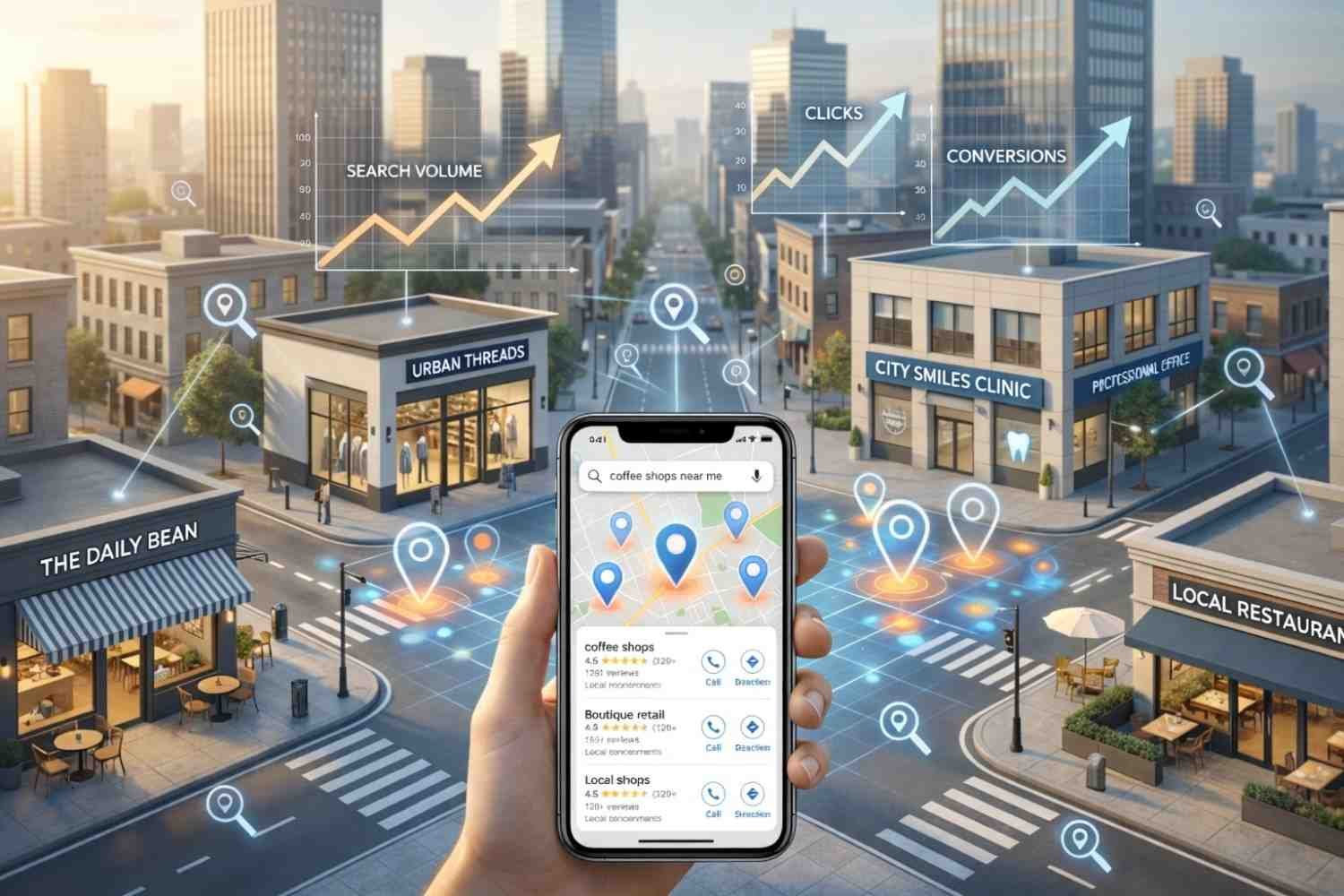
Local search connects businesses with customers at the moment of highest intent. These aren’t casual browsers researching options for someday. They’re people actively looking for products or services they need now, often within walking or driving distance.
The mobile revolution accelerated this shift. Smartphones turned every moment into a potential local search opportunity. Standing in an unfamiliar neighborhood, users search for lunch options. Experiencing a home emergency, they search for immediate service providers. This always-on, location-aware search behavior creates constant opportunities for local businesses to capture demand.
For businesses with physical locations or defined service areas, local SEO represents the most direct path from search query to customer acquisition. The statistics throughout this guide quantify exactly how significant that opportunity is.
Local Search Behavior Statistics
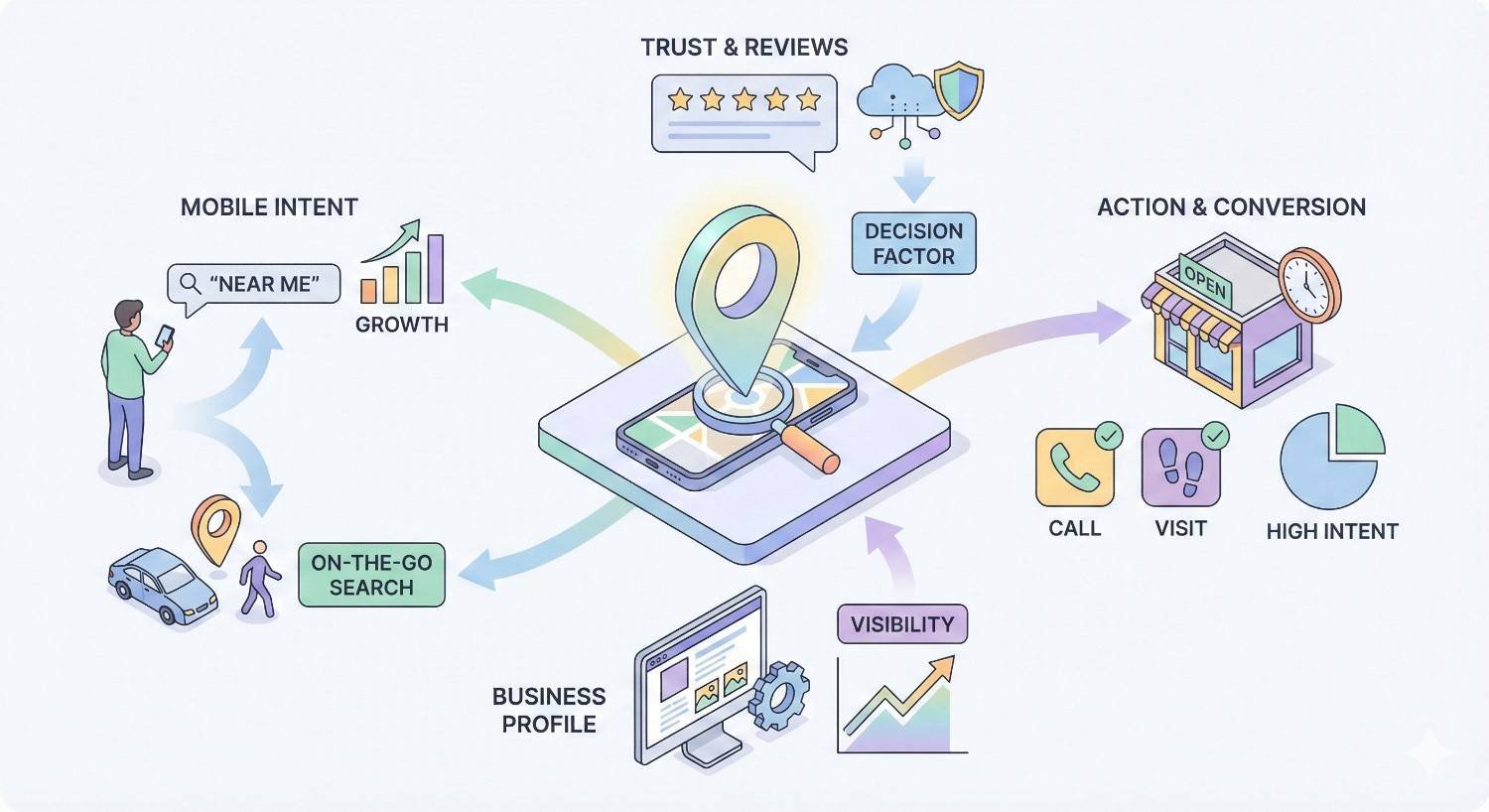
Understanding how people search locally reveals where to focus optimization efforts. Search behavior patterns show what users expect, how they phrase queries, and which devices they use to find local businesses.
“Near Me” Search Growth Trends
“Near me” searches have experienced explosive growth over the past decade, fundamentally changing how consumers find local businesses. Google data shows “near me” searches grew by over 900% in a two-year period, establishing this query pattern as a dominant local search behavior.
This growth reflects changing user expectations. Searchers assume Google knows their location and will deliver relevant nearby results. The phrase “near me” has become shorthand for “show me options I can actually visit or use.”
Mobile searches containing “near me” have grown 250% faster than searches without location modifiers. Users on smartphones expect immediate, actionable results. They’re not researching for future reference. They want to find a business, get directions, and visit or call within minutes.
The trend extends beyond simple proximity searches. Queries like “best pizza near me open now” or “24-hour pharmacy near me” combine location intent with additional qualifiers. Businesses optimizing for these compound queries capture highly motivated searchers.
Mobile Local Search Statistics
Mobile devices dominate local search activity. BrightLocal’s research indicates 61% of local searches happen on mobile devices, with that percentage climbing higher for certain industries like restaurants and emergency services.
The mobile-local connection makes sense. People search locally when they’re out in the world, away from desktop computers. They need directions, hours, phone numbers, and quick answers that mobile devices deliver instantly.
Google reports that 76% of people who search for something nearby on their smartphone visit a related business within a day. This statistic alone justifies prioritizing mobile optimization for local businesses. The path from search to store visit is remarkably short.
Mobile searchers also exhibit different behavior patterns. They’re more likely to click call buttons, request directions, and visit websites briefly before taking action. Optimizing for these micro-moments requires fast-loading pages, prominent contact information, and clear calls to action.
Voice Search and Local Queries
Voice search has carved out a significant role in local discovery. Juniper Research projects voice assistant usage will reach 8.4 billion devices by 2024, with local queries representing a substantial portion of voice search activity.
Voice searches tend to be more conversational and question-based. Instead of typing “Italian restaurant downtown,” users ask “What’s a good Italian restaurant near me?” This shift toward natural language queries affects keyword strategy and content optimization.
BrightLocal found that 58% of consumers have used voice search to find local business information in the past year. Common voice queries include asking for business hours, directions, and contact information.
Local businesses benefit from optimizing for question-based queries and ensuring their Google Business Profile contains accurate, complete information that voice assistants can easily retrieve and relay to users.

Google Business Profile Statistics
Google Business Profile serves as the foundation of local SEO. These listings appear in map packs, local finders, and Google Maps, often representing the first impression potential customers have of a business.
GBP Engagement and Click-Through Rates
Google Business Profiles generate significant engagement for local businesses. BrightLocal’s GBP study found the average business receives 1,260 views per month through their profile, with service-area businesses and multi-location brands often seeing much higher numbers.
Click-through rates from GBP listings vary by industry and profile completeness. Businesses with complete profiles receive 7x more clicks than those with incomplete information. Photos, posts, Q&A responses, and detailed business descriptions all contribute to higher engagement.
The local pack captures the majority of clicks for local-intent searches. First Page Sage research shows the top three local pack positions receive approximately 44% of all clicks on local search results pages. Ranking in the local pack often matters more than ranking in traditional organic results for local queries.
Direct actions from GBP listings demonstrate user intent. The average profile generates 59 actions per month, including website visits, direction requests, and phone calls. These aren’t passive views. They’re potential customers taking steps toward conversion.
Reviews and Ratings Impact Statistics
Reviews have become the currency of local trust. BrightLocal’s consumer survey reveals 98% of consumers read online reviews for local businesses, with 77% reading reviews “always” or “regularly” when searching for local companies.
Star ratings directly impact click-through rates. Businesses with 4.0-4.5 star ratings receive the most clicks, as consumers perceive them as trustworthy without being suspiciously perfect. Ratings below 4.0 stars see significant click-through rate drops.
Review quantity matters alongside quality. Podium research found businesses with more than 200 reviews generate 54% more revenue than the average business. The volume of reviews signals popularity and provides social proof that influences purchasing decisions.
Recency also plays a role. 73% of consumers only pay attention to reviews written in the last month. A business with hundreds of reviews from years ago but no recent feedback may appear inactive or declining. Consistent review generation maintains relevance.
Google Maps Usage Statistics
Google Maps has evolved from a navigation tool into a local discovery platform. Google reports over 1 billion people use Google Maps monthly, with a significant portion using it to find businesses rather than just get directions.
Local searches on Google Maps have grown 50% year-over-year. Users browse the map interface to discover options, compare businesses, and make decisions without ever visiting a traditional search results page.
Businesses appearing prominently in Google Maps benefit from visual discovery. Users scrolling through map results see business names, ratings, and photos. A well-optimized listing with quality images stands out against competitors with minimal visual presence.
Maps searches also indicate high intent. Someone searching within Google Maps is typically ready to visit a location. They’re not in research mode. They’re in action mode, looking for somewhere to go now.
Local SEO Conversion Statistics
Local search traffic converts at rates that exceed most other digital marketing channels. These statistics demonstrate why local SEO delivers strong ROI for businesses with physical locations or service areas.
Local Search to Store Visit Rates
The connection between local search and physical store visits is remarkably strong. Google’s research shows 76% of people who conduct a local search on their smartphone visit a business within 24 hours.
This statistic transforms how businesses should think about local SEO. Each local search impression represents a potential same-day customer. The timeline from discovery to visit is measured in hours, not days or weeks.
Think with Google data indicates 28% of local searches result in a purchase. When combined with the high visit rate, local search emerges as one of the most efficient customer acquisition channels available.
The immediacy of local search behavior means businesses must be ready to serve customers who find them. Accurate hours, current inventory information, and responsive communication channels convert searchers into buyers.
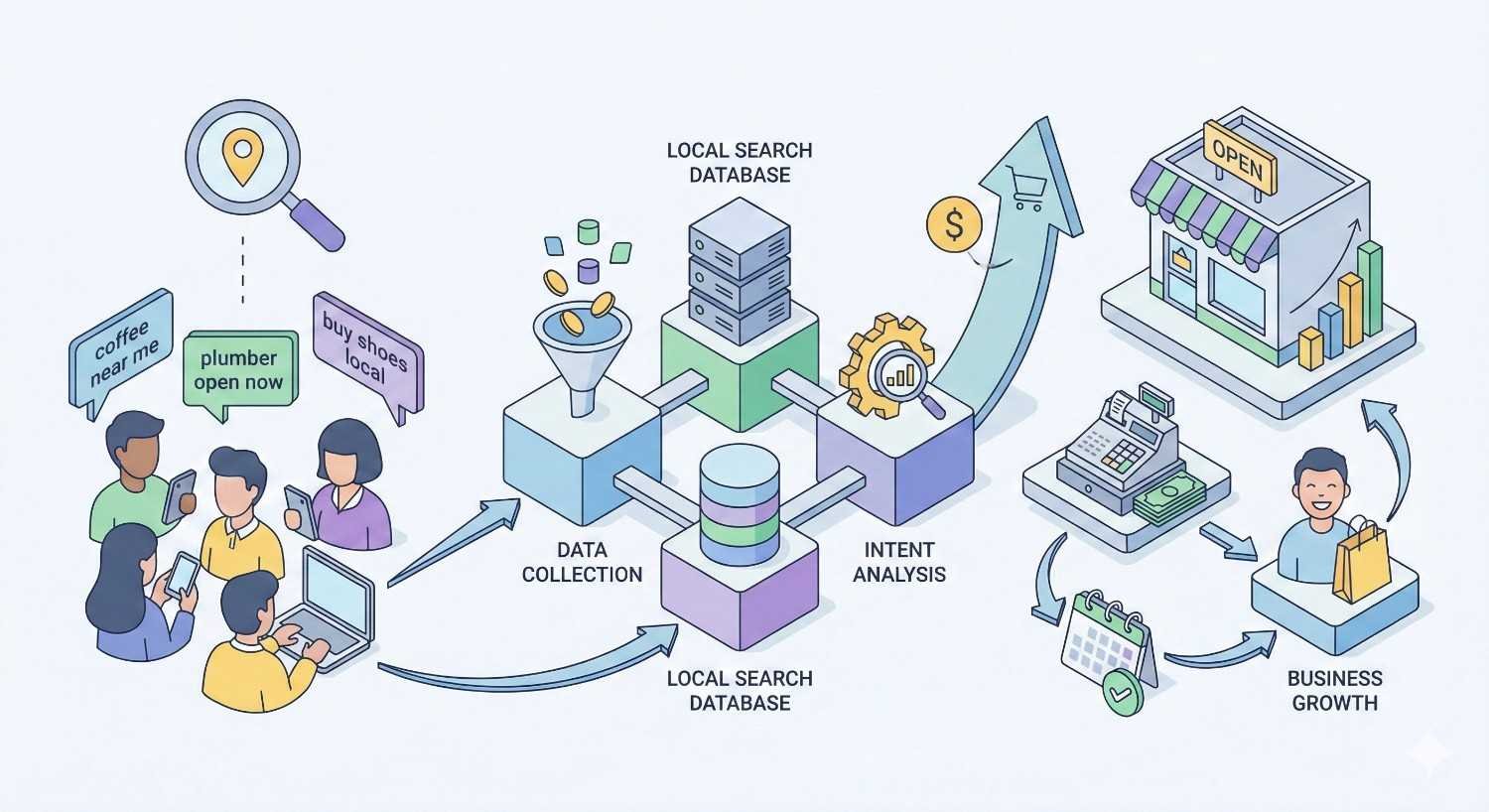
Local Search Purchase Intent Data
Local searchers demonstrate purchase intent that far exceeds general web traffic. Google reports that 78% of local mobile searches result in an offline purchase within a week.
Intent signals appear in query patterns. Searches including terms like “buy,” “price,” “open now,” or “near me” indicate users ready to transact. These high-intent queries deserve prioritization in local SEO strategy.
BrightLocal research found 93% of consumers used the internet to find a local business in the last year, with 34% searching daily. This consistent search behavior creates ongoing opportunities for businesses maintaining strong local visibility.
The purchase intent extends across price points. Whether searching for a quick lunch or a major service like home renovation, local searchers are actively looking to spend money with businesses that meet their needs.
Phone Call and Direction Request Statistics
Direct response actions from local search demonstrate immediate conversion potential. BrightLocal’s GBP study shows the average Google Business Profile generates 16 phone calls per month directly from the listing.
Direction requests indicate imminent visits. Businesses receive an average of 14 direction requests monthly through their GBP. Each direction request represents someone actively planning to visit the physical location.
Mobile click-to-call functionality has transformed local search into a direct response channel. Google data shows 60% of mobile users have contacted a business directly from search results using click-to-call.
These direct actions bypass the traditional website visit funnel. Users go straight from search to phone call or visit, making GBP optimization critical for capturing this high-intent traffic.
Local SEO Ranking Factor Statistics
Understanding what influences local rankings helps prioritize optimization efforts. Research into local ranking factors reveals which signals matter most for visibility in map packs and local organic results.
Proximity and Location Signal Data
Proximity to the searcher remains the most influential local ranking factor. Whitespark’s Local Search Ranking Factors survey consistently ranks proximity as the top factor for local pack rankings.
This creates both challenges and opportunities. Businesses can’t change their physical location, but they can optimize for the areas they serve. Service-area businesses and multi-location brands can expand their geographic reach through strategic optimization.
Google’s understanding of location has become increasingly sophisticated. The search engine considers the searcher’s location, the business’s location, the area mentioned in the query, and the relevance of the business to the search intent.
Location signals extend beyond physical address. Local content, location-specific landing pages, and geographic mentions throughout a website reinforce relevance for target areas.
Citation and NAP Consistency Statistics
Citations remain a foundational local ranking factor. Moz’s research indicates citation signals account for approximately 7% of local pack ranking factors, with NAP (Name, Address, Phone) consistency being critical.
Inconsistent business information across directories confuses search engines and erodes trust. BrightLocal found that 80% of consumers lose trust in local businesses with incorrect or inconsistent contact details.
The quality of citation sources matters more than quantity. Citations from authoritative, relevant directories carry more weight than listings on obscure or spammy sites. Industry-specific directories often provide more value than general business listings.
Maintaining citation accuracy requires ongoing attention. Business information changes, directories update their formats, and duplicate listings appear. Regular audits ensure consistency across the local search ecosystem.
Review Signals and Ranking Correlation
Review signals significantly influence local rankings. Whitespark’s research shows review signals account for approximately 17% of local pack ranking factors, making them the second most important category after GBP signals.
Multiple review factors contribute to rankings: overall star rating, review quantity, review velocity (how quickly new reviews accumulate), review diversity (reviews across multiple platforms), and keyword mentions within review text.
BrightLocal data shows businesses responding to reviews see 12% higher engagement than those that don’t. Review responses demonstrate active management and may influence both rankings and consumer perception.
The correlation between reviews and rankings creates a virtuous cycle. Higher rankings generate more visibility, which leads to more customers, which generates more reviews, which improves rankings further.
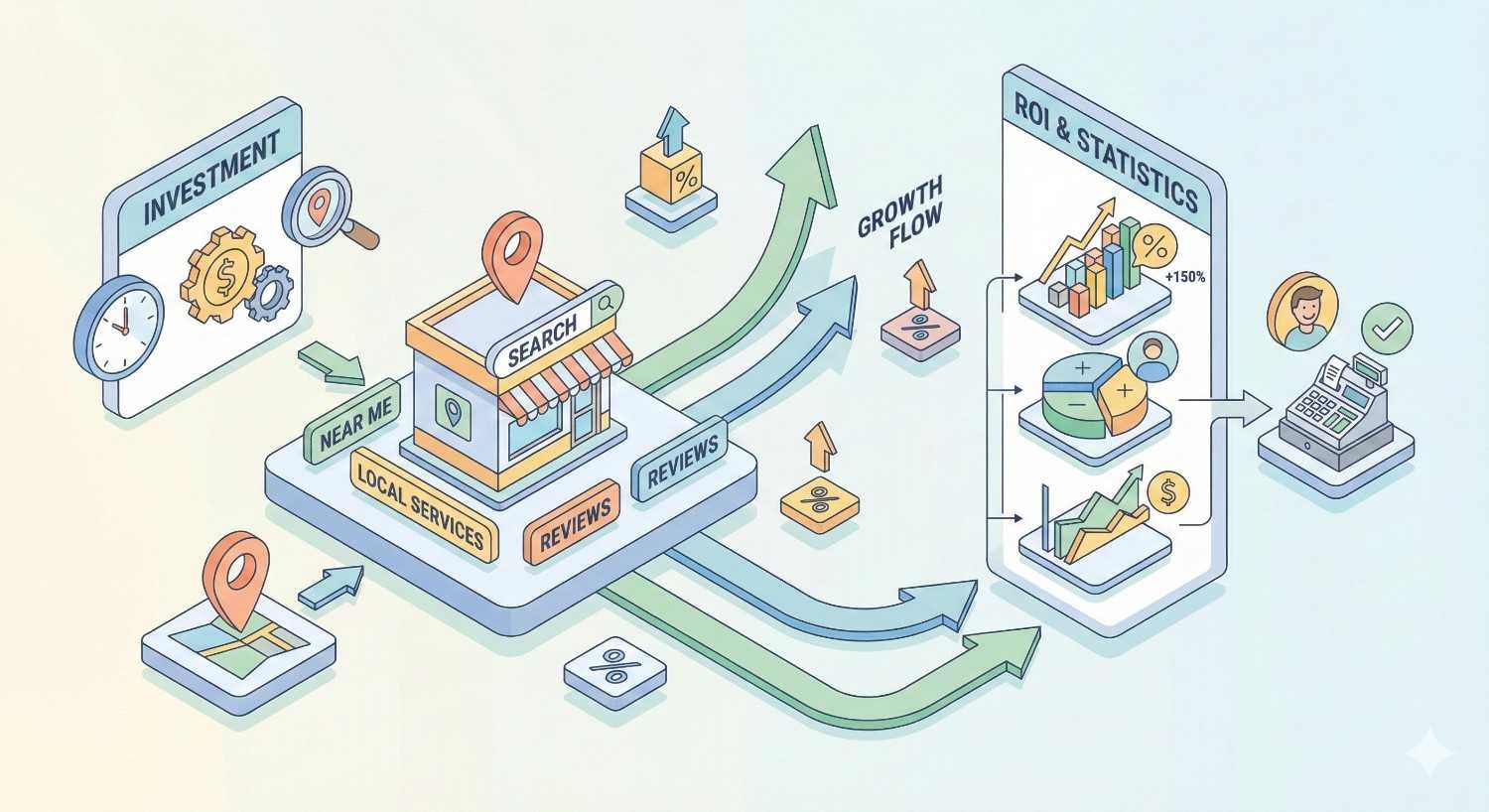
Local SEO ROI and Investment Statistics
Understanding the costs and returns of local SEO helps businesses make informed investment decisions. These statistics provide benchmarks for budgeting and setting expectations.
Average Local SEO Costs and Budgets
Local SEO investment varies widely based on business size, competition, and goals. BrightLocal’s survey found small businesses typically spend between $500 and $2,500 per month on local SEO services.
DIY local SEO costs less in direct spending but requires significant time investment. Business owners managing their own local SEO spend an average of 5-10 hours per week on optimization activities, review management, and content creation.
Enterprise and multi-location businesses invest substantially more. Managing local SEO across dozens or hundreds of locations requires specialized tools, dedicated staff, or agency partnerships that can cost $5,000 to $25,000+ monthly.
The investment should align with the opportunity. Businesses in competitive markets or high-value industries often see returns that justify larger budgets, while those in less competitive niches may achieve strong results with modest investment.
Local SEO ROI Benchmarks by Industry
Local SEO ROI varies significantly by industry based on customer lifetime value, competition, and search volume. BrightLocal research shows the average local SEO campaign generates $3 in revenue for every $1 invested.
High-value service industries see the strongest returns. Legal services, medical practices, and home services often achieve ROI exceeding 500% due to high customer values and strong local search intent.
Retail and restaurant businesses typically see lower per-customer values but higher transaction volumes. Their ROI comes from consistent traffic rather than individual high-value conversions.
Measuring local SEO ROI requires tracking the full customer journey. Phone calls, direction requests, form submissions, and in-store visits all contribute to returns that may not appear in traditional web analytics.
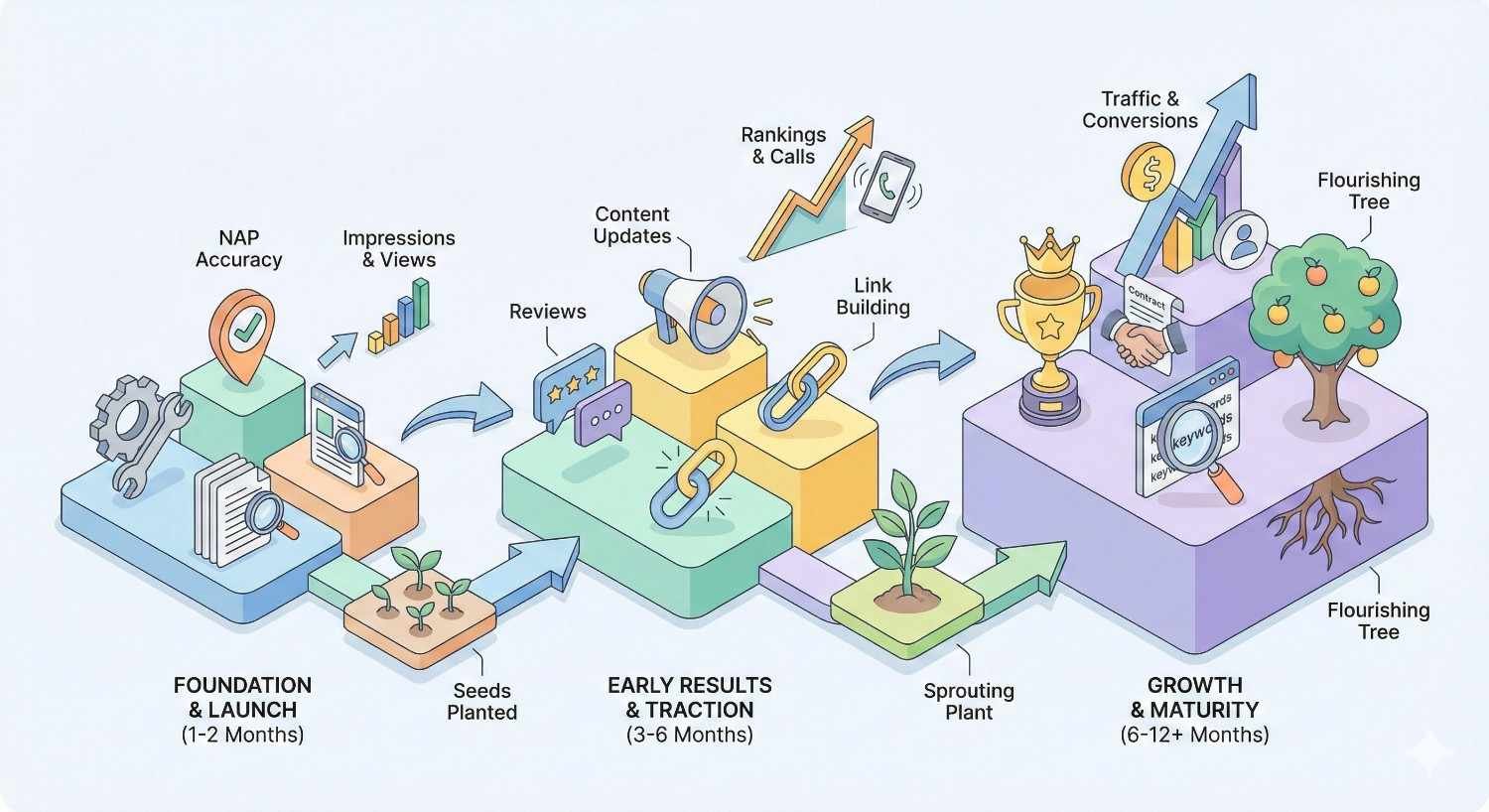
Time to Results: Local SEO Timeline Data
Local SEO results don’t appear overnight. Moz research suggests most local SEO campaigns show meaningful results within 3-6 months, with continued improvement over 12-24 months.
Initial improvements often appear in GBP metrics before organic rankings shift. Increased profile views, engagement, and direct actions may precede ranking improvements in the local pack.
Competitive markets require longer timelines. Businesses entering markets with established competitors need more time to build the signals necessary to compete. Less competitive markets may see faster results.
Consistency matters more than intensity. Steady optimization efforts over time outperform sporadic bursts of activity. Search engines reward sustained relevance signals rather than one-time optimization pushes.
Local SEO Statistics by Industry
Different industries experience local search differently. These statistics help businesses benchmark against relevant competitors and understand industry-specific opportunities.
Retail and E-commerce Local Statistics
Retail businesses face unique local search dynamics as consumers blend online research with in-store purchasing. Google research shows 82% of smartphone users consult their phones while in a store deciding what to buy.
“Available near me” searches have grown 100% year-over-year as consumers check local inventory before visiting stores. Retailers with accurate inventory information in their GBP listings capture this high-intent traffic.
Local retail searches peak during holiday seasons and weekends. Businesses optimizing for seasonal terms and maintaining updated hours during peak periods capture disproportionate traffic.
The integration of online and offline retail makes local SEO essential even for businesses with strong e-commerce presence. Consumers want options, and local availability often tips purchasing decisions.
Healthcare and Medical Local SEO Data
Healthcare searches carry exceptional urgency and trust requirements. Google data shows 77% of patients use search engines before booking medical appointments.
Reviews matter enormously in healthcare. Software Advice research found 72% of patients use online reviews as their first step in finding a new doctor. Negative reviews have outsized impact in healthcare compared to other industries.
Healthcare local searches often include symptom or condition terms alongside location. “Dermatologist for acne near me” or “urgent care open now” represent common query patterns that healthcare providers should optimize for.
HIPAA considerations add complexity to healthcare local SEO. Review responses must maintain patient privacy while still demonstrating engagement and care quality.
Restaurant and Hospitality Statistics
Restaurants depend heavily on local search for customer acquisition. Toast research shows 77% of diners visit a restaurant’s website before dining, with most finding that website through local search.
Mobile dominates restaurant searches. 84% of restaurant searches happen on mobile devices, often while users are already out and deciding where to eat. Speed and mobile optimization are critical.
Photos significantly impact restaurant selection. Listings with photos receive 42% more direction requests and 35% more website clicks than those without. Quality food photography drives engagement.
Review volume and recency matter more for restaurants than most industries. Diners want recent feedback confirming current quality, not reviews from years ago.
Professional Services Local Search Data
Professional services like lawyers, accountants, and consultants see high-value local search traffic. Clio’s Legal Trends Report shows 96% of people seeking legal advice use a search engine.
Trust signals carry extra weight for professional services. Credentials, awards, case results, and detailed service descriptions help searchers evaluate expertise before making contact.
Professional services searches often include specific service terms. “Divorce lawyer near me” or “small business accountant in [city]” represent common patterns. Optimizing for specific service categories improves relevance.
The consideration timeline for professional services is longer than retail or restaurants. Searchers may research multiple providers before making contact, making comprehensive website content important alongside GBP optimization.
Local SEO Statistics by Region
Local search behavior varies across geographic regions based on market maturity, device preferences, and cultural factors.
North America Local Search Trends
North America represents the most mature local search market. Statista data shows 93% of U.S. adults use the internet, with local search being a primary activity.
Google dominates North American local search with approximately 92% market share. This concentration simplifies optimization strategy, as Google Business Profile and Google’s ranking factors drive the majority of local visibility.
Mobile local search adoption is highest in North America. The combination of high smartphone penetration and car-centric culture creates constant local search opportunities as consumers move through their days.
Voice search adoption also leads in North America, with smart speaker penetration exceeding 35% of households. Local businesses benefit from optimizing for voice query patterns.
Europe Local SEO Statistics
European local search shows strong growth with some regional variations. Eurostat data indicates 87% of EU households have internet access, with mobile search growing rapidly.
Google maintains dominant market share across most European countries, though some markets show stronger alternative search engine usage. Businesses targeting specific European markets should verify local search engine preferences.
GDPR regulations affect how European businesses collect and display customer data, including reviews. Compliance considerations add complexity to local SEO strategy in European markets.
Multi-language optimization matters for businesses serving diverse European populations. Local content in relevant languages improves visibility and conversion rates.
Asia-Pacific Local Search Data
Asia-Pacific represents the fastest-growing local search market. eMarketer research shows mobile internet users in Asia-Pacific exceed 2 billion, with local search being a primary mobile activity.
Search engine preferences vary significantly across Asia-Pacific. While Google dominates in Australia, India, and Southeast Asia, markets like China (Baidu), South Korea (Naver), and Japan (Yahoo Japan) require platform-specific optimization.
Mobile-first behavior is most pronounced in Asia-Pacific, where many users access the internet primarily or exclusively through smartphones. Mobile optimization is non-negotiable for local visibility.
Super-apps like WeChat, Grab, and Gojek integrate local business discovery, adding platforms beyond traditional search engines that businesses must consider.
Future of Local SEO: Emerging Statistics and Trends
Local search continues evolving with new technologies and changing user behaviors. These emerging trends shape future local SEO strategy.
AI and Local Search Predictions
Artificial intelligence is transforming how search engines understand and serve local queries. Gartner predicts AI will influence 80% of search interactions by 2026.
Google’s AI Overviews increasingly appear for local queries, synthesizing information from multiple sources to answer questions directly. Businesses must ensure their information is accurate and comprehensive enough to be featured in AI-generated responses.
AI-powered personalization will make local results more individualized. Search engines will better predict user preferences based on past behavior, location patterns, and contextual signals.
Local businesses should focus on providing clear, structured information that AI systems can easily parse and present to users.
Zero-Click Search Impact on Local Results
Zero-click searches, where users get answers without clicking through to websites, are increasing. SparkToro research shows approximately 65% of Google searches end without a click to external websites.
For local businesses, zero-click isn’t necessarily negative. Users getting directions, phone numbers, or hours directly from GBP listings are taking valuable actions even without website visits.
The shift emphasizes GBP optimization over website-only strategies. Businesses must ensure their GBP contains complete, accurate information that serves users directly in search results.
Tracking success requires looking beyond website analytics to include GBP insights, call tracking, and direction request data.
Local SEO and Social Media Integration Data
Social signals increasingly influence local discovery. BrightLocal research shows 48% of consumers use social media to research local businesses.
Platforms like Instagram, TikTok, and Facebook have added local discovery features that compete with traditional search. Younger demographics often discover local businesses through social platforms rather than Google.
User-generated content on social media provides additional signals that search engines may consider. Photos, check-ins, and mentions contribute to a business’s overall online presence.
An integrated approach combining local SEO with social media presence captures customers across discovery platforms.
How to Use Local SEO Statistics for Your Strategy
Data without application is just trivia. These statistics should inform concrete strategic decisions for your local SEO efforts.
Benchmarking Your Local SEO Performance
Compare your metrics against industry averages to identify opportunities. If the average GBP receives 1,260 monthly views and yours receives 500, visibility improvement should be a priority.
Track the metrics that matter for your business model. Service businesses should focus on phone calls and form submissions. Retail locations should prioritize direction requests and website visits.
Set up proper tracking before launching optimization efforts. Google Business Profile Insights, call tracking, and analytics goal configuration ensure you can measure improvement.
Regular benchmarking reveals whether your efforts are working. Monthly reviews of key metrics identify trends and inform strategy adjustments.
Setting Realistic Local SEO Goals
Use timeline data to set appropriate expectations. Meaningful results typically appear within 3-6 months, with continued improvement over 12-24 months.
Set goals based on your starting point and competitive landscape. A new business building local presence from scratch needs different goals than an established business optimizing existing visibility.
Focus on leading indicators early in campaigns. GBP engagement improvements often precede ranking gains. Celebrate early wins while working toward larger objectives.
Tie local SEO goals to business outcomes. Rankings and traffic matter only insofar as they generate customers and revenue.
When to Invest in Professional Local SEO Services
Consider professional help when internal resources are insufficient. If you’re spending 5-10 hours weekly on local SEO without seeing results, expert guidance may accelerate progress.
Multi-location businesses almost always benefit from professional management. The complexity of maintaining consistent optimization across dozens or hundreds of locations exceeds most internal capabilities.
Competitive markets often require professional expertise. When competitors invest in local SEO, matching their efforts requires equivalent resources and knowledge.
Calculate the opportunity cost. Time spent on DIY local SEO is time not spent on core business activities. Professional services may cost less than the value of your time.
Conclusion: Key Takeaways from Local SEO Statistics
Local SEO statistics reveal a channel with exceptional conversion potential and measurable ROI. The data consistently shows local searchers are ready to act, with 76% visiting a business within 24 hours and 28% making purchases. For businesses with physical locations or service areas, local search represents the most direct path from discovery to customer.
These numbers should inform your strategy, not just impress you. Benchmark your current performance against industry averages, set realistic timelines based on competitive data, and prioritize the ranking factors that research shows matter most: Google Business Profile optimization, review generation, and citation consistency.
At White Label SEO Service, we help businesses transform local SEO statistics into local SEO results. Whether you need comprehensive local optimization, multi-location management, or strategic guidance, our team delivers sustainable organic growth. Contact us to discuss how these data points can become your competitive advantage.
Frequently Asked Questions About Local SEO Statistics
What percentage of searches are local?
Approximately 46% of all Google searches have local intent, according to Google’s own data. This means nearly half of all search queries involve users looking for products, services, or information relevant to a specific geographic area. For businesses with physical locations, this represents an enormous opportunity to capture high-intent traffic.
How effective is local SEO for small businesses?
Local SEO is exceptionally effective for small businesses, often delivering higher ROI than other marketing channels. Statistics show 88% of consumers who conduct a local search on their smartphone visit or call a store within 24 hours. Small businesses can compete effectively against larger competitors by dominating their local market through strategic optimization.
What is the average ROI of local SEO?
The average local SEO campaign generates approximately $3 in revenue for every $1 invested, though returns vary significantly by industry. High-value service businesses like legal and medical practices often see ROI exceeding 500%, while retail and restaurant businesses achieve returns through higher transaction volumes at lower individual values.
How long does local SEO take to show results?
Most local SEO campaigns show meaningful results within 3-6 months, with continued improvement over 12-24 months. Initial improvements often appear in Google Business Profile metrics before organic rankings shift. Competitive markets require longer timelines, while less competitive niches may see faster results.
What are the most important local ranking factors?
The most important local ranking factors include proximity to the searcher, Google Business Profile signals, review signals, and on-page optimization. Proximity accounts for the largest influence on local pack rankings, followed by GBP completeness and engagement. Review quantity, quality, and velocity significantly impact both rankings and click-through rates.
How many reviews does a local business need to rank well?
While there’s no magic number, businesses with more reviews generally rank better and convert more customers. Research shows businesses with over 200 reviews generate 54% more revenue than average. More important than hitting a specific number is maintaining consistent review velocity and responding to reviews promptly.
Do Google Business Profile posts affect local rankings?
GBP posts contribute to overall profile engagement and freshness signals, though their direct ranking impact is modest. Posts keep your profile active, provide additional content for searchers, and can highlight promotions or events. The primary value is user engagement rather than direct ranking improvement, but active profiles generally outperform dormant ones.