
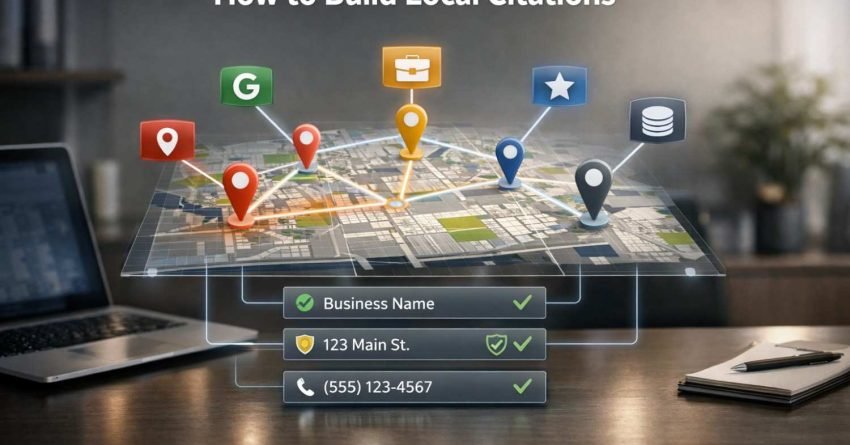
Local citations are online mentions of your business name, address, and phone number (NAP) on directories, websites, and social platforms that help search engines verify your business legitimacy and improve local search rankings. For business owners seeking stronger local visibility, citations remain one of the most controllable and impactful local SEO factors available today.
Whether you operate a single storefront or manage multiple locations, understanding how to build local citations correctly determines whether potential customers find you or your competitors. This guide walks you through the complete citation building process, from foundational setup to advanced management strategies that drive measurable local search results.

What Are Local Citations and Why Do They Matter?
Local citations function as digital references that confirm your business exists at a specific location. Every time your business information appears on a directory like Yelp, Yellow Pages, or industry-specific platforms, search engines collect that data point. Google and other search engines use these citations to validate business information and determine local search rankings.
The relationship between citations and local SEO performance is well-documented. Whitespark’s Local Search Ranking Factors survey consistently identifies citation signals among the top factors influencing local pack rankings. Businesses with accurate, consistent citations across authoritative platforms typically outrank competitors with incomplete or inconsistent business listings.
Citations work through two primary mechanisms. First, they provide search engines with corroborating evidence that your business information is accurate. Second, they create additional pathways for potential customers to discover your business. A citation on a high-traffic directory can generate direct referral traffic while simultaneously strengthening your local search presence.
Structured vs. Unstructured Citations
Understanding citation types helps you prioritize your building efforts effectively.
Structured citations appear in business directories and listing platforms where your NAP information displays in a standardized format. Examples include Google Business Profile, Bing Places, Apple Maps, Yelp, and industry-specific directories. These citations carry significant weight because search engines can easily parse and verify the information.
Unstructured citations occur when your business is mentioned on blogs, news articles, social media posts, or other web content without a formal listing format. A local newspaper article mentioning your restaurant’s address or a blogger reviewing your services creates unstructured citations. While harder to control, these citations add authenticity and diversity to your citation profile.
Both citation types contribute to local search performance. A healthy citation profile includes a strong foundation of structured citations supplemented by natural unstructured mentions earned through business activities and community engagement.
Preparing Your Business Information for Citation Building
Before submitting your business to any directory, you must establish your canonical NAP information. This foundational step prevents the inconsistency problems that undermine citation effectiveness.
Establishing Your Canonical NAP
Your canonical NAP represents the exact format of your business name, address, and phone number that you will use across all platforms. Consistency matters at the character level.
Business Name: Use your legal business name without keyword stuffing. “Joe’s Plumbing” is correct. “Joe’s Plumbing | Best Emergency Plumber in Chicago | 24/7 Service” damages your credibility and violates most directory guidelines.
Address: Choose one format and maintain it everywhere. Decide whether you use “Street” or “St.”, “Suite” or “Ste.”, and stick with that choice. Include suite numbers consistently. If your Google Business Profile shows “123 Main Street, Suite 100,” every other citation should match exactly.
Phone Number: Use a local phone number rather than a toll-free number when possible. Local numbers reinforce geographic relevance. Format the number consistently, whether you prefer (555) 123-4567 or 555-123-4567.
Creating a Citation Tracking Document
Organize your citation building efforts with a tracking spreadsheet that includes:
- Directory name and URL
- Submission date
- Login credentials
- Listing URL once live
- Verification status
- Last audit date
This documentation proves invaluable when managing citations over time, especially if your business information changes or you need to update multiple listings simultaneously.
Gathering Supporting Business Information
Most quality directories request information beyond basic NAP data. Prepare these elements in advance:
- Business description (short and long versions)
- Business categories (primary and secondary)
- Hours of operation
- Payment methods accepted
- Products or services offered
- Photos (exterior, interior, team, products)
- Social media profile URLs
- Website URL
Having these materials ready accelerates the submission process and ensures consistency across platforms.
Top Citation Sources for Local Businesses
Citation sources vary in authority and relevance. Prioritize platforms based on their impact on local search visibility and their relevance to your industry.
Tier 1: Core Data Aggregators
Data aggregators distribute business information to hundreds of smaller directories and platforms. Ensuring accuracy with these sources creates a ripple effect across the citation ecosystem.
Foursquare powers location data for numerous apps and platforms including Apple Maps, Uber, and thousands of other services. Claiming and verifying your Foursquare listing ensures accurate information flows to these connected platforms.
Data Axle (formerly Infogroup) supplies business data to many online directories, GPS systems, and search engines. Submitting directly to Data Axle helps maintain accuracy across their distribution network.
Neustar Localeze feeds business information to search engines, navigation systems, and directory sites. Accurate Localeze data improves consistency across platforms you might not even know exist.
Tier 2: Major Search and Map Platforms
These platforms directly influence how customers find local businesses.
Google Business Profile remains the most critical citation for any local business. Your GBP listing directly determines your visibility in Google Maps and local pack results. Complete every available field, add photos regularly, respond to reviews, and post updates to maximize this platform’s impact.
Bing Places for Business influences results on Bing, Yahoo, and DuckDuckGo. While Bing’s market share trails Google, the platform still drives meaningful traffic, particularly among certain demographics and enterprise users.
Apple Maps Connect affects how iPhone users discover local businesses through Maps, Siri, and Spotlight search. With Apple devices representing over 50% of the U.S. smartphone market, this platform deserves attention.
Tier 3: Major Business Directories
Established directories carry authority and generate direct traffic.
Yelp influences consumer decisions across numerous industries, particularly restaurants, home services, and retail. Yelp listings often rank prominently in organic search results for local business queries.
Yellow Pages (YP.com) maintains relevance despite the decline of print directories. The platform’s domain authority helps listings rank for local searches.
Better Business Bureau provides trust signals beyond typical citation value. BBB accreditation and listings can influence consumer confidence and appear in search results.
Facebook Business Pages function as citations while providing social engagement opportunities. Ensure your Facebook page displays accurate NAP information matching your canonical format.
Tier 4: Industry-Specific Directories
Vertical directories carry particular weight for businesses in specific industries.
Healthcare: Healthgrades, Zocdoc, Vitals, WebMD Legal: Avvo, FindLaw, Justia, Lawyers.com Home Services: HomeAdvisor, Angi, Houzz, Thumbtack Restaurants: TripAdvisor, OpenTable, Zomato, MenuPages Automotive: Cars.com, AutoTrader, CarGurus, DealerRater Real Estate: Zillow, Realtor.com, Trulia, Homes.com
Industry directories often attract highly qualified traffic. A potential client searching for attorneys on Avvo demonstrates stronger intent than someone conducting a general Google search.
Tier 5: Local and Regional Directories
Geographic-specific platforms reinforce local relevance.
Chamber of Commerce listings signal community involvement and business legitimacy. Many chambers maintain online directories with strong local authority.
Local newspaper websites often feature business directories. These citations combine local relevance with the authority of established media properties.
City and regional business directories vary by location but can provide valuable locally-relevant citations. Search for “[your city] business directory” to identify opportunities.
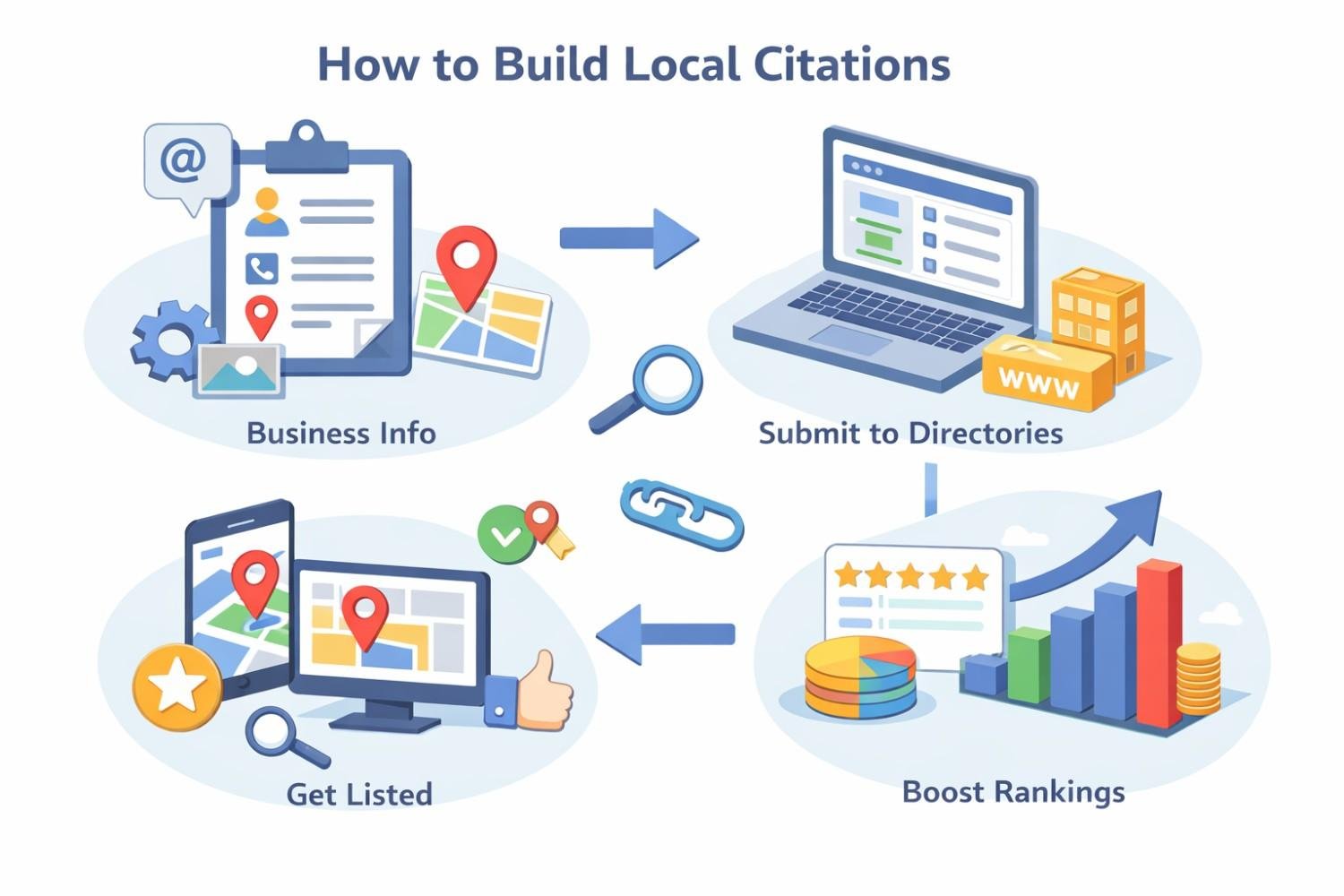
Step-by-Step Citation Building Process
Follow this systematic approach to build citations efficiently while maintaining quality and consistency.
Step 1: Audit Existing Citations
Before building new citations, understand your current citation landscape. Search for your business name across major platforms to identify:
- Existing listings you may have forgotten
- Duplicate listings requiring consolidation
- Incorrect information needing correction
- Opportunities on platforms where you lack presence
Tools like Moz Local, BrightLocal, and Whitespark can automate this discovery process, though manual searches remain valuable for thoroughness.
Step 2: Claim and Verify Core Platforms
Begin with the highest-impact platforms. For each listing:
- Search for your business on the platform
- Claim the existing listing or create a new one
- Complete the verification process (phone, postcard, email, or document verification)
- Fill out every available field with accurate information
- Add photos and other media
- Document the listing in your tracking spreadsheet
Verification methods vary by platform. Google Business Profile typically requires postcard or phone verification. Yelp may request phone verification. Some platforms verify instantly through email confirmation.
Step 3: Submit to Data Aggregators
After securing core platforms, submit to data aggregators to extend your reach. Aggregator submissions typically require:
- Complete business information
- Verification of business ownership
- Processing time (often 2-8 weeks for distribution)
Monitor aggregator submissions to ensure information distributes correctly. Errors at the aggregator level can propagate across dozens of downstream platforms.
Step 4: Build Industry-Specific Citations
Identify the most relevant directories for your industry and submit listings. Prioritize platforms based on:
- Domain authority and traffic
- Relevance to your specific services
- Presence of competitors
- Cost (many directories offer free basic listings)
Quality matters more than quantity. Ten accurate listings on authoritative, relevant platforms outperform fifty listings on low-quality directories.
Step 5: Pursue Local Citations
Strengthen geographic relevance through local citation sources:
- Join your local Chamber of Commerce
- Submit to city and regional business directories
- Seek listings on local news and media websites
- Participate in local business associations with online directories
Local citations reinforce your connection to specific geographic areas, supporting local pack rankings for location-based searches.
Step 6: Monitor and Maintain
Citation building is not a one-time project. Establish ongoing processes to:
- Audit citations quarterly for accuracy
- Update listings when business information changes
- Respond to reviews on platforms that support engagement
- Identify and claim new citation opportunities
- Remove or correct duplicate listings
Neglected citations can develop inaccuracies over time as platforms update their databases or merge with other services.
Common Citation Building Mistakes to Avoid
Understanding frequent errors helps you build a stronger citation profile from the start.
NAP Inconsistency
The most damaging citation mistake involves inconsistent business information across platforms. Even minor variations create problems:
- “123 Main St” vs. “123 Main Street”
- “Joe’s Plumbing LLC” vs. “Joe’s Plumbing”
- “(555) 123-4567” vs. “555-123-4567”
Search engines struggle to confidently associate inconsistent listings with the same business. This uncertainty can suppress local rankings and reduce the cumulative value of your citations.
Keyword Stuffing in Business Names
Adding keywords to your business name violates most directory guidelines and can result in listing suspension. Google specifically prohibits this practice and actively removes listings that violate naming guidelines.
Use your actual business name. If you want to rank for specific keywords, optimize your business description, categories, and website content instead.
Ignoring Duplicate Listings
Duplicate listings confuse search engines and dilute your citation authority. Multiple listings for the same business on a single platform can trigger spam filters and reduce visibility.
Regularly search for duplicates and request removal or merger through each platform’s support process.
Neglecting Verification
Unverified listings carry less weight and remain vulnerable to unauthorized changes. Complete verification processes promptly, even when they require waiting for postcards or responding to phone calls.
Choosing Quantity Over Quality
Submitting to hundreds of low-quality directories wastes time and can associate your business with spammy platforms. Focus on authoritative, relevant directories rather than pursuing maximum citation count.
Abandoning Listings After Creation
Citations require ongoing attention. Business hours change, phone numbers update, and platforms modify their features. Abandoned listings develop inaccuracies that undermine their value.
Measuring Citation Building Success
Track specific metrics to evaluate your citation building efforts and identify areas for improvement.
Local Search Rankings
Monitor your positions for target keywords in local pack and organic results. Tools like BrightLocal and Local Falcon provide detailed local ranking data across geographic areas.
Expect gradual improvement rather than immediate jumps. Citation building typically influences rankings over weeks and months as search engines discover and process new listings.
Citation Accuracy Score
Audit your citations regularly to calculate accuracy rates. Divide the number of accurate citations by total citations to determine your consistency score. Target 95% or higher accuracy across all platforms.
Google Business Profile Insights
GBP provides data on how customers find and interact with your listing:
- Search queries triggering your listing
- Views on Search and Maps
- Customer actions (calls, direction requests, website visits)
Improvements in these metrics often correlate with stronger citation profiles.
Referral Traffic from Directories
Use Google Analytics to track traffic from citation sources. Create a segment for directory referral traffic to measure which platforms drive actual visitors to your website.
Phone Call and Lead Tracking
Implement call tracking to attribute leads to specific citation sources. Understanding which directories generate actual business helps prioritize ongoing efforts.
Advanced Citation Building Strategies
Once you establish a solid citation foundation, these advanced tactics can further strengthen your local search presence.
Competitor Citation Analysis
Identify where competitors have citations that you lack. Tools like Whitespark and BrightLocal can compare your citation profile against competitors, revealing opportunities you may have missed.
Unstructured Citation Building
Pursue opportunities for natural business mentions through:
- Local PR and media outreach
- Community event sponsorships
- Guest posts on local blogs
- Partnerships with complementary businesses
These unstructured citations add authenticity and diversity to your profile while potentially generating referral traffic and brand awareness.
Citation Velocity Management
Build citations at a natural pace rather than submitting to dozens of directories simultaneously. Sudden citation spikes can appear manipulative to search engines. Steady, consistent building over time produces more sustainable results.
Multi-Location Citation Strategy
Businesses with multiple locations face additional complexity. Each location needs its own citation profile with location-specific NAP information. Maintain separate tracking documents for each location and ensure no cross-contamination of address or phone information.
Review Integration
Many citation platforms support customer reviews. Develop a review generation strategy that encourages satisfied customers to leave feedback on key platforms. Reviews enhance citation value while providing social proof that influences potential customers.
Conclusion
Building local citations requires systematic effort, attention to detail, and ongoing maintenance. The businesses that approach citation building strategically, prioritizing accuracy and relevance over sheer volume, consistently outperform competitors in local search results.
Your citation profile serves as the foundation of local search visibility. Every accurate listing reinforces your business legitimacy, while inconsistencies and gaps create opportunities for competitors to capture customers searching for your services.
White Label SEO Service helps businesses build and maintain citation profiles that drive measurable local search results. Contact our team to discuss how professional citation management can strengthen your local visibility and generate more qualified leads for your business.
Frequently Asked Questions
How long does it take for local citations to impact search rankings?
Most businesses see initial ranking improvements within 4-8 weeks of building citations on authoritative platforms. However, the full impact develops over 3-6 months as search engines discover, verify, and process your listings across the citation ecosystem.
How many citations does my business need?
Quality matters more than quantity. Most local businesses benefit from 40-80 high-quality citations on relevant, authoritative platforms. Focus on core platforms, data aggregators, and industry-specific directories rather than pursuing hundreds of low-value listings.
Should I pay for citation building services?
Professional citation services save time and often achieve better results through established relationships with platforms and systematic processes. Evaluate services based on their approach to accuracy, the platforms they target, and their ongoing management capabilities.
What happens if my business address changes?
Update your canonical NAP documentation immediately, then systematically update every citation starting with Google Business Profile and data aggregators. Track each update in your citation spreadsheet and verify changes propagate correctly.
Are free citation sites worth using?
Many valuable citation sources offer free listings, including Google Business Profile, Bing Places, and numerous industry directories. Evaluate free sites based on their authority and relevance rather than dismissing them due to cost.
How do I find industry-specific citation opportunities?
Search for “[your industry] directory” and “[your industry] listings” to discover vertical platforms. Analyze where competitors have citations. Check industry associations and trade organizations for member directories.
Can duplicate citations hurt my local SEO?
Yes. Duplicate listings confuse search engines and can trigger spam filters. Regularly audit for duplicates and request removal or consolidation through each platform’s support process.
Should I use a different phone number for tracking purposes?
Using unique tracking numbers can provide valuable attribution data but creates NAP inconsistency risks. If you use tracking numbers, ensure they forward to your main number and consider the trade-offs between tracking precision and citation consistency.
How often should I audit my citations?
Conduct comprehensive citation audits quarterly at minimum. More frequent monitoring makes sense for businesses with recent information changes or those actively building new citations.
What is the difference between citations and backlinks?
Citations are mentions of your business NAP information, while backlinks are hyperlinks pointing to your website. Many citations include backlinks, but the citation value comes from the NAP mention itself, not just the link. Both contribute to local SEO through different mechanisms.