Local Pack SEO determines whether your business appears in Google’s coveted three-slot map results when customers search for services near them. This prime real estate captures approximately 42% of all clicks on local search results, according to BrightLocal’s 2024 Local Consumer Review Survey.
For business owners and marketing managers, understanding Local Pack optimization isn’t optional anymore. With 98% of consumers using the internet to find local businesses and mobile “near me” searches continuing to surge, your visibility in these map results directly impacts foot traffic, phone calls, and revenue.
This guide breaks down exactly how Local Pack rankings work, what factors influence your position, and the realistic timeline for achieving top-three placement. You’ll learn actionable strategies that drive measurable results.
What Is the Local Pack and Why Does It Matter?
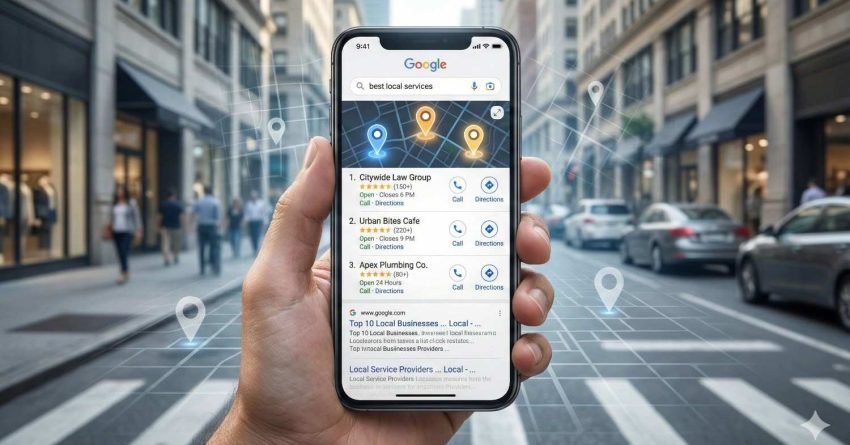
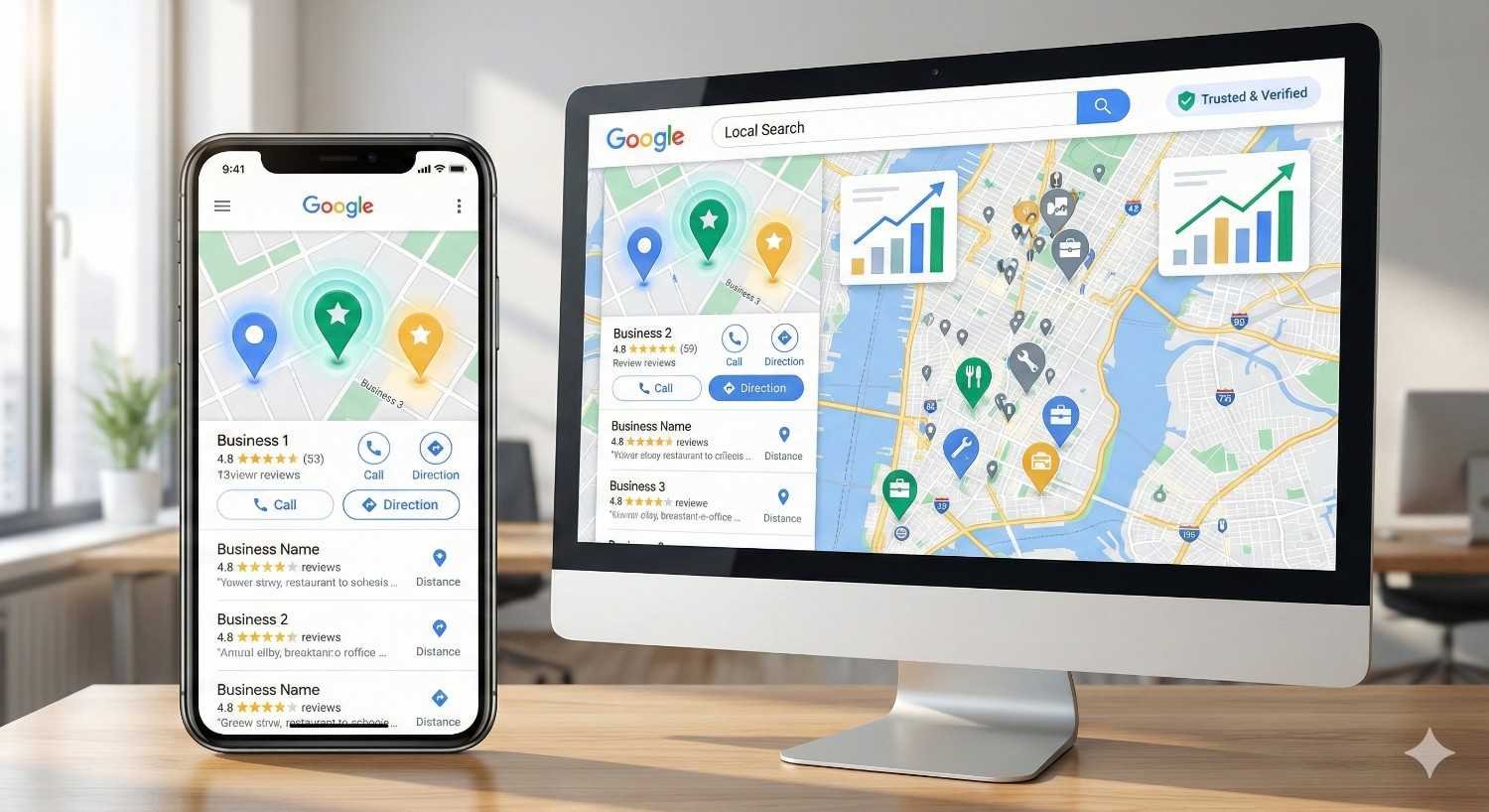
The Local Pack is Google’s prominent display of three local business listings that appears at the top of search results for location-based queries. It includes a map snippet, business names, ratings, addresses, hours, and direct action buttons for calls or directions.
When someone searches “coffee shop near me” or “plumber in Chicago,” Google serves this visual block before organic results. The Local Pack occupies prime screen real estate, especially on mobile devices where it dominates the viewport.
The Business Impact of Local Pack Visibility
Appearing in the Local Pack transforms search visibility into tangible business outcomes. Research from Moz indicates that Local Pack results receive significantly more engagement than standard organic listings for local intent queries.
The three businesses displayed capture the majority of initial user attention. Users can call directly, get directions, or visit your website without scrolling. This frictionless path from search to action shortens the customer journey considerably.
For service-area businesses, retail locations, restaurants, and professional services, Local Pack presence often determines competitive advantage. A business ranking fourth or lower may receive a fraction of the leads compared to those in the top three positions.
Local Pack vs. Local Organic Results
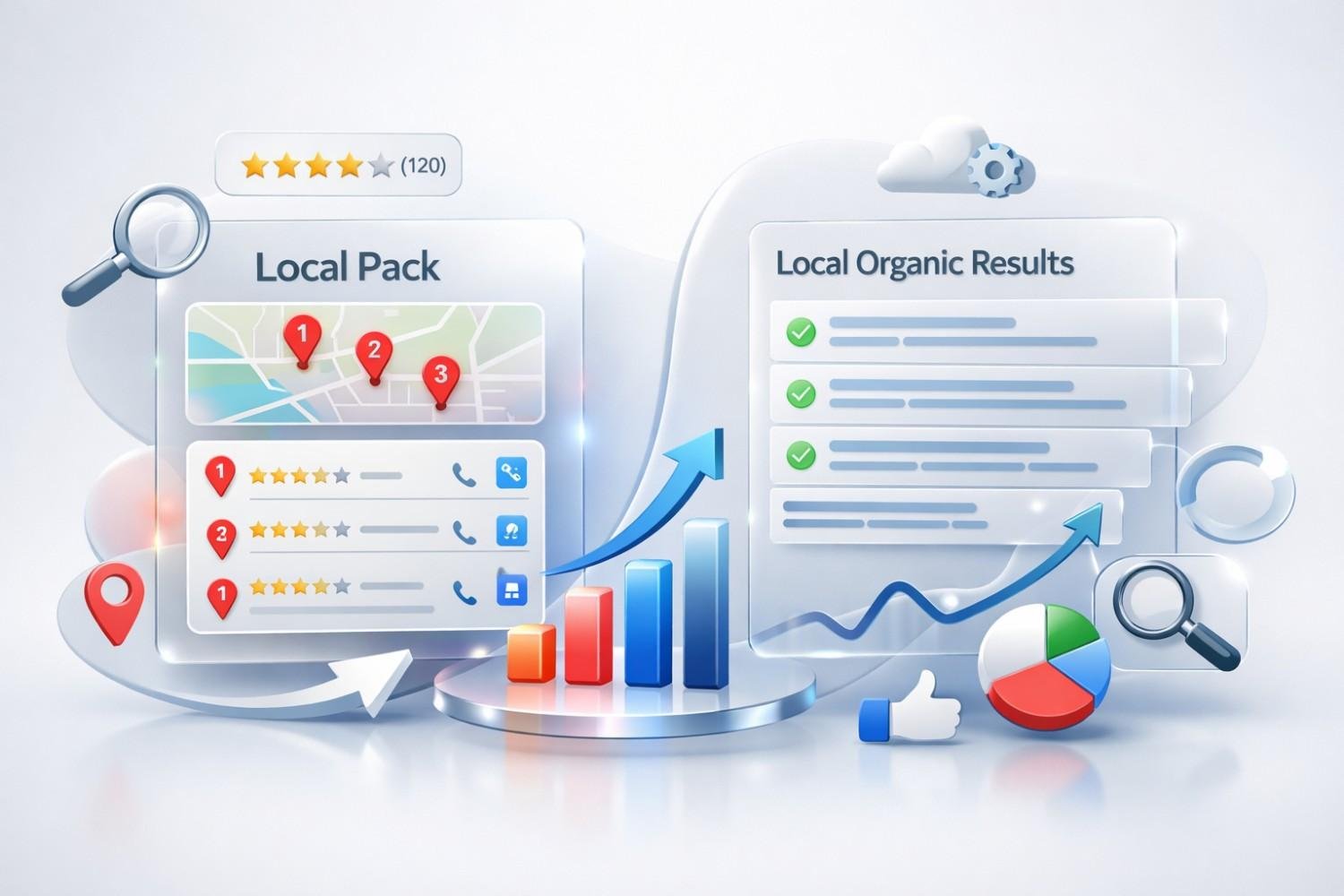
Understanding the distinction between Local Pack and local organic results helps clarify your optimization strategy. The Local Pack pulls data primarily from Google Business Profile, while local organic results depend on traditional website SEO factors.
Local organic listings appear below the Local Pack and follow standard ranking algorithms with a geographic modifier. A business can rank well organically but still miss the Local Pack entirely if their Google Business Profile optimization falls short.
The most effective local SEO strategies target both. However, for businesses serving specific geographic areas, Local Pack optimization typically delivers faster, more visible returns on investment.
Core Ranking Factors for Local Pack SEO
Google’s local algorithm evaluates three primary factors: relevance, distance, and prominence. Understanding how these interact helps prioritize your optimization efforts.
Relevance: Matching Search Intent
Relevance measures how well your business listing matches what someone is searching for. Google analyzes your business category, services, products, and the content within your Google Business Profile to determine relevance.
Selecting accurate primary and secondary categories is foundational. A dental practice should choose “Dentist” as the primary category, with secondary categories like “Cosmetic Dentist” or “Pediatric Dentist” if applicable. Misaligned categories confuse the algorithm and reduce visibility for target searches.
Your business description, services section, and posts should incorporate natural language that matches how customers search. If people search for “emergency plumber” and your profile only mentions “plumbing services,” you may miss relevant queries.
Distance: Geographic Proximity
Distance refers to how far your business location is from the searcher or the location specified in their query. This factor operates somewhat outside your direct control, but understanding it shapes realistic expectations.
For searches without a specific location (“best pizza near me”), Google uses the searcher’s device location. For queries with location modifiers (“accountant in Denver”), Google calculates distance from that specified area.
Businesses cannot manipulate their physical location, but they can ensure address accuracy and consider service-area settings strategically. Multi-location businesses should maintain separate, optimized profiles for each legitimate location.
Prominence: Authority and Reputation
Prominence reflects how well-known and trusted your business is, both online and offline. Google evaluates prominence through several signals including review quantity and quality, citation consistency, backlink profile, and overall web presence.
According to Whitespark’s Local Search Ranking Factors study, Google Business Profile signals account for approximately 32% of Local Pack ranking factors, with reviews being a significant component.
Businesses with more reviews, higher average ratings, and consistent information across the web tend to rank higher. Prominence also considers factors like brand mentions, press coverage, and the authority of websites linking to your business.
Google Business Profile Optimization
Your Google Business Profile serves as the foundation for Local Pack visibility. Comprehensive optimization across all profile elements signals relevance and builds prominence.
Essential Profile Elements
Complete every available field in your Google Business Profile. Incomplete profiles signal lower quality to both Google and potential customers.
Business name must match your real-world business name exactly. Adding keywords or location modifiers violates Google’s guidelines and risks suspension. “Joe’s Plumbing” is correct; “Joe’s Plumbing – Best Emergency Plumber Chicago” is not.
Address and phone number require absolute accuracy and consistency. Use the exact same format across your website, citations, and all online mentions. Inconsistencies create confusion and dilute ranking signals.
Business hours should reflect actual operating times, including special hours for holidays. Accurate hours build trust and prevent negative experiences when customers arrive at closed locations.
Business categories deserve careful selection. Research which categories competitors use and select the most specific primary category that accurately describes your core service. Add relevant secondary categories without overreaching.
Photos and Visual Content
Visual content significantly impacts both rankings and conversion rates. Google reports that businesses with photos receive 42% more requests for directions and 35% more website clicks than those without.
Upload high-quality images of your storefront, interior, team, products, and services. Aim for at least 10-15 photos minimum, with regular additions to signal an active, engaged business.
Geotagged photos from your actual location strengthen geographic relevance signals. Encourage customers to upload photos through reviews, as user-generated content adds authenticity.
Google Business Profile Posts
Regular posting keeps your profile active and provides additional keyword relevance opportunities. Posts appear directly in your Business Profile and can highlight offers, events, products, or updates.
Post at least weekly with content relevant to your services and audience. Include calls-to-action and links where appropriate. While posts expire after seven days (except event posts), consistent posting demonstrates business activity.
Products and Services Sections
The products and services sections allow detailed descriptions of what you offer. These sections provide additional relevance signals and help customers understand your offerings before visiting.
Add all relevant services with descriptions that naturally incorporate how customers search. Include pricing where appropriate, as this information helps qualify leads and improves user experience.
Review Strategy for Local Pack Rankings
Reviews function as both a ranking factor and a conversion factor. A strategic approach to review generation and management impacts Local Pack visibility directly.
Review Quantity and Velocity
More reviews generally correlate with higher Local Pack rankings, but velocity matters too. A steady stream of new reviews signals ongoing customer engagement and business activity.
BrightLocal research shows that 87% of consumers read online reviews for local businesses. Beyond rankings, reviews influence whether searchers choose your business over competitors.
Implement systematic review requests as part of your customer journey. Follow up after service completion through email, SMS, or in-person requests. Make the process simple with direct links to your Google review page.
Review Quality and Keywords
Review content influences relevance signals. When customers naturally mention services, products, or locations in their reviews, it reinforces your relevance for those terms.
You cannot script customer reviews, but you can guide the conversation. Asking “How was your experience with our emergency plumbing service?” may prompt more detailed, keyword-rich responses than generic requests.
Respond to all reviews, positive and negative. Responses demonstrate engagement and provide opportunities to naturally incorporate relevant terms while addressing customer feedback professionally.
Managing Negative Reviews
Negative reviews happen to every business. How you respond matters more than the review itself. Professional, solution-oriented responses can actually improve perception among potential customers reading reviews.
Address concerns directly, offer to resolve issues offline, and avoid defensive or argumentative language. A thoughtful response to a negative review often impresses potential customers more than a wall of five-star ratings.
Never attempt to remove legitimate negative reviews through policy violations. Focus instead on generating enough positive reviews that occasional negative feedback becomes statistically insignificant.
Local Citation Building and NAP Consistency
Citations are online mentions of your business name, address, and phone number (NAP). Consistent citations across authoritative directories strengthen prominence signals.
Priority Citation Sources
Focus first on major data aggregators and high-authority directories. These sources feed information to numerous other platforms and carry significant weight.
Core directories include Google Business Profile, Apple Maps, Bing Places, Yelp, Facebook, and industry-specific platforms relevant to your business category. A restaurant needs TripAdvisor and OpenTable; a contractor needs HomeAdvisor and Angi.
Data aggregators like Neustar Localeze, Foursquare, and Data Axle distribute information to hundreds of smaller directories. Ensuring accuracy with aggregators creates a cascade of consistent citations.
NAP Consistency Standards
Inconsistent NAP information confuses search engines and dilutes ranking signals. Establish a standard format and use it everywhere.
Decide on exact formatting: “Street” vs. “St.”, “Suite” vs. “#”, phone number format with or without parentheses. Document this standard and audit existing citations for consistency.
Use citation management tools or services to identify inconsistencies and update incorrect listings. This foundational work prevents ongoing confusion and strengthens your citation profile.
Industry-Specific Citations
Beyond general directories, identify citation opportunities specific to your industry. Professional associations, licensing boards, chamber of commerce memberships, and industry publications often provide authoritative citation opportunities.
These niche citations carry additional relevance signals because they confirm your business operates within a specific industry. A law firm listed with the state bar association gains credibility that a generic directory listing cannot provide.
On-Page Local SEO for Your Website
While Google Business Profile drives Local Pack rankings, your website supports those efforts and captures local organic traffic. On-page optimization creates a cohesive local SEO presence.
Location Pages and Content
Businesses serving specific areas should create dedicated location pages with unique, valuable content. Avoid thin pages that simply swap city names; instead, develop genuinely useful local content.
Include local landmarks, service area specifics, community involvement, and location-specific testimonials. Embed a Google Map, display your NAP prominently, and link to your Google Business Profile.
For multi-location businesses, each location deserves a unique page with distinct content, photos, and information relevant to that specific market.
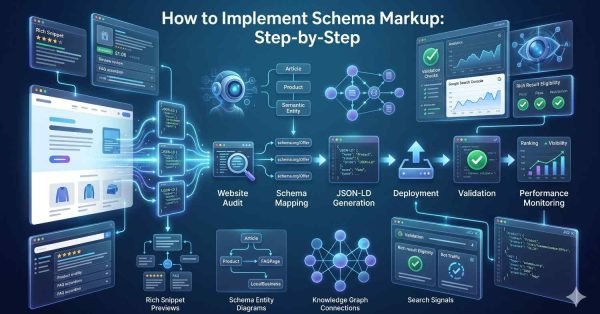
Schema Markup Implementation
Local business schema markup helps search engines understand your business information in a structured format. Implement LocalBusiness schema (or more specific subtypes) on your website.
Include your business name, address, phone number, hours, geographic coordinates, and other relevant properties. Schema doesn’t directly rank you higher, but it helps Google accurately interpret and display your information.
Test your implementation using Google’s Rich Results Test to ensure proper formatting and identify any errors.
Mobile Optimization
Local searches happen predominantly on mobile devices. Google data indicates that 76% of people who search for something nearby on their smartphone visit a related business within a day.
Your website must load quickly, display properly, and function smoothly on mobile devices. Click-to-call buttons, easy-to-tap navigation, and fast load times directly impact whether mobile searchers convert into customers.
Realistic Timelines for Local Pack Results
Setting accurate expectations prevents frustration and supports informed decision-making. Local Pack SEO results vary based on competition, current standing, and optimization effort.
Initial Optimization Phase: 1-3 Months
The first phase focuses on foundational elements: claiming and optimizing your Google Business Profile, fixing citation inconsistencies, and implementing basic on-page local SEO.
During this period, you may see improvements in profile views and engagement metrics before ranking changes become apparent. Google needs time to crawl, index, and evaluate changes.
New businesses or those with minimal existing optimization often see faster initial gains as they address obvious gaps. Established businesses in competitive markets may need longer to see movement.
Growth Phase: 3-6 Months
Consistent effort over three to six months typically produces measurable ranking improvements. Review generation gains momentum, citation profiles strengthen, and Google develops confidence in your business information.
Track progress through Google Business Profile Insights, rank tracking tools, and actual business metrics like calls and direction requests. Rankings may fluctuate during this phase as Google tests your listing in different positions.
Competitive markets require sustained effort. If competitors actively optimize their local presence, maintaining and improving rankings demands ongoing attention rather than one-time fixes.
Sustained Results: 6-12 Months and Beyond
Long-term Local Pack success requires ongoing maintenance and continuous improvement. Review generation must continue, profile updates should reflect business changes, and competitive monitoring informs strategy adjustments.
Businesses that achieve top-three rankings and then neglect their local SEO often see gradual decline as competitors advance. Local Pack SEO is not a project with an endpoint but an ongoing marketing function.
The businesses that dominate Local Pack results typically treat local SEO as a permanent priority, not a temporary campaign.
Measuring Local Pack SEO Performance
Effective measurement connects optimization efforts to business outcomes. Track both ranking metrics and actual business results.
Key Performance Indicators
Google Business Profile Insights provides direct data on how customers find and interact with your listing. Monitor search queries, profile views, direction requests, phone calls, and website clicks.
Rank tracking for local keywords shows your position in Local Pack results across target searches. Track both branded and non-branded queries to understand visibility comprehensively.
Conversion metrics connect visibility to revenue. Track phone calls, form submissions, direction requests, and in-store visits attributed to local search. This data justifies ongoing investment and identifies optimization opportunities.
Attribution Challenges
Local SEO attribution presents challenges because customer journeys often span multiple touchpoints. Someone may find you in the Local Pack, visit your website, then call later from a saved contact.
Use call tracking with unique numbers for your Google Business Profile to measure call volume accurately. Implement UTM parameters on website links from your profile to track web traffic sources.
Accept that perfect attribution is impossible, but directional data still informs strategy. Trends in calls, direction requests, and profile engagement correlate with ranking improvements even when direct attribution is unclear.
Common Local Pack SEO Mistakes to Avoid
Understanding common pitfalls helps you avoid setbacks that delay results or trigger penalties.
Guideline Violations
Google’s guidelines for Google Business Profile exist for reasons. Violations risk suspension, which removes your listing entirely until resolved.
Common violations include keyword stuffing in business names, creating listings for virtual offices or P.O. boxes, operating multiple listings for the same location, and using fake reviews. These shortcuts may provide temporary gains but create significant long-term risk.
Neglecting Review Management
Ignoring reviews, whether positive or negative, signals disengagement. Customers notice when businesses don’t respond, and Google may interpret lack of engagement as lower quality.
Establish a review response protocol and stick to it. Thank positive reviewers, address negative feedback professionally, and demonstrate that you value customer input.
Inconsistent Information
NAP inconsistencies across the web confuse Google and erode ranking potential. An old phone number on a forgotten directory listing or an outdated address on your Facebook page creates conflicting signals.
Audit your online presence regularly. Use tools to identify citations and verify accuracy. Update information promptly when business details change.
Conclusion
Local Pack SEO combines Google Business Profile optimization, review management, citation building, and on-page local signals into a comprehensive strategy for local visibility. The businesses that appear in those top three map positions earn significantly more clicks, calls, and customers than those buried below.
Success requires understanding how relevance, distance, and prominence interact, then systematically optimizing each factor within your control. Realistic timelines span months rather than weeks, but consistent effort produces measurable, sustainable results that compound over time.
White Label SEO Service helps businesses build and maintain Local Pack visibility through proven optimization strategies, ongoing management, and performance tracking. Contact us to discuss how local SEO can drive more customers to your business.
Frequently Asked Questions
How long does it take to rank in the Local Pack?
Most businesses see measurable improvements within three to six months of consistent optimization. Competitive markets may require longer, while businesses with minimal existing optimization often see faster initial gains. Sustained top-three rankings typically develop over six to twelve months of ongoing effort.
What is the most important Local Pack ranking factor?
Google Business Profile optimization carries the most weight, accounting for approximately 32% of ranking factors according to industry research. Within your profile, accurate categories, complete information, and review signals have the strongest impact on rankings.
Can I rank in the Local Pack without a physical location?
Service-area businesses without storefronts can rank in the Local Pack by setting service areas in their Google Business Profile. However, you must have a legitimate business address for verification purposes, even if you hide it from public display.
How many reviews do I need to rank in the Local Pack?
There’s no specific number that guarantees rankings. Focus on generating more reviews than your direct competitors while maintaining a high average rating. Consistent review velocity matters more than hitting a particular total.
Do Google Business Profile posts affect Local Pack rankings?
Posts provide minor relevance signals and demonstrate business activity, but they’re not a primary ranking factor. Their greater value lies in conversion optimization, giving potential customers additional information and calls-to-action directly in your profile.
Why did my Local Pack ranking drop suddenly?
Ranking drops can result from algorithm updates, increased competitor activity, guideline violations, or changes to your business information. Review recent changes, check for policy violations, and monitor competitor activity to identify potential causes.
Should I focus on Local Pack or local organic results?
Both matter, but Local Pack typically delivers higher visibility and engagement for local intent queries. Prioritize Google Business Profile optimization first, then build supporting on-page local SEO. The strategies complement each other.
How do I track Local Pack rankings accurately?
Use rank tracking tools that specifically monitor Local Pack positions, as standard rank trackers may only show organic results. Track from multiple locations within your service area, since rankings vary by searcher location.
Can fake reviews help my Local Pack ranking?
Fake reviews violate Google’s guidelines and risk profile suspension. Google’s detection systems have improved significantly, and the consequences of getting caught far outweigh any temporary benefit. Focus on generating legitimate reviews from actual customers.
What happens if my Google Business Profile gets suspended?
Suspension removes your listing from search results until you resolve the issue through Google’s reinstatement process. Common causes include guideline violations, verification problems, or suspicious activity. Address the specific violation, submit a reinstatement request, and be prepared for a potentially lengthy review process.