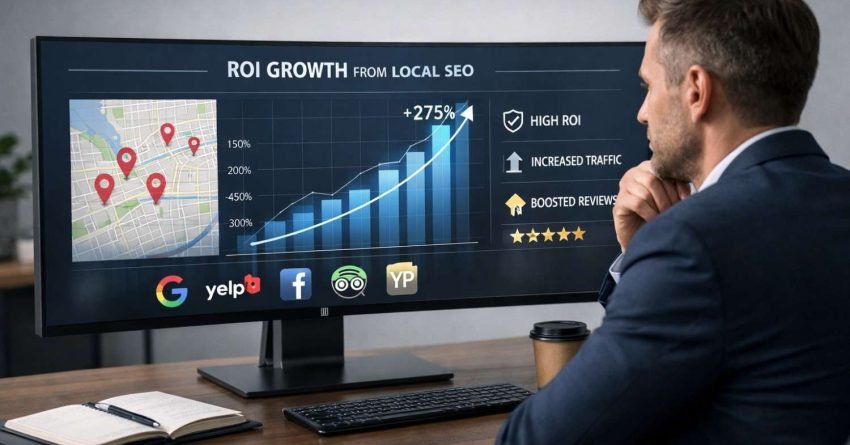
Paid citation services typically deliver 150-300% ROI within 6-12 months for local businesses, with returns compounding as citations age and strengthen domain authority. The investment ranges from $200 to $2,000+ monthly depending on scope, but the real question is whether those dollars translate into measurable business growth.
For business owners evaluating SEO investments, citation building often feels like a black box. You pay for listings, but connecting those listings to actual revenue requires understanding the mechanics behind local search visibility. This guide breaks down exactly how citation ROI works and what realistic returns look like.
You will learn how to calculate citation ROI accurately, what factors determine success, and how to avoid common mistakes that waste budget without generating results.

What Are Paid Citation Services?
Paid citation services handle the creation, distribution, and management of your business listings across online directories, data aggregators, and industry-specific platforms. These services save time while ensuring consistent, accurate business information appears where potential customers search.
Definition and Core Components
A citation is any online mention of your business name, address, and phone number (NAP). Paid citation services systematically build these mentions across authoritative platforms to strengthen local search signals.
Core components include:
- Directory submissions to platforms like Yelp, Yellow Pages, and industry-specific sites
- Data aggregator distribution through Factual, Neustar, and Foursquare
- NAP consistency audits to identify and correct conflicting information
- Ongoing monitoring to maintain accuracy as platforms update
Types of Citation Services Available
The market offers several service tiers. Basic packages focus on major directories and typically cost $200-500 for initial setup. Mid-tier services add data aggregators and industry directories for $500-1,500. Enterprise solutions include custom integrations, API connections, and dedicated account management at $1,500+ monthly.
Some providers offer one-time citation building, while others provide ongoing management subscriptions. The right choice depends on your business complexity and internal resources.
How Paid Citations Differ from Organic Citation Building
Manual citation building requires 15-30 minutes per directory submission. A comprehensive citation profile needs 50-100+ listings. The math reveals why businesses outsource: building citations internally costs significant staff time that could generate revenue elsewhere.
Paid services also access bulk submission tools, established relationships with data aggregators, and systematic processes that reduce errors. According to BrightLocal’s 2024 Local Consumer Review Survey, 98% of consumers used the internet to find local business information, making citation accuracy increasingly critical.
Understanding Citation ROI Fundamentals
ROI from citations differs from direct advertising because the value accumulates over time rather than delivering immediate conversions. Understanding this distinction prevents unrealistic expectations and premature strategy abandonment.
What Constitutes ROI in Citation Building
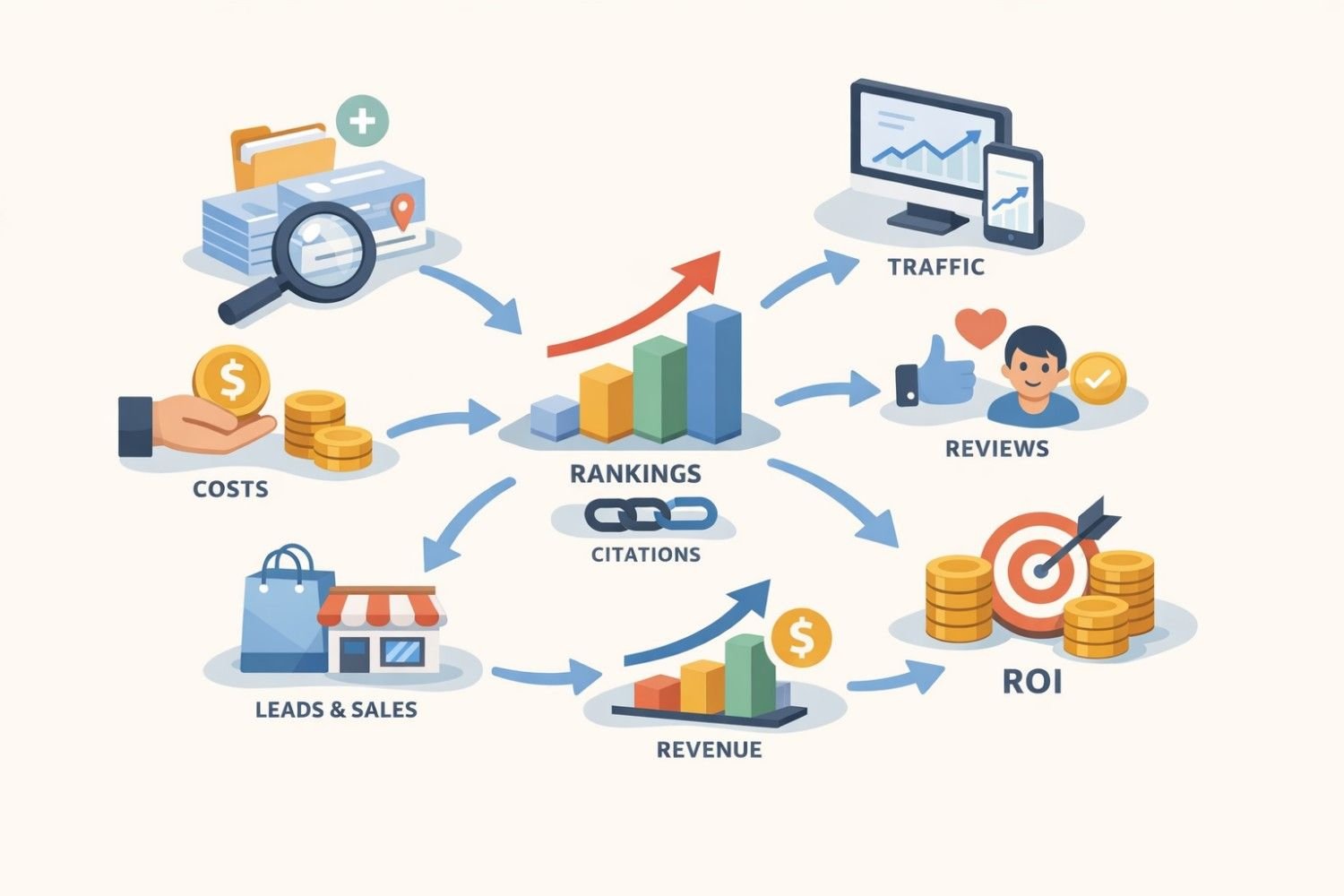
Citation ROI encompasses multiple value streams:
- Ranking improvements in local pack and organic results
- Increased website traffic from directory referrals
- Phone calls and direction requests directly from listings
- Brand visibility across platforms where customers research
- Trust signals that influence conversion rates
The challenge lies in attribution. A customer might discover your business through a Google Maps result influenced by citations, then convert through your website. Traditional analytics miss this connection.
Direct vs. Indirect ROI Metrics
Direct metrics include trackable actions: clicks from directory listings, calls from citation phone numbers, and form submissions with directory referral sources. These provide clear dollar values when connected to average customer lifetime value.
Indirect metrics require correlation analysis: local ranking improvements, branded search volume increases, and overall organic traffic growth. Moz’s Local Search Ranking Factors study identifies citation signals as contributing approximately 7% to local pack ranking factors, making them one piece of a larger puzzle.
The Timeline for Measurable Returns
Citations require 3-6 months before significantly impacting rankings. Data aggregators need time to distribute information across their networks. Search engines must crawl, index, and trust the new signals.
Expect this general timeline:
- Month 1-2: Citations live, minimal ranking impact
- Month 3-4: Initial ranking movements, increased impressions
- Month 5-6: Measurable traffic and lead increases
- Month 7-12: Compounding returns as citation authority builds
Businesses abandoning citation strategies before month six rarely see meaningful ROI.
Key Factors That Influence Citation Service ROI
Not all citation investments produce equal returns. Several variables determine whether your spend generates strong ROI or disappointing results.
Citation Quality and Source Authority
A citation from the Better Business Bureau carries more weight than a listing on an obscure directory. Search engines evaluate citation sources based on domain authority, relevance, and trustworthiness.
High-quality citation sources include:
- Major platforms: Google Business Profile, Yelp, Facebook, Apple Maps
- Data aggregators: Factual, Neustar Localeze, Foursquare
- Industry directories: Avvo for lawyers, Healthgrades for doctors, Houzz for contractors
- Local sources: Chamber of commerce, local news sites, community directories
Low-quality directories with minimal traffic and questionable link profiles can actually harm your SEO efforts.
NAP Consistency and Data Accuracy
Inconsistent business information confuses search engines and erodes trust signals. If your address appears differently across citations, Google struggles to confidently display your business in local results.
Common inconsistencies include:
- Suite numbers present on some listings, absent on others
- Phone number format variations (parentheses, dashes, spaces)
- Business name variations (Inc., LLC, abbreviations)
- Outdated addresses from previous locations
A study by Whitespark found that NAP consistency ranks among the top local ranking factors, directly impacting citation ROI.
Industry and Competitive Landscape
Citation ROI varies dramatically by industry. A plumber in a mid-sized city faces different competitive dynamics than a law firm in Manhattan. Industries with fewer competitors see faster ranking improvements from citation building.
Highly competitive markets require more citations, higher quality sources, and longer timelines. Less competitive niches might achieve strong local visibility with 50 well-placed citations, while saturated markets need 150+ across diverse platforms.
Geographic Targeting and Local Relevance
Citations from locally relevant sources carry additional weight for geographic searches. A restaurant benefits more from a local food blog mention than a national directory listing.
Multi-location businesses face complexity: each location needs its own citation profile with location-specific information. Managing 50 locations across 100 directories creates 5,000 individual listings requiring accuracy and maintenance.
How to Calculate Your Citation Service ROI
Accurate ROI calculation requires tracking the right metrics and applying appropriate attribution models. Most businesses underestimate citation value because they measure incorrectly.
Essential Metrics to Track
Track these metrics before and after citation campaigns:
Visibility Metrics:
- Local pack ranking positions for target keywords
- Google Business Profile impressions and actions
- Organic traffic from local searches
Engagement Metrics:
- Clicks from directory listings (use UTM parameters)
- Phone calls from citation phone numbers (use tracking numbers)
- Direction requests from map listings
Conversion Metrics:
- Leads generated from local search traffic
- Revenue from customers who found you through local channels
- Customer acquisition cost changes
Attribution Models for Citation Impact
Citations rarely drive direct conversions. Instead, they influence the customer journey at multiple touchpoints. Consider these attribution approaches:
First-touch attribution credits citations when they introduce customers to your business through directory discovery.
Multi-touch attribution distributes credit across all touchpoints, giving citations partial credit for assisted conversions.
Incrementality testing compares performance in markets with citation investment against control markets without investment.
For most businesses, a blended approach works best: track direct conversions from citations while also measuring overall local search performance improvements.
ROI Calculation Formula and Examples
Basic Citation ROI Formula:
Copy
ROI = (Revenue from Local Search – Citation Investment) / Citation Investment × 100
Example Calculation:
A home services company invests $6,000 annually in citation services. They track:
- 40 additional leads per month from local search improvements
- 25% close rate = 10 new customers monthly
- $500 average job value = $5,000 monthly revenue
- $60,000 annual revenue attributed to local search improvements
ROI = ($60,000 – $6,000) / $6,000 × 100 = 900% ROI
Even conservative estimates often show strong returns because citation costs remain relatively fixed while benefits compound.
Realistic ROI Expectations by Business Type
Different business models experience varying citation ROI based on customer value, search volume, and competitive factors.
Local Service Businesses
Plumbers, electricians, HVAC technicians, and similar service providers typically see the strongest citation ROI. High customer lifetime values, urgent search intent, and geographic service areas align perfectly with local citation strategies.
Expected ROI range: 200-500% within 12 months
These businesses benefit from:
- High-intent local searches (“emergency plumber near me”)
- Repeat customer potential
- Referral generation from satisfied customers
- Limited geographic competition
Multi-Location Enterprises
Franchises, retail chains, and multi-location service businesses face higher complexity but can achieve significant scale advantages. Centralized citation management reduces per-location costs while maintaining consistency.
Expected ROI range: 150-300% within 12 months
Challenges include:
- Managing location-specific information at scale
- Coordinating with individual location managers
- Handling location openings, closings, and relocations
- Maintaining brand consistency across markets
E-commerce and National Brands
Businesses without physical locations or with national reach see lower direct citation ROI. However, citations still contribute to overall domain authority and branded search visibility.
Expected ROI range: 50-150% within 12 months
Value comes from:
- Brand mentions increasing trust signals
- Backlink value from directory profiles
- Branded search volume improvements
- Supporting local landing pages for service areas
Maximizing ROI from Paid Citation Services
Strategic decisions significantly impact citation investment returns. Optimizing these factors can double or triple your ROI.
Selecting the Right Citation Provider
Evaluate providers based on:
Directory quality: Do they submit to authoritative platforms or bulk low-quality directories?
Data aggregator access: Can they distribute through major aggregators that feed hundreds of downstream sites?
Reporting transparency: Will you receive detailed reports showing exactly where citations were built?
Ongoing management: Do they monitor and correct citations over time, or is it one-time submission?
Industry expertise: Do they understand your specific industry’s important directories?
Request sample citation lists before committing. Quality providers willingly share their directory networks.
Integration with Broader SEO Strategy
Citations work best as part of comprehensive local SEO. Isolated citation building without supporting elements produces limited results.
Integrate citations with:
- Google Business Profile optimization for maximum local pack visibility
- On-page local SEO with location pages and schema markup
- Review generation to build social proof alongside citations
- Local link building from community organizations and local media
- Content marketing targeting local search queries
This integrated approach multiplies citation effectiveness.
Ongoing Management and Optimization
Citation ROI degrades without maintenance. Directories update platforms, businesses change information, and competitors build their own citation profiles.
Ongoing management includes:
- Quarterly audits for accuracy and consistency
- Suppression of duplicate listings
- Updates when business information changes
- Expansion to new relevant directories
- Monitoring for unauthorized changes
Budget 20-30% of initial citation investment for annual maintenance to protect your ROI.
Common Pitfalls That Diminish Citation ROI
Avoiding these mistakes prevents wasted investment and protects your local search visibility.
Low-Quality or Spammy Directories
Some citation services prioritize quantity over quality, submitting to hundreds of low-authority directories that provide minimal value. Worse, some directories carry spam signals that can negatively impact your SEO.
Warning signs include:
- Directories with no organic traffic
- Sites filled with ads and minimal content
- Directories that accept any business without verification
- Networks of interlinked low-quality sites
Quality citation services focus on 50-150 authoritative directories rather than 500+ questionable ones.
Inconsistent Business Information
Even small inconsistencies compound across dozens of citations. A missing suite number on 30 directories creates significant NAP inconsistency that confuses search engines.
Before building citations, establish your canonical business information:
- Exact legal business name (decide on Inc., LLC, etc.)
- Complete address with consistent formatting
- Primary phone number (local vs. toll-free decision)
- Website URL (www vs. non-www, trailing slash)
- Business categories and descriptions
Document this information and ensure every citation matches exactly.
Neglecting Citation Maintenance
Citations are not set-and-forget assets. Without maintenance, accuracy degrades over time:
- Directories merge or shut down
- Platform updates reset or change information
- Competitors or bad actors edit your listings
- Business information changes require updates
Businesses that build citations and never revisit them often find their citation profile in disarray within 18-24 months, erasing previous ROI gains.
Measuring Long-Term Citation Value
Citation ROI extends beyond immediate ranking improvements. Long-term value accumulates through several mechanisms.
Compounding Effects on Local Rankings
Citations age like fine wine. Older, established citations carry more weight than newly created ones. A citation profile built over years provides competitive advantages that new market entrants cannot quickly replicate.
This compounding effect means:
- Year-one citation investment continues generating returns in year three
- Competitors must invest more to overcome your established presence
- Ranking stability improves as citation authority solidifies
Brand Visibility and Trust Signals
Citations place your business information across platforms where customers research purchases. Even when citations do not directly drive conversions, they reinforce brand presence and legitimacy.
Customers who see your business consistently across multiple platforms develop familiarity and trust. This psychological effect influences conversion rates even when attribution cannot track the connection.
Customer Acquisition Cost Impact
Strong local visibility from citations reduces reliance on paid advertising. Businesses ranking prominently in local results can decrease PPC spend while maintaining lead volume.
Calculate this impact by comparing:
- Cost per lead from paid channels
- Cost per lead from organic local search
- Citation investment required to maintain organic visibility
Many businesses find organic local leads cost 50-70% less than paid leads, making citation investment highly efficient.
Conclusion
Paid citation services deliver measurable ROI when implemented strategically, with most local businesses seeing 150-300% returns within the first year. The key lies in selecting quality providers, maintaining consistency, and integrating citations within broader local SEO efforts.
Understanding citation ROI requires patience and proper measurement. The compounding nature of citation authority means early investments continue generating returns for years, making this one of the most cost-effective local SEO tactics available.
Ready to maximize your citation ROI? White Label SEO Service provides comprehensive citation management as part of our full-service local SEO solutions. Contact us to discuss how strategic citation building can drive sustainable organic growth for your business.
Frequently Asked Questions
What is the average ROI for paid citation services?
Most local businesses see 150-300% ROI from paid citation services within 12 months. Service businesses with high customer values often exceed 400% ROI. Results vary based on industry competition, citation quality, and integration with broader SEO strategy.
How long does it take to see ROI from citation building?
Expect 3-6 months before citations significantly impact rankings and traffic. Data aggregators need time to distribute information, and search engines must crawl and trust new signals. Meaningful ROI typically materializes between months 5-12.
Are paid citation services worth it for small businesses?
Yes, particularly for local service businesses. The time savings alone often justify the cost, as manual citation building requires 15-30 minutes per directory. Small businesses with limited staff benefit most from outsourcing this systematic but time-intensive work.
How do citations impact local search rankings?
Citations serve as trust signals that verify your business information. Consistent NAP data across authoritative directories helps search engines confidently display your business in local results. Citations contribute approximately 7% to local pack ranking factors according to industry research.
What makes a high-quality citation?
High-quality citations come from authoritative, relevant platforms with real traffic and editorial standards. Major directories like Yelp, industry-specific platforms, and local sources provide more value than bulk low-authority directories. Accuracy and completeness also determine citation quality.
Should I use paid citations or build them manually?
Paid services make sense for most businesses due to time efficiency and access to bulk submission tools. Manual building works for businesses with very limited budgets and available staff time. The break-even point typically favors paid services once you need more than 20-30 citations.
How many citations does my business need?
Most local businesses benefit from 50-100 quality citations across major directories, data aggregators, and industry-specific platforms. Highly competitive markets may require 150+. Quality matters more than quantity, so focus on authoritative sources rather than maximizing citation count.