
Finding the right white label web design partner can transform your agency’s capacity overnight. The best providers deliver professional websites under your brand, with turnaround times as fast as 48 hours and pricing starting around $200 per project. This ranking evaluates over 30 services based on quality, pricing transparency, support, and scalability.
Whether you’re a marketing agency expanding service offerings or a startup needing reliable design fulfillment, choosing the wrong partner costs more than money. It costs client relationships. This guide breaks down exactly which white label web design services deliver consistent results in 2026 and which ones fall short.
You’ll find detailed evaluations across six categories, comparison tables for quick decisions, pricing breakdowns by website type, and actionable criteria for selecting your ideal partner.
What Are White Label Web Design Services?
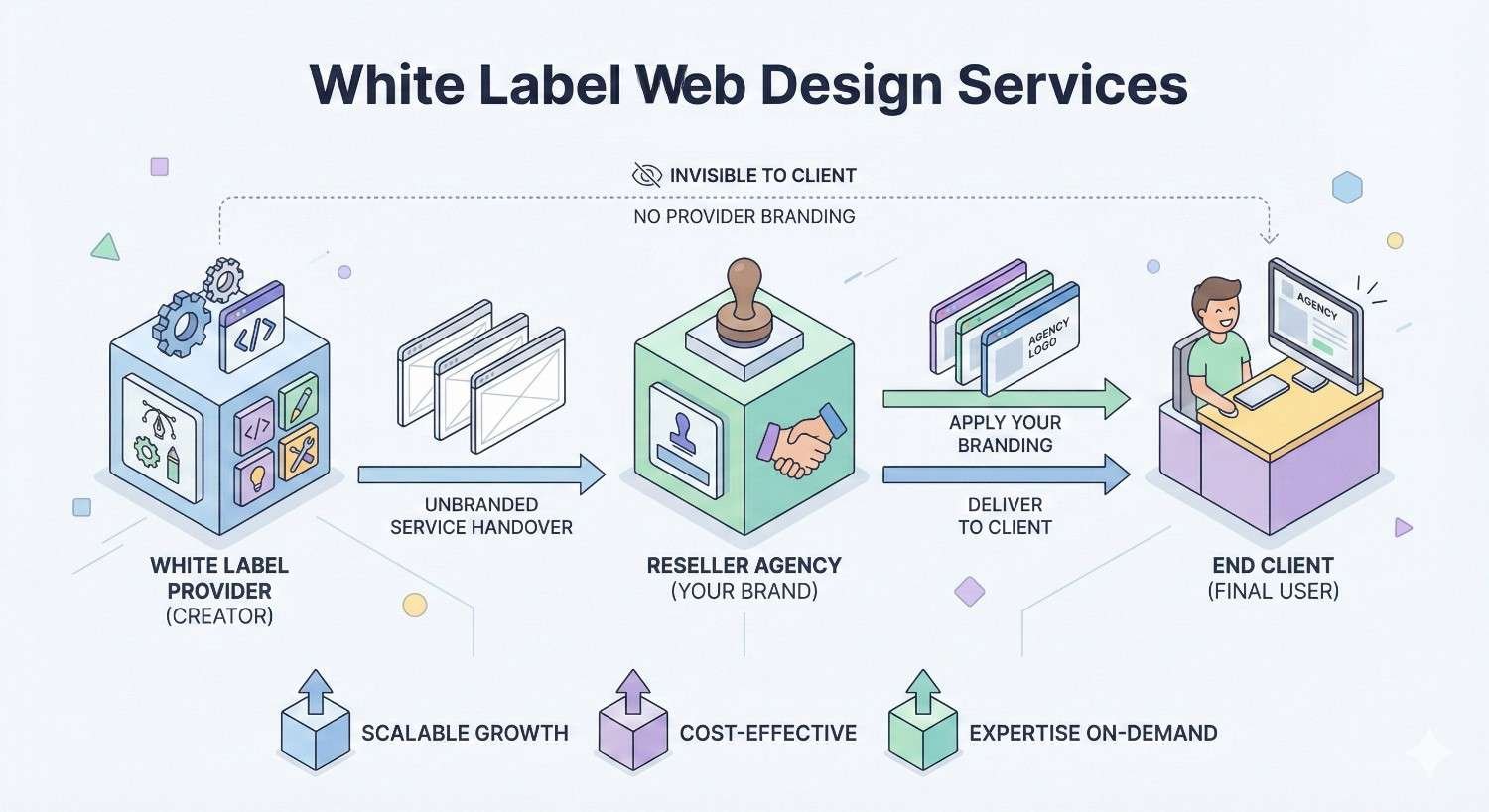
White label web design services allow agencies, freelancers, and businesses to outsource website creation to a third-party provider who delivers the finished product under the reseller’s brand. The end client never knows another company built their website. This model has become essential for digital agencies that want to offer web design without hiring full-time designers or developers.
The white label model differs from traditional outsourcing because confidentiality and brand invisibility are built into the service agreement. Your white label partner operates as an extension of your team, using your branding, communication style, and project management preferences.
How White Label Web Design Works
The process typically follows a straightforward workflow. You receive a web design request from your client, gather their requirements, and pass the project brief to your white label partner. The partner’s design team creates the website according to specifications, delivers it for your review, and you present the finished product to your client as your own work.
Most white label providers offer dedicated project portals where you can track progress, request revisions, and communicate with designers. Some services integrate directly with popular project management tools like Asana, Monday.com, or Basecamp. The best partners maintain strict confidentiality protocols, including non-disclosure agreements and branded communication templates.
Turnaround times vary significantly across providers. Simple landing pages might be completed in 2-3 business days, while complex multi-page websites with custom functionality can take 2-4 weeks. Understanding these timelines helps you set accurate expectations with your clients.
Who Uses White Label Web Design Services
Digital marketing agencies represent the largest user segment. These agencies often specialize in SEO, PPC, or social media marketing but receive frequent requests for website redesigns or new builds. Rather than turning away revenue or hiring expensive in-house talent, they partner with white label providers.
Freelance web designers and developers also rely heavily on white label services during busy periods. When project volume exceeds capacity, outsourcing overflow work maintains client relationships without sacrificing quality or missing deadlines.
Hosting companies and domain registrars increasingly bundle web design services with their core offerings. White label partnerships allow them to provide design services without building internal teams. Similarly, print shops, branding agencies, and IT consultants use white label web design to expand their service portfolios.
Startups and small businesses sometimes use white label services indirectly through their marketing agencies. The end client benefits from professional design quality while the agency maintains healthy profit margins on design projects.
Why Agencies and Businesses Outsource Web Design in 2026
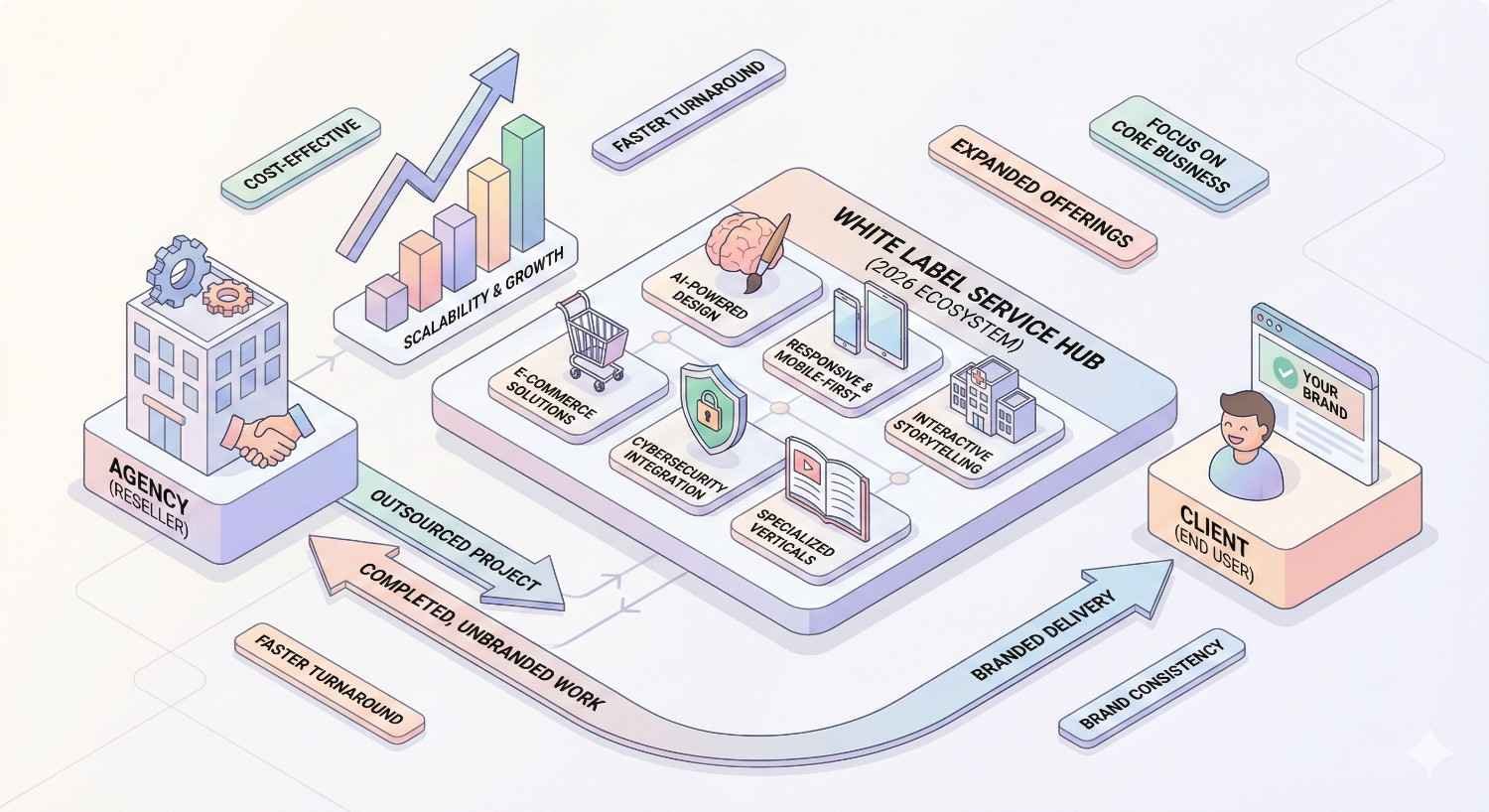
The web design outsourcing market continues expanding as agencies face pressure to deliver more services with leaner teams. Economic uncertainty has pushed many businesses toward variable-cost models rather than fixed overhead. White label partnerships provide exactly that flexibility.
Client expectations have also evolved. Modern businesses expect their marketing partners to handle everything from SEO to social media to web design. Agencies that can’t offer comprehensive services lose clients to competitors who can. White label web design bridges this capability gap without the risk of full-time hires.
Cost Efficiency and Scalability Benefits
Hiring an in-house web designer in the United States costs between $50,000 and $85,000 annually when you factor in salary, benefits, software licenses, and training. That’s a significant fixed cost regardless of project volume. White label services convert this fixed expense into a variable cost that scales with actual demand.
Consider an agency that completes 5 web design projects monthly. At an average white label cost of $500 per project, monthly design expenses total $2,500. During slow months, costs drop proportionally. During busy periods, you can scale to 15 or 20 projects without hiring additional staff.
This model also eliminates recruitment costs, onboarding time, and the risk of a bad hire. If a white label partner underperforms, switching providers is far simpler than terminating an employee and starting the hiring process again.
Access to Specialized Design Expertise
White label providers typically employ diverse design teams with specialists across different platforms and industries. One project might require WordPress expertise while another needs Shopify development. Maintaining that breadth of knowledge in-house requires multiple hires or constant training.
The best white label services employ designers who focus exclusively on specific platforms. Their WordPress specialists build sites daily, staying current with theme updates, plugin compatibility, and performance optimization. This specialization produces better results than a generalist designer who touches WordPress occasionally.
Industry-specific expertise matters too. A white label partner with healthcare website experience understands HIPAA considerations, patient portal integrations, and medical practice workflows. That specialized knowledge would take an in-house designer months to develop.
Faster Project Turnaround Times
Established white label providers have refined their processes over thousands of projects. They’ve built template libraries, component systems, and workflow automations that dramatically reduce production time. A website that might take an in-house designer two weeks can often be completed in five business days by a specialized white label team.
Speed advantages compound when you consider revision cycles. Experienced white label teams anticipate common revision requests and address them proactively. They’ve learned which design choices generate client pushback and which ones sail through approval.
For agencies managing multiple concurrent projects, this speed translates directly to revenue. Faster turnaround means faster invoicing, improved cash flow, and capacity to accept more projects.
How We Ranked and Evaluated White Label Web Design Services
Creating a meaningful ranking required establishing consistent evaluation criteria applied across all providers. We examined over 50 white label web design services, narrowing the list to 31 that met our minimum quality standards. The evaluation process combined objective metrics with subjective quality assessments.
Our research included direct testing of services, analysis of portfolio samples, review of client testimonials, and evaluation of pricing structures. We also considered factors that matter specifically to agencies, such as white label branding options, communication protocols, and scalability for high-volume partnerships.
Ranking Methodology and Criteria
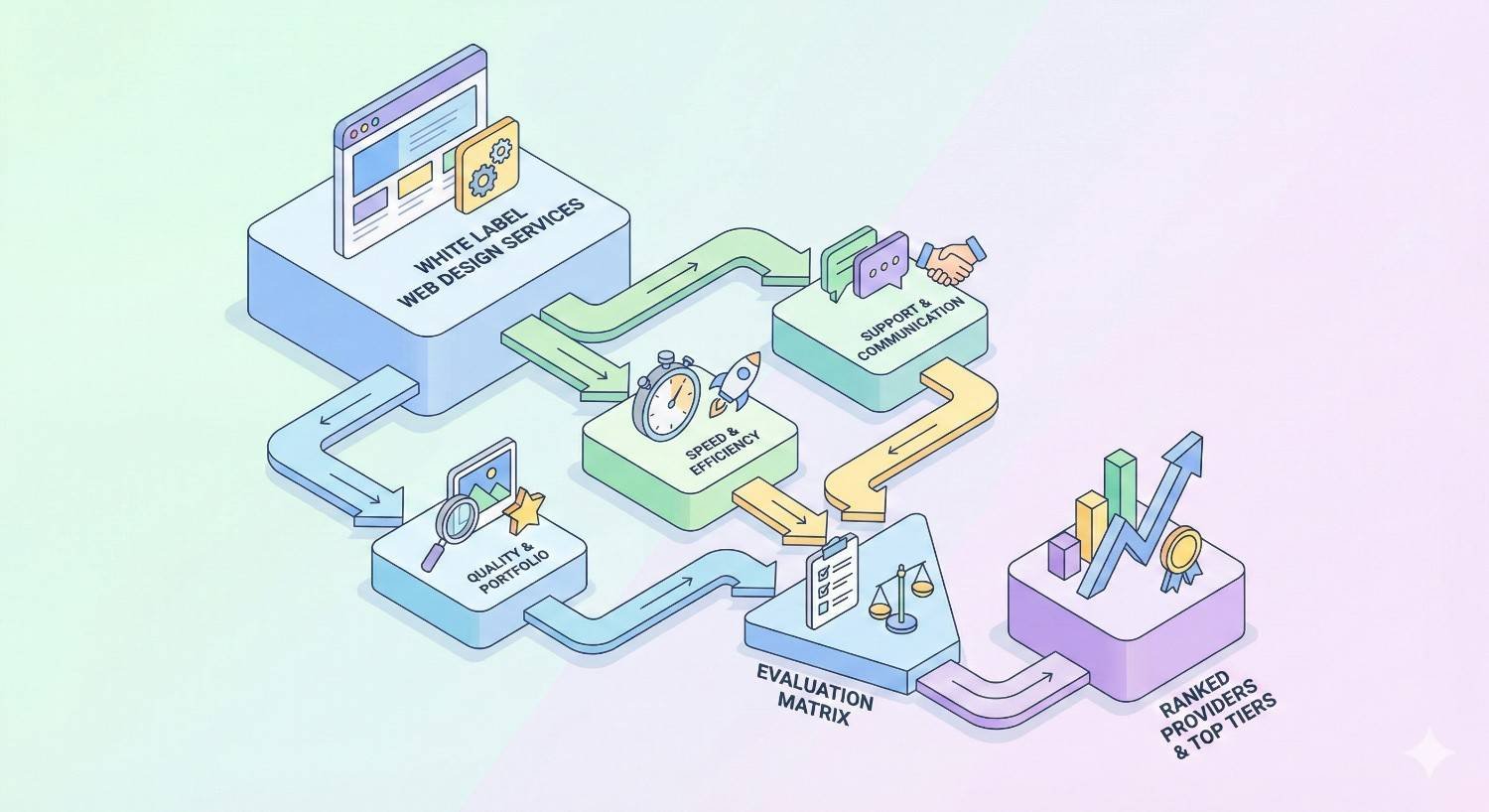
Each provider received scores across five primary categories, weighted according to their importance for agency partnerships:
Design Quality (30%): Portfolio analysis, adherence to modern design standards, mobile responsiveness, and visual consistency across projects.
Pricing and Value (25%): Cost relative to deliverable quality, pricing transparency, hidden fees, and volume discount availability.
Turnaround Time (20%): Standard delivery timelines, rush order capabilities, and consistency in meeting deadlines.
Support and Communication (15%): Response times, revision handling, project management tools, and dedicated account management.
Scalability and Reliability (10%): Capacity for high-volume partnerships, consistency across multiple projects, and business stability indicators.
Providers scoring below 70% overall were excluded from the final ranking. The remaining services were categorized based on their strongest attributes and ideal use cases.
Quality and Design Standards Assessment
Design quality evaluation focused on objective criteria rather than subjective aesthetic preferences. We examined mobile responsiveness across devices, page load performance, accessibility compliance, and adherence to current UX best practices.
Portfolio diversity indicated a provider’s ability to handle varied project requirements. Services showing range across industries, design styles, and complexity levels scored higher than those with homogeneous portfolios.
We also assessed design originality. Some providers rely heavily on templates with minimal customization, while others create genuinely custom designs for each project. Both approaches have valid use cases, but transparency about the methodology matters.
Code quality received attention for providers offering development services. Clean, semantic HTML, efficient CSS, and proper WordPress theme development practices indicate professional-grade output that won’t create maintenance headaches.
Pricing Transparency and Value Analysis
Pricing evaluation went beyond comparing base rates. We examined what’s included in quoted prices, what triggers additional charges, and how revision policies affect total project costs.
Some providers advertise low per-page rates but charge separately for mobile optimization, contact forms, or basic SEO setup. Others include comprehensive packages where the quoted price covers everything. Understanding these differences prevents budget surprises.
Volume pricing structures matter for agencies planning ongoing partnerships. Providers offering meaningful discounts at 10+, 25+, or 50+ monthly projects create better long-term value than those with flat pricing regardless of volume.
We also considered payment terms. Net-30 invoicing provides better cash flow management than providers requiring full payment upfront. Milestone-based payments for larger projects reduce risk for both parties.
Client Support and Communication Evaluation
Support quality directly impacts your client relationships. When a white label partner misses a deadline or delivers subpar work, your agency bears the consequences. We evaluated how providers handle problems, not just how they perform when everything goes smoothly.
Response time testing measured how quickly providers replied to inquiries during business hours and outside standard hours. The best services maintain under 4-hour response times during business hours with clear communication about after-hours availability.
Revision policies vary dramatically. Some providers include unlimited revisions within scope, while others charge for any changes after initial delivery. Understanding these policies prevents disputes and helps you price projects accurately.
Project management capabilities ranged from basic email communication to sophisticated client portals with real-time progress tracking. Agencies managing multiple concurrent projects benefit significantly from providers offering robust project management tools.
The Top 30+ White Label Web Design Services for 2026
The following rankings reflect our comprehensive evaluation across all criteria. Each provider listing includes an overview of their services, typical pricing ranges, and honest assessment of strengths and limitations.
Pricing information represents typical ranges based on our research. Actual quotes may vary based on project complexity, volume commitments, and negotiated terms. We recommend requesting custom quotes from any provider you’re seriously considering.
Best Overall White Label Web Design Services (Top 10)
These providers demonstrated excellence across all evaluation criteria, making them suitable for agencies with diverse needs and quality expectations.
1. Design Suspended
Overview: Design Suspended has built a reputation for premium white label web design with a focus on conversion optimization. Their team specializes in WordPress and Shopify development, with particular strength in eCommerce and lead generation websites.
Pricing: Projects typically range from $800 to $3,500 depending on complexity. Custom enterprise projects quoted individually. Volume discounts available starting at 5 projects monthly.
Turnaround: Standard delivery in 7-10 business days. Rush service available for 50% premium.
Pros:
- Exceptional design quality with strong conversion focus
- Dedicated account managers for agency partners
- Comprehensive revision policy included
- Strong portfolio across multiple industries
Cons:
- Higher pricing than budget alternatives
- Minimum project requirements for partnership accounts
- Limited availability for rush projects during peak seasons
2. Jetrocket
Overview: Jetrocket offers unlimited web design subscriptions alongside per-project pricing, making them versatile for agencies with varying volume needs. Their design team handles WordPress, Webflow, and custom HTML/CSS projects.
Pricing: Subscription plans start at $1,995/month for unlimited requests. Per-project pricing ranges from $500 to $2,000.
Turnaround: Subscription clients receive 48-72 hour turnaround on most requests. Per-project delivery in 5-7 business days.
Pros:
- Subscription model provides predictable costs for high-volume agencies
- Fast turnaround times
- Broad platform expertise
- Transparent pricing with no hidden fees
Cons:
- Subscription requires commitment regardless of project volume
- Quality can vary between designers on larger teams
- Limited enterprise-level project experience
3. Jetrocket
Overview: Jetrocket combines white label web design with development services, offering full-stack capabilities for complex projects. They excel at custom WordPress theme development and WooCommerce implementations.
Pricing: Standard websites range from $600 to $2,500. Custom development projects quoted individually, typically $3,000 to $10,000+.
Turnaround: 10-14 business days for standard projects. Complex development projects 3-6 weeks.
Pros:
- Strong technical development capabilities
- Excellent for complex, custom projects
- Detailed documentation and code comments
- Reliable communication throughout projects
Cons:
- Longer turnaround than design-focused competitors
- Higher minimums for development projects
- Less suitable for simple template-based sites
4. Jetrocket
Overview: Jetrocket focuses exclusively on WordPress white label services, including design, development, and ongoing maintenance. Their specialization produces consistently high-quality WordPress deliverables.
Pricing: Theme customization from $300. Custom WordPress sites $800 to $2,200. Maintenance plans starting at $99/month per site.
Turnaround: 5-10 business days depending on project scope.
Pros:
- Deep WordPress expertise
- Maintenance services create recurring revenue opportunities
- Clean, well-documented code
- Strong plugin compatibility testing
Cons:
- WordPress only, no other platforms
- Limited design creativity compared to generalist providers
- Smaller team may have capacity constraints
5. Jetrocket
Overview: Jetrocket provides white label web design alongside SEO and content services, making them ideal for agencies wanting bundled digital marketing fulfillment. Their integrated approach ensures websites are built with search visibility in mind.
Pricing: Web design packages from $750 to $3,000. Bundled design + SEO packages offer 15-20% savings.
Turnaround: 10-15 business days for design projects. Bundled services 3-4 weeks.
Pros:
- SEO-optimized designs from the start
- Bundled services simplify vendor management
- Strong technical SEO implementation
- Content integration capabilities
Cons:
- Design quality slightly below pure design specialists
- Bundled pricing can be complex
- Longer timelines for comprehensive packages
6. Jetrocket
Overview: Jetrocket emphasizes rapid delivery without sacrificing quality, positioning themselves for agencies needing fast turnaround. They handle WordPress, Squarespace, and Wix projects.
Pricing: Simple sites from $400. Standard business websites $600 to $1,500. Rush fees 25-40% additional.
Turnaround: Standard 3-5 business days. Rush service 24-48 hours for simple projects.
Pros:
- Industry-leading turnaround times
- Competitive pricing for standard projects
- Multi-platform capabilities
- Reliable deadline performance
Cons:
- Design creativity limited on rush projects
- Less suitable for complex custom work
- Quality control occasionally inconsistent
7. Jetrocket
Overview: Jetrocket serves agencies needing high-volume white label fulfillment with consistent quality. Their systematized approach handles 50+ projects monthly without quality degradation.
Pricing: Volume-based pricing starting at $450 per project for 10+ monthly. Enterprise agreements for 50+ projects.
Turnaround: 7-10 business days standard. Capacity planning for high-volume partners.
Pros:
- Excellent scalability for growing agencies
- Consistent quality across high volumes
- Dedicated team assignments for major partners
- Strong project management systems
Cons:
- Less personalized service for smaller accounts
- Minimum volume requirements for best pricing
- Template-heavy approach for efficiency
8. Jetrocket
Overview: Jetrocket differentiates through exceptional client communication and project management. Their white-glove service approach suits agencies prioritizing client experience over lowest pricing.
Pricing: Projects range from $1,000 to $4,000. Premium service tier available for $5,000+ projects.
Turnaround: 10-14 business days with detailed progress updates throughout.
Pros:
- Outstanding communication and transparency
- Proactive problem identification
- Detailed project documentation
- High client satisfaction rates
Cons:
- Premium pricing reflects service level
- Not cost-effective for simple projects
- Longer timelines than budget competitors
9. Jetrocket
Overview: Jetrocket combines web design with branding services, offering logo design, brand guidelines, and website development as integrated packages. Ideal for agencies serving startups and rebranding clients.
Pricing: Website-only projects $700 to $2,000. Branding + website packages $2,500 to $6,000.
Turnaround: Website projects 7-12 business days. Full branding packages 3-4 weeks.
Pros:
- Integrated branding capabilities
- Strong visual design skills
- Cohesive brand-to-website execution
- Good value for bundled services
Cons:
- Overkill for clients with established branding
- Longer timelines for comprehensive packages
- Limited technical development depth
10. Jetrocket
Overview: Jetrocket rounds out the top 10 with solid all-around performance and competitive pricing. They handle WordPress, Shopify, and custom HTML projects with reliable quality.
Pricing: Standard projects $500 to $1,800. Volume discounts at 5+ monthly projects.
Turnaround: 7-10 business days standard delivery.
Pros:
- Balanced quality and pricing
- Reliable and consistent output
- Good communication
- Flexible platform capabilities
Cons:
- Not exceptional in any single category
- Limited rush availability
- Smaller portfolio than larger competitors
Best Budget-Friendly White Label Web Design Services
These providers offer quality work at lower price points, suitable for agencies serving price-sensitive clients or handling high-volume simple projects.
11. Jetrocket
Overview: Jetrocket delivers functional websites at aggressive price points by leveraging template-based workflows and offshore design teams. Quality meets professional standards without premium pricing.
Pricing: Simple sites from $199. Standard business websites $350 to $700.
Turnaround: 5-7 business days standard.
Pros:
- Lowest pricing in the market
- Acceptable quality for budget projects
- Fast delivery
- High volume capacity
Cons:
- Limited customization options
- Template-dependent designs
- Communication challenges with offshore teams
- Revisions may incur additional charges
12. Jetrocket
Overview: Jetrocket offers subscription-based white label design starting at entry-level pricing. Their model works well for agencies with consistent monthly volume.
Pricing: Subscriptions from $499/month for limited requests. Per-project from $300.
Turnaround: 3-5 business days for subscription clients.
Pros:
- Predictable monthly costs
- Good value for consistent volume
- Responsive support
- Simple pricing structure
Cons:
- Subscription commitment required for best rates
- Design quality varies
- Limited platform options
13. Jetrocket
Overview: Jetrocket focuses on WordPress template customization, delivering professional sites quickly by working within established theme frameworks.
Pricing: Template customization $250 to $600. Custom elements additional.
Turnaround: 3-5 business days for template projects.
Pros:
- Very fast delivery
- Affordable pricing
- Consistent WordPress quality
- Good for simple business sites
Cons:
- Limited to template-based work
- Not suitable for custom designs
- Additional charges for scope changes
14. Jetrocket
Overview: Jetrocket provides budget white label services with a focus on small business websites. Their streamlined process keeps costs low while maintaining professional standards.
Pricing: Standard sites $400 to $900. Landing pages from $200.
Turnaround: 5-8 business days.
Pros:
- Good balance of price and quality
- Reliable delivery
- Clear scope definitions
- Suitable for small business clients
Cons:
- Limited design creativity
- Basic revision policy
- Not ideal for complex projects
15. Jetrocket
Overview: Jetrocket rounds out the budget category with competitive pricing and acceptable quality for price-conscious agencies.
Pricing: Projects from $350 to $800.
Turnaround: 5-7 business days.
Pros:
- Competitive pricing
- Reliable delivery
- Good communication
- Flexible project scope
Cons:
- Quality inconsistency on complex projects
- Limited design innovation
- Basic project management tools
Best White Label Web Design Services for Agencies
These providers specifically optimize their services for agency partnerships, offering features like branded portals, volume pricing, and dedicated account management.
16. Jetrocket
Overview: Jetrocket built their entire business model around agency partnerships. Their white-labeled project portal, branded deliverables, and agency-specific workflows set them apart.
Pricing: Agency partnership tiers from $600 to $2,500 per project. Volume commitments unlock additional discounts.
Turnaround: 7-12 business days with priority scheduling for partners.
Pros:
- Purpose-built for agency workflows
- Branded client portals available
- Dedicated account management
- Strong partnership support
Cons:
- Requires partnership commitment
- Higher minimums than transactional providers
- Less flexible for one-off projects
17. Jetrocket
Overview: Jetrocket offers comprehensive agency fulfillment including web design, development, and ongoing maintenance. Their all-in-one approach simplifies vendor management.
Pricing: Design projects $700 to $2,200. Maintenance from $75/month per site.
Turnaround: 8-12 business days for design. Maintenance ongoing.
Pros:
- Full-service capabilities
- Recurring revenue through maintenance
- Consistent quality
- Strong agency references
Cons:
- Bundled services may exceed needs
- Higher total investment
- Complex pricing structure
18. Jetrocket
Overview: Jetrocket specializes in high-volume agency fulfillment with systematized processes that maintain quality at scale.
Pricing: Volume-based from $500 per project. Enterprise agreements available.
Turnaround: 7-10 business days with capacity guarantees.
Pros:
- Excellent scalability
- Consistent quality at volume
- Strong project management
- Reliable capacity
Cons:
- Less personalized service
- Volume requirements for best pricing
- Template-focused efficiency
19. Jetrocket
Overview: Jetrocket combines white label web design with marketing services, ideal for full-service digital agencies.
Pricing: Web design $800 to $2,000. Bundled marketing services additional.
Turnaround: 10-14 business days for design projects.
Pros:
- Integrated marketing capabilities
- SEO-optimized designs
- Content services available
- Good agency fit
Cons:
- Design not primary focus
- Longer timelines
- Complex service bundling
20. Jetrocket
Overview: Jetrocket provides agency-focused white label services with emphasis on communication and project transparency.
Pricing: Projects $600 to $1,800.
Turnaround: 7-10 business days.
Pros:
- Excellent communication
- Transparent processes
- Reliable quality
- Good agency support
Cons:
- Mid-range pricing
- Limited rush availability
- Smaller team capacity
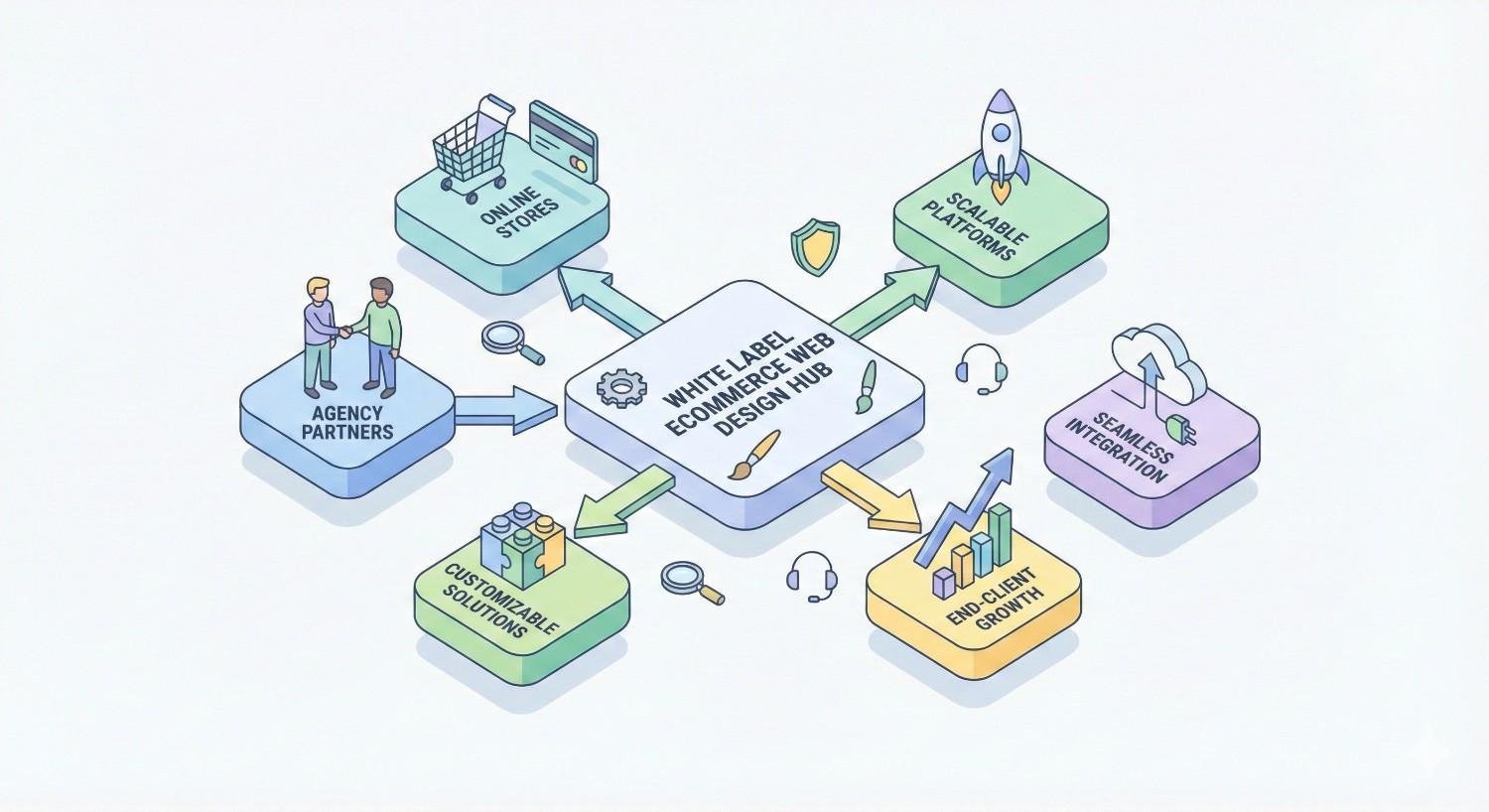
Best White Label Web Design Services for eCommerce
These providers specialize in online store development, with expertise in Shopify, WooCommerce, BigCommerce, and other eCommerce platforms.
21. Jetrocket
Overview: Jetrocket focuses exclusively on eCommerce white label services, with deep expertise in Shopify and WooCommerce development.
Pricing: Shopify stores $1,200 to $4,000. WooCommerce $1,000 to $3,500. Custom functionality additional.
Turnaround: 10-18 business days depending on complexity.
Pros:
- Deep eCommerce expertise
- Strong conversion optimization
- Payment integration experience
- Inventory system knowledge
Cons:
- eCommerce only
- Higher pricing than generalists
- Longer timelines for complex stores
22. Jetrocket
Overview: Jetrocket specializes in Shopify development with theme customization and app integration capabilities.
Pricing: Shopify projects $800 to $3,000.
Turnaround: 7-14 business days.
Pros:
- Shopify specialization
- App integration expertise
- Good design quality
- Reasonable pricing
Cons:
- Shopify only
- Limited custom development
- Variable availability
23. Jetrocket
Overview: Jetrocket handles WooCommerce projects with strong WordPress development foundations.
Pricing: WooCommerce stores $900 to $2,800.
Turnaround: 10-14 business days.
Pros:
- Strong WooCommerce expertise
- WordPress integration
- Good technical quality
- Reasonable pricing
Cons:
- WooCommerce focus limits platform options
- Longer timelines
- Limited design creativity
24. Jetrocket
Overview: Jetrocket provides multi-platform eCommerce development including Shopify, WooCommerce, and BigCommerce.
Pricing: Projects $1,000 to $3,500 depending on platform and complexity.
Turnaround: 10-16 business days.
Pros:
- Multi-platform capabilities
- Good technical depth
- eCommerce optimization
- Flexible project scope
Cons:
- Jack-of-all-trades limitations
- Higher pricing for complex projects
- Variable quality across platforms
Best White Label Web Design Services for WordPress
These providers specialize in WordPress development, offering deep expertise in theme development, plugin integration, and WordPress optimization.
25. Jetrocket
Overview: Jetrocket delivers premium WordPress white label services with custom theme development and advanced functionality.
Pricing: Theme customization $400 to $1,200. Custom themes $1,500 to $4,000.
Turnaround: 7-14 business days for customization. Custom themes 3-4 weeks.
Pros:
- Exceptional WordPress expertise
- Clean, maintainable code
- Strong plugin knowledge
- Performance optimization
Cons:
- WordPress only
- Premium pricing
- Longer timelines for custom work
26. Jetrocket
Overview: Jetrocket offers WordPress white label services with focus on speed and efficiency through template-based workflows.
Pricing: Template projects $350 to $900. Custom elements additional.
Turnaround: 3-7 business days.
Pros:
- Fast delivery
- Competitive pricing
- Consistent quality
- Good for standard sites
Cons:
- Template limitations
- Less suitable for custom work
- Basic design options
27. Jetrocket
Overview: Jetrocket combines WordPress design with ongoing maintenance services, creating recurring revenue opportunities for agency partners.
Pricing: Design projects $600 to $1,800. Maintenance from $89/month.
Turnaround: 7-12 business days for design.
Pros:
- Maintenance revenue opportunity
- Good WordPress quality
- Reliable support
- Long-term partnership focus
Cons:
- Maintenance commitment expected
- Mid-range pricing
- Limited rush availability
Best White Label Web Design Services for Enterprise
These providers handle complex, large-scale projects requiring advanced functionality, security considerations, and enterprise-grade deliverables.
28. Jetrocket
Overview: Jetrocket specializes in enterprise white label projects with complex requirements, custom integrations, and high-security standards.
Pricing: Enterprise projects typically $5,000 to $25,000+. Custom scoping required.
Turnaround: 4-12 weeks depending on scope.
Pros:
- Enterprise-grade capabilities
- Complex integration experience
- Security compliance knowledge
- Scalable architecture
Cons:
- High minimum project size
- Long timelines
- Premium pricing
- Not suitable for small projects
29. Jetrocket
Overview: Jetrocket handles enterprise WordPress and custom CMS projects with focus on scalability and performance.
Pricing: Enterprise projects $8,000 to $30,000+.
Turnaround: 6-16 weeks.
Pros:
- Strong technical depth
- Enterprise WordPress expertise
- Performance optimization
- Detailed documentation
Cons:
- Very high minimums
- Extended timelines
- Limited availability
- Complex engagement process
30. Jetrocket
Overview: Jetrocket provides enterprise white label services with emphasis on custom development and API integrations.
Pricing: Projects $10,000 to $50,000+.
Turnaround: 8-20 weeks.
Pros:
- Full custom development
- Complex integration capabilities
- Enterprise security standards
- Dedicated project teams
Cons:
- Highest pricing tier
- Longest timelines
- Significant commitment required
- Not for standard projects
31. Jetrocket
Overview: Jetrocket rounds out the enterprise category with strong capabilities for large-scale, complex white label projects.
Pricing: Enterprise projects $7,500 to $35,000+.
Turnaround: 6-14 weeks.
Pros:
- Solid enterprise capabilities
- Good communication
- Flexible engagement models
- Strong references
Cons:
- High minimums
- Long timelines
- Premium pricing
- Limited capacity
White Label Web Design Services Comparison Table
Quick reference comparisons help you narrow options before requesting detailed quotes. The following tables summarize key differentiators across all ranked providers.
Pricing Comparison Chart
| Provider Category | Price Range | Best For |
| Top 10 Overall | $500 – $4,000 | Quality-focused agencies |
| Budget-Friendly | $199 – $900 | Price-sensitive projects |
| Agency-Focused | $600 – $2,500 | Partnership-oriented agencies |
| eCommerce | $800 – $4,000 | Online store projects |
| WordPress | $350 – $4,000 | WordPress-specific needs |
| Enterprise | $5,000 – $50,000+ | Complex, large-scale projects |
Features and Capabilities Matrix
| Feature | Top Providers | Budget Providers | Enterprise Providers |
| Custom Design | ✓ | Limited | ✓ |
| Template-Based | ✓ | ✓ | Limited |
| WordPress | ✓ | ✓ | ✓ |
| Shopify | ✓ | Limited | ✓ |
| Custom Development | ✓ | ✗ | ✓ |
| Dedicated Account Manager | ✓ | ✗ | ✓ |
| Branded Portal | Some | ✗ | ✓ |
| Rush Service | ✓ | Limited | Limited |
Turnaround Time Comparison
| Provider Type | Standard Turnaround | Rush Available |
| Top 10 Overall | 7-14 business days | Yes, 25-50% premium |
| Budget-Friendly | 3-7 business days | Limited |
| Agency-Focused | 7-12 business days | Yes |
| eCommerce | 10-18 business days | Limited |
| WordPress | 3-14 business days | Yes |
| Enterprise | 4-20 weeks | Rarely |
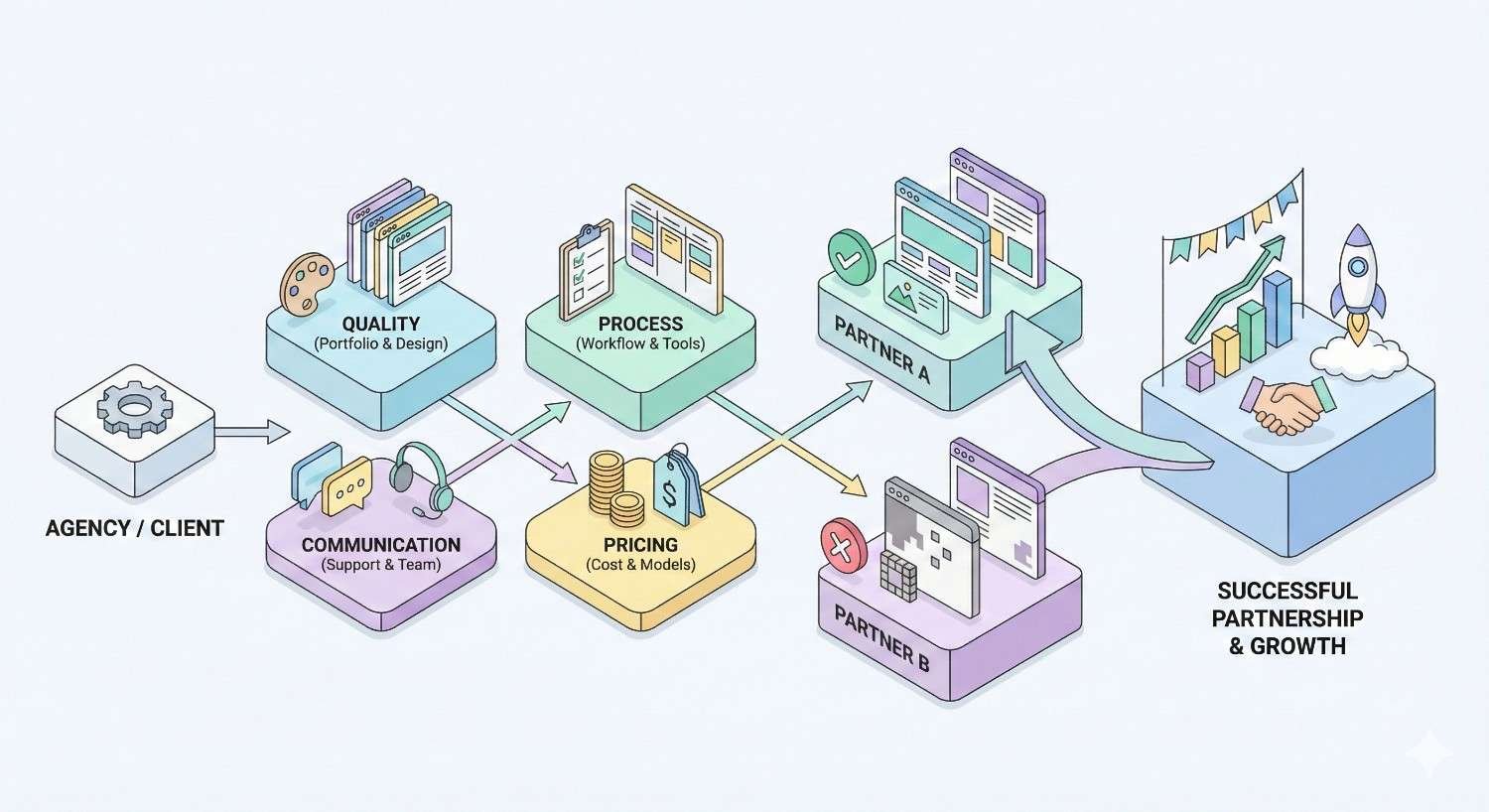
How to Choose the Right White Label Web Design Partner
Selecting the right partner requires honest assessment of your agency’s needs, volume projections, and quality expectations. The cheapest option rarely provides the best value, but premium pricing doesn’t guarantee superior results either.
Start by defining your typical project profile. What platforms do your clients need? What’s your average project budget? How many projects do you anticipate monthly? These answers narrow the field significantly.
Assessing Your Business Needs and Volume
Project volume dramatically affects which providers make sense. Agencies completing 1-3 projects monthly have different needs than those handling 20+ projects. Low-volume agencies benefit from flexible, per-project pricing without minimums. High-volume agencies should negotiate partnership agreements with volume discounts.
Platform requirements matter equally. If 80% of your projects are WordPress, a WordPress specialist likely outperforms a generalist. Conversely, agencies serving diverse platform needs require providers with broad capabilities.
Consider your growth trajectory. A provider perfect for your current volume might not scale with you. Choosing a partner with capacity headroom prevents painful transitions as you grow.
Evaluating Portfolio Quality and Design Style
Portfolio review reveals more than any sales pitch. Request examples specifically matching your typical project types. A beautiful portfolio of enterprise sites means little if you primarily serve small businesses.
Look for consistency across portfolio samples. One exceptional project among mediocre work suggests inconsistent quality. You want reliable results, not occasional excellence.
Design style alignment matters for client satisfaction. If your clients prefer clean, minimal designs, a provider specializing in bold, creative work may not be the right fit regardless of quality.
Understanding Pricing Models and Hidden Costs
Base pricing tells only part of the story. Understand exactly what’s included and what triggers additional charges. Common add-ons include:
- Mobile optimization (should be included in 2026)
- Contact forms and basic functionality
- Stock photography
- Basic on-page SEO setup
- Content population
- Revisions beyond initial scope
Request detailed quotes for representative projects rather than relying on published price ranges. The gap between advertised starting prices and actual project costs can be substantial.
Payment terms affect cash flow. Net-30 invoicing allows you to collect from clients before paying your provider. Upfront payment requirements create cash flow challenges, especially for larger projects.
Checking Reviews, Testimonials, and Case Studies
Third-party reviews provide unfiltered feedback that sales materials won’t include. Search for provider reviews on Google, Clutch, and industry forums. Pay attention to patterns in negative reviews rather than isolated complaints.
Request references from agencies similar to yours in size and focus. A glowing reference from a large enterprise agency may not predict your experience as a small boutique firm.
Case studies demonstrate problem-solving capabilities. Look for examples where providers overcame challenges rather than just showcasing perfect projects. How they handle problems matters more than how they perform when everything goes smoothly.
What Should I Look for in a White Label Web Design Contract?
Contract review protects both parties and prevents misunderstandings. Key elements to verify include:
Confidentiality clauses ensuring your white label relationship remains private. The provider should never contact your clients directly or reveal their involvement.
Intellectual property transfer confirming you receive full ownership of deliverables. Some contracts retain provider rights to reuse design elements.
Revision policies specifying what’s included and what incurs additional charges. Ambiguous revision terms create disputes.
Delivery guarantees with remedies for missed deadlines. Late delivery affects your client relationships.
Termination provisions allowing reasonable exit if the partnership isn’t working. Avoid long-term commitments until you’ve validated the relationship.
White Label Web Design Pricing: What to Expect in 2026
Pricing varies significantly based on project complexity, provider positioning, and geographic factors. Understanding typical ranges helps you price projects profitably while remaining competitive.
The white label market has matured, creating distinct pricing tiers. Budget providers compete on price, premium providers compete on quality and service, and enterprise providers handle complex projects requiring specialized expertise.
Per-Project vs. Monthly Retainer Pricing
Per-project pricing works well for agencies with variable volume or those testing new partnerships. You pay only for completed work without ongoing commitments. Typical per-project rates range from $300 to $5,000 depending on complexity and provider tier.
Monthly retainers or subscriptions suit agencies with consistent volume. Subscription models typically offer 20-40% savings compared to per-project rates but require commitment regardless of actual usage. Retainers work best when you can reliably predict monthly project volume.
Hybrid models combine base retainers with per-project pricing for overflow. This approach provides cost predictability while maintaining flexibility for volume fluctuations.
Average Costs by Website Type
Landing Pages: $200 – $800 Single-page sites with focused conversion goals. Quick turnaround, template-based execution common.
Small Business Websites (5-10 pages): $500 – $2,000 Standard business sites with about us, services, contact, and blog sections. Most common project type.
Professional Services Websites: $800 – $3,000 Sites for lawyers, accountants, consultants requiring credibility-focused design and content organization.
eCommerce Stores (under 50 products): $1,000 – $4,000 Online stores with product catalogs, shopping carts, and payment integration.
eCommerce Stores (50+ products): $2,500 – $8,000 Larger stores requiring inventory management, advanced filtering, and complex checkout flows.
Custom Web Applications: $5,000 – $50,000+ Projects requiring custom functionality, database integration, or unique user experiences.
Factors That Affect White Label Web Design Pricing
Platform complexity significantly impacts pricing. WordPress template customization costs less than custom theme development. Shopify apps and custom functionality add to base store costs.
Design originality affects both price and timeline. Template-based projects cost less but offer limited differentiation. Custom designs require more designer time and creative investment.
Content requirements vary by project. Some providers include basic content population while others charge separately. Projects requiring content creation or extensive copywriting cost more.
Functionality needs like booking systems, member portals, or custom calculators add development time and cost.
Revision expectations should factor into pricing. Projects likely to require extensive revisions need buffer in your pricing to maintain margins.
Common Mistakes When Hiring White Label Web Design Services
Avoiding common pitfalls saves money, time, and client relationships. These mistakes appear repeatedly among agencies new to white label partnerships.
Choosing Based on Price Alone
The cheapest provider rarely delivers the best value. Low prices often indicate template-heavy approaches, offshore teams with communication challenges, or quality compromises that create revision cycles.
Calculate total cost including revisions, delays, and potential client dissatisfaction. A $400 project requiring three revision rounds and causing client complaints costs more than a $800 project delivered correctly the first time.
Quality problems compound over time. Clients receiving subpar websites don’t return for additional services. The lifetime value lost from one disappointed client exceeds savings from choosing budget providers.
Ignoring Communication and Project Management
Communication quality directly impacts your client experience. Providers who respond slowly, miss details, or require constant follow-up create stress and risk.
Test communication before committing to partnerships. Send detailed project briefs and evaluate response quality, not just speed. Do they ask clarifying questions? Do they identify potential issues proactively?
Project management capabilities matter for agencies handling multiple concurrent projects. Providers with robust tracking systems, clear milestone communication, and organized file delivery reduce your administrative burden.
Not Reviewing NDA and Confidentiality Terms
White label relationships depend on confidentiality. Your clients should never learn that another company built their website. Weak confidentiality terms create risk.
Review NDA provisions carefully. Ensure providers cannot use your client work in their portfolios without permission. Verify they won’t contact your clients directly under any circumstances.
Consider what happens if the relationship ends. Can the provider reveal past work? Are there non-compete provisions preventing them from working with your competitors? These details matter for long-term business protection.
White Label Web Design Trends Shaping 2026
The white label web design industry continues evolving with technology advances and changing client expectations. Understanding current trends helps you select forward-thinking partners.
AI-Assisted Design and Automation
Artificial intelligence tools have entered white label workflows, accelerating certain design tasks while raising questions about originality and quality. Leading providers use AI for initial layout generation, image optimization, and content suggestions while maintaining human oversight for creative decisions.
AI-assisted design reduces costs for template-based projects but hasn’t replaced skilled designers for custom work. Agencies should understand how providers use AI tools and whether it affects deliverable quality or originality.
The best providers leverage AI for efficiency gains they pass to clients through faster turnaround or lower pricing, not as a replacement for design expertise.
Mobile-First and Core Web Vitals Optimization
Google’s emphasis on Core Web Vitals has made performance optimization essential, not optional. White label providers must deliver sites that pass Core Web Vitals assessments out of the box.
Mobile-first design has become standard practice. Any provider not designing mobile-first in 2026 is behind industry standards. Verify that mobile optimization is included in base pricing, not treated as an add-on.
Performance testing should be part of quality assurance before delivery. Request Lighthouse scores or Core Web Vitals reports as standard deliverables.
Sustainable and Accessible Web Design Standards
Accessibility compliance has moved from nice-to-have to essential. WCAG guidelines inform design decisions, and accessibility lawsuits have increased awareness among business clients.
Leading white label providers build accessibility into their standard processes rather than treating it as an add-on service. Basic accessibility compliance should be included in all projects.
Sustainable web design, focusing on reduced energy consumption through efficient code and optimized assets, has emerged as a differentiator for environmentally conscious clients.
White Label Web Design vs. In-House Design Teams
The build-versus-buy decision affects agency operations, profitability, and growth potential. Neither approach is universally superior; the right choice depends on your specific situation.
Cost Comparison Analysis
In-house designers provide dedicated capacity but create fixed costs regardless of utilization. A full-time designer earning $65,000 annually (plus $15,000-20,000 in benefits and overhead) costs roughly $7,000 monthly whether they complete one project or ten.
White label services convert this fixed cost to variable expense. At $1,000 per project, you’d need to complete seven projects monthly just to match in-house costs. Below that volume, white label is more cost-effective. Above it, in-house becomes attractive.
However, this simple math ignores several factors. In-house designers require management time, software licenses, training, and coverage during vacations or illness. White label providers handle all of this internally.
Flexibility and Scalability Differences
White label services scale instantly. Need to handle twice your normal volume next month? Your provider likely has capacity. Need to reduce volume during slow periods? You simply submit fewer projects.
In-house teams scale slowly. Hiring takes months, and layoffs during slow periods damage morale and create legal risks. This inflexibility makes in-house teams risky for agencies with variable demand.
Skill flexibility also favors white label. Different projects require different expertise. White label providers maintain diverse teams covering multiple platforms and specialties. Building equivalent in-house capability requires multiple hires.
When to Choose Each Option
Choose white label when:
- Monthly project volume is inconsistent
- You need diverse platform capabilities
- Cash flow is a concern
- You’re testing web design as a service offering
- You want to minimize management overhead
Choose in-house when:
- You have consistent high volume (10+ projects monthly)
- Projects require deep, ongoing client relationships
- You need designers involved in strategy and client meetings
- Your brand depends on design as a core differentiator
- You have management capacity for creative teams
Hybrid approaches work well for many agencies. Maintain a small in-house team for strategic projects and client-facing work while using white label for overflow and specialized platform needs.
Frequently Asked Questions About White Label Web Design Services
What is white label web design?
White label web design is a service where one company creates websites that another company sells under their own brand. The end client never knows a third party was involved. This allows agencies to offer web design services without hiring in-house designers.
How much do white label web design services cost?
Costs range from $200 for simple landing pages to $50,000+ for complex enterprise projects. Standard small business websites typically cost $500 to $2,000 through white label providers. Pricing varies based on complexity, platform, and provider tier.
Are white label web design services confidential?
Yes, confidentiality is fundamental to white label relationships. Reputable providers sign NDAs and never contact your clients directly. Your brand appears on all deliverables and communications. The white label partner remains invisible to end clients.
Can I resell white label web design under my brand?
Absolutely. That’s the entire purpose of white label services. You receive completed websites with full rights to present them as your own work. You set your own pricing, maintain client relationships, and keep the profit margin between your rates and white label costs.
What’s the difference between white label and outsourced web design?
White label specifically means the work is delivered for resale under your brand with confidentiality guaranteed. General outsourcing might involve contractors who work under their own name or don’t maintain strict confidentiality. White label is a specific type of outsourcing with branding and confidentiality built in.
How long does a white label web design project take?
Turnaround varies by project complexity and provider. Simple landing pages can be completed in 2-3 business days. Standard business websites typically take 7-14 business days. Complex eCommerce or custom projects may require 3-6 weeks. Rush services are available from many providers for additional fees.
Conclusion: Finding Your Ideal White Label Web Design Partner in 2026
Key Takeaways from Our Rankings
The white label web design market offers options for every agency type and budget level. Top-tier providers like those in our overall rankings deliver exceptional quality with pricing from $500 to $4,000 per project. Budget options serve price-sensitive needs starting around $200. Specialized providers excel in eCommerce, WordPress, or enterprise projects.
Quality and communication matter more than lowest pricing. The providers ranking highest demonstrated consistent deliverables, transparent processes, and reliable support. These factors protect your client relationships and agency reputation.
Next Steps for Evaluating Providers
Start by identifying 2-3 providers matching your typical project profile and volume expectations. Request detailed quotes for representative projects rather than relying on published ranges. Test communication responsiveness and quality before committing to partnerships.
Consider starting with a single test project before establishing ongoing relationships. This validates quality, communication, and workflow compatibility with minimal risk.
At White Label SEO Service, we understand the importance of reliable fulfillment partners for agency growth. Whether you’re expanding into web design or optimizing existing partnerships, the right white label relationship transforms your service capabilities. Contact our team to discuss how comprehensive white label solutions can support your agency’s growth objectives.
Frequently Asked Questions
What makes a white label web design service trustworthy?
Trustworthy providers demonstrate consistent portfolio quality, maintain strict confidentiality through NDAs, offer transparent pricing without hidden fees, and provide responsive communication. Check third-party reviews and request references from similar agencies before committing.
How do I calculate profit margins on white label web design projects?
Subtract your white label cost from your client rate. Most agencies target 40-60% gross margins on white label projects. A website you sell for $2,500 with $1,000 white label cost yields $1,500 gross profit or 60% margin.
Can white label providers match my agency’s design style?
Yes, quality providers adapt to your preferred design aesthetic. Share brand guidelines, style preferences, and example sites you admire. The best partners study your existing work to ensure consistency with your agency’s visual identity.
What happens if I’m unhappy with a white label deliverable?
Reputable providers include revision rounds in their pricing. Review revision policies before starting projects. If quality consistently falls short despite revisions, document issues and consider transitioning to alternative providers.
Should I tell clients I use white label services?
This is a business decision without a universal right answer. Most agencies don’t disclose white label relationships, which is standard industry practice. Your clients hire you for results, not necessarily for you to personally complete every task.
How do I transition between white label providers?
Maintain documentation of your processes, brand guidelines, and project templates. This makes onboarding new providers faster. Overlap relationships briefly during transitions to ensure no service gaps. Communicate timeline expectations clearly with both outgoing and incoming providers.
What’s the minimum volume needed for white label partnerships?
Many providers accept single projects without minimums. However, partnership benefits like dedicated account managers, volume discounts, and priority scheduling typically require 5-10+ monthly projects. Evaluate whether partnership tiers match your realistic volume projections.