
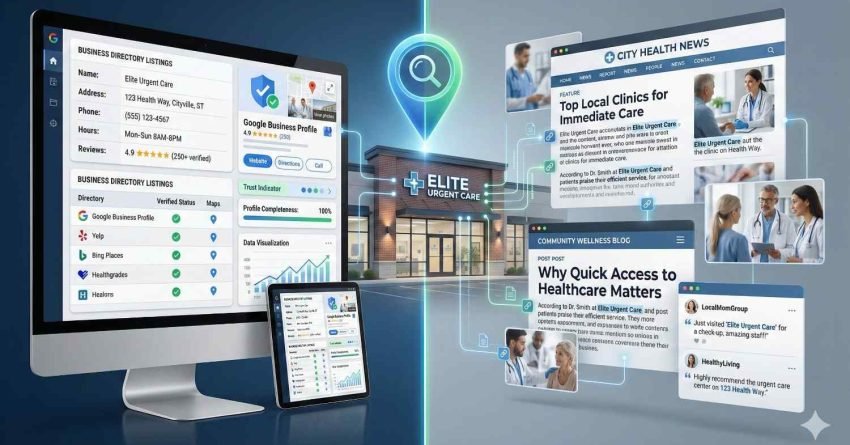
Structured and unstructured citations both send trust signals to search engines, but they work differently. Structured citations appear in business directories with standardized NAP (Name, Address, Phone) fields. Unstructured citations occur naturally in blog posts, news articles, and social mentions without dedicated data fields.
Understanding this distinction matters for any business investing in local SEO. The wrong approach wastes resources. The right strategy builds authority across both citation types simultaneously.
This guide breaks down exactly how each citation type functions, where to find them, and how to leverage both for stronger local search visibility and patient acquisition.
What Are Business Citations?
Definition and Purpose of Citations
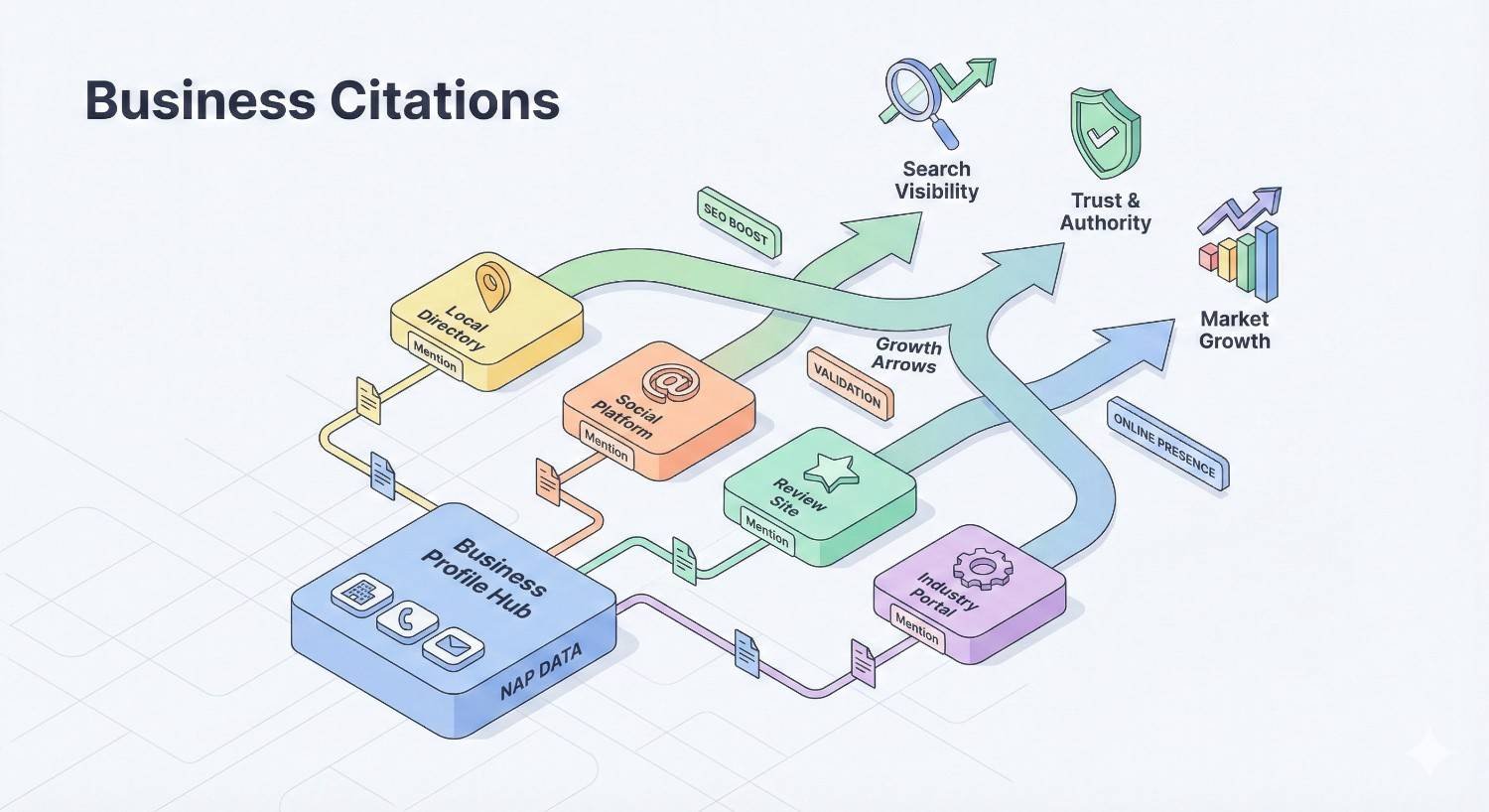
A business citation is any online mention of your business name, address, and phone number. Citations act as digital references that help search engines verify your business exists and operates where you claim.
Think of citations like references on a resume. The more credible sources confirming your information, the more trustworthy you appear. Search engines use this verification process to determine which businesses deserve prominent placement in local search results.
Citations serve three primary functions. First, they validate business legitimacy. Second, they provide discovery channels for potential customers. Third, they contribute to local ranking algorithms that determine map pack placement.
Why Citations Matter for Local Healthcare Providers
Healthcare providers face unique citation challenges. Patients searching for urgent care need accurate information immediately. A wrong address or outdated phone number creates real consequences.
Local healthcare searches carry high intent. Someone searching “urgent care near me” needs help now. If your citation information conflicts across platforms, search engines may suppress your listing entirely. Worse, patients may arrive at wrong locations or call disconnected numbers.
BrightLocal’s research indicates that 68% of consumers would stop using a local business if they found incorrect information in online directories. For healthcare providers, this trust factor amplifies significantly.
Citations also influence the local pack rankings that dominate healthcare searches. Google’s local algorithm weighs citation consistency heavily when determining which three businesses appear in map results.
What Are Structured Citations?
Structured citations appear on platforms specifically designed to list business information. These directories provide standardized fields for your NAP data, business categories, hours, and services.
The “structured” designation refers to the organized data format. Every business listing follows the same template. This consistency makes information easy for search engines to crawl, parse, and verify.
Key Characteristics of Structured Citations
Structured citations share several defining features. They exist on dedicated business listing platforms. They use standardized data fields. They typically allow business owners to claim and manage listings directly.
These citations provide explicit NAP presentation. Your business name appears in a designated name field. Your address populates an address field. Your phone number sits in a phone field. No ambiguity exists about what information represents what.
Structured citations also offer verification mechanisms. Most platforms require business owners to verify ownership through phone calls, postcards, or email confirmation. This verification adds credibility to the citation.
The data structure enables search engines to extract information programmatically. Crawlers know exactly where to find each data element. This clarity strengthens the citation’s value for local ranking signals.
Common Structured Citation Sources
Google Business Profile
Google Business Profile remains the most critical structured citation for any local business. This platform directly feeds Google’s local search results and map pack. Claiming and optimizing your GBP listing should be priority one.
GBP offers extensive data fields beyond basic NAP. You can add business categories, service areas, appointment links, photos, posts, and Q&A sections. Each element provides additional ranking signals and patient engagement opportunities.
Yelp
Yelp maintains significant authority for local business discovery, particularly in healthcare. The platform’s review ecosystem creates trust signals that influence both rankings and patient decisions.
Yelp citations carry weight because the platform actively verifies business information and moderates reviews. This editorial oversight increases the citation’s credibility in search engine evaluations.
Healthgrades
Healthgrades specializes in healthcare provider listings. This vertical focus makes Healthgrades citations particularly valuable for urgent care facilities, physicians, and medical practices.
The platform aggregates provider credentials, patient reviews, and practice information. Search engines recognize Healthgrades as an authoritative healthcare source, amplifying citation value.
Vitals
Vitals operates similarly to Healthgrades, focusing exclusively on healthcare providers. The platform emphasizes patient reviews and provider transparency.
Claiming your Vitals listing ensures accurate information reaches patients researching healthcare options. The platform’s healthcare focus signals topical relevance to search algorithms.
Yellow Pages
Yellow Pages transitioned from print directories to digital listings while maintaining citation authority. The platform’s longevity and brand recognition contribute to its continued relevance.
YP.com citations provide foundational local signals. While not as impactful as Google Business Profile, Yellow Pages listings contribute to overall citation volume and consistency verification.
NAP Consistency in Structured Citations
NAP consistency across structured citations directly impacts local search performance. Search engines compare your business information across platforms. Discrepancies create confusion and reduce trust.
Consistency means exact matching. “123 Main Street” differs from “123 Main St.” in algorithmic evaluation. “Honolulu Urgent Care” differs from “Honolulu Urgent Care, LLC.” These variations, while minor to humans, create verification problems for search engines.
Establish a canonical NAP format and replicate it exactly across all structured citations. Document this format and reference it whenever creating or updating listings. Small inconsistencies compound across dozens of citation sources.
Phone number formatting requires particular attention. Decide whether you’ll use (808) 555-1234, 808-555-1234, or 808.555.1234. Then use that format everywhere without exception.
What Are Unstructured Citations?
Unstructured citations mention your business information within general content rather than dedicated listing fields. These citations occur in articles, blog posts, news coverage, and social media discussions.
The “unstructured” designation reflects the lack of standardized data fields. Your NAP information appears within flowing text, not organized directory formats. Search engines must extract and interpret this information contextually.
Key Characteristics of Unstructured Citations
Unstructured citations embed business information naturally within content. A news article might mention “Honolulu Urgent Care, located at 123 Main Street, reported increased patient volumes.” The citation exists, but not in a structured format.
These citations often occur without business owner involvement. Journalists, bloggers, and social media users create unstructured citations when discussing your business. You cannot directly control or edit these mentions.
Unstructured citations carry editorial credibility. When a news outlet mentions your business, that mention implies third-party validation. Search engines recognize this distinction and may weight unstructured citations differently than self-submitted directory listings.
The contextual nature of unstructured citations also provides topical relevance signals. A healthcare blog mentioning your urgent care facility reinforces your connection to healthcare topics.
Common Unstructured Citation Sources
News Articles
Local news coverage generates high-value unstructured citations. When newspapers or news websites mention your business, they create authoritative references that search engines trust.
News citations often include contextual information beyond basic NAP. Articles might describe your services, quote staff members, or discuss community involvement. This additional context strengthens the citation’s value.
Blog Posts
Industry blogs, local community blogs, and healthcare-focused publications create unstructured citations through business mentions. A wellness blogger recommending local urgent care options generates citation value.
Blog citations vary in authority based on the publishing site’s credibility. A mention on a high-traffic healthcare blog carries more weight than a mention on a newly created personal blog.
Press Releases
Press releases distributed through wire services create unstructured citations across multiple platforms simultaneously. A single release can generate dozens of citations as syndication partners republish content.
Press release citations require careful NAP inclusion. Ensure your business name, address, and phone number appear naturally within the release text. Avoid keyword stuffing that might trigger spam filters.
Social Media Mentions
Social media platforms host unstructured citations when users mention your business with location information. Check-ins, reviews, and tagged posts all contribute to your citation profile.
Social citations carry less direct ranking weight than traditional web citations. However, they contribute to overall online presence and may influence local search algorithms indirectly.
How Unstructured Citations Occur Naturally
Unstructured citations develop organically through business activity and community engagement. Providing excellent patient care generates word-of-mouth that translates to online mentions.
Community involvement creates citation opportunities. Sponsoring local events, participating in health fairs, or partnering with community organizations generates news coverage and blog mentions.
Newsworthy activities attract journalist attention. Opening new locations, introducing innovative services, or achieving recognition creates press coverage with embedded citations.
Patient advocacy also generates unstructured citations. Satisfied patients share experiences on personal blogs, social media, and community forums. These authentic mentions carry significant credibility.
Structured vs Unstructured Citations: Key Differences
Understanding the distinctions between citation types enables strategic resource allocation. Each type offers unique advantages and requires different management approaches.
Format and Data Organization
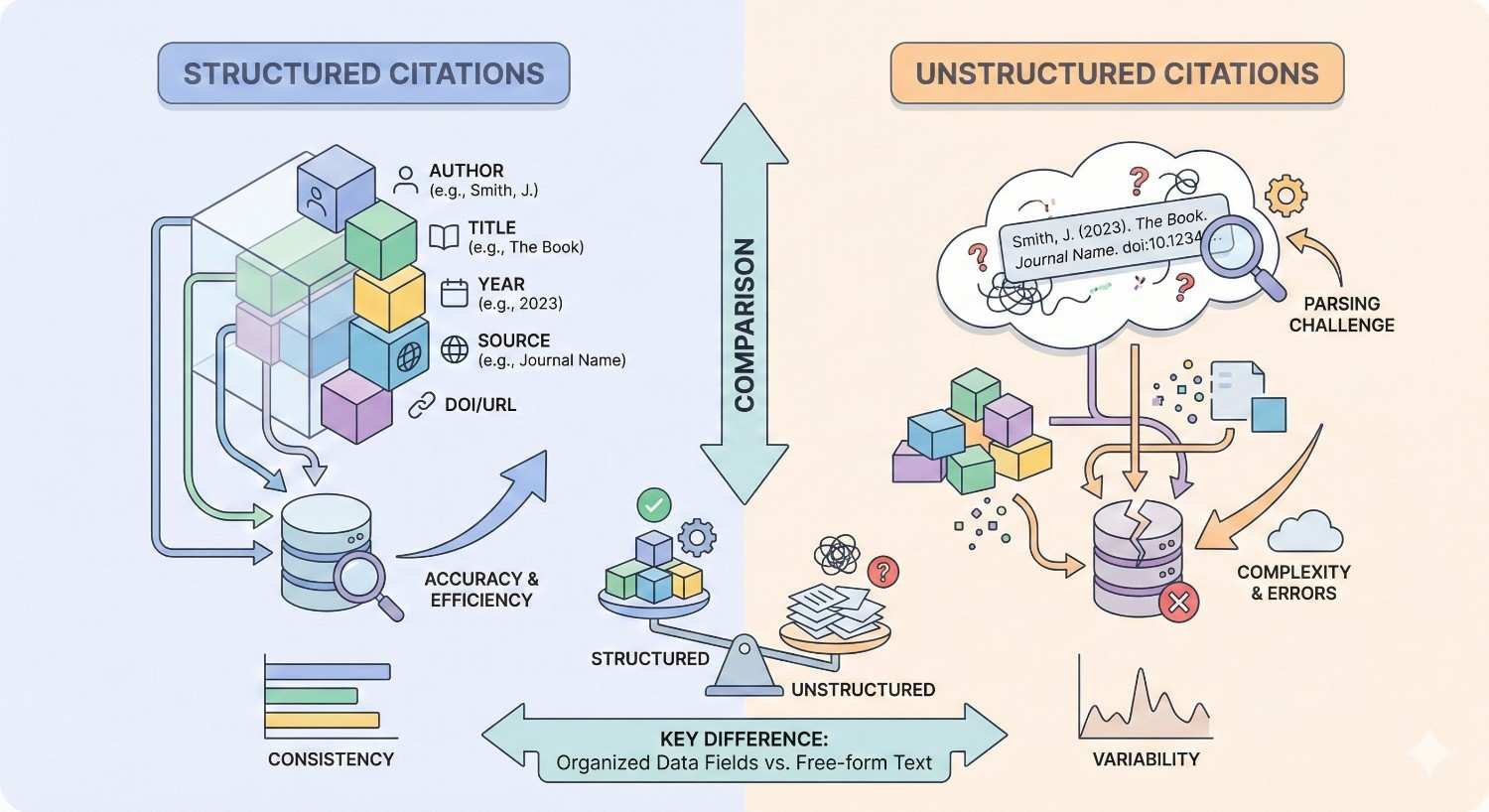
Structured citations present information in standardized, machine-readable formats. Directory platforms define specific fields for each data element. This organization enables precise algorithmic parsing.
Unstructured citations embed information within natural language content. Search engines must use natural language processing to extract and interpret business data. This extraction process introduces potential for misinterpretation.
The format difference affects how search engines weight each citation type. Structured citations provide clear, unambiguous signals. Unstructured citations require interpretation but offer contextual richness.
Control and Management
Business owners maintain direct control over structured citations. You can claim listings, update information, and respond to reviews. This control enables proactive citation management.
Unstructured citations exist outside your direct control. You cannot edit a news article or modify a blogger’s post. You can only influence unstructured citations through relationship building and newsworthy activities.
This control difference affects management strategy. Structured citations require systematic auditing and updating. Unstructured citations require monitoring and relationship cultivation.
Verification and Accuracy
Structured citation platforms typically verify business ownership before allowing edits. This verification process ensures information accuracy and prevents fraudulent listings.
Unstructured citations lack verification mechanisms. Journalists or bloggers might publish incorrect information without your knowledge. Errors in unstructured citations persist unless you contact publishers directly.
Accuracy monitoring becomes critical for unstructured citations. Regular searches for your business name reveal mentions requiring correction requests.
Impact on Local Search Rankings
Both citation types influence local search rankings, but through different mechanisms. Structured citations provide direct ranking signals through verified business data. Unstructured citations contribute authority signals through editorial mentions.
Moz’s Local Search Ranking Factors research identifies citation signals as a significant ranking factor category. The study indicates that citation volume, consistency, and quality all contribute to local pack placement.
Structured citations establish baseline local presence. Without consistent structured citations, achieving strong local rankings becomes extremely difficult. These citations form the foundation of local SEO.
Unstructured citations differentiate competitive businesses. When multiple competitors have strong structured citation profiles, unstructured citations can provide ranking advantages through authority signals.
Which Citation Type Is More Important?
Neither citation type alone delivers optimal results. Effective local SEO requires strategic investment in both structured and unstructured citations.
Benefits of Structured Citations
Structured citations provide controllable, scalable local signals. You can systematically build structured citations across dozens of relevant directories. This scalability enables rapid citation profile development.
The verification processes on structured platforms add credibility. Search engines trust verified listings more than unverified mentions. This trust translates to stronger ranking signals.
Structured citations also serve direct discovery functions. Patients searching within Yelp, Healthgrades, or Google Maps find your business through these listings. Citations become traffic sources, not just ranking signals.
Management efficiency favors structured citations. Tools exist to monitor and update structured listings across multiple platforms simultaneously. This efficiency enables ongoing maintenance at scale.
Benefits of Unstructured Citations
Unstructured citations signal third-party validation. When others mention your business without your direct involvement, search engines interpret this as earned credibility. This editorial quality carries significant weight.
Contextual relevance strengthens unstructured citation value. A healthcare blog mentioning your urgent care facility reinforces topical authority. This context helps search engines understand your business category and expertise.
Unstructured citations often include backlinks. News articles and blog posts frequently link to mentioned businesses. These links provide additional SEO value beyond citation signals.
Competitive differentiation emerges through unstructured citations. Most businesses focus exclusively on structured citations. Building unstructured citations creates advantages competitors overlook.
Building a Balanced Citation Strategy
Start with structured citation foundations. Claim and optimize your Google Business Profile first. Then systematically build listings on major directories and healthcare-specific platforms.
Audit existing structured citations for consistency. Use citation monitoring tools to identify discrepancies. Correct inconsistencies before building additional citations.
Develop unstructured citation opportunities through community engagement. Create newsworthy activities that attract media coverage. Build relationships with local bloggers and healthcare publications.
Monitor both citation types continuously. Set up Google Alerts for your business name. Regularly search for new mentions requiring attention.
Allocate resources proportionally. Structured citations require more initial investment but less ongoing effort. Unstructured citations require continuous relationship building and content creation.
How Citations Help Patients Find Trusted Urgent Care
Citations serve patient needs beyond search engine optimization. Accurate, comprehensive citations help patients make informed healthcare decisions quickly.
Accurate Location and Contact Information
Patients searching for urgent care need correct addresses immediately. Citation accuracy ensures patients arrive at the right location without frustrating detours.
Multiple citation sources provide redundancy. If one platform displays outdated information, patients can verify against other sources. Consistent information across platforms builds confidence.
Contact information accuracy enables appointment scheduling and questions. Incorrect phone numbers create barriers to care. Patients may abandon searches entirely rather than troubleshoot contact issues.
Hours of Operation and Services Listed
Urgent care searches often occur outside standard business hours. Patients need to know whether facilities are open before traveling. Citation platforms displaying hours prevent wasted trips.
Service listings help patients identify appropriate care options. Not all urgent care facilities offer identical services. Citations describing available services enable better patient-facility matching.
Holiday hours and temporary closures require citation updates. Patients relying on outdated hours information may arrive at closed facilities. Proactive updates prevent negative experiences.
Patient Reviews and Trust Signals
Citation platforms hosting reviews provide social proof for healthcare decisions. Patients read reviews to evaluate care quality before visiting unfamiliar facilities.
Review volume and recency signal active, engaged practices. Facilities with recent positive reviews appear more trustworthy than those with outdated or sparse review profiles.
Response to reviews demonstrates patient commitment. Facilities addressing concerns publicly show accountability. This engagement builds trust with prospective patients researching options.
Citation Best Practices for Healthcare Providers
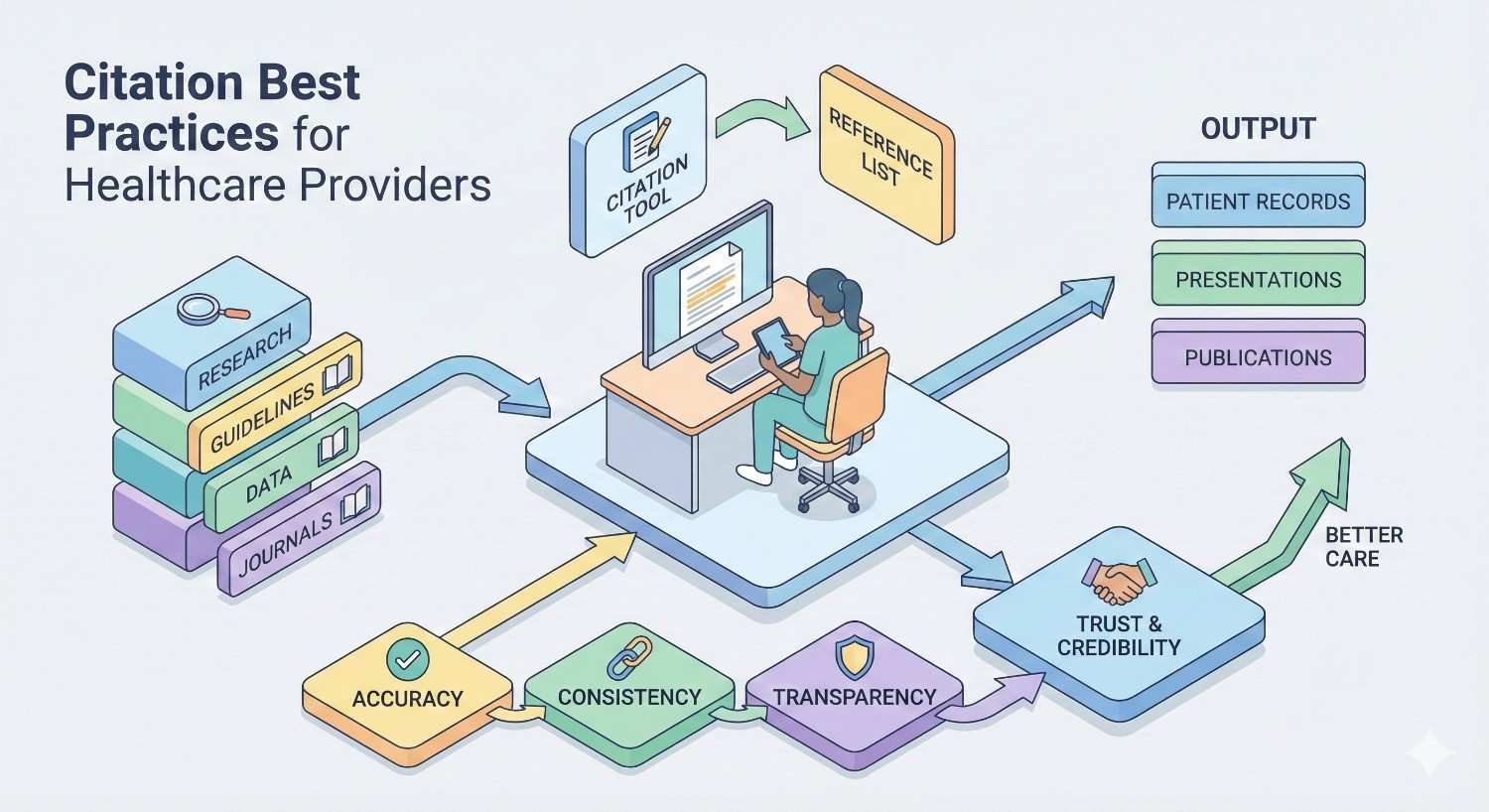
Healthcare providers face heightened citation accuracy requirements. Patient safety depends on correct information. Regulatory considerations add complexity.
Maintaining NAP Consistency Across Platforms
Document your canonical NAP format in a style guide. Include exact punctuation, abbreviations, and formatting. Reference this guide for every citation creation or update.
Audit existing citations quarterly. Use citation scanning tools to identify inconsistencies. Prioritize corrections on high-authority platforms first.
Train staff on NAP standards. Anyone creating business listings or responding to directory requests should understand consistency requirements. Inconsistencies often result from well-intentioned but uninformed staff actions.
Claiming and Verifying Business Listings
Claim listings on all major platforms proactively. Unclaimed listings may contain user-submitted information with errors. Claiming enables correction and ongoing management.
Complete verification processes fully. Partial verification limits editing capabilities. Full verification maximizes control and credibility.
Document login credentials securely. Citation platforms require ongoing access for updates. Lost credentials create management barriers and potential security risks.
Monitoring Unstructured Mentions
Set up Google Alerts for your business name, key staff names, and location variations. Alerts notify you when new mentions appear online.
Monitor social media mentions through platform tools or third-party services. Social citations require different monitoring approaches than web content.
Respond to inaccurate unstructured citations promptly. Contact publishers with correction requests. Most will update information when presented with accurate data professionally.
Updating Information When Details Change
Update all citations immediately when business information changes. Address changes, phone number updates, and hours modifications require comprehensive citation updates.
Prioritize high-traffic platforms for immediate updates. Google Business Profile, Yelp, and healthcare directories should receive same-day updates. Secondary platforms can follow within one week.
Document update completion. Track which platforms have been updated and which remain pending. This documentation prevents gaps in citation consistency.
Common Citation Mistakes to Avoid
Citation errors undermine local SEO investment. Avoiding common mistakes protects your citation profile and maximizes ranking potential.
Inconsistent Business Information
Inconsistency remains the most damaging citation error. Even minor variations create algorithmic confusion. Search engines may suppress listings entirely when facing conflicting information.
Common inconsistency sources include abbreviation variations, suite number inclusion or exclusion, and phone number formatting differences. Standardize every element.
Historical inconsistencies persist on older platforms. Previous staff may have created listings with different formatting. Audit legacy citations for consistency with current standards.
Duplicate Listings
Duplicate listings on single platforms create confusion and dilute citation value. Search engines may penalize businesses with multiple listings on the same directory.
Duplicates often result from staff turnover. New employees create listings without checking for existing profiles. Establish processes requiring duplicate checks before new listing creation.
Merge or remove duplicates systematically. Most platforms offer duplicate resolution processes. Document resolution to prevent recurrence.
Ignoring Unstructured Citation Opportunities
Focusing exclusively on structured citations leaves value unrealized. Unstructured citations provide authority signals that structured citations cannot replicate.
Create newsworthy activities intentionally. Community involvement, service expansions, and staff achievements all generate coverage opportunities.
Build relationships with local media and bloggers. Proactive relationship building increases coverage likelihood when newsworthy events occur.
How Honolulu Urgent Care Maintains Accurate Citations
Honolulu Urgent Care prioritizes citation accuracy as a patient service commitment. Accurate information helps patients find appropriate care quickly.
Our Commitment to Transparent Information
We audit our citation profile monthly. Every major platform receives verification checks ensuring current, accurate information.
Staff training includes citation awareness. Team members understand how citation accuracy affects patient experience. This awareness prevents well-intentioned errors.
We respond to patient feedback about information accuracy. Reports of incorrect listings receive immediate investigation and correction.
Finding Us Online and In-Person
Our Google Business Profile contains verified, current information including hours, services, and contact details. This listing receives priority attention for any updates.
We maintain active profiles on Healthgrades, Vitals, Yelp, and other healthcare directories. Each profile reflects our commitment to accurate patient information.
Patients can verify our information across multiple platforms. Consistent data across sources confirms accuracy and builds trust.
Conclusion
Structured and unstructured citations work together to build local search visibility and patient trust. Structured citations provide controllable, verified business data across directories. Unstructured citations deliver editorial credibility through third-party mentions.
Healthcare providers face heightened accuracy requirements. Patients depend on correct information for care decisions. Citation consistency directly impacts patient experience and safety.
We help businesses build comprehensive citation strategies that balance both citation types effectively. Contact White Label SEO Service to audit your current citation profile and develop a systematic improvement plan.
Frequently Asked Questions
What is the difference between structured and unstructured citations?
Structured citations appear in business directories with standardized NAP fields. Unstructured citations mention your business within general content like news articles or blog posts without dedicated data fields.
Do citations affect how patients find urgent care clinics?
Yes. Citations influence local search rankings that determine which clinics appear in map results. Accurate citations also help patients verify location, hours, and contact information before visiting.
How can I verify if a clinic’s citation information is accurate?
Check the clinic’s information across multiple platforms including Google Business Profile, Yelp, and healthcare directories. Consistent information across sources indicates accuracy. Discrepancies suggest potential errors.
Why is NAP consistency important for healthcare providers?
Search engines compare business information across platforms to verify legitimacy. Inconsistent NAP data creates confusion that may suppress local rankings. Patients also lose trust when finding conflicting information.
How often should business citations be updated?
Update citations immediately when any business information changes. Conduct comprehensive audits quarterly to identify inconsistencies or outdated information across all platforms.
Can unstructured citations hurt my local SEO?
Unstructured citations with incorrect information can create consistency problems. Monitor mentions and request corrections when publishers display inaccurate data. Accurate unstructured citations provide positive ranking signals.
Which citation sources matter most for healthcare providers?
Google Business Profile provides the strongest direct ranking impact. Healthcare-specific platforms like Healthgrades and Vitals carry significant authority for medical practices. Yelp influences both rankings and patient decisions.