Strategic SEO transforms how SaaS companies acquire, convert, and retain customers across every stage of the buyer journey. Unlike traditional marketing channels that stop working when budgets dry up, organic search builds compounding visibility that reduces customer acquisition costs over time.
This guide breaks down exactly how to align your SEO strategy with the SaaS customer journey. You will learn technical foundations, content frameworks, realistic timelines, and measurement approaches that connect search performance to revenue.
Whether you are building SEO in-house or evaluating agency partners, this resource delivers the strategic clarity needed to make informed decisions about organic growth investment.
Understanding the SaaS Customer Journey
What Is the SaaS Customer Journey?
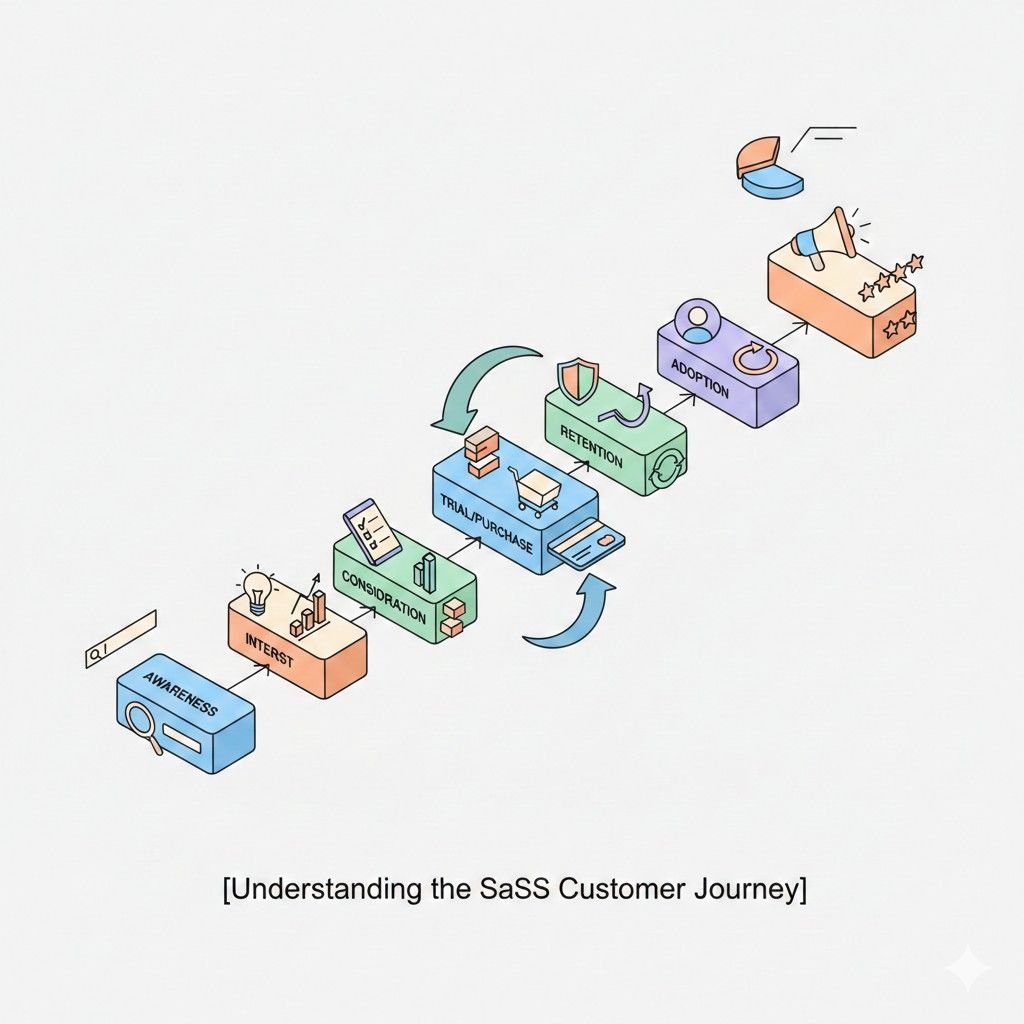
The SaaS customer journey maps every interaction a prospect has with your product, from initial problem awareness through long-term advocacy. Unlike one-time purchases, SaaS relationships depend on continuous value delivery across subscription renewals.
This journey encompasses discovery, evaluation, purchase, onboarding, adoption, and expansion. Each stage presents distinct search behaviors and content needs that smart SEO strategies address systematically.
Understanding this journey allows marketing teams to create content that meets prospects exactly where they are. The goal is not just traffic acquisition but guiding qualified visitors toward conversion and retention.
Key Stages of the SaaS Buyer Journey
Awareness Stage
Prospects recognize they have a problem but may not know solutions exist. They search for educational content explaining symptoms, causes, and general approaches. Keywords at this stage tend to be broader and more informational.
Content targeting awareness searchers includes blog posts, guides, and industry reports that establish your brand as a knowledgeable resource. The objective is visibility and trust-building, not immediate conversion.
Consideration Stage
Buyers actively research solution categories and compare approaches. They understand their problem and now evaluate different methods to solve it. Searches become more specific and solution-oriented.
Comparison content, feature explanations, and use-case documentation serve consideration-stage prospects. These visitors are closer to purchase decisions and require more detailed technical information.
Decision Stage
Prospects have narrowed options and seek validation for their final choice. They search for pricing details, reviews, implementation requirements, and competitive comparisons. Intent signals are strongest here.
Landing pages, case studies, testimonials, and detailed product documentation support decision-stage conversions. Content must address objections and demonstrate clear value propositions.
Onboarding & Adoption Stage
New customers need help getting started and achieving initial success. They search for tutorials, documentation, best practices, and troubleshooting guides. Effective onboarding content reduces churn risk.
Help centers, knowledge bases, and getting-started guides serve this stage. SEO-optimized support content also captures prospects researching implementation complexity before purchase.
Retention & Expansion Stage
Existing customers seek advanced features, integrations, and optimization strategies. They search for power-user techniques and expansion opportunities. This content supports upselling and cross-selling.
Advanced tutorials, integration guides, and feature deep-dives serve retention goals. Satisfied customers who find answers through search become advocates who drive referral traffic.
How SaaS Differs from Traditional B2B Customer Journeys
SaaS customer journeys differ fundamentally from traditional B2B purchases in several critical ways that shape SEO strategy.
Recurring Revenue Model
Traditional B2B focuses on closing deals. SaaS success depends on keeping customers month after month. This shifts SEO priorities toward content that supports retention, not just acquisition.
Product-Led Discovery
Many SaaS buyers discover products through self-service research rather than sales conversations. Gartner research indicates that B2B buyers spend only 17% of their journey meeting with potential suppliers. SEO captures the other 83%.
Shorter Sales Cycles for Lower-Tier Plans
While enterprise SaaS deals take months, self-serve and SMB plans often convert within days. This creates opportunities for SEO to drive direct conversions without sales team involvement.
Continuous Evaluation
SaaS customers constantly evaluate whether to renew. Competitors can win them away at any renewal cycle. Ongoing content visibility maintains mindshare and demonstrates continued value.
Freemium and Trial Models
Free trials and freemium tiers create unique search patterns. Prospects search for product comparisons even after signing up, making competitive content relevant throughout the journey.
The Role of SEO Across the SaaS Customer Journey
Why SEO Is Critical for SaaS Growth
Organic search delivers compounding returns that paid channels cannot match. Every piece of content you publish continues working indefinitely, unlike ads that stop generating leads when budgets pause.
Customer Acquisition Cost Reduction
SEO-driven leads typically cost 60-70% less than paid acquisition over time. Initial investment is higher, but marginal costs decrease as content assets accumulate and authority builds.
Scalable Pipeline Generation
Paid advertising scales linearly with budget. SEO scales exponentially as domain authority grows. A strong organic presence captures increasing search volume without proportional cost increases.
Competitive Moat Building
Rankings take time to earn and time to lose. Competitors cannot simply outspend you to take your organic positions. This creates defensible market positioning that protects against well-funded competitors.
Trust and Credibility Signals
Appearing in organic results carries implicit endorsement from search engines. Research from BrightEdge shows that organic search drives 53% of all website traffic, indicating strong user preference for organic results.
Mapping SEO Strategy to Each Journey Stage
Awareness: Top-of-Funnel SEO Tactics
Target informational keywords with high search volume and lower competition. Create comprehensive guides, industry reports, and educational content that addresses problems your product solves.
Focus on building topical authority through content clusters. Answer common questions your target audience asks before they know your product category exists.
Prioritize keywords like “how to [solve problem],” “what is [industry challenge],” and “[problem] best practices.” These queries capture prospects at the earliest journey stage.
Consideration: Middle-of-Funnel Content Optimization
Target comparison and evaluation keywords. Create content comparing solution approaches, explaining feature categories, and helping prospects understand what to look for.
Develop content around “best [solution category],” “[solution A] vs [solution B],” and “how to choose [product type].” These searches indicate active evaluation.
Include your product naturally within broader category content. Position yourself as a helpful guide, not just a vendor pushing features.
Decision: Bottom-of-Funnel Conversion SEO
Optimize product pages, pricing pages, and feature documentation for branded and high-intent searches. Ensure prospects searching for your specific product find comprehensive, persuasive content.
Target keywords like “[product name] pricing,” “[product name] reviews,” “[product name] vs [competitor],” and “[product name] implementation.” These searches indicate imminent purchase decisions.
Create detailed case studies and ROI calculators that help prospects justify decisions to stakeholders. Address common objections directly in your content.
Retention: SEO for Customer Success & Expansion
Optimize help documentation and knowledge bases for search. Customers who find answers quickly experience less friction and higher satisfaction.
Target keywords around product usage, integrations, and advanced features. This content serves both existing customers and prospects researching implementation complexity.
Create content around “[product name] integrations,” “how to [advanced feature],” and “[product name] best practices.” These searches indicate engaged users seeking deeper value.
Search Intent Alignment Across the Funnel
Search intent alignment determines whether your content satisfies users or sends them back to search results. Misaligned intent wastes ranking potential and damages engagement metrics.
Informational Intent
Users want to learn something. They expect educational content, not sales pitches. Satisfy this intent with comprehensive guides, tutorials, and explanatory content.
Commercial Investigation Intent
Users research options before purchasing. They expect comparisons, reviews, and feature breakdowns. Provide balanced, helpful content that positions your product within broader context.
Transactional Intent
Users are ready to act. They expect clear paths to conversion, pricing information, and purchase options. Remove friction and provide everything needed to complete transactions.
Navigational Intent
Users seek specific pages or brands. They expect direct access to what they are looking for. Ensure branded searches lead to appropriate landing pages.
Mapping content to intent requires analyzing what currently ranks for target keywords. If Google shows comparison articles, create comparison content. If it shows product pages, optimize product pages.
Building a SaaS SEO Strategy for Sustainable Organic Growth
Technical SEO Foundations for SaaS Websites
Site Architecture & Crawlability
SaaS websites often grow organically, creating architectural debt that hinders search performance. Clean site structure ensures search engines can discover and index all important content.
Implement logical URL hierarchies that reflect content relationships. Use internal linking to distribute authority and guide crawlers through your site systematically.
Maintain XML sitemaps that accurately reflect your content inventory. Submit sitemaps through Google Search Console and monitor indexing status regularly.
Address crawl budget considerations for larger sites. Ensure robots.txt does not block important content and that canonical tags prevent duplicate content issues.
Core Web Vitals & Page Speed
Page experience signals directly impact rankings and user engagement. Google’s Core Web Vitals measure loading performance, interactivity, and visual stability.
Target Largest Contentful Paint (LCP) under 2.5 seconds. Optimize images, implement lazy loading, and consider CDN deployment for global audiences.
Ensure First Input Delay (FID) stays below 100 milliseconds. Minimize JavaScript execution time and break up long tasks that block the main thread.
Maintain Cumulative Layout Shift (CLS) below 0.1. Reserve space for images and ads, avoid inserting content above existing content, and use transform animations.
Schema Markup for SaaS Products
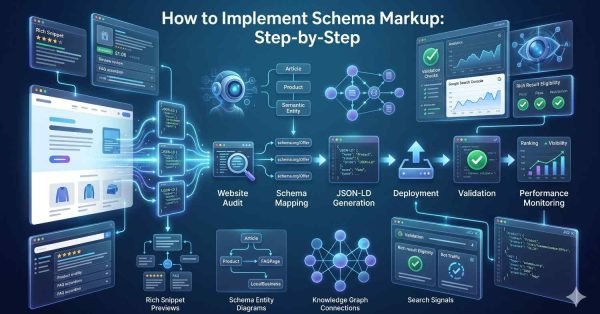
Structured data helps search engines understand your content and enables rich results that improve click-through rates.
Implement Organization schema to establish brand identity. Include logo, contact information, and social profiles.
Use Product schema for feature pages and pricing content. Include pricing, availability, and review information where applicable.
Apply FAQ schema to frequently asked questions sections. This can generate rich results that capture additional SERP real estate.
Consider SoftwareApplication schema for product pages. Include operating system compatibility, pricing, and rating information.
Content Strategy for SaaS Customer Acquisition
Keyword Research for SaaS Verticals
SaaS keyword research requires understanding both search volume and buyer intent. High-volume keywords often attract tire-kickers, while lower-volume terms may indicate serious buyers.
Start with seed keywords describing your product category, problems you solve, and jobs your customers hire you to do. Expand using keyword research tools like Ahrefs, Semrush, or Moz.
Analyze competitor content to identify keyword gaps. Find topics competitors rank for that you have not addressed. Prioritize based on relevance, volume, and difficulty.
Consider search intent when evaluating keywords. A keyword with 10,000 monthly searches but informational intent may generate fewer conversions than a 500-search transactional keyword.
Content Types by Funnel Stage
Top-of-Funnel Content:
- Ultimate guides and comprehensive resources
- Industry trend reports and original research
- Educational blog posts addressing common questions
- Glossaries and terminology explanations
- Templates and free tools
Middle-of-Funnel Content:
- Comparison articles and buying guides
- Use case documentation
- Feature explanations and benefit breakdowns
- Webinar recordings and video tutorials
- Expert interviews and thought leadership
Bottom-of-Funnel Content:
- Product landing pages
- Pricing pages with clear value propositions
- Case studies with measurable results
- Customer testimonials and reviews
- Implementation guides and onboarding documentation
Topic Clusters & Pillar Page Strategy
Topic clusters organize content around central themes, building topical authority that signals expertise to search engines.
Create pillar pages that comprehensively cover broad topics. These pages target competitive head terms and serve as hubs linking to related cluster content.
Develop cluster content addressing specific subtopics in depth. Each cluster page links back to the pillar and to related cluster content.
This structure demonstrates comprehensive topic coverage and distributes link authority throughout your content ecosystem.
Link Building & Authority Development
SaaS-Specific Link Acquisition Tactics
Link building for SaaS requires strategies that align with how the industry operates. Generic outreach rarely works; targeted approaches yield better results.
Integration Partner Links: Build integrations with complementary tools and earn links from their integration directories. These links carry relevance signals and drive qualified referral traffic.
Resource Page Placements: Identify industry resource pages listing tools in your category. Reach out with compelling reasons for inclusion.
Data-Driven Content: Publish original research and industry benchmarks. Data-driven content naturally attracts links from writers seeking authoritative sources.
Product Directories: Submit to relevant software directories like G2, Capterra, and industry-specific listings. These links provide authority and drive direct traffic.
Digital PR & Thought Leadership
Position company leaders as industry experts through contributed content, podcast appearances, and speaking engagements.
Develop newsworthy angles around company milestones, product launches, and industry insights. Pitch relevant publications with exclusive data or expert commentary.
Create linkable assets like annual reports, industry surveys, and interactive tools that journalists and bloggers reference naturally.
Strategic Partnerships & Integrations
Partner with complementary SaaS products to create co-marketing content. Joint webinars, ebooks, and research reports generate links from both partner audiences.
Build technical integrations that warrant documentation on partner sites. Integration announcements create natural link opportunities.
Participate in industry associations and communities that provide member directory links and speaking opportunities.
Measuring SEO Performance & ROI
Key Metrics for SaaS SEO Success
Track metrics that connect SEO activity to business outcomes, not just vanity metrics that look good in reports.
Organic Traffic: Total visits from search engines, segmented by landing page type and user intent.
Keyword Rankings: Position tracking for target keywords across journey stages.
Organic Conversions: Trial signups, demo requests, and purchases attributed to organic search.
Organic Revenue: Monthly recurring revenue from customers acquired through organic channels.
Customer Acquisition Cost (CAC): Total SEO investment divided by customers acquired through organic search.
Attribution Models for Organic Traffic
SaaS buying journeys involve multiple touchpoints. Simple last-click attribution undervalues SEO’s contribution to conversions.
Implement multi-touch attribution to understand how organic search contributes throughout the customer journey. First-touch attribution shows how SEO introduces new prospects.
Use Google Analytics 4’s data-driven attribution or position-based models that credit both first and last interactions.
Track assisted conversions to understand when organic search participates in conversion paths without receiving last-click credit.
Connecting SEO to Revenue & LTV
Calculate the lifetime value of SEO-acquired customers to understand true channel ROI. If organic customers have higher retention rates, SEO’s value exceeds initial acquisition metrics.
Build dashboards connecting Google Search Console data to CRM records. Track which keywords and landing pages generate the highest-value customers.
Compare organic CAC to paid CAC over time. As SEO compounds, the gap should widen in organic’s favor.
Realistic SEO Timelines for SaaS Companies
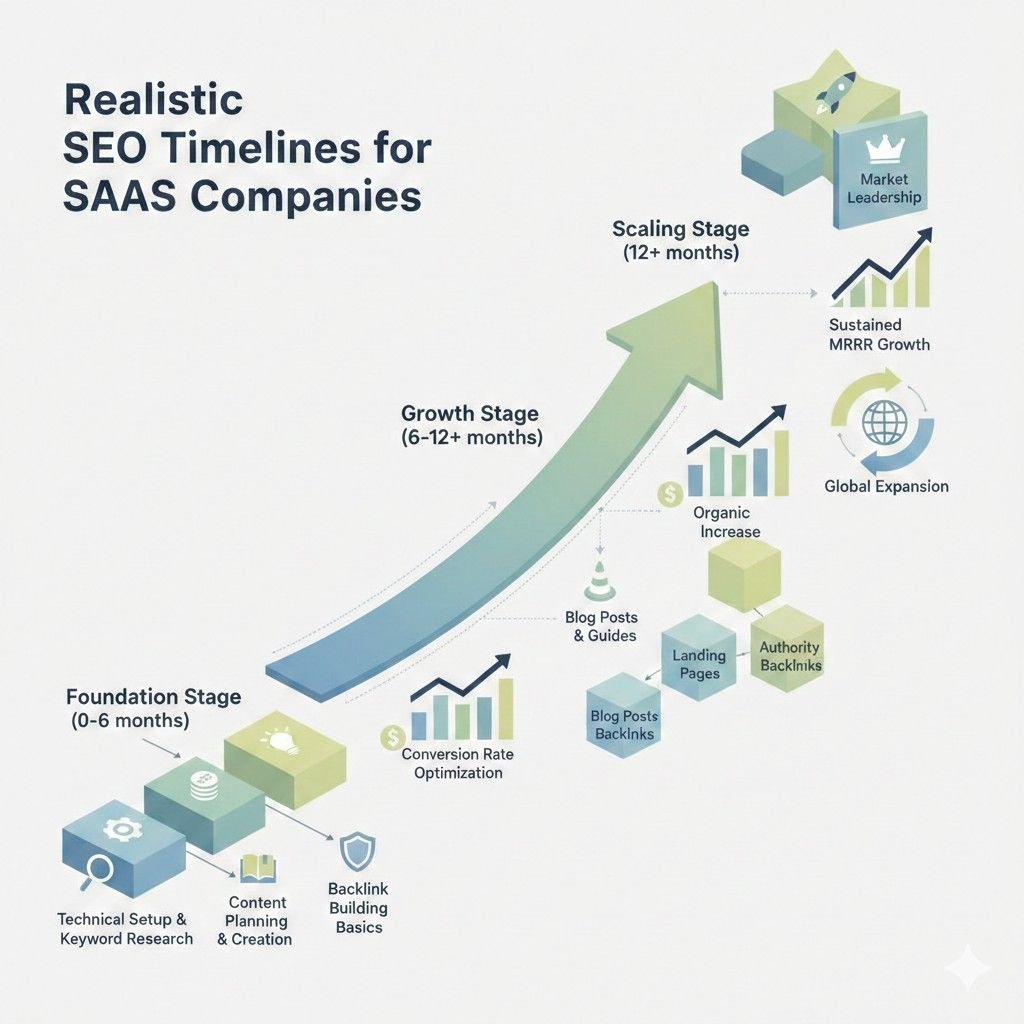
What to Expect in Months 1-3 (Foundation Phase)
The first three months focus on technical foundations and strategic planning. Visible ranking improvements are unlikely during this phase.
Technical Audit & Fixes: Identify and resolve crawlability issues, site speed problems, and indexing errors. This work enables future content to perform.
Keyword Research & Strategy: Develop comprehensive keyword maps aligned with customer journey stages. Prioritize opportunities based on business impact.
Content Audit: Evaluate existing content for optimization opportunities. Identify gaps in topic coverage and content quality issues.
Initial Content Production: Begin creating foundational content targeting lower-competition keywords. Build internal linking structures.
Baseline Measurement: Establish tracking for rankings, traffic, and conversions. Document starting positions for future comparison.
Expect minimal traffic changes during this phase. The work is essential but results take time to materialize.
What to Expect in Months 4-6 (Growth Phase)
Months four through six typically show early ranking improvements and traffic growth from initial content investments.
Content Velocity Increase: Ramp up content production based on strategy developed in phase one. Target a mix of difficulty levels.
Link Building Activation: Begin outreach campaigns and partnership development. Early links start building domain authority.
Ranking Movement: Initial content begins ranking for long-tail keywords. Some pieces may reach page one for lower-competition terms.
Traffic Growth: Expect 20-50% organic traffic increases from baseline, depending on starting position and investment level.
Conversion Optimization: Refine landing pages based on early traffic data. Improve conversion rates to maximize value from growing traffic.
What to Expect in Months 7-12 (Scale Phase)
The second half of year one typically delivers meaningful business impact as compounding effects accelerate.
Authority Building: Accumulated content and links establish domain authority. More competitive keywords become achievable.
Traffic Acceleration: Expect 100-300% traffic growth from baseline by month twelve for well-executed programs.
Conversion Volume: Increased traffic translates to meaningful lead and trial volume. SEO becomes a significant pipeline contributor.
Content Refinement: Update and optimize early content based on performance data. Consolidate thin content and expand successful topics.
Competitive Gains: Begin outranking competitors for valuable keywords. Establish positions that become defensible over time.
Factors That Influence SEO Timeline Variability
Several factors accelerate or delay SEO results. Understanding these helps set realistic expectations.
Domain Authority: Established domains with existing backlink profiles see faster results than new domains starting from zero.
Competition Level: Highly competitive markets require more time and investment. Niche markets may see faster wins.
Content Investment: Higher content velocity and quality accelerate results. Underfunding content production extends timelines.
Technical Foundation: Sites with significant technical debt require more remediation time before content can perform.
Industry Factors: Some industries have more link opportunities and content demand than others. B2B SaaS generally has strong content marketing culture.
Common SaaS SEO Mistakes to Avoid
Ignoring Search Intent Misalignment
Creating content that does not match what searchers actually want wastes resources and damages engagement metrics.
Analyze current SERP results before creating content. If Google shows comparison articles, do not create a product page. Match the format and depth that search engines reward.
Monitor engagement metrics for signs of intent mismatch. High bounce rates and low time-on-page indicate content is not satisfying user needs.
Update existing content when intent shifts. Search engines continuously refine understanding of user intent. Content that once ranked may need adjustment.
Neglecting Technical SEO Debt
Technical issues compound over time. Small problems become major obstacles as sites grow.
Schedule regular technical audits to identify issues before they impact performance. Use tools like Screaming Frog, Sitebulb, or Lumar for comprehensive crawl analysis.
Prioritize fixes based on impact. Not all technical issues affect rankings equally. Focus on problems blocking indexation or significantly impacting user experience.
Build technical SEO into development workflows. Prevent issues through proper processes rather than fixing them after deployment.
Over-Relying on Short-Term Tactics
Chasing algorithm updates and quick wins creates unstable foundations. Sustainable SEO requires long-term thinking.
Avoid link schemes and manipulative tactics that risk penalties. The short-term gains never justify long-term risks.
Build content assets that remain valuable over time. Evergreen content continues generating traffic years after publication.
Invest in brand building alongside SEO. Strong brands earn more clicks at every ranking position and attract natural links.
Failing to Integrate SEO with Product-Led Growth
Product-led growth and SEO should reinforce each other. Treating them as separate initiatives leaves value on the table.
Optimize product documentation and help content for search. Users searching for solutions may discover your product through support content.
Create content around product use cases and workflows. Show prospects how your product solves specific problems they search for.
Leverage product data for content ideas. Feature requests, support tickets, and user behavior reveal what content your audience needs.
SaaS SEO Investment: Budgeting & Resource Allocation
How Much Should SaaS Companies Invest in SEO?
SEO investment should align with growth stage, competitive landscape, and revenue goals. There is no universal budget formula.
Early-Stage Startups (Pre-Series A): Allocate $3,000-$8,000 monthly for foundational SEO. Focus on technical basics and initial content development.
Growth-Stage Companies (Series A-B): Invest $10,000-$25,000 monthly to build competitive content programs and link acquisition.
Scale-Stage Companies (Series C+): Budget $25,000-$75,000+ monthly for comprehensive programs including dedicated teams, agency support, and content production.
Consider SEO as percentage of customer acquisition budget. Most successful SaaS companies allocate 15-25% of marketing budget to organic channels.
In-House vs. Agency vs. Hybrid SEO Models
Each model offers distinct advantages depending on company stage and resources.
In-House Teams
Best for companies with sufficient budget for full-time specialists and long-term commitment to organic growth.
Advantages include deep product knowledge, faster communication, and alignment with company culture. Challenges include recruiting difficulty and limited perspective.
Agency Partnerships
Best for companies needing immediate expertise without building internal teams or seeking specialized capabilities.
Advantages include diverse experience, established processes, and scalable resources. Challenges include communication overhead and potential misalignment with business context.
Hybrid Models
Best for companies wanting strategic control with execution support. Internal strategist manages agency partners for content and link building.
This model combines product knowledge with specialized execution capabilities. Most growth-stage SaaS companies eventually adopt hybrid approaches.
Calculating Expected ROI from Organic Search
ROI calculation requires tracking full-funnel metrics from traffic through revenue.
Basic ROI Formula: (Organic Revenue – SEO Investment) / SEO Investment × 100
Example Calculation:
- Monthly SEO investment: $15,000
- Organic trials generated: 200
- Trial-to-paid conversion rate: 15%
- New customers: 30
- Average contract value: $2,400/year
- First-year revenue: $72,000
- First-year ROI: 380%
Factor in customer lifetime value for complete picture. If average customer stays three years, true ROI multiplies accordingly.
Compare organic CAC to paid CAC over time. Healthy SEO programs show declining organic CAC as content compounds while paid CAC remains stable or increases.
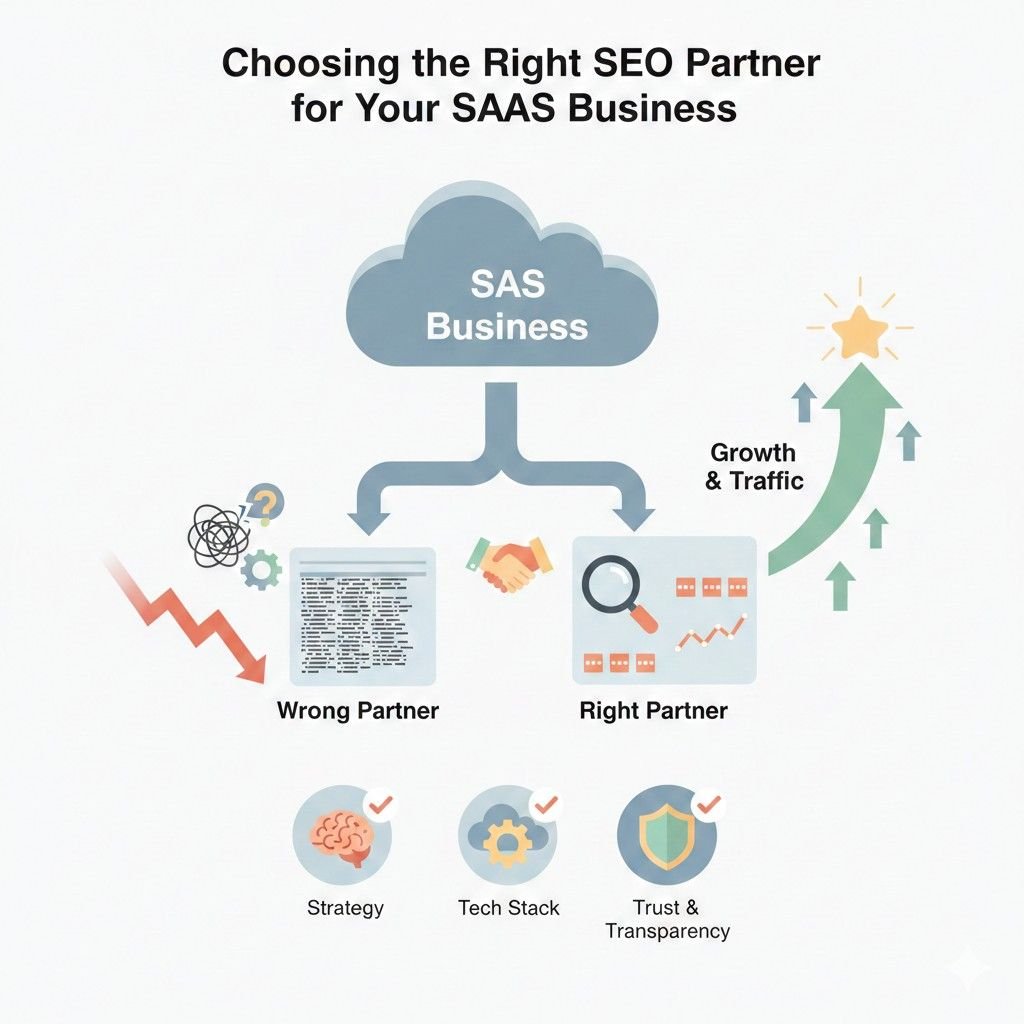
Choosing the Right SEO Partner for Your SaaS Business
What to Look for in a SaaS SEO Agency
SaaS SEO requires specialized knowledge that generalist agencies often lack. Evaluate partners on relevant experience and strategic depth.
SaaS-Specific Experience: Look for case studies from companies in your market segment. B2B SaaS differs significantly from ecommerce or local SEO.
Strategic Sophistication: Partners should discuss customer journey alignment, not just keyword rankings. Evaluate their understanding of SaaS business models.
Content Capabilities: Assess writing quality and subject matter expertise. SaaS content requires technical accuracy and audience understanding.
Transparent Reporting: Expect clear dashboards connecting SEO activity to business outcomes. Avoid partners who report only vanity metrics.
Process Documentation: Professional agencies have documented processes for audits, content production, and link building. Ask to see their methodology.
Red Flags & Warning Signs to Avoid
Certain behaviors indicate partners who may waste your investment or damage your site.
Guaranteed Rankings: No one can guarantee specific positions. Search algorithms are too complex and competitive landscapes too dynamic.
Secretive Tactics: Legitimate SEO strategies can be explained clearly. Partners who will not discuss their methods may use risky tactics.
Unrealistic Timelines: Promises of significant results in 30-60 days indicate either inexperience or willingness to use manipulative tactics.
No Discovery Process: Partners who propose solutions before understanding your business cannot deliver strategic value.
Outdated Practices: Emphasis on keyword density, exact-match anchor text, or article spinning indicates outdated knowledge.
Questions to Ask Before Hiring an SEO Provider
Ask these questions during evaluation to assess fit and capability.
- What SaaS companies have you worked with, and what results did you achieve?
- How do you approach keyword research for SaaS customer journeys?
- What does your content production process look like?
- How do you build links for SaaS companies specifically?
- What metrics do you report on, and how do you connect them to revenue?
- Who will work on our account, and what is their experience?
- How do you handle communication and project management?
- What does your onboarding process involve?
- How do you stay current with algorithm changes and industry trends?
- Can you provide references from current SaaS clients?
Case Studies: SaaS SEO Success Stories
Early-Stage Startup SEO Growth Example
A seed-stage project management SaaS launched with minimal organic presence. Monthly organic traffic sat below 500 visits with no meaningful keyword rankings.
Strategy Implemented:
- Technical audit and site architecture optimization
- Content strategy targeting long-tail workflow keywords
- Integration partner outreach for initial link building
Results After 12 Months:
- Organic traffic grew from 500 to 8,500 monthly visits
- Ranked for 340 keywords on page one
- Generated 45 trial signups monthly from organic search
- Achieved organic CAC 65% lower than paid channels
The startup prioritized content addressing specific use cases rather than competing for broad category terms. This approach delivered faster wins and built authority progressively.
Scale-Up SaaS Organic Traffic Transformation
A Series B HR technology company had stagnant organic growth despite significant content investment. Traffic plateaued around 25,000 monthly visits.
Problems Identified:
- Content cannibalization across similar topics
- Technical issues blocking crawl efficiency
- Weak internal linking structure
- No systematic link building program
Strategy Implemented:
- Content consolidation reducing 200 posts to 80 comprehensive resources
- Technical remediation including site speed optimization
- Topic cluster architecture with strategic internal linking
- Digital PR campaign generating industry coverage
Results After 18 Months:
- Organic traffic increased from 25,000 to 185,000 monthly visits
- Organic-sourced pipeline grew 340%
- Domain authority increased from 45 to 62
- Achieved top-three rankings for 12 high-value category keywords
The transformation required patience through initial traffic dips during consolidation. Long-term gains justified short-term disruption.
Enterprise SaaS Authority Building Case
An enterprise security SaaS needed to establish thought leadership in a competitive market dominated by established vendors.
Challenge: Competing against companies with decades of content history and massive link profiles seemed impossible through traditional approaches.
Strategy Implemented:
- Original research program publishing quarterly industry reports
- Executive thought leadership through contributed articles and speaking
- Strategic partnerships with analyst firms and industry associations
- Comprehensive resource center targeting buyer education keywords
Results After 24 Months:
- Organic traffic grew from 50,000 to 320,000 monthly visits
- Earned links from Forbes, TechCrunch, and Wall Street Journal
- Became cited source in three Gartner reports
- Generated $4.2M in influenced pipeline from organic search
The company invested heavily in differentiated content that competitors could not easily replicate. Original research created sustainable competitive advantage.
Frequently Asked Questions About SaaS SEO
How does SEO support SaaS customer acquisition?
SEO captures prospects actively searching for solutions to problems your product solves. Unlike interruptive advertising, organic search reaches buyers when they are already seeking answers. This intent-driven traffic converts at higher rates and lower costs than most paid channels.
What content types work best for SaaS SEO?
The most effective content types vary by funnel stage. Top-of-funnel performance comes from comprehensive guides and educational resources. Middle-funnel success requires comparison content and use-case documentation. Bottom-funnel conversions depend on optimized product pages, case studies, and detailed feature content.
How do you measure SEO success for SaaS?
Measure SEO through metrics connecting search performance to business outcomes. Track organic traffic growth, keyword ranking improvements, and conversion volume. Calculate organic customer acquisition cost and compare to paid channels. Monitor organic-sourced pipeline and revenue attribution.
Can SEO reduce customer acquisition cost (CAC)?
Yes, SEO typically delivers the lowest CAC of any scalable acquisition channel over time. Initial investment is higher than paid advertising, but marginal costs decrease as content assets compound. Most mature SaaS SEO programs achieve CAC 50-70% lower than paid channels.
How does SEO integrate with paid acquisition?
SEO and paid search work best as complementary channels. Use paid advertising to test keywords before investing in organic content. Leverage organic rankings to reduce paid spend on branded terms. Apply SEO learnings about high-converting content to improve paid landing pages.
How long does SEO take for SaaS companies?
Most SaaS companies see meaningful results within 6-12 months of consistent investment. Initial ranking improvements appear around months 3-4. Significant traffic growth typically occurs in months 6-9. Full program maturity with competitive rankings requires 12-18 months.
What is a good SEO budget for a SaaS startup?
Early-stage startups should budget $3,000-$8,000 monthly for foundational SEO work. Growth-stage companies typically invest $10,000-$25,000 monthly. Budget should scale with revenue goals and competitive intensity. Most successful SaaS companies allocate 15-25% of marketing budget to organic channels.
Conclusion & Next Steps
Key Takeaways for SaaS SEO Success
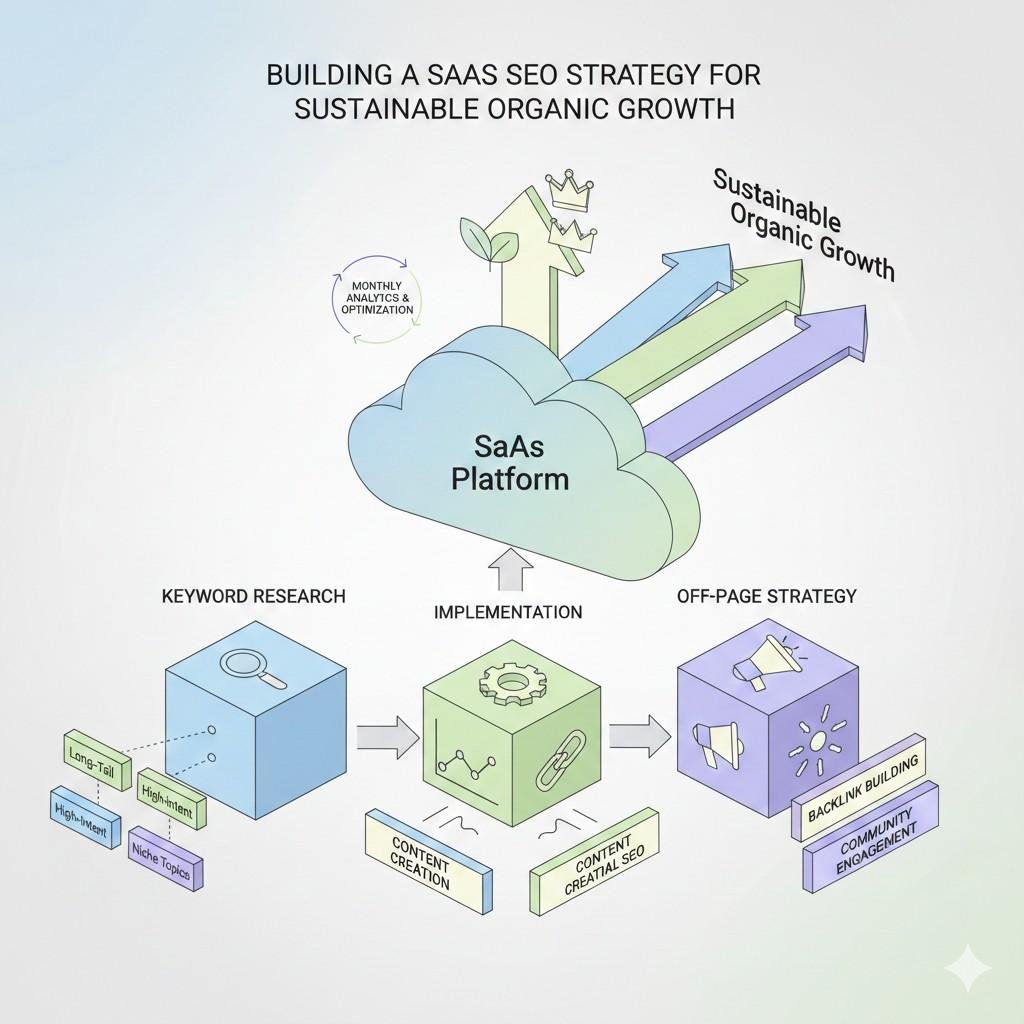
Strategic SEO aligns content with every stage of the SaaS customer journey, from initial problem awareness through retention and expansion. Success requires technical foundations, comprehensive content strategy, and systematic authority building working together.
Realistic timelines span 6-12 months for meaningful results. Investment should match growth stage and competitive landscape. Measurement must connect search performance to revenue outcomes, not just traffic metrics.
How to Get Started with Strategic SEO
Building sustainable organic growth requires expertise, resources, and long-term commitment. Whether you build in-house capabilities or partner with specialists, the strategic framework remains consistent.
We help SaaS companies at every stage develop and execute SEO strategies that drive measurable business results. From technical audits to content production to link building, our team delivers the specialized expertise SaaS growth demands.
Ready to accelerate your organic growth? Contact White Label SEO Service to discuss how strategic SEO can reduce your customer acquisition costs and build sustainable competitive advantage.