
Most SaaS startups should allocate between $2,000 and $15,000 monthly for SEO, depending on funding stage and growth targets. This investment covers technical foundations, content production, link building, and the tools needed to compete in organic search.
Getting your SEO budget right matters because organic traffic compounds over time. Unlike paid ads that stop generating leads when you stop paying, SEO builds lasting visibility that reduces customer acquisition costs.
This guide breaks down exactly how much to spend, where to allocate funds, and when to expect returns. You’ll find templates, benchmarks, and a clear framework for scaling your investment as you grow.
What Is a SaaS Startup SEO Budget?
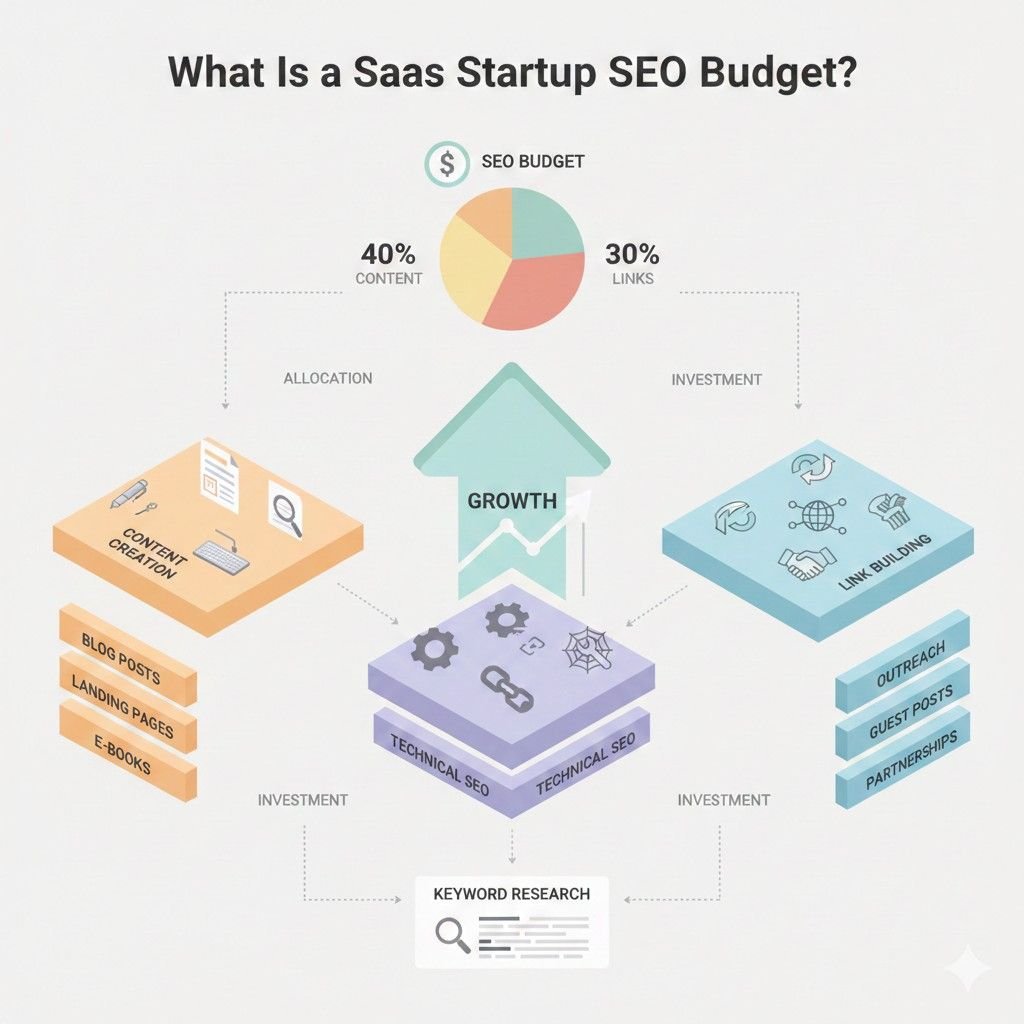
A SaaS startup SEO budget is the planned financial allocation for all activities designed to improve organic search visibility. It encompasses everything from technical audits to content creation to authority building. Unlike marketing budgets for traditional businesses, SaaS SEO budgets must account for longer sales cycles, product-led content strategies, and the competitive dynamics of software markets.
Definition and Core Components
Your SaaS SEO budget includes five primary cost categories. Technical SEO covers site audits, crawlability fixes, Core Web Vitals optimization, and ongoing maintenance. Content strategy and production includes keyword research, content briefs, writing, editing, and publishing workflows. Link building and digital PR encompasses outreach, guest posting, and earned media efforts. SEO tools and software covers platforms like Ahrefs, Semrush, Screaming Frog, and analytics solutions. Finally, labor costs include in-house salaries, agency retainers, or freelancer fees.
Each component requires different investment levels depending on your current organic performance, competitive landscape, and growth objectives. A bootstrapped startup with minimal technical debt might allocate more toward content, while a Series A company with a complex product might need heavier technical investment.
Why SaaS SEO Budgeting Differs from Traditional Businesses
SaaS companies face unique SEO challenges that traditional businesses don’t encounter. Your target keywords often have high commercial intent and fierce competition from well-funded competitors. The buyer journey typically involves multiple touchpoints across awareness, consideration, and decision stages. Product complexity requires educational content that builds trust before conversion.
Additionally, SaaS metrics differ fundamentally. You’re optimizing for trial signups, demo requests, and ultimately monthly recurring revenue rather than one-time purchases. This means your SEO budget must support content that nurtures prospects through longer consideration periods. According to Gartner research, B2B buyers spend only 17% of their time meeting with potential suppliers, making organic content critical for the remaining 83% of their research.
How Much Should a SaaS Startup Spend on SEO?
The right SEO budget depends on your funding stage, revenue, competitive landscape, and growth targets. Early-stage startups operate with constraints that well-funded companies don’t face. However, underinvesting in SEO during critical growth phases can create compounding disadvantages that become expensive to overcome later.
SEO Budget Benchmarks by Funding Stage
Pre-Seed and Bootstrapped Startups
Bootstrapped SaaS companies typically allocate $1,000 to $3,000 monthly for SEO. At this stage, founders often handle SEO themselves or work with a single freelancer. The focus should be on foundational technical SEO, a small volume of high-quality content targeting low-competition keywords, and basic link building through founder-led outreach.
Priority investments include one comprehensive technical audit, 4-8 pieces of bottom-funnel content monthly, and a single SEO tool subscription. Many bootstrapped founders find success by targeting long-tail keywords with clear purchase intent rather than competing for high-volume terms.
Seed Stage Startups
Seed-funded SaaS companies typically invest $3,000 to $8,000 monthly in SEO. This budget allows for either a part-time in-house hire or a mid-tier agency retainer. Content production can scale to 8-15 pieces monthly, and link building becomes more systematic.
At this stage, you should have dedicated resources for content strategy, a consistent publishing cadence, and measurable organic traffic growth. The goal is establishing topical authority in your core product areas while building the technical foundation for scale.
Series A and Beyond
Post-Series A companies typically allocate $10,000 to $50,000+ monthly for SEO. This supports full-time in-house SEO leadership, agency partnerships for specialized work, and significant content production capacity. Link building becomes a dedicated function, and programmatic SEO opportunities emerge.
Companies at this stage often have dedicated content teams, multiple agency relationships, and sophisticated attribution tracking. The focus shifts from establishing presence to dominating market categories and expanding into adjacent topics.
Percentage of Revenue vs. Fixed Budget Models
Two primary budgeting approaches exist for SaaS SEO. The percentage-of-revenue model allocates a fixed percentage of ARR or MRR to SEO, typically 5-15% of total marketing budget. This approach scales naturally with company growth and ensures SEO investment keeps pace with revenue.
The fixed budget model sets a specific monthly allocation regardless of revenue fluctuations. This works well for early-stage companies with unpredictable revenue or those making aggressive growth investments. Many startups use fixed budgets initially, then transition to percentage-based models as revenue stabilizes.
HubSpot’s marketing benchmark data suggests that high-growth SaaS companies allocate approximately 40-50% of their total marketing budget to content and organic channels. Within that allocation, SEO-specific activities typically represent 25-35% of content marketing spend.
SaaS SEO Budget Breakdown: Where to Allocate Spend
Understanding where your SEO dollars go helps you make informed trade-offs and identify areas of underinvestment. The optimal allocation varies by company stage, but general patterns emerge across successful SaaS SEO programs.
Technical SEO Investment
Technical SEO typically consumes 10-20% of your total SEO budget. This includes initial site audits, ongoing crawl monitoring, Core Web Vitals optimization, schema markup implementation, and site architecture improvements.
For most SaaS startups, technical SEO requires significant upfront investment followed by lower ongoing maintenance. A comprehensive technical audit costs $2,000 to $10,000 depending on site complexity. Monthly technical monitoring and maintenance runs $500 to $2,000 for most sites.
Key technical priorities include ensuring fast page load times, mobile responsiveness, clean URL structures, proper internal linking, and crawlable JavaScript rendering. SaaS products with complex web applications often need specialized technical SEO expertise to handle dynamic content and user-generated elements.
Content Strategy and Production Costs
Content represents the largest budget category for most SaaS companies, typically 40-60% of total SEO spend. This covers keyword research, content strategy development, writing, editing, design assets, and publishing workflows.
Quality SaaS content costs more than generic blog posts. Expert-level articles targeting competitive keywords typically cost $500 to $2,000 per piece when working with specialized writers. High-value assets like comprehensive guides, original research, or interactive tools can cost $3,000 to $10,000+ to produce.
Budget for content should account for different content types across the funnel. Bottom-funnel comparison pages and feature-focused content drive conversions. Middle-funnel educational content builds authority. Top-funnel thought leadership expands reach. Most SaaS companies need a mix of all three.
Link Building and Digital PR
Link building typically requires 15-25% of your SEO budget. This includes outreach campaigns, guest posting, digital PR, and content promotion. Quality link building is expensive because it requires skilled outreach, relationship building, and often content creation for external publications.
Agency link building services range from $2,000 to $15,000 monthly depending on link quality and volume targets. Individual high-authority links from relevant industry publications can cost $200 to $1,000+ when acquired through legitimate outreach methods.
Effective SaaS link building focuses on industry publications, technology blogs, and business media rather than generic directories or low-quality sites. Links from sites your target customers actually read carry more weight than high-DA sites with irrelevant audiences.
SEO Tools and Software
SEO tools typically represent 5-10% of your budget, usually $200 to $1,000 monthly for most startups. Essential tools include a comprehensive SEO platform like Ahrefs or Semrush, technical crawling software like Screaming Frog, and analytics tools beyond Google Analytics.
Core tool stack for most SaaS startups includes one primary SEO platform at $99 to $449 monthly, technical crawling tools at $0 to $200 monthly, rank tracking software at $50 to $200 monthly, and content optimization tools at $50 to $200 monthly.
Avoid tool sprawl by selecting one comprehensive platform rather than multiple overlapping solutions. Most SEO tasks can be accomplished with Ahrefs or Semrush plus Google Search Console and Google Analytics.
In-House vs. Agency vs. Freelancer Costs
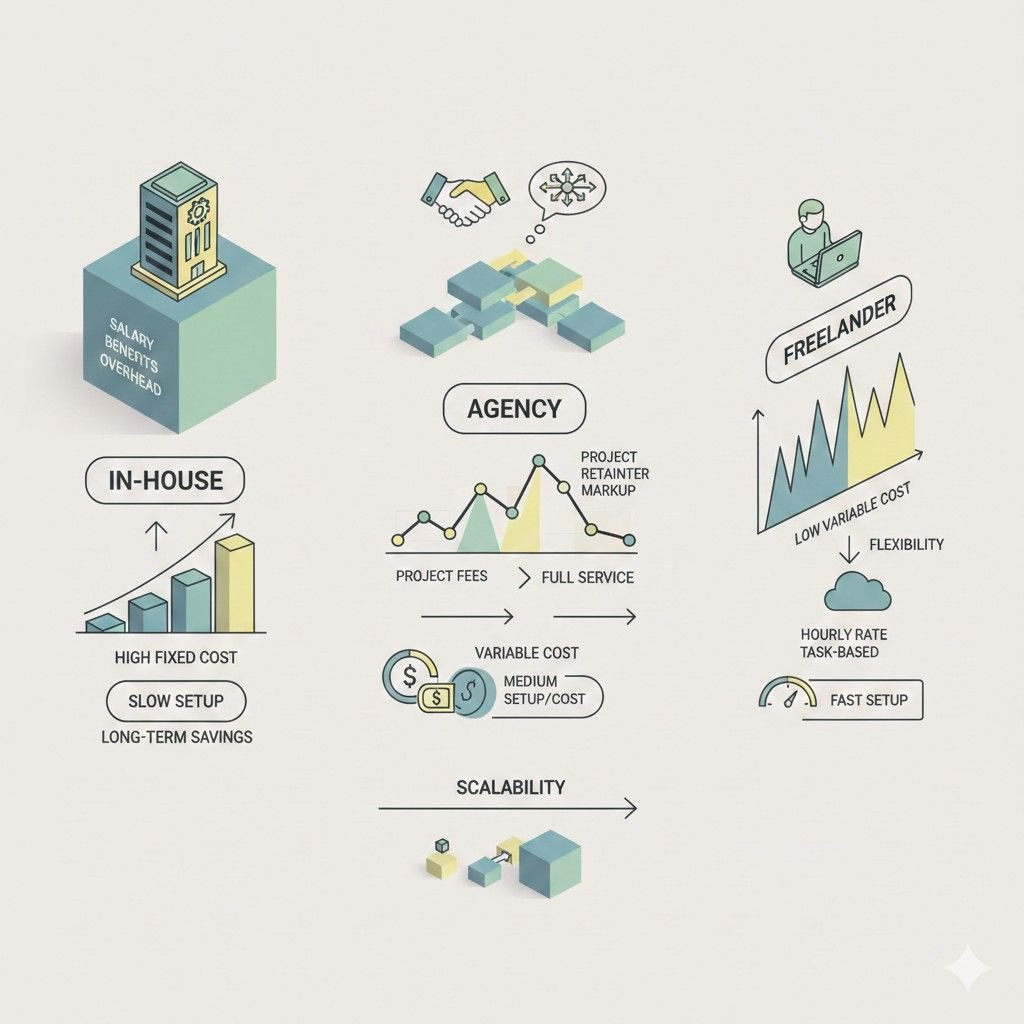
Labor represents the largest variable in SEO budgeting. In-house SEO managers command $70,000 to $150,000 annually in salary plus benefits, depending on experience and location. Senior SEO directors or heads of organic can exceed $200,000 in competitive markets.
Agency retainers range from $2,500 to $25,000+ monthly depending on scope and agency tier. Boutique agencies specializing in SaaS typically charge $5,000 to $15,000 monthly for comprehensive programs. Enterprise agencies serving larger SaaS companies often start at $15,000 monthly.
Freelancer rates vary widely. Experienced SEO consultants charge $100 to $300 hourly or $2,000 to $8,000 monthly for ongoing retainers. Content writers with SEO expertise typically charge $0.15 to $0.50 per word for quality work.
How to Create a SaaS SEO Budget Plan
Building an effective SEO budget requires understanding your current position, defining clear goals, and making strategic allocation decisions. This five-step process helps you create a realistic budget that aligns with your growth objectives.
Step 1: Audit Current Organic Performance
Before allocating budget, understand where you stand. Conduct a comprehensive audit covering technical health, content inventory, backlink profile, and competitive positioning. This audit reveals gaps that require investment and strengths you can leverage.
Key audit elements include crawl error analysis, page speed assessment, content gap analysis against competitors, backlink profile evaluation, and keyword ranking distribution. Use Google Search Console data to understand which queries drive impressions and clicks. Identify pages with high impressions but low click-through rates as optimization opportunities.
Document your baseline metrics including total organic traffic, organic-attributed signups or trials, keyword rankings for priority terms, and domain authority. These baselines help you measure ROI and justify continued investment.
Step 2: Define SEO Goals and KPIs
Set specific, measurable goals that connect SEO activities to business outcomes. Avoid vanity metrics like total traffic in favor of qualified traffic that converts. Your goals should ladder up to revenue targets.
Effective SaaS SEO goals include increasing organic trial signups by a specific percentage, ranking on page one for a defined number of priority keywords, growing organic-attributed MRR to a target amount, and reducing customer acquisition cost through organic channels.
Establish leading indicators that predict success before revenue impact materializes. These include keyword ranking improvements, organic traffic growth to high-intent pages, backlink acquisition velocity, and content indexing rates.
Step 3: Prioritize High-Impact Activities
Not all SEO activities deliver equal returns. Prioritize based on potential impact, resource requirements, and timeline to results. Early-stage companies should focus on quick wins and foundational work before pursuing competitive long-term plays.
High-impact priorities for most SaaS startups include fixing critical technical issues blocking indexation, creating bottom-funnel content targeting high-intent keywords, building links to key product and feature pages, and optimizing existing high-traffic pages for conversion.
Lower-priority activities that can wait include targeting highly competitive head terms, building programmatic SEO at scale, and pursuing broad top-funnel content strategies. These become appropriate as you establish stronger organic foundations.
Step 4: Allocate Budget by Quarter
Annual SEO budgets should be broken into quarterly allocations that reflect strategic priorities and expected results timelines. Front-loading investment in technical foundations and content production typically yields better long-term returns than spreading budget evenly.
Q1 often focuses on technical cleanup and content strategy development. Q2 emphasizes content production and initial link building. Q3 continues content scaling while beginning optimization of early content. Q4 focuses on optimization, gap filling, and planning for the following year.
Build in quarterly review points to assess performance and adjust allocations. SEO results compound, so early investments should begin showing returns by Q3-Q4 that inform future budget decisions.
Step 5: Build in Flexibility for Testing
Reserve 10-15% of your SEO budget for experimentation and opportunistic investments. SEO landscapes shift, and rigid budgets prevent you from capitalizing on emerging opportunities or addressing unexpected challenges.
Testing budget might fund experiments with new content formats, pilot programs with different agencies or freelancers, tools trials, or rapid response to algorithm updates. This flexibility helps you discover what works specifically for your market and product.
Document test results systematically to inform future budget decisions. Successful experiments become standard budget line items. Failed experiments provide valuable learning without derailing your core program.
SaaS SEO Budget Templates and Examples
These templates provide starting frameworks you can customize based on your specific situation. Adjust allocations based on your audit findings, competitive landscape, and growth stage.
Monthly SEO Budget Template ($2K–$5K)
This budget suits bootstrapped startups and early seed-stage companies. It prioritizes foundational work and high-impact content over comprehensive programs.
| Category | Allocation | Monthly Spend |
| Technical SEO | 15% | $300–$750 |
| Content Production | 50% | $1,000–$2,500 |
| Link Building | 20% | $400–$1,000 |
| SEO Tools | 10% | $200–$500 |
| Buffer/Testing | 5% | $100–$250 |
At this budget level, expect to produce 4-8 quality articles monthly, acquire 2-5 links monthly, and maintain one primary SEO tool subscription. Consider working with freelancers rather than agencies to maximize content output.
Monthly SEO Budget Template ($5K–$15K)
This budget suits seed-stage through early Series A companies. It enables more comprehensive programs with dedicated resources.
| Category | Allocation | Monthly Spend |
| Technical SEO | 12% | $600–$1,800 |
| Content Production | 45% | $2,250–$6,750 |
| Link Building | 25% | $1,250–$3,750 |
| SEO Tools | 8% | $400–$1,200 |
| Buffer/Testing | 10% | $500–$1,500 |
This budget supports 8-15 quality articles monthly, systematic link building campaigns, and either a part-time in-house resource or mid-tier agency partnership. You can begin targeting more competitive keywords and building topical authority systematically.
Monthly SEO Budget Template ($15K–$50K+)
This budget suits Series A and beyond companies pursuing aggressive organic growth. It supports full-time dedicated resources and comprehensive programs.
| Category | Allocation | Monthly Spend |
| In-House Talent | 35% | $5,250–$17,500 |
| Content Production | 30% | $4,500–$15,000 |
| Link Building/PR | 20% | $3,000–$10,000 |
| Technical SEO | 8% | $1,200–$4,000 |
| Tools & Software | 4% | $600–$2,000 |
| Testing/Innovation | 3% | $450–$1,500 |
At this level, you can support a full-time SEO manager or small team, produce 20-40+ pieces of content monthly, run multiple link building campaigns simultaneously, and invest in advanced technical optimization and programmatic SEO opportunities.
Common SaaS SEO Budgeting Mistakes to Avoid
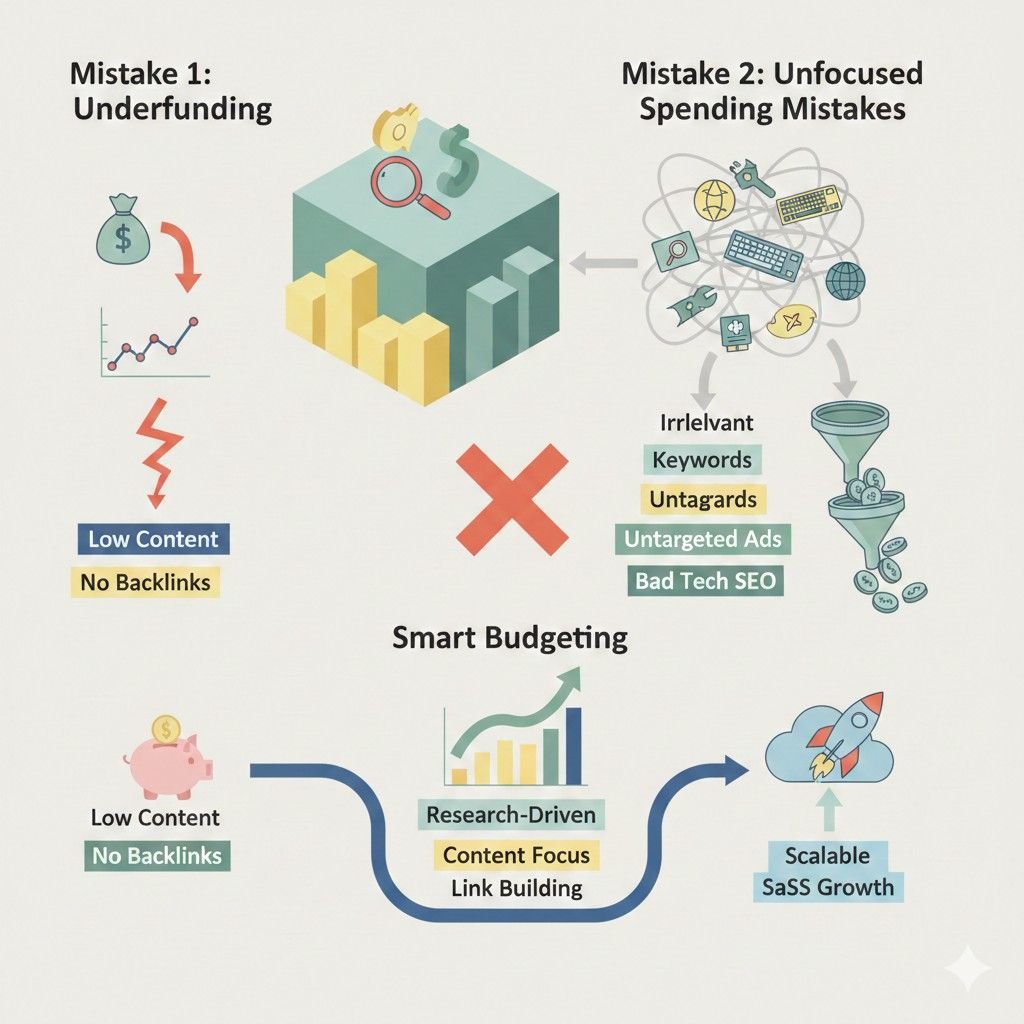
Understanding common pitfalls helps you allocate budget more effectively and set realistic expectations with stakeholders.
Underinvesting in Content Quality
Many startups try to maximize content volume by hiring cheap writers. This produces thin, generic content that fails to rank or convert. One exceptional article outperforms ten mediocre ones in both rankings and conversions.
Quality content requires subject matter expertise, original research or insights, and professional editing. Budget for writers who understand your product category and can speak credibly to your audience. Expect to pay $300 to $1,000+ per article for content that actually competes.
Ignoring Technical SEO Foundations
Technical issues create ceilings on organic performance that no amount of content or links can overcome. Sites with crawl errors, slow load times, or poor mobile experiences struggle to rank regardless of content quality.
Allocate budget for a comprehensive technical audit before scaling content production. Fix critical issues first. Ongoing technical monitoring prevents new issues from undermining your investment in content and links.
Expecting Immediate ROI
SEO compounds over time but delivers slowly initially. Expecting significant returns within the first three months leads to premature budget cuts that waste earlier investments. Most SaaS companies need 6-12 months to see meaningful organic revenue growth.
Set appropriate expectations with stakeholders by presenting SEO as a long-term investment rather than a quick-win channel. Show leading indicators of progress like ranking improvements and traffic growth before revenue impact materializes.
Not Tracking SEO Spend Against Revenue
Without clear attribution, SEO budgets become easy targets during cost-cutting exercises. Implement tracking that connects organic traffic to trials, demos, and ultimately revenue. This data justifies continued investment and informs budget optimization.
Use UTM parameters, CRM integration, and multi-touch attribution models to understand how organic traffic contributes to pipeline and closed revenue. Even imperfect attribution is better than no attribution.
SaaS SEO Timeline: When to Expect Results
Understanding realistic timelines helps you set appropriate expectations and avoid premature budget changes. SEO results follow predictable patterns even though specific outcomes vary by competitive landscape.
Months 1–3: Foundation Building
The first quarter focuses on technical cleanup, strategy development, and initial content production. Expect minimal traffic impact during this period. You’re building the foundation for future growth rather than generating immediate returns.
Key activities include completing technical audits and implementing fixes, developing content strategy and editorial calendar, producing initial content targeting lower-competition keywords, and establishing baseline metrics and tracking.
Leading indicators of progress include improved crawl stats in Google Search Console, initial keyword rankings for new content, and growing indexed page count.
Months 4–6: Traction and Indexing
During this phase, early content begins ranking and generating traffic. You’ll see initial organic traffic growth, though likely not yet at levels that significantly impact revenue. Link building efforts start showing results in improved domain authority.
Expect to see first page rankings for lower-competition keywords, measurable organic traffic growth from new content, initial organic conversions from bottom-funnel content, and growing backlink profile and domain authority.
This is often the most challenging phase psychologically. Results are visible but not yet impressive. Maintain investment and resist the urge to pivot strategies prematurely.
Months 7–12: Compounding Growth
The second half of year one typically shows accelerating returns. Earlier content matures in rankings, new content benefits from improved domain authority, and organic traffic begins contributing meaningfully to pipeline.
During this phase, you should see rankings for more competitive keywords, significant organic traffic growth, measurable organic-attributed revenue, and clear ROI indicators that justify continued investment.
According to Ahrefs research, the average page ranking in the top 10 is over 2 years old, but pages can reach page one within 6-12 months for lower-competition keywords with proper optimization and link building.
Year 2+: Scaling and Optimization
In year two and beyond, SEO becomes a predictable growth channel. Focus shifts from building foundations to optimization and expansion. You can pursue more competitive keywords, expand into adjacent topics, and invest in advanced strategies like programmatic SEO.
Mature SaaS SEO programs often see organic traffic as their largest or second-largest acquisition channel. The compounding nature of SEO means year-two results typically exceed year-one results significantly, even with similar investment levels.
In-House SEO vs. SEO Agency: Budget Considerations
The in-house versus agency decision significantly impacts budget allocation and program effectiveness. Each model has advantages depending on your stage, resources, and strategic priorities.
True Cost of Hiring In-House SEO Talent
In-house SEO costs extend beyond salary. A mid-level SEO manager earning $90,000 annually actually costs $110,000 to $130,000 when accounting for benefits, payroll taxes, equipment, and training. Senior hires cost proportionally more.
Beyond direct costs, consider opportunity costs of recruiting time, ramp-up periods before full productivity, and the risk of turnover requiring repeated hiring investments. In-house hires also require management attention and may need additional budget for tools and contractors.
The in-house model works best when you need dedicated focus on your specific product and market, have sufficient budget to attract quality talent, can provide career growth opportunities, and have leadership capacity to manage SEO function.
Agency Retainer Models and Pricing
Agencies offer several pricing models. Monthly retainers provide ongoing services for a fixed fee, typically $3,000 to $20,000+ depending on scope. Project-based pricing covers specific initiatives like audits or content campaigns. Performance-based models tie fees to results, though these are less common and often include base fees.
Agency advantages include immediate access to experienced teams, no recruiting or management overhead, built-in redundancy if team members leave, and access to specialized expertise across technical, content, and link building.
Agency disadvantages include less product-specific knowledge, divided attention across multiple clients, potential misalignment of incentives, and communication overhead.
Hybrid Approach: When to Use Both
Many successful SaaS companies use hybrid models combining in-house leadership with agency execution. An in-house SEO manager or director sets strategy and manages vendors while agencies handle specialized execution like link building or technical audits.
This model provides strategic continuity and product knowledge through in-house leadership while accessing specialized skills and scalable execution through agencies. It’s particularly effective for Series A and beyond companies with budget for both.
The hybrid approach typically costs $150,000 to $300,000+ annually when combining in-house salary with agency retainers, but often delivers better results than either model alone.
How to Measure SEO ROI for SaaS Startups
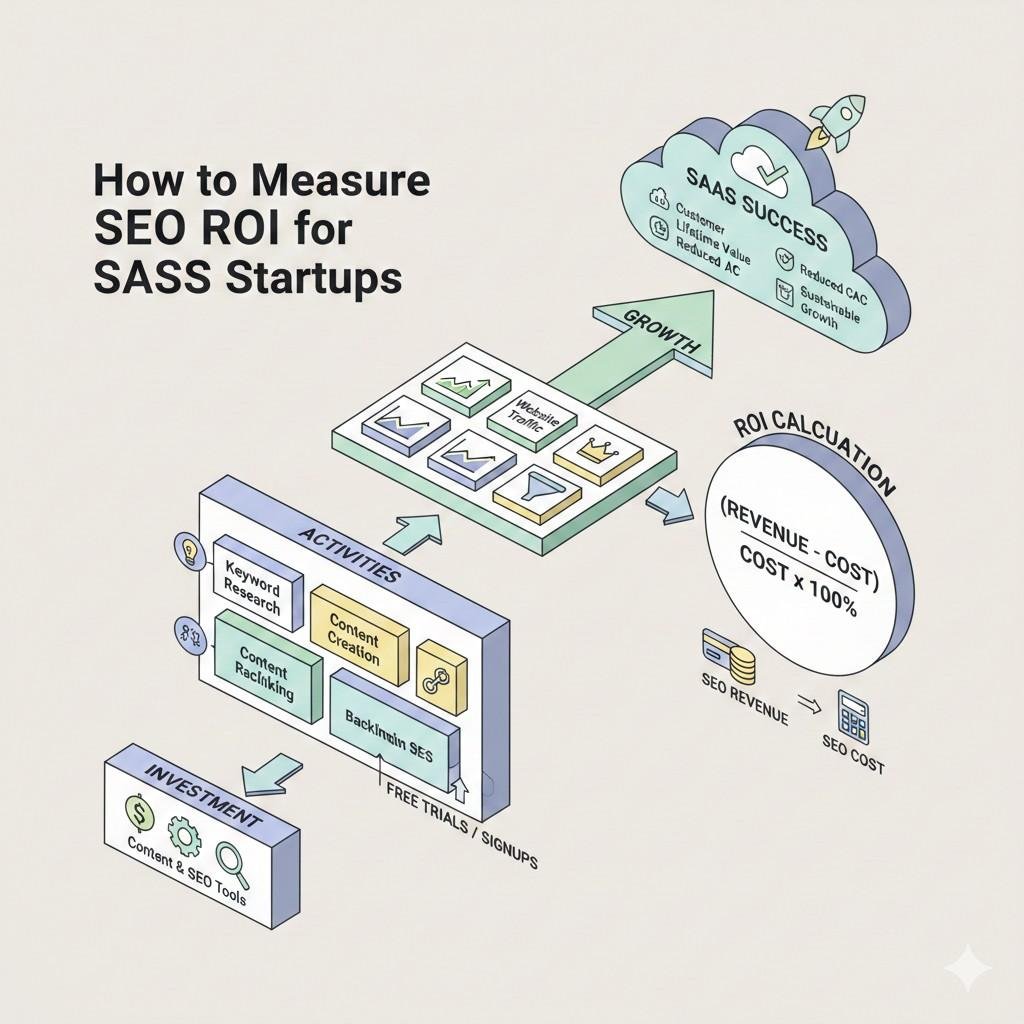
Measuring SEO ROI requires connecting organic traffic to revenue through your conversion funnel. This attribution enables data-driven budget decisions and stakeholder communication.
Tracking Organic Traffic to MRR/ARR
The fundamental ROI calculation compares SEO investment to organic-attributed revenue. Track the full funnel from organic session to trial signup to paid conversion to understand true organic contribution.
Set up tracking to capture organic traffic source at the session level, trial or demo signups from organic sessions, conversion from trial to paid customer, and customer lifetime value for organic-acquired customers.
Calculate organic customer acquisition cost by dividing total SEO spend by organic-acquired customers. Compare this to paid acquisition costs to demonstrate SEO efficiency. Most mature SaaS companies find organic CAC significantly lower than paid CAC.
Attribution Models for SaaS SEO
SaaS buying journeys involve multiple touchpoints, making attribution complex. First-touch attribution credits the initial organic visit with the conversion. Last-touch attribution credits the final session. Multi-touch models distribute credit across the journey.
For SEO measurement, first-touch attribution often understates organic contribution because prospects may discover you through organic search but convert through direct visits or paid retargeting. Multi-touch models provide more accurate pictures but require more sophisticated tracking.
At minimum, track both first-touch and last-touch organic attribution to understand the range of organic contribution. More sophisticated companies implement position-based or data-driven attribution models.
SEO Reporting Metrics That Matter
Effective SEO reporting connects activities to outcomes through leading and lagging indicators. Leading indicators predict future success. Lagging indicators measure actual results.
Key leading indicators include keyword ranking improvements, organic traffic growth, backlink acquisition rate, content indexing velocity, and click-through rate improvements.
Key lagging indicators include organic-attributed trials or demos, organic-attributed MRR/ARR, organic customer acquisition cost, and organic contribution to total revenue.
Report both indicator types to stakeholders. Leading indicators demonstrate progress during early months when revenue impact is minimal. Lagging indicators prove ROI once the program matures.
Scaling Your SaaS SEO Budget as You Grow
SEO budgets should evolve as your company grows. What works for a seed-stage startup differs from what a Series B company needs. Understanding when and how to scale ensures continued organic growth.
When to Increase SEO Investment
Several signals indicate readiness for increased SEO investment. Consistent organic traffic growth suggests your foundation is working and can support scale. Positive ROI on current spend indicates efficient use of resources. Competitive pressure from well-funded rivals may require increased investment to maintain position.
Other triggers include new funding rounds that enable growth investment, expansion into new markets or product areas requiring new content, and technical platform changes requiring SEO adaptation.
Avoid increasing budget simply because you have more money available. Tie budget increases to specific opportunities with clear expected returns.
Reinvesting Organic Revenue into SEO
A sustainable model ties SEO investment to organic revenue generation. As organic-attributed revenue grows, reinvest a percentage back into SEO to fuel continued growth. This creates a virtuous cycle where SEO success funds further SEO investment.
Common reinvestment rates range from 20-40% of organic-attributed revenue. A company generating $100,000 monthly in organic-attributed revenue might reinvest $20,000 to $40,000 back into SEO programs.
This model requires accurate attribution to calculate organic revenue contribution. Even rough attribution enables directional reinvestment decisions that maintain organic growth momentum.
Budget Allocation Shifts by Growth Stage
As companies mature, optimal budget allocation shifts. Early-stage companies weight heavily toward content production to build initial traffic. Growth-stage companies increase link building investment to compete for more competitive keywords. Mature companies invest more in optimization and technical excellence.
Early stage allocation typically emphasizes 60%+ content, 15-20% links, 10-15% technical. Growth stage shifts toward 45-50% content, 25-30% links, 15-20% technical. Mature stage often balances 35-40% content, 25-30% links, 20-25% technical and optimization.
These shifts reflect changing priorities as foundations are established and competition intensifies. Review and adjust allocations quarterly based on performance data and strategic priorities.
Conclusion
Building an effective SaaS SEO budget requires understanding your funding stage, competitive landscape, and growth objectives. The right investment level varies, but most startups should expect to spend $2,000 to $15,000 monthly to build meaningful organic presence.
Success comes from strategic allocation across technical foundations, quality content, and authority building. Avoid common mistakes like underinvesting in content quality or expecting immediate returns. SEO compounds over time, typically showing significant results in months 6-12.
We help SaaS companies build sustainable organic growth through strategic SEO investment. White Label SEO Service provides the technical expertise, content strategy, and link building support you need to maximize your SEO budget. Contact us to discuss your organic growth goals.
Frequently Asked Questions About SaaS SEO Budgets
What is a realistic SEO budget for an early-stage SaaS startup?
Early-stage SaaS startups should budget $2,000 to $5,000 monthly for SEO. This covers foundational technical work, 4-8 quality content pieces monthly, basic link building, and essential tools. Bootstrapped founders can start lower but should expect slower results.
How do I justify SEO spend to investors or stakeholders?
Present SEO as a long-term investment that reduces customer acquisition costs over time. Show competitive analysis demonstrating organic traffic value in your market. Track and report organic-attributed revenue to demonstrate ROI once the program matures.
Can I do SEO on a limited budget?
Yes, but expect slower results. Focus limited budgets on high-impact activities like fixing critical technical issues and creating bottom-funnel content targeting low-competition keywords. Avoid spreading thin budget across too many activities.
What’s the minimum viable SEO budget for a SaaS company?
The minimum viable budget is approximately $1,500 to $2,000 monthly. This covers one SEO tool subscription, 3-4 quality articles monthly, and minimal link building. Below this threshold, progress becomes too slow to demonstrate meaningful results.
How do I choose between SEO and paid ads for my startup?
SEO and paid ads serve different purposes. Paid ads provide immediate traffic for testing and validation. SEO builds sustainable traffic that compounds over time. Most SaaS companies need both, with paid ads dominating early and SEO growing in importance as organic presence builds.
How long does it take to see ROI from SEO?
Most SaaS companies see meaningful organic traffic growth in months 4-6 and measurable revenue impact in months 6-12. Full ROI typically materializes in year two when earlier investments compound. Set expectations for 12-18 months to break even on SEO investment.
Should I hire an in-house SEO or work with an agency?
The decision depends on budget and strategic priorities. Agencies provide immediate expertise without recruiting overhead, making them ideal for early-stage companies. In-house hires offer dedicated focus and product knowledge, becoming more valuable as organic becomes a major channel. Many companies use hybrid models combining both.