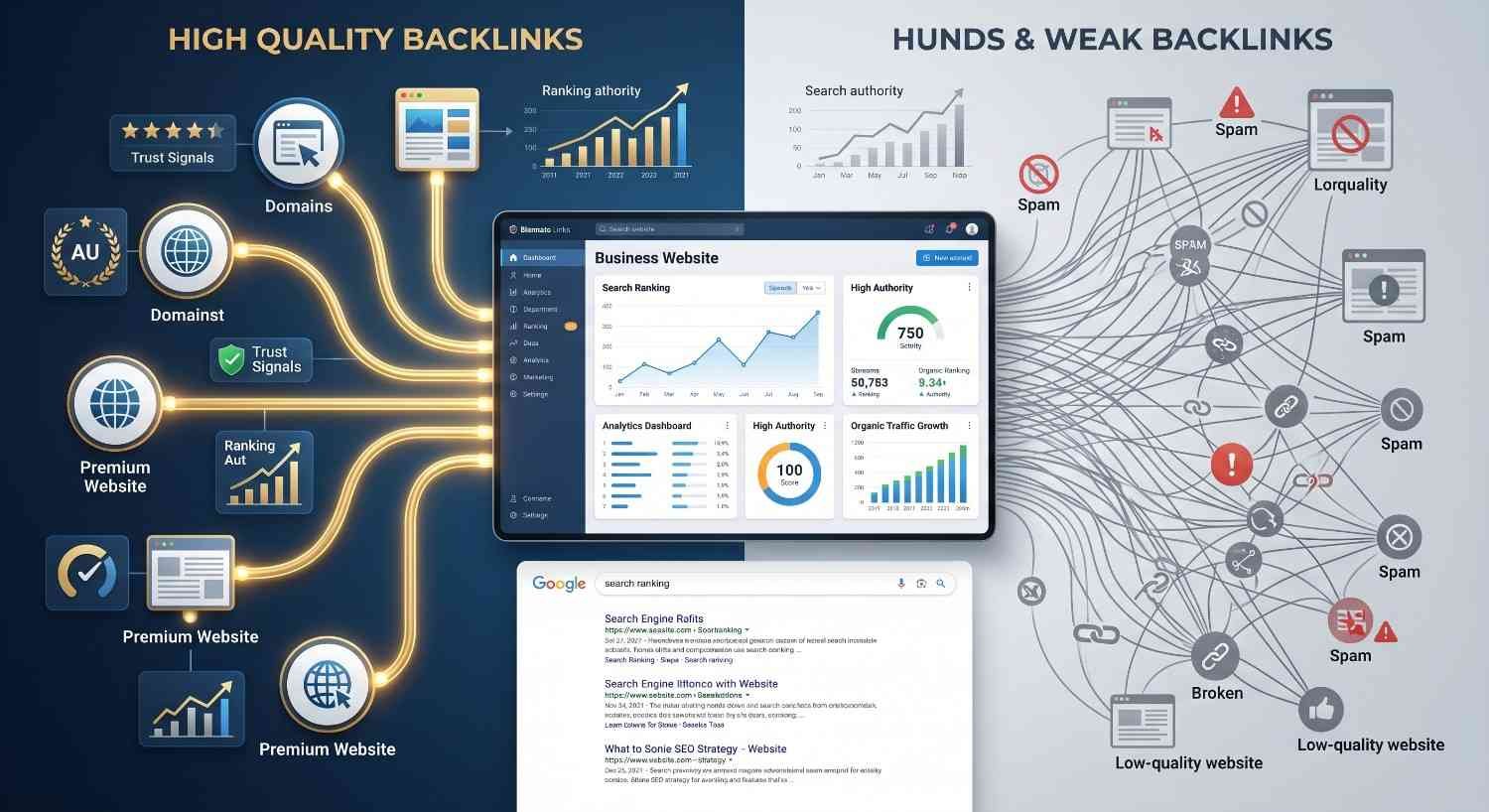

Links remain the backbone of Google’s ranking algorithm, but the signals that matter have evolved dramatically. In 2026, quality, relevance, and natural acquisition patterns determine whether your backlinks boost rankings or trigger penalties.
Understanding which link factors actually move the needle separates successful SEO campaigns from wasted budgets. The difference between a link that drives authority and one that does nothing comes down to specific, measurable signals.
This guide breaks down every link ranking factor that impacts your visibility today. You’ll learn what Google evaluates, how to build links that work, and what mistakes to avoid.

Understanding Link Equity and Authority Transfer
Link equity represents the ranking value passed from one page to another through hyperlinks. When a high-authority page links to your content, it transfers a portion of its credibility and trust signals. This fundamental concept drives every link building strategy worth pursuing.
Google’s algorithm evaluates links as votes of confidence. Not all votes carry equal weight. The source, context, and relationship between pages determine how much authority actually flows to your site.
How PageRank and Link Authority Flow Works
PageRank, Google’s foundational algorithm, calculates page importance based on the quantity and quality of incoming links. While Google no longer publicly updates PageRank scores, the underlying concept remains central to how rankings work.
Authority flows through links like water through pipes. A page with high authority distributes that value across all its outbound links. If a page links to 100 sites, each receives less equity than if it linked to only 10. This dilution effect makes links from pages with fewer outbound connections more valuable.
The algorithm also considers link depth. Links from pages closer to a site’s homepage typically carry more weight than those buried deep in site architecture. A link from a major publication’s main section page transfers more authority than one from an archived article three clicks from the homepage.
Domain Authority vs. Page Authority in Link Value
Domain Authority measures overall site strength, while Page Authority evaluates individual page power. Both metrics matter, but they serve different purposes in link evaluation.
A link from a high-DA site doesn’t automatically deliver maximum value. The specific page linking to you must also have authority. A new blog post on a DA 90 website might have minimal Page Authority, reducing its immediate impact on your rankings.
The ideal scenario combines both: links from authoritative pages on authoritative domains. Moz’s research shows that Page Authority often correlates more directly with ranking improvements than Domain Authority alone, particularly for competitive keywords.
Focus on acquiring links from pages that already rank well or receive significant traffic. These pages have proven their value to Google, making their endorsement more meaningful.
The Role of Link Position and Context in Authority Transfer
Where a link appears on a page significantly impacts its value. Editorial links embedded within main content carry substantially more weight than those placed in sidebars, footers, or author bios.
Google’s algorithms can identify link placement patterns. A link surrounded by relevant text, appearing naturally within a paragraph discussing your topic, signals genuine editorial endorsement. Links clustered in navigation areas or appearing in templated sections across multiple pages look more like site-wide patterns than individual recommendations.
Context extends beyond position. The surrounding text, the paragraph’s topic, and the overall page theme all influence how Google interprets the link’s relevance. A link to your SEO services page from an article about digital marketing strategies carries more topical weight than the same link from a general business directory.
Core Link Quality Signals That Impact Rankings
Quality signals separate links that drive rankings from those that waste resources or create risk. Google evaluates multiple factors simultaneously, creating a complex picture of each link’s true value.
Understanding these signals helps you prioritize link opportunities and avoid investments that won’t deliver returns. The most successful link building campaigns focus on maximizing quality indicators rather than simply accumulating volume.
Relevance: Topical Alignment Between Linking and Receiving Pages
Topical relevance has become the dominant quality signal in modern link evaluation. A link from a closely related page on a relevant website delivers significantly more ranking power than a higher-authority link from an unrelated source.
Google’s algorithms understand topic relationships at a sophisticated level. They recognize that a link from a marketing blog to your SEO services page makes contextual sense, while a link from a cooking website to the same page appears unnatural.
Relevance operates at multiple levels. Site-level relevance considers whether the linking domain covers related topics. Page-level relevance examines whether the specific content discusses themes connected to your target page. Paragraph-level relevance looks at the immediate context surrounding the link.
The strongest links satisfy all three levels. Pursue opportunities where the site, page, and surrounding content all align with your topic. These links not only pass more authority but also send clearer topical signals that help Google understand what your page should rank for.
Editorial Placement vs. Sidebar/Footer Links
Editorial links appear within the main content area, placed by authors or editors as genuine references. These links carry full weight and represent the gold standard for link building.
Sidebar and footer links occupy templated positions that appear across multiple pages. Google recognizes these patterns and typically discounts their value. A footer link appearing on every page of a 10,000-page website doesn’t represent 10,000 endorsements. It represents one site-wide decision.
Author bio links fall somewhere between. While technically editorial, they appear in predictable locations and often use similar anchor text patterns. Google likely applies some discount to these links, though they still carry more value than pure navigation links.
Prioritize opportunities that result in contextual, in-content placements. Guest posts, expert contributions, and resource mentions that naturally incorporate links within paragraphs deliver the strongest signals.

Anchor Text Optimization and Natural Link Profiles
Anchor text tells Google what the linked page is about. Exact-match anchors containing your target keyword send strong relevance signals but create risk when overused.
Natural link profiles contain diverse anchor text distributions. Ahrefs analysis shows that top-ranking pages typically have branded anchors as their most common type, followed by naked URLs, generic phrases, and then keyword variations.
Over-optimized anchor text profiles trigger algorithmic penalties. If 40% or more of your links use exact-match keywords, Google’s systems may identify this as manipulation. The Penguin algorithm specifically targets unnatural anchor text patterns.
Aim for a distribution that mirrors organic link acquisition. Most natural links use brand names, page titles, or generic phrases like “click here” or “this article.” Keyword-rich anchors should represent a small percentage of your overall profile.
Link Freshness and Temporal Decay
Links lose value over time. A link acquired five years ago contributes less to current rankings than one earned last month. This temporal decay reflects Google’s preference for current relevance signals.
Fresh links indicate ongoing authority and relevance. Sites that continue attracting new links demonstrate sustained value to users. Sites with stagnant link profiles may see gradual ranking declines as their existing links age.
Link freshness also matters for the linking page. A link from a recently published, actively promoted article carries more weight than one from archived content that no longer receives traffic or updates.
Build link acquisition into ongoing marketing activities rather than treating it as a one-time project. Consistent, steady link growth maintains ranking momentum and signals continued relevance to search engines.
Dofollow vs. Nofollow: Understanding Link Attribute Impact
Dofollow links pass full PageRank and authority signals. Nofollow links include an attribute telling search engines not to follow the link or pass authority.
Google’s treatment of nofollow has evolved. Since 2019, Google treats nofollow as a “hint” rather than a directive. This means nofollow links may still influence rankings in some cases, particularly when they come from highly authoritative sources.
Additional attributes now exist: “sponsored” for paid links and “ugc” for user-generated content. These help Google understand link context without completely ignoring the signals.
Dofollow links remain more valuable for direct ranking impact. However, a natural link profile includes nofollow links. Pursuing only dofollow opportunities creates an unnatural pattern that could raise algorithmic flags.
Domain-Level Link Signals
Domain-level signals evaluate the overall quality and characteristics of websites linking to you. These factors help Google assess whether your backlink sources represent legitimate, authoritative endorsements.
Building links from diverse, high-quality domains creates a stronger foundation than accumulating many links from fewer sources. Domain-level diversity signals broad recognition and reduces dependency on any single source.
Linking Domain Authority and Trust Metrics
Higher-authority domains pass more value through their links. A single link from a DA 80 website typically impacts rankings more than dozens of links from DA 20 sites.
Trust metrics add another dimension. Some domains have established trust through years of quality content, editorial standards, and clean link profiles. Links from trusted sources carry implicit credibility that extends to linked pages.
Government (.gov) and educational (.edu) domains historically carried extra weight due to their inherent trustworthiness. While Google has stated these don’t receive automatic bonuses, they often correlate with high-quality, well-maintained sites that naturally pass strong signals.
Evaluate potential link sources using multiple metrics. Domain Authority, Trust Flow, and organic traffic all provide useful signals about a site’s quality and the potential value of its links.
Domain Diversity vs. Link Volume
Fifty links from 50 different domains typically outperform 500 links from 5 domains. Google values diverse endorsements as stronger evidence of genuine authority than concentrated link patterns.
Referring domain count often correlates more strongly with rankings than total backlink count. Studies from Backlinko found referring domains among the strongest correlating factors with first-page rankings.
Diversity also reduces risk. If a significant portion of your links comes from one domain and that site loses authority or gets penalized, your rankings suffer disproportionately. Distributed link profiles provide stability.
Track referring domain growth as a primary KPI. While total links matter, expanding the number of unique domains linking to you typically delivers better ranking outcomes.
Geographic and Language Relevance of Linking Domains
Links from domains in your target geographic market carry additional relevance signals. A UK business targeting UK customers benefits more from .co.uk links than from .com.au sources.
Language alignment matters similarly. Links from English-language sites to English content make contextual sense. Links from sites in unrelated languages may appear unnatural unless clear reasons exist for the connection.
Country-code top-level domains (ccTLDs) send geographic signals. Links from ccTLDs matching your target market reinforce local relevance. International businesses benefit from diverse geographic link sources matching their market presence.
For local SEO specifically, links from local businesses, regional publications, and community organizations carry enhanced value. These sources signal local authority and relevance to geographic queries.
Industry Authority and Niche Relevance
Links from recognized industry authorities carry implicit endorsement value beyond raw metrics. A link from a respected industry publication or professional organization signals credibility within your specific field.
Niche relevance amplifies link value. A link from a specialized site in your exact industry often outperforms a link from a general high-authority site. The specialized source’s endorsement carries more topical weight.
Industry-specific directories, professional associations, and trade publications represent valuable link sources. While their Domain Authority may be lower than major news sites, their focused relevance can deliver stronger ranking impact for industry-specific keywords.
Identify the authoritative voices in your niche. Links from these sources not only pass authority but also position your brand within the industry conversation.
Page-Level Link Ranking Factors
Page-level factors evaluate the specific pages linking to you, independent of their parent domains. A high-authority domain can contain low-quality pages, and vice versa. Understanding page-level signals helps you identify the best opportunities.
These factors determine how much of a domain’s authority actually flows through specific links. Optimizing for page-level quality ensures your link building efforts deliver maximum impact.
Content Quality and Depth of Linking Pages
Links from comprehensive, well-researched pages carry more weight than those from thin content. Google evaluates page quality as part of link value assessment.
High-quality linking pages typically feature original research, detailed analysis, or comprehensive coverage of their topics. These pages earn their own links and traffic, creating authority that transfers through their outbound links.
Thin pages with minimal content, excessive ads, or poor user experience pass less value. Even if hosted on authoritative domains, low-quality pages lack the signals that make their endorsements meaningful.
Evaluate potential link sources by examining the actual page, not just the domain. Look for content depth, engagement signals, and evidence that the page provides genuine value to users.
Outbound Link Ratio and Link Dilution
Pages with fewer outbound links pass more authority through each link. A page linking to 10 resources distributes its authority differently than one linking to 200.
Excessive outbound links dilute value and may signal low-quality content. Pages that link to everything often represent directories, link farms, or poorly curated resources. Links from these sources carry minimal weight.
The ideal linking page contains a reasonable number of outbound links to relevant, high-quality resources. Your link appears as a genuine recommendation rather than one item in an exhaustive list.
Check outbound link counts when evaluating opportunities. Pages with focused, curated link selections typically pass more value than those with extensive link lists.

Page Traffic and Engagement Signals
Pages that receive organic traffic have proven their value to Google. Links from ranking, trafficked pages carry implicit quality signals that non-ranking pages lack.
Engagement metrics on linking pages may influence link value. Pages with strong time-on-page, low bounce rates, and user interaction demonstrate quality that extends to their outbound links.
Traffic also creates direct referral value. Links from high-traffic pages send visitors to your site, generating engagement signals that may independently influence rankings.
Use tools like Ahrefs or SEMrush to estimate traffic on potential linking pages. Prioritize opportunities on pages that already demonstrate search visibility and user engagement.
Internal Link Structure Supporting External Links
How a site internally links to the page containing your backlink affects authority flow. Pages well-connected within their site’s internal structure receive more authority to pass along.
Orphan pages with no internal links have minimal authority regardless of their domain’s overall strength. Pages linked from navigation, category pages, or the homepage accumulate more internal authority.
The linking page’s position in site architecture matters. Pages one or two clicks from the homepage typically hold more authority than those buried deep in archives or subfolders.
When possible, pursue links from pages that occupy prominent positions within their site’s structure. These pages receive more internal authority and can pass more value through external links.
Link Velocity and Growth Patterns
Link velocity measures the rate at which you acquire new backlinks over time. Google monitors these patterns to distinguish natural link growth from artificial manipulation.
Understanding velocity signals helps you plan link building campaigns that appear organic and avoid triggering algorithmic scrutiny. The goal is steady, sustainable growth that mirrors how real authority develops.
Natural Link Acquisition Rates
Natural link growth varies by industry, content type, and site age. A viral piece of content might attract hundreds of links in days, while steady business content accumulates links gradually over months.
New sites typically acquire links slowly at first, with velocity increasing as visibility grows. Established sites with regular content publication maintain relatively consistent acquisition rates with occasional spikes around notable content.
Your natural rate depends on your content strategy, industry, and promotional activities. Analyze your historical link acquisition patterns to understand what normal looks like for your site.
Dramatic deviations from established patterns can trigger scrutiny. If your site historically gains 10 links monthly and suddenly acquires 500, Google’s systems may flag this for review.
Sudden Link Spikes vs. Steady Growth
Link spikes aren’t inherently problematic. Viral content, major press coverage, or successful campaigns naturally create temporary velocity increases. Google’s algorithms can distinguish legitimate spikes from artificial manipulation.
The context around spikes matters. A spike coinciding with a major product launch, news event, or content publication makes sense. A spike with no apparent cause raises questions.
Steady growth typically delivers more sustainable results. Consistent link acquisition builds authority gradually without triggering algorithmic concerns. It also creates a more stable ranking foundation.
Plan campaigns to create natural-looking patterns. Spread outreach over time rather than concentrating efforts into short bursts. Combine active link building with content strategies that attract organic links.
Link Loss Rate and Profile Stability
Links disappear over time. Pages get deleted, sites go offline, and webmasters remove links. Some link loss is normal and expected.
High link loss rates may indicate quality issues. If sites frequently remove your links, the placements may have been inappropriate or the linking sites may be unstable.
Profile stability contributes to ranking consistency. Sites with stable link profiles maintain rankings more reliably than those with high churn. Replacing lost links requires ongoing effort just to maintain position.
Monitor your link profile for losses. Tools like Ahrefs and Moz track link changes over time. Understanding your loss rate helps you plan acquisition volumes needed to maintain and grow authority.
Negative Link Signals and Penalty Risks
Not all links help rankings. Some links actively harm your site through algorithmic penalties or manual actions. Understanding negative signals helps you avoid risky tactics and clean up problematic links.
Google’s spam-fighting algorithms have grown increasingly sophisticated. Tactics that worked years ago now create significant risk. Modern link building requires understanding what to avoid as much as what to pursue.
Manipulative Link Schemes Google Penalizes
Google’s guidelines explicitly prohibit link schemes designed to manipulate rankings. These include buying or selling links that pass PageRank, excessive link exchanges, and automated link building programs.
The Penguin algorithm specifically targets manipulative link patterns. Unlike earlier versions that required manual recovery, Penguin now operates in real-time, adjusting rankings as it identifies problematic links.
Penalties range from ranking demotions to complete deindexing. Manual actions require formal reconsideration requests after cleaning up violations. Algorithmic impacts may resolve automatically once problematic patterns are addressed.
The risk-reward calculation has shifted dramatically. Manipulative tactics that might have worked in 2015 now carry substantial downside with minimal upside. Sustainable strategies consistently outperform shortcuts.
Low-Quality and Spammy Link Sources
Links from low-quality sources dilute your profile and may trigger negative signals. Spammy directories, article farms, and link networks represent obvious risks.
Characteristics of low-quality sources include thin content, excessive advertising, poor design, and obvious link selling. Sites that exist primarily to sell links rather than serve users provide minimal value and maximum risk.
Foreign-language spam, casino and pharmaceutical sites, and hacked pages represent particularly toxic sources. Links from these sites can trigger manual reviews and algorithmic penalties.
Audit your link profile regularly for low-quality sources. Disavow obviously spammy links that you cannot remove. Focus acquisition efforts on sources that would pass manual quality review.
Over-Optimization and Unnatural Anchor Text Patterns
Anchor text over-optimization remains one of the most common penalty triggers. Profiles dominated by exact-match keyword anchors signal manipulation rather than natural link acquisition.
Natural profiles contain mostly branded anchors, naked URLs, and generic phrases. Keyword-rich anchors appear occasionally but don’t dominate. Variation in anchor text reflects how real users naturally link.
Sudden shifts in anchor text patterns raise flags. If your profile historically contained diverse anchors and suddenly shows concentrated keyword usage, algorithms may identify this as manipulation.
Review your anchor text distribution regularly. If keyword-rich anchors exceed 10-15% of your profile, consider diversifying future acquisition and potentially disavowing the most obvious over-optimized links.
Link Networks and Private Blog Networks (PBNs)
Private Blog Networks consist of sites created specifically to build links. Operators control multiple domains and use them to link to client sites or their own properties.
Google actively hunts PBNs. When identified, the network’s links are devalued and linked sites may receive penalties. The footprints that make PBNs efficient to operate also make them detectable.
Common PBN footprints include shared hosting, similar site designs, overlapping ownership information, and unnatural link patterns. Google’s algorithms and manual reviewers look for these signals.
The risk has increased substantially as detection improves. Sites relying on PBN links face ongoing vulnerability. When networks get detected, years of link building investment disappear instantly.
Strategic Link Building Approaches for Sustainable Rankings
Effective link building in 2026 requires strategies that generate genuine editorial links. The tactics that work align with how real authority develops: creating value that others want to reference and share.
These approaches require more effort than manipulative shortcuts but deliver sustainable results without penalty risk. They also generate secondary benefits including brand awareness, referral traffic, and industry relationships.
Content-Driven Link Acquisition (Linkable Assets)
Linkable assets are content pieces specifically designed to attract links. They provide unique value that other sites want to reference: original research, comprehensive guides, useful tools, or compelling visual content.
Effective linkable assets address information gaps in your industry. They answer questions that existing content doesn’t adequately cover or present information in more useful formats.
Original research performs particularly well. Data that others can cite, surveys that reveal industry insights, or analysis that provides new perspectives give publishers reasons to link. BuzzSumo research consistently shows original data among the most linked content types.
Invest in creating genuinely valuable resources. Thin content designed to attract links rarely succeeds. Substantial pieces that would earn links even without active promotion deliver the best results.
Digital PR and Journalist Outreach
Digital PR applies traditional public relations tactics to earn online coverage and links. This includes press releases, expert commentary, newsjacking, and story pitching.
Journalists need sources and stories. Positioning yourself or your clients as expert sources creates ongoing link opportunities. Tools like HARO, Qwoted, and direct journalist relationships facilitate these connections.
Newsjacking involves inserting your expertise into trending stories. When industry news breaks, offering informed commentary can earn coverage and links from publications covering the story.
Success requires genuine expertise and responsiveness. Journalists work on tight deadlines. Sources who provide valuable insights quickly build relationships that generate repeated coverage.
Strategic Guest Posting and Contributor Opportunities
Guest posting remains viable when approached strategically. The key is contributing genuinely valuable content to relevant, quality publications rather than mass-producing thin posts for link purposes.
Target publications your audience actually reads. Links from these sources provide both SEO value and referral traffic from engaged readers. The content should meet the publication’s quality standards and provide real value to their audience.
Contributor relationships can generate ongoing opportunities. Regular columns or recurring contributions build authority and create multiple link opportunities over time.
Avoid guest post networks and sites that obviously exist for link building. These provide minimal value and may create risk. Focus on legitimate publications with real audiences and editorial standards.
Broken Link Building and Resource Page Targeting
Broken link building identifies dead links on relevant sites and offers your content as a replacement. This provides value to webmasters while earning links for your site.
The process involves finding resource pages or articles in your niche, identifying broken outbound links, and reaching out with relevant replacement content. Tools like Ahrefs and Check My Links help identify broken link opportunities.
Resource page targeting focuses on pages that curate links to helpful resources in specific topics. Getting included on relevant resource pages provides contextual, editorial links from pages designed to help users find quality content.
Both tactics require relevant, high-quality content to offer. You can’t earn broken link replacements or resource page inclusions without content that genuinely serves the linking page’s audience.

Measuring Link Building Performance and ROI
Effective measurement connects link building activities to business outcomes. Tracking the right metrics helps you optimize campaigns, justify investments, and demonstrate value to stakeholders.
Link building ROI can be challenging to isolate given SEO’s multi-factor nature. However, systematic tracking and analysis reveal patterns that inform strategy and prove impact.
Key Link Metrics to Track (DR, UR, Referring Domains)
Domain Rating (DR) and URL Rating (UR) from Ahrefs measure link authority at domain and page levels. These metrics help evaluate link quality and track profile growth over time.
Referring domains count unique domains linking to your site. This metric often correlates more strongly with rankings than total backlink count and indicates profile diversity.
Additional metrics worth tracking include:
- New referring domains per month: Measures acquisition velocity
- Lost referring domains: Tracks profile stability
- Anchor text distribution: Monitors optimization levels
- Link placement types: Distinguishes editorial from non-editorial links
Set up regular reporting on these metrics. Monthly tracking reveals trends and helps identify issues before they impact rankings.
Correlating Link Acquisition with Ranking Improvements
Connecting specific links to ranking changes requires careful analysis. Rankings depend on multiple factors, making direct attribution challenging but not impossible.
Track ranking changes for target keywords alongside link acquisition timing. Look for patterns where ranking improvements follow link gains, particularly from high-quality sources.
Control for other variables when possible. If you’re simultaneously publishing content and building links, isolating link impact becomes difficult. Periods of link building without other major changes provide cleaner data.
Use tools that track both links and rankings over time. Overlaying these datasets reveals correlations that inform future strategy and demonstrate link building’s contribution to results.
Attribution Models for Link-Driven Traffic and Conversions
Links generate value beyond rankings. Referral traffic from linked pages can drive conversions directly, independent of SEO impact.
Track referral traffic from acquired links in Google Analytics. High-quality placements on relevant, trafficked pages often generate meaningful direct visits.
Attribution models help assign conversion credit to link-driven traffic. First-touch attribution credits links that introduce users to your site. Multi-touch models distribute credit across the customer journey.
Calculate link building ROI by combining ranking-driven traffic value with direct referral value. This comprehensive view often reveals higher returns than SEO metrics alone suggest.
Competitive Link Gap Analysis
Link gap analysis identifies domains linking to competitors but not to you. These represent proven link opportunities from sites already linking in your space.
Tools like Ahrefs, SEMrush, and Moz provide link gap reports comparing your profile to competitors. Focus on gaps from high-quality, relevant domains.
Prioritize gaps based on domain quality and acquisition feasibility. Some competitor links come from relationships or assets you can’t replicate. Others represent opportunities you simply haven’t pursued.
Regular gap analysis reveals new opportunities as competitors acquire links. Monitoring competitor link growth helps you stay competitive and identify successful tactics to emulate.
Link Building Timeline and Realistic Expectations
Link building delivers results over months, not days. Understanding realistic timelines helps you plan campaigns, set expectations, and maintain commitment through the period before results materialize.
Patience and consistency matter more than intensity. Sustainable link building programs maintain steady effort over extended periods rather than concentrating resources into short bursts.
How Long Before Links Impact Rankings
New links typically begin influencing rankings within 2-3 months, though the timeline varies significantly based on multiple factors. High-authority links from frequently crawled sites may impact rankings faster than links from smaller sites.
Google must discover, crawl, and process links before they affect rankings. Sites with lower crawl frequency may not see link value reflected for months after acquisition.
Competitive keywords require more links and more time. Moving from page three to page one for a competitive term might require six months to a year of consistent link building, while less competitive terms may respond within weeks.
Track progress through ranking trends rather than expecting immediate jumps. Gradual improvement over months indicates your strategy is working even before you reach target positions.
Volume Requirements by Industry and Competition Level
Link volume requirements vary dramatically by competitive landscape. Local service businesses might rank with dozens of quality links. National e-commerce sites competing for head terms may need thousands.
Analyze competitor link profiles to benchmark requirements. If top-ranking competitors have 500 referring domains, you likely need a similar volume to compete. If they have 50, your path is shorter.
Quality can partially compensate for quantity. Fewer high-authority, highly relevant links may outperform larger volumes of lower-quality links. However, extremely competitive spaces typically require both quality and quantity.
Set realistic volume targets based on competitive analysis. Understand that reaching competitive parity may require sustained effort over years, not months.
Balancing Link Building with Content and Technical SEO
Link building works best as part of integrated SEO strategy. Links to pages with technical issues or thin content deliver suboptimal results. Strong content without links may never reach its ranking potential.
Prioritize technical foundations first. Ensure your site is crawlable, fast, and mobile-friendly before investing heavily in link building. Links to technically compromised pages waste resources.
Content and links work synergistically. Quality content attracts organic links and provides assets for outreach. Links drive authority that helps content rank. Neither works optimally in isolation.
Allocate resources across all three pillars based on your current situation. Sites with technical debt should prioritize fixes. Sites with thin content need content investment. Sites with strong foundations but weak link profiles should emphasize link building.
Common Link Building Mistakes That Hurt Rankings
Avoiding mistakes matters as much as executing tactics correctly. Common errors waste resources, create risk, and undermine otherwise sound strategies.
Learning from others’ mistakes helps you build more effective campaigns. These pitfalls trap many link builders, from beginners to experienced practitioners.
Buying Links and Paid Link Schemes
Purchasing links violates Google’s guidelines and creates penalty risk. While paid links can temporarily boost rankings, the risk-reward calculation rarely favors this approach.
Google’s detection capabilities have improved dramatically. Paid link networks get identified and devalued. Sites relying on purchased links face ongoing vulnerability to algorithmic updates and manual actions.
The definition of “paid” extends beyond direct payment. Exchanging products for links, paying for “reviews” that include links, or compensating for guest post placements all qualify as paid link schemes.
Invest link building budgets in content creation, outreach resources, and digital PR rather than direct link purchases. These approaches generate sustainable results without penalty risk.
Irrelevant or Off-Topic Link Sources
Links from unrelated sites provide minimal ranking value and may signal manipulation. A link from a gardening blog to your software company makes little contextual sense.
Relevance operates at multiple levels. Site-level relevance considers overall topic alignment. Page-level relevance examines the specific content context. Both matter for link value.
Pursuing volume over relevance wastes resources. Ten relevant links typically outperform 100 irrelevant ones. Focus acquisition efforts on sources where topical connection is clear and natural.
Evaluate every link opportunity for relevance before pursuing. Ask whether the link would make sense to a human reader. If the connection seems forced, the link probably won’t deliver meaningful value.
Neglecting Link Profile Diversity
Over-reliance on single tactics or source types creates vulnerability. Profiles dominated by guest posts, directory links, or any single link type appear unnatural.
Natural profiles contain diverse link types: editorial mentions, resource links, social references, directory listings, and various other sources. This diversity reflects how real authority develops organically.
Tactic concentration also creates risk. If Google devalues a specific link type, profiles dependent on that type suffer disproportionately. Diversified profiles maintain stability through algorithm changes.
Deliberately vary your link building approaches. Combine content marketing, digital PR, guest contributions, and relationship-based link building. This diversity strengthens your profile and reduces risk.
Ignoring Link Maintenance and Monitoring
Link profiles require ongoing attention. Links disappear, sources lose quality, and new risks emerge. Set-and-forget approaches leave profiles vulnerable.
Regular audits identify problems before they impact rankings. Monitor for new toxic links, track link losses, and evaluate source quality changes over time.
Disavow files need maintenance. As you identify problematic links, update your disavow file. As previously problematic sites improve, consider removing them from disavow lists.
Build monitoring into regular SEO workflows. Monthly link profile reviews catch issues early and inform ongoing strategy adjustments.
Building a Sustainable Link Strategy for Long-Term Growth
Sustainable link building integrates with broader marketing efforts and operates continuously rather than as isolated campaigns. This approach builds compounding authority over time.
Long-term success requires systems, resources, and sometimes external partnerships. Building these foundations enables consistent execution that delivers lasting results.
Integrating Link Building with Content Marketing
Content marketing and link building share natural synergies. Content provides assets for link acquisition. Links amplify content reach and ranking potential.
Plan content with link potential in mind. Consider what makes content linkable during ideation, not as an afterthought. Original research, comprehensive guides, and useful tools attract links more readily than standard blog posts.
Coordinate content publication with outreach timing. Promote new content to potential linkers while it’s fresh and newsworthy. Coordinate with PR efforts to maximize coverage windows.
Measure content performance partly by link acquisition. Track which content types and topics generate the most links. Use these insights to inform future content strategy.
Creating a Repeatable Link Acquisition Process
Systematic processes enable consistent execution. Document your link building workflows, from prospecting through outreach to relationship management.
Build prospect lists continuously rather than starting fresh for each campaign. Maintain databases of relevant sites, contacts, and relationship history. This accumulated intelligence improves efficiency over time.
Template outreach messages while personalizing key elements. Effective outreach balances efficiency with genuine personalization. Templates provide structure; customization demonstrates relevance.
Track metrics at each process stage. Monitor prospecting volume, outreach response rates, and conversion to links. Identify bottlenecks and optimize weak points in your process.
Resource Allocation and Team Structure
Effective link building requires dedicated resources. Attempting to build links as a side task alongside other responsibilities rarely produces meaningful results.
Core link building functions include prospecting, content creation, outreach, and relationship management. Depending on scale, these might be handled by one person or distributed across a team.
Tools require investment. Prospecting tools, outreach platforms, and tracking systems improve efficiency and results. Budget for the tools that support your chosen tactics.
Consider the build-versus-buy decision. Internal teams provide control and accumulated expertise. Agencies offer specialized skills and scalability. Many organizations combine both approaches.
When to Partner with an SEO Agency for Link Building
Agency partnerships make sense when internal resources are limited, specialized expertise is needed, or scale requirements exceed internal capacity.
Quality agencies bring established relationships, proven processes, and diverse tactic experience. They can often acquire links more efficiently than internal teams building capabilities from scratch.
Evaluate agencies on transparency, reporting quality, and link quality standards. Request examples of links they’ve built and verify their quality. Avoid agencies that won’t explain their methods or guarantee specific link volumes.
At White Label SEO Service, we help businesses build sustainable link profiles through ethical, effective strategies. Our approach combines content-driven acquisition, digital PR, and strategic outreach to deliver links that drive lasting ranking improvements.
Conclusion
Link building ranking factors have evolved significantly, but the core principle remains: quality links from relevant, authoritative sources drive sustainable ranking improvements. Understanding how Google evaluates links helps you focus efforts on signals that actually matter.
Success requires balancing multiple factors: relevance, authority, diversity, and natural acquisition patterns. No single metric determines link value. The combination of signals creates the complete picture that influences your rankings.
We help businesses navigate link building complexity and build authority that lasts. Contact White Label SEO Service to develop a link strategy aligned with your growth goals and competitive landscape.
Frequently Asked Questions
How many backlinks do I need to rank on the first page?
There’s no universal number. Requirements depend on keyword competition, your current authority, and competitor link profiles. Analyze top-ranking competitors for your target keywords to benchmark realistic requirements. Some terms require dozens of links; others require thousands.
Do nofollow links help SEO at all?
Yes, though differently than dofollow links. Google treats nofollow as a hint and may still consider these links for ranking signals. Nofollow links also drive referral traffic, build brand awareness, and create natural profile diversity. A healthy link profile includes both types.
How long does it take for a new backlink to affect rankings?
Typically 2-3 months, though timing varies. Google must discover, crawl, and process links before they influence rankings. Links from frequently crawled, high-authority sites may impact rankings faster. Competitive keywords require more links over longer periods to show movement.
What’s more important: link quantity or link quality?
Quality matters more, but both contribute. One high-authority, relevant link often outperforms dozens of low-quality links. However, competitive rankings typically require both quality and sufficient quantity. Focus on quality first, then scale volume while maintaining standards.
Can bad backlinks hurt my rankings?
Yes. Toxic links from spammy sources, link networks, or manipulative schemes can trigger algorithmic penalties or manual actions. Regular link audits help identify problematic links. Use Google’s disavow tool for toxic links you cannot remove through outreach.
Should I disavow all low-quality links?
Not necessarily. Disavow obviously toxic links: spam sites, link networks, and clearly manipulative sources. Google typically ignores low-quality links rather than penalizing for them. Over-disavowing can remove links that actually help. Focus disavow efforts on genuinely harmful links.
How do I know if my link building is working?
Track referring domain growth, ranking improvements for target keywords, and organic traffic trends. Correlate link acquisition timing with ranking changes. Results typically appear over months, not weeks. Consistent upward trends in these metrics indicate effective link building.