

Guest posting remains one of the most effective link building strategies for earning high-quality backlinks that improve domain authority and organic rankings. When executed correctly, a single guest post on a relevant, authoritative site can drive referral traffic, build brand credibility, and pass significant link equity to your target pages.
This matters because backlinks continue to be a top ranking factor, and guest posting gives you direct control over link acquisition. Unlike passive strategies, you choose the sites, craft the content, and place links strategically.
This guide covers everything from finding opportunities and pitching editors to writing posts that get accepted, measuring ROI, and scaling your program sustainably.
What Is Guest Posting for Link Building?
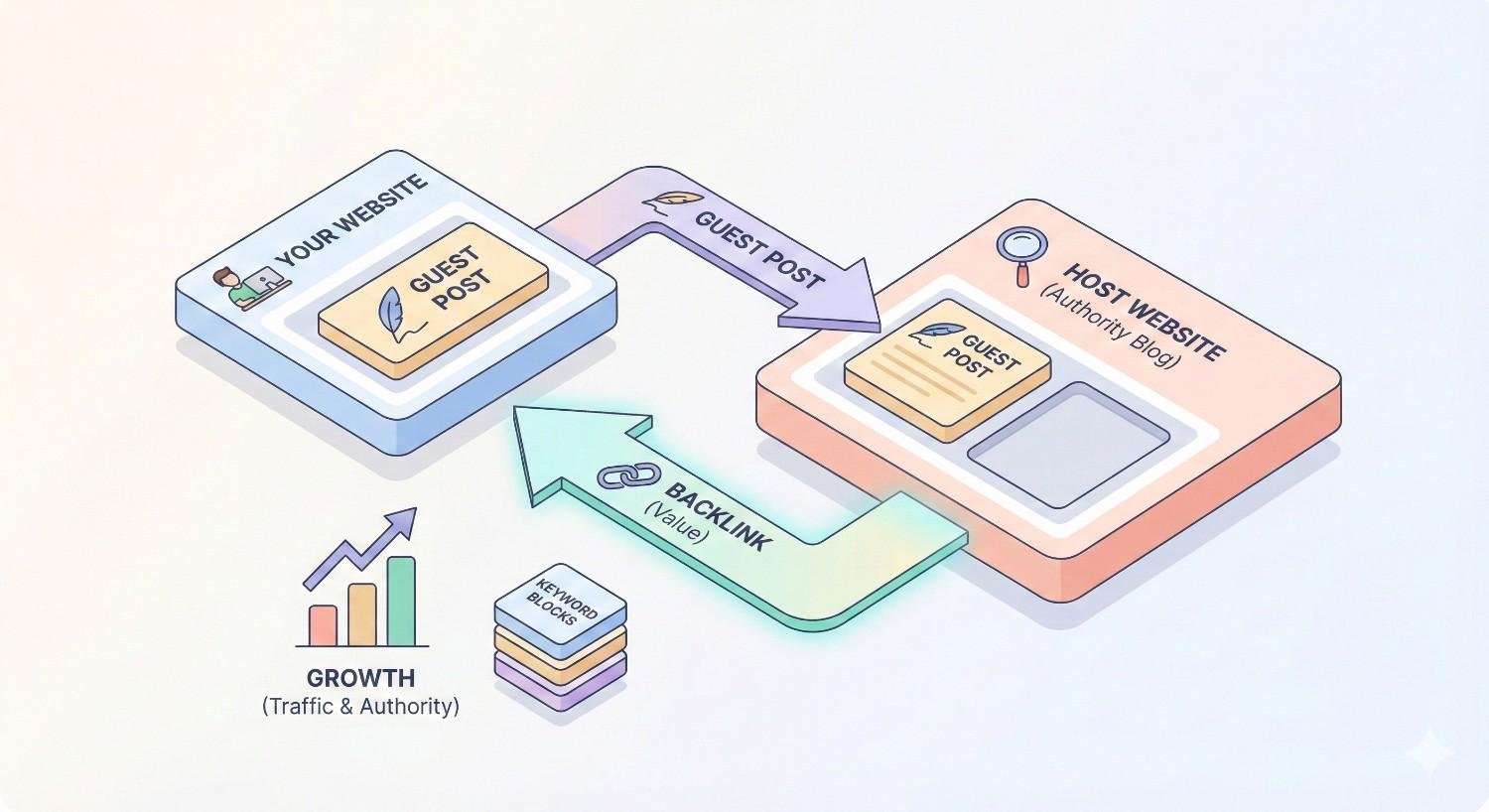
Guest posting for link building is the practice of writing and publishing content on external websites to earn backlinks pointing to your own site. You contribute valuable content to another publication, and in exchange, you receive one or more links within the article or author bio that direct readers back to your pages.
This strategy sits at the intersection of content marketing and SEO. You’re not just building links—you’re creating assets that live on authoritative domains, expose your brand to new audiences, and establish topical relevance signals that search engines use to evaluate your site’s authority.
How Guest Posting Works as a Link Building Strategy
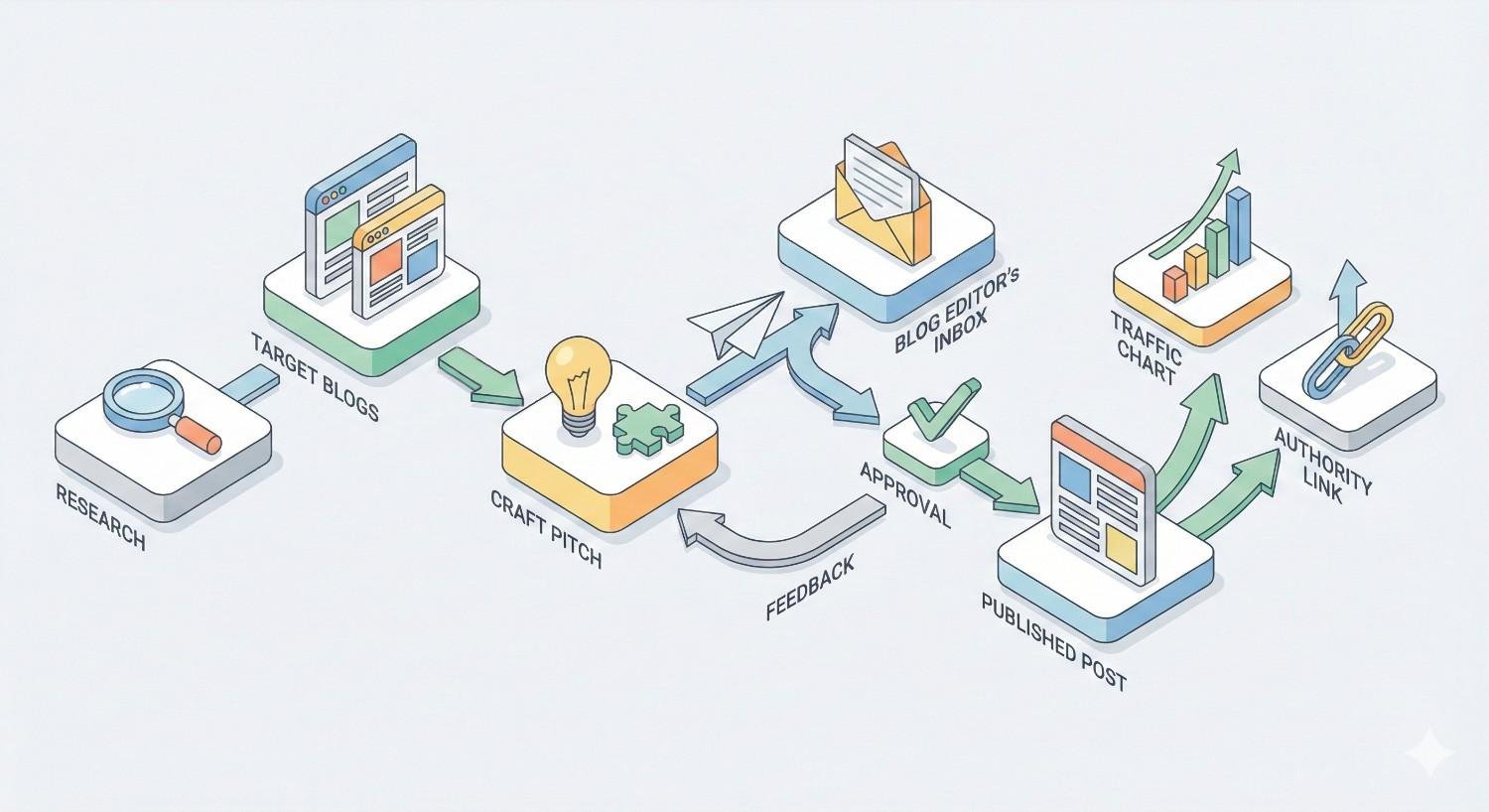
The process follows a predictable workflow. First, you identify websites in your niche that accept guest contributions. Then you research their content, audience, and editorial guidelines. You pitch topic ideas that align with their needs. Once approved, you write the article, naturally incorporating links to your site. After publication, the host site’s authority partially transfers to your domain through those backlinks.
The link equity passed depends on several factors: the host site’s domain authority, the page’s internal link structure, whether the link is dofollow or nofollow, and the contextual relevance between the linking page and your target page.
Most guest posts include one to three links. Typically, you’ll place one contextual link within the body content pointing to a relevant resource on your site, plus an author bio link to your homepage or about page.
The Difference Between Guest Posting and Other Link Building Methods
Guest posting differs from other link building tactics in one critical way: you control the content and link placement. With digital PR, you pitch stories to journalists who decide whether to link. With broken link building, you’re asking webmasters to replace dead links. With resource page outreach, you’re requesting inclusion on existing pages.
Guest posting gives you editorial control. You write the article. You choose the anchor text. You decide which pages receive links. This control comes with responsibility—you must create genuinely valuable content, not thinly veiled advertisements.
Compared to link schemes like private blog networks or paid link placements, guest posting on legitimate publications carries far less risk. When done correctly, guest posts represent earned editorial links that align with Google’s link quality guidelines.
Why Guest Posting Remains Effective in Modern SEO
Despite algorithm updates and evolving search landscapes, guest posting continues to work because it mirrors how the web naturally functions. Experts contribute to publications. Publications link to sources. Readers discover new brands through trusted content.
Backlinko’s analysis of ranking factors consistently shows that backlinks from authoritative, relevant domains correlate strongly with higher rankings. Guest posting on quality sites delivers exactly these signals.
The strategy also builds topical authority. When multiple sites in your niche link to your content, search engines recognize your domain as a relevant resource for those topics. This compounds over time—each quality guest post strengthens your overall authority profile.
Benefits of Guest Posting for SEO and Organic Growth
Guest posting delivers multiple benefits beyond raw link acquisition. Understanding these advantages helps you build a business case for investment and set appropriate expectations for results.
Domain Authority and Referral Traffic Gains
Every quality backlink from a guest post contributes to your domain’s overall authority. While no single link transforms rankings overnight, consistent guest posting on relevant sites builds cumulative authority that improves your ability to rank for competitive keywords.
Referral traffic provides immediate value. Readers who click through from your guest post arrive pre-qualified—they’ve already engaged with your content and found it valuable enough to learn more. These visitors often convert at higher rates than organic traffic because they’ve experienced your expertise firsthand.
The traffic volume depends on the host site’s audience size and engagement levels. A guest post on a major industry publication might drive thousands of visitors. A post on a smaller niche blog might bring dozens. Both have value—the smaller site may deliver more targeted, conversion-ready traffic.
Brand Visibility and Thought Leadership
Guest posting positions you as an expert in your field. When your byline appears on respected publications, readers associate your brand with authority. This perception extends beyond SEO—it influences sales conversations, partnership opportunities, and talent recruitment.
Consistent guest posting creates a portfolio of published work across your industry. Prospects researching your company find your insights on multiple trusted platforms. This social proof accelerates trust-building and shortens sales cycles.
The visibility compounds. Editors who see your work on other publications become more receptive to your pitches. Industry peers recognize your name. Speaking opportunities and media requests follow.
Relationship Building with Industry Publishers
Guest posting opens doors to ongoing relationships with editors, content managers, and publication owners. These connections have value beyond individual links.
A strong relationship with an editor might lead to regular contributor status, where you publish monthly without pitching each piece. It might result in invitations to contribute to special reports, roundups, or expert panels. It could generate referrals to other publications in their network.
These relationships also provide market intelligence. Editors know what topics resonate with their audiences. They understand industry trends before they become mainstream. This insight informs your content strategy across all channels.
Long-Term SEO Value vs. Short-Term Tactics
Guest post links typically remain live indefinitely. Unlike paid placements that disappear when budgets end, or social media posts that fade from feeds, a guest post continues passing link equity for years.
This permanence creates compounding returns. A guest post published today might still drive referral traffic and pass authority five years from now. The initial investment in research, outreach, and writing pays dividends long after publication.
Compare this to tactics like directory submissions or forum links, which provide minimal lasting value and often get devalued by algorithm updates. Guest posting on legitimate publications aligns with how search engines want the web to work—quality content earning editorial endorsement.
How to Find Guest Posting Opportunities
Finding the right sites to target determines your guest posting success. The goal isn’t maximum volume—it’s identifying publications where your content genuinely fits and your links carry meaningful value.
Identifying High-Quality, Relevant Websites
Start with relevance. The best guest posting targets operate in your industry or serve audiences who need your products or services. A B2B software company should target business and technology publications, not lifestyle blogs. An e-commerce brand should focus on publications their customers actually read.
Quality indicators include:
- Active publication schedule: Sites that publish regularly maintain engaged audiences
- Real editorial standards: Legitimate publications reject low-quality submissions
- Engaged readership: Comments, social shares, and community activity signal value
- Clean link profile: Avoid sites that accept any submission or sell links openly
- Professional design: Outdated or spammy-looking sites often carry less authority
Check whether the site appears in Google search results for relevant queries. If Google ranks the publication for industry topics, it likely carries authority worth acquiring.
Using Search Operators to Find Guest Post Targets
Google search operators help you find sites actively seeking contributors. Try these queries with your industry keywords:
- “write for us” + [your keyword]
- “guest post” + [your keyword]
- “contribute” + [your keyword]
- “guest author” + [your keyword]
- “submit an article” + [your keyword]
- inurl:guest-post + [your keyword]
- intitle:”write for us” + [your keyword]
These searches surface publications with dedicated contributor pages. However, don’t limit yourself to sites explicitly advertising guest posts. Many quality publications accept contributions but don’t promote it—you’ll need to pitch them directly.
Also search for your competitors’ names plus “guest post” or “contributor” to find where they’ve published. If a site accepted their content, they might accept yours.
Evaluating Domain Authority, Traffic, and Relevance
Not all guest posting opportunities deliver equal value. Evaluate each prospect across multiple dimensions:
Domain Authority (DA) or Domain Rating (DR): These metrics from Moz and Ahrefs estimate a site’s overall link equity. Higher scores generally indicate more valuable backlinks. However, don’t chase DA exclusively—a DA 40 site perfectly aligned with your niche often outperforms a DA 70 site in an unrelated industry.
Organic Traffic: Use tools like Ahrefs, Semrush, or SimilarWeb to estimate monthly visitors. Sites with substantial organic traffic have earned Google’s trust and likely pass meaningful authority.
Traffic Trend: Is the site growing, stable, or declining? A site losing traffic might be penalized or abandoned. Check the trend over 12-24 months.
Relevance: Does the site’s content align with your expertise? Would their audience genuinely benefit from your insights? Relevance signals matter for both link value and referral traffic quality.
Link Profile Quality: Examine who links to the site. Quality publications earn links from other quality publications. Sites with spammy backlink profiles may carry penalties that affect your links.
Tools for Guest Posting Prospecting
Several tools streamline the prospecting process:
Ahrefs: Use Content Explorer to find sites publishing on your topics. Filter by domain rating, traffic, and publication date. The Site Explorer shows any site’s backlink profile and organic performance.
Semrush: The Backlink Analytics tool reveals competitor link sources. The Link Building Tool helps manage outreach campaigns.
BuzzSumo: Identifies top-performing content in your niche and the publications producing it. Great for finding sites with engaged audiences.
Hunter.io: Finds email addresses for outreach once you’ve identified target publications.
Pitchbox: Combines prospecting, outreach, and relationship management in one platform designed for link building campaigns.
Google Sheets or Airtable: Essential for tracking prospects, outreach status, and results. Even sophisticated tools require a central tracking system.
Competitor Backlink Analysis for Opportunity Discovery
Your competitors have already done prospecting work for you. Analyzing their backlink profiles reveals publications that accept guest content in your space.
In Ahrefs or Semrush, enter a competitor’s domain and examine their backlinks. Filter for:
- Links from content pages (not homepages or directories)
- Dofollow links
- Links with branded or contextual anchor text
- Links from sites with decent authority
Look for patterns. If multiple competitors have links from the same publication, that site clearly accepts industry content. If a competitor has dozens of guest post links, study their approach—which sites did they target? What topics did they cover?
Export these prospects to your tracking sheet. Prioritize sites where competitors have succeeded, as they’ve already demonstrated receptiveness to your industry.
How to Pitch Guest Post Ideas Successfully
Your pitch determines whether editors open the door or delete your email. Most publications receive dozens of pitches weekly. Standing out requires research, personalization, and genuine value propositions.
Researching the Target Publication’s Audience and Content
Before writing a single pitch word, study the publication thoroughly:
Read recent articles: Understand their style, depth, and topics. Note what they’ve covered recently to avoid pitching duplicate ideas.
Identify content gaps: What topics haven’t they addressed? What angles could you bring that their existing authors haven’t?
Understand their audience: Who reads this publication? What problems do they face? What level of expertise do they have?
Check contributor guidelines: Many sites publish detailed requirements. Following these exactly demonstrates professionalism and respect for their process.
Note the editor’s name: Addressing your pitch to a specific person dramatically increases response rates. Check bylines, about pages, or LinkedIn to find the right contact.
This research takes time but pays dividends. A well-researched pitch that demonstrates genuine familiarity with the publication outperforms a hundred generic templates.
Crafting Personalized Outreach Emails
Effective pitches share common elements:
Subject line: Keep it clear and specific. “Guest Post Pitch: [Topic]” works. Avoid clickbait or vague subjects.
Personal opening: Reference something specific about the publication—a recent article you enjoyed, a unique aspect of their coverage, or a shared connection.
Brief introduction: One sentence about who you are and why you’re qualified to write for them.
Topic pitch: Propose 2-3 specific article ideas with working titles and brief descriptions. Show you understand what their audience needs.
Value proposition: Explain why these topics matter to their readers right now.
Credentials: Briefly mention relevant experience, previous publications, or expertise that qualifies you.
Call to action: Ask clearly for the next step—whether they’d like to see an outline, a draft, or have a call.
Keep the entire email under 200 words. Editors are busy. Respect their time with concise, scannable communication.
Proposing Relevant, High-Value Topic Ideas
Your topic ideas make or break the pitch. Strong proposals:
Fill gaps: Address topics the publication hasn’t covered or hasn’t updated recently.
Offer unique angles: Bring perspectives their existing contributors can’t—proprietary data, unusual expertise, contrarian viewpoints.
Match their format: If they publish how-to guides, pitch how-to guides. If they favor opinion pieces, pitch opinion pieces.
Align with current trends: Timely topics get priority. Connect your ideas to industry news, seasonal relevance, or emerging challenges.
Provide actionable value: Editors want content that helps their readers accomplish something. Vague thought leadership rarely gets accepted.
Propose multiple options. Editors might reject your first idea but love your third. Giving choices increases your chances of finding a fit.
Following Up Without Being Pushy
Most pitches require follow-up. Editors receive hundreds of emails and yours might get buried. A polite follow-up after 5-7 business days is appropriate and expected.
Keep follow-ups brief:
“Hi [Name], I wanted to follow up on my guest post pitch from last week. I’d love to contribute to [Publication] and am happy to adjust the topics based on your current editorial needs. Let me know if you’d like to discuss.”
If you don’t hear back after two follow-ups, move on. Some publications simply don’t respond to pitches they’re not interested in. Don’t take it personally—keep prospecting.
Track all outreach in your system. Note when you pitched, when you followed up, and any responses. This prevents embarrassing duplicate pitches and helps you identify which approaches work best.
Common Pitch Mistakes to Avoid
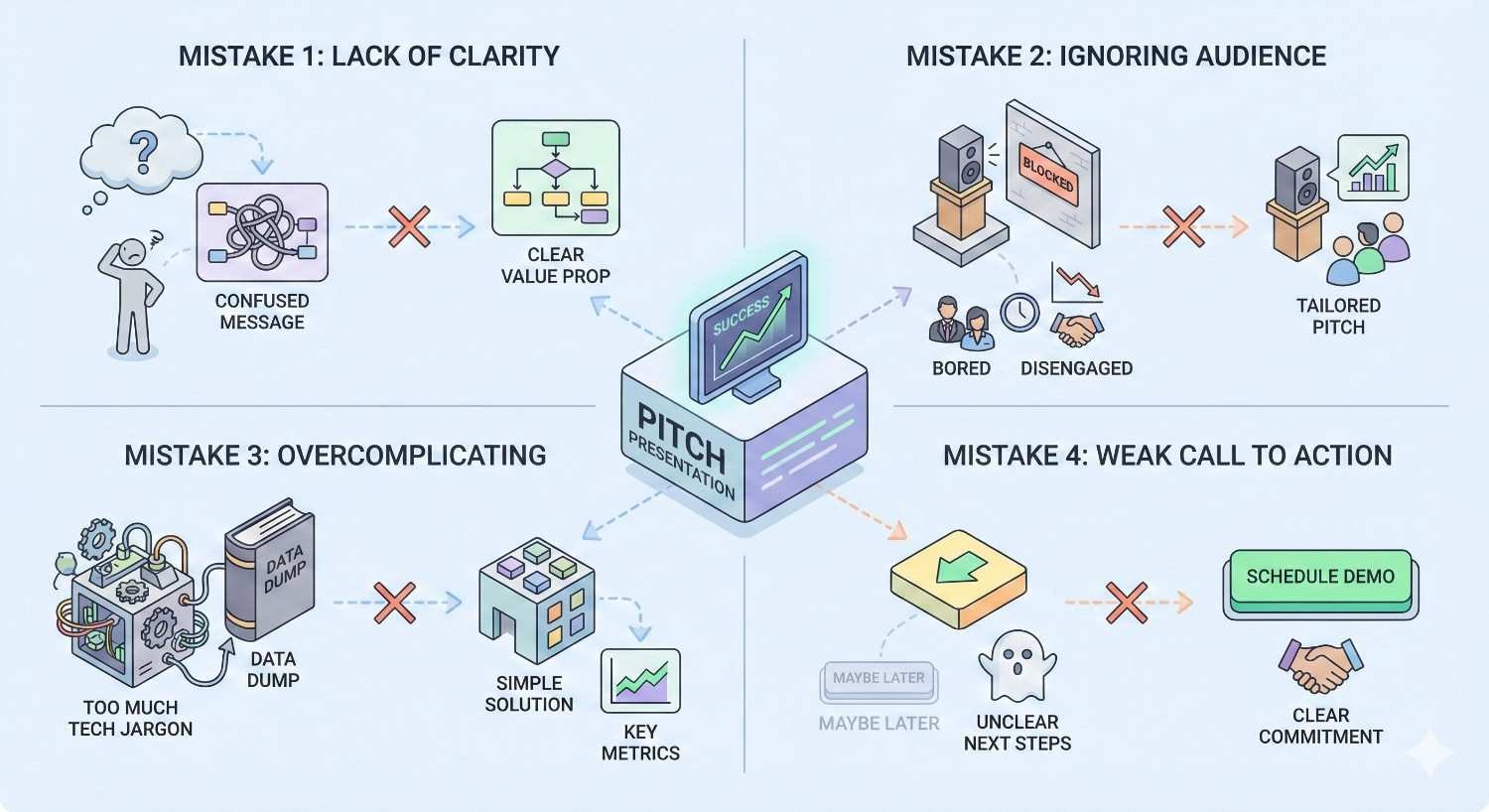
Generic templates: Editors recognize mass emails instantly. Personalization isn’t optional.
Pitching irrelevant topics: Proposing content that doesn’t fit the publication wastes everyone’s time and damages your reputation.
Overselling yourself: Let your ideas and credentials speak. Excessive self-promotion signals insecurity.
Ignoring guidelines: If they say “no promotional content,” don’t pitch promotional content. If they require specific formats, follow them exactly.
Attaching unsolicited drafts: Most editors want to approve topics before seeing full articles. Sending complete drafts without approval seems presumptuous.
Poor grammar or spelling: Your pitch demonstrates your writing quality. Errors suggest your articles will need heavy editing.
Being pushy or entitled: You’re asking for a favor. Approach with humility and gratitude, not demands.
Writing High-Quality Guest Posts That Get Accepted
Getting your pitch accepted is only half the battle. Now you must deliver content that meets or exceeds the publication’s standards. Quality guest posts get published, earn links, and open doors to future opportunities.
Understanding Editorial Guidelines and Standards
Every publication has standards, whether formally documented or implicitly understood. Before writing:
Review their style guide: Many publications provide detailed formatting, tone, and structural requirements.
Study published articles: Note average word count, heading structure, use of images, and citation practices.
Understand their voice: Is the publication formal or conversational? Technical or accessible? Match their established tone.
Check link policies: Some sites allow one link, others allow three. Some require nofollow on commercial links. Know the rules before writing.
Clarify expectations: If anything is unclear, ask the editor before submitting. It’s better to clarify upfront than revise extensively later.
Meeting guidelines demonstrates professionalism and reduces editorial burden. Editors remember contributors who make their jobs easier.
Creating Original, Data-Driven, or Expert-Level Content
Guest posts must provide genuine value—not rehashed information available everywhere else. Differentiate your content through:
Original research: Surveys, experiments, or data analysis that no one else has published.
Proprietary insights: Lessons from your company’s experience that readers can’t find elsewhere.
Expert interviews: Perspectives from industry leaders that add credibility and depth.
Comprehensive coverage: The definitive resource on a topic, more thorough than anything currently ranking.
Contrarian viewpoints: Challenging conventional wisdom with evidence and reasoning.
Practical frameworks: Step-by-step processes readers can immediately implement.
Avoid thin content that merely summarizes what others have written. If your article doesn’t add something new to the conversation, it doesn’t deserve publication.
Structuring Guest Posts for Readability and Engagement
Online readers scan before they read. Structure your content for both scanning and deep reading:
Clear hierarchy: Use H2s and H3s to organize sections logically. Readers should understand the article’s structure from headings alone.
Short paragraphs: 2-4 sentences maximum. Dense blocks of text discourage reading.
Bullet points and lists: Break complex information into scannable formats where appropriate.
Bold key phrases: Help scanners find important points quickly.
Transitions: Guide readers smoothly between sections. Each paragraph should connect logically to the next.
Strong opening: Hook readers immediately with a compelling statement, surprising fact, or clear value proposition.
Actionable conclusion: End with specific next steps readers can take.
Natural Link Placement and Anchor Text Best Practices
Your links should feel like natural editorial choices, not forced insertions. Best practices:
Contextual relevance: Only link where the reference genuinely helps readers. If you’re discussing a concept your site explains in depth, linking makes sense. If you’re shoehorning links into unrelated sentences, editors will notice.
Varied anchor text: Don’t use exact-match keywords for every link. Mix branded anchors (“according to White Label SEO Service”), generic anchors (“this guide”), and natural phrases (“learn more about technical SEO”).
Link to valuable resources: Your linked pages should deliver genuine value to readers who click. Linking to thin landing pages damages your reputation and may get your links removed.
Limit link quantity: One to two contextual links plus an author bio link is standard. Requesting more raises red flags.
Disclose relationships: If linking to your own site, transparency builds trust. Most publications expect author bio links to be self-promotional—that’s the exchange.
Avoiding Over-Optimization and Spammy Tactics
Aggressive optimization tactics backfire. Avoid:
Keyword stuffing: Unnaturally repeating target keywords makes content unreadable and signals manipulation.
Exact-match anchor text overuse: Multiple links with identical commercial anchors look like link schemes.
Thin content: Articles that exist only to place links provide no value and damage relationships.
Hidden links: Any attempt to disguise links violates trust and likely violates guidelines.
Duplicate content: Submitting the same article to multiple publications wastes everyone’s time and may trigger penalties.
Promotional tone: Guest posts should educate, not advertise. Save the sales pitch for your own site.
Write for readers first. If your content genuinely helps the audience, the links will feel natural and editors will welcome future contributions.
Guest Posting Outreach: Building Relationships at Scale
Scaling guest posting requires systems. You can’t manage dozens of simultaneous outreach conversations with spreadsheets and memory alone. Building efficient workflows lets you increase volume without sacrificing personalization or quality.
Creating an Outreach Workflow and Tracking System
A systematic workflow includes these stages:
Prospecting: Identifying and qualifying potential sites. Track domain metrics, contact information, and relevance notes.
Research: Studying each publication before pitching. Document content gaps, recent articles, and editor preferences.
Pitching: Sending initial outreach. Record date sent, subject line, and pitch content.
Follow-up: Scheduled reminders for follow-up emails. Track response status.
Negotiation: Managing topic approval, guideline clarification, and timeline discussions.
Writing: Tracking assignment status, deadlines, and draft submissions.
Publication: Recording live URLs, link placement, and publication dates.
Measurement: Monitoring backlink indexation, referral traffic, and ranking impact.
Use a CRM, project management tool, or dedicated outreach platform to manage this workflow. The specific tool matters less than consistent usage.
Personalizing Outreach at Scale
Personalization and scale seem contradictory, but systems make both possible:
Template frameworks: Create pitch templates with personalization placeholders. The structure stays consistent while specific details change for each recipient.
Research batching: Dedicate time blocks to researching multiple prospects. Document findings in your tracking system for use when pitching.
Segmentation: Group prospects by publication type, industry focus, or authority level. Customize template variations for each segment.
Merge fields: Use outreach tools that automatically insert prospect names, publication names, and custom fields into templates.
Quality checks: Before sending any pitch, review it as if you were the recipient. Does it feel personal? Does it demonstrate genuine familiarity?
The goal isn’t to trick editors into thinking each email is handcrafted. It’s to efficiently deliver genuinely relevant, personalized pitches at volume.
Managing Responses and Negotiations
Active campaigns generate responses requiring timely management:
Prioritize hot leads: Editors who respond positively deserve immediate attention. Delays risk losing opportunities.
Clarify expectations: When topics are approved, confirm word count, deadline, link allowances, and any specific requirements.
Negotiate professionally: If an editor requests changes to your proposed topics, be flexible. The relationship matters more than any single article.
Handle rejections gracefully: Thank editors for their time and ask if you can pitch again in the future. Today’s rejection might become tomorrow’s acceptance.
Document everything: Record all communications in your tracking system. This history informs future interactions and helps team members stay aligned.
Building Long-Term Partnerships with Publishers
The most valuable guest posting relationships extend beyond single articles:
Deliver exceptional quality: Editors remember contributors who make their jobs easier. Consistently exceeding expectations builds preference.
Meet deadlines: Reliability matters. Missing deadlines damages trust and may close doors permanently.
Promote published content: Share your guest posts on social media and in newsletters. Editors appreciate contributors who drive traffic to their sites.
Engage with the community: Comment on other articles, participate in discussions, and become a genuine member of the publication’s ecosystem.
Pitch regularly: Stay top of mind with periodic pitches. Even if specific ideas get rejected, consistent presence maintains the relationship.
Refer other contributors: If you know qualified writers who’d fit the publication, make introductions. Editors value connectors.
Long-term partnerships reduce prospecting time, increase acceptance rates, and often lead to better link placements and promotional support.
Measuring the SEO Impact of Guest Posting
Guest posting requires significant investment. Measuring results ensures you’re allocating resources effectively and demonstrates ROI to stakeholders.
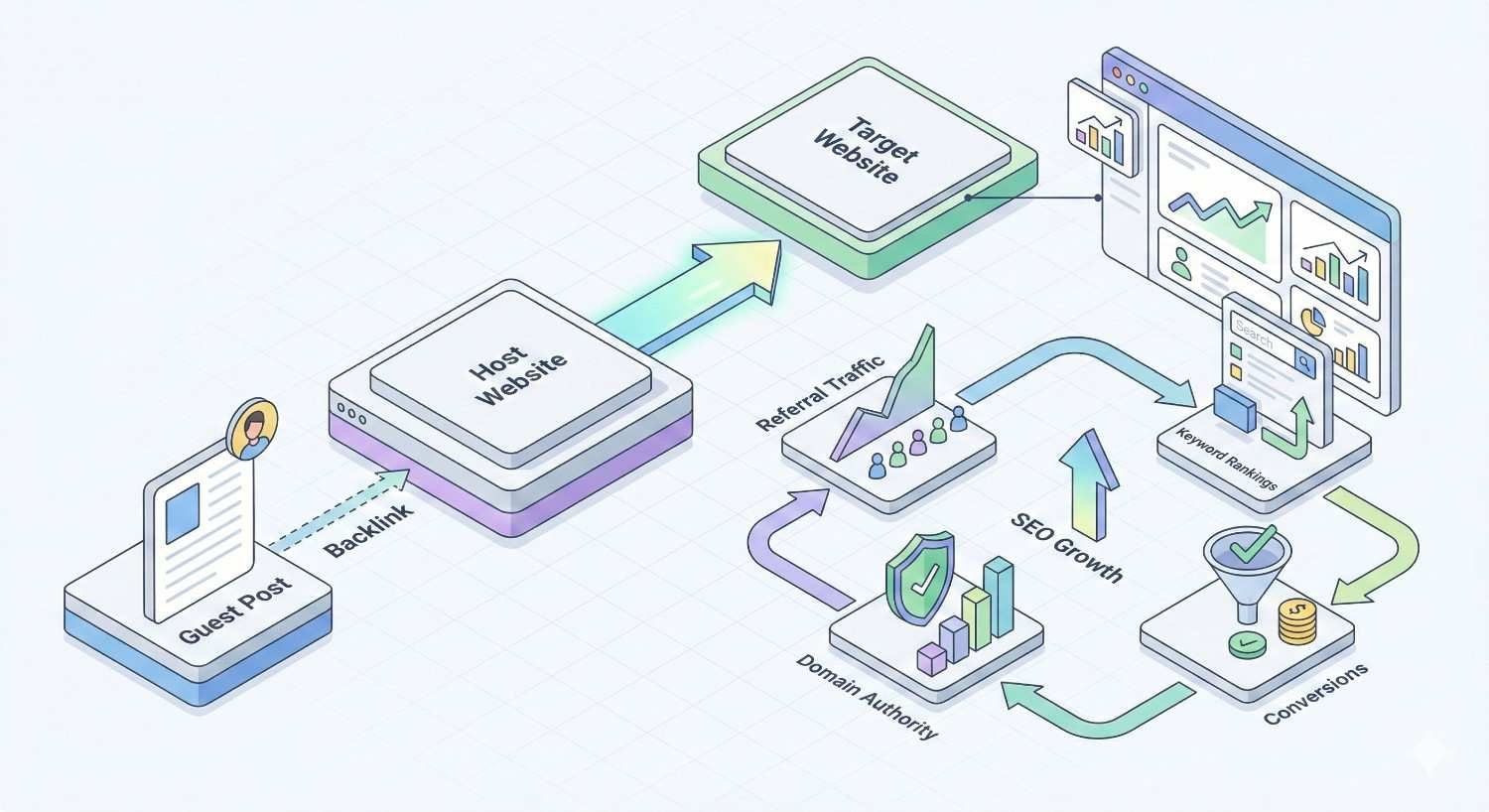
Tracking Backlinks and Indexation
After publication, verify your links are live and properly attributed:
Manual verification: Visit the published article and confirm your links appear correctly with intended anchor text.
Backlink monitoring: Use Ahrefs, Semrush, or Moz to track when new backlinks appear in their indexes. Note that these tools have crawl delays—links may take days or weeks to appear.
Google Search Console: The Links report shows backlinks Google has discovered. This is the most authoritative source for what Google actually sees.
Indexation check: Search site:hostdomain.com/your-article-url to confirm Google has indexed the page containing your link.
Track each guest post in your system with publication date, URL, link placement, anchor text, and indexation status. This database becomes invaluable for analyzing patterns and demonstrating results.
Monitoring Referral Traffic and Engagement Metrics
Backlinks drive direct traffic in addition to SEO value. Monitor:
Referral sessions: In Google Analytics, check Acquisition > Traffic Acquisition > Referral to see visits from guest post URLs.
Engagement metrics: How do referral visitors behave? Check bounce rate, pages per session, and time on site compared to other traffic sources.
Conversion tracking: Set up goals or events to measure whether referral traffic completes desired actions—form submissions, purchases, or sign-ups.
Traffic trends: Does referral traffic spike at publication then fade, or does it sustain over time? Evergreen content on high-traffic sites continues driving visitors for years.
High-quality guest posts on relevant sites typically deliver engaged traffic that converts well. If referral visitors bounce immediately, the host site’s audience may not align with your offerings.
Assessing Domain Authority and Ranking Improvements
Guest posting’s primary SEO value comes from improved authority and rankings:
Domain metrics: Track your domain authority (Moz), domain rating (Ahrefs), or authority score (Semrush) monthly. These metrics respond slowly to link building—expect gradual improvement over quarters, not weeks.
Keyword rankings: Monitor target keywords in your rank tracking tool. Note that ranking improvements result from cumulative link building, not individual guest posts.
Ranking velocity: Are you gaining positions faster after implementing guest posting? Compare ranking trends before and after your campaign.
Competitive gap: How does your backlink profile compare to competitors? Guest posting should close authority gaps over time.
Isolating guest posting’s specific impact is challenging because rankings depend on many factors. Focus on directional trends rather than attributing specific ranking changes to individual links.
Calculating ROI on Guest Posting Campaigns
ROI calculation requires tracking both costs and returns:
Costs include:
- Staff time for prospecting, outreach, and relationship management
- Writer fees for content creation
- Tool subscriptions for prospecting and tracking
- Any placement fees (for paid opportunities)
Returns include:
- Referral traffic value (sessions × average value per session)
- Ranking improvements (estimated traffic gain × conversion value)
- Brand exposure value (harder to quantify but real)
- Relationship value (future opportunities enabled)
A simplified ROI formula: (Value of organic traffic gained + Value of referral conversions) / Total campaign cost
Most organizations find guest posting delivers positive ROI when targeting quality sites with relevant audiences. The key is maintaining quality standards—low-quality guest posting wastes resources and may create liabilities.
Using Google Search Console and Analytics for Performance Tracking
These free tools provide essential guest posting insights:
Google Search Console:
- Links report shows external links Google has discovered
- Performance report reveals which pages benefit from improved authority
- Index coverage confirms your site is being crawled properly
Google Analytics 4:
- Traffic acquisition shows referral sources
- Engagement metrics reveal visitor quality
- Conversion tracking measures business impact
- Landing page reports show which pages receive referral traffic
Create a monthly reporting cadence that pulls data from both tools. Track trends over time rather than obsessing over daily fluctuations. Guest posting’s impact accumulates gradually—meaningful patterns emerge over quarters, not days.
Guest Posting Mistakes That Hurt Your SEO
Even well-intentioned guest posting can backfire. Understanding common mistakes helps you avoid penalties and wasted resources.
Targeting Low-Quality or Irrelevant Sites
The most damaging mistake is prioritizing quantity over quality. Signs of low-quality sites:
- Accept any submission without editorial review
- Publish content on wildly unrelated topics
- Have obvious spam in comments or content
- Show declining traffic trends
- Exist primarily to sell links
- Have thin, poorly written existing content
Links from these sites provide minimal value and may trigger manual actions if Google identifies them as link schemes. One quality link from a respected publication outweighs dozens from questionable sources.
Relevance matters equally. A link from a high-authority site in an unrelated industry passes less value than a link from a moderate-authority site in your exact niche. Search engines evaluate topical relationships when assessing link value.
Using Exact-Match Anchor Text Excessively
Anchor text—the clickable words in a hyperlink—signals what the linked page is about. Over-optimizing anchor text is a classic manipulation signal.
If every guest post link uses your target keyword as anchor text, the pattern looks unnatural. Real editorial links use varied anchors: brand names, generic phrases (“click here,” “this article”), partial matches, and natural descriptions.
A healthy anchor text profile includes:
- Branded anchors (your company name)
- URL anchors (your domain)
- Generic anchors (“learn more,” “this guide”)
- Partial match anchors (variations of target keywords)
- Exact match anchors (sparingly, where natural)
Aim for exact match anchors in less than 10-15% of your guest post links. Let the surrounding content establish topical relevance rather than forcing it through anchor text.
Publishing Thin or Duplicate Content
Guest posts must provide genuine value. Thin content—articles that merely summarize existing information without adding insight—wastes the host site’s audience and your opportunity.
Duplicate content creates additional problems. Publishing the same article on multiple sites dilutes its value and may trigger duplicate content filters. Each guest post should be original, written specifically for that publication’s audience.
If you’re tempted to cut corners on content quality, reconsider your strategy. Low-quality guest posts damage relationships, provide minimal SEO value, and may create liabilities if sites later clean up their content.
Ignoring Google’s Link Scheme Guidelines
Google’s spam policies explicitly address manipulative link building. Practices that violate guidelines include:
- Exchanging money for links that pass PageRank
- Exchanging goods or services for links
- Excessive link exchanges
- Large-scale article marketing with keyword-rich anchor text
- Using automated programs to create links
Guest posting exists in a gray area. Google’s John Mueller has stated that guest posting primarily for links violates guidelines, while contributing genuinely valuable content that happens to include links is acceptable.
The distinction lies in intent and execution. Guest posts that prioritize audience value, use natural link placement, and appear on legitimate publications align with guidelines. Guest posts that exist solely to place links, use manipulative anchors, or appear on sites that accept anything cross the line.
Failing to Diversify Your Link Profile
A natural backlink profile includes links from various sources: editorial mentions, resource pages, directories, social profiles, and yes, guest posts. If guest posting represents your only link building activity, the resulting profile looks artificial.
Diversify across:
- Link types: Guest posts, digital PR mentions, resource links, citations
- Anchor text: Varied as discussed above
- Link targets: Homepage, service pages, blog posts, resources
- Source authority: Mix of high, medium, and emerging sites
- Industries: Primary niche plus adjacent relevant sectors
A diverse profile signals organic link acquisition. An over-concentrated profile signals manipulation.
Guest Posting vs. Other Link Building Strategies
Guest posting is one tool in the link building toolkit. Understanding how it compares to alternatives helps you allocate resources effectively.
Guest Posting vs. Digital PR
Digital PR focuses on earning media coverage and links through newsworthy stories, data studies, and expert commentary. You pitch journalists rather than contributing content directly.
Guest posting advantages:
- More control over content and link placement
- Higher acceptance rates for quality pitches
- Predictable timeline and output
- Builds ongoing contributor relationships
Digital PR advantages:
- Potential for high-authority links from major publications
- Broader brand exposure through news coverage
- Links appear more naturally editorial
- Can generate social proof and credibility
Best for: Guest posting suits consistent, scalable link acquisition. Digital PR suits brands with newsworthy stories or data seeking major media coverage.
Guest Posting vs. Broken Link Building
Broken link building involves finding dead links on relevant sites and suggesting your content as a replacement. You’re helping webmasters fix problems while earning links.
Guest posting advantages:
- Creates new content assets on external sites
- Builds contributor relationships
- More control over anchor text and placement
- Generates referral traffic and brand exposure
Broken link building advantages:
- Leverages existing content without creating new pieces
- Provides clear value proposition to webmasters
- Can scale efficiently with the right tools
- Works for any content type, not just articles
Best for: Guest posting when you want to build relationships and create external content. Broken link building when you have strong existing resources and want efficient outreach.
Guest Posting vs. Resource Page Link Building
Resource page link building targets curated lists of helpful resources in your industry. You request inclusion on these pages based on your content’s value.
Guest posting advantages:
- Creates dedicated content featuring your expertise
- Typically provides contextual, in-content links
- Builds deeper relationships with publications
- Generates direct referral traffic
Resource page advantages:
- Leverages existing content
- Often easier to scale
- Links from curated pages signal editorial endorsement
- Can target highly specific, relevant pages
Best for: Guest posting for relationship building and brand exposure. Resource page outreach for efficient link acquisition to existing assets.
When to Combine Guest Posting with Other Tactics
Most successful link building programs combine multiple strategies:
- Guest posting for consistent, relationship-based link acquisition
- Digital PR for high-impact coverage opportunities
- Broken link building for efficient outreach to existing content
- Resource page outreach for targeted, relevant placements
- Content marketing for attracting organic links through valuable resources
The right mix depends on your resources, industry, and goals. Start with guest posting to build foundational relationships and authority, then layer additional tactics as capacity allows.
How Much Does Guest Posting Cost?
Understanding guest posting economics helps you budget appropriately and evaluate ROI. Costs vary dramatically based on approach and quality standards.
In-House vs. Outsourced Guest Posting
In-house costs include:
- Staff time for prospecting (5-10 hours per placement)
- Staff time for outreach and relationship management (3-5 hours per placement)
- Writer time for content creation (4-8 hours per article)
- Tool subscriptions ($100-500/month for prospecting and tracking)
Fully loaded, an in-house guest post might cost $500-1,500 when accounting for all labor and overhead.
Outsourced costs include:
- Agency retainers ($2,000-10,000/month for ongoing programs)
- Per-placement fees ($150-1,000+ per link depending on site quality)
- Content creation fees ($200-800 per article)
Outsourcing provides scalability and expertise but reduces control and relationship ownership.
Paid Placements vs. Earned Placements
Earned placements involve pitching quality content to publications that accept contributions based on merit. No money changes hands for the link itself—you’re compensated through exposure and backlinks.
Paid placements involve paying sites directly for publishing your content with links. This ranges from legitimate sponsored content (disclosed as advertising) to gray-market link sales.
Paid placements carry risks:
- May violate Google’s guidelines if not properly disclosed
- Sites that sell links often have devalued authority
- Creates dependency on continued payment
- Potential for penalties if patterns are detected
Earned placements require more effort but provide sustainable, guideline-compliant results. Most SEO professionals recommend focusing on earned placements for long-term programs.
Typical Pricing Models and Budget Expectations
For outsourced guest posting, common pricing models include:
Per-link pricing: $150-300 for lower authority sites (DA 20-40), $300-600 for medium authority (DA 40-60), $600-1,500+ for high authority (DA 60+). Prices vary significantly by niche and provider.
Monthly retainers: $2,000-5,000/month for 4-8 placements, $5,000-10,000/month for 8-15 placements, $10,000+/month for enterprise programs.
Performance-based: Some agencies charge based on results—traffic generated, rankings improved, or links acquired meeting specific criteria.
Budget expectations for meaningful results:
- Startup/small business: $1,000-3,000/month for 3-6 quality placements
- Mid-market: $3,000-7,000/month for 6-12 placements
- Enterprise: $10,000+/month for comprehensive programs
Evaluating Cost vs. Value for Link Acquisition
Not all links are worth the same investment. Evaluate each opportunity against:
Authority value: Higher domain authority sites pass more link equity. A $500 link from a DA 70 site may deliver more value than five $100 links from DA 30 sites.
Relevance value: Links from topically relevant sites carry more weight. Pay premiums for perfect-fit publications.
Traffic value: Sites with substantial traffic deliver referral visitors. Factor this direct value into ROI calculations.
Relationship value: Some placements open doors to ongoing opportunities. The first placement might cost more in effort, but subsequent placements come easier.
Risk value: Questionable sites carry penalty risk. The cheapest links often prove most expensive when they trigger manual actions.
Calculate expected value before pursuing any opportunity. If the math doesn’t work, move on to better prospects.
Guest Posting at Scale: Building a Sustainable Program
Growing from occasional guest posts to a systematic program requires infrastructure, processes, and team capabilities.
Creating a Content Production Pipeline
Consistent guest posting demands consistent content. Build a pipeline that includes:
Topic ideation: Maintain a running list of article ideas mapped to target publications. Refresh regularly based on industry trends and publication needs.
Writer capacity: Whether in-house or freelance, ensure you have writers who can produce quality content on your timeline. Build relationships with multiple writers to avoid bottlenecks.
Editorial review: Every piece should pass through quality review before submission. Check for accuracy, readability, guideline compliance, and natural link placement.
Revision buffer: Build time for revisions into your timeline. Editors often request changes—responsive revision turnaround maintains relationships.
Asset library: Maintain author bios, headshots, and company descriptions ready for submission. Standardize these elements while allowing customization per publication.
Building a Database of Target Publications
Your prospect database is a strategic asset. Structure it to include:
Contact information: Editor names, email addresses, social profiles Publication details: Domain metrics, traffic estimates, content focus Relationship status: Cold prospect, pitched, contributor, partner Historical data: Past pitches, acceptances, rejections, published pieces Notes: Editorial preferences, best times to pitch, topic interests
Continuously expand this database through prospecting activities. A robust database reduces time-to-pitch for new campaigns and enables strategic relationship development.
Hiring Writers and Outreach Specialists
Scaling requires specialized roles:
Outreach specialists handle prospecting, pitching, and relationship management. They need strong communication skills, persistence, and organizational abilities. Look for experience in sales, PR, or link building.
Content writers produce guest post articles. They need subject matter knowledge, strong writing skills, and ability to adapt to different publication styles. Industry expertise often matters more than SEO knowledge.
Project managers coordinate workflows, track deadlines, and ensure quality standards. They need organizational skills and attention to detail.
Consider whether to hire employees or contractors. Contractors provide flexibility but may lack commitment. Employees provide consistency but require management overhead.
Automating Tracking and Reporting
Manual tracking breaks down at scale. Implement systems for:
Outreach tracking: CRM or dedicated tools like Pitchbox, BuzzStream, or Respona to manage prospect status and communication history.
Content tracking: Project management tools like Asana, Monday, or Notion to track article status from assignment through publication.
Link monitoring: Automated tools to verify link placement and indexation. Ahrefs, Semrush, or dedicated monitors like Linkody.
Reporting dashboards: Aggregate data into dashboards showing key metrics—placements per month, average domain authority, referral traffic, ranking impact.
Automation frees team members to focus on relationship building and quality control rather than administrative tasks.
Maintaining Quality While Scaling Volume
The biggest scaling risk is quality degradation. Protect standards through:
Clear guidelines: Document quality standards for prospects, pitches, and content. Make expectations explicit.
Quality gates: Require approval at key stages—prospect qualification, pitch review, content review before submission.
Regular audits: Periodically review published guest posts. Are they meeting standards? Are links live and properly placed?
Feedback loops: Track which placements drive results. Double down on what works; eliminate what doesn’t.
Relationship prioritization: Maintain personal attention for top-tier publications even as you systematize lower-tier outreach.
Quality and scale aren’t mutually exclusive, but they require intentional management. Build quality controls into your processes from the start.
Guest Posting in Different Industries and Niches
Guest posting strategies vary by industry. What works for SaaS differs from what works for local businesses. Adapt your approach to your specific context.
Guest Posting for SaaS and Technology Companies
SaaS companies benefit from guest posting on:
- Industry publications (TechCrunch, VentureBeat, industry-specific outlets)
- Business and marketing blogs (for B2B SaaS)
- Developer communities (for technical products)
- Comparison and review sites
Strategy tips:
- Lead with data and case studies—tech audiences expect evidence
- Contribute to open source communities and developer blogs
- Target publications your ideal customers read during research phases
- Build relationships with industry analysts who publish regularly
Guest Posting for E-commerce and Retail Brands
E-commerce brands should target:
- Lifestyle and interest publications matching their products
- Industry trade publications
- Influencer blogs in relevant niches
- Local publications for regional brands
Strategy tips:
- Visual content performs well—include product photography where appropriate
- Seasonal content aligns with buying cycles
- Gift guides and roundups offer natural link opportunities
- Build relationships with bloggers who review products
Guest Posting for B2B Service Providers
B2B service companies benefit from:
- Industry association publications
- Business and management outlets
- Trade publications serving target industries
- Professional development platforms
Strategy tips:
- Thought leadership content establishes expertise
- Case studies demonstrate results without being promotional
- Target publications decision-makers read
- Build relationships that lead to speaking opportunities
Guest Posting for Local Businesses
Local businesses should focus on:
- Local news outlets and community blogs
- Regional business publications
- Industry publications with local sections
- Chamber of commerce and business association sites
Strategy tips:
- Local relevance matters more than domain authority
- Community involvement creates natural story angles
- Partner with complementary local businesses for co-marketing
- Target publications that rank for local search queries
Adapting Your Strategy to Industry-Specific Publications
Every industry has unique publication landscapes:
Research the ecosystem: Identify the publications your audience actually reads. Trade associations, industry events, and competitor analysis reveal opportunities.
Understand editorial cycles: Some industries have seasonal content calendars. Pitch accordingly.
Learn the language: Industry jargon and conventions vary. Match the publication’s communication style.
Build niche expertise: Becoming known in a specific niche opens doors that generic outreach can’t.
Leverage industry events: Conferences, trade shows, and webinars create content opportunities and relationship-building moments.
Google’s Stance on Guest Posting: What’s Allowed and What’s Not
Understanding Google’s guidelines helps you build sustainable programs that avoid penalties.
Understanding Google’s Link Scheme Guidelines
Google’s link spam documentation identifies manipulative practices including:
- Buying or selling links for ranking purposes
- Excessive link exchanges
- Large-scale article marketing campaigns with keyword-rich anchors
- Using automated programs to create links
- Requiring links as part of terms of service or contracts
The guidelines don’t prohibit guest posting outright. They prohibit guest posting done primarily to manipulate rankings through artificial link patterns.
The Difference Between Editorial and Paid Links
Editorial links are placed because an editor genuinely believes the linked resource adds value for readers. The linking decision is independent of any compensation.
Paid links involve compensation—money, products, services, or other value—in exchange for link placement. Google expects paid links to include nofollow or sponsored attributes.
Guest posting occupies middle ground. You’re not paying for the link directly, but you’re providing content (value) in exchange for link placement. Google’s guidance suggests this is acceptable when:
- The content provides genuine value to readers
- Links are placed naturally and editorially
- The primary purpose is audience value, not link acquisition
When to Use Nofollow vs. Dofollow Links
Dofollow links pass PageRank and influence rankings. Most editorial links are dofollow by default.
Nofollow links tell search engines not to pass ranking signals. Google recommends nofollow for:
- Paid placements and sponsored content
- User-generated content where you can’t vouch for quality
- Links you don’t want to editorially endorse
Sponsored attribute specifically indicates paid relationships.
For guest posting:
- Earned placements on legitimate publications typically warrant dofollow links
- Paid placements should use nofollow or sponsored attributes
- When in doubt, ask the publication about their policy
Some publications nofollow all external links regardless of context. These links still provide referral traffic and brand exposure value, even without direct ranking benefit.
How to Stay Compliant While Building Links
Maintain compliance through:
Intent: Build links to help audiences discover valuable resources, not solely to manipulate rankings.
Quality: Only publish content that genuinely serves the host publication’s audience.
Natural patterns: Vary anchor text, link targets, and source types. Avoid patterns that look manufactured.
Disclosure: If any compensation is involved, ensure proper disclosure and link attributes.
Selectivity: Reject opportunities on sites that exist primarily to sell links.
Documentation: Maintain records of your outreach and placements. If ever questioned, you can demonstrate legitimate practices.
Recovering from Guest Posting Penalties
If you receive a manual action related to unnatural links:
Identify problematic links: Use Google Search Console’s manual actions report and link data to identify which links triggered the penalty.
Request removal: Contact site owners and request link removal or nofollow addition.
Disavow remaining links: For links you can’t remove, submit a disavow file through Search Console.
Document your efforts: Keep records of removal requests and responses.
Submit reconsideration request: Once you’ve addressed the issues, request Google review your site.
Prevent recurrence: Audit your link building practices and eliminate anything that contributed to the penalty.
Recovery takes time—often months. Prevention through compliant practices is far preferable to remediation.
Guest Posting Tools and Resources
The right tools increase efficiency and effectiveness. Here’s what to consider for each function.
Prospecting and Research Tools
Ahrefs: Content Explorer finds sites publishing on your topics. Site Explorer analyzes any domain’s backlinks and organic performance. Essential for competitive analysis and prospect qualification.
Semrush: Similar capabilities to Ahrefs with additional features for content gap analysis and keyword research. The Backlink Analytics tool reveals competitor link sources.
BuzzSumo: Identifies top-performing content and the publications producing it. Useful for finding sites with engaged audiences and understanding what content resonates.
SimilarWeb: Estimates website traffic and audience demographics. Helps qualify prospects based on actual reach.
Hunter.io: Finds email addresses associated with domains. Essential for identifying the right contacts at target publications.
Outreach and Email Management Platforms
Pitchbox: Purpose-built for link building outreach. Combines prospecting, email sequences, and relationship management.
BuzzStream: CRM designed for outreach campaigns. Tracks contacts, conversations, and campaign performance.
Respona: AI-assisted outreach platform that helps personalize pitches at scale.
Mailshake: Email outreach automation with sequences and tracking. More general-purpose than link building-specific tools.
Gmail + Streak: For smaller operations, Gmail with the Streak CRM extension provides basic outreach tracking.
Content Creation and Collaboration Tools
Google Docs: Universal for draft creation and editor collaboration. Most publications accept Google Doc submissions.
Grammarly: Catches grammar and style issues before submission. Premium version provides more sophisticated suggestions.
Hemingway Editor: Improves readability by identifying complex sentences and passive voice.
Clearscope or Surfer SEO: Content optimization tools that ensure comprehensive topic coverage. Useful for creating guest posts that perform well.
Notion or Asana: Project management for tracking content assignments, deadlines, and status.
Backlink Monitoring and Analytics Tools
Ahrefs or Semrush: Both provide backlink monitoring with alerts for new and lost links.
Google Search Console: Free and authoritative source for backlinks Google has discovered.
Linkody: Dedicated backlink monitoring with alerts and reporting.
Monitor Backlinks: Tracks your backlink profile and alerts you to changes.
Google Analytics 4: Essential for tracking referral traffic from guest posts.
CRM and Project Management for Link Building
Notion: Flexible database and project management. Many teams build custom link building workflows.
Airtable: Spreadsheet-database hybrid excellent for tracking prospects and placements.
Monday.com: Visual project management with customizable workflows.
HubSpot CRM: Free CRM that can be adapted for outreach tracking.
Trello: Simple kanban boards for managing outreach pipeline stages.
Choose tools that match your team size and workflow preferences. The best tool is one your team actually uses consistently.
How Long Does It Take to See Results from Guest Posting?
Setting realistic timeline expectations prevents frustration and helps you plan resources appropriately.
Typical Timeline for Link Indexation
After a guest post publishes, the link must be discovered and indexed by Google before it influences rankings:
Publication to crawl: Google typically discovers new content on established sites within days. Less frequently updated sites may take longer.
Crawl to index: Once crawled, the page enters Google’s index. This usually happens within a week for quality sites.
Index to backlink tools: Third-party tools like Ahrefs and Semrush have their own crawl schedules. New links may take 2-4 weeks to appear in these tools.
Total timeline: Expect 1-4 weeks from publication to confirmed indexation in most cases. High-authority sites with frequent crawling see faster indexation.
You can encourage faster indexation by sharing the published post on social media, which may trigger additional crawling.
When to Expect Ranking Improvements
Link building’s ranking impact unfolds gradually:
Individual link impact: A single guest post rarely produces dramatic ranking changes. Links contribute to cumulative authority that influences rankings over time.
Typical timeline: Most SEO professionals observe meaningful ranking improvements 3-6 months after consistent link building begins. Some competitive keywords may take 6-12 months.
Factors affecting speed:
- Current authority level (newer sites see faster relative gains)
- Keyword competition (less competitive terms respond faster)
- Link quality (higher authority links accelerate results)
- Link velocity (consistent acquisition beats sporadic bursts)
- On-page optimization (links amplify well-optimized pages)
Factors That Influence Guest Posting ROI Timeline
Several variables affect how quickly you see returns:
Starting authority: Sites with established authority see incremental gains. New sites may see more dramatic percentage improvements.
Link quality: Higher authority, more relevant links deliver faster impact than lower quality placements.
Volume: More placements accelerate results, assuming quality is maintained.
Target keywords: Less competitive keywords respond faster to authority improvements.
Content quality: Well-optimized target pages convert link equity into rankings more efficiently.
Technical foundation: Sites with technical SEO issues may not fully benefit from link building until those issues are resolved.
Setting Realistic Expectations for Organic Growth
Communicate these expectations to stakeholders:
Month 1-2: Building pipeline, initial placements publishing. Minimal ranking impact visible.
Month 3-4: Links indexing, early authority signals accumulating. May see movement on less competitive keywords.
Month 5-6: Cumulative impact becoming measurable. Ranking improvements on target keywords. Referral traffic patterns established.
Month 7-12: Sustained improvement across keyword portfolio. ROI becoming clearly positive for quality programs.
Year 2+: Compounding returns as authority builds. Earlier placements continue delivering value. Relationships enable more efficient acquisition.
Guest posting is a long-term investment. Organizations expecting immediate results will be disappointed. Those committed to sustained effort see compounding returns.
Building a Guest Posting Strategy That Aligns with Your SEO Goals
Effective guest posting integrates with broader SEO strategy rather than operating in isolation.
Defining Link Building Objectives and KPIs
Start with clear objectives:
Authority building: Increase domain metrics to compete for more competitive keywords. KPIs: Domain authority/rating improvement, number of referring domains.
Page-specific ranking: Improve rankings for specific target pages. KPIs: Keyword position changes, organic traffic to target pages.
Referral traffic: Drive qualified visitors from relevant publications. KPIs: Referral sessions, referral conversions.
Brand awareness: Increase visibility among target audiences. KPIs: Brand search volume, direct traffic, social mentions.
Relationship development: Build connections with industry publications. KPIs: Number of active contributor relationships, repeat placement rate.
Define primary and secondary objectives. This clarity guides prospect selection, content strategy, and resource allocation.
Integrating Guest Posting with Content Marketing
Guest posting and content marketing should reinforce each other:
Content repurposing: Adapt existing content assets into guest post formats. A comprehensive guide becomes multiple focused articles for different publications.
Link targets: Create linkable assets on your site that guest posts can reference. Original research, tools, and comprehensive guides attract natural links and provide guest post link targets.
Topic alignment: Guest post topics should relate to your content marketing themes. This builds topical authority across your entire content ecosystem.
Audience insights: Guest posting reveals what resonates with different audiences. Apply these insights to your owned content strategy.
Distribution amplification: Guest posts extend your content’s reach to new audiences who may then engage with your owned content.
Balancing Guest Posting with Technical SEO and On-Page Optimization
Link building amplifies well-optimized sites. Ensure your foundation is solid:
Technical SEO: Crawlability, site speed, mobile experience, and structured data should be addressed before aggressive link building. Links to poorly optimized sites deliver diminished returns.
On-page optimization: Target pages should be fully optimized for their keywords before building links. Title tags, content quality, internal linking, and user experience all affect how efficiently pages convert authority into rankings.
Content quality: The pages receiving links must deserve to rank. Building links to thin content wastes resources and may not produce results.
Prioritization: If technical issues exist, address them first. If on-page optimization is weak, improve it. Then amplify with link building.
Creating a 6-12 Month Guest Posting Roadmap
A structured roadmap ensures consistent execution:
Month 1-2: Foundation
- Define objectives and KPIs
- Build initial prospect database (50-100 qualified sites)
- Develop pitch templates and content guidelines
- Establish tracking systems
- Begin outreach to first tier of prospects
Month 3-4: Momentum
- Publish first placements
- Expand prospect database
- Refine pitches based on response data
- Build writer capacity
- Establish measurement baselines
Month 5-6: Optimization
- Analyze early results
- Double down on successful approaches
- Eliminate underperforming tactics
- Develop repeat contributor relationships
- Scale outreach volume
Month 7-9: Scaling
- Increase placement velocity
- Expand to new publication tiers
- Automate tracking and reporting
- Build team capacity as needed
- Integrate with broader marketing initiatives
Month 10-12: Maturation
- Comprehensive performance review
- ROI analysis and budget optimization
- Strategy refinement for year two
- Relationship deepening with top publications
- Knowledge documentation and process improvement
When to Partner with an SEO Agency for Guest Posting
Consider agency partnership when:
Capacity constraints: Your team lacks bandwidth for consistent execution.
Expertise gaps: You need specialized knowledge in outreach, content, or strategy.
Scale requirements: Your goals require volume beyond internal capabilities.
Speed priorities: You need to accelerate results faster than organic team building allows.
Risk management: You want experienced guidance to avoid compliance issues.
When evaluating agencies:
- Request case studies with measurable results
- Understand their prospecting and quality standards
- Clarify their approach to Google guidelines
- Ensure transparent reporting on placements and metrics
- Verify they build relationships you can maintain long-term
The right agency partnership accelerates results while building capabilities you can eventually bring in-house.
Conclusion
Guest posting for link building remains one of the most effective strategies for earning high-quality backlinks that improve domain authority, drive referral traffic, and build lasting brand visibility. Success requires targeting relevant, authoritative publications, crafting personalized pitches, and delivering genuinely valuable content.
The investment pays dividends over time. Unlike short-term tactics, guest post links continue passing authority for years. Relationships with editors open doors to ongoing opportunities. Brand exposure compounds as your byline appears across respected publications.
We help businesses build sustainable guest posting programs that drive measurable SEO results. Contact White Label SEO Service to discuss how strategic link building can accelerate your organic growth.
Frequently Asked Questions
Is guest posting still effective for SEO in 2025?
Yes, guest posting remains effective when executed correctly. Backlinks from relevant, authoritative sites continue to be a significant ranking factor. The key is focusing on quality publications and genuine value rather than volume or manipulation.
How many guest posts should I publish per month?
Quality matters more than quantity. Most successful programs publish 4-10 quality guest posts monthly. Start with 2-4 placements while building processes, then scale as you develop relationships and capacity.
What’s the difference between paid and earned guest posts?
Earned guest posts are accepted based on content merit—no payment for the link itself. Paid placements involve compensation for publishing. Google expects paid links to use nofollow or sponsored attributes to comply with guidelines.
How do I find websites that accept guest posts?
Use search operators like “write for us” + your keyword, analyze competitor backlinks to find where they’ve published, and research industry publications directly. Tools like Ahrefs and BuzzSumo help identify prospects at scale.
What makes a guest post pitch successful?
Successful pitches demonstrate genuine familiarity with the publication, propose specific topics that fill content gaps, briefly establish your credentials, and respect the editor’s time with concise communication.
How long until I see SEO results from guest posting?
Expect 3-6 months of consistent guest posting before seeing meaningful ranking improvements. Links need time to be indexed and their authority signals to accumulate. Less competitive keywords may respond faster.
Can guest posting hurt my SEO?
Yes, if done poorly. Targeting low-quality sites, using manipulative anchor text, or publishing thin content can trigger penalties. Focus on legitimate publications, natural link placement, and genuine audience value to stay compliant.