The skyscraper technique remains one of the most reliable methods for earning high-authority backlinks, with successful campaigns generating 10-50+ quality links from a single piece of content. This approach transforms competitive research into link acquisition opportunities by creating demonstrably superior content.
Whether you’re building domain authority for a new site or scaling link velocity for an established brand, this framework delivers measurable results. The method works across industries, from B2B SaaS to e-commerce.
This guide covers the complete skyscraper process: finding opportunities, creating 10x content, executing outreach at scale, and measuring ROI on your campaigns.
What Is the Skyscraper Technique?
The skyscraper technique is a link building strategy that involves finding content with existing backlinks, creating something significantly better, and reaching out to sites linking to the original piece. Brian Dean of Backlinko coined the term in 2013, and it has since become a foundational approach in modern SEO.
The name comes from a simple analogy: nobody cares about the second-tallest building in a city. The same principle applies to content. If you want to attract links, you need to create the definitive resource on a topic.
The Core Concept Behind the Skyscraper Technique
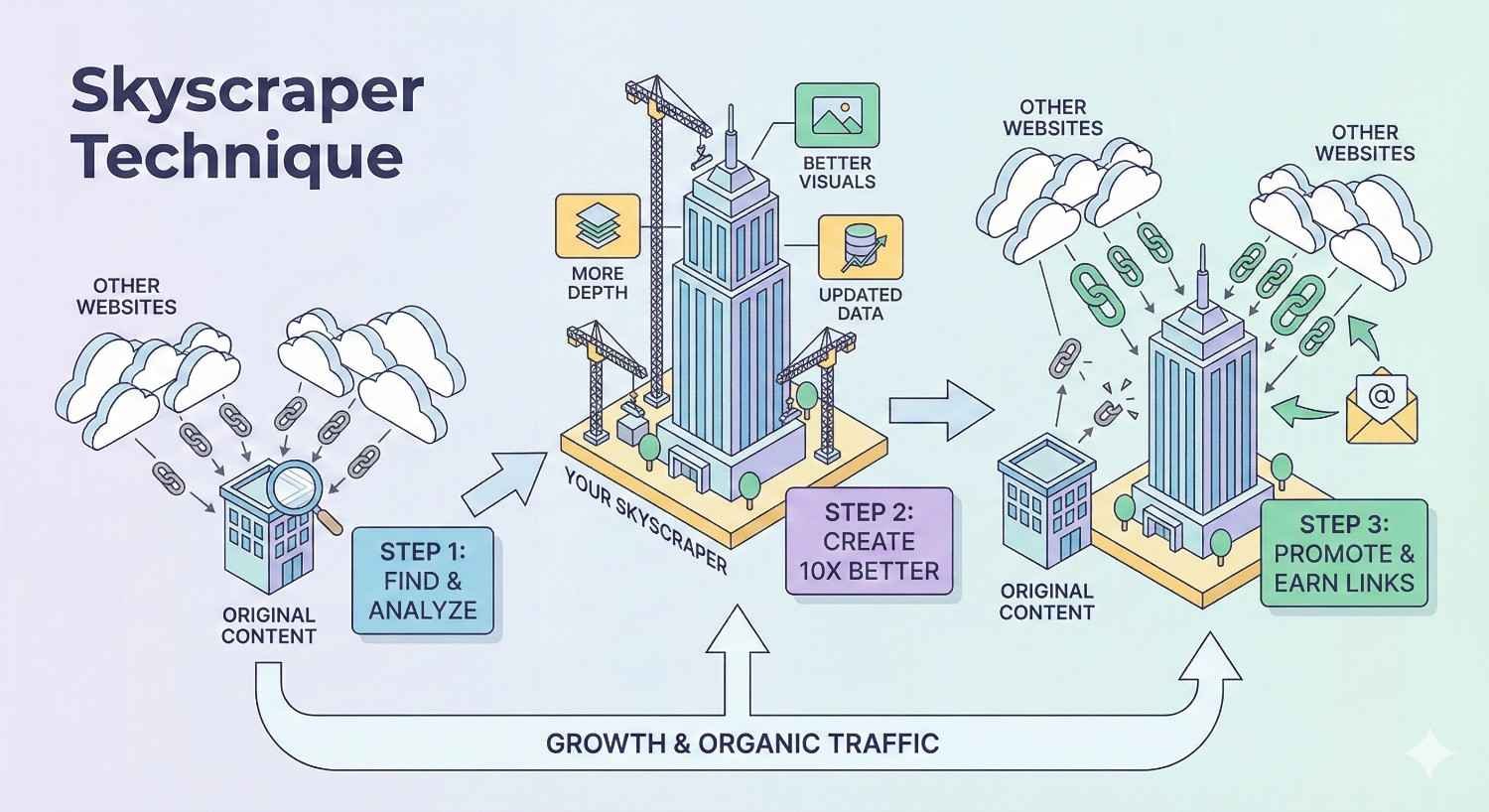
The skyscraper technique operates on a fundamental truth about link building: people link to content because it provides value. If you can create something more valuable than what currently exists, you have a compelling reason to ask for links.
The process follows three distinct phases. First, you identify content in your niche that has already attracted significant backlinks. This proves the topic has link-earning potential. Second, you create content that is objectively superior in depth, accuracy, design, or usefulness. Third, you contact websites linking to the inferior content and suggest they link to your improved version instead.
This approach differs from traditional link building because you’re not asking for favors. You’re offering genuine value. The site owner benefits from linking to better content, their readers get a superior resource, and you earn a high-quality backlink.
Why the Skyscraper Technique Works for Link Building
The skyscraper technique succeeds because it aligns incentives between content creators and link prospects. Website owners want to link to the best available resources. When you create demonstrably better content, you give them a legitimate reason to update their links.
Several psychological principles support this approach. Reciprocity plays a role when you genuinely help someone improve their content. Social proof matters because the original piece already has links, proving the topic resonates. Authority transfers when high-quality sites link to your comprehensive resource.
The technique also scales efficiently. Once you create exceptional content, you can reach out to dozens or hundreds of prospects using the same asset. Each successful link improves your domain authority, making future link building easier.
Skyscraper Technique vs. Traditional Link Building Methods
Traditional link building often relies on tactics like directory submissions, blog comments, forum links, or paid placements. These methods typically produce low-quality links that provide minimal ranking value and may even trigger penalties.
Guest posting remains popular but requires creating unique content for each placement. The skyscraper technique inverts this model. You create one exceptional piece and leverage it across multiple outreach campaigns.
Compared to digital PR, the skyscraper technique offers more predictable results. PR campaigns depend on news cycles and journalist interest. Skyscraper campaigns target existing link opportunities with proven demand.
The key advantage is sustainability. Content created for skyscraper campaigns continues attracting organic links long after outreach ends. High-quality resources earn natural backlinks as people discover and share them.
How the Skyscraper Technique Works: The 3-Step Framework
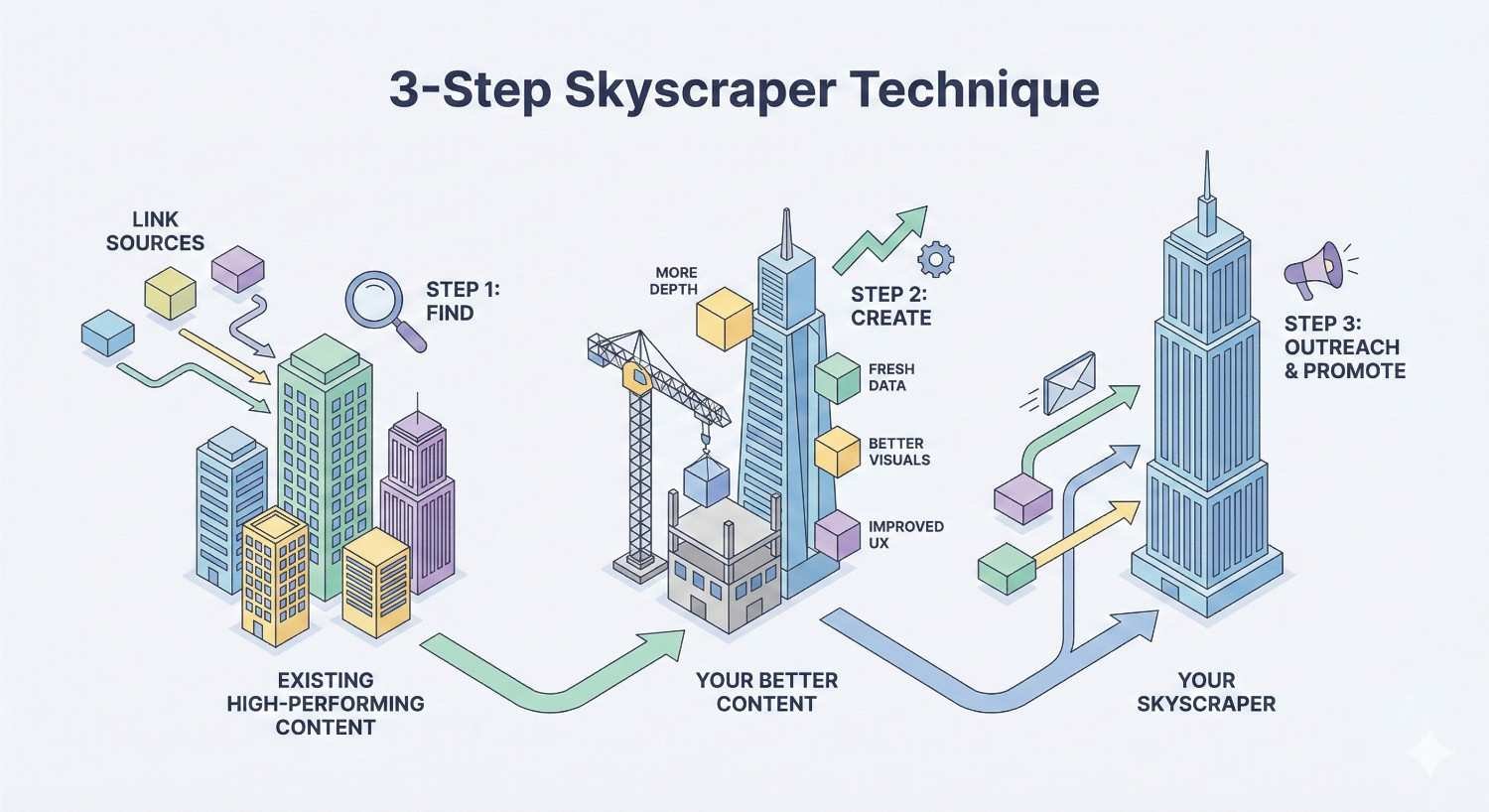
The skyscraper technique follows a systematic process that any team can execute. Success depends on thorough research, genuine content improvement, and strategic outreach. Each step builds on the previous one.
Step 1 – Find Link-Worthy Content in Your Niche
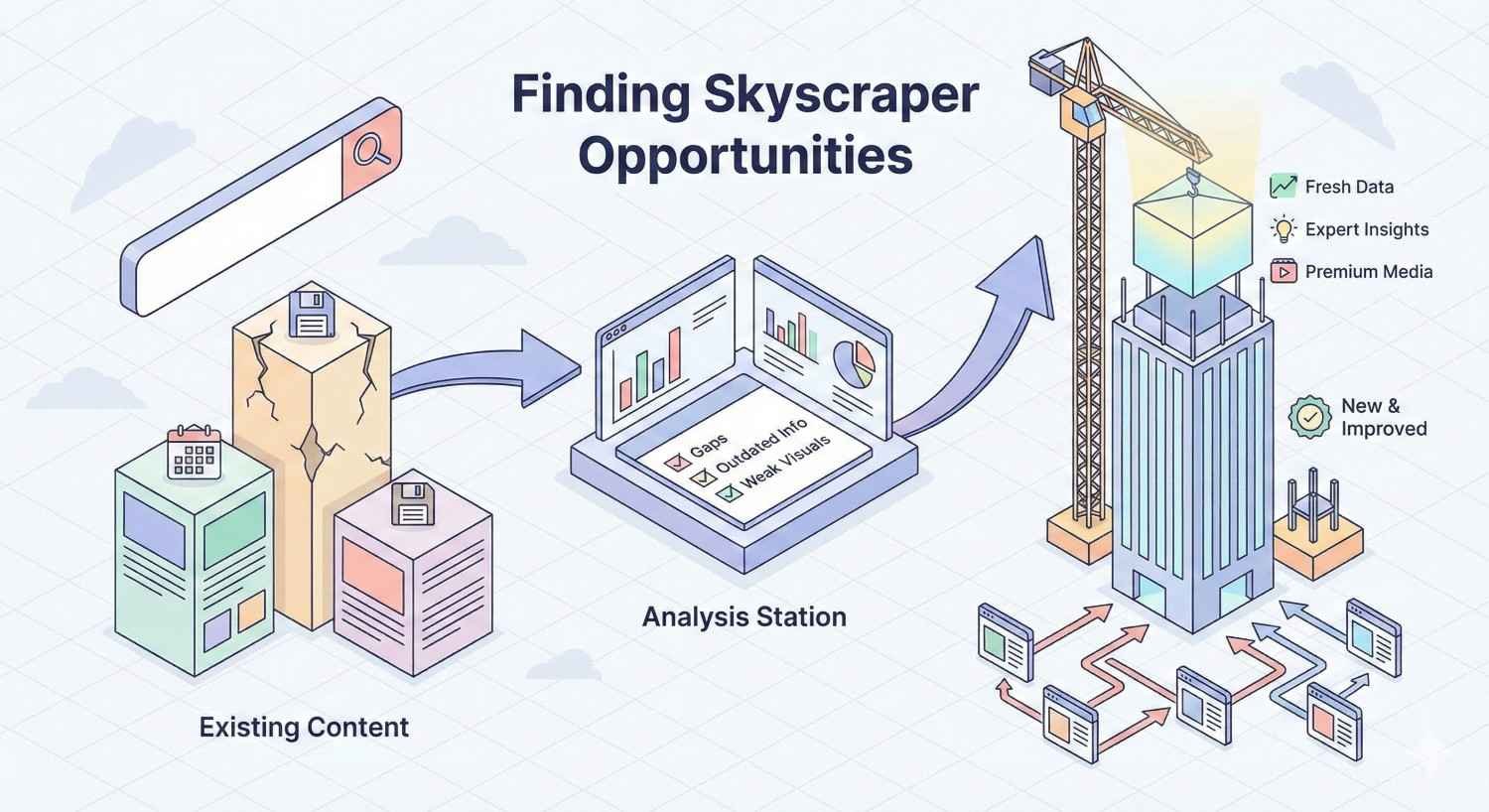
The foundation of any skyscraper campaign is identifying content that has already proven its ability to attract backlinks. You’re looking for topics where existing content has earned links but leaves room for improvement.
Identifying High-Performing Content with Backlink Potential
Start by analyzing content in your niche that has accumulated significant backlinks. Look for pieces with 50+ referring domains as a baseline, though this varies by industry. More competitive niches may require targeting content with 200+ referring domains.
Focus on evergreen topics rather than news-driven content. Guides, tutorials, statistics pages, and comprehensive resources tend to maintain link value over time. Avoid content tied to specific events or dates that will become irrelevant.
Evaluate whether you can realistically create something better. If the existing content is already exceptional and recently updated, the opportunity may not be worth pursuing. Look for content that is outdated, incomplete, poorly designed, or missing key information.
Tools for Finding Skyscraper Opportunities
Ahrefs Content Explorer is the primary tool for skyscraper research. Enter topic keywords and filter by referring domains to find high-link content. Sort by domain rating to identify opportunities on authoritative sites.
SEMrush offers similar functionality through its Backlink Analytics tool. The platform excels at competitive analysis, showing which content earns the most links for specific competitors.
BuzzSumo helps identify content with high social engagement, which often correlates with link potential. The tool shows which topics resonate with audiences and attract shares.
Google search operators provide free alternatives. Search for your topic plus “resources,” “links,” or “guide” to find curated lists and comprehensive content that typically attracts backlinks.
Evaluating Content Quality and Link Metrics
Not all high-link content makes a good skyscraper target. Assess the quality of existing backlinks, not just quantity. Links from high-authority, relevant sites matter more than hundreds of low-quality links.
Check the link velocity trend. Content with declining link acquisition may indicate waning interest in the topic. Conversely, content still earning links suggests ongoing demand.
Analyze the content itself for improvement opportunities. Common weaknesses include outdated statistics, missing sections, poor formatting, lack of visuals, thin explanations, and broken external links.
Step 2 – Create Something Demonstrably Better
Creating “better” content requires objective improvements that link prospects can immediately recognize. Marginal improvements won’t motivate site owners to update their links. You need to deliver substantial, visible value.
10 Ways to Make Your Content Objectively Superior
- Greater depth: Cover subtopics the original missed entirely.
- More current data: Replace outdated statistics with recent research.
- Better organization: Improve structure with clear headings and logical flow.
- Original research: Add proprietary data, surveys, or analysis.
- Expert contributions: Include quotes from recognized authorities.
- Visual assets: Create custom graphics, charts, and infographics.
- Practical examples: Provide real-world case studies and applications.
- Interactive elements: Add calculators, tools, or downloadable resources.
- Improved readability: Use clearer language and better formatting.
- Comprehensive coverage: Address every angle of the topic.
Adding Unique Data, Research, and Original Insights
Original research dramatically increases link potential. Content with unique data earns 94% more backlinks than content without original research, according to Backlinko’s analysis of 912 million blog posts.
Conduct surveys using tools like Typeform or SurveyMonkey. Even small sample sizes provide valuable data if the methodology is sound. Industry professionals appreciate fresh statistics they can cite.
Analyze publicly available data in new ways. Government databases, academic repositories, and industry reports contain raw information you can synthesize into original insights.
Document your own experiments and results. Case studies from real campaigns provide credibility and practical value that generic advice cannot match.
Improving Design, Usability, and User Experience
Visual presentation significantly impacts perceived content quality. Professional design signals authority and encourages linking. Poor design undermines even excellent information.
Invest in custom graphics rather than stock images. Original charts, diagrams, and infographics communicate complex information effectively and provide embeddable assets others want to share.
Optimize for mobile reading. Short paragraphs, clear headings, and adequate white space improve readability across devices. Most content consumption now happens on mobile.
Add navigation elements for long-form content. Table of contents, anchor links, and progress indicators help readers find specific information quickly.
Updating Outdated Information and Statistics
Outdated content represents the easiest skyscraper opportunity. When statistics reference years-old data, you can immediately improve by finding current numbers.
Check publication dates and last-updated timestamps on target content. Anything older than two years likely contains outdated information in fast-moving industries.
Verify all statistics in the original content. Broken source links, discontinued studies, and superseded research create opportunities for your updated version.
Commit to maintaining your content. Add a visible “last updated” date and schedule regular reviews. This ongoing freshness attracts links over time.
Step 3 – Reach Out to the Right People
Content quality determines link potential, but outreach execution determines actual results. Even exceptional content fails without effective promotion to the right prospects.
Building Your Link Prospect List
Export the backlink profile of your target content using Ahrefs, SEMrush, or Moz. This gives you a list of every site currently linking to the inferior content.
Filter prospects by relevance and authority. Prioritize sites in your industry with domain ratings above 30. Remove irrelevant sites, spam domains, and competitors.
Expand your list beyond direct backlinks. Search for sites that have linked to similar content or covered related topics. These prospects may be interested even without existing links to the target.
Aim for 100-300 prospects per campaign. Larger lists compensate for typical response rates of 5-15% for well-executed outreach.
Finding Contact Information for Outreach
Identify the right person to contact at each prospect site. Authors, editors, and content managers are more likely to respond than generic contact forms.
Hunter.io finds email addresses associated with specific domains. The tool verifies addresses and suggests the most likely contacts.
LinkedIn provides direct access to content creators. Connect with a personalized message explaining why you’re reaching out.
Check author bios and about pages for contact information. Many writers include email addresses or social profiles for reader communication.
Crafting Effective Skyscraper Outreach Emails
Effective outreach emails are brief, specific, and focused on value to the recipient. Avoid generic templates that read like mass emails.
Subject line: Reference their specific content. Example: “Quick question about your [topic] guide”
Opening: Compliment something specific about their site or content. Demonstrate you actually read their work.
Value proposition: Explain what makes your content better and why their readers would benefit. Be specific about improvements.
Ask: Request they consider linking to your resource. Make the action easy by providing the exact URL.
Signature: Include your name, title, and website. Professional signatures build credibility.
Follow-Up Strategies That Get Responses
Most responses come from follow-up emails, not initial outreach. Studies show that 80% of sales require five follow-ups, and link building follows similar patterns.
Send your first follow-up 3-5 days after the initial email. Keep it brief and reference your previous message.
Second follow-up at 7-10 days can take a different angle. Mention a specific section of their content where your resource would add value.
Third follow-up at 14 days should be your final attempt. Acknowledge you don’t want to bother them and offer to answer any questions.
Stop after three follow-ups. Continued emails damage your reputation and may trigger spam complaints.
Finding Skyscraper Opportunities: Research and Analysis
Systematic research separates successful skyscraper campaigns from wasted effort. The right tools and techniques reveal opportunities your competitors miss.
Using Ahrefs Content Explorer for Skyscraper Research
Ahrefs Content Explorer indexes over 11 billion pages, making it the most comprehensive tool for finding link-worthy content. Enter broad topic keywords to discover high-performing content.
Filter results by referring domains to find content with proven link attraction. Set minimum thresholds based on your niche competitiveness. Start with 50 referring domains and adjust based on results.
Use the “One article per domain” filter to avoid seeing multiple pages from the same site. This broadens your opportunity discovery.
Check the “Highlight unlinked domains” feature to identify sites that link to competitors but not to you. These represent warm prospects for outreach.
Using SEMrush and Moz for Link Gap Analysis
Link gap analysis reveals sites linking to competitors but not to you. These prospects have demonstrated interest in your topic and willingness to link.
In SEMrush, use the Backlink Gap tool to compare your domain against up to four competitors. The tool identifies referring domains unique to each competitor.
Moz’s Link Intersect tool provides similar functionality. Enter competitor URLs to find sites linking to multiple competitors, indicating high relevance to your topic.
Prioritize prospects appearing in multiple competitor profiles. These sites actively cover your topic and represent the highest-probability link opportunities.
Analyzing Competitor Backlink Profiles
Deep competitor analysis reveals their most successful link-earning content. Study what works for others before investing in content creation.
Export complete backlink profiles for top competitors. Analyze which pages attract the most links and identify common characteristics.
Look for patterns in linking domains. Certain site types may consistently link to specific content formats. Resource pages, industry blogs, and educational sites often have different preferences.
Note anchor text distribution. Understanding how others describe similar content helps you optimize your own page titles and descriptions.
Identifying Content with Declining Performance
Content with declining link velocity represents prime skyscraper targets. The topic has proven demand, but the existing resource no longer satisfies searchers.
Use Ahrefs to view referring domain trends over time. Content losing links indicates quality degradation or outdated information.
Check Google Trends for topic interest. Declining search interest may explain reduced link acquisition, making the opportunity less attractive.
Analyze SERP changes for target keywords. If newer content is outranking older high-link content, the market is ready for an improved resource.
Creating Your Skyscraper Content: Best Practices
Content quality determines campaign success. Invest heavily in creation before spending time on outreach. Mediocre content wastes outreach effort.
Content Formats That Attract the Most Links
Certain content formats consistently outperform others for link acquisition. Choose formats aligned with your topic and audience expectations.
Ultimate Guides and Comprehensive Resources
Ultimate guides work because they become reference resources. When someone needs information on a topic, they link to the most comprehensive source.
Structure guides with clear navigation and logical progression. Start with fundamentals and advance to complex topics. Include everything a reader needs in one place.
Length matters for guides. Long-form content averaging 3,000+ words earns 77% more backlinks than shorter articles, according to Backlinko research.
Original Research and Data Studies
Original research earns links because it provides citable information unavailable elsewhere. Journalists, bloggers, and content creators need data to support their claims.
Survey-based research scales efficiently. Tools like Typeform, Google Forms, and SurveyMonkey enable data collection from targeted audiences.
Data analysis studies synthesize existing information into new insights. Combine multiple sources to reveal trends or patterns others haven’t identified.
Annual studies create recurring link opportunities. Update your research yearly to maintain relevance and attract fresh links.
Visual Assets (Infographics, Charts, Interactive Tools)
Visual content earns links through embeds and shares. Well-designed graphics communicate complex information quickly and attract attention.
Infographics remain effective when they present genuinely useful information. Avoid generic designs with obvious statistics. Focus on original data or unique perspectives.
Interactive tools provide ongoing value. Calculators, assessments, and configurators attract links because they offer functionality beyond static content.
Charts and graphs from original research become cited sources. Make visuals easy to embed with provided code snippets.
Expert Roundups and Curated Lists
Expert roundups leverage others’ audiences for promotion. Contributors typically share and link to content featuring their insights.
Curated resource lists become reference pages. Comprehensive lists of tools, examples, or resources attract links from people seeking recommendations.
Keep roundups focused on specific questions rather than generic topics. Specific angles produce more interesting and linkable responses.
Making Your Content 10x Better Than the Competition
The “10x content” concept means creating something dramatically better, not marginally improved. Incremental improvements don’t motivate link changes.
Audit competing content systematically. List every section, statistic, example, and visual. Identify gaps and weaknesses in each area.
Exceed competitors in multiple dimensions simultaneously. Better depth plus better design plus better data creates an obviously superior resource.
Test your content against the competition. Show both pieces to colleagues or industry contacts. If they can’t immediately identify yours as better, keep improving.
Adding Unique Value: Data, Examples, and Case Studies
Unique value differentiates your content from everything else available. Generic information exists everywhere. Original insights earn links.
Conduct original research even at small scale. A survey of 100 industry professionals provides citable data unavailable elsewhere.
Document real case studies with specific numbers. Vague success stories lack credibility. Concrete results with metrics demonstrate expertise.
Include proprietary frameworks or methodologies. Original approaches to common problems position you as a thought leader worth citing.
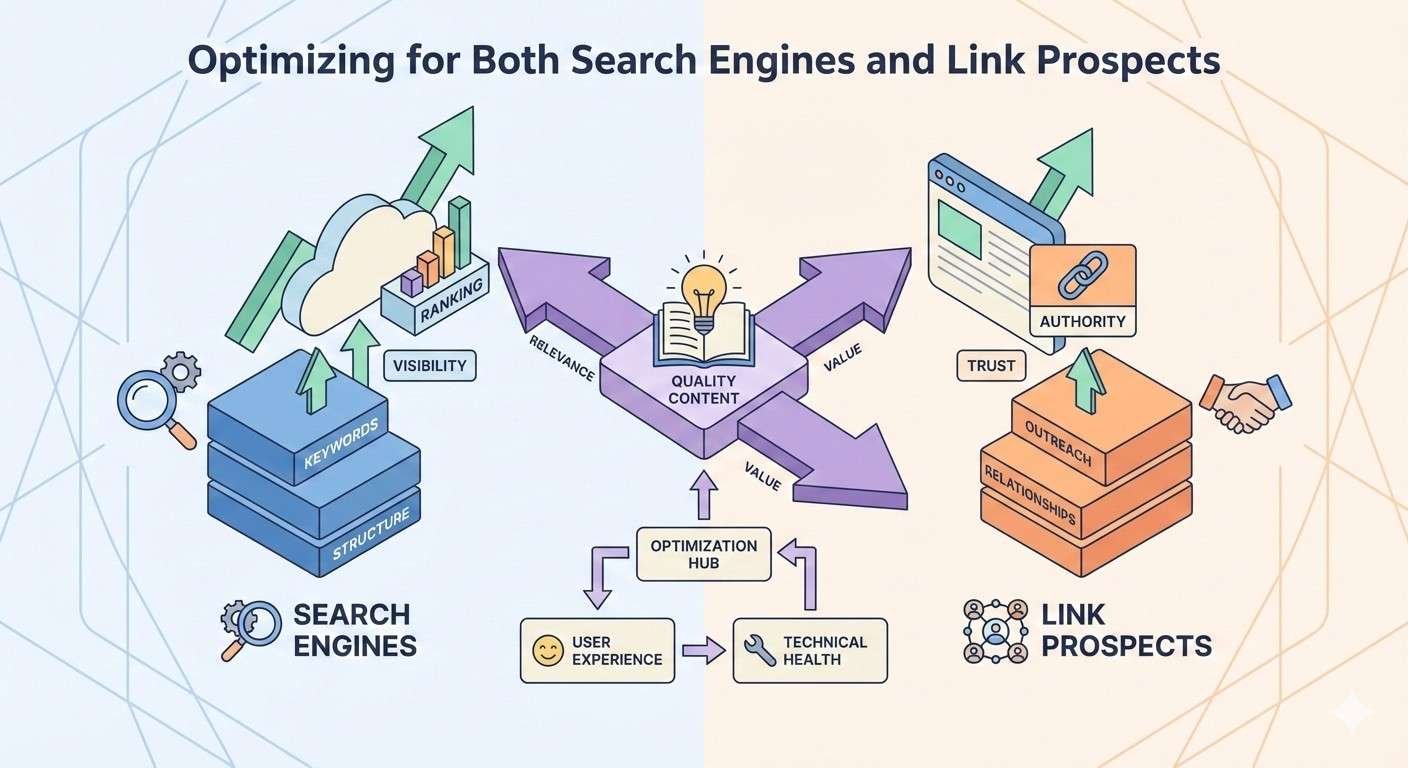
Optimizing for Both Search Engines and Link Prospects
Skyscraper content must satisfy two audiences: search engines for organic visibility and humans for link acquisition. Balance technical optimization with readability.
Target keywords with search volume and link potential. Some topics attract searches but not links. Others earn links but lack search demand. Find overlap.
Structure content for featured snippets. Clear definitions, numbered lists, and direct answers increase SERP visibility and click-through rates.
Optimize page speed and mobile experience. Technical issues reduce both rankings and link likelihood. Nobody links to slow, broken pages.
Design and Formatting for Maximum Shareability
Professional presentation signals content quality before anyone reads a word. Design creates first impressions that influence linking decisions.
Use consistent visual branding throughout. Custom graphics, branded colors, and professional typography demonstrate investment in quality.
Break content into scannable sections. Headers, bullet points, and short paragraphs help readers find specific information quickly.
Include social sharing buttons and embed codes. Make sharing and linking as easy as possible. Remove friction from the process.
Skyscraper Outreach Strategy: Getting Links at Scale
Outreach execution determines whether great content earns links or sits unnoticed. Systematic processes enable consistent results across campaigns.
Building a Targeted Outreach List
List quality matters more than list size. Targeted prospects with genuine interest convert at higher rates than mass outreach to irrelevant sites.
Identifying Who Links to Inferior Content
Start with sites already linking to your target content. These prospects have demonstrated interest in the topic and willingness to link.
Export backlinks from Ahrefs, SEMrush, or Moz. Clean the list by removing duplicates, spam domains, and irrelevant sites.
Verify each prospect manually. Check that the linking page still exists and the link remains active. Outdated data wastes outreach effort.
Prioritizing High-Authority Link Prospects
Not all links provide equal value. Prioritize prospects based on domain authority, relevance, and likelihood of response.
Focus on sites with domain ratings above 30 for meaningful SEO impact. Lower-authority sites may still provide value for traffic and brand exposure.
Relevance trumps raw authority. A DR 40 site in your exact niche provides more value than a DR 70 site in an unrelated industry.
Consider response likelihood. Smaller sites with active blogs often respond faster than large publications with formal editorial processes.
Segmenting Your Outreach List by Relevance
Segment prospects to enable personalized outreach at scale. Different prospect types require different messaging approaches.
Group by site type: blogs, resource pages, news sites, educational institutions. Each category has different linking motivations.
Segment by content context. Prospects linking from resource lists need different pitches than those linking from article body text.
Prioritize segments by expected conversion rate. Resource page links often convert higher than editorial mentions.
Email Outreach Templates That Convert
Templates provide structure while allowing personalization. Never send identical emails to multiple prospects. Customize each message.
The Initial Outreach Email Formula
Subject: Reference their specific content or site. Avoid generic subjects like “Link request” or “Collaboration opportunity.”
Line 1: Personalized compliment demonstrating you know their work. Mention a specific article, insight, or achievement.
Line 2-3: Introduce your content and explain why it’s relevant to their audience. Focus on value to their readers.
Line 4: Specific ask with clear action. Provide the exact URL and suggest where it might fit.
Line 5: Brief sign-off with your credentials. Keep it professional but not formal.
Example:
Subject: Loved your guide on content marketing tools
Hi [Name],
Your breakdown of content marketing tools helped me discover [specific tool]. The comparison table was especially useful.
I noticed you linked to [competitor resource] in your tools section. We just published an updated guide covering [specific improvements] that your readers might find valuable.
Would you consider adding it as a resource? Here’s the link: [URL]
Thanks for the great content, [Your name]
Follow-Up Email Sequences
Follow-ups should add value, not just repeat the ask. Each message needs a reason to exist beyond “checking in.”
Follow-up 1 (Day 3-5): Brief reminder with a new angle. Mention a specific section of your content relevant to their audience.
Follow-up 2 (Day 7-10): Offer additional value. Share a related resource, answer a question from their content, or provide a useful insight.
Follow-up 3 (Day 14): Final attempt with graceful exit. Acknowledge their busy schedule and leave the door open for future contact.
Personalization Tactics That Increase Response Rates
Personalization demonstrates genuine interest and separates your email from spam. Generic outreach gets ignored.
Reference specific content from their site. Quote a sentence, mention a unique insight, or comment on their perspective.
Connect your content to their recent work. If they published something related, explain how your resource complements their coverage.
Use their name correctly. Verify spelling and avoid assumptions about gender or titles. Small errors signal mass outreach.
Mention mutual connections or shared experiences. Industry events, common contacts, or similar backgrounds create rapport.
Outreach Tools and Automation
Tools increase efficiency without sacrificing personalization. Automation handles repetitive tasks while you focus on relationship building.
Pitchbox combines prospecting, outreach, and follow-up management. The platform integrates with SEO tools for streamlined workflows.
BuzzStream tracks relationships and outreach history. The tool prevents duplicate contacts and manages team collaboration.
Hunter.io finds and verifies email addresses. Accurate contact information improves deliverability and response rates.
Mailshake automates follow-up sequences while allowing personalization. The tool tracks opens, clicks, and replies.
Tracking Outreach Performance and Response Rates
Measurement enables optimization. Track key metrics to identify what works and improve future campaigns.
Monitor open rates to evaluate subject lines. Rates below 20% indicate subject line problems or deliverability issues.
Track response rates by template, prospect segment, and follow-up sequence. Identify patterns in successful outreach.
Calculate conversion rate from response to link. Not every positive response results in a link. Understand your full funnel.
Document learnings for future campaigns. Build a knowledge base of effective approaches and common objections.
Handling Objections and Negative Responses
Not every response will be positive. Professional handling of objections maintains relationships and sometimes converts skeptics.
“We don’t accept link requests”: Thank them for responding and ask if they’d consider your content for future reference.
“Your content isn’t relevant”: Ask for specific feedback on what would make it more useful. This information improves future content.
“We require payment for links”: Politely decline. Paid links violate Google guidelines and provide diminishing value.
No response after follow-ups: Move on. Some prospects will never respond regardless of content quality or outreach approach.
Skyscraper Technique Success Metrics and KPIs
Measurement proves ROI and guides optimization. Track metrics across the entire campaign lifecycle from content creation through ranking improvements.
Measuring Link Acquisition Success
Link quantity provides the most direct measure of campaign success. Track new referring domains acquired through outreach efforts.
Set realistic targets based on list size and historical conversion rates. A 5-15% conversion rate from outreach to link is typical for well-executed campaigns.
Monitor link velocity over time. Successful skyscraper content continues earning organic links after outreach ends.
Track links by quality tier. Separate high-authority links from lower-value acquisitions to understand true impact.
Tracking Domain Authority and Link Quality
Not all links provide equal value. Quality metrics help evaluate the true impact of acquired links.
Monitor domain rating or domain authority changes. Significant link acquisition should produce measurable authority improvements within 2-3 months.
Evaluate individual link quality using metrics like referring domain authority, relevance, and link placement. Editorial links within content provide more value than footer or sidebar links.
Check for link persistence. Some sites remove links over time. Monitor your backlink profile for lost links requiring replacement.
Monitoring Rankings and Organic Traffic Growth
Links should produce ranking improvements for target keywords. Track position changes for primary and secondary keywords.
Expect ranking movement within 4-8 weeks of significant link acquisition. Competitive keywords may require longer timeframes.
Monitor organic traffic to skyscraper content. Increased rankings should produce corresponding traffic growth.
Track conversions from organic traffic. Ultimate success means business results, not just rankings and traffic.
Calculating ROI on Skyscraper Campaigns
ROI calculation requires tracking all costs against measurable benefits. Include both direct and indirect campaign costs.
Direct costs: Content creation, design, tools, and outreach labor. Track hours invested and any external spending.
Benefits: Value of acquired links, traffic generated, and conversions produced. Assign dollar values based on your business model.
Compare skyscraper ROI against alternative link building methods. The technique typically provides strong returns due to content reusability and ongoing organic link acquisition.
Common Skyscraper Technique Mistakes (And How to Avoid Them)
Most skyscraper campaigns fail due to avoidable errors. Understanding common mistakes helps you achieve better results.
Creating Content That Isn’t Actually Better
The most common failure is creating content that isn’t demonstrably superior. Marginal improvements don’t motivate link changes.
Solution: Get objective feedback before launching outreach. Show your content alongside competitors to neutral parties. If they can’t immediately identify yours as better, keep improving.
Avoid the trap of “longer equals better.” Length without substance wastes reader time. Focus on value density, not word count.
Targeting the Wrong Link Prospects
Outreach to irrelevant or low-quality prospects wastes time and damages response rates. Poor targeting produces poor results.
Solution: Invest more time in prospect qualification. Verify relevance, authority, and likelihood of response before adding anyone to your list.
Avoid competitors, spam sites, and irrelevant domains. Quality over quantity applies to prospect lists.
Generic or Poorly Written Outreach Emails
Template-sounding emails get ignored or marked as spam. Recipients recognize mass outreach immediately.
Solution: Personalize every email with specific references to the recipient’s work. Demonstrate genuine familiarity with their content.
Keep emails brief and focused. Long pitches don’t get read. Respect recipients’ time with concise, valuable messages.
Giving Up Too Early on Follow-Ups
Most responses come from follow-up emails, not initial outreach. Stopping after one email leaves results on the table.
Solution: Plan a systematic follow-up sequence before starting outreach. Send 2-3 follow-ups spaced appropriately.
Add value in follow-ups rather than just repeating the ask. Each message should provide a reason to respond.
Ignoring Relationship Building
Transactional outreach produces transactional results. Building genuine relationships creates ongoing link opportunities.
Solution: Engage with prospects before asking for links. Comment on their content, share their work, and provide value first.
Maintain relationships after link acquisition. Thank contributors, share their content, and look for ways to help them.
Advanced Skyscraper Technique Variations
The basic skyscraper framework adapts to various situations and goals. Advanced variations address specific challenges and opportunities.
The Reverse Skyscraper Technique
Reverse skyscraper targets content that used to perform well but has declined. You’re replacing outdated resources rather than competing with current leaders.
Identify content with high historical link counts but declining traffic and rankings. These pages often contain outdated information that site owners want to replace.
Outreach emphasizes helping prospects update their links to current resources. Position yourself as solving a problem they may not have noticed.
Skyscraper Technique for Local SEO
Local skyscraper targets location-specific content and link opportunities. The approach works for businesses serving geographic markets.
Create the definitive local resource on relevant topics. “Best [service] in [city]” guides, local industry statistics, and community resources attract local links.
Target local blogs, news sites, chambers of commerce, and community organizations. These prospects have strong local relevance and often link to helpful resources.
Combining Skyscraper with Digital PR
Digital PR amplifies skyscraper content through journalist outreach and news coverage. The combination produces both links and brand exposure.
Create skyscraper content with newsworthy angles. Original research, surprising findings, and timely topics attract journalist interest.
Pitch journalists separately from standard link outreach. Media contacts require different approaches and messaging.
Using Skyscraper for Broken Link Building
Broken link building and skyscraper technique combine powerfully. You’re offering replacement content for dead links, providing clear value to site owners.
Identify broken links pointing to content similar to your skyscraper piece. Tools like Ahrefs show broken backlinks to any domain.
Outreach mentions the broken link specifically and offers your content as a replacement. This approach often converts higher than standard skyscraper outreach.
Skyscraper Technique Case Studies and Results
Real-world examples demonstrate what’s possible with proper execution. These case studies show typical results and timelines.
Brian Dean’s Original Skyscraper Success Story
Brian Dean’s original skyscraper campaign targeted a post about Google ranking factors. He created a more comprehensive version with 200+ factors compared to competitors’ shorter lists.
The campaign generated 17 new referring domains from a single outreach effort. More importantly, the content continued earning organic links, eventually accumulating hundreds of backlinks.
This case study established the technique’s viability and inspired thousands of subsequent campaigns across industries.
B2B SaaS Skyscraper Campaign Results
A B2B SaaS company created a comprehensive guide to their industry’s key metric. The 5,000-word resource included original survey data from 150 professionals.
Outreach to 200 prospects produced 23 new backlinks from relevant industry sites. The content ranked on page one within 3 months and generated 400+ monthly organic visits.
ROI calculation showed the campaign cost approximately $3,000 in labor and produced links valued at $15,000+ based on comparable paid placement costs.
E-commerce Link Building with Skyscraper
An e-commerce brand created the definitive buying guide for their product category. The resource included comparison tables, expert reviews, and original photography.
The guide attracted 45 backlinks through outreach and earned an additional 30+ organic links over the following year. Rankings for commercial keywords improved significantly.
The content also drove direct conversions, generating measurable revenue beyond SEO benefits.
Agency Client Case Studies and Link Velocity
Agency campaigns across multiple clients show consistent patterns. Well-executed skyscraper campaigns typically produce 10-50 links per content piece.
Link velocity varies by niche competitiveness and content quality. B2B topics often convert higher than consumer topics due to smaller, more engaged communities.
Campaigns targeting content with 100+ existing backlinks generally outperform those targeting lower-link content. Proven demand indicates ongoing link potential.
Tools and Resources for Skyscraper Link Building
The right tools dramatically improve efficiency and results. Invest in quality tools that match your campaign volume and complexity.
Backlink Analysis Tools
Ahrefs provides the most comprehensive backlink database with 35 trillion+ links indexed. Essential for finding skyscraper opportunities and building prospect lists.
SEMrush offers competitive backlink analysis and link gap identification. The platform integrates with other SEO workflows.
Moz Link Explorer provides domain authority metrics and link analysis. The tool offers a free tier for basic research.
Content Research and Ideation Tools
BuzzSumo identifies high-performing content by social shares and backlinks. The tool reveals what resonates in your niche.
Exploding Topics surfaces trending topics before they peak. Early coverage of emerging subjects attracts links from followers.
AnswerThePublic visualizes questions people ask about topics. These questions inform content structure and coverage.
Outreach and Email Tools
Pitchbox provides end-to-end outreach management from prospecting through follow-up. The platform scales for high-volume campaigns.
Hunter.io finds and verifies email addresses. Accurate contact information improves deliverability.
Mailshake automates email sequences while enabling personalization. The tool tracks engagement metrics.
Content Creation and Design Resources
Canva enables non-designers to create professional graphics. Templates and drag-and-drop tools simplify visual content creation.
Figma provides professional design capabilities for custom graphics and infographics. The tool supports collaboration with designers.
Grammarly improves writing quality and catches errors. Clean, professional writing signals content quality.
How Long Does the Skyscraper Technique Take to Work?
Realistic timeline expectations help you plan resources and set appropriate goals. Skyscraper campaigns require patience and sustained effort.
Realistic Timeline for Content Creation
Quality skyscraper content requires significant investment. Expect 2-4 weeks for research, writing, design, and review.
Original research adds time. Surveys require participant recruitment and data analysis. Budget 4-6 weeks for research-based content.
Design and formatting take longer than most expect. Professional visuals require iteration and refinement. Allow adequate time for quality execution.
Expected Outreach Response Rates and Timeframes
Initial responses typically arrive within 3-7 days of outreach. Follow-up sequences extend the response window to 2-3 weeks.
Expect 5-15% response rates for well-targeted, personalized outreach. Lower rates indicate targeting or messaging problems.
Link placement after positive response varies. Some sites update immediately. Others require editorial review taking 2-4 weeks.
When to Expect Ranking Improvements
Google processes new backlinks over 4-8 weeks typically. Ranking improvements follow link acquisition with some delay.
Competitive keywords require more links and longer timeframes. Expect 3-6 months for significant movement on difficult terms.
Monitor rankings weekly to identify trends. Gradual improvement indicates the campaign is working even before reaching target positions.
Long-Term Link Velocity and Compound Growth
Successful skyscraper content continues earning links organically. High-quality resources attract natural backlinks as people discover them.
Compound growth occurs as rankings improve. Higher visibility produces more organic links, which further improve rankings.
Plan for content maintenance. Regular updates preserve relevance and link-earning potential over time.
Skyscraper Technique Cost and Resource Requirements
Understanding true costs enables accurate ROI calculation and resource planning. Skyscraper campaigns require meaningful investment.
In-House vs. Agency vs. Freelancer Costs
In-house execution requires staff time for research, content creation, and outreach. Fully-loaded costs typically range $2,000-$5,000 per campaign.
Agency campaigns cost $3,000-$10,000+ depending on scope and agency tier. Agencies provide expertise and established processes.
Freelancer combinations offer flexibility. Content writers, designers, and outreach specialists can be assembled for $1,500-$4,000 per campaign.
Tool and Software Investment
Essential tools cost $200-$500 monthly for serious link building. Ahrefs or SEMrush alone runs $100-$200 monthly.
Outreach tools add $50-$200 monthly depending on volume and features. Email finding tools cost $50-$100 monthly.
Design tools range from free (Canva) to $15-$50 monthly for professional options. Budget based on visual content needs.
Time Investment per Campaign
A complete skyscraper campaign requires 40-80 hours of work across all phases. Content creation consumes the largest portion.
Research: 5-10 hours for opportunity identification and competitive analysis.
Content creation: 20-40 hours for writing, design, and review.
Outreach: 15-30 hours for list building, email writing, and follow-up management.
Scaling Skyscraper Campaigns Efficiently
Efficiency improves with experience and systems. Document processes and create templates for repeatable execution.
Batch similar tasks together. Research multiple opportunities before starting content creation. Write all outreach emails before sending.
Consider specialization. Dedicated researchers, writers, and outreach specialists often outperform generalists handling all tasks.
Is the Skyscraper Technique Still Effective in 2024?
The skyscraper technique has evolved since 2013 but remains effective when properly executed. Understanding current conditions helps you adapt.
Evolution of the Skyscraper Technique
Early skyscraper campaigns faced less competition. Simply creating longer content often succeeded. Today’s environment requires genuine quality differentiation.
Outreach sophistication has increased. Recipients receive more pitches and have higher standards. Personalization and value proposition matter more than ever.
Content expectations have risen. “Better” now means original research, expert contributions, and professional design, not just more words.
Current Success Rates and Industry Benchmarks
Well-executed campaigns still produce 5-15% conversion rates from outreach to links. Poor campaigns may see rates below 1%.
Quality content with original research outperforms generic guides. Data-driven content earns significantly more backlinks than opinion-based content.
Niche matters significantly. B2B and professional topics often convert higher than consumer topics due to smaller, more engaged communities.
Adapting Skyscraper for Modern Link Building
Modern skyscraper success requires differentiation beyond length. Focus on unique value that competitors cannot easily replicate.
Original research provides defensible differentiation. Proprietary data, surveys, and analysis create content others must cite.
Expert contributions add credibility and promotion potential. Industry authorities sharing your content expands reach significantly.
Combining Skyscraper with Other Link Building Strategies
Skyscraper works best as part of a diversified link building strategy. Combine with other approaches for comprehensive authority building.
Digital PR amplifies skyscraper content through journalist coverage. Newsworthy angles attract media links alongside standard outreach.
Guest posting builds relationships that support future skyscraper outreach. Contributors become warm prospects for link requests.
Broken link building identifies additional opportunities for skyscraper content. Dead links represent immediate replacement opportunities.
Alternatives to the Skyscraper Technique
Skyscraper isn’t the only effective link building approach. Understanding alternatives helps you choose the right strategy for each situation.
Digital PR and Journalist Outreach
Digital PR earns links through news coverage and journalist relationships. The approach produces high-authority links from major publications.
Success requires newsworthy content and media relationships. Original research, surprising findings, and timely topics attract journalist interest.
PR links often come from higher-authority sites than standard outreach. Major publications provide significant ranking value.
Resource Page Link Building
Resource pages curate links on specific topics. Getting included provides relevant, contextual backlinks.
Find resource pages using search operators like “keyword + resources” or “keyword + useful links.” Many niches have dedicated resource compilations.
Outreach is straightforward. Suggest your content as an addition to their existing list. Conversion rates often exceed standard outreach.
Guest Posting and Content Partnerships
Guest posting provides links through contributed content on other sites. The approach builds relationships alongside backlinks.
Focus on quality publications in your niche. Low-quality guest post farms provide minimal value and may trigger penalties.
Content partnerships involve ongoing collaboration rather than one-time posts. Deeper relationships produce better link opportunities.
Unlinked Brand Mentions and Link Reclamation
Unlinked mentions are references to your brand without hyperlinks. Converting these to links requires minimal effort since awareness already exists.
Use tools like Ahrefs or Google Alerts to find brand mentions. Reach out requesting link addition to existing references.
Link reclamation recovers lost backlinks. Monitor your profile for removed links and contact sites to restore them.
Getting Started with Skyscraper Link Building
Starting your first skyscraper campaign requires systematic preparation. Follow this framework to maximize success probability.
Your First Skyscraper Campaign: Step-by-Step Checklist
Week 1-2: Research
- Identify 5-10 potential skyscraper targets
- Analyze backlink profiles for each target
- Evaluate improvement opportunities
- Select final target based on potential and feasibility
Week 3-4: Content Creation
- Outline comprehensive content structure
- Write initial draft with all sections
- Add original data, examples, and visuals
- Review and refine for quality
Week 5-6: Outreach Preparation
- Build prospect list of 100-200 targets
- Find contact information for each prospect
- Write personalized outreach templates
- Set up tracking and follow-up sequences
Week 7-8: Outreach Execution
- Send initial outreach emails
- Execute follow-up sequences
- Track responses and conversions
- Document learnings for future campaigns
Setting Realistic Goals and Expectations
First campaigns typically underperform experienced execution. Expect learning curve challenges and plan accordingly.
Target 10-20 links from your first campaign. This represents realistic success for well-executed efforts.
Allow 2-3 months for full campaign completion. Rushing produces poor results. Quality requires time.
Plan for iteration. Your second campaign will outperform your first as you apply learnings and refine processes.
When to Handle Skyscraper In-House vs. Outsource
Handle in-house when:
- You have content creation capabilities
- Staff time is available for outreach
- You want to build internal expertise
- Budget constraints limit agency options
Outsource when:
- You lack content creation resources
- Speed matters more than cost
- You need proven expertise immediately
- Scale requirements exceed internal capacity
How Our Agency Implements Skyscraper Campaigns
Our team at White Label SEO Service executes skyscraper campaigns through a proven methodology refined across hundreds of client engagements.
We begin with comprehensive opportunity analysis, identifying targets with maximum link potential and realistic improvement paths. Our content team creates genuinely superior resources with original research, expert contributions, and professional design.
Outreach specialists execute personalized campaigns at scale, maintaining quality while achieving volume. We track every metric and optimize continuously based on performance data.
Conclusion
The skyscraper technique remains one of the most effective approaches for earning high-authority backlinks when executed properly. Success requires genuine content improvement, targeted prospect identification, and personalized outreach that provides clear value to recipients.
Building sustainable organic growth through link acquisition demands expertise across content strategy, competitive analysis, and relationship-based outreach. The investment pays dividends through improved rankings, increased traffic, and compounding authority over time.
We help businesses implement proven link building strategies that deliver measurable results. Contact White Label SEO Service to discuss how our team can accelerate your authority building through systematic skyscraper campaigns and comprehensive SEO support.
Frequently Asked Questions
How many backlinks can I expect from a skyscraper campaign?
Well-executed skyscraper campaigns typically generate 10-50 backlinks from a single piece of content. Results vary based on content quality, niche competitiveness, and outreach execution. Original research and comprehensive resources tend to outperform generic guides.
What’s the typical response rate for skyscraper outreach?
Expect 5-15% response rates for personalized, well-targeted outreach. Generic templates and poor targeting produce rates below 1%. Follow-up sequences significantly improve overall response rates, with most conversions coming from second or third emails.
How long does it take to see ranking improvements from skyscraper links?
Ranking improvements typically appear within 4-8 weeks of significant link acquisition. Competitive keywords may require 3-6 months for meaningful movement. Monitor weekly to identify trends and validate campaign effectiveness.
Is the skyscraper technique still effective in 2024?
Yes, the skyscraper technique remains effective when properly executed. Modern success requires genuine differentiation through original research, expert contributions, and professional design. Simply creating longer content no longer suffices in competitive niches.
How much does a skyscraper campaign cost?
Complete campaigns typically cost $2,000-$10,000 depending on execution approach. In-house execution requires 40-80 hours of staff time. Agency campaigns provide expertise and established processes at premium pricing. Tool subscriptions add $200-$500 monthly.
What tools do I need for skyscraper link building?
Essential tools include backlink analysis software like Ahrefs or SEMrush ($100-$200 monthly), email finding tools like Hunter.io ($50-$100 monthly), and outreach management platforms like Pitchbox or BuzzStream ($50-$200 monthly). Design tools like Canva support visual content creation.
Can I combine skyscraper with other link building strategies?
Absolutely. Skyscraper works best as part of a diversified approach. Combine with digital PR for journalist coverage, broken link building for replacement opportunities, and guest posting for relationship development. Multiple strategies compound authority building effects.