
Niche edit link building places your backlinks inside existing, indexed content that already holds authority and trust with search engines. This approach bypasses the months-long wait for new pages to gain traction, delivering link equity from day one.
For business owners and marketing teams focused on sustainable organic growth, niche edits represent one of the most efficient paths to improved rankings. The strategy works because you’re leveraging established content rather than starting from zero.
This guide covers everything you need to execute niche edit campaigns effectively: finding opportunities, evaluating quality, managing costs, staying within acceptable risk parameters, and measuring real business impact.
What Are Niche Edits?
Niche edits, also called curated links or link insertions, involve adding your backlink to an already-published article on another website. Unlike creating new content from scratch, this method taps into pages that Google has already crawled, indexed, and assigned authority signals to.
The concept is straightforward. You identify relevant content in your industry, reach out to the site owner, and negotiate adding your link within the existing text. The link appears naturally within context that’s already performing in search results.
This differs fundamentally from traditional link building where you create something new and hope it gains traction. With niche edits, the heavy lifting of content creation and authority building has already happened.
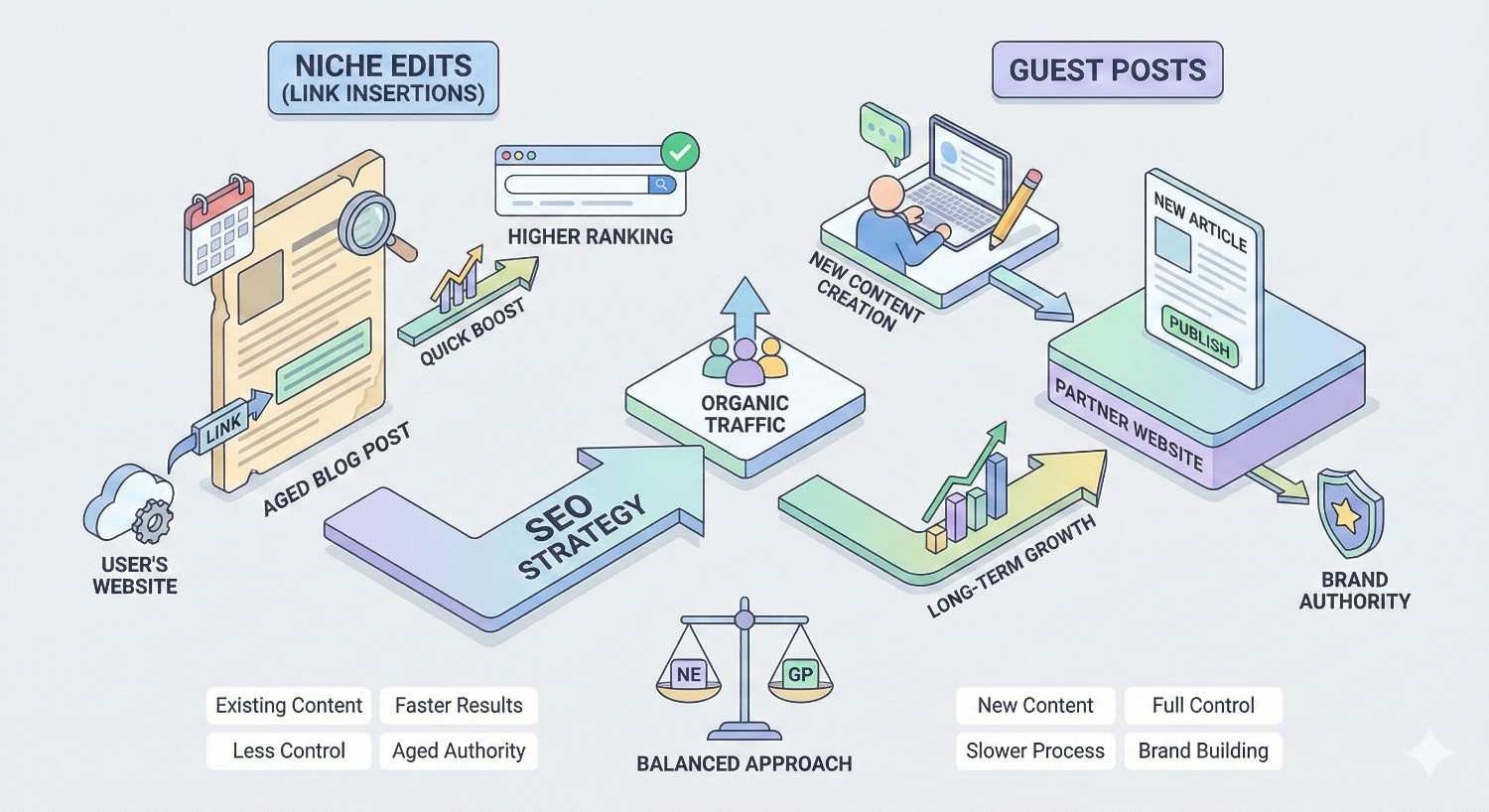
Niche Edits vs Guest Posts
Guest posting requires you to write original content for another website. You invest time creating the article, the site publishes it, and you receive a backlink within that new piece. The process typically takes weeks from pitch to publication.
Niche edits skip the content creation phase entirely. You’re not writing anything new. Instead, you’re adding value to existing content by providing a relevant resource link. The turnaround is faster because there’s no editorial calendar to navigate or content to produce.
Guest posts give you more control over anchor text placement and surrounding context. You craft the narrative. Niche edits require working within existing content structures, which sometimes limits anchor text options but provides immediate authority transfer.
The authority dynamics differ significantly. A guest post on a new page starts with zero page-level authority. A niche edit on a two-year-old article with existing backlinks and traffic transfers established equity immediately.
How Niche Edit Links Work
The mechanics follow a clear sequence. First, you identify a relevant page on an authoritative domain. The content should relate topically to your target page. Random placements on unrelated content provide minimal SEO value.
Next, you contact the webmaster or content owner. You propose adding your link as a resource that enhances their existing content. The pitch focuses on value addition rather than just link acquisition.
Once agreed, the site owner edits their published article to include your link. The anchor text and placement should feel natural within the existing flow. Forced insertions that disrupt readability signal manipulation to both readers and search engines.
Google recrawls the page during its normal indexing cycle. The updated content, now including your backlink, passes link equity to your target URL. Because the page already has authority, this transfer happens efficiently.
Why Niche Edits Matter for SEO
Link building remains a core ranking factor. Google’s algorithms evaluate the quantity and quality of backlinks pointing to your pages when determining search positions. Niche edits provide a direct path to acquiring these signals from established sources.
The efficiency argument is compelling. Building authority through new content takes months. Niche edits compress that timeline by leveraging work that’s already been done. For competitive keywords where speed matters, this acceleration can determine market position.
Link Equity and Authority Transfer
Every page on the web carries a certain amount of link equity based on its own backlink profile, content quality, and domain authority. When that page links to you, a portion of that equity flows through the connection.
Niche edits on pages with existing backlinks transfer more value than links from brand-new content. A three-year-old article with 15 referring domains passes significantly more equity than a freshly published guest post with zero external links.
The math favors established content. Domain authority provides a baseline, but page-level metrics often matter more for individual link value. A DR 50 site with a specific page that has strong backlinks can outperform a DR 70 site linking from a weak page.
Relevance and Contextual Placement
Topical relevance amplifies link value. A backlink from content closely related to your target page signals to Google that the connection is natural and meaningful. Random links from unrelated topics provide diminished returns.
Contextual placement within body content outperforms sidebar links, footer links, or author bio links. When your link appears within the main text, surrounded by relevant sentences, search engines interpret it as an editorial endorsement.
The surrounding text matters. Links placed near semantically related keywords and entities strengthen the relevance signal. A link to your project management software page works best when embedded in content discussing productivity tools, team collaboration, or workflow optimization.
Impact on Organic Rankings
Ranking improvements from niche edits typically appear within four to twelve weeks. The timeline depends on crawl frequency, competition level, and the authority of acquired links. High-authority placements on frequently crawled sites show results faster.
The impact compounds over time. Each quality niche edit adds to your overall backlink profile. As your domain authority grows, existing content ranks better, and new content starts from a stronger baseline.
Competitive keywords require more links. If top-ranking pages have 50+ referring domains, a handful of niche edits won’t move the needle. Strategic campaigns match link acquisition volume to competitive requirements.

Types of Niche Edit Link Building
Not all niche edits follow the same acquisition model. Understanding the different types helps you choose approaches that align with your risk tolerance, budget, and timeline requirements.
Editorial Niche Edits
Editorial niche edits occur when a webmaster discovers your content and voluntarily adds a link. This happens when you create genuinely valuable resources that others want to reference. No outreach required.
This is the purest form of link building. Google explicitly values these natural editorial links because they represent genuine endorsements. The challenge is creating content compelling enough to attract them organically.
Strategies that generate editorial niche edits include original research, comprehensive guides, free tools, and data visualizations. When your content becomes the best resource on a topic, other creators link to it when updating their own articles.
Outreach-Based Niche Edits
Outreach-based niche edits involve proactively contacting webmasters to request link placements. You identify relevant content, craft a pitch explaining why your link adds value, and negotiate the insertion.
This approach requires relationship building. Cold emails to strangers convert at low rates. Warming up contacts through social engagement, comments, or prior interactions improves response rates significantly.
The pitch must demonstrate clear value. Why should the webmaster edit their content to include your link? Strong pitches highlight how your resource enhances their article, provides updated information, or fills a gap in their coverage.
Paid Niche Edit Placements
Paid placements involve compensating site owners for adding your link. This is common practice in the SEO industry, though it exists in a gray area regarding Google’s guidelines.
Pricing varies dramatically based on domain authority, traffic, and niche. Links on high-authority sites in competitive industries command premium rates. Lower-authority placements in less competitive spaces cost significantly less.
The transaction should remain discreet. Links acquired through payment should not be marked as sponsored or include nofollow attributes if you’re seeking SEO value. This creates the compliance tension discussed later in this guide.
How to Build Niche Edit Links
Executing niche edit campaigns requires systematic processes for finding opportunities, conducting outreach, and optimizing anchor text distribution. Random efforts produce random results.
Finding Link Opportunities
Opportunity identification determines campaign success. The best niche edits come from relevant, authoritative pages that would naturally link to your content. Finding these requires research and qualification.
Identifying Relevant Pages
Start with competitor backlink analysis. Tools like Ahrefs, Semrush, or Moz show which pages link to your competitors. These sites have already demonstrated willingness to link within your niche.
Search operators help find content opportunities. Queries like “your keyword” + “resources” or “your topic” + “useful links” surface pages that actively curate external references. These are prime niche edit targets.
Content gap analysis reveals pages covering topics related to yours without linking to comprehensive resources. Your content fills that gap. The pitch writes itself when you can demonstrate clear value addition.
Evaluating Domain Authority and Traffic
Domain authority provides a baseline quality indicator. Generally, prioritize sites with DR/DA 30+ for meaningful link equity transfer. Below that threshold, the effort often exceeds the value received.
Traffic matters more than many realize. A DR 40 site with 50,000 monthly organic visitors likely provides more value than a DR 60 site with 500 visitors. Traffic indicates Google trusts the site enough to send users there.
Check traffic trends. Sites with declining traffic may be losing authority. Sites with growing traffic are gaining trust. Tools like Similarweb or Ahrefs traffic estimates help assess trajectory.
Outreach Strategies for Niche Edits
Outreach converts opportunities into placements. The approach matters as much as the target selection. Poor outreach wastes good prospects.
Crafting Effective Outreach Emails
Personalization is non-negotiable. Templates that could apply to any site get ignored. Reference specific content on their site. Mention something that shows you actually read their article.
Lead with value, not requests. Explain what you’re offering before asking for anything. Your link should genuinely improve their content. If it doesn’t, you’re targeting the wrong page.
Keep emails concise. Busy webmasters won’t read paragraphs of explanation. State who you are, why you’re reaching out, what you’re offering, and what you’re asking. Three to five sentences often suffice.
Subject lines determine open rates. Avoid spammy phrases like “link opportunity” or “collaboration request.” Something specific like “Quick question about your [article topic] post” performs better.
Building Relationships with Webmasters
One-time transactions yield one-time results. Building relationships with site owners in your niche creates ongoing link opportunities. The same contact can provide multiple placements over time.
Engage before you pitch. Comment on their content. Share their articles. Respond to their social posts. When you eventually reach out, you’re not a stranger asking for favors.
Provide value beyond link requests. Share relevant industry news. Offer to contribute quotes for their articles. Connect them with useful contacts. Reciprocity drives long-term partnerships.
Anchor Text Optimization
Anchor text distribution affects both ranking potential and risk profile. Over-optimized anchors trigger algorithmic penalties. Under-optimized anchors waste ranking potential.
Natural anchor text profiles include variety. Branded anchors (your company name), naked URLs, generic phrases (“click here,” “this resource”), and partial match keywords should all appear in your profile.
Exact match anchors should comprise a small percentage of your total profile. The specific percentage depends on your niche and competitor profiles. Analyze what top-ranking sites show and calibrate accordingly.
Contextual relevance matters more than exact keyword matching. A link with anchor text “project management best practices” pointing to your project management software page provides strong relevance signals even without exact keyword matching.
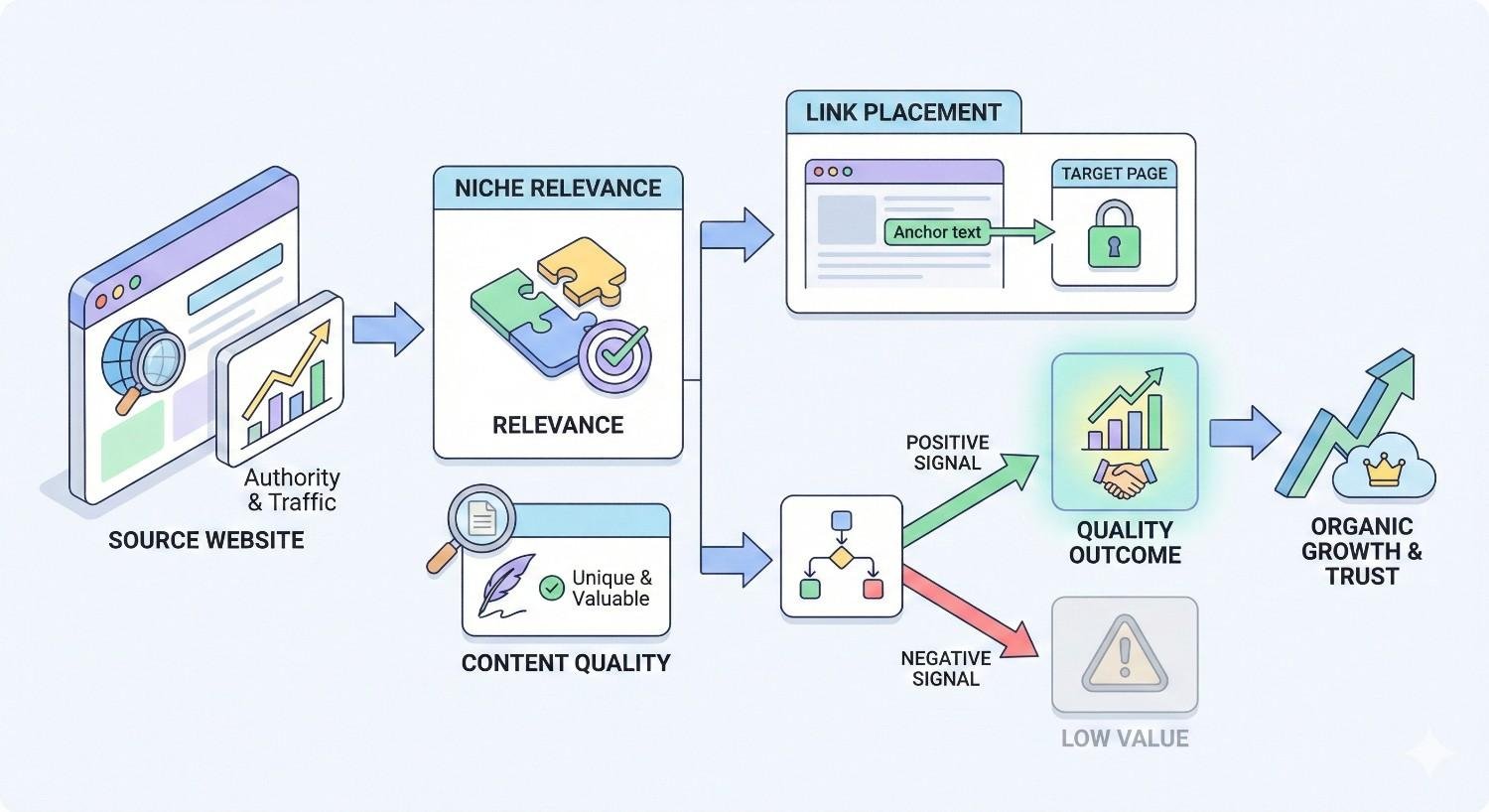
Evaluating Niche Edit Quality
Not all niche edits deliver equal value. Quality assessment prevents wasting budget on placements that provide minimal benefit or create risk exposure.
Domain Metrics to Assess
Domain Rating (Ahrefs) or Domain Authority (Moz) provides baseline authority indicators. Higher scores generally correlate with more link equity transfer. However, these metrics can be manipulated, so they’re starting points, not final verdicts.
Referring domain count shows how many unique sites link to the domain. A DR 50 site with 5,000 referring domains is more trustworthy than a DR 50 site with 500 referring domains. The latter may have inflated metrics.
Organic traffic validates that Google trusts the site. Domains with substantial organic traffic have passed Google’s quality filters. Sites with high authority metrics but minimal traffic raise red flags.
Content Relevance Signals
Topical alignment between the linking page and your target page determines relevance value. A link from a page about email marketing to your email marketing tool provides strong relevance. A link from a page about gardening provides weak relevance.
Semantic context around your link placement matters. The sentences before and after your link should relate to your content topic. Isolated links in unrelated paragraphs provide diminished value.
Site-wide topical focus affects domain-level relevance. A link from a site dedicated to your industry carries more weight than a link from a general interest site that occasionally covers your topic.
Link Placement Position
In-content links outperform all other placement types. Links embedded within the main body text, surrounded by relevant content, signal editorial endorsement. This is the placement to prioritize.
Above-the-fold placements may carry slightly more weight than links buried at the bottom of long articles. However, natural placement that fits the content flow matters more than forcing links higher.
Avoid sidebar links, footer links, and author bio links for SEO purposes. These placements are easily identified as non-editorial and provide minimal ranking benefit. They may still drive referral traffic but won’t move your SEO needle.
Red Flags to Avoid
PBN (Private Blog Network) indicators include thin content, no real traffic, excessive outbound links, and sites that exist solely to sell links. These placements create risk without proportional benefit.
Sitewide links from footers or sidebars that appear on every page of a site look unnatural. One link from one relevant page is better than hundreds of links from a sitewide placement.
Link neighborhoods matter. If a site links to gambling, pharma, or adult content alongside your link, the association can harm your profile. Check outbound link patterns before acquiring placements.
Sudden authority spikes suggest manipulation. A site that jumped from DR 20 to DR 50 in three months likely used artificial link building. That inflated authority can disappear just as quickly.
Niche Edit Link Building Costs
Budget planning requires understanding the cost structures and variables that affect niche edit pricing. Costs vary dramatically based on quality, niche, and acquisition method.
Pricing Models and Factors
Per-link pricing is most common. You pay a fixed amount for each placement. Prices range from $50 for low-authority sites to $1,500+ for premium placements on high-authority domains.
Domain authority is the primary price driver. Higher DR/DA sites command higher prices. A DR 30 placement might cost $100 while a DR 70 placement on the same provider’s inventory costs $800.
Niche affects pricing significantly. Competitive industries like finance, legal, and health have higher link costs because demand exceeds supply. Less competitive niches offer better value.
Traffic premiums apply to sites with substantial organic visitors. A DR 50 site with 100,000 monthly visitors costs more than a DR 50 site with 5,000 visitors. The traffic indicates higher quality.
DIY vs Agency Costs
DIY niche edit building requires time investment. Prospecting, outreach, negotiation, and quality control consume hours. Your effective hourly rate determines whether DIY makes financial sense.
Agencies charge premiums but handle execution. Monthly retainers typically range from $1,000 to $10,000+ depending on link volume and quality targets. The premium covers their prospecting, relationships, and quality control.
Hybrid approaches work for many businesses. Handle outreach for relationship-based placements yourself while using agencies for volume acquisition. This balances cost efficiency with time management.
Hidden costs in DIY include tools (Ahrefs, Semrush, outreach software), failed outreach time, and learning curve inefficiencies. Factor these into true cost comparisons.
ROI Expectations
Link building ROI depends on ranking improvements and resulting traffic value. A $500 link that helps you rank for a keyword driving $5,000/month in equivalent paid traffic delivers strong returns.
Calculate target keyword value first. Estimate monthly search volume, expected click-through rate at target position, and conversion value of that traffic. This establishes what you can afford to spend on links.
Timeframes affect ROI calculations. Links that take six months to impact rankings require patience. Factor the delay into your return expectations. Immediate ROI is unrealistic for SEO investments.
Compound effects improve long-term ROI. Early link building investments raise domain authority, making future content rank faster with less link support. The investment pays forward.
Niche Edits and Google Guidelines
Understanding the compliance landscape helps you make informed decisions about risk tolerance and campaign structure. Niche edits exist in a nuanced space within Google’s guidelines.
White Hat vs Gray Hat Considerations
Google’s guidelines state that links intended to manipulate rankings violate their policies. This technically includes any link acquired primarily for SEO benefit rather than genuine editorial endorsement.
In practice, the entire link building industry operates in gray areas. Guest posting, digital PR, and niche edits all involve intentional link acquisition. The distinction lies in execution quality and detection risk.
White hat niche edits focus on genuine value exchange. Your link actually improves the content. The placement looks natural. No money changes hands, or if it does, the transaction isn’t obvious.
Gray hat niche edits prioritize link acquisition over content value. Placements feel forced. The commercial nature is apparent. These carry higher risk but remain common practice.
Risk Mitigation Strategies
Diversification protects against algorithmic penalties. Don’t acquire all links through one method. Mix niche edits with guest posts, digital PR, and organic link attraction. Varied acquisition patterns look natural.
Quality over quantity reduces risk. Ten high-quality placements on relevant, authoritative sites create less risk than 100 low-quality placements on questionable domains. Invest in fewer, better links.
Gradual acquisition avoids velocity red flags. Sudden spikes in backlink acquisition look unnatural. Spread link building over time. Consistent monthly acquisition appears more organic than burst campaigns.
Anchor text variation prevents over-optimization penalties. If 80% of your anchors are exact match keywords, you’re signaling manipulation. Natural profiles show diverse anchor text patterns.
Building a Natural Link Profile
Natural profiles include links you didn’t build. Encourage organic link attraction through linkable assets, original research, and genuinely useful content. These editorial links balance your acquired links.
Link source diversity matters. Links from various domain types (blogs, news sites, educational resources, industry publications) appear more natural than links exclusively from one source type.
Follow/nofollow ratios should reflect natural patterns. Some percentage of your links will naturally be nofollow. A profile with 100% dofollow links looks manipulated. Accept some nofollow links as natural.
Geographic and language diversity applies for international businesses. Links exclusively from one country when you serve global markets looks unusual. Match your link profile to your market footprint.
Niche Edits as Part of a Link Building Strategy
Niche edits work best as one component of a comprehensive link building approach. Relying exclusively on any single tactic creates vulnerability and limits growth potential.
Combining Niche Edits with Other Tactics
Guest posting provides content control and relationship building that niche edits don’t offer. Use guest posts for thought leadership positioning while using niche edits for efficient authority building.
Digital PR generates high-authority links from news sites and publications. These links are difficult to acquire through standard outreach but provide exceptional authority signals. Combine with niche edits for profile diversity.
Broken link building identifies dead links on relevant sites and offers your content as a replacement. This provides clear value to webmasters and often converts better than standard niche edit pitches.
Resource page link building targets curated lists of industry resources. Getting included on these pages provides relevant, contextual links similar to niche edits but through a different acquisition path.
Link Velocity and Diversification
Link velocity refers to the rate at which you acquire new backlinks. Sudden spikes look unnatural. Consistent, gradual acquisition appears organic and reduces algorithmic risk.
Match velocity to your baseline. A new site acquiring 50 links monthly looks suspicious. An established site with existing link momentum can sustain higher acquisition rates naturally.
Diversify acquisition timing. Don’t acquire all monthly links in one week. Spread placements throughout the month. Natural link building doesn’t follow predictable schedules.
Monitor competitor velocity for benchmarks. If top-ranking competitors acquire 20 links monthly, matching that pace is reasonable. Dramatically exceeding competitor velocity without corresponding content investment raises flags.
Long-Term Authority Building
Domain authority grows through sustained link building over time. One-time campaigns provide temporary boosts. Ongoing investment compounds into lasting competitive advantage.
Reinvest ranking gains into more link building. As traffic grows, revenue should increase. Allocate a percentage of that growth back into authority building. This creates a virtuous cycle.
Build linkable assets that attract organic links. Original research, free tools, comprehensive guides, and data visualizations earn links without outreach. These assets reduce long-term link building costs.
Protect existing links. Monitor your backlink profile for lost links. Reach out to recover valuable placements that disappear. Link maintenance preserves past investments.
How to Choose a Niche Edit Service Provider
Selecting the right provider determines campaign success. The market includes excellent agencies and questionable operators. Due diligence protects your investment and your site.
Vetting Criteria for Agencies
Track record matters most. Request case studies showing ranking improvements from their link building. Testimonials help but verifiable results matter more.
Transparency about methods indicates professionalism. Providers who explain their prospecting, outreach, and quality control processes demonstrate legitimate operations. Secrecy often hides questionable practices.
Sample placements before committing. Request examples of sites in their inventory. Evaluate those sites using the quality criteria discussed earlier. If samples don’t meet standards, neither will your placements.
Communication responsiveness predicts service quality. Providers who respond slowly during sales will respond slower during fulfillment. Test responsiveness before signing contracts.
Questions to Ask Before Hiring
What is your link replacement policy? Quality providers replace links that get removed within a specified period. This protects your investment against site owner changes of heart.
How do you ensure relevance? Providers should explain their process for matching your content to appropriate placement opportunities. Generic answers suggest generic placements.
What metrics do you guarantee? Understand minimum domain authority, traffic thresholds, and relevance requirements. Get these in writing before payment.
Can you show me the exact pages before placement? Reputable providers allow pre-approval of placements. Those who won’t show pages before links go live may be hiding quality issues.
What is your anchor text approach? Providers should discuss natural anchor text distribution and allow input on your preferences. Those pushing exact match anchors may not understand modern SEO.
Warning Signs of Low-Quality Providers
Prices too good to be true indicate quality problems. If a provider offers DR 50+ links for $50 each, they’re either lying about metrics or using manipulated sites. Quality costs money.
Guaranteed rankings are impossible to deliver. Link building improves ranking potential but doesn’t guarantee specific positions. Providers making ranking guarantees are either dishonest or don’t understand SEO.
No transparency about sites suggests PBN usage. Legitimate providers can show their placement sites. Those who refuse are likely using private blog networks or other risky sources.
Pressure tactics indicate desperation. Quality providers have waiting lists. Those pushing hard for immediate commitment may need your money more than you need their links.
Mass email outreach from providers suggests low-quality operations. The best agencies don’t need to spam potential clients. They grow through referrals and reputation.
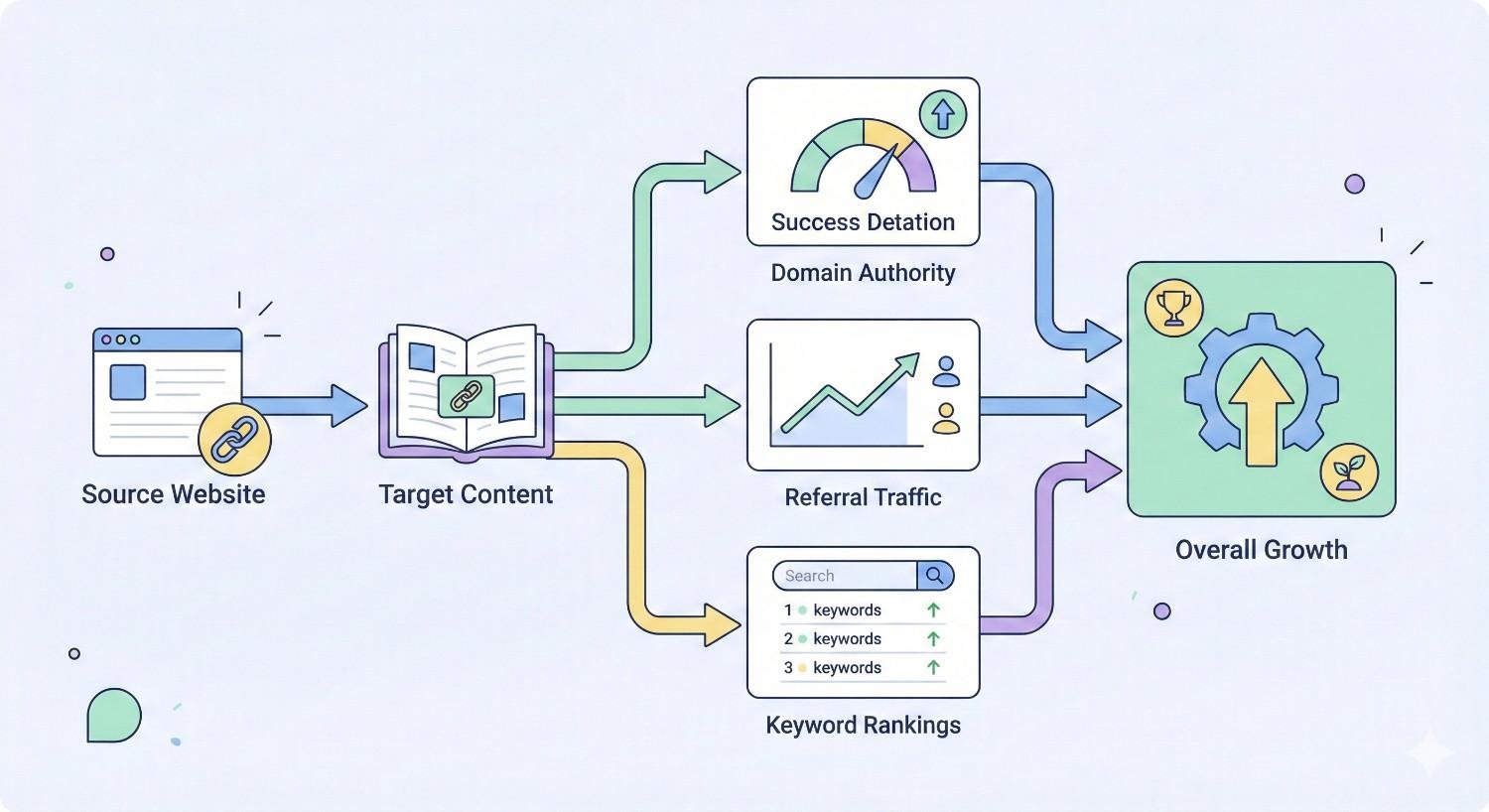
Measuring Niche Edit Link Building Success
Measurement validates investment and guides optimization. Without tracking, you can’t distinguish effective campaigns from wasted budget. Establish baselines and monitor key metrics.
Tracking Ranking Improvements
Keyword rank tracking shows direct impact. Monitor target keywords before and after link acquisition. Tools like Ahrefs, Semrush, or dedicated rank trackers provide position data over time.
Isolate variables when possible. If you’re building links and publishing content simultaneously, attributing ranking changes becomes difficult. Controlled campaigns with clear timelines improve measurement accuracy.
Track ranking velocity, not just positions. How quickly do rankings improve after link acquisition? Faster movement indicates higher-quality links. Slow or no movement suggests quality issues.
Monitor SERP feature changes. Links may help you capture featured snippets, People Also Ask boxes, or other SERP features. These wins don’t always show in traditional rank tracking.
Monitoring Referral Traffic
Quality niche edits drive referral traffic. Check Google Analytics for visitors arriving through your new backlinks. Traffic indicates the placement has real readers, not just SEO value.
Referral traffic quality matters. Examine bounce rates, time on site, and conversion rates for referral visitors. High-quality placements send engaged visitors. Low-quality placements send bots or disinterested clicks.
Set up UTM parameters when possible. If you can influence the link URL, add tracking parameters. This enables precise attribution of traffic and conversions to specific placements.
Compare referral value to link cost. A $300 link that sends 50 converting visitors monthly may pay for itself through direct traffic alone, independent of SEO benefit.
Assessing Domain Authority Growth
Domain authority metrics (DR, DA) should increase over time with consistent link building. Track monthly changes to validate that your investment is building cumulative authority.
Authority growth compounds. Early gains may seem slow. As your baseline increases, each new link contributes to a stronger foundation. Patience is required for meaningful authority building.
Compare authority growth to competitors. If your DR increases from 30 to 40 while competitors grow from 40 to 50, you’re not gaining ground. Competitive benchmarking contextualizes your progress.
Authority metrics are proxies, not goals. Higher DR doesn’t automatically mean better rankings. Focus on ranking improvements and traffic growth as primary success indicators. Authority metrics are supporting evidence.
Conclusion
Niche edit link building offers an efficient path to acquiring backlinks from established, authoritative content. The strategy works because you leverage existing page authority rather than waiting months for new content to gain traction.
Success requires systematic execution: identifying relevant opportunities, conducting professional outreach, evaluating quality rigorously, and measuring results accurately. The businesses that treat niche edits as one component of a diversified link building strategy see the strongest long-term results.
At White Label SEO Service, we help businesses build sustainable organic growth through strategic link acquisition, including niche edit campaigns tailored to your competitive landscape. Contact our team to discuss how niche edits fit into your broader SEO strategy and start building the authority your site needs to rank.
Frequently Asked Questions About Niche Edit Link Building
Are niche edits permanent?
Niche edits are intended to be permanent, but no link is guaranteed forever. Site owners can remove links at any time, sites can go offline, or content can be deleted. Quality providers offer replacement guarantees for links removed within a specified period, typically 6-12 months.
How many niche edits do I need?
The number depends on your competitive landscape and current authority. Analyze top-ranking competitors for your target keywords to establish benchmarks. If competitors have 50 referring domains and you have 10, you need significant link building. Start with 5-10 quality placements monthly and adjust based on results.
What industries benefit most from niche edits?
Industries with established content ecosystems benefit most. B2B services, SaaS, finance, legal, health, and e-commerce all have abundant relevant content for niche edit opportunities. Highly specialized niches with limited online content may find fewer quality placement options.
How long until I see results from niche edits?
Expect initial ranking movement within 4-8 weeks for most placements. Full impact typically materializes over 3-6 months as Google recrawls pages and reassesses your authority. High-authority placements on frequently crawled sites show results faster than lower-authority placements.
Can niche edits hurt my site?
Low-quality niche edits from spammy sites, PBNs, or irrelevant content can harm your rankings. Quality placements from relevant, authoritative sites carry minimal risk. The key is rigorous quality control and avoiding obvious manipulation patterns like over-optimized anchor text.
Should I use niche edits or guest posts?
Both tactics serve different purposes. Guest posts provide content control and thought leadership positioning. Niche edits offer faster authority transfer from established pages. Most effective strategies combine both approaches for profile diversity and comprehensive authority building.
How do I know if a niche edit provider is legitimate?
Request sample placements and evaluate them using standard quality criteria: domain authority, organic traffic, content relevance, and outbound link patterns. Ask for case studies with verifiable results. Legitimate providers welcome scrutiny and offer transparency about their methods and placement sites.