Understanding the difference between dofollow and nofollow links is fundamental to building a backlink profile that actually moves rankings. These two link types behave differently in how they pass authority, influence search visibility, and contribute to your overall SEO strategy.
For business owners and marketing teams investing in link building, knowing when each link type matters can mean the difference between wasted effort and measurable organic growth. This guide breaks down exactly how dofollow and nofollow links work, when to pursue each, and how to build a link acquisition strategy that delivers sustainable results.
What Are Dofollow Links?
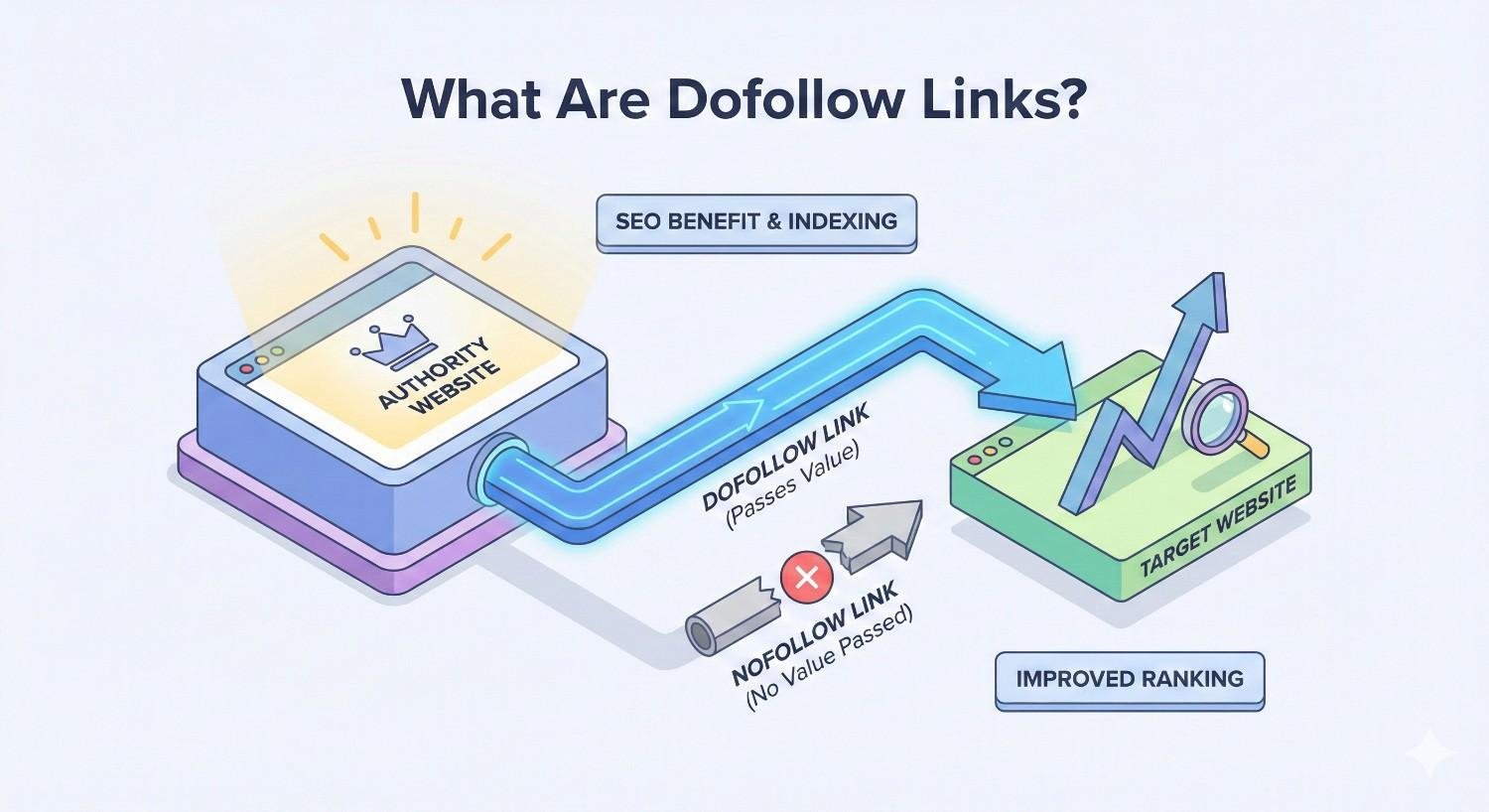
Dofollow links are standard hyperlinks that pass ranking signals from one website to another. When a reputable site links to your page with a dofollow link, search engines interpret this as a vote of confidence, transferring a portion of that site’s authority to yours.
There is no actual “dofollow” HTML attribute. The term simply describes links without any restrictive rel attributes telling search engines to ignore them. By default, every link you create is dofollow unless you specifically add a nofollow, sponsored, or ugc attribute.
How Dofollow Links Work
When Google’s crawler encounters a dofollow link, it follows that link to the destination page and factors the connection into its ranking algorithms. This process transfers what SEO professionals call “link equity” or “link juice” from the source page to the target page.
The value passed depends on several factors. The linking page’s own authority matters significantly. A dofollow link from a high-authority news publication carries more weight than one from a brand-new blog. Relevance plays a role too. Links from topically related sites signal stronger endorsement than random, unrelated mentions.
Anchor text also influences how search engines understand the linked page. A dofollow link with descriptive anchor text helps Google contextualize what the destination page covers, potentially boosting rankings for related keywords.
Dofollow Link Examples
Editorial links within news articles represent classic dofollow examples. When a journalist references your research or quotes your expertise, that link typically passes full authority.
Resource page links from industry websites often remain dofollow. If a marketing blog lists your tool in a “best SEO software” roundup, that endorsement usually transfers link equity.
Guest post author bios sometimes include dofollow links, though policies vary by publication. High-quality guest contributions on authoritative sites can earn valuable dofollow placements.
Business directory listings on established platforms like industry associations or chambers of commerce frequently provide dofollow links that strengthen local and niche authority.
What Are Nofollow Links?
Nofollow links include a specific HTML attribute that instructs search engines not to pass ranking authority through that link. While users can still click these links and reach your site, the connection doesn’t directly contribute to your search rankings in the traditional sense.
Google introduced the nofollow attribute in 2005 primarily to combat comment spam. Website owners could now link to external resources without inadvertently endorsing low-quality or manipulative sites.
How Nofollow Links Work
When a crawler encounters a nofollow link, it historically would not follow that link or count it as a ranking signal. The link exists for users but carries no direct SEO weight in terms of PageRank transfer.
However, Google’s treatment of nofollow has evolved significantly. Since 2019, Google treats nofollow as a “hint” rather than a directive. This means Google may choose to crawl, index, or even consider nofollow links for ranking purposes when it deems appropriate.
This shift reflects Google’s recognition that nofollow links from authoritative sources still indicate relevance and trust, even if the linking site chose not to explicitly endorse the destination.
The rel=”nofollow” Attribute Explained
The nofollow attribute appears in the HTML anchor tag like this:
<a href=”https://example.com” rel=”nofollow”>Link Text</a>
This code tells search engines that the linking site does not want to pass authority to the destination URL. The link remains fully functional for users but carries different SEO implications than a standard dofollow link.
Website owners add nofollow attributes for various reasons. They might link to a source they cannot fully verify. They might include paid placements that require disclosure. They might allow user-generated content where they cannot control link quality.
Types of Nofollow Attributes (UGC, Sponsored, Nofollow)
Google expanded the nofollow family in 2019 with two additional attributes that provide more specific context about link relationships.
rel=”sponsored” identifies paid placements, advertisements, and any links that exist because of commercial arrangements. Google expects this attribute on affiliate links, paid reviews, and sponsored content placements.
rel=”ugc” marks user-generated content links, such as those in blog comments, forum posts, or community contributions. This helps Google understand that the site owner did not create or necessarily endorse these links.
rel=”nofollow” remains the general-purpose option for any link where you do not want to pass authority but the link does not fit sponsored or ugc categories.
You can combine these attributes when appropriate. A paid link in a comment section might use rel=”nofollow sponsored ugc” to provide complete context.
Key Differences Between Dofollow and Nofollow Links
Understanding the practical distinctions between these link types helps you prioritize link building efforts and set realistic expectations for different acquisition channels.
Link Equity and PageRank Transfer
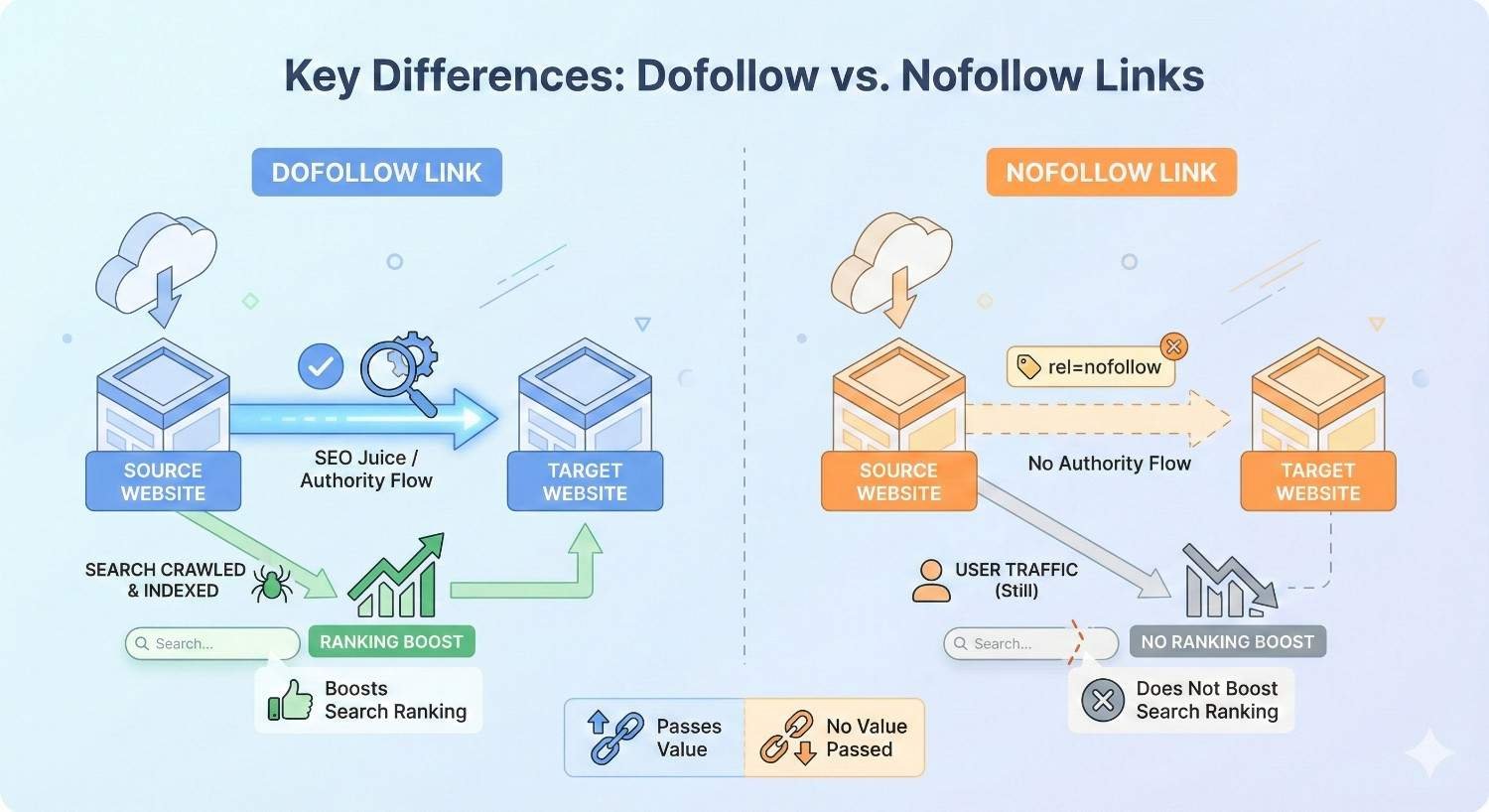
The fundamental difference lies in authority transfer. Dofollow links pass PageRank and contribute directly to the linked page’s ability to rank. Nofollow links traditionally do not transfer this ranking power.
Think of dofollow links as full endorsements. The linking site vouches for your content and shares its credibility with you. Nofollow links function more like acknowledgments. The linking site references you without formally endorsing you to search engines.
This distinction matters most when evaluating link building opportunities. A dofollow link from a moderately authoritative site often provides more direct ranking benefit than a nofollow link from a highly authoritative site, though the latter still carries value we will explore shortly.
How Search Engines Treat Each Link Type
Google processes these link types differently within its ranking algorithms. Dofollow links enter the core link graph that determines PageRank distribution. They directly influence how Google perceives your site’s authority and relevance.
Nofollow links exist in a separate consideration. Google may use them for discovery, crawling new pages, and understanding relationships between sites. Since the 2019 update, Google can also choose to count nofollow links for ranking purposes when its algorithms determine this makes sense.
Bing and other search engines have their own interpretations. Most follow similar principles, treating nofollow as a signal to discount the link’s ranking contribution while still potentially using it for crawling and discovery.
Dofollow vs Nofollow Comparison Table
| Factor | Dofollow Links | Nofollow Links |
| PageRank Transfer | Yes, passes link equity | No direct transfer (hint only) |
| Default State | All links are dofollow by default | Requires explicit rel attribute |
| Crawling | Always followed and crawled | May or may not be crawled |
| Ranking Impact | Direct positive influence | Indirect or no ranking impact |
| Traffic Value | Drives referral traffic | Drives referral traffic equally |
| Brand Visibility | Increases brand exposure | Increases brand exposure equally |
| Common Sources | Editorial links, resource pages | Comments, forums, social media |
| Google Treatment | Standard ranking signal | Treated as “hint” since 2019 |
How Dofollow and Nofollow Links Impact SEO
Both link types play roles in a comprehensive SEO strategy, though their contributions differ significantly in mechanism and magnitude.
Dofollow Links and Ranking Power
Dofollow links remain the primary currency of off-page SEO. Backlinko’s analysis of 11.8 million Google search results found that the number of domains linking to a page correlated strongly with higher rankings, with dofollow links driving this relationship.
Each quality dofollow link acts as a ranking signal. The cumulative effect of multiple authoritative dofollow links can dramatically improve your ability to rank for competitive keywords. This is why link building remains central to most SEO strategies.
However, not all dofollow links carry equal weight. A single link from a highly relevant, authoritative site in your industry often outperforms dozens of links from low-quality or unrelated sources. Quality consistently trumps quantity in modern link building.
Do Nofollow Links Help SEO?
Nofollow links provide value beyond direct ranking signals. They drive referral traffic that can convert into customers, subscribers, or leads. A nofollow link from a high-traffic publication might send thousands of visitors to your site.
Brand visibility increases through nofollow mentions. When users see your brand referenced across multiple platforms, trust and recognition grow. This indirect benefit supports overall marketing goals even without ranking improvements.
Nofollow links also contribute to a natural backlink profile. A site with exclusively dofollow links might appear manipulated to search algorithms. The presence of nofollow links from social media, forums, and user-generated content signals organic growth patterns.
Google’s hint-based treatment means some nofollow links may actually influence rankings. While you cannot predict which nofollow links Google will count, high-quality nofollow placements from authoritative sources carry potential upside.
The Role of Link Diversity in a Healthy Backlink Profile
Natural link profiles contain a mix of dofollow and nofollow links from various source types. Websites that grow organically accumulate links from news coverage, social shares, forum discussions, blog comments, and editorial mentions. This diversity signals authenticity.
An unnatural ratio raises flags. If your backlink profile shows 95% dofollow links from guest posts on the same network of sites, Google’s algorithms may discount those links or apply penalties. Diversity protects against algorithmic scrutiny.
Aim for link variety across multiple dimensions. Source types should vary between publications, blogs, directories, and social platforms. Anchor text should mix branded terms, naked URLs, and natural phrases. Follow status should include both dofollow and nofollow in proportions that reflect organic acquisition.
When to Use Dofollow vs Nofollow Links
Understanding when each link type is appropriate helps you make smart decisions about your own outbound linking and set realistic expectations for links you pursue.
When to Use Dofollow Links
Use dofollow links when you genuinely endorse the destination content. If you reference a study, quote an expert, or recommend a resource that adds value for your readers, a dofollow link appropriately signals that endorsement.
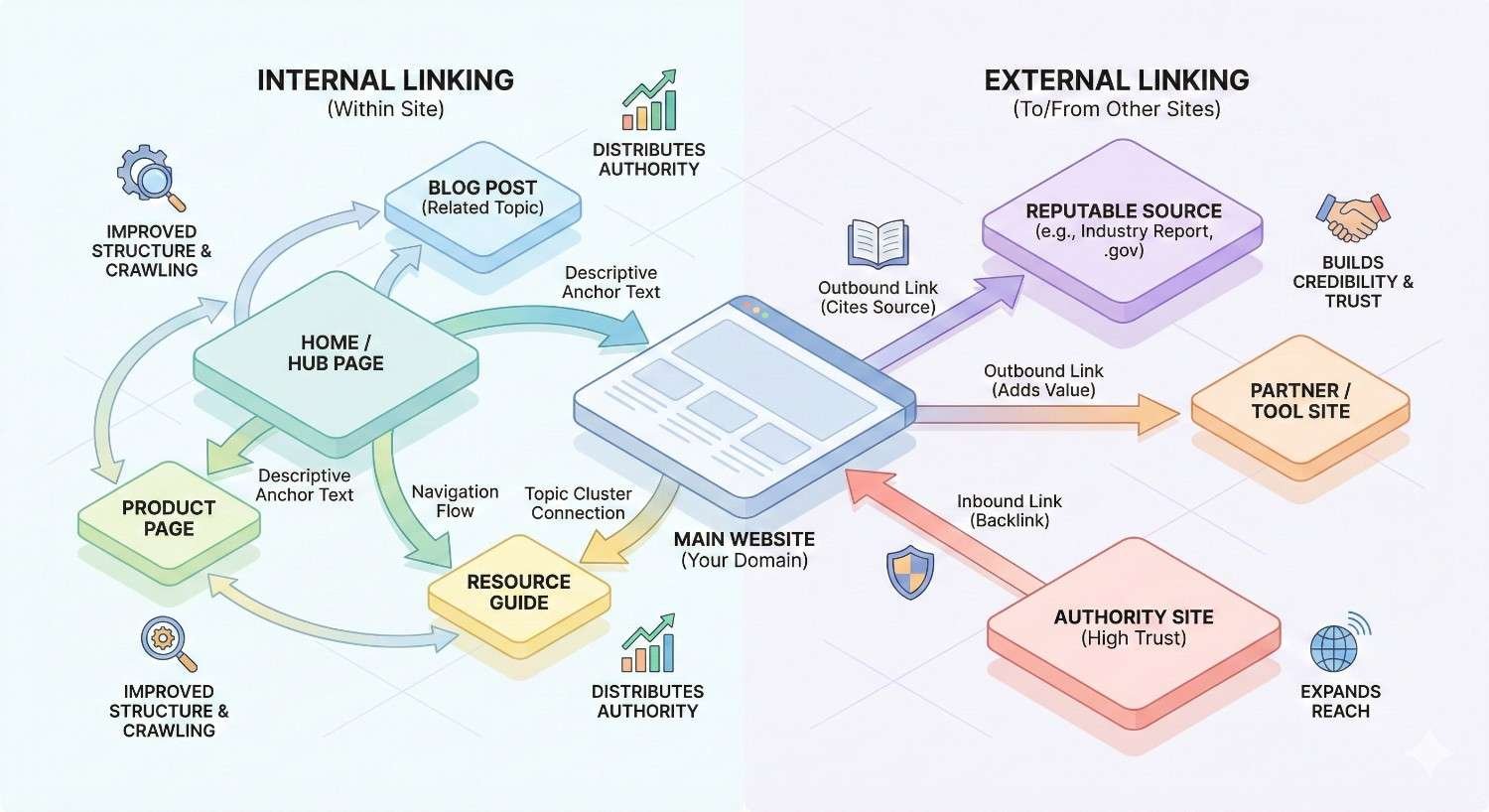
Internal links within your own site should remain dofollow. These links distribute authority across your pages and help search engines understand your site structure. Nofollowing internal links wastes link equity and creates crawling inefficiencies.
Links to authoritative, trustworthy external sources typically warrant dofollow status. Citing reputable research, linking to official documentation, or referencing established industry resources strengthens your content while appropriately crediting sources.
When to Use Nofollow Links
Apply nofollow to any paid or sponsored links. Google’s guidelines explicitly require this disclosure. Affiliate links, sponsored content placements, and paid directory listings should all carry nofollow or sponsored attributes.
User-generated content links need nofollow protection. Blog comments, forum posts, and community submissions may contain links you cannot verify. The ugc attribute protects your site from inadvertently endorsing spam or low-quality destinations.
Links to sites you cannot fully trust warrant nofollow treatment. If you must reference a source but have concerns about its credibility or content quality, nofollow allows you to provide the reference without passing authority.
Login pages, privacy policies, and other non-ranking internal pages sometimes receive nofollow treatment to focus crawl budget on more important content, though this practice has become less common as Google has improved crawl efficiency.
Best Practices for Internal and External Linking
Keep internal links dofollow to maximize authority distribution. Create logical link structures that guide users and crawlers through your most important content. Use descriptive anchor text that helps both users and search engines understand destination pages.
For external links, default to dofollow for genuinely valuable resources. Reserve nofollow for situations requiring it: paid placements, unverified sources, or user-generated content. This approach maintains link integrity while protecting your site.
Audit your outbound links periodically. Ensure paid placements carry appropriate attributes. Check that previously linked resources remain high-quality and relevant. Remove or nofollow links to sites that have declined in quality or relevance.
How to Check If a Link Is Dofollow or Nofollow
Identifying link attributes helps you audit your own site’s outbound links and evaluate the links you have earned from other sites.
Inspecting Links in Browser Developer Tools
Right-click any link and select “Inspect” or “Inspect Element” to open your browser’s developer tools. The HTML code for that link appears highlighted in the Elements panel.
Look for the rel attribute within the anchor tag. If you see rel=”nofollow”, rel=”sponsored”, or rel=”ugc”, the link does not pass authority in the traditional sense. If no rel attribute exists, or if rel contains only values like “noreferrer” or “noopener,” the link is dofollow.
This method works for checking individual links but becomes tedious for large-scale analysis. Use it for spot-checking specific links of interest.
Using SEO Tools to Analyze Link Attributes
Professional SEO platforms like Ahrefs, Semrush, and Moz include link attribute data in their backlink reports. These tools crawl the web and catalog whether each link pointing to your site is dofollow or nofollow.
Ahrefs displays a “Dofollow” or “Nofollow” label for each backlink in its Site Explorer tool. You can filter your entire backlink profile by link type to understand your current ratio and identify your most valuable dofollow links.
Semrush’s Backlink Analytics similarly categorizes links by follow status. The tool also tracks changes over time, alerting you when you gain or lose dofollow links from important sources.
These platforms provide the scale needed for comprehensive backlink analysis. Monthly audits using these tools help you track link building progress and identify potential issues.
Chrome Extensions for Link Analysis
Browser extensions offer quick link analysis without leaving the page you are viewing. Several free options highlight link types directly on any webpage.
NoFollow Simple visually marks nofollow links with a colored border, making them instantly identifiable as you browse. This helps when evaluating potential link opportunities or auditing competitor backlink sources.
SEOquake provides comprehensive on-page SEO data including link analysis. The extension can highlight nofollow links and provide additional context about page authority and other metrics.
MozBar displays domain authority and page authority for any site while also indicating link attributes. This combination helps you quickly assess both the value and type of potential link opportunities.
How to Build Quality Dofollow Backlinks
Earning high-quality dofollow links requires strategic effort focused on creating value and building relationships within your industry.
Guest Posting and Content Outreach
Guest posting remains effective when approached correctly. Target publications your audience actually reads. Pitch unique angles that provide genuine value to their readers. Avoid generic content that could appear anywhere.
Research each publication’s guidelines and recent content before pitching. Personalized outreach that demonstrates familiarity with the site dramatically outperforms template emails. Reference specific articles you enjoyed and explain why your proposed topic fits their audience.
Focus on publications with editorial standards. Sites that accept any submission often provide little SEO value and may even harm your profile. Quality publications with selective acceptance criteria typically offer more authoritative dofollow links.
Build ongoing relationships rather than one-off placements. Becoming a regular contributor to respected industry publications compounds your authority over time and opens doors to additional opportunities.
Digital PR and Link-Worthy Content
Creating content that naturally attracts links scales your link building beyond manual outreach. Original research, comprehensive guides, and unique data visualizations earn links because other content creators want to reference them.
Surveys and studies generate particularly strong link attraction. When you publish original findings about your industry, journalists and bloggers cite your research as a primary source. These editorial links typically remain dofollow and carry significant authority.
Newsjacking connects your expertise to trending topics. When industry news breaks, having expert commentary ready for journalists can earn coverage and links from news publications. Build relationships with reporters before you need them.
Interactive tools and calculators attract links from sites that want to provide resources to their audiences. A well-designed tool that solves a common problem in your industry can earn hundreds of natural backlinks over time.
Broken Link Building Strategies
Broken link building identifies dead links on relevant websites and offers your content as a replacement. This approach provides value to site owners while earning links for your content.
Use tools like Ahrefs or Check My Links to find broken outbound links on resource pages in your industry. Focus on pages that link to multiple external resources, as these site owners have demonstrated willingness to link out.
Create or identify content on your site that could replace the broken resource. Your replacement should match or exceed the quality and relevance of the original linked content.
Reach out to the site owner with a helpful tone. Point out the broken link, explain how it affects their user experience, and suggest your content as an alternative. This value-first approach generates better response rates than purely self-promotional outreach.
Avoiding Black Hat Link Building Tactics
Manipulative link building tactics risk penalties that can devastate your organic visibility. Google’s algorithms and manual review teams actively identify and penalize link schemes.
Avoid purchasing links from networks or brokers. These links often come from low-quality sites and create obvious footprints that algorithms detect. The short-term ranking boost rarely justifies the long-term penalty risk.
Private blog networks (PBNs) present similar risks. Networks of sites created solely to manipulate rankings violate Google’s guidelines. When Google identifies PBN links, they discount or penalize the linked sites.
Excessive link exchanges and reciprocal linking schemes trigger algorithmic scrutiny. While occasional natural reciprocal links are normal, systematic exchange programs appear manipulative.
Focus on earning links through genuine value creation. Sustainable link building takes longer but builds authority that compounds over time without penalty risk.
Common Misconceptions About Nofollow Links
Several persistent myths about nofollow links lead to suboptimal SEO decisions. Understanding the reality helps you allocate resources more effectively.
“Nofollow Links Are Worthless”
This oversimplification ignores the multiple ways nofollow links contribute to marketing success. Referral traffic from nofollow links converts just as well as traffic from dofollow links. A nofollow link from a high-traffic publication might drive more business value than a dofollow link from an obscure blog.
Brand visibility benefits apply regardless of follow status. When your brand appears across multiple platforms and publications, audience trust grows. This brand building supports all marketing channels, including organic search.
The hint-based treatment means some nofollow links may influence rankings. While you cannot control which nofollow links Google counts, dismissing all nofollow opportunities leaves potential value on the table.
Natural backlink profiles include nofollow links. Pursuing only dofollow links creates an unnatural pattern that may trigger algorithmic scrutiny. Accepting valuable nofollow placements contributes to profile health.
“All Paid Links Must Be Nofollow”
Google requires disclosure of paid relationships, but the specific attribute depends on context. The sponsored attribute is most appropriate for paid placements, though nofollow also satisfies disclosure requirements.
Not all commercial relationships require nofollow treatment. If you pay for a service and the provider happens to link to you in their client portfolio, that link reflects a genuine business relationship rather than a purchased ranking signal.
Affiliate links require disclosure but can still drive significant value. The traffic and conversions from affiliate placements often matter more than any potential ranking benefit.
The key principle is transparency. Disclose paid relationships appropriately, but do not assume every commercial connection requires nofollow treatment.
Google’s Evolving Treatment of Nofollow as a Hint
Google’s 2019 announcement fundamentally changed how nofollow links function. Previously, nofollow served as a directive that Google always followed. Now, Google treats nofollow as a hint it may choose to ignore.
This shift reflects Google’s improved ability to understand link context. A nofollow link from a major news publication to a relevant, authoritative source might deserve ranking consideration even though the publisher chose nofollow.
For link builders, this change means nofollow links from high-quality sources carry more potential value than before. While you cannot guarantee Google will count any specific nofollow link, the possibility exists.
The practical implication is to pursue valuable link opportunities regardless of follow status. A nofollow link from an authoritative, relevant source may provide more benefit than a dofollow link from a low-quality site.
Dofollow vs Nofollow Links: What This Means for Your SEO Strategy
Translating link type knowledge into actionable strategy requires balancing multiple factors and setting appropriate expectations.
Balancing Your Backlink Profile
Healthy backlink profiles reflect natural acquisition patterns. Most organic link growth produces a mix of dofollow and nofollow links from diverse source types. Aim to mirror these natural patterns in your link building efforts.
While no universal “ideal ratio” exists, extremely skewed profiles warrant attention. If your backlink profile shows 98% dofollow links, the lack of natural nofollow mentions from social media, forums, and comments may appear suspicious.
Diversify anchor text alongside link types. Over-optimized anchor text profiles with exact-match keywords signal manipulation. Natural profiles include branded anchors, naked URLs, generic phrases, and varied keyword-related terms.
Monitor your profile regularly using SEO tools. Track changes in your dofollow/nofollow ratio, anchor text distribution, and referring domain diversity. Address anomalies before they trigger algorithmic issues.
Setting Realistic Expectations for Link Building ROI
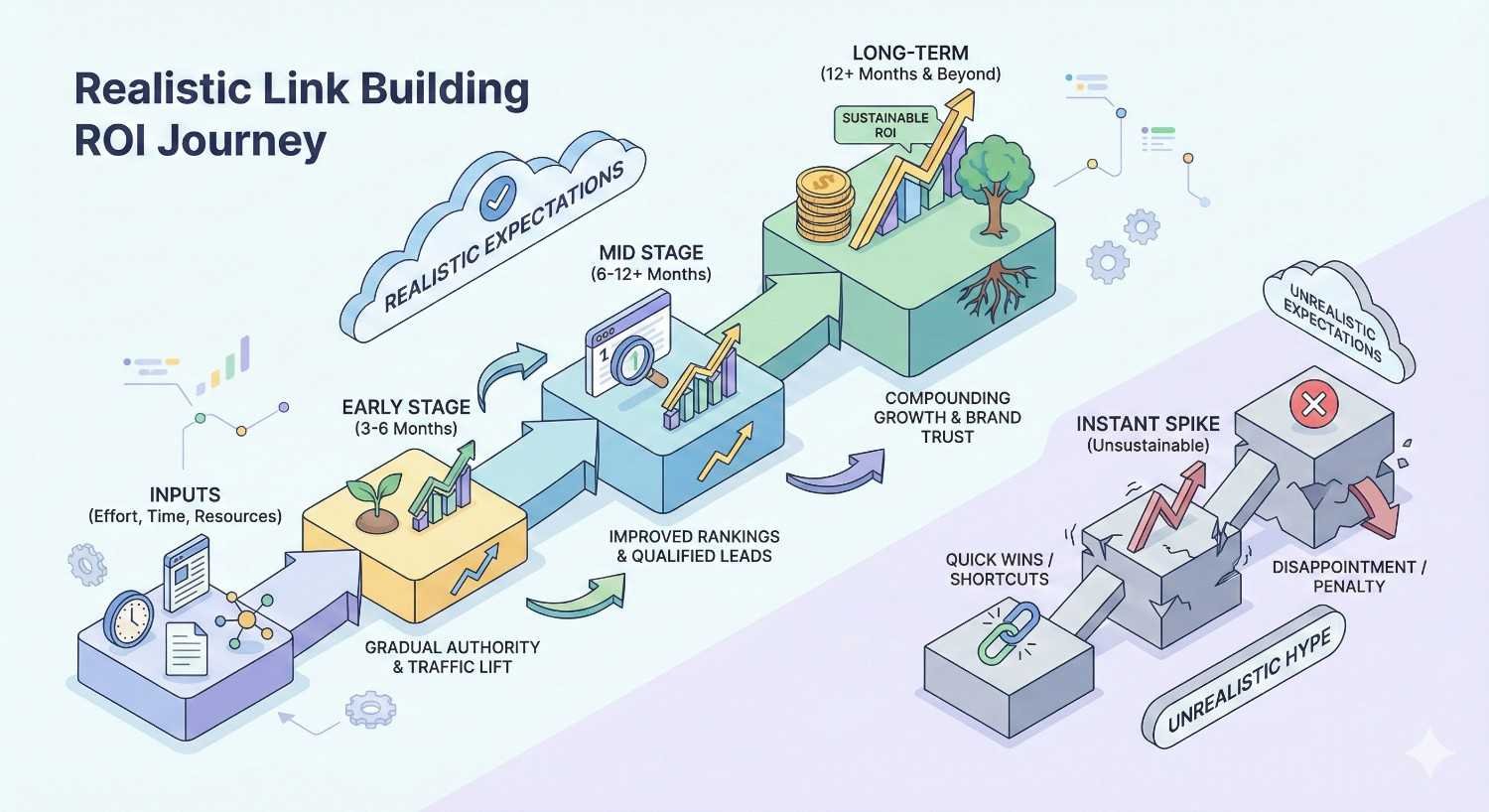
Link building delivers results over months, not days. New dofollow links typically take weeks to be discovered, crawled, and factored into rankings. Expect a 2-4 month lag between earning a link and seeing ranking improvements.
Quality dramatically outweighs quantity. One link from a highly authoritative, relevant site often moves rankings more than dozens of links from low-quality sources. Prioritize fewer, better links over volume-focused approaches.
Measure link building success through multiple metrics. Track referring domain growth, domain authority trends, and ranking improvements for target keywords. Also monitor referral traffic and conversions from link placements.
Set monthly link acquisition targets based on your competitive landscape. Analyze how many referring domains top-ranking competitors have and build a realistic timeline to close the gap.
How a Strategic Link Building Approach Drives Sustainable Growth
Sustainable link building compounds over time. Each quality link strengthens your domain authority, making future content more likely to rank and attract additional natural links. This flywheel effect accelerates growth as your authority builds.
Integrate link building with content strategy. Create content specifically designed to attract links, then amplify that content through outreach. This combination maximizes the return on both content creation and link building investments.
Build relationships alongside links. Connections with journalists, bloggers, and industry influencers create ongoing opportunities. A single relationship might yield multiple links over years of collaboration.
Avoid shortcuts that risk penalties. The time saved by purchasing links or using manipulative tactics rarely justifies the potential ranking losses from penalties. Build authority through legitimate means that create lasting value.
Conclusion
Dofollow and nofollow links serve distinct purposes in SEO, with dofollow links passing ranking authority and nofollow links providing traffic, visibility, and profile diversity. Understanding when each type matters helps you prioritize link building efforts and set realistic expectations for results.
A strategic approach to link acquisition balances quality dofollow links from authoritative sources with natural nofollow mentions across diverse platforms. This combination builds sustainable authority while maintaining the natural patterns search engines expect.
At White Label SEO Service, we help businesses build comprehensive link profiles that drive measurable organic growth. Our team handles everything from content strategy and outreach to technical SEO and performance tracking. Contact us to discuss how strategic link building can accelerate your search visibility and deliver long-term ROI.
Frequently Asked Questions
Are all links dofollow by default?
Yes, every hyperlink is dofollow unless a rel attribute specifies otherwise. You must explicitly add rel=”nofollow”, rel=”sponsored”, or rel=”ugc” to prevent a link from passing authority. Standard links without these attributes automatically function as dofollow.
Can nofollow links still drive traffic?
Absolutely. Nofollow links function identically to dofollow links for users. Visitors can click them and reach your site normally. A nofollow link from a high-traffic website can drive substantial referral traffic that converts into leads and customers.
Should I disavow nofollow links?
Generally, no. Nofollow links do not pass authority, so they cannot harm your rankings through link spam. Google’s disavow tool is designed for toxic dofollow links. Disavowing nofollow links wastes effort and provides no benefit.
What percentage of backlinks should be dofollow?
No universal ideal percentage exists. Natural profiles typically show 60-80% dofollow links, but this varies by industry and site type. Focus on earning quality links naturally rather than targeting specific ratios. Extremely skewed profiles in either direction may warrant investigation.
Do social media links pass SEO value?
Social media links are typically nofollow and do not directly pass ranking authority. However, they drive referral traffic, increase content visibility, and can lead to natural dofollow links when your content gets discovered and referenced by bloggers and journalists.
How long does it take for new backlinks to impact rankings?
New links typically take 2-4 months to fully impact rankings. Google must discover, crawl, and process the link before factoring it into algorithms. High-authority links from frequently crawled sites may show effects faster than links from smaller, less-crawled sources.
Can too many dofollow links hurt my site?
The quantity of dofollow links itself does not cause harm. However, low-quality dofollow links from spammy or irrelevant sites can trigger penalties. Focus on earning dofollow links from authoritative, relevant sources rather than accumulating volume from questionable sites.