
Authority links remain the most powerful trust signal in search engine algorithms. A single backlink from a high-authority domain can outperform hundreds of low-quality links in terms of ranking impact. For businesses investing in organic growth, understanding how to earn these trusted endorsements separates sustainable SEO success from wasted effort.
Search engines have evolved far beyond simple link counting. They now evaluate the credibility, relevance, and editorial nature of every backlink pointing to your site. This shift means your link building strategy must prioritize quality and trust over volume.
This guide covers everything you need to know about authority links: what makes them valuable, how to earn them ethically, measuring their impact, and setting realistic expectations for results.
What Are Authority Links?
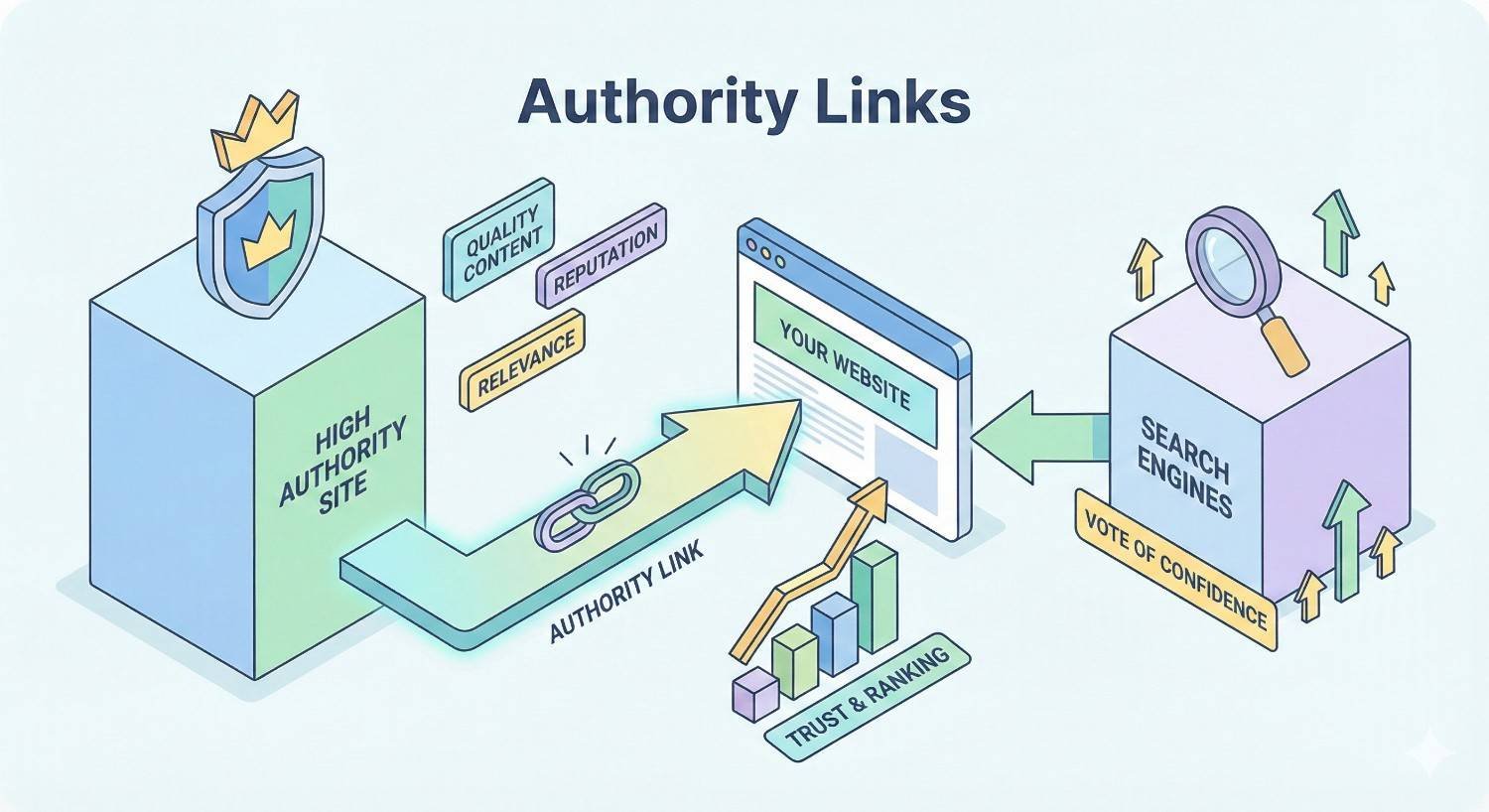
Authority links are backlinks from websites that search engines recognize as highly credible, trustworthy, and influential within their respective industries or topics. These links carry significantly more weight in ranking algorithms than standard backlinks because they represent genuine endorsements from established sources.
Defining Link Authority in SEO
Link authority refers to the ranking power a backlink passes from one website to another. Not all links are created equal. A link from a major news publication, government website, or respected industry resource transfers more trust and ranking potential than a link from a newly created blog with no established reputation.
Search engines assign authority based on multiple factors. The linking site’s own backlink profile matters. Its content quality, publishing history, and topical expertise all contribute. A website that has earned trust over years of consistent, valuable content creation passes more authority through its outbound links.
Think of authority links as professional references. A recommendation from a respected industry leader carries more weight than one from someone unknown in your field.
How Search Engines Evaluate Trust Signals
Google and other search engines use sophisticated algorithms to assess link trustworthiness. The process involves analyzing the linking domain’s history, content quality, and relationship patterns across the web.
Trust evaluation starts with the source domain. Search engines examine how many quality sites link to that domain, what topics it covers, and whether it has any history of spam or manipulation. Sites with clean histories and strong inbound link profiles pass more trust.
Context matters significantly. A link embedded naturally within relevant editorial content signals genuine endorsement. Links placed in footers, sidebars, or comment sections carry less weight because they often lack editorial oversight.
The anchor text and surrounding content also influence trust signals. When the linking page discusses topics related to your content, search engines interpret the link as a relevant recommendation rather than a random placement.
Authority Links vs. Regular Backlinks
The distinction between authority links and regular backlinks comes down to source quality and trust transfer. Regular backlinks might come from any website willing to link to you. Authority links come specifically from sources that search engines already trust.
Regular backlinks from low-quality directories, blog comments, or forum signatures provide minimal ranking benefit. In some cases, they can even harm your site if they appear manipulative. These links lack the editorial endorsement that signals genuine value.
Authority links typically come from established publications, educational institutions, government resources, or recognized industry leaders. They require earning through valuable content, relationship building, or newsworthy activities. The effort required to obtain them reflects their value.
A practical comparison: one authority link from a respected industry publication often delivers more ranking improvement than fifty links from obscure blogs. Quality dramatically outweighs quantity in modern link building.
Why Authority Links Matter for Organic Growth
Authority links directly influence how search engines perceive your website’s credibility and expertise. This perception translates into tangible ranking improvements, increased organic traffic, and stronger competitive positioning.
The Role of Trust in Search Rankings
Trust functions as a foundational ranking factor. Search engines aim to deliver reliable, accurate information to users. They accomplish this by prioritizing content from sources they trust. Authority links serve as votes of confidence that help establish this trust.
When trusted websites link to your content, search engines interpret this as validation. The linking site essentially vouches for your credibility. Multiple authority links compound this effect, building a trust profile that improves rankings across your entire domain.
Trust also influences how quickly new content gets indexed and ranked. Sites with established authority often see new pages appear in search results faster than sites without strong backlink profiles. This advantage accelerates organic growth over time.
How Authority Links Impact Domain Credibility
Domain credibility, sometimes called domain authority or domain rating, represents your website’s overall strength in search engine algorithms. Authority links directly boost this metric by transferring trust from established sources to your site.
Each quality backlink adds to your domain’s credibility score. As this score increases, your existing pages become more competitive for their target keywords. New content you publish also starts with a stronger baseline, making it easier to rank.
The impact extends beyond individual pages. A strong domain credibility profile helps your entire site compete more effectively. Pages that might struggle to rank on a weaker domain can achieve first-page positions when supported by solid authority.
Industry-specific authority links carry particular weight. A link from a recognized leader in your niche signals topical expertise more strongly than a general authority link. Building relationships within your industry creates compounding credibility benefits.
Long-Term SEO Value of Trusted Backlinks
Authority links provide lasting value that compounds over time. Unlike paid advertising that stops delivering results when you stop paying, quality backlinks continue working indefinitely.
The trust transferred through authority links becomes part of your domain’s permanent profile. Even if the linking page eventually gets removed, the historical trust signal often persists in search engine calculations. This creates durable competitive advantages.
Authority links also attract additional links naturally. When your content ranks well due to strong backlinks, more people discover and reference it. This creates a positive feedback loop where initial authority links generate organic link growth.
Long-term value also comes from relationship building. The connections you develop while earning authority links often lead to future opportunities. Guest posting relationships, media contacts, and industry partnerships continue producing benefits for years.
Key Characteristics of High-Authority Links
Understanding what makes a link authoritative helps you prioritize your outreach efforts and evaluate potential link opportunities. Several measurable and qualitative factors distinguish high-authority links from average backlinks.
Domain Authority and Trust Flow Metrics
Third-party tools provide metrics that estimate a domain’s authority level. Moz’s Domain Authority, Ahrefs’ Domain Rating, and Majestic’s Trust Flow offer quantifiable ways to assess potential link sources.
Domain Authority and Domain Rating scores range from 0 to 100. Higher scores indicate stronger domains. Generally, links from sites scoring above 50 provide meaningful authority transfer. Sites above 70 represent premium link opportunities.
Trust Flow specifically measures the quality of links pointing to a domain. A high Trust Flow score suggests the site has earned links from other trusted sources. This metric helps identify sites that pass genuine trust rather than just raw link equity.
These metrics serve as useful screening tools but shouldn’t be your only criteria. A highly relevant site with moderate metrics often provides more value than an irrelevant site with high scores. Use metrics to filter opportunities, then evaluate relevance and context.
Relevance and Topical Alignment
Topical relevance significantly amplifies a link’s authority value. Search engines understand that endorsements from related sources carry more weight than random links from unrelated sites.
A link from a respected marketing publication to your SEO services page signals strong relevance. The linking site’s audience and content focus align with your topic. Search engines interpret this as a meaningful endorsement from a knowledgeable source.
Contrast this with a link from a high-authority cooking blog to the same SEO page. While the cooking blog might have impressive metrics, the topical disconnect reduces the link’s value. Search engines question why an unrelated site would endorse your content.
Relevance operates at multiple levels. The linking domain’s overall focus matters. The specific page’s topic matters. Even the surrounding paragraph’s context influences how search engines interpret the link’s meaning and value.
Editorial Placement vs. Paid or Manipulated Links
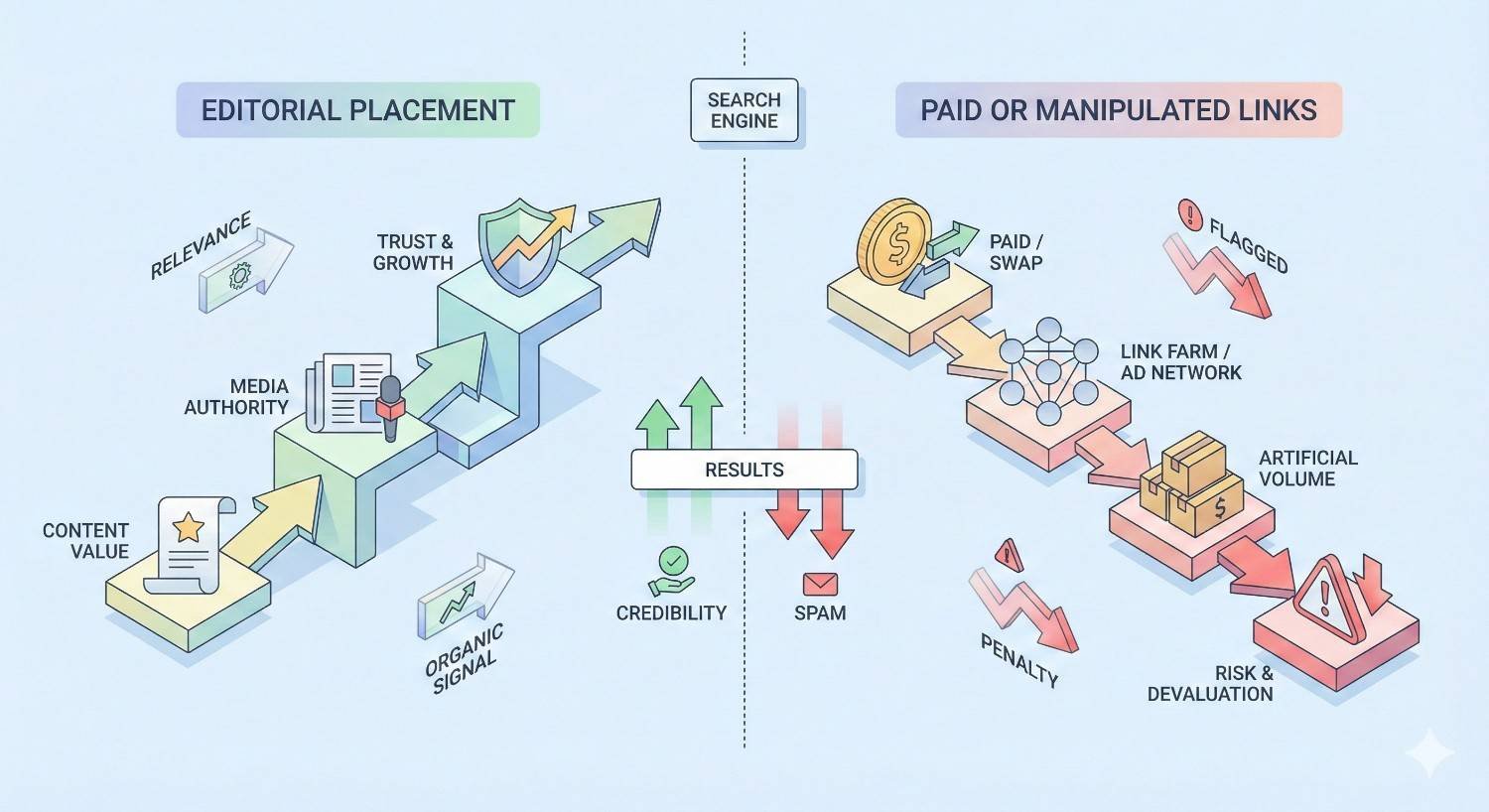
Editorial links occur when a website chooses to reference your content because it genuinely adds value for their readers. These links represent authentic endorsements that search engines reward.
Editorial placement typically happens within the main body content of an article. The link appears naturally within relevant context, surrounded by related information. The linking site’s editorial team made a conscious decision to include the reference.
Paid links, sponsored placements, and manipulated links lack this editorial authenticity. Search engines have become sophisticated at detecting these patterns. Links that appear in obvious advertising sections, follow predictable placement patterns, or come from known link sellers carry reduced value or potential penalties.
The distinction matters for risk management. Editorial links align with search engine guidelines and provide sustainable value. Manipulated links might offer short-term gains but create long-term vulnerability to algorithm updates and manual penalties.
Link Source Quality Indicators
Beyond metrics and relevance, several quality indicators help identify truly authoritative link sources. Evaluating these factors improves your link building targeting.
Content quality on the linking site matters. Sites that publish well-researched, original content demonstrate editorial standards that search engines recognize. Thin content, excessive advertising, or obvious content farms signal lower quality regardless of their metrics.
Publishing consistency indicates an established operation. Sites that have published regularly for years demonstrate staying power. Newly created sites or those with sporadic publishing histories haven’t built the same trust.
Audience engagement provides another signal. Sites with active comment sections, social sharing, and genuine readership have earned attention through quality. This engagement correlates with the trust search engines assign.
The site’s own backlink profile reveals how others perceive it. Authority sites typically have diverse, natural-looking backlink profiles from other quality sources. Sites with suspicious link patterns may not pass the trust you expect.
How to Build Authority Links That Establish Trust
Earning authority links requires strategic effort focused on creating value and building relationships. The most effective approaches combine quality content creation with targeted outreach and genuine industry participation.
Creating Link-Worthy Content Assets
Content that naturally attracts authority links provides exceptional value that other sites want to reference. This content typically offers something unique: original research, comprehensive guides, useful tools, or distinctive perspectives.
Original research and data studies consistently earn authority links. When you publish findings that others can cite, you become a primary source. Industry publications, journalists, and other content creators link to original data because it strengthens their own content.
Comprehensive guides that thoroughly cover a topic attract links from sites that want to reference authoritative resources. These guides should exceed what competitors offer in depth, accuracy, and usefulness. Becoming the definitive resource on a topic earns ongoing link acquisition.
Interactive tools, calculators, and templates provide practical value that earns links. When your tool solves a real problem, other sites recommend it to their audiences. This utility-based approach generates natural editorial links.
Visual assets like infographics, charts, and diagrams get embedded and linked across the web. Quality visuals that communicate complex information clearly become shareable resources that accumulate links over time.
Strategic Outreach and Relationship Building
Proactive outreach accelerates authority link acquisition by connecting your content with relevant publishers. Effective outreach focuses on mutual value rather than one-sided requests.
Research potential link partners thoroughly before reaching out. Understand their content focus, audience, and linking patterns. Personalized outreach that demonstrates genuine familiarity with their work performs dramatically better than generic templates.
Lead with value in your outreach. Explain specifically how your content benefits their audience. Highlight what makes your resource unique or superior to alternatives they might reference. Make the case for why linking to you improves their content.
Build relationships before you need links. Engage with potential partners on social media, comment thoughtfully on their content, and share their work. When you eventually reach out, you’re a familiar name rather than a stranger asking for favors.
Follow up persistently but respectfully. Many successful link placements happen after multiple touchpoints. Track your outreach and maintain organized follow-up sequences without becoming annoying.
Digital PR and Earned Media Strategies
Digital PR generates authority links by creating newsworthy stories that journalists and publications want to cover. This approach targets high-authority media sites that rarely link through traditional outreach.
Newsjacking involves connecting your expertise to trending stories. When relevant news breaks, position yourself as an expert source who can provide commentary or analysis. Journalists on deadline appreciate accessible experts who can add value to their coverage.
Data-driven stories attract media attention. Conduct surveys, analyze industry trends, or compile statistics that reveal interesting findings. Package these insights into press-ready formats that journalists can easily cover.
Expert commentary and thought leadership establish you as a go-to source. Contribute quotes to journalist queries through platforms like HARO, Qwoted, or direct media relationships. Consistent helpful responses build relationships that generate ongoing coverage.
Stunts and creative campaigns can generate significant media coverage when executed well. These require careful planning and genuine newsworthiness, but successful campaigns earn links from major publications that would never respond to standard outreach.
Guest Contributions on Authoritative Publications
Guest posting on respected industry publications provides direct authority links while building your reputation as an expert. The key is targeting publications that maintain editorial standards and genuine audiences.
Identify publications your target audience reads and respects. Industry trade publications, established blogs with engaged readerships, and niche media sites offer guest contribution opportunities. Prioritize sites with genuine editorial processes over those that accept anything.
Pitch unique angles rather than generic topics. Editors receive countless pitches for obvious subjects. Stand out by proposing fresh perspectives, contrarian viewpoints, or topics that fill gaps in their existing coverage.
Deliver exceptional quality in your contributions. Guest posts represent your expertise to new audiences. Invest the effort to make each piece genuinely valuable. Quality contributions lead to repeat opportunities and stronger relationships.
Include natural, contextual links to your relevant content. Avoid promotional language or forced link placements. Editorial guidelines typically allow one or two relevant links when they genuinely add value for readers.
Leveraging Data, Research, and Original Insights
Original research creates linkable assets that continue earning authority links long after publication. Investing in data collection and analysis produces content that others must cite when covering your topic.
Survey your audience or industry to generate proprietary data. Even simple surveys can reveal interesting trends when analyzed thoughtfully. Package findings into comprehensive reports that serve as primary sources.
Analyze publicly available data to uncover insights others have missed. Government databases, industry reports, and academic research contain raw material for original analysis. Your interpretation and presentation create unique value.
Document case studies with specific results and methodologies. Detailed case studies provide evidence that others reference when making similar arguments. Include enough detail that readers can understand and learn from your experience.
Create industry benchmarks by aggregating data across multiple sources or clients. Benchmark reports become essential references that earn links whenever someone discusses industry standards or performance expectations.
Measuring Authority Link Quality and Impact
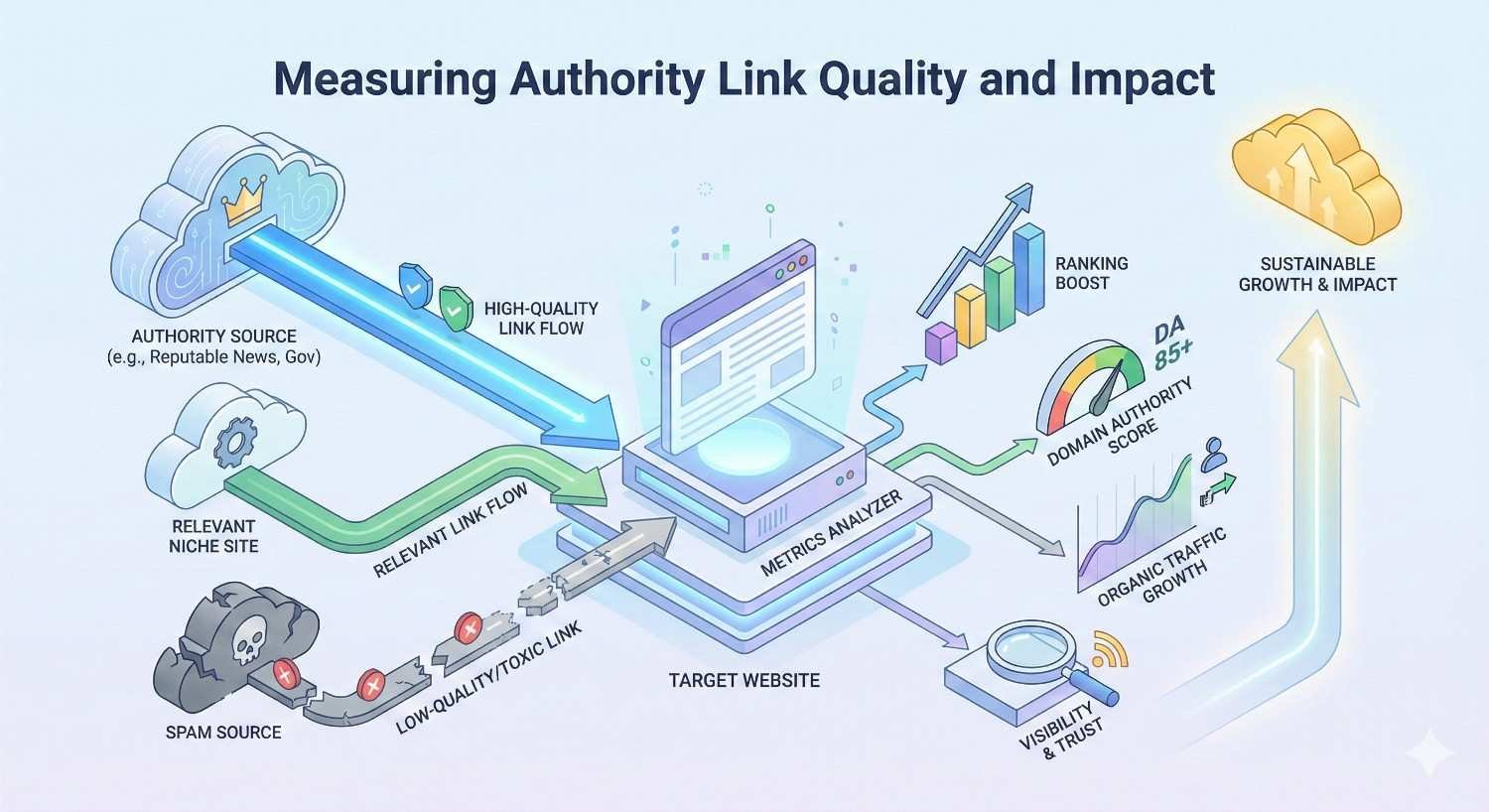
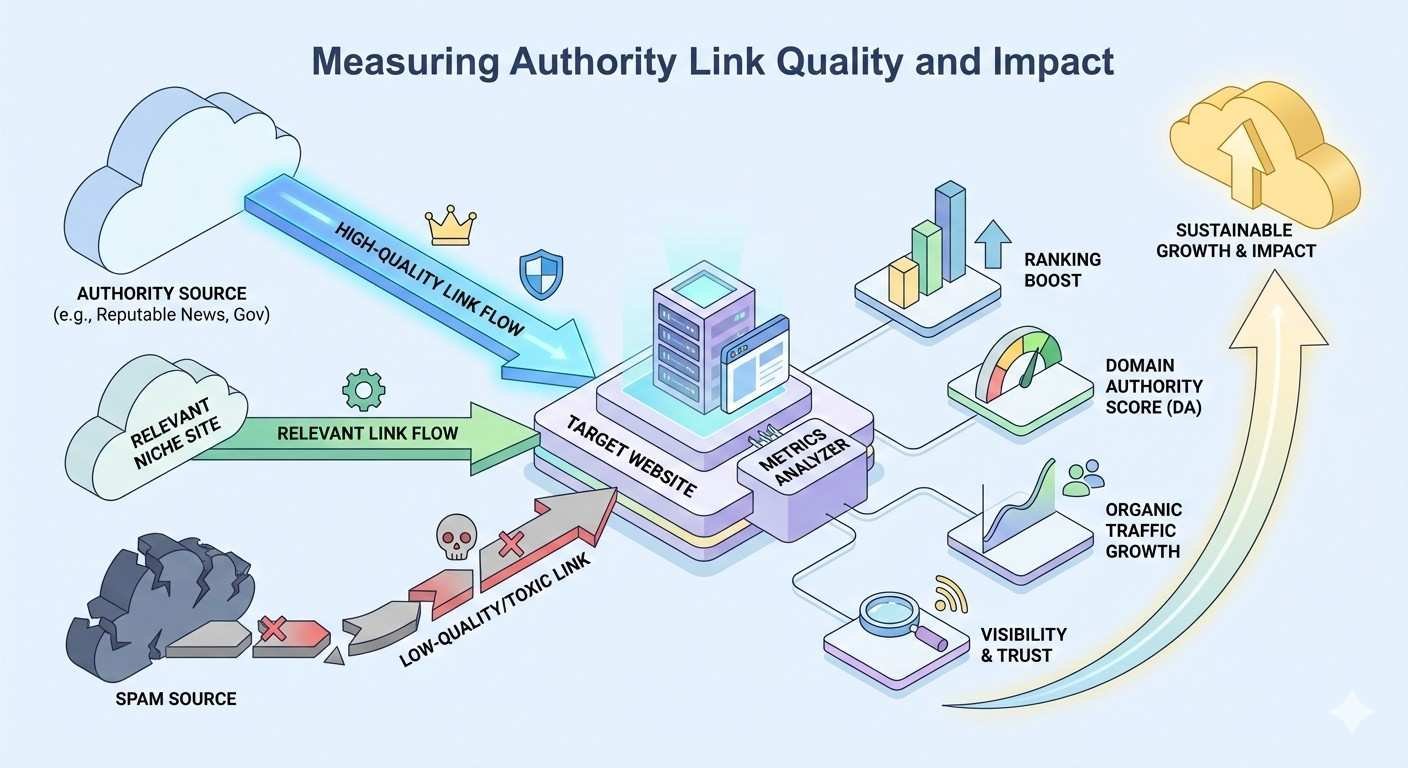
Tracking your link building results helps optimize your strategy and demonstrate ROI. Effective measurement combines tool-based metrics with ranking and traffic analysis.
Tools for Evaluating Link Authority
Several professional tools help assess link quality and track your backlink profile growth. Each offers different strengths for authority link analysis.
Ahrefs provides comprehensive backlink analysis including Domain Rating, URL Rating, and detailed link metrics. Its backlink index updates frequently, making it useful for tracking new link acquisitions. The tool also shows referring domains, anchor text distribution, and link velocity.
Moz offers Domain Authority and Page Authority metrics widely used in the industry. Its Link Explorer tool provides spam score analysis that helps identify potentially harmful links. Moz’s metrics often appear in outreach conversations, making them useful reference points.
Majestic specializes in trust metrics through its Trust Flow and Citation Flow scores. The ratio between these metrics indicates link profile quality. Majestic’s historical data helps analyze how link profiles have evolved over time.
SEMrush combines backlink analysis with broader SEO features. Its Authority Score metric and toxic link identification help manage link profile health. Integration with other SEO data provides context for link building impact.
Google Search Console provides free data directly from Google about links they’ve discovered. While less detailed than paid tools, this data represents what Google actually sees. The Links report shows top linking sites and most linked pages.
Tracking Trust Signals and Ranking Improvements
Connecting link building efforts to ranking improvements requires systematic tracking over time. Multiple data points help establish correlation between new links and performance gains.
Track keyword rankings for pages receiving new authority links. Document ranking positions before link acquisition and monitor changes over subsequent weeks and months. Look for patterns connecting specific links to ranking movements.
Monitor organic traffic to linked pages through Google Analytics or similar tools. Traffic increases following link acquisition suggest the links are providing ranking benefits. Segment traffic by landing page to isolate the impact on specific content.
Watch for improvements in overall domain metrics. As you accumulate authority links, your domain-level scores should increase. These improvements benefit your entire site, not just the pages receiving direct links.
Document the timeline between link acquisition and observable results. Authority links typically take weeks to months to fully impact rankings. Understanding this timeline helps set realistic expectations and identify which links deliver the strongest results.
Identifying Toxic vs. Trustworthy Links
Not all backlinks help your site. Some can actively harm your rankings if search engines view them as manipulative or spammy. Regular link profile audits help identify and address problematic links.
Toxic link indicators include: links from known spam sites, excessive exact-match anchor text, links from irrelevant foreign-language sites, patterns suggesting paid link schemes, and links from sites with thin or auto-generated content.
Use tool-based spam scores as starting points for investigation. Ahrefs, Moz, and SEMrush all provide toxicity or spam indicators. High scores warrant manual review to determine if the link poses genuine risk.
Review your anchor text distribution for unnatural patterns. Natural link profiles include diverse anchor text: branded terms, naked URLs, generic phrases, and varied keyword references. Heavy concentration on exact-match keywords suggests manipulation.
Consider disavowing clearly harmful links through Google Search Console. This tool tells Google to ignore specific links when assessing your site. Use disavow conservatively, only for links you’re confident are harmful and cannot be removed.
How long does it take for authority links to impact rankings?
Authority links typically begin influencing rankings within 4 to 12 weeks after acquisition, though the full impact often takes 3 to 6 months to materialize. Several factors affect this timeline including your site’s existing authority, the linking page’s crawl frequency, and competitive intensity for your target keywords.
Common Mistakes When Building Authority Links
Avoiding common pitfalls saves time and protects your site from potential penalties. Many link building failures stem from misunderstanding what search engines actually value.
Prioritizing Quantity Over Quality
The most damaging link building mistake is chasing volume instead of quality. This approach wastes resources on links that provide minimal value while potentially triggering algorithmic penalties.
Low-quality link building often involves purchasing cheap links from link farms, submitting to hundreds of low-quality directories, or participating in link exchange schemes. These tactics might temporarily inflate your backlink count but rarely improve rankings.
Search engines have become sophisticated at identifying and devaluing mass-produced links. Algorithm updates specifically target manipulative link patterns. Sites relying on quantity-focused strategies often experience dramatic ranking drops when these updates roll out.
The resource investment in quality link building produces better returns. One authority link from a respected publication typically outperforms dozens of low-quality links. Focus your budget and effort on fewer, higher-impact opportunities.
Ignoring Relevance and Context
Links from irrelevant sources provide diminished value and can appear manipulative to search engines. Topical alignment between linking and linked content significantly impacts authority transfer.
Relevance mistakes happen when link builders target any high-authority site regardless of topic fit. A technology company earning links from fashion blogs, or a local business getting links from international sites in different languages, creates patterns that search engines question.
Context within the linking page also matters. Links placed naturally within relevant content paragraphs transfer more authority than links in author bios, resource lists, or unrelated sections. Prioritize placements where your link genuinely fits the surrounding content.
Industry-specific link building produces stronger results. Focus on publications, blogs, and resources within your niche or adjacent industries. These relevant links signal topical expertise more effectively than random authority links.
Relying on Outdated Link Building Tactics
Link building tactics that worked years ago often fail today or actively harm your site. Search engine algorithms continuously evolve to identify and penalize manipulative practices.
Outdated tactics include: article spinning and mass submission, private blog networks, reciprocal link schemes, paid links without proper disclosure, and automated link building software. These approaches carry significant penalty risk.
Guest posting has evolved significantly. Mass guest posting on low-quality sites that accept anything no longer provides value. Modern guest posting focuses on genuine contributions to respected publications with real audiences.
Link building now requires earning links through value creation rather than gaming systems. Tactics that feel like shortcuts or manipulation typically backfire. Sustainable link building aligns with how search engines want the web to work.
Authority Link Building Timeline and Expectations
Understanding realistic timelines helps set appropriate expectations and maintain commitment through the months required to see results. Link building is a long-term investment, not a quick fix.
Realistic Timeframes for Trust Accumulation
New websites typically need 6 to 12 months of consistent link building before seeing significant ranking improvements. Established sites with existing authority may see faster results, sometimes within 2 to 4 months.
The initial months often show minimal visible progress. Search engines need time to discover, crawl, and evaluate new links. Trust accumulates gradually as your link profile grows and ages. This delay tests patience but reflects how algorithms actually work.
Competitive keywords require longer timelines. If top-ranking competitors have years of authority link accumulation, matching their link profiles takes substantial time and effort. Less competitive terms may respond faster to link building efforts.
Consistent link acquisition over time produces better results than sporadic bursts. Search engines view natural link growth as a positive signal. Sudden spikes in link acquisition can appear manipulative and trigger scrutiny.
Factors That Accelerate or Delay Results
Several variables influence how quickly authority links impact your rankings. Understanding these factors helps optimize your approach and set accurate expectations.
Accelerating factors include: existing domain authority providing a foundation, links from highly authoritative sources, strong topical relevance between linking and linked content, and links to pages with solid on-page optimization.
Delaying factors include: new domains without established trust, highly competitive keywords with entrenched competitors, links from lower-authority sources, and technical issues preventing proper crawling and indexing.
Content quality on your linked pages affects results. Authority links pointing to thin or poorly optimized content underperform. Ensure your content deserves the authority being directed to it.
Your overall SEO foundation matters. Technical issues, poor site structure, or weak on-page optimization limit how effectively link authority translates to rankings. Address foundational issues alongside link building.
Setting ROI Expectations for Link Acquisition
Authority link building requires significant investment. Setting realistic ROI expectations helps justify the investment and measure success appropriately.
Cost per quality authority link varies widely based on acquisition method. Earned media and digital PR campaigns might cost thousands per placement when accounting for content creation and outreach time. Guest posting on premium publications often involves similar investments.
ROI calculation should consider long-term value. Unlike paid advertising, authority links continue delivering value indefinitely. A link that costs $500 to acquire might generate traffic and ranking benefits for years, dramatically improving effective ROI over time.
Measure ROI through multiple metrics: ranking improvements for target keywords, organic traffic growth to linked pages, domain authority increases, and downstream conversions from organic traffic. Single metrics rarely capture full link building value.
Compare link building ROI to alternative marketing investments. While upfront costs may seem high, the compounding and lasting nature of authority links often produces superior long-term returns compared to ongoing advertising spend.
How Authority Links Fit Into a Complete SEO Strategy
Authority links work best as part of an integrated SEO approach. Isolated link building without supporting elements produces suboptimal results. Strategic alignment multiplies the impact of every link acquired.
Integrating Link Building with Technical SEO
Technical SEO creates the foundation that allows link authority to flow effectively through your site. Without proper technical implementation, even excellent links underperform.
Crawlability ensures search engines can discover and follow links to your content. Technical issues like blocked resources, broken redirects, or poor site architecture prevent link equity from reaching target pages. Regular technical audits identify and resolve these barriers.
Site speed affects how search engines evaluate your pages. Slow-loading pages may receive reduced rankings regardless of their link profiles. Optimize performance to maximize the ranking benefit from authority links.
Internal linking distributes authority from externally linked pages throughout your site. Strategic internal link structures ensure link equity flows to your most important pages. Pages without internal links may not benefit from your overall domain authority.
Mobile optimization has become essential. Search engines primarily use mobile versions of pages for ranking. Ensure your linked content provides excellent mobile experiences to capture full link value.
Aligning Content Strategy with Link Acquisition
Content strategy and link building should inform each other. Creating content specifically designed to earn links while also serving user needs produces the best results.
Identify content gaps where link-worthy assets could serve your audience and attract links. Original research, comprehensive guides, and useful tools often satisfy both requirements. Plan content creation with link potential in mind.
Update and improve existing content that has earned links. Adding fresh information, expanding coverage, and improving quality helps retain existing links while attracting new ones. Content maintenance protects your link building investment.
Create supporting content that strengthens your topical authority. Comprehensive topic coverage signals expertise to search engines. This topical depth amplifies the impact of authority links by establishing clear subject matter focus.
Coordinate content publication with outreach timing. Fresh content often earns links more easily than older pieces. Plan outreach campaigns to coincide with new content launches for maximum impact.
Balancing Authority Building with Other Ranking Factors
Links represent one important ranking factor among many. Overemphasizing link building while neglecting other factors limits overall SEO performance.
On-page optimization ensures your content clearly communicates relevance to target keywords. Well-optimized pages convert link authority into rankings more effectively than poorly optimized alternatives. Balance link acquisition with ongoing on-page improvements.
User experience signals increasingly influence rankings. Pages that satisfy user intent, provide easy navigation, and deliver value earn better rankings. Links alone cannot overcome poor user experience.
Content quality remains fundamental. Search engines aim to surface the best content for each query. Authority links help quality content rank, but cannot make poor content succeed long-term. Invest in creating genuinely valuable content.
Local SEO, if applicable, requires specific optimization beyond link building. Google Business Profile optimization, local citations, and review management complement authority links for local ranking success.
Conclusion
Authority links remain essential for building the trust that drives sustainable organic growth. Quality backlinks from credible sources signal expertise to search engines, improve domain credibility, and create lasting competitive advantages that compound over time.
Building authority links requires strategic investment in content creation, relationship development, and consistent outreach. The timeline spans months rather than weeks, but the long-term ROI justifies the patience required. Avoiding common mistakes like prioritizing quantity over quality protects your investment and ensures sustainable results.
We help businesses build authority link profiles that establish lasting trust and drive measurable organic growth. White Label SEO Service provides comprehensive link building strategies integrated with technical SEO and content optimization for maximum impact. Contact us to discuss how authority links can accelerate your search visibility.
Frequently Asked Questions About Authority Links
What makes a link authoritative?
A link becomes authoritative when it comes from a website that search engines already trust. Key factors include the linking site’s domain authority score, its relevance to your topic, editorial placement within quality content, and the site’s own backlink profile from other trusted sources.
How many authority links do I need to rank?
The number varies dramatically based on keyword competition and your current domain strength. Highly competitive terms might require dozens of authority links over many months. Less competitive keywords might respond to just a few quality placements. Focus on consistent acquisition rather than hitting specific numbers.
Can I buy authority links safely?
Purchasing links violates Google’s guidelines and carries significant penalty risk. Paid links that pass PageRank should be marked with nofollow or sponsored attributes. Instead of buying links directly, invest in content creation and outreach that earns editorial links naturally.
Do nofollow links from authority sites help?
Nofollow links from authority sites provide indirect benefits even without passing direct link equity. They drive referral traffic, increase brand visibility, and contribute to a natural-looking link profile. Google has also indicated nofollow is now a hint rather than directive, meaning some value may pass.
How do I know if my link building is working?
Track multiple metrics over time: keyword ranking improvements for linked pages, organic traffic growth, domain authority score increases, and new referring domain counts. Results typically appear 2 to 6 months after link acquisition. Consistent positive trends across these metrics indicate successful link building.
What is the difference between Domain Authority and Page Authority?
Domain Authority measures the overall strength of an entire website’s backlink profile. Page Authority measures the strength of a specific page. Links from high Page Authority pages on high Domain Authority sites provide the strongest authority transfer. Both metrics matter when evaluating link opportunities.
Should I focus on getting links to my homepage or inner pages?
Balance link acquisition across both. Homepage links build overall domain authority that benefits your entire site. Links to specific inner pages directly boost those pages for their target keywords. Strategic internal linking then distributes authority from your homepage to important inner pages.