Understanding Backlink Analysis in Modern SEO
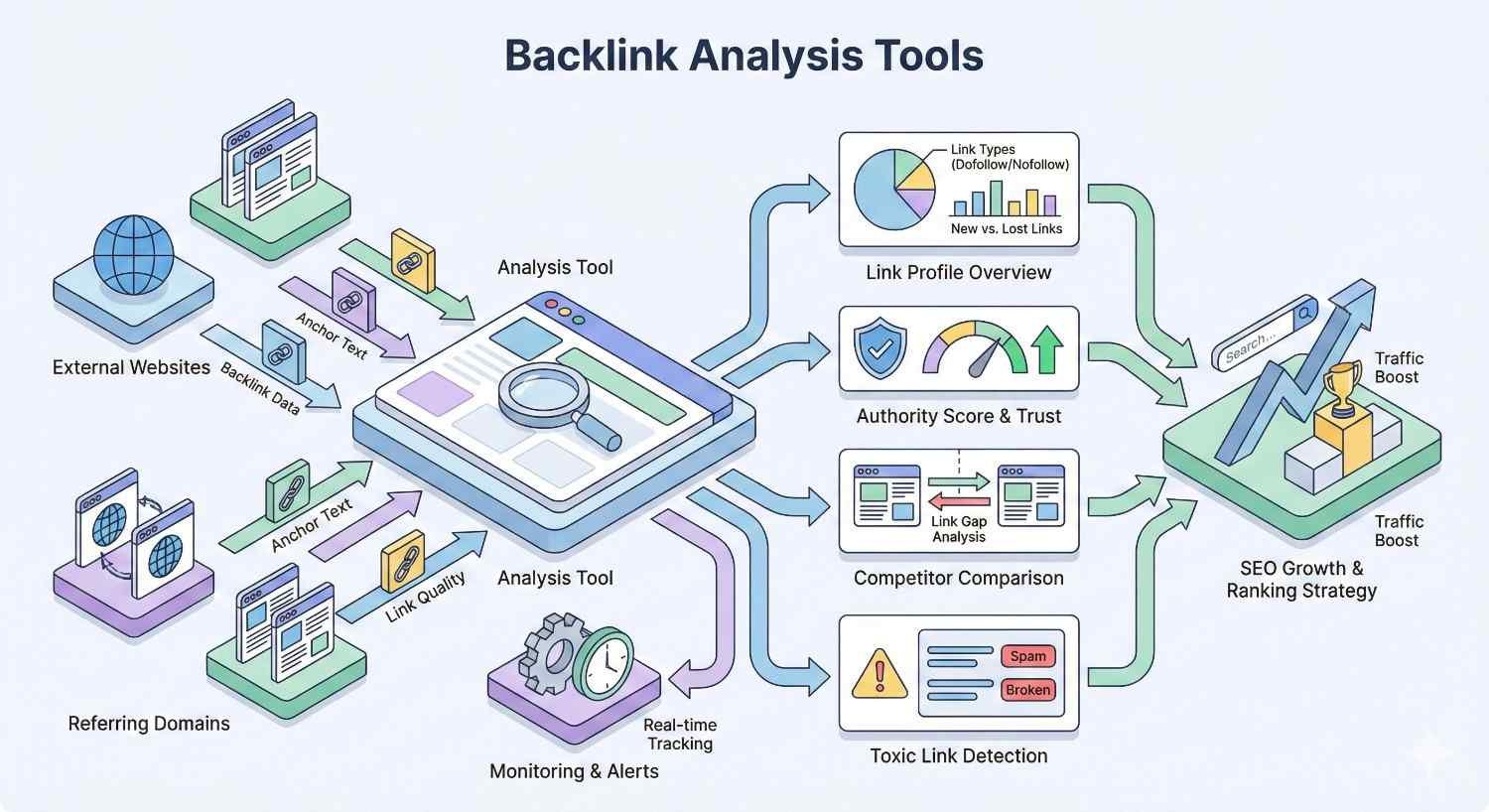
Backlink analysis tools reveal exactly which websites link to you, your competitors, and any domain you want to investigate. These platforms crawl billions of web pages to build searchable link databases that power smarter SEO decisions.
Understanding your backlink profile directly impacts organic rankings, referral traffic, and domain authority growth. Without visibility into link data, you’re optimizing blind.
This guide covers how backlink tools work, which features matter most, and how to choose the right platform for your business goals.
What Are Backlink Analysis Tools?
Core Definition and Purpose
Backlink analysis tools are software platforms that discover, index, and evaluate the links pointing to any website. They crawl the web continuously, building massive databases of link relationships between domains.
The primary purpose is visibility. You need to know who links to your site, what anchor text they use, and whether those links help or hurt your rankings. These tools transform raw link data into actionable intelligence.
Beyond your own site, backlink tools let you analyze competitor link profiles. This reveals their link building strategies, partnership opportunities they’ve secured, and gaps in your own approach.
How Backlink Analysis Tools Work
Every major backlink tool operates its own web crawler. These bots systematically visit websites, follow links, and record the connections they find. The data feeds into proprietary indexes that users can search.
When you enter a domain, the tool queries its database and returns all discovered backlinks. Results typically include the linking page URL, anchor text, link type (dofollow or nofollow), and various quality metrics.
Freshness matters significantly. Tools update their indexes at different frequencies. Some refresh popular pages daily while others may take weeks to discover new links. Index size and crawl frequency directly impact data accuracy.
Why Backlink Analysis Matters for SEO Performance
Links remain one of Google’s most important ranking factors. Google’s own documentation confirms that links help their systems understand content relevance and authority.
Without backlink analysis, you cannot:
- Identify which links drive your current rankings
- Spot toxic links that may trigger penalties
- Understand why competitors outrank you
- Find realistic link building opportunities
- Measure link acquisition ROI
The correlation between referring domains and organic traffic is well-documented. Sites with more high-quality backlinks consistently outperform those with fewer links, assuming content quality is comparable.
Key Features of Backlink Analysis Tools
Link Discovery and Index Coverage
Index size determines how many links a tool can show you. Larger indexes mean more comprehensive data, especially for smaller websites that major crawlers might visit less frequently.
Ahrefs reports crawling over 400 billion pages with an index of 35 trillion known links. SEMrush and Moz maintain similarly massive databases, though exact sizes vary.
Coverage gaps exist in every tool. No single platform captures every link on the internet. For critical analysis, cross-referencing multiple tools provides the most complete picture.
Backlink Quality Metrics and Scoring
Raw link counts mean little without quality context. Every tool has developed proprietary metrics to estimate link value.
Domain Authority and Domain Rating
Moz created Domain Authority (DA), a score from 1-100 predicting how likely a domain is to rank. Ahrefs developed Domain Rating (DR), measuring the strength of a site’s backlink profile.
These metrics are not Google metrics. They’re third-party estimates based on each tool’s own algorithms. A DA 50 site isn’t inherently better than a DA 40 site. Use these scores for relative comparisons, not absolute judgments.
Trust Flow and Citation Flow
Majestic pioneered Trust Flow and Citation Flow. Trust Flow measures link quality based on how closely a site connects to trusted seed sites. Citation Flow measures link quantity and influence.
The ratio between these metrics matters. High Citation Flow with low Trust Flow suggests spammy link patterns. Balanced scores indicate healthier link profiles.
Spam Score Detection
Moz’s Spam Score identifies sites with characteristics common to penalized domains. Factors include thin content, excessive ads, and suspicious link patterns.
High spam scores don’t guarantee a site is harmful. They indicate elevated risk. Manual review should always accompany automated spam detection.
Anchor Text Analysis
Anchor text distribution reveals how the web describes your site. Natural profiles include branded anchors, naked URLs, generic phrases, and some keyword-rich anchors.
Over-optimized anchor text profiles raise red flags. If 80% of your anchors contain exact-match keywords, that pattern looks manipulative to search engines.
Backlink tools categorize anchors automatically, showing distribution percentages and flagging potential issues. This data guides outreach messaging and helps you request specific anchor text from link partners.
Competitor Backlink Intelligence
Competitor analysis is often the highest-value feature. Seeing exactly where competitors earn links reveals:
- Publications and blogs in your niche that accept contributions
- Resource pages linking to similar content
- Partnership opportunities you’ve missed
- Content formats that attract links
Most tools offer “link intersect” features. These show domains linking to multiple competitors but not to you. These represent your highest-probability outreach targets.
Link Velocity and Growth Tracking
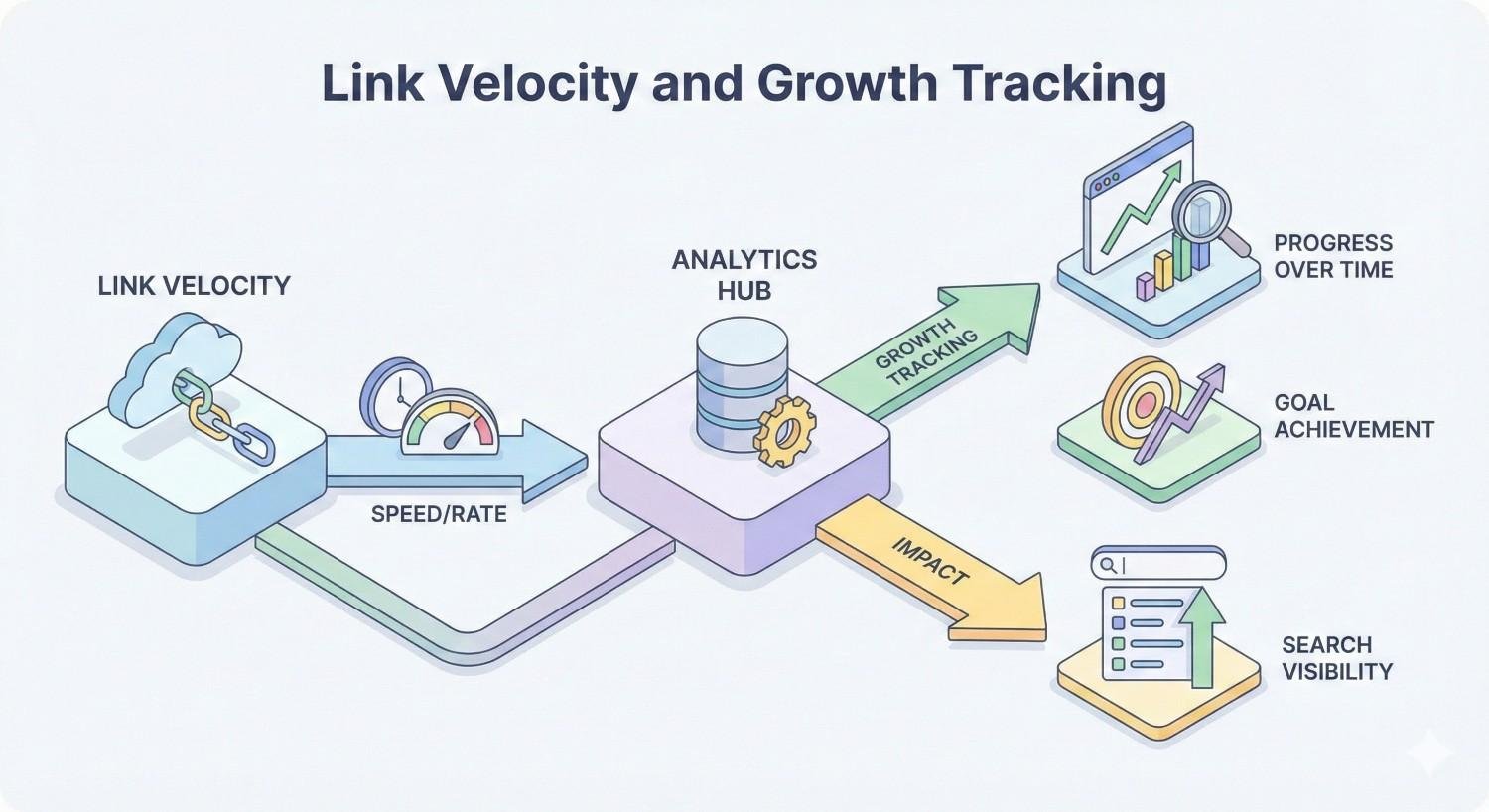
Link velocity measures how quickly you acquire new backlinks over time. Sudden spikes or drops can indicate problems or opportunities.
A natural link profile grows steadily. Viral content creates temporary spikes. Purchased link campaigns often show unnatural patterns that algorithms can detect.
Historical tracking lets you correlate link acquisition with ranking changes. When you gain links from authoritative sites, you can measure the ranking impact over subsequent weeks.
Lost and Broken Link Monitoring
Links disappear constantly. Pages get deleted, sites go offline, and webmasters remove links during redesigns. Losing valuable backlinks can impact rankings.
Monitoring tools alert you when links vanish. This creates opportunities to:
- Reach out and request link restoration
- Identify if a linking page moved (and update your link)
- Understand which content types retain links longest
Broken link building also relies on this data. Finding broken outbound links on authoritative sites lets you suggest your content as a replacement.
Toxic Link Identification
Not all backlinks help. Links from spam sites, link farms, and penalized domains can harm your rankings. Google’s algorithms have become sophisticated at identifying manipulative link patterns.
Toxic link detection features analyze your profile for risky links. Common red flags include:
- Links from sites in unrelated languages
- Sitewide footer or sidebar links
- Links from known link networks
- Excessive reciprocal linking
When toxic links appear, you have two options: request removal or submit a disavow file to Google Search Console.
Top Backlink Analysis Tools Compared
Ahrefs: Comprehensive Backlink Database
Ahrefs maintains one of the largest backlink indexes available. Their crawler visits pages frequently, often detecting new links within hours of publication.
Key strengths include:
- Massive link database with fast updates
- Intuitive interface for link analysis
- Powerful competitor research features
- Content Explorer for finding linkable content
- Accurate traffic estimates for linking pages
Ahrefs pricing starts at $99/month for the Lite plan, scaling to $999/month for Agency. Most serious SEO practitioners consider it essential.
SEMrush: All-in-One SEO with Backlink Analytics
SEMrush positions itself as a complete digital marketing suite. Backlink analysis is one component alongside keyword research, site audits, and advertising tools.
Key strengths include:
- Integrated workflow with other SEO tools
- Backlink Gap tool for competitor comparison
- Link Building Tool for outreach management
- Toxic score with Google penalty risk assessment
- Historical data going back years
SEMrush pricing starts at $139.95/month for Pro, reaching $499.95/month for Business. The all-in-one approach appeals to teams wanting consolidated tools.
Moz Link Explorer: Domain Authority Pioneer
Moz created Domain Authority, making their tool essential for anyone using DA as a benchmark. Their index is smaller than Ahrefs but still substantial.
Key strengths include:
- Industry-standard Domain Authority metric
- Spam Score for risk assessment
- Link Tracking Lists for monitoring campaigns
- Clean, beginner-friendly interface
- Strong educational resources
Moz Pro starts at $99/month for Standard, scaling to $599/month for Premium. Free accounts offer limited daily queries.
Majestic: Trust Flow Specialists
Majestic focuses exclusively on link intelligence. Their Trust Flow and Citation Flow metrics offer unique perspectives on link quality.
Key strengths include:
- Proprietary Trust Flow methodology
- Topical Trust Flow showing niche relevance
- Historic Index going back years
- Clique Hunter for finding link networks
- Competitive pricing for link-focused analysis
Majestic pricing starts at $49.99/month for Lite, reaching $399.99/month for Full API access. The specialized focus appeals to link building specialists.
Google Search Console: Free First-Party Data
Google Search Console provides the only first-party backlink data available. Google shows you the links they’ve actually discovered and indexed.
Key strengths include:
- Completely free
- Data directly from Google’s index
- Shows links Google actually counts
- Disavow file submission
- Integration with other Google tools
Limitations are significant. GSC shows only a sample of links, provides minimal metrics, and offers no competitor analysis. It’s a starting point, not a complete solution.
Feature and Pricing Comparison Table
| Feature | Ahrefs | SEMrush | Moz | Majestic | GSC |
| Starting Price | $99/mo | $139.95/mo | $99/mo | $49.99/mo | Free |
| Index Size | 35T+ links | 43T+ links | 44T+ links | 2.3T+ URLs | Unknown |
| Update Frequency | Daily | Daily | Weekly | Daily | Varies |
| Competitor Analysis | Yes | Yes | Yes | Yes | No |
| Toxic Link Detection | Yes | Yes | Yes | Limited | No |
| Anchor Text Analysis | Yes | Yes | Yes | Yes | Limited |
| Historical Data | Yes | Yes | Yes | Yes | Limited |
| API Access | Yes | Yes | Yes | Yes | Yes |
How to Use Backlink Analysis Tools Effectively
Conducting a Comprehensive Backlink Audit
Start by exporting your complete backlink profile. Most tools allow CSV downloads containing every discovered link with associated metrics.
Review the data systematically:
Step 1: Assess overall profile health. Check your referring domain count, domain rating trend, and anchor text distribution. Compare these baselines to competitors.
Step 2: Identify your strongest links. Sort by linking domain authority. Your top links drive the most ranking value. Ensure these remain active.
Step 3: Flag potentially toxic links. Filter for low-quality indicators: spam scores above 30%, links from unrelated niches, and suspicious anchor patterns.
Step 4: Document findings. Create a spreadsheet tracking links to monitor, links to disavow, and opportunities to pursue.
Repeat this audit quarterly. Link profiles change constantly, and regular reviews catch problems early.
Analyzing Competitor Link Profiles
Select three to five direct competitors ranking for your target keywords. Enter each domain into your backlink tool and export their profiles.
Look for patterns:
- Which publications link to multiple competitors?
- What content types earn the most links?
- Are competitors earning links you could replicate?
- What anchor text strategies do they use?
The link intersect feature accelerates this analysis. It shows domains linking to competitors but not to you. These sites have demonstrated willingness to link within your niche.
Prioritize outreach targets by domain authority and relevance. A DA 60 industry blog matters more than a DA 80 general news site for most businesses.
Identifying Link Building Opportunities
Backlink tools reveal opportunities beyond competitor analysis:
Broken link building: Find authoritative pages with broken outbound links. Offer your content as a replacement.
Resource page prospecting: Search for “resources” or “useful links” pages in your niche. These pages exist specifically to link out.
Unlinked brand mentions: Some tools detect mentions of your brand without links. Reach out and request the link.
Content gap analysis: Identify topics earning links for competitors that you haven’t covered. Create superior content targeting those opportunities.
HARO and journalist requests: Monitor platforms where journalists seek expert sources. Earning media links builds authority quickly.
Monitoring Link Acquisition Progress
Set up automated alerts for new and lost backlinks. Most tools offer email notifications when your profile changes.
Track key metrics monthly:
- New referring domains acquired
- Total backlink count change
- Average domain rating of new links
- Anchor text distribution shifts
- Lost links requiring attention
Create a simple dashboard connecting link acquisition to business outcomes. When you earn a link from a DA 70 site, monitor ranking changes for related keywords over the following weeks.
Detecting and Disavowing Toxic Links
Toxic link identification requires judgment, not just automated scores. High spam scores warrant investigation, not automatic disavowal.
Review flagged links manually:
- Visit the linking page. Does it look legitimate?
- Check the site’s content. Is it relevant to your niche?
- Examine other outbound links. Does the page link to spam?
- Consider the anchor text. Is it manipulative?
If a link appears genuinely harmful, attempt removal first. Contact the webmaster and request deletion. Document your outreach attempts.
When removal fails, add the link to your disavow file. Submit through Google Search Console. Google will ignore these links when evaluating your site.
Use disavow conservatively. Disavowing legitimate links can hurt rankings. When uncertain, leave the link alone.
What Backlink Metrics Actually Matter?
Domain Rating vs. Domain Authority
Domain Rating (Ahrefs) and Domain Authority (Moz) measure similar concepts differently. DR focuses on backlink profile strength. DA predicts ranking ability based on multiple factors.
Neither metric comes from Google. They’re third-party estimates with different methodologies. A site with DR 50 might have DA 40 or DA 60.
Use these metrics for:
- Comparing sites within the same tool
- Prioritizing outreach targets
- Tracking your own progress over time
Avoid using them for:
- Absolute quality judgments
- Cross-tool comparisons
- Predicting exact ranking outcomes
Referring Domains vs. Total Backlinks
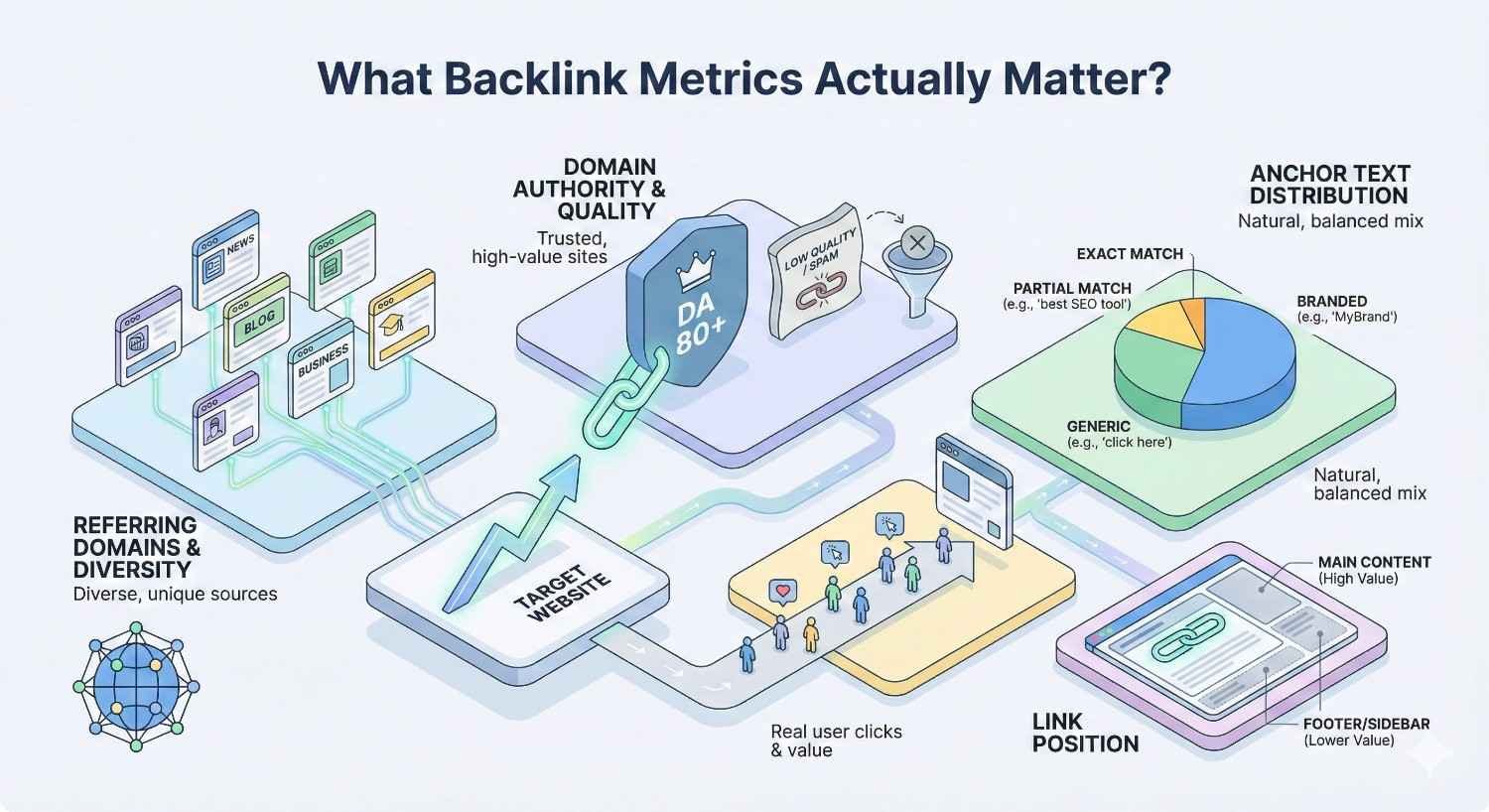
Referring domains count unique websites linking to you. Total backlinks count every individual link, including multiple links from the same site.
Referring domains matter more for most analyses. One hundred links from one site provide less ranking value than one hundred links from one hundred different sites.
Link diversity signals natural popularity. When many independent sites link to you, search engines interpret that as genuine authority.
Watch for imbalanced ratios. If you have 10,000 backlinks from 50 referring domains, most links come from a few sites. This pattern can appear manipulative.
Dofollow vs. Nofollow Links
Dofollow links pass ranking signals. Nofollow links include a tag telling search engines not to follow the link for ranking purposes.
Google has evolved its handling of nofollow. They now treat nofollow as a “hint” rather than a directive. Some nofollow links may pass value.
Natural profiles include both types. A profile with 100% dofollow links looks unnatural. Major platforms like Wikipedia, social media, and many news sites use nofollow by default.
Focus on earning quality links regardless of follow status. A nofollow link from a major publication still drives referral traffic and brand awareness.
Link Relevance and Topical Authority
A link from a relevant site in your industry carries more weight than a link from an unrelated high-authority domain.
Topical relevance signals include:
- The linking site covers similar topics
- The linking page discusses related subjects
- Surrounding content provides relevant context
- The link makes editorial sense
Majestic’s Topical Trust Flow attempts to quantify this. It categorizes sites by topic and measures authority within specific niches.
When building links, prioritize relevance over raw authority scores. A DA 40 industry blog often provides more ranking value than a DA 70 general directory.
Link Placement and Context
Where a link appears on a page affects its value. Editorial links within main content carry more weight than footer links, sidebar links, or author bio links.
Context matters too. A link surrounded by relevant text, appearing naturally within a sentence, signals editorial endorsement. A link dumped in a list of hundreds of other links signals less value.
Backlink tools show link placement data. Filter for contextual links when analyzing competitors or evaluating your own profile quality.
Choosing the Right Backlink Analysis Tool for Your Business
For Small Businesses and Startups
Budget constraints require prioritization. Start with free tools to establish baselines before investing in paid platforms.
Recommended approach:
- Set up Google Search Console immediately (free)
- Use free tiers of Ahrefs Webmaster Tools or Moz for basic analysis
- Invest in one paid tool when link building becomes a priority
For most small businesses, a single tool provides sufficient data. Ahrefs or SEMrush offer the best balance of features and usability for growing companies.
Monthly costs of $99-$150 deliver substantial value when used consistently. The ROI comes from identifying opportunities and avoiding penalties.
For Growing Agencies and In-House Teams
Agencies managing multiple clients need scalable solutions. Look for:
- Multiple user seats
- White-label reporting
- API access for custom integrations
- Bulk analysis capabilities
- Client management features
SEMrush and Ahrefs both offer agency-tier plans with these features. Pricing scales with usage, typically $200-$500/month for mid-sized agencies.
Consider tool consolidation. Using one platform across all clients simplifies training, reporting, and workflow management.
For Enterprise and Multi-Site Operations
Enterprise needs include:
- Unlimited or high-volume queries
- Advanced API access
- Custom integrations with existing tools
- Dedicated support
- Security and compliance features
Enterprise pricing typically requires custom quotes. Expect $1,000+/month for full-featured enterprise access.
At this scale, multiple tools often make sense. Different platforms excel at different analyses. Budget allows for comprehensive coverage.
Budget Considerations and Free Alternatives
Free options exist but come with significant limitations:
Google Search Console: Essential but incomplete. Shows only sampled data with minimal metrics.
Ahrefs Webmaster Tools: Free for verified site owners. Limited to your own site analysis.
Moz Free Tools: Limited daily queries. Useful for spot checks.
Ubersuggest: Freemium model with basic backlink data. Less comprehensive than premium tools.
OpenLinkProfiler: Free tool with decent coverage. Interface and data freshness lag behind paid options.
For serious SEO work, paid tools pay for themselves. The time saved and opportunities discovered justify subscription costs for most businesses.
Common Backlink Analysis Mistakes to Avoid
Focusing Only on Quantity Over Quality
Chasing link counts leads to poor decisions. One hundred low-quality links provide less value than ten authoritative, relevant links.
Quality indicators to prioritize:
- Linking domain authority and trust
- Topical relevance to your niche
- Editorial placement within content
- Traffic and engagement on linking pages
- Natural anchor text patterns
Set quality thresholds for link building campaigns. Define minimum domain authority, relevance requirements, and placement standards before pursuing opportunities.
Ignoring Competitor Link Strategies
Your competitors have already done link building research. Their profiles reveal what works in your industry.
Common oversights:
- Never analyzing competitor backlinks
- Analyzing once but not monitoring changes
- Focusing only on top competitors, missing niche players
- Copying strategies without adaptation
Schedule quarterly competitor reviews. Track which competitors gain links fastest and reverse-engineer their approaches.
Neglecting Regular Link Audits
Link profiles change constantly. New links appear, old links disappear, and site quality fluctuates. One-time audits miss these dynamics.
Establish audit cadence:
- Monthly: Review new and lost links, check for obvious issues
- Quarterly: Comprehensive audit with toxic link review
- Annually: Deep analysis comparing year-over-year changes
Automate what you can. Set up alerts for significant changes. Manual review catches what automation misses.
Misinterpreting Backlink Metrics
Third-party metrics are estimates, not facts. Common misinterpretations include:
Treating DA/DR as Google metrics. They’re not. Google doesn’t use these scores.
Comparing metrics across tools. A Moz DA 50 doesn’t equal an Ahrefs DR 50. Different methodologies produce different numbers.
Obsessing over small changes. DA dropping from 35 to 34 is noise, not signal. Focus on trends, not fluctuations.
Ignoring context. A DA 30 site in your exact niche may outperform a DA 60 general site for your rankings.
Use metrics as directional guides, not absolute truths. Combine quantitative data with qualitative judgment.
Integrating Backlink Analysis into Your SEO Strategy
Connecting Link Data to Content Strategy
Backlink analysis reveals what content earns links. Use this intelligence to guide content creation.
Analyze your top-linked pages:
- What topics attract links?
- What formats perform best (guides, tools, research)?
- What makes these pages link-worthy?
Apply findings to content planning. If original research earns links, invest in data studies. If comprehensive guides attract links, create definitive resources.
Competitor content analysis adds perspective. Identify their most-linked content and create superior alternatives.
Aligning Backlink Goals with Business Objectives
Link building should serve business goals, not vanity metrics. Connect link acquisition to outcomes that matter.
For lead generation: Target links from sites your prospects read. Referral traffic quality matters more than quantity.
For brand awareness: Pursue links from high-visibility publications. Even nofollow links from major media build recognition.
For local SEO: Focus on local directories, chambers of commerce, and regional publications. Geographic relevance amplifies local ranking signals.
For e-commerce: Product reviews, comparison sites, and industry roundups drive both links and conversions.
Define success metrics beyond link counts. Track referral traffic, brand mentions, and ranking improvements for target keywords.
Setting Realistic Link Acquisition Timelines
Link building takes time. Setting unrealistic expectations leads to frustration or risky shortcuts.
Realistic benchmarks for sustained effort:
- Month 1-3: Foundation building, outreach systems, initial wins
- Month 4-6: Momentum building, relationship development
- Month 7-12: Compounding results, established processes
- Year 2+: Authority status, inbound link attraction
Quality links are difficult to earn. Expecting dozens of DA 50+ links monthly sets teams up for failure. Five to ten quality links monthly represents strong performance for most businesses.
Factor in your starting position. New sites face more resistance than established domains. Adjust expectations accordingly.
Measuring Link Building ROI
Link building investment should produce measurable returns. Track metrics that connect effort to outcomes.
Input metrics:
- Outreach emails sent
- Responses received
- Placements secured
- Cost per link acquired
Output metrics:
- Referring domain growth
- Domain rating/authority changes
- Ranking improvements for target keywords
- Organic traffic increases
- Conversions from organic traffic
Calculate cost per link by dividing total investment (tools, time, content, outreach) by links acquired. Compare this cost to the traffic and conversion value those links generate.
The Future of Backlink Analysis
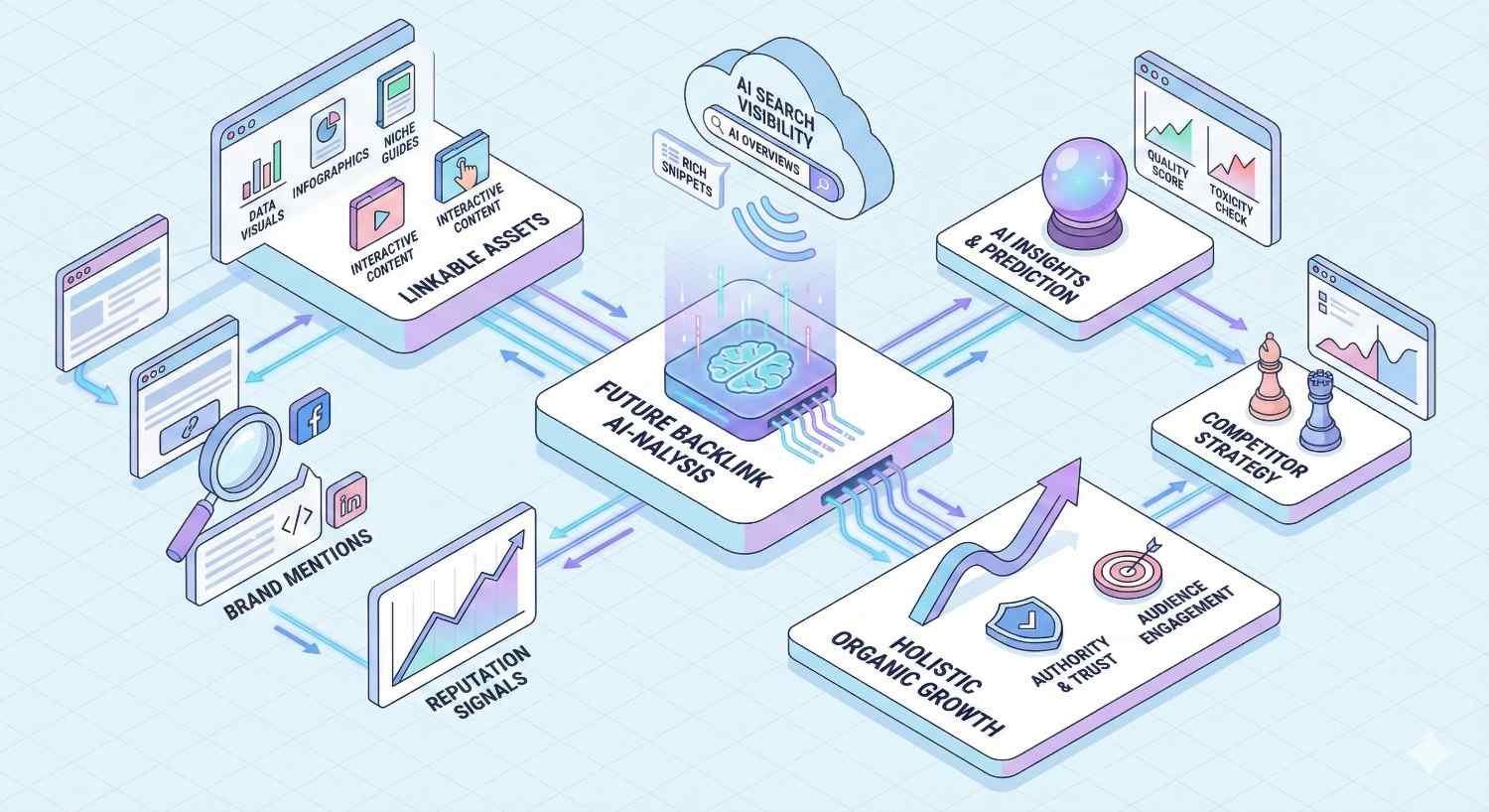
AI and Machine Learning in Link Intelligence
Artificial intelligence is transforming backlink analysis capabilities. Machine learning models can:
- Predict link value more accurately than simple metrics
- Identify link building opportunities automatically
- Detect manipulative patterns humans might miss
- Forecast ranking impact of potential links
Tool providers are integrating AI throughout their platforms. Expect smarter recommendations, automated opportunity identification, and more nuanced quality scoring.
Natural language processing enables better context understanding. AI can evaluate whether a link makes editorial sense within surrounding content.
Evolving Google Algorithms and Link Signals
Google continuously refines how it evaluates links. Recent trends suggest:
Quality over quantity: Algorithms increasingly discount low-quality links while amplifying authoritative signals.
Context awareness: Link placement, surrounding text, and page relevance factor more heavily into value assessment.
Manipulation detection: Machine learning identifies unnatural patterns that older algorithms missed.
Entity relationships: Links between topically related entities may carry more weight than random connections.
Adaptation is essential. Strategies that worked five years ago may be ineffective or harmful today. Stay current with algorithm updates and adjust approaches accordingly.
Beyond Backlinks: Entity-Based Authority
Search engines are moving toward entity-based understanding. Rather than just counting links, they’re mapping relationships between recognized entities.
This shift means:
- Brand mentions without links may carry ranking signals
- Associations with authoritative entities build credibility
- Topical expertise matters as much as link counts
- Knowledge graph presence influences visibility
Backlink tools are evolving to track these signals. Expect future platforms to measure entity associations, brand mentions, and topical authority alongside traditional link metrics.
The fundamentals remain relevant. Quality links from relevant sources will continue mattering. But the definition of “authority signals” is expanding beyond links alone.
Getting Started with Professional Backlink Analysis
Essential First Steps
Begin with these foundational actions:
- Verify Google Search Console. This free tool provides baseline data directly from Google. Set it up before anything else.
- Audit your current profile. Use a free tool tier to understand your starting position. Document referring domains, top links, and obvious issues.
- Analyze three competitors. Identify who ranks for your target keywords. Export their backlink profiles and look for patterns.
- Identify quick wins. Look for unlinked brand mentions, broken competitor links, and resource pages in your niche.
- Choose one paid tool. Based on your needs and budget, select a platform for ongoing analysis. Commit to learning it thoroughly.
Building a Sustainable Link Monitoring System
Consistent monitoring catches opportunities and problems early. Establish these habits:
Weekly: Check new backlink alerts. Review any significant changes.
Monthly: Export updated backlink data. Compare to previous month. Note trends.
Quarterly: Conduct comprehensive audit. Review toxic links. Analyze competitor changes.
Ongoing: Track link building campaign progress. Measure outreach effectiveness. Adjust strategies based on results.
Automate where possible. Set up email alerts for new links, lost links, and competitor changes. Use spreadsheets or dashboards to track metrics over time.
When to Partner with an SEO Agency
Managing backlink analysis and link building internally requires significant expertise and time. Consider agency partnership when:
- You lack internal SEO expertise
- Link building isn’t producing results
- You need to scale efforts quickly
- Competitor analysis reveals significant gaps
- Technical complexity exceeds team capabilities
Professional agencies bring established processes, industry relationships, and proven strategies. The investment often produces faster results than building capabilities from scratch.
White Label SEO Service provides comprehensive backlink analysis and link building support for businesses ready to accelerate organic growth. Our team handles the technical complexity while you focus on core business operations.
Conclusion
Backlink analysis tools transform raw link data into strategic intelligence that drives SEO performance. Understanding your profile, monitoring competitors, and identifying opportunities requires the right platform and consistent effort.
The tools covered here serve different needs and budgets. Whether you choose Ahrefs, SEMrush, Moz, Majestic, or start with free options, the key is taking action on the insights these platforms provide.
We help businesses build sustainable organic growth through professional backlink analysis and strategic link acquisition. Contact White Label SEO Service to discuss how expert support can accelerate your search visibility and drive measurable results.
Frequently Asked Questions
How do I choose the right backlink analysis tool for my business?
Start by defining your primary use case and budget. If you need comprehensive competitor analysis and have $100+/month, Ahrefs or SEMrush offer the best value. For tighter budgets, Majestic provides solid link data at lower cost. Small businesses can begin with Google Search Console and free tool tiers.
What’s the ROI of investing in backlink analysis tools?
The ROI depends on how you use the data. Tools paying $100-200/month typically save hours of manual research while revealing opportunities worth thousands in potential traffic value. One quality link opportunity discovered can justify months of subscription costs through ranking improvements and organic traffic gains.
Can I do backlink analysis without paid tools?
Yes, but with significant limitations. Google Search Console provides free first-party data. Ahrefs Webmaster Tools offers free analysis for verified sites. These options work for basic monitoring but lack competitor analysis, comprehensive metrics, and the depth needed for serious link building campaigns.
How often should I audit my backlink profile?
Conduct light reviews monthly and comprehensive audits quarterly. Monthly checks catch new toxic links and lost valuable links quickly. Quarterly deep dives assess overall profile health, anchor text distribution, and competitive positioning. Annual reviews compare year-over-year progress.
What makes a backlink high quality versus low quality?
High-quality backlinks come from relevant, authoritative sites with editorial placement in main content. Low-quality links appear on spammy sites, irrelevant pages, or in non-editorial positions like footers and sidebars. Relevance, authority, placement, and natural anchor text distinguish valuable links from harmful ones.
Should I disavow all links with high spam scores?
No. High spam scores indicate elevated risk, not confirmed harm. Review flagged links manually before disavowing. Many legitimate sites trigger spam score warnings. Only disavow links that appear genuinely manipulative or harmful after manual evaluation. Over-disavowing can hurt rankings.
How long does it take to see ranking improvements from new backlinks?
Expect 4-12 weeks for Google to fully process and credit new backlinks. High-authority links from frequently crawled sites may impact rankings faster. Links from smaller sites take longer to discover and evaluate. Consistent link acquisition over months produces more reliable ranking improvements than sporadic efforts.