
Ahrefs remains the most comprehensive backlink analysis platform available, giving SEO professionals direct access to over 35 trillion links across 170 million domains. This data advantage transforms how businesses approach link acquisition.
Whether you manage SEO for a startup or oversee enterprise campaigns, understanding Ahrefs unlocks systematic link building that drives measurable ranking improvements. The platform eliminates guesswork from prospecting, outreach, and performance tracking.
This guide covers everything from basic backlink analysis to advanced techniques like unlinked mention conversion and digital PR research. You will learn exactly how to build authority using Ahrefs data.
What Is Ahrefs and How Does It Support Link Building?
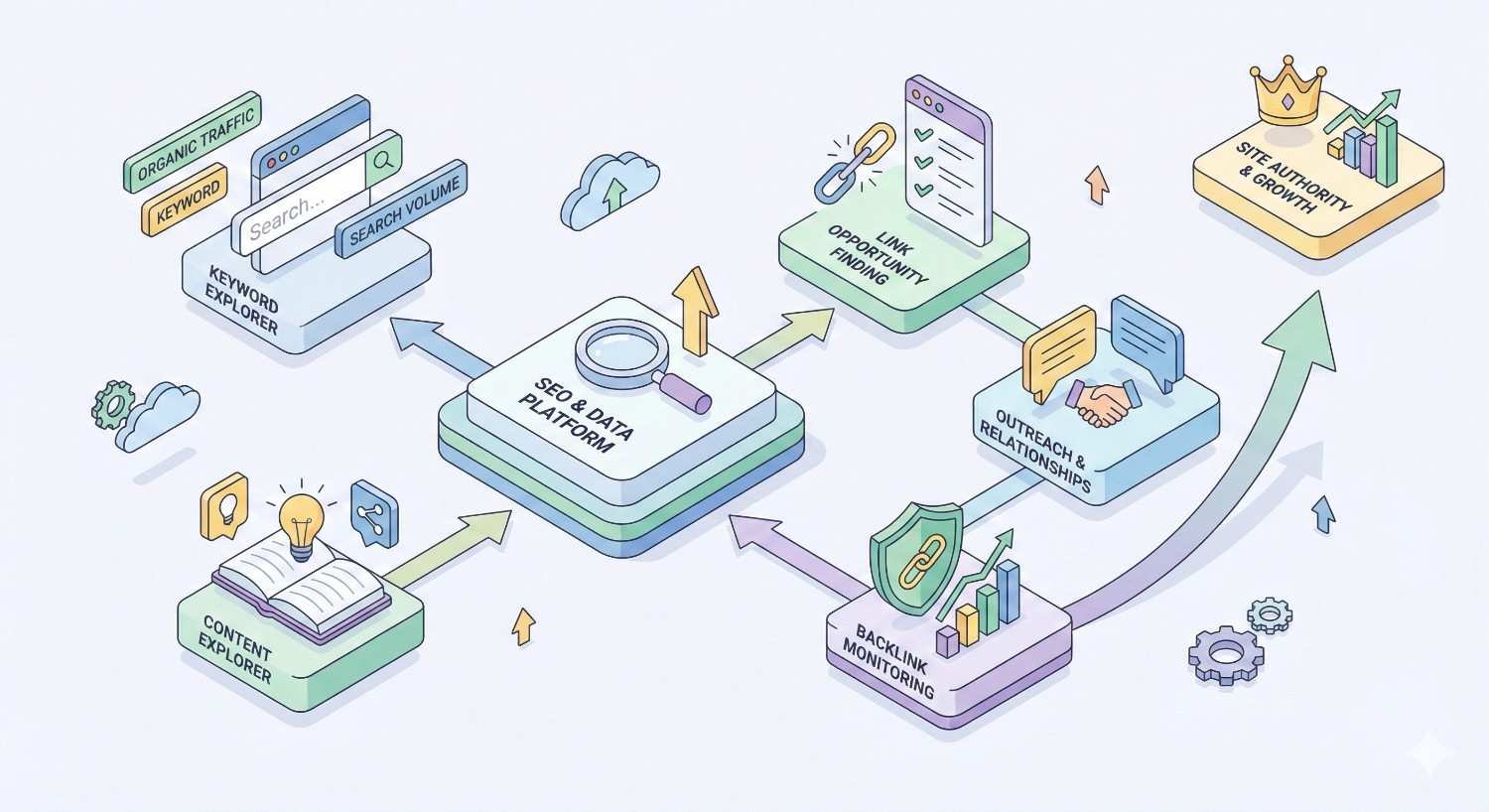
Ahrefs is a comprehensive SEO toolset built around one of the largest backlink databases in the industry. The platform crawls the web continuously, indexing new links and updating existing data to provide accurate snapshots of any domain’s link profile. For link builders, this means access to competitive intelligence that was previously impossible to gather manually.
The platform supports link building through three primary functions. First, it reveals your current backlink profile with granular detail about each linking page. Second, it exposes competitor link strategies so you can replicate successful tactics. Third, it helps identify new link opportunities through content analysis, broken link detection, and prospect research.
Core Link Building Features in Ahrefs
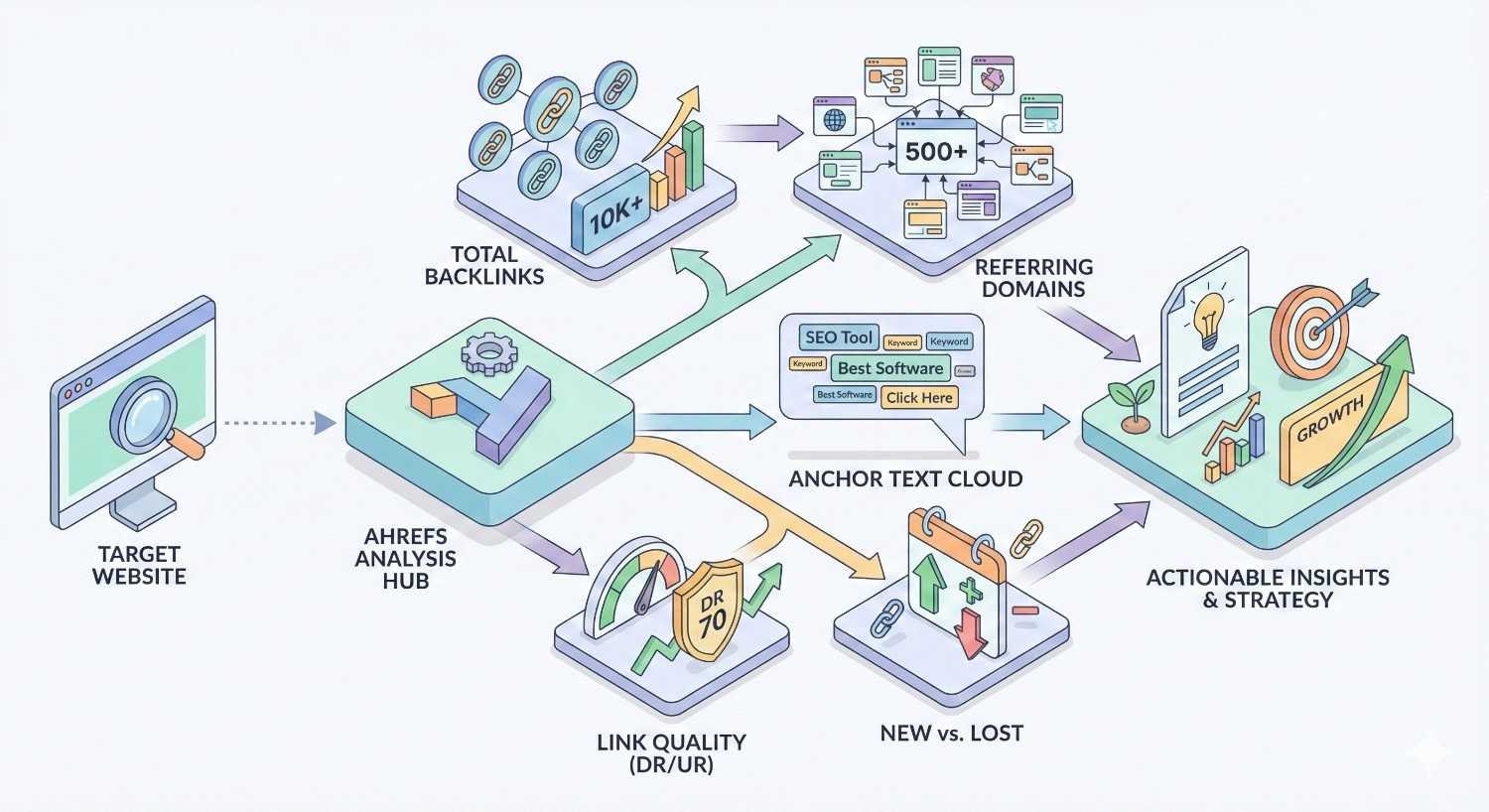
Site Explorer serves as the foundation for all link building work in Ahrefs. Enter any domain and instantly see total backlinks, referring domains, anchor text distribution, and link growth trends. The Backlinks report shows every link pointing to a site, filterable by dofollow status, domain rating, traffic, and dozens of other parameters.
Content Explorer functions as a search engine for linkable content. Search any topic and find pages that have earned significant backlinks, then analyze what makes them successful. This feature accelerates content ideation by showing proven formats and angles.
The Link Intersect tool identifies sites linking to multiple competitors but not to you. These represent high-probability prospects since they already link to similar content. Batch Analysis lets you evaluate hundreds of prospects simultaneously, exporting data for outreach campaigns.
Alerts notify you when competitors gain new links, when your brand gets mentioned, or when specific keywords appear in new content. This real-time intelligence creates immediate outreach opportunities.
How Ahrefs Differs from Other Link Building Tools
Ahrefs maintains the largest live backlink index among major SEO platforms. According to Ahrefs’ own data, their crawler processes over 8 billion pages daily, discovering new links faster than competitors. This freshness matters when timing outreach to recent publications.
The platform’s Domain Rating metric has become an industry standard for evaluating link quality. While Moz uses Domain Authority and Semrush uses Authority Score, DR calculations emphasize the quality and quantity of linking domains rather than total link count. This approach better reflects how Google likely evaluates authority.
Ahrefs also provides more granular filtering options than alternatives. You can isolate links from specific countries, languages, platforms, or traffic thresholds. This precision helps build targeted prospect lists rather than generic databases.
Who Should Use Ahrefs for Link Building
In-house SEO teams benefit from Ahrefs when managing link building across multiple properties or tracking competitor movements over time. The platform’s project-based organization keeps campaigns structured and measurable.
Agencies use Ahrefs to scale link building across client portfolios. Batch analysis features and exportable reports streamline workflows that would otherwise require manual research for each prospect.
Freelance link builders and consultants rely on Ahrefs for competitive audits and opportunity identification. The ability to quickly assess any domain’s link profile makes client onboarding faster and more thorough.
Content marketers use Content Explorer to identify linkable content formats and topics before investing in production. Understanding what earns links in your niche prevents wasted effort on content that fails to attract attention.
Understanding Backlink Analysis with Ahrefs
Effective link building starts with understanding your current position. Ahrefs provides the diagnostic tools needed to assess backlink profile health, identify strengths to leverage, and spot weaknesses requiring attention. This baseline analysis informs every subsequent link building decision.
How to Analyze Your Current Backlink Profile
Start in Site Explorer by entering your domain. The Overview tab displays key metrics including Domain Rating, total backlinks, referring domains, and organic traffic estimates. These numbers establish your baseline for measuring future progress.
Navigate to the Backlinks report for detailed link analysis. Sort by Domain Rating to see your highest-quality links first. These represent your strongest assets and often indicate which content types attract authoritative links in your niche.
Check the Referring Domains report to understand link diversity. A healthy profile shows links from many unique domains rather than multiple links from few sources. Google values diversity because it signals genuine editorial endorsement rather than manipulation.
The Anchors report reveals how other sites describe your content when linking. Natural profiles show varied anchor text including branded terms, naked URLs, and generic phrases. Over-optimized anchor text with exact-match keywords can trigger algorithmic penalties.
Key Backlink Metrics That Matter (DR, UR, Referring Domains)
Domain Rating measures a website’s overall backlink profile strength on a logarithmic scale from 0 to 100. Higher DR sites pass more authority through their links. However, DR alone does not determine link value since relevance and traffic matter equally.
URL Rating evaluates the specific page linking to you rather than the entire domain. A DR 80 site might have individual pages with UR 20 if those pages have few links themselves. Prioritize links from pages with both high DR and reasonable UR.
Referring domains count unique websites linking to you. This metric often correlates more strongly with rankings than total backlink count. Ahrefs research found referring domains among the strongest ranking correlations in their analysis of over 1 billion pages.
Traffic estimates indicate whether linking pages receive actual visitors. Links from pages with zero traffic provide less value than those from actively visited content. Filter prospects by traffic to prioritize links that might also send referral visitors.
Identifying Toxic and Low-Quality Links
Ahrefs does not label links as toxic because Google’s algorithms handle most spam automatically. However, certain patterns warrant attention. Links from sites with extremely high outbound link counts often indicate link farms or paid link networks.
Check for links from irrelevant foreign-language sites, especially if you did not pursue international link building. These sometimes indicate negative SEO attacks or scraped content republication.
Examine links with suspicious anchor text. If you see exact-match keyword anchors from low-quality sites you did not contact, someone may have built manipulative links pointing to your domain. Document these for potential disavow consideration.
Review the Link Type filter to identify links from comments, forums, or user-generated content. While not inherently bad, large volumes of such links without corresponding editorial links suggest an unnatural profile.
Tracking Backlink Growth Over Time
The New and Lost Backlinks reports show link acquisition and attrition patterns. Healthy sites gain more links than they lose over time. Sudden spikes in either direction warrant investigation.
Set up a project in Ahrefs to track your domain continuously. The dashboard displays link velocity trends, new referring domain acquisition, and DR changes over weeks and months. This longitudinal view reveals whether your link building efforts produce sustained results.
Compare your link growth rate against competitors using the Competing Domains report. If competitors gain links faster, they may eventually outrank you even if your current profile is stronger. Adjust your link building intensity based on competitive dynamics.
Use the Calendar view in the Backlinks report to identify when specific links appeared. Correlate link acquisition dates with content publication or outreach campaigns to understand which tactics drive results.
Finding Link Building Opportunities Using Ahrefs
Ahrefs transforms link building from guesswork into systematic opportunity identification. The platform reveals exactly where competitors earn links, what content attracts attention in your niche, and which prospects are most likely to link to you. This intelligence drives efficient, targeted campaigns.
Competitor Backlink Analysis: Reverse Engineering Success
Competitor analysis remains the fastest path to link building opportunities. If a site links to your competitor, they might link to you given compelling content and proper outreach. Ahrefs makes this reverse engineering process straightforward and scalable.
Using Site Explorer to Audit Competitor Links
Enter a competitor domain in Site Explorer and navigate to the Backlinks report. Apply filters to focus on valuable links: dofollow only, DR 30 or higher, and traffic greater than 100. This eliminates noise from low-quality or nofollow links.
Export the filtered list and analyze linking page types. Categorize links by source: editorial mentions, guest posts, resource pages, directories, or interviews. This categorization reveals which link types your competitor pursues most successfully.
Examine the Content column to understand why each page linked. Did the competitor provide data, tools, or unique insights? Understanding the value exchange helps you create content worthy of similar links.
Identifying Their Best Performing Content
Switch to the Best by Links report to see which competitor pages earned the most backlinks. These pages represent proven linkable assets in your niche. Study their format, depth, and unique value proposition.
Sort by Referring Domains rather than total backlinks for a clearer picture. A page with 50 referring domains likely provides more replicable insights than one with 500 links from 10 domains.
Note content types that appear repeatedly. If multiple competitors earn links through original research, industry surveys, or comprehensive guides, these formats likely resonate with your shared audience.
Finding Link Gaps Between You and Competitors
The Link Intersect tool identifies domains linking to competitors but not to you. Enter your domain as the target and up to 10 competitors as comparison sites. Ahrefs returns domains that link to at least one competitor.
Filter results to show domains linking to multiple competitors. These sites actively cover your industry and have demonstrated willingness to link to similar content. They represent your highest-probability prospects.
Export the list and cross-reference with your existing outreach database. Prioritize domains you have not yet contacted, especially those linking to several competitors. Their editorial patterns suggest openness to your content.
Content Explorer: Discovering Linkable Assets
Content Explorer searches Ahrefs’ database of billions of pages to find content matching any topic. Unlike Google, it returns results sorted by backlinks, shares, or traffic rather than relevance. This makes it invaluable for identifying proven content formats.
Finding High-Performing Content in Your Niche
Search your primary topic and filter by referring domains greater than 50. The results show content that has earned significant links, revealing what resonates with publishers in your space.
Analyze the top results for common elements. Do successful pieces include original data? Interactive tools? Comprehensive guides? Visual assets? These patterns inform your content strategy.
Use the Highlight Unlinked filter to find content mentioning your brand or products without linking. These represent immediate outreach opportunities since the author already knows your work.
Analyzing Content by Social Shares and Backlinks
Toggle between sorting by referring domains and social shares. Content with high shares but few links indicates topics that engage audiences but do not attract editorial coverage. Content with many links but few shares often provides reference value rather than viral appeal.
The ideal linkable content scores well on both metrics. It engages readers enough to share while providing sufficient depth or utility to earn editorial links. Identify pieces achieving both outcomes and study their approach.
Filter by publication date to focus on recent content. Older pieces may have accumulated links over years, making their success harder to replicate. Recent high performers demonstrate current audience preferences.
Identifying Content Formats That Attract Links
Group your Content Explorer results by format. Separate statistics posts, how-to guides, tool roundups, case studies, and opinion pieces. Calculate average referring domains for each category.
Certain formats consistently outperform others for link acquisition. Backlinko’s analysis found that comprehensive guides and original research earn significantly more links than standard blog posts. Your niche may show similar or different patterns.
Note word count correlations. Longer content often earns more links, but the relationship is not linear. Find the depth threshold where additional length stops producing additional links in your topic area.
Link Intersect Tool: Finding Sites That Link to Competitors
Link Intersect deserves dedicated attention because it produces the highest-quality prospect lists. These sites have already demonstrated link-giving behavior toward your competitors, making them predisposed to consider your content.
Access Link Intersect from the More dropdown in Site Explorer. Enter your domain in the first field and competitors in subsequent fields. Select “show targets that link to” at least one of the competitors.
The results display each linking domain with columns showing which competitors received links. Domains linking to multiple competitors represent industry publications or resource sites that regularly cover your space.
Click any domain to see exactly which competitor pages earned links. This context helps you understand what content or angle might earn you a similar link. Prepare outreach that addresses the same topic with fresh perspective or updated information.
Broken Link Building Opportunities with Ahrefs
Broken link building identifies dead pages that once earned links, then offers your content as a replacement. Ahrefs streamlines this process through the Broken Backlinks report.
Enter a competitor or industry resource site in Site Explorer. Navigate to Backlinks and filter by HTTP code 404. These are links pointing to pages that no longer exist.
Sort by referring domains to find broken pages that earned significant links. A dead page with 50 referring domains represents 50 potential outreach opportunities if you create suitable replacement content.
Check the Wayback Machine to see what the dead page contained. Create content matching or exceeding the original’s value, then contact sites still linking to the broken URL. Your outreach offers genuine value by helping them fix dead links.
Strategic Link Prospecting with Ahrefs
Raw opportunity identification produces overwhelming lists. Strategic prospecting transforms those lists into prioritized, actionable targets. Ahrefs provides the data needed to evaluate prospects systematically and focus effort where it matters most.
Building Target Link Prospect Lists
Start with a clear link building goal. Are you pursuing links to a specific page, building general domain authority, or targeting particular anchor text? Your goal determines which Ahrefs features to use and how to filter results.
Combine multiple Ahrefs reports to build comprehensive lists. Pull competitor backlinks, Content Explorer results, and Link Intersect data into a single spreadsheet. Remove duplicates and categorize by opportunity type.
Add columns for prospect evaluation criteria: DR, traffic, relevance score, and contact status. This structure transforms a raw list into a manageable outreach pipeline with clear prioritization.
Evaluating Link Prospect Quality and Relevance
Not all links provide equal value. Systematic evaluation prevents wasted outreach effort on low-value prospects while ensuring you pursue the opportunities most likely to impact rankings.
Domain Rating and Authority Signals
DR provides a starting point for quality assessment but should not be the only criterion. A DR 40 site in your exact niche often provides more value than a DR 70 general publication with no topical relevance.
Check the prospect’s own backlink profile for quality signals. Sites earning links from recognized industry authorities likely maintain editorial standards that make their links more valuable.
Examine DR trends over time. A site with declining DR may be losing authority due to quality issues. A site with rising DR demonstrates growing influence worth pursuing.
Traffic and Engagement Metrics
Ahrefs estimates organic traffic for any domain. Prioritize prospects receiving actual visitors since their links may also send referral traffic. Links from zero-traffic pages provide authority signals but no direct visitor benefit.
Check the Traffic Value metric, which estimates what the organic traffic would cost if purchased through ads. High traffic value indicates the site ranks for valuable keywords, suggesting Google trusts the domain.
Review top pages to understand what content drives the prospect’s traffic. If their successful content aligns with your expertise, you can likely provide value through guest posts or expert contributions.
Topical Relevance and Niche Alignment
Relevance often matters more than raw authority metrics. A link from a highly relevant DR 30 site may impact rankings more than an irrelevant DR 60 link. Google’s algorithms increasingly emphasize topical relationships.
Examine the prospect’s content categories and recent publications. Do they cover topics related to your expertise? Would your content fit naturally within their editorial focus?
Check their existing outbound links. Sites that link to your competitors or industry resources demonstrate willingness to reference external content. Sites with few outbound links may have policies against external linking.
Finding Contact Information for Outreach
Ahrefs does not provide contact information directly, but its data helps identify the right people to contact. Check the author bylines on relevant articles within Site Explorer’s Top Pages report.
Use the prospect’s domain to find associated social profiles and professional networks. LinkedIn often reveals content managers, editors, or marketing contacts responsible for link decisions.
Combine Ahrefs data with dedicated outreach tools like Hunter.io or Snov.io for email discovery. The prospect research you complete in Ahrefs ensures you contact the right sites; email tools help you reach the right people.
Prioritizing Link Prospects by Opportunity Value
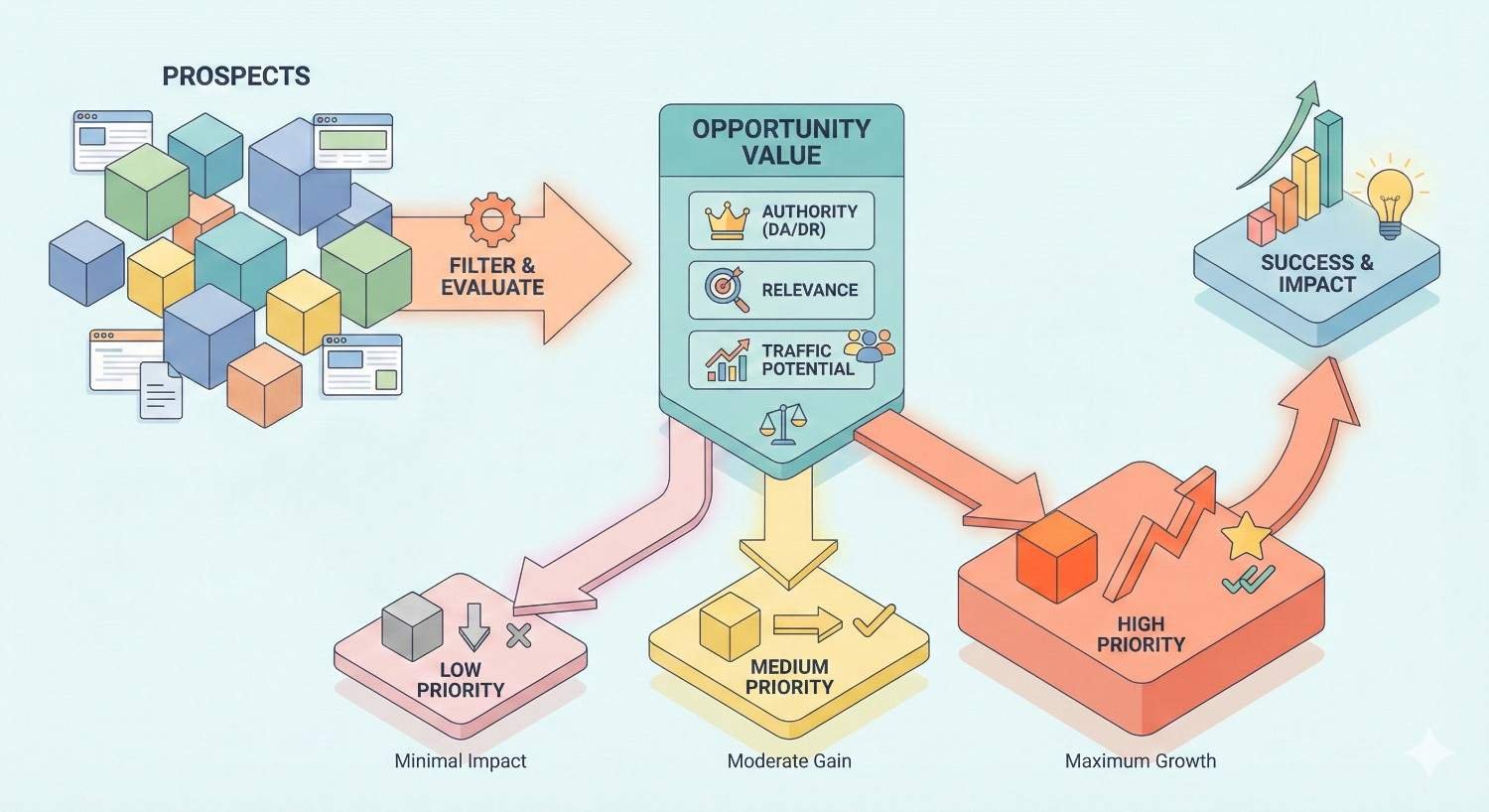
Create a scoring system combining multiple factors. Weight DR, traffic, relevance, and likelihood of response based on your experience and goals. A simple formula might be: (DR × 0.3) + (Traffic Score × 0.2) + (Relevance × 0.4) + (Response Likelihood × 0.1).
Segment your list into tiers. Top-tier prospects warrant personalized, high-effort outreach. Mid-tier prospects receive templated but customized emails. Lower-tier prospects might receive automated outreach or be deprioritized entirely.
Consider opportunity cost. A prospect requiring extensive relationship building might not be worth pursuing if simpler opportunities exist. Balance potential link value against acquisition effort.
Guest Posting and Content Partnership Research
Guest posting remains effective when approached strategically. Ahrefs helps identify sites that accept contributors, evaluate their link value, and measure guest post performance. This data-driven approach maximizes return on content investment.
Finding Guest Post Opportunities with Content Explorer
Search Content Explorer for phrases indicating guest content: “guest post by,” “contributor,” or “written by” combined with your topic. Filter by DR and traffic to focus on valuable targets.
Alternatively, search for competitor names as authors. If competitors publish guest posts on certain sites, those sites likely accept external contributors in your niche.
Check the Referring Domains filter to prioritize sites where guest posts actually earn links. Some publications accept guest content but strip all links, providing exposure without SEO benefit.
Analyzing Guest Post Performance on Target Sites
Before pitching, evaluate how guest posts perform on your target site. Find existing guest posts and check their individual backlink profiles in Site Explorer.
Compare guest post performance to the site’s regular content. If guest posts earn significantly fewer links or receive less traffic, the opportunity may not justify the content investment.
Examine where guest post links point. Some sites allow contextual links within content while others restrict links to author bios. Contextual links typically provide more value than bio links.
Identifying Sites That Accept Contributor Content
Look for “write for us,” “contribute,” or “submission guidelines” pages using Google site search combined with Ahrefs validation. Verify that sites accepting submissions maintain quality standards and editorial review.
Check publication frequency and content freshness. Sites publishing multiple guest posts daily may have lower standards and provide less link value than selective publications.
Review the site’s link profile for spam signals. Guest post targets should have clean backlink profiles themselves. Publishing on spammy sites can associate your brand with low-quality networks.
Evaluating Guest Post ROI Using Ahrefs Data
Track guest post links in your Ahrefs project. Monitor whether links remain active over time or get removed. Some sites periodically purge old guest content or change link policies.
Measure referral traffic from guest posts using Google Analytics alongside Ahrefs traffic estimates. Valuable guest posts drive both authority and direct visitors.
Calculate effective cost per link by dividing content creation time and any fees by the number of links earned. Compare this cost against other link building methods to optimize resource allocation.
Monitoring and Tracking Link Building Campaigns
Consistent monitoring transforms link building from sporadic activity into measurable, improvable process. Ahrefs provides the tracking infrastructure needed to measure progress, identify issues, and demonstrate results to stakeholders.
Setting Up Link Tracking in Ahrefs
Create a project for each domain you manage. Projects enable continuous monitoring, historical tracking, and organized reporting. Configure crawl settings based on site size and update frequency needs.
Add competitors to your project for ongoing comparison. Ahrefs tracks their link acquisition alongside yours, providing context for your performance metrics.
Set notification preferences for new and lost links. Daily or weekly digests keep you informed without overwhelming your inbox. Immediate alerts for high-value link changes enable rapid response.
Monitoring New and Lost Backlinks
The New Backlinks report shows recently discovered links. Review new links weekly to understand which content and outreach efforts produce results. Identify patterns in successful link acquisition.
Lost Backlinks reveals links that disappeared. Some link loss is natural as sites update content or go offline. Unusual spikes in lost links may indicate technical issues or deliberate link removal.
Investigate lost links from high-value domains. If an important link disappears, contact the site to understand why. Sometimes links are removed accidentally during site updates and can be restored.
Tracking Domain Rating and Authority Growth
DR changes reflect your overall link building progress. Monitor DR trends monthly rather than daily since the metric updates periodically and small fluctuations are normal.
Compare your DR growth rate against competitors. Faster growth indicates your link building outpaces theirs, potentially leading to ranking improvements over time.
Understand that DR is logarithmic. Moving from DR 20 to 30 requires less effort than moving from DR 60 to 70. Set realistic growth expectations based on your current position.
Measuring Link Velocity and Acquisition Patterns
Link velocity measures how quickly you acquire new links. Consistent velocity suggests sustainable link building practices. Sudden spikes may trigger algorithmic scrutiny if they appear unnatural.
Compare your velocity against competitors and industry benchmarks. New sites naturally acquire links faster as they build initial authority. Established sites may see slower but steadier growth.
Analyze velocity by link type. If most new links come from a single source or method, diversify your approach. Natural link profiles show varied acquisition patterns.
Creating Link Building Reports for Stakeholders
Export Ahrefs data into client-ready reports. Include key metrics: new referring domains, DR change, top new links, and comparison against competitors.
Visualize progress with charts showing link growth over time. Stakeholders often understand trends better than raw numbers. Ahrefs’ built-in charts can be exported or recreated in presentation tools.
Connect link metrics to business outcomes when possible. Correlate link acquisition with ranking improvements and traffic growth to demonstrate ROI. This connection justifies continued link building investment.
Advanced Ahrefs Techniques for Link Building
Beyond basic analysis, Ahrefs enables sophisticated link building tactics that most competitors overlook. These advanced techniques require more effort but often produce higher-quality opportunities with less competition.
Using Ahrefs Alerts for Real-Time Link Opportunities
Configure alerts for competitor brand names. When competitors get mentioned in new content, you may have an opportunity to earn similar coverage or provide alternative perspective.
Set alerts for industry keywords to discover new publications covering your space. Early outreach to new sites can establish relationships before they become saturated with pitches.
Monitor alerts for your own brand to catch unlinked mentions immediately. Fresh mentions convert to links more easily than old ones since the author recently thought about your brand.
Unlinked Brand Mentions: Turning Mentions into Links
Content Explorer’s Highlight Unlinked feature identifies pages mentioning your brand without linking. These represent warm outreach opportunities since the author already knows and referenced your work.
Search for your brand name, product names, and key personnel. Filter out your own domain and social media platforms. The remaining results show external mentions worth pursuing.
Craft outreach emphasizing the existing mention. Thank the author for including you and suggest adding a link for reader convenience. This approach succeeds more often than cold link requests.
Resource Page Link Building with Ahrefs
Resource pages curate links to helpful content on specific topics. They represent excellent link opportunities because linking is their explicit purpose.
Search Content Explorer for “resources,” “useful links,” or “helpful tools” combined with your topic. Filter by referring domains to find resource pages that themselves earn links, indicating quality.
Evaluate resource page freshness. Recently updated pages suggest active maintenance and higher likelihood of adding new links. Abandoned resource pages rarely respond to outreach.
Digital PR and Journalist Outreach Research
Content Explorer reveals which journalists and publications cover your industry. Search for recent articles on relevant topics and note author names and publication patterns.
Identify journalists who frequently cite data or expert sources. These writers need external input and may welcome your expertise. Build a media list from Ahrefs research for ongoing PR outreach.
Monitor trending topics in your industry using Content Explorer’s date filters. Timely outreach connecting your expertise to current news stories earns coverage more easily than generic pitches.
Analyzing Link Placement and Context Quality
Not all links provide equal value even from the same domain. Links within main content typically pass more authority than sidebar, footer, or author bio links.
Use Ahrefs’ Link Context feature to understand where links appear on pages. Prioritize opportunities for contextual, editorial links over navigational or supplementary placements.
Examine surrounding anchor text and content. Links within relevant, substantive paragraphs provide more contextual signals than isolated link lists. Quality placement enhances link value.
Ahrefs Pricing and Plans for Link Building
Understanding Ahrefs pricing helps you select the right plan for your link building needs. Each tier offers different data limits and features, making plan selection an important business decision.
Ahrefs Pricing Tiers Explained
Ahrefs offers four main plans: Lite, Standard, Advanced, and Enterprise. Current pricing starts at $99 monthly for Lite, with Standard at $199, Advanced at $399, and Enterprise at $999 or custom pricing.
Each tier increases data limits for Site Explorer queries, Content Explorer searches, and tracked projects. Higher tiers also unlock features like historical data access and additional user seats.
Annual billing provides approximately two months free compared to monthly payments. Consider annual plans if you anticipate consistent usage throughout the year.
Which Ahrefs Plan Is Best for Link Building?
Lite suits individual practitioners managing one or two sites with moderate link building activity. The plan provides enough queries for basic competitor analysis and prospect research.
Standard works well for agencies or in-house teams managing multiple projects. Additional Site Explorer queries and Content Explorer searches support more intensive research workflows.
Advanced becomes necessary for large-scale link building operations requiring extensive data exports, historical analysis, or multiple team members. The increased limits prevent workflow interruptions from quota exhaustion.
Cost-Benefit Analysis: Is Ahrefs Worth It?
Calculate your effective cost per link opportunity identified. If Ahrefs helps you find 50 quality prospects monthly and you convert 10% to links, each link costs roughly $20-40 in tool fees depending on your plan.
Compare this cost against alternative research methods. Manual competitor analysis and prospect research require significant time. Value your time appropriately when calculating total link acquisition costs.
Consider the competitive intelligence value beyond direct link building. Understanding competitor strategies, tracking industry trends, and monitoring your own progress provide strategic benefits beyond individual link opportunities.
Free Ahrefs Tools and Alternatives
Ahrefs Webmaster Tools provides free access to Site Explorer for verified sites you own. This limited access helps small sites monitor their own backlink profiles without subscription costs.
The free Backlink Checker shows top 100 backlinks for any domain. While limited, this tool enables basic competitor research before committing to a paid plan.
Alternatives like Moz, Semrush, and Majestic offer similar functionality with different strengths. Many practitioners use multiple tools to cross-reference data and access unique features from each platform.
Integrating Ahrefs with Your Link Building Workflow
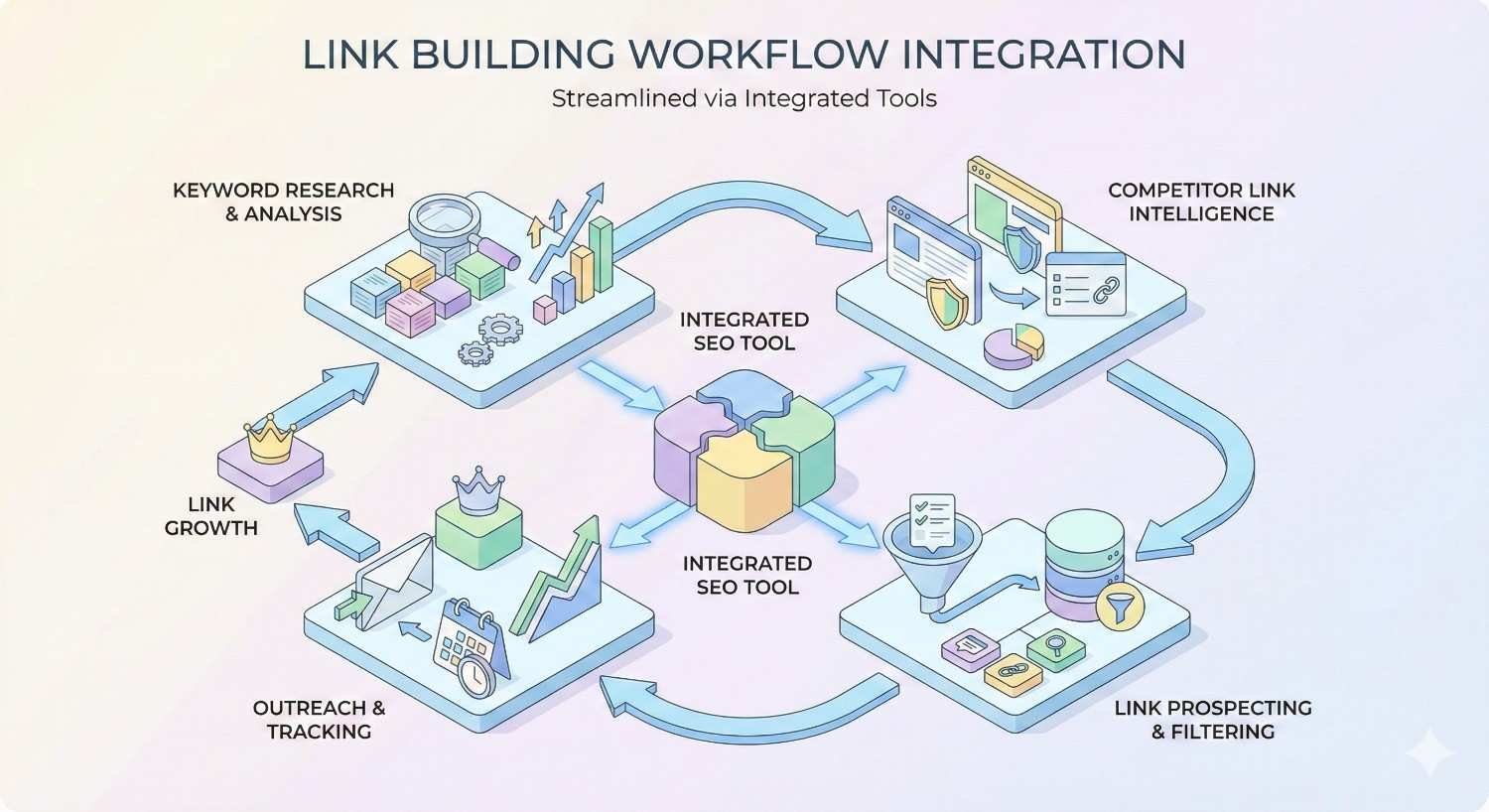
Ahrefs provides data, but effective link building requires integrating that data into systematic workflows. Connecting Ahrefs with other tools and processes maximizes its value.
Combining Ahrefs with Outreach Tools
Export prospect lists from Ahrefs into outreach platforms like Pitchbox, BuzzStream, or Mailshake. These tools manage email sequences, track responses, and organize relationship data.
Use Ahrefs data to personalize outreach templates. Reference specific metrics like the prospect’s DR, recent content, or linking patterns to demonstrate genuine research.
Track outreach outcomes back to Ahrefs prospect sources. Understanding which Ahrefs reports produce the highest-converting prospects helps optimize future research.
Using Ahrefs Data in Content Strategy
Content Explorer research should inform your editorial calendar. Prioritize topics and formats that demonstrate link-earning potential based on competitor performance.
Analyze your own top-linked content to understand what resonates. Double down on successful formats while experimenting with new approaches informed by competitor analysis.
Use keyword data alongside backlink analysis. Content targeting keywords with link-building potential serves dual purposes: ranking for valuable terms while attracting editorial links.
Connecting Ahrefs with Google Analytics and Search Console
Correlate Ahrefs link data with Google Analytics traffic patterns. New high-quality links often precede traffic increases, validating your link building investment.
Compare Ahrefs backlink data with Search Console’s Links report. While data sources differ, significant discrepancies may indicate indexing issues or data quality problems worth investigating.
Track ranking changes in Search Console alongside link acquisition in Ahrefs. This correlation helps demonstrate link building’s impact on search visibility.
Building a Repeatable Link Building Process with Ahrefs
Document your Ahrefs workflows for consistency and scalability. Create standard operating procedures for competitor analysis, prospect research, and progress tracking.
Schedule regular research sessions rather than ad-hoc analysis. Weekly competitor monitoring and monthly comprehensive audits maintain consistent opportunity identification.
Build templates for common Ahrefs exports and analyses. Standardized formats accelerate research and ensure consistent evaluation criteria across campaigns.
Common Link Building Mistakes to Avoid with Ahrefs
Ahrefs data can mislead if misinterpreted. Understanding common mistakes helps you extract accurate insights and avoid counterproductive link building decisions.
Focusing Only on High DR Sites
Chasing only high-DR links ignores relevance and accessibility. A DR 90 site may never link to you regardless of outreach quality, while DR 40 niche sites actively seek content to reference.
High-DR sites receive overwhelming outreach volume. Your pitch competes against hundreds of others, reducing response rates. Mid-tier sites often provide better conversion rates with meaningful authority transfer.
Build a balanced portfolio across DR ranges. Natural link profiles include links from various authority levels, not exclusively from top-tier domains.
Ignoring Link Relevance and Context
DR and traffic metrics cannot capture topical relevance. A high-traffic cooking blog provides minimal SEO value for a B2B software company regardless of its authority metrics.
Evaluate prospects manually for genuine relevance. Would their audience benefit from your content? Does your expertise align with their editorial focus? Relevance determines real-world link value.
Context matters beyond the linking domain. A link from a relevant paragraph on a general site may outperform a link from an irrelevant page on a niche site.
Over-Relying on Competitor Analysis
Competitor backlinks represent past opportunities, not current ones. Sites that linked to competitors years ago may have changed policies, editors, or focus areas.
Copying competitor strategies produces similar results at best. Differentiated link building approaches can outperform competitors rather than merely matching them.
Balance competitor analysis with original opportunity identification. Content Explorer searches, broken link building, and brand mention monitoring reveal opportunities competitors may have missed.
Not Tracking Link Quality Over Quantity
Raw link counts mislead without quality context. Ten links from relevant, authoritative sites outperform 100 links from low-quality directories or comment spam.
Monitor link quality metrics alongside quantity. Track average DR of new links, relevance scores, and traffic from linking pages. Quality trends matter more than volume trends.
Audit your link profile periodically for quality degradation. Spam links accumulating over time can dilute your profile’s overall quality even as total counts increase.
Ahrefs vs. Other Link Building Tools
Understanding how Ahrefs compares to alternatives helps you select the right tools and potentially combine platforms for comprehensive coverage.
Ahrefs vs. Semrush for Backlink Analysis
Ahrefs maintains a larger backlink index with faster crawl updates. For link building specifically, this data advantage often makes Ahrefs the preferred choice.
Semrush offers stronger keyword research and PPC analysis integration. Teams needing comprehensive SEO and advertising tools may prefer Semrush’s broader feature set.
Backlink data between platforms often differs by 10-20%. Neither captures every link. Serious link builders sometimes use both for cross-referencing important analyses.
Ahrefs vs. Moz for Link Building
Moz pioneered Domain Authority, which remains widely recognized despite Ahrefs’ DR gaining popularity. Some industries still reference DA as the standard authority metric.
Moz’s link index is smaller than Ahrefs’, potentially missing links that Ahrefs captures. For comprehensive backlink analysis, Ahrefs typically provides more complete data.
Moz offers strong local SEO features that Ahrefs lacks. Businesses with local link building needs may find Moz’s combined offering more valuable.
Ahrefs vs. Majestic for Link Intelligence
Majestic focuses exclusively on backlink data, offering unique metrics like Trust Flow and Citation Flow. These proprietary metrics provide different perspectives on link quality.
Majestic’s historical index extends further back than Ahrefs’, valuable for analyzing long-term link trends or investigating old domains.
Ahrefs provides broader SEO functionality beyond backlinks. Teams needing keyword research, content analysis, and rank tracking alongside link data typically prefer Ahrefs’ integrated approach.
When to Use Multiple Tools Together
Cross-reference critical analyses using multiple tools. Important decisions like disavow file creation or major campaign planning benefit from data validation across platforms.
Use specialized tools for specific tasks. Majestic for deep historical analysis, Ahrefs for current link building, and Moz for local SEO creates a powerful combined toolkit.
Budget constraints may limit multi-tool strategies. If choosing one platform, Ahrefs typically provides the best link building value for most use cases.
Real-World Link Building Success with Ahrefs
Theory matters less than results. Examining actual link building campaigns demonstrates how Ahrefs data translates into measurable outcomes.
Case Study: How We Built 50+ Quality Links in 90 Days
A B2B SaaS client needed authority building to compete for competitive keywords. Starting DR was 28 with 150 referring domains. The goal was reaching DR 40 with 300+ referring domains.
Ahrefs competitor analysis revealed three main link sources: industry publications, software review sites, and educational resources. We prioritized these categories for outreach.
Content Explorer identified statistics-focused content as the highest-performing format in the niche. We created an original industry survey with proprietary data, then promoted it to journalists and bloggers identified through Ahrefs research.
Link Intersect produced 200 prospects linking to competitors but not our client. Personalized outreach converting 8% of prospects yielded 16 links from this source alone.
Guest posting on sites identified through Content Explorer added 20 links. Broken link building contributed 8 more. Unlinked mention conversion produced 12 additional links.
Final results: 56 new referring domains, DR increased to 38, and organic traffic grew 45% over the campaign period. Ahrefs data drove every tactical decision.
Link Building Strategies That Work in 2024
Original research and data continue earning links at scale. Sites need sources to cite, and proprietary data provides unique value competitors cannot replicate.
Digital PR combining newsjacking with expert commentary produces high-authority links. Monitor trending topics through Ahrefs alerts and respond quickly with relevant expertise.
Strategic guest posting on carefully vetted sites remains effective. Quality over quantity matters more than ever as Google’s algorithms improve at detecting manipulative patterns.
Resource page link building provides steady results with lower effort than content creation. Ahrefs makes identifying active resource pages straightforward.
Measuring Link Building ROI and Business Impact
Track rankings for target keywords alongside link acquisition. Correlation between new links and ranking improvements demonstrates direct SEO impact.
Monitor organic traffic growth as the ultimate success metric. Links should eventually translate into visitors, leads, and revenue.
Calculate cost per acquired link including tool subscriptions, content creation, and outreach time. Compare against the business value of ranking improvements to justify continued investment.
Getting Started with Ahrefs for Link Building
New Ahrefs users can feel overwhelmed by the platform’s depth. A structured onboarding approach accelerates time to value and establishes productive habits.
Setting Up Your First Ahrefs Project
Create a project for your primary domain immediately after subscribing. Projects enable continuous monitoring and historical tracking that ad-hoc searches cannot provide.
Add your top three to five competitors to the project. Competitor tracking provides context for your own metrics and surfaces opportunities automatically.
Configure weekly email reports summarizing new and lost links, ranking changes, and competitor movements. These digests maintain awareness without requiring daily platform visits.
Essential Ahrefs Features to Master First
Site Explorer forms the foundation. Spend your first week exploring Backlinks, Referring Domains, and Anchors reports for your own site and competitors.
Content Explorer accelerates content ideation and prospect research. Practice searching your niche topics and filtering results by various metrics.
Link Intersect produces immediate outreach opportunities. Run your first intersect analysis within the first few days to generate actionable prospect lists.
Creating Your First Link Building Campaign
Select one link building tactic to start: competitor backlink replication, broken link building, or unlinked mention outreach. Focus beats scattered effort.
Use Ahrefs to build a prospect list of 50-100 targets. Evaluate each prospect for quality and relevance before beginning outreach.
Track results in a spreadsheet or CRM alongside Ahrefs monitoring. Note which prospects respond, which convert to links, and which tactics produce best results.
Next Steps: Building a Sustainable Link Acquisition Strategy
Expand tactics gradually as you master each approach. Add guest posting after succeeding with outreach. Incorporate digital PR after establishing guest posting relationships.
Develop content specifically designed to attract links. Use Content Explorer research to inform topics, formats, and angles with proven link-earning potential.
Build systems and processes that scale. Document workflows, create templates, and establish regular research schedules. Sustainable link building requires consistent effort over time.
Conclusion
Ahrefs transforms link building from guesswork into systematic, data-driven practice. The platform’s comprehensive backlink database, competitor analysis tools, and opportunity identification features provide everything needed to build domain authority strategically.
Success requires combining Ahrefs data with sound link building fundamentals. Quality over quantity, relevance over raw metrics, and consistent effort over sporadic campaigns produce sustainable results that compound over time.
We help businesses implement effective link building strategies using Ahrefs and other professional tools. Contact White Label SEO Service to discuss how our team can accelerate your authority building and drive measurable organic growth.
Frequently Asked Questions
How long does it take to see results from link building with Ahrefs?
Link building typically shows ranking impact within three to six months. Ahrefs helps you track progress through DR changes and new referring domain counts. Consistent effort produces compounding results over time.
Can I do link building with Ahrefs’ free tools?
Ahrefs Webmaster Tools provides limited free access for sites you own. The free Backlink Checker shows top 100 links for any domain. However, serious link building campaigns require paid access for full data and features.
How many links should I build per month?
Link velocity depends on your niche, competition, and current authority level. New sites might safely acquire 10-20 quality links monthly. Established sites can handle higher volumes. Ahrefs competitor analysis reveals appropriate benchmarks for your situation.
What DR should I target for link prospects?
Avoid fixating on specific DR thresholds. Relevance matters more than raw authority. A DR 30 site in your exact niche often provides more value than a DR 70 general publication. Build a balanced portfolio across authority levels.
How do I know if a link is worth pursuing?
Evaluate prospects using multiple criteria: Domain Rating, organic traffic, topical relevance, and editorial quality. Ahrefs provides the first three metrics. Manual review assesses content quality and audience alignment.
Should I disavow low-quality links found in Ahrefs?
Google’s algorithms handle most spam automatically. Disavow only links from obvious spam networks or sites you know participated in manipulative schemes. Unnecessary disavowing can remove legitimate links. Consult an SEO professional before submitting disavow files.
How often should I check my backlink profile in Ahrefs?
Weekly monitoring catches important changes without consuming excessive time. Set up Ahrefs alerts for automated notifications about new and lost links. Monthly comprehensive audits provide deeper analysis of trends and opportunities.