The content editing process transforms raw drafts into high-performing assets that rank, engage, and convert. Without systematic editing, even well-researched content fails to reach its potential in search results and reader satisfaction.
Every piece of content competing for organic visibility passes through multiple editing stages before publication. Understanding this workflow gives marketing teams and business owners a strategic advantage in content quality and SEO performance.
This guide covers the complete content editing process, from initial assessment through performance tracking, including editing types, step-by-step workflows, best practices, and tools that drive measurable results.
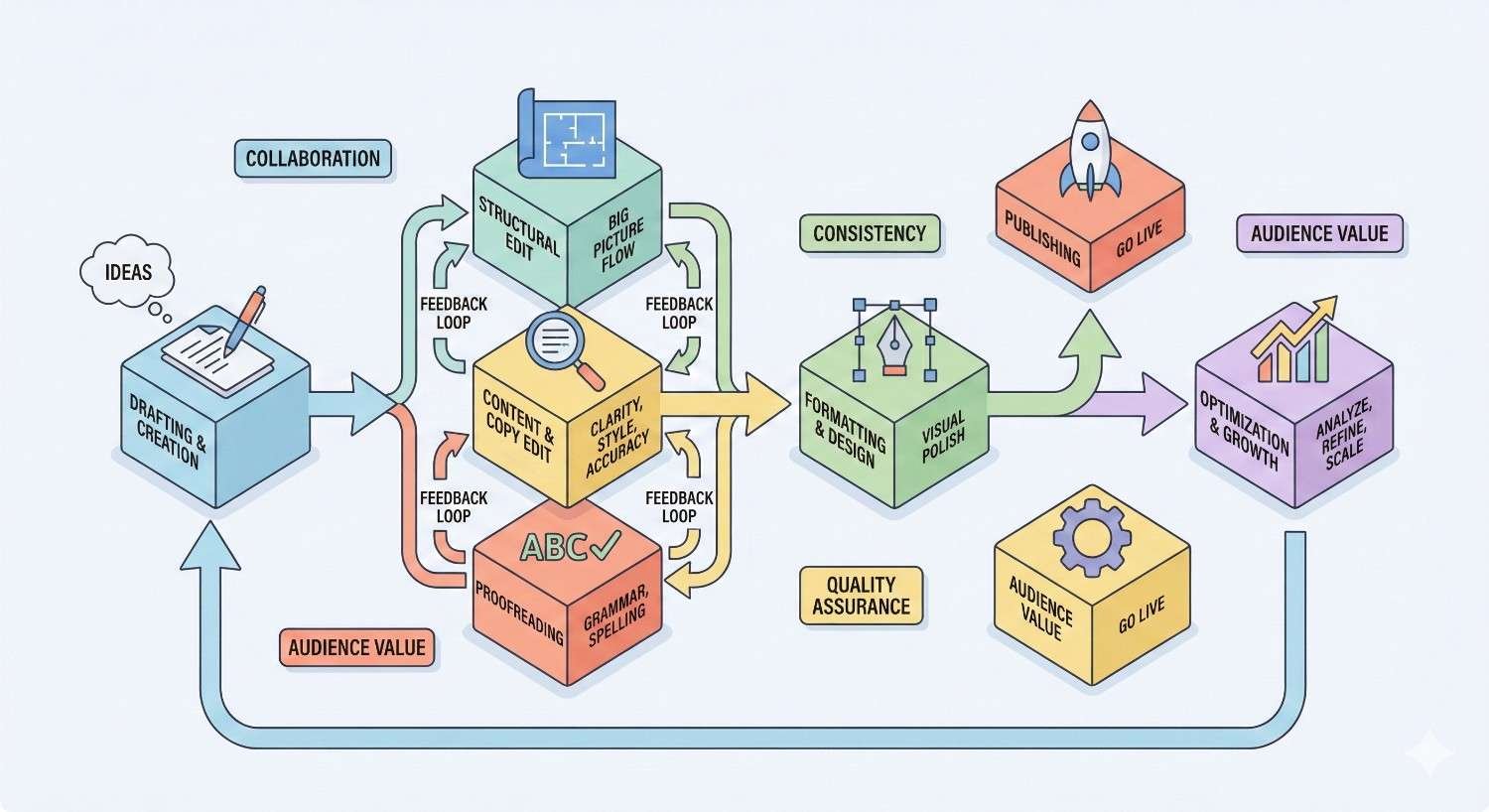
What Is the Content Editing Process?
The content editing process encompasses all activities involved in reviewing, refining, and optimizing written content before publication. It bridges the gap between a first draft and a polished piece ready to achieve business objectives.
This process involves multiple stakeholders, distinct editing phases, and quality checkpoints. Each stage addresses specific content elements, from overall structure to individual word choices.
Definition and Core Components
Content editing is the systematic review and improvement of written material to enhance clarity, accuracy, engagement, and search visibility. The process includes structural analysis, stylistic refinement, technical corrections, and optimization for target audiences.
Core components include content assessment, structural organization, tone alignment, SEO integration, fact verification, grammar correction, and final quality assurance. Each component serves a distinct purpose in the overall content quality framework.
The editing process also involves stakeholder collaboration, version control, and approval workflows. These operational elements ensure consistency and accountability throughout the content lifecycle.
Content Editing vs. Proofreading vs. Copyediting
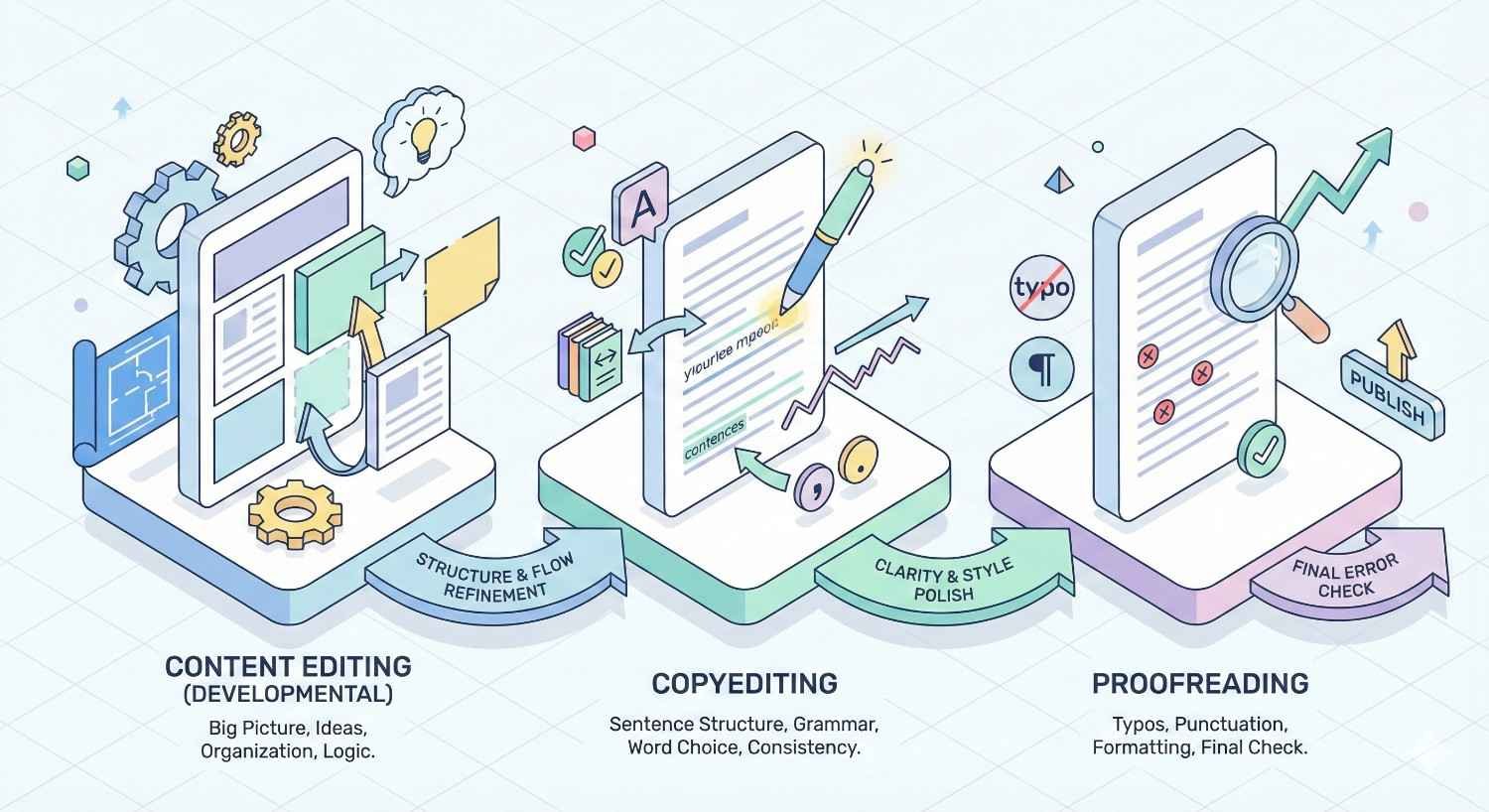
These terms are often used interchangeably, but they represent different stages and scopes of work.
Content editing addresses big-picture elements: structure, flow, argument strength, audience alignment, and overall effectiveness. Editors at this level may suggest reorganizing sections, adding examples, or removing tangential content.
Copyediting focuses on sentence-level improvements: grammar, punctuation, word choice, consistency, and adherence to style guides. Copyeditors ensure technical accuracy without changing the content’s meaning or structure.
Proofreading is the final review stage, catching typos, formatting errors, and minor inconsistencies that slipped through earlier rounds. Proofreaders work with near-final content and make minimal changes.
Understanding these distinctions helps teams allocate resources effectively and set appropriate expectations for each editing phase.
Why Content Editing Matters for SEO and Business Growth
Search engines evaluate content quality through multiple signals, including user engagement metrics, time on page, bounce rates, and content comprehensiveness. Well-edited content performs better across all these dimensions.
Poorly edited content damages brand credibility and user trust. Visitors who encounter errors, confusing structure, or irrelevant information leave quickly, sending negative signals to search algorithms.
From a business perspective, content editing directly impacts conversion rates. Clear, persuasive, error-free content builds confidence and guides readers toward desired actions. The investment in editing pays dividends through improved organic traffic, higher engagement, and better conversion performance.
Types of Content Editing
Different editing types address different content needs. Understanding each type helps teams build appropriate workflows and allocate specialist resources effectively.
Developmental Editing (Structural Editing)
Developmental editing examines content at the highest level, focusing on organization, argument flow, topic coverage, and alignment with audience needs. This editing type often occurs early in the content creation process.
Developmental editors evaluate whether the content achieves its stated purpose. They assess logical progression, identify gaps in coverage, and recommend structural changes that strengthen the overall piece.
This editing type is particularly valuable for long-form content, pillar pages, and comprehensive guides where structure significantly impacts reader comprehension and engagement.
Line Editing (Stylistic Editing)
Line editing focuses on how ideas are expressed at the paragraph and sentence level. Editors refine language for clarity, impact, and reader engagement while preserving the author’s voice.
This stage addresses awkward phrasing, redundancy, weak transitions, and opportunities to strengthen prose. Line editors improve readability without changing the content’s fundamental structure or meaning.
Effective line editing transforms competent writing into compelling content that holds reader attention and communicates ideas with precision.
Copy Editing (Technical Editing)
Copy editing ensures technical accuracy in grammar, punctuation, spelling, and style consistency. This stage applies established style guides and maintains uniformity throughout the content.
Copyeditors verify proper noun usage, check numerical accuracy, ensure consistent formatting, and correct mechanical errors. They serve as quality gatekeepers for technical writing standards.
This editing type requires attention to detail and familiarity with relevant style guides, whether AP Style, Chicago Manual of Style, or custom brand guidelines.
Proofreading (Final Review)
Proofreading represents the last line of defense before publication. Proofreaders catch errors that escaped earlier editing rounds and verify that all corrections were implemented correctly.
This stage focuses on surface-level issues: typos, missing words, formatting inconsistencies, and broken links. Proofreaders work with formatted content as it will appear to readers.
Effective proofreading requires fresh eyes and systematic review processes. Many teams use different personnel for proofreading than for earlier editing stages to maximize error detection.
SEO Content Editing
SEO content editing optimizes content for search visibility while maintaining quality and readability. This specialized editing type bridges content quality and technical SEO requirements.
SEO editors evaluate keyword integration, heading structure, internal linking opportunities, meta elements, and content comprehensiveness relative to search intent. They ensure content satisfies both user needs and search engine requirements.
This editing type requires understanding of current SEO best practices, keyword research interpretation, and competitive content analysis. SEO editors balance optimization with natural language and user experience.
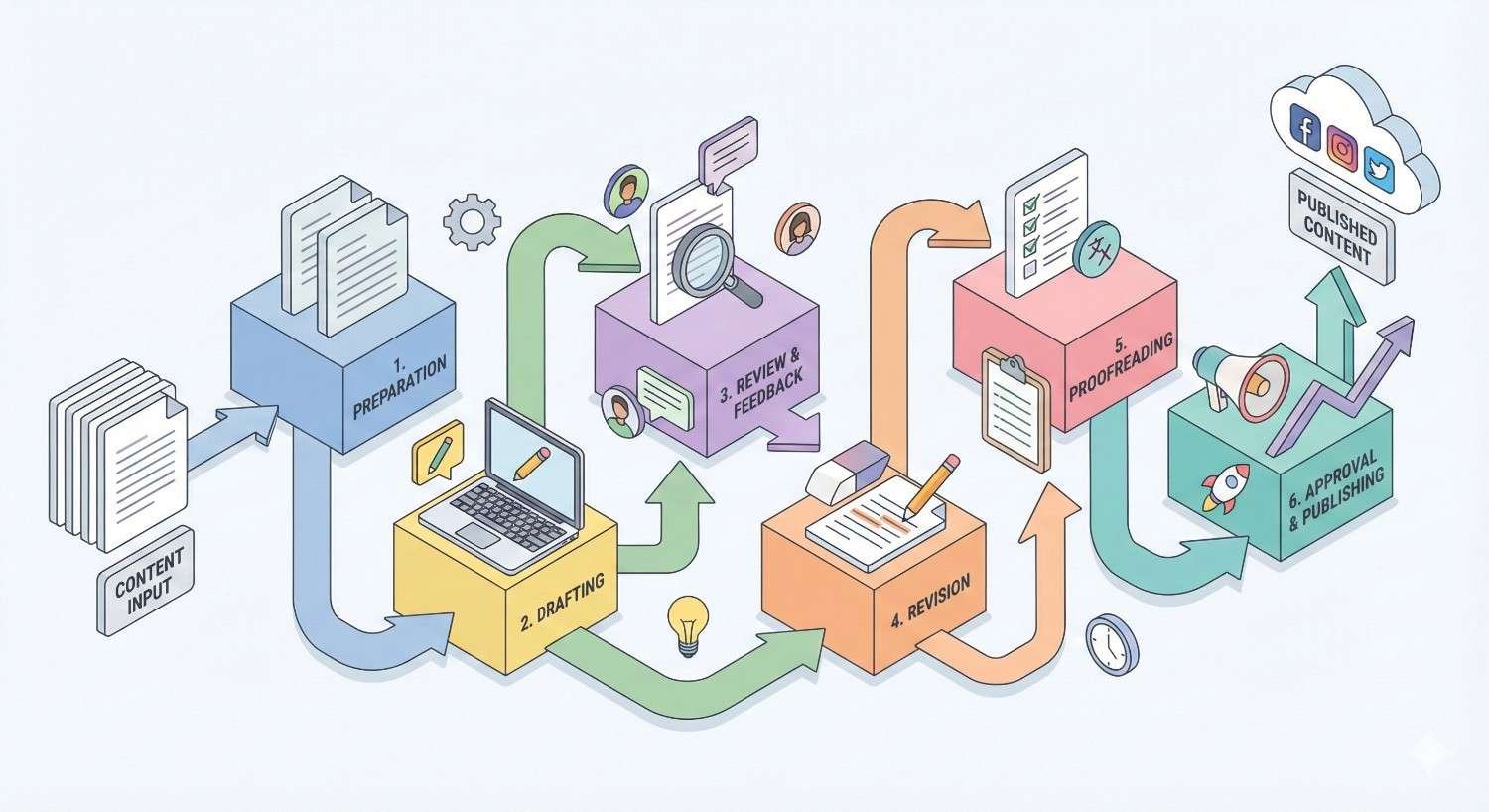
The Content Editing Process: Step-by-Step Workflow
A systematic workflow ensures consistent quality and efficient resource utilization. The following eight steps provide a comprehensive framework adaptable to various content types and team structures.
Step 1 – Initial Content Review and Assessment
Begin with a holistic review of the draft content. Read through completely without making changes to understand the overall piece, its strengths, and areas requiring attention.
During this assessment, evaluate alignment with the content brief, target audience appropriateness, and coverage of intended topics. Note major issues that will require structural changes versus minor refinements.
Document your initial impressions and create a prioritized list of editing tasks. This assessment guides subsequent editing stages and helps estimate time requirements.
Step 2 – Structural and Organizational Editing
Address big-picture structural issues before refining individual sentences. Reorganize sections for logical flow, add or remove content to achieve appropriate depth, and ensure the piece fulfills its intended purpose.
Evaluate heading hierarchy for clarity and SEO optimization. Headings should create a scannable outline that accurately represents content organization and includes relevant keywords naturally.
Consider whether the introduction effectively hooks readers and sets expectations. Assess whether the conclusion provides appropriate closure and calls to action. Structural editing establishes the foundation for all subsequent refinements.
Step 3 – Clarity, Tone, and Readability Refinement
With structure solidified, focus on how ideas are expressed. Simplify complex sentences, eliminate jargon where inappropriate, and ensure consistent tone throughout the piece.
Match readability level to your target audience. Business decision-makers typically prefer clear, direct language over academic complexity. Use readability tools to assess and adjust as needed.
Strengthen transitions between paragraphs and sections. Smooth transitions guide readers through content logically and maintain engagement throughout longer pieces.
Step 4 – SEO Optimization and Keyword Integration
Review content for search optimization opportunities. Ensure primary keywords appear in the title, first paragraph, headings, and conclusion without forced or unnatural usage.
Evaluate semantic keyword coverage. Comprehensive content naturally includes related terms and concepts that signal topical authority to search engines.
Check internal linking opportunities to related content on your site. Verify that external links point to authoritative, relevant sources. Optimize meta titles and descriptions for click-through rates.
Step 5 – Fact-Checking and Source Verification
Verify all factual claims, statistics, and attributed quotes. Confirm that sources are credible, current, and accurately represented in the content.
Check that all hyperlinks function correctly and point to intended destinations. Verify that cited sources support the claims made in the content.
For data-driven content, confirm that statistics come from primary sources or reputable research organizations. Outdated or inaccurate information damages credibility and can harm search performance.
Step 6 – Grammar, Punctuation, and Style Consistency
Apply detailed copyediting to correct mechanical errors. Check grammar, punctuation, spelling, and adherence to your style guide.
Ensure consistency in formatting choices: capitalization conventions, number formatting, list styles, and terminology usage. Inconsistencies distract readers and suggest careless production.
Use grammar checking tools as aids, but rely on human judgment for context-dependent decisions. Automated tools miss nuances and can suggest incorrect changes.
Step 7 – Final Proofreading and Quality Assurance
Conduct a final review of the formatted content as it will appear to readers. Check for any errors introduced during formatting or previous editing rounds.
Verify all visual elements: images display correctly, tables render properly, and embedded media functions as intended. Check mobile display if applicable.
Use a systematic approach, such as reading aloud or reviewing in a different format, to catch errors that familiarity might cause you to overlook.
Step 8 – Approval, Publishing, and Performance Tracking
Route content through appropriate approval workflows before publication. Ensure all stakeholders have reviewed and approved the final version.
Upon publication, verify that the live content matches the approved version. Check that all technical elements, including schema markup and meta tags, are implemented correctly.
Establish performance tracking through Google Analytics and Search Console. Monitor key metrics including organic traffic, engagement rates, and conversion performance to inform future content and editing decisions.
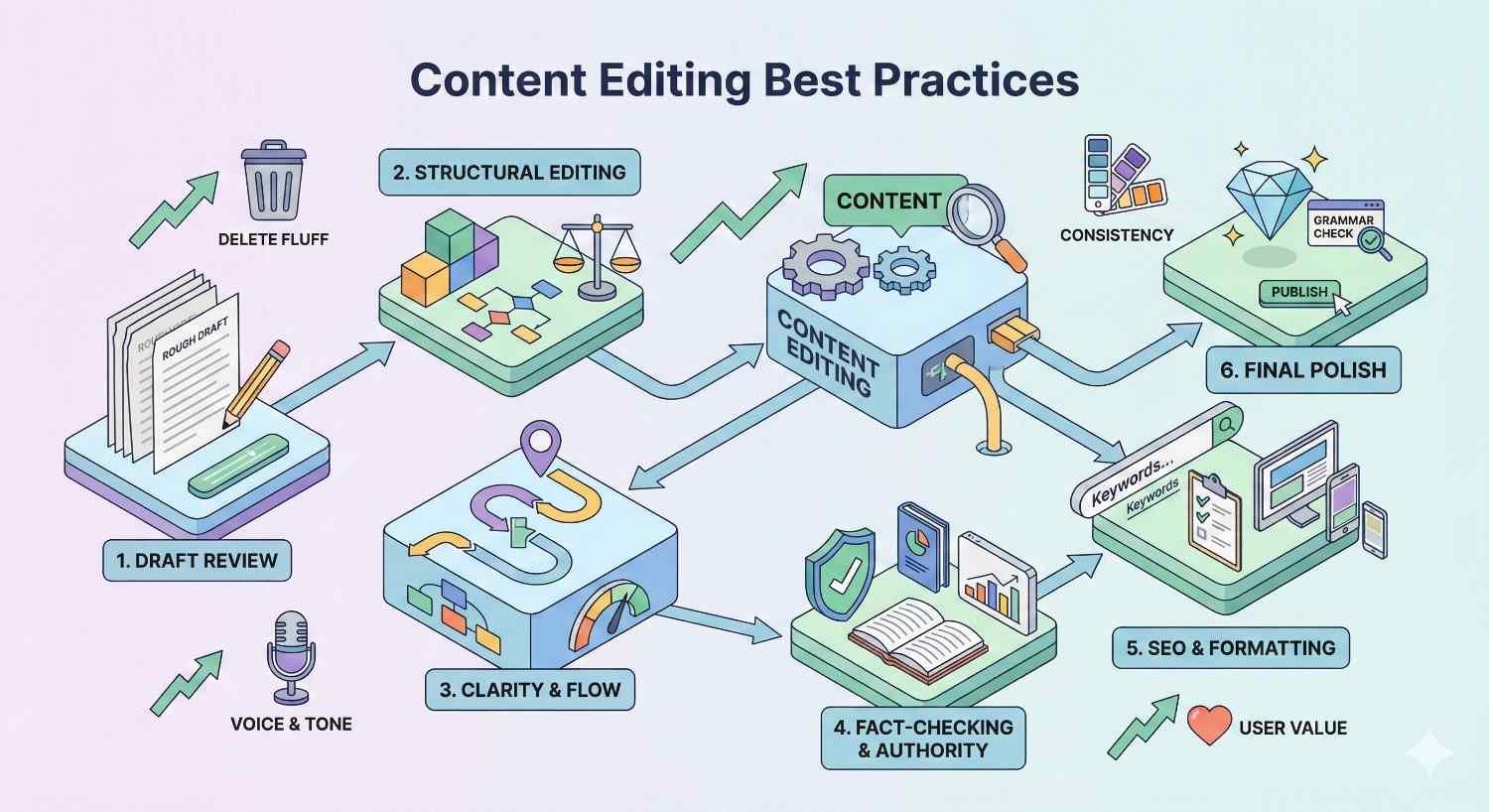
Content Editing Best Practices
Effective editing requires more than following steps. These best practices elevate editing quality and efficiency across teams and content types.
Creating an Effective Content Editing Checklist
Develop standardized checklists for each editing stage. Checklists ensure consistency, reduce oversight, and enable quality control across different editors and content pieces.
Include both universal items, such as grammar and formatting, and content-specific requirements, such as brand terminology and compliance language. Update checklists as standards evolve and new requirements emerge.
Make checklists accessible within your content workflow. Integration with project management tools ensures editors reference checklists consistently rather than relying on memory.
Maintaining Brand Voice and Style Guidelines
Document brand voice characteristics and style preferences in accessible guidelines. Clear documentation enables consistent editing across team members and external contributors.
Include examples of preferred and avoided language. Concrete examples communicate style expectations more effectively than abstract descriptions.
Review and update guidelines periodically. Brand voice may evolve, and guidelines should reflect current positioning and audience expectations.
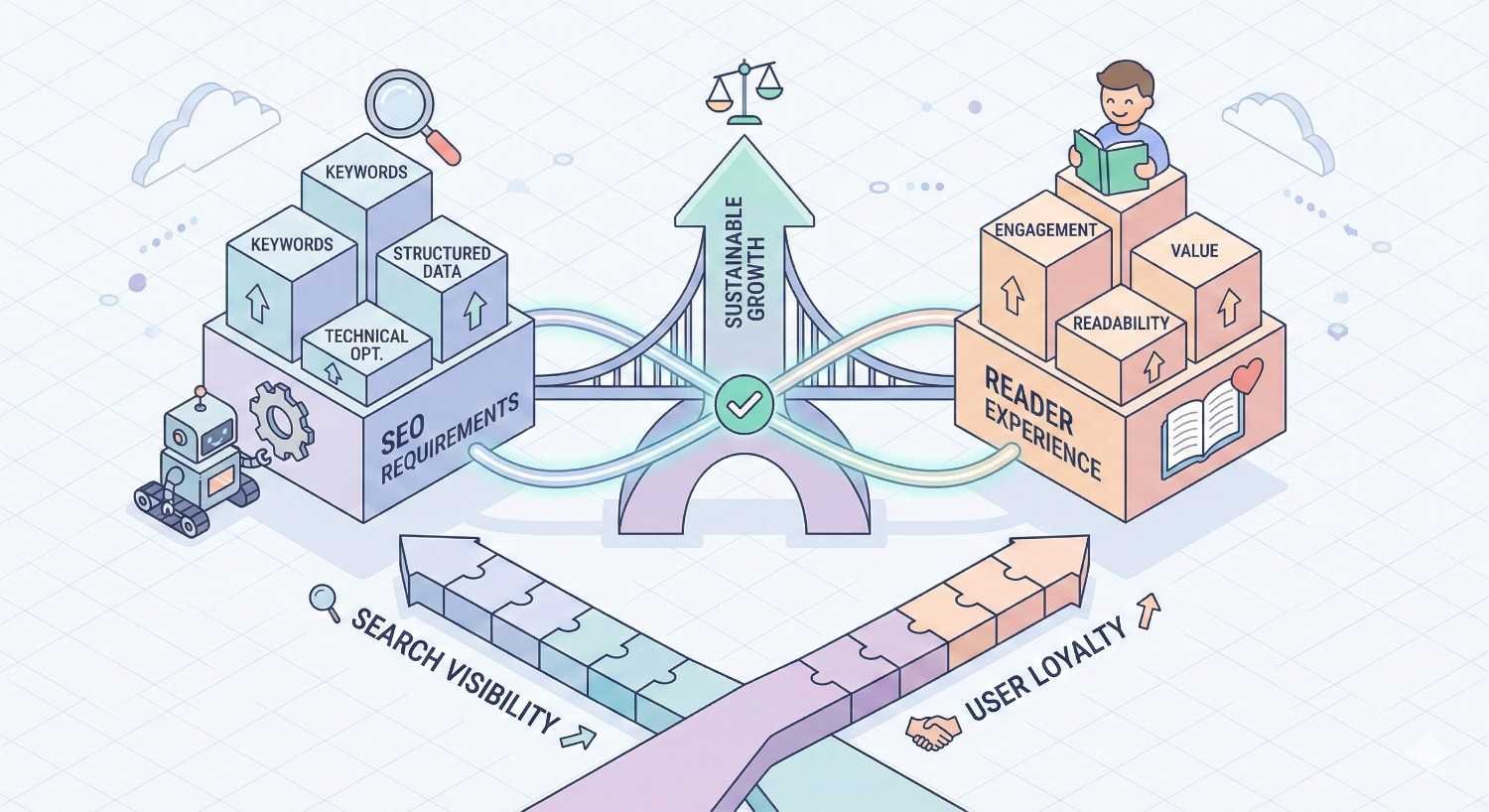
Balancing SEO Requirements with Reader Experience
Prioritize reader experience when SEO and readability conflict. Search engines increasingly reward content that satisfies user intent, making reader-first approaches strategically sound.
Integrate keywords naturally rather than forcing specific phrases. Semantic search understands topic relevance without exact-match keyword repetition.
Test content with actual readers when possible. User feedback reveals whether optimization efforts enhance or detract from content effectiveness.
Collaborative Editing and Feedback Loops
Establish clear feedback processes between writers and editors. Constructive feedback improves future content quality and develops writer capabilities.
Use collaborative tools that track changes and enable discussion. Version control prevents confusion and maintains accountability for editing decisions.
Create opportunities for editors to share insights across the team. Patterns in editing feedback often reveal systemic issues addressable through training or process improvements.
Content Editing Tools and Software
The right tools increase editing efficiency and consistency. Build a toolkit that addresses different editing needs without creating unnecessary complexity.
Grammar and Style Checkers
Tools like Grammarly, ProWritingAid, and Hemingway Editor catch mechanical errors and suggest style improvements. These tools accelerate editing without replacing human judgment.
Configure tools to match your style guide preferences. Default settings may conflict with your brand standards or industry conventions.
Use multiple tools for comprehensive coverage. Different tools excel at different error types, and combining them improves overall detection rates.
SEO Content Optimization Tools
Platforms like Clearscope, Surfer SEO, and MarketMuse analyze content against ranking competitors. These tools identify coverage gaps and optimization opportunities.
Use SEO tools as guides rather than rigid requirements. High scores don’t guarantee rankings, and forcing content to match tool recommendations can harm readability.
Integrate SEO analysis early in the editing process. Addressing optimization during structural editing is more efficient than retrofitting keywords into finished content.
Collaboration and Workflow Platforms
Tools like Google Docs, Notion, and Monday.com facilitate team collaboration and workflow management. Choose platforms that match your team size and process complexity.
Establish clear conventions for comments, suggestions, and approvals. Consistent usage prevents confusion and maintains efficient workflows.
Integrate editing workflows with broader content operations. Seamless handoffs between creation, editing, and publication stages reduce friction and delays.
Plagiarism and Originality Checkers
Tools like Copyscape and Originality.ai verify content uniqueness. These checks protect against unintentional duplication and ensure original value.
Run originality checks before publication, especially for content from external contributors. Duplicate content creates SEO risks and potential legal issues.
Investigate flagged content carefully. Matching phrases may represent common industry language rather than actual plagiarism.
How Long Does the Content Editing Process Take?
Editing timelines vary significantly based on content complexity, quality requirements, and team resources. Setting realistic expectations prevents rushed work and quality compromises.
Factors Affecting Editing Timelines
Content length directly impacts editing time. A 2,000-word blog post typically requires 2-4 hours of total editing time across all stages, while comprehensive guides may need 8-12 hours or more.
Draft quality significantly affects editing requirements. Well-structured drafts from experienced writers need less developmental editing than rough drafts requiring substantial reorganization.
Subject matter complexity influences fact-checking and technical review time. Specialized topics may require subject matter expert review, adding coordination time to the process.
Realistic Timeframes by Content Type
Blog posts (1,000-2,000 words): 2-4 hours total editing time Landing pages: 1-3 hours depending on complexity Long-form guides (3,000+ words): 6-12 hours across multiple editing rounds Technical documentation: 4-8 hours including specialist review Product descriptions: 15-30 minutes per description for batch editing
These estimates assume competent initial drafts. Poor-quality drafts may require additional rounds or complete rewrites.
Balancing Speed with Quality
Rushed editing produces inferior results. Build adequate editing time into content calendars rather than compressing timelines when deadlines approach.
Identify which editing stages are essential versus optional for different content types. Quick-turnaround content may skip developmental editing if writers follow detailed briefs.
Establish minimum quality standards that cannot be compromised regardless of timeline pressure. Some errors, particularly factual inaccuracies, cause more damage than delayed publication.
Who Should Handle Content Editing?
Editing responsibilities can be distributed across in-house teams, freelancers, or agencies. The right approach depends on content volume, quality requirements, and available resources.
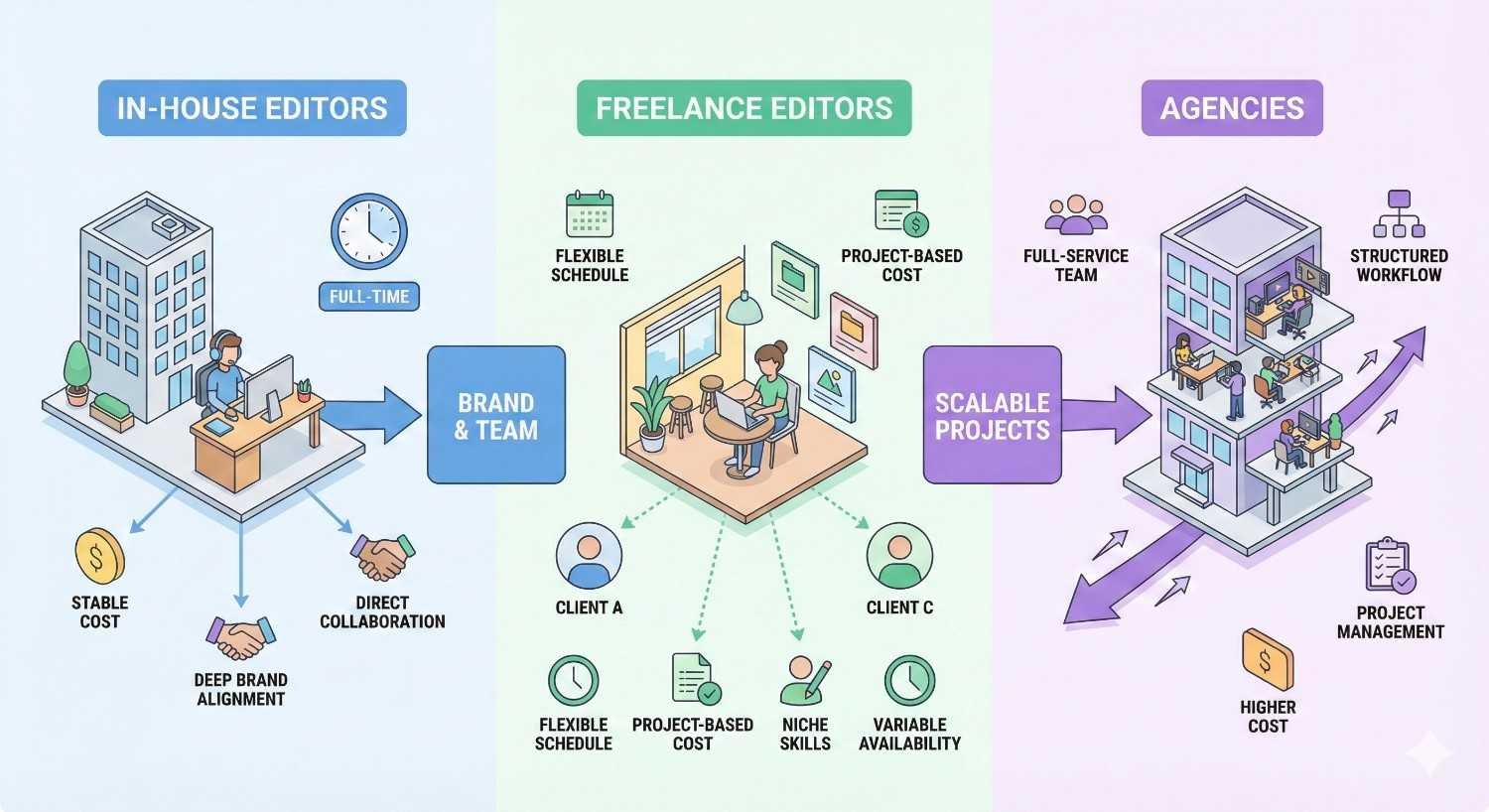
In-House Editors vs. Freelance Editors vs. Agencies
In-house editors offer deep brand knowledge, consistent availability, and integrated workflow participation. They’re ideal for organizations with steady content volume justifying dedicated headcount.
Freelance editors provide flexibility and specialized expertise without permanent overhead. They work well for variable content volumes or specialized editing needs.
Agencies offer scalable capacity and diverse expertise. They’re appropriate for organizations lacking internal editing capabilities or experiencing rapid content scaling.
Building an Effective Editorial Team
Define clear roles and responsibilities within your editorial team. Distinguish between developmental editors, copyeditors, and proofreaders to ensure appropriate expertise at each stage.
Invest in editor development through training and feedback. Editing skills improve with practice and guidance, increasing team capability over time.
Create redundancy for critical functions. Dependence on single individuals creates risk when those individuals are unavailable.
When to Outsource Content Editing
Consider outsourcing when internal capacity cannot meet content demands. Outsourcing enables scaling without permanent hiring commitments.
Outsource specialized editing requiring expertise your team lacks. Technical, legal, or medical content may need specialist editors unavailable internally.
Evaluate outsourcing economics carefully. While hourly rates may seem high, total cost often compares favorably to fully-loaded internal employee costs.
Content Editing for Different Content Types
Different content types require adapted editing approaches. Understanding these variations improves editing efficiency and effectiveness.
Blog Posts and Articles
Blog editing emphasizes engagement, readability, and SEO optimization. Focus on compelling introductions, scannable structure, and clear value delivery.
Verify that posts align with broader content strategy and internal linking opportunities. Individual posts should strengthen overall site authority on target topics.
Check that calls to action are appropriate and clearly presented. Blog posts often serve lead generation or engagement objectives requiring specific reader actions.
Website Copy and Landing Pages
Website copy editing prioritizes clarity, persuasion, and conversion optimization. Every word must earn its place on high-value pages.
Evaluate copy against user journey stages. Landing pages should address visitor needs and objections while guiding toward conversion actions.
Test copy variations when possible. A/B testing reveals which editing choices actually improve performance versus those that merely seem better.
Product Descriptions and E-commerce Content
Product description editing balances information delivery with persuasive appeal. Include essential specifications while highlighting benefits that drive purchase decisions.
Ensure consistency across product catalogs. Inconsistent formatting or terminology confuses shoppers and suggests disorganization.
Optimize for product search queries. Include relevant keywords naturally while maintaining compelling, readable descriptions.
Video Scripts and Multimedia Content
Script editing considers spoken delivery and visual accompaniment. Written clarity doesn’t always translate to effective spoken content.
Read scripts aloud during editing. Awkward phrasing becomes apparent when spoken that may not be obvious when read silently.
Coordinate script editing with production timelines. Script changes after production begins create costly delays and complications.
Technical Documentation and Whitepapers
Technical content editing requires subject matter accuracy alongside clear communication. Editors may need specialist knowledge or access to expert reviewers.
Prioritize precision over style in technical content. Readers value accuracy and completeness over engaging prose.
Verify that technical content remains current. Outdated technical information damages credibility and may cause user problems.
Common Content Editing Mistakes to Avoid
Awareness of common pitfalls helps editors avoid quality-damaging errors. These mistakes occur frequently across experience levels.
Over-Editing and Losing Authentic Voice
Excessive editing can strip content of personality and authenticity. Preserve the author’s voice while improving clarity and correctness.
Distinguish between errors requiring correction and stylistic choices deserving respect. Not every deviation from preferred style represents a problem.
Seek author input on significant changes. Collaborative editing produces better results than unilateral revision.
Ignoring SEO During the Editing Process
Editing that improves readability while damaging SEO optimization wastes content potential. Consider search visibility throughout the editing process.
Verify that editing changes don’t remove important keywords or alter heading structure in ways that harm optimization.
Balance SEO requirements with readability. Forced keyword usage harms both user experience and increasingly sophisticated search algorithms.
Skipping the Final Proofreading Stage
Time pressure often leads to abbreviated proofreading. This shortcut allows preventable errors to reach publication.
Build proofreading time into schedules as non-negotiable. The cost of published errors exceeds the cost of adequate proofreading time.
Use fresh eyes for proofreading when possible. Editors who worked on earlier stages may overlook errors due to familiarity.
Inconsistent Style and Formatting
Inconsistency signals carelessness and reduces content professionalism. Maintain uniform style throughout individual pieces and across content portfolios.
Use style guides and checklists to enforce consistency. Memory alone cannot maintain uniformity across large content volumes.
Audit published content periodically for consistency issues. Patterns in inconsistency reveal process gaps requiring attention.
Measuring Content Editing Effectiveness
Editing quality should be measured and improved systematically. Data-driven approaches reveal what’s working and what needs adjustment.
Key Performance Indicators for Edited Content
Track error rates in published content. Declining error rates indicate improving editing effectiveness.
Measure revision requirements after editing. Content requiring extensive post-publication corrections suggests editing process gaps.
Monitor stakeholder satisfaction with edited content. Writer and approver feedback reveals editing quality from different perspectives.
Tracking Organic Traffic and Engagement Metrics
Compare performance of well-edited versus minimally-edited content. Performance differences quantify editing value.
Monitor engagement metrics including time on page, scroll depth, and bounce rates. These metrics reflect content quality that editing influences.
Track conversion rates for content with different editing investment levels. ROI analysis justifies editing resource allocation.
Continuous Improvement Through Data Analysis
Analyze editing patterns to identify systemic issues. Recurring problems suggest training needs or process improvements.
Benchmark against industry standards and competitors. External comparison reveals whether internal standards are appropriately ambitious.
Iterate on editing processes based on performance data. Continuous improvement compounds over time into significant quality advantages.
Conclusion
The content editing process transforms raw content into strategic assets that drive organic visibility, engagement, and business results. Systematic editing workflows, appropriate tools, and skilled editors create sustainable competitive advantages in content quality.
At White Label SEO Service, we integrate comprehensive content editing into our full-service SEO approach. Our editorial processes ensure every piece of content meets the quality standards that search engines and audiences demand.
We help businesses build content operations that scale without sacrificing quality. Contact our team to discuss how professional content editing can accelerate your organic growth strategy.
Frequently Asked Questions About Content Editing
What is the difference between editing and revising?
Revising refers to changes made by the original author to improve their work, while editing involves review and improvement by someone other than the author. Both processes improve content quality, but editing brings external perspective and specialized expertise to the refinement process.
How many rounds of editing does content need?
Most content benefits from 2-3 editing rounds: developmental or structural editing, copyediting, and proofreading. High-stakes content may require additional rounds, while routine content with experienced writers may need fewer. Quality requirements and draft quality determine appropriate round counts.
Can AI replace human content editors?
AI tools enhance editing efficiency but cannot fully replace human editors. AI excels at catching mechanical errors and suggesting improvements but lacks judgment for context-dependent decisions, brand voice maintenance, and strategic content optimization. The most effective approach combines AI tools with human expertise.
What qualifications should a content editor have?
Effective content editors need strong language skills, attention to detail, and familiarity with relevant style guides. SEO content editors additionally need understanding of search optimization principles. Subject matter expertise benefits editors working with specialized content. Formal credentials matter less than demonstrated capability.
How do you maintain consistency across multiple editors?
Consistency requires documented style guides, standardized checklists, regular calibration sessions, and quality audits. Shared tools and templates reinforce standards. Feedback loops between editors and quality reviewers identify and correct inconsistencies before they become patterns.
What’s the best way to give editing feedback to writers?
Effective feedback is specific, constructive, and focused on improvement rather than criticism. Explain the reasoning behind changes to build writer understanding. Balance correction with recognition of strengths. Create dialogue rather than one-way critique to develop writer capabilities over time.
How do you edit content for international audiences?
International content editing requires awareness of cultural differences, regional language variations, and local conventions. Avoid idioms and references that don’t translate across cultures. Consider whether content needs localization beyond language translation. Engage native speakers for review when targeting specific markets.