
Alternative pages represent one of the highest-converting content types in SaaS SEO, capturing users actively searching for options beyond their current software. These pages target searchers typing queries like “Salesforce alternatives” or “best Slack alternatives”—people ready to switch providers and make purchasing decisions.
This guide covers everything you need to build, optimize, and scale alternative pages that rank and convert. You’ll learn the strategic differences between page types, proven creation frameworks, SEO best practices, and measurement approaches that drive real business outcomes.
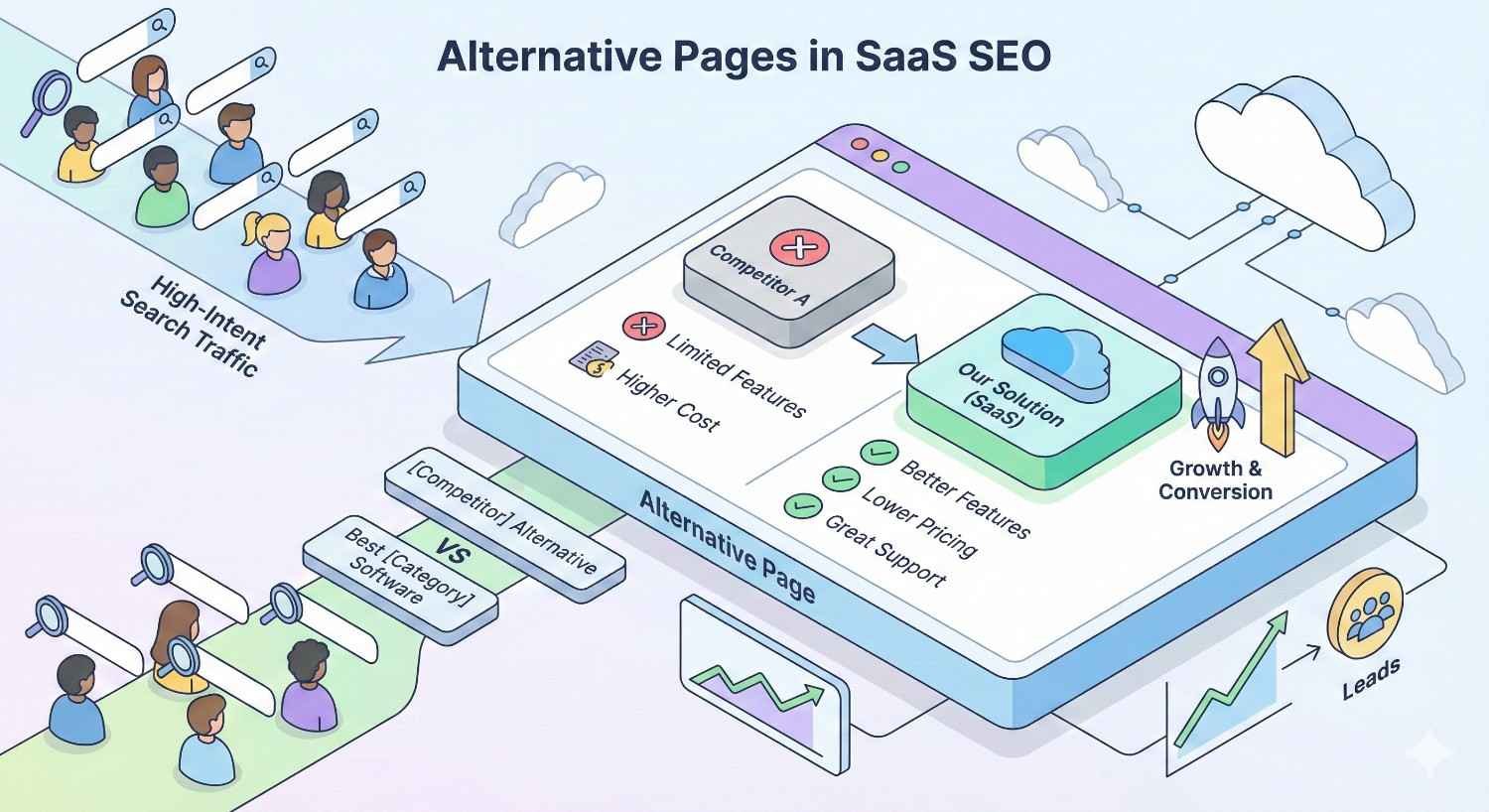
What Are Alternative Pages in SaaS SEO?
Alternative pages serve a specific function in the SaaS content ecosystem. Understanding their purpose and positioning helps you create pages that satisfy search intent while advancing your business goals.
Definition and Core Purpose
Alternative pages are dedicated landing pages designed to capture search traffic from users looking for substitutes to specific software products or categories. The core purpose is straightforward: intercept potential customers during their evaluation phase and present your product as a viable option.
These pages typically target keywords following patterns like “[Competitor] alternatives,” “best [competitor] alternatives,” or “tools like [competitor].” The searcher has already identified a problem and a potential solution category. They’re now exploring options—making them significantly more qualified than top-of-funnel visitors.
The strategic value lies in intent alignment. Someone searching “Asana alternatives” isn’t researching project management concepts. They know what project management software does. They’re either dissatisfied with Asana, evaluating options before committing, or seeking specific features Asana lacks. Your alternative page meets them at this decision point.
How Alternative Pages Differ from Comparison Pages
Alternative pages and comparison pages serve related but distinct purposes. Comparison pages directly pit two products against each other—”Notion vs. Coda” or “HubSpot vs. Salesforce.” They assume the searcher has narrowed choices to specific options and wants a head-to-head evaluation.
Alternative pages cast a wider net. They present multiple options for users who haven’t necessarily decided on finalists. The searcher wants to see the landscape of possibilities, not just a binary choice.
The content structure differs accordingly. Comparison pages dive deep into two products across multiple dimensions. Alternative pages provide broader coverage of several options, typically with less depth per product but more comprehensive category coverage.
From an SEO perspective, these pages target different keyword clusters. Comparison pages rank for “X vs. Y” queries. Alternative pages rank for “X alternatives” and “best alternatives to X” queries. Both belong in a comprehensive SaaS SEO strategy, but they serve different stages of the buyer journey.
Why SaaS Companies Need Alternative Pages
Alternative pages deliver measurable business value beyond traffic metrics. They address specific strategic objectives that compound over time.
Capturing High-Intent Competitor Traffic
Users searching for alternatives to competitor products represent qualified prospects with demonstrated purchase intent. They’ve moved past awareness and consideration—they’re actively evaluating solutions. This intent profile translates to higher conversion rates compared to informational content.
The traffic opportunity is substantial. Established competitors with large user bases generate consistent search volume for alternative queries. Ahrefs data shows that “[competitor] alternatives” keywords often have lower difficulty scores than broader category terms, creating ranking opportunities for newer entrants.
You’re essentially positioning your product in front of people already shopping in your category. They’ve self-identified as potential customers through their search behavior. Your alternative page simply needs to demonstrate why your solution deserves consideration.
Targeting Bottom-of-Funnel Keywords
Bottom-of-funnel keywords indicate purchase readiness. Alternative queries sit firmly in this category. The searcher isn’t asking “what is project management software”—they’re asking “what should I use instead of Monday.com.”
This positioning affects content strategy and conversion expectations. Bottom-funnel content should facilitate decision-making, not education. Include pricing information, feature comparisons, migration support details, and clear calls-to-action. The reader is ready to act; your content should enable that action.
The conversion path from alternative pages typically shortens the sales cycle. Visitors arrive with context about the problem space and competitor solutions. They need differentiation and validation, not fundamental education about your category.
Building Topical Authority in Your Niche
Alternative pages contribute to broader topical authority signals. When you comprehensively cover competitor alternatives, comparison content, and category analysis, search engines recognize your site as an authoritative resource in your software category.
This authority compounds. Strong alternative pages support rankings for related commercial and informational queries. Internal links from alternative pages to feature pages, use-case content, and product documentation create topical clusters that reinforce relevance signals.
The strategic benefit extends beyond individual page rankings. A robust alternative page strategy positions your brand as a category participant worth considering. Even users who don’t convert immediately encounter your brand during their research phase, building awareness for future evaluation cycles.
Types of Alternative Pages for SaaS
Different alternative page formats serve different search intents and competitive positioning goals. A comprehensive strategy typically includes multiple page types.
Single Competitor Alternative Pages ([Competitor] Alternatives)
Single competitor alternative pages target specific brand-name queries. “Zendesk alternatives” or “Mailchimp alternatives” represent this format. These pages focus on one competitor and present multiple alternatives, including your product.
The content structure typically includes a brief overview of the competitor (acknowledging its strengths), reasons users seek alternatives (pain points you can address), and a curated list of alternative solutions with your product featured prominently.
Keyword targeting is straightforward: “[competitor name] alternatives,” “best [competitor] alternatives,” “[competitor] alternative free,” and related variations. Search volume depends on competitor brand awareness and market position.
These pages work best when targeting competitors with known limitations your product addresses. If users commonly leave Competitor X due to pricing, complexity, or missing features—and your product solves those issues—the alternative page creates a natural conversion path.
Category Alternative Pages (Best [Category] Tools)
Category alternative pages target broader queries like “best project management tools” or “top CRM software.” Rather than positioning against a single competitor, these pages survey the category landscape.
The format resembles listicle content but with strategic positioning. Your product appears alongside established players, borrowing credibility through association while highlighting differentiators. The page serves users earlier in evaluation who haven’t committed to specific competitors yet.
These pages typically have higher search volume but also higher competition. Ranking requires comprehensive coverage, strong domain authority, and often significant backlink investment. However, successful category pages can drive substantial traffic and establish brand visibility.
Feature-Specific Alternative Pages
Feature-specific alternative pages target users seeking solutions with particular capabilities. “Best CRM with email automation” or “project management tools with time tracking” represent this approach.
These pages capture users whose primary evaluation criterion is a specific feature. If your product excels in that area, feature-specific pages create highly qualified traffic. The searcher has already prioritized the capability you deliver.
The content focuses on how different tools handle the specific feature, with detailed coverage of your product’s approach. Include screenshots, workflow examples, and concrete use cases demonstrating feature implementation.
Use-Case Alternative Pages
Use-case alternative pages target industry or function-specific queries. “Best CRM for real estate agents” or “project management for marketing teams” exemplify this format.
These pages acknowledge that software requirements vary by context. A CRM optimized for enterprise sales differs from one designed for freelance consultants. Use-case pages speak directly to specific audience segments with tailored messaging.
The strategic advantage is relevance precision. Generic alternative pages compete broadly. Use-case pages compete for narrower queries with clearer intent alignment. If your product serves specific verticals or functions particularly well, use-case pages convert that strength into targeted traffic.
How to Create High-Ranking Alternative Pages
Creating alternative pages that rank requires systematic execution across research, structure, content, and optimization. Each element contributes to overall page performance.
Keyword Research for Alternative Page Opportunities
Start with competitor identification. List direct competitors, adjacent solutions, and category leaders. For each, research “[competitor] alternatives” keyword variations using tools like Ahrefs, Semrush, or Google Keyword Planner.
Evaluate opportunities based on search volume, keyword difficulty, and strategic relevance. High-volume keywords for major competitors attract competition. Lower-volume keywords for niche competitors may offer easier ranking paths with qualified traffic.
Analyze SERP composition for target keywords. Note what content types rank—listicles, comparison guides, review aggregators. Identify content gaps where existing results fail to fully satisfy search intent. These gaps represent ranking opportunities.
Expand keyword research to include long-tail variations: “[competitor] alternatives for small business,” “[competitor] free alternatives,” “cheaper alternatives to [competitor].” These variations often have lower competition and capture specific user segments.
Structuring Your Alternative Page for SEO
Page structure should facilitate both user experience and search engine understanding. A proven format includes:
Opening section: Define the competitor briefly, acknowledge why users seek alternatives, and preview what the page covers. Include target keywords naturally in the first paragraph.
Alternative listings: Present each alternative with consistent formatting. Include product name, brief description, key differentiating features, pricing overview, and ideal use cases. Your product should appear prominently but not exclusively—pages listing only your product lack credibility.
Comparison elements: Include comparison tables summarizing key differences across alternatives. Tables improve scannability and can earn featured snippet placement.
Selection guidance: Help readers choose based on their specific needs. “Choose X if you need…” statements guide decision-making and demonstrate expertise.
Call-to-action: Clear next steps for readers interested in your product. Free trial links, demo requests, or detailed product pages.
Writing Compelling Comparison Content
Effective comparison content balances objectivity with strategic positioning. Readers recognize and distrust overtly promotional content. Credibility requires acknowledging competitor strengths while highlighting your differentiators.
Lead with user needs, not product features. Frame comparisons around what users want to accomplish, then explain how different tools address those needs. This approach demonstrates understanding of reader priorities.
Be specific with claims. “Better customer support” means nothing. “24/7 live chat support with average response time under 2 minutes” provides concrete differentiation. Specificity builds credibility and helps readers evaluate fit.
Address common objections proactively. If your product has known limitations compared to competitors, acknowledge them honestly while explaining compensating strengths or workarounds. Transparency builds trust and pre-empts negative discovery during evaluation.
Positioning Your Product Without Being Salesy
The challenge with alternative pages is promoting your product without undermining content credibility. Several techniques help maintain balance.
Include your product as one option among several, not the sole focus. Pages that only mention your product read as advertisements, not resources. Genuine alternative pages help users evaluate multiple options.
Let features speak for themselves. Rather than claiming “best-in-class,” describe what your product does and let readers draw conclusions. “Our API processes requests in under 50ms” is more credible than “fastest API in the industry.”
Use customer evidence strategically. Quotes from users who switched from competitors provide third-party validation. Case studies showing migration outcomes demonstrate real-world results.
Acknowledge when competitors are better fits. If a competitor genuinely serves certain use cases better, say so. This honesty builds credibility for claims where your product excels.
Adding Social Proof and Trust Signals
Social proof elements strengthen alternative page effectiveness. Include:
Customer testimonials: Quotes from users who evaluated alternatives and chose your product. Especially valuable are testimonials from users who switched from the specific competitor you’re targeting.
Review aggregator scores: G2, Capterra, and TrustRadius ratings provide third-party validation. Display badges or scores where favorable.
Customer logos: Recognizable brands using your product signal market validation. Particularly effective when logos represent companies similar to your target audience.
Usage statistics: User counts, companies served, or transactions processed demonstrate market traction. Numbers create concrete credibility.
Awards and recognition: Industry awards, analyst mentions, or media coverage provide external validation.
Alternative Page SEO Best Practices
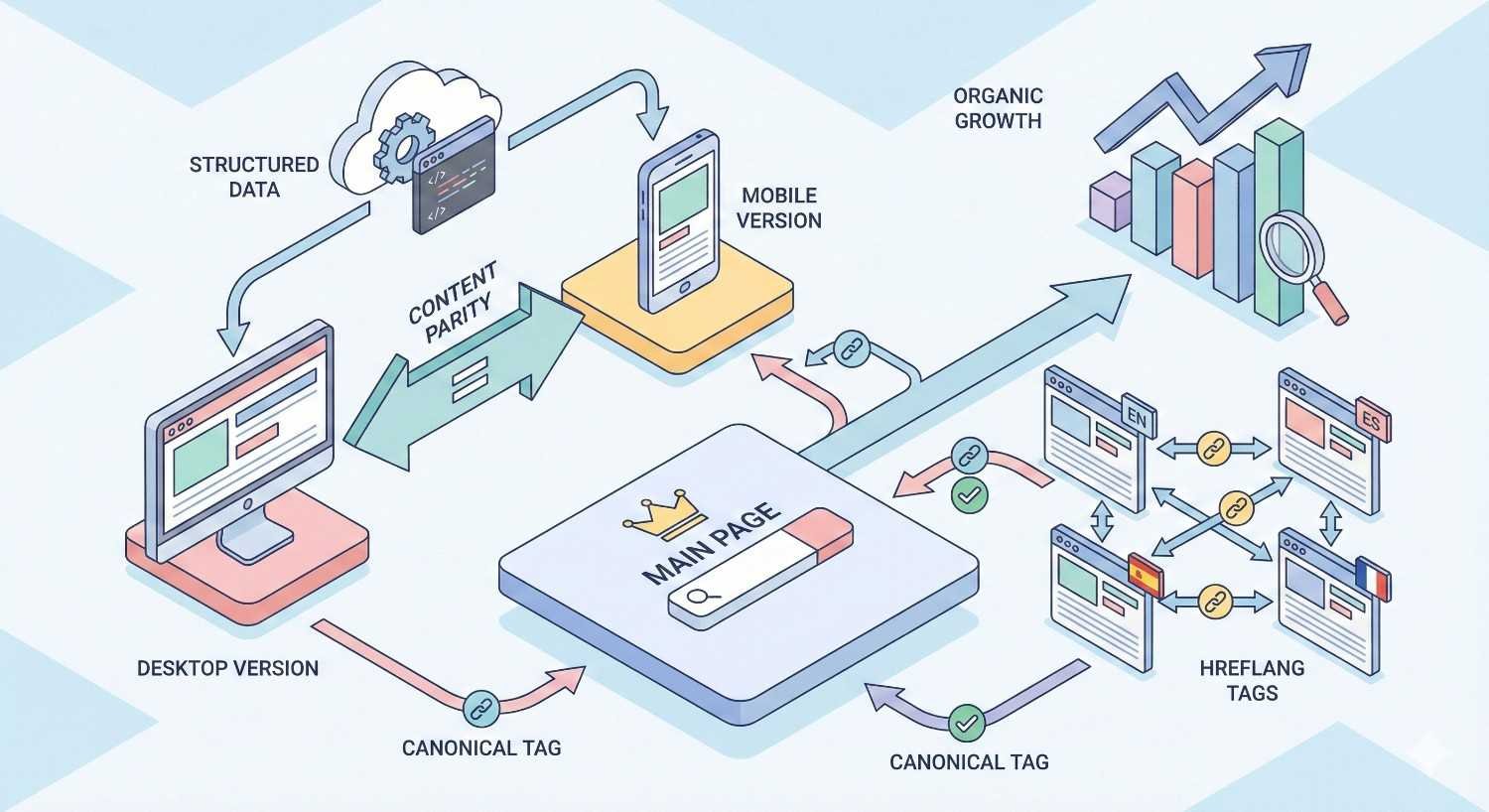
Technical and on-page optimization ensures alternative pages reach their ranking potential. These practices apply specifically to alternative content.
On-Page Optimization Checklist
Title tag: Include primary keyword (“[Competitor] Alternatives”) and current year. Format example: “10 Best Zendesk Alternatives in 2025 [Reviewed]”
Meta description: Summarize page value, include primary keyword, and add call-to-action. Keep under 160 characters.
H1 tag: Match or closely align with title tag. Include primary keyword naturally.
URL structure: Clean, keyword-inclusive URLs. Example: /zendesk-alternatives/ rather than /blog/post-123/
Header hierarchy: Logical H2/H3 structure covering subtopics. Each alternative can be an H2 or H3 depending on page length.
Image optimization: Alt text describing images, compressed file sizes, descriptive filenames.
Internal links: Connect to related comparison pages, product pages, and relevant blog content.
External links: Cite sources for claims, link to competitor sites where appropriate (demonstrates objectivity).
Internal Linking Strategy for Alternative Pages
Alternative pages should integrate into your site’s topical architecture. Link strategically to maximize SEO value and user navigation.
From alternative pages: Link to your product pages, feature pages, pricing page, and related comparison content. Guide interested readers deeper into your site.
To alternative pages: Link from blog posts discussing competitors, category overview content, and relevant use-case pages. Build internal authority signals.
Between alternative pages: Cross-link related alternative pages. A Slack alternatives page might link to Microsoft Teams alternatives and Discord alternatives pages.
Anchor text: Use descriptive, keyword-relevant anchor text. “Zendesk alternatives” rather than “click here” or “learn more.”
Schema Markup for Comparison Content
Structured data helps search engines understand alternative page content and can enable rich results.
FAQ schema: If your page includes frequently asked questions, implement FAQ schema for potential rich snippet display.
Product schema: For each alternative listed, product schema can provide structured information about features, pricing, and ratings.
Review schema: If including review content, aggregate review schema can display star ratings in search results.
Article schema: Basic article markup helps search engines categorize content type and publication details.
Implementation requires technical capability—work with developers or use CMS plugins that support schema markup.
Building Backlinks to Alternative Pages
Alternative pages can attract backlinks through several approaches:
Original research: Include unique data, surveys, or analysis that others want to reference. “We analyzed 500 users who switched from Competitor X” provides citable information.
Comprehensive coverage: The most thorough alternative page in a category naturally attracts links from writers seeking authoritative sources.
Resource page outreach: Identify sites maintaining software recommendation lists and suggest your alternative page as a resource.
Broken link building: Find broken links to outdated alternative content and offer your page as a replacement.
Guest posting: Write for industry publications and include contextual links to your alternative pages where relevant.
Alternative Page Examples from Successful SaaS Companies
Examining successful alternative pages reveals patterns worth emulating. These examples demonstrate effective execution across B2B and B2C contexts.
B2B SaaS Alternative Page Examples
HubSpot’s Salesforce alternatives page demonstrates category leadership positioning. The page acknowledges Salesforce’s market position while systematically presenting alternatives including HubSpot. Comprehensive feature comparisons, pricing breakdowns, and use-case guidance help readers evaluate options.
Notion’s Evernote alternatives content targets users seeking modern note-taking solutions. The page addresses common Evernote frustrations (pricing changes, feature limitations) and positions Notion as a flexible alternative. Customer migration stories add credibility.
Ahrefs’ SEMrush alternatives page shows how to compete against a direct rival professionally. The page provides objective feature comparisons, acknowledges areas where SEMrush excels, and highlights Ahrefs’ differentiators. This balanced approach builds trust while advancing competitive positioning.
B2C SaaS Alternative Page Examples
Canva’s Adobe alternatives content targets users seeking simpler design tools. The page acknowledges Adobe’s professional capabilities while positioning Canva for users who don’t need enterprise-level complexity. Pricing transparency and ease-of-use emphasis resonate with target users.
Spotify’s competitor comparison content addresses users evaluating music streaming options. Feature comparisons, library size, and pricing tiers help users understand differences. Platform availability and integration ecosystem coverage addresses practical concerns.
These examples share common elements: objective tone, comprehensive coverage, strategic positioning, and clear calls-to-action. They inform rather than hard-sell, building credibility that supports conversion.
Measuring Alternative Page Performance
Effective measurement enables optimization. Track metrics that connect to business outcomes, not just traffic vanity metrics.
Key Metrics to Track
Organic traffic: Monitor sessions from organic search to alternative pages. Track growth over time and compare against projections.
Keyword rankings: Track position for target keywords. Note ranking changes and correlate with content updates or competitive movements.
Click-through rate: Search Console data shows how often searchers click your result. Low CTR despite good rankings suggests title/description optimization opportunities.
Bounce rate: High bounce rates may indicate content-intent mismatch. Users arriving and immediately leaving suggests the page doesn’t deliver what they expected.
Time on page: Longer engagement typically indicates content relevance. Very short times suggest content issues; very long times might indicate confusion.
Conversion rate: The ultimate metric—what percentage of alternative page visitors take desired actions? Track demo requests, trial signups, or other conversion events.
Assisted conversions: Alternative pages often contribute to conversions without being the final touchpoint. Track assisted conversion value in Google Analytics.
Conversion Optimization for Alternative Pages
Alternative pages should convert, not just rank. Optimization focuses on moving readers toward action.
Clear CTAs: Every alternative page needs obvious next steps. “Start free trial,” “Request demo,” or “See pricing” buttons should be visible without scrolling.
Reduce friction: Minimize form fields, offer multiple contact options, and provide instant access where possible. Each friction point reduces conversion.
Address objections: Include FAQ sections addressing common concerns. Migration support, pricing questions, and feature comparisons reduce evaluation barriers.
Social proof placement: Position testimonials and trust signals near CTAs. Validation at decision points supports conversion.
A/B testing: Test headlines, CTA copy, page layouts, and social proof elements. Data-driven optimization outperforms assumptions.
Iterating Based on Performance Data
Performance data should drive continuous improvement. Establish review cadences and optimization processes.
Monthly ranking reviews: Track keyword position changes. Investigate drops and identify opportunities from rising queries.
Quarterly content audits: Assess whether content remains accurate and competitive. Competitor products change; your content should reflect current reality.
Conversion analysis: Identify high-traffic pages with low conversion rates. These represent optimization priorities—traffic exists, conversion needs improvement.
Competitive monitoring: Track competitor alternative pages. Note new entrants, content updates, and ranking changes. Respond to competitive movements.
User feedback integration: Monitor comments, support inquiries, and sales team feedback about alternative pages. User input reveals content gaps and messaging opportunities.
Common Mistakes to Avoid with Alternative Pages
Alternative page strategies fail for predictable reasons. Avoiding common mistakes improves success probability.
Being Too Aggressive Against Competitors
Overly negative competitor content backfires. Readers recognize bias and discount aggressive claims. Legal risks also exist—false statements about competitors can create liability.
Effective alternative pages acknowledge competitor strengths while highlighting differentiators. “Competitor X excels at enterprise deployments; our product better serves mid-market teams” is more credible than “Competitor X is overpriced and outdated.”
Focus on your strengths rather than competitor weaknesses. Readers want to know what you offer, not just what competitors lack. Positive positioning outperforms negative attacks.
Neglecting Content Updates
Alternative pages require maintenance. Software products evolve—features launch, pricing changes, companies pivot. Outdated alternative pages lose credibility and rankings.
Establish update schedules based on market dynamics. Fast-moving categories may need quarterly updates. Stable categories might need annual reviews. At minimum, verify accuracy before major traffic periods.
Update triggers include: competitor product launches, pricing changes, your product updates, ranking declines, and user feedback indicating outdated information.
Ignoring Search Intent Variations
“Salesforce alternatives” and “free Salesforce alternatives” represent different intents. The first seeks general options; the second has budget constraints. Single pages can’t optimally serve both intents.
Create separate pages for distinct intent variations when search volume justifies the effort. “Free [competitor] alternatives” and “[competitor] alternatives for small business” often warrant dedicated pages.
Analyze SERP results for intent signals. If Google shows different content types for keyword variations, those variations likely represent distinct intents requiring separate content.

Alternative Pages vs. Other SaaS SEO Content Types
Understanding how alternative pages relate to other content types enables strategic resource allocation.
Alternative Pages vs. Comparison Pages
Alternative pages target “[competitor] alternatives” queries and present multiple options. Comparison pages target “[product A] vs. [product B]” queries and provide head-to-head analysis.
The audience differs. Alternative page visitors want to explore options. Comparison page visitors have narrowed to specific finalists. Both represent bottom-funnel intent, but comparison visitors are further along.
Create both types for comprehensive coverage. Alternative pages capture broader evaluation traffic. Comparison pages capture specific matchup queries. Internal links between page types guide users through evaluation.
Alternative Pages vs. Product Landing Pages
Product landing pages focus exclusively on your offering. They assume visitor interest and aim to convert. Alternative pages acknowledge the competitive landscape and position your product within it.
The content approach differs significantly. Product pages can be promotional—they’re expected to sell. Alternative pages must balance promotion with objectivity to maintain credibility.
Traffic sources also differ. Product pages often receive paid traffic, direct visits, and branded search. Alternative pages primarily target organic non-branded search. The visitor mindset and content expectations vary accordingly.
Where Alternative Pages Fit in Your Content Strategy
Alternative pages belong in the commercial content layer of your strategy. They sit between educational top-funnel content and conversion-focused bottom-funnel pages.
A typical content architecture includes:
Top-funnel: Educational blog posts, guides, and thought leadership attracting awareness-stage visitors.
Mid-funnel: Category overviews, use-case content, and feature explanations for consideration-stage visitors.
Bottom-funnel: Alternative pages, comparison pages, and product pages for decision-stage visitors.
Alternative pages bridge mid and bottom funnel. They serve users who understand the category and are actively evaluating options. Strategic internal linking guides visitors from educational content through alternatives to product pages.
How to Scale Your Alternative Page Strategy
Scaling alternative page production requires systematic approaches to prioritization, efficiency, and resource allocation.
Prioritizing Competitors to Target
Not all competitors warrant alternative pages. Prioritize based on:
Search volume: Higher volume keywords justify greater investment. Use keyword research tools to quantify opportunity.
Competitive difficulty: Some competitor alternative keywords have entrenched competition. Balance opportunity against ranking probability.
Strategic relevance: Prioritize competitors whose users represent your ideal customers. Traffic from misaligned competitors converts poorly.
Differentiation strength: Target competitors where your product offers clear advantages. Weak differentiation makes compelling content difficult.
Create a prioritized list and execute systematically. Start with highest-opportunity targets and expand coverage over time.
Creating Templates for Efficiency
Templates accelerate production without sacrificing quality. Develop standardized structures for:
Page layout: Consistent section ordering, formatting conventions, and design elements.
Content blocks: Reusable components for product descriptions, comparison tables, and CTA sections.
Research processes: Standardized competitor analysis frameworks ensuring consistent coverage.
Quality checklists: Verification steps ensuring each page meets standards before publication.
Templates enable delegation and scaling. Writers can produce consistent content faster when working from established frameworks.
Outsourcing vs. In-House Production
Scaling decisions involve build-versus-buy tradeoffs. Consider:
In-house advantages: Deep product knowledge, brand voice consistency, strategic alignment, and institutional learning.
Outsourcing advantages: Scalability, specialized SEO expertise, cost efficiency for high-volume production, and reduced internal resource demands.
Hybrid approaches: In-house strategy and oversight with outsourced production. Maintain quality control while accessing external capacity.
The right approach depends on internal capabilities, budget constraints, and scaling ambitions. Many SaaS companies start in-house, then outsource as volume requirements exceed internal capacity.
Frequently Asked Questions About Alternative Pages for SaaS
Are alternative pages ethical?
Alternative pages are standard practice in SaaS marketing when executed honestly. Ethical alternative pages provide accurate information, acknowledge competitor strengths, and help users make informed decisions. Unethical approaches include false claims, trademark violations, and deliberately misleading content. Focus on helping users evaluate options rather than manipulating perceptions.
Should I include pricing on alternative pages?
Yes, pricing information significantly improves alternative page usefulness. Users evaluating alternatives typically consider cost. Include your pricing and, where publicly available, competitor pricing. If competitor pricing isn’t public, note that and suggest users verify directly. Pricing transparency builds trust and helps users self-qualify.
How often should I update alternative pages?
Review alternative pages quarterly at minimum. Update immediately when competitors announce significant changes—new features, pricing adjustments, or pivots. Your own product updates should trigger alternative page reviews. Outdated information damages credibility and can hurt rankings as freshness signals decline.
Can I rank for competitor brand names?
Ranking for competitor brand names is possible but challenging. Competitors typically dominate their own brand SERPs. Alternative keywords (“[competitor] alternatives”) offer better opportunities than pure brand terms. Avoid trademark issues by not implying affiliation or using competitor logos without permission. Focus on informational content about alternatives rather than attempting to intercept navigational brand searches.
How long does it take for alternative pages to rank?
Alternative page ranking timelines vary based on domain authority, keyword competition, and content quality. New pages from established domains might see initial rankings within weeks. Competitive keywords may require months of link building and content refinement. Industry benchmarks suggest 3-6 months for meaningful ranking progress on moderately competitive terms. Set realistic expectations and commit to ongoing optimization.
How many alternative pages should I create?
Create alternative pages for competitors where you have meaningful differentiation and sufficient search volume exists. Most SaaS companies benefit from 5-15 single-competitor alternative pages plus category and use-case variations. Quality matters more than quantity—comprehensive, well-optimized pages outperform numerous thin pages. Expand coverage as resources allow and initial pages prove successful.
Can alternative pages hurt my brand reputation?
Poorly executed alternative pages can damage brand perception. Overly aggressive competitor attacks, inaccurate claims, or obviously biased content reflects poorly on your brand. However, well-crafted alternative pages that genuinely help users evaluate options enhance brand reputation. They demonstrate confidence, transparency, and customer focus. The execution approach determines reputational impact.
Conclusion
Alternative pages represent a high-impact opportunity for SaaS companies seeking qualified organic traffic. They capture users actively evaluating solutions, target bottom-funnel keywords with strong conversion potential, and build topical authority that supports broader SEO performance.
Success requires strategic execution across page types, content quality, technical optimization, and ongoing measurement. The companies that excel treat alternative pages as living assets—continuously updated, optimized, and expanded based on performance data and market changes.
We help SaaS companies build and scale alternative page strategies that drive measurable business results. Whether you need strategic guidance, content production support, or comprehensive SEO services, White Label SEO Service provides the expertise to capture competitor traffic and convert it into customers. Contact us to discuss how alternative pages fit into your organic growth strategy.