
Professional article writing services help businesses produce consistent, high-quality content that drives organic traffic, builds authority, and converts readers into customers. Whether you need blog posts, technical documentation, or SEO-optimized articles, understanding how these services work is essential for making informed investment decisions.
Content remains the foundation of organic search visibility. Yet most businesses lack the internal resources to produce articles at the volume and quality required to compete. This gap creates opportunity for strategic outsourcing.
This guide covers everything you need to evaluate article writing services: pricing structures, selection criteria, SEO integration, industry-specific considerations, and how to build productive writer relationships that deliver measurable ROI.
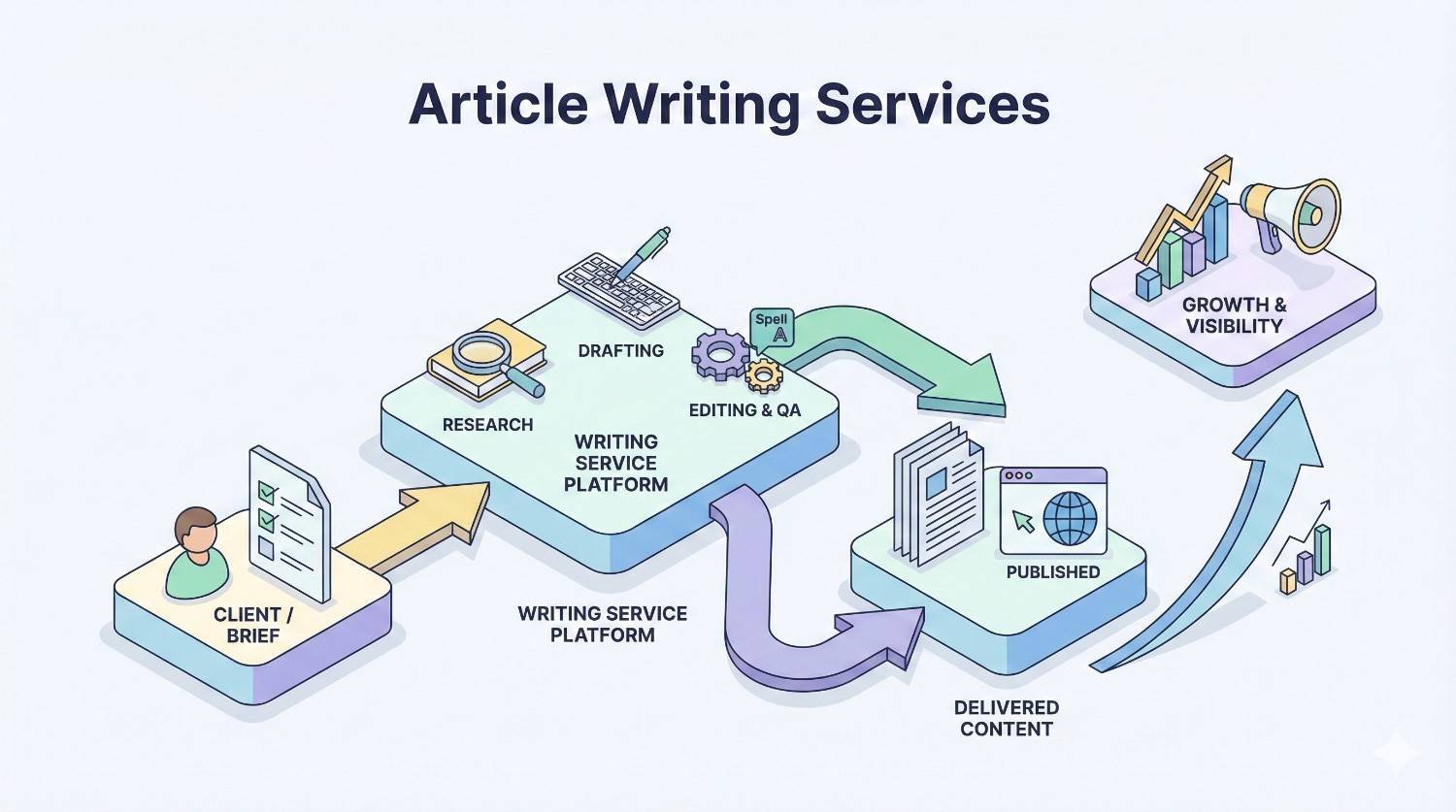
What Are Article Writing Services?
Article writing services provide businesses with professionally written content on a contract or ongoing basis. These services range from individual freelance writers to full-service agencies with editorial teams, subject matter experts, and SEO specialists.
The core value proposition is straightforward: access to skilled writers who can produce content faster, more consistently, and often at higher quality than most businesses can achieve internally. This allows companies to focus on core operations while maintaining a steady content pipeline.
Professional article writing has evolved significantly. Modern services integrate keyword research, competitive analysis, and on-page optimization into the writing process. The best providers function as strategic partners rather than simple content vendors.
Types of Article Writing Services
Blog Writing Services
Blog writing services focus on creating engaging, informative posts that attract organic traffic and nurture audience relationships. These writers understand how to balance SEO requirements with readability, creating content that ranks and resonates.
Typical deliverables include how-to guides, listicles, thought leadership pieces, and news commentary. Quality blog writers research topics thoroughly, incorporate relevant keywords naturally, and structure content for both scanners and deep readers.
SEO Content Writing Services
SEO content writing services specialize in creating articles optimized for search engine visibility. Writers in this category understand keyword intent, semantic relationships, and on-page optimization factors that influence rankings.
These services typically include keyword research, competitor content analysis, and strategic internal linking recommendations. The goal is content that satisfies both search algorithms and human readers.
Technical Article Writing
Technical article writing requires subject matter expertise combined with the ability to explain complex concepts clearly. Industries like software, engineering, healthcare, and finance often need writers who can translate technical information for various audience levels.
Technical writers typically have relevant educational backgrounds or industry experience. They understand terminology, can interpret source materials accurately, and know how to structure information logically.
Ghostwriting Services
Ghostwriting services produce content published under the client’s name or brand. This includes executive thought leadership, bylined articles, and content attributed to company experts.
Quality ghostwriters capture the client’s voice, perspective, and expertise while handling the actual writing. This allows busy professionals to maintain content presence without dedicating hours to writing.
Industry-Specific Article Writing
Industry-specific services focus on particular verticals like healthcare, legal, finance, technology, or manufacturing. These writers understand industry regulations, terminology, audience expectations, and competitive landscapes.
Specialized writers often command higher rates but deliver content that requires less revision and demonstrates genuine expertise. For regulated industries, this specialization is often essential.
How Professional Article Writing Works
The professional article writing process typically follows a structured workflow designed to ensure quality and alignment with client objectives.
Initial engagement involves understanding the client’s business, audience, brand voice, and content goals. This discovery phase shapes all subsequent content production.
Topic development combines client input with keyword research and competitive analysis. Writers or strategists identify topics with search demand, reasonable competition levels, and alignment with business objectives.
The writing phase involves research, outlining, drafting, and self-editing. Professional writers follow established processes that ensure consistency and quality across all deliverables.
Editorial review adds another quality layer. Editors check for accuracy, clarity, SEO optimization, and brand voice alignment before delivery.
Revision cycles allow clients to request changes. Most services include one to three revision rounds in their pricing.
Why Businesses Use Article Writing Services
Understanding the strategic reasons behind outsourcing content helps clarify whether article writing services align with your business needs and growth objectives.
Building Organic Search Visibility
Content is the primary driver of organic search visibility. Every article targeting relevant keywords creates another opportunity to appear in search results and attract potential customers.
Consistent publishing signals to search engines that your site is active and authoritative. Google’s helpful content guidelines emphasize the importance of demonstrating expertise through comprehensive, people-first content.
Article writing services enable the publishing frequency required to build topical authority. Most businesses need 8-16 articles monthly to see meaningful organic growth within 6-12 months.
Scaling Content Production
Internal content production faces natural constraints. Team members have primary responsibilities. Writing quality content takes significant time. Maintaining consistency across months or years proves challenging.
Article writing services remove these constraints. Need to double output for a product launch? Add more articles to your order. Entering a new market? Commission content targeting that audience. Scaling down during slow periods? Adjust your content volume accordingly.
This flexibility allows content strategy to respond to business needs rather than being limited by internal capacity.
Accessing Subject Matter Expertise
Quality content requires genuine expertise. Readers recognize shallow content. Search engines increasingly evaluate content quality and expertise signals.
Article writing services provide access to writers with relevant backgrounds and experience. A healthcare content service employs writers who understand medical terminology and compliance requirements. A SaaS content agency has writers familiar with software concepts and B2B buying processes.
This expertise translates to content that demonstrates authority, requires less revision, and performs better with both readers and search engines.
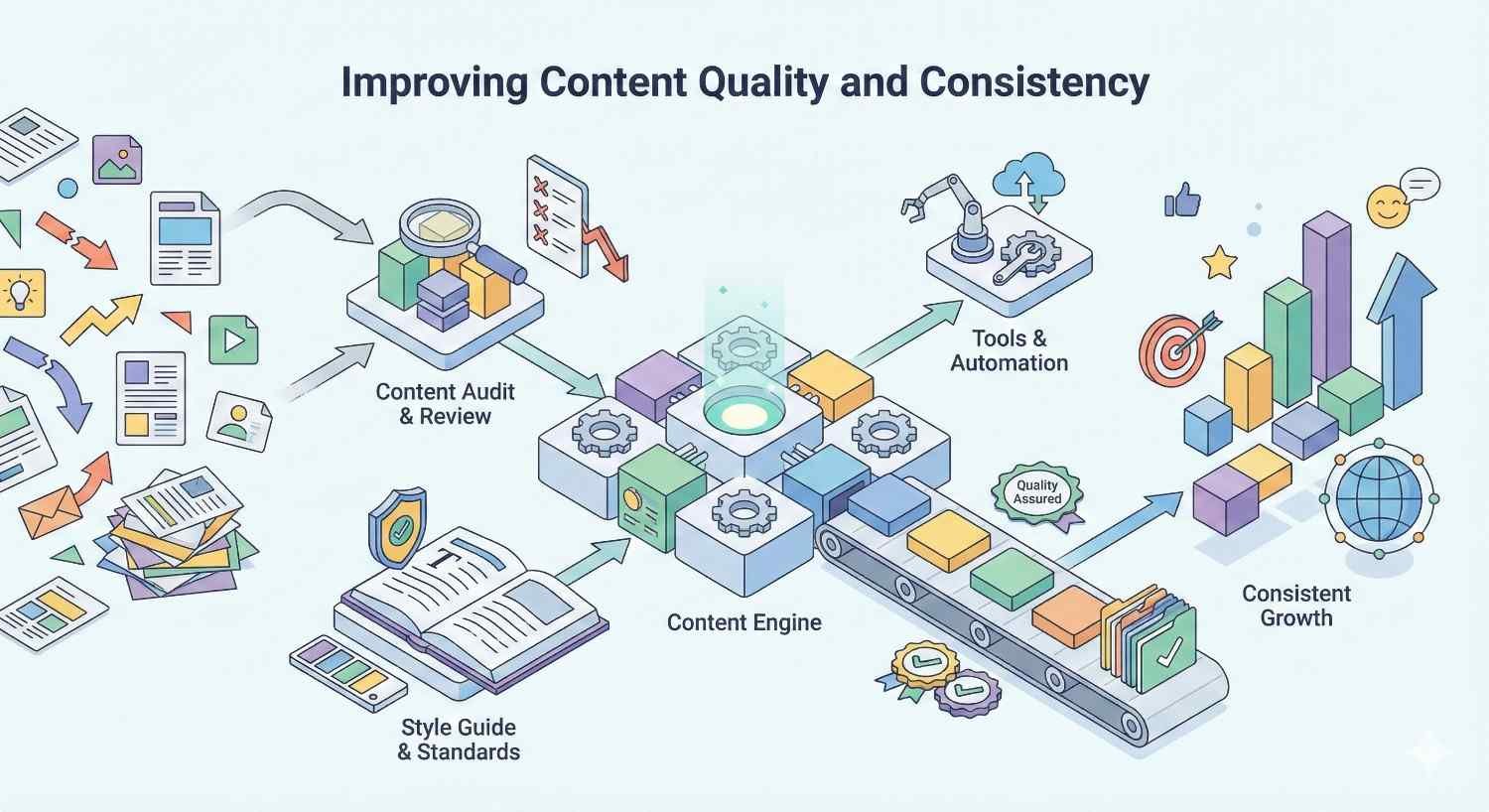
Improving Content Quality and Consistency
Professional writers produce better content than most non-writers. This seems obvious but has significant implications for content performance.
Well-written articles engage readers longer, reducing bounce rates. Clear explanations build trust and authority. Proper structure improves comprehension and action-taking.
Consistency matters equally. Professional services deliver content on schedule, in the expected format, meeting established quality standards. This reliability enables sustainable content marketing programs.
How to Choose an Article Writing Service
Selecting the right article writing service requires evaluating multiple factors. The cheapest option rarely delivers the best value. The most expensive option may exceed your actual needs.
Evaluating Writer Expertise and Credentials
Writer quality determines content quality. Evaluate the actual writers who will produce your content, not just the agency’s marketing claims.
Review writer backgrounds, including education, professional experience, and writing history. For specialized content, verify relevant expertise. A finance article should be written by someone who understands financial concepts, not a generalist researching as they write.
Ask about writer vetting processes. How does the service evaluate and select writers? What ongoing quality standards do writers maintain?
Consider requesting a paid trial article before committing to ongoing work. This reveals actual quality better than samples, which may represent the service’s best work rather than typical output.
Assessing SEO Capabilities
Modern article writing must integrate SEO fundamentals. Evaluate whether services understand and implement search optimization.
Key capabilities include keyword research and selection, search intent analysis, on-page optimization (title tags, meta descriptions, header structure), internal linking strategy, and content structure for featured snippets.
Ask how the service approaches keyword integration. Quality services balance optimization with readability. They understand semantic SEO and topical authority, not just keyword density.
Review sample content for SEO implementation. Are keywords integrated naturally? Is content structured logically with proper heading hierarchy? Does the content comprehensively address the topic?
Reviewing Portfolio and Writing Samples
Samples reveal writing quality, style range, and expertise depth. Request samples relevant to your industry and content types.
Evaluate samples critically. Is the writing clear and engaging? Does it demonstrate genuine understanding of the subject? Would you be comfortable publishing this under your brand?
Look beyond surface quality. Check factual accuracy. Verify that claims are supported. Assess whether the content would actually help readers.
If possible, review content the service has produced for current clients. Published work shows real-world output rather than curated samples.
Understanding Pricing Models
Article writing services use various pricing structures. Understanding these models helps you compare options accurately and budget appropriately.
Per-Word Pricing
Per-word pricing charges based on content length. Rates typically range from $0.05 to $0.50+ per word depending on quality level and specialization.
This model provides cost predictability based on content length. A 1,500-word article at $0.15 per word costs $225. The same article at $0.30 per word costs $450.
Per-word pricing works well for variable content lengths and makes budgeting straightforward. However, it can incentivize longer content regardless of whether length serves the topic.
Per-Article Pricing
Per-article pricing charges a flat rate regardless of final word count. Rates vary widely based on complexity, research requirements, and writer expertise.
Standard blog posts might range from $150 to $500. In-depth guides or technical content often cost $500 to $2,000+.
This model aligns incentives around content quality rather than length. Writers focus on covering topics appropriately rather than hitting word counts.
Monthly Retainer Models
Retainer models provide a set number of articles or words monthly for a fixed fee. This creates predictable costs and ensures consistent content production.
Retainers often include discounted per-article rates compared to one-off orders. They also typically provide priority scheduling and dedicated writer assignments.
This model works best for businesses committed to ongoing content production. It requires accurate forecasting of content needs.
Project-Based Pricing
Project-based pricing covers defined content initiatives: a content refresh, pillar page development, or product launch content package.
Pricing reflects total scope rather than individual article costs. This can provide better value for large initiatives while simplifying procurement.
Checking Revision Policies and Turnaround Times
Revision policies significantly impact total cost and satisfaction. Understand what’s included before committing.
Most services include one to three revision rounds. Clarify what constitutes a revision versus a rewrite. Understand timelines for revision completion.
Turnaround times vary by service and content complexity. Standard blog posts typically require 3-7 business days. Complex technical content may need 2-3 weeks.
Rush delivery usually costs extra. If you frequently need fast turnaround, factor this into service selection and budgeting.
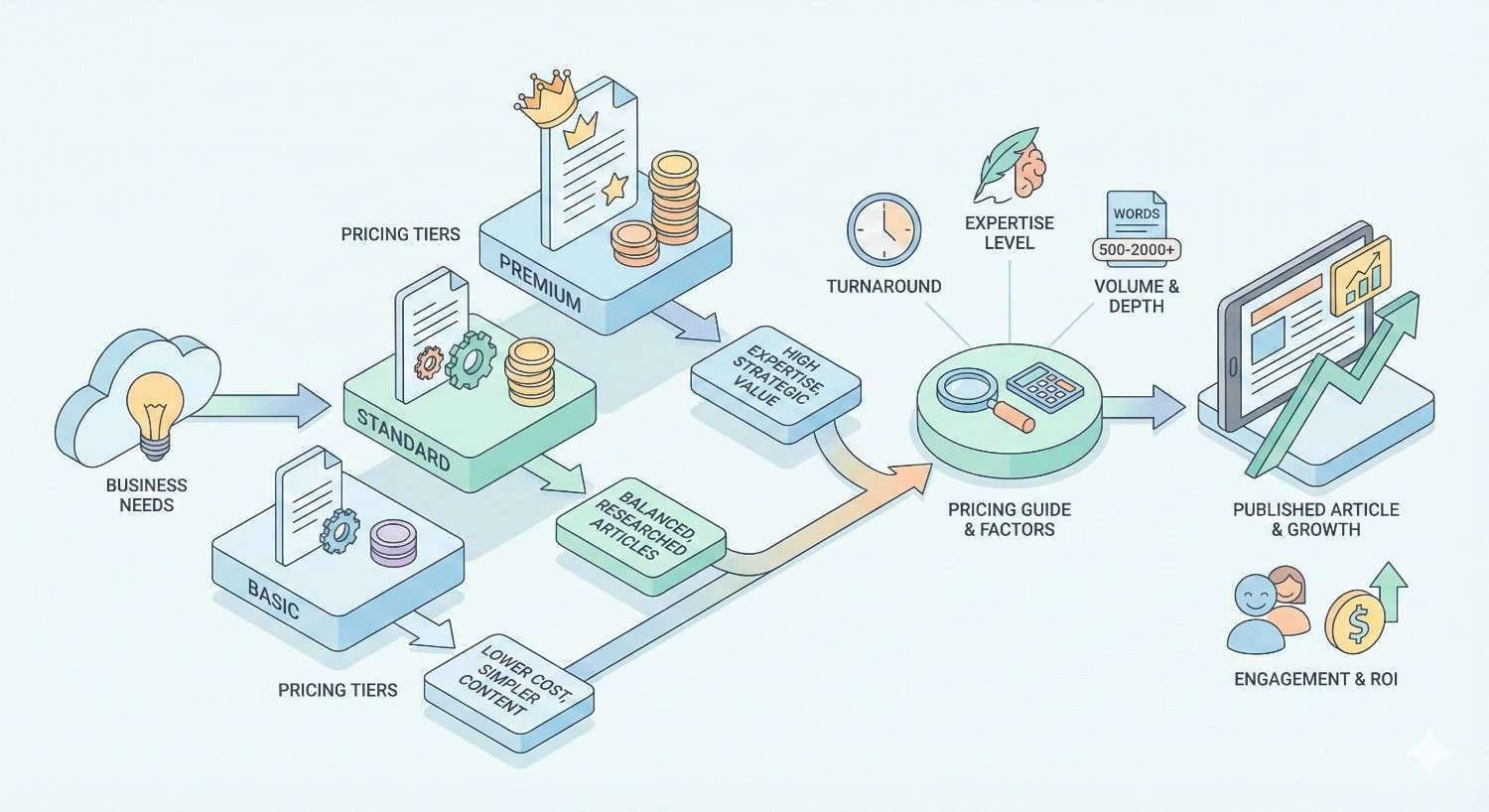
Article Writing Services Pricing Guide
Understanding market pricing helps you budget appropriately and evaluate whether quotes represent fair value.
Average Cost of Article Writing Services
Article writing costs span a wide range based on quality, specialization, and service level.
Budget tier ($0.03-$0.08 per word): Basic content from content mills or entry-level freelancers. Quality varies significantly. Limited SEO integration. Minimal research depth.
Mid-tier ($0.10-$0.25 per word): Professional content from experienced writers or established agencies. Consistent quality. Standard SEO optimization. Adequate research.
Premium tier ($0.30-$0.75+ per word): Expert content from specialized writers or premium agencies. High quality and expertise. Advanced SEO integration. Thorough research and original insights.
For a typical 1,500-word blog post, expect costs ranging from $75 at budget level to $500+ at premium level.
Factors That Affect Pricing
Content Length and Complexity
Longer content costs more in absolute terms but often less per word. A 3,000-word guide might cost $0.20 per word while a 500-word post costs $0.25 per word from the same service.
Complexity affects pricing regardless of length. Content requiring technical expertise, extensive research, or specialized knowledge commands premium rates.
Research Requirements
Articles requiring original research, data analysis, or expert interviews cost more than those based on existing public information.
Specify research expectations upfront. If you’ll provide source materials, costs may decrease. If writers must conduct independent research, budget accordingly.
Writer Experience Level
Experienced writers charge more but typically deliver better content faster with fewer revisions. The total cost difference may be smaller than rate differences suggest.
Junior writers at $0.10 per word requiring two revision rounds may cost more than senior writers at $0.20 per word delivering publication-ready content.
Industry Specialization
Specialized writers command premium rates. Healthcare, legal, finance, and technical content typically cost 25-50% more than general business content.
This premium reflects genuine expertise that improves content quality and reduces compliance risks. For regulated industries, specialization is often worth the investment.
Budget Considerations for Different Business Sizes
Startups and Small Businesses
Early-stage companies often need to balance content investment against other priorities. A realistic starting budget is $1,000-$3,000 monthly for 4-8 quality articles.
Focus on cornerstone content that targets high-value keywords. Quality matters more than quantity at this stage. One excellent article outperforms five mediocre ones.
Mid-Size Companies
Growing companies typically invest $3,000-$10,000 monthly in article writing. This supports 10-25 articles depending on complexity and quality tier.
At this level, content strategy becomes more sophisticated. Budget for a mix of blog posts, pillar content, and specialized pieces.
Enterprise Organizations
Large organizations often spend $10,000-$50,000+ monthly on article writing services. This supports comprehensive content programs across multiple topics, audiences, and formats.
Enterprise budgets typically include premium services: dedicated account management, custom workflows, and integration with broader marketing operations.
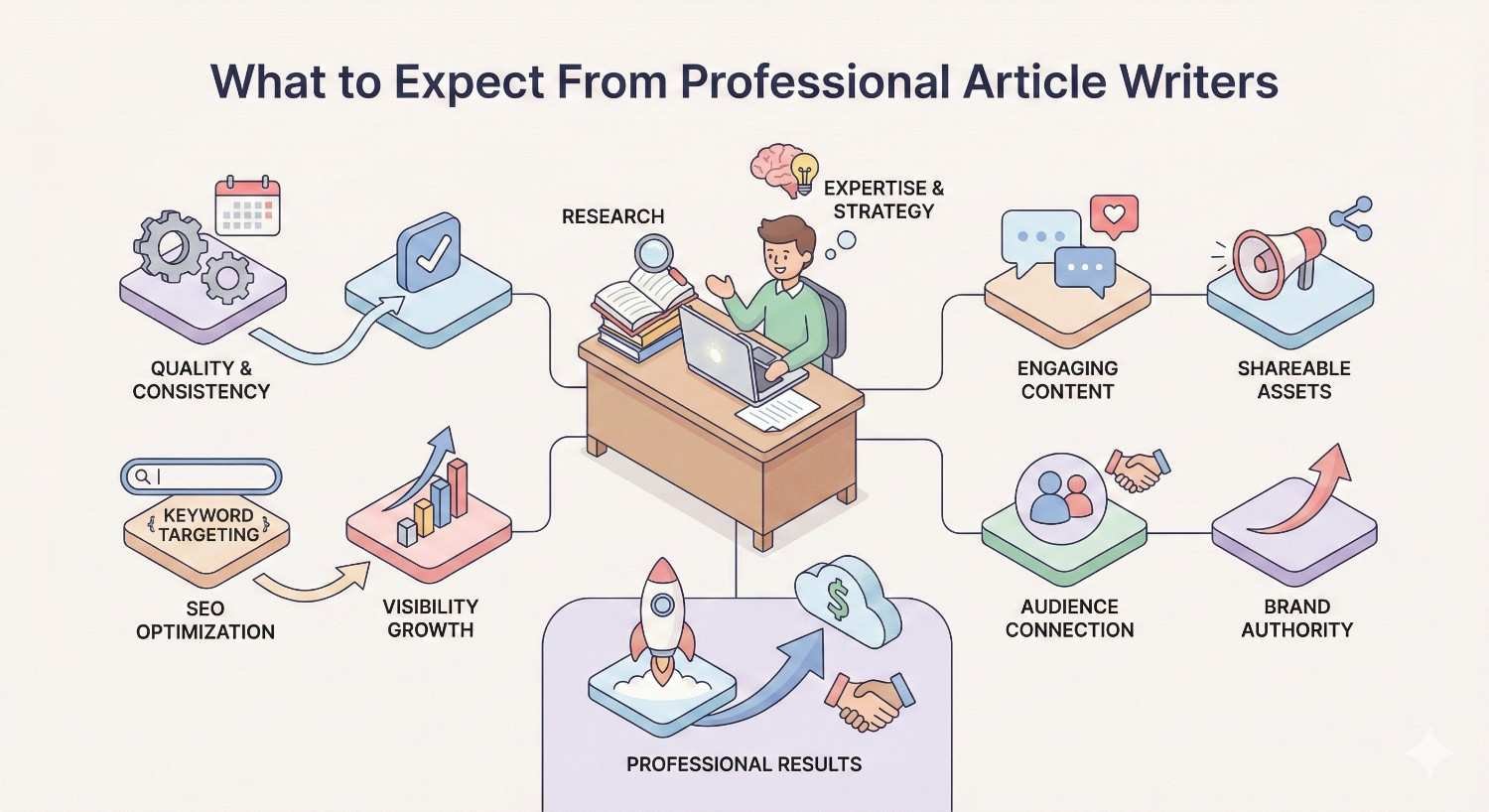
What to Expect From Professional Article Writers
Understanding the professional writing process helps you collaborate effectively and set appropriate expectations.
The Article Writing Process
Brief and Topic Development
Quality content starts with clear briefs. Professional services either create briefs based on your input or work from briefs you provide.
Effective briefs include target keyword and search intent, audience description, key points to cover, tone and style guidelines, internal linking targets, and any required sources or references.
Investing time in brief development pays dividends in content quality and reduced revisions.
Research and Outline Creation
Professional writers research topics thoroughly before writing. This includes reviewing top-ranking content, identifying information gaps, and gathering supporting data.
Many services provide outlines for approval before drafting. This checkpoint ensures alignment and prevents wasted effort on misaligned content.
Drafting and Writing
The actual writing phase transforms research and outlines into polished content. Professional writers follow established processes that ensure consistency.
Expect writers to integrate keywords naturally, structure content logically, and maintain your brand voice throughout.
Editing and Quality Assurance
Quality services include editorial review before delivery. Editors check grammar, clarity, accuracy, SEO optimization, and brand alignment.
This quality layer catches issues writers miss and ensures consistent standards across all deliverables.
Revisions and Final Delivery
Initial delivery rarely represents final content. Plan for at least one revision round to address feedback and fine-tune content.
Provide specific, actionable feedback. “Make it better” doesn’t help writers improve content. “Add more detail about implementation steps” does.
Quality Standards and Deliverables
Professional article writing services should deliver content that meets defined quality standards.
Accuracy: All facts, statistics, and claims should be verifiable. Sources should be credible and current.
Originality: Content should be original, not copied or heavily paraphrased from existing sources. Plagiarism checks should be standard.
Readability: Content should be clear, well-organized, and appropriate for the target audience’s reading level.
SEO Optimization: Articles should include target keywords naturally, proper heading structure, meta descriptions, and internal linking recommendations.
Brand Alignment: Tone, style, and messaging should match your brand guidelines and voice.
Communication and Collaboration
Effective collaboration improves content quality and working relationships.
Establish clear communication channels and response expectations. Know who to contact for questions, revisions, and strategic discussions.
Provide feedback promptly. Delayed feedback slows production and may result in repeated issues across multiple articles.
Share context beyond individual briefs. Help writers understand your business, audience, and competitive landscape. This context improves content relevance and quality.
SEO and Article Writing Services
The connection between article writing and SEO determines whether content investments generate returns. Understanding this relationship helps you evaluate services and measure success.
How Article Writing Supports Organic Growth
Articles create indexable pages targeting specific keywords. Each quality article represents an opportunity to rank for relevant searches and attract potential customers.
Consistent publishing builds topical authority. Search engines recognize sites that comprehensively cover topics as authoritative sources. This authority improves rankings across related keywords.
Quality content earns backlinks naturally. Other sites link to valuable resources, building domain authority that benefits all pages.
Articles support the entire marketing funnel. Awareness-stage content attracts new visitors. Consideration-stage content nurtures interest. Decision-stage content drives conversions.
Keyword Research and Content Strategy Integration
Effective article writing services integrate keyword research into content planning.
Keyword research identifies topics with search demand and reasonable competition. This ensures content targets queries people actually search for.
Search intent analysis determines what type of content searchers want. Informational queries need educational content. Commercial queries need comparison or evaluation content.
Content strategy maps keywords to business objectives. Not all traffic has equal value. Prioritize keywords that attract potential customers, not just visitors.
Evaluate whether services conduct keyword research or expect you to provide targets. Full-service providers handle research. Others require client-provided keywords.
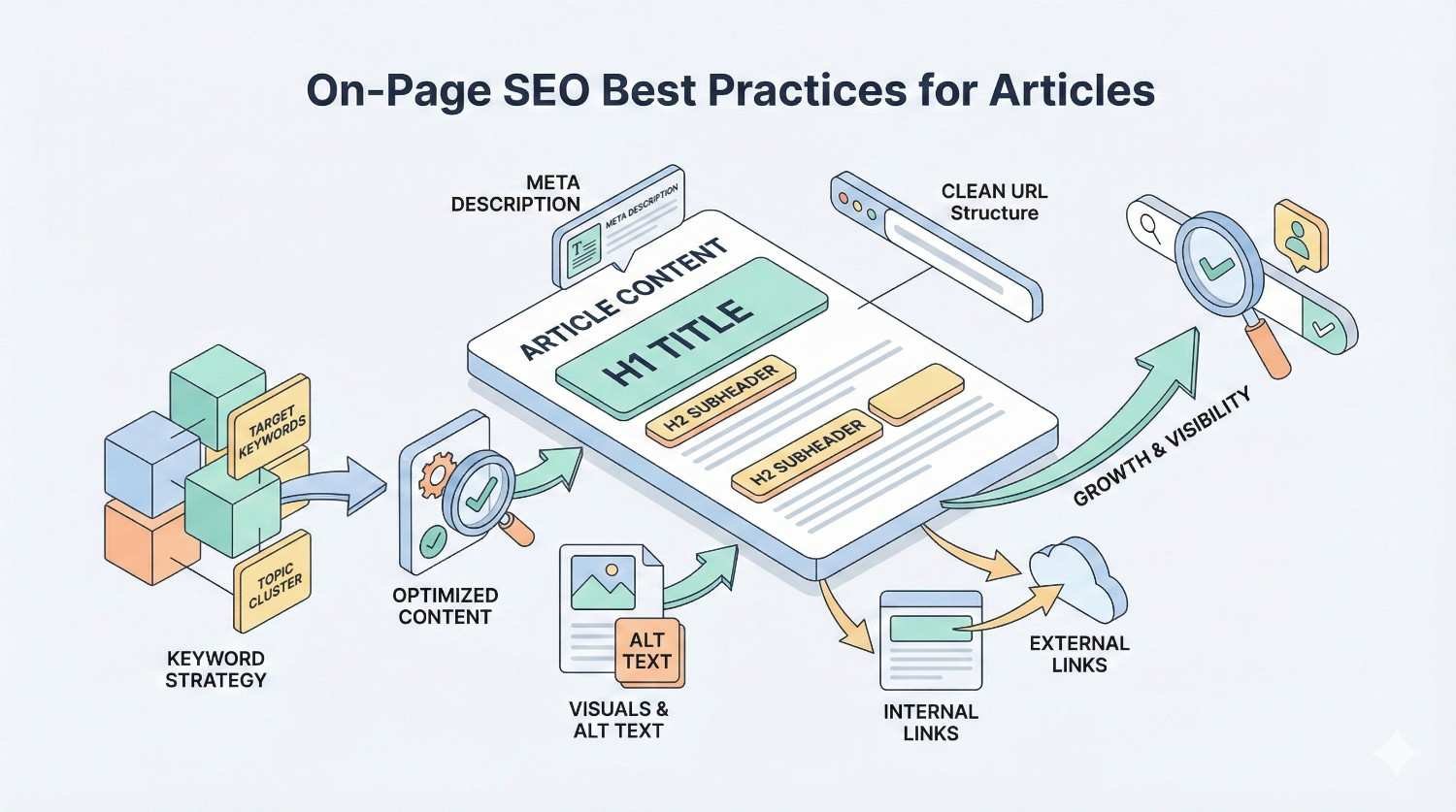
On-Page SEO Best Practices for Articles
Quality article writing services implement on-page SEO fundamentals.
Title optimization: Primary keyword near the beginning, compelling for clicks, appropriate length (50-60 characters).
Meta descriptions: Include target keyword, summarize content value, include call-to-action, appropriate length (150-160 characters).
Header structure: Logical H1-H6 hierarchy, keywords in headers where natural, clear content organization.
Keyword integration: Natural placement in first paragraph, headers, and throughout content. Semantic variations and related terms included.
Internal linking: Links to relevant existing content, descriptive anchor text, logical link placement.
Content structure: Scannable formatting, appropriate paragraph length, lists and tables where helpful.
Measuring Article Performance and ROI
Content investment requires measurement to demonstrate value and guide optimization.
Traffic metrics: Organic sessions, page views, and traffic growth over time. Track at article and aggregate levels.
Ranking performance: Keyword positions for target terms. Track movement over time using tools like Google Search Console or third-party rank trackers.
Engagement metrics: Time on page, bounce rate, pages per session. These indicate content quality and relevance.
Conversion metrics: Goal completions, lead generation, and revenue attributed to content. This connects content to business outcomes.
ROI calculation: Compare content investment to attributed revenue or lead value. Account for the compounding nature of content assets.
Expect 3-6 months before new content shows significant organic traffic. SEO is a long-term investment. Measure trends rather than immediate results.
Article Writing Services vs. In-House Content Teams
The outsource versus in-house decision involves multiple factors beyond simple cost comparison.
Cost Comparison Analysis
In-house costs include salary, benefits, equipment, software, training, and management overhead. A full-time content writer costs $50,000-$80,000+ annually in total compensation, depending on location and experience.
One writer produces approximately 8-16 articles monthly depending on length and complexity. This translates to roughly $300-$800 per article in fully-loaded costs.
Outsourced costs are more variable but often lower for equivalent output. Mid-tier services delivering similar quality typically cost $150-$400 per article.
However, outsourcing requires management time, which has cost implications. Factor in time spent on briefing, reviewing, and coordinating with external writers.
Scalability and Flexibility
Outsourcing provides superior scalability. Increase or decrease content volume without hiring or layoff decisions. Access specialized expertise for specific projects without permanent headcount.
In-house teams offer consistency and institutional knowledge. Writers develop deep understanding of your business, audience, and voice over time.
Hybrid models combine benefits. Maintain a small in-house team for core content while outsourcing overflow, specialized content, or specific initiatives.
When to Outsource vs. Hire In-House
Outsource when:
- Content needs fluctuate significantly
- You need specialized expertise for specific projects
- You’re testing content marketing before committing to headcount
- You lack management capacity for additional employees
- You need to scale quickly
Hire in-house when:
- Content is core to your business model
- You need deep, ongoing expertise in your specific domain
- You have consistent, predictable content needs
- You want maximum control over content quality and process
- You have management capacity and infrastructure
Many businesses start with outsourcing, then bring content in-house as programs mature and needs stabilize.
Common Mistakes When Hiring Article Writing Services
Avoiding common pitfalls improves outcomes and prevents wasted investment.
Prioritizing Price Over Quality
The cheapest content rarely delivers the best value. Low-cost services often produce content that requires extensive revision, fails to rank, or damages brand perception.
Calculate true cost including revision time, opportunity cost of poor content, and potential need to replace low-quality articles later.
Quality content is an investment that compounds over time. Poor content is an expense that may require future remediation.
Unclear Briefs and Expectations
Vague briefs produce content that misses the mark. Writers can’t read minds. Unclear expectations lead to revision cycles and frustration.
Invest time in creating detailed briefs. Specify target keywords, audience, key points, tone, length, and any requirements. Provide examples of content you like.
Establish clear quality standards upfront. Define what “good” looks like for your organization.
Ignoring SEO Requirements
Content without SEO consideration may be well-written but invisible. If organic traffic is a goal, SEO must be integrated into the writing process.
Ensure services understand and implement SEO fundamentals. Provide keyword targets and search intent guidance. Review content for optimization before publishing.
Don’t assume writers will handle SEO without explicit direction. Clarify expectations and verify implementation.
Not Establishing Long-Term Partnerships
Treating article writing as transactional limits quality potential. Writers who understand your business produce better content than those starting fresh each time.
Invest in relationships with writers or services that deliver quality. Provide feedback that helps them improve. Share context that deepens their understanding.
Long-term partnerships reduce onboarding costs, improve content consistency, and often result in better rates.
How to Work Effectively With Article Writers
Productive writer relationships require effort from both parties. Your contribution significantly impacts content quality.
Creating Effective Content Briefs
Comprehensive briefs are the foundation of quality content. Include:
Topic and angle: What specific aspect of the topic should the article address?
Target keyword: Primary keyword and any secondary targets.
Search intent: What does the searcher want to accomplish?
Audience: Who is reading this? What do they already know?
Key points: What must the article cover?
Tone and style: How should it sound? Provide examples.
Length: Target word count or range.
Structure: Any required sections or format?
Sources: Required references or materials to use.
Internal links: Pages to link to within the content.
Examples: Similar content you like (yours or competitors’).
Providing Constructive Feedback
Feedback improves future content. Make it specific, actionable, and timely.
Be specific: “The introduction doesn’t hook the reader” is better than “the intro is weak.” “Add more detail about implementation steps in section 3” is better than “needs more depth.”
Explain why: Help writers understand the reasoning behind feedback. This improves future content, not just the current piece.
Prioritize: Distinguish between must-fix issues and nice-to-have improvements. Focus revision effort on what matters most.
Acknowledge good work: Positive feedback reinforces what’s working. Writers who know what you like can deliver more of it.
Building Long-Term Writer Relationships
Consistent writers produce better content over time. They learn your voice, understand your audience, and require less direction.
Communicate regularly: Share feedback, business updates, and strategic direction. Keep writers informed about what’s working and what’s changing.
Pay fairly and promptly: Good writers have options. Competitive compensation and reliable payment retain quality talent.
Provide growth opportunities: Offer challenging projects, increased responsibility, or expanded scope to writers who deliver consistently.
Be a good client: Respect deadlines, provide clear direction, and respond promptly. Writers prioritize clients who are easy to work with.
Article Writing Services for Different Industries
Industry context shapes content requirements. Understanding these differences helps you select appropriate services and set realistic expectations.
SaaS and Technology
SaaS content requires understanding of software concepts, B2B buying processes, and technical audiences. Writers must explain complex features clearly while addressing business value.
Common content types include product comparisons, how-to guides, integration tutorials, and thought leadership on industry trends.
Look for writers with technology backgrounds or demonstrated SaaS writing experience. Technical accuracy matters. Jargon should be used appropriately for the audience level.
E-commerce and Retail
E-commerce content drives product discovery and purchase decisions. Writers must understand consumer psychology, product positioning, and conversion optimization.
Content types include buying guides, product comparisons, category pages, and lifestyle content that connects products to customer aspirations.
SEO is particularly important for e-commerce. Writers should understand commercial search intent and how to create content that ranks and converts.
Healthcare and Medical
Healthcare content requires accuracy, compliance awareness, and appropriate expertise. Misinformation risks are significant. Regulatory requirements may apply.
Writers should have relevant credentials or demonstrated healthcare writing experience. Medical review processes may be necessary for clinical content.
Content must balance accessibility with accuracy. Oversimplification can mislead. Excessive jargon excludes general audiences.
Finance and Legal
Financial and legal content requires precision and compliance awareness. Inaccurate information creates liability risks. Regulatory requirements often apply.
Writers should understand relevant regulations and industry standards. Disclaimers and disclosures may be required.
Content should be authoritative without providing specific advice that requires professional licensing. Educational content works well. Personalized recommendations require appropriate credentials.
B2B and Professional Services
B2B content addresses longer sales cycles, multiple stakeholders, and complex purchase decisions. Writers must understand business challenges and decision-making processes.
Content types include thought leadership, case studies, white papers, and educational content that demonstrates expertise.
Writers should understand B2B marketing principles and how content supports lead generation and nurturing throughout extended sales cycles.
Choosing the Right Article Writing Partner for Sustainable Growth
Selecting an article writing service is a strategic decision with long-term implications. The right partner accelerates growth. The wrong choice wastes resources and delays results.
Aligning Content Strategy With Business Goals
Content should serve business objectives, not exist for its own sake. Clarify what you want content to accomplish before selecting a service.
Traffic goals: If organic traffic is primary, prioritize services with strong SEO capabilities and track records.
Lead generation: If leads matter most, look for services that understand conversion optimization and can create content for different funnel stages.
Brand building: If thought leadership is the goal, prioritize writing quality and expertise over volume.
Sales enablement: If content supports sales conversations, look for services experienced in B2B content and case study development.
Match service capabilities to your specific objectives. A service excellent for blog traffic may not be ideal for technical white papers.
Next Steps for Getting Started
Define your needs: Clarify content types, volume, quality requirements, and budget before evaluating services.
Research options: Identify services that match your industry, content types, and quality expectations.
Request samples: Review relevant samples from each service under consideration.
Conduct trials: Order paid trial content from top candidates before committing to ongoing work.
Evaluate results: Assess trial content for quality, SEO implementation, and alignment with your requirements.
Start small: Begin with a limited engagement to verify quality before scaling up.
Measure and optimize: Track content performance and provide feedback to improve results over time.
Conclusion
Article writing services provide businesses with the content production capacity needed to build organic visibility, establish authority, and drive sustainable growth. The key is selecting the right partner and establishing productive working relationships.
Quality matters more than quantity. SEO integration is essential for organic traffic goals. Long-term partnerships outperform transactional relationships. These principles guide successful content outsourcing.
We help businesses build comprehensive content strategies that drive measurable results. Contact White Label SEO Service to discuss how professional article writing can support your organic growth objectives.
Frequently Asked Questions About Article Writing Services
How much do article writing services cost?
Article writing services typically cost $0.05 to $0.50+ per word depending on quality level and specialization. A standard 1,500-word blog post ranges from $75 to $750. Premium services with specialized expertise cost more but often deliver better ROI through higher quality and fewer revisions.
How long does it take to receive completed articles?
Standard turnaround for blog posts is 3-7 business days. Complex technical content may require 2-3 weeks. Rush delivery is usually available for additional fees. Establish realistic timelines during service selection to ensure alignment with your publishing schedule.
Do article writing services include SEO optimization?
Quality services include basic SEO optimization: keyword integration, header structure, and meta descriptions. Full-service providers offer comprehensive SEO including keyword research, competitive analysis, and content strategy. Clarify SEO capabilities and expectations before engaging any service.
Can I request revisions on completed articles?
Most services include 1-3 revision rounds in their pricing. Clarify revision policies before committing. Understand what constitutes a revision versus a rewrite, and know the timeline for revision completion. Provide specific, actionable feedback to make revisions efficient.
How do I ensure content matches my brand voice?
Provide detailed style guidelines, voice examples, and sample content you like. Create comprehensive briefs that specify tone and approach. Work with consistent writers who learn your voice over time. Provide feedback that reinforces what’s working and corrects what isn’t.
What’s the difference between content mills and professional services?
Content mills prioritize volume and low cost, often sacrificing quality. Professional services focus on expertise, consistency, and strategic value. Content mills typically pay writers poorly, resulting in high turnover and inconsistent quality. Professional services invest in writer relationships and quality processes.
How long does it take to see results from article writing?
Expect 3-6 months before new content generates significant organic traffic. SEO is a long-term investment. Initial results may appear sooner for low-competition keywords. Consistent publishing over 6-12 months typically produces meaningful traffic growth and establishes topical authority.