
The right link building tools can cut your outreach time by 60% while doubling your quality backlink acquisition rate. Whether you’re managing SEO for a startup or scaling campaigns across enterprise clients, your tool stack directly impacts results.
Link building remains one of the most challenging aspects of SEO. Manual prospecting, email tracking, and backlink monitoring consume hours that could drive strategy. The tools in this guide solve these problems by automating discovery, streamlining outreach, and providing the metrics you need to prioritize high-value opportunities.
This comprehensive guide covers the top link building tools for 2024, including detailed feature comparisons, pricing breakdowns, and use-case recommendations. You’ll learn how to select the right tools for your goals, budget, and team size.
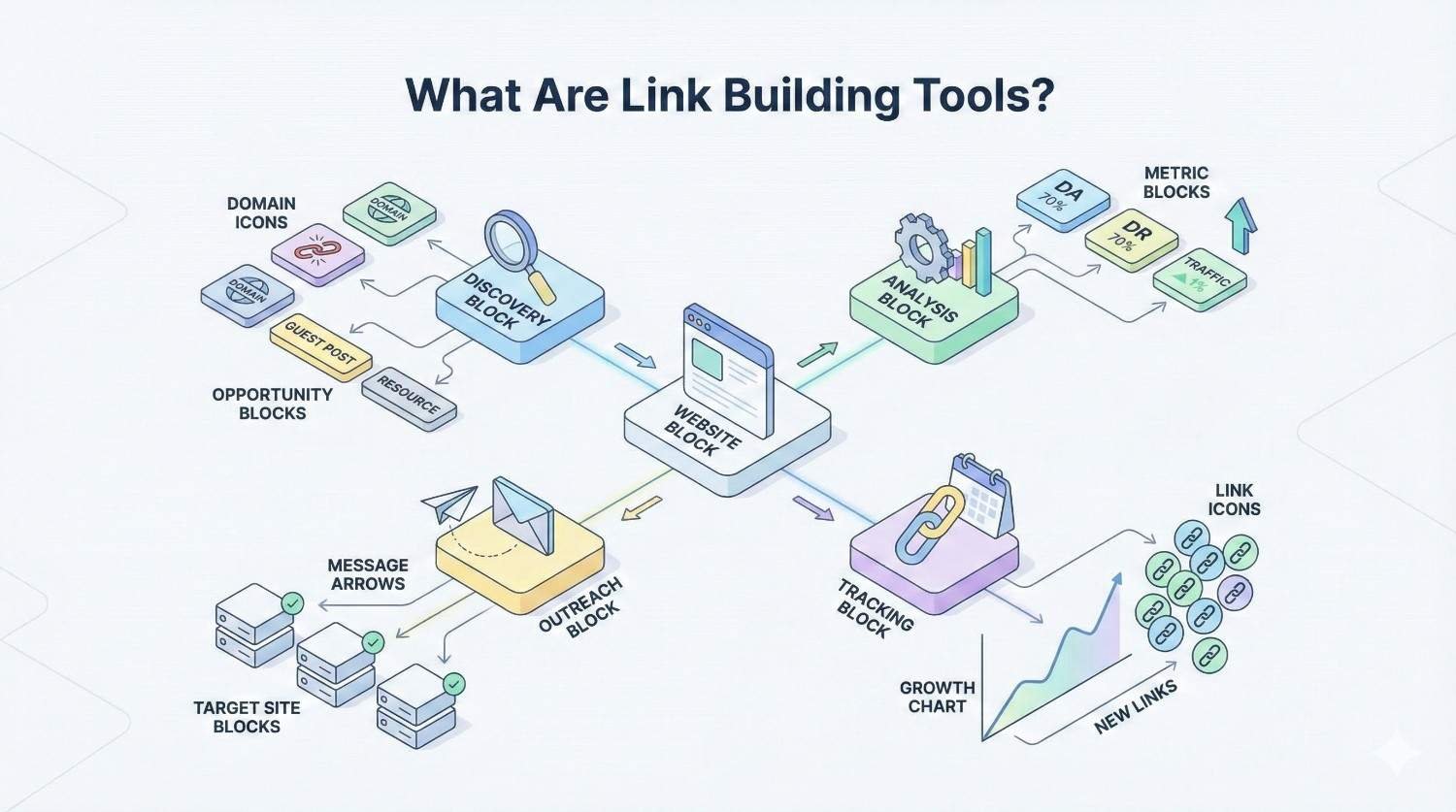
What Are Link Building Tools?
Link building tools are software platforms designed to help SEO professionals acquire, monitor, and analyze backlinks. These tools automate time-consuming tasks like finding link prospects, managing outreach campaigns, and tracking your backlink profile’s health.
At their core, these platforms serve one purpose: making the link acquisition process more efficient and data-driven. Instead of manually searching for opportunities and tracking responses in spreadsheets, link building tools centralize these workflows into unified dashboards.
How Link Building Tools Work
Link building tools operate by crawling the web to build massive databases of backlink information. When you enter a domain, these tools query their index to reveal which websites link to that domain, the anchor text used, and various quality metrics.
The crawling process works similarly to how search engines discover content. Bots follow links across the web, recording relationships between pages and domains. Tools like Ahrefs and Majestic maintain their own web crawlers that continuously update their link databases.
Beyond analysis, many tools integrate outreach functionality. They help you find contact information for website owners, send personalized emails at scale, and track response rates. This creates a complete workflow from prospect discovery to link acquisition.
Types of Link Building Tools
Backlink Analysis Tools focus on examining existing link profiles. They show you who links to any website, helping you understand competitor strategies and identify opportunities. Ahrefs, Moz, and Majestic fall into this category.
Outreach Management Platforms handle the communication side of link building. They help you find email addresses, send campaigns, and track responses. BuzzStream, Pitchbox, and Respona specialize in this area.
Prospecting Tools help you discover websites worth targeting. They identify resource pages, broken links, and guest posting opportunities. Many comprehensive platforms combine prospecting with analysis features.
Monitoring Tools track changes to your backlink profile over time. They alert you when you gain or lose links, helping you respond quickly to negative SEO attacks or capitalize on new mentions.
Why You Need Link Building Tools for SEO
Manual link building doesn’t scale. As your SEO ambitions grow, spreadsheets and browser bookmarks become bottlenecks that limit your results. Professional tools transform link building from a tedious task into a systematic, measurable process.
Impact on Domain Authority and Rankings
Backlinks remain among Google’s most important ranking factors. Backlinko’s analysis of 11.8 million search results found that the number of domains linking to a page correlated with higher rankings more than any other factor studied.
Link building tools help you acquire better links by providing quality metrics. Instead of guessing whether a prospect is worth pursuing, you can evaluate Domain Authority, Trust Flow, and traffic estimates before investing outreach effort.
These tools also help you build links strategically. By analyzing competitor backlink profiles, you can identify the specific links driving their rankings and pursue similar opportunities. This targeted approach yields better results than random outreach.
Time and Resource Efficiency
The average link building campaign involves hundreds of prospects, emails, and follow-ups. Without proper tools, managing this volume becomes impossible. A single link builder might spend 70% of their time on administrative tasks rather than relationship building.
Automation changes this equation dramatically. Tools can find contact information in seconds, send personalized emails to hundreds of prospects, and track responses automatically. This frees your team to focus on crafting compelling pitches and building genuine relationships.
Consider the math: manually researching 100 prospects might take 20 hours. With the right tools, that same research takes 2 hours. Over a year of campaigns, you’re saving hundreds of hours that can drive additional results.
Competitive Analysis Capabilities
Understanding your competitors’ link building strategies provides a roadmap for your own efforts. Link building tools reveal exactly which websites link to your competitors, allowing you to pursue the same opportunities.
This intelligence goes beyond simple replication. By analyzing patterns in competitor backlinks, you can identify the content types that attract links in your industry, the outreach angles that work, and the websites most likely to link to businesses like yours.
Competitive analysis also helps you find gaps. If a competitor has links from industry publications you haven’t approached, that’s an immediate opportunity. If they’re missing links from resources where you have relationships, that’s a competitive advantage to exploit.
Key Features to Look for in Link Building Tools
Not all link building tools serve the same purpose. Understanding which features matter for your specific needs prevents overspending on capabilities you won’t use while ensuring you don’t miss critical functionality.
Backlink Analysis and Monitoring
The foundation of any link building tool is its backlink database. Larger, more frequently updated indexes provide more accurate and comprehensive data. When evaluating tools, consider how many links they track and how often they refresh their data.
Key analysis features include the ability to filter links by type (dofollow vs. nofollow), anchor text distribution reports, and historical data showing how backlink profiles change over time. These insights inform strategy and help you spot problems early.
Monitoring capabilities alert you to changes in your backlink profile. New link notifications help you identify successful content and outreach efforts. Lost link alerts let you attempt recovery before rankings suffer.
Prospect Discovery and Outreach
Effective prospecting features help you find relevant websites efficiently. Look for tools that let you search by topic, filter by quality metrics, and export lists for outreach. The best platforms integrate prospecting directly with outreach workflows.
Email finder functionality saves significant time. Rather than manually hunting for contact information, tools can pull email addresses from websites or databases. Accuracy matters here since bounced emails hurt deliverability and waste effort.
Outreach management features should include email templates, personalization variables, automated follow-ups, and response tracking. The goal is managing hundreds of conversations without losing track of any opportunity.
Link Quality Metrics and Scoring
Raw link counts mean little without quality context. Effective tools provide proprietary metrics that estimate a link’s value. Moz’s Domain Authority, Ahrefs’ Domain Rating, and Majestic’s Trust Flow all attempt to quantify link quality.
Understanding these metrics helps you prioritize outreach. A link from a DA 70 website typically provides more value than ten links from DA 20 sites. Quality scoring lets you focus effort where it matters most.
Beyond domain-level metrics, look for page-level analysis. A link from a high-authority domain’s forgotten archive page differs significantly from a link on their homepage. The best tools provide both perspectives.
Competitor Backlink Research
Competitor analysis features should make it easy to compare backlink profiles side by side. You want to quickly identify links your competitors have that you don’t, sorted by quality and relevance.
Link intersect tools show websites linking to multiple competitors but not to you. These represent high-probability opportunities since the site has already demonstrated willingness to link to businesses in your space.
Historical data reveals competitor link building velocity. If a competitor suddenly gains many links, you can investigate their strategy and potentially replicate their success.
Reporting and Integration Options
Reporting features matter for agencies and in-house teams alike. You need to demonstrate link building ROI to stakeholders. Look for customizable reports that highlight the metrics your audience cares about.
Integration capabilities connect link building tools with your broader marketing stack. CRM integrations help manage relationships. Google Analytics connections let you track traffic from acquired links. API access enables custom workflows.
White-label reporting matters for agencies serving clients. The ability to brand reports with your agency’s identity presents a more professional image than generic tool exports.
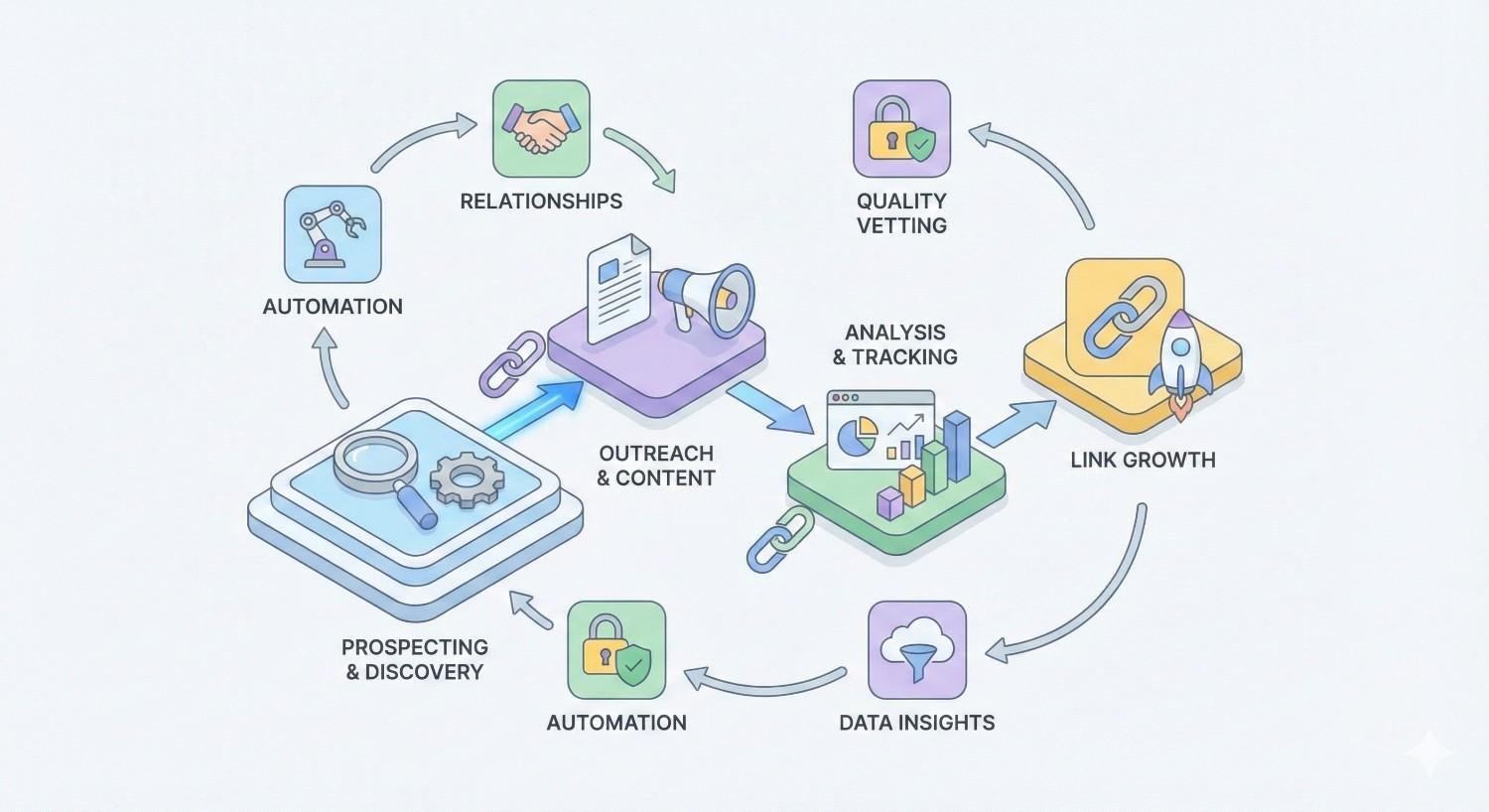
Best Link Building Tools for 2026
The following tools represent the best options across different use cases and budgets. Each excels in specific areas, so the right choice depends on your particular needs.
Ahrefs
Ahrefs maintains one of the largest backlink databases in the industry, with over 35 trillion known links. Their crawler processes approximately 8 billion pages daily, ensuring data stays current.
Key Features
The Site Explorer tool provides comprehensive backlink analysis for any domain. You can see all linking domains, anchor text distribution, and link growth over time. The interface makes it easy to filter and export data for outreach campaigns.
Content Explorer helps you find link-worthy content in any niche. Search by topic to discover pages that have attracted significant backlinks, then analyze what made them successful. This informs your own content strategy.
The Broken Link Checker identifies dead pages on any website that still have backlinks pointing to them. This powers broken link building campaigns by finding opportunities where you can offer your content as a replacement.
Keyword Explorer and Site Audit round out the platform, making Ahrefs a comprehensive SEO tool rather than just a link building solution.
Pricing
Plans start at $99/month for Lite, which includes limited reports and one user seat. Standard costs $199/month with more generous limits. Advanced ($399/month) and Enterprise ($999/month) tiers serve larger teams and agencies.
Best For
Ahrefs works best for SEO professionals who need comprehensive backlink data combined with content research capabilities. It’s particularly strong for competitive analysis and finding link building opportunities through content gaps.
SEMrush
SEMrush positions itself as an all-in-one marketing platform, with link building representing one component of a broader toolkit. Their backlink database includes over 43 trillion backlinks.
Key Features
The Backlink Analytics tool provides detailed link profile analysis. You can examine any domain’s backlinks, identify toxic links, and compare profiles across competitors. The interface emphasizes visual data presentation.
Link Building Tool guides you through the entire outreach process. It helps you find prospects based on your target keywords, provides contact information, and tracks your outreach campaigns within the platform.
Backlink Audit identifies potentially harmful links that could trigger Google penalties. The tool integrates with Google Search Console for more accurate data and helps you create disavow files when needed.
SEMrush’s broader platform includes keyword research, rank tracking, site audits, and content optimization tools. This makes it valuable for teams wanting a single platform for multiple SEO functions.
Pricing
Pro plans start at $139.95/month with limited features. Guru costs $249.95/month and adds content marketing tools. Business pricing at $499.95/month includes API access and extended limits.
Best For
SEMrush suits marketing teams wanting an integrated platform that handles link building alongside other SEO tasks. It’s particularly valuable for agencies managing multiple client accounts.
Moz Link Explorer
Moz pioneered the Domain Authority metric that became an industry standard. Their Link Explorer tool provides backlink analysis built on this foundation.
Key Features
Domain Authority and Page Authority scores help you quickly assess link quality. While these metrics aren’t used by Google directly, they correlate with ranking ability and provide useful shorthand for evaluating prospects.
Link Intersect identifies websites linking to your competitors but not to you. This feature streamlines competitive analysis by surfacing high-probability outreach targets.
Spam Score helps you identify potentially harmful links in your profile. The metric analyzes various signals associated with penalized sites, helping you prioritize links for disavow consideration.
The Moz Pro suite includes additional tools for keyword research, rank tracking, and on-page optimization.
Pricing
Moz Pro starts at $99/month for Standard, which includes Link Explorer access. Medium costs $179/month with higher limits. Large ($299/month) and Premium ($599/month) tiers serve bigger teams.
Best For
Moz works well for SEO professionals who value the Domain Authority metric and want a straightforward interface. It’s particularly useful for those new to link building who benefit from Moz’s educational resources.
Majestic
Majestic focuses exclusively on backlink analysis, maintaining one of the oldest and largest link databases in the industry. Their specialized focus results in deep functionality for link research.
Key Features
Trust Flow and Citation Flow metrics provide a two-dimensional view of link quality. Trust Flow measures link quality based on the trustworthiness of linking sites, while Citation Flow measures link quantity. The ratio between them indicates profile health.
Topical Trust Flow categorizes links by topic, showing whether your backlinks come from relevant sources. A technology company with links primarily from tech sites has better topical relevance than one with random links.
The Fresh Index updates daily with newly discovered links, while the Historic Index maintains years of backlink data. This dual approach lets you see both current status and historical trends.
Clique Hunter finds websites linking to multiple competitors, similar to link intersect tools in other platforms.
Pricing
Lite plans cost $49.99/month with limited data access. Pro at $99.99/month provides fuller access for individual users. API plans start at $399.99/month for developers and agencies needing programmatic access.
Best For
Majestic suits link building specialists who want deep backlink data without paying for broader SEO features they won’t use. The Trust Flow metric provides unique insights not available elsewhere.
BuzzStream
BuzzStream specializes in outreach management rather than backlink analysis. It helps you organize prospects, manage email campaigns, and track relationship building at scale.
Key Features
The prospecting tools help you build targeted lists of outreach targets. You can research websites, add them to projects, and enrich records with contact information and notes.
Email outreach features include templates, personalization, and automated follow-up sequences. The platform tracks opens, clicks, and responses, giving you visibility into campaign performance.
Relationship management capabilities let you track all interactions with each contact over time. This prevents embarrassing duplicate outreach and helps you build genuine relationships.
Team collaboration features allow multiple users to work on campaigns without stepping on each other’s efforts. Assignment and workflow tools keep everyone coordinated.
Pricing
Starter plans cost $24/month for individuals with basic needs. Growth at $124/month adds team features and higher limits. Professional ($299/month) and Custom tiers serve larger agencies.
Best For
BuzzStream excels for teams focused on outreach execution rather than backlink analysis. It pairs well with analysis tools like Ahrefs or Majestic that handle the research side.
Hunter.io
Hunter.io specializes in finding and verifying email addresses. While not a complete link building platform, it solves one of the most time-consuming aspects of outreach.
Key Features
Domain Search finds all email addresses associated with any domain. Enter a company’s website and see the email patterns they use along with specific addresses Hunter has discovered.
Email Finder locates specific individuals’ email addresses when you know their name and company. This helps you reach the right person rather than generic contact forms.
Email Verifier checks whether addresses are valid before you send. This protects your sender reputation by reducing bounces.
The Campaigns feature provides basic outreach functionality, allowing you to send emails directly from Hunter with tracking and follow-ups.
Pricing
A free tier includes 25 searches and 50 verifications monthly. Starter costs $49/month for 500 searches. Growth ($149/month) and Business ($499/month) tiers provide higher volumes.
Best For
Hunter.io works best as a complement to other tools. Use it alongside BuzzStream or Pitchbox when you need reliable email finding without the cost of enterprise platforms.
Pitchbox
Pitchbox provides enterprise-grade outreach automation for agencies and large in-house teams. It combines prospecting, outreach, and relationship management in a powerful platform.
Key Features
Prospecting pipelines help you find opportunities through multiple methods including blogger outreach, broken link building, and competitor backlink analysis. The platform integrates with Moz, Majestic, and other data providers.
Outreach automation handles personalized email sequences at scale. Smart templates, A/B testing, and automated follow-ups maximize response rates while minimizing manual effort.
Reporting dashboards show campaign performance across all metrics that matter: emails sent, response rates, links acquired, and team productivity.
CRM integration connects Pitchbox with Salesforce and other platforms, fitting link building into broader marketing workflows.
Pricing
Pitchbox uses custom pricing based on team size and needs. Plans typically start around $550/month for small teams, with enterprise pricing for larger organizations.
Best For
Pitchbox serves agencies and enterprise teams running high-volume outreach campaigns. The investment makes sense when you’re managing thousands of prospects monthly.
Respona
Respona combines AI-powered prospecting with outreach automation. The platform emphasizes efficiency through intelligent automation of repetitive tasks.
Key Features
AI-assisted prospecting analyzes your content and suggests relevant outreach opportunities. The system learns from your campaigns to improve recommendations over time.
Contact finding automatically discovers email addresses for prospects, eliminating manual research. The platform verifies addresses before sending to protect deliverability.
Personalization at scale uses AI to customize emails beyond simple mail merge. The system can reference specific content on prospect websites, making outreach feel more genuine.
Campaign analytics track performance and identify optimization opportunities. You can see which subject lines, templates, and prospect types generate the best results.
Pricing
Starter plans begin at $99/month for individuals. Pro costs $399/month with team features. Enterprise pricing is available for larger organizations.
Best For
Respona suits teams wanting to leverage AI for more efficient outreach. It’s particularly valuable for content-driven link building strategies like guest posting and resource page outreach.
Linkody
Linkody focuses specifically on backlink monitoring rather than prospecting or outreach. It tracks your link profile and alerts you to changes.
Key Features
24/7 monitoring watches your backlinks continuously. When links appear or disappear, you receive notifications so you can respond appropriately.
Competitor tracking lets you monitor competitors’ backlink profiles alongside your own. See when they acquire new links and investigate the opportunities.
Disavow file management helps you identify and handle toxic links. The platform can generate disavow files for submission to Google.
White-label reports let agencies present branded monitoring reports to clients.
Pricing
Plans start at $14.90/month for monitoring up to 2 domains with 500 links. Higher tiers accommodate more domains and links, with agency plans available for larger portfolios.
Best For
Linkody works well for businesses wanting affordable backlink monitoring without the cost of comprehensive platforms. It complements analysis tools that don’t include robust monitoring.
HARO (Help a Reporter Out)
HARO connects journalists with expert sources. While not a traditional link building tool, it provides opportunities to earn high-authority media links through expert commentary.
Key Features
Daily query emails deliver journalist requests directly to your inbox. Queries span industries from technology to healthcare to finance, with opportunities for most business types.
Source requests come from major publications including Forbes, Inc., and industry-specific outlets. Links from these sites carry significant authority.
The platform is straightforward: journalists post queries, you respond with expertise, and successful pitches result in mentions and links.
Pricing
A free tier provides access to standard queries. Paid plans ($19-$149/month) offer earlier access to queries and additional features.
Best For
HARO suits businesses with genuine expertise to share. It requires consistent effort responding to queries but can yield links from publications that don’t accept traditional outreach.
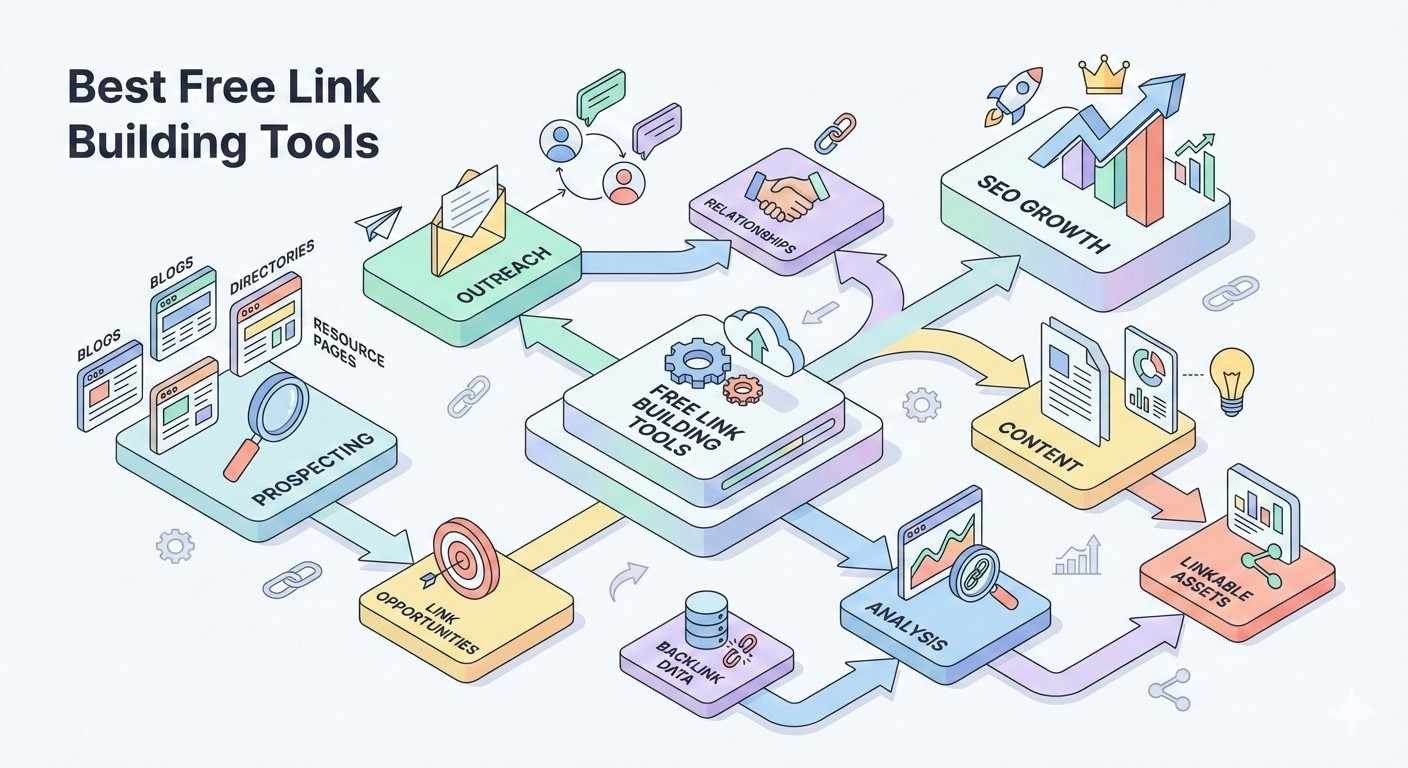
Best Free Link Building Tools
Budget constraints shouldn’t prevent you from building links. Several free tools provide genuine value for link building campaigns.
Google Search Console
Google Search Console shows which websites link to yours according to Google’s own data. While the interface is basic compared to paid tools, the data comes directly from the source.
The Links report shows your top linking sites, top linked pages, and top linking text. You can export this data for analysis in spreadsheets.
Search Console also helps you identify pages receiving impressions but few clicks. These represent opportunities to improve content and attract more links through better rankings.
The tool is completely free for any website you can verify ownership of.
Ubersuggest (Free Tier)
Ubersuggest from Neil Patel provides limited free access to backlink data. You can analyze a few domains daily and see basic backlink metrics.
The free tier shows top backlinks, anchor text distribution, and referring domains. While limits are restrictive, it’s useful for occasional research without subscription costs.
Paid plans start at $29/month for fuller access, making it one of the more affordable options if you outgrow the free tier.
Ahrefs Webmaster Tools
Ahrefs offers free access to their tools for websites you own. You can see your complete backlink profile, including all the metrics available in paid plans.
The limitation is that you can only analyze your own sites, not competitors. But for monitoring your backlink profile and identifying issues, it provides enterprise-grade data at no cost.
Setup requires verifying site ownership through Google Search Console or adding a DNS record.
Broken Link Checker Tools
Several free tools help you find broken links on websites, enabling broken link building campaigns. Check My Links is a Chrome extension that scans pages for dead links.
Dead Link Checker and Broken Link Check provide web-based alternatives. Enter a URL and these tools crawl the page to identify links returning errors.
These tools support a specific but effective link building tactic: finding broken links on resource pages and offering your content as a replacement.
Best Link Building Tools by Use Case
Different link building goals require different tool capabilities. Here’s how to match tools to specific use cases.
Best for Backlink Analysis
Ahrefs leads for comprehensive backlink analysis. Their database size, update frequency, and analysis features exceed competitors. If understanding backlink profiles is your primary need, Ahrefs delivers the most complete picture.
Majestic offers a strong alternative with unique metrics. Trust Flow provides insights not available elsewhere, and their pricing is more accessible for analysis-focused users.
Best for Outreach and Prospecting
Pitchbox provides the most powerful outreach automation for teams running high-volume campaigns. The investment pays off when you’re managing thousands of prospects.
BuzzStream offers excellent outreach management at lower price points. It’s ideal for small teams wanting organized outreach without enterprise costs.
Respona balances automation with AI assistance, making it efficient for content-driven outreach strategies.
Best for Competitor Research
SEMrush excels at competitive analysis across SEO functions, including backlinks. The platform makes it easy to compare your profile against multiple competitors.
Ahrefs Content Explorer helps you find successful content in any niche, revealing what attracts links in your industry.
Best for Small Businesses and Startups
Moz provides accessible pricing with educational resources that help newcomers learn link building fundamentals.
Hunter.io with a free tier lets you find contacts without subscription costs. Pair it with spreadsheet-based outreach management to start building links affordably.
Google Search Console and Ahrefs Webmaster Tools provide free monitoring of your own backlink profile.
Best for Agencies and Enterprise
Pitchbox handles the scale and complexity agencies face. Multi-client management, team collaboration, and white-label reporting serve agency needs.
SEMrush provides the breadth of tools agencies need beyond link building, with client management features built in.
Ahrefs offers the data depth agencies need for client research and reporting, with higher-tier plans supporting multiple users.
Link Building Tools Comparison Table
| Tool | Primary Function | Starting Price | Best For | Database Size |
| Ahrefs | Analysis & Research | $99/month | Comprehensive SEO | 35T+ links |
| SEMrush | All-in-One SEO | $139.95/month | Marketing Teams | 43T+ links |
| Moz | Analysis & Metrics | $99/month | Beginners | 44T+ links |
| Majestic | Link Analysis | $49.99/month | Link Specialists | 2.5T+ URLs |
| BuzzStream | Outreach Management | $24/month | Small Teams | N/A |
| Hunter.io | Email Finding | Free/$49/month | Contact Research | 100M+ emails |
| Pitchbox | Enterprise Outreach | ~$550/month | Agencies | N/A |
| Respona | AI-Powered Outreach | $99/month | Content Marketers | N/A |
| Linkody | Backlink Monitoring | $14.90/month | Budget Monitoring | N/A |
| HARO | Media Outreach | Free/$19/month | PR Links | N/A |
How to Choose the Right Link Building Tool
Selecting the right tool requires honest assessment of your needs, resources, and goals. The most expensive option isn’t always the best fit.
Assess Your Link Building Goals
Start by defining what you’re trying to accomplish. Are you primarily analyzing competitors to inform strategy? Managing outreach campaigns at scale? Monitoring your existing backlink profile?
Different goals require different tools. Analysis-heavy work needs Ahrefs or Majestic. Outreach-focused campaigns need BuzzStream or Pitchbox. Monitoring needs might be served by affordable options like Linkody.
Consider your link building tactics as well. Guest posting campaigns have different tool requirements than broken link building or digital PR strategies.
Evaluate Your Budget
Link building tools range from free to thousands monthly. Be realistic about what you can sustain long-term. A tool you cancel after three months provides less value than a modest tool you use consistently.
Calculate the ROI potential. If a $200/month tool helps you acquire links that would cost $500 each to build manually, the investment makes sense. If you’re building five links monthly, the math changes.
Consider whether you need multiple tools or can consolidate. An all-in-one platform like SEMrush might cost more than a single-purpose tool but less than buying separate solutions for each function.
Consider Team Size and Workflow
Solo practitioners have different needs than agencies managing dozens of clients. Team collaboration features, user seats, and workflow management matter more as team size grows.
Think about how link building fits into your broader marketing workflow. Integration with existing tools like CRMs, project management platforms, and reporting systems can significantly impact efficiency.
Training and learning curves matter too. A powerful tool that takes months to master might deliver less value than a simpler tool your team adopts immediately.
Trial and Testing Recommendations
Most tools offer free trials or limited free tiers. Use these to test actual workflows before committing. Don’t just explore features; run a real campaign to see how the tool performs in practice.
Test with your actual data. Import your prospect lists, run your email templates, and analyze your competitors. Generic testing doesn’t reveal how well a tool fits your specific situation.
Compare at least two or three options before deciding. What seems like the obvious choice might not perform best for your particular needs.
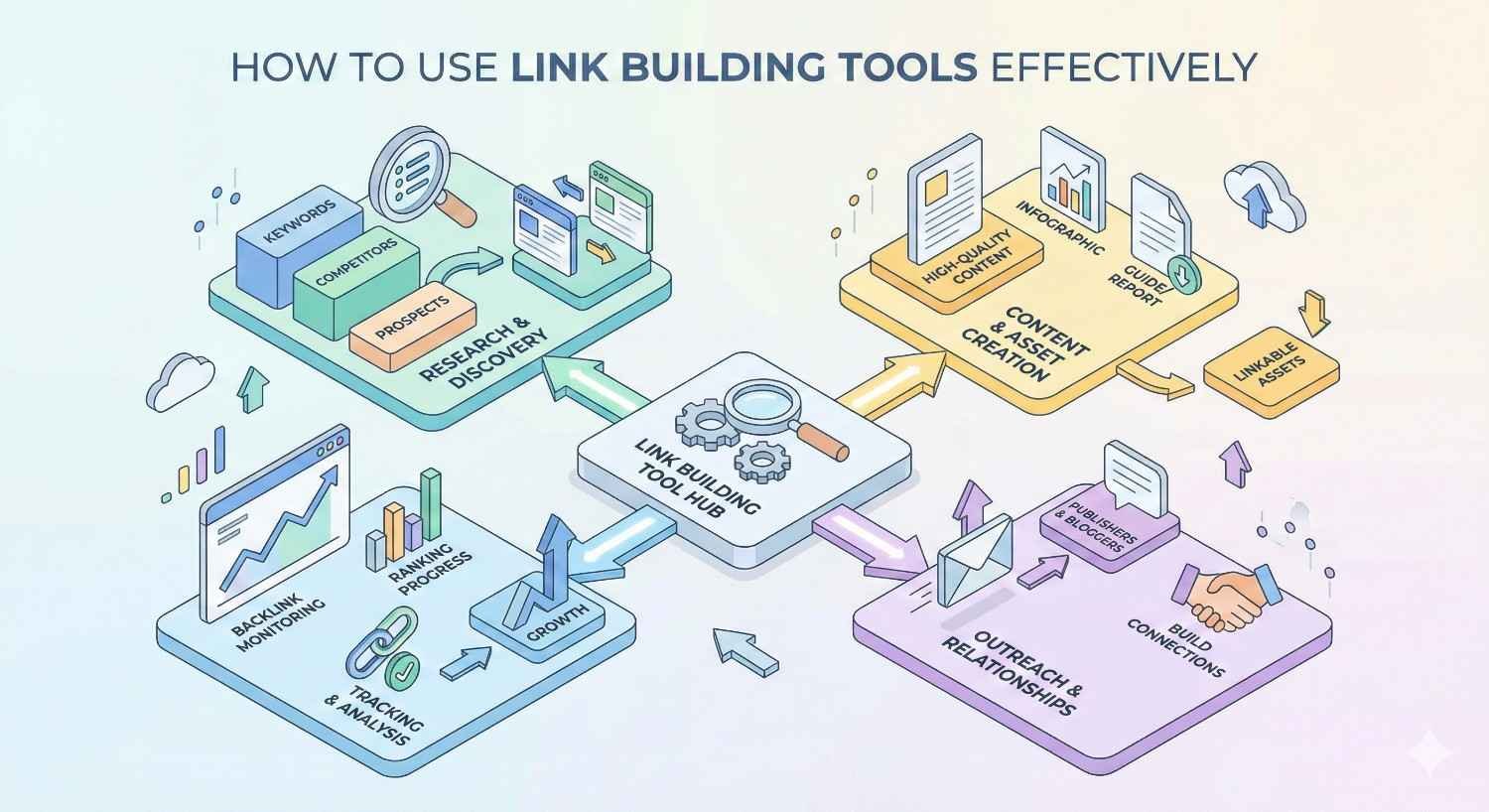
How to Use Link Building Tools Effectively
Having the right tools matters less than using them effectively. These practices help you extract maximum value from your link building software.
Setting Up Your First Campaign
Begin with clear goals and metrics. Define what success looks like before you start. Are you targeting a specific number of links? Focusing on particular quality thresholds? Pursuing specific types of sites?
Import or build your prospect list systematically. Use your tool’s prospecting features to find relevant opportunities, then qualify them based on your criteria. Quality filtering upfront saves wasted outreach effort.
Set up tracking from the start. Configure your tool to monitor responses, track link placements, and measure campaign performance. Retrofitting tracking is harder than building it in initially.
Finding Link Opportunities
Use multiple prospecting methods rather than relying on one approach. Competitor backlink analysis reveals proven opportunities. Content-based prospecting finds sites interested in your topics. Broken link searches uncover replacement opportunities.
Qualify prospects before adding them to outreach lists. Check that sites are active, relevant, and likely to respond. A smaller list of qualified prospects outperforms a large list of questionable targets.
Organize prospects by priority. Focus outreach effort on high-value opportunities first. Your tool should help you sort and filter based on quality metrics.
Managing Outreach at Scale
Personalization matters more than volume. Tools enable scale, but generic mass emails perform poorly. Use personalization features to reference specific content, demonstrate familiarity, and make genuine connections.
Follow up systematically. Most responses come after follow-up emails, not initial contact. Configure your tool to send appropriate follow-ups without becoming annoying.
Track everything. Know your open rates, response rates, and conversion rates. Use this data to improve templates, timing, and targeting over time.
Tracking and Measuring Results
Monitor new backlinks as they appear. Your tool should alert you when outreach efforts result in placements. Verify that links are live, properly attributed, and using appropriate anchor text.
Measure impact beyond link counts. Track referral traffic from acquired links. Monitor ranking changes for target keywords. Connect link building efforts to business outcomes.
Report results in terms stakeholders understand. Executives care about traffic and revenue, not Domain Authority points. Translate link building metrics into business impact.
Link Building Strategies That Work with These Tools
The right tools amplify effective strategies. Here are proven approaches that benefit from proper tooling.
Guest Posting Outreach
Guest posting remains effective when done thoughtfully. Tools help you find sites accepting guest posts, identify the right contacts, and manage outreach at scale.
Use content analysis features to understand what topics perform well on target sites. Pitch ideas aligned with their audience interests rather than generic suggestions.
Track placements and measure traffic from guest post links. This data helps you prioritize which sites to pursue for future contributions.
Broken Link Building
Broken link building offers value to site owners while earning links for you. Tools like Ahrefs identify broken links on relevant pages, creating opportunities to suggest your content as a replacement.
Focus on resource pages and link roundups where broken links are most problematic. Site owners maintaining these pages appreciate help fixing dead links.
Prepare replacement content before outreach. Having a relevant, high-quality page ready makes your pitch more compelling than promising to create something later.
Resource Page Link Building
Resource pages curate helpful links for specific topics. Getting included requires having genuinely useful content and reaching the right person.
Use prospecting tools to find resource pages in your niche. Search operators like “keyword + resources” or “keyword + useful links” surface opportunities.
Personalize outreach by referencing specific resources on the page. Demonstrate that you’ve actually reviewed their content rather than sending generic requests.
Digital PR and HARO
Digital PR earns links through newsworthy content and expert commentary. HARO connects you with journalists seeking sources, while broader PR efforts create stories worth covering.
Monitor HARO queries relevant to your expertise. Respond quickly with substantive, quotable insights. Journalists receive many responses, so quality and speed both matter.
Create data-driven content that journalists want to reference. Original research, surveys, and industry analysis attract links naturally when promoted effectively.
Competitor Backlink Replication
Your competitors have already identified sites willing to link to businesses like yours. Analyzing their backlinks reveals a roadmap of opportunities.
Use link intersect features to find sites linking to multiple competitors but not to you. These represent high-probability targets since they’ve demonstrated relevant linking behavior.
Don’t just replicate; improve. If competitors earned links with certain content, create something better. Give sites a reason to link to you instead of or in addition to competitors.
Common Link Building Tool Mistakes to Avoid
Tools amplify both good and bad practices. Avoid these common mistakes that undermine link building effectiveness.
Focusing Only on Quantity Over Quality
Tools make it easy to send thousands of emails and track hundreds of prospects. This capability tempts users toward volume-focused approaches that sacrifice quality.
A hundred low-quality links provide less value than ten authoritative, relevant links. Use your tools’ quality metrics to filter prospects, not just to process more of them.
Measure success by link quality and impact, not just counts. Track which links drive traffic and influence rankings, then pursue more opportunities like those.
Ignoring Link Relevance Metrics
Domain Authority and similar metrics measure general site strength, not relevance to your specific situation. A DA 70 site in an unrelated industry may provide less value than a DA 40 site in your niche.
Use topical relevance features when available. Majestic’s Topical Trust Flow and similar metrics help you evaluate whether links come from contextually appropriate sources.
Consider the linking page, not just the domain. A link from a relevant article on a general site can be more valuable than a link from an irrelevant page on an industry site.
Neglecting Relationship Building
Tools enable efficiency, but link building ultimately depends on human relationships. Treating outreach as purely transactional limits long-term success.
Use your tools to manage relationships, not just campaigns. Track interactions over time. Remember previous conversations. Build genuine connections with site owners and editors.
The best link building opportunities often come from relationships rather than cold outreach. Invest in connections that yield multiple links over time rather than one-off placements.
Conclusion: Choosing Your Link Building Tool Stack
The best link building tools combine powerful data with efficient workflows. Your ideal stack depends on your specific goals, budget, and team structure. Analysis tools like Ahrefs or Majestic provide the intelligence foundation. Outreach platforms like BuzzStream or Pitchbox handle execution. Monitoring tools ensure you track results and protect your profile.
Start with your most pressing need rather than trying to implement everything at once. Master one tool before adding others. Build processes that leverage tool capabilities without becoming dependent on features you might lose.
At White Label SEO Service, we help businesses build sustainable organic growth through strategic link building and comprehensive SEO. Whether you need help selecting the right tools or want experts managing your link acquisition, our team delivers results that drive traffic, leads, and long-term search visibility. Contact us to discuss how we can accelerate your link building success.
Frequently Asked Questions About Link Building Tools
What is the best link building tool for beginners?
Moz Link Explorer offers the most beginner-friendly experience with clear metrics and extensive educational resources. The interface is intuitive, and Domain Authority provides an easy-to-understand quality benchmark. Google Search Console is also excellent for beginners since it’s free and shows your actual backlink data from Google’s perspective.
Are free link building tools effective?
Free tools can be effective for specific tasks and smaller-scale operations. Google Search Console provides accurate backlink data for your own sites. Ahrefs Webmaster Tools offers comprehensive analysis for verified properties. However, free tools typically limit competitive research and outreach capabilities that paid tools provide.
How much do link building tools cost?
Link building tools range from free to over $1,000 monthly. Entry-level paid tools like Linkody start around $15/month. Mid-range options like Moz and Ahrefs cost $99-200/month. Enterprise platforms like Pitchbox typically start around $550/month. Most tools offer tiered pricing based on features and usage limits.
Can link building tools guarantee backlinks?
No tool can guarantee backlinks. Tools help you find opportunities, manage outreach, and track results, but earning links requires compelling content and effective relationship building. Be skeptical of any tool or service promising guaranteed link placements, as this often indicates low-quality or manipulative practices.
What metrics should I track with link building tools?
Track both activity metrics and outcome metrics. Activity metrics include prospects contacted, response rates, and follow-up completion. Outcome metrics include links acquired, average link quality (DA/DR), referral traffic from links, and ranking improvements for target keywords. Connect link building metrics to business outcomes like leads and revenue.
How long does it take to see results from link building?
Link building typically shows ranking impact within 2-6 months, though this varies significantly based on competition, link quality, and existing site authority. Individual links may be indexed within days but influence rankings gradually. Consistent link building over 6-12 months produces more reliable results than short-term campaigns.
Which link building tool has the largest backlink database?
SEMrush claims the largest database at over 43 trillion backlinks, followed closely by Moz at 44 trillion links indexed. Ahrefs maintains over 35 trillion known links with frequent updates. Database size matters less than data accuracy and freshness for most practical applications. Each tool has strengths in different areas regardless of raw database size.