
Local citations determine whether Google and your customers can trust your business’s name, address, and phone number across the web, and a citation audit is the systematic process of checking every listing for accuracy, duplicates, and consistency. I’ve run this process on businesses with three listings and businesses with three hundred, and the pattern never changes: unaudited citations quietly erode local rankings long before anyone notices a traffic drop.
Ignoring citation health costs rankings slowly, then all at once, and most owners never connect the dip to a forgotten directory listing from four years ago.
This guide walks through why citations matter for local algorithms, how to spot the warning signs that you need an audit, the full ten-step audit process from inventory to ongoing monitoring, and the common mistakes that undermine DIY efforts. I’ll also show where citation work fits into your larger local SEO strategy.
What Local Citations Are and Why They Matter for Local SEO
A local citation is any online mention of your business’s name, address, and phone number (NAP), and it matters because search engines use citation consistency as a trust signal for local rankings. I think of citations as votes of confirmation rather than votes of popularity each one tells Google “yes, this business exists at this location.”
Citations come in two forms. Structured citations live in directories like Yelp or industry-specific listings, formatted into clear fields. Unstructured citations appear in blog posts, news articles, or social mentions where your NAP shows up in regular text.
NAP Consistency as the Foundation of Citation Accuracy
NAP consistency means your business name, address, and phone number appear identically across every platform where you’re listed. Even small variations “St.” versus “Street,” a missing suite number create doubt for algorithms trying to confirm your business is real and stable.
I’ve seen single-digit phone number typos suppress rankings for months before anyone traced the cause.

Structured vs. Unstructured Citations
Structured citations sit in dedicated directory fields and are easiest to audit systematically. Unstructured citations are scattered and harder to track, but they still carry weight, especially when they come from locally authoritative publications.
How Local Citations Influence Google’s Local Algorithm
Local citations feed directly into Google’s local ranking algorithm by reinforcing the relevance, prominence, and trustworthiness of your business listing. Consistent citations across high-authority platforms act like corroborating witnesses the more consistent sources confirming your details, the more confidently Google surfaces your business.
Citations and the Local Pack / Map Pack
The Local Pack, that three-listing block above organic results, draws heavily on citation data to confirm legitimacy before ranking a business for local intent queries. A business with scattered, inconsistent citations struggles to earn or hold Local Pack placement even with strong on-page SEO.
Proximity, Relevance, and Prominence Signals
Google weighs three core local ranking factors: proximity to the searcher, relevance to the query, and prominence across the web. Citations primarily strengthen prominence, which is why a clean citation profile often outperforms a messier one even at equal proximity and relevance.
Signs Your Business Needs a Citation Audit
You need a citation audit when your Local Pack visibility drops, your rankings fluctuate inconsistently across locations, or customers mention finding wrong contact information online. These symptoms rarely show up together, which is part of why citation decay goes unnoticed for so long.

Common Symptoms of Citation Decay
A sudden ranking dip after a business move, phone number change, or rebrand almost always traces back to unaudited citations. Duplicate listings competing against each other in search results are another clear signal, as is inconsistent review counts across platforms that should match.
Preparing for a Local Citation Audit
Preparation starts with establishing one single, accurate version of your NAP that becomes the standard every listing gets checked against. Skipping this step is the single most common reason citation audits fail without a baseline, you’re comparing inconsistent listings against each other instead of against the truth.
Gathering Your Accurate NAP Baseline
I pull the baseline directly from the business’s legal documents, utility bills, or Google Business Profile never from memory, and never from an old spreadsheet that might already contain the error.
Tools Needed Before You Start
A citation audit needs, at minimum, a spreadsheet for tracking, a citation-scanning tool like BrightLocal or Moz Local, and direct login access to your Google Business Profile and major directories.
Step 1 — Inventory Every Existing Citation
The first step in a citation audit is compiling a complete list of every place your business is mentioned online, which requires both automated scanning tools and manual searches. BrightLocal’s 2024 local citation research found that the average small business has citations spread across more than 30 different platforms, many of which the owner has never logged into.
Manual Search vs. Citation Tracking Tools
Manual search means Googling your business name and address variations to catch listings that automated tools miss, especially unstructured mentions. Citation tracking tools scan dozens of major directories simultaneously and flag inconsistencies faster than manual review alone.
Step 2 — Identify NAP Inconsistencies Across Listings
Step two compares every discovered citation against your established NAP baseline and flags any variation, no matter how minor it looks. I treat abbreviation differences, old suite numbers, and outdated phone numbers with equal seriousness, because algorithms don’t forgive “almost right.”
Common Inconsistency Patterns
Business name variations (“Joe’s Plumbing” vs. “Joe’s Plumbing LLC”), old addresses from before a move, and disconnected phone numbers are the three patterns I find most often across audits.
Step 3 — Check Data Aggregator Accuracy
Data aggregators are the companies that distribute your business information to dozens of smaller directories automatically, and checking their accuracy prevents a single bad source from spreading errors everywhere. If an aggregator holds outdated information, it can quietly repopulate corrected listings with the old, wrong data months later.
The Role of Data Aggregators in Citation Spread
Aggregators like Data Axle and Foursquare feed information to smaller directories on a rolling basis, which means one uncorrected source can undo weeks of manual listing cleanup.
Step 4 — Audit Major Platforms vs. Niche Directories
Major platforms carry more ranking weight individually, but niche and industry-specific directories build topical relevance that general platforms can’t replicate. I audit both tiers, starting with the platforms that move the needle fastest.
Core Platforms Every Business Must Check
Google Business Profile, Bing Places, Apple Maps, Yelp, and Facebook form the core tier that almost every local business needs accurate across the board.
Industry-Specific and Local Directories
A plumber benefits from HomeAdvisor and Angi; a restaurant benefits from OpenTable and TripAdvisor. These industry directories often carry more topical trust signal per listing than a general aggregator.
Step 5 — Flag Duplicate Listings
Duplicate listings happen when the same business gets listed twice under slightly different names or addresses, and they actively compete against each other for the same ranking real estate. I flag every duplicate before moving to correction, because merging or removing them changes the audit scope for later steps.
Why Duplicates Suppress Local Rankings
Google can’t confidently rank a business when two listings claim the same identity, which splits reviews, dilutes prominence signals, and sometimes triggers filtering that suppresses both listings.

Step 6 — Evaluate Citation Quality, Not Just Quantity
Not every citation carries equal weight, and evaluating quality means checking each source’s domain authority, industry relevance, and trustworthiness rather than just counting listings. A business with 40 low-quality directory links often performs worse than one with 15 well-placed, relevant citations.
Domain Authority and Relevance Factors
I weigh a citation’s value by the hosting domain’s authority, whether it’s genuinely relevant to the business’s industry or location, and whether real users visit the platform.
Step 7 — Prioritize Fixes by Impact
Prioritizing fixes means tackling the citations that influence rankings most first, rather than working alphabetically or by whatever’s easiest to fix. Google Business Profile corrections and major aggregator fixes always come before small niche directory updates in my process.
High-Impact vs. Low-Impact Citation Sources
High-impact sources include Google Business Profile, Bing Places, and the major data aggregators. Low-impact sources are smaller directories with minimal traffic and little topical authority.
Step 8 — Correct, Claim, and Update Listings
Correction means logging into every platform where possible, claiming unclaimed listings, and updating inaccurate information to match the established NAP baseline exactly. This step takes the longest in any audit because platform verification processes vary wildly, from instant edits to postcard-based confirmation that takes weeks.
Claiming Unclaimed Profiles
Unclaimed profiles are often auto-generated by data aggregators without business input, and claiming them is usually the only way to correct wrong information permanently rather than having it regenerate.
Step 9 — Suppress or Remove Duplicate and Outdated Listings
Suppression involves formally requesting removal or merging of duplicate listings through each platform’s dedicated process, which differs significantly between Google, Yelp, and data aggregators. Moz’s local search ranking factors survey found that citation consistency and duplicate suppression remain among the top five ranking factors cited by local SEO practitioners.
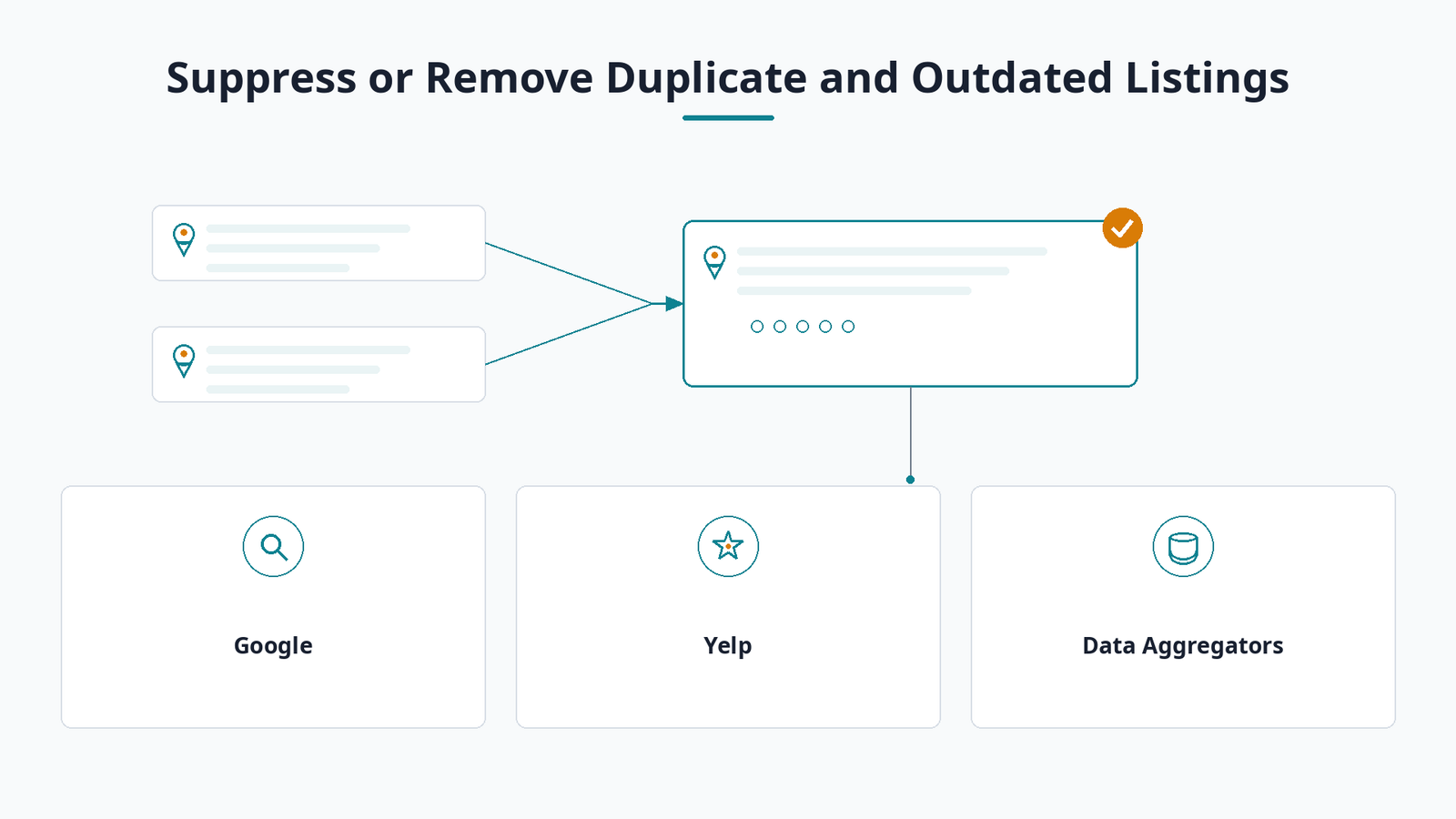
Working With Data Aggregators to Remove Bad Data
Removing bad data at the aggregator level prevents it from repopulating into smaller directories later, which is why aggregator cleanup happens before individual directory removal requests.
Step 10 — Monitor and Maintain Citations Over Time
Monitoring means setting a recurring schedule to re-scan your citation profile, since new duplicates and inconsistencies appear continuously as aggregators redistribute data and directories update automatically. A one-time audit without ongoing monitoring tends to decay back to its original state within a year or two.
Setting a Recurring Audit Cadence
I recommend a full re-audit every six months for most local businesses, with lighter monthly checks on Google Business Profile and the core platform tier.
Common Citation Audit Mistakes to Avoid
The most common citation audit mistake is relying on a single tool’s scan results without manually verifying flagged inconsistencies against the true NAP baseline. Tools miss unstructured citations, misread formatting differences as errors, and sometimes fail to detect duplicates with slightly different business names.
Why DIY Audits Often Miss Hidden Inconsistencies
DIY audits typically stop at the major platforms and skip the long tail of niche directories and data aggregators where errors actually originate and spread.
How Citation Audits Fit Into a Broader Local SEO Strategy
Citation audits are one input among several in local SEO, working alongside Google Business Profile optimization, review management, and locally relevant content to build overall local search visibility. I never treat citation work as a standalone fix it strengthens the foundation that other local SEO efforts build on top of.
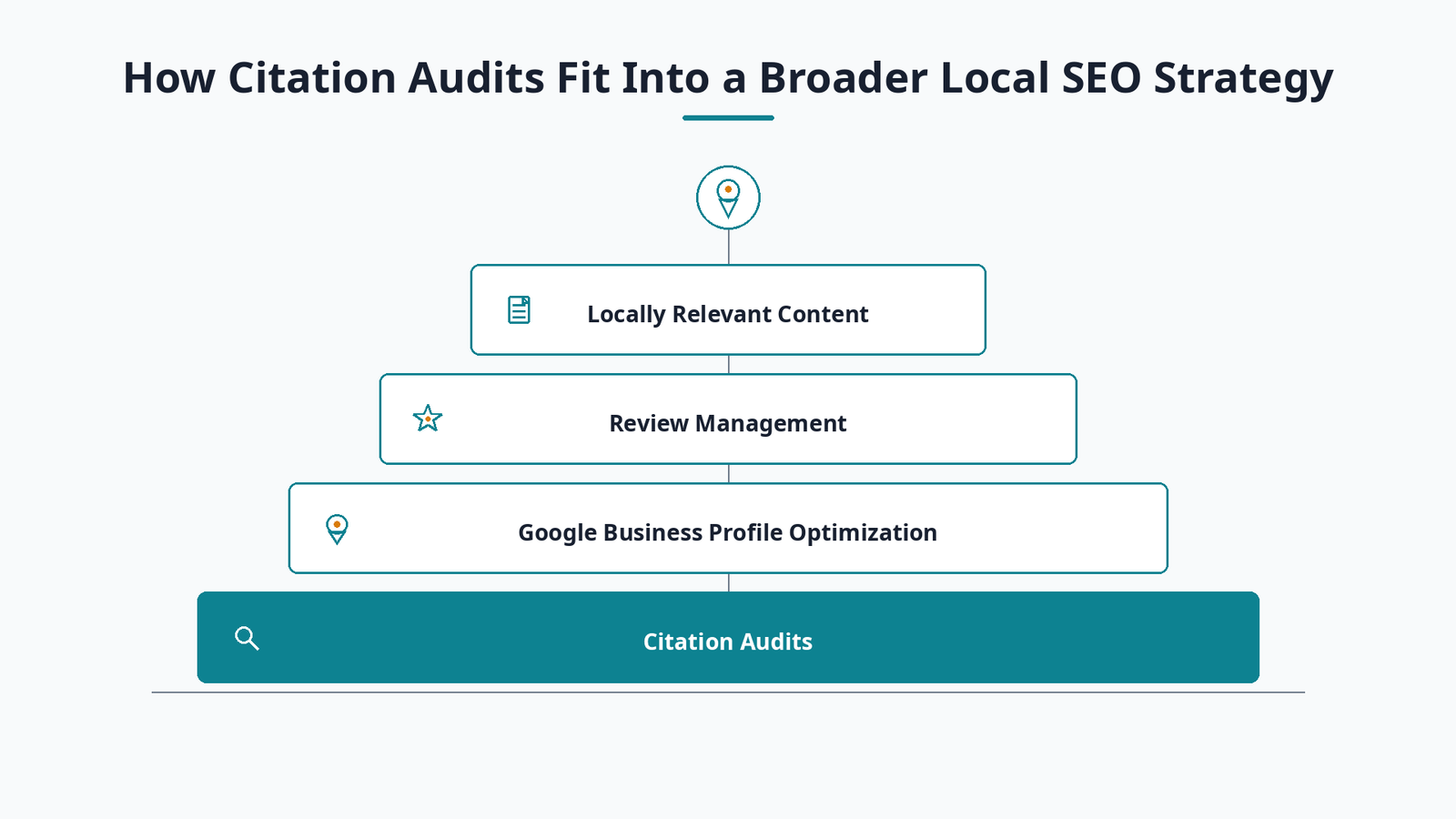
Citations as One Signal Among Many
Reviews, on-page local relevance signals, and backlink profiles all interact with citation consistency rather than operating independently, which is why isolated citation fixes sometimes underperform expectations.
Conclusion
Local citations shape how confidently search engines and customers trust your business’s identity across the web. A disciplined audit process catches the inconsistencies that quietly suppress rankings before they compound into real visibility loss.
We see citation health as one piece of a larger local SEO strategy that includes technical foundations, content, and authority building working together.
We help businesses run thorough citation audits and build sustainable local visibility. Reach out to White Label SEO Service to get your citation profile reviewed properly.
Frequently Asked Questions
What is a local citation audit?
A local citation audit is a systematic review of every online mention of your business’s name, address, and phone number. It identifies inconsistencies, duplicates, and outdated listings that hurt local search rankings.
How often should I audit my business citations?
Most businesses should run a full citation audit every six months. Monthly spot checks on Google Business Profile and major platforms catch issues faster between full audits.
What tools are used to audit local citations?
Tools like BrightLocal, Moz Local, and Whitespark scan directories automatically for inconsistencies. Manual Google searches catch unstructured mentions these tools often miss.
How long does a local citation audit take?
A thorough audit typically takes one to three weeks depending on business size and citation volume. Correction and verification steps often extend the timeline further.
Can incorrect citations hurt my Google rankings?
Yes, inconsistent citations reduce Google’s confidence in your business’s legitimacy and location. This directly weakens Local Pack and map-based ranking performance.
What is the difference between a citation and a backlink?
A citation lists your business name, address, and phone number, often without a clickable link. A backlink is a hyperlink pointing to your website, built primarily for referral and authority value.
Should I fix citations myself or hire a professional?
Small businesses with few listings can often manage citations themselves with the right tools. Larger or multi-location businesses benefit from professional management due to volume and complexity.


