Professional case study writing services transform your customer success stories into high-converting marketing assets that drive leads and build trust. These specialized services handle everything from customer interviews to final design, delivering polished case studies that showcase measurable results.
For businesses struggling to document wins or lacking internal writing resources, outsourcing case study creation offers a faster path to compelling proof points. This guide covers what these services include, realistic pricing, the creation process, and how to maximize ROI from every case study you publish.
What Are Case Study Writing Services?
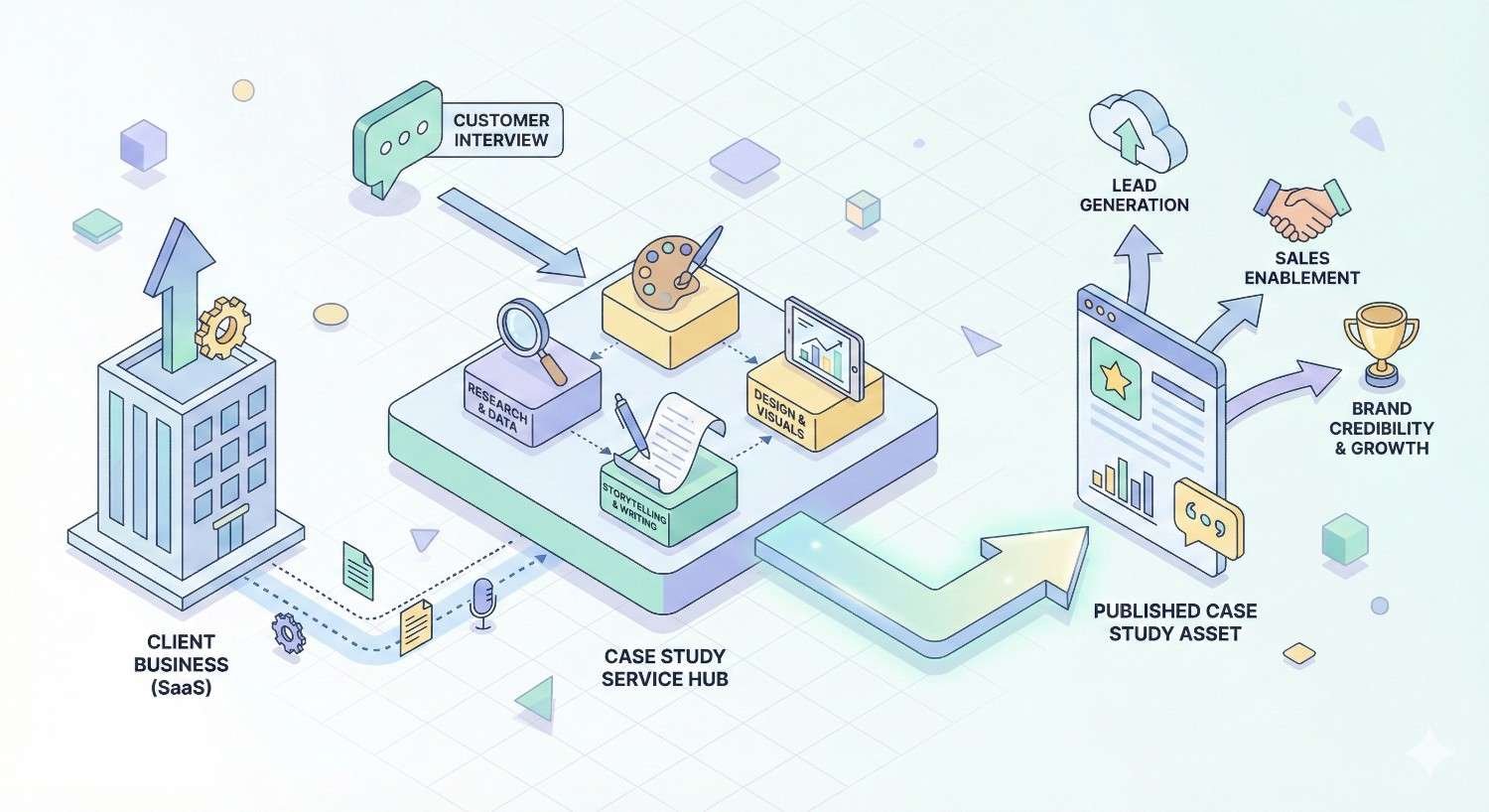
Case study writing services are specialized content agencies or freelance professionals who create customer success stories on behalf of businesses. They manage the entire production process, from identifying the right customers to interview through final delivery of publish-ready assets.
These services exist because creating effective case studies requires a unique skill set. Writers must conduct professional interviews, extract compelling narratives from technical details, and present results in formats that resonate with target buyers. Most internal marketing teams lack the bandwidth or specialized expertise to produce case studies consistently.
Core Components of Professional Case Study Services
A comprehensive case study writing service typically includes several interconnected deliverables. The foundation is always the written narrative itself, usually ranging from 800 to 2,000 words depending on complexity and intended use.
Beyond the core document, most providers offer interview coordination and execution. This means scheduling calls with your customers, preparing interview guides, and conducting conversations that surface the most compelling details. Professional interviewers know how to put customers at ease while extracting specific metrics and quotable statements.
Design and formatting represent another critical component. Raw text rarely converts prospects effectively. Professional services deliver designed PDFs, web-ready HTML versions, or both. Some include custom graphics, data visualizations, and branded templates that align with your visual identity.

Types of Case Studies Offered by Writing Services
Different business objectives call for different case study formats. The most common type is the traditional long-form case study, typically 1,200 to 1,800 words with detailed problem-solution-results structure. These work well for complex B2B sales cycles where buyers need thorough proof.
Short-form case studies or success snapshots condense the story into 300 to 500 words. These suit website testimonial sections, sales one-pagers, and social media promotion. They sacrifice depth for accessibility and quick consumption.
Video case study scripts represent a growing category. Writers develop interview questions, narrative frameworks, and final scripts that production teams can execute. Some full-service providers coordinate video production as well.
Industry-specific formats also exist. Healthcare case studies require HIPAA-compliant processes and careful anonymization. Financial services case studies need compliance review workflows. Technology case studies often emphasize technical architecture and integration details.
How Case Study Writing Services Work: Process Overview
The typical engagement follows a predictable workflow. Initial discovery establishes your goals, target audience, and brand voice. The provider learns your product or service well enough to ask intelligent questions and recognize compelling details.
Customer selection comes next. You identify potential case study subjects, or the provider helps you evaluate candidates based on story potential, relationship strength, and strategic value. The best subjects have achieved measurable results and are willing to be quoted publicly.
Interview coordination involves scheduling, preparing discussion guides, and conducting the actual conversation. Most interviews run 30 to 45 minutes. Skilled interviewers record calls and take detailed notes to capture exact quotes and specific metrics.
Writing and revision follow the interview. First drafts typically arrive within one to two weeks. Most providers include two to three revision rounds in their base pricing. Your customer also reviews and approves their quotes and the overall narrative.
Final delivery includes designed assets in your requested formats. Some providers offer distribution support, helping you publish and promote the finished case study across channels.
Why Businesses Invest in Case Study Writing Services
The decision to outsource case study creation reflects both resource constraints and strategic priorities. Understanding the business case helps you evaluate whether these services make sense for your situation.
Converting Prospects Through Customer Success Stories
Case studies directly influence purchase decisions. According to Demand Gen Report research, case studies rank among the most influential content types for B2B buyers evaluating vendors. They provide the social proof and concrete evidence that moves prospects from consideration to decision.
The conversion impact extends across the funnel. Top-of-funnel case studies attract organic search traffic from prospects researching solutions. Mid-funnel case studies help sales teams overcome objections and demonstrate fit. Bottom-funnel case studies provide the final validation buyers need before signing contracts.
Professional writing elevates this conversion potential. Amateur case studies often bury the most compelling details or fail to quantify results effectively. Expert writers know how to structure narratives that guide readers toward action.
Building Brand Authority and Trust
Beyond direct conversion, case studies establish your company as a proven solution provider. Each published success story adds to your credibility portfolio. Over time, a library of case studies across industries and use cases positions you as an experienced partner rather than an unproven vendor.
This authority-building compounds. Prospects who encounter multiple case studies develop stronger confidence in your capabilities. Sales cycles shorten when buyers arrive pre-convinced by your documented track record.
Case studies also humanize your brand. They feature real people solving real problems. This narrative approach creates emotional connection that feature lists and product specifications cannot achieve.
Supporting Sales Enablement and Marketing Campaigns
Sales teams consistently request more case studies. They need proof points for specific industries, company sizes, use cases, and objections. A robust case study library arms sales representatives with relevant evidence for any conversation.
Marketing campaigns benefit equally. Case studies provide content for email nurture sequences, social media promotion, paid advertising, webinars, and conference presentations. A single well-crafted case study can fuel dozens of derivative content pieces.
The investment in professional case study services often pays for itself through improved sales efficiency and marketing performance. Teams spend less time creating content and more time using it effectively.
Key Elements of Effective Case Study Writing
Not all case studies perform equally. Understanding what separates high-converting case studies from forgettable ones helps you evaluate service providers and set appropriate expectations.
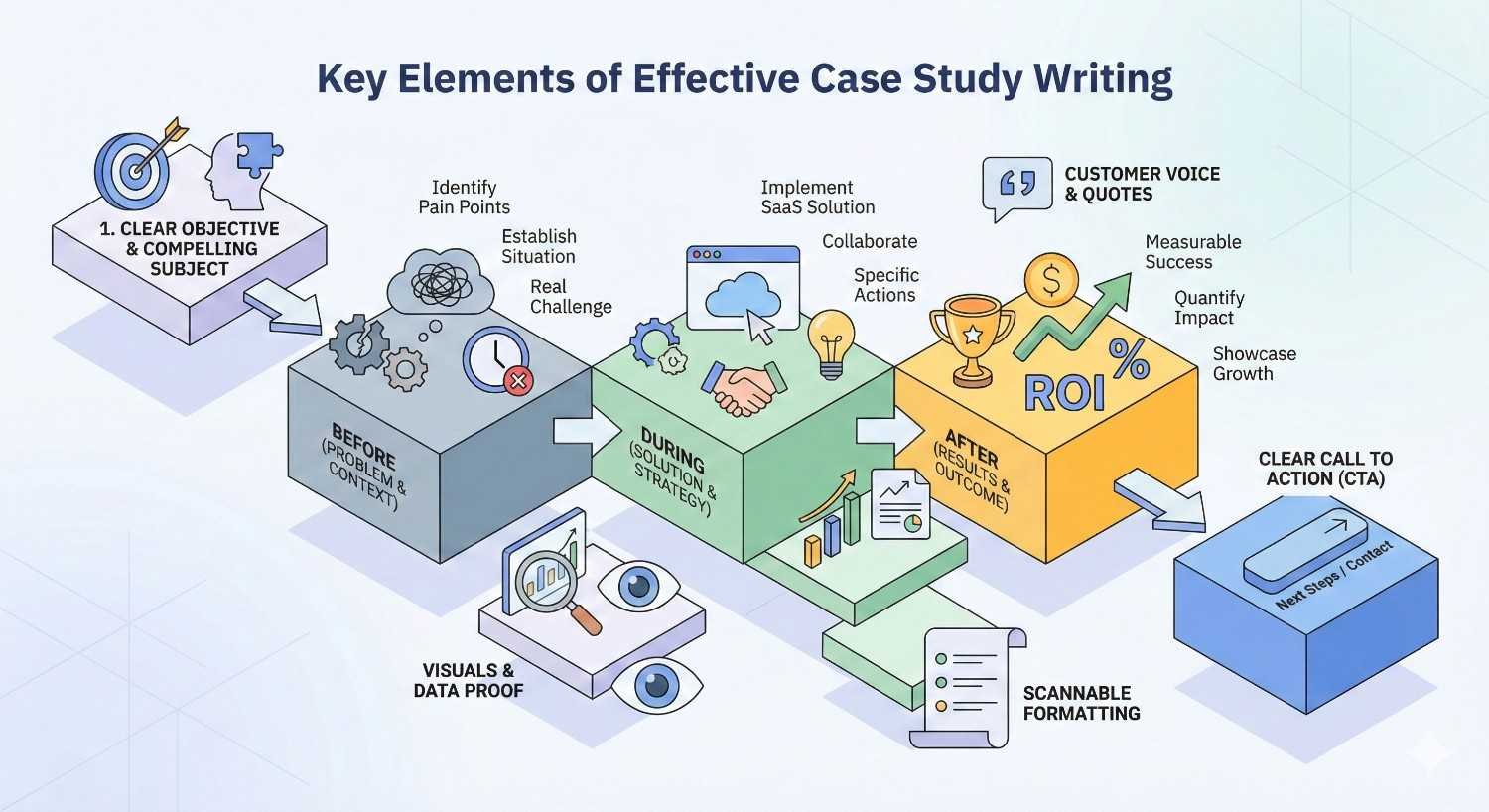
The Problem-Solution-Results Framework
The most effective case studies follow a clear narrative arc. They open by establishing the customer’s challenge in specific, relatable terms. Readers should recognize their own situation in the problem description.
The solution section explains how your product or service addressed the challenge. This goes beyond feature descriptions to show implementation context, adoption process, and practical application. Readers learn not just what you offer but how it works in practice.
Results close the story with measurable outcomes. The best case studies quantify impact with specific numbers: revenue increased, costs reduced, time saved, efficiency gained. Vague claims like “improved performance” carry far less weight than “reduced processing time by 47%.”
Data-Driven Storytelling and Quantifiable Outcomes
Numbers transform case studies from testimonials into evidence. Effective writers push customers to provide specific metrics during interviews. They ask follow-up questions to clarify timeframes, baselines, and measurement methods.
The presentation of data matters as much as the data itself. Skilled writers contextualize numbers so readers understand their significance. A 20% improvement means different things in different contexts. Good case studies explain why the results matter.
Visual data presentation enhances impact. Charts, graphs, and callout boxes draw attention to key metrics. Readers scanning the document should immediately grasp the magnitude of results achieved.
Customer Interview and Research Methodology
The interview determines the case study’s ceiling. Poor interviews yield thin content regardless of writing skill. Professional interviewers prepare thoroughly, researching the customer’s business and your engagement history before the call.
Effective interview techniques include open-ended questions that encourage storytelling, follow-up probes that surface specific details, and comfortable silences that give customers space to think. The goal is capturing authentic voice and genuine enthusiasm, not scripted responses.
Background research supplements interview content. Writers review relevant documentation, product usage data, and previous communications. This context helps them ask better questions and recognize significant details customers might overlook.
Industry-Specific Case Study Formats
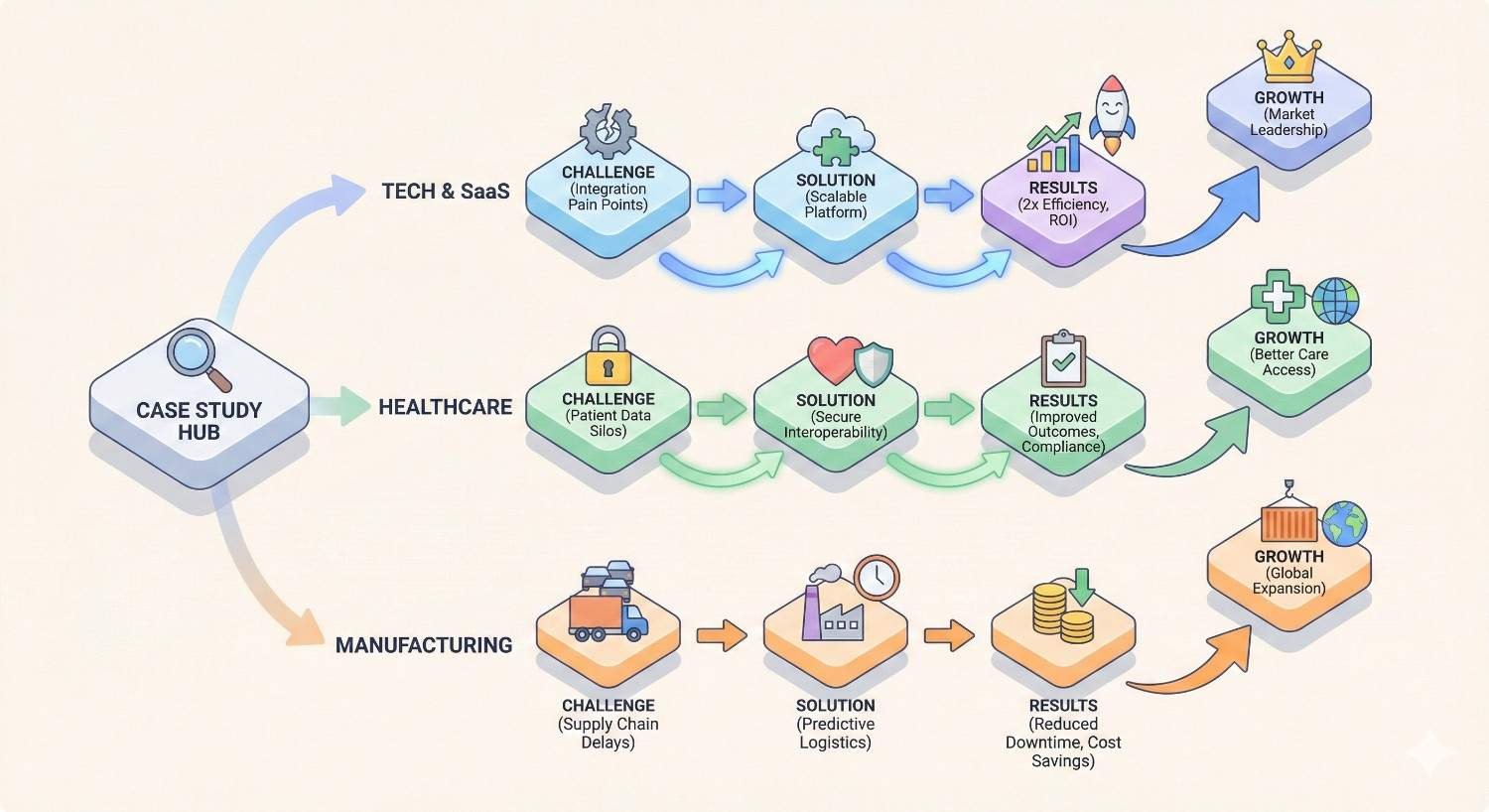
Different industries have different expectations for case study content and presentation. Technology buyers expect technical depth and architecture details. Healthcare audiences require careful attention to patient privacy and regulatory compliance. Financial services readers want risk mitigation and compliance benefits emphasized.
Professional case study services adapt their approach based on your industry and audience. They understand the terminology, concerns, and decision criteria that matter to your specific buyers. This expertise shows in the questions they ask and the details they emphasize.
Format preferences also vary by industry. Some sectors favor formal, detailed documents. Others respond better to conversational, story-driven narratives. Experienced providers match their style to your market’s expectations.
What to Look for in a Case Study Writing Service Provider
Choosing the right partner significantly impacts your results. These evaluation criteria help you identify providers capable of delivering high-quality case studies consistently.
Industry Experience and Subject Matter Expertise
Writers who understand your industry produce better case studies faster. They grasp technical concepts without extensive explanation. They know which details matter to your buyers and which can be simplified or omitted.
Ask potential providers about their experience in your sector. Request samples from similar industries. Evaluate whether their previous work demonstrates genuine understanding or surface-level familiarity.
Subject matter expertise extends beyond industry knowledge. The best providers also understand marketing strategy, sales enablement, and content performance. They create case studies designed to achieve specific business objectives, not just tell interesting stories.
Research Capabilities and Interview Skills
Interview quality determines content quality. Evaluate providers based on their interview methodology. How do they prepare? What questions do they typically ask? How do they handle customers who struggle to articulate results?
Strong interviewers adapt to different personality types and communication styles. They build rapport quickly and create comfortable conversations. They recognize when customers are holding back and know how to draw out additional detail.
Research capabilities matter for complex products and technical audiences. Providers should demonstrate ability to understand your solution well enough to ask intelligent questions and recognize significant details.
Portfolio Quality and Case Study Examples
Request samples that match your intended use case. If you need technical case studies, evaluate technical samples. If you need short-form success stories, review examples in that format.
Look beyond writing quality to strategic effectiveness. Do the samples follow clear narrative structures? Do they quantify results compellingly? Do they include strong customer quotes? Would they persuade you if you were a prospect?
Ask about the results those case studies achieved. Providers who track performance can share metrics on downloads, engagement, and sales influence. This data indicates whether their work actually converts.
Turnaround Time and Project Management
Realistic timelines vary based on complexity and customer availability. Simple case studies with cooperative customers might complete in two to three weeks. Complex technical case studies requiring multiple interviews and extensive review cycles often take six to eight weeks.
Understand the provider’s project management approach. How do they handle scheduling challenges? What happens when customers delay interviews or approvals? How do they communicate progress and manage expectations?
Capacity matters for ongoing programs. Providers handling high volumes may struggle to maintain quality or meet deadlines during busy periods. Ask about their team structure and how they scale for larger engagements.
Pricing Models and Service Packages
Pricing structures vary significantly across providers. Some charge per case study with all-inclusive pricing. Others itemize services like interviews, writing, design, and revisions separately. Volume discounts typically apply for ongoing programs.
Understand exactly what’s included before comparing prices. A lower per-case-study rate might exclude design, limit revisions, or require you to coordinate customer interviews yourself. The true cost includes your internal time investment as well.
Value matters more than price. A $3,000 case study that generates leads and closes deals delivers better ROI than a $1,000 case study that sits unused. Evaluate providers based on the business results they enable, not just their rates.
Case Study Writing Service Pricing and Packages
Understanding typical pricing helps you budget appropriately and evaluate proposals. Costs vary based on scope, complexity, and provider positioning.
Typical Cost Ranges for Professional Case Studies
Entry-level case study services typically charge $1,000 to $2,000 per case study. At this tier, you often receive competent writing but may need to handle interview coordination yourself. Design options may be limited to basic templates.
Mid-market providers generally charge $2,500 to $4,500 per case study. This range typically includes full-service delivery: interview coordination, professional writing, custom design, and multiple revision rounds. Most B2B companies find this tier offers the best balance of quality and value.
Premium agencies and specialized providers charge $5,000 to $10,000 or more per case study. These engagements often include strategic consulting, video production, extensive distribution support, and white-glove project management. Enterprise companies with complex products and high-value deals often justify this investment.
Factors That Influence Case Study Pricing
Complexity significantly impacts pricing. Technical products requiring deep research cost more than straightforward services. Multiple stakeholder interviews add time and coordination effort. Regulated industries require additional compliance review steps.
Deliverable scope affects cost. A written document alone costs less than a package including designed PDF, web version, social media assets, and video script. Clarify exactly what you need before requesting quotes.
Turnaround requirements influence pricing. Rush projects typically carry premium rates. Planning case studies well in advance allows providers to schedule efficiently and often reduces costs.
Provider positioning matters. Boutique agencies specializing in case studies often charge more than general content agencies or freelancers. The premium reflects specialized expertise and refined processes.
One-Off Projects vs. Ongoing Case Study Programs
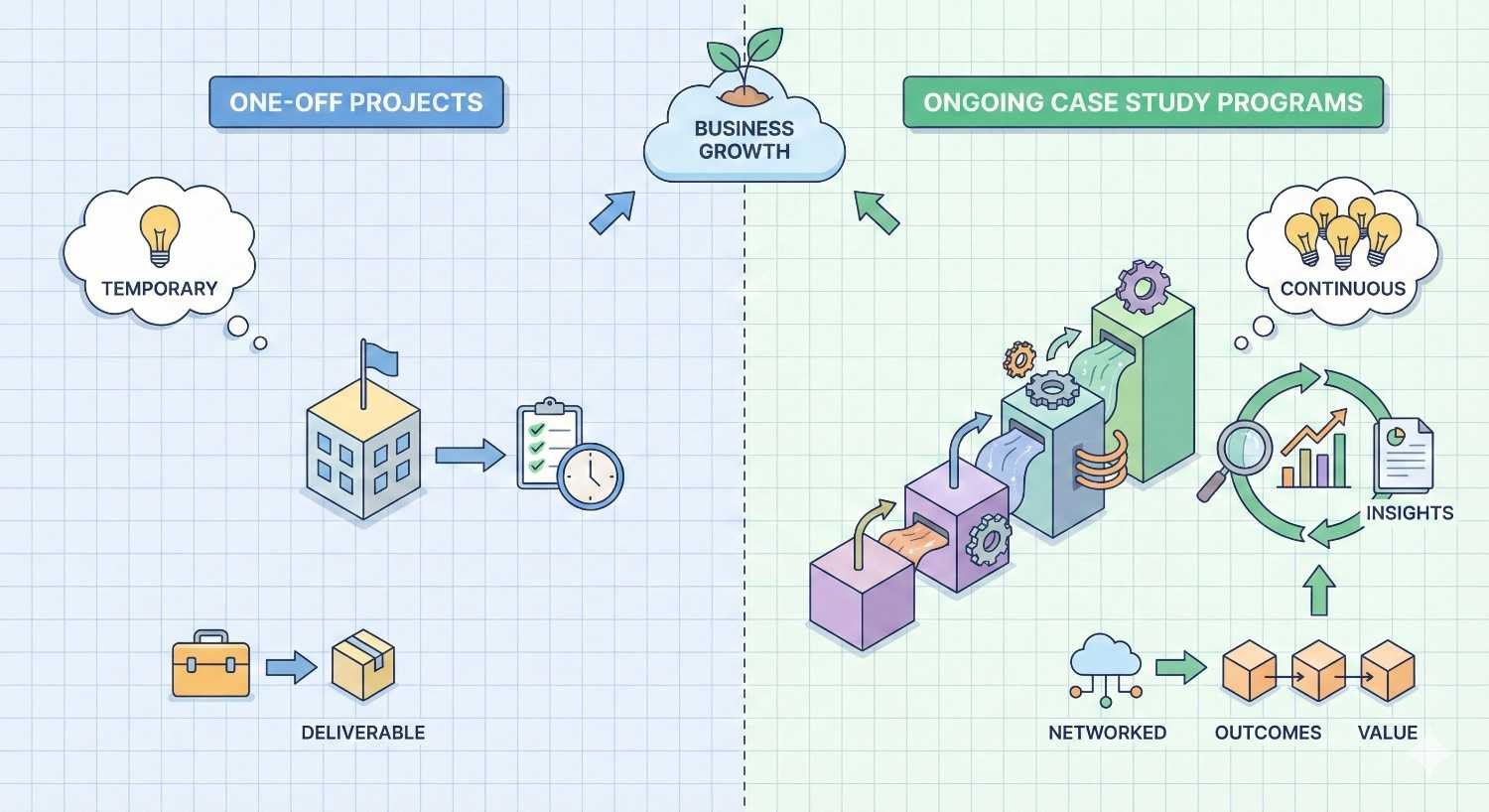
Single case study projects typically cost more per unit than ongoing programs. Providers invest significant time in initial discovery and relationship building. Spreading that investment across multiple projects reduces per-case-study costs.
Ongoing programs also improve quality over time. Writers develop deeper understanding of your product, customers, and brand voice. Interview processes become more efficient as templates and workflows mature.
Most providers offer volume discounts for committed programs. Quarterly or annual contracts with guaranteed minimums often reduce per-case-study rates by 15% to 25% compared to one-off pricing.
Consider your actual needs before committing to volume programs. A few high-quality case studies often outperform many mediocre ones. Start with a pilot project to evaluate quality before signing long-term agreements.
The Case Study Creation Process: What to Expect
Understanding the typical workflow helps you prepare internally and set realistic expectations for timelines and involvement.
Discovery and Strategy Phase
Effective case study programs begin with strategic alignment. The provider learns your business objectives, target audience, competitive positioning, and brand voice. This context shapes every subsequent decision.
Discovery typically includes reviewing existing marketing materials, understanding your sales process, and identifying the types of proof points that would most influence your buyers. Some providers conduct stakeholder interviews to gather diverse perspectives.
Strategy discussions establish priorities. Which customer segments need case study coverage? What industries or use cases are underrepresented? How will case studies integrate with broader marketing and sales initiatives?
Customer Selection and Interview Coordination
Identifying the right case study subjects requires balancing multiple factors. Ideal candidates have achieved measurable results, maintain positive relationships with your team, and are willing to participate publicly.
Strategic value matters beyond individual story quality. Case studies covering priority industries, key use cases, or recognizable brand names often deliver disproportionate impact. Consider which stories would most influence your target buyers.
Interview coordination involves scheduling, preparation, and logistics. Professional providers handle outreach, calendar management, and technical setup. They prepare customers with context about the process and typical questions.
Research, Writing, and Design
Writers synthesize interview content with background research to create compelling narratives. First drafts typically arrive one to two weeks after interviews, depending on complexity and provider workload.
The writing process involves structuring the story, selecting the most compelling details, crafting customer quotes, and presenting results effectively. Skilled writers make complex situations accessible without oversimplifying.
Design transforms written content into polished assets. Professional designers create layouts that guide readers through the narrative, emphasize key metrics, and align with your brand standards. Design timelines typically add three to five days after content approval.
Review Cycles and Approval Process
Most providers include two to three revision rounds in standard pricing. Internal review ensures accuracy, brand alignment, and strategic fit. Customer review confirms quote accuracy and overall comfort with the narrative.
Establish clear review processes before projects begin. Identify who needs to approve content internally. Understand your customer’s approval requirements, especially for regulated industries or large enterprises with legal review processes.
Revision cycles often represent the longest phase of case study production. Delays typically result from slow internal feedback or customer availability rather than provider performance. Plan accordingly.
Distribution and Promotion Strategy
Creating case studies without distribution plans wastes investment. Professional providers often include basic distribution guidance or offer expanded promotion services.
Distribution planning identifies channels and tactics for maximum reach. Website placement, email campaigns, social media promotion, sales enablement integration, and paid amplification all play roles in effective distribution.
Some providers offer ongoing promotion support, including content repurposing, SEO optimization, and performance tracking. These services extend case study value beyond initial publication.
How to Maximize ROI from Your Case Studies
Creating case studies represents only half the equation. Strategic distribution and optimization multiply the return on your investment.
Multi-Channel Distribution Strategies
Effective distribution reaches prospects wherever they research solutions. Your website serves as the primary hub, with case studies accessible from relevant product pages, industry sections, and dedicated resource libraries.
Email marketing extends reach to existing contacts. Include case studies in nurture sequences, newsletters, and targeted campaigns. Segment distribution based on industry, company size, or buying stage for maximum relevance.
Social media promotion builds awareness and drives traffic. LinkedIn performs particularly well for B2B case studies. Share key metrics, customer quotes, and compelling visuals to capture attention in crowded feeds.
Sales enablement ensures your team uses case studies effectively. Organize content by industry, use case, and objection addressed. Train representatives on when and how to share relevant proof points.
Repurposing Case Studies Across Content Formats
A single case study can fuel numerous derivative content pieces. Extract key quotes for social media graphics. Pull statistics for infographics and data visualizations. Summarize stories for email snippets and ad copy.
Blog posts can expand on case study themes, providing additional context and related insights. Webinars can feature customer interviews or panel discussions exploring the challenges and solutions covered.
Video content offers particularly high engagement. Transform written case studies into animated explainers, customer interview clips, or sales presentation materials. Video versions often reach audiences who wouldn’t read long-form content.
Presentation decks adapt case studies for sales meetings, conference talks, and investor pitches. Distill key points into slides that support verbal storytelling.
SEO Optimization for Case Study Content
Case studies offer significant organic search potential. They naturally target long-tail keywords combining your solution category with specific industries, use cases, or outcomes.
Optimize case study pages with relevant title tags, meta descriptions, and header structures. Include target keywords naturally in headlines and body content. Add schema markup to enhance search result appearance.
Internal linking connects case studies to related content across your site. Link from product pages, blog posts, and industry sections. This distribution signals relevance to search engines and helps visitors discover relevant proof points.
Consider creating dedicated landing pages for high-priority case studies. These pages can target specific keyword opportunities and serve as destinations for promotional campaigns.
Tracking Performance and Conversion Metrics
Measurement enables optimization. Track page views, time on page, and scroll depth to understand engagement. Monitor downloads for gated case studies. Attribute leads and opportunities to case study touchpoints.
Sales influence tracking reveals case study impact on revenue. Survey closed deals about content consumed during evaluation. Analyze CRM data to identify case study engagement patterns among won opportunities.
Performance data guides future investment. Double down on formats, topics, and distribution channels that drive results. Retire or refresh underperforming content. Continuously improve based on evidence.
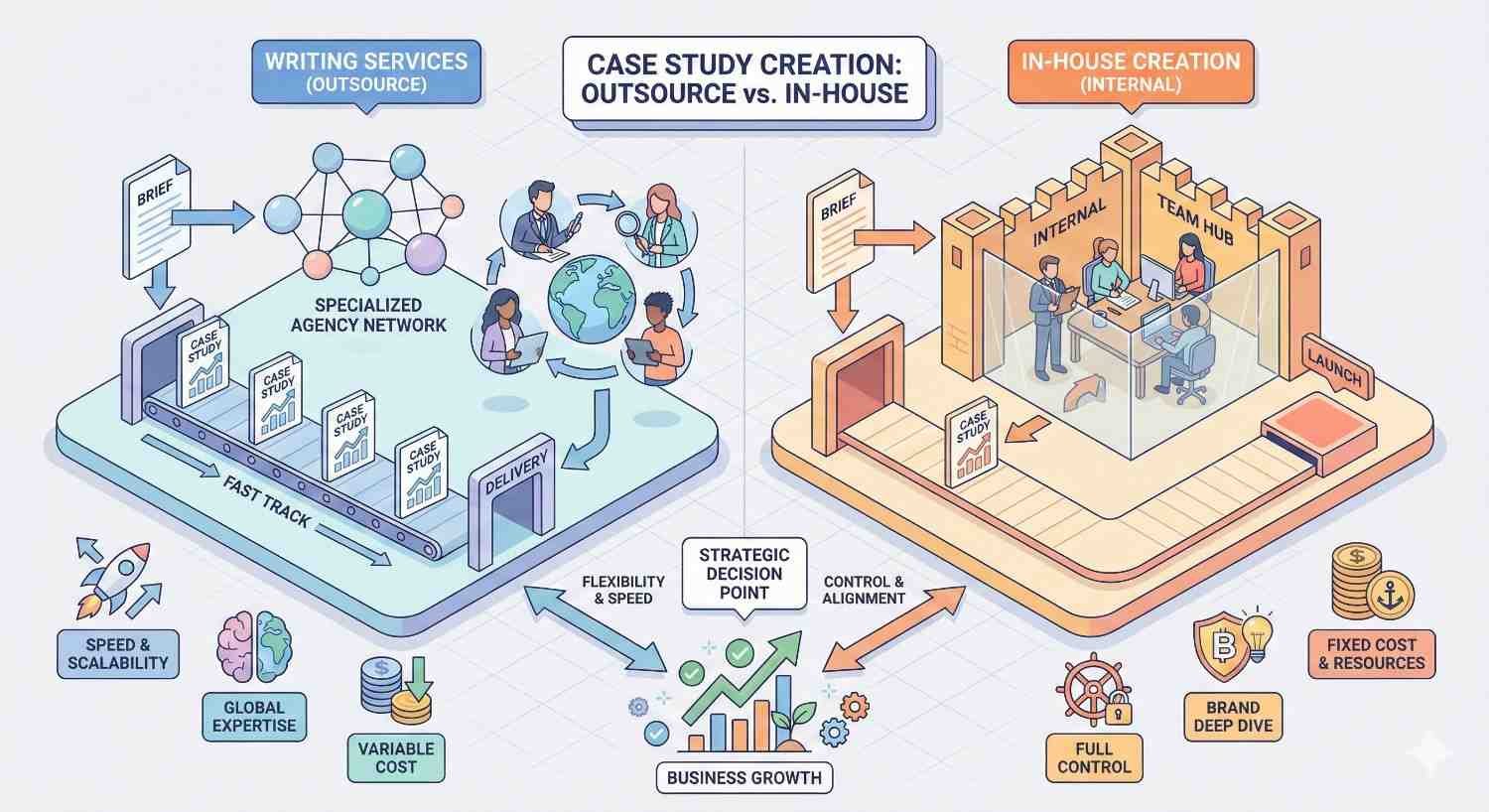
Case Study Writing Services vs. In-House Creation
The outsource-versus-build decision depends on your resources, capabilities, and strategic priorities.
Resource Requirements and Time Investment
Creating case studies internally requires significant time investment. Customer outreach, interview scheduling, conversation facilitation, writing, design, and review cycles consume hours across multiple team members.
Estimate 15 to 25 hours of internal time per case study for organizations without established processes. This includes project management, customer coordination, writing, design, and review cycles. Experienced teams with refined workflows might reduce this to 10 to 15 hours.
Opportunity cost matters as much as direct time investment. Hours spent on case studies are hours not spent on other marketing priorities. Evaluate whether case study creation represents the highest-value use of your team’s time.
Quality and Objectivity Considerations
External writers often produce more compelling case studies than internal teams. They bring fresh perspective, professional interview skills, and experience crafting narratives across many clients and industries.
Objectivity represents another advantage. Internal teams sometimes struggle to identify the most compelling angles or ask probing questions of colleagues and customers. External writers approach each project without assumptions or political considerations.
However, internal teams understand your product, customers, and market more deeply. This knowledge enables nuanced storytelling that external writers might miss. The best outcomes often combine internal expertise with external execution.
When to Outsource vs. Build Internal Capabilities
Outsourcing makes sense when you need case studies quickly, lack internal writing talent, or want to scale production beyond current capacity. It also suits organizations where marketing teams are stretched thin across multiple priorities.
Building internal capabilities makes sense when case studies represent a core, ongoing need and you have talented writers interested in developing this specialty. Internal programs offer more control and potentially lower long-term costs at scale.
Hybrid approaches work well for many organizations. Outsource initial case studies while developing internal processes. Use external providers for overflow capacity or specialized formats. Maintain internal capability for quick-turn projects and ongoing maintenance.
Industry-Specific Case Study Considerations
Different sectors require tailored approaches to case study creation. Understanding these nuances helps you evaluate provider fit and set appropriate expectations.
B2B SaaS Case Studies
Software case studies emphasize implementation experience, adoption metrics, and measurable business outcomes. Readers want to understand deployment timelines, integration requirements, and user acceptance.
Technical depth varies by audience. Executive summaries focus on business results. Technical appendices or companion documents address IT buyer concerns about architecture, security, and scalability.
SaaS case studies often highlight ongoing value rather than one-time implementation success. Metrics like user adoption rates, feature utilization, and long-term ROI demonstrate sustained impact.
Professional Services and Consulting Case Studies
Services case studies face unique challenges. Outcomes often depend heavily on client participation and circumstances. Results may be difficult to quantify or attribute directly to the engagement.
Effective services case studies emphasize methodology, expertise, and client experience alongside outcomes. They demonstrate how the provider’s approach created value, not just what results occurred.
Confidentiality concerns frequently arise. Many consulting clients prefer anonymized case studies or restrict specific details. Skilled writers create compelling narratives within these constraints.
Healthcare and Medical Case Studies
Healthcare case studies require careful attention to privacy regulations and patient confidentiality. HIPAA compliance in the United States and similar regulations elsewhere restrict what information can be shared and how.
Approval processes typically involve legal and compliance review beyond standard marketing sign-off. Build additional time into project schedules for these requirements.
Clinical outcomes require careful presentation. Avoid claims that could be interpreted as medical advice or treatment guarantees. Focus on operational improvements, efficiency gains, and patient experience enhancements rather than clinical outcomes unless properly validated.
Technology and Enterprise Software Case Studies
Enterprise technology case studies often involve complex, multi-stakeholder implementations. Effective stories capture perspectives from IT, business users, and executive sponsors.
Technical credibility matters for these audiences. Writers must understand and accurately represent architecture decisions, integration approaches, and technical challenges overcome.
Security and compliance considerations frequently arise. Enterprise buyers want assurance that solutions meet their requirements. Case studies can address these concerns by highlighting relevant certifications, security features, and compliance achievements.
How Case Studies Support Your SEO and Content Strategy
Case studies contribute to organic growth beyond their direct conversion impact. Understanding these SEO benefits helps you maximize long-term value.
Case Studies as Authority-Building Content
Search engines evaluate topical authority when ranking content. A library of case studies across industries and use cases signals deep expertise in your solution category.
Each case study adds unique, original content to your site. This content naturally incorporates relevant terminology, addresses specific scenarios, and demonstrates practical application of your offerings.
Case studies also support E-E-A-T signals that influence rankings. They demonstrate experience through real customer implementations, expertise through problem-solving narratives, authoritativeness through documented results, and trustworthiness through third-party validation.
Long-Tail Keyword Opportunities in Case Studies
Case studies naturally target specific, intent-rich search queries. Phrases like “CRM implementation for manufacturing companies” or “marketing automation results for healthcare” represent valuable long-tail opportunities.
These queries often indicate high purchase intent. Searchers looking for specific industry applications or use case results are typically evaluating solutions actively. Ranking for these terms captures qualified traffic.
Optimize case study titles, headers, and content for relevant long-tail keywords. Research what your target buyers search when evaluating solutions like yours. Align case study topics with these opportunities.
Link-Worthy Assets and Digital PR Value
Well-crafted case studies attract backlinks from industry publications, analyst reports, and peer content. Compelling results and unique insights make case studies valuable reference material for other content creators.
Digital PR campaigns can amplify this effect. Pitch case study findings to relevant journalists and bloggers. Offer exclusive data or expert commentary to increase coverage likelihood.
Internal linking distributes case study authority across your site. Link from high-traffic pages to relevant case studies. This passes ranking signals and helps visitors discover proof points.
Integration with Broader Content Marketing Programs
Case studies complement other content types within comprehensive marketing strategies. They provide proof points that blog posts, whitepapers, and webinars can reference.
Content clusters benefit from case study inclusion. A pillar page about your solution category gains authority when supported by multiple case studies demonstrating real-world application.
Editorial calendars should include case study production alongside other content priorities. Coordinate timing to support product launches, campaign themes, and seasonal opportunities.
Choosing the Right Case Study Writing Service for Your Business
Selecting the right partner requires systematic evaluation. These guidelines help you make informed decisions.
Evaluating Service Providers: Key Questions to Ask
Start with experience questions. How many case studies have they produced? In which industries? For companies of what size? Request references from clients with similar needs.
Understand their process thoroughly. How do they conduct interviews? What’s their typical timeline? How many revisions are included? Who handles design? What formats do they deliver?
Discuss quality assurance. How do they ensure accuracy? What’s their fact-checking process? How do they handle customer approval requirements?
Explore strategic capabilities. Can they help identify the best case study candidates? Do they offer distribution guidance? Can they measure performance?
Red Flags and What to Avoid
Beware providers who promise unrealistic timelines. Quality case studies require adequate time for interviews, writing, and review. Rushed processes typically produce inferior results.
Avoid providers who cannot show relevant samples. Generic portfolios without industry-specific examples suggest limited experience with your type of content.
Watch for unclear pricing or scope. Providers who cannot clearly explain what’s included often surprise clients with additional charges or excluded services.
Be cautious of providers who don’t ask questions about your business. Effective case study creation requires understanding your goals, audience, and competitive context. Providers who skip discovery typically produce generic content.
Getting Started: Onboarding and First Projects
Begin with a pilot project before committing to volume programs. This allows you to evaluate quality, process fit, and working relationship without significant risk.
Prepare thoroughly for onboarding. Gather brand guidelines, existing case studies, product documentation, and customer information. The more context you provide, the better results you’ll receive.
Identify your first case study subject carefully. Choose a customer with strong results, positive relationship, and willingness to participate. Early success builds momentum for ongoing programs.
Establish clear communication channels and expectations. Define who reviews content, how feedback is provided, and what approval processes apply. Clarity prevents delays and frustration.
Working with a Full-Service SEO Provider for Case Study Strategy
Integrating case study creation with broader SEO strategy amplifies results. Full-service providers offer advantages that specialized case study agencies cannot match.
Aligning Case Studies with Organic Growth Goals
SEO-focused providers approach case studies as strategic assets within comprehensive organic growth programs. They identify keyword opportunities, optimize content for search visibility, and integrate case studies into site architecture strategically.
This alignment ensures case studies contribute to ranking goals beyond their direct conversion value. Each piece of content supports broader topical authority and keyword coverage objectives.
Strategic planning identifies which case study topics offer the greatest SEO opportunity. Competitive analysis reveals gaps in competitor coverage. Keyword research surfaces high-value queries that case studies can target.
Performance Tracking and Content ROI Measurement
Full-service SEO providers bring sophisticated measurement capabilities. They track organic traffic, keyword rankings, and conversion attribution across your case study portfolio.
This data enables continuous optimization. Identify which case studies drive the most valuable traffic. Understand which topics and formats perform best. Allocate future investment based on evidence.
ROI measurement connects case study investment to business outcomes. Track leads generated, opportunities influenced, and revenue attributed to case study engagement. This accountability justifies ongoing investment and guides strategic decisions.
Building a Sustainable Case Study Program
Long-term success requires systematic approaches to case study production. Full-service providers help establish processes, templates, and workflows that scale efficiently.
Editorial planning ensures consistent production without overwhelming internal resources. Quarterly planning identifies upcoming case study opportunities and coordinates with broader content calendars.
Quality standards maintain consistency as programs scale. Style guides, templates, and review checklists ensure every case study meets your standards regardless of which team member or writer produces it.
Continuous improvement refines your program over time. Regular performance reviews identify what’s working and what needs adjustment. Process refinements increase efficiency and quality with each iteration.
Conclusion
Case study writing services offer businesses a proven path to compelling customer success stories that drive conversions, build authority, and support sales teams. The investment pays dividends through improved close rates, shortened sales cycles, and enhanced brand credibility.
Choosing the right provider and maximizing distribution determine whether your case studies deliver meaningful ROI. Strategic alignment with SEO goals extends value beyond immediate conversion impact.
We help businesses build sustainable case study programs integrated with comprehensive organic growth strategies. Contact White Label SEO Service to discuss how professional case studies can support your marketing and sales objectives.
Frequently Asked Questions
How much do professional case study writing services typically cost?
Professional case study services typically range from $1,500 to $5,000 per case study, depending on complexity and deliverables included. Mid-market providers charging $2,500 to $4,000 generally offer the best balance of quality and value for most B2B companies.
How long does it take to produce a professional case study?
Most case studies take four to eight weeks from kickoff to final delivery. The timeline depends on customer availability for interviews, internal review speed, and design complexity. Rush projects are possible but typically cost more.
What should I provide to a case study writing service?
Prepare brand guidelines, product documentation, customer contact information, and any existing materials about the engagement. Share your goals, target audience, and preferred formats. The more context you provide, the better your results.
How do I choose which customers to feature in case studies?
Select customers with measurable results, positive relationships, and willingness to participate publicly. Prioritize stories that address your most important industries, use cases, or buyer objections. Recognizable brand names add credibility when available.
Can case study writing services interview my customers directly?
Yes, most professional services handle customer interviews directly. They coordinate scheduling, prepare discussion guides, and conduct conversations designed to surface compelling details. This approach often yields better results than internal interviews.
How many case studies does my business need?
Most B2B companies benefit from six to twelve case studies covering key industries, use cases, and company sizes. Ongoing programs adding two to four case studies quarterly maintain fresh content and expand coverage over time.
What’s the difference between case studies and testimonials?
Testimonials are brief customer endorsements, typically one to three sentences. Case studies are detailed narratives explaining challenges, solutions, and results, usually 800 to 2,000 words. Case studies provide deeper proof and address more buyer questions than testimonials alone.