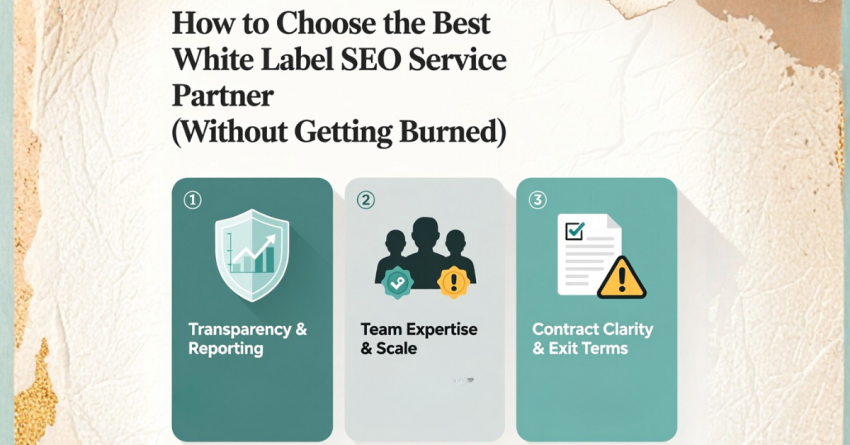
Choosing the wrong white label SEO partner costs agencies more than money. It destroys client relationships, damages your reputation, and creates months of cleanup work. The right partner becomes an invisible extension of your team, delivering results that keep clients paying and referring. The wrong one burns through your margins while tanking rankings you’ll spend quarters trying to recover.
This guide gives you a complete framework for evaluating white label SEO providers. You’ll learn the non-negotiable criteria that separate reliable partners from disasters waiting to happen, the red flags that signal trouble, and the exact questions that reveal whether a provider can actually deliver.

Why Your White Label SEO Partner Choice Can Make or Break Your Agency
Your white label SEO provider touches every client relationship in your portfolio. They control the work that determines whether clients renew or churn. This isn’t a vendor decision. It’s a business-critical partnership that directly impacts your revenue trajectory.
The Real Cost of Choosing Wrong
Bad white label partnerships create cascading failures. One agency owner shared losing $340,000 in annual recurring revenue after their provider used manipulative link schemes that triggered Google penalties across multiple client accounts. The financial damage was significant. The reputation damage took years to repair.
The costs stack up fast:
- Client churn from poor results or ranking drops
- Refund requests when deliverables miss expectations
- Staff time managing provider failures instead of growing accounts
- Opportunity cost of accounts you can’t take on due to capacity issues with an unreliable partner
- Reputation damage that follows you through referrals and reviews
According to Agency Analytics research, acquiring a new client costs 5-7x more than retaining an existing one. Every client lost to poor SEO execution multiplies your growth costs.
What a Great Partnership Actually Looks Like
Strong white label relationships share common characteristics. Communication flows smoothly. Reporting arrives on time with insights you can actually present to clients. Results compound over months. Scaling feels natural rather than terrifying.
The best partnerships function like having a senior SEO team on staff without the overhead. Your provider anticipates needs, flags issues before they become problems, and treats your clients’ success as their own metric.
You should expect:
- Proactive communication about strategy adjustments and opportunities
- Consistent delivery that matches or exceeds stated timelines
- Transparent reporting that makes client conversations easier
- Scalable capacity that grows with your agency
- Technical expertise that handles complex situations confidently
7 Non-Negotiable Criteria for Evaluating White Label SEO Providers
Not all evaluation criteria carry equal weight. These seven factors separate partners who deliver from those who disappoint.
Proven Track Record with Verifiable Results
Case studies matter less than verifiable outcomes. Any provider can create impressive-looking PDFs. Fewer can connect you with actual agency partners who’ll confirm their experience.
Request specific examples that match your client profile. If you serve local businesses, ask for local SEO case studies. If you handle e-commerce, demand relevant examples. Generic “we increased traffic 300%” claims without context tell you nothing useful.
Strong providers offer:
- Named references you can contact directly
- Before/after data with realistic timeframes
- Methodology explanations for how results were achieved
- Honest discussion of campaigns that underperformed and why
Transparent Reporting You Can Actually Use
Reporting quality determines how easy or painful your client conversations become. The best white label partners provide reports you can present directly or customize with minimal effort.
Evaluate reporting on these factors:
- White label capability with your branding, not theirs
- Metric clarity that clients without SEO knowledge can understand
- Actionable insights beyond raw data dumps
- Delivery consistency on predictable schedules
- Format flexibility for different client preferences
Ask to see sample reports before signing. If the reports require significant rework before client presentation, factor that time cost into your evaluation.
Communication Standards That Match Your Expectations
Communication mismatches kill partnerships faster than poor results. Some agencies need daily Slack access. Others prefer weekly summary emails. Neither approach is wrong, but misalignment creates friction.
Clarify these specifics upfront:
- Response time expectations for routine questions
- Escalation protocols for urgent issues
- Meeting cadence for strategy discussions
- Point of contact structure (dedicated manager vs. rotating support)
- Communication channels they support and prefer
HubSpot’s agency research indicates that 65% of agency-partner conflicts stem from communication expectation mismatches rather than deliverable quality.
Technical SEO Capabilities Beyond the Basics
Content and links get attention. Technical SEO separates competent providers from exceptional ones. Your partner should handle:
- Site architecture analysis and recommendations
- Core Web Vitals optimization
- Crawlability and indexation issue resolution
- Schema markup implementation
- International SEO configuration when needed
- Migration support for platform changes
Test their technical depth by asking about a complex scenario. How would they approach a site migration? What’s their process for diagnosing sudden ranking drops? Vague answers signal capability gaps.
Ethical Link Building Practices
Link building carries the highest risk in SEO partnerships. Manipulative tactics might show short-term gains before triggering penalties that devastate client sites.
Demand clarity on their link acquisition methods:
- What types of sites do they target for placements?
- How do they vet link quality and relevance?
- What’s their stance on PBNs and link networks?
- Can they provide examples of recently acquired links?
- How do they handle client requests for faster results?
Providers who guarantee specific link quantities or promise rapid results through link building are waving red flags. Quality link acquisition takes time and doesn’t scale linearly.
Scalability Without Quality Drops
Your agency growth depends on a partner who can grow with you. A provider perfect for five clients might collapse under twenty.
Investigate their capacity:
- Current client load and team size
- Onboarding capacity for new accounts monthly
- Quality control processes as volume increases
- Team structure and specialization depth
- Technology infrastructure supporting their operations
Ask directly: “What happens to my account quality if I double my volume in six months?” The answer reveals whether they’ve built for scale or are operating at capacity.
Pricing That Aligns with Your Margins
White label SEO pricing varies dramatically. Monthly retainers range from $250 to $2,500+ per client depending on service scope and provider positioning.
Evaluate pricing against:
- Your target margins on SEO services
- Service scope included at each tier
- Overage costs for additional work
- Minimum commitments required
- Price lock periods and increase policies
The cheapest option rarely delivers the best value. Calculate total cost including your management time, not just the invoice amount.
Red Flags That Signal You’re About to Get Burned
Recognizing warning signs early saves months of frustration. These red flags indicate partnerships likely to disappoint.
Guaranteed Rankings and Unrealistic Promises
No legitimate SEO provider guarantees specific rankings. Google’s algorithm considers hundreds of factors outside any provider’s control. Promises like “page one in 30 days” or “guaranteed #1 rankings” signal either dishonesty or incompetence.
Realistic providers discuss:
- Competitive landscape affecting timeline expectations
- Historical data suggesting probable outcomes
- Variables that could impact results
- Milestone-based progress rather than guaranteed endpoints
Vague Methodologies and Black Box Processes
Providers unwilling to explain their methods are hiding something. Legitimate SEO strategies aren’t proprietary secrets. The fundamentals are well-documented.
Concerning responses include:
- “We can’t share our process for competitive reasons”
- “Just trust us, we know what works”
- “Our proprietary system handles everything”
- Inability to explain specific tactics in plain language
Transparency about methodology protects both parties. You need to understand what’s being done to your clients’ sites.
No Case Studies or Reluctance to Share References
Established providers have success stories. New providers should have references from previous roles or initial clients willing to vouch for them.
Reluctance to provide references suggests:
- Lack of successful outcomes worth sharing
- Poor relationships with past clients
- Inexperience they’re trying to obscure
- Results that didn’t last or came through risky tactics
Poor Communication During the Sales Process
Sales interactions preview partnership dynamics. Providers who communicate poorly while trying to win your business won’t improve after signing.
Warning signs include:
- Slow response times to initial inquiries
- Missed meetings or last-minute rescheduling
- Vague answers to direct questions
- Pressure tactics pushing for quick decisions
- Disorganized presentations or proposals
The sales process represents their best effort to impress you. Expect service quality to match or decline from there.
The Vetting Process: How to Test Before You Commit
Thorough vetting prevents expensive mistakes. Invest time upfront to avoid months of cleanup later.
Running a Paid Pilot Project
Trial periods reveal more than sales conversations ever could. Structure pilots to test what matters most.
Effective pilot parameters:
- Duration: 60-90 days minimum for meaningful SEO data
- Scope: Representative of your typical client engagement
- Metrics: Defined success criteria before starting
- Communication: Full access to their normal processes
- Reporting: Complete deliverables as if a real client
Pay for pilots. Free trials incentivize providers to prioritize paying clients. A paid pilot ensures you receive representative service levels.
Auditing Their Technical Competence
Request a technical audit of a site you control. Their analysis reveals capability depth.
Evaluate the audit for:
- Comprehensiveness of issues identified
- Prioritization logic for recommendations
- Explanation clarity for non-technical readers
- Actionability of suggested fixes
- Tool proficiency demonstrated in analysis
Compare their findings against your own knowledge or a trusted third party. Significant gaps indicate capability concerns.
Checking References the Right Way
Reference calls require preparation. Generic questions yield generic answers.
Ask references:
- “What’s the biggest challenge you’ve faced with them, and how was it resolved?”
- “Have you ever had to escalate an issue? What happened?”
- “How has service quality changed as you’ve scaled with them?”
- “What would make you consider switching providers?”
- “How do they handle situations when results underperform expectations?”
Listen for hesitation, qualified praise, or diplomatic criticism. References willing to share challenges and resolutions provide more valuable insight than purely positive reviews.
12 Questions to Ask Every Potential Partner (And What Good Answers Sound Like)
These questions reveal partnership quality. Pay attention to both content and delivery.
- “Walk me through your onboarding process for a new client account.”
Good answer: Detailed steps including discovery, audit, strategy development, timeline setting, and communication setup. Shows systematic approach.
Red flag: Vague response suggesting they’ll “figure it out as we go.”
- “How do you handle a situation where a client’s rankings drop unexpectedly?”
Good answer: Describes diagnostic process, communication protocol, and remediation steps. Acknowledges drops happen and focuses on response quality.
Red flag: Dismissive attitude or blame-shifting to algorithm changes.
- “What’s your link building methodology?”
Good answer: Specific tactics (guest posting, digital PR, resource link building) with quality standards and vetting processes explained.
Red flag: Vague references to “relationships” or unwillingness to detail sources.
- “How do you measure and report on campaign success?”
Good answer: Multiple metrics beyond rankings (traffic, conversions, visibility) with context on what each indicates.
Red flag: Ranking-only focus or vanity metrics without business impact connection.
- “What happens if we need to scale from 5 to 20 clients in six months?”
Good answer: Explains capacity planning, team structure, and quality maintenance processes during growth.
Red flag: Overconfident promises without operational details.
- “Can you share an example of a campaign that didn’t meet expectations? What happened?”
Good answer: Honest example with analysis of what went wrong and lessons applied.
Red flag: Claims of perfect track record or blame placed entirely on external factors.
- “What’s your average client retention rate and tenure?”
Good answer: Specific numbers with context. Strong providers retain 80%+ of clients beyond 12 months.
Red flag: Evasive response or inability to provide data.
- “How do you stay current with algorithm updates and industry changes?”
Good answer: Specific resources, testing processes, and examples of recent adaptations.
Red flag: Generic claims about “staying updated” without specifics.
- “What’s included in your standard reporting, and how customizable is it?”
Good answer: Detailed breakdown of metrics, frequency, format options, and white-label capabilities.
Red flag: One-size-fits-all approach with limited flexibility.
- “Who will be my primary point of contact, and what’s their experience level?”
Good answer: Named individual with relevant background and clear escalation path.
Red flag: Rotating contacts or junior staff without senior oversight.
- “What are your contract terms, and what’s the exit process if the partnership isn’t working?”
Good answer: Clear terms with reasonable notice periods and transition support.
Red flag: Long lock-in periods, punitive exit clauses, or evasiveness about terms.
- “How do you handle confidentiality and ensure my clients don’t know I’m using a white label partner?”
Good answer: Specific protocols for branding, communication, and information handling.
Red flag: Casual attitude toward confidentiality or unclear processes.
Contract Terms That Protect Your Agency
Contracts establish accountability. Negotiate terms that protect your interests without creating adversarial dynamics.
Performance Benchmarks and Accountability
Define measurable expectations in writing. Vague commitments create disputes.
Include:
- Deliverable specifications with quality standards
- Timeline commitments for recurring work
- Response time requirements for communication
- Reporting schedules and format requirements
- Review periods for performance assessment
Avoid contracts that promise outcomes (rankings, traffic) rather than activities. SEO results depend on factors outside provider control. Hold them accountable for effort quality, not guaranteed outcomes.
Exit Clauses and Transition Support
Partnerships end. Plan for clean separations.
Negotiate:
- Notice periods of 30-60 days maximum
- Transition documentation requirements
- Data access during and after transition
- Non-compete limitations that don’t restrict your business
- Refund provisions for prepaid unused services
Providers resistant to reasonable exit terms may be compensating for retention problems with contractual lock-in.
Confidentiality and White Label Guarantees
Your clients shouldn’t discover your white label arrangement through provider carelessness.
Require:
- Non-disclosure agreements covering client information
- Branding restrictions preventing provider self-promotion
- Communication protocols ensuring client-facing materials use your branding
- Reference restrictions preventing use of your clients as their case studies
- Breach remedies with meaningful consequences
Already Burned? How to Recover and Switch Partners
If you’re reading this after a bad experience, recovery is possible. Strategic transitions minimize client impact.
Damage Assessment and Client Communication
Before switching, understand the current situation fully.
Assess:
- Ranking changes across all client accounts
- Link profile health for potential toxic links
- Technical issues introduced or unresolved
- Content quality of published materials
- Client relationship status and satisfaction levels
Communicate proactively with affected clients. Transparency about challenges (without throwing your former partner under the bus) builds trust. Clients appreciate honesty about problems paired with clear remediation plans.
Transitioning Without Losing Momentum
Smooth transitions require overlap periods and documentation.
Transition checklist:
- Document current strategies and in-progress work
- Export all data and reporting history
- Identify pending deliverables and their status
- Brief new partner thoroughly on each account
- Maintain service continuity during handoff
- Monitor closely for 90 days post-transition
Budget for potential productivity dips during transitions. New partners need ramp-up time regardless of their competence.
Building a Long-Term Partnership That Scales
The best white label relationships compound value over time. Both parties invest in mutual success.
Strengthen partnerships through:
- Regular strategy reviews beyond operational check-ins
- Feedback loops that improve processes for both sides
- Volume commitments that justify priority treatment
- Referrals when appropriate for their growth
- Fair negotiations when circumstances change
Treat your white label partner as a strategic asset, not a commodity vendor. Providers who feel valued deliver better work and prioritize your accounts during capacity crunches.
Long-term partnerships also reduce your risk. Providers invested in multi-year relationships won’t sacrifice your accounts for short-term gains. They understand that your success drives their recurring revenue.
Conclusion
Choosing a white label SEO partner demands thorough evaluation, not hopeful assumptions. The criteria, red flags, and vetting processes in this guide give you a framework for making decisions that protect your agency and clients.
The right partnership transforms your service capabilities without the overhead of building an in-house team. It lets you scale confidently, knowing client work meets your standards even when you’re not executing it directly.
White Label SEO Service helps agencies deliver expert-level SEO without the hiring complexity. If you’re evaluating partners and want to discuss how we approach the criteria outlined here, reach out for a consultation and see whether we’re the right fit for your agency’s growth.
Frequently Asked Questions
How much should white label SEO services cost?
White label SEO pricing typically ranges from $300 to $2,000+ per client monthly depending on service scope, competition level, and provider expertise. Budget-tier providers often cut corners on link quality or content depth. Evaluate total value delivered, not just invoice cost.
How long should I trial a white label SEO partner before committing?
Run paid pilots for 60-90 days minimum before long-term commitments. This timeframe allows meaningful SEO data collection and reveals operational consistency. Shorter trials don’t provide enough information for confident decisions.
Can I white label SEO reports with my own branding?
Most established providers offer white-label reporting with your logo, colors, and contact information. Confirm customization depth during evaluation. Some providers charge extra for advanced branding options or custom report formats.
What’s the difference between white label and private label SEO?
The terms are often used interchangeably. Both describe SEO services delivered under your agency’s brand. Some providers use “private label” to indicate deeper customization or exclusivity arrangements. Clarify specific offerings rather than relying on terminology.
How do I explain SEO timelines to my clients when using a white label partner?
Set realistic expectations based on your partner’s historical performance data. Most SEO campaigns require 4-6 months for meaningful ranking improvements in moderately competitive spaces. Communicate milestone-based progress rather than guaranteed timelines.
Should I tell my clients I use a white label SEO provider?
This is a business decision without a universal right answer. Most agencies don’t disclose white label arrangements, positioning the work as their own service delivery. Ensure your contract includes confidentiality provisions protecting this arrangement.
What happens if my white label partner damages my client’s rankings?
Your contract should address remediation responsibilities and potential compensation. Immediately assess damage scope, communicate transparently with affected clients, and implement recovery strategies. Document everything for potential contract enforcement discussions.