Content optimization tools transform how businesses approach SEO by providing data-driven recommendations that improve search rankings and organic traffic. These platforms analyze your content against top-performing competitors, identify keyword gaps, and deliver actionable insights that would take hours to compile manually.
For marketing managers and business owners investing in organic growth, the right optimization tool can mean the difference between content that languishes on page three and content that captures featured snippets. The challenge lies in selecting from dozens of platforms, each promising superior results.
This guide breaks down everything you need to know about content optimization tools: how they work, which features matter most, and how to integrate them into a sustainable SEO strategy that drives measurable business outcomes.
What Are Content Optimization Tools?
Content optimization tools have become essential components of modern SEO workflows. They bridge the gap between what search engines want and what content creators produce, using data analysis to guide strategic decisions.
Definition and Core Functionality
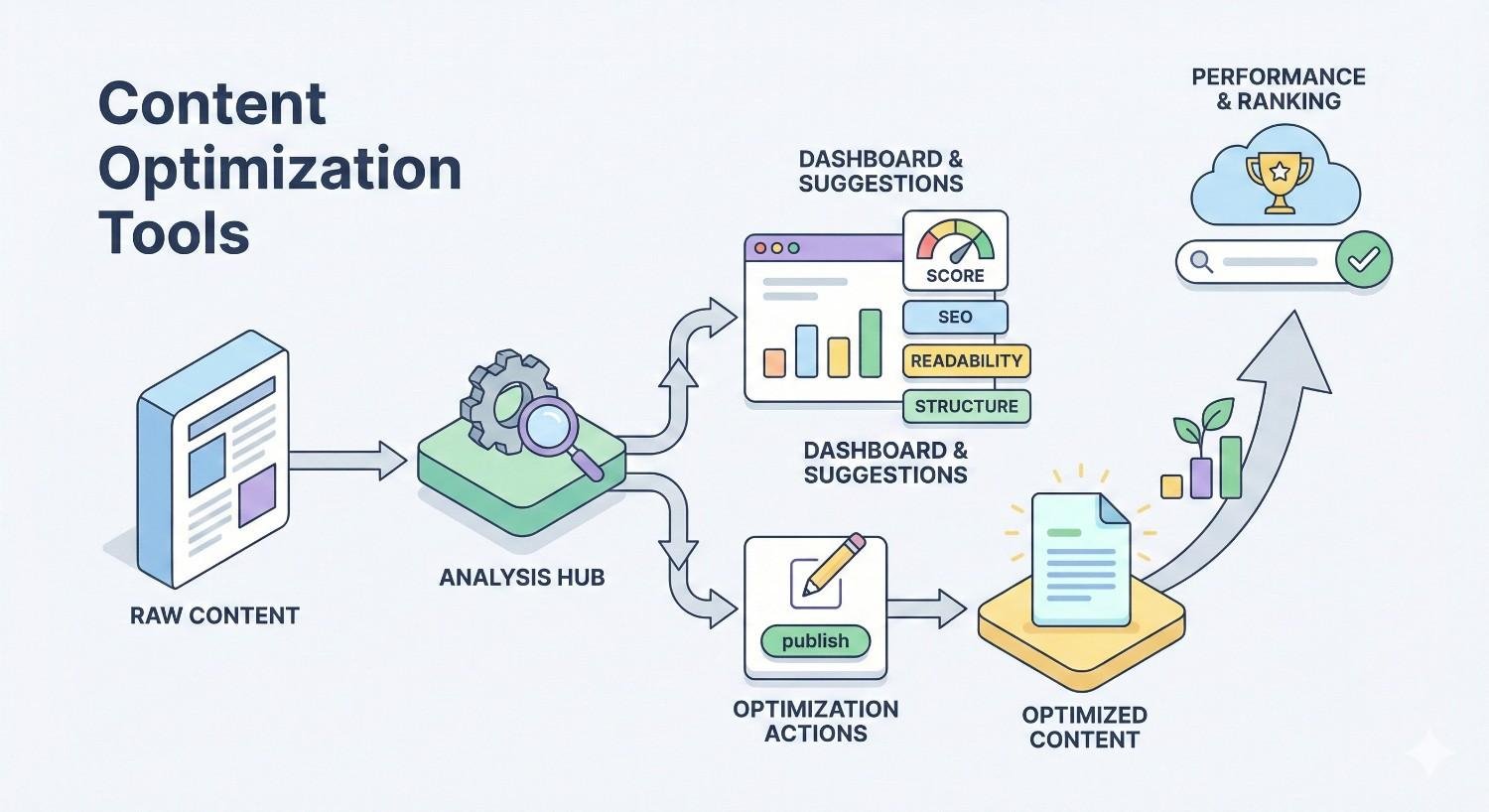
Content optimization tools are software platforms that analyze written content and provide recommendations to improve search engine visibility. They evaluate factors like keyword usage, semantic relevance, readability, and competitive positioning to help content rank higher in search results.
At their core, these tools perform three primary functions. First, they analyze existing content to identify improvement opportunities. Second, they provide real-time guidance during content creation. Third, they benchmark your content against competitors already ranking for target keywords.
The technology behind these platforms has evolved significantly. Early tools focused primarily on keyword density, a metric now considered outdated. Modern platforms use natural language processing and machine learning to understand topical relevance, search intent, and semantic relationships between concepts.
Most content optimization tools pull data from search engine results pages to understand what Google considers relevant for specific queries. They then translate this analysis into actionable recommendations, such as adding specific terms, adjusting content length, or restructuring headings.
How Content Optimization Tools Work
The mechanics of content optimization tools follow a consistent pattern across most platforms. When you enter a target keyword, the tool crawls the top-ranking pages for that query and analyzes their content characteristics.
This analysis examines multiple factors: word count, heading structure, keyword frequency, related terms used, readability scores, and internal linking patterns. The tool then creates a benchmark representing what successful content looks like for that specific query.
Your content is scored against this benchmark. A piece targeting “email marketing best practices” might receive recommendations to include terms like “subject lines,” “open rates,” “segmentation,” and “automation” because these concepts appear consistently in top-ranking content.
The scoring algorithms vary between platforms. Some use simple percentage-based systems, while others employ more sophisticated models that weight different factors based on their correlation with ranking success. Clearscope’s research indicates that content scoring above 80% on their platform correlates with higher average rankings.
Real-time feedback loops allow writers to see how changes affect their score as they write. This immediate feedback accelerates the optimization process and helps content creators internalize what makes content comprehensive for specific topics.
Types of Content Optimization Tools
The content optimization market has diversified into several distinct categories. Understanding these categories helps you identify which type aligns with your specific needs and existing workflow.
On-Page SEO Optimization Tools
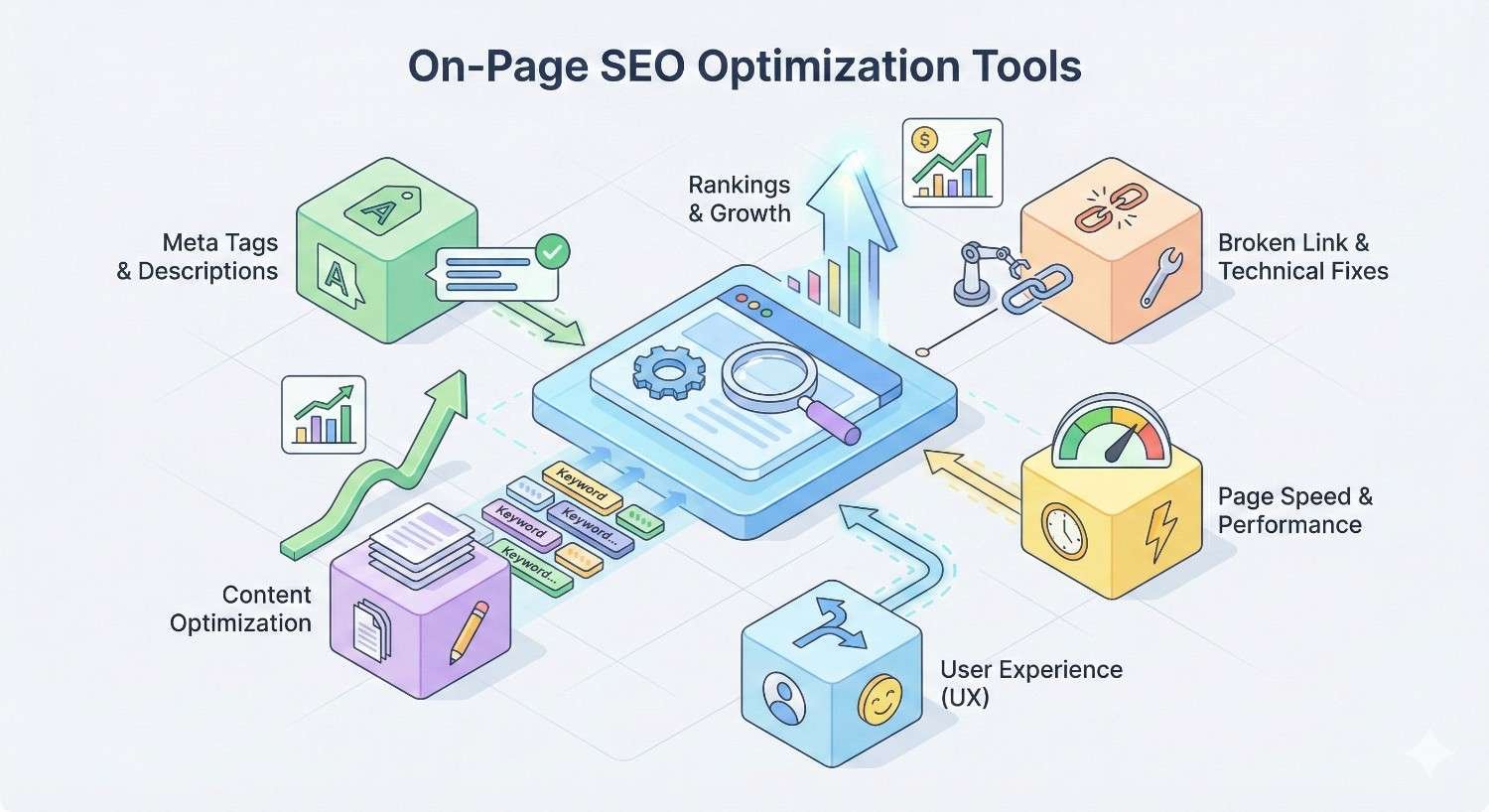
On-page SEO tools focus on technical content elements that directly influence search rankings. They analyze title tags, meta descriptions, header hierarchy, image alt text, and internal linking structures.
These tools ensure your content follows SEO best practices at the page level. They check whether your target keyword appears in critical locations, whether your URL structure is optimized, and whether your content meets technical requirements for indexing.
Platforms like Yoast SEO and Rank Math operate primarily in this category. They integrate directly with content management systems to provide real-time feedback as you build pages. Their strength lies in ensuring no technical SEO element gets overlooked during publication.
On-page tools work best as a baseline layer of optimization. They catch common mistakes but typically lack the sophisticated content analysis found in dedicated optimization platforms.
Content Quality and Readability Tools
Readability tools evaluate how easily your audience can understand and engage with your content. They measure sentence length, vocabulary complexity, paragraph structure, and overall reading level.
Grammarly and Hemingway Editor represent this category. They identify passive voice, complex sentences, and grammatical errors that reduce content clarity. While not SEO-specific, readability directly impacts user engagement metrics that search engines monitor.
Content that frustrates readers leads to high bounce rates and low time-on-page. These signals can negatively affect rankings over time. Readability tools help ensure your content communicates effectively regardless of audience sophistication level.
The best approach combines readability analysis with SEO optimization. Clear, engaging content that also covers topics comprehensively tends to outperform content that excels in only one dimension.
Semantic SEO and Topic Modeling Tools
Semantic SEO tools analyze the conceptual relationships between topics rather than focusing solely on keywords. They help you build content that demonstrates topical authority by covering related concepts comprehensively.
These platforms use natural language processing to understand how search engines interpret content meaning. They identify semantically related terms, questions users ask about topics, and subtopics that comprehensive content should address.
MarketMuse pioneered this approach with its topic modeling technology. The platform maps entire subject areas and identifies content gaps that represent ranking opportunities. This strategic view helps content teams prioritize what to create next.
Semantic tools prove particularly valuable for competitive niches where keyword-focused optimization alone cannot differentiate your content. They help you create genuinely comprehensive resources that satisfy user intent more completely than competitors.
AI-Powered Content Optimization Platforms
AI-powered platforms combine multiple optimization functions with content generation capabilities. They can suggest outlines, draft sections, and rewrite content while maintaining optimization targets.
Frase and Jasper represent this emerging category. They use large language models to accelerate content creation while keeping SEO requirements in focus. Writers can generate first drafts quickly, then refine them with human expertise.
The efficiency gains from AI assistance are substantial. HubSpot’s 2024 State of Marketing report found that marketers using AI tools save an average of 2.5 hours per piece of content. However, AI-generated content still requires human oversight to ensure accuracy and brand voice consistency.
These platforms work best when viewed as acceleration tools rather than replacement solutions. The most effective workflows combine AI efficiency with human judgment and expertise.
Technical Content Analysis Tools
Technical analysis tools examine content performance data and provide optimization recommendations based on actual user behavior. They connect content changes to measurable outcomes like traffic, engagement, and conversions.
Google Search Console provides foundational technical analysis, showing which queries drive impressions and clicks to your content. More advanced platforms like Surfer SEO and Clearscope integrate this data with their optimization recommendations.
Technical tools answer critical questions: Which pages have ranking potential but underperform? Which content attracts traffic but fails to convert? Where do users drop off, and what content changes might improve retention?
This data-driven approach ensures optimization efforts focus on changes most likely to impact business outcomes. Without technical analysis, optimization becomes guesswork rather than strategy.
Key Features to Look for in Content Optimization Tools
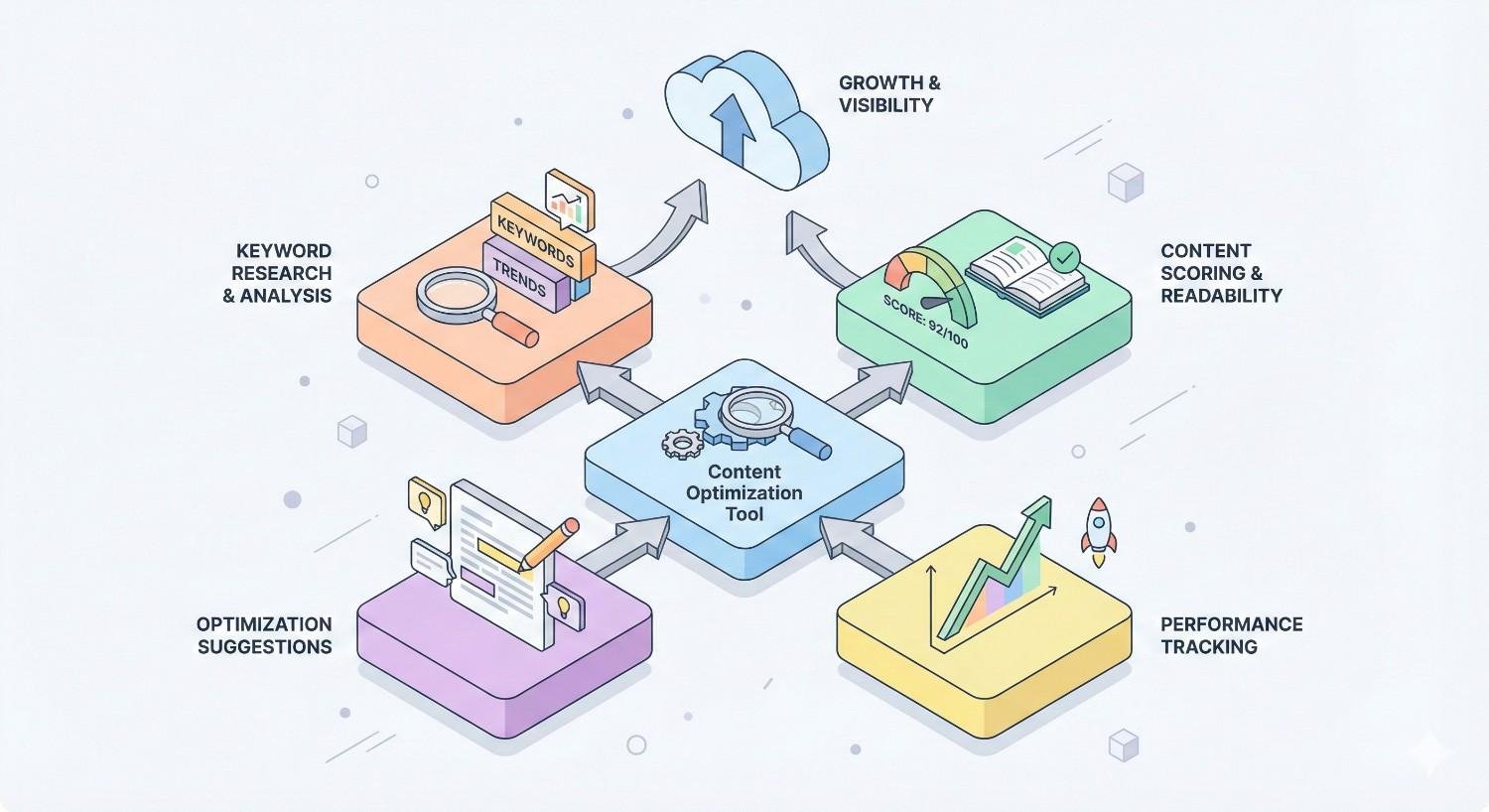
Not all content optimization tools deliver equal value. Understanding which features matter most helps you evaluate platforms effectively and avoid paying for capabilities you will not use.
Keyword Analysis and Recommendations
Strong keyword analysis goes beyond basic search volume data. Look for tools that provide keyword difficulty scores, search intent classification, and related keyword suggestions that expand your targeting opportunities.
The best platforms show you which keywords competitors rank for that you are missing. This gap analysis reveals quick wins where adding specific terms to existing content could capture additional traffic.
Keyword recommendations should include semantic variations and related concepts, not just exact-match terms. Search engines understand synonyms and related ideas, so your content should reflect this natural language variation.
Pay attention to how tools handle keyword cannibalization warnings. Multiple pages targeting the same keyword compete against each other, diluting your ranking potential. Good tools flag these conflicts before they become problems.
Content Scoring and Grading Systems
Content scores provide a quick assessment of optimization quality, but the methodology behind the score matters more than the number itself. Understand what factors each platform weights and whether those factors align with your goals.
Some tools score primarily on keyword usage, while others emphasize comprehensiveness, readability, or competitive positioning. A high score on one platform might represent mediocre performance on another using different criteria.
Look for scoring systems that explain their recommendations. A tool that simply says “add more keywords” provides less value than one explaining why specific terms matter for your target query and where they should appear naturally.
Dynamic scoring that updates as you write helps maintain momentum during content creation. Waiting until completion to see your score creates inefficient revision cycles.
Competitor Content Analysis
Competitor analysis reveals what currently works for your target keywords. The best tools show you exactly what top-ranking pages include: their word counts, heading structures, topics covered, and terms used.
This analysis should go beyond surface metrics. Understanding why competitors rank helps you create content that genuinely improves upon existing results rather than simply matching them.
Look for tools that identify content gaps in competitor coverage. These gaps represent opportunities to provide value that no current result delivers, giving search engines a reason to rank your content higher.
Historical competitor tracking adds another dimension. Seeing how competitor content has changed over time reveals optimization strategies you can learn from or counter.
Readability and User Experience Metrics
User experience metrics predict how visitors will interact with your content. High readability scores correlate with longer time-on-page and lower bounce rates, both signals that influence rankings.
Look for tools that provide specific readability recommendations, not just scores. Knowing your content reads at a college level matters less than knowing which sentences to simplify and how.
Mobile readability deserves special attention. Google’s mobile-first indexing means your content must work well on smaller screens. Tools that preview mobile formatting help catch issues before publication.
Engagement predictions based on content structure can guide decisions about paragraph length, subheading frequency, and visual element placement.
Integration Capabilities
Integration with your existing tools determines how smoothly content optimization fits into your workflow. Look for connections with your content management system, project management tools, and analytics platforms.
WordPress integrations allow optimization directly within your editing environment. Google Docs plugins enable collaboration with writers who prefer that platform. API access supports custom integrations for enterprise workflows.
Consider how the tool handles team collaboration. Can multiple users work on the same content? Are there approval workflows? Can you assign optimization tasks and track completion?
Integration with Google Search Console and Google Analytics connects optimization efforts to actual performance data. This connection enables data-driven decisions about which content to prioritize for optimization.
Reporting and Performance Tracking
Reporting capabilities determine whether you can demonstrate ROI from your optimization efforts. Look for tools that track content performance over time and connect changes to ranking improvements.
Customizable reports help communicate results to stakeholders who may not understand SEO metrics. The ability to show traffic growth, ranking improvements, and conversion impacts in clear visualizations supports continued investment in optimization.
Automated reporting saves time on routine updates. Weekly or monthly performance summaries delivered automatically keep teams informed without manual effort.
Historical data retention matters for long-term analysis. Understanding how content performance has evolved over months or years reveals patterns that inform future strategy.
Best Content Optimization Tools for 2026
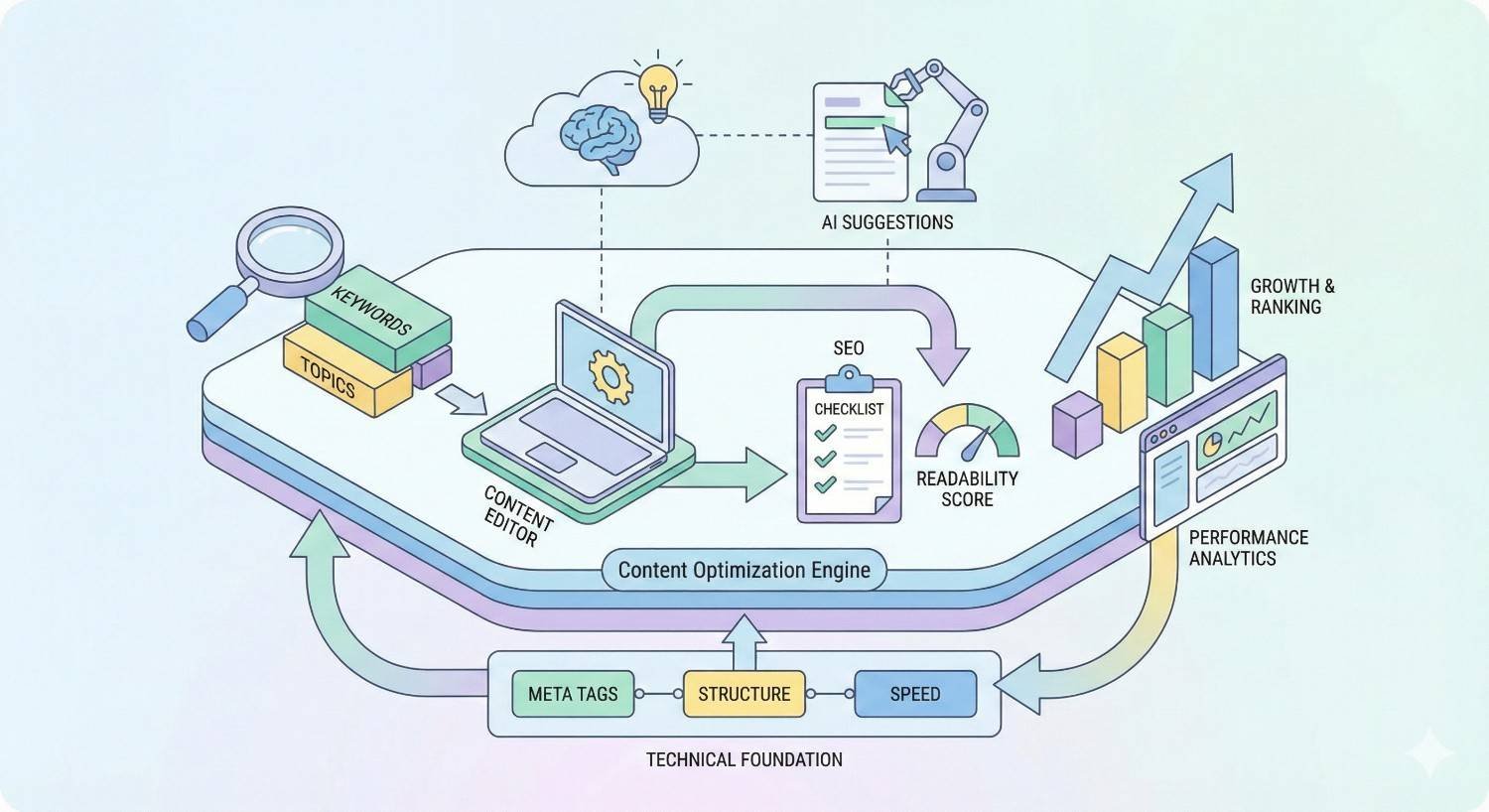
The content optimization market includes dozens of platforms with varying capabilities and price points. These seven tools represent the most widely adopted solutions across different use cases and budget levels.
Clearscope
Clearscope focuses on content quality and comprehensiveness rather than technical SEO elements. Its clean interface and straightforward scoring system make it accessible to writers without SEO backgrounds.
The platform analyzes top-ranking content for your target keyword and generates a list of terms to include. As you write, your content grade updates in real-time, showing progress toward comprehensive coverage.
Clearscope integrates with Google Docs and WordPress, fitting naturally into common content workflows. Its reports provide clear guidance that writers can act on without extensive SEO knowledge.
Pricing starts at $170 per month for the Essentials plan, positioning Clearscope as a premium option best suited for teams producing high-value content where ranking improvements justify the investment.
Surfer SEO
Surfer SEO combines content optimization with technical SEO analysis in a comprehensive platform. Its Content Editor provides real-time optimization guidance while its Audit feature analyzes existing pages for improvement opportunities.
The platform’s SERP Analyzer shows detailed breakdowns of what top-ranking pages include, from word counts to specific terms to structural elements. This competitive intelligence informs both new content creation and existing content optimization.
Surfer’s Grow Flow feature provides weekly SEO tasks based on your site’s data, helping teams maintain consistent optimization momentum. The platform also includes keyword research and content planning tools.
Plans start at $89 per month, making Surfer more accessible than some competitors while still providing enterprise-grade capabilities.
MarketMuse
MarketMuse takes a strategic approach to content optimization, focusing on topical authority rather than individual page optimization. Its AI analyzes your entire content inventory to identify gaps and opportunities.
The platform’s content briefs go beyond keyword recommendations to provide comprehensive outlines, questions to answer, and topics to cover. This strategic guidance helps content teams prioritize efforts for maximum impact.
MarketMuse excels at identifying content decay, pages that once performed well but have lost rankings over time. Its recommendations help restore these pages to their former performance levels.
Enterprise pricing reflects the platform’s strategic focus. MarketMuse works best for organizations with substantial content operations where strategic planning justifies higher investment.
Frase
Frase combines content optimization with AI writing assistance, accelerating the content creation process. Its research tools compile information from top-ranking pages into organized briefs that writers can reference.
The platform’s AI can generate content outlines, draft sections, and suggest improvements to existing text. This assistance helps writers overcome blank-page paralysis and maintain productivity.
Frase’s answer engine feature identifies questions users ask about topics, ensuring your content addresses actual user queries. This question-focused approach aligns well with featured snippet optimization.
Pricing starts at $15 per month for basic features, with more advanced capabilities available at higher tiers. This accessibility makes Frase attractive for smaller teams and individual content creators.
SEMrush Writing Assistant
SEMrush Writing Assistant integrates content optimization into the broader SEMrush SEO platform. Users already invested in SEMrush for keyword research and competitive analysis gain optimization capabilities without additional subscriptions.
The tool provides real-time recommendations for readability, SEO, originality, and tone of voice. Its integration with Google Docs and WordPress enables optimization within familiar writing environments.
SEMrush’s strength lies in connecting content optimization to the platform’s extensive keyword and competitive data. Recommendations draw from the same database powering SEMrush’s other SEO tools.
Writing Assistant is included in SEMrush subscriptions starting at $139.95 per month. For teams already using SEMrush, this bundled approach provides strong value.
Yoast SEO
Yoast SEO remains the most widely installed WordPress SEO plugin, providing on-page optimization guidance to millions of websites. Its traffic-light system offers intuitive feedback on content optimization status.
The plugin checks technical SEO elements like title tags, meta descriptions, and heading structure. It also provides basic content analysis, including keyword usage and readability scoring.
Yoast’s strength lies in accessibility. Its free version provides substantial functionality, while the premium version adds advanced features like internal linking suggestions and redirect management.
Premium pricing at $99 per year makes Yoast one of the most affordable optimization solutions. However, its capabilities focus on on-page fundamentals rather than the sophisticated content analysis found in dedicated optimization platforms.
Grammarly for Content Quality
Grammarly focuses on writing quality rather than SEO specifically, but its impact on content performance should not be underestimated. Clear, error-free writing improves user engagement metrics that influence rankings.
The platform catches grammatical errors, suggests clarity improvements, and helps maintain consistent tone across content. Its browser extension and integrations make it accessible wherever you write.
Grammarly Business adds team features including style guides, brand tone settings, and analytics on writing patterns. These capabilities help maintain content quality standards across multiple writers.
Premium plans start at $12 per month, making Grammarly an affordable addition to any content optimization stack. Most teams use it alongside dedicated SEO optimization tools rather than as a replacement.
How to Choose the Right Content Optimization Tool
Selecting the right tool requires honest assessment of your needs, resources, and goals. The best platform for an enterprise content team differs significantly from the best choice for a solo content creator.
Assessing Your Business Needs and Goals
Start by defining what success looks like for your content optimization efforts. Are you trying to improve rankings for existing content, create new content more efficiently, or build topical authority in specific areas?
Different tools excel at different objectives. Clearscope and Surfer optimize individual pieces effectively. MarketMuse provides strategic guidance for content planning. Frase accelerates content creation with AI assistance.
Consider your current content challenges. If writers struggle to create comprehensive content, tools with detailed briefs and term recommendations help most. If you have strong content that underperforms, audit-focused tools identify specific improvements.
Your industry and competition level also matter. Highly competitive niches require more sophisticated optimization than less contested spaces. The investment in premium tools pays off faster when ranking improvements translate to significant traffic gains.
Budget Considerations and ROI
Content optimization tools range from free to several hundred dollars monthly. The right investment level depends on your content volume and the value of ranking improvements.
Calculate the potential ROI before committing to premium tools. If ranking improvements for key pages could generate thousands in additional revenue, investing hundreds monthly makes sense. If your content drives minimal direct revenue, free or low-cost options may suffice.
Consider total cost of ownership beyond subscription fees. Tools requiring extensive training or workflow changes carry hidden costs. Platforms that integrate smoothly with existing processes deliver value faster.
Most premium tools offer free trials. Use these trials with actual content projects to evaluate whether the tool’s recommendations improve your work meaningfully.
Team Size and Workflow Requirements
Solo content creators have different needs than enterprise content teams. Individual users prioritize ease of use and quick results. Teams need collaboration features, approval workflows, and consistent processes.
Evaluate how the tool handles multiple users. Can team members share projects? Are there role-based permissions? Can managers review optimization status across all content?
Consider your content production workflow. Tools that integrate with your existing process create less friction than those requiring workflow changes. A tool that works within Google Docs serves teams using that platform better than one requiring a separate interface.
Training requirements affect adoption speed. Intuitive tools get used consistently. Complex platforms may provide powerful features that teams never learn to leverage.
Scalability and Growth Potential
Choose tools that can grow with your content operation. A platform perfect for ten articles monthly may become limiting at fifty articles monthly.
Examine pricing tiers and what triggers upgrades. Some tools charge per user, others per content piece, others by feature access. Understand which model aligns with your expected growth pattern.
Consider the platform’s development trajectory. Tools actively adding features and improving capabilities provide better long-term value than stagnant products. Check release notes and roadmaps to assess development momentum.
API access becomes important at scale. The ability to integrate optimization data with other systems enables automation and custom workflows that manual processes cannot match.

How to Use Content Optimization Tools Effectively
Owning a content optimization tool does not automatically improve your content. Effective use requires intentional processes and realistic expectations about what tools can and cannot accomplish.
Setting Up Your Content Optimization Workflow
Establish clear processes for when and how optimization tools enter your content workflow. Some teams optimize during writing, others after initial drafts, others during editing. Each approach has tradeoffs.
Optimizing during writing helps writers internalize what comprehensive content looks like. However, it can disrupt creative flow and lead to mechanical writing that prioritizes scores over reader experience.
Post-draft optimization allows writers to focus on communication first, then refine for search visibility. This approach often produces more natural content but requires revision cycles that extend production timelines.
Document your workflow so all team members follow consistent processes. Include guidelines for target scores, required optimizations, and approval criteria. Consistency enables meaningful performance comparisons across content.
Optimizing Existing Content for Better Rankings
Existing content often represents the fastest path to ranking improvements. Pages already indexed and earning some traffic can climb rankings faster than new content starting from zero.
Use your optimization tool’s audit features to identify high-potential pages. Look for content ranking on page two or at the bottom of page one. These pages need relatively small improvements to reach positions that drive significant traffic.
Prioritize pages with commercial value. Optimizing a page that drives conversions delivers more business impact than optimizing informational content with lower conversion potential.
Track changes and results systematically. Document what optimizations you made and when, then monitor ranking and traffic changes over subsequent weeks. This data reveals which types of optimizations deliver the strongest results for your content.
Creating New SEO-Optimized Content
New content creation benefits from optimization guidance from the start. Begin with keyword research to identify topics with traffic potential and reasonable competition levels.
Generate content briefs using your optimization tool before writing begins. These briefs provide writers with clear targets: topics to cover, terms to include, questions to answer, and competitive benchmarks to exceed.
Write first for readers, then optimize for search. Content that prioritizes optimization scores over reader value may rank initially but often fails to retain rankings as engagement metrics reveal poor user experience.
Review optimization recommendations critically. Tools provide data-driven suggestions, but human judgment determines which recommendations improve content and which would make it worse. Not every suggested term belongs in every piece.
Measuring and Tracking Optimization Results
Optimization without measurement is guesswork. Establish baseline metrics before making changes so you can attribute improvements to specific optimizations.
Track rankings for target keywords using rank tracking tools. Note that rankings fluctuate daily, so focus on trends over weeks rather than day-to-day changes.
Monitor organic traffic to optimized pages in Google Analytics. Segment by landing page to see which content improvements drive the most traffic growth.
Connect traffic to business outcomes. Increased traffic matters only if it leads to conversions, leads, or other valuable actions. Track these downstream metrics to understand true optimization ROI.
How long does content optimization take to show results?
Content optimization typically shows measurable ranking improvements within 4 to 8 weeks, though this timeline varies based on several factors. Pages with existing authority and backlinks often respond faster than new content. Highly competitive keywords take longer to move than less contested terms.
Google must recrawl and reindex your content before changes affect rankings. You can request indexing through Google Search Console to accelerate this process. After indexing, algorithms need time to reevaluate your content against competitors.
Patience matters, but so does tracking. If optimized content shows no improvement after three months, reassess your approach. The optimization may have missed the mark, or other factors like technical issues or insufficient backlinks may be limiting performance.
Content Optimization Tools vs. Manual SEO: What’s the Difference?
Understanding the distinction between tool-assisted and manual optimization helps you allocate resources effectively. Neither approach is universally superior; the best strategies combine both.
Time and Efficiency Comparison
Manual content optimization requires analyzing competitor content, identifying relevant terms, and making judgment calls about what to include. This process can take hours per piece of content.
Optimization tools compress this analysis into minutes. They crawl competitors, extract patterns, and present recommendations in organized formats. Writers can focus on creating content rather than researching what content should include.
Content Marketing Institute research indicates that teams using optimization tools produce content 40% faster on average than teams relying on manual processes. This efficiency gain compounds across content operations producing dozens or hundreds of pieces annually.
However, tool efficiency comes with tradeoffs. Automated analysis may miss nuances that experienced SEO professionals catch. The time saved on analysis should be reinvested in strategic thinking and quality refinement.
Accuracy and Data-Driven Insights
Optimization tools analyze data at scale that humans cannot match. They process hundreds of ranking pages, identify statistical patterns, and translate findings into actionable recommendations.
This data-driven approach removes guesswork from optimization decisions. Instead of assuming what search engines want, you see what actually correlates with ranking success for specific queries.
Manual analysis brings contextual understanding that tools lack. An experienced SEO professional recognizes when data patterns reflect correlation rather than causation, when competitor content succeeds despite flaws, or when search intent is shifting in ways data has not yet captured.
The most accurate optimization combines tool data with human interpretation. Tools provide the what; humans provide the why and the judgment about how to act on insights.
When to Combine Tools with Expert Strategy
Tools excel at tactical optimization: ensuring content includes relevant terms, meets length benchmarks, and covers expected subtopics. Strategy requires human judgment about which content to create, how to differentiate from competitors, and how content fits broader business goals.
Use tools for execution efficiency. Let them handle the mechanical aspects of optimization that do not require strategic thinking. This frees expert attention for decisions that genuinely require expertise.
Combine tool recommendations with competitive analysis that goes beyond what tools measure. Read competitor content critically. Identify weaknesses in user experience, accuracy, or depth that your content can address.
Expert strategy also determines when to ignore tool recommendations. Sometimes the path to ranking success requires creating something genuinely different rather than matching what already exists.
Common Mistakes When Using Content Optimization Tools
Content optimization tools improve results when used correctly but can harm content quality when misused. Recognizing common mistakes helps you avoid them.
Over-Optimizing for Tools Instead of Users
The most common mistake is prioritizing tool scores over reader experience. Content stuffed with recommended terms but difficult to read will not retain rankings even if it initially performs well.
Search engines measure user engagement. Content that earns clicks but drives immediate bounces signals poor quality. Over time, these signals override any optimization advantages.
Write naturally first, then check optimization scores. If achieving a high score requires awkward phrasing or forced term inclusion, prioritize readability. A slightly lower optimization score with better user experience typically outperforms the reverse.
Remember that tools optimize for patterns in current rankings, not for what would rank if it existed. Sometimes the best content breaks patterns rather than matching them.
Ignoring Search Intent
Optimization tools analyze what ranking content includes but may not capture why users search for specific queries. Matching competitor content characteristics without satisfying user intent produces content that underperforms expectations.
Before optimizing, understand what searchers actually want. Are they looking for definitions, comparisons, tutorials, or purchase options? Your content must deliver what users seek, not just what competitors provide.
Search intent can differ from what ranking content suggests. If top results are informational but searchers increasingly want transactional content, creating better informational content will not capture that shifting intent.
Use tools as one input among several. Combine their recommendations with your understanding of your audience, your analysis of search results, and your judgment about what would genuinely help users.
Relying Solely on Content Scores
High optimization scores do not guarantee rankings. Scores measure how well content matches patterns in current results, not how search engines will evaluate your specific content.
Many factors influence rankings beyond content optimization: domain authority, backlink profiles, technical SEO, user engagement history, and competitive dynamics. A perfectly optimized page on a weak domain may still struggle against less optimized pages on authoritative sites.
Use scores as directional guidance, not absolute targets. A score of 85 versus 90 rarely determines ranking outcomes. Focus on creating genuinely comprehensive, useful content rather than chasing marginal score improvements.
Track actual ranking and traffic results, not just optimization scores. If high-scoring content underperforms, investigate other factors limiting success.
Neglecting Technical SEO Foundations
Content optimization cannot overcome technical SEO problems. Pages that load slowly, render poorly on mobile, or have crawling issues will underperform regardless of content quality.
Ensure technical foundations are solid before investing heavily in content optimization. Check Core Web Vitals, mobile usability, indexing status, and site architecture. Fix technical issues first.
Content optimization tools typically do not assess technical factors comprehensively. Use dedicated technical SEO tools alongside content optimization platforms for complete coverage.
Consider technical SEO and content optimization as complementary investments. Neither alone delivers optimal results. Both together create the conditions for sustainable ranking success.
The Role of Content Optimization in a Complete SEO Strategy
Content optimization is one component of comprehensive SEO strategy. Understanding how it connects to other elements helps you allocate resources effectively and set realistic expectations.
Connecting Content Optimization to Technical SEO
Technical SEO ensures search engines can find, crawl, and index your content. Without this foundation, even perfectly optimized content cannot rank.
Site architecture affects how search engines understand content relationships. Logical URL structures, internal linking, and clear navigation help search engines recognize your topical authority and distribute ranking signals across related pages.
Page speed and Core Web Vitals influence both rankings and user experience. Google’s page experience update made these technical factors explicit ranking signals. Optimized content on slow pages loses to less optimized content on fast pages.
Coordinate technical and content optimization efforts. Technical improvements often unlock ranking potential that content optimization alone cannot achieve.
Content Optimization and Link Building Synergy
Backlinks remain among the strongest ranking factors. Content optimization improves your content’s ability to earn links naturally and perform well once links are acquired.
Optimized content that comprehensively covers topics becomes a link-worthy resource. Other sites link to content that helps their audiences, and comprehensive content serves this purpose better than thin content.
Link building amplifies content optimization investments. A well-optimized page with strong backlinks outranks both poorly optimized pages with links and well-optimized pages without links.
Prioritize link building for your most strategically important optimized content. Concentrate link acquisition efforts on pages targeting high-value keywords where ranking improvements would significantly impact business outcomes.
Long-Term Organic Growth Through Optimized Content
Sustainable organic growth requires consistent content optimization over time. One-time optimization efforts produce temporary gains; ongoing optimization maintains and extends those gains.
Content decay affects all pages eventually. Competitors publish new content, search intent evolves, and information becomes outdated. Regular content audits and updates maintain ranking positions.
Build content optimization into your ongoing operations rather than treating it as a project. Allocate resources for both new content creation and existing content maintenance.
Compound growth comes from expanding topical coverage systematically. Each well-optimized piece strengthens your site’s authority on related topics, making subsequent content easier to rank.
Frequently Asked Questions About Content Optimization Tools
Are content optimization tools worth the investment?
Content optimization tools deliver positive ROI for most businesses producing regular content. The time savings alone often justify costs, and ranking improvements compound value over time.
Calculate potential returns based on your traffic value. If ranking improvements for key pages could generate hundreds or thousands in monthly revenue, tools paying for themselves within months represent strong investments.
Start with free trials to validate value before committing. Test tools with actual content projects to see whether recommendations improve your work meaningfully.
Can content optimization tools replace SEO experts?
Tools cannot replace strategic SEO expertise. They excel at tactical optimization but lack the judgment, creativity, and contextual understanding that experienced professionals provide.
Think of tools as force multipliers for SEO expertise rather than replacements. They help experts work more efficiently and make data-informed decisions, but they cannot develop strategy, interpret complex situations, or adapt to novel challenges.
Teams combining tools with expert guidance consistently outperform teams relying on either alone.
How often should I optimize my content?
Review and potentially update important content every 6 to 12 months. High-value pages in competitive niches may need more frequent attention; stable informational content may need less.
Monitor rankings and traffic for signs of decay. Pages losing positions or traffic are candidates for optimization updates. Pages maintaining performance may not need changes.
Major algorithm updates or significant competitive changes may trigger optimization reviews outside regular schedules.
What’s the difference between free and paid tools?
Free tools typically offer limited functionality: basic keyword analysis, simple readability scoring, or restricted usage volumes. They work for occasional optimization needs or learning purposes.
Paid tools provide comprehensive features: detailed competitor analysis, real-time optimization guidance, team collaboration, and integration capabilities. They support professional content operations at scale.
The gap between free and paid options has narrowed as competition increases. However, premium tools still offer significant advantages for teams producing substantial content volumes.
Conclusion: Building Sustainable Organic Growth with Content Optimization Tools
Content optimization tools have transformed from nice-to-have conveniences into essential components of competitive SEO strategy. They provide the data-driven insights and efficiency gains that modern content operations require to succeed in increasingly competitive search landscapes.
The right tool depends on your specific situation: your content volume, team size, budget, and strategic goals. Whether you choose Clearscope for content quality, Surfer for comprehensive analysis, or Frase for AI-assisted creation, the key is consistent, thoughtful application of tool recommendations combined with human judgment.
At White Label SEO Service, we help businesses build sustainable organic growth through strategic content optimization integrated with technical SEO and authority building. Our team combines the efficiency of leading optimization tools with the expertise to know when to follow recommendations and when to chart a different course. Contact us to discuss how optimized content can drive measurable results for your business.
Frequently Asked Questions
What is the best content optimization tool for beginners?
Yoast SEO offers the most accessible entry point for beginners. Its traffic-light scoring system provides intuitive feedback without overwhelming new users with complex metrics. The free version covers essential optimization needs while the learning curve remains manageable.
How do content optimization tools improve search rankings?
These tools analyze top-ranking content to identify patterns correlating with search success. They recommend specific terms, topics, and structural elements that comprehensive content should include. Following these recommendations helps your content match what search engines recognize as relevant and authoritative.
Can I use multiple content optimization tools together?
Many teams use complementary tools for different purposes. A common combination includes Grammarly for writing quality, Surfer or Clearscope for SEO optimization, and Yoast for on-page technical elements. Ensure tools do not provide conflicting recommendations that create confusion.
Do content optimization tools work for all types of content?
These tools work best for informational and commercial content targeting search traffic. They provide less value for brand content, social media posts, or content not intended to rank in search results. Match tool usage to content goals.
How accurate are content optimization tool recommendations?
Recommendations reflect patterns in current search results, which generally correlate with ranking success. However, correlation is not causation, and tools cannot account for all ranking factors. Treat recommendations as informed suggestions rather than absolute requirements.
What results can I realistically expect from content optimization?
Well-executed optimization typically improves rankings by 5 to 15 positions for target keywords, though results vary based on competition, domain authority, and other factors. Expect measurable improvements within two to three months for most content.
Should I optimize old content or focus on creating new optimized content?
Both approaches have merit. Optimizing existing content with established authority often produces faster results. Creating new optimized content expands your topical coverage. Most successful strategies balance both, prioritizing based on opportunity analysis.