
Enterprise technical SEO pricing typically ranges from $5,000 to $50,000+ per month, depending on website complexity, service scope, and provider expertise. This investment covers specialized optimization for large-scale websites with millions of pages, complex architectures, and multi-market requirements.
Understanding what drives these costs helps you budget accurately and evaluate proposals effectively. The right investment level depends on your current technical debt, growth goals, and competitive landscape.
This guide breaks down pricing models, cost factors, service inclusions, ROI expectations, and evaluation criteria to help you make informed decisions about enterprise technical SEO investment.
What Is Enterprise Technical SEO?
Enterprise technical SEO addresses the unique optimization challenges facing large organizations with complex digital properties. Unlike standard SEO services designed for small to mid-sized websites, enterprise technical SEO handles massive scale, intricate architectures, and sophisticated technology stacks.
The discipline focuses on ensuring search engines can efficiently crawl, render, index, and rank content across websites with hundreds of thousands or millions of pages. This requires specialized expertise in areas like JavaScript rendering, international SEO, crawl budget optimization, and enterprise CMS platforms.
Organizations investing in enterprise technical SEO typically operate websites generating significant organic traffic and revenue. Technical issues at this scale can cost millions in lost visibility, making specialized expertise essential rather than optional.
Core Components of Enterprise Technical SEO
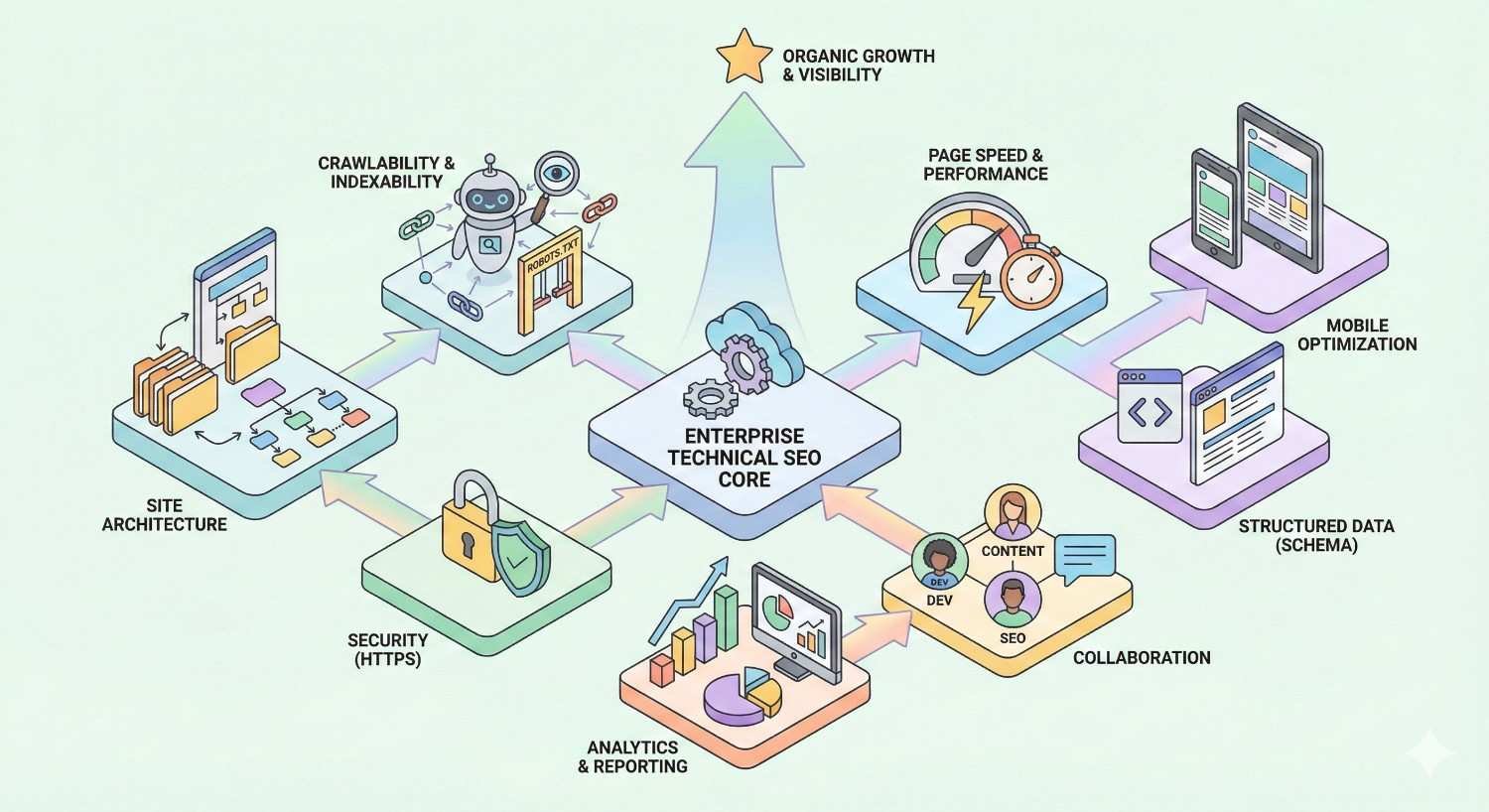
Enterprise technical SEO encompasses several interconnected disciplines working together to maximize organic visibility.
Crawl optimization ensures search engine bots efficiently discover and access important content while avoiding wasted resources on low-value pages. For sites with millions of URLs, proper crawl management directly impacts how quickly new content gets indexed and how thoroughly existing content gets evaluated.
Rendering and indexing addresses how search engines process JavaScript-heavy pages, single-page applications, and dynamic content. Many enterprise sites rely on modern frameworks that require specific technical approaches to ensure content visibility.
Site architecture involves organizing content hierarchies, internal linking structures, and URL patterns to distribute authority effectively and help users and search engines navigate complex information architectures.
Performance optimization focuses on Core Web Vitals, page speed, and user experience signals that influence rankings and conversion rates. At enterprise scale, performance improvements often require coordination across development, infrastructure, and content teams.
How Enterprise SEO Differs from Standard SEO Services
Standard SEO services typically address websites with thousands of pages, straightforward CMS platforms, and single-market focus. Enterprise SEO operates in a fundamentally different environment.
Scale complexity multiplies every challenge. A redirect issue affecting 0.1% of pages on a 100-page site impacts one page. The same issue on a 10-million-page site affects 10,000 pages. Error detection, prioritization, and remediation require different tools and processes.
Stakeholder coordination becomes essential. Enterprise technical SEO recommendations often require buy-in from development teams, IT security, legal compliance, and executive leadership. Providers must navigate organizational complexity alongside technical challenges.
Technology constraints shape what’s possible. Enterprise organizations often run custom platforms, legacy systems, or heavily customized enterprise CMS installations. Solutions must work within existing infrastructure rather than assuming flexibility.
Risk management carries higher stakes. Technical changes on high-traffic sites can impact millions of dollars in daily revenue. Enterprise SEO requires rigorous testing, staged rollouts, and rollback capabilities.
Technical SEO Scope for Large-Scale Websites
Large-scale websites present technical challenges that don’t exist at smaller scales.
Crawl budget management becomes critical when sites exceed what search engines can fully crawl within their allocated resources. Prioritizing important content, eliminating crawl traps, and optimizing crawl efficiency directly impacts indexation coverage.
Faceted navigation on e-commerce and marketplace sites can generate millions of URL variations from filter combinations. Managing these without creating duplicate content or wasting crawl budget requires sophisticated technical approaches.
Multi-site architectures involving multiple domains, subdomains, or country-specific versions need coordinated optimization strategies. Consolidation decisions, canonical strategies, and hreflang implementations affect how search engines understand relationships between properties.
Dynamic content from personalization, A/B testing, and user-generated content creates indexation challenges. Ensuring search engines see representative content while users receive personalized experiences requires careful technical implementation.
Enterprise Technical SEO Pricing Models
Enterprise technical SEO services are delivered through several pricing structures, each suited to different organizational needs and engagement types.
Understanding these models helps you evaluate proposals accurately and choose arrangements that align with your operational requirements and budget cycles.
Monthly Retainer Pricing Structure
Monthly retainers represent the most common pricing model for ongoing enterprise technical SEO services. Organizations pay a fixed monthly fee for a defined scope of services, typically including regular auditing, monitoring, strategic guidance, and implementation support.
Retainer arrangements provide predictable budgeting and ensure continuous attention to technical health. Providers allocate dedicated resources to your account, building institutional knowledge about your specific technical environment.
Retainer scopes vary significantly. Basic retainers might cover monitoring and advisory services, while comprehensive retainers include hands-on implementation, developer collaboration, and strategic planning. Pricing reflects the depth of involvement and seniority of assigned resources.
Most enterprise retainers operate on 6-12 month initial terms with renewal options. Longer commitments sometimes secure better rates, though flexibility has value when organizational needs evolve.
Project-Based Technical SEO Pricing
Project-based pricing applies to defined initiatives with clear deliverables and timelines. Common project engagements include comprehensive technical audits, site migration support, platform transitions, and specific optimization initiatives.
This model works well for organizations with capable internal teams needing specialized expertise for specific challenges. You pay for outcomes rather than ongoing access, which can be cost-effective for discrete needs.
Project pricing typically includes discovery, analysis, recommendations, and varying levels of implementation support. Scope definition is critical since ambiguous boundaries lead to change orders and budget overruns.
Projects often serve as entry points for agency relationships. Organizations commission audits to evaluate provider expertise before committing to retainer arrangements.
Hourly Consulting Rates for Enterprise SEO
Hourly consulting provides maximum flexibility for organizations needing expert guidance without ongoing commitments. Senior enterprise SEO consultants typically charge $200 to $500+ per hour, reflecting specialized expertise and experience.
This model suits organizations with strong internal teams needing occasional strategic input, second opinions on major decisions, or specialized expertise for specific technical challenges.
Hourly arrangements work less well for ongoing optimization needs. The transactional nature limits relationship depth, and costs can exceed retainer equivalents for substantial ongoing work.
Some providers offer hourly consulting alongside retainer services, allowing clients to access senior strategists beyond their standard retainer allocation.
Performance-Based and Hybrid Pricing Models
Performance-based pricing ties compensation to achieved results, typically measured through organic traffic growth, ranking improvements, or revenue attribution. Pure performance models are rare in enterprise technical SEO due to the difficulty of isolating technical SEO’s contribution from other factors.
Hybrid models combine base retainers with performance bonuses. Organizations pay a reduced base fee with additional compensation triggered by hitting defined milestones. This aligns provider incentives with client outcomes while ensuring providers can sustain operations regardless of external factors affecting results.
Performance components require careful metric definition. Traffic increases from brand awareness campaigns, seasonal patterns, or algorithm updates can trigger bonuses unrelated to technical SEO work. Sophisticated attribution models help but don’t eliminate measurement challenges.
Average Cost of Enterprise Technical SEO Services
Enterprise technical SEO pricing varies substantially based on provider positioning, service scope, and client requirements. Understanding typical ranges helps you evaluate whether proposals align with market rates.
These figures represent 2024 market conditions and reflect pricing from established agencies and consultancies serving enterprise clients.
Typical Monthly Retainer Ranges ($5,000–$50,000+)
Enterprise technical SEO retainers span a wide range reflecting different service levels and provider types.
$5,000-$10,000 monthly typically covers monitoring, regular auditing, and advisory services with limited implementation support. Suitable for organizations with capable internal teams needing strategic guidance and quality assurance.
$10,000-$25,000 monthly represents mid-market enterprise engagements including comprehensive auditing, strategic planning, implementation guidance, and regular collaboration with development teams. Most enterprise organizations fall within this range.
$25,000-$50,000+ monthly covers premium engagements with dedicated senior resources, extensive implementation support, and strategic partnership-level involvement. Common for large e-commerce platforms, major publishers, and organizations with complex multi-site architectures.
Pricing above $50,000 monthly typically involves integrated services beyond pure technical SEO, including content strategy, link building, and broader digital marketing coordination.
One-Time Technical Audit Costs
Comprehensive enterprise technical audits typically range from $10,000 to $75,000+ depending on site complexity and audit depth.
Basic audits ($10,000-$25,000) cover core technical elements including crawlability, indexation, site architecture, and performance. Suitable for initial assessments or periodic health checks.
Comprehensive audits ($25,000-$50,000) include deep analysis of JavaScript rendering, international SEO, log file analysis, and competitive technical benchmarking. Deliverables include prioritized recommendations with implementation guidance.
Enterprise-scale audits ($50,000-$75,000+) address massive sites with complex architectures, multiple platforms, and sophisticated technical requirements. Often include stakeholder workshops, executive presentations, and detailed implementation roadmaps.
Audit pricing reflects the expertise required and time invested. Rushing complex audits produces superficial findings that miss critical issues.
Ongoing Technical Optimization Investment
Beyond retainer fees, enterprise technical SEO requires investment in tools, implementation resources, and organizational capacity.
Enterprise SEO tools like Botify, Lumar (formerly Deepcrawl), or Conductor typically cost $20,000-$100,000+ annually depending on crawl volume and feature requirements. Some agencies include tool access in retainer pricing while others bill separately.
Implementation resources represent significant costs. Technical SEO recommendations require developer time to implement. Organizations must budget development capacity or outsource implementation, which can equal or exceed advisory costs.
Internal coordination consumes organizational resources. Product managers, content teams, and executives spend time reviewing recommendations, prioritizing initiatives, and coordinating execution.
Price Variations by Company Size and Website Complexity
Pricing correlates strongly with website complexity rather than company revenue alone.
A Fortune 500 company with a simple brochure website might need less technical SEO investment than a mid-market e-commerce site with millions of product pages. Complexity drivers include page count, technical architecture, international presence, and platform constraints.
Smaller enterprise sites (100,000-500,000 pages) typically fall in the $10,000-$20,000 monthly range for comprehensive services.
Mid-scale enterprise sites (500,000-5 million pages) usually require $15,000-$35,000 monthly for adequate coverage.
Large-scale sites (5+ million pages) often need $30,000-$50,000+ monthly, particularly with complex architectures or multiple properties.
Key Factors That Influence Enterprise Technical SEO Pricing
Multiple variables determine appropriate investment levels for enterprise technical SEO. Understanding these factors helps you assess whether proposals accurately reflect your requirements.
Website Size and Technical Complexity
Page count provides a baseline complexity indicator, but architecture matters more than raw numbers.
A 10-million-page e-commerce site with consistent product page templates presents different challenges than a 500,000-page publisher with diverse content types, legacy sections, and accumulated technical debt.
Template diversity increases complexity. Sites with dozens of distinct page types require more comprehensive auditing and optimization than sites with few templates applied consistently.
Technical architecture affects difficulty. Modern, well-structured sites built on current best practices need less remediation than legacy sites with accumulated issues.
Content velocity matters for ongoing optimization. Sites publishing thousands of pages daily require different monitoring and optimization approaches than relatively static sites.
Number of Domains, Subdomains, and International Versions
Multi-property architectures multiply complexity and cost.
Each domain or subdomain requires separate crawling, analysis, and optimization attention. Relationships between properties need management through proper canonical tags, hreflang implementations, and consolidation strategies.
International SEO adds significant complexity. Hreflang implementation across dozens of country/language combinations requires meticulous attention. Errors create duplicate content issues and misdirected traffic.
Domain consolidation decisions carry strategic weight. Determining whether to maintain separate properties or consolidate requires analysis of current performance, business requirements, and migration risks.
Current Technical Debt and Infrastructure Issues
Sites with accumulated technical problems require more intensive initial work before shifting to maintenance mode.
Technical debt assessment during discovery phases reveals remediation scope. Sites with years of accumulated issues, multiple platform migrations, and inconsistent practices need substantial cleanup before optimization can proceed effectively.
Infrastructure limitations constrain what’s achievable. Sites running on outdated platforms, inflexible hosting environments, or heavily customized systems may require workarounds that increase ongoing complexity.
Historical decisions create ongoing challenges. URL structures, redirect chains, and architectural choices made years ago continue affecting current performance and require careful management.
Platform and CMS Constraints (Custom, Headless, Enterprise CMS)
Technology platforms significantly impact technical SEO complexity and cost.
Custom platforms require providers to learn proprietary systems without documentation or community knowledge. Solutions must be developed specifically for your environment rather than adapted from established approaches.
Headless CMS architectures and JavaScript frameworks need specialized expertise in server-side rendering, dynamic rendering, or hybrid approaches to ensure content visibility.
Enterprise CMS platforms like Adobe Experience Manager, Sitecore, or Salesforce Commerce Cloud have specific technical SEO considerations. Providers with platform-specific experience deliver faster results than those learning your system.
Legacy systems may lack capabilities modern SEO requires. Workarounds and custom development increase costs compared to platforms with native SEO functionality.
Integration Requirements (Analytics, CRM, Marketing Stack)
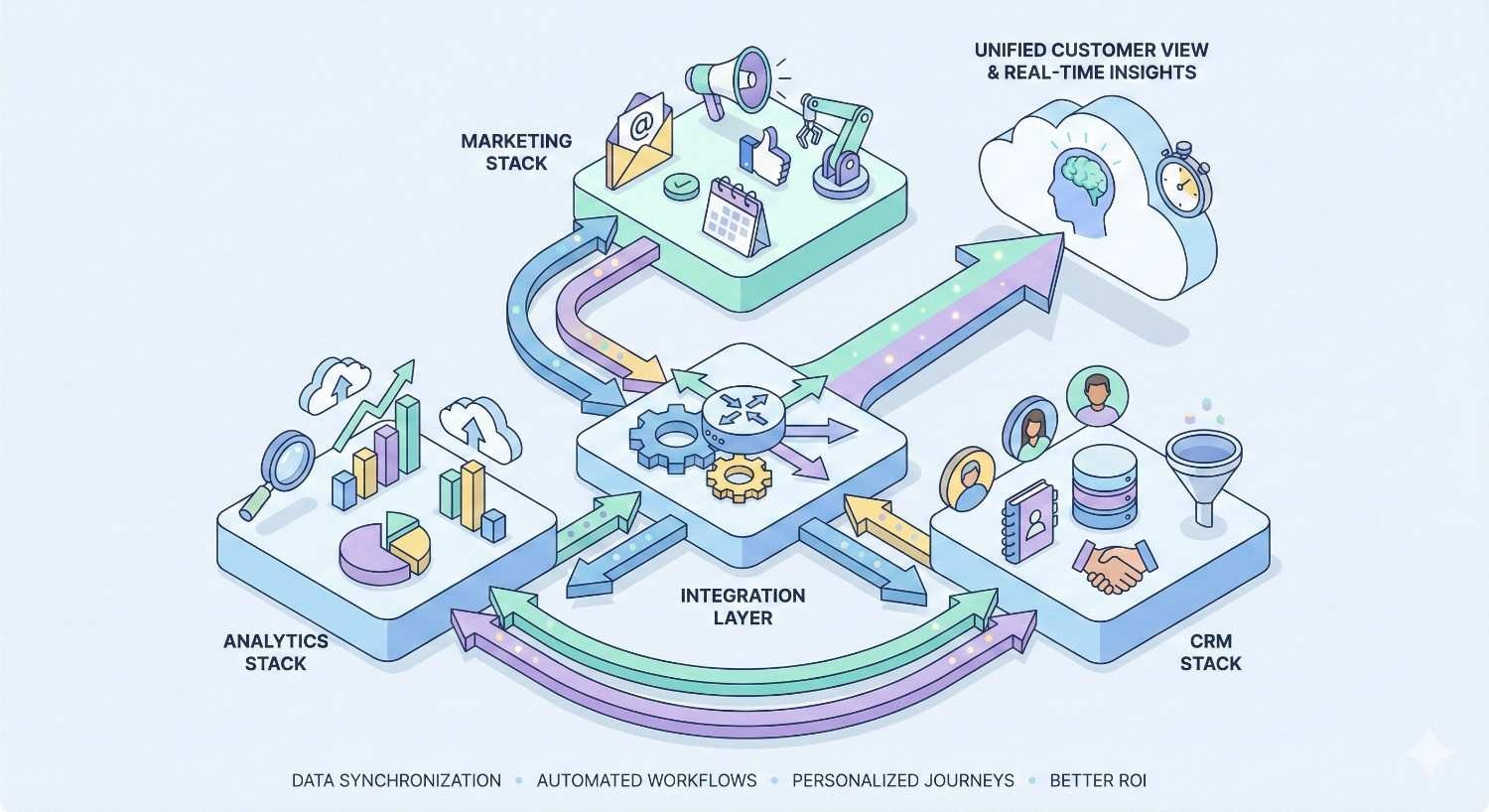
Enterprise technical SEO increasingly requires integration with broader technology ecosystems.
Analytics integration enables performance measurement and attribution. Connecting technical SEO data with Google Analytics 4, Adobe Analytics, or other platforms requires technical configuration and ongoing maintenance.
Marketing automation integration helps attribute organic traffic to downstream conversions and revenue. CRM connections enable closed-loop reporting on SEO-generated leads.
Data warehouse integration supports enterprise reporting requirements. Feeding SEO data into centralized business intelligence platforms requires API connections and data transformation.
Team Structure and Internal Resource Availability
Your internal capabilities affect what you need from external providers.
Strong internal teams may need strategic guidance and specialized expertise rather than comprehensive services. This can reduce external costs while requiring internal resource allocation.
Limited internal resources require providers to handle more execution, increasing service scope and cost. Some organizations prefer this model to avoid building internal capabilities.
Development capacity determines implementation velocity. Organizations with dedicated SEO development resources can act on recommendations quickly. Those competing for shared development resources face longer implementation timelines.
Competitive Landscape and Industry Complexity
Market dynamics influence required investment levels.
Highly competitive industries require more aggressive optimization to achieve and maintain visibility. Financial services, legal, and healthcare face intense competition requiring sustained investment.
Rapidly evolving markets need continuous adaptation. Industries experiencing digital transformation or new competitor entry require more strategic attention than stable markets.
Regulatory complexity in industries like healthcare, finance, and legal adds compliance considerations to technical SEO work, increasing scope and cost.
What’s Included in Enterprise Technical SEO Services
Understanding typical service inclusions helps you evaluate proposal completeness and compare offerings accurately.
Comprehensive Technical SEO Audits
Enterprise technical audits examine all factors affecting search engine crawling, rendering, indexing, and ranking.
Crawl analysis identifies accessibility issues, redirect chains, broken links, and crawl traps preventing efficient discovery. Enterprise audits typically analyze server logs alongside crawler data for complete visibility.
Indexation assessment compares crawled pages against indexed pages, identifying coverage gaps and unwanted indexation. Analysis includes index bloat from parameter variations, faceted navigation, and duplicate content.
Rendering evaluation tests how search engines process JavaScript-dependent content. Audits identify rendering failures, content visibility issues, and opportunities for improved processing.
Performance analysis measures Core Web Vitals, page speed, and user experience factors across page types and devices. Enterprise audits segment analysis by template, traffic level, and business importance.
Site Architecture and Crawl Optimization
Architecture optimization ensures efficient content organization and authority distribution.
Information architecture review evaluates content hierarchies, category structures, and navigation patterns. Recommendations address depth, breadth, and logical organization.
Internal linking optimization improves authority flow to important pages. Analysis identifies orphaned content, over-linked pages, and opportunities for strategic link placement.
URL structure optimization addresses patterns, parameters, and path organization. Recommendations balance SEO best practices with technical constraints and user experience.
Crawl efficiency improvements reduce wasted crawl budget on low-value pages while ensuring important content receives adequate attention.
Page Speed and Core Web Vitals Optimization
Performance optimization addresses ranking factors and user experience simultaneously.
Core Web Vitals analysis measures Largest Contentful Paint, First Input Delay (transitioning to Interaction to Next Paint), and Cumulative Layout Shift across page types.
Performance diagnostics identify specific causes of slow loading, poor interactivity, and layout instability. Analysis covers server response times, render-blocking resources, image optimization, and third-party script impact.
Optimization recommendations prioritize improvements by impact and implementation difficulty. Enterprise sites often require phased approaches addressing quick wins before tackling complex infrastructure changes.
Monitoring implementation tracks performance over time, identifying regressions and measuring improvement impact.
JavaScript SEO and Rendering Solutions
Modern enterprise sites increasingly rely on JavaScript frameworks requiring specialized optimization approaches.
Rendering assessment determines how search engines process your JavaScript content. Testing identifies content visibility issues, rendering delays, and indexation problems.
Solution architecture recommends appropriate approaches including server-side rendering, dynamic rendering, or hybrid implementations based on your technical environment and resources.
Implementation guidance supports development teams in executing rendering solutions. This includes technical specifications, testing protocols, and validation procedures.
Ongoing monitoring ensures rendering continues functioning correctly as code changes and search engine capabilities evolve.
International SEO and Hreflang Implementation
Multi-market organizations need coordinated international SEO strategies.
International structure analysis evaluates current approaches including ccTLDs, subdomains, and subdirectories. Recommendations consider SEO factors alongside business requirements and technical constraints.
Hreflang implementation ensures search engines understand language and regional targeting. Enterprise implementations often involve hundreds of page variations requiring systematic approaches.
Geotargeting configuration in Google Search Console and other platforms supports regional targeting objectives.
International content coordination addresses duplicate content across markets, translation quality signals, and market-specific optimization requirements.
Schema Markup and Structured Data Strategy
Structured data enhances search result appearance and supports rich features.
Schema audit evaluates current implementation completeness, accuracy, and opportunities. Analysis covers organization, product, article, FAQ, and other relevant schema types.
Implementation strategy prioritizes schema types by business impact and implementation complexity. Enterprise sites often benefit from systematic approaches covering thousands of pages.
Technical implementation includes JSON-LD code development, CMS integration, and validation testing.
Rich result monitoring tracks eligibility, appearance, and click-through impact of structured data implementations.
Migration Planning and Execution Support
Site migrations represent high-risk, high-stakes technical SEO events requiring specialized expertise.
Migration planning develops comprehensive strategies covering URL mapping, redirect implementation, technical requirements, and risk mitigation.
Pre-migration preparation ensures all elements are ready before launch including redirect files, updated sitemaps, and monitoring configurations.
Migration execution support provides real-time guidance during launch, rapid issue identification, and immediate troubleshooting.
Post-migration monitoring tracks indexation, rankings, and traffic through the transition period, identifying issues requiring intervention.
Log File Analysis and Crawl Budget Optimization
Server log analysis provides unique insights into search engine behavior unavailable through other methods.
Crawl pattern analysis reveals how search engines actually interact with your site, identifying crawl frequency, coverage patterns, and resource allocation.
Crawl budget optimization uses log insights to improve efficiency, ensuring important content receives adequate crawl attention while reducing waste on low-value pages.
Bot behavior monitoring tracks changes in crawl patterns that may indicate issues or opportunities.
Competitive crawl analysis compares your crawl patterns against industry benchmarks where data is available.
Ongoing Technical Monitoring and Maintenance
Enterprise technical SEO requires continuous attention rather than one-time optimization.
Automated monitoring tracks technical health indicators including crawl errors, indexation changes, performance metrics, and ranking fluctuations.
Alert systems notify stakeholders of significant changes requiring attention, enabling rapid response to emerging issues.
Regular auditing identifies new issues introduced through site changes, platform updates, or accumulated drift from best practices.
Proactive optimization addresses emerging opportunities and evolving search engine requirements before they impact performance.
Enterprise Technical SEO ROI and Performance Expectations
Understanding realistic outcomes helps set appropriate expectations and evaluate investment returns.
Realistic Timeline for Technical SEO Results
Technical SEO improvements typically show results over months rather than days or weeks.
Initial improvements (1-3 months) often appear from fixing critical crawl and indexation issues. Pages previously invisible to search engines begin appearing in results.
Meaningful impact (3-6 months) emerges as search engines recrawl and reevaluate optimized content. Ranking improvements and traffic gains become measurable.
Full realization (6-12 months) occurs as compound effects accumulate. Improved crawl efficiency, better authority distribution, and enhanced user experience signals combine for maximum impact.
Ongoing optimization maintains and extends gains. Technical SEO isn’t a one-time project but continuous improvement.
Timeline expectations should account for implementation velocity. Recommendations sitting in backlogs don’t produce results regardless of quality.
Measuring Technical SEO Impact on Organic Traffic
Attribution requires isolating technical SEO contributions from other factors affecting organic performance.
Crawl and indexation metrics provide leading indicators. Improvements in pages crawled, pages indexed, and crawl efficiency precede traffic gains.
Ranking improvements for targeted pages indicate optimization effectiveness. Tracking position changes for pages receiving technical attention shows direct impact.
Organic traffic segmentation isolates affected pages. Comparing traffic to optimized sections against unchanged sections helps attribute changes.
Controlled testing where feasible provides strongest attribution. Implementing changes on subset of similar pages while holding others constant demonstrates causation.
Revenue Attribution and Business Value Metrics
Connecting technical SEO to business outcomes justifies investment and guides prioritization.
Revenue attribution tracks organic traffic through conversion funnels to transactions. E-commerce sites can directly measure revenue from organic sessions.
Lead attribution connects organic traffic to lead generation and downstream pipeline. CRM integration enables tracking from first touch through closed deals.
Cost comparison evaluates organic traffic value against paid acquisition costs. Technical SEO investments often deliver traffic at fractions of equivalent paid media costs.
Lifetime value consideration accounts for customer quality differences between channels. Organic visitors often show higher engagement and retention than paid traffic.
Long-Term Compound Returns from Technical Foundations
Technical SEO investments generate compounding returns over time.
Foundation building enables future content to perform better. Sites with strong technical foundations see new content index faster and rank higher than competitors with technical debt.
Authority accumulation compounds as improved crawl efficiency helps search engines discover and evaluate more content, building topical authority over time.
Competitive moats develop as technical advantages become difficult for competitors to replicate quickly. Years of accumulated optimization create durable advantages.
Risk reduction prevents costly problems. Proactive technical SEO identifies issues before they cause traffic losses, avoiding recovery costs and revenue impact.
How to Evaluate Enterprise Technical SEO Pricing Proposals
Effective evaluation requires understanding what distinguishes quality proposals from inadequate ones.
Red Flags in SEO Pricing and Service Promises
Certain proposal elements should trigger skepticism.
Guaranteed rankings for specific keywords indicate either dishonesty or misunderstanding of how search engines work. No provider can guarantee specific positions.
Unusually low pricing compared to market rates suggests either inexperience, inadequate scope, or unsustainable business models. Quality enterprise SEO requires significant expertise and resources.
Vague deliverables without specific outputs, timelines, or success metrics make accountability impossible. Quality proposals detail exactly what you’ll receive.
One-size-fits-all approaches ignoring your specific technical environment, competitive landscape, and business objectives suggest template-based services rather than customized strategies.
Reluctance to provide references from comparable clients raises questions about relevant experience and client satisfaction.
Questions to Ask Before Signing a Contract
Thorough evaluation requires specific information.
Experience questions: What enterprise clients have you served in similar industries? What technical challenges have you solved comparable to ours? Can you provide references we can contact?
Process questions: How do you approach discovery and auditing? What does your typical engagement timeline look like? How do you prioritize recommendations?
Team questions: Who specifically will work on our account? What are their backgrounds and experience levels? How is the team structured?
Communication questions: How often will we meet? What reporting will we receive? Who is our primary point of contact?
Scope questions: What exactly is included in the proposed fee? What would trigger additional charges? How do you handle scope changes?
Comparing Proposals: Scope, Deliverables, and Expertise
Meaningful comparison requires normalizing different proposal formats.
Scope alignment ensures you’re comparing equivalent services. A $15,000 monthly proposal including implementation support isn’t comparable to a $10,000 proposal covering only advisory services.
Deliverable specificity indicates proposal quality. Detailed descriptions of outputs, formats, and frequencies suggest thoughtful scoping. Vague descriptions suggest template proposals.
Team composition affects value delivery. Proposals staffed primarily with junior resources deliver different value than those featuring senior expertise.
Tool and technology inclusions vary. Some proposals include enterprise tool access while others assume you’ll provide tools separately.
Understanding Service Level Agreements (SLAs)
SLAs define performance expectations and accountability mechanisms.
Response time commitments specify how quickly providers will address issues and questions. Enterprise clients typically expect faster response than standard accounts.
Deliverable timelines establish when you’ll receive audits, reports, and recommendations. Clear timelines enable planning and accountability.
Quality standards define acceptable deliverable quality. Some SLAs include revision rights if deliverables don’t meet specifications.
Escalation procedures outline how to address concerns if standard processes aren’t resolving issues satisfactorily.
In-House vs. Agency vs. Consultant: Cost Comparison
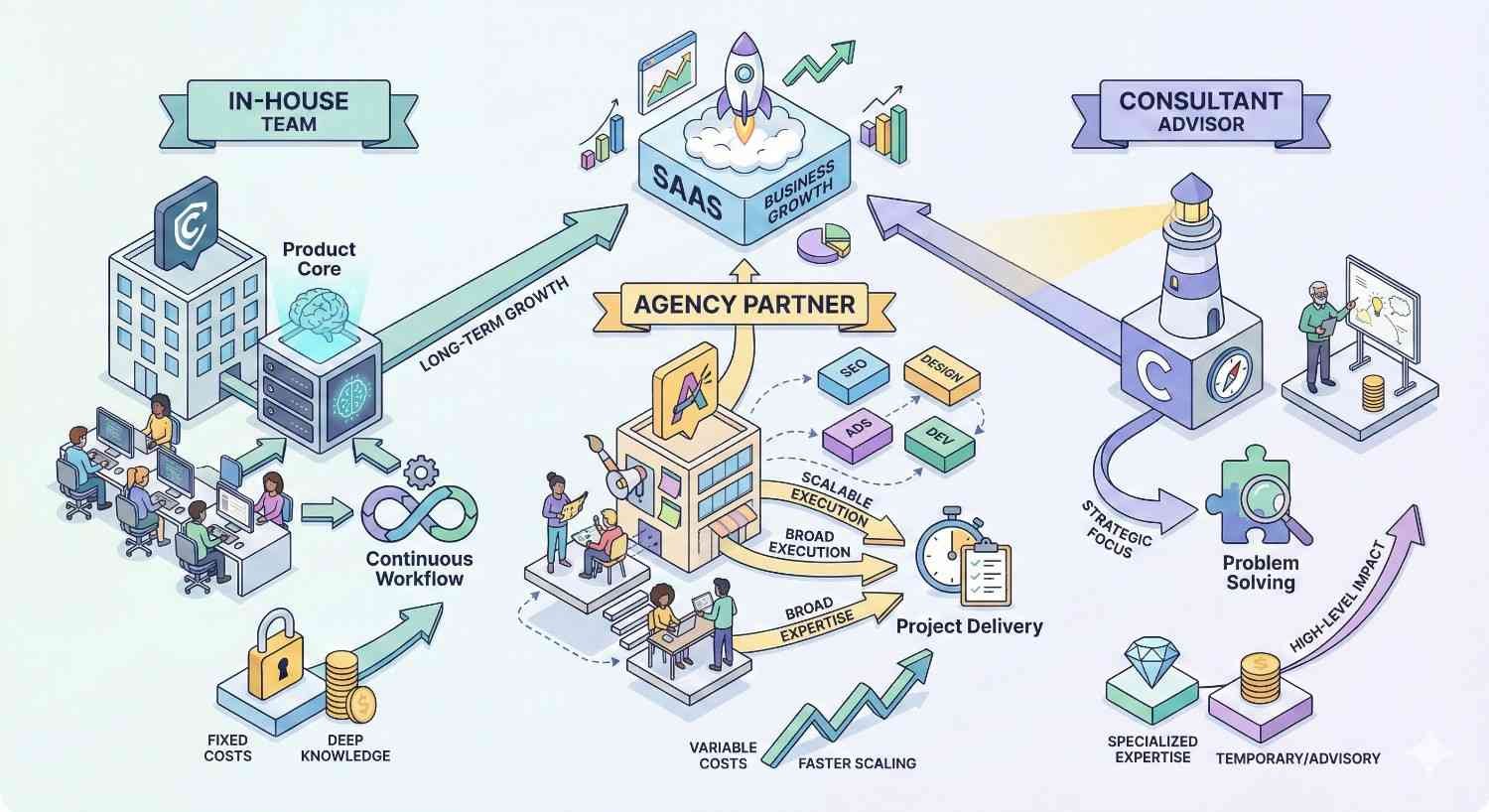
Organizations can address enterprise technical SEO needs through various resourcing models, each with distinct cost structures and tradeoffs.
Building an In-House Enterprise SEO Team
In-house teams provide dedicated resources with deep organizational knowledge.
Staffing costs represent the primary investment. Senior technical SEO managers command $120,000-$180,000+ annually in total compensation. Building a capable team typically requires 2-4 specialists plus management, easily exceeding $400,000-$600,000 annually in fully-loaded costs.
Tool investments add significant expense. Enterprise crawling, log analysis, and monitoring tools cost $50,000-$150,000+ annually.
Ramp-up time delays impact. New hires need months to understand your technical environment, organizational dynamics, and historical context.
Advantages include dedicated focus, institutional knowledge accumulation, and tight integration with development and content teams.
Disadvantages include recruitment difficulty, limited perspective diversity, and challenges maintaining cutting-edge expertise without external exposure.
Hiring a Full-Service SEO Agency
Agencies provide scalable expertise without permanent headcount commitments.
Retainer costs typically range from $10,000-$50,000+ monthly for enterprise engagements, translating to $120,000-$600,000+ annually.
Advantages include access to diverse expertise, established processes, broader industry perspective, and flexibility to scale engagement up or down.
Disadvantages include divided attention across clients, potential knowledge gaps about your specific environment, and dependency on external parties for critical capabilities.
Selection criteria should emphasize relevant experience, team stability, and cultural fit alongside technical capabilities.
Working with Independent Technical SEO Consultants
Independent consultants offer senior expertise without agency overhead.
Consulting costs typically run $200-$500+ hourly or $10,000-$30,000+ monthly for substantial engagements.
Advantages include direct access to senior expertise, flexibility in engagement structure, and often lower costs than equivalent agency seniority.
Disadvantages include limited bandwidth, potential availability constraints, and lack of team depth for comprehensive execution.
Best fit for organizations with capable internal teams needing strategic guidance and specialized expertise rather than comprehensive execution support.
Hybrid Models: Augmenting Internal Teams
Many organizations combine approaches for optimal results.
Internal foundation with external augmentation provides dedicated resources supplemented by specialized expertise. Internal team handles ongoing optimization while agencies or consultants address specific challenges.
Agency partnership with selective consulting brings comprehensive services from a primary agency supplemented by independent experts for second opinions or specialized needs.
Phased transitions start with agency relationships while building internal capabilities, gradually shifting work in-house as teams develop expertise.
Cost optimization through hybrid models often delivers better value than pure approaches, combining internal efficiency with external expertise.
Enterprise Technical SEO Pricing by Industry
Industry characteristics significantly influence technical SEO requirements and appropriate investment levels.
E-commerce and Retail
E-commerce sites face unique technical challenges driving higher investment requirements.
Scale complexity from millions of product pages, category combinations, and faceted navigation creates massive crawl and indexation challenges.
Inventory dynamics with products entering and leaving stock, seasonal items, and catalog changes require continuous technical attention.
Competitive intensity in retail search results demands sustained optimization investment to maintain visibility.
Typical investment: $15,000-$40,000+ monthly for mid-to-large e-commerce operations.
SaaS and Technology Companies
Technology companies face distinct technical SEO considerations.
Documentation and resource centers create content scale requiring optimization attention.
Product-led growth strategies depend on organic visibility for feature and solution searches.
International expansion often requires multi-language, multi-region technical SEO support.
Typical investment: $10,000-$30,000 monthly depending on content scale and market scope.
Finance and Healthcare (High-Compliance Industries)
Regulated industries add compliance complexity to technical SEO requirements.
YMYL considerations (Your Money or Your Life) mean search engines apply heightened scrutiny to content quality and accuracy signals.
Compliance requirements affect what can be published, how it’s structured, and what claims can be made.
Security and privacy constraints may limit technical implementation options.
Typical investment: $15,000-$35,000+ monthly reflecting compliance complexity and competitive intensity.
Media, Publishing, and Content Platforms
Publishers face technical challenges from content volume and velocity.
Content scale with thousands of articles published monthly requires efficient indexation and crawl management.
News and freshness signals require specific technical implementations for timely content.
Monetization dependencies on organic traffic make technical SEO business-critical.
Typical investment: $12,000-$35,000 monthly depending on publication scale and competitive landscape.
Travel, Hospitality, and Marketplace Platforms
Marketplace models create unique technical complexity.
User-generated content requires moderation, quality signals, and duplicate content management.
Location-based optimization for thousands of destinations or properties needs systematic approaches.
Seasonal demand patterns require flexible optimization strategies.
Typical investment: $15,000-$40,000+ monthly for major marketplace platforms.
Common Enterprise Technical SEO Add-Ons and Their Costs
Beyond core services, various add-ons address specific needs.
Advanced Analytics and Custom Reporting Dashboards
Standard reporting may not meet enterprise requirements.
Custom dashboard development creates tailored views connecting SEO data with business metrics. Initial development typically costs $5,000-$15,000 with ongoing maintenance fees.
Data integration connecting SEO platforms with business intelligence tools requires technical configuration. Setup costs $3,000-$10,000 depending on complexity.
Executive reporting packages translate technical metrics into business language for leadership consumption. Often included in premium retainers or available as $2,000-$5,000 monthly add-ons.
Competitive Intelligence and Market Analysis
Understanding competitive positioning informs strategy.
Competitive technical audits analyze competitor technical implementations, identifying advantages and vulnerabilities. Typically $5,000-$15,000 per competitor analysis.
Market opportunity analysis identifies keyword and content gaps representing growth opportunities. Usually $8,000-$20,000 for comprehensive analysis.
Ongoing competitive monitoring tracks competitor changes and market shifts. Often $2,000-$5,000 monthly as retainer add-on.
Training and Knowledge Transfer Programs
Building internal capabilities reduces long-term dependency.
Team training programs educate internal staff on technical SEO fundamentals and your specific environment. Typically $5,000-$15,000 for comprehensive programs.
Documentation development creates internal resources for ongoing reference. Usually $3,000-$8,000 depending on scope.
Certification support helps team members earn industry credentials. Costs vary by certification program.
Emergency Technical Issue Resolution
Critical issues require rapid response capabilities.
Emergency support agreements guarantee rapid response to urgent technical problems. Typically $2,000-$5,000 monthly for guaranteed availability.
Incident response for specific emergencies billed hourly at premium rates, often $300-$500+ per hour.
Post-incident analysis identifies root causes and prevention measures. Usually $3,000-$8,000 per incident.
Quarterly Executive Strategy Sessions
Strategic alignment requires executive engagement.
Quarterly business reviews present performance, insights, and strategic recommendations to leadership. Often included in premium retainers or $3,000-$8,000 per session.
Annual planning sessions develop year-ahead strategies aligned with business objectives. Typically $5,000-$15,000 for comprehensive planning engagements.
Board-level presentations prepare materials for board reporting on digital marketing performance. Usually $2,000-$5,000 per presentation.
How to Budget for Enterprise Technical SEO
Effective budgeting ensures adequate investment without overspending.
Allocating SEO Budget as Percentage of Revenue
Industry benchmarks provide starting points for budget planning.
General guidance suggests allocating 5-10% of marketing budget to SEO, with technical SEO representing 30-50% of total SEO investment.
Revenue-based approaches for established businesses often allocate 1-3% of organic revenue to maintaining and growing that channel.
Growth-stage companies may invest more aggressively, allocating 5-10% of target revenue to build organic foundations.
Competitive intensity affects appropriate investment. Highly competitive markets require above-average investment to achieve visibility.
Phased Investment Approach for Large Organizations
Staged investment manages risk and demonstrates value.
Phase 1: Foundation (months 1-3) focuses on auditing, critical issue remediation, and quick wins. Budget $30,000-$75,000 for initial assessment and immediate improvements.
Phase 2: Optimization (months 4-9) addresses systematic improvements across architecture, performance, and content optimization. Budget $60,000-$150,000 for comprehensive optimization.
Phase 3: Maintenance and growth (ongoing) sustains gains while pursuing incremental improvements. Budget $120,000-$360,000+ annually for ongoing optimization.
Milestone-based releases tie budget tranches to demonstrated results, reducing risk while maintaining momentum.
Balancing Technical SEO with Content and Link Building Budgets
Technical SEO exists within broader SEO investment.
Foundation first prioritizes technical SEO when significant issues exist. Content and links deliver limited value if technical problems prevent indexation and ranking.
Balanced ongoing investment typically allocates 25-40% to technical SEO, 30-40% to content, and 20-30% to authority building once foundations are solid.
Situational adjustments shift allocation based on current needs. Major migrations or platform changes may temporarily require 60-80% technical focus.
Planning for Seasonal and Growth-Phase Adjustments
Budget flexibility accommodates changing needs.
Seasonal preparation for peak periods may require increased investment 3-6 months before high-traffic seasons.
Growth initiatives like international expansion, new product launches, or platform migrations require incremental budget allocation.
Economic adjustments may necessitate budget reductions. Prioritize maintaining technical health over growth initiatives during constraints.
Questions to Ask Enterprise SEO Providers About Pricing
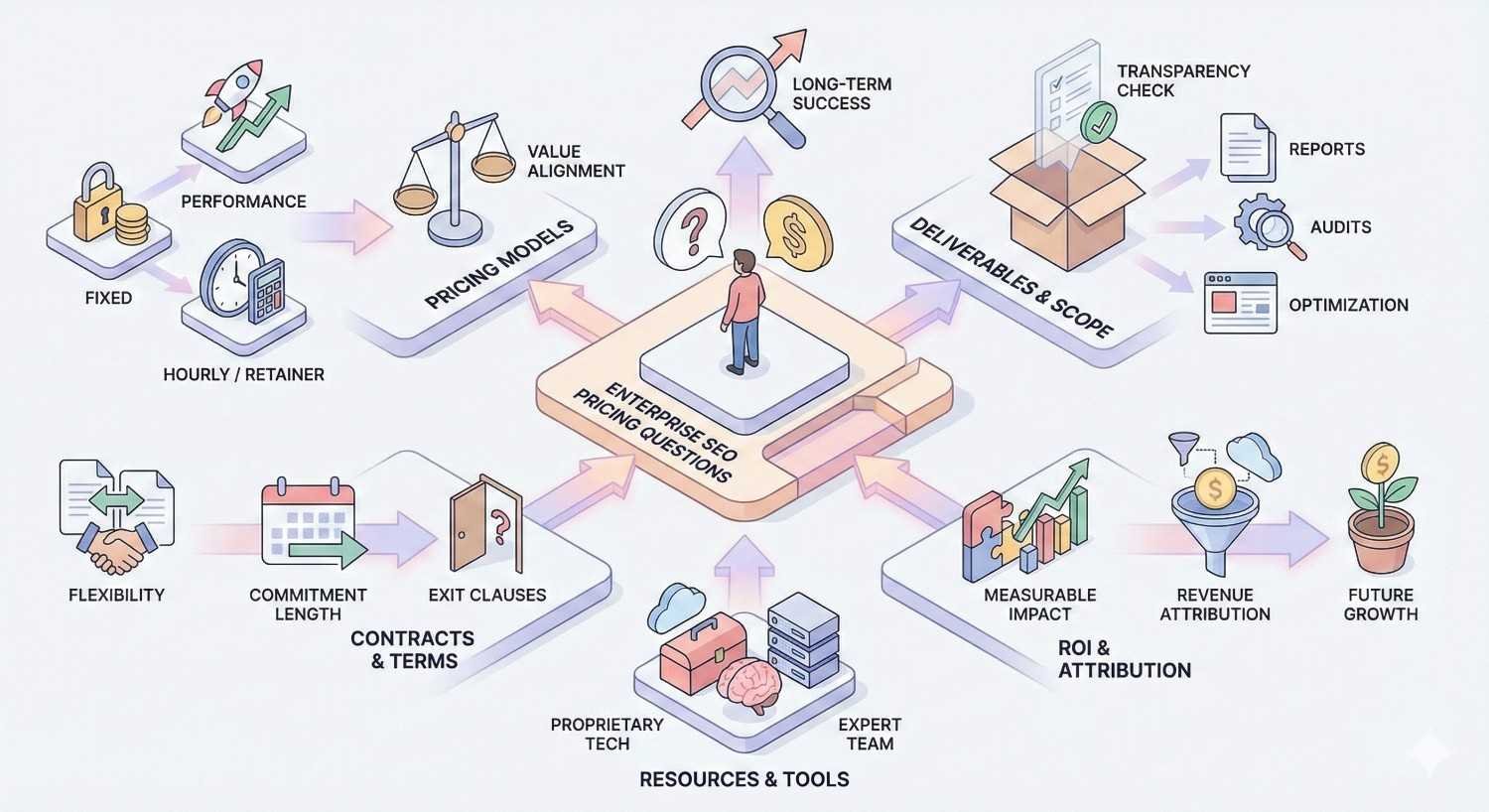
Thorough questioning ensures you understand what you’re buying.
Pricing Transparency and Scope Clarity
Ambiguity creates problems later.
What exactly is included? Request detailed scope documents listing all deliverables, frequencies, and inclusions.
What’s explicitly excluded? Understanding boundaries prevents assumptions about coverage.
How are hours allocated? For retainer arrangements, understand how time distributes across activities.
What triggers additional charges? Identify scenarios that would incur costs beyond the base agreement.
What Happens If Technical Issues Exceed Estimated Hours?
Scope management affects total costs.
How do you handle scope creep? Understand processes for addressing work beyond original estimates.
What approval is required for overages? Ensure you control decisions about additional investment.
Are there caps on additional charges? Some agreements limit overage exposure.
How are estimates developed? Understanding estimation methodology helps evaluate accuracy.
How Are Results Tracked and Reported?
Accountability requires measurement.
What metrics do you track? Ensure coverage of metrics meaningful to your business.
How frequently do you report? Understand reporting cadence and formats.
What tools do you use? Evaluate whether their toolset meets your needs.
How do you attribute results? Understand methodology for connecting work to outcomes.
Contract Terms, Cancellation Policies, and Flexibility
Agreement structure affects risk and flexibility.
What is the initial term? Understand commitment length and renewal terms.
What are cancellation provisions? Know your options if the relationship isn’t working.
Can scope be adjusted mid-contract? Understand flexibility to increase or decrease services.
What happens to work product if we part ways? Ensure you retain deliverables and data.
Case Study: Enterprise Technical SEO Investment and Results
Examining a representative engagement illustrates typical investment patterns and outcomes.
Initial Technical State and Business Challenge
A mid-market e-commerce company with 2.3 million product pages faced declining organic visibility despite strong brand recognition and quality products.
Technical assessment revealed significant issues: 40% of product pages weren’t indexed due to crawl budget waste on faceted navigation, Core Web Vitals failures affected 65% of pages, and JavaScript rendering issues prevented proper content indexation.
Business impact included 23% year-over-year organic traffic decline and increasing dependency on paid acquisition to maintain revenue.
Investment Level and Service Scope
The company engaged an enterprise technical SEO agency at $22,000 monthly for a 12-month initial engagement.
Scope included: comprehensive technical audit, crawl optimization strategy, Core Web Vitals remediation guidance, JavaScript rendering solutions, ongoing monitoring, and monthly strategic consultation.
Additional investments: $45,000 in development resources for implementation and $35,000 annually for enterprise crawling tools.
Total first-year investment: approximately $344,000 including agency fees, tools, and implementation resources.
Implementation Timeline and Key Milestones
Months 1-2: Comprehensive audit and prioritized remediation roadmap. Quick wins implemented including robots.txt optimization and critical redirect fixes.
Months 3-4: Faceted navigation solution deployed, reducing crawlable URLs by 78% while maintaining user functionality. Indexation coverage began improving.
Months 5-7: Core Web Vitals optimization across primary templates. Performance scores improved from 35% passing to 82% passing.
Months 8-10: JavaScript rendering solution implemented. Previously invisible content began appearing in search results.
Months 11-12: Optimization refinement and transition to maintenance mode.
Measurable Outcomes: Traffic, Rankings, and Revenue Impact
Indexation improvement: Indexed pages increased from 1.4 million to 2.1 million, representing 91% coverage versus previous 61%.
Traffic recovery: Organic traffic increased 47% year-over-year by month 12, reversing the previous decline trend.
Revenue impact: Organic revenue increased $2.8 million annually, representing 8.1x return on first-year investment.
Ongoing efficiency: Year-two investment reduced to $180,000 annually for maintenance, with continued 15% year-over-year growth.
Getting Started: Next Steps for Enterprise Technical SEO Investment
Taking action requires systematic preparation.
Conducting a Preliminary Technical SEO Assessment
Initial assessment informs investment decisions.
Self-assessment tools like Google Search Console provide baseline visibility into crawl errors, indexation status, and Core Web Vitals performance.
Preliminary audits from potential providers often available at reduced cost or as part of sales processes. Use these to understand issue scope.
Internal inventory of known technical issues, recent site changes, and platform constraints helps providers scope accurately.
Defining Your Technical SEO Goals and Success Metrics
Clear objectives enable effective evaluation.
Traffic goals should be specific and timebound. “Increase organic traffic 30% within 12 months” provides clear success criteria.
Technical metrics like indexation coverage, crawl efficiency, and Core Web Vitals scores provide leading indicators.
Business metrics connecting SEO to revenue, leads, or other outcomes justify investment and guide prioritization.
Requesting Proposals and Evaluating Providers
Structured evaluation improves decision quality.
RFP development should include background on your technical environment, known issues, goals, and evaluation criteria.
Provider shortlisting based on relevant experience, capabilities, and cultural fit narrows the field before detailed evaluation.
Proposal comparison using consistent criteria enables meaningful evaluation across different proposal formats.
Reference checks with comparable clients provide insight into actual working relationships and results.
Building a Business Case for Executive Buy-In
Securing budget requires compelling justification.
Current state documentation quantifies existing problems including traffic trends, competitive position, and known technical issues.
Opportunity sizing estimates potential gains from addressing technical issues, using industry benchmarks and competitive analysis.
Investment comparison shows technical SEO costs relative to equivalent paid traffic acquisition, typically demonstrating significant efficiency advantages.
Risk framing highlights costs of inaction including continued traffic decline, competitive disadvantage, and increasing paid media dependency.
Conclusion
Enterprise technical SEO pricing reflects the specialized expertise, comprehensive scope, and sustained attention required to optimize large-scale websites. Investment levels ranging from $5,000 to $50,000+ monthly correspond to different service depths, site complexities, and organizational needs.
Understanding pricing models, cost factors, and service inclusions enables informed evaluation of proposals and appropriate budget allocation. The right investment level depends on your specific technical environment, competitive landscape, and growth objectives.
We help organizations navigate enterprise technical SEO decisions through transparent pricing, comprehensive services, and measurable results. Contact White Label SEO Service to discuss your technical SEO requirements and receive a customized proposal aligned with your goals and budget.
Frequently Asked Questions
How much should enterprise companies budget for technical SEO annually?
Enterprise technical SEO budgets typically range from $120,000 to $600,000+ annually depending on website complexity and service scope. Most mid-market enterprise organizations invest $150,000-$300,000 annually for comprehensive technical SEO services including auditing, optimization, and ongoing maintenance.
What’s the difference between enterprise and standard technical SEO pricing?
Enterprise technical SEO costs 3-10x more than standard services due to increased complexity, specialized expertise requirements, and comprehensive scope. Standard technical SEO might cost $1,000-$5,000 monthly while enterprise engagements typically start at $5,000-$10,000 monthly and scale significantly higher.
How long does it take to see ROI from enterprise technical SEO investment?
Most organizations see measurable improvements within 3-6 months, with full ROI realization typically occurring within 12-18 months. Initial gains often appear from fixing critical crawl and indexation issues, while comprehensive returns accumulate as optimizations compound over time.
Should we hire an agency or build an in-house enterprise SEO team?
The decision depends on your technical complexity, budget constraints, and organizational capabilities. Agencies provide faster access to expertise and flexibility, while in-house teams offer dedicated focus and institutional knowledge. Many organizations use hybrid models combining internal resources with external expertise.
What should be included in an enterprise technical SEO contract?
Comprehensive contracts should specify deliverables, timelines, reporting frequency, team composition, communication protocols, scope boundaries, change management processes, and termination provisions. Service level agreements should define response times and quality standards.
How do we evaluate if enterprise technical SEO pricing is fair?
Compare proposals against market benchmarks, evaluate scope comprehensiveness, assess team expertise levels, and request references from comparable clients. Fair pricing reflects the expertise required, scope covered, and value delivered rather than simply being the lowest available option.
What factors most significantly impact enterprise technical SEO costs?
Website size and complexity, number of domains and international versions, current technical debt, platform constraints, and competitive intensity most significantly influence pricing. Sites with millions of pages, multiple properties, and complex architectures require substantially higher investment than simpler enterprise sites.