
Content writing is the engine that powers sustainable SEO performance. Without strategic, well-crafted content, search engines have nothing meaningful to index, rank, or serve to users seeking answers. Every page that ranks, every keyword you target, and every visitor you attract depends on content that satisfies both algorithms and human readers.
This matters because organic search remains the highest-ROI traffic channel for most businesses. Yet many companies invest in technical SEO or link building while neglecting the content foundation that makes those efforts worthwhile.
This guide breaks down exactly how content writing improves SEO performance, the types of content that drive results, best practices for optimization, and how to measure your content’s impact on business outcomes.
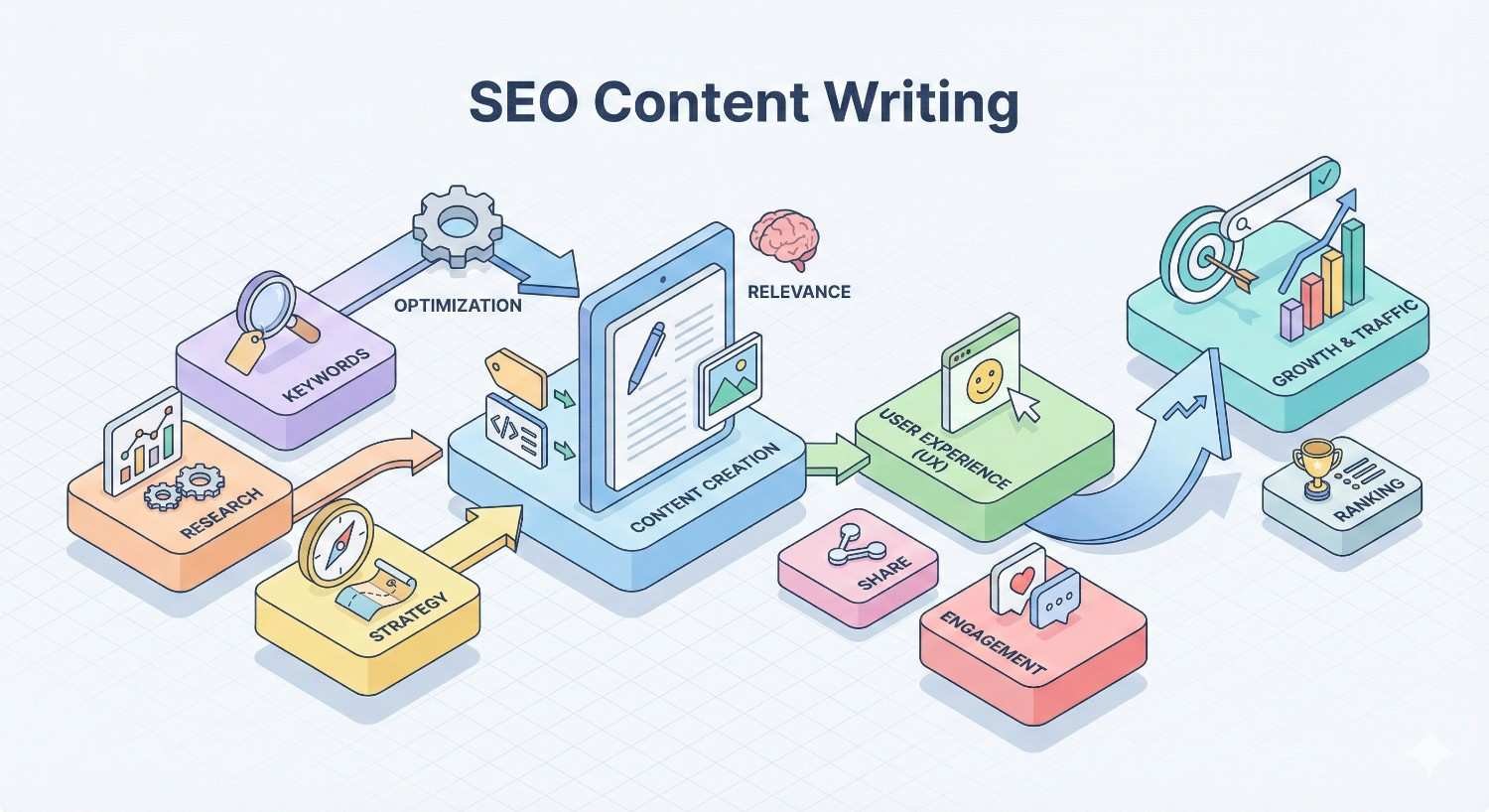
What Is SEO Content Writing?
SEO content writing combines strategic keyword targeting with valuable, reader-focused information. It bridges the gap between what search engines need to understand your pages and what users need to solve their problems.
Definition and Core Principles
SEO content writing is the practice of creating written material specifically designed to rank in search engines while providing genuine value to readers. The core principles include relevance, comprehensiveness, clarity, and strategic optimization.
Relevance means matching content to what users actually search for. Comprehensiveness requires covering topics thoroughly enough to satisfy user intent completely. Clarity ensures readers can quickly find and understand the information they need. Strategic optimization involves placing keywords naturally, structuring content logically, and formatting for both readability and crawlability.
The goal is never to trick algorithms. Modern search engines reward content that genuinely helps users. SEO content writing simply ensures that helpful content gets discovered.
How Content Writing Differs from Copywriting for SEO
Content writing and copywriting serve different purposes, though both matter for SEO success.
Content writing focuses on informing, educating, and building trust over time. Blog posts, guides, and resource pages fall into this category. The primary goal is providing value that establishes expertise and keeps users engaged.
Copywriting focuses on persuasion and conversion. Landing pages, product descriptions, and sales pages prioritize driving specific actions. The primary goal is moving users toward a purchase or signup.
For SEO, content writing typically targets informational queries where users seek knowledge. Copywriting targets transactional queries where users are ready to act. A complete SEO strategy needs both, but content writing usually drives the majority of organic traffic because informational searches vastly outnumber transactional ones.
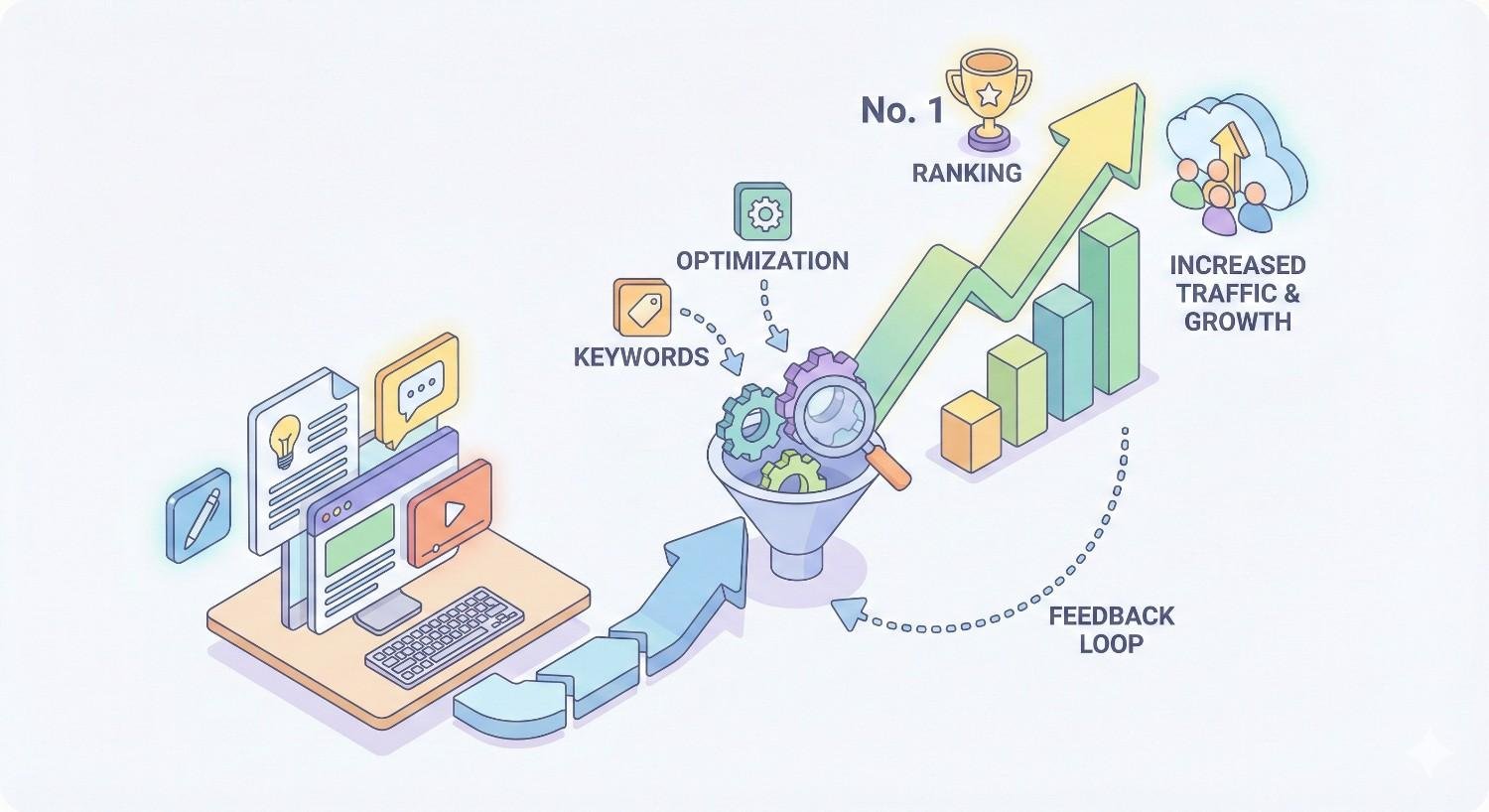
Why Content Writing Is Essential for SEO Success
Search engines exist to connect users with helpful information. Content is that information. Without it, there is nothing to rank.
The Role of Content in Search Engine Rankings
Search engines crawl, index, and rank content. Technical SEO ensures your site can be crawled. Link building signals authority. But content determines what you rank for and whether users find what they need.
Every search query represents a question or need. Your content provides the answer. When your content matches user intent better than competitors, you rank higher. When it fails to satisfy users, rankings drop regardless of other optimization efforts.
Content also creates opportunities for keyword targeting. Each page can target specific queries, building a network of ranking opportunities across your site. More strategic content means more chances to capture relevant traffic.
How Google Evaluates Content Quality
Google uses multiple signals to assess content quality. According to Google’s Search Quality Evaluator Guidelines, content is evaluated based on expertise, authoritativeness, trustworthiness, and the experience of the creator.
The algorithm analyzes whether content satisfies user intent by measuring engagement signals. Pages where users quickly return to search results signal poor quality. Pages where users stay, scroll, and engage signal value.
Google also evaluates content depth and accuracy. Thin content that barely addresses a topic underperforms. Comprehensive content that thoroughly answers questions earns better rankings. Factual accuracy matters too, especially for topics affecting health, finances, or safety.
Content as the Foundation of Organic Visibility
Organic visibility depends entirely on having content that matches search queries. You cannot rank for terms you do not have content about.
This makes content the foundation of every SEO strategy. Technical improvements help existing content perform better. Links boost authority for content that already exists. But without content, there is nothing to optimize or promote.
Building organic visibility requires building a content library that covers your target topics comprehensively. Each piece of content expands your footprint in search results, creating more entry points for potential customers.
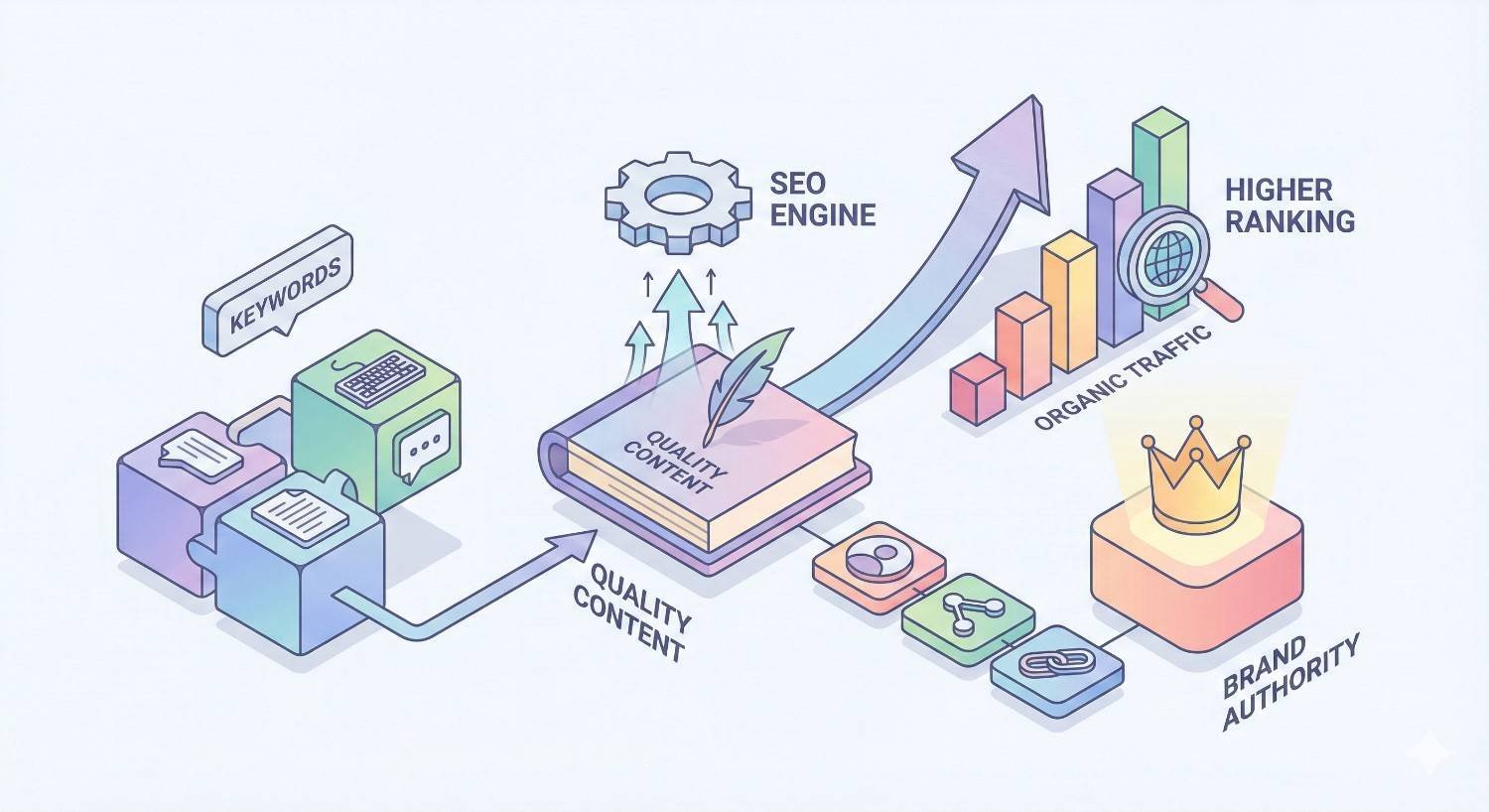
How Content Writing Directly Improves SEO Performance
Content writing impacts SEO through multiple mechanisms. Understanding these connections helps you create content that drives measurable results.
Keyword Targeting and Search Intent Alignment
Every piece of content should target specific keywords that your audience searches for. Keyword research identifies these opportunities. Content writing executes on them.
Effective keyword targeting goes beyond including terms in your text. It requires understanding search intent, the underlying goal behind a query. Someone searching “what is SEO content writing” wants education. Someone searching “SEO content writing services” wants to hire help. The same topic requires different content approaches.
Aligning content with search intent means structuring your content to deliver exactly what users expect. Informational queries need comprehensive explanations. Comparison queries need side-by-side analysis. How-to queries need step-by-step instructions. Matching format to intent improves rankings and user satisfaction.
Building Topical Authority Through Strategic Content
Search engines favor websites that demonstrate deep expertise in specific topics. This is called topical authority.
Building topical authority requires creating multiple pieces of content that cover a subject comprehensively. A single blog post about SEO content writing establishes basic relevance. Ten interconnected posts covering different aspects of SEO content writing establish authority.
Strategic content planning identifies all the subtopics, questions, and angles within your core topics. Creating content for each builds a network of expertise that search engines recognize and reward with better rankings across all related queries.
Increasing Dwell Time and Reducing Bounce Rate
User engagement signals influence rankings. When users spend more time on your content, it signals value. When they immediately leave, it signals poor quality.
Well-written content keeps users engaged. Clear structure helps them find information quickly. Comprehensive coverage answers follow-up questions before users need to search again. Engaging writing style maintains interest throughout longer pieces.
Reducing bounce rate requires matching content to user expectations. If your title promises specific information, your content must deliver it immediately. Misleading titles or slow-loading pages drive users away before they engage with your content.
Earning Backlinks Through Valuable Content
Backlinks remain a critical ranking factor. Other websites link to content they find valuable, useful, or reference-worthy.
Content that earns links typically provides unique value. Original research, comprehensive guides, useful tools, and expert insights attract links naturally. Thin or generic content rarely earns links because it offers nothing worth referencing.
Creating link-worthy content requires investing in quality. Data-driven content with original statistics earns links from journalists and researchers. Definitive guides earn links from others covering related topics. Expert roundups and interviews earn links from participants and their networks.
Supporting Technical SEO with Optimized Content Structure
Content structure affects how search engines understand and index your pages. Proper heading hierarchy, logical organization, and clear formatting help crawlers parse your content accurately.
Using H2 and H3 headings creates a content outline that search engines can read. This helps them understand what topics your content covers and how sections relate to each other. It also enables featured snippet opportunities when your headings match common questions.
Internal linking within content connects related pages, helping search engines discover and understand your site structure. Strategic anchor text signals what linked pages are about, passing relevance signals throughout your site.
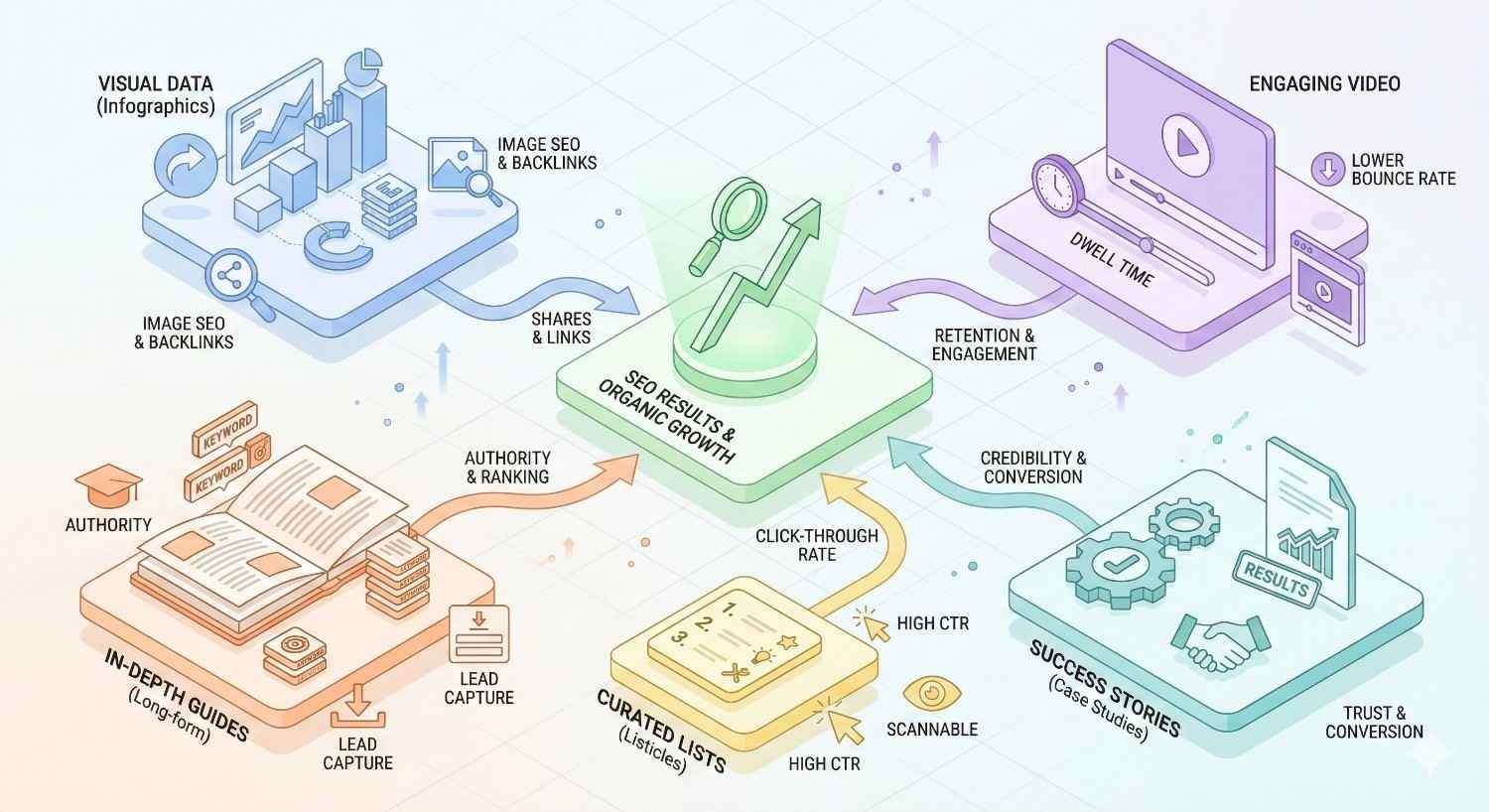
Types of Content That Drive SEO Results
Different content types serve different purposes in an SEO strategy. A balanced approach includes multiple formats targeting various stages of the customer journey.
Blog Posts and Long-Form Articles
Blog posts are the workhorses of content-driven SEO. They target informational queries, build topical authority, and create ongoing opportunities for organic traffic.
Long-form articles typically outperform shorter content for competitive queries. They provide more comprehensive coverage, include more keyword variations naturally, and keep users engaged longer. However, length alone does not guarantee success. Value density matters more than word count.
Effective blog posts answer specific questions thoroughly, provide actionable insights, and offer unique perspectives or information. They target keywords with meaningful search volume and align with topics your audience cares about.
Landing Pages and Service Pages
Landing pages target commercial and transactional queries. Users searching for specific services or solutions land on these pages ready to take action.
SEO-optimized landing pages balance persuasive copy with informational content. They clearly explain what you offer, why it matters, and how users can take the next step. They also include enough content for search engines to understand the page’s relevance.
Service pages should target specific service-related keywords while addressing common questions and objections. Including detailed information about your process, pricing factors, and outcomes helps both SEO and conversion.
Product Descriptions
E-commerce SEO depends heavily on product descriptions. Each product page is an opportunity to rank for product-specific searches.
Effective product descriptions go beyond manufacturer specifications. They explain benefits, address use cases, and answer questions buyers have before purchasing. Unique descriptions outperform copied manufacturer content because they provide differentiated value.
Optimizing product descriptions includes using relevant keywords naturally, structuring content for scannability, and including information that helps purchase decisions. Reviews and user-generated content add additional keyword-rich content that improves rankings.
Pillar Pages and Content Clusters
Pillar pages are comprehensive resources covering broad topics. They link to cluster content that covers specific subtopics in depth. This structure signals topical authority to search engines.
A pillar page about “SEO content writing” might link to cluster articles about keyword research, content optimization, measuring content performance, and content strategy. Each cluster article links back to the pillar, creating a network of related content.
This structure helps users navigate related information and helps search engines understand topic relationships. It concentrates authority on pillar pages while building relevance across the entire cluster.
FAQs and Knowledge Base Content
FAQ content targets question-based queries directly. These queries often trigger featured snippets, providing visibility above traditional organic results.
Knowledge base content serves both SEO and customer support purposes. Comprehensive help documentation ranks for problem-specific searches, attracting users who may become customers. It also reduces support burden by helping existing customers find answers independently.
Structuring FAQ content with clear questions as headings and concise answers optimizes for featured snippets and voice search. Expanding answers with additional context improves comprehensiveness without sacrificing scannability.
Content Writing Best Practices for SEO
Following proven best practices ensures your content performs well in search while serving reader needs.
Conducting Keyword Research Before Writing
Keyword research should precede content creation, not follow it. Understanding what users search for shapes what you write and how you structure it.
Effective keyword research identifies primary targets with meaningful search volume and achievable competition levels. It also uncovers related terms, questions, and subtopics that should be addressed within the content.
Tools like Google Search Console reveal what queries already drive traffic to your site. Keyword research platforms identify new opportunities. Analyzing competitor content shows what topics and terms successful pages target.
Structuring Content for Readability and Crawlability
Content structure affects both user experience and search engine understanding. Clear organization helps readers find information and helps crawlers parse content accurately.
Use descriptive headings that signal what each section covers. Break long sections into digestible subsections. Keep paragraphs short, typically two to four sentences. Use bullet points and numbered lists for scannable information.
Front-load important information. Users and search engines pay more attention to content near the top of pages. Place key points, definitions, and answers early before expanding with details.
Optimizing Headlines, Meta Descriptions, and Headers
Title tags and meta descriptions influence click-through rates from search results. Headers structure content and signal relevance for specific subtopics.
Title tags should include primary keywords near the beginning while remaining compelling and accurate. Keep them under 60 characters to avoid truncation. Make them specific enough to set accurate expectations.
Meta descriptions should summarize content value and include a reason to click. While not a direct ranking factor, better descriptions improve click-through rates, which can indirectly affect rankings.
Headers should use natural language that matches how users search. Including question phrases in H2 and H3 tags creates featured snippet opportunities for those queries.
Using Internal and External Links Strategically
Internal links connect your content, helping users navigate and helping search engines understand site structure. Every piece of content should link to related pages on your site.
Use descriptive anchor text that signals what the linked page covers. Avoid generic phrases like “click here” or “learn more.” Link to your most important pages more frequently to concentrate authority.
External links to authoritative sources add credibility and context. Linking to research, official documentation, or expert sources signals that your content is well-researched. It also helps search engines understand your content’s topic through association.
Writing for E-E-A-T (Experience, Expertise, Authority, Trust)
Google’s quality guidelines emphasize Experience, Expertise, Authoritativeness, and Trustworthiness. Content should demonstrate all four.
Experience means showing first-hand knowledge. Include specific examples, case studies, and practical insights that only someone with real experience would know. Avoid generic advice that could come from anyone.
Expertise requires demonstrating deep knowledge. Use accurate terminology, cover topics thoroughly, and address nuances that surface-level content misses.
Authority comes from credentials, recognition, and reputation. Author bios, citations from authoritative sources, and mentions from other experts build authority signals.
Trust requires accuracy, transparency, and reliability. Cite sources, update outdated information, and be honest about limitations or uncertainties.
Updating and Refreshing Existing Content
Content freshness affects rankings, especially for topics where information changes. Regularly updating existing content maintains and improves performance.
Content audits identify pages that need updates. Look for outdated statistics, broken links, or information that no longer reflects current best practices. Prioritize updating high-traffic pages and pages that have declined in rankings.
Refreshing content can include adding new sections, updating examples, improving structure, or expanding coverage. Even small updates signal freshness to search engines and can recover lost rankings.
How Long Does It Take for Content Writing to Impact SEO?
SEO is a long-term investment. Understanding realistic timelines helps set appropriate expectations and measure progress accurately.
Realistic Timelines for Content-Driven Rankings
New content typically takes three to six months to reach stable rankings. Some pages rank faster, especially for low-competition queries or on established sites. Others take longer, particularly for competitive terms or new domains.
Initial indexing happens within days or weeks. Early rankings often fluctuate significantly as search engines test your content against competitors. Stable rankings emerge after algorithms have enough data to assess performance.
Building meaningful organic traffic usually requires six to twelve months of consistent content production. Individual pages contribute incrementally, but the cumulative effect of multiple ranking pages creates substantial traffic over time.
Factors That Accelerate or Delay Results
Several factors influence how quickly content impacts SEO.
Domain authority affects ranking speed. Established sites with strong backlink profiles rank new content faster than new domains. Building domain authority through link acquisition accelerates results.
Content quality determines whether pages rank at all. High-quality content that satisfies user intent outperforms thin or generic content regardless of other factors.
Competition level matters significantly. Low-competition keywords can rank within weeks. Highly competitive terms may take years of sustained effort.
Technical SEO issues can delay results. Crawling problems, slow page speed, or indexing issues prevent content from ranking regardless of quality.
Measuring the SEO Impact of Your Content
Measurement connects content efforts to business outcomes. Tracking the right metrics reveals what works and guides optimization.
Key Metrics to Track Content Performance
Organic traffic measures how many visitors find your content through search. Track total organic sessions and traffic to individual pages to identify top performers.
Keyword rankings show where your content appears for target queries. Monitor primary keywords and track movement over time to assess progress.
Click-through rate from search results indicates how compelling your titles and descriptions are. Low CTR despite good rankings suggests optimization opportunities.
Engagement metrics like time on page, scroll depth, and pages per session reveal content quality. High engagement signals value. Low engagement suggests content fails to meet user expectations.
Conversions connect content to business outcomes. Track how organic visitors move through your funnel, whether they sign up, request information, or purchase.
Tools for Monitoring Content SEO Success
Google Search Console provides essential data on search performance. It shows which queries drive impressions and clicks, identifies indexing issues, and reveals technical problems.
Google Analytics tracks user behavior after they arrive. It measures engagement, conversions, and how organic traffic compares to other channels.
Rank tracking tools monitor keyword positions over time. They provide historical data and competitive comparisons that Search Console lacks.
SEO platforms like Semrush, Ahrefs, or Moz combine multiple data sources. They offer keyword research, competitor analysis, backlink monitoring, and content optimization features.
Connecting Content Performance to Business ROI
Demonstrating content ROI requires connecting traffic to revenue. This means tracking conversions and attributing value to organic content.
Set up goal tracking in analytics to measure desired actions. Assign monetary values to conversions based on average customer value or lead-to-customer conversion rates.
Calculate content ROI by comparing the value of organic conversions to content production costs. Include writing, editing, optimization, and promotion expenses.
Consider assisted conversions, not just last-click attribution. Content often introduces users who convert later through other channels. Multi-touch attribution models provide more accurate ROI pictures.
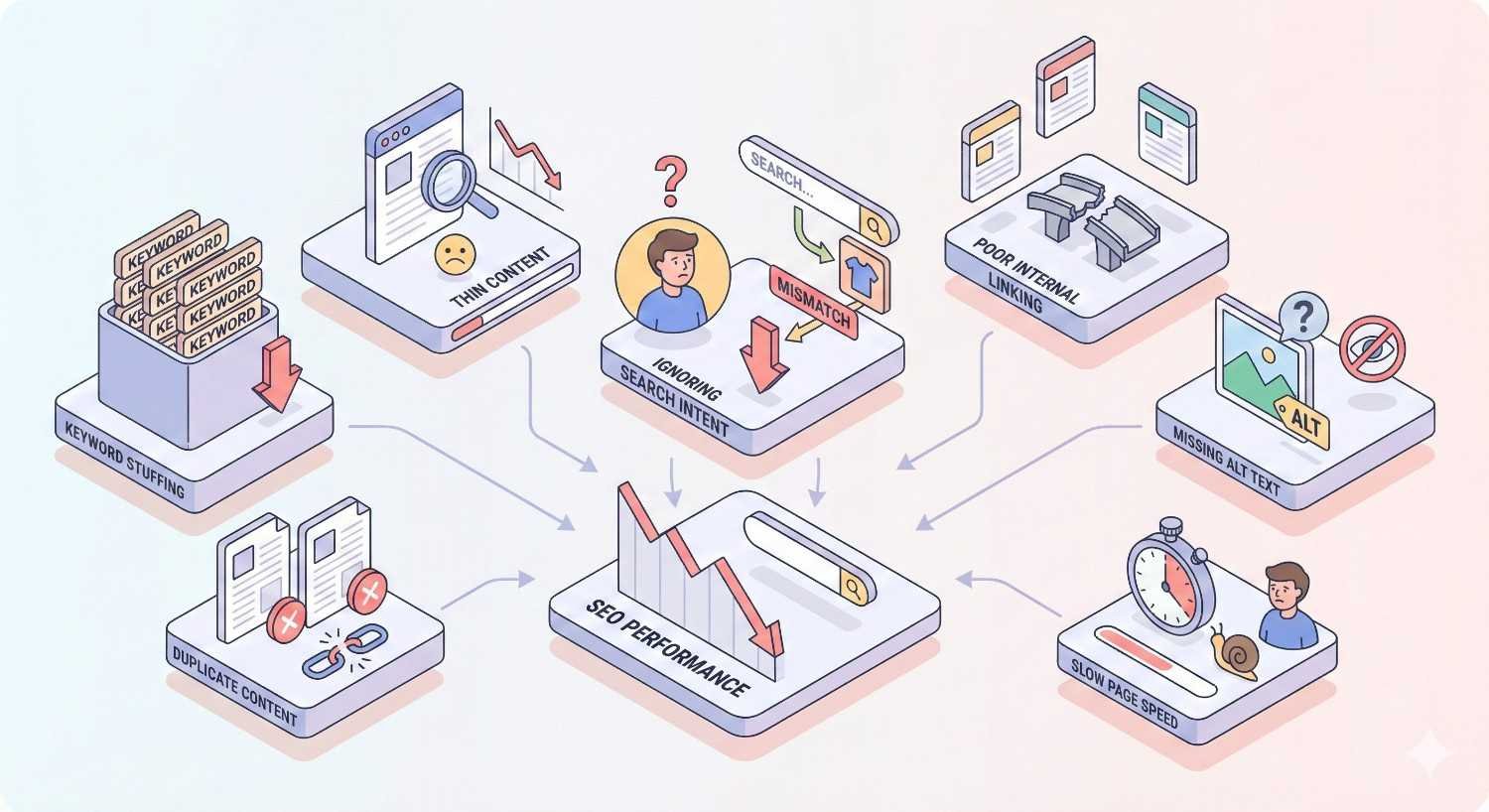
Common Content Writing Mistakes That Hurt SEO
Avoiding common mistakes prevents wasted effort and protects existing rankings.
Keyword Stuffing and Over-Optimization
Keyword stuffing means unnaturally forcing keywords into content. It creates poor reading experiences and triggers algorithmic penalties.
Modern SEO requires natural keyword usage. Include primary keywords in titles, headings, and body content, but prioritize readability. Use semantic variations and related terms instead of repeating exact phrases.
Over-optimization extends beyond keywords. Excessive internal links, manipulative anchor text, or artificial content structures can all trigger penalties. Focus on user value first, optimization second.
Thin or Duplicate Content
Thin content provides little value. Pages with minimal text, shallow coverage, or no unique insights struggle to rank and can drag down site quality.
Duplicate content creates confusion for search engines. When multiple pages target the same keywords with similar content, they compete against each other. Consolidate thin pages and ensure each page offers unique value.
Avoid creating pages just to target keyword variations. If topics overlap significantly, cover them in a single comprehensive page rather than multiple thin ones.
Ignoring Search Intent
Mismatched intent kills rankings. If users want a how-to guide and you provide a product page, they will leave immediately. Search engines notice and adjust rankings accordingly.
Research intent before writing. Analyze what currently ranks for your target keywords. If top results are all guides, create a guide. If they are comparison pages, create a comparison. Match the format users expect.
Consider intent throughout content. Even within a single page, different sections may address different intents. Structure content to satisfy the primary intent first, then address secondary needs.
Neglecting Content Updates
Outdated content loses rankings over time. Information becomes inaccurate, competitors publish better content, and freshness signals decay.
Schedule regular content audits. Review performance data to identify declining pages. Update statistics, refresh examples, and expand coverage to maintain relevance.
Treat content as an ongoing investment, not a one-time project. The best-performing pages often receive multiple updates over their lifetime, each improving performance incrementally.
Building a Content Strategy for Sustainable SEO Growth
Random content creation produces random results. Strategic planning ensures consistent progress toward business goals.
Aligning Content with Business Goals
Content should support specific business objectives. Define what success looks like before planning content.
If the goal is lead generation, prioritize content targeting users in consideration and decision stages. If the goal is brand awareness, focus on top-of-funnel informational content that reaches broader audiences.
Map content to the customer journey. Identify what questions prospects ask at each stage and create content that answers them. This ensures content moves users toward conversion, not just traffic.
Creating a Content Calendar for Consistency
Consistency matters for SEO. Regular publishing signals an active, maintained site. It also builds content volume faster, expanding ranking opportunities.
A content calendar plans what to publish and when. It ensures balanced coverage across topics, prevents gaps, and maintains sustainable production pace.
Plan content in advance but remain flexible. Leave room for timely topics, trending opportunities, or strategic pivots based on performance data.
Scaling Content Production Without Sacrificing Quality
Growing content output requires systems and processes. Without them, quality suffers as volume increases.
Document content standards and guidelines. Create templates for common content types. Establish review processes that catch errors before publication.
Consider whether to build internal capacity or partner with external resources. Internal teams offer control and brand knowledge. External partners provide scalability and specialized expertise.
Quality should never be sacrificed for quantity. One excellent piece outperforms ten mediocre ones. Scale only as fast as you can maintain standards.
When to Hire Professional SEO Content Writers
Not every business should produce content internally. Recognizing when to seek help prevents wasted resources and accelerates results.
Signs Your Content Strategy Needs Expert Help
Several indicators suggest professional help would benefit your content efforts.
Stagnant rankings despite consistent publishing indicate content quality or strategy issues. Fresh perspectives and specialized expertise can identify problems internal teams miss.
Lack of internal resources or expertise creates bottlenecks. If content production competes with other priorities, output suffers. Dedicated content professionals maintain consistent quality and volume.
Competitive markets require higher content standards. When competitors invest heavily in content, matching their quality requires equivalent investment. Professional writers bring efficiency and expertise that accelerate results.
What to Look for in an SEO Content Partner
Choosing the right content partner affects outcomes significantly.
Look for demonstrated SEO knowledge, not just writing ability. Content must be strategically optimized, not just well-written. Partners should understand keyword research, search intent, and technical optimization.
Review portfolios and case studies. Past results indicate future performance. Look for examples in your industry or similar competitive environments.
Assess communication and process. Good partners collaborate effectively, incorporate feedback, and maintain consistent quality. Clear processes prevent misunderstandings and ensure deliverables meet expectations.
Consider scalability and specialization. Partners should handle your current needs and grow with you. Specialized expertise in your industry adds value through deeper understanding of your audience and topics.
Conclusion
Content writing is not just one component of SEO. It is the foundation that makes every other optimization effort worthwhile. From keyword targeting and topical authority to user engagement and link acquisition, quality content drives the metrics that determine search visibility.
Building sustainable organic growth requires strategic content that serves both search engines and human readers. This means understanding search intent, covering topics comprehensively, and continuously improving based on performance data.
At White Label SEO Service, we help businesses build content strategies that deliver measurable results. Contact us to discuss how strategic content writing can accelerate your organic growth and drive real business outcomes.
Frequently Asked Questions
Does content writing guarantee SEO rankings?
No, content writing alone does not guarantee rankings. SEO success depends on multiple factors including content quality, technical SEO, backlinks, and competition levels. However, quality content is essential. Without it, other optimization efforts cannot succeed.
How often should I publish new content for SEO?
Publishing frequency depends on your resources and goals. Consistency matters more than volume. Publishing one high-quality piece weekly outperforms publishing daily low-quality content. Start with a sustainable pace and increase as capacity allows.
What is the ideal word count for SEO content?
There is no universal ideal word count. Length should match topic complexity and user intent. Some queries require brief answers. Others demand comprehensive guides. Analyze what ranks for your target keywords and match or exceed that depth.
Can AI-generated content help SEO?
AI can assist content production but requires human oversight. Search engines evaluate content quality regardless of how it was created. AI-generated content that provides genuine value can rank. Low-quality AI content that lacks accuracy or depth will not.
How does content writing compare to link building for SEO?
Both are essential and complementary. Content creates something worth ranking and linking to. Links signal authority that helps content rank higher. Prioritizing one over the other limits results. Effective SEO strategies invest in both.
How much content do I need for SEO?
Content needs vary by industry, competition, and goals. Competitive markets require more content to establish authority. Start by covering core topics comprehensively, then expand based on performance data and opportunity analysis.
Should I write content myself or hire professionals?
This depends on your expertise, time, and resources. Writing yourself works if you have subject matter knowledge and can maintain consistency. Hiring professionals makes sense when internal capacity is limited or specialized SEO expertise is needed.