
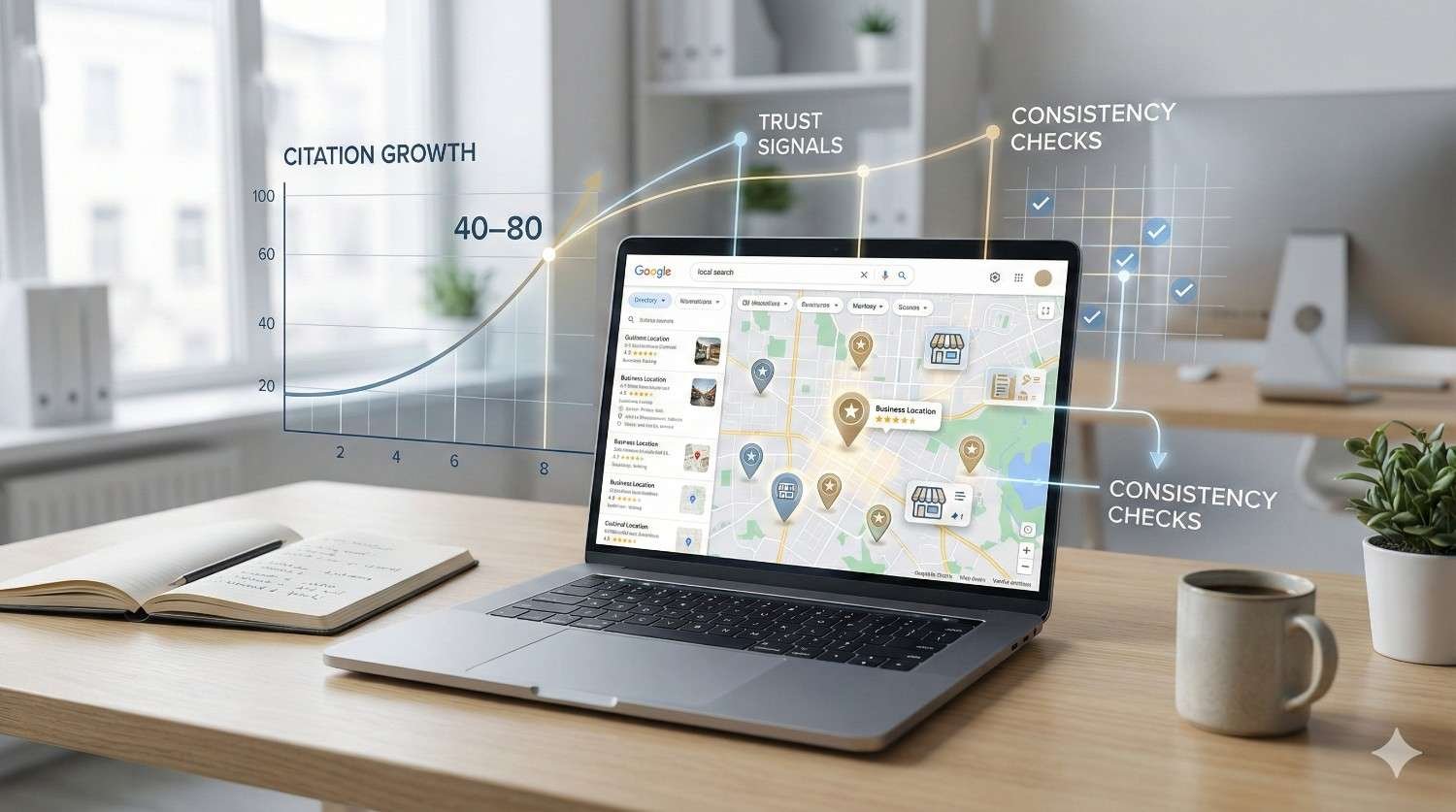
Most businesses need between 40 and 80 high-quality citations to compete effectively in local search results. However, this number varies significantly based on your industry, competition level, and geographic market size.
Getting your citation count right matters because citations remain one of the top local ranking factors. Too few citations leave you invisible to local searchers. Too many low-quality listings create inconsistencies that confuse search engines and damage your rankings.
This guide breaks down exactly how many citations you need, where to build them, and how to develop a citation strategy that drives real local visibility without wasting resources on directories that don’t move the needle.
What Are Citations in Local SEO?
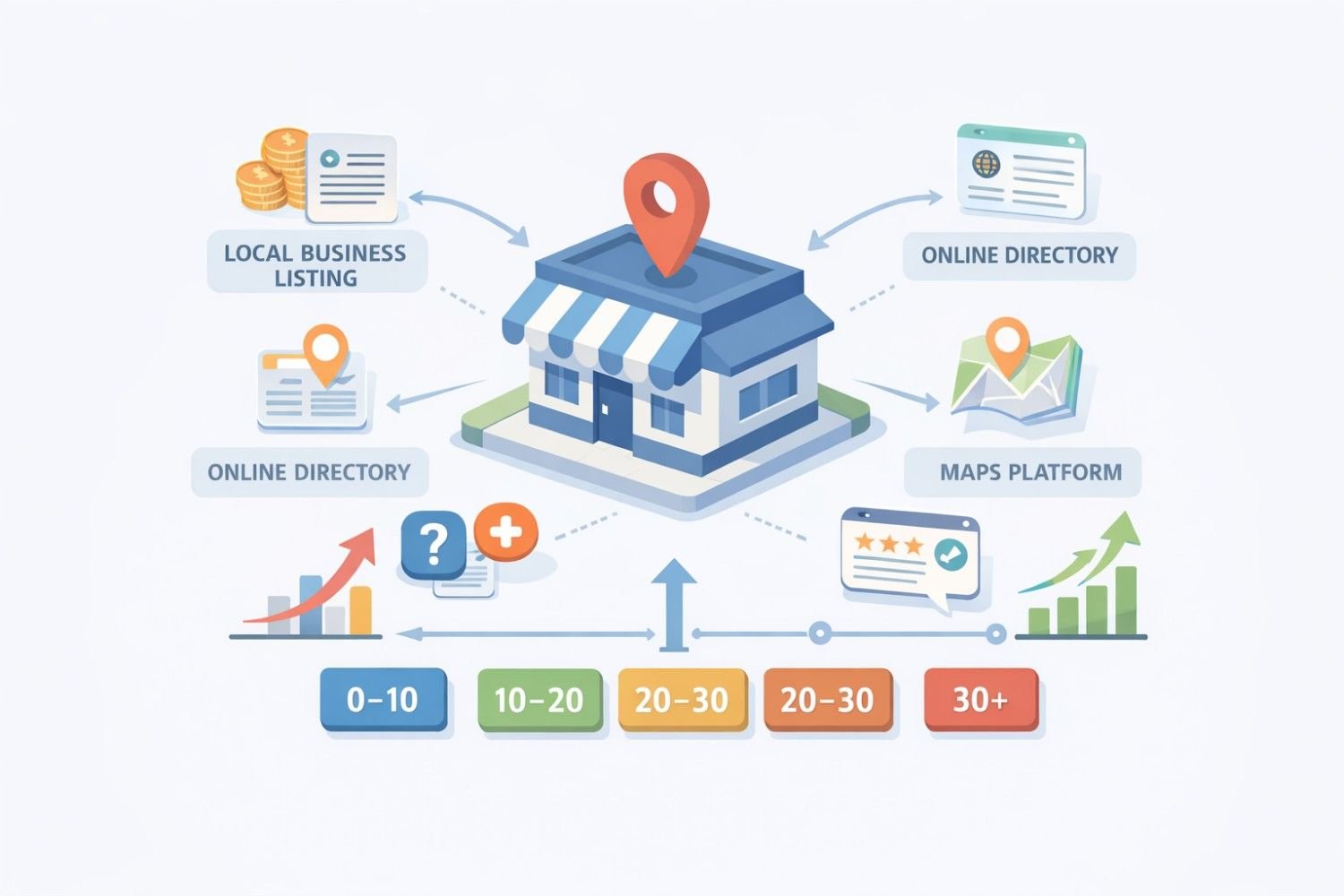
Citations are online mentions of your business that include your company name, address, and phone number. These listings appear on business directories, social platforms, industry websites, and local data aggregators. Search engines like Google use citations to verify your business information and determine your relevance for local searches.
The more consistent and widespread your business information appears across trusted sources, the more confidence search engines have in displaying your business for relevant local queries.
NAP Consistency Explained
NAP stands for Name, Address, and Phone Number. These three data points must match exactly across every citation you build. Even small variations create problems.
Using “Street” in one listing and “St.” in another might seem minor. But search engines treat inconsistent NAP data as a trust signal issue. When your information doesn’t match, algorithms question whether your business details are accurate, which can suppress your local rankings.
Structured vs. Unstructured Citations
Structured citations appear in formal business directory listings where your NAP data sits in designated fields. Think Google Business Profile, Yelp, and Yellow Pages. These carry significant weight because the format makes verification straightforward.
Unstructured citations occur when your business information appears within blog posts, news articles, or other content without a formal listing format. A local newspaper mentioning your business address in an article creates an unstructured citation. Both types contribute to your citation profile, but structured citations typically deliver more direct ranking impact.
How Many Citations Do Most Businesses Need?
The right citation count depends on what you’re trying to achieve and who you’re competing against. A neighborhood coffee shop faces different requirements than a regional law firm or a national franchise location.
Research from BrightLocal’s Local Citation Trust Report shows that businesses ranking in the local pack typically have between 50 and 100 citations from quality sources. However, the top performers often have 80+ citations with near-perfect NAP consistency.
Citation Benchmarks by Business Type
Different industries require different citation volumes:
Service-area businesses (plumbers, electricians, HVAC) typically need 50-80 citations because they compete across wider geographic areas and face moderate competition.
Brick-and-mortar retail locations often succeed with 40-60 citations since their competition is more localized and foot traffic matters more than search volume.
Professional services (lawyers, accountants, medical practices) frequently require 70-100+ citations due to high competition and the trust signals these industries demand.
Restaurants and hospitality businesses benefit from 60-80 citations across general directories plus food-specific platforms like TripAdvisor and OpenTable.
New Businesses vs. Established Businesses
New businesses should focus on building 30-50 foundational citations within their first three to six months. This establishes baseline visibility and creates the trust signals search engines need to start ranking your business locally.
Established businesses with existing citation profiles should audit what they have before adding more. Often, cleaning up inconsistencies across 40-60 existing citations delivers better results than building 50 new ones with the same errors.
Local vs. National Citation Requirements
Businesses targeting a single city or neighborhood can often compete effectively with 40-60 well-maintained citations focused on local directories and community resources.
Companies serving multiple cities or operating nationally need significantly more. Each geographic market requires its own set of local citations, which can push total citation counts to 150-300+ for multi-location businesses.
Factors That Determine Your Citation Count
Your ideal citation number isn’t arbitrary. Several measurable factors determine how many listings you need to compete effectively.
Industry and Competition Level
Highly competitive industries require more citations. If your top three local competitors each have 80+ citations with strong NAP consistency, you’ll likely need similar volume to compete.
Run a competitive analysis before setting targets. Tools like Moz Local and BrightLocal let you see exactly how many citations your competitors have and where they’re listed.
Geographic Market Size
Larger markets mean more competition and higher citation requirements. A dentist in New York City faces dramatically different citation needs than one in a town of 20,000 people.
Metropolitan areas typically require 70-100+ citations to compete. Smaller markets often allow businesses to rank well with 30-50 quality citations.
Current Citation Profile Strength
Your starting point matters. A business with 25 existing citations that contain errors needs a different strategy than one with 60 clean listings.
Audit your current profile first. If you find significant inconsistencies, prioritize fixing existing citations before building new ones. A clean profile of 40 citations outperforms a messy profile of 80.
Quality vs. Quantity: What Matters More?
Citation quality consistently outweighs citation quantity. Search engines have become sophisticated at identifying which sources carry authority and which exist purely for link building.
Why Citation Accuracy Beats Volume
Google’s local search documentation emphasizes that consistent, accurate business information across the web improves local ranking potential. The algorithm rewards businesses that maintain clean data across trusted sources.
A business with 50 accurate citations on authoritative platforms will typically outrank a competitor with 100 citations scattered across low-quality directories with inconsistent information.
Focus on getting your NAP data perfect on high-authority sites before expanding to secondary directories.
The Danger of Low-Quality Citations
Low-quality citations create several problems:
Inconsistency multiplication. Cheap citation services often submit slightly different versions of your business information, creating the exact inconsistencies that hurt rankings.
Spam association. Some directories exist primarily as link farms. Having your business listed alongside spammy companies can negatively impact how search engines perceive your business.
Maintenance burden. Every citation you build requires ongoing monitoring. Low-quality directories often have poor update processes, making it difficult to correct errors later.
Where to Build Citations for Maximum Impact
Not all citation sources deliver equal value. Prioritize platforms that search engines trust and that your potential customers actually use.
Core Citation Sources Every Business Needs
Every business should secure listings on these foundational platforms:
Google Business Profile remains the most important citation for local SEO. Claim, verify, and fully optimize this listing before anything else.
Apple Maps powers local search for iPhone users and Siri queries. Submit your business through Apple Business Connect.
Bing Places matters more than many businesses realize, especially for voice search through Cortana and Microsoft products.
Yelp carries significant authority and drives direct traffic for many service businesses.
Facebook Business Page serves as both a citation and a customer engagement platform.
Data aggregators like Foursquare, Data Axle, and Localeze feed information to hundreds of smaller directories. Getting listed correctly with aggregators creates a multiplier effect.
Industry-Specific Directories
After covering core platforms, target directories specific to your industry:
Healthcare: Healthgrades, Zocdoc, Vitals, WebMD Legal: Avvo, FindLaw, Justia, Lawyers.com Home services: Angi, HomeAdvisor, Houzz, Thumbtack Restaurants: TripAdvisor, OpenTable, Zomato, MenuPages Automotive: Cars.com, AutoTrader, CarGurus, DealerRater
Industry directories often carry more weight for relevant searches than general business directories.
Local and Regional Citation Opportunities
Local citations demonstrate geographic relevance:
Chamber of Commerce listings signal legitimate local business presence.
Local newspaper and news site business directories often carry strong domain authority.
City and regional business directories specific to your area help establish local relevance.
Local blog mentions and community website features create valuable unstructured citations.
How to Audit Your Current Citation Profile
Before building new citations, understand what you already have. A thorough audit reveals inconsistencies, duplicate listings, and opportunities you might be missing.
Tools for Citation Tracking
Several tools simplify citation auditing:
Moz Local scans major directories and data aggregators to identify where your business is listed and flag inconsistencies.
BrightLocal provides detailed citation tracking with competitive comparison features.
Whitespark offers citation finding tools that identify both existing listings and new opportunities.
Yext provides enterprise-level citation management with real-time sync capabilities across hundreds of directories.
Most tools offer free basic scans that reveal your current citation count and major inconsistencies.
Identifying and Fixing Inconsistencies
Common inconsistencies to look for:
Name variations: “ABC Company” vs. “ABC Company LLC” vs. “ABC Co.”
Address formatting: “123 Main Street, Suite 100” vs. “123 Main St. #100”
Phone number formats: “(555) 123-4567” vs. “555-123-4567” vs. “5551234567”
Old addresses or phone numbers from previous locations or phone system changes.
Create a master NAP document with your exact, standardized business information. Use this as the reference for all citation building and correction work.
Building a Citation Strategy That Works
Effective citation building follows a systematic approach rather than random directory submissions. A structured strategy delivers better results with less wasted effort.
Prioritizing High-Authority Platforms
Build citations in priority order:
Tier 1 (Weeks 1-2): Google Business Profile, Apple Maps, Bing Places, Facebook, Yelp, and major data aggregators.
Tier 2 (Weeks 3-4): Industry-specific directories relevant to your business category.
Tier 3 (Weeks 5-8): Local directories, chamber of commerce, regional business listings.
Tier 4 (Ongoing): Secondary general directories and niche opportunities as they arise.
This approach ensures you capture the highest-impact citations first while building a comprehensive profile over time.
Pacing Your Citation Building
Avoid building too many citations too quickly. A sudden spike in directory listings can appear unnatural to search algorithms.
New businesses should aim for 5-10 citations per week during the initial building phase.
Established businesses expanding their citation profile can typically add 3-5 new citations per week without triggering any concerns.
Spread submissions across different directory types rather than hitting all directories in one category simultaneously.
Monitoring and Maintaining Citations
Citation building isn’t a one-time project. Ongoing maintenance ensures your information stays accurate:
Quarterly audits catch inconsistencies before they multiply.
Immediate updates when any business information changes (address, phone, hours, services).
Duplicate monitoring identifies and removes redundant listings that can confuse search engines.
Review management on citation platforms that support customer reviews adds another layer of local SEO value.
Set calendar reminders for regular citation health checks. The businesses that maintain clean citation profiles consistently outperform those that build and forget.
Conclusion
The right citation count for your business depends on your industry, competition, and geographic market. Most businesses need 40-80 quality citations to compete effectively, with highly competitive industries requiring more. Quality and consistency matter far more than raw numbers.
Building citations strategically across high-authority platforms, industry directories, and local sources creates the trust signals search engines need to rank your business for local searches. Regular audits and maintenance protect your investment and prevent the inconsistencies that damage rankings.
We help businesses build and maintain citation profiles that drive real local visibility. White Label SEO Service provides comprehensive local SEO solutions, from citation building to ongoing monitoring. Contact us to discuss your citation strategy and start improving your local search rankings.
Frequently Asked Questions
How many citations does a new business need?
New businesses should build 30-50 foundational citations within their first three to six months. Start with core platforms like Google Business Profile, Apple Maps, and major data aggregators before expanding to industry-specific and local directories.
Can you have too many citations?
Yes. Building citations on low-quality directories or creating duplicate listings can hurt your local SEO. Focus on quality sources with strong domain authority rather than maximizing raw citation count. 50 accurate citations on trusted platforms outperform 150 scattered across questionable directories.
How long does it take for citations to impact rankings?
Most businesses see measurable local ranking improvements within 8-12 weeks of building a solid citation foundation. Some high-authority citations like Google Business Profile can impact rankings within days, while others take longer to be indexed and influence algorithms.
Are paid citation services worth it?
Quality paid citation services that manually build and verify listings can save significant time and ensure accuracy. Avoid cheap automated services that submit inconsistent information. The cost of fixing bad citations often exceeds the savings from discount services.
What happens if my citations have inconsistent information?
Inconsistent NAP data confuses search engines and reduces their confidence in your business information. This typically results in lower local rankings and reduced visibility in map results. Fixing inconsistencies should be prioritized over building new citations.
Should I focus on citations or backlinks first?
For local businesses, citations and backlinks serve different purposes. Citations establish local relevance and trust, while backlinks build domain authority. Most local businesses should secure core citations first (Google Business Profile, major directories) before investing heavily in backlink campaigns.
How often should I audit my citations?
Conduct a comprehensive citation audit at least quarterly. Perform immediate audits whenever your business information changes, such as a new phone number, address change, or business name update. Regular monitoring prevents small inconsistencies from multiplying across your citation profile.