
Link building remains the most influential off-page ranking factor in SEO, directly impacting where your website appears in search results. When executed correctly, a strategic link building campaign can increase organic traffic by 50-100% within six to twelve months.
The challenge most businesses face is not understanding that backlinks matter, but knowing which tactics actually work without risking Google penalties. This guide breaks down proven, white hat link building strategies that deliver measurable results.
You will learn how to evaluate link quality, execute effective outreach campaigns, avoid common mistakes, and build a sustainable strategy tailored to your business type.

What Is Link Building and Why Does It Matter for SEO?
Link building is the process of acquiring hyperlinks from external websites that point back to your own. These inbound links, commonly called backlinks, serve as votes of confidence in the eyes of search engines. When a reputable website links to your content, it signals that your page offers value worth referencing.
Search engines like Google use backlinks as one of the primary signals for determining which pages deserve to rank for competitive queries. Without a deliberate link building strategy, most websites struggle to compete for valuable keywords, regardless of how strong their on-page optimization might be.
How Search Engines Use Links to Determine Authority
Google’s original algorithm, PageRank, was built on the concept that links function like academic citations. A page that receives many links from authoritative sources is considered more trustworthy and relevant than a page with few or low-quality links.
Modern search algorithms have evolved significantly, but the core principle remains intact. Links help search engines discover new pages through crawling, understand relationships between content, and evaluate the relative authority of competing pages.
The quality of linking domains matters more than raw quantity. A single backlink from a high-authority publication like Forbes or an industry-leading blog can outweigh hundreds of links from low-quality directories. Search engines evaluate the linking page’s authority, relevance to your topic, and the context surrounding the link placement.
The Relationship Between Backlinks and Organic Rankings
Multiple correlation studies consistently show that pages ranking in the top positions have significantly more backlinks than lower-ranking pages. Backlinko’s analysis of 11.8 million search results found that the number one result has an average of 3.8x more backlinks than positions two through ten.
However, correlation does not equal causation. Backlinks work in combination with content quality, user experience signals, and technical SEO factors. A page with excellent content but no backlinks will struggle to rank, just as a page with many backlinks but thin content will eventually lose rankings.
The practical takeaway is straightforward. If you want to rank for competitive keywords, you need both high-quality content and a proactive approach to earning backlinks from relevant, authoritative sources.
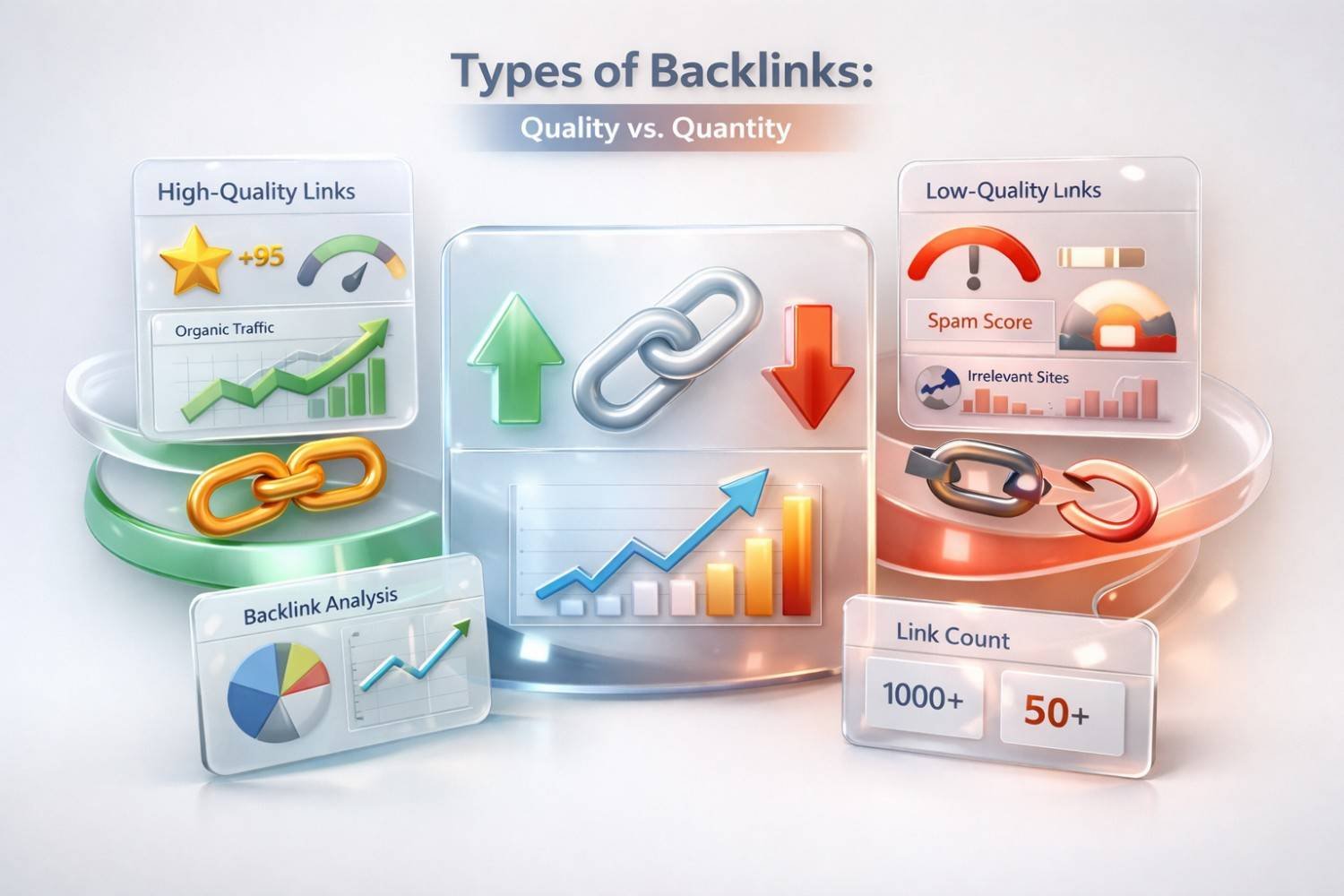
Types of Backlinks: Understanding Link Quality vs. Quantity
Not all backlinks carry equal weight. Understanding the different types of links helps you prioritize efforts and avoid wasting resources on tactics that deliver minimal SEO value.
Dofollow vs. Nofollow Links
Dofollow links pass PageRank and other ranking signals from the linking page to your website. These are the links that directly influence your search rankings and represent the primary target for most link building campaigns.
Nofollow links include a rel=”nofollow” attribute that instructs search engines not to pass ranking signals. Google introduced this attribute in 2005 to combat comment spam. Common sources of nofollow links include social media platforms, Wikipedia, and many news site comment sections.
While nofollow links do not directly boost rankings, they still provide value. They drive referral traffic, increase brand visibility, and create a natural-looking link profile. Google has also indicated that nofollow is now treated as a “hint” rather than a directive, meaning some nofollow links may pass limited value.
A healthy backlink profile includes a mix of both dofollow and nofollow links. An unnatural ratio of exclusively dofollow links can actually raise red flags with search algorithms.
Editorial Links vs. Self-Created Links
Editorial links are earned naturally when another website chooses to reference your content without any direct action on your part. These links carry the highest value because they represent genuine endorsements. A journalist citing your research, a blogger recommending your tool, or an industry publication referencing your guide are all examples of editorial links.
Self-created links are placed by you or your team on external platforms. Examples include forum signatures, blog comment links, directory submissions, and user profile links. Most self-created links provide minimal SEO value, and aggressive self-linking can trigger spam penalties.
The distinction matters for strategy development. Your primary focus should be creating content and building relationships that earn editorial links. Self-created links should be limited to legitimate business listings and relevant community participation.
What Makes a High-Quality Backlink?
Several factors determine whether a backlink will meaningfully impact your rankings.
Domain Authority: Links from established, trusted websites carry more weight than links from new or low-authority domains. A backlink from a domain with a Domain Rating of 70+ is significantly more valuable than dozens of links from DR 20 sites.
Topical Relevance: A link from a website in your industry or a closely related field passes more value than a link from an unrelated source. A SaaS company benefits more from a link on a technology blog than from a cooking recipe site.
Link Placement: Links embedded within the main body content of a page carry more weight than links in sidebars, footers, or author bios. Contextual links surrounded by relevant text signal stronger editorial endorsement.
Anchor Text: The clickable text of a link provides context about the linked page’s topic. Natural anchor text variation is important. Over-optimized anchor text with exact-match keywords can trigger penalties.
Traffic Potential: Links from pages that receive actual visitors provide referral traffic benefits beyond SEO value. A link on a popular resource page can drive consistent visitors for years.
White Hat Link Building Strategies That Work in 2026
White hat link building focuses on earning links through legitimate methods that align with search engine guidelines. These strategies require more effort than manipulative tactics but deliver sustainable results without penalty risk.
Creating Linkable Assets and Link-Worthy Content
The foundation of successful link building is content that other websites genuinely want to reference. Linkable assets are content pieces specifically designed to attract backlinks.
Original Research and Data Studies: Content featuring unique data, surveys, or industry analysis attracts links from journalists, bloggers, and researchers who need sources to cite. Publishing annual industry reports, benchmark studies, or original survey results positions your brand as a primary source.
Comprehensive Guides and Resources: In-depth guides that cover a topic more thoroughly than existing content become go-to references. These pillar pages earn links over time as other content creators discover and reference them.
Free Tools and Calculators: Interactive tools that solve specific problems attract links from resource pages and how-to articles. A mortgage calculator, SEO audit tool, or ROI calculator can generate hundreds of backlinks organically.
Visual Assets: Infographics, data visualizations, and original diagrams get shared and embedded across the web. While infographic link building has become more competitive, well-designed visuals on trending topics still attract links.
Expert Roundups and Interviews: Featuring insights from industry experts creates content that participants naturally share and link to. This approach also builds relationships for future link opportunities.
Guest Posting and Contributor Outreach
Guest posting involves writing articles for other websites in exchange for a byline and typically one or two backlinks to your site. When done correctly, guest posting builds authority, expands audience reach, and earns relevant backlinks.
The key is targeting publications that your actual audience reads, not just any site that accepts guest posts. Focus on industry blogs, trade publications, and niche websites with engaged readerships.
Effective guest posting requires providing genuine value to the host publication’s audience. Pitch unique angles, share original insights, and deliver content quality that matches or exceeds the publication’s standards.
Avoid guest post farms and sites that exist primarily to sell links. These low-quality placements provide minimal value and can associate your brand with spammy practices.
Digital PR and Brand Mentions
Digital PR applies traditional public relations tactics to earn online coverage and backlinks. This approach focuses on getting your brand, products, or experts featured in news articles, industry publications, and influential blogs.
Newsworthy angles include product launches, company milestones, original research findings, expert commentary on trending topics, and data-driven stories relevant to journalists’ beats.
Building relationships with journalists and editors in your industry creates ongoing opportunities for coverage. Follow relevant reporters on social media, engage with their content, and position yourself as a helpful source before you need coverage.
Unlinked brand mentions represent low-hanging fruit for digital PR. Use tools like Google Alerts or Mention to find instances where your brand is referenced without a link, then reach out to request link additions.
Broken Link Building
Broken link building involves finding dead links on relevant websites and suggesting your content as a replacement. This approach provides value to webmasters by helping them fix user experience issues while earning backlinks for your site.
The process starts with identifying resource pages, guides, and articles in your niche that link to external sources. Use tools like Ahrefs, Check My Links browser extension, or Screaming Frog to find broken outbound links on these pages.
Once you identify broken links pointing to content similar to what you offer, reach out to the webmaster. Explain that you found a broken link on their page and suggest your relevant content as an alternative resource.
Success rates improve when your replacement content closely matches the original linked resource. Creating content specifically to replace popular broken links can be highly effective for competitive topics.
Resource Page Link Building
Resource pages are curated lists of helpful links on specific topics. Many industry blogs, educational institutions, and organizations maintain resource pages that link to valuable external content.
Finding resource pages requires targeted search queries. Use operators like “keyword + resources,” “keyword + useful links,” “keyword + recommended sites,” or “keyword + inurl:resources” to discover opportunities.
Evaluate each resource page for relevance and authority before reaching out. The best opportunities are pages that already link to content similar to yours and are maintained by legitimate organizations.
Your outreach should explain why your content deserves inclusion. Highlight what makes your resource unique, comprehensive, or more current than existing listings.
HARO and Journalist Outreach
Help A Reporter Out (HARO) and similar platforms connect journalists with expert sources. Responding to relevant queries can earn backlinks from major publications including The New York Times, Forbes, Inc., and hundreds of industry-specific outlets.
Success with HARO requires speed, relevance, and concise responses. Journalists receive dozens of pitches for each query, so your response must immediately demonstrate expertise and provide quotable insights.
Create a system for monitoring queries in your areas of expertise. Respond within hours of publication, lead with your credentials, and provide specific, actionable quotes rather than generic statements.
Alternative platforms like Qwoted, SourceBottle, and Terkel offer similar opportunities with less competition than HARO’s free tier.
Link Building Outreach: How to Get Websites to Link to You
Even the best content rarely attracts links without proactive promotion. Outreach is the process of contacting website owners, editors, and content creators to request links or suggest content collaborations.
Finding Link Prospects and Building a Target List
Effective outreach starts with identifying the right targets. Random outreach to irrelevant websites wastes time and damages your sender reputation.
Competitor Backlink Analysis: Examine where your competitors earn links. If a website linked to similar content from a competitor, they may be willing to link to your superior resource. Tools like Ahrefs, Moz, and Semrush reveal competitor backlink profiles.
Content-Based Prospecting: Search for articles that cover topics related to your linkable asset. Authors who write about your subject area are natural link prospects.
Resource Page Discovery: As mentioned earlier, resource pages in your niche represent high-probability targets.
Broken Link Opportunities: Sites with broken links to content similar to yours are pre-qualified prospects.
Organize prospects in a spreadsheet or CRM with contact information, website metrics, relevant pages, and personalization notes. Prioritize outreach based on domain authority, relevance, and likelihood of response.
Crafting Effective Outreach Emails
Generic, templated outreach emails get ignored or marked as spam. Effective outreach requires personalization, clear value propositions, and professional communication.
Subject Lines: Keep subject lines short, specific, and curiosity-inducing. Avoid spam trigger words and excessive punctuation. Reference the recipient’s content or website to signal personalization.
Opening Lines: Demonstrate that you actually visited their website. Reference a specific article, share a genuine compliment, or mention a connection point. Generic openings like “I love your blog” signal mass outreach.
Value Proposition: Clearly explain what you are offering and why it benefits them. Focus on how linking to your content helps their audience rather than how it helps you.
Call to Action: Make your request specific and easy to fulfill. Instead of asking them to “check out your site,” suggest a specific page where your content would add value.
Professional Formatting: Use proper grammar, keep emails concise, and include a professional signature with your name and website.
Follow-Up Strategies and Relationship Building
Most successful link placements require follow-up. Decision-makers are busy, and your initial email may get buried or forgotten.
Send a follow-up email three to five days after your initial outreach if you receive no response. Keep follow-ups brief and add new information or a different angle rather than simply repeating your original pitch.
Limit follow-ups to two or three attempts. Excessive follow-up damages relationships and can get your domain flagged as spam.
Beyond individual campaigns, focus on building genuine relationships with key publishers in your industry. Engage with their content on social media, share their articles, and provide value before asking for links. Long-term relationships generate ongoing link opportunities.
How to Evaluate Link Quality and Domain Authority
Not every link opportunity deserves your time. Learning to quickly evaluate link quality helps you focus efforts on high-impact opportunities.
Key Link Metrics: DA, DR, Trust Flow, and Relevance
Domain Authority (DA): Moz’s metric predicting how well a domain will rank, scored 0-100. Higher DA generally indicates stronger link value, though the metric has limitations.
Domain Rating (DR): Ahrefs’ equivalent metric measuring the strength of a website’s backlink profile. Like DA, higher scores suggest more authoritative domains.
Trust Flow: Majestic’s metric measuring the quality of links pointing to a website. High Trust Flow indicates links from trustworthy sources.
Citation Flow: Majestic’s metric measuring link quantity regardless of quality. The ratio of Trust Flow to Citation Flow indicates link profile quality.
Topical Relevance: Perhaps the most important factor. A link from a relevant industry website often provides more value than a link from a higher-authority but unrelated domain.
No single metric tells the complete story. Evaluate prospects using multiple data points and manual review of the actual website.
Analyzing Competitor Backlink Profiles
Competitor analysis reveals proven link opportunities and informs your strategy. If competitors rank well with certain types of backlinks, similar links likely benefit your site.
Export competitor backlink data from Ahrefs, Moz, or Semrush. Filter for dofollow links from unique domains with reasonable authority scores.
Identify patterns in competitor link profiles. Do they earn links from specific types of publications? Do they have relationships with particular bloggers? What content formats attract the most links?
Look for link gaps where competitors have placements you lack. These represent immediate outreach opportunities.
Tools for Link Analysis and Prospecting
Ahrefs: Comprehensive backlink database with competitor analysis, content explorer, and rank tracking. Industry standard for link research.
Semrush: All-in-one SEO platform with backlink analytics, link building tools, and outreach features.
Moz Link Explorer: Backlink checker with Domain Authority metrics and spam score analysis.
Majestic: Specialized backlink tool with Trust Flow and Citation Flow metrics.
Hunter.io: Email finder for locating contact information during outreach.
BuzzStream: Outreach CRM for managing link building campaigns at scale.
Pitchbox: Automated outreach platform with prospecting and follow-up features.
Link Building Mistakes to Avoid
Understanding what not to do is as important as knowing effective strategies. Link building mistakes can result in wasted resources, damaged relationships, or Google penalties.
Black Hat Tactics and Google Penalties
Black hat link building attempts to manipulate search rankings through tactics that violate Google’s guidelines. While these approaches may produce short-term gains, they carry significant penalty risk.
Private Blog Networks (PBNs): Networks of websites created solely to build links. Google actively identifies and penalizes PBN links.
Link Farms: Websites that exist only to exchange links with no real content value.
Automated Link Building: Software that creates links automatically through blog comments, forum posts, or directory submissions.
Hidden Links: Links concealed through CSS, tiny font sizes, or color matching with backgrounds.
Google penalties for manipulative link building range from ranking demotions to complete removal from search results. Manual actions require disavowing toxic links and submitting reconsideration requests, a process that can take months.
Buying Links and Link Schemes
Purchasing links directly violates Google’s guidelines. This includes paying for guest posts with followed links, sponsored content without proper disclosure, and any exchange of money for link placement.
Link schemes extend beyond direct purchases to include excessive link exchanges, large-scale article marketing with keyword-rich links, and using automated programs to create links.
The risk-reward calculation rarely favors paid links. A single penalty can erase years of SEO progress, and recovery is neither quick nor guaranteed.
If you engage in sponsored content or paid partnerships, use nofollow or sponsored attributes as required by Google’s guidelines.
Over-Optimized Anchor Text
Anchor text is the clickable text of a hyperlink. While anchor text provides relevance signals, over-optimization creates unnatural patterns that trigger algorithmic filters.
Natural anchor text profiles include branded anchors (your company name), naked URLs, generic phrases (“click here,” “this article”), and varied keyword-related phrases. An unnatural profile features high percentages of exact-match keyword anchors.
If 40% or more of your anchors use the same exact-match keyword phrase, you likely have an over-optimization problem. Diversify anchor text by focusing on natural language variations and branded mentions.
How Long Does Link Building Take to Impact Rankings?
Link building is a long-term investment. Understanding realistic timelines helps set appropriate expectations and maintain commitment through the initial months before results materialize.
Realistic Timelines for Link Building ROI
Most link building campaigns require three to six months before producing measurable ranking improvements. Several factors influence this timeline.
Crawl and Indexing Delays: Google must discover, crawl, and process new links before they impact rankings. This process can take weeks to months depending on the linking site’s crawl frequency.
Competitive Landscape: Highly competitive keywords require more links and longer timeframes than less competitive terms.
Starting Position: Sites with existing authority see faster results than new domains building from zero.
Link Velocity: Acquiring links too quickly can appear unnatural. Sustainable link building maintains consistent, gradual growth.
Content Quality: Links drive traffic to your content. If visitors bounce quickly, ranking improvements may be limited regardless of link quantity.
Expect minimal movement in months one through three. Months four through six typically show initial ranking improvements for less competitive terms. Significant results for competitive keywords often require six to twelve months of consistent effort.
Measuring Link Building Success
Track multiple metrics to evaluate link building performance beyond just rankings.
New Referring Domains: The number of unique websites linking to you. Growth in referring domains indicates campaign progress.
Domain Rating/Authority Changes: Improvements in third-party authority metrics suggest your link profile is strengthening.
Organic Traffic Growth: Ultimately, link building should drive more organic visitors. Monitor traffic trends for pages targeted by link building efforts.
Keyword Ranking Movements: Track target keywords weekly or monthly. Look for gradual upward trends rather than expecting immediate jumps.
Referral Traffic: Quality links drive direct visitors. Referral traffic from new backlinks indicates you are earning links from relevant, trafficked pages.
Conversion Impact: Connect link building to business outcomes by tracking leads or sales from organic traffic growth.
Link Building for Different Business Types
Link building strategies should align with your business model, industry, and target audience. What works for a local service business differs significantly from enterprise SaaS link building.
Link Building for Local Businesses
Local businesses benefit from geographically targeted link building that reinforces local relevance signals.
Local Citations: Consistent business listings across directories like Google Business Profile, Yelp, and industry-specific platforms build foundational local links.
Local Sponsorships: Sponsoring community events, sports teams, or charitable organizations earns links from local news coverage and organization websites.
Local Partnerships: Collaborating with complementary local businesses creates cross-promotion and linking opportunities.
Local Press: Community newspapers, local blogs, and regional publications cover local business stories. Newsworthy angles include grand openings, community involvement, and local hiring.
Chamber of Commerce and Business Associations: Membership often includes directory listings with backlinks.
Link Building for E-commerce Sites
E-commerce link building focuses on product pages, category pages, and content that supports the buying journey.
Product Reviews: Sending products to bloggers and influencers for honest reviews generates links and referral traffic.
Affiliate Programs: While affiliate links are typically nofollowed, affiliate relationships often lead to additional editorial coverage.
Supplier and Manufacturer Links: If you are an authorized retailer, request inclusion on supplier “where to buy” pages.
Gift Guides and Roundups: Seasonal gift guides and “best of” product roundups represent high-value link opportunities.
Content Marketing: Creating buying guides, comparison content, and educational resources attracts links that benefit commercial pages through internal linking.
Link Building for SaaS and B2B Companies
SaaS and B2B companies can leverage thought leadership, data, and integrations for link building.
Integration Partner Pages: If your software integrates with other platforms, request inclusion on their integration directories.
Case Studies: Detailed customer success stories attract links from industry publications and the featured customers themselves.
Original Research: B2B audiences value data. Publishing industry benchmarks, survey results, and trend reports positions your brand as a primary source.
Thought Leadership Content: In-depth guides, frameworks, and methodology content earns links from professionals seeking authoritative references.
Software Directories: Listings on G2, Capterra, Software Advice, and industry-specific directories provide foundational backlinks.
Building a Sustainable Link Building Strategy
Effective link building requires consistent effort over time rather than sporadic campaigns. Building a sustainable strategy ensures ongoing results without burnout or resource depletion.
Setting Link Building Goals and KPIs
Define specific, measurable objectives for your link building program.
Quantity Goals: Set monthly or quarterly targets for new referring domains. Base targets on competitive analysis and available resources.
Quality Thresholds: Establish minimum domain authority or relevance requirements for target sites.
Velocity Targets: Determine sustainable link acquisition rates that appear natural to search engines.
Traffic Goals: Connect link building to organic traffic growth targets for specific pages or keyword groups.
ROI Metrics: Calculate cost per link and compare against traffic value and conversion impact.
Review and adjust goals quarterly based on results and changing competitive conditions.
In-House vs. Agency Link Building
Both approaches have advantages depending on your resources, expertise, and scale requirements.
In-House Advantages: Direct control over quality and brand representation. Deeper understanding of your business and audience. Lower ongoing costs at scale.
In-House Challenges: Requires hiring specialized talent. Time-intensive to build processes and relationships. Limited scalability without significant investment.
Agency Advantages: Immediate access to established processes, tools, and relationships. Scalable capacity. Specialized expertise across industries.
Agency Challenges: Higher monthly costs. Less direct control over tactics. Quality varies significantly between providers.
Many businesses use a hybrid approach, handling relationship-based link building internally while outsourcing scalable tactics to agencies.
Integrating Link Building with Content Strategy
Link building and content strategy should operate as integrated functions rather than separate silos.
Content Planning: Include linkability as a criterion when planning new content. Ask whether each piece has potential to attract backlinks.
Promotion Planning: Build promotion and outreach plans before content publication. Identify link prospects during the content development phase.
Content Updates: Refresh and improve existing content that has earned links. Updated content maintains link value and can attract new links.
Internal Linking: Use internal links to distribute authority from pages with strong backlink profiles to pages targeting competitive keywords.
Content Gaps: Use competitor backlink analysis to identify content types that attract links in your industry but are missing from your site.
Conclusion
Link building remains essential for achieving competitive organic rankings, but success requires strategic focus on quality over quantity. The most effective approach combines creating genuinely valuable content with proactive outreach to relevant, authoritative websites.
Building a sustainable link profile takes time, typically six to twelve months before significant results materialize. Patience and consistency matter more than aggressive tactics that risk penalties.
We help businesses develop and execute link building strategies that drive measurable organic growth. Contact White Label SEO Service to discuss how our team can support your link building goals with proven, white hat methodologies.
Frequently Asked Questions About Link Building
How many backlinks do I need to rank on Google?
There is no universal number. Backlink requirements depend entirely on keyword competition and your current domain authority. Analyze the backlink profiles of pages currently ranking for your target keywords to establish realistic benchmarks for your specific situation.
Is link building still important for SEO?
Yes, backlinks remain one of Google’s top three ranking factors. While the algorithm has evolved to better evaluate link quality, authoritative backlinks continue to significantly impact organic rankings for competitive keywords.
What is the best link building strategy for beginners?
Start with creating one comprehensive, linkable asset in your area of expertise. Then focus on guest posting for relevant industry blogs and broken link building, which have relatively low barriers to entry and teach fundamental outreach skills.
How much does link building cost?
Costs vary widely based on approach. In-house link building requires content creation and staff time. Agency services typically range from $1,000 to $10,000+ monthly depending on link quantity and quality targets. Individual high-authority placements can cost $500 to $5,000+ each.
Can link building hurt my website?
Yes, if done incorrectly. Manipulative tactics like buying links, using PBNs, or over-optimizing anchor text can trigger Google penalties. Stick to white hat strategies that focus on earning links through valuable content and genuine relationships.
How do I know if a backlink is good or bad?
Evaluate links based on the linking domain’s authority, topical relevance to your site, placement within content versus footers or sidebars, and whether the site appears legitimate with real traffic. Avoid links from spammy directories, link farms, or irrelevant foreign-language sites.
Should I disavow bad backlinks?
Only disavow links if you have received a manual penalty or have clear evidence of a negative SEO attack. Google’s algorithm generally ignores low-quality links automatically. Unnecessary disavowing can accidentally remove beneficial links.