
A diverse backlink profile is the foundation of sustainable organic rankings. Sites with varied link sources, anchor text distributions, and referring domain types consistently outperform those relying on narrow link acquisition strategies. Search engines interpret diversity as a natural signal of genuine authority.
Link diversity matters because algorithm updates increasingly penalize manipulative patterns. When your backlinks come from multiple source types, industries, and geographic regions, you build resilience against ranking volatility while establishing broader trust signals.
This guide covers everything you need to implement link diversity best practices: definitions, metrics to track, step-by-step building strategies, business-specific approaches, common mistakes, and measurement frameworks that drive long-term organic growth.
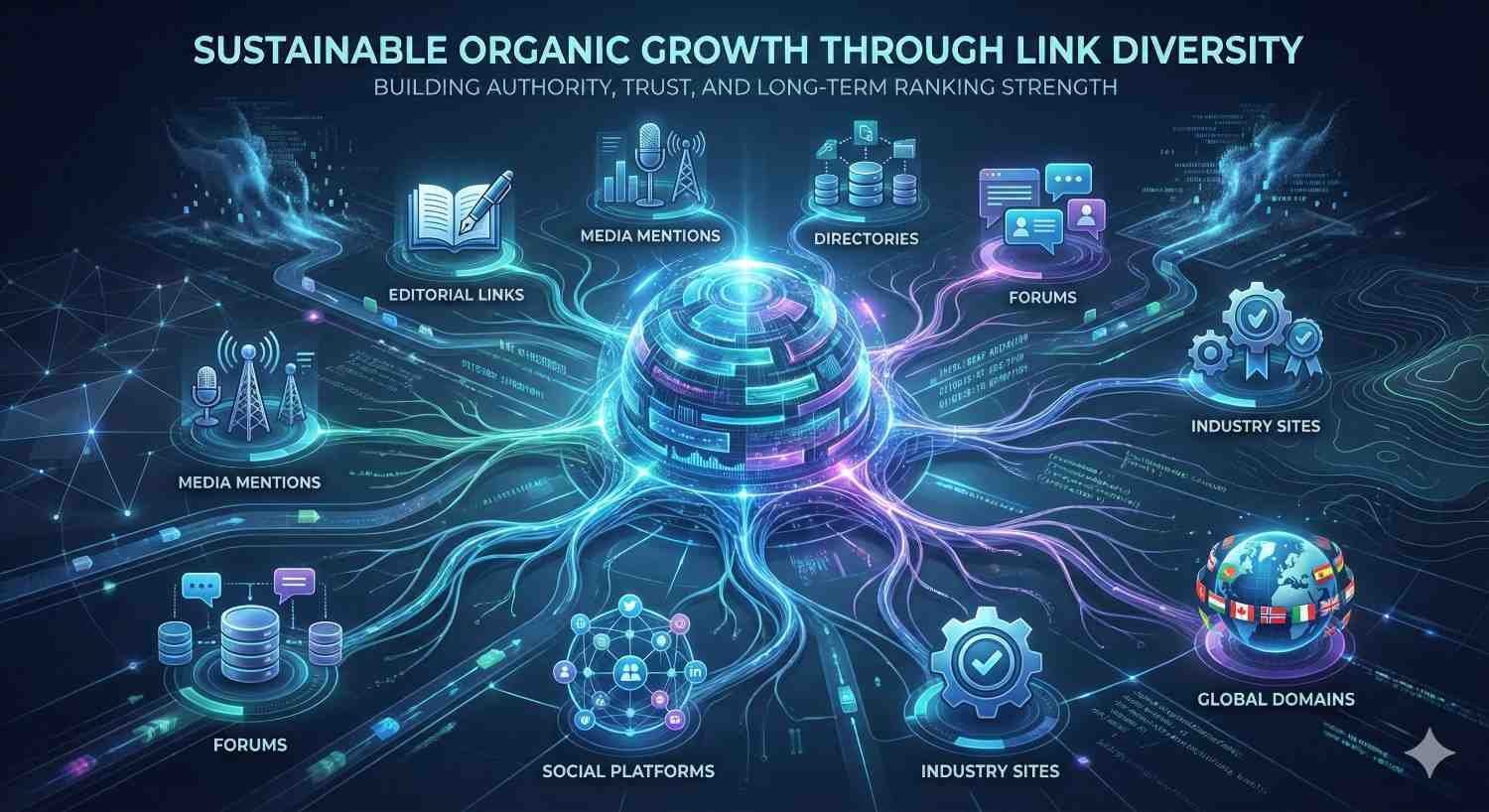
What Is Link Diversity in SEO?
Link diversity represents one of the most misunderstood yet critical components of modern search engine optimization. Understanding what constitutes a diverse backlink profile helps you build sustainable authority rather than chasing short-term ranking gains.
Definition of Link Diversity
Link diversity refers to the variety of characteristics within your backlink profile. This includes the range of referring domains pointing to your site, the distribution of anchor text variations, the mix of link types (dofollow, nofollow, UGC, sponsored), and the spread across different top-level domains, industries, and geographic regions.
A diverse link profile mirrors how natural link acquisition occurs. When content genuinely helps people, links come from bloggers, journalists, forum participants, resource page curators, and social media users. Each source type carries different characteristics. Diversity signals that your site earns attention across multiple contexts rather than manufacturing links through a single method.
The concept extends beyond simple source variety. True link diversity encompasses temporal patterns (when links are acquired), contextual placement (where links appear within content), and topical relevance (how closely linking sites relate to your niche).
Why Search Engines Value Diverse Backlink Profiles
Search engines use backlinks as trust signals. However, they’ve grown sophisticated at detecting manipulation. A site with thousands of links from a single source type raises red flags. Conversely, a site earning links from editorial mentions, resource pages, directories, forums, and social platforms demonstrates genuine value.
Google’s algorithms specifically look for natural link patterns. According to Google’s Search Central documentation, links intended to manipulate rankings violate their guidelines. Diverse profiles are harder to fake at scale, making diversity itself a quality indicator.
The reasoning is straightforward. If your content truly serves users, different types of people will reference it in different contexts. A helpful guide might get linked from a blog post, mentioned in a forum discussion, added to a resource page, and shared on social media. This organic spread creates natural diversity.
Search engines also use diversity to assess topical authority. Links from varied but relevant sources suggest broad recognition within your field. A marketing agency earning links from marketing blogs, business publications, tech sites, and educational resources demonstrates wider industry acceptance than one with links only from guest posts on marketing blogs.
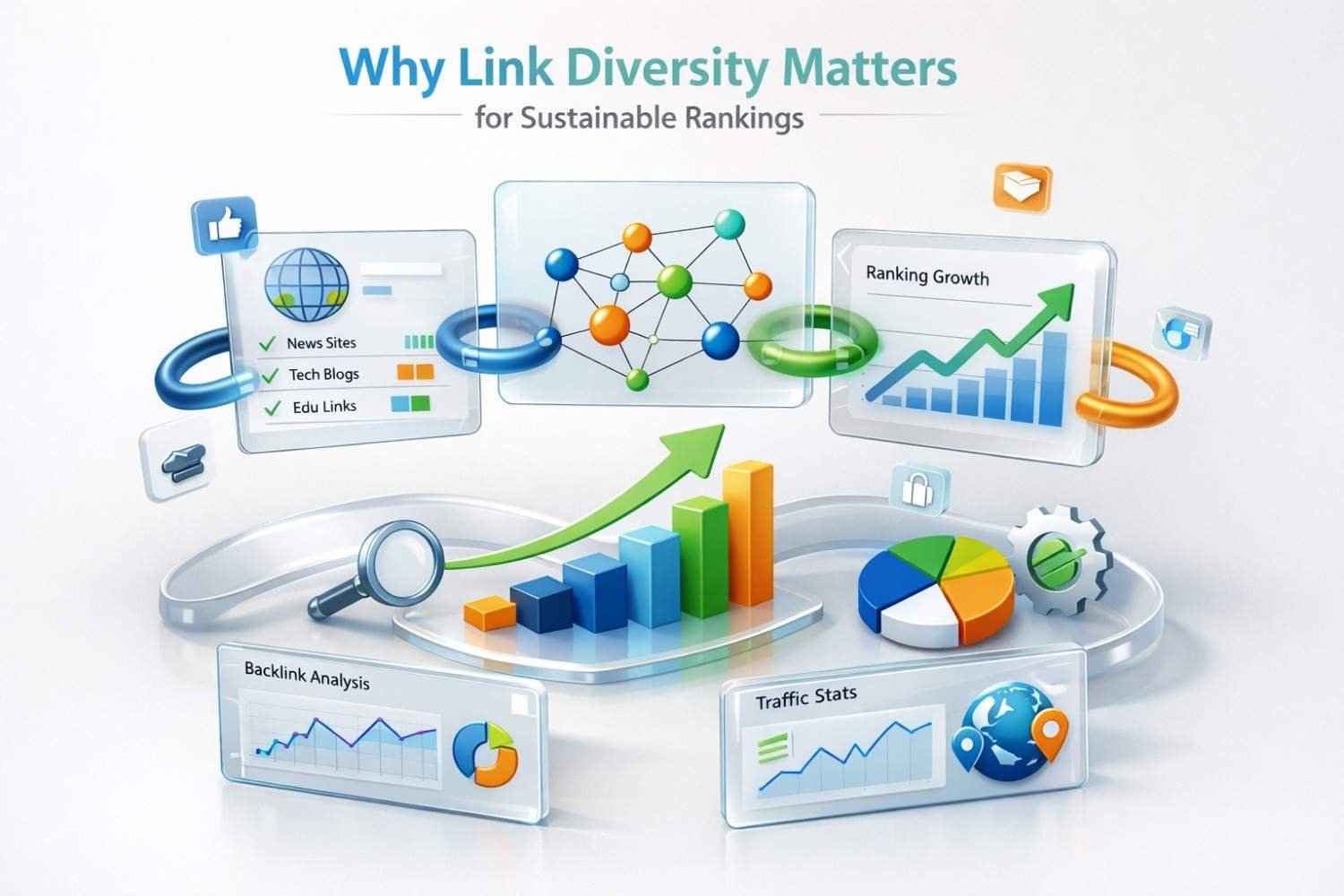
Why Link Diversity Matters for Sustainable Rankings
Building a diverse backlink profile isn’t just about following best practices. It directly impacts your ability to maintain rankings through algorithm updates, establish genuine authority, and avoid penalties that can devastate organic traffic.
Algorithm Risk Mitigation
Google releases thousands of algorithm updates annually. Major core updates can significantly reshuffle rankings overnight. Sites with narrow link profiles face higher vulnerability during these updates.
Consider the pattern: algorithm updates often target specific link building tactics. The Penguin update devastated sites relying heavily on exact-match anchor text. Subsequent updates have targeted private blog networks, link schemes, and other concentrated link sources. Sites with diverse profiles weathered these changes better because no single tactic dominated their backlink composition.
Diversity functions as insurance. When one link type loses value or triggers scrutiny, your other link sources maintain your authority signals. A site with links from guest posts, editorial mentions, directories, forums, and resource pages won’t collapse if guest post links get devalued.
This risk mitigation extends to manual actions. Google’s spam team reviews sites flagged for unnatural link patterns. Profiles showing obvious manipulation through repetitive tactics invite closer scrutiny. Diverse profiles appear natural because they are natural, reducing manual action risk.
Trust Signals and Authority Distribution
Different link types carry different trust signals. Editorial links from authoritative publications signal content quality. Directory citations signal business legitimacy. Forum mentions signal community engagement. Social links signal audience interest.
When your profile includes multiple trust signal types, you demonstrate authority across different dimensions. Search engines can cross-reference these signals to build confidence in your site’s legitimacy.
Authority also distributes differently through various link types. A single link from a major publication might carry substantial PageRank. Hundreds of forum mentions might collectively signal topical relevance. Directory citations might strengthen local authority. Each contributes uniquely to your overall authority profile.
The combination matters more than any single element. Sites ranking consistently for competitive terms typically show balanced authority distribution rather than concentration in one area.
Natural Link Profile Characteristics
Natural link profiles share recognizable characteristics that search engines have learned to identify. Understanding these patterns helps you build profiles that align with algorithmic expectations.
Natural profiles show gradual link velocity with occasional spikes corresponding to content publication or media coverage. They include a mix of followed and no followed links. Anchor text distributions lean heavily toward branded terms, URLs, and generic phrases rather than exact-match keywords.
Natural profiles also show topical clustering. Links come from sites related to your niche, with some from adjacent industries and a smaller portion from general interest sites. This pattern reflects how real audiences discover and share content.
Geographic distribution in natural profiles typically reflects your target market with some international spread. A US-focused business naturally earns more links from US sites but also attracts some international attention if content has broader relevance.
Types of Links That Build a Diverse Backlink Profile
Understanding the different link types available helps you identify gaps in your current profile and develop targeted acquisition strategies. Each type serves a specific purpose and carries distinct characteristics.
Editorial Links from Content
Editorial links represent the gold standard of link building. These occur when writers, journalists, or content creators reference your site because it adds value to their content. You don’t request these links directly. They happen because your content deserves citation.
Earning editorial links requires creating genuinely valuable content. Original research, comprehensive guides, unique data, and expert insights attract editorial attention. When your content becomes a go-to resource for a topic, editorial links follow naturally.
The value of editorial links extends beyond SEO. They drive referral traffic from engaged audiences, build brand awareness, and establish thought leadership. A single editorial link from a major publication can generate more business impact than dozens of lower-quality links.
Building editorial link potential requires investing in content that journalists and writers need. Data studies, expert commentary on industry trends, and definitive resources on specific topics create citation opportunities.
Guest Post Links
Guest posting involves contributing content to other websites in exchange for author attribution and typically one or more links back to your site. When done correctly, guest posting builds relationships, expands audience reach, and earns contextually relevant links.
Quality guest posting focuses on providing genuine value to the host site’s audience. The content should match or exceed the quality of your own blog posts. Links should appear naturally within content rather than forced into irrelevant contexts.
The key distinction is between guest posting for value versus guest posting purely for links. Search engines can identify low-quality guest post networks. Sites accepting any content for payment, publishing thin articles, or showing obvious link scheme patterns provide little value and potential risk.
Effective guest posting targets publications your audience actually reads. The link value becomes secondary to the relationship building, audience exposure, and brand positioning benefits.
Resource Page Links
Resource pages curate helpful links on specific topics. Getting included on relevant resource pages provides contextually appropriate links from pages specifically designed to point users toward valuable resources.
Finding resource page opportunities involves searching for pages that list resources in your niche. Search operators like “keyword + resources” or “keyword + useful links” reveal potential targets. The best opportunities come from educational institutions, industry associations, and established publications.
Earning resource page inclusion requires having content worth including. A comprehensive guide, useful tool, or unique resource gives curators a reason to add your link. Outreach should focus on explaining why your resource benefits their audience rather than simply requesting a link.
Resource page links often come from high-authority domains like universities and government sites. These carry significant trust signals and typically remain stable long-term since resource pages are designed to be permanent references.
Directory and Citation Links
Business directories and citation sites provide foundational links that establish business legitimacy. While individual directory links carry modest SEO value, their collective impact on local search visibility and trust signals remains significant.
Focus on quality directories relevant to your industry and location. General business directories like Yelp and industry-specific directories in your niche provide the most value. Avoid low-quality directories that exist solely to sell links.
Citation consistency matters as much as citation quantity. Your business name, address, and phone number should match exactly across all directory listings. Inconsistencies can confuse search engines and diminish the trust signal value.
For local businesses, directory citations directly impact local pack rankings. Moz’s local search ranking factors research consistently identifies citation signals as a key ranking factor for local queries.
Social Profile Links
Social media profile links typically carry nofollow attributes, meaning they don’t pass traditional PageRank. However, they contribute to link diversity and provide several indirect benefits.
Complete social profiles on major platforms establish brand presence and provide additional touchpoints for users researching your business. The links themselves signal legitimacy. A business with active profiles on LinkedIn, Twitter, Facebook, and industry-specific platforms appears more established than one with no social presence.
Social platforms also serve as content distribution channels. Sharing content socially increases visibility, which can lead to natural link acquisition when others discover and reference your content.
Maintain active, complete profiles on platforms relevant to your audience. The goal isn’t link value but rather comprehensive brand presence and content distribution capability.
Forum and Community Links
Forum and community participation provides links within discussion contexts. These typically carry nofollow or UGC attributes but contribute to profile diversity and can drive engaged referral traffic.
Effective forum link building requires genuine participation. Joining communities relevant to your expertise, providing helpful answers, and becoming a recognized contributor creates opportunities to reference your content when genuinely relevant.
The value extends beyond links. Forum participation builds relationships, establishes expertise, and provides direct access to your target audience. Links become a natural byproduct of helpful participation rather than the primary goal.
Avoid spammy forum tactics like dropping links without context or creating accounts solely for link placement. These tactics damage reputation and provide no lasting value.
Press and Media Mentions
Press coverage generates high-authority links from news publications and media outlets. These links carry significant trust signals and often drive substantial referral traffic.
Earning press coverage requires newsworthy angles. Product launches, original research, expert commentary on trending topics, and unique company stories attract journalist attention. Building relationships with journalists covering your industry increases coverage opportunities.
Press links often come from high domain authority sites with strict editorial standards. A single mention in a major publication can provide more authority signal than dozens of lower-quality links.
Consider working with PR professionals or using services like HARO (Help A Reporter Out) to connect with journalists seeking expert sources. Consistent availability for expert commentary builds ongoing media relationships.
Niche-Specific and Industry Links
Links from sites specifically within your industry carry strong topical relevance signals. These demonstrate recognition from peers and establish your position within your professional community.
Industry associations, trade publications, professional organizations, and niche blogs provide targeted link opportunities. Membership in industry associations often includes directory listings. Contributing to trade publications builds thought leadership and earns editorial links.
Niche links also come from partnerships, vendor relationships, and professional networks. Suppliers, clients, and collaborators often link to partners they work with and recommend.
The topical relevance of industry links helps search engines understand your expertise area. A marketing agency with links from marketing publications, advertising industry sites, and business technology blogs clearly establishes its topical focus.
Key Link Diversity Metrics to Track
Measuring link diversity requires tracking specific metrics that reveal your profile’s composition. These metrics help identify imbalances, track progress, and benchmark against competitors.
Referring Domain Diversity
Referring domain count measures how many unique websites link to you. This metric matters more than total backlink count because multiple links from the same domain provide diminishing returns.
Track referring domain growth over time. Healthy profiles show steady increases corresponding to content publication and promotion efforts. Sudden spikes or drops warrant investigation.
Beyond raw count, examine referring domain quality distribution. What percentage come from high-authority sites versus low-authority sites? A profile with 1,000 referring domains where 900 are low-quality spam sites differs dramatically from one with 500 referring domains of consistent quality.
Segment referring domains by type: blogs, news sites, forums, directories, educational institutions, government sites, and others. This segmentation reveals concentration in specific source types.
Anchor Text Distribution
Anchor text distribution reveals how linking sites describe your content. Natural profiles show specific patterns that differ significantly from manipulated profiles.
Healthy anchor text distributions typically include:
- Branded anchors (company name, domain): 40-60%
- URL anchors (naked URLs): 20-30%
- Generic anchors (click here, learn more): 10-20%
- Exact match keywords: 1-5%
- Partial match keywords: 5-15%
Profiles with high exact-match keyword percentages raise manipulation flags. If 30% of your anchors contain your target keyword, the pattern appears unnatural because organic linkers rarely use exact keyword phrases.
Monitor anchor text changes over time. Sudden shifts toward keyword-rich anchors suggest manipulation attempts that could trigger algorithmic penalties.
Link Type Ratio (Dofollow vs. Nofollow)
The ratio between dofollow and nofollow links provides insight into profile naturalness. Purely dofollow profiles appear suspicious because natural link acquisition includes nofollow sources.
Natural profiles typically show 60-80% dofollow links with the remainder being nofollow, UGC, or sponsored. Social media links, forum links, and many editorial links carry nofollow attributes by default.
Don’t chase specific ratios artificially. Instead, focus on earning links from diverse sources. The ratio will naturally balance when you acquire links through varied methods.
Track the sources of your nofollow links. Quality nofollow links from authoritative sources still provide value through referral traffic, brand exposure, and diversity signals even without passing PageRank.
TLD and Geographic Diversity
Top-level domain distribution shows the geographic and organizational spread of your linking sites. Natural profiles include links from various TLDs reflecting genuine international interest or industry-specific sources.
For most businesses, the majority of links come from commercial TLDs (.com, .net, .org) with smaller percentages from country-specific TLDs and specialized domains (.edu, .gov). The exact distribution depends on your target market and industry.
Geographic diversity in referring domains should roughly align with your target audience. A US-focused business naturally earns more links from US-based sites but shouldn’t have zero international links if content has any broader relevance.
Educational (.edu) and government (.gov) links carry particular trust signals due to their restricted nature. While difficult to earn, these links significantly strengthen authority profiles.
Link Velocity and Acquisition Patterns
Link velocity measures how quickly you acquire new backlinks over time. Natural velocity patterns show gradual growth with occasional spikes corresponding to content publication, media coverage, or viral moments.
Consistent, mechanical link velocity raises flags. Earning exactly 50 links per week for months suggests automated link building rather than organic acquisition. Natural patterns show variation.
Track velocity alongside content publication. New content should correlate with link acquisition spikes. If you publish major content without corresponding link increases, your content may not be reaching potential linkers.
Sudden velocity spikes without clear cause warrant investigation. These could indicate negative SEO attacks, spam links, or algorithmic issues that need addressing.
How to Build a Diverse Link Profile (Step-by-Step)
Building link diversity requires systematic effort across multiple acquisition channels. This step-by-step process helps you identify gaps, develop targeted strategies, and maintain natural patterns.
Audit Your Current Backlink Profile
Start by understanding your current position. Export your complete backlink profile from tools like Ahrefs, Semrush, or Moz. Analyze the data across all diversity metrics.
Document your current state:
- Total referring domains and quality distribution
- Anchor text percentages by category
- Dofollow/nofollow ratio
- TLD and geographic distribution
- Link velocity over the past 12 months
- Source type breakdown (editorial, guest posts, directories, forums, etc.)
Identify your strongest and weakest areas. Perhaps you have excellent editorial links but no directory citations. Maybe your anchor text skews too heavily toward exact-match keywords. The audit reveals where to focus improvement efforts.
Compare your profile against top-ranking competitors for your target keywords. Their profiles provide benchmarks for what search engines reward in your niche.
Identify Link Type Gaps
Map your current link sources against the full range of available link types. Create a matrix showing which types you have, which you’re missing, and which are underrepresented.
Common gaps include:
- Resource page links (often overlooked)
- Industry association links (require membership or contribution)
- Educational links (difficult but valuable)
- Local citation links (especially for businesses with physical presence)
- Forum and community links (require ongoing participation)
Prioritize gaps based on potential impact and acquisition difficulty. Some gaps are easier to fill than others. Directory citations require simple submissions. Editorial links from major publications require significant content investment.
Develop specific strategies for each gap. Don’t try to address everything simultaneously. Focus on one or two gap areas while maintaining existing link sources.
Diversify Anchor Text Strategy
If your anchor text distribution shows imbalance, develop a correction strategy. This requires influencing anchor text in contexts where you have control while accepting natural variation elsewhere.
For links you can influence (guest posts, directory listings, partnerships), deliberately vary anchor text. Use branded anchors, URL anchors, and generic phrases rather than keyword-rich text.
For links you can’t control (editorial mentions, organic links), focus on creating content that naturally attracts varied anchor text. Branded content gets branded anchors. Comprehensive guides get descriptive anchors. Tools and resources get generic anchors.
Monitor anchor text changes monthly. Gradual shifts toward healthier distributions indicate progress. Sudden changes in either direction warrant investigation.
Target Multiple Domain Types and Industries
Expand your link acquisition beyond your immediate niche. While topically relevant links carry the most weight, links from adjacent industries and general interest sites contribute to diversity.
Identify adjacent industries that share audience overlap. A marketing agency might target business publications, technology sites, entrepreneurship blogs, and productivity resources in addition to marketing-specific sites.
Create content with broader appeal. Industry-specific content earns industry links. Content addressing universal business challenges attracts links from diverse sources.
Build relationships across industries through partnerships, collaborations, and cross-promotion. These relationships create natural link opportunities from varied sources.
Balance Dofollow and Nofollow Links
Don’t avoid nofollow links in pursuit of dofollow-only acquisition. Natural profiles include both, and nofollow links from quality sources provide real value.
Pursue opportunities regardless of follow status. Social media profiles, forum participation, and many editorial opportunities result in nofollow links. These still drive traffic, build brand awareness, and contribute to profile diversity.
If your profile skews heavily dofollow, actively pursue nofollow opportunities. Increase social media activity, participate in relevant forums, and seek mentions on sites that use nofollow by default.
The goal isn’t a specific ratio but rather natural distribution resulting from varied acquisition methods.
Maintain Natural Link Velocity
Avoid artificial velocity patterns that suggest manipulation. Don’t acquire 100 links this week and zero next week. Don’t maintain perfectly consistent weekly acquisition.
Align link building efforts with content publication. Major content launches justify increased outreach and naturally higher link velocity. Quiet periods should show reduced but not zero acquisition.
Set realistic monthly targets based on your resources and content calendar. Consistent effort over time produces better results than sporadic intensive campaigns.
Monitor velocity through your backlink tools. Investigate unexpected spikes or drops. Spikes might indicate spam attacks. Drops might indicate lost links or tracking issues.
Link Diversity Best Practices by Business Type
Different business models require different link diversity approaches. Your industry, target audience, and business goals shape which link types matter most.
Link Diversity for E-commerce Sites
E-commerce sites face unique link building challenges. Product pages rarely attract natural links, and commercial intent can make editorial coverage difficult.
Focus areas for e-commerce link diversity:
- Product review links from bloggers and influencers
- Comparison and “best of” list inclusions
- Manufacturer and supplier links
- Industry directory and marketplace listings
- Content marketing through buying guides and educational resources
Create linkable assets beyond product pages. Buying guides, comparison tools, and educational content attract links that benefit the entire site. These assets earn editorial links that product pages cannot.
Leverage customer relationships for testimonial and case study links. Satisfied customers often link back when featured on your site or when discussing their purchases.
Link Diversity for SaaS and B2B Companies
SaaS and B2B companies benefit from thought leadership positioning and integration ecosystem links.
Priority link types for SaaS/B2B:
- Integration partner links and marketplace listings
- Industry analyst and review site coverage
- Thought leadership editorial placements
- Conference and event sponsorship links
- Professional association memberships
- Case study and customer success story links
Technical content performs well for SaaS link building. Documentation, tutorials, and technical guides attract links from developers and technical writers referencing your solutions.
Build relationships with complementary tools in your ecosystem. Integration partnerships create natural link opportunities and expand your reach to partner audiences.
Link Diversity for Local Businesses
Local businesses need link profiles that establish geographic relevance alongside general authority.
Essential link types for local businesses:
- Local business directory citations (Google Business Profile, Yelp, industry-specific)
- Local news and community publication coverage
- Chamber of commerce and business association memberships
- Local event sponsorships and community involvement
- Neighboring business partnerships and cross-promotion
Consistency across local citations matters significantly. Ensure name, address, and phone number match exactly across all listings. Inconsistencies dilute the trust signal value.
Community involvement creates natural local link opportunities. Sponsoring local events, participating in community initiatives, and supporting local causes generates coverage and links from local sources.
Link Diversity for Startups and New Websites
New sites face the challenge of building authority from zero. Link diversity strategies must account for limited existing relationships and content assets.
Starting point strategies for new sites:
- Founder and team profile links (LinkedIn, industry associations)
- Launch coverage through startup directories and press
- Initial content focused on linkable assets rather than commercial pages
- Strategic guest posting to build relationships and initial authority
- Industry community participation to establish presence
Prioritize quality over quantity in early stages. A few links from respected sources establish more authority than many links from low-quality sites.
Leverage founder networks and previous professional relationships. Former colleagues, industry contacts, and professional associations provide initial link opportunities.
Common Link Diversity Mistakes to Avoid
Understanding common mistakes helps you avoid patterns that trigger algorithmic penalties or waste resources on ineffective tactics.
Over-Optimized Anchor Text Profiles
Excessive exact-match keyword anchors remain one of the most common and damaging link building mistakes. This pattern clearly signals manipulation and invites algorithmic penalties.
Warning signs of over-optimization:
- More than 5% exact-match keyword anchors
- Repetitive anchor text across multiple links
- Anchor text that doesn’t match natural language patterns
- Sudden shifts toward keyword-rich anchors
Correction requires diluting keyword anchors with branded, URL, and generic anchors. This takes time since you can’t remove anchors from existing links. Focus new link acquisition on varied anchor text while existing ratios gradually improve.
When you control anchor text (guest posts, partnerships), deliberately use non-keyword variations. Let natural links provide whatever anchor text linkers choose.
Relying on Single Link Sources
Concentration in any single link type creates vulnerability. Sites built entirely on guest posts, PBN links, or directory submissions face significant risk when algorithms target those specific tactics.
Diversification protects against:
- Algorithm updates devaluing specific link types
- Manual actions targeting identified link schemes
- Source quality degradation over time
- Competitive analysis revealing your tactics
Audit your link sources regularly. If any single source type exceeds 40-50% of your profile, actively pursue other types to rebalance.
Even high-quality link types benefit from diversification. A profile of entirely editorial links from major publications is better than one of entirely low-quality links, but it still lacks the natural variation of organic profiles.
Ignoring Nofollow and UGC Links
Dismissing nofollow links as worthless ignores their contribution to profile diversity and their direct business value.
Nofollow links provide:
- Profile diversity signals
- Referral traffic from engaged audiences
- Brand exposure and awareness
- Relationship building opportunities
- Natural profile characteristics
Google has also indicated that nofollow is now a “hint” rather than a directive, meaning some nofollow links may pass value in certain contexts.
Pursue valuable opportunities regardless of follow status. A nofollow link from a major publication provides more business value than a dofollow link from an obscure site.
Unnatural Link Velocity Spikes
Sudden, dramatic increases in link acquisition raise manipulation flags. Natural link growth shows variation but not extreme spikes without clear cause.
Problematic velocity patterns:
- Acquiring hundreds of links in days without corresponding content or coverage
- Perfectly consistent weekly link counts over extended periods
- Dramatic velocity increases without business justification
- Velocity patterns that don’t correlate with content publication
If you experience unexpected velocity spikes, investigate the source. Spam attacks can inflate link counts with low-quality links. Disavow obvious spam and document the issue.
Plan link building efforts to produce natural-looking velocity. Spread outreach over time rather than sending hundreds of emails simultaneously. Align intensive efforts with content launches that justify increased attention.
How to Measure and Monitor Link Diversity
Ongoing measurement ensures your link profile maintains healthy diversity and alerts you to problems requiring attention.
Best Tools for Backlink Profile Analysis
Several tools provide comprehensive backlink analysis capabilities. Each has strengths for different aspects of diversity measurement.
Ahrefs offers extensive backlink data with detailed anchor text analysis, referring domain metrics, and historical tracking. The Site Explorer tool provides comprehensive profile overviews.
Semrush includes backlink analytics alongside broader SEO tools. The Backlink Audit feature specifically identifies potentially harmful links and diversity issues.
Moz Link Explorer provides domain authority metrics and spam score analysis. The Link Intersect tool helps identify competitor link sources you’re missing.
Google Search Console offers free access to Google’s view of your backlinks. While less comprehensive than paid tools, it shows what Google actually sees.
Use multiple tools for complete pictures. Each tool crawls differently and may capture links others miss.
Setting Up Link Diversity Dashboards
Create monitoring dashboards that track key diversity metrics over time. Regular review catches problems early and measures improvement progress.
Essential dashboard metrics:
- Referring domain count and growth rate
- Anchor text distribution percentages
- Dofollow/nofollow ratio
- New vs. lost links monthly
- Link velocity trends
- Top referring domains by authority
- Source type breakdown
Set up automated alerts for significant changes. Sudden drops in referring domains might indicate lost links or tracking issues. Unexpected spikes might indicate spam attacks.
Review dashboards monthly at minimum. Quarterly deep-dive analysis should examine trends and compare against competitors.
Benchmarking Against Competitors
Competitor backlink profiles provide benchmarks for what search engines reward in your niche. Analyze top-ranking competitors to understand successful profile characteristics.
Compare your profile against competitors on:
- Total referring domains
- Domain authority distribution
- Anchor text patterns
- Link type diversity
- Link velocity
- Source types and quality
Identify competitor link sources you’re missing. Tools like Ahrefs’ Link Intersect show domains linking to competitors but not to you. These represent targeted outreach opportunities.
Don’t copy competitor tactics blindly. Analyze what works while maintaining your own natural profile development.
Link Diversity vs. Link Quality: Finding the Right Balance
Diversity and quality aren’t opposing forces, but resource constraints require prioritization decisions. Understanding when each matters most helps allocate efforts effectively.
When Quality Trumps Diversity
In some situations, pursuing high-quality links takes priority over diversification.
Quality-first scenarios:
- New sites needing initial authority establishment
- Competitive niches where authority gaps determine rankings
- Limited resources requiring focused effort
- Opportunities for exceptional links that may not recur
A single link from a major publication or industry authority can provide more ranking impact than dozens of lower-quality diverse links. When such opportunities arise, prioritize them regardless of diversity considerations.
Quality links also tend to be more stable. Editorial links from established publications rarely disappear. Low-quality links from questionable sources may vanish or become harmful.
When Diversity Protects Against Penalties
Diversity becomes critical when profile concentration creates risk.
Diversity-first scenarios:
- Profiles heavily concentrated in single link types
- Recovery from algorithm penalties
- Competitive niches with aggressive link building
- Long-term authority building strategies
If your profile shows obvious patterns (all guest posts, all directory links, all PBN links), diversification becomes urgent. These patterns invite algorithmic and manual penalties.
Post-penalty recovery specifically requires demonstrating natural link patterns. Diversifying away from problematic link types while building legitimate varied links signals improved practices.
Building a Balanced Link Acquisition Strategy
Effective strategies pursue both quality and diversity simultaneously through varied tactics.
Balanced approach components:
- Ongoing content creation attracting organic editorial links
- Strategic guest posting on quality publications
- Directory and citation maintenance
- Community participation in relevant forums
- Press and media relationship building
- Partnership and collaboration link opportunities
Allocate resources across multiple channels rather than concentrating on single tactics. This naturally produces diverse profiles while pursuing quality within each channel.
Review allocation quarterly. Shift resources toward channels producing results while maintaining minimum activity across all channels for diversity.
How Link Diversity Fits Into a Complete SEO Strategy
Link diversity doesn’t exist in isolation. It connects to content strategy, technical SEO, and broader authority building efforts.
Aligning Link Building with Content Strategy
Content strategy directly impacts link building potential. Creating linkable content makes diversity easier to achieve.
Content types that attract diverse links:
- Original research and data studies
- Comprehensive guides and resources
- Tools and interactive content
- Expert roundups and interviews
- Controversial or unique perspectives
- Visual content (infographics, videos)
Plan content specifically for link acquisition. Not every piece needs link potential, but your content calendar should include regular linkable assets.
Match content to link opportunities. If you want press links, create newsworthy content. If you want resource page links, create comprehensive resources. If you want editorial links, create citable research.
Technical SEO Foundations for Link Equity
Technical SEO determines how effectively link equity flows through your site. Poor technical foundations waste the value of acquired links.
Technical requirements for link equity:
- Clean site architecture with logical internal linking
- Fast page load speeds retaining link equity
- Mobile optimization for all linked pages
- Proper redirect handling preserving link value
- No orphan pages losing link equity
- XML sitemaps ensuring crawlability
Audit technical SEO before intensive link building. Fixing technical issues after acquiring links means those links provide less value than they should.
Internal linking distributes external link equity throughout your site. Strategic internal links from pages receiving external links to priority pages amplify link building impact.
Long-Term Authority Building Through Diverse Links
Sustainable authority requires consistent effort over extended periods. Link diversity contributes to long-term authority that compounds over time.
Long-term authority building principles:
- Consistent content publication attracting ongoing links
- Relationship building creating recurring link opportunities
- Brand development increasing organic link acquisition
- Expertise demonstration attracting editorial attention
- Community presence generating natural mentions
Authority compounds as diverse links accumulate. Early links make subsequent links easier to earn. Established authority attracts opportunities that new sites cannot access.
Plan link building as ongoing program rather than one-time campaign. Sustainable rankings require sustainable link acquisition.
Conclusion: Building Sustainable Organic Growth Through Link Diversity
Link diversity best practices center on building backlink profiles that mirror natural link acquisition patterns. Diverse profiles demonstrate genuine authority, resist algorithm volatility, and establish trust signals across multiple dimensions. The metrics that matter include referring domain variety, anchor text distribution, link type ratios, and natural velocity patterns.
Implementing these practices requires systematic effort across multiple acquisition channels. Audit your current profile, identify gaps, and develop targeted strategies for each link type. Avoid common mistakes like anchor text over-optimization and source concentration that invite penalties.
We help businesses build sustainable organic growth through comprehensive SEO strategies including link diversity optimization. Contact White Label SEO Service to develop a link building approach that drives long-term rankings and measurable business results.
Frequently Asked Questions About Link Diversity
What is a good link diversity ratio?
Natural profiles typically show 40-60% branded anchor text, 20-30% URL anchors, 10-20% generic anchors, and under 5% exact-match keywords. Dofollow links usually comprise 60-80% of healthy profiles. These ratios vary by industry, so benchmark against successful competitors in your niche.
How many referring domains do I need?
The number depends on your competitive landscape. Analyze top-ranking competitors for your target keywords to establish benchmarks. Generally, more referring domains correlates with higher rankings, but quality and relevance matter more than raw count. Focus on steady growth rather than specific targets.
Are nofollow links valuable for diversity?
Yes, nofollow links contribute to profile diversity and provide direct business value through referral traffic and brand exposure. Natural profiles include nofollow links from social media, forums, and many editorial sources. Google treats nofollow as a hint rather than directive, meaning some nofollow links may pass value.
How often should I audit my backlink profile?
Conduct basic monitoring monthly and comprehensive audits quarterly. Monthly checks should review new links, lost links, and any significant metric changes. Quarterly audits should examine full anchor text distribution, source type breakdown, and competitor comparisons.
Can too much link diversity hurt rankings?
Diversity itself doesn’t hurt rankings, but pursuing diversity through low-quality sources can. Avoid acquiring links from irrelevant or spammy sites simply to diversify. Quality within each link type matters. A profile with diverse high-quality links outperforms one with diverse low-quality links.
How long does it take to see results from link building?
Link building typically shows measurable ranking impact within 3-6 months, though this varies by competition level and starting authority. New sites may take longer to see results. Consistent link acquisition over 6-12 months produces more sustainable results than short intensive campaigns.
What tools can analyze link diversity?
Ahrefs, Semrush, and Moz provide comprehensive backlink analysis including diversity metrics. Each tool offers anchor text analysis, referring domain tracking, and historical data. Google Search Console provides free access to Google’s view of your backlinks. Using multiple tools provides the most complete picture.