Local SEO services help businesses appear in location-based searches, driving foot traffic, phone calls, and revenue from customers actively searching nearby. For business owners and marketing managers, understanding how local search optimization works is the difference between being found by ready-to-buy customers or losing them to competitors.
This matters now more than ever. Mobile searches with local intent continue to dominate, and Google’s local pack captures significant clicks before users ever scroll to organic results. Whether you operate a single storefront or manage dozens of locations, local SEO determines your visibility when it counts most.
This guide covers everything from Google Business Profile optimization and citation building to review management, technical requirements, and choosing the right service provider. You’ll learn exactly what local SEO services include, how they impact rankings, and how to build a strategy that delivers measurable ROI.
What Are Local SEO Services?
Local SEO services encompass the strategies, tactics, and ongoing optimization work required to improve a business’s visibility in geographically-targeted search results. Unlike broader SEO efforts that target national or global audiences, local SEO focuses specifically on connecting businesses with customers in their immediate service area.
Definition and Core Components of Local SEO
Local SEO is the practice of optimizing a business’s online presence to attract customers from relevant local searches. These searches happen on Google, Bing, Apple Maps, and other platforms where users seek nearby products or services.
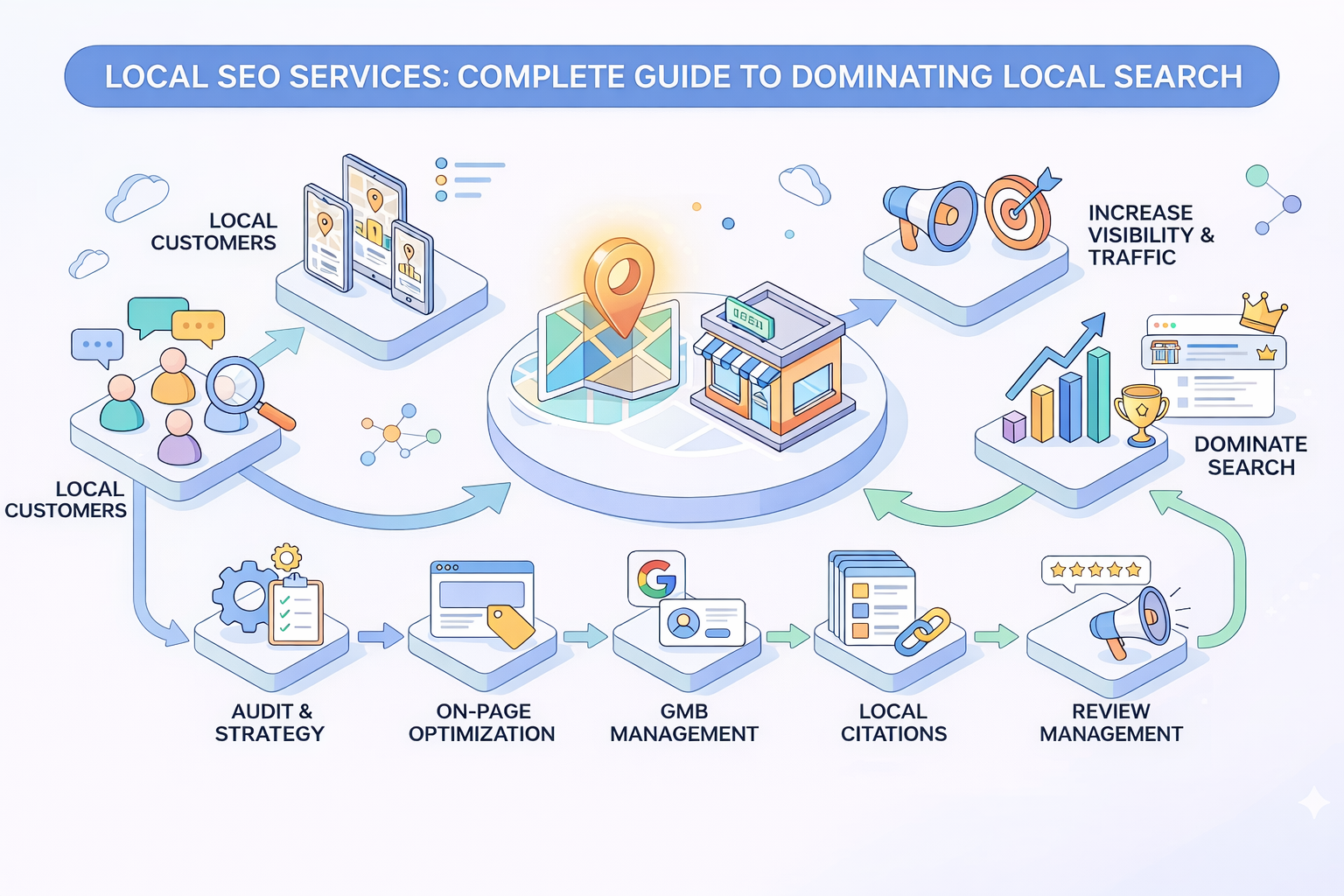
The core components include Google Business Profile management, local citation building, review acquisition and management, location-specific on-page optimization, local link building, and technical SEO tailored for local visibility. Each component works together to signal relevance, proximity, and authority to search engines.
A comprehensive local SEO strategy addresses both the “map pack” results that appear prominently in local searches and the organic listings that follow. Success requires consistent effort across multiple channels and platforms, not just optimizing a single profile or webpage.
How Local SEO Differs from Traditional SEO
Traditional SEO focuses on ranking for keywords regardless of the searcher’s location. A website optimized for “best project management software” competes nationally or globally. Local SEO, by contrast, targets searches with geographic intent like “plumber near me” or “dentist in Chicago.”
The ranking factors differ significantly. Traditional SEO emphasizes domain authority, content depth, and backlink profiles. Local SEO adds location-specific signals including Google Business Profile optimization, local citations, proximity to the searcher, and review signals.
Local SEO also involves managing a business’s presence across multiple platforms simultaneously. While traditional SEO centers on website optimization, local SEO requires attention to Google Business Profile, Apple Business Connect, Bing Places, industry directories, and review platforms. The technical requirements overlap, but local SEO demands additional expertise in managing distributed business information.
The Local Search Ecosystem Explained
The local search ecosystem includes every platform and signal that influences how businesses appear in location-based searches. Google dominates this ecosystem, but it extends far beyond a single search engine.
Google Business Profile serves as the central hub for local visibility on Google Search and Maps. Apple Maps and Apple Business Connect matter for iOS users. Bing Places influences results on Microsoft’s search engine and voice assistants. Beyond these primary platforms, hundreds of directories, aggregators, and industry-specific sites contribute to a business’s local footprint.
Data aggregators like Data Axle, Neustar Localeze, and Foursquare distribute business information to smaller directories and apps. Review platforms including Yelp, Facebook, and industry-specific sites influence both rankings and consumer decisions. Social media profiles, local news mentions, and community websites all contribute signals that search engines use to evaluate local relevance and authority.
Why Local SEO Services Matter for Business Growth
Local SEO directly impacts revenue for businesses that serve geographic markets. The connection between local search visibility and customer acquisition is measurable and significant.
Local Search Statistics and Market Opportunity
Local search represents a massive opportunity for businesses of all sizes. According to Google’s own data, 46% of all Google searches have local intent. Users searching for nearby businesses are often ready to take action immediately.
BrightLocal’s research shows that 98% of consumers used the internet to find information about local businesses in the past year. Mobile searches with phrases like “near me” or “close by” have grown consistently, reflecting how consumers now expect instant access to local business information.
The conversion potential is substantial. Searches with local intent demonstrate high purchase intent. Someone searching “emergency plumber near me” at 10 PM needs immediate service. A user looking for “best Italian restaurant downtown” is likely planning to dine soon. Local SEO positions businesses to capture this high-intent traffic.
The Connection Between Local Visibility and Revenue
Visibility in local search results translates directly to business outcomes. The local pack, which displays three businesses prominently with map integration, captures significant attention and clicks. Businesses appearing in this position receive calls, direction requests, and website visits from motivated customers.
Research from Moz indicates that Google Business Profile signals account for approximately 32% of local pack ranking factors. Businesses that optimize their profiles and maintain strong review profiles see measurable increases in customer contacts.
The revenue impact varies by industry but follows consistent patterns. Service businesses report that local search drives a significant portion of new customer inquiries. Retail locations see increased foot traffic from customers who found them through local search. Restaurants and hospitality businesses depend heavily on local visibility for reservations and walk-in traffic.
Industries That Benefit Most from Local SEO
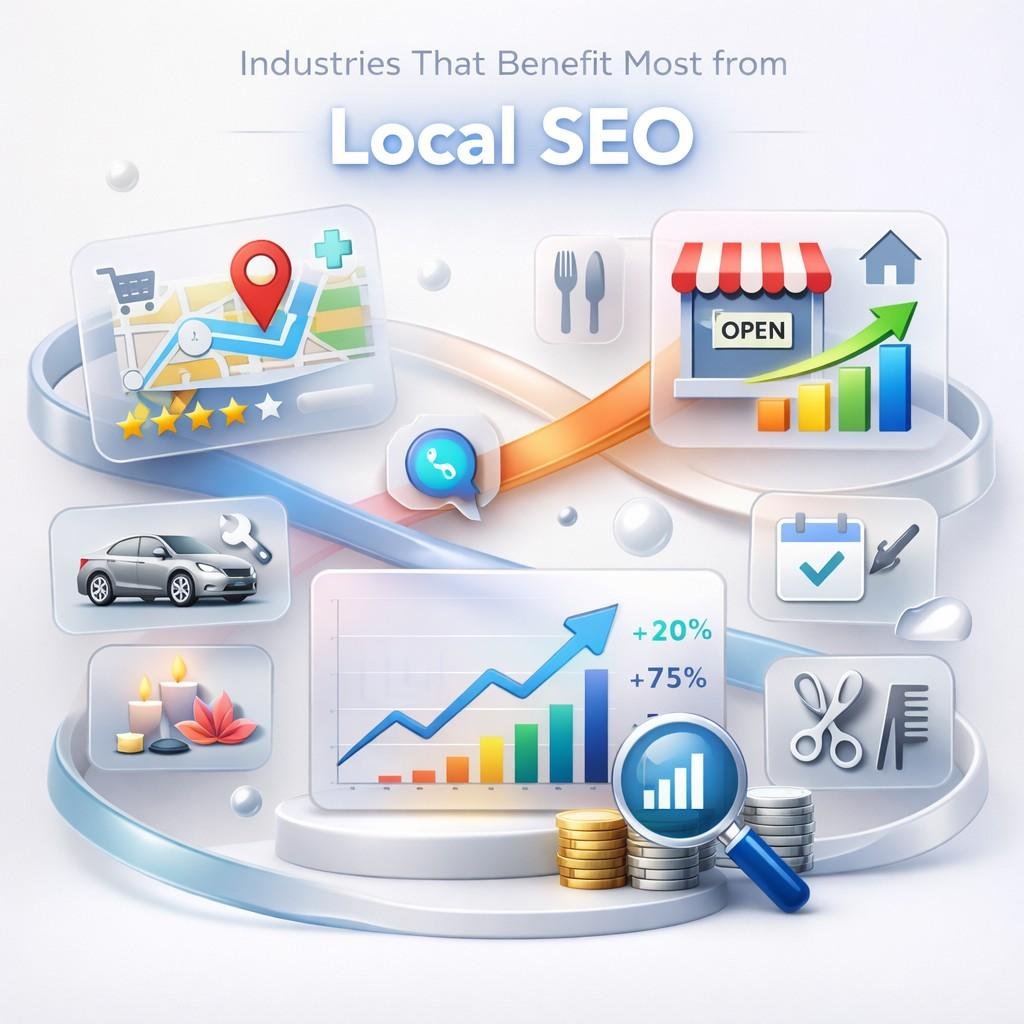
While virtually any business with a physical location or service area benefits from local SEO, certain industries see particularly strong returns.
Healthcare and medical practices rely heavily on local search. Patients search for doctors, dentists, specialists, and urgent care facilities near their location. The decision often happens quickly, making local visibility critical.
Legal services depend on local SEO for client acquisition. People searching for attorneys typically need representation in their jurisdiction. Law firms that dominate local search capture clients at the moment of need.
Home services contractors including plumbers, electricians, HVAC technicians, and roofers see direct revenue impact from local rankings. Emergency searches drive immediate calls, while planned projects often start with local research.
Restaurants, hotels, and hospitality businesses compete intensely for local visibility. Travelers and locals alike search for dining options, accommodations, and entertainment in specific areas.
Retail businesses with physical locations use local SEO to drive foot traffic. Even as e-commerce grows, many consumers prefer to see products in person or need items immediately.
How Local Search Algorithms Work
Understanding how search engines determine local rankings helps businesses prioritize their optimization efforts. Google’s local algorithm considers multiple factors that differ from traditional organic ranking signals.
Google’s Local Ranking Factors Breakdown
Google explicitly identifies three primary factors for local rankings: relevance, distance, and prominence. Each factor encompasses multiple signals that collectively determine which businesses appear for local searches.
Relevance Signals
Relevance measures how well a business matches what the searcher is looking for. Google evaluates the business category, services listed, website content, and other information to determine relevance.
Accurate category selection in Google Business Profile directly impacts relevance. A business listed under the wrong primary category may not appear for relevant searches. Secondary categories expand visibility for related services.
Website content reinforces relevance signals. Pages that clearly describe services, include location information, and use terminology matching user searches help Google understand what the business offers. Product and service descriptions in Google Business Profile add additional relevance signals.
Distance and Proximity Factors
Distance refers to how far each potential search result is from the location term used in the search. When users search without specifying a location, Google estimates their location based on device signals and displays nearby results.
Proximity matters most for searches with immediate intent. Someone searching “coffee shop near me” expects results within walking or short driving distance. For less urgent searches, users may be willing to travel further for the right business.
Service area businesses face unique distance considerations. Without a physical storefront, these businesses must signal their service coverage through Google Business Profile settings and website content. Google uses this information to determine which searches should display the business.
Prominence and Authority Indicators
Prominence reflects how well-known and authoritative a business is. Google measures prominence through multiple signals including links, articles, directories, and overall web presence.
Review count and rating contribute significantly to prominence. Businesses with more reviews and higher ratings signal trustworthiness and popularity. Review velocity, the rate at which new reviews arrive, also influences rankings.
Backlinks from local and relevant sources build prominence. Links from local news sites, community organizations, and industry publications signal authority. Citation consistency across directories reinforces the business’s legitimacy.
Brand searches and mentions across the web indicate prominence. Businesses that people search for by name and discuss online demonstrate established presence in their market.
The Local Pack vs. Organic Local Results
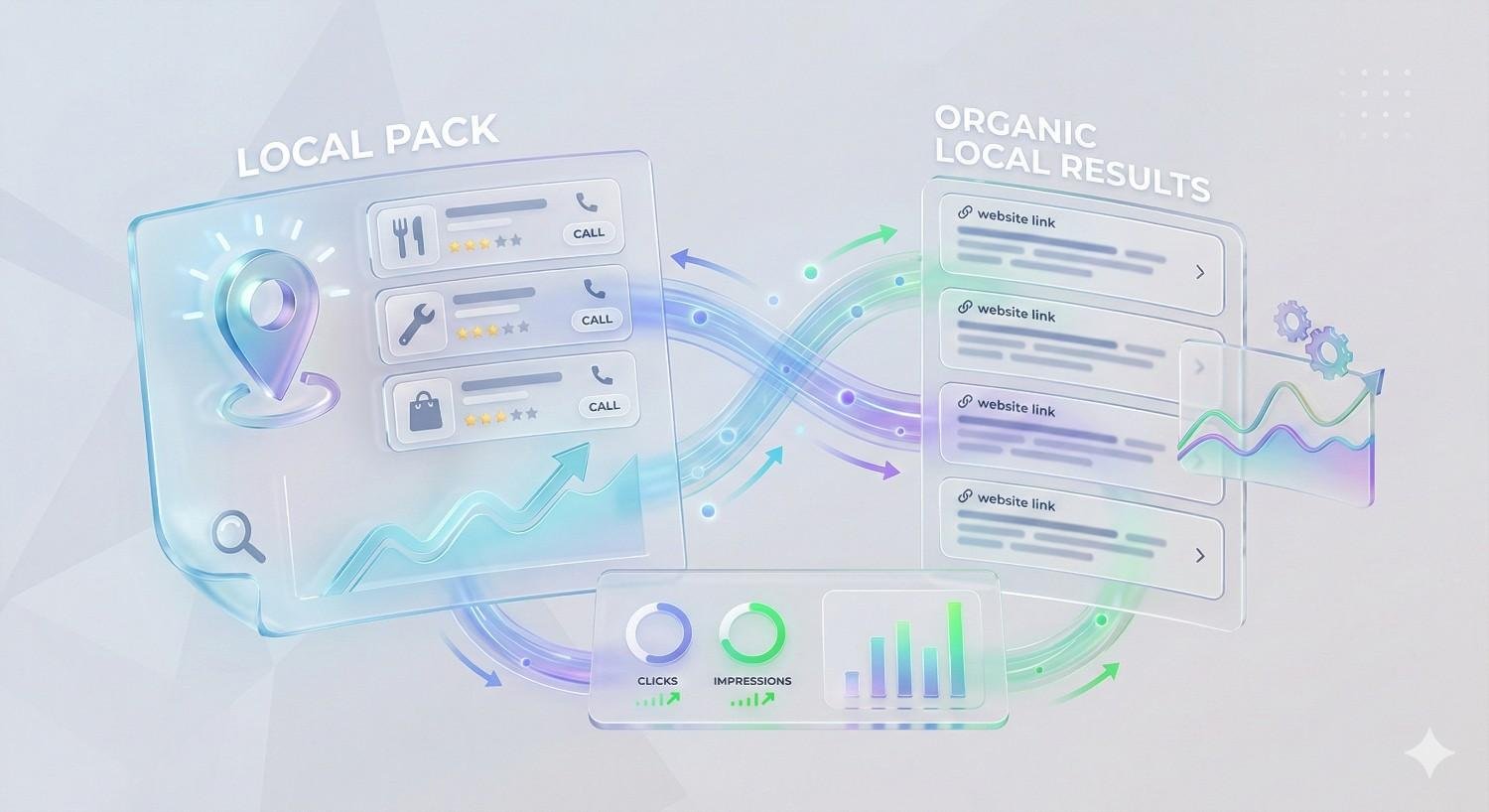
Local search results typically display in two distinct sections: the local pack and organic results. Understanding both helps businesses develop comprehensive visibility strategies.
The local pack appears prominently for searches with local intent, displaying three businesses with their Google Business Profile information. This section includes the business name, rating, category, address or service area, hours, and often a photo. Users can click to call, get directions, or visit the website directly from this display.
Organic local results appear below the local pack and follow traditional ranking patterns with local modifications. These results link to business websites rather than Google Business Profile listings. Ranking factors include traditional SEO signals plus local relevance indicators.
Businesses benefit from appearing in both sections. Local pack visibility captures users who want quick information and immediate action options. Organic visibility reaches users who prefer to research on business websites before making contact.
How Google Business Profile Impacts Rankings
Google Business Profile serves as the foundation for local pack visibility. The information, activity, and engagement on this profile directly influence local rankings.
Complete and accurate profile information establishes baseline eligibility for local results. Businesses with incomplete profiles or inaccurate information may not appear for relevant searches. Google prioritizes profiles that provide comprehensive information users need.
Regular activity signals an active, engaged business. Posts, photo uploads, Q&A responses, and review replies demonstrate ongoing attention to the profile. Google favors businesses that maintain their presence over those with dormant profiles.
User engagement metrics influence rankings. Click-through rates, direction requests, calls, and website visits from the profile indicate user interest. Businesses that generate engagement signal relevance and value to searchers.
Google Business Profile Optimization Services
Google Business Profile optimization forms the cornerstone of local SEO services. This free tool from Google provides businesses direct control over how they appear in Google Search and Maps.
Complete GBP Setup and Verification Process
Setting up Google Business Profile correctly from the start prevents issues that can limit visibility later. The process involves claiming or creating a listing, verifying ownership, and completing all available fields.
Verification confirms that the person managing the profile has authority to represent the business. Google offers multiple verification methods including postcard, phone, email, video, and live video call depending on the business type and situation. Verification typically takes a few days to a few weeks.
New businesses should claim their profile as soon as they have a physical location or defined service area. Existing businesses that haven’t claimed their profile may find that Google has created a listing based on other data sources. Claiming and verifying this existing listing allows the business to control its information.
Multi-location businesses require individual profiles for each location. Each profile needs separate verification and optimization. Google offers bulk verification options for businesses with many locations.
Profile Optimization Best Practices
Optimizing a Google Business Profile involves completing every available field with accurate, keyword-relevant information while following Google’s guidelines.
Business Information Accuracy (NAP Consistency)
NAP stands for Name, Address, and Phone number. These three pieces of information must be identical everywhere they appear online. Inconsistencies confuse search engines and can suppress rankings.
The business name should match the legal business name or the name commonly used by customers. Adding keywords or location modifiers to the business name violates Google’s guidelines and risks suspension.
The address must be the actual physical location where customers can visit or where the business operates. P.O. boxes and virtual offices generally don’t qualify. Service area businesses that don’t serve customers at their location can hide their address while still maintaining a profile.
The phone number should be a local number that reaches the business directly. Tracking numbers can be used but should be consistent across platforms. The primary number on the profile should match the number on the website and other directories.
Category Selection Strategy
Category selection directly impacts which searches display the business. Google offers hundreds of categories, and choosing the right ones requires understanding both the business and how customers search.
The primary category carries the most weight. This should be the most accurate description of the core business. A business that offers multiple services should choose the category that represents its main offering or the service it most wants to rank for.
Secondary categories expand visibility for additional services. Google allows multiple secondary categories, but adding irrelevant categories can hurt rather than help. Each category should accurately describe something the business offers.
Reviewing competitor categories provides insight into effective selections. Tools like GMB Spy browser extensions reveal which categories competitors use. This research helps identify categories that may be relevant but overlooked.
Service Area Configuration
Service area businesses operate differently from storefront businesses in Google Business Profile. Proper configuration ensures visibility in the areas served without requiring a physical location customers visit.
Service areas can be defined by city, county, zip code, or other geographic boundaries. Google allows up to 20 service areas. The areas should reflect where the business actually provides service, not aspirational markets.
Businesses that serve customers at their location and travel to customer locations can show both an address and service areas. This hybrid configuration works for businesses like restaurants that offer delivery or contractors who have a showroom but also work on-site.
The service area radius should be realistic. Claiming an entire metropolitan area when the business only serves a few neighborhoods can dilute visibility in the core service area.
Attributes and Special Features
Attributes provide additional information about the business that helps users make decisions. Available attributes vary by category and include options like “wheelchair accessible,” “free Wi-Fi,” “outdoor seating,” and many others.
Completing all relevant attributes improves the profile’s completeness score and provides information users find valuable. Some attributes appear prominently in search results, influencing click-through rates.
Special features like online booking, messaging, and products should be enabled when applicable. These features increase engagement options and can improve visibility for relevant searches.
Google Business Profile Posts and Updates
Google Business Profile posts allow businesses to share updates, offers, events, and other content directly in their listing. Regular posting signals an active business and provides additional content for Google to index.
Post types include updates, offers, events, and products. Each type has specific fields and display formats. Offers include start and end dates plus optional coupon codes. Events include date, time, and event details.
Effective posts include compelling images, clear calls to action, and relevant keywords. Posts appear in the profile and may appear in search results for relevant queries. The content should provide value to potential customers, not just promotional messages.
Posting frequency recommendations vary, but consistency matters more than volume. Weekly posts maintain profile activity without overwhelming followers. Businesses with frequent news, events, or offers may post more often.
Photo and Video Optimization
Visual content significantly impacts Google Business Profile performance. Profiles with photos receive more engagement than those without. Quality images help users understand what to expect from the business.
Photo categories include logo, cover photo, interior, exterior, team, and products or services. Each category serves a different purpose. The logo and cover photo establish brand identity. Interior and exterior photos help users recognize the location. Team photos build trust and personal connection.
Photo optimization includes proper file naming, appropriate resolution, and geotagging when relevant. File names should describe the image content rather than using default camera names. Resolution should be high enough for clear display but not so large that loading slows.
Video content adds another engagement dimension. Short videos showcasing the business, team, or products can differentiate a profile. Google supports video uploads directly to the profile.
Q&A Management and Optimization
The Q&A section of Google Business Profile allows anyone to ask and answer questions about the business. Proactive management of this section prevents misinformation and provides valuable content.
Businesses should monitor Q&A regularly and answer questions promptly. Accurate, helpful answers demonstrate responsiveness and provide information potential customers need.
Seeding the Q&A section with common questions and answers proactively addresses frequent inquiries. The business can ask and answer its own questions to populate this section with useful information. This approach ensures accurate answers appear before random users provide potentially incorrect information.
Upvoting helpful answers and reporting inappropriate content maintains Q&A quality. Google’s community guidelines apply to Q&A content, and violations can be reported for removal.
Local Citation Building and Management
Citations are mentions of a business’s name, address, and phone number on websites other than the business’s own. Building and managing citations establishes consistency across the web and contributes to local ranking signals.
What Are Local Citations and Why They Matter
A local citation is any online mention of a business’s NAP information. Citations appear in business directories, social platforms, apps, and websites. They help search engines verify business information and assess prominence.
Citations matter because they validate business existence and accuracy. When multiple authoritative sources display consistent information about a business, search engines gain confidence in that information. Inconsistent citations create confusion and can suppress rankings.
The quantity and quality of citations both influence local SEO. Having citations on major platforms establishes baseline visibility. Citations on industry-specific and local directories add relevance signals. The overall citation profile contributes to the prominence factor in local rankings.
Types of Citations: Structured vs. Unstructured
Structured citations appear in business directories and listings where information follows a consistent format. These include profiles on Yelp, Yellow Pages, Facebook, and industry directories. The business name, address, phone number, and other details appear in designated fields.
Unstructured citations are mentions of business information within content like blog posts, news articles, and other web pages. These mentions may not follow a standard format but still contribute to the business’s online presence.
Both types contribute to local SEO, but structured citations are easier to control and optimize. Unstructured citations often result from PR efforts, community involvement, and organic mentions. A healthy citation profile includes both types.
Top Citation Sources by Industry
Different industries benefit from different citation sources. While some directories apply universally, industry-specific platforms often carry more weight for relevant searches.
General Business Directories
General directories that matter for most businesses include Google Business Profile, Apple Business Connect, Bing Places, Facebook, Yelp, and Yellow Pages. These platforms have broad reach and authority.
Data aggregators including Data Axle, Neustar Localeze, and Foursquare distribute information to many smaller directories. Ensuring accuracy with aggregators helps maintain consistency across the web.
Other general directories worth attention include Better Business Bureau, Manta, Hotfrog, and Citysearch. The specific value varies by market and industry.
Industry-Specific Directories
Healthcare businesses benefit from citations on Healthgrades, Zocdoc, Vitals, WebMD, and RateMDs. These platforms attract users specifically searching for medical providers.
Legal services should prioritize Avvo, FindLaw, Justia, Lawyers.com, and Martindale-Hubbell. These directories rank well for attorney searches and provide valuable backlinks.
Home services contractors benefit from HomeAdvisor, Angi, Thumbtack, Houzz, and Porch. These platforms connect service providers with customers actively seeking help.
Restaurants and hospitality businesses should focus on TripAdvisor, OpenTable, Zomato, and Foursquare. These platforms influence dining and travel decisions.
Local and Regional Directories
Local directories specific to cities, regions, or states provide geographically relevant citations. Chamber of commerce directories, local business associations, and community websites fall into this category.
Regional platforms vary by location. Some areas have dominant local directories that carry significant weight. Research into what directories rank well in specific markets guides prioritization.
Local news sites and community blogs that list or mention businesses provide valuable local citations. These mentions often include links and contribute to both citation and link building goals.
Citation Audit and Cleanup Services
Citation audits identify existing citations, assess accuracy, and find opportunities for improvement. This process reveals inconsistencies that may be hurting rankings.
Audit tools scan the web for mentions of business information and compile reports showing where the business appears and whether information is accurate. Manual review supplements automated scanning to catch issues tools miss.
Cleanup involves correcting inaccurate citations, removing duplicate listings, and updating outdated information. This process can be time-consuming, as each platform has different update procedures. Some directories allow direct edits while others require contacting support.
Ongoing monitoring ensures citations remain accurate over time. Business information changes, directories update their systems, and new citations appear. Regular audits catch issues before they impact rankings.
NAP Consistency Across the Web
NAP consistency means the business name, address, and phone number appear identically everywhere online. Even small variations can create problems.
Common inconsistencies include abbreviations (Street vs. St.), suite number formatting, phone number formatting, and business name variations. While humans understand these are the same business, search engines may not.
Establishing a canonical NAP format and using it everywhere prevents inconsistencies. This format should match the Google Business Profile exactly. All other citations, website mentions, and directory listings should follow this format.
Tracking citations in a spreadsheet or management tool helps maintain consistency. Recording where citations exist and what information appears enables efficient updates when business information changes.
Local Link Building Strategies
Backlinks remain important for local SEO, but the approach differs from traditional link building. Local link building focuses on geographically relevant and community-connected sources.
The Role of Backlinks in Local SEO
Backlinks contribute to the prominence factor in local rankings. Links from authoritative, relevant sources signal that a business is established and trusted in its community.
Local links carry particular weight for local rankings. A link from a local news site, community organization, or regional business association signals local relevance that a link from a national site may not provide.
The quality of links matters more than quantity. A few links from respected local sources outweigh many links from low-quality directories. Google evaluates link relevance, authority, and naturalness when assessing their value.
Local Link Building Tactics That Work
Effective local link building requires community involvement and relationship building. The best local links come from genuine connections rather than transactional exchanges.
Local Sponsorships and Partnerships
Sponsoring local events, sports teams, charities, and organizations often results in links from their websites. These sponsorship pages typically list supporters with links to their websites.
Partnership opportunities with complementary businesses create mutual linking opportunities. A wedding photographer might partner with venues, florists, and caterers for referral relationships that include website links.
Scholarship programs for local students can generate links from educational institutions. Schools and universities often maintain pages listing available scholarships with links to sponsors.
Community Involvement and Events
Hosting or participating in community events generates coverage and links. Local news sites, community calendars, and event listing platforms link to event hosts and participants.
Volunteering and charitable involvement build relationships that lead to organic mentions and links. Businesses known for community support receive coverage in local media and recognition from organizations they support.
Speaking at local events, teaching workshops, or providing expertise to community groups establishes authority and generates links from event pages and promotional materials.
Local Press and Media Outreach
Local news coverage provides valuable links and visibility. Newsworthy stories about the business, its employees, or its community involvement can earn media coverage.
Press releases distributed to local media can generate coverage, though the story must be genuinely newsworthy. Routine business announcements rarely attract coverage, but unique stories, significant milestones, or community impact can.
Building relationships with local journalists and bloggers creates opportunities for future coverage. Becoming a reliable source for industry expertise leads to quotes and mentions in relevant stories.
Chamber of Commerce and Business Associations
Chamber of commerce membership typically includes a directory listing with a link. These directories carry local authority and relevance.
Industry associations and professional organizations often provide member directories with links. Membership in relevant associations builds credibility and provides link opportunities.
Business improvement districts, merchant associations, and neighborhood business groups offer similar directory opportunities. Active participation in these organizations increases visibility and link potential.
Evaluating Local Link Quality and Relevance
Not all links provide equal value. Evaluating potential link sources helps prioritize efforts on the most impactful opportunities.
Relevance considers whether the linking site relates to the business’s industry, location, or audience. A link from a local business blog carries more local relevance than a link from a national directory.
Authority measures the linking site’s own credibility and ranking power. Links from established local news sites, government pages, and educational institutions carry more weight than links from new or low-quality sites.
Natural placement matters for link value. Links embedded in relevant content provide more value than links in footers, sidebars, or obvious link lists. Editorial links that result from genuine coverage outperform paid or exchanged links.
On-Page SEO for Local Businesses
On-page optimization for local businesses combines traditional SEO best practices with location-specific elements. The goal is helping search engines understand what the business offers and where it operates.
Local Keyword Research and Targeting
Local keyword research identifies the terms potential customers use when searching for businesses like yours in your area. This research guides content creation and optimization decisions.
Geo-Modified Keywords
Geo-modified keywords combine service terms with location names. Examples include “plumber in Austin,” “Chicago personal injury lawyer,” and “Seattle coffee roaster.” These keywords explicitly signal local intent.
Research should identify which location modifiers users actually search. City names are common, but neighborhoods, suburbs, and regional terms may also have search volume. Tools like Google Keyword Planner, Semrush, and Ahrefs provide search volume data for geo-modified terms.
Mapping keywords to pages ensures each important term has a dedicated optimization target. The homepage might target the primary city, while location pages target specific neighborhoods or service areas.
“Near Me” and Implicit Local Intent
“Near me” searches have grown significantly as mobile usage increased. Users searching “restaurants near me” or “auto repair near me” expect results based on their current location.
Optimizing for “near me” searches doesn’t require using the phrase repeatedly on the page. Google understands the user’s location and matches it with businesses that have established local relevance through other signals.
Implicit local intent applies to searches that don’t include location terms but clearly seek local results. Someone searching “emergency dentist” likely wants nearby options, not a national list. Understanding which searches have implicit local intent helps prioritize optimization efforts.
Service + Location Keyword Mapping
Creating a keyword map connects target keywords with specific pages on the website. This prevents keyword cannibalization and ensures comprehensive coverage.
The map should include primary keywords for each page, secondary keywords to incorporate naturally, and the search intent each page addresses. This document guides content creation and optimization.
Service pages should target service-specific keywords with location modifiers. A plumbing company might have pages targeting “water heater repair Austin,” “drain cleaning Austin,” and “emergency plumber Austin” separately.
Location Page Optimization
Location pages serve as landing pages for geographic-specific searches. Their structure and content depend on the business model.
Single Location Businesses
Single location businesses typically optimize their homepage and service pages for their primary location. The homepage should clearly communicate the business location and service area.
Contact pages should include complete NAP information, an embedded Google Map, and driving directions. This information helps users and reinforces location signals for search engines.
Service pages can incorporate location naturally without creating separate pages for each service-location combination. The content should mention the service area while focusing primarily on the service itself.
Multi-Location SEO Strategy
Multi-location businesses need individual pages for each location. These pages should be unique, not duplicates with only the location name changed.
Each location page should include the specific location’s NAP information, unique content about that location, staff information if applicable, location-specific photos, and embedded maps. The content should provide genuine value to someone researching that specific location.
URL structure should reflect the location hierarchy. Common patterns include /locations/city-name/ or /city-name/. Consistent structure helps users and search engines navigate the site.
Internal linking should connect location pages appropriately. The main locations page should link to all individual locations. Service pages can link to relevant location pages where those services are offered.
Service Area Business Pages
Service area businesses without storefronts face unique challenges. They need to establish relevance for areas they serve without physical presence there.
Service area pages can target specific cities, neighborhoods, or regions within the service area. These pages should include unique content relevant to that area, not just boilerplate text with the location name inserted.
Content for service area pages might include information about common issues in that area, projects completed there, or specific considerations for serving that location. This unique content differentiates pages and provides genuine value.
Avoid creating thin pages for every possible location. Focus on areas with meaningful search volume and genuine business relevance. Quality pages for key areas outperform many thin pages.
Local Schema Markup Implementation
Schema markup helps search engines understand page content and can enable rich results in search. Local businesses benefit from several schema types.
LocalBusiness Schema
LocalBusiness schema provides structured data about the business including name, address, phone number, hours, and other details. This markup should appear on the homepage and contact page at minimum.
The schema should match Google Business Profile information exactly. Inconsistencies between schema and GBP can create confusion. Use the most specific LocalBusiness subtype available, such as Restaurant, Dentist, or Plumber.
Required properties include name, address, and telephone. Recommended properties include openingHours, priceRange, image, and geo coordinates. Complete markup provides more information for search engines to use.
Organization Schema
Organization schema provides information about the business entity. This can supplement LocalBusiness schema with additional details about the organization.
Properties include name, logo, contact information, social media profiles, and founding date. This schema helps establish entity identity and can contribute to knowledge panel information.
For businesses with multiple locations, Organization schema on the main site can establish the parent entity while LocalBusiness schema on location pages describes individual locations.
Review and Aggregate Rating Schema
Review schema marks up individual reviews on the website. AggregateRating schema summarizes multiple reviews with an overall rating and review count.
This markup can enable star ratings in search results, increasing click-through rates. However, Google has specific guidelines about review markup. Reviews must be about the specific business, not products sold by the business.
Self-serving reviews don’t qualify for markup. The reviews must be from actual customers, not the business itself. Violating these guidelines can result in manual actions.
Title Tags and Meta Descriptions for Local
Title tags and meta descriptions for local pages should include location information while remaining compelling and accurate.
Title tag format for local pages often follows patterns like “Service | City | Business Name” or “Service in City | Business Name.” The specific format should prioritize the most important terms while staying under approximately 60 characters.
Meta descriptions should include the location naturally while describing what the page offers. A compelling description increases click-through rates from search results. Include a call to action when appropriate.
Each page should have unique title tags and meta descriptions. Duplicate metadata across location pages signals thin content and misses opportunities to target specific terms.
Internal Linking for Local SEO
Internal linking helps search engines discover and understand the relationship between pages. Strategic internal linking supports local SEO goals.
Location pages should link to relevant service pages and vice versa. This creates topical clusters that reinforce relevance for both location and service terms.
Navigation should make location pages easily accessible. A locations dropdown or footer links ensure search engines can crawl all location pages efficiently.
Contextual links within content provide additional signals. A blog post about a project in a specific area can link to that location’s page. Service descriptions can link to areas where the service is offered.
Review Management and Reputation Services
Reviews influence both rankings and customer decisions. Managing reviews effectively requires systems for generation, monitoring, and response.
The Impact of Reviews on Local Rankings
Reviews contribute to local rankings through multiple signals. Review quantity, rating, recency, and content all factor into Google’s assessment.
BrightLocal’s research indicates that 87% of consumers read online reviews for local businesses. Reviews influence not just rankings but also whether users click on and contact a business.
Google’s local ranking factors include review signals as a component of prominence. Businesses with more reviews and higher ratings tend to rank better, though reviews alone don’t guarantee top positions.
Review content matters beyond just the star rating. Reviews that mention specific services or keywords can help the business appear for related searches. Detailed reviews provide more signals than brief ratings.
Review Generation Strategies
Generating reviews requires making it easy for satisfied customers to share their experiences. Passive approaches rarely generate sufficient review volume.
Timing requests appropriately increases response rates. Asking for reviews shortly after a positive interaction captures customers while the experience is fresh. Automated follow-up emails or texts can systematize this timing.
Making the process simple removes friction. Direct links to the Google review form eliminate steps. QR codes on receipts, business cards, or signage provide easy access.
Training staff to request reviews naturally integrates generation into business operations. Employees who interact with customers can mention reviews when appropriate without being pushy.
Avoid incentivizing reviews, which violates platform guidelines. Offering discounts or rewards for reviews can result in review removal and potential penalties.
Review Response Best Practices
Responding to reviews demonstrates engagement and can influence potential customers reading those reviews. Response strategy differs for positive and negative reviews.
Responding to Positive Reviews
Thank customers for positive reviews specifically and personally. Mention details from their review to show genuine attention. Keep responses concise but warm.
Positive review responses also provide opportunities to reinforce keywords naturally. Mentioning the service provided or location can add relevant content to the review section.
Response timing matters less for positive reviews than negative ones, but prompt responses show attentiveness. Responding within a few days maintains engagement without requiring constant monitoring.
Handling Negative Reviews Professionally
Negative reviews require careful, professional responses. The response is as much for potential customers reading it as for the reviewer.
Acknowledge the concern and apologize for the negative experience, even if the complaint seems unfair. Avoid being defensive or argumentative. Offer to resolve the issue offline by providing contact information.
Never reveal private information about the customer or transaction in a public response. Keep the response professional regardless of the review’s tone.
Some negative reviews violate platform guidelines and can be reported for removal. Fake reviews, reviews from non-customers, and reviews containing prohibited content may qualify for removal.
Review Monitoring Across Platforms
Reviews appear on multiple platforms beyond Google. Monitoring all relevant platforms ensures comprehensive reputation management.
Key platforms to monitor include Google, Yelp, Facebook, and industry-specific sites. The specific platforms that matter vary by industry. Healthcare businesses should monitor Healthgrades and Zocdoc. Restaurants should watch TripAdvisor and OpenTable.
Review monitoring tools aggregate reviews from multiple platforms into a single dashboard. These tools can alert businesses to new reviews, enabling prompt responses.
Regular monitoring catches issues before they escalate. A pattern of negative reviews may indicate operational problems that need addressing. Monitoring also identifies opportunities to thank satisfied customers.
Building a Sustainable Review Acquisition System
Sustainable review generation requires systems rather than sporadic efforts. Building review requests into business processes ensures consistent acquisition.
Identify touchpoints where review requests fit naturally. Post-service follow-ups, project completion, and positive customer interactions all present opportunities.
Automate where possible without losing personalization. Email sequences, SMS follow-ups, and CRM integrations can systematize requests while maintaining a personal touch.
Track review metrics over time. Monitor review velocity, average rating, and platform distribution. This data reveals whether systems are working and where adjustments are needed.
Local Content Strategy and Creation
Content supports local SEO by providing material for search engines to index and users to engage with. Local content strategy focuses on creating value for the local audience.
Types of Content That Drive Local Rankings
Different content types serve different purposes in local SEO. A comprehensive strategy includes multiple content formats.
Location-Specific Landing Pages
Location pages target geographic searches and provide information relevant to specific areas. These pages serve as landing pages for location-modified keyword searches.
Effective location pages include unique content about serving that area, not just boilerplate text. Information about the area, common customer needs there, and specific services offered creates genuine value.
Avoid thin location pages that differ only in the city name. Search engines recognize and devalue this approach. Each location page should justify its existence with unique, valuable content.
Local Blog Content and News
Blog content targeting local topics attracts local traffic and builds topical relevance. Local news, events, and community information connect the business with its area.
Content ideas include coverage of local events, guides to local resources, and commentary on local industry news. This content attracts local readers and earns local links.
Consistency matters more than volume. Regular publication of quality local content builds authority over time. A monthly local post provides more value than sporadic publishing.
Case Studies and Local Success Stories
Case studies featuring local customers demonstrate expertise and build trust. These stories show potential customers what working with the business looks like.
Include specific details about the customer’s situation, the solution provided, and the results achieved. With permission, mention the customer’s name and location to add authenticity and local relevance.
Case studies also provide internal linking opportunities. Link from case studies to relevant service pages and location pages to strengthen topical connections.
Local Resource Guides and Community Content
Resource guides that help local residents establish the business as a community resource. Guides to local services, events, or information attract traffic and earn links.
Examples include guides to local regulations, directories of complementary services, or resources for new residents. This content serves the community while building the business’s local presence.
Community content can earn links from local organizations mentioned or featured. A guide to local charities might earn links from those organizations. A directory of local services might attract links from businesses included.
Content Optimization for Local Intent
Optimizing content for local intent involves incorporating location signals naturally throughout the content.
Include location mentions in titles, headings, and body content where natural. Forced keyword insertion hurts readability and can trigger spam filters. Natural incorporation serves both users and search engines.
Reference local landmarks, neighborhoods, and geographic features when relevant. This content signals local knowledge and relevance beyond just mentioning the city name.
Internal links to location pages and service pages strengthen topical connections. Content about local topics should link to relevant business pages where appropriate.
Leveraging Local Events and Seasonal Trends
Local events and seasonal patterns create content opportunities tied to timely local interest.
Cover local events relevant to the business or its customers. A restaurant might create content around local food festivals. A contractor might address seasonal home maintenance needs.
Seasonal content can be updated and republished annually. A guide to winterizing homes in a specific city can be refreshed each fall. This approach builds authority on recurring topics.
Event-based content has a limited window but can attract significant traffic during that period. Plan content calendars around known local events to capture timely search interest.
Technical SEO for Local Businesses
Technical SEO ensures search engines can crawl, index, and understand the website. Local businesses face the same technical requirements as any website plus some location-specific considerations.
Mobile Optimization and Page Speed
Mobile optimization is critical for local SEO. Most local searches happen on mobile devices, and Google uses mobile-first indexing.
Responsive design ensures the website displays properly on all device sizes. Test the site on multiple devices and screen sizes to verify functionality.
Page speed impacts both rankings and user experience. Slow-loading pages frustrate mobile users and can hurt rankings. Google’s research shows that 53% of mobile users abandon sites that take longer than 3 seconds to load.
Optimize images, leverage browser caching, minimize code, and use content delivery networks to improve speed. Google’s PageSpeed Insights tool identifies specific improvement opportunities.
Local Website Architecture Best Practices
Website architecture affects how search engines crawl and understand the site. Clear structure helps both users and search engines navigate content.
Organize content logically with clear hierarchies. Service pages should be accessible from the main navigation. Location pages should be grouped together and easily discoverable.
URL structure should be clean and descriptive. Include relevant keywords in URLs without keyword stuffing. Use hyphens to separate words and keep URLs reasonably short.
Breadcrumb navigation helps users understand their location within the site and provides additional internal linking. Implement breadcrumb schema markup to enable rich results.
Structured Data and Rich Results
Structured data markup helps search engines understand page content and can enable enhanced search result displays.
Implement LocalBusiness schema on relevant pages. Include all applicable properties with accurate information matching other business listings.
FAQ schema can enable FAQ rich results for pages with question-and-answer content. This markup can increase visibility and click-through rates.
Test structured data implementation using Google’s Rich Results Test tool. Fix any errors or warnings to ensure markup functions correctly.
Core Web Vitals for Local Sites
Core Web Vitals measure user experience factors that Google considers in rankings. These metrics apply to all websites including local businesses.
Largest Contentful Paint (LCP) measures loading performance. The largest content element should load within 2.5 seconds. Optimize images and server response times to improve LCP.
First Input Delay (FID) measures interactivity. The page should respond to user input within 100 milliseconds. Minimize JavaScript execution time to improve FID.
Cumulative Layout Shift (CLS) measures visual stability. Page elements shouldn’t shift unexpectedly during loading. Specify image dimensions and avoid inserting content above existing content to minimize CLS.
Local SEO Analytics and Performance Tracking
Measuring local SEO performance requires tracking specific metrics across multiple platforms. Data-driven decisions improve results over time.
Key Local SEO Metrics and KPIs
Different metrics indicate different aspects of local SEO performance. Comprehensive tracking covers visibility, engagement, and conversions.
Local Pack Rankings
Local pack rankings show where the business appears in map results for target keywords. Tracking these rankings over time reveals optimization impact.
Rankings vary by searcher location, making tracking complex. Tools that check rankings from multiple locations within the service area provide more accurate pictures.
Track rankings for primary keywords and monitor changes after optimization efforts. Ranking improvements indicate successful optimization while declines signal issues to investigate.
Google Business Profile Insights
Google Business Profile provides performance data directly. Insights show how customers find and interact with the listing.
Key metrics include search queries that displayed the listing, customer actions (calls, direction requests, website clicks), and photo views. These metrics indicate visibility and engagement.
Compare metrics over time to identify trends. Seasonal patterns, optimization impacts, and competitive changes all appear in this data.
Local Organic Traffic
Website analytics reveal traffic from local searches. Segment traffic by location to understand local performance specifically.
Google Analytics 4 provides geographic data showing where visitors are located. Filter to the service area to see local traffic specifically.
Track landing page performance for location pages and locally-optimized content. Pages targeting local keywords should attract traffic from the service area.
Conversion Tracking (Calls, Directions, Form Fills)
Conversions measure business outcomes from local SEO efforts. Track the actions that indicate potential customers.
Call tracking reveals phone calls generated from online presence. Dynamic number insertion can attribute calls to specific sources. Google Business Profile tracks calls made directly from the listing.
Form submissions, appointment bookings, and other website conversions should be tracked in analytics. Set up goals or conversions in Google Analytics to measure these actions.
Direction requests from Google Business Profile indicate users planning to visit. This metric matters particularly for retail and hospitality businesses.
Review Velocity and Sentiment
Review metrics indicate reputation health and customer satisfaction. Track both quantity and quality of reviews.
Review velocity measures how quickly new reviews arrive. Consistent review acquisition indicates healthy generation systems. Sudden drops may signal process issues.
Sentiment analysis of review content reveals customer satisfaction trends. Patterns in positive and negative feedback guide operational improvements.
Tools for Local SEO Tracking
Multiple tools support local SEO tracking. Combining free and paid tools provides comprehensive visibility.
Google Search Console for Local
Google Search Console provides data on how Google sees and ranks the website. Local businesses can extract local-specific insights.
Filter performance data by queries containing location terms to see local keyword performance. Identify which local queries drive impressions and clicks.
Monitor for indexing issues that could affect local pages. Ensure all location pages are indexed and appearing in search results.
Google Analytics 4 Local Reports
Google Analytics 4 tracks website traffic and user behavior. Configure reports to highlight local performance.
Create segments for users in the service area to analyze local traffic specifically. Compare local user behavior to overall site performance.
Set up conversions for key actions like form submissions, calls, and appointment bookings. Track conversion rates for local traffic to measure ROI.
Third-Party Local SEO Tools
Specialized local SEO tools provide capabilities beyond free Google tools. These platforms offer rank tracking, citation management, and competitive analysis.
Popular tools include BrightLocal, Whitespark, Moz Local, and Semrush’s local features. Each offers different strengths in tracking, management, and reporting.
Evaluate tools based on specific needs. Businesses managing many locations need different capabilities than single-location businesses. Budget and technical requirements also influence tool selection.
Local SEO Reporting and ROI Measurement
Regular reporting communicates local SEO performance to stakeholders. Effective reports connect activities to business outcomes.
Include key metrics that matter to the business: rankings, traffic, and conversions. Avoid overwhelming reports with every available metric. Focus on indicators that reflect business goals.
Calculate ROI by comparing local SEO investment to revenue generated. Track leads and customers acquired through local search to attribute revenue. Even rough attribution provides valuable perspective on investment returns.
Report consistently on a regular schedule. Monthly reports work for most businesses. Include trend data showing progress over time, not just current snapshots.
Local SEO Timeline: What to Expect and When
Local SEO produces results over time, not overnight. Understanding realistic timelines helps set appropriate expectations and maintain commitment through the process.
Month-by-Month Local SEO Milestones
Local SEO progress follows general patterns, though specific timelines vary based on circumstances.
Months 1-2: Foundation building. Google Business Profile optimization, citation building, and website technical fixes. Rankings may not change significantly yet, but the groundwork is being laid.
Months 3-4: Early signals. Initial ranking movements for less competitive terms. Increased impressions in Google Business Profile insights. Citation consistency improving across the web.
Months 5-6: Momentum building. More noticeable ranking improvements. Increased calls and website traffic from local searches. Review generation systems producing consistent results.
Months 7-12: Sustained growth. Competitive keyword rankings improving. Local pack appearances for target terms. Measurable increase in leads and customers from local search.
Beyond 12 months: Ongoing optimization. Maintaining and improving positions. Expanding to additional keywords and areas. Continuous improvement based on performance data.
Factors That Influence Local SEO Speed
Multiple factors affect how quickly local SEO produces results. Understanding these factors helps set realistic expectations.
Competition Level in Your Market
Competitive markets take longer to penetrate. A new business competing against established competitors with years of optimization faces a longer timeline.
Analyze competitor strength before setting expectations. Markets with many well-optimized competitors require more time and effort than markets with weak local SEO adoption.
Less competitive niches or geographic areas may see faster results. A specialized service in a smaller market faces less competition than a common service in a major city.
Current Website and GBP Status
Starting position affects timeline. A business with an established website and claimed Google Business Profile starts ahead of one building from scratch.
Existing issues extend timelines. Citation inconsistencies, technical problems, or Google Business Profile suspensions require resolution before optimization can progress.
Previous SEO work, positive or negative, influences starting position. Businesses recovering from penalties or poor previous optimization face longer timelines.
Resource Investment and Consistency
Greater investment typically produces faster results. More comprehensive optimization, more content creation, and more link building accelerate progress.
Consistency matters as much as intensity. Steady, ongoing effort outperforms sporadic bursts of activity. Local SEO requires sustained attention, not one-time projects.
Budget constraints affect what’s possible. Businesses with limited budgets can still succeed but should expect longer timelines than those investing more heavily.
Setting Realistic Expectations for Local Rankings
Realistic expectations prevent frustration and maintain commitment through the optimization process.
Expect gradual improvement rather than sudden jumps. Rankings typically improve incrementally as signals accumulate. Dramatic overnight changes are rare.
Some keywords will improve faster than others. Less competitive terms often show movement first. Highly competitive terms take longer to crack.
Rankings fluctuate normally. Daily or weekly variations don’t indicate problems. Focus on trends over months rather than day-to-day changes.
Local SEO Services Pricing and Investment
Local SEO services vary widely in pricing based on scope, provider type, and market factors. Understanding pricing helps evaluate proposals and budget appropriately.
Local SEO Pricing Models Explained
Different providers structure pricing differently. Understanding common models helps compare options.
Monthly Retainer Pricing
Monthly retainers provide ongoing services for a fixed monthly fee. This model suits businesses wanting continuous optimization and management.
Retainer pricing typically ranges from $500 to $5,000+ per month depending on scope and provider. Basic packages cover essential optimization while comprehensive packages include content creation, link building, and extensive management.
Retainers provide predictable costs and ongoing attention. The provider handles optimization continuously rather than completing a project and moving on.
Project-Based Pricing
Project pricing covers specific deliverables for a fixed fee. This model suits businesses with defined needs or limited budgets.
Common projects include citation building, Google Business Profile optimization, website audits, and location page creation. Prices vary based on project scope and complexity.
Project pricing provides clear deliverables and costs. However, local SEO requires ongoing effort, so project-based work may need to be repeated or supplemented with ongoing services.
Hourly Consulting Rates
Hourly rates apply to consulting, training, or ad-hoc work. This model suits businesses wanting guidance while handling implementation internally.
Hourly rates for local SEO consultants typically range from $100 to $300+ per hour depending on expertise and market. Consultants may offer package deals for defined consulting engagements.
Hourly consulting works well for businesses with internal marketing resources who need expert guidance. It’s less suitable for businesses wanting hands-off management.
What Influences Local SEO Costs
Several factors affect local SEO pricing beyond the basic service model.
Number of locations significantly impacts cost. Multi-location businesses require more work than single-location businesses. Each location needs its own optimization attention.
Competition level affects required effort. Highly competitive markets require more aggressive optimization to achieve results. This increased effort translates to higher costs.
Current status influences initial work required. Businesses starting from scratch or recovering from problems need more foundational work than those building on existing optimization.
Service scope determines what’s included. Basic packages may cover only essentials while comprehensive packages include content, links, and extensive management.
Local SEO ROI: Calculating Your Return
Calculating local SEO ROI requires tracking leads and revenue generated from local search.
Start by tracking conversions from local sources. Calls from Google Business Profile, form submissions from local landing pages, and customers who mention finding you through search all count.
Assign value to conversions based on your business metrics. If average customer value is $1,000 and 20% of leads convert, each lead is worth $200.
Compare conversion value to local SEO investment. If monthly investment is $1,500 and local SEO generates 20 leads worth $200 each, monthly return is $4,000 for a positive ROI.
Track ROI over time as results compound. Early months may show lower returns as optimization builds. Mature campaigns typically show stronger ROI as rankings and traffic grow.
Budget Allocation Recommendations by Business Size
Budget recommendations vary based on business size, goals, and competitive environment.
Small local businesses with single locations and limited budgets might invest $500-$1,500 monthly. This covers essential optimization and basic ongoing management.
Growing businesses seeking aggressive local growth might invest $1,500-$3,500 monthly. This enables more comprehensive optimization, content creation, and link building.
Multi-location businesses or those in highly competitive markets might invest $3,500-$10,000+ monthly. This covers optimization across multiple locations with comprehensive services.
These ranges provide general guidance. Actual appropriate investment depends on specific circumstances, goals, and competitive environment.
How to Choose a Local SEO Service Provider
Selecting the right local SEO provider significantly impacts results. Careful evaluation helps identify providers who will deliver value.
Questions to Ask Before Hiring
Asking the right questions reveals provider capabilities and approach.
What is your local SEO process? Providers should explain their methodology clearly. Vague answers or reluctance to explain indicate potential issues.
Can you share case studies or references? Proven results for similar businesses indicate capability. Request specific examples relevant to your industry or situation.
How do you report on progress? Clear reporting expectations prevent misunderstandings. Understand what metrics you’ll receive and how often.
What do you need from us? Good providers explain client responsibilities clearly. Understanding your role helps ensure smooth collaboration.
How do you handle Google Business Profile access? Providers should work within your accounts, not create new ones they control. Maintain ownership of all assets.
Red Flags and Warning Signs
Certain signs indicate providers to avoid.
Guaranteed rankings are impossible to promise. Google’s algorithm is complex and no one can guarantee specific positions. Providers making guarantees are either dishonest or don’t understand SEO.
Extremely low prices often indicate low-quality work. Effective local SEO requires significant effort. Prices far below market rates suggest shortcuts or ineffective methods.
Lack of transparency about methods raises concerns. Providers should explain what they’ll do. Secrecy about tactics may indicate black-hat methods that risk penalties.
No reporting or communication leaves you uninformed. Providers should communicate regularly and provide clear performance data.
Ownership of assets by the provider creates dependency. You should own your Google Business Profile, website, and all accounts. Providers who insist on controlling these create risk.
What to Look for in a Local SEO Agency
Positive indicators help identify quality providers.
Proven Local SEO Case Studies
Case studies demonstrating local SEO success indicate capability. Look for results relevant to your industry, location, or business type.
Specific metrics matter more than vague claims. Case studies should include measurable outcomes like ranking improvements, traffic increases, and lead generation.
Request references you can contact. Speaking with current or past clients provides unfiltered perspective on working with the provider.
Transparent Reporting and Communication
Clear communication expectations set the foundation for good relationships. Understand how often you’ll communicate and through what channels.
Reporting should include metrics that matter to your business. Rankings, traffic, and conversions should all be tracked and reported clearly.
Access to data and accounts ensures you can verify reported results. Providers should work within your analytics and search console accounts.
White-Hat Methodology
White-hat methods follow search engine guidelines and build sustainable results. Ask providers to explain their approach and confirm they avoid risky tactics.
Black-hat methods may produce short-term results but risk penalties that damage long-term visibility. Recovery from penalties is difficult and expensive.
Providers should be willing to explain their methods in detail. Legitimate tactics don’t require secrecy.
Industry Experience and Specialization
Experience with your industry indicates understanding of specific challenges and opportunities. Providers who have worked with similar businesses can apply proven approaches.
Specialization in local SEO specifically matters. General SEO providers may lack local-specific expertise. Look for providers who focus on or emphasize local SEO services.
Geographic experience can also matter. Providers familiar with your market understand local competitive dynamics and opportunities.
In-House vs. Agency vs. Freelancer
Different provider types suit different situations.
In-house works for businesses with sufficient budget and ongoing needs to justify dedicated staff. This provides maximum control but requires finding and managing qualified personnel.
Agencies offer comprehensive services and team resources. They suit businesses wanting hands-off management and access to diverse expertise. Costs are typically higher than freelancers.
Freelancers provide specialized expertise at often lower costs than agencies. They suit businesses with specific needs or limited budgets. Availability and capacity may be more limited than agencies.
Consider your needs, budget, and management capacity when choosing between options. Many businesses start with agencies or freelancers and bring capabilities in-house as they grow.
DIY Local SEO vs. Professional Services
Some local SEO tasks can be handled internally while others benefit from professional expertise. Understanding the distinction helps allocate resources effectively.
What You Can Do Yourself
Several local SEO activities are manageable for business owners or marketing staff without specialized expertise.
Google Business Profile management including posting updates, responding to reviews, and adding photos can be handled internally. The interface is user-friendly and Google provides guidance.
Review generation through customer requests fits naturally into business operations. Staff who interact with customers can request reviews as part of normal service.
Basic content creation like blog posts about local topics can be produced internally if writing resources exist. Local knowledge is an advantage for this content.
Social media management with local focus supports local SEO and can be managed internally with appropriate time allocation.
When to Hire Professional Help
Certain situations and tasks benefit from professional expertise.
Technical SEO issues require specialized knowledge to diagnose and fix. Schema markup, site architecture, and technical optimization often exceed internal capabilities.
Competitive markets demand sophisticated strategies. Professional expertise helps compete against well-optimized competitors.
Multi-location management at scale requires systems and processes that professionals have developed. Managing dozens or hundreds of locations internally is challenging.
Link building requires relationships, outreach skills, and understanding of what works. Professional link builders have established processes and connections.
Time constraints make professional help valuable even for manageable tasks. Business owners often lack time for consistent SEO attention.
Hybrid Approaches for Budget-Conscious Businesses
Combining internal efforts with selective professional support optimizes budget allocation.
Handle routine tasks internally: GBP posting, review responses, basic content. These tasks require time but not specialized expertise.
Engage professionals for specialized needs: technical audits, link building, strategy development. Pay for expertise where it matters most.
Use consulting for guidance while implementing internally. A consultant can develop strategy and provide training while your team handles execution.
Reassess the balance as results develop. As local SEO generates returns, reinvesting in professional services can accelerate growth.
Local SEO for Multi-Location Businesses
Multi-location businesses face unique local SEO challenges and opportunities. Scaling optimization across many locations requires systematic approaches.
Scaling Local SEO Across Multiple Locations
Scaling requires balancing consistency with location-specific optimization.
Develop standardized processes that can be applied across locations. Templates for location pages, GBP optimization checklists, and review response guidelines ensure consistency.
Centralize management where possible while allowing location-specific customization. Corporate oversight maintains brand consistency while local input adds authenticity.
Prioritize locations based on business importance and opportunity. Not all locations need equal attention. Focus resources on highest-potential locations while maintaining baseline optimization everywhere.
Managing Multiple Google Business Profiles
Multiple GBP profiles require organized management systems.
Use Google Business Profile’s multi-location features for businesses with many locations. Bulk upload and management tools streamline administration.
Maintain consistent NAP formatting across all profiles. Develop a style guide specifying exactly how business information should appear.
Assign clear responsibilities for profile management. Whether centralized or distributed, someone must be accountable for each profile’s maintenance.
Monitor all profiles for issues. Reviews, Q&A, and suggested edits can appear on any profile. Regular monitoring catches issues before they impact performance.
Location Page Strategy at Scale
Creating unique, valuable location pages for many locations challenges content resources.
Develop templates that ensure consistent structure while allowing unique content. Templates should include sections for location-specific information that must be customized.
Identify what makes each location unique. Local staff, community involvement, specific services, or area characteristics provide differentiation opportunities.
Avoid thin content that differs only in location name. Search engines recognize and devalue this approach. Each page must provide genuine value.
Consider which locations warrant dedicated pages. Very small markets or locations with minimal search volume may not justify individual pages.
Centralized vs. Localized Content Approaches
Content strategy for multi-location businesses balances efficiency with local relevance.
Centralized content works for information that applies across locations. Service descriptions, company information, and general resources can be created once and used everywhere.
Localized content addresses location-specific topics. Local events, community involvement, and area-specific information require local creation or customization.
Hybrid approaches combine centralized frameworks with local customization. Templates provide structure while local teams add specific details.
User-generated content like reviews and testimonials provides authentic local content without central creation. Encourage and showcase location-specific customer feedback.
Local SEO for Service Area Businesses (SABs)
Service area businesses that travel to customers rather than serving them at a fixed location face distinct local SEO challenges.
Unique Challenges for Service Area Businesses
SABs must establish local relevance without a customer-facing physical location.
No storefront means no foot traffic and no obvious local presence. SABs must build local signals through other means.
Serving multiple areas creates optimization complexity. Unlike single-location businesses, SABs must rank in many geographic areas simultaneously.
Address display restrictions in Google Business Profile limit some optimization options. SABs can hide their address, which affects how the listing appears.
GBP Configuration for SABs
Proper Google Business Profile setup is critical for service area businesses.
Set the business as a service area business in GBP settings. This enables service area definition and allows hiding the physical address.
Define service areas accurately. Include areas you actually serve, not aspirational markets. Overly broad service areas can dilute visibility in core areas.
Hide the address if customers don’t visit your location. This is appropriate for businesses that only travel to customers. Businesses with both a storefront and service area can show both.
Ensure the hidden address is still a legitimate business location. Google may verify the address even if it’s not displayed publicly.
Ranking in Multiple Service Areas
Ranking across a service area requires strategic optimization.
Create service area pages for key geographic markets. These pages should target specific cities or regions with unique, valuable content.
Build local signals for each target area. Citations, links, and content mentioning specific areas help establish relevance there.
Prioritize areas based on business value and competition. Focus strongest efforts on most important markets while maintaining presence in secondary areas.
Accept that visibility will vary across the service area. Ranking strongly everywhere simultaneously is difficult. Strategic prioritization produces better results than spreading efforts too thin.
Industry-Specific Local SEO Strategies
Different industries face different local SEO challenges and opportunities. Tailored strategies address industry-specific factors.
Local SEO for Healthcare and Medical Practices
Healthcare local SEO must address unique industry factors.
HIPAA compliance affects what can be shared online. Patient testimonials and case studies require careful handling to protect privacy.
Review platforms specific to healthcare matter significantly. Healthgrades, Zocdoc, Vitals, and similar platforms influence patient decisions and should be optimized.
Specialty and condition-specific keywords drive searches. Patients search for specific conditions and treatments, not just general medical care.
Insurance and payment information affects patient decisions. Including accepted insurance and payment options in GBP and website content addresses common questions.
Local SEO for Legal Services
Legal services local SEO addresses the unique nature of legal searches.
Practice area specificity matters greatly. Users search for specific legal needs like “divorce lawyer” or “personal injury attorney,” not just “lawyer.”
Geographic jurisdiction affects relevance. Legal services are jurisdiction-specific, making local optimization particularly important.
Legal directories carry significant weight. Avvo, FindLaw, Justia, and similar platforms rank well for legal searches and provide valuable citations and links.
Trust signals matter intensely. Credentials, case results, and client testimonials build confidence for high-stakes legal decisions.
Local SEO for Home Services Contractors
Home services businesses depend heavily on local search for customer acquisition.
Emergency searches drive significant business. “Emergency plumber” and similar urgent searches require strong local visibility to capture.
Seasonal patterns affect search volume. HVAC searches spike with weather changes. Roofing searches increase after storms. Content and optimization can address seasonal patterns.
Review volume and recency matter greatly. Homeowners rely heavily on reviews when selecting contractors. Consistent review generation is essential.
Service area optimization is critical. Most home services businesses travel to customers, requiring SAB optimization strategies.
Local SEO for Restaurants and Hospitality
Restaurants and hospitality businesses face intense local competition.
Review platforms beyond Google significantly influence decisions. Yelp, TripAdvisor, and OpenTable matter greatly for restaurants. TripAdvisor dominates for hotels.
Menu and amenity information drives searches. Users search for specific cuisines, dishes, and features. Detailed GBP information and website content address these searches.
Photos heavily influence decisions. High-quality images of food, rooms, and ambiance affect click-through and conversion rates.
Hours and availability information must be accurate. Incorrect hours frustrate customers and damage reputation. Keep GBP hours updated, especially for holidays.
Local SEO for Retail and E-commerce with Physical Locations
Retail businesses with physical locations balance online and offline presence.
Product inventory visibility connects online searches with in-store availability. Google’s local inventory ads and product feeds can display what’s available nearby.
“Near me” searches for products drive store visits. Users searching “running shoes near me” want to try on and purchase locally.
Competition with pure e-commerce requires emphasizing local advantages. Immediate availability, ability to see products in person, and local service differentiate physical retail.
Local pickup and delivery options bridge online and offline. Promoting these options captures customers who want online convenience with local fulfillment.
Advanced Local SEO Tactics
Beyond foundational optimization, advanced tactics can provide competitive advantages in local search.
Hyperlocal Targeting Strategies
Hyperlocal targeting focuses on very specific geographic areas within a broader market.
Neighborhood-level optimization targets searches for specific areas within a city. Creating content and building signals for individual neighborhoods can capture hyperlocal searches.
Landmark and point-of-interest associations connect businesses with nearby attractions. A restaurant near a stadium can optimize for searches related to that venue.
Micro-moment targeting addresses specific situations and locations. Understanding when and where potential customers search enables targeted optimization.
Local SEO for Voice Search
Voice search increasingly influences local queries as smart speakers and voice assistants proliferate.
Conversational queries differ from typed searches. Voice searches tend to be longer and more natural language. “Where’s the nearest pizza place that’s open now” differs from “pizza near me.”
Featured snippet optimization increases voice search visibility. Voice assistants often read featured snippet content as answers.
Question-based content addresses voice search patterns. FAQ content and conversational headings align with how people speak queries.
Local business information accuracy matters for voice results. Voice assistants pull from Google Business Profile and other structured data sources.
Leveraging Google Maps Marketing
Google Maps provides additional visibility opportunities beyond standard local search.
Maps-specific optimization ensures strong presence when users search directly in Maps. GBP optimization directly impacts Maps visibility.
Local search ads appear in Maps results. Paid placement can supplement organic visibility, especially for competitive terms.
Maps engagement signals may influence rankings. Saves, shares, and other Maps interactions indicate user interest.
Driving directions and navigation integration connect online visibility with physical visits. Accurate location data ensures customers can find you.
Local SEO and Paid Search Integration
Combining local SEO with paid search creates comprehensive local visibility.
Local search ads complement organic results. Appearing in both paid and organic results increases overall visibility and credibility.
Paid data informs organic strategy. Search term reports from paid campaigns reveal how users search, informing organic keyword targeting.
Remarketing reaches users who found you through local search. Visitors from local searches can be remarketed across Google’s network.
Budget allocation between paid and organic depends on competitive dynamics and business goals. Highly competitive markets may require paid support while organic builds.
The Future of Local SEO
Local search continues to evolve with technology and user behavior changes. Preparing for future developments maintains competitive advantage.
AI and Machine Learning in Local Search
Artificial intelligence increasingly influences how search engines understand and rank local results.
Google’s AI systems better understand search intent and context. Natural language processing improvements mean searches are understood more accurately.
Personalization based on user history and preferences affects results. Two users searching the same term may see different results based on their patterns.
AI-generated content in search results changes how information is displayed. Google’s AI Overviews and similar features may affect click patterns for local searches.
Emerging Local Search Features and Trends
New features and changing user behaviors create opportunities and challenges.
Visual search enables finding businesses through images. Google Lens and similar tools let users search by photographing products or locations.
Augmented reality integration may change how users discover local businesses. AR navigation and discovery features are developing.
Social media integration with local search continues growing. Platforms like Instagram and TikTok influence local business discovery, especially for younger users.
Zero-click searches where users get information without visiting websites affect traffic patterns. Optimizing for visibility in search results themselves becomes more important.
Preparing Your Business for Local Search Evolution
Staying ahead of changes requires ongoing attention and adaptation.
Maintain strong fundamentals. Core local SEO practices remain important regardless of algorithm changes. Accurate information, quality reviews, and relevant content continue to matter.
Monitor industry developments. Follow local SEO news and updates to understand changes as they happen.
Test new features early. When Google introduces new GBP features or search capabilities, early adoption can provide advantages.
Diversify visibility sources. Relying solely on Google creates risk. Building presence across multiple platforms provides resilience.
Local SEO Checklist: Your Complete Action Plan
Systematic checklists ensure comprehensive optimization and ongoing maintenance.
Foundation Setup Checklist
Complete these items to establish local SEO fundamentals:
- Claim and verify Google Business Profile
- Complete all GBP fields with accurate information
- Select appropriate primary and secondary categories
- Add high-quality photos and videos
- Set up messaging and booking if applicable
- Claim Apple Business Connect listing
- Claim Bing Places listing
- Audit existing citations for accuracy
- Build citations on major directories
- Build citations on industry-specific directories
- Implement LocalBusiness schema on website
- Create or optimize location pages
- Ensure NAP consistency across all platforms
- Set up review generation process
- Configure Google Analytics and Search Console
- Establish baseline rankings and metrics
Ongoing Optimization Checklist
Perform these activities regularly to maintain and improve performance:
- Publish Google Business Profile posts weekly
- Respond to all reviews within 48 hours
- Monitor and answer Q&A questions
- Add new photos monthly
- Update business information as needed
- Create local content monthly
- Build local links ongoing
- Monitor rankings for target keywords
- Analyze GBP insights monthly
- Review and respond to competitor changes
- Update seasonal information and hours
- Audit citations quarterly
Monthly Maintenance Checklist
Review these items monthly to catch issues and track progress:
- Check GBP for suggested edits or issues
- Review analytics for traffic trends
- Analyze conversion data
- Check for new reviews across platforms
- Verify NAP accuracy on key citations
- Review ranking changes
- Assess content performance
- Evaluate link building progress
- Update reporting for stakeholders
- Plan next month’s activities
Getting Started with Professional Local SEO Services
Taking the next step toward professional local SEO support requires preparation and understanding of the engagement process.
What to Prepare Before Your First Consultation
Gathering information before consulting with providers enables productive conversations.
Business information: Have your NAP details, service areas, and business description ready. Know your primary services and target customers.
Current status: Understand your existing online presence. Have you claimed your GBP? Do you know your current rankings? What SEO work has been done previously?
Goals and expectations: Define what success looks like. Are you focused on specific services, areas, or metrics? What timeline are you considering?
Budget range: Have a realistic budget in mind. Understanding your investment capacity helps providers recommend appropriate services.
Questions: Prepare questions about methodology, reporting, timeline, and expectations. Good providers welcome thorough questioning.
Understanding Local SEO Proposals and Contracts
Evaluating proposals requires understanding what’s included and how success is measured.
Scope of services: Understand exactly what’s included. Which services are covered? What’s excluded? Are there limits on locations, keywords, or activities?
Deliverables: Know what you’ll receive. Reports, content, optimizations, and other deliverables should be specified.
Timeline: Understand the engagement timeline. When does work begin? What milestones are expected? How long is the initial commitment?
Pricing and terms: Review pricing structure, payment terms, and contract length. Understand cancellation policies and any additional costs.
Success metrics: Agree on how success will be measured. Which metrics matter? What constitutes satisfactory performance?
Next Steps: Partner with a Local SEO Expert
Moving forward with local SEO requires commitment and the right partnership.
Evaluate multiple providers before deciding. Compare approaches, pricing, and fit. The cheapest option isn’t always the best value.
Start with clear expectations and communication. Establish how you’ll work together and what each party is responsible for.
Commit to the process. Local SEO takes time. Expect to invest months before seeing significant results. Patience and consistency produce outcomes.
Measure and adjust. Track performance against goals. Communicate with your provider about what’s working and what needs adjustment.
Conclusion
Local SEO services encompass the strategies and tactics that connect businesses with nearby customers actively searching for their products and services. From Google Business Profile optimization and citation building to review management and technical SEO, each component contributes to local search visibility and business growth.
The investment in local SEO delivers measurable returns through increased visibility, customer contacts, and revenue. Understanding how local search algorithms work, what services are available, and how to evaluate providers empowers informed decisions about local SEO strategy.
We help businesses build sustainable local visibility through comprehensive local SEO services. White Label SEO Service provides the expertise, systems, and ongoing support needed to dominate local search in your market. Contact us to discuss how professional local SEO services can drive growth for your business.
Frequently Asked Questions About Local SEO Services
What is the difference between local SEO and regular SEO?
Local SEO focuses on ranking for geographically-targeted searches and appearing in map results, while regular SEO targets broader keyword rankings regardless of location. Local SEO emphasizes Google Business Profile optimization, local citations, and review management alongside traditional website optimization.
How long does it take to rank in the local pack?
Most businesses see initial local pack improvements within 3-6 months of consistent optimization, with significant results typically appearing between 6-12 months. Timeline varies based on competition level, current optimization status, and investment in ongoing efforts.
Do I need local SEO if I already rank well organically?
Yes, because local pack results appear separately from organic results and capture significant clicks for local searches. Many users click map results without scrolling to organic listings, making local pack visibility essential even for businesses with strong organic rankings.
How important are Google reviews for local SEO?
Reviews significantly impact local rankings and customer decisions. Review quantity, rating, recency, and content all contribute to local ranking signals. Beyond rankings, most consumers read reviews before choosing local businesses, making review management essential for conversion.
Can I do local SEO myself or do I need an agency?
Basic local SEO tasks like GBP management and review responses can be handled internally, while technical optimization, link building, and competitive strategy often benefit from professional expertise. Many businesses use hybrid approaches, handling routine tasks internally while engaging professionals for specialized work.
What is NAP consistency and why does it matter?
NAP stands for Name, Address, and Phone number. Consistency means these details appear identically everywhere online. Inconsistencies confuse search engines and can suppress local rankings. Maintaining exact NAP formatting across all platforms is fundamental to local SEO success.
What are the most important local ranking factors?
Google identifies relevance, distance, and prominence as primary local ranking factors. Relevance comes from accurate business information and category selection. Distance considers proximity to the searcher. Prominence reflects overall online presence including reviews, links, and citations.