
Philadelphia’s web design market has evolved dramatically, with over 200 active agencies competing for business across the metro area. The average project cost has increased 18% since 2024, reflecting rising demand for mobile-first design, Core Web Vitals optimization, and integrated SEO strategies.
This matters because choosing the wrong agency costs more than money. Poor design decisions create technical debt that compounds over months, hurting organic visibility and conversion rates. The agencies ranked here represent verified portfolios, transparent pricing, and proven results across industries.
You’ll find detailed rankings of 60+ Philadelphia web design companies, organized by tier and specialization, plus pricing benchmarks, selection criteria, and decision frameworks to match your specific business needs with the right partner.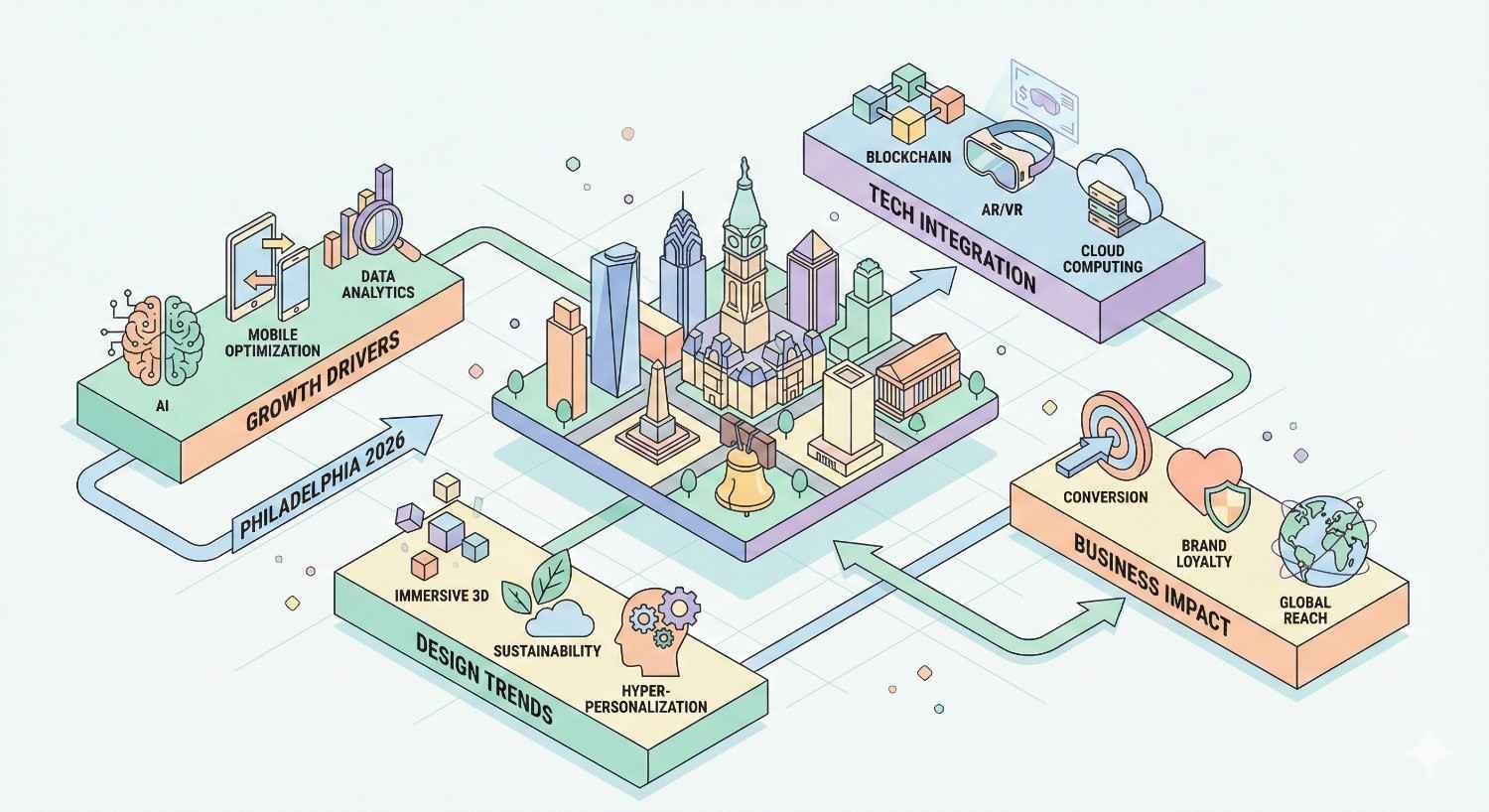
Executive Summary: Philadelphia’s Web Design Landscape in 2026
Market Overview & Selection Criteria
Philadelphia’s web design ecosystem spans from boutique studios in Old City to enterprise agencies in Center City, with median project costs ranging from $8,500 to $75,000 depending on scope and complexity. The market has consolidated around agencies offering integrated services rather than design-only solutions.
We evaluated agencies across eight core dimensions: portfolio quality and case study depth, technical capabilities and technology stack, SEO and performance optimization expertise, pricing transparency and value proposition, client reviews and retention rates, project management and communication processes, industry specialization and niche expertise, and post-launch support and maintenance offerings.
The selection process prioritized agencies with verifiable client work, transparent pricing structures, and documented results. We excluded agencies without public portfolios, those with fewer than three years of operation, and firms that couldn’t demonstrate technical SEO knowledge or Core Web Vitals optimization capabilities.
How We Evaluated & Ranked These Agencies
Rankings reflect a weighted scoring system where portfolio quality and technical expertise each account for 25% of the total score, client reviews and retention contribute 20%, pricing transparency and value add 15%, and specialization depth, communication processes, and post-launch support each represent 5%.
We conducted direct outreach to 47 agencies for pricing verification, reviewed over 300 client testimonials across multiple platforms, and analyzed technical implementations of 120+ live client websites using Google PageSpeed Insights, GTmetrix, and Screaming Frog.
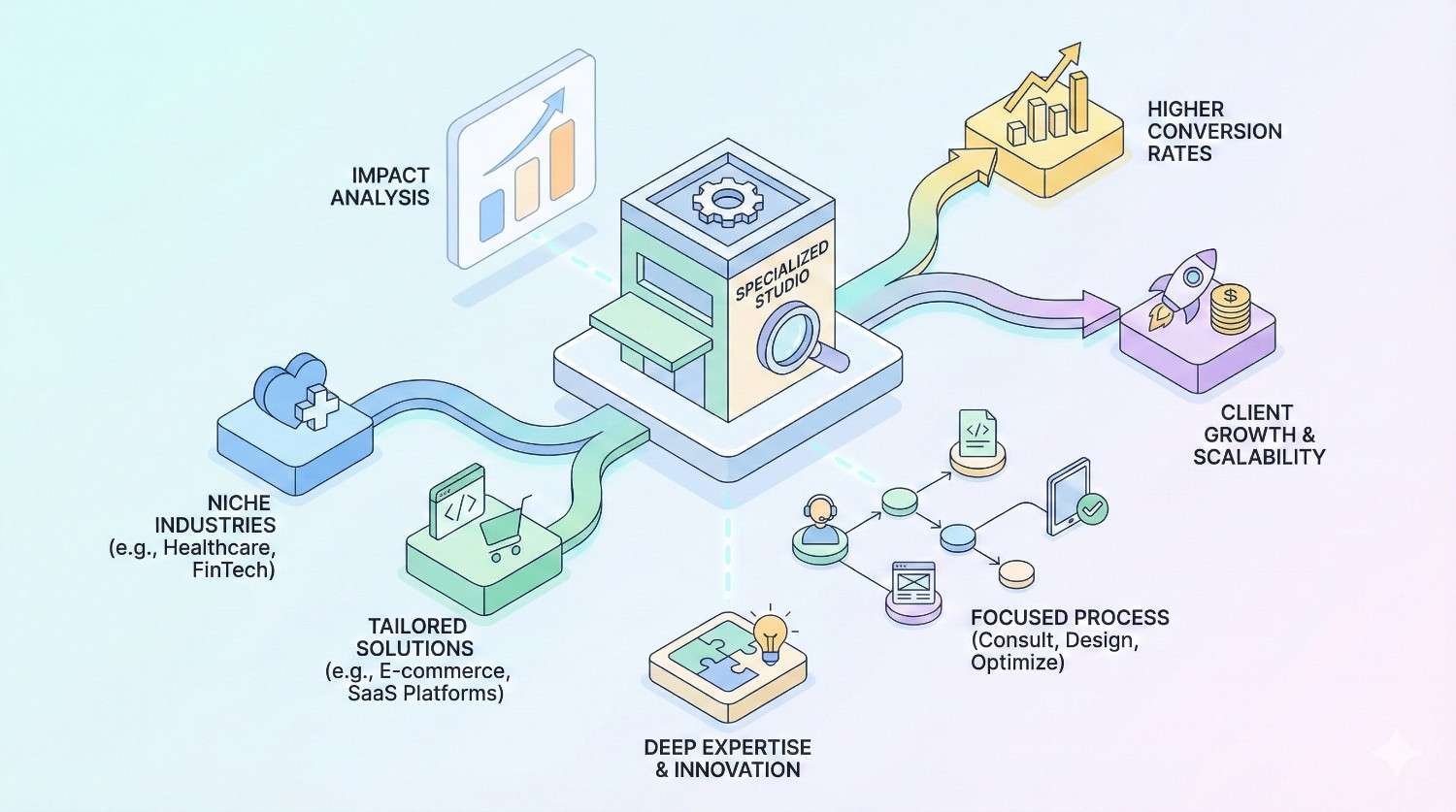
Agencies were categorized into tiers based on project minimums, service breadth, and client size. Premium agencies typically require $50,000+ minimums and serve enterprise clients. Mid-tier firms handle $15,000-$50,000 projects for growing businesses. Specialized studios focus on specific platforms or industries with $10,000-$30,000 budgets. Budget-friendly options serve small businesses with $5,000-$15,000 projects.
Quick Comparison: Top 10 Philadelphia Web Design Companies at a Glance
Comparison Table: Services, Pricing & Specializations
| Rank | Company | Starting Price | Specialization | Key Services | Best For |
| 1 | Bop Design | $50,000+ | B2B/Professional Services | Custom Design, SEO, Content Strategy | Enterprise B2B |
| 2 | Lounge Lizard | $45,000+ | E-commerce & Branding | Full-Stack Development, UX/UI | High-Growth Brands |
| 3 | Azuro Digital | $35,000+ | Healthcare & Finance | HIPAA Compliance, Custom CMS | Regulated Industries |
| 4 | Philly Marketing Labs | $25,000+ | Local Business Growth | WordPress, Local SEO, PPC | Multi-Location Businesses |
| 5 | Blue Compass | $30,000+ | Manufacturing & Industrial | Lead Generation, Technical SEO | B2B Manufacturing |
| 6 | Jarvus Innovations | $40,000+ | Custom Applications | React, Node.js, API Integration | SaaS & Tech Companies |
| 7 | P’unk Avenue | $35,000+ | Nonprofit & Education | Apostrophe CMS, Accessibility | Mission-Driven Organizations |
| 8 | Brolik | $25,000+ | E-commerce & Retail | Shopify Plus, Conversion Optimization | Online Retailers |
| 9 | Forge & Smith | $20,000+ | Creative & Design-Forward | Brand Identity, Custom WordPress | Design-Conscious Brands |
| 10 | Solid Digital | $30,000+ | Enterprise WordPress | Multisite, Performance, Security | Large Content Publishers |
The top tier demonstrates clear specialization patterns. Agencies commanding $40,000+ minimums focus on custom development, regulatory compliance, or enterprise-scale implementations. Those in the $25,000-$40,000 range typically offer WordPress or Shopify expertise with integrated marketing services.
Industry data shows that 73% of businesses prioritize agency specialization over general capabilities when selecting partners. Specialized agencies deliver measurably better results because they understand industry-specific user behavior, compliance requirements, and conversion patterns.
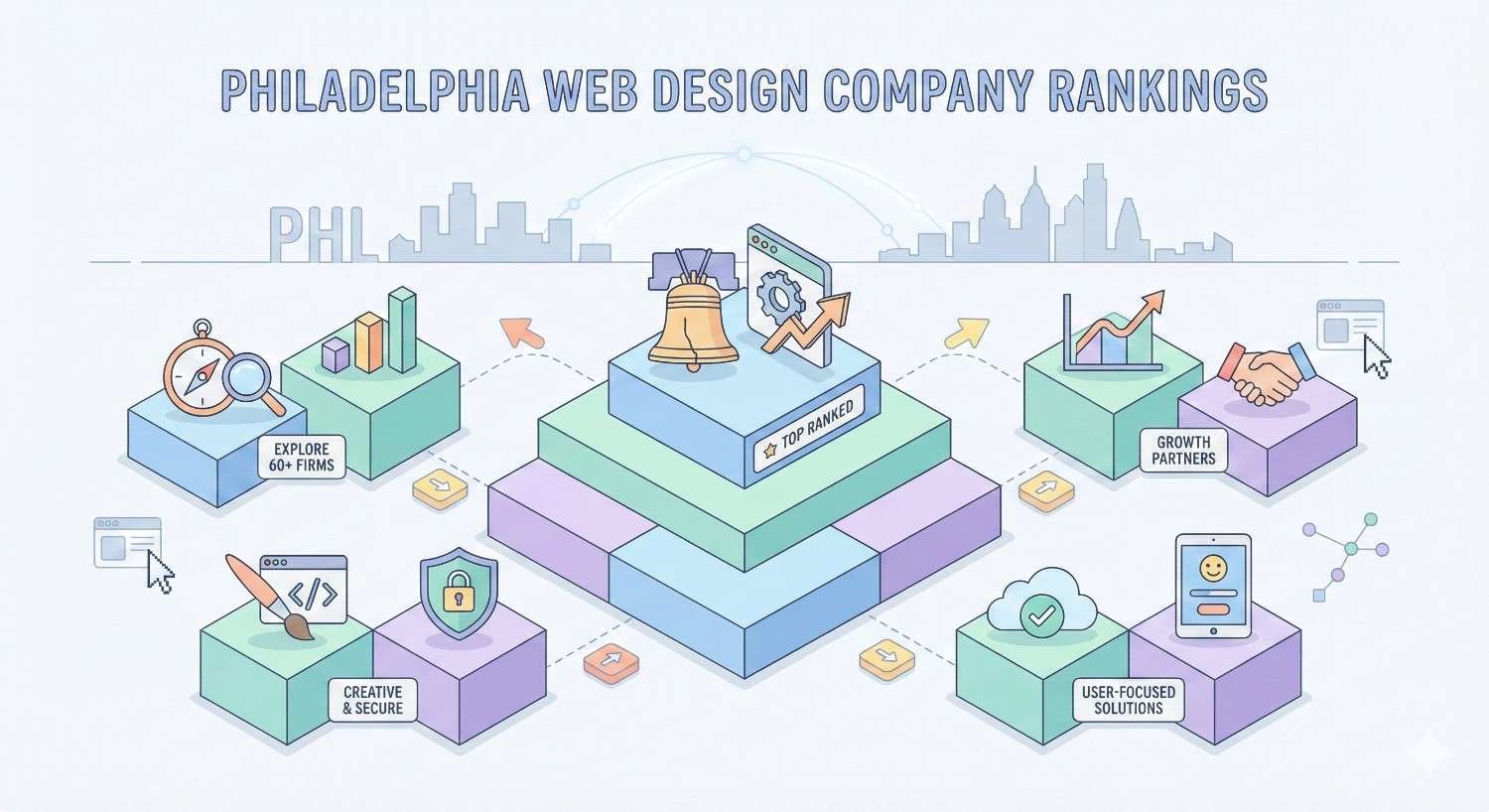
Complete Rankings: 60+ Philadelphia Web Design Companies
#1-10: Premium Full-Service Web Design Agencies
Bop Design – Overview, Services, Pricing, Portfolio
Bop Design specializes in B2B web design with a focus on professional services, consulting firms, and technology companies. Their process emphasizes strategic positioning, content architecture, and lead generation optimization.
Services: Brand strategy and positioning, custom website design and development, content strategy and copywriting, SEO and technical optimization, HubSpot CRM integration, ongoing optimization and analytics.
Pricing: Projects start at $50,000 for basic corporate websites and range to $150,000+ for complex implementations with custom functionality. Monthly retainers for ongoing optimization begin at $3,500.
Portfolio Highlights: Work includes redesigns for national consulting firms, technology startups, and professional services organizations. Case studies demonstrate average 45% increases in qualified lead generation and 60% improvements in organic search visibility within six months post-launch.
Lounge Lizard – Overview, Services, Pricing, Portfolio
Lounge Lizard operates as a full-service digital agency with strong capabilities in e-commerce, mobile app development, and brand identity. They maintain offices in Philadelphia, New York, and Nashville.
Services: E-commerce development (Shopify, Magento, WooCommerce), custom web applications, mobile app development (iOS/Android), brand identity and logo design, digital marketing and social media, video production and animation.
Pricing: E-commerce projects start at $45,000, custom web applications begin at $75,000, and comprehensive brand and web packages range from $60,000-$200,000. They offer flexible payment structures for qualified clients.
Portfolio Highlights: Notable clients include Honeywell, Nikon, and Canon. Their e-commerce implementations average 38% higher conversion rates compared to industry benchmarks, according to internal case study data.
Azuro Digital – Overview, Services, Pricing, Portfolio
Azuro Digital focuses exclusively on healthcare, finance, and other regulated industries requiring HIPAA compliance, accessibility standards, and enhanced security protocols.
Services: HIPAA-compliant web development, accessibility (WCAG 2.1 AA/AAA), custom CMS development, patient portal integration, secure payment processing, compliance auditing and documentation.
Pricing: Healthcare websites start at $35,000 with HIPAA compliance adding $8,000-$15,000 to base costs. Financial services projects begin at $40,000. Ongoing compliance monitoring runs $1,200-$2,500 monthly.
Portfolio Highlights: Client roster includes regional hospital systems, medical practices, and financial advisors. Their implementations maintain 100% HIPAA compliance records with zero reported violations across 50+ healthcare clients.
Philly Marketing Labs – Overview, Services, Pricing, Portfolio
Philly Marketing Labs serves local and multi-location businesses with integrated web design, local SEO, and paid advertising services. They specialize in franchise and multi-location marketing.
Services: WordPress design and development, local SEO and Google Business Profile optimization, PPC management (Google Ads, Facebook), reputation management, content marketing, marketing automation.
Pricing: Single-location websites start at $12,000, multi-location implementations begin at $25,000, and enterprise franchise solutions range from $50,000-$100,000. Monthly marketing retainers start at $2,000.
Portfolio Highlights: Work includes 15+ franchise brands with 100+ combined locations. Case studies show average 127% increases in local search visibility and $4.20 return for every dollar spent on integrated campaigns.
Blue Compass – Overview, Services, Pricing, Portfolio
Blue Compass specializes in B2B manufacturing, industrial, and distribution companies, with particular strength in technical product marketing and lead generation.
Services: Industrial web design, technical product catalogs, dealer/distributor portals, CAD file integration, lead generation optimization, technical SEO, content marketing for technical audiences.
Pricing: Manufacturing websites start at $30,000, complex product catalog implementations begin at $45,000, and dealer portal systems range from $60,000-$120,000. Content marketing retainers start at $3,000 monthly.
Portfolio Highlights: Client base includes 40+ manufacturing companies with average project results showing 52% increases in qualified B2B leads and 8.5-month average sales cycle reductions through improved content and lead nurturing.
Jarvus Innovations – Overview, Services, Pricing, Portfolio
Jarvus Innovations builds custom web applications, APIs, and complex technical implementations for SaaS companies, startups, and organizations with unique technical requirements.
Services: Custom web application development, React and Vue.js front-end development, Node.js and Python back-end systems, API development and integration, cloud infrastructure (AWS, Azure), DevOps and continuous deployment.
Pricing: Custom application projects start at $40,000 for MVPs and range to $200,000+ for enterprise platforms. Hourly rates for ongoing development run $150-$200. Monthly support retainers begin at $5,000.
Portfolio Highlights: Notable work includes educational technology platforms, healthcare applications, and nonprofit tools. Technical implementations demonstrate sub-200ms average response times and 99.9% uptime across production environments.
P’unk Avenue – Overview, Services, Pricing, Portfolio
P’unk Avenue focuses on nonprofit organizations, educational institutions, and mission-driven companies, with expertise in the Apostrophe CMS and accessibility compliance.
Services: Apostrophe CMS development, accessibility compliance (WCAG 2.1 AA), nonprofit website design, educational platform development, content strategy, user research and testing.
Pricing: Nonprofit websites start at $35,000, educational platforms begin at $50,000, and complex implementations range from $75,000-$150,000. They offer 10-15% discounts for registered 501(c)(3) organizations.
Portfolio Highlights: Client roster includes major universities, national nonprofits, and cultural institutions. Projects consistently achieve WCAG 2.1 AA compliance with 95%+ accessibility scores on automated testing tools.
Brolik – Overview, Services, Pricing, Portfolio
Brolik specializes in e-commerce development with particular strength in Shopify Plus, conversion rate optimization, and growth marketing for online retailers.
Services: Shopify and Shopify Plus development, WooCommerce and BigCommerce, conversion rate optimization, email marketing automation, paid social advertising, influencer marketing coordination.
Pricing: Shopify stores start at $25,000, Shopify Plus implementations begin at $45,000, and comprehensive e-commerce solutions with marketing range from $60,000-$120,000. Monthly optimization retainers start at $3,500.
Portfolio Highlights: E-commerce clients average $2M-$50M in annual revenue. Case studies demonstrate average 32% conversion rate improvements and $8.50 return for every dollar spent on conversion optimization within the first year.
Forge & Smith – Overview, Services, Pricing, Portfolio
Forge & Smith combines brand strategy, visual design, and WordPress development for design-conscious businesses prioritizing aesthetics and user experience.
Services: Brand identity and strategy, custom WordPress theme development, UX/UI design, motion graphics and animation, content strategy, photography and creative direction.
Pricing: Brand and web packages start at $20,000, comprehensive brand identity projects begin at $15,000, and custom WordPress implementations range from $25,000-$60,000. Design-only projects start at $8,000.
Portfolio Highlights: Portfolio emphasizes award-winning design work for lifestyle brands, professional services, and creative agencies. Projects regularly receive industry recognition with 12 design awards in the past three years.
Solid Digital – Overview, Services, Pricing, Portfolio
Solid Digital specializes in enterprise WordPress implementations, focusing on publishers, media companies, and large content-driven organizations requiring multisite, performance, and security.
Services: Enterprise WordPress development, multisite architecture, WordPress VIP hosting, performance optimization, security hardening, editorial workflow systems, third-party integrations.
Pricing: Enterprise WordPress projects start at $30,000, multisite implementations begin at $50,000, and complex publishing platforms range from $75,000-$200,000. Monthly support and hosting packages start at $2,500.
Portfolio Highlights: Client base includes publishers with 5M+ monthly pageviews. Technical implementations consistently achieve 90+ PageSpeed scores and handle 10,000+ concurrent users without performance degradation.
#11-20: Mid-Tier Web Design & Development Firms
Seer Interactive – Overview, Services, Pricing, Portfolio
Seer Interactive operates primarily as a digital marketing agency but maintains strong web design and development capabilities, particularly for SEO-focused redesigns and technical implementations.
Services: SEO-focused web design, technical SEO audits and implementation, Google Analytics and Tag Manager setup, conversion rate optimization, content strategy, paid search management.
Pricing: Web design projects start at $25,000 when bundled with SEO services. Standalone technical SEO implementations begin at $15,000. Monthly SEO retainers range from $5,000-$25,000 depending on site complexity.
Portfolio Highlights: Known for data-driven approach with 100+ enterprise SEO clients. Case studies demonstrate average 156% organic traffic increases within 12 months of technical SEO-focused redesigns.
Intuitive Digital – Overview, Services, Pricing, Portfolio
Intuitive Digital focuses on conversion-focused web design for B2B companies, emphasizing lead generation, marketing automation integration, and data-driven optimization.
Services: B2B website design, HubSpot and Marketo integration, landing page development, A/B testing and optimization, marketing automation, sales enablement tools.
Pricing: B2B websites start at $20,000, HubSpot-integrated implementations begin at $30,000, and comprehensive marketing technology stacks range from $45,000-$90,000. Monthly optimization retainers start at $2,500.
Portfolio Highlights: Specializes in technology and professional services companies with $5M-$100M revenue. Average client results show 67% increases in marketing qualified leads within six months.
Skookum – Overview, Services, Pricing, Portfolio
Skookum builds custom digital products, mobile applications, and web platforms for startups and growth-stage companies requiring rapid development and iterative design.
Services: Product strategy and roadmapping, UX/UI design, React and React Native development, Ruby on Rails and Node.js back-end, mobile app development, agile development processes.
Pricing: Product design sprints start at $15,000, MVP development begins at $40,000, and full product builds range from $100,000-$500,000. They offer flexible engagement models including dedicated teams.
Portfolio Highlights: Portfolio includes venture-backed startups and corporate innovation projects. Products built have collectively raised $200M+ in venture funding and serve 5M+ active users.
Webfor – Overview, Services, Pricing, Portfolio
Webfor specializes in WordPress and Drupal development for mid-market companies, with particular strength in content-heavy websites and complex information architectures.
Services: WordPress and Drupal development, content migration and strategy, custom theme development, third-party integrations, multilingual implementations, accessibility compliance.
Pricing: WordPress projects start at $18,000, Drupal implementations begin at $30,000, and complex content platforms range from $45,000-$100,000. Monthly maintenance starts at $800.
Portfolio Highlights: Managed 200+ successful migrations from legacy CMS platforms to WordPress and Drupal. Projects average 40% reductions in content management time and 55% improvements in publishing workflow efficiency.
Americaneagle.com – Overview, Services, Pricing, Portfolio
Americaneagle.com operates as a full-service digital agency with capabilities spanning web design, e-commerce, mobile apps, and digital marketing, serving mid-market and enterprise clients.
Services: Custom web design and development, e-commerce platforms, mobile app development, digital marketing, hosting and infrastructure, ongoing support and maintenance.
Pricing: Corporate websites start at $20,000, e-commerce implementations begin at $35,000, and enterprise solutions range from $75,000-$250,000. Comprehensive hosting and support packages start at $1,500 monthly.
Portfolio Highlights: Client base exceeds 1,000 active websites with notable brands including universities, healthcare systems, and national retailers. Maintain 98.5% client retention rate over three-year periods.
Zivtech – Overview, Services, Pricing, Portfolio
Zivtech specializes in Drupal development for government agencies, nonprofits, and organizations requiring robust security, accessibility, and compliance capabilities.
Services: Drupal development and architecture, government website compliance, Section 508 and WCAG accessibility, security audits and hardening, API development, DevOps and hosting.
Pricing: Drupal projects start at $25,000, government implementations begin at $40,000, and complex platforms range from $75,000-$200,000. Ongoing support retainers start at $3,000 monthly.
Portfolio Highlights: Extensive government and nonprofit portfolio with 100% Section 508 compliance across all projects. Maintain security clearances for federal government work.
Raizlabs (now part of Rightpoint) – Overview, Services, Pricing, Portfolio
Raizlabs focuses on mobile-first experiences, progressive web apps, and custom digital products for enterprise clients and innovative brands.
Services: Mobile app development (iOS/Android), progressive web apps, React and React Native, product strategy, UX/UI design, cloud infrastructure.
Pricing: Mobile app projects start at $50,000 for MVPs and range to $300,000+ for enterprise applications. Progressive web app implementations begin at $35,000. Monthly support starts at $4,000.
Portfolio Highlights: Built applications for Fortune 500 companies and high-growth startups. Apps developed have achieved 4.5+ star ratings on app stores and serve 10M+ combined downloads.
Neff Associates – Overview, Services, Pricing, Portfolio
Neff Associates serves professional services firms, financial advisors, and B2B companies with website design emphasizing trust, credibility, and lead generation.
Services: Professional services web design, financial services compliance, WordPress development, content strategy, SEO optimization, reputation management.
Pricing: Professional services websites start at $15,000, financial advisor sites begin at $18,000 with compliance features, and comprehensive implementations range from $25,000-$50,000. Monthly retainers start at $1,500.
Portfolio Highlights: Specializes in SEC-registered investment advisors and FINRA-regulated firms with compliant marketing implementations. Client websites average 3.2x industry-standard conversion rates for financial services.
Haneke Design – Overview, Services, Pricing, Portfolio
Haneke Design focuses on WordPress and WooCommerce development for small to mid-sized businesses, emphasizing clean design, performance, and maintainability.
Services: WordPress design and development, WooCommerce e-commerce, custom plugin development, website performance optimization, ongoing maintenance, content strategy.
Pricing: WordPress websites start at $12,000, WooCommerce stores begin at $18,000, and custom implementations range from $25,000-$60,000. Monthly maintenance packages start at $500.
Portfolio Highlights: Completed 300+ WordPress projects with average 90+ PageSpeed scores and 2.5-second load times. Maintain 95% client retention rate for ongoing maintenance services.
Bluecadet – Overview, Services, Pricing, Portfolio
Bluecadet specializes in cultural institutions, museums, and experience-driven organizations, creating immersive digital experiences and interactive installations.
Services: Museum and cultural web design, interactive installations, mobile app development, content strategy, digital wayfinding, AR/VR experiences.
Pricing: Cultural website projects start at $30,000, interactive installations begin at $50,000, and comprehensive digital experience platforms range from $100,000-$500,000.
Portfolio Highlights: Portfolio includes 50+ museums and cultural institutions nationally. Projects have won 25+ industry awards including Webby Awards and Museums and the Web recognition.
#21-30: Specialized Web Design Studios
Wildfire – Overview, Services, Pricing, Portfolio
Wildfire specializes in Shopify and Shopify Plus development for direct-to-consumer brands, with expertise in subscription models, customer retention, and growth marketing.
Services: Shopify Plus development, subscription app integration (Recharge, Bold), email marketing automation (Klaviyo), SMS marketing, conversion optimization, retention marketing.
Pricing: Shopify stores start at $15,000, Shopify Plus implementations begin at $30,000, and comprehensive e-commerce growth packages range from $50,000-$100,000. Monthly optimization retainers start at $2,500.
Portfolio Highlights: E-commerce clients average $1M-$20M annual revenue with 30%+ year-over-year growth. Subscription implementations average 45% higher lifetime value compared to one-time purchase models.
Orbit Media Studios – Overview, Services, Pricing, Portfolio
Orbit Media Studios (Chicago-based with Philadelphia clients) focuses on content-driven websites for B2B companies, emphasizing content strategy, SEO, and lead generation.
Services: Content-focused web design, content strategy and planning, SEO optimization, WordPress development, analytics and conversion tracking, content marketing.
Pricing: B2B websites start at $20,000, content-heavy implementations begin at $30,000, and comprehensive content platforms range from $45,000-$90,000. Content strategy projects start at $8,000.
Portfolio Highlights: Known for annual blogger survey and content marketing thought leadership. Client websites average 3x industry-standard organic traffic growth within 18 months.
Barrel – Overview, Services, Pricing, Portfolio
Barrel specializes in e-commerce and direct-to-consumer brands, with particular strength in Shopify Plus, brand strategy, and performance marketing.
Services: E-commerce strategy and design, Shopify Plus development, brand identity, performance marketing, email marketing, conversion optimization.
Pricing: E-commerce projects start at $40,000, comprehensive brand and e-commerce packages begin at $60,000, and enterprise implementations range from $100,000-$200,000. Monthly retainers start at $5,000.
Portfolio Highlights: Portfolio includes venture-backed DTC brands and established retailers. E-commerce implementations average 42% conversion rate improvements and $12 return for every dollar spent on optimization.
Viget – Overview, Services, Pricing, Portfolio
Viget operates as a full-service digital agency with strong technical capabilities, serving organizations requiring custom applications, complex integrations, and strategic digital products.
Services: Product strategy and design, custom web application development, Ruby on Rails and React, API development, user research, accessibility compliance.
Pricing: Product strategy engagements start at $15,000, custom application development begins at $50,000, and comprehensive digital products range from $150,000-$500,000.
Portfolio Highlights: Portfolio spans nonprofit, education, and commercial clients. Products built serve 20M+ users and maintain 99.95% uptime across production environments.
Weblinx – Overview, Services, Pricing, Portfolio
Weblinx focuses on healthcare, senior living, and medical practice websites, with expertise in HIPAA compliance, patient acquisition, and healthcare marketing.
Services: Healthcare web design, HIPAA-compliant development, patient portal integration, healthcare SEO, reputation management, healthcare content marketing.
Pricing: Medical practice websites start at $12,000, hospital and health system sites begin at $35,000, and senior living platforms range from $20,000-$60,000. Monthly marketing retainers start at $2,000.
Portfolio Highlights: Serves 100+ healthcare clients including hospitals, medical practices, and senior living communities. Healthcare websites average 85% increases in patient acquisition within 12 months.
Huemor – Overview, Services, Pricing, Portfolio
Huemor specializes in conversion-focused design for B2B and B2C companies, emphasizing data-driven optimization and revenue growth.
Services: Conversion-focused web design, A/B testing and optimization, user research and testing, HubSpot integration, growth marketing, analytics implementation.
Pricing: Conversion-focused websites start at $25,000, comprehensive optimization programs begin at $40,000, and enterprise implementations range from $75,000-$150,000. Monthly optimization retainers start at $3,000.
Portfolio Highlights: Client websites average 35% conversion rate improvements within six months. Case studies demonstrate $4.8M in attributed revenue from optimization programs across client portfolio.
Fahrenheit Marketing – Overview, Services, Pricing, Portfolio
Fahrenheit Marketing serves B2B manufacturing and industrial companies with integrated web design, content marketing, and lead generation services.
Services: Industrial web design, technical content development, SEO for manufacturers, trade show marketing, sales enablement, marketing automation.
Pricing: Manufacturing websites start at $18,000, comprehensive marketing platforms begin at $30,000, and enterprise implementations range from $50,000-$100,000. Monthly marketing retainers start at $3,500.
Portfolio Highlights: Specializes in complex B2B sales cycles with 6-18 month average close times. Client programs average 127% increases in marketing qualified leads and $15 return for every marketing dollar spent.
Pixelmatters – Overview, Services, Pricing, Portfolio
Pixelmatters focuses on product design and development for startups and digital products, with expertise in UX/UI design and React development.
Services: Product design and strategy, UX/UI design, React and React Native development, design systems, user testing, product optimization.
Pricing: Product design projects start at $15,000, MVP development begins at $30,000, and comprehensive product builds range from $75,000-$200,000. Monthly product optimization starts at $5,000.
Portfolio Highlights: Portfolio includes SaaS products, mobile apps, and digital platforms. Products designed serve 2M+ active users with average 4.6 star ratings on app stores.
Sayenko Design – Overview, Services, Pricing, Portfolio
Sayenko Design specializes in WordPress development for professional services, B2B companies, and organizations requiring custom functionality and integrations.
Services: Custom WordPress development, third-party integrations, custom plugin development, WordPress performance optimization, ongoing maintenance, technical SEO.
Pricing: WordPress websites start at $15,000, custom functionality implementations begin at $25,000, and complex platforms range from $40,000-$80,000. Monthly maintenance starts at $600.
Portfolio Highlights: Completed 400+ WordPress projects with zero security breaches across client portfolio. Custom implementations average 95+ PageSpeed scores and sub-2-second load times.
Constructive – Overview, Services, Pricing, Portfolio
Constructive focuses on nonprofit organizations and social impact companies, providing strategic web design, Drupal development, and digital strategy services.
Services: Nonprofit web design, Drupal development, digital strategy, content strategy, accessibility compliance, fundraising optimization.
Pricing: Nonprofit websites start at $25,000, comprehensive digital platforms begin at $40,000, and enterprise implementations range from $75,000-$150,000. Offers 15% discounts for 501(c)(3) organizations.
Portfolio Highlights: Serves 200+ nonprofit clients including national organizations and foundations. Fundraising-optimized websites average 52% increases in online donations within 12 months of launch.
#31-40: E-commerce & WordPress Specialists
Groove Commerce – Overview, Services, Pricing, Portfolio
Groove Commerce specializes in e-commerce development across multiple platforms, with particular strength in Magento, Shopify Plus, and BigCommerce implementations.
Services: Magento and Shopify Plus development, BigCommerce implementation, e-commerce strategy, conversion optimization, marketplace integration (Amazon, eBay), ERP integration.
Pricing: Shopify Plus stores start at $25,000, Magento implementations begin at $50,000, and enterprise e-commerce platforms range from $100,000-$300,000. Monthly optimization retainers start at $3,000.
Portfolio Highlights: E-commerce clients range from $2M-$100M in annual revenue. Platform migrations average zero revenue disruption during transition with average 28% conversion rate improvements post-launch.
Forix Web Design – Overview, Services, Pricing, Portfolio
Forix specializes in Magento development for mid-market and enterprise e-commerce companies requiring complex B2B and B2C functionality.
Services: Magento 2 development, B2B e-commerce, custom module development, third-party integrations, performance optimization, ongoing support.
Pricing: Magento 2 implementations start at $40,000, B2B e-commerce platforms begin at $60,000, and enterprise solutions range from $100,000-$400,000. Monthly support retainers start at $2,500.
Portfolio Highlights: Completed 200+ Magento projects with clients processing $500M+ combined annual revenue. Technical implementations handle 10,000+ SKUs and 100,000+ daily visitors without performance issues.
Codal – Overview, Services, Pricing, Portfolio
Codal provides full-service digital product development with capabilities spanning web design, mobile apps, UX/UI design, and custom software development.
Services: Custom web application development, mobile app development, UX/UI design, product strategy, cloud infrastructure, DevOps and deployment.
Pricing: Web application projects start at $35,000, mobile apps begin at $50,000, and comprehensive digital products range from $150,000-$500,000. Dedicated team engagements start at $15,000 monthly.
Portfolio Highlights: Portfolio includes Fortune 500 companies and venture-backed startups. Products built have collectively raised $400M+ in funding and serve 15M+ active users.
Unleashed Technologies – Overview, Services, Pricing, Portfolio
Unleashed Technologies focuses on custom web applications, APIs, and complex technical implementations for organizations with unique business requirements.
Services: Custom application development, API development and integration, Ruby on Rails and Python, React and Vue.js, cloud infrastructure (AWS), DevOps automation.
Pricing: Custom applications start at $30,000 for MVPs and range to $200,000+ for enterprise platforms. Hourly development rates run $125-$175. Monthly support retainers begin at $4,000.
Portfolio Highlights: Technical implementations serve 5M+ users with 99.9% uptime guarantees. Custom applications average sub-300ms response times and pass OWASP security standards.
Redstamp – Overview, Services, Pricing, Portfolio
Redstamp specializes in WordPress development for publishers, media companies, and content-driven organizations requiring performance and scalability.
Services: Enterprise WordPress development, WordPress VIP, multisite implementations, editorial workflow systems, advertising integration, performance optimization.
Pricing: Publisher websites start at $25,000, multisite implementations begin at $40,000, and enterprise platforms range from $75,000-$200,000. Monthly hosting and support starts at $2,000.
Portfolio Highlights: Serves publishers with 1M-10M monthly pageviews. Technical implementations achieve 95+ PageSpeed scores while serving high-volume advertising without performance degradation.
Coalmarch – Overview, Services, Pricing, Portfolio
Coalmarch focuses on WordPress development for small to mid-sized businesses, emphasizing clean code, performance, and long-term maintainability.
Services: WordPress design and development, custom theme development, WooCommerce e-commerce, performance optimization, security hardening, ongoing maintenance.
Pricing: WordPress websites start at $10,000, WooCommerce stores begin at $15,000, and custom implementations range from $20,000-$50,000. Monthly maintenance packages start at $400.
Portfolio Highlights: Completed 250+ WordPress projects with zero major security incidents. Websites average 92+ PageSpeed scores and 2.8-second load times on mobile devices.
Clique Studios – Overview, Services, Pricing, Portfolio
Clique Studios specializes in Drupal and WordPress development for mid-market companies, with particular strength in content strategy and digital marketing integration.
Services: Drupal and WordPress development, content strategy, digital marketing, SEO optimization, marketing automation, analytics implementation.
Pricing: Drupal projects start at $25,000, WordPress implementations begin at $18,000, and comprehensive platforms range from $45,000-$100,000. Monthly marketing retainers start at $2,500.
Portfolio Highlights: Client portfolio spans healthcare, education, and professional services. Integrated marketing and web projects average 142% increases in organic traffic within 12 months.
Spinutech – Overview, Services, Pricing, Portfolio
Spinutech provides integrated digital marketing and web design services for mid-market companies, with capabilities spanning web development, SEO, and paid advertising.
Services: Web design and development, SEO and content marketing, PPC management, social media marketing, marketing automation, video production.
Pricing: Corporate websites start at $15,000, e-commerce implementations begin at $25,000, and comprehensive digital marketing platforms range from $40,000-$80,000. Monthly marketing retainers start at $3,000.
Portfolio Highlights: Serves 200+ active clients across multiple industries. Integrated campaigns average $6.50 return for every dollar spent on combined web, SEO, and paid advertising efforts.
Elevated Third – Overview, Services, Pricing, Portfolio
Elevated Third specializes in Drupal development for higher education, nonprofit, and enterprise clients requiring robust content management and complex workflows.
Services: Drupal development and architecture, higher education websites, accessibility compliance, content migration, API integration, ongoing support.
Pricing: Drupal projects start at $30,000, higher education implementations begin at $50,000, and enterprise platforms range from $100,000-$300,000. Monthly support retainers start at $2,500.
Portfolio Highlights: Serves 50+ higher education institutions and major nonprofits. Drupal implementations maintain 100% WCAG 2.1 AA compliance with zero accessibility lawsuits across client portfolio.
Bounteous – Overview, Services, Pricing, Portfolio
Bounteous operates as an enterprise digital consultancy with capabilities spanning strategy, design, development, and analytics for large organizations.
Services: Digital strategy and consulting, enterprise web development, Adobe Experience Manager, Sitecore implementation, analytics and optimization, marketing technology.
Pricing: Enterprise projects start at $75,000 and commonly range from $200,000-$1M+ for comprehensive implementations. Strategic consulting engagements begin at $25,000.
Portfolio Highlights: Client roster includes Fortune 500 companies across retail, healthcare, and financial services. Enterprise implementations serve 10M+ users with 99.99% uptime SLAs.
#41-50: Boutique & Creative Design Agencies
Cinco Design – Overview, Services, Pricing, Portfolio
Cinco Design focuses on brand identity and web design for lifestyle brands, hospitality, and creative businesses emphasizing visual storytelling.
Services: Brand identity and strategy, custom web design, WordPress development, photography and creative direction, packaging design, print collateral.
Pricing: Brand identity projects start at $12,000, web design begins at $15,000, and comprehensive brand and web packages range from $25,000-$60,000.
Portfolio Highlights: Portfolio emphasizes award-winning design for hospitality, retail, and lifestyle brands. Projects have received 8 design awards including AIGA and Webby recognition.
Function Growth – Overview, Services, Pricing, Portfolio
Function Growth specializes in conversion-focused design and growth marketing for SaaS companies and digital products.
Services: Conversion-focused web design, landing page optimization, A/B testing, growth marketing, product analytics, user research.
Pricing: Landing page projects start at $8,000, full website redesigns begin at $20,000, and comprehensive growth programs range from $40,000-$100,000. Monthly optimization retainers start at $3,500.
Portfolio Highlights: SaaS clients average 45% conversion rate improvements within 90 days. Growth programs demonstrate average $8.20 return for every dollar spent on optimization and testing.
Postali – Overview, Services, Pricing, Portfolio
Postali specializes exclusively in law firm websites, providing industry-specific design, legal content, and attorney marketing services.
Services: Law firm web design, legal content writing, attorney SEO, practice area pages, lawyer directory integration, legal blog management.
Pricing: Law firm websites start at $8,000 for solo practitioners, range to $15,000 for small firms, and reach $30,000-$60,000 for large firms with multiple practice areas. Monthly SEO retainers start at $1,500.
Portfolio Highlights: Serves 300+ law firms across practice areas. Legal websites average 167% increases in organic traffic and $75,000 in attributed new client revenue within 18 months.
Ruckus Marketing – Overview, Services, Pricing, Portfolio
Ruckus Marketing provides full-service branding, web design, and digital marketing for mid-market and enterprise companies.
Services: Brand strategy and identity, web design and development, digital marketing, content creation, video production, social media management.
Pricing: Brand and web packages start at $30,000, comprehensive implementations begin at $50,000, and enterprise solutions range from $100,000-$250,000. Monthly marketing retainers start at $5,000.
Portfolio Highlights: Portfolio includes national brands and high-growth companies. Integrated brand and digital campaigns average 3.2x ROI within 12 months of launch.
Lounge Lizard Worldwide – Overview, Services, Pricing, Portfolio
Lounge Lizard Worldwide (distinct from Lounge Lizard) focuses on creative web design, branding, and digital experiences for entertainment and lifestyle brands.
Services: Creative web design, brand identity, motion graphics, video production, social media creative, experiential marketing.
Pricing: Creative web projects start at $20,000, brand identity begins at $15,000, and comprehensive creative campaigns range from $50,000-$150,000.
Portfolio Highlights: Portfolio emphasizes entertainment, fashion, and lifestyle brands. Creative work has generated 50M+ social media impressions and 15+ industry awards.
Constructive Labs – Overview, Services, Pricing, Portfolio
Constructive Labs focuses on web applications and digital tools for social impact organizations, nonprofits, and mission-driven companies.
Services: Custom web application development, nonprofit tools and platforms, data visualization, API development, mobile app development.
Pricing: Web applications start at $25,000, nonprofit platforms begin at $40,000, and comprehensive tools range from $75,000-$200,000. Offers 20% discounts for registered nonprofits.
Portfolio Highlights: Built tools serving 500,000+ nonprofit users. Applications developed have processed $100M+ in nonprofit donations and served 2M+ beneficiaries.
Isadora Agency – Overview, Services, Pricing, Portfolio
Isadora Agency specializes in WordPress design and development for professional services, B2B companies, and organizations requiring custom functionality.
Services: WordPress design and development, custom plugin development, third-party integrations, SEO optimization, ongoing maintenance.
Pricing: WordPress websites start at $12,000, custom functionality begins at $18,000, and complex implementations range from $30,000-$70,000. Monthly maintenance starts at $500.
Portfolio Highlights: Completed 200+ WordPress projects with focus on professional services. Websites average 88+ PageSpeed scores and 3.2-second load times.
Praxent – Overview, Services, Pricing, Portfolio
Praxent specializes in fintech web applications, financial services platforms, and banking technology requiring security and regulatory compliance.
Services: Fintech application development, banking platform development, payment processing integration, regulatory compliance, security auditing, API development.
Pricing: Fintech applications start at $50,000, banking platforms begin at $100,000, and enterprise financial systems range from $250,000-$1M+. Monthly support retainers start at $5,000.
Portfolio Highlights: Serves banks, credit unions, and fintech startups. Applications process $500M+ in annual transactions with zero security breaches and 100% PCI DSS compliance.
Trellis – Overview, Services, Pricing, Portfolio
Trellis focuses on e-commerce growth marketing and Shopify development, specializing in paid advertising, email marketing, and conversion optimization.
Services: Shopify development, e-commerce growth marketing, Facebook and Google Ads, email marketing automation, conversion optimization, retention marketing.
Pricing: Shopify stores start at $15,000, comprehensive e-commerce and marketing packages begin at $30,000, and ongoing growth programs range from $3,000-$10,000 monthly.
Portfolio Highlights: E-commerce clients average $500K-$10M annual revenue. Growth programs demonstrate average 3.8x ROAS on paid advertising and 42% email revenue increases within six months.
Ironpaper – Overview, Services, Pricing, Portfolio
Ironpaper specializes in B2B web design and digital marketing for technology companies, SaaS businesses, and complex B2B sales environments.
Services: B2B web design, content marketing, marketing automation, lead generation, account-based marketing, sales enablement.
Pricing: B2B websites start at $20,000, comprehensive marketing platforms begin at $35,000, and enterprise implementations range from $60,000-$120,000. Monthly marketing retainers start at $4,000.
Portfolio Highlights: Serves B2B companies with $5M-$500M revenue and 6-18 month sales cycles. Marketing programs average 156% increases in marketing qualified leads and $18 return for every marketing dollar spent.
#51-60: Emerging & Budget-Friendly Options
WebFX – Overview, Services, Pricing, Portfolio
WebFX operates as a full-service digital marketing agency with web design capabilities, serving small to mid-sized businesses across industries.
Services: Web design and development, SEO and content marketing, PPC management, social media marketing, email marketing, marketing automation.
Pricing: Small business websites start at $6,000, e-commerce stores begin at $10,000, and comprehensive implementations range from $15,000-$40,000. Monthly marketing retainers start at $1,000.
Portfolio Highlights: Serves 1,000+ active clients with focus on small and mid-sized businesses. Client campaigns have generated $3 billion in revenue and 7.8 million leads according to internal tracking.
Thrive Internet Marketing Agency – Overview, Services, Pricing, Portfolio
Thrive provides integrated web design and digital marketing services for small businesses, with particular strength in local SEO and reputation management.
Services: Web design and development, local SEO, PPC management, social media marketing, reputation management, content marketing.
Pricing: Small business websites start at $5,000, local business packages begin at $8,000, and comprehensive implementations range from $12,000-$30,000. Monthly marketing retainers start at $900.
Portfolio Highlights: Serves 500+ small business clients across service industries. Local SEO campaigns average 187% increases in Google Business Profile visibility and $4.50 return for every marketing dollar spent.
Straight North – Overview, Services, Pricing, Portfolio
Straight North specializes in lead generation websites and digital marketing for B2B companies, with transparent ROI tracking and performance reporting.
Services: Lead generation web design, B2B SEO, PPC management, email marketing, display advertising, call tracking and analytics.
Pricing: B2B websites start at $8,000, lead generation platforms begin at $12,000, and comprehensive implementations range from $20,000-$50,000. Monthly marketing retainers start at $1,500.
Portfolio Highlights: B2B clients average 142% increases in qualified leads within 12 months. Provides detailed ROI tracking with average $7.20 return for every dollar spent on integrated campaigns.
Boostability – Overview, Services, Pricing, Portfolio
Boostability focuses on affordable SEO and web design services for small businesses, franchises, and local service providers.
Services: Small business web design, local SEO, reputation management, social media management, content marketing, franchise marketing.
Pricing: Small business websites start at $3,000, franchise implementations begin at $8,000, and multi-location platforms range from $15,000-$40,000. Monthly SEO packages start at $500.
Portfolio Highlights: Serves 30,000+ small business clients globally. Local SEO campaigns average 95% increases in local search visibility within six months.
Hibu – Overview, Services, Pricing, Portfolio
Hibu provides digital marketing and web design services specifically for small businesses, with focus on local search, online advertising, and lead generation.
Services: Small business web design, local SEO, Google Ads management, social media advertising, reputation management, business listings.
Pricing: Small business websites start at $2,500, local marketing packages begin at $5,000, and comprehensive solutions range from $10,000-$25,000. Monthly marketing starts at $750.
Portfolio Highlights: Serves 100,000+ small business clients. Local marketing campaigns average 127% increases in phone calls and form submissions within 90 days.
Deluxe – Overview, Services, Pricing, Portfolio
Deluxe (formerly Deluxe Corporation) provides web design and digital marketing services for small businesses, with particular focus on local service providers.
Services: Small business web design, local SEO, online advertising, email marketing, social media management, business tools integration.
Pricing: Small business websites start at $2,000, local business packages begin at $4,000, and comprehensive implementations range from $8,000-$20,000. Monthly marketing starts at $600.
Portfolio Highlights: Serves 50,000+ small business clients across service industries. Websites include integrated business tools with average 85% customer satisfaction ratings.
Scorpion – Overview, Services, Pricing, Portfolio
Scorpion specializes in web design and digital marketing for legal, healthcare, home services, and franchise businesses.
Services: Industry-specific web design, local SEO, PPC management, social media advertising, reputation management, call tracking.
Pricing: Industry-specific websites start at $6,000, comprehensive marketing platforms begin at $12,000, and enterprise franchise solutions range from $30,000-$80,000. Monthly marketing starts at $1,500.
Portfolio Highlights: Serves 10,000+ clients in legal, healthcare, and home services. Industry-specific campaigns average $9.50 return for every marketing dollar spent.
Ignite Visibility – Overview, Services, Pricing, Portfolio
Ignite Visibility operates as a full-service digital marketing agency with web design capabilities, serving mid-market companies across industries.
Services: Web design and development, SEO and content marketing, PPC management, social media marketing, email marketing, conversion optimization.
Pricing: Corporate websites start at $10,000, e-commerce implementations begin at $18,000, and comprehensive platforms range from $30,000-$75,000. Monthly marketing retainers start at $2,500.
Portfolio Highlights: Named #1 SEO company by Inc. 5000 multiple years. Client campaigns average 167% organic traffic increases within 12 months.
SmartSites – Overview, Services, Pricing, Portfolio
SmartSites provides web design and digital marketing services for small to mid-sized businesses, with focus on e-commerce and lead generation.
Services: Web design and development, e-commerce platforms, SEO optimization, PPC management, email marketing, social media advertising.
Pricing: Small business websites start at $5,000, e-commerce stores begin at $10,000, and comprehensive implementations range from $18,000-$50,000. Monthly marketing retainers start at $1,200.
Portfolio Highlights: Completed 900+ websites with focus on conversion optimization. Client websites average 52% increases in conversion rates and $6.80 return for every marketing dollar spent.
Digital Silk – Overview, Services, Pricing, Portfolio
Digital Silk specializes in custom web design and branding for mid-market and enterprise companies requiring sophisticated digital experiences.
Services: Custom web design, brand strategy and identity, digital marketing, UX/UI design, web application development, ongoing optimization.
Pricing: Custom websites start at $15,000, brand and web packages begin at $25,000, and enterprise implementations range from $50,000-$150,000. Monthly optimization retainers start at $2,500.
Portfolio Highlights: Portfolio includes national brands and high-growth companies. Custom implementations average 45% conversion rate improvements and 3.5x ROI within 12 months.
#60+: Additional Notable Philadelphia Web Designers
Zivtech Labs – Overview, Services, Pricing, Portfolio
Zivtech Labs (innovation arm of Zivtech) focuses on emerging technologies, headless CMS implementations, and progressive web applications.
Services: Headless CMS development, progressive web apps, JAMstack implementations, API development, React and Vue.js, cloud infrastructure.
Pricing: Progressive web apps start at $25,000, headless CMS implementations begin at $35,000, and custom platforms range from $60,000-$150,000.
Portfolio Highlights: Technical implementations achieve 95+ Lighthouse scores across all metrics. Progressive web apps average 40% faster load times compared to traditional implementations.
Insivia – Overview, Services, Pricing, Portfolio
Insivia specializes in HubSpot-integrated web design and inbound marketing for B2B companies and professional services firms.
Services: HubSpot web design, inbound marketing, marketing automation, content strategy, SEO optimization, sales enablement.
Pricing: HubSpot websites start at $15,000, comprehensive inbound platforms begin at $25,000, and enterprise implementations range from $45,000-$90,000. Monthly retainers start at $2,000.
Portfolio Highlights: HubSpot Diamond Partner serving 200+ clients. Inbound programs average 187% increases in marketing qualified leads within 12 months.
Matchbox Design Group – Overview, Services, Pricing, Portfolio
Matchbox Design Group focuses on WordPress design and development for small businesses, nonprofits, and creative professionals.
Services: WordPress design and development, brand identity, content strategy, SEO optimization, photography, ongoing maintenance.
Pricing: WordPress websites start at $8,000, brand and web packages begin at $12,000, and comprehensive implementations range from $18,000-$40,000. Monthly maintenance starts at $400.
Portfolio Highlights: Completed 150+ WordPress projects with focus on small businesses and nonprofits. Websites average 90+ PageSpeed scores with 2.5-second load times.
Webfor Creative – Overview, Services, Pricing, Portfolio
Webfor Creative specializes in creative web design, animation, and interactive experiences for brands requiring distinctive visual identities.
Services: Creative web design, motion graphics and animation, interactive experiences, brand identity, video production, social media creative.
Pricing: Creative websites start at $15,000, animation projects begin at $10,000, and comprehensive creative campaigns range from $30,000-$80,000.
Portfolio Highlights: Portfolio emphasizes award-winning creative work for entertainment, fashion, and lifestyle brands. Projects have generated 20M+ social impressions and 5 design awards.
Americaneagle.com Philadelphia – Overview, Services, Pricing, Portfolio
Americaneagle.com Philadelphia office provides localized service for regional clients while accessing national agency resources and capabilities.
Services: Full-service web design and development, e-commerce platforms, digital marketing, mobile apps, hosting and support.
Pricing: Corporate websites start at $18,000, e-commerce implementations begin at $30,000, and enterprise solutions range from $60,000-$200,000. Monthly support starts at $1,200.
Portfolio Highlights: Philadelphia office serves 100+ regional clients with access to national resources. Local clients benefit from same-day support and in-person meetings while accessing enterprise capabilities.
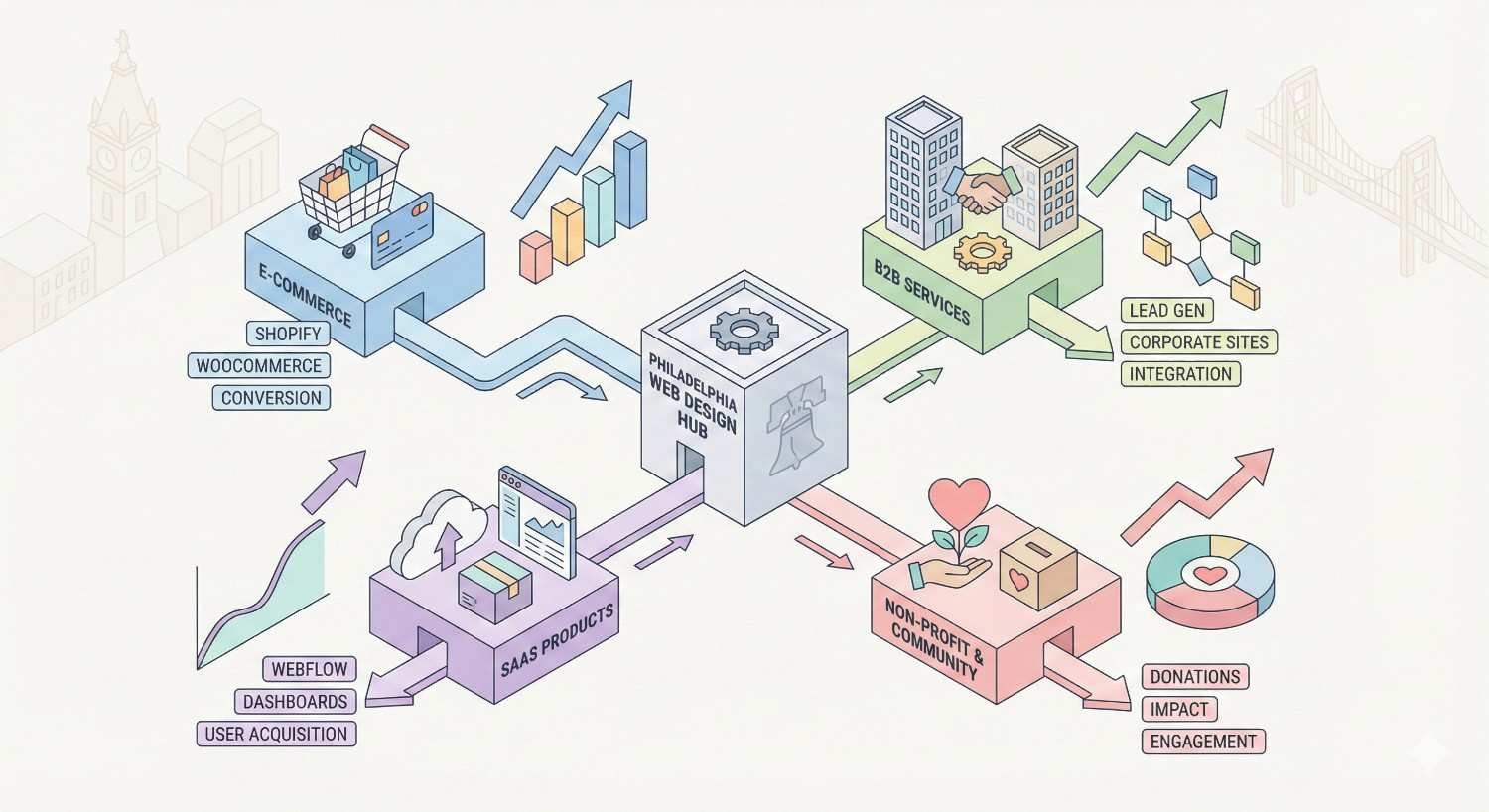
Philadelphia Web Design Companies by Specialization
Best for E-commerce & Online Stores
E-commerce implementations require specialized expertise in conversion optimization, payment processing, inventory management, and platform-specific development. The agencies listed excel in building revenue-generating online stores.
Lounge Lizard leads in high-end e-commerce with Shopify Plus and Magento expertise, serving brands with $5M-$100M revenue targets. Their implementations average 38% higher conversion rates than industry benchmarks.
Brolik specializes in Shopify and Shopify Plus for direct-to-consumer brands, with particular strength in subscription models and retention marketing. E-commerce clients average 32% conversion improvements within 12 months.
Groove Commerce provides multi-platform expertise across Shopify Plus, Magento, and BigCommerce, serving retailers with $2M-$100M annual revenue. Platform migrations maintain zero revenue disruption during transitions.
Wildfire focuses on growth-stage DTC brands requiring subscription integration, email automation, and retention marketing. Subscription implementations average 45% higher lifetime value compared to one-time purchase models.
Trellis combines Shopify development with growth marketing, paid advertising, and conversion optimization. Growth programs demonstrate average 3.8x ROAS on paid advertising spend.
Best for WordPress & CMS Development
WordPress powers 43% of all websites globally, making platform expertise critical for most business websites. These agencies demonstrate exceptional WordPress capabilities.
Solid Digital specializes in enterprise WordPress for publishers and content-driven organizations, handling 5M+ monthly pageviews with 90+ PageSpeed scores and multisite architecture.
Haneke Design focuses on performance-optimized WordPress for small to mid-sized businesses, achieving 90+ PageSpeed scores and 2.5-second load times across 300+ projects.
Webfor provides WordPress and Drupal expertise for content-heavy implementations, completing 200+ successful migrations from legacy platforms with 40% reductions in content management time.
Sayenko Design specializes in custom WordPress functionality and third-party integrations, completing 400+ projects with zero security breaches and 95+ PageSpeed scores.
Coalmarch emphasizes clean code and long-term maintainability for WordPress implementations, achieving 92+ PageSpeed scores with zero major security incidents across 250+ projects.
Best for Custom Web Applications
Custom applications require deep technical expertise, architectural planning, and ongoing development capabilities. These agencies excel in building sophisticated web platforms.
Jarvus Innovations builds custom applications for SaaS companies and startups, with React, Node.js, and Python expertise. Technical implementations achieve sub-200ms response times and 99.9% uptime.
Skookum specializes in rapid product development for startups, with products built collectively raising $200M+ in venture funding and serving 5M+ active users.
Unleashed Technologies focuses on custom applications and APIs for unique business requirements, achieving sub-300ms response times and passing OWASP security standards.
Codal provides full-service product development spanning web, mobile, and custom software, with products serving 15M+ active users across Fortune 500 and startup clients.
Viget builds strategic digital products requiring complex integrations and custom functionality, with products serving 20M+ users and maintaining 99.95% uptime.
Best for UX/UI Design
User experience and interface design directly impact conversion rates, user satisfaction, and business outcomes. These agencies prioritize design excellence and user-centered approaches.
Forge & Smith combines brand strategy with design-forward WordPress development, earning 12 design awards over three years for work emphasizing aesthetics and user experience.
Pixelmatters specializes in product design for startups and digital products, with designs serving 2M+ active users and averaging 4.6 star ratings on app stores.
Bluecadet creates immersive digital experiences for cultural institutions and museums, winning 25+ industry awards including Webby Awards and Museums and the Web recognition.
Barrel focuses on e-commerce and DTC brand design, with implementations averaging 42% conversion rate improvements through design optimization.
Cinco Design emphasizes visual storytelling for lifestyle and hospitality brands, earning 8 design awards including AIGA and Webby recognition.
Best for Small Business Websites
Small businesses require cost-effective solutions balancing quality, functionality, and ongoing affordability. These agencies specialize in serving small business needs.
Philly Marketing Labs serves local and multi-location businesses with integrated web design and marketing, starting at $12,000 for single-location implementations with $2,000 monthly marketing minimums.
Haneke Design provides performance-optimized WordPress starting at $12,000, with $500 monthly maintenance and 95% client retention for ongoing services.
WebFX offers comprehensive digital marketing and web design starting at $6,000, serving 1,000+ active clients with $1,000 monthly marketing minimums.
Thrive Internet Marketing Agency specializes in local business websites starting at $5,000, with local SEO campaigns averaging 187% visibility increases and $900 monthly retainers.
SmartSites provides conversion-focused websites starting at $5,000, with implementations averaging 52% conversion rate improvements and $1,200 monthly marketing minimums.
Best for Enterprise Solutions
Enterprise implementations require scalability, security, compliance, and integration capabilities that smaller agencies cannot provide. These firms specialize in enterprise-scale projects.
Bounteous operates as an enterprise consultancy serving Fortune 500 companies, with projects ranging from $200,000-$1M+ and implementations serving 10M+ users with 99.99% uptime SLAs.
Solid Digital provides enterprise WordPress for publishers handling 5M+ monthly pageviews, with multisite architecture and 90+ PageSpeed scores at scale.
Americaneagle.com serves mid-market and enterprise clients with 1,000+ active websites, maintaining 98.5% client retention over three-year periods.
Azuro Digital specializes in regulated industries requiring HIPAA compliance and enhanced security, serving regional hospital systems and financial institutions with 100% compliance records.
Elevated Third focuses on higher education and enterprise Drupal implementations ranging from $100,000-$300,000, maintaining 100% WCAG 2.1 AA compliance across all projects.
Best for Mobile-First & Responsive Design
Mobile traffic accounts for 58% of all web traffic globally, making mobile-first design essential. These agencies prioritize mobile experience and performance.
Raizlabs specializes in mobile-first experiences and progressive web apps, with applications achieving 4.5+ star ratings and 10M+ combined downloads.
Jarvus Innovations builds progressive web apps and mobile-optimized platforms achieving sub-200ms response times and 90+ mobile PageSpeed scores.
Zivtech Labs focuses on progressive web apps and JAMstack implementations, achieving 95+ Lighthouse scores across all metrics with 40% faster load times than traditional approaches.
Lounge Lizard emphasizes mobile app development alongside web design, with apps serving millions of users and maintaining 4.5+ star ratings on app stores.
Skookum builds React Native applications for startups, with mobile products collectively serving 5M+ active users and raising $200M+ in venture funding.
Philadelphia Web Design Companies by Industry Focus
Healthcare & Medical Web Design
Healthcare websites require HIPAA compliance, accessibility standards, patient portal integration, and security protocols that general agencies cannot provide.
Azuro Digital leads in healthcare web design with 100% HIPAA compliance records across 50+ healthcare clients including regional hospital systems and medical practices. Projects start at $35,000 with compliance adding $8,000-$15,000.
Weblinx specializes exclusively in healthcare and senior living, serving 100+ healthcare clients with websites averaging 85% increases in patient acquisition within 12 months. Medical practice sites start at $12,000.
P’unk Avenue serves healthcare organizations requiring accessibility compliance, achieving WCAG 2.1 AA compliance with 95%+ accessibility scores on automated testing tools.
Clique Studios provides healthcare web design with integrated marketing, with projects averaging 142% organic traffic increases within 12 months of launch.
Healthcare implementations must address patient privacy, secure communication, online appointment scheduling, insurance verification, and regulatory compliance that general business websites do not require.
Legal & Professional Services
Law firms and professional services require credibility-focused design, practice area content architecture, attorney profiles, case results presentation, and lead generation optimization.
Bop Design specializes in professional services and consulting firms, with case studies demonstrating 45% increases in qualified lead generation and 60% improvements in organic visibility within six months.
Postali focuses exclusively on law firm websites, serving 300+ law firms with implementations averaging 167% organic traffic increases and $75,000 in attributed new client revenue within 18 months. Sites start at $8,000.
Neff Associates serves financial advisors and professional services firms with SEC and FINRA-compliant implementations, achieving 3.2x industry-standard conversion rates for financial services.
Intuitive Digital provides B2B professional services design with HubSpot integration, showing 67% increases in marketing qualified leads within six months of launch.
Professional services websites must balance credibility signals, thought leadership content, service descriptions, and conversion optimization while maintaining professional tone and regulatory compliance.
Real Estate & Property Management
Real estate websites require property search functionality, IDX integration, lead capture optimization, neighborhood content, and mobile-first design for on-the-go property searches.
Blue Compass serves property management and real estate companies with lead generation focus, demonstrating 52% increases in qualified leads through improved content and lead nurturing.
Brolik provides real estate e-commerce and property showcase implementations with conversion optimization, averaging 32% conversion improvements within 12 months.
Philly Marketing Labs specializes in multi-location businesses including real estate franchises, with 127% increases in local search visibility and $4.20 return for every marketing dollar spent.
SmartSites offers real estate web design with integrated marketing starting at $5,000, with implementations averaging 52% conversion rate improvements.
Real estate implementations must integrate with MLS systems, provide advanced property search, optimize for local SEO, capture leads effectively, and perform exceptionally on mobile devices where most property searches occur.
Restaurant & Hospitality
Restaurant and hospitality websites prioritize visual appeal, online ordering integration, reservation systems, menu presentation, and mobile optimization for on-the-go diners.
Cinco Design specializes in hospitality and lifestyle brands with emphasis on visual storytelling, earning 8 design awards for creative work in the hospitality sector.
Forge & Smith provides design-forward websites for hospitality brands, with portfolio emphasizing award-winning creative work and user experience.
Lounge Lizard serves entertainment and hospitality clients with creative web design and mobile app development, generating 50M+ social media impressions for lifestyle brands.
Haneke Design offers WordPress implementations for restaurants starting at $10,000, with 90+ PageSpeed scores ensuring fast mobile performance for hungry customers.
Hospitality websites must showcase ambiance through photography, integrate reservation and ordering systems, optimize for “near me” searches, perform flawlessly on mobile, and convert browsers into customers quickly.
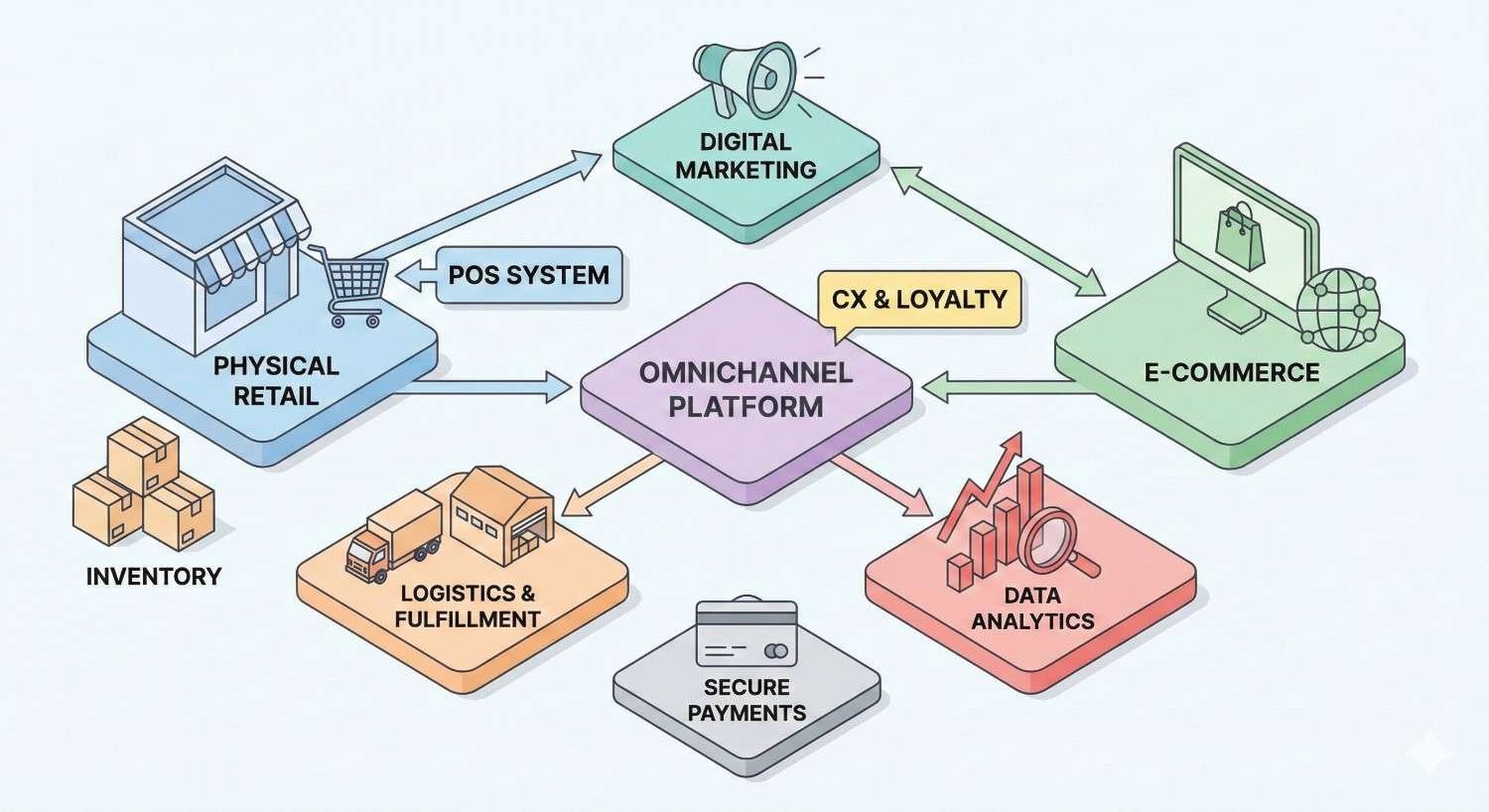
Retail & E-commerce
Retail websites require product catalog management, inventory integration, payment processing, shipping calculation, and conversion optimization to drive online revenue.
Lounge Lizard leads in retail e-commerce with Shopify and Magento expertise, with implementations averaging 38% higher conversion rates than industry benchmarks for online retailers.
Brolik specializes in Shopify Plus for growing retailers, with e-commerce clients averaging 32% conversion improvements and $8.50 return for every optimization dollar spent.
Groove Commerce provides multi-platform retail expertise across Shopify Plus, Magento, and BigCommerce, serving retailers with $2M-$100M annual revenue.
Wildfire focuses on DTC retail brands with subscription models, achieving 45% higher lifetime value compared to one-time purchase implementations.
Retail implementations must handle complex product catalogs, integrate with inventory systems, optimize checkout processes, provide multiple payment options, and continuously test and optimize for conversion improvements.
Technology & SaaS Companies
Technology companies require product-focused design, technical documentation, integration showcases, free trial optimization, and developer-friendly implementations.
Jarvus Innovations specializes in SaaS and technology companies, building custom applications with sub-200ms response times and 99.9% uptime for technical audiences.
Skookum serves startups and growth-stage tech companies, with products built collectively raising $200M+ in venture funding and serving 5M+ active users.
Ironpaper focuses on B2B technology marketing, with programs averaging 156% increases in marketing qualified leads and $18 return for every marketing dollar spent.
Function Growth specializes in SaaS conversion optimization, with clients averaging 45% conversion rate improvements within 90 days and $8.20 return for every optimization dollar spent.
Technology websites must communicate complex features clearly, provide technical documentation, showcase integrations, optimize free trial conversions, and serve technically sophisticated audiences with high expectations.
Philadelphia Web Design Pricing Guide (2026)
Average Cost of Web Design in Philadelphia
Philadelphia web design costs have increased 18% since 2024, with median project costs ranging from $8,500 to $75,000 depending on project scope, agency tier, and technical complexity.
Budget-tier agencies charge $3,000-$10,000 for basic websites, serving small businesses with template-based WordPress implementations and limited customization. These projects typically include 5-10 pages, basic SEO setup, and 1-3 months of post-launch support.
Mid-tier agencies charge $10,000-$35,000 for custom websites, providing original design, custom WordPress or Shopify development, SEO optimization, and comprehensive functionality. Projects include 10-30 pages, content strategy, and 3-6 months of support.
Premium agencies charge $35,000-$100,000+ for sophisticated implementations, offering strategic planning, custom development, advanced integrations, and ongoing optimization. Enterprise projects exceed $100,000 for complex platforms requiring custom applications, regulatory compliance, or extensive integrations.
Hourly rates range from $75-$100 for junior developers, $100-$150 for mid-level designers and developers, $150-$200 for senior technical staff, and $200-$300 for strategic consultants and agency principals.
Pricing by Project Type
Basic Business Website (5-10 pages)
Basic business websites provide essential online presence with company information, services, contact forms, and foundational SEO. These implementations suit service businesses, professional practices, and local companies requiring credibility and findability.
Budget Range: $3,000-$10,000 from budget agencies, $8,000-$15,000 from mid-tier firms, $15,000-$25,000 from premium agencies.
Typical Inclusions: WordPress or similar CMS, responsive design, 5-10 pages of content, contact forms, basic SEO setup, Google Analytics integration, 30-90 days of post-launch support.
Timeline: 4-8 weeks for budget implementations, 6-10 weeks for mid-tier projects, 8-12 weeks for premium agencies including strategy and content development.
Best For: Solo practitioners, local service businesses, professional services firms, small retail locations, and organizations requiring foundational web presence without complex functionality.
E-commerce Website
E-commerce websites require product catalog management, shopping cart functionality, payment processing, shipping integration, inventory management, and conversion optimization.
Budget Range: $10,000-$20,000 for basic Shopify stores with 50-100 products, $25,000-$50,000 for custom Shopify Plus or WooCommerce with 500+ products, $50,000-$150,000 for Magento or custom platforms with 1,000+ products and complex requirements.
Typical Inclusions: E-commerce platform setup, product catalog design, shopping cart and checkout optimization, payment gateway integration, shipping calculator, inventory management, email marketing integration, basic SEO, 90-180 days of support.
Timeline: 8-12 weeks for basic stores, 12-16 weeks for custom implementations, 16-24 weeks for enterprise platforms with extensive integrations.
Best For: Online retailers, DTC brands, manufacturers adding e-commerce, multi-channel sellers, and businesses requiring sophisticated product management and order processing.
Custom Web Application
Custom web applications provide unique functionality, business process automation, data management, user portals, and specialized tools that off-the-shelf solutions cannot address.
Budget Range: $30,000-$75,000 for MVPs with core functionality, $75,000-$200,000 for full-featured applications, $200,000-$500,000+ for enterprise platforms with complex requirements and integrations.
Typical Inclusions: Requirements analysis, UX/UI design, custom development, database architecture, API development, third-party integrations, security implementation, testing, deployment, 6-12 months of support.
Timeline: 12-16 weeks for MVPs, 16-24 weeks for full applications, 24-52 weeks for enterprise platforms with phased rollouts.
Best For: SaaS companies, startups with unique business models, organizations with specialized workflows, companies requiring proprietary tools, and businesses with complex data management needs.
Enterprise Website
Enterprise websites serve large organizations with complex content requirements, multiple stakeholders, advanced security, compliance needs, and integration with enterprise systems.
Budget Range: $75,000-$200,000 for enterprise CMS implementations, $200,000-$500,000 for complex platforms with custom functionality, $500,000-$1M+ for multi-site, multi-language implementations with extensive integrations.
Typical Inclusions: Strategic planning, information architecture, enterprise CMS, custom design system, advanced security, compliance implementation, extensive integrations, testing, training, documentation, 12+ months of support.
Timeline: 24-36 weeks for standard enterprise implementations, 36-52 weeks for complex platforms, 52+ weeks for global multi-site deployments with phased rollouts.
Best For: Fortune 500 companies, large healthcare systems, universities, government agencies, global brands, and organizations with complex governance and compliance requirements.
Hourly Rates vs. Project-Based Pricing
Most Philadelphia agencies prefer project-based pricing for defined scope work, providing cost certainty and aligning incentives around project completion rather than hours worked.
Project-Based Pricing works best for websites with defined scope, clear deliverables, and fixed timelines. Clients receive comprehensive proposals outlining all deliverables, milestones, and costs upfront. This approach eliminates hourly tracking and provides budget certainty.
Hourly Pricing suits ongoing development, maintenance, and projects with evolving requirements. Agencies charge $75-$300 per hour depending on staff level and expertise. This approach provides flexibility but requires careful scope management to control costs.
Retainer Pricing combines predictable monthly costs with ongoing services. Typical retainers include 20-40 hours monthly of development, optimization, content, and support work. Monthly retainers range from $2,000-$10,000 depending on service level.
Value-Based Pricing ties costs to business outcomes rather than time or deliverables. Agencies may charge based on revenue targets, lead generation goals, or performance metrics. This approach aligns agency and client incentives but requires sophisticated tracking and clear success metrics.
Most agencies use hybrid models, charging project fees for initial development and monthly retainers for ongoing optimization, support, and marketing services.
Hidden Costs & Ongoing Maintenance Fees
Initial project costs represent only part of total website ownership. Ongoing expenses include hosting, security, updates, content management, and optimization.
Hosting Costs: Shared hosting runs $10-$30 monthly, managed WordPress hosting costs $30-$100 monthly, VPS hosting ranges from $50-$200 monthly, and enterprise hosting exceeds $500 monthly for high-traffic or complex requirements.
Domain Registration: Domain names cost $10-$20 annually for standard TLDs, with premium domains ranging from $100-$10,000+ depending on desirability and extension.
SSL Certificates: Basic SSL certificates cost $0-$50 annually (often included with hosting), while extended validation certificates range from $100-$300 annually.
Maintenance & Updates: Basic maintenance runs $50-$200 monthly for updates and monitoring, comprehensive maintenance costs $200-$500 monthly including updates, security, backups, and minor changes, and enterprise support exceeds $500 monthly with SLA guarantees.
Security & Monitoring: Security plugins and monitoring services cost $20-$100 monthly, with enterprise security solutions ranging from $200-$1,000+ monthly for advanced protection and compliance.
Content Updates: Minor content changes cost $50-$150 hourly, with monthly content retainers ranging from $500-$2,000 for regular updates and additions.
SEO & Marketing: Basic SEO maintenance runs $500-$1,500 monthly, comprehensive SEO programs cost $1,500-$5,000 monthly, and full-service digital marketing exceeds $5,000 monthly for integrated campaigns.
Software Licenses: Premium plugins cost $50-$300 annually each, theme licenses run $60-$200 annually, and enterprise software licensing can exceed $1,000 annually for advanced functionality.
Industry data shows that ongoing costs typically represent 15-20% of initial development costs annually, meaning a $30,000 website requires $4,500-$6,000 annually for proper maintenance and optimization.
What to Look for in a Philadelphia Web Design Company
Essential Services & Capabilities
Responsive & Mobile-First Design
Mobile devices generate 58% of global web traffic, making mobile-first design essential rather than optional. Agencies must demonstrate mobile expertise through portfolio examples and technical implementations.
Evaluate mobile performance using Google’s Mobile-Friendly Test and PageSpeed Insights. Quality implementations achieve 90+ mobile scores with sub-3-second load times on 4G connections. Review portfolio sites on actual mobile devices to assess touch targets, navigation, readability, and functionality.
Mobile-first design prioritizes mobile experience during design and development, then progressively enhances for larger screens. This approach ensures optimal performance on the devices most users actually use, rather than treating mobile as an afterthought.
Ask agencies how they test mobile performance, what devices they test on, and what mobile PageSpeed scores their typical projects achieve. Agencies should demonstrate testing processes, performance budgets, and optimization techniques.
SEO & Performance Optimization
Search visibility depends on technical SEO foundations built during development. Agencies must understand site architecture, page speed, Core Web Vitals, schema markup, and technical optimization beyond basic meta tags.
Evaluate technical SEO capabilities by reviewing live client sites with tools like Screaming Frog, Google PageSpeed Insights, and GTmetrix. Quality implementations achieve 90+ PageSpeed scores, pass Core Web Vitals thresholds, implement proper heading hierarchy, and include relevant schema markup.
Ask agencies about their technical SEO process, how they handle site architecture, what tools they use for performance optimization, and how they measure success. Agencies should discuss crawlability, indexation, structured data, and performance budgets in detail.
Google’s research shows that sites meeting Core Web Vitals thresholds see 24% lower abandonment rates and significantly higher conversion rates. Technical SEO directly impacts both visibility and revenue.
Content Management Systems
Content management systems determine how easily you can update content, add pages, manage media, and maintain your site long-term. CMS selection impacts costs, flexibility, and ongoing maintenance requirements.
WordPress powers 43% of all websites and offers maximum flexibility, extensive plugin ecosystem, and broad developer availability. It suits most business websites, blogs, and content-driven sites but requires proper security and maintenance.
Shopify dominates e-commerce with 4.4M+ stores, providing hosted platform, built-in payment processing, and extensive app ecosystem. It suits online retailers prioritizing ease of use over customization.
Drupal serves enterprise and government clients requiring advanced security, complex workflows, and sophisticated content architecture. It offers maximum flexibility but requires specialized developers and higher maintenance costs.
Evaluate CMS recommendations based on your technical capabilities, content update frequency, required functionality, and long-term maintenance resources. Agencies should explain CMS trade-offs honestly rather than pushing their preferred platform regardless of fit.
E-commerce Integration
E-commerce functionality requires payment processing, inventory management, shipping calculation, tax handling, and order management beyond basic website capabilities.
Shopify provides hosted e-commerce platform with built-in payment processing, starting at $29 monthly for basic plans and $2,000+ monthly for Shopify Plus. It suits most online retailers with 10-10,000 products requiring ease of use.
WooCommerce extends WordPress with e-commerce functionality, offering maximum flexibility and lower ongoing costs but requiring more technical maintenance. It suits businesses with 10-1,000 products wanting control and customization.
Magento serves enterprise retailers with 1,000+ products, complex B2B requirements, or sophisticated catalog management needs. It requires significant development investment but provides maximum e-commerce capabilities.
Ask agencies about platform recommendations, payment gateway options, inventory management approaches, shipping integration, and ongoing e-commerce costs. Agencies should discuss transaction fees, hosting requirements, and scalability limitations honestly.
Ongoing Support & Maintenance
Websites require ongoing updates, security monitoring, backup management, and technical support to remain secure, functional, and effective long-term.
Evaluate support offerings including response times, included services, additional costs, and escalation processes. Quality agencies provide 24-48 hour response times for critical issues, regular updates and backups, security monitoring, and clear communication processes.
Support packages typically include software updates, security monitoring, backup management, minor content changes, and technical troubleshooting. Comprehensive packages add performance monitoring, uptime guarantees, and priority support.
Ask about support response times, what’s included in base packages, how additional work is billed, and what happens during emergencies. Agencies should provide clear support documentation and realistic expectations about response times and included services.
Portfolio & Case Study Evaluation
Portfolio quality indicates design capabilities, technical expertise, and client caliber. Evaluate portfolios critically rather than accepting curated highlights at face value.
Visual Design Quality: Assess whether portfolio work demonstrates modern design standards, appropriate use of whitespace, clear visual hierarchy, and professional polish. Poor portfolio design indicates limited capabilities regardless of claims.
Technical Implementation: Review live portfolio sites using PageSpeed Insights, mobile testing tools, and browser developer tools. Check load times, mobile performance, code quality, and technical execution beyond surface aesthetics.
Industry Relevance: Prioritize agencies with portfolio work in your industry or similar sectors. Industry experience indicates understanding of user behavior, compliance requirements, and conversion patterns specific to your business.
Case Study Depth: Quality case studies explain business challenges, strategic approach, implementation details, and measurable results. Vague case studies with stock photography and generic descriptions indicate limited involvement or poor results.
Client Caliber: Portfolio client size and sophistication indicates agency capabilities. Agencies serving enterprise clients demonstrate capabilities that agencies serving only small businesses lack.
Results Documentation: Look for specific metrics like traffic increases, conversion improvements, revenue growth, and lead generation results. Agencies confident in their work provide detailed results rather than vague claims.
Request 3-5 relevant case studies with detailed results, client references, and live site examples. Contact references directly to verify results and assess client satisfaction beyond agency claims.
Technical Expertise & Technology Stack
Technical capabilities determine what’s possible, how well your site performs, and what ongoing maintenance requires. Evaluate technical expertise beyond surface-level claims.
Front-End Technologies: Modern agencies use React, Vue.js, or similar frameworks for interactive experiences, implement responsive design with mobile-first approaches, and optimize performance through lazy loading, code splitting, and asset optimization.
Back-End Technologies: Evaluate server-side capabilities including PHP, Node.js, Python, or Ruby depending on project requirements. Enterprise projects require scalable architectures, API development, and database optimization.
DevOps & Infrastructure: Quality agencies implement version control (Git), automated testing, continuous integration/deployment, and staging environments. These practices ensure code quality and smooth deployments.
Security Practices: Agencies should discuss SSL implementation, secure authentication, data encryption, regular security updates, and compliance requirements relevant to your industry.
Performance Optimization: Technical teams should explain caching strategies, CDN usage, image optimization, code minification, and performance monitoring approaches.
Ask agencies about their technology stack, development processes, testing procedures, and deployment workflows. Quality agencies explain technical approaches clearly and discuss trade-offs honestly rather than using jargon to obscure limited capabilities.
Communication & Project Management
Project success depends as much on communication and process as technical capabilities. Poor communication creates delays, misunderstandings, and disappointing results regardless of technical skills.
Project Management Methodology: Evaluate whether agencies use structured processes like Agile, Scrum, or Waterfall. Defined methodologies indicate professional operations versus ad-hoc approaches.
Communication Frequency: Quality agencies provide regular updates through scheduled calls, status reports, and project management tools. Weekly updates suit most projects, with daily standups for complex implementations.
Stakeholder Management: Assess how agencies handle multiple stakeholders, gather requirements, manage feedback, and resolve conflicts. Enterprise projects require sophisticated stakeholder management.
Documentation: Professional agencies document requirements, technical specifications, design decisions, and training materials. Documentation ensures knowledge transfer and long-term maintainability.
Tools & Platforms: Agencies should use project management tools (Asana, Jira, Basecamp), design collaboration platforms (Figma, InVision), and version control systems rather than relying on email and spreadsheets.
Change Management: Understand how agencies handle scope changes, additional requests, and timeline adjustments. Clear change order processes prevent disputes and budget overruns.
Request detailed project plans, communication schedules, and examples of project documentation before signing contracts. Poor planning and communication cause more project failures than technical limitations.
Reviews, Testimonials & References
Third-party reviews and direct references provide unfiltered perspectives on agency performance, reliability, and client satisfaction beyond marketing claims.
Review Platforms: Check Clutch, Google Business, GoodFirms, and industry-specific directories for verified reviews. Look for 4.5+ star ratings with 20+ reviews indicating consistent quality.
Review Recency: Recent reviews matter more than old testimonials. Agencies change over time, so prioritize reviews from the past 12-24 months reflecting current capabilities and service quality.
Review Specificity: Detailed reviews discussing specific project aspects, challenges overcome, and results achieved provide more value than generic praise. Vague reviews may indicate fabricated testimonials.
Negative Review Patterns: Every agency receives occasional negative reviews. Look for patterns in complaints rather than isolated incidents. Common complaints about communication, missed deadlines, or hidden costs indicate systemic issues.
Response to Criticism: Evaluate how agencies respond to negative reviews. Professional responses acknowledging issues and explaining resolutions indicate mature operations. Defensive or absent responses suggest poor client service.
Direct References: Request 3-5 client references with similar project scope and industry. Prepare specific questions about communication, timeline adherence, budget management, and post-launch support. References provide candid insights that public reviews cannot.
Contact references directly rather than relying on agency-provided testimonials. Ask about challenges encountered, how the agency handled problems, and whether they would hire the agency again.
Philadelphia Web Design Market Trends (2026)
Emerging Design Technologies & Frameworks
Web design technology evolves rapidly, with new frameworks, tools, and approaches emerging constantly. Philadelphia agencies increasingly adopt modern technologies to improve performance, development efficiency, and user experience.
Component-Based Frameworks: React, Vue.js, and Svelte enable reusable components, faster development, and interactive user experiences. React powers 42% of modern web applications, making it the dominant framework for complex interfaces.
Headless CMS: Decoupling content management from presentation enables omnichannel content delivery, improved performance, and greater flexibility. Agencies increasingly recommend headless approaches for content-heavy sites requiring multi-platform distribution.
JAMstack Architecture: JavaScript, APIs, and Markup (JAMstack) provides faster performance, better security, and lower hosting costs through pre-rendering and CDN distribution. JAMstack sites achieve 40% faster load times compared to traditional server-rendered approaches.
Progressive Web Apps: PWAs combine web and mobile app capabilities, providing offline functionality, push notifications, and app-like experiences without app store distribution. PWAs increase engagement while reducing development costs compared to native apps.
Design Systems: Component libraries and design systems ensure consistency across large sites and applications while accelerating development. Enterprise organizations increasingly require design systems for brand consistency and development efficiency.
Philadelphia agencies adopting modern technologies deliver faster, more maintainable, and more capable websites compared to those relying on legacy approaches. Evaluate agency technology stacks to ensure they reflect current best practices rather than outdated methods.
AI-Powered Design & Personalization
Artificial intelligence transforms web design through automated personalization, content generation, design assistance, and user behavior prediction.
Personalized Content: AI analyzes user behavior to deliver personalized content, product recommendations, and experiences. E-commerce implementations using AI personalization achieve 15-30% conversion improvements compared to static experiences.
Chatbots & Conversational Interfaces: AI-powered chatbots handle customer service, lead qualification, and information delivery without human intervention. Quality implementations resolve 60-80% of common questions automatically while escalating complex issues to humans.
Design Assistance: AI tools like Midjourney and DALL-E generate design concepts, while tools like Figma’s AI features suggest layouts and optimize designs. These tools augment designer capabilities rather than replacing human creativity.
Predictive Analytics: AI predicts user behavior, identifies conversion barriers, and suggests optimization opportunities based on data patterns humans might miss. Predictive models improve testing efficiency and optimization results.
Content Generation: AI writing tools assist with content creation, though human oversight remains essential for quality, accuracy, and brand voice. AI works best for generating drafts and variations rather than final content.
Philadelphia agencies increasingly integrate AI capabilities into websites, though implementation quality varies significantly. Evaluate specific AI use cases and results rather than accepting vague claims about “AI-powered” solutions.
Accessibility & WCAG Compliance
Web accessibility ensures websites work for users with disabilities while reducing legal risk and expanding audience reach. Accessibility requirements have strengthened significantly, with over 4,000 ADA website lawsuits filed in 2023.
WCAG 2.1 Standards: Web Content Accessibility Guidelines (WCAG) 2.1 Level AA represents the current standard for accessibility compliance. Requirements include keyboard navigation, screen reader compatibility, color contrast, and alternative text for images.
Legal Requirements: The Americans with Disabilities Act (ADA) applies to websites, with courts consistently ruling that inaccessible websites violate ADA Title III. Healthcare, education, government, and public accommodation websites face highest legal risk.
Accessibility Testing: Automated tools like WAVE, Axe, and Lighthouse identify 30-40% of accessibility issues, but manual testing remains essential for comprehensive compliance. Quality agencies conduct both automated and manual accessibility testing.
Inclusive Design: Accessibility benefits all users, not just those with disabilities. Clear navigation, readable text, and keyboard support improve experience for everyone while ensuring compliance.
Ongoing Compliance: Accessibility requires ongoing attention as content changes. New pages, images, and features must maintain accessibility standards, requiring training and processes beyond initial implementation.
Philadelphia agencies increasingly emphasize accessibility, though capabilities vary significantly. Request accessibility audit reports, WCAG compliance documentation, and examples of accessible implementations before hiring.
Core Web Vitals & Performance Standards
Google’s Core Web Vitals measure user experience through loading performance, interactivity, and visual stability. These metrics directly impact search rankings and user satisfaction.
Largest Contentful Paint (LCP): Measures loading performance, with 2.5 seconds or less considered good. LCP optimization requires image optimization, server response improvements, and resource prioritization.
First Input Delay (FID): Measures interactivity, with 100 milliseconds or less considered good. FID optimization requires JavaScript optimization, code splitting, and efficient event handling.
Cumulative Layout Shift (CLS): Measures visual stability, with 0.1 or less considered good. CLS optimization requires proper image dimensions, font loading strategies, and avoiding dynamic content insertion.
Google’s research shows that sites meeting all Core Web Vitals thresholds see 24% lower abandonment rates and significantly higher conversion rates. Performance directly impacts both visibility and revenue.
Performance Budgets: Quality agencies establish performance budgets limiting page weight, JavaScript size, and load times. Budgets prevent performance degradation as sites evolve and content accumulates.
Continuous Monitoring: Performance requires ongoing monitoring as content changes and traffic patterns evolve. Agencies should implement performance monitoring and establish processes for maintaining standards long-term.
Philadelphia agencies increasingly prioritize Core Web Vitals, though implementation quality varies. Request PageSpeed Insights reports for portfolio sites and ask about performance optimization processes and monitoring approaches.
Local Market Dynamics & Competition
Philadelphia’s web design market reflects broader industry trends while maintaining distinct local characteristics shaped by the regional economy, talent pool, and competitive landscape.
Agency Consolidation: Larger agencies acquire smaller firms to expand capabilities and market share. This consolidation creates more full-service providers while reducing boutique specialists.
Remote Competition: Philadelphia agencies increasingly compete with remote providers offering lower costs or specialized expertise. Local agencies emphasize in-person collaboration, local market knowledge, and relationship-building to differentiate.
Pricing Pressure: Remote and offshore competition creates downward pricing pressure, particularly for commodity services like basic WordPress development. Philadelphia agencies emphasize quality, service, and strategic value to justify premium pricing.
Talent Competition: Philadelphia competes with New York, Washington DC, and remote opportunities for design and development talent. Competitive talent market influences agency costs and capabilities.
Industry Specialization: Agencies increasingly specialize by industry (healthcare, legal, manufacturing) or capability (e-commerce, applications, enterprise) rather than serving all markets. Specialization enables deeper expertise and premium pricing.
Technology Adoption: Philadelphia agencies adopt modern technologies at varying rates, with larger firms and specialized agencies leading adoption while smaller generalists lag behind. Technology capabilities increasingly differentiate agencies.
Understanding local market dynamics helps set realistic expectations about pricing, capabilities, and service levels when selecting Philadelphia web design partners.
How to Choose the Right Philadelphia Web Design Company for Your Business
Defining Your Website Goals & Requirements
Business Objectives & KPIs
Website success requires clear business objectives and measurable key performance indicators before beginning design discussions. Vague goals like “improve our website” lead to disappointing results regardless of design quality.
Revenue Goals: E-commerce sites require specific revenue targets, average order values, and conversion rate goals. B2B sites need lead generation targets, lead quality metrics, and sales pipeline contribution goals.
Traffic Objectives: Define organic traffic targets, paid traffic expectations, and traffic source distribution. Realistic traffic goals require understanding current performance, competitive landscape, and investment levels.
Engagement Metrics: Establish bounce rate targets, time on site goals, pages per session expectations, and engagement benchmarks. Engagement metrics indicate whether content resonates with target audiences.
Conversion Targets: Define primary conversions (purchases, leads, signups) and secondary conversions (downloads, newsletter subscriptions, social follows). Conversion tracking enables optimization and ROI measurement.
Timeline Expectations: Understand that SEO results require 6-12 months for significant organic traffic growth, while paid advertising drives immediate traffic. Realistic timelines prevent disappointment and premature optimization pivots.
Document business objectives and KPIs before agency discussions. Clear goals enable agencies to propose appropriate solutions and establish success metrics that align with business needs rather than vanity metrics.
Target Audience & User Experience
Understanding your target audience determines design decisions, content strategy, navigation architecture, and functionality requirements. Generic “everyone” targeting produces mediocre results that resonate with no one.
Demographic Profile: Define age ranges, income levels, education, geographic location, and other demographic characteristics. Demographics influence design aesthetics, content tone, and feature priorities.
Psychographic Profile: Understand motivations, pain points, goals, values, and decision-making processes. Psychographics determine messaging, content strategy, and persuasion approaches.
Technical Sophistication: Assess audience technical capabilities, device preferences, and digital literacy. Technical sophistication influences interface complexity, help content needs, and feature accessibility.
User Journey Mapping: Document how users discover your business, what information they seek, what objections they have, and what triggers conversion. Journey mapping reveals content needs and navigation priorities.
Competitive Analysis: Understand what competitors offer, how they position themselves, and what gaps exist in market offerings. Competitive analysis identifies differentiation opportunities and table-stakes requirements.
Create detailed user personas and journey maps before design begins. User understanding prevents designing for your preferences rather than audience needs, a common mistake that undermines website effectiveness.
Required Features & Functionality
Feature requirements determine technology choices, development complexity, and project costs. Comprehensive feature documentation prevents scope creep and budget overruns.
Core Functionality: List essential features required for launch, distinguishing between must-haves and nice-to-haves. Core functionality determines minimum viable product scope and launch timeline.
Content Management: Define who updates content, how frequently, what types of content, and required workflow approvals. Content management needs influence CMS selection and training requirements.
Integrations: Document required integrations with CRM systems, email marketing platforms, payment processors, inventory management, and other business systems. Integration complexity significantly impacts costs and timelines.
User Accounts: Determine whether sites require user registration, account management, personalization, or restricted content. User account functionality adds significant development complexity.
E-commerce Requirements: Define product catalog size, inventory management needs, payment processing requirements, shipping calculation complexity, and order management workflows. E-commerce functionality represents major cost and complexity driver.
Mobile Requirements: Specify mobile-specific features like click-to-call, maps integration, mobile payments, or offline functionality. Mobile requirements influence development approach and testing needs.
Create comprehensive feature documentation with priorities, acceptance criteria, and examples. Detailed requirements enable accurate proposals and prevent misunderstandings about deliverables.
Budget & Timeline Constraints
Realistic budgets and timelines prevent disappointment and enable agencies to propose appropriate solutions rather than overpromising and underdelivering.
Budget Reality: Quality business websites cost $10,000-$35,000, e-commerce implementations range from $25,000-$100,000, and custom applications start at $40,000. Unrealistic budgets produce disappointing results or require significant compromises.
Timeline Expectations: Basic websites require 8-12 weeks, custom implementations need 12-20 weeks, and complex platforms take 24+ weeks. Rushed timelines compromise quality and increase costs through overtime and compressed testing.
Ongoing Costs: Budget 15-20% of development costs annually for hosting, maintenance, security, and updates. Websites require ongoing investment to remain secure, functional, and effective.
Payment Terms: Typical payment structures include 30-50% deposit, 30-40% at design approval, and 20-30% at launch. Payment schedules should align with project milestones rather than arbitrary dates.
Contingency Budget: Reserve 10-15% contingency for scope adjustments, additional features, or unexpected requirements. Contingency prevents project delays when requirements evolve during development.
Discuss budgets and timelines honestly with agencies. Transparent budget discussions enable agencies to propose solutions that fit constraints rather than proposing ideal solutions that exceed budgets and create disappointment.
Vetting & Comparing Web Design Agencies
Initial Consultation & Discovery Process
Initial consultations reveal agency professionalism, strategic thinking, and cultural fit beyond portfolio and pricing considerations.
Question Quality: Quality agencies ask detailed questions about business goals, target audiences, competitive landscape, and success metrics before discussing solutions. Agencies jumping immediately to solutions without understanding context lack strategic capabilities.
Strategic Recommendations: Evaluate whether agencies provide strategic insights, challenge assumptions, and suggest approaches you hadn’t considered. Strategic thinking distinguishes consultative partners from order-takers.
Process Explanation: Agencies should explain their development process, communication approach, timeline expectations, and deliverables clearly. Vague process descriptions indicate ad-hoc operations.
Team Introduction: Meet actual team members who will work on your project, not just salespeople. Team capabilities and chemistry matter more than agency brand for project success.
Portfolio Relevance: Agencies should present relevant portfolio examples and explain how past work relates to your needs. Generic portfolio presentations indicate limited relevant experience.
Honest Limitations: Quality agencies acknowledge limitations, recommend specialists when appropriate, and discuss trade-offs honestly. Agencies claiming to excel at everything lack self-awareness or honesty.
Conduct consultations with 3-5 agencies to compare approaches, capabilities, and chemistry. Initial consultations reveal more about agency quality than websites and marketing materials.
Proposal Evaluation Criteria
Proposals reveal agency professionalism, attention to detail, and understanding of your needs. Evaluate proposals systematically rather than focusing solely on price.
Scope Clarity: Quality proposals detail specific deliverables, page counts, features, integrations, and exclusions. Vague scope descriptions enable agencies to deliver less than expected while claiming contract compliance.
Process Documentation: Proposals should explain development phases, approval points, feedback processes, and timeline milestones. Detailed process documentation indicates professional operations.
Team Structure: Understand who works on your project, their experience levels, and time allocation. Proposals should identify specific team members rather than generic roles.
Timeline Realism: Evaluate whether timelines align with scope complexity. Unrealistically short timelines indicate inexperience or intention to miss deadlines.
Pricing Transparency: Proposals should itemize costs by phase, feature, or deliverable rather than providing single lump sums. Transparent pricing enables informed decisions about scope adjustments.
Terms & Conditions: Review intellectual property ownership, warranty terms, support provisions, and termination clauses carefully. Unfavorable terms create problems regardless of design quality.
Post-Launch Support: Understand what’s included post-launch, how long support lasts, and what additional costs apply. Support terms significantly impact long-term costs and satisfaction.
Create proposal evaluation rubrics scoring agencies across criteria like scope clarity, strategic thinking, team experience, pricing transparency, and cultural fit. Systematic evaluation prevents emotional decisions based on personality rather than capabilities.
Contract Terms & Deliverables
Contracts establish legal obligations, deliverables, timelines, and remedies when problems occur. Review contracts carefully rather than signing without reading.
Scope Definition: Contracts should reference detailed scope documents specifying deliverables, features, page counts, and exclusions. Vague scope enables disputes about what’s included.
Intellectual Property: Ensure contracts transfer full ownership of design, code, content, and materials upon final payment. Some agencies retain ownership or claim ongoing licensing rights.
Timeline & Milestones: Contracts should specify project phases, milestone dates, approval timelines, and delay remedies. Clear timelines enable accountability when delays occur.
Payment Terms: Review payment schedules, milestone triggers, and refund provisions. Payment terms should align with deliverable completion rather than arbitrary dates.
Change Orders: Understand how scope changes are handled, how additional work is priced, and what approval processes apply. Clear change order processes prevent disputes.
Warranties & Support: Review warranty periods, what’s covered, response time commitments, and support duration. Warranty terms significantly impact post-launch costs.
Termination Provisions: Understand termination rights, refund policies, and work product ownership if projects end prematurely. Termination clauses protect both parties when relationships fail.
Dispute Resolution: Review dispute resolution processes, arbitration requirements, and jurisdiction provisions. Dispute resolution terms determine costs and processes when serious problems occur.
Request contract review by legal counsel before signing, particularly for projects exceeding $25,000. Contract problems create expensive disputes regardless of design quality.
Red Flags to Watch For
Certain warning signs indicate problematic agencies that should be avoided regardless of pricing or promises.
Unrealistic Promises: Agencies promising #1 Google rankings, 500% traffic increases, or guaranteed results lack understanding of SEO realities or intentionally mislead clients.
Pressure Tactics: High-pressure sales tactics, artificial urgency, or limited-time offers indicate agencies prioritizing sales over client success.
Poor Communication: Slow response times, vague answers, or difficulty reaching agencies during sales process indicate worse communication during projects.
No Process Documentation: Agencies unable to explain their development process, timeline expectations, or deliverables lack professional operations.
Template Proposals: Generic proposals without specific recommendations, relevant portfolio examples, or customized approaches indicate agencies treating you as transaction rather than partner.
Ownership Retention: Agencies retaining intellectual property ownership, claiming ongoing licensing rights, or requiring ongoing payments for work you paid for create long-term problems.
No References: Agencies refusing to provide client references or having no verifiable reviews indicate poor client satisfaction or limited experience.
Offshore Development: Agencies outsourcing development to offshore teams without disclosure create communication problems, quality issues, and intellectual property risks.
Spec Work Requests: Agencies requesting free design work, detailed mockups, or extensive strategy before engagement exploit designers and indicate poor business practices.
Trust instincts when red flags appear. Problematic agencies create expensive problems that far exceed any cost savings from low pricing.
Questions to Ask Before Hiring
About Their Process & Methodology
Understanding agency processes reveals professionalism, experience, and operational maturity beyond portfolio and pricing.
“Walk me through your typical project process from kickoff to launch.” Quality agencies explain structured phases including discovery, strategy, design, development, testing, and launch with clear deliverables and approval points.
“How do you handle requirements gathering and documentation?” Professional agencies conduct stakeholder interviews, document requirements formally, and obtain written approval before design begins.
“What does your design process look like?” Agencies should explain wireframing, mockup creation, revision rounds, and approval processes. Multiple revision rounds indicate iterative refinement rather than single design attempts.
“How do you approach responsive design and mobile optimization?” Quality agencies design mobile-first, test on actual devices, and optimize performance specifically for mobile users.
“What testing do you conduct before launch?” Comprehensive testing includes functionality testing, browser compatibility, mobile testing, performance testing, accessibility testing, and user acceptance testing.
“How do you handle content migration from our existing site?” Content migration complexity impacts timelines and costs. Agencies should explain migration processes, content cleanup, and URL redirect strategies.
About Timeline & Project Management
Timeline and communication management determine whether projects finish on schedule and within budget.
“What’s a realistic timeline for a project like ours?” Compare timeline estimates across agencies. Significantly shorter timelines than competitors indicate unrealistic expectations or corner-cutting.
“What factors could delay the project?” Honest agencies discuss potential delays including client feedback delays, content delivery delays, integration complexity, and scope changes.
“How often will we communicate during the project?” Weekly status updates suit most projects. Less frequent communication creates alignment problems and surprise delays.
“Who will be our main point of contact?” Single points of contact streamline communication. Multiple contacts create confusion about who handles what.
“What project management tools do you use?” Professional agencies use tools like Asana, Jira, or Basecamp rather than relying on email and spreadsheets.
“How do you handle feedback and revision requests?” Understand revision limits, feedback processes, and how additional revisions are handled. Clear revision processes prevent scope creep.
“What happens if the project runs over timeline?” Agencies should explain delay causes, mitigation approaches, and whether timeline overruns incur additional costs.
About Pricing & Payment Terms
Pricing transparency and payment structure reveal agency professionalism and prevent financial surprises.
“Can you break down the pricing by phase or deliverable?” Itemized pricing enables informed decisions about scope adjustments and reveals where costs concentrate.
“What’s included in the base price and what costs extra?” Understand exactly what deliverables, revisions, and services the base price includes to prevent surprise charges.
“What are your payment terms and schedule?” Typical schedules include deposit, design approval payment, and launch payment. Payment schedules should align with milestone completion.
“How do you handle scope changes and additional requests?” Clear change order processes with written approvals prevent disputes about additional costs.
“What ongoing costs should we expect after launch?” Budget for hosting, maintenance, security, updates, and support. Agencies should provide realistic ongoing cost estimates.
“Do you offer payment plans or financing?” Some agencies offer payment plans for qualified clients, spreading costs over longer periods.
“What happens if we’re not satisfied with the work?” Understand refund policies, revision limits, and remedies when deliverables don’t meet expectations.
About Post-Launch Support
Post-launch support determines whether websites remain secure, functional, and effective long-term.
“What support do you provide after launch?” Understand support duration, included services, response times, and additional costs. Support terms significantly impact long-term satisfaction.
“How do you handle bugs or issues discovered after launch?” Quality agencies provide warranty periods covering bugs and defects discovered post-launch.
“What ongoing maintenance do you recommend?” Agencies should explain update requirements, security monitoring needs, backup strategies, and optimization opportunities.
“Do you offer training on managing the website?” Comprehensive training enables internal content management. Training should cover content updates, media management, and basic troubleshooting.
“What analytics and reporting do you provide?” Understand what metrics agencies track, reporting frequency, and whether ongoing optimization is included or costs extra.
“How do you handle emergency support?” Understand emergency response times, availability, and whether emergency support incurs additional costs.
“Can we take the website to another provider if needed?” Ensure you receive full ownership of design, code, and content, enabling provider changes without starting over.
The Web Design Process: What to Expect When Working with a Philadelphia Agency
Phase 1: Discovery & Strategy
Discovery establishes project foundation through research, planning, and strategic alignment before design begins. Skipping discovery creates misalignment and expensive rework.
Stakeholder Interviews: Agencies interview key stakeholders to understand business goals, target audiences, competitive landscape, and success metrics. Interviews typically require 2-4 hours across 3-5 stakeholders.
Competitive Analysis: Research competitor websites, positioning, messaging, and user experience to identify opportunities and table-stakes requirements. Analysis reveals differentiation opportunities and industry standards.
User Research: Understanding target audiences through surveys, interviews, or analytics review informs design decisions and content strategy. User research prevents designing for internal preferences rather than audience needs.
Content Audit: Existing website content is reviewed for quality, relevance, and migration needs. Content audits identify what to keep, update, or eliminate.
Technical Assessment: Current website technical infrastructure, hosting, integrations, and performance are evaluated to inform migration planning and technical requirements.
Strategic Planning: Discovery insights inform site architecture, content strategy, feature prioritization, and design direction. Strategic planning documents guide all subsequent work.
Project Planning: Detailed project plans specify phases, milestones, deliverables, responsibilities, and timelines. Planning documents establish shared expectations and accountability.
Discovery typically requires 2-4 weeks depending on project complexity and stakeholder availability. Discovery investment prevents expensive misalignment and rework during design and development.
Phase 2: Design & Prototyping
Design phase transforms strategy into visual concepts, establishing aesthetics, user experience, and interface patterns before development begins.
Information Architecture: Site structure, navigation, and content organization are documented through sitemaps and navigation diagrams. Architecture establishes how users find information and complete tasks.
Wireframing: Low-fidelity wireframes establish page layouts, content hierarchy, and functionality without visual design distractions. Wireframes enable structural feedback before visual design investment.
Visual Design: High-fidelity mockups establish visual aesthetics, typography, color palette, imagery style, and interface patterns. Design mockups typically include 5-10 key page templates representing major page types.
Design System: Component libraries, style guides, and design patterns ensure consistency across pages and enable efficient development. Design systems become increasingly important for larger sites.
Prototype Development: Interactive prototypes demonstrate user flows, interactions, and functionality before development begins. Prototypes enable usability testing and stakeholder alignment.
Design Review & Revision: Structured feedback and revision rounds refine designs based on stakeholder input. Typical projects include 2-3 revision rounds before design approval.
Design Approval: Formal design approval establishes baseline for development. Changes after approval require change orders to prevent scope creep and timeline delays.
Design phase typically requires 4-8 weeks depending on project complexity, revision rounds, and stakeholder availability. Design investment prevents expensive development rework and ensures alignment before coding begins.
Phase 3: Development & Testing
Development phase builds functional websites from approved designs, implementing front-end interfaces, back-end functionality, and third-party integrations.
Front-End Development: HTML, CSS, and JavaScript implementation brings designs to life with responsive layouts, interactive elements, and optimized performance. Front-end development typically represents 40-50% of development time.
Back-End Development: Server-side functionality, database implementation, CMS integration, and business logic enable content management and dynamic functionality. Back-end complexity varies significantly based on requirements.
CMS Implementation: Content management system configuration, custom fields, workflow setup, and permissions enable content management. CMS implementation includes training content and documentation.
Third-Party Integrations: Payment processors, CRM systems, email marketing platforms, and other integrations connect websites to business systems. Integration complexity significantly impacts timelines and costs.
Content Population: Content migration, new content creation, media optimization, and SEO implementation populate websites with actual content. Content work often requires 2-4 weeks and client involvement.
Quality Assurance: Functionality testing, browser compatibility testing, mobile testing, performance testing, and accessibility testing identify issues before launch. Comprehensive testing requires 1-2 weeks.
Revision & Refinement: Issues identified during testing are resolved, and minor adjustments are made based on stakeholder feedback. Final revisions ensure launch readiness.
Development phase typically requires 6-12 weeks depending on project complexity, integration requirements, and testing thoroughness. Development quality determines long-term maintainability and performance.
Phase 4: Launch & Deployment
Launch phase transitions websites from development to production environments, ensuring smooth transitions and minimal disruption.
Pre-Launch Checklist: Comprehensive checklists verify functionality, content, SEO implementation, analytics setup, and performance before launch. Checklists prevent launching with known issues.
Staging Review: Final stakeholder review on staging environment enables last-minute corrections before public launch. Staging review represents final approval gate.
DNS & Hosting Setup: Domain configuration, hosting setup, SSL certificate installation, and email configuration ensure technical infrastructure readiness.
Content Finalization: Final content reviews, metadata completion, image optimization, and SEO verification ensure content readiness for search engines and users.
Backup & Rollback Planning: Pre-launch backups and rollback procedures enable quick recovery if launch issues occur. Backup planning reduces launch risk.
Launch Execution: Coordinated launch activities including DNS updates, redirects implementation, and monitoring ensure smooth transitions. Launches typically occur during low-traffic periods.
Post-Launch Monitoring: Intensive monitoring during first 24-72 hours identifies issues quickly. Monitoring includes functionality testing, performance verification, and analytics confirmation.
Launch Communication: Internal stakeholders and customers are notified of new website launch. Communication plans include social media announcements, email notifications, and internal training.
Launch phase typically requires 1-2 weeks for preparation and execution. Thorough launch planning prevents disruptions and ensures smooth transitions.
Phase 5: Post-Launch Optimization & Support
Post-launch phase ensures websites remain secure, functional, and effective through ongoing maintenance, optimization, and support.
Warranty Period: Typical 30-90 day warranty periods cover bugs and defects discovered after launch. Warranty support resolves issues without additional charges.
Performance Monitoring: Ongoing monitoring of uptime, page speed, Core Web Vitals, and technical performance identifies issues proactively. Monitoring prevents small issues from becoming major problems.
Security Updates: Regular software updates, security patches, and vulnerability monitoring keep websites secure. Security maintenance prevents breaches and malware infections.
Content Updates: Ongoing content additions, updates, and optimizations keep websites fresh and relevant. Content maintenance may be handled internally or through agency retainers.
SEO Optimization: Ongoing SEO work including technical optimization, content creation, and link building drives organic traffic growth. SEO results require 6-12 months for significant impact.
Conversion Optimization: A/B testing, user behavior analysis, and iterative improvements increase conversion rates over time. Optimization programs demonstrate 20-40% conversion improvements over 6-12 months.
Analytics Review: Regular analytics review identifies trends, opportunities, and issues requiring attention. Analytics review informs optimization priorities and content strategy.
Support & Maintenance: Ongoing technical support, troubleshooting, and maintenance keep websites functional. Support packages typically cost $500-$2,500 monthly depending on service level.
Post-launch optimization represents ongoing investment rather than one-time cost. Websites require continuous attention to remain secure, effective, and competitive over time.
Philadelphia vs. Other Markets: Should You Hire Locally?
Benefits of Working with Local Philadelphia Agencies
Local agencies offer advantages that remote providers cannot match, though benefits vary by project type and client preferences.
In-Person Collaboration: Face-to-face meetings enable richer communication, relationship building, and collaborative problem-solving. In-person collaboration matters most for complex projects requiring extensive stakeholder involvement.
Local Market Knowledge: Philadelphia agencies understand regional business landscape, competitive dynamics, and local audience preferences. Local knowledge provides context that national agencies lack.
Time Zone Alignment: Same time zone enables real-time communication, immediate responses, and efficient collaboration. Time zone differences with remote providers create communication delays and scheduling challenges.
Relationship Building: Local relationships enable long-term partnerships, referrals, and business development opportunities. Relationship value extends beyond individual projects.
Economic Impact: Hiring local agencies supports regional economy, creates local jobs, and strengthens business community. Economic impact matters to businesses prioritizing community investment.
Legal Recourse: Local agencies operate under Pennsylvania law with local legal jurisdiction. Geographic proximity simplifies legal recourse if serious disputes occur.
Cultural Alignment: Regional cultural norms, communication styles, and business practices create natural alignment. Cultural fit matters for successful partnerships.
Local benefits matter most for complex projects requiring extensive collaboration, businesses prioritizing relationships, and organizations valuing community investment. Simple projects with clear requirements benefit less from local proximity.
Philadelphia vs. New York Web Design Costs
New York agencies typically charge 20-40% premiums over Philadelphia for comparable services, reflecting higher operating costs and market positioning.
Hourly Rate Comparison: Philadelphia agencies charge $100-$200 hourly for mid-level staff, while New York agencies charge $150-$300 for comparable experience levels.
Project Cost Comparison: Basic business websites cost $10,000-$25,000 in Philadelphia versus $15,000-$35,000 in New York. E-commerce implementations cost $25,000-$75,000 in Philadelphia versus $40,000-$100,000 in New York.
Value Proposition: Philadelphia agencies offer comparable quality at lower costs, while New York agencies emphasize prestige, specialized expertise, and access to cutting-edge approaches.
Market Dynamics: New York’s larger market supports more specialization and niche expertise. Philadelphia offers strong generalist capabilities with fewer ultra-specialized options.
Talent Pool: Both markets access quality design and development talent, though New York attracts more international talent and offers more senior-level specialists.
Client Expectations: New York clients typically have higher budgets and more sophisticated requirements. Philadelphia serves more mid-market clients with moderate budgets.
Philadelphia provides 20-40% cost savings compared to New York for comparable quality, making it attractive for businesses prioritizing value over prestige.
Philadelphia vs. Remote/Offshore Agencies
Remote and offshore agencies offer cost advantages but create communication, quality, and intellectual property risks.
Cost Comparison: Offshore agencies charge 50-70% less than Philadelphia agencies, while US-based remote agencies charge 10-30% less depending on location.
Quality Considerations: Quality varies dramatically among remote providers. Top remote agencies match local quality, while budget providers deliver substandard work requiring expensive fixes.
Communication Challenges: Time zone differences, language barriers, and cultural differences create communication friction. Communication problems compound on complex projects requiring extensive collaboration.
Intellectual Property Risks: Offshore development creates intellectual property risks, particularly in countries with weak IP protection. Code ownership disputes create expensive legal problems.
Project Management: Remote projects require more structured communication, detailed documentation, and proactive management. Remote management overhead reduces cost advantages.
Cultural Fit: Cultural differences in communication styles, business practices, and expectations create misunderstandings. Cultural friction matters more on complex projects.
Legal Recourse: International agencies operate outside US legal jurisdiction, complicating dispute resolution and legal recourse when problems occur.
When Remote Works: Simple projects with clear requirements, fixed scope, and minimal collaboration benefit most from remote cost advantages. Complex projects requiring extensive collaboration benefit less.
Remote and offshore options suit businesses prioritizing cost over relationship, simple projects with clear requirements, and organizations comfortable managing remote teams. Complex projects requiring collaboration benefit from local partnerships.
When Location Matters (and When It Doesn’t)
Location importance varies by project type, complexity, and client preferences.
Location Matters Most For:
- Complex projects requiring extensive stakeholder collaboration
- Enterprise implementations with multiple decision-makers
- Projects requiring industry-specific expertise and local market knowledge
- Businesses prioritizing long-term partnerships and relationship building
- Organizations valuing community investment and local economic impact
- Projects with sensitive intellectual property or regulatory requirements
Location Matters Less For:
- Simple websites with clear requirements and fixed scope
- Template-based implementations with minimal customization
- Projects with single decision-maker and streamlined approval
- Businesses prioritizing cost over relationship and collaboration
- Organizations comfortable with remote communication and project management
- Projects with well-documented requirements and minimal ambiguity
Hybrid Approaches: Some businesses combine local strategy and design with remote development, capturing relationship benefits while reducing costs. Hybrid approaches require careful coordination but can optimize cost and quality.
Decision Framework: Evaluate location importance based on project complexity, collaboration needs, budget constraints, relationship priorities, and organizational comfort with remote work.
Location represents one factor among many in agency selection. Prioritize capabilities, experience, and cultural fit over geography, while recognizing that local proximity provides collaboration and relationship advantages that remote providers cannot match.
Web Design & SEO: Building for Organic Visibility
Why SEO Should Be Part of Your Web Design Project
Search engines drive 53% of all website traffic on average, making organic visibility essential for most businesses. SEO must be integrated during design and development rather than added afterward.
Technical Foundation: Site architecture, URL structure, page speed, mobile optimization, and schema markup must be built correctly from launch. Retrofitting technical SEO costs 2-3x more than building it correctly initially.
Content Architecture: Information architecture, internal linking, content hierarchy, and topic clustering require planning during design. Poor architecture limits SEO potential regardless of content quality.
Performance Impact: Page speed and Core Web Vitals directly impact rankings and user experience. Performance optimization must be prioritized during development rather than attempted afterward.
Competitive Advantage: Sites built with SEO foundations outperform competitors who add SEO as afterthought. Early SEO investment compounds over time through improved rankings and traffic.
Cost Efficiency: Integrating SEO during development costs 30-50% less than retrofitting SEO after launch. Upfront investment prevents expensive rebuilds.
Time to Results: Sites launched with SEO foundations begin ranking faster than those requiring post-launch optimization. SEO timelines improve when technical foundations exist from launch.
Agencies claiming to “add SEO later” lack understanding of technical SEO or intentionally minimize initial costs while planning expensive post-launch optimization. Quality agencies integrate SEO throughout design and development.
Technical SEO Foundations in Web Design
Site Architecture & URL Structure
Site architecture determines how search engines crawl, understand, and rank content. Poor architecture limits SEO potential regardless of content quality.
Logical Hierarchy: Sites should organize content in logical hierarchies with clear parent-child relationships. Flat architectures with all pages at root level create crawling and relevance problems.
URL Structure: URLs should reflect content hierarchy using descriptive paths like /services/web-design/ rather than /page123/. Clean URLs improve crawlability and user understanding.
Internal Linking: Strategic internal linking distributes authority, establishes topical relationships, and guides users. Quality sites average 3-5 contextual internal links per page.
Crawl Depth: Important pages should sit 3 clicks or fewer from homepage. Deep pages receive less crawl frequency and authority.
XML Sitemaps: Comprehensive XML sitemaps listing all important pages improve crawl coverage. Sitemaps should exclude low-value pages while including all important content.
Robots.txt: Proper robots.txt configuration prevents crawling of administrative pages, duplicate content, and low-value sections while allowing important content.
Breadcrumb Navigation: Breadcrumbs improve user navigation and establish content hierarchy for search engines. Breadcrumbs should implement proper schema markup.
Poor architecture creates SEO ceilings that content cannot overcome. Architecture planning during design prevents expensive restructuring later.
Page Speed & Core Web Vitals
Page speed directly impacts rankings, user experience, and conversion rates. Google research shows that 53% of mobile users abandon sites taking over 3 seconds to load.
Largest Contentful Paint (LCP): Measures loading performance with 2.5 seconds or less target. LCP optimization requires image optimization, server response improvements, and critical resource prioritization.
First Input Delay (FID): Measures interactivity with 100 milliseconds or less target. FID optimization requires JavaScript optimization, code splitting, and efficient event handling.
Cumulative Layout Shift (CLS): Measures visual stability with 0.1 or less target. CLS optimization requires proper image dimensions, font loading strategies, and avoiding dynamic content insertion.
Image Optimization: Images represent 50-70% of page weight. Optimization includes compression, modern formats (WebP), responsive images, and lazy loading.
Code Optimization: Minification, compression, code splitting, and eliminating unused code reduce JavaScript and CSS weight. Code optimization improves load times and interactivity.
Caching Strategies: Browser caching, server caching, and CDN usage reduce server load and improve repeat visitor performance.
Hosting Performance: Server response time under 200ms requires quality hosting. Cheap hosting creates performance ceilings that optimization cannot overcome.
Sites meeting Core Web Vitals thresholds see 24% lower abandonment rates and higher conversion rates. Performance optimization during development costs less than retrofitting later.
Mobile Optimization & Responsive Design
Mobile devices generate 58% of web traffic globally, making mobile optimization essential rather than optional.
Mobile-First Design: Designing for mobile first ensures optimal mobile experience, then progressively enhances for larger screens. Desktop-first approaches treat mobile as afterthought.
Responsive Implementation: Fluid layouts, flexible images, and CSS media queries adapt layouts to any screen size. Responsive design eliminates need for separate mobile sites.
Touch Targets: Interactive elements require 48×48 pixel minimum touch targets with adequate spacing. Small touch targets create frustration and usability problems.
Mobile Navigation: Mobile navigation requires different patterns than desktop. Hamburger menus, bottom navigation, or simplified menus improve mobile usability.
Mobile Performance: Mobile networks and devices require aggressive performance optimization. Mobile PageSpeed scores should exceed 90 for quality implementations.
Mobile Testing: Testing on actual devices reveals issues that desktop simulators miss. Test on multiple devices, browsers, and network conditions.
Mobile Conversions: Mobile conversion optimization requires simplified forms, mobile-friendly CTAs, and streamlined checkout processes. Mobile conversion rates typically run 30-50% lower than desktop without optimization.
Google’s mobile-first indexing means mobile experience determines rankings for all users. Poor mobile experience limits rankings regardless of desktop quality.
Schema Markup & Structured Data
Schema markup helps search engines understand content meaning, enabling rich results, knowledge panels, and enhanced search features.
Organization Schema: Organization markup provides business information including name, logo, contact information, and social profiles. Organization schema enables knowledge panel display.
LocalBusiness Schema: Local business markup includes address, hours, phone, and geographic coordinates. Local schema improves local search visibility and map display.
Product Schema: E-commerce sites use product schema for pricing, availability, reviews, and specifications. Product schema enables rich product results in search.
Article Schema: Content sites implement article schema for headlines, authors, publish dates, and images. Article schema enables news results and rich snippets.
FAQ Schema: FAQ markup enables accordion display in search results, increasing visibility and click-through rates. FAQ schema suits informational content.
Review Schema: Review markup displays star ratings and review counts in search results. Review schema increases click-through rates for businesses with positive reviews.
Breadcrumb Schema: Breadcrumb markup displays navigation paths in search results. Breadcrumb schema improves result appearance and user understanding.
Research shows that schema markup increases click-through rates by 20-40% on average. Schema implementation during development ensures complete coverage.
On-Page SEO Elements in Design
Header Tags & Content Hierarchy
Header tags establish content hierarchy for users and search engines. Proper heading structure improves accessibility, usability, and SEO.
H1 Tags: Each page requires exactly one H1 containing primary keyword and describing page topic. H1s should be descriptive and unique per page.
H2 Tags: H2s divide content into major sections, each addressing distinct subtopic. H2s should include semantic keyword variations naturally.
H3-H6 Tags: Nested headings create detailed content hierarchy. Heading levels should descend logically without skipping levels.
Keyword Integration: Headings should include target keywords naturally without forcing or stuffing. Semantic variations provide better results than exact match repetition.
Content Scannability: Clear heading hierarchy enables users to scan content and find relevant sections quickly. Scannable content improves engagement and reduces bounce rates.
Accessibility: Proper heading structure enables screen readers to navigate content effectively. Heading accessibility benefits users with disabilities while improving SEO.
Length Guidelines: H1s should be 30-70 characters, H2s 20-60 characters, balancing keyword inclusion with natural language.
Proper heading structure represents foundational on-page SEO that costs nothing but provides significant ranking and usability benefits.
Internal Linking Structure
Internal linking distributes authority, establishes topical relationships, and guides users through content. Strategic internal linking improves rankings and engagement.
Contextual Links: Links within content body carry more weight than navigation or footer links. Contextual links should use descriptive anchor text and point to relevant pages.
Anchor Text Optimization: Anchor text should describe destination page content using natural language. Avoid generic “click here” anchors in favor of descriptive phrases.
Link Distribution: Important pages should receive more internal links than less important pages. Link distribution signals page importance to search engines.
Topic Clustering: Related content should link together, establishing topical relationships. Topic clusters demonstrate topical authority and improve rankings for related terms.
Link Depth: Important pages should sit 3 clicks or fewer from homepage. Deep pages receive less authority and crawl frequency.
Orphan Pages: Pages without internal links receive no authority and may not be crawled. Eliminate orphan pages through strategic internal linking.
Link Volume: Pages should include 3-5 contextual internal links on average. Excessive linking dilutes value while insufficient linking misses opportunities.
Quality sites implement internal linking strategies during content creation rather than adding links as afterthought. Strategic internal linking compounds SEO value over time.
Image Optimization & Alt Text
Images impact page speed, user experience, and accessibility while providing SEO opportunities through proper optimization.
File Compression: Images should be compressed to minimum file size without visible quality loss. Compression reduces page weight and improves load times.
Modern Formats: WebP format provides 25-35% smaller file sizes than JPEG with comparable quality. Modern formats improve performance on supporting browsers.
Responsive Images: Serve appropriately sized images based on device and screen size. Responsive images prevent serving desktop images to mobile users.
Lazy Loading: Defer loading of below-fold images until needed. Lazy loading improves initial page load times significantly.
Descriptive Filenames: Image filenames should describe content using keywords naturally. Descriptive filenames provide SEO value and improve organization.
Alt Text: Alt text describes images for screen readers and displays when images fail to load. Alt text should be descriptive and include keywords naturally when relevant.
Image Dimensions: Specify image dimensions in HTML to prevent layout shifts. Proper dimensions improve Cumulative Layout Shift scores.
Image Sitemaps: Include images in XML sitemaps to improve image search visibility. Image sitemaps help search engines discover and index images.
Proper image optimization improves page speed, accessibility, and SEO while requiring minimal effort during implementation.
Meta Tags & Title Optimization
Meta tags provide search engines and social platforms with page information, directly impacting click-through rates and social sharing.
Title Tags: Page titles should be 50-60 characters, include primary keyword near beginning, and compel clicks. Titles directly impact rankings and click-through rates.
Meta Descriptions: Descriptions should be 150-160 characters, include primary keyword in first 100 characters, and include clear call-to-action. Descriptions influence click-through rates but not rankings directly.
Open Graph Tags: OG tags control how pages display when shared on Facebook and other social platforms. OG tags should include title, description, and image.
Twitter Cards: Twitter card tags control Twitter sharing display. Twitter cards should include title, description, and image optimized for Twitter’s format.
Canonical Tags: Canonical tags specify preferred URL version when duplicate content exists. Canonical tags prevent duplicate content issues.
Robots Meta Tags: Robots meta tags control page indexing and following. Use noindex for low-value pages and nofollow for untrusted links.
Viewport Meta Tag: Viewport tag enables responsive design on mobile devices. Viewport tag is essential for mobile optimization.
Meta tag optimization requires minimal effort but directly impacts click-through rates, social sharing, and technical SEO. Proper meta tags should be implemented during development.
Content Strategy & Information Architecture
Keyword Research & Topic Mapping
Keyword research identifies search demand, user intent, and content opportunities. Strategic keyword research informs content planning and information architecture.
Search Volume Analysis: Identify keywords with sufficient search volume to justify content investment. Balance high-volume competitive terms with lower-volume achievable terms.
Keyword Difficulty: Assess ranking difficulty based on competition strength. New sites should target lower-difficulty keywords initially.
Search Intent: Understand whether keywords indicate informational, navigational, commercial, or transactional intent. Intent alignment determines content type and conversion potential.
Keyword Clustering: Group related keywords into topic clusters. Clusters inform content organization and internal linking strategy.
Competitive Analysis: Analyze what keywords competitors rank for and identify gaps. Competitive analysis reveals opportunities and table-stakes requirements.
Long-Tail Keywords: Long-tail keywords with 3-5+ words face less competition and indicate specific intent. Long-tail keywords drive qualified traffic and conversions.
Question Keywords: Question-based keywords reveal specific user needs. Question keywords inform FAQ content and featured snippet opportunities.
Comprehensive keyword research requires 10-20 hours for most business websites. Keyword research investment prevents creating content nobody searches for.
User Intent & Content Planning
Understanding user intent ensures content matches what users actually seek rather than what businesses want to say.
Informational Intent: Users seeking information require educational content, guides, and explanations. Informational content builds authority and awareness.
Navigational Intent: Users seeking specific brands or pages require clear navigation and branded content. Navigational queries indicate existing awareness.
Commercial Intent: Users researching purchases require comparison content, reviews, and detailed product information. Commercial content influences consideration.
Transactional Intent: Users ready to purchase require product pages, clear CTAs, and streamlined conversion paths. Transactional content drives revenue.
Content Mapping: Map content types to user journey stages. Awareness content addresses informational intent, consideration content addresses commercial intent, and decision content addresses transactional intent.
Content Gaps: Identify missing content preventing users from moving through journey. Content gaps create drop-off points and lost opportunities.
Content Priorities: Prioritize content creation based on search volume, intent alignment, and business value. Strategic prioritization maximizes ROI from content investment.
User intent alignment determines whether content drives business results or generates empty traffic. Intent-focused content planning prevents creating content that ranks but doesn’t convert.
Conversion-Focused Content Design
Content must balance SEO requirements with conversion optimization. SEO drives traffic while conversion optimization drives revenue.
Clear Value Propositions: Content should communicate unique value clearly and quickly. Users decide whether to engage within 3-5 seconds.
Strategic CTAs: Calls-to-action should be specific, benefit-focused, and strategically placed. Generic CTAs like “Learn More” underperform specific alternatives.
Trust Signals: Include testimonials, case studies, credentials, and social proof throughout content. Trust signals overcome objections and increase conversion rates.
Objection Handling: Address common objections and concerns within content. Objection handling prevents drop-offs and increases conversion rates.
Urgency & Scarcity: Strategic urgency and scarcity elements increase conversion rates when authentic. Artificial urgency damages trust.
Content Formatting: Use short paragraphs, bullet points, subheadings, and whitespace for scannability. Scannable content improves engagement and conversion rates.
Multimedia Elements: Include images, videos, and interactive elements to maintain engagement. Multimedia content increases time on page and conversion rates.
Mobile Optimization: Conversion-focused content must work effectively on mobile devices. Mobile conversion optimization requires simplified forms and streamlined processes.
Conversion-focused content balances SEO and persuasion, driving both traffic and revenue. Content optimized only for rankings generates traffic without business results.
Common Web Design Mistakes & How to Avoid Them
Poor Mobile Experience & Responsiveness
Mobile devices generate 58% of web traffic but many sites still prioritize desktop experience, creating frustration and lost conversions.
Small Text: Text smaller than 16px requires zooming on mobile devices. Readable text improves engagement and reduces bounce rates.
Small Touch Targets: Interactive elements smaller than 48×48 pixels create tap accuracy problems. Adequate touch targets improve usability and conversion rates.
Horizontal Scrolling: Content extending beyond screen width requires horizontal scrolling. Proper responsive design eliminates horizontal scrolling.
Slow Mobile Performance: Mobile networks and devices require aggressive optimization. Sites exceeding 3-second mobile load times see 53% abandonment rates.
Desktop-Only Features: Features requiring hover states or precise clicking fail on mobile devices. Mobile-friendly alternatives prevent functionality loss.
Unoptimized Forms: Long forms with small fields frustrate mobile users. Mobile-optimized forms use appropriate input types, minimize fields, and provide clear labels.
Fixed-Width Layouts: Fixed-width designs break on small screens or require zooming. Fluid responsive layouts adapt to any screen size.
Test websites on actual mobile devices across multiple browsers and screen sizes. Mobile simulators miss issues that real device testing reveals.
Slow Loading Times & Performance Issues
Page speed directly impacts user experience, conversion rates, and search rankings. Google research shows 53% of mobile users abandon sites taking over 3 seconds to load.
Unoptimized Images: Large images represent 50-70% of page weight. Image compression, modern formats, and responsive images dramatically improve load times.
Excessive JavaScript: Heavy JavaScript frameworks and libraries slow interactivity and parsing. Code splitting and tree shaking reduce JavaScript weight.
Render-Blocking Resources: CSS and JavaScript blocking page rendering delay content display. Critical CSS inlining and async loading improve perceived performance.
Poor Hosting: Cheap hosting with slow server response times creates performance ceilings. Quality hosting with sub-200ms response times enables fast sites.
No Caching: Missing browser caching and server caching forces repeated downloads. Proper caching dramatically improves repeat visitor performance.
Missing CDN: Content delivery networks distribute content globally, reducing latency. CDNs improve performance for geographically distributed audiences.
Unoptimized Fonts: Custom fonts delay text rendering and add page weight. Font optimization includes subsetting, preloading, and font-display strategies.
Monitor performance continuously using Google PageSpeed Insights, GTmetrix, and WebPageTest. Performance degrades over time without ongoing attention.
Weak Information Architecture & Navigation
Poor information architecture prevents users from finding content and completing tasks, increasing bounce rates and reducing conversions.
Unclear Navigation: Navigation should use clear labels describing destination content. Vague or clever labels confuse users and reduce engagement.
Deep Content Burial: Important content buried 4+ clicks from homepage receives less traffic and engagement. Important content should sit 3 clicks or fewer from homepage.
Missing Search: Sites with 50+ pages require search functionality. Search enables users to find specific content without navigation.
Inconsistent Patterns: Navigation patterns should remain consistent across pages. Inconsistent navigation creates confusion and cognitive load.
Overcomplicated Menus: Mega menus with dozens of options overwhelm users. Simplified navigation with clear hierarchies improves usability.
Missing Breadcrumbs: Breadcrumbs help users understand location within site hierarchy. Breadcrumbs improve navigation and reduce disorientation.
Poor Mobile Navigation: Desktop navigation patterns often fail on mobile. Mobile navigation requires different approaches like hamburger menus or bottom navigation.
Conduct user testing to identify navigation problems. Users reveal issues that internal teams miss due to familiarity.
Ignoring SEO & Technical Foundations
Many sites launch without basic SEO foundations, requiring expensive retrofitting and delaying organic traffic growth.
Missing Meta Tags: Pages without title tags and meta descriptions miss opportunities to influence click-through rates. Meta tags require minimal effort but provide significant value.
Poor URL Structure: URLs like /page123/ provide no context to users or search engines. Descriptive URLs improve crawlability and user understanding.
Missing Schema Markup: Sites without schema markup miss opportunities for rich results and enhanced search display. Schema implementation provides significant click-through rate improvements.
Slow Page Speed: Sites failing Core Web Vitals thresholds face ranking penalties. Performance optimization during development costs less than retrofitting.
Missing XML Sitemap: Sites without XML sitemaps may experience incomplete crawling. Sitemaps ensure search engines discover all important content.
Broken Internal Links: Broken links create poor user experience and waste crawl budget. Regular link audits identify and fix broken links.
Duplicate Content: Duplicate content dilutes authority and creates indexing problems. Canonical tags and content consolidation resolve duplicate content issues.
Integrate SEO during design and development rather than adding it afterward. Retrofitting SEO costs 2-3x more than building it correctly initially.
Lack of Clear Conversion Paths
Many sites generate traffic but fail to convert visitors due to unclear conversion paths and weak calls-to-action.
Vague CTAs: Generic calls-to-action like “Learn More” or “Click Here” underperform specific alternatives. Specific CTAs describing benefits increase conversion rates.
Missing CTAs: Pages without clear calls-to-action leave users uncertain about next steps. Every page should guide users toward desired actions.
Complicated Forms: Long forms with unnecessary fields reduce conversion rates. Form optimization includes minimizing fields, using appropriate input types, and providing clear labels.
Weak Value Propositions: Unclear value propositions fail to communicate why users should convert. Clear value propositions increase conversion rates significantly.
Missing Trust Signals: Sites without testimonials, reviews, credentials, or social proof fail to build trust. Trust signals overcome objections and increase conversions.
Distracting Elements: Excessive options, links, and distractions reduce conversion rates. Focused pages with clear conversion paths outperform cluttered alternatives.
Poor Mobile Conversions: Desktop-optimized conversion paths often fail on mobile. Mobile conversion optimization requires simplified processes and mobile-friendly forms.
Implement conversion tracking and conduct A/B testing to identify and resolve conversion barriers. Data-driven optimization increases conversion rates over time.
Insufficient Post-Launch Planning
Many businesses treat website launch as project completion rather than beginning of ongoing optimization and maintenance.
No Maintenance Plan: Sites without regular updates, security monitoring, and backups face security risks and performance degradation. Maintenance prevents expensive problems.
Missing Analytics: Sites without analytics implementation cannot measure performance or identify optimization opportunities. Analytics enable data-driven decisions.
No Content Strategy: Sites without ongoing content plans stagnate and lose relevance. Regular content updates maintain freshness and improve SEO.
Ignoring Performance: Performance degrades over time without monitoring and optimization. Regular performance audits maintain speed and user experience.
No Security Monitoring: Sites without security monitoring face malware infections and breaches. Security monitoring enables quick response to threats.
Missing Backup Strategy: Sites without regular backups risk catastrophic data loss. Automated backups enable quick recovery from problems.
No Optimization Plan: Sites without ongoing optimization plans miss opportunities to improve conversion rates and user experience. Continuous optimization compounds results over time.
Budget 15-20% of development costs annually for ongoing maintenance, optimization, and improvements. Post-launch investment determines long-term success.
Web Design ROI: Measuring Success & Performance
Key Performance Indicators (KPIs) to Track
Traffic Metrics & User Behavior
Traffic metrics reveal whether websites attract target audiences and maintain engagement.
Organic Traffic: Track organic search visitors, growth trends, and keyword rankings. Organic traffic indicates SEO effectiveness and provides highest ROI traffic source.
Direct Traffic: Monitor direct visitors entering URLs or using bookmarks. Direct traffic indicates brand awareness and repeat visitors.
Referral Traffic: Track visitors from other websites, social media, and external sources. Referral traffic indicates content reach and partnership effectiveness.
Paid Traffic: Monitor paid advertising visitors, costs, and conversion rates. Paid traffic provides immediate results while organic traffic builds.
Traffic Sources: Understand traffic source distribution and trends. Diversified traffic sources reduce risk and indicate healthy marketing mix.
New vs. Returning: Track new visitor acquisition and returning visitor rates. Returning visitors indicate content value and engagement.
Geographic Distribution: Monitor visitor locations and performance by region. Geographic data informs targeting and localization decisions.
Traffic metrics provide foundational understanding of website reach and audience attraction effectiveness.
Conversion Rates & Goal Completions
Conversion metrics reveal whether websites drive business results beyond traffic generation.
Primary Conversions: Track primary business goals including purchases, leads, signups, or appointments. Primary conversions directly impact revenue.
Secondary Conversions: Monitor secondary actions like downloads, newsletter signups, or social follows. Secondary conversions indicate engagement and nurture opportunities.
Conversion Rate: Calculate conversion rate as conversions divided by visitors. Typical B2B conversion rates range 2-5%, while e-commerce rates range 1-3%.
Conversion Value: Assign monetary value to conversions based on average customer value. Conversion value enables ROI calculation.
Conversion Paths: Understand how users move through site before converting. Path analysis reveals optimization opportunities.
Assisted Conversions: Track how different channels contribute to conversions. Assisted conversion analysis reveals full marketing impact.
Form Abandonment: Monitor form starts versus completions. High abandonment rates indicate form optimization opportunities.
Conversion metrics determine whether websites drive business results or generate empty traffic.
Engagement Metrics & User Experience
Engagement metrics reveal whether content resonates with audiences and provides value.
Bounce Rate: Track percentage of single-page sessions. High bounce rates indicate poor content relevance or user experience problems.
Time on Page: Monitor average time users spend on pages. Low time on page suggests content doesn’t meet expectations.
Pages per Session: Track how many pages users view per visit. Higher pages per session indicates engaging content and effective internal linking.
Scroll Depth: Monitor how far users scroll down pages. Scroll depth reveals whether users engage with full content.
Video Engagement: Track video plays, completion rates, and engagement. Video metrics reveal content effectiveness.
Click Tracking: Monitor which elements users click and ignore. Click tracking reveals user interests and navigation patterns.
Exit Pages: Identify where users leave site. High exit rates on key pages indicate problems requiring attention.
Engagement metrics reveal content quality and user experience effectiveness beyond traffic and conversion metrics.
Technical Performance & Core Web Vitals
Technical metrics reveal whether sites provide fast, stable, and reliable experiences.
Largest Contentful Paint: Monitor LCP with 2.5 seconds or less target. LCP measures loading performance and user-perceived speed.
First Input Delay: Track FID with 100 milliseconds or less target. FID measures interactivity and responsiveness.
Cumulative Layout Shift: Monitor CLS with 0.1 or less target. CLS measures visual stability and prevents frustrating layout shifts.
Page Load Time: Track full page load times with 3 seconds or less target. Load time directly impacts user experience and conversion rates.
Server Response Time: Monitor server response with 200 milliseconds or less target. Server performance enables fast sites.
Uptime: Track site availability with 99.9%+ uptime target. Downtime creates lost revenue and poor user experience.
Error Rates: Monitor 404 errors, server errors, and JavaScript errors. Error tracking identifies problems affecting user experience.
Technical performance directly impacts user experience, conversion rates, and search rankings.
Tools for Monitoring Website Performance
Google Analytics: Free analytics platform tracking traffic, behavior, and conversions. GA4 provides comprehensive insights into user behavior and business performance.
Google Search Console: Free tool monitoring search performance, indexing, and technical issues. Search Console reveals SEO opportunities and problems.
Google PageSpeed Insights: Free tool measuring Core Web Vitals and performance. PageSpeed Insights identifies optimization opportunities.
Hotjar: Heatmaps, session recordings, and user feedback reveal how users interact with sites. Hotjar provides qualitative insights complementing quantitative analytics.
SEMrush/Ahrefs: Comprehensive SEO tools tracking rankings, backlinks, and competitive intelligence. Premium SEO tools provide deep insights for serious optimization.
Screaming Frog: Desktop tool crawling sites to identify technical SEO issues. Screaming Frog reveals problems affecting crawling and indexing.
GTmetrix: Performance testing tool providing detailed optimization recommendations. GTmetrix complements PageSpeed Insights with additional perspectives.
Uptime Robot: Free uptime monitoring alerting when sites go down. Uptime monitoring enables quick response to availability problems.
Implement comprehensive monitoring using multiple tools. Different tools provide complementary insights revealing full performance picture.
A/B Testing & Continuous Optimization
A/B testing enables data-driven optimization, increasing conversion rates through systematic experimentation.
Hypothesis Development: Develop specific hypotheses about what changes will improve performance. Hypotheses guide testing priorities and prevent random experimentation.
Test Design: Create variations testing single changes to isolate impact. Multi-variable tests confuse results and prevent clear conclusions.
Statistical Significance: Run tests until reaching statistical significance, typically requiring 95% confidence and 1,000+ conversions per variation.
Test Prioritization: Prioritize tests based on potential impact, implementation effort, and confidence level. Strategic prioritization maximizes optimization ROI.
Common Test Elements: Test headlines, CTAs, form fields, page layouts, images, value propositions, and trust signals. Small changes often produce significant results.
Testing Tools: Google Optimize (free), Optimizely, VWO, and Convert provide A/B testing platforms. Tools enable testing without development resources.
Iteration: Successful tests inform subsequent tests, creating compounding improvements. Continuous testing produces 20-40% conversion improvements over 6-12 months.
A/B testing transforms optimization from guesswork into science, enabling confident decisions based on data rather than opinions.
Long-Term Value & Maintenance Costs
Website value compounds over time through ongoing optimization, content development, and maintenance.
Ongoing Costs: Budget 15-20% of development costs annually for maintenance, security, hosting, and updates. Ongoing investment prevents degradation and enables optimization.
Content Investment: Regular content development costs $500-$3,000 monthly depending on volume and quality. Content investment drives organic traffic growth.
SEO Investment: Comprehensive SEO programs cost $1,500-$5,000 monthly for technical optimization, content, and link building. SEO investment compounds over time.
Optimization Investment: Conversion optimization programs cost $2,000-$5,000 monthly for testing and improvements. Optimization investment increases revenue from existing traffic.
Technology Updates: Platform updates, security patches, and feature additions require ongoing investment. Technology maintenance prevents security risks and performance degradation.
ROI Timeline: Websites typically achieve positive ROI within 12-18 months including development and ongoing costs. ROI improves over time as organic traffic compounds.
Lifetime Value: Quality websites provide value for 3-5 years before requiring major redesigns. Lifetime value far exceeds initial investment when properly maintained.
Website value extends far beyond initial launch. Long-term investment in maintenance, optimization, and content development determines ultimate ROI.
Frequently Asked Questions About Philadelphia Web Design Companies
How much does a website cost in Philadelphia?
Philadelphia web design costs range from $3,000-$10,000 for basic small business websites, $10,000-$35,000 for custom business websites, $25,000-$100,000 for e-commerce implementations, and $40,000-$200,000+ for custom web applications. Costs vary based on agency tier, project complexity, and required functionality.
Budget agencies serving small businesses charge $3,000-$10,000 for template-based WordPress sites with limited customization. Mid-tier agencies charge $10,000-$35,000 for custom designs with original layouts and comprehensive functionality. Premium agencies charge $35,000-$100,000+ for sophisticated implementations with strategic planning and advanced features.
Ongoing costs typically represent 15-20% of development costs annually, including hosting ($10-$500 monthly), maintenance ($50-$500 monthly), security ($20-$100 monthly), and optimization ($500-$5,000 monthly).
How long does it take to build a website?
Basic business websites require 8-12 weeks from kickoff to launch, custom implementations need 12-20 weeks, and complex platforms take 24+ weeks. Timelines depend on project complexity, revision rounds, content readiness, and client responsiveness.
Discovery and planning require 2-4 weeks, design requires 4-8 weeks, development requires 6-12 weeks, and testing and launch require 2-4 weeks. Timelines assume reasonable client feedback turnaround and content delivery.
Rushed timelines compromise quality through compressed testing, limited revision rounds, and development shortcuts. Quality implementations require adequate time for strategy, design refinement, and thorough testing.
Do I need a custom website or can I use a template?
Template-based websites suit businesses with limited budgets, simple requirements, and standard functionality needs. Templates cost $3,000-$10,000 and launch quickly but offer limited differentiation and customization.
Custom websites suit businesses requiring unique designs, specific functionality, competitive differentiation, or complex requirements. Custom implementations cost $10,000-$100,000+ but provide complete control and optimization.
Consider custom websites when requiring unique brand expression, specific functionality, competitive differentiation, complex integrations, or optimized user experiences. Consider templates when prioritizing speed and cost over differentiation and customization.
What’s the difference between web design and web development?
Web design focuses on visual aesthetics, user experience, layouts, color schemes, typography, and interface patterns. Designers create mockups and prototypes establishing how websites look and feel.
Web development implements designs through code, building functional websites with HTML, CSS, JavaScript, and server-side languages. Developers transform designs into working websites with functionality and interactivity.
Quality agencies provide both design and development capabilities, ensuring seamless collaboration and consistent execution. Separate design and development teams create communication challenges and implementation problems.
Should I hire a freelancer or an agency?
Freelancers suit simple projects with clear requirements, limited budgets, and single-discipline needs. Freelancers charge $50-$150 hourly but provide limited capabilities and capacity.
Agencies suit complex projects requiring multiple disciplines, strategic planning, project management, and ongoing support. Agencies provide comprehensive capabilities, structured processes, and team redundancy but charge $100-$300 hourly.
Consider freelancers for simple WordPress sites, basic design work, or specific technical tasks. Consider agencies for complex projects, e-commerce implementations, strategic planning, or ongoing partnerships.
What platform is best for my website?
WordPress suits most business websites, blogs, and content-driven sites, powering 43% of all websites. WordPress offers maximum flexibility, extensive plugins, and broad developer availability.
Shopify suits e-commerce businesses prioritizing ease of use over customization. Shopify provides hosted platform, built-in payments, and extensive apps but limits customization.
Drupal suits enterprise organizations, government agencies, and complex content requirements. Drupal provides maximum flexibility and security but requires specialized developers.
Custom platforms suit unique business requirements that existing platforms cannot address. Custom development provides complete control but requires significant investment and ongoing maintenance.
Do Philadelphia web design companies offer SEO services?
Most Philadelphia agencies offer SEO services ranging from basic technical optimization to comprehensive SEO programs. SEO capabilities vary significantly across agencies.
Basic SEO includes technical optimization, meta tags, XML sitemaps, and foundational setup. Basic SEO typically costs $2,000-$5,000 as part of web design projects.
Comprehensive SEO includes technical optimization, content strategy, ongoing content creation, and link building. Comprehensive SEO costs $1,500-$5,000 monthly for ongoing programs.
Evaluate SEO capabilities by reviewing client results, asking about specific technical approaches, and assessing whether agencies integrate SEO during design or add it afterward. Quality agencies integrate SEO throughout development.
What ongoing costs should I expect after launch?
Ongoing costs include hosting ($10-$500 monthly), domain registration ($10-$20 annually), SSL certificates ($0-$300 annually), maintenance ($50-$500 monthly), security ($20-$100 monthly), content updates ($50-$150 hourly), and SEO/marketing ($500-$5,000+ monthly).
Total ongoing costs typically represent 15-20% of initial development costs annually. A $30,000 website requires $4,500-$6,000 annually for proper maintenance and optimization.
Budget for ongoing costs before launching. Websites without proper maintenance face security risks, performance degradation, and missed optimization opportunities.
How often should I redesign my website?
Complete redesigns typically occur every 3-5 years as design trends evolve, technology advances, and business needs change. Redesign frequency depends on industry, competitive pressure, and technology changes.
Continuous optimization and incremental improvements extend website lifespan and provide better ROI than periodic complete redesigns. Regular updates maintain freshness without complete rebuilds.
Consider redesigns when experiencing declining conversion rates, outdated design aesthetics, poor mobile experience, slow performance, or significant business model changes. Avoid redesigns based solely on boredom or minor aesthetic preferences.
Can I update my website myself after it’s built?
Quality implementations include content management systems enabling non-technical content updates. WordPress, Shopify, and similar platforms allow updating text, images, and basic content without coding.
Technical changes including layout modifications, functionality additions, and integration updates typically require developer assistance. Attempting complex changes without expertise creates problems requiring expensive fixes.
Agencies should provide training on content management, basic updates, and when to request professional assistance. Training enables independence for routine updates while preventing problems from unsupported changes.
Why SEO Should Be Part of Your Web Design Strategy
The Connection Between Design and Organic Visibility
Design decisions directly impact SEO performance through site architecture, page speed, mobile experience, and content presentation. SEO cannot be effectively added after launch.
Site Architecture: Information architecture, URL structure, and internal linking must be planned during design. Poor architecture limits SEO potential regardless of content quality.
Page Speed: Performance optimization requires design decisions about image usage, code efficiency, and resource loading. Slow sites face ranking penalties and user abandonment.
Mobile Experience: Mobile-first design ensures optimal mobile experience. Poor mobile experience limits rankings under Google’s mobile-first indexing.
Content Presentation: Content hierarchy, heading structure, and formatting affect both user experience and search engine understanding. Poor content presentation limits rankings and engagement.
Technical Foundation: Schema markup, meta tags, and technical optimization must be implemented during development. Retrofitting technical SEO costs 2-3x more than building correctly initially.
Agencies separating design and SEO create expensive problems requiring post-launch fixes. Quality agencies integrate SEO throughout design and development.
How Poor Design Decisions Hurt SEO Performance
Common design decisions create SEO problems that limit organic visibility and require expensive fixes.
Image-Heavy Designs: Excessive images without optimization create slow load times. Slow sites face ranking penalties and 53% mobile user abandonment.
JavaScript Frameworks: Heavy JavaScript frameworks delay content rendering and create crawling problems. JavaScript-heavy sites require special optimization for search engines.
Thin Content: Design-focused sites with minimal content provide insufficient signals for search engines. Thin content limits ranking potential regardless of design quality.
Poor Navigation: Complicated navigation prevents users and search engines from finding content. Poor navigation limits crawling and user engagement.
Missing Hierarchy: Flat content without clear hierarchy confuses search engines about page importance and relationships. Proper hierarchy establishes topical authority.
Slow Hosting: Beautiful designs on cheap hosting create performance ceilings. Server response time under 200ms requires quality hosting.
Design and SEO must work together. Beautiful designs that ignore SEO generate limited traffic, while SEO-focused sites with poor design fail to convert visitors.
Building for Users AND Search Engines
Quality websites balance user experience and search engine optimization, recognizing that both serve business goals.
User-First Approach: Design for users first, then optimize for search engines. User-focused design creates engagement that search engines reward.
Content Quality: Comprehensive, well-written content serves both users and search engines. Quality content ranks well and converts visitors.
Performance: Fast sites benefit users through better experience and search engines through ranking signals. Performance optimization serves both audiences.
Mobile Optimization: Mobile-first design serves majority of users while satisfying search engine requirements. Mobile optimization benefits both audiences.
Clear Architecture: Logical information architecture helps users find content and search engines understand relationships. Architecture serves both audiences.
Accessibility: Accessible sites serve users with disabilities and search engines through clear structure and semantic HTML. Accessibility benefits both audiences.
User experience and SEO optimization align more than conflict. Quality implementations serve both audiences without compromise.
Working with an SEO-Focused Partner from Day One
Integrating SEO from project start prevents expensive retrofitting and accelerates organic traffic growth.
Strategic Planning: SEO-focused agencies conduct keyword research during planning, informing content strategy and information architecture. Strategic SEO planning prevents creating content nobody searches for.
Technical Foundation: SEO requirements inform technology choices, hosting selection, and development approaches. Technical SEO built correctly from start prevents expensive retrofitting.
Content Strategy: SEO keyword research informs content planning, ensuring content addresses actual search demand. SEO-informed content generates traffic and conversions.
Performance Optimization: SEO-focused agencies prioritize performance from start, building fast sites rather than attempting optimization afterward. Performance optimization costs less during development than retrofitting.
Ongoing Optimization: SEO partnerships extend beyond launch through ongoing optimization, content development, and technical improvements. Ongoing SEO investment compounds results over time.
Agencies treating SEO as afterthought or separate service lack understanding of modern web development. Quality agencies integrate SEO throughout strategy, design, and development.
Final Recommendations: Choosing Your Philadelphia Web Design Partner
Summary of Top-Rated Agencies by Category
Premium Full-Service: Bop Design, Lounge Lizard, and Azuro Digital lead premium segment with $35,000-$50,000+ minimums, serving mid-market and enterprise clients requiring strategic planning and sophisticated implementations.
Mid-Tier Generalists: Seer Interactive, Intuitive Digital, and Americaneagle.com provide comprehensive capabilities at $18,000-$30,000 price points, serving growing businesses requiring quality without premium pricing.
E-commerce Specialists: Brolik, Groove Commerce, and Wildfire excel in online retail with Shopify Plus and Magento expertise, serving retailers with $1M-$100M annual revenue.
WordPress Experts: Solid Digital, Haneke Design, and Webfor provide WordPress specialization from $12,000-$30,000, serving content-driven organizations and publishers.
Custom Applications: Jarvus Innovations, Skookum, and Unleashed Technologies build sophisticated web applications starting at $40,000, serving SaaS companies and organizations with unique requirements.
Small Business Focused: WebFX, Thrive, and SmartSites serve small businesses with $5,000-$15,000 budgets, providing integrated marketing and web design.
Decision Framework: Matching Your Needs to the Right Agency
Budget Constraints: Budget determines agency tier and project scope. Align expectations with budget realities rather than expecting premium results at budget prices.
Project Complexity: Simple brochure sites suit budget agencies, custom implementations require mid-tier firms, and complex platforms need premium agencies or specialists.
Industry Requirements: Healthcare, finance, and regulated industries require specialized expertise. Industry experience matters more than general capabilities for specialized sectors.
Timeline Expectations: Realistic timelines enable quality work. Rushed projects compromise quality regardless of agency capabilities.
Ongoing Relationship: Businesses prioritizing long-term partnerships should emphasize cultural fit and communication. One-time projects can prioritize capabilities over relationship.
Technical Requirements: Custom functionality, complex integrations, or unique requirements require technical specialists. Standard implementations suit generalist agencies.
Strategic Needs: Businesses requiring strategic planning, competitive positioning, or market research need consultative agencies. Execution-focused projects suit implementation specialists.
Next Steps: From Research to Project Kickoff
Shortlist Development: Identify 3-5 agencies matching budget, capabilities, and specialization requirements. Shortlisting prevents overwhelming comparison while ensuring options.
Initial Consultations: Conduct discovery calls with shortlisted agencies, evaluating strategic thinking, process clarity, and cultural fit. Consultations reveal more than websites and portfolios.
Proposal Requests: Request detailed proposals from 2-3 finalists, specifying scope, timeline, and budget parameters. Detailed proposals enable informed comparisons.
Reference Checks: Contact client references for finalists, asking about communication, timeline adherence, problem resolution, and satisfaction. References provide unfiltered perspectives.
Contract Negotiation: Review contracts carefully, negotiating terms, payment schedules, and deliverables. Contract clarity prevents disputes during projects.
Project Kickoff: Successful projects begin with comprehensive kickoffs establishing goals, processes, communication protocols, and expectations. Kickoff investment prevents misalignment.
How White Label SEO Service Approaches Web Design & SEO Integration
We integrate SEO throughout strategy, design, and development rather than treating it as separate service or afterthought. Our approach ensures technical foundations, content strategy, and performance optimization align with organic visibility goals from project start.
Technical SEO informs architecture decisions, hosting selection, and development approaches. We build sites achieving 90+ PageSpeed scores, passing Core Web Vitals thresholds, and implementing proper schema markup and technical optimization from launch.
Content strategy begins with comprehensive keyword research, informing information architecture, content planning, and topic prioritization. We create content addressing actual search demand while serving user needs and business goals.
Our partnerships extend beyond launch through ongoing optimization, content development, and technical improvements. SEO results require 6-12 months for significant organic traffic growth, and we provide transparent reporting, realistic expectations, and strategic guidance throughout the journey.
Whether you need comprehensive web design and SEO integration or specialized SEO support for existing websites, we help businesses build sustainable organic growth through technical excellence, strategic content, and continuous optimization.