

Podcast link building delivers high-authority backlinks by positioning you as a guest expert on relevant shows, earning contextual links from show notes, transcripts, and resource pages. This strategy combines brand visibility with measurable SEO value.
For business owners and marketing teams seeking sustainable organic growth, podcast appearances offer a unique advantage: editorial links from engaged audiences who already trust the host. Unlike cold outreach for guest posts, podcast guesting builds genuine relationships.
This guide covers the complete podcast link building process, from prospecting and outreach to tracking ROI and scaling your efforts across different business types.
What Is Podcast Link Building?
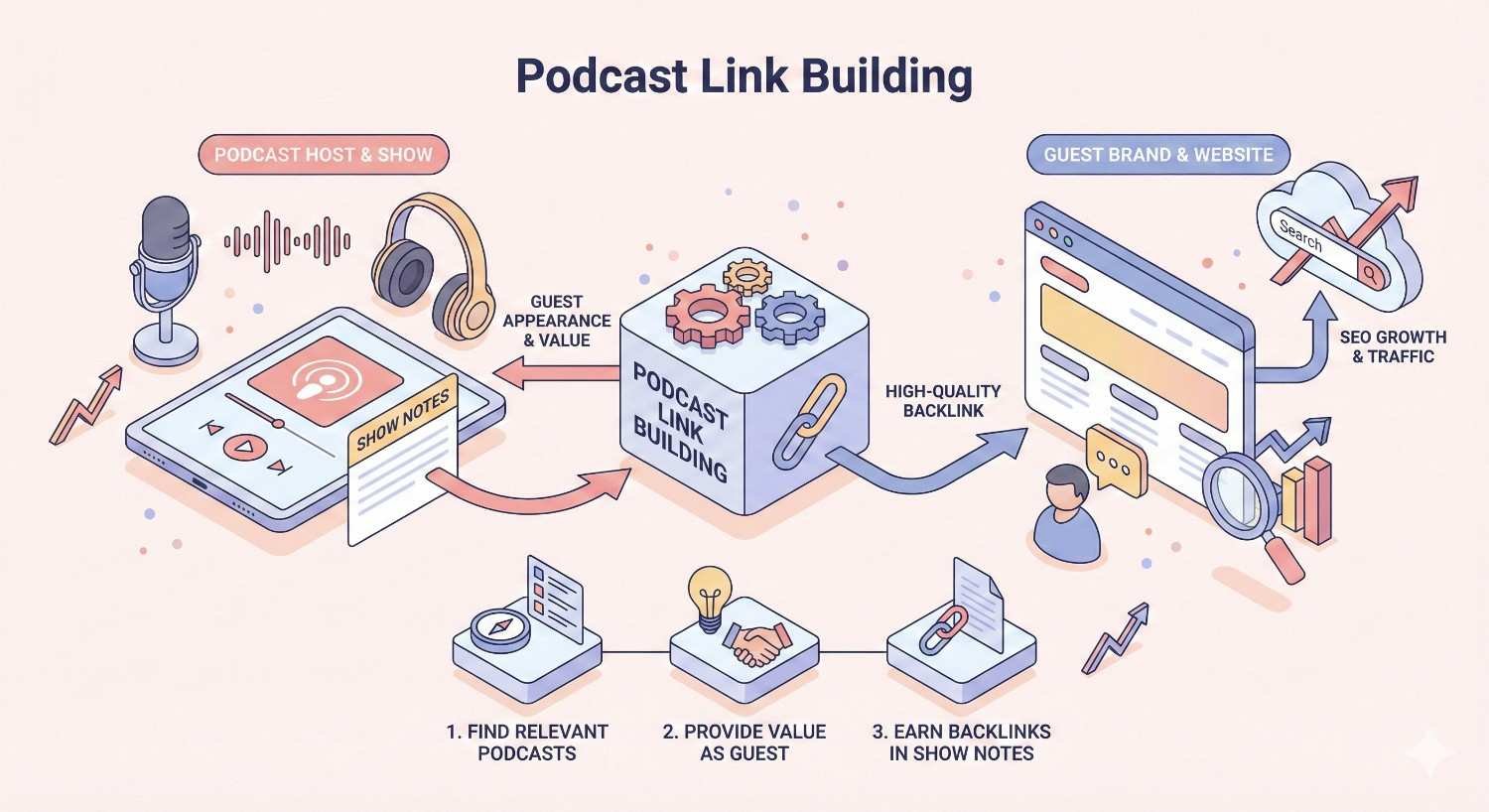
Podcast link building is a strategic approach to earning backlinks by appearing as a guest on podcasts relevant to your industry. When you share expertise on a show, hosts typically link to your website in episode show notes, transcripts, and resource pages. These links carry SEO value because they come from established domains with engaged audiences.
Unlike transactional link building tactics, podcast appearances create genuine content value. You provide insights to an audience, and in return, you receive contextual backlinks alongside brand exposure. This makes podcast links particularly valuable in Google’s evaluation of link quality and relevance.
How Podcast Link Building Works
The process follows a straightforward path. First, you identify podcasts where your expertise aligns with the audience’s interests. Next, you pitch yourself as a guest by demonstrating the value you can provide to listeners. Once booked, you record the episode and discuss topics relevant to your business.
After publication, the host includes links to your website in the episode’s show notes. These typically appear on the podcast’s main website, which often has established domain authority. Some hosts also publish full transcripts with embedded links, and many maintain resource pages linking to guest websites and recommended tools.
The key distinction from other link building methods is the editorial nature of these links. Podcast hosts choose to link to you because you provided value to their audience, not because you paid for placement or exchanged links.
Why Podcast Links Matter for SEO
Podcast backlinks carry significant weight in search algorithms for several reasons. First, they come from contextually relevant content. When a marketing podcast links to your marketing software, Google recognizes the topical alignment.
Second, podcast websites often maintain strong domain authority. Established shows build authority over time through consistent publishing and audience engagement. A link from a DA 50+ podcast site passes meaningful link equity to your domain.
Third, these links appear natural to search engines. They exist within genuine content created for audience value, not manufactured for SEO purposes. This aligns with Google’s emphasis on editorial links earned through quality content and expertise.
Finally, podcast links diversify your backlink profile. Search engines favor link profiles with varied sources, and podcast appearances add a content type that many competitors overlook.
The SEO Value of Podcast Backlinks
Understanding the specific SEO benefits helps you prioritize podcast link building within your broader strategy. These backlinks deliver value across multiple ranking factors and business metrics.
Domain Authority and Trust Signals
Podcast websites accumulate domain authority through consistent content publication and audience engagement. When these sites link to you, they pass a portion of that authority to your domain. Moz’s research confirms that links from higher-authority domains have greater impact on rankings than equivalent links from lower-authority sources.
Many established podcasts operate on domains with DA scores between 40 and 70, with top-tier shows exceeding 80. A single link from these sources can match the value of multiple links from lower-authority sites.
Beyond raw authority metrics, podcast links carry trust signals. These sites typically have clean link profiles, established publishing histories, and genuine audience engagement. Search engines recognize these trust indicators when evaluating link quality.
Referral Traffic from Podcast Audiences
Podcast listeners represent highly engaged audiences. When they hear you discuss a topic and want to learn more, they click through to your website. This referral traffic often converts at higher rates than organic search traffic because listeners have already experienced your expertise.
The traffic value extends beyond immediate visits. Engaged visitors spend more time on your site, explore multiple pages, and return for future visits. These behavioral signals can indirectly support your SEO performance by demonstrating content quality to search engines.
Brand Visibility and Thought Leadership
Each podcast appearance positions you as an authority in your field. Listeners associate your brand with expertise, and this perception carries into their search behavior. When they later search for solutions you provide, they’re more likely to click your result and engage with your content.
This brand building creates a compounding effect. As more people recognize your name and company, your click-through rates improve in search results. Higher CTR signals relevance to search engines, potentially improving rankings over time.
Link Diversity and Natural Link Profiles
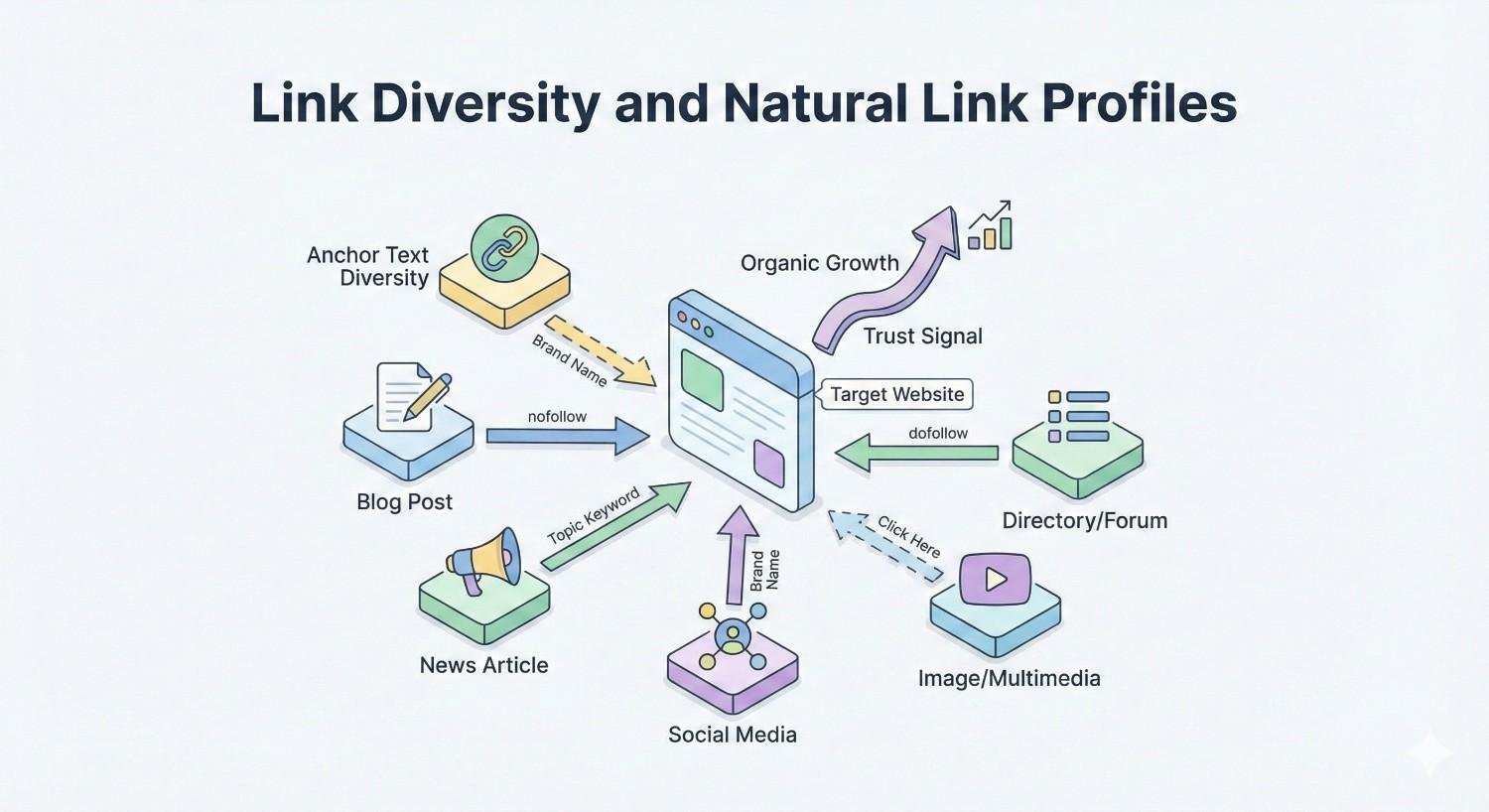
Search algorithms evaluate not just link quantity but link profile composition. A natural link profile includes various source types: editorial mentions, resource pages, directories, and content-based links. Podcast backlinks add a distinct category that many competitors lack.
This diversity signals organic link acquisition to search engines. When your backlinks come exclusively from guest posts or directory submissions, the pattern appears manufactured. Adding podcast links creates a more natural distribution that aligns with how authoritative sites naturally accumulate backlinks.
Types of Podcast Link Opportunities
Podcast appearances create multiple link opportunities beyond basic show notes. Understanding each type helps you maximize value from every appearance.
Guest Appearance Links (Show Notes)
Show notes represent the primary link opportunity from podcast appearances. Hosts publish episode summaries on their websites, typically including guest bios and links to mentioned resources. Your website link appears in this context, surrounded by relevant content about your expertise.
These links carry strong contextual relevance because they appear within content specifically about your appearance and topics discussed. The surrounding text often includes your name, company, and area of expertise, providing additional semantic signals to search engines.
Podcast Directory Listings
Many podcasts maintain guest directories or speaker pages listing all previous guests with links to their websites. These pages accumulate authority over time as the podcast publishes more episodes and attracts more backlinks.
Directory listings provide ongoing value because they remain accessible indefinitely. Unlike individual episode pages that may receive less traffic over time, directory pages often serve as evergreen resources for listeners exploring past content.
Podcast Sponsorship Links
While not directly related to guest appearances, podcast sponsorships offer another link opportunity. Sponsors typically receive links on episode pages, dedicated sponsor pages, and sometimes within episode transcripts.
Sponsorship links differ from guest appearance links in their commercial nature. They may carry less editorial weight but still provide domain authority benefits and referral traffic from engaged audiences.
Podcast Transcript Links
Podcasts that publish full episode transcripts create additional link opportunities. Your website URL mentioned during the conversation becomes a clickable link in the transcript. These links appear within substantial content, providing strong contextual signals.
Transcript pages often rank for long-tail keywords related to episode topics. When your link appears on a ranking transcript page, you benefit from both the backlink and potential referral traffic from searchers finding that content.
Podcast Resource Page Links
Some podcasts maintain resource pages recommending tools, services, and websites mentioned across episodes. Appearing on these curated lists provides high-value links because resource pages typically target informational keywords and attract their own backlinks.
Resource page links often use descriptive anchor text explaining what your site offers. This natural anchor text variation supports healthy link profile development without over-optimization concerns.
How to Find Podcast Link Building Opportunities
Effective podcast prospecting requires systematic research to identify shows where your expertise provides genuine value. Quality matters more than quantity in podcast outreach.
Identifying Relevant Podcasts in Your Niche
Start by mapping the podcast landscape in your industry. Look for shows whose audiences match your target customers and whose topics align with your expertise. The goal is finding podcasts where you can provide unique value, not just any show that might accept guests.
Using Podcast Directories and Search Engines
Apple Podcasts, Spotify, and Google Podcasts serve as primary discovery platforms. Search for keywords related to your industry and expertise areas. Note shows that consistently appear in results and have substantial review counts indicating active audiences.
Dedicated podcast directories like Listen Notes and Podchaser offer advanced search features. Filter by category, audience size, and episode frequency to identify active shows in your niche. These platforms often provide contact information and guest booking details.
Analyzing Competitor Podcast Appearances
Research where your competitors and industry peers have appeared as guests. Tools like Ahrefs and Semrush can identify backlinks from podcast domains to competitor sites. This reveals shows already interested in your industry and open to guest appearances.
Search Google for competitor names plus “podcast” or “interview” to find appearances not captured in backlink data. Listen to these episodes to understand what topics resonated and how you might offer different perspectives.
Leveraging Social Media and Podcast Networks
Podcast hosts actively promote episodes on social media. Follow industry hashtags and podcast-related accounts to discover shows seeking guests. Many hosts post guest requests on Twitter and LinkedIn.
Podcast networks and communities connect hosts with potential guests. Platforms like MatchMaker.fm and PodcastGuests.com facilitate introductions between shows seeking guests and experts seeking appearances.
Evaluating Podcast Quality and Authority
Not all podcasts provide equal SEO value. Evaluate potential targets across multiple criteria before investing outreach effort.
Domain Authority Metrics
Check the domain authority of podcast websites using tools like Moz, Ahrefs, or Semrush. Prioritize shows with DA scores above 30 for meaningful link value. Shows with DA above 50 represent high-value targets worth significant outreach investment.
Remember that newer podcasts may have lower DA but strong growth trajectories. A show with DA 25 but rapid audience growth may become more valuable than a stagnant DA 40 show.
Audience Size and Engagement
Audience size indicates reach and potential referral traffic. Check download numbers if available, review counts on Apple Podcasts, and social media following. Shows with engaged audiences provide more value than those with large but passive followings.
Engagement signals include listener reviews, social media comments, and community activity. A podcast with 500 engaged listeners may deliver better results than one with 5,000 passive downloads.
Content Relevance and Topical Alignment
Evaluate how closely podcast topics align with your expertise and target audience. Appearing on tangentially related shows provides less value than highly relevant appearances. The audience should naturally care about what you offer.
Review recent episodes to understand current content direction. Some podcasts shift focus over time, and their current topics may differ from their original positioning.
Link Placement Practices (DoFollow vs NoFollow)
Check how podcasts handle links in show notes. Some use nofollow attributes, which pass less direct SEO value. While nofollow links still provide brand exposure and referral traffic, dofollow links deliver stronger ranking benefits.
Examine existing episode pages to see link formatting. Look for whether guest links appear prominently or are buried in generic resource lists. Prominent placement with descriptive anchor text provides maximum value.
Tools for Podcast Prospecting
Efficient prospecting requires the right tools to research, organize, and track opportunities.
Podcast Search Platforms
Listen Notes offers the most comprehensive podcast search database with over 3 million podcasts indexed. Search by keyword, filter by category, and access contact information for outreach. The platform’s API enables bulk research for larger campaigns.
Podchaser provides detailed podcast analytics including audience demographics and engagement metrics. Their database includes verified contact information and guest booking preferences for many shows.
Rephonic specializes in podcast audience data, helping you identify shows whose listeners match your target customers. Their reach estimates help prioritize high-impact opportunities.
SEO and Backlink Analysis Tools
Ahrefs and Semrush identify podcast domains linking to competitors, revealing proven opportunities. Export backlink data filtered by podcast-related domains to build targeted prospect lists.
These tools also help evaluate podcast domain authority and link profiles. Check whether podcast sites have healthy backlink profiles themselves, as links from spammy sites provide little value.
Outreach and CRM Tools
Manage podcast outreach campaigns with tools like Pitchbox, BuzzStream, or dedicated CRMs. Track contact attempts, responses, and booking status across multiple prospects.
Email finding tools like Hunter.io and Voila Norbert help locate host contact information when not publicly available. Verify email addresses before outreach to maintain sender reputation.
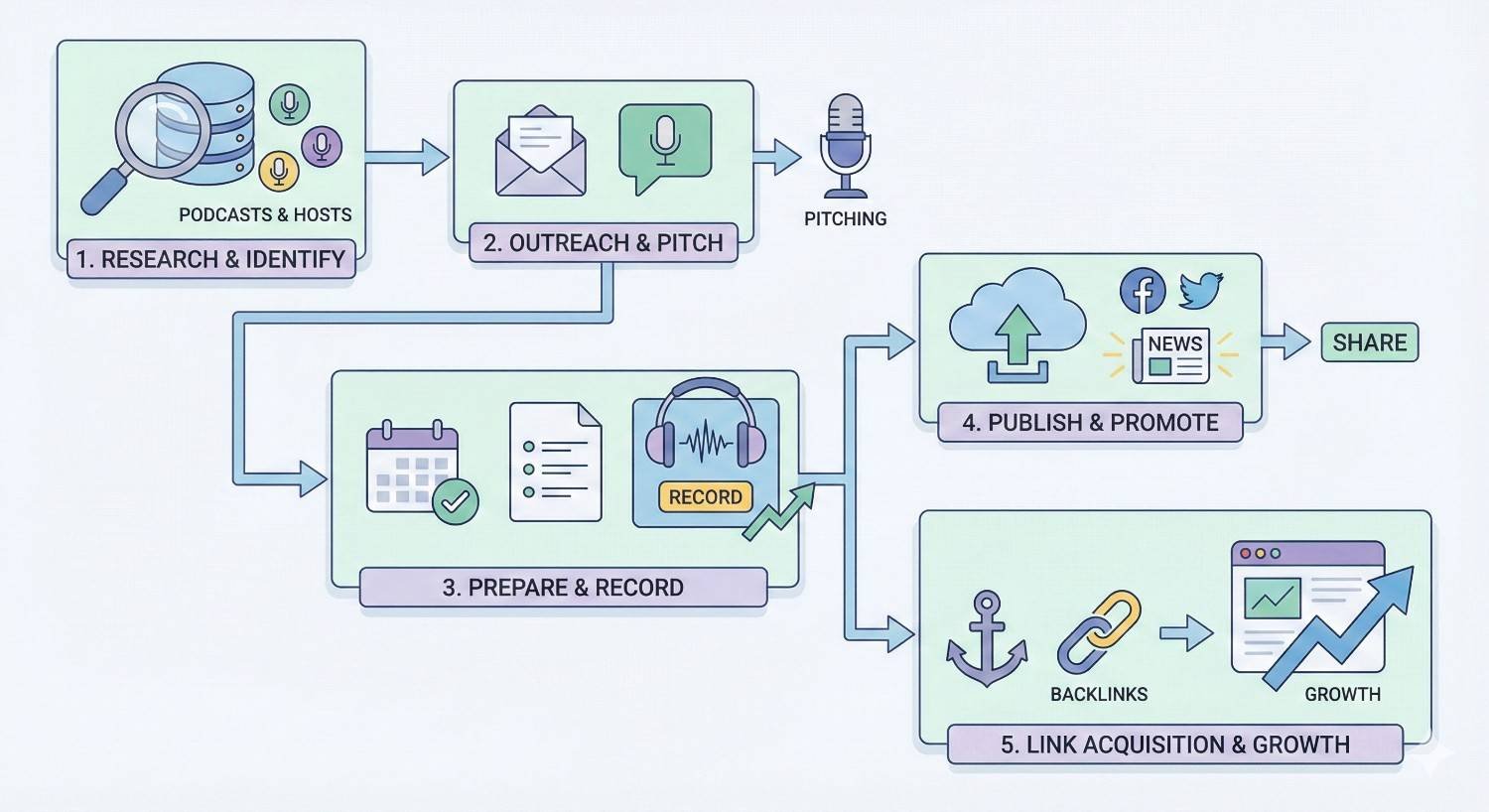
The Podcast Link Building Process: Step-by-Step
Systematic execution separates successful podcast link building from wasted effort. Follow this process to maximize booking rates and link value.
Step 1: Define Your Target Audience and Podcast Criteria
Before prospecting, clarify who you want to reach and what makes a podcast worth pursuing. Define your ideal listener profile based on your target customer demographics, interests, and challenges.
Establish minimum criteria for podcast targets: domain authority thresholds, audience size requirements, topical relevance standards, and link placement practices. These criteria prevent wasted effort on low-value opportunities.
Document 3-5 topic areas where you can provide unique expertise. These become the foundation for your pitch angles and help identify relevant shows.
Step 2: Build a Podcast Prospect List
Using the tools and methods described above, compile a list of 50-100 potential podcast targets. Include contact information, domain authority, audience size estimates, and notes on content focus.
Organize prospects by priority tier. Top-tier shows with high authority and perfect audience fit deserve personalized outreach. Lower-tier shows can receive templated approaches with light personalization.
Maintain your prospect list in a spreadsheet or CRM with status tracking. Note outreach dates, responses, and outcomes to refine your approach over time.
Step 3: Research Podcast Hosts and Topics
Before pitching, deeply research each target podcast. Listen to 2-3 recent episodes to understand the host’s interview style, typical topics, and audience engagement patterns.
Research the host personally. Review their LinkedIn profile, Twitter activity, and other content they create. Understanding their interests and perspectives helps you craft pitches that resonate.
Note specific episodes or topics you can reference in your outreach. Demonstrating genuine familiarity with the show dramatically improves response rates.
Step 4: Craft Personalized Outreach Pitches
Generic pitches fail. Hosts receive dozens of guest requests and quickly identify mass outreach. Personalization demonstrates respect for their show and increases booking probability.
Email Pitch Templates
Structure your pitch with these elements:
Subject line: Reference the podcast name and hint at your value proposition. Example: “Guest idea for [Podcast Name]: [Specific Topic]”
Opening: Demonstrate familiarity with the show by referencing a specific episode or the host’s perspective on a topic.
Value proposition: Clearly state what you can offer their audience. Focus on listener benefit, not self-promotion.
Credibility: Briefly establish why you’re qualified to discuss this topic. Include relevant experience, results, or recognition.
Topic suggestions: Offer 2-3 specific episode ideas with brief descriptions of what you’d cover.
Call to action: Make responding easy with a clear next step, such as scheduling a brief call to discuss.
Value Proposition and Topic Ideas
Your pitch must answer the host’s primary question: “Why would my audience care about this person?”
Lead with audience value, not your credentials. Instead of “I’m the CEO of a marketing agency,” try “I can share the exact process we used to help clients increase organic traffic by 200% in six months.”
Propose specific, actionable topics rather than broad themes. “How to audit your website’s technical SEO in 30 minutes” outperforms “SEO tips for businesses.”
Follow-Up Strategies
Most bookings require follow-up. Hosts are busy and may miss or delay responding to initial pitches. Plan a 3-touch follow-up sequence spaced 5-7 days apart.
Each follow-up should add value, not just repeat your request. Share a relevant article, reference a recent episode, or offer an additional topic idea.
After three attempts without response, move the prospect to a “revisit later” list. Some hosts respond months later when their content calendar opens up.
Step 5: Prepare for Your Podcast Appearance
Booking the appearance is only half the work. Preparation determines whether you deliver value and secure quality links.
Talking Points and Key Messages
Develop 3-5 key messages you want to communicate during the interview. These should align with your expertise and naturally lead to mentioning resources on your website.
Prepare stories and examples that illustrate your points. Concrete examples engage listeners more than abstract advice. Practice articulating these stories concisely.
Anticipate likely questions based on your proposed topics and the host’s interview style. Prepare thoughtful responses that demonstrate expertise without sounding rehearsed.
Link Placement Requests
Before recording, discuss link placement with the host. Most hosts willingly include guest website links in show notes, but confirming expectations prevents disappointment.
Prepare a brief bio and list of links you’d like included. Make it easy for the host by providing exactly what they need in a ready-to-publish format.
If you have specific resources relevant to episode topics, mention them during the conversation. Hosts often link to resources discussed in episodes, creating additional link opportunities.
Technical Setup and Recording Best Practices
Poor audio quality undermines your expertise perception. Invest in a decent microphone and record in a quiet environment. Test your setup before the interview.
Use a wired internet connection if possible. Video calls and remote recordings suffer from WiFi instability. Close unnecessary applications to prevent computer slowdowns.
Arrive early for the recording. Use the first few minutes to build rapport with the host and clarify any final details about topics or format.
Step 6: Maximize Link Value Post-Appearance
Your work continues after recording. Proactive follow-up ensures you receive promised links and maximizes episode impact.
Requesting Show Notes Links
After the episode publishes, verify that your links appear correctly in show notes. If links are missing or broken, politely request corrections. Most hosts appreciate the heads-up about technical issues.
If the host forgot to include links, send a friendly reminder with the specific URLs and anchor text you’d like used. Frame it as making their job easier, not demanding something owed.
Providing Resource Links and URLs
Make link inclusion effortless for hosts. Send a follow-up email after recording with your bio, headshot, website URL, and any specific resource links mentioned during the conversation.
Format this information clearly so hosts can copy and paste directly into their show notes. The easier you make their workflow, the more likely they’ll include everything you provide.
Promoting the Episode
Promote the episode across your channels: social media, email newsletter, and website. Tag the host and podcast in social posts. This promotion benefits the host and strengthens your relationship for potential future appearances.
Create content around your appearance. Write a blog post expanding on topics discussed, embed the episode on your site, or create social media clips highlighting key moments.
Tracking and Monitoring Backlinks
Add new podcast backlinks to your tracking system. Monitor whether links remain active over time, as some podcasts reorganize their sites or remove old content.
Use tools like Ahrefs or Google Search Console to verify links are being crawled and indexed. If links aren’t appearing in your backlink profile after several weeks, investigate potential technical issues.
Step 7: Measure Results and Refine Strategy
Track performance metrics to understand what’s working and optimize your approach. Podcast link building improves with data-driven refinement.
Monitor which podcasts drive the most referral traffic and conversions. High-traffic appearances indicate strong audience alignment worth replicating with similar shows.
Track outreach response rates by pitch angle, subject line, and personalization level. Identify patterns in successful pitches and apply learnings to future outreach.
Review ranking changes for target keywords after acquiring podcast backlinks. While isolating the impact of individual links is difficult, patterns across multiple appearances reveal overall strategy effectiveness.
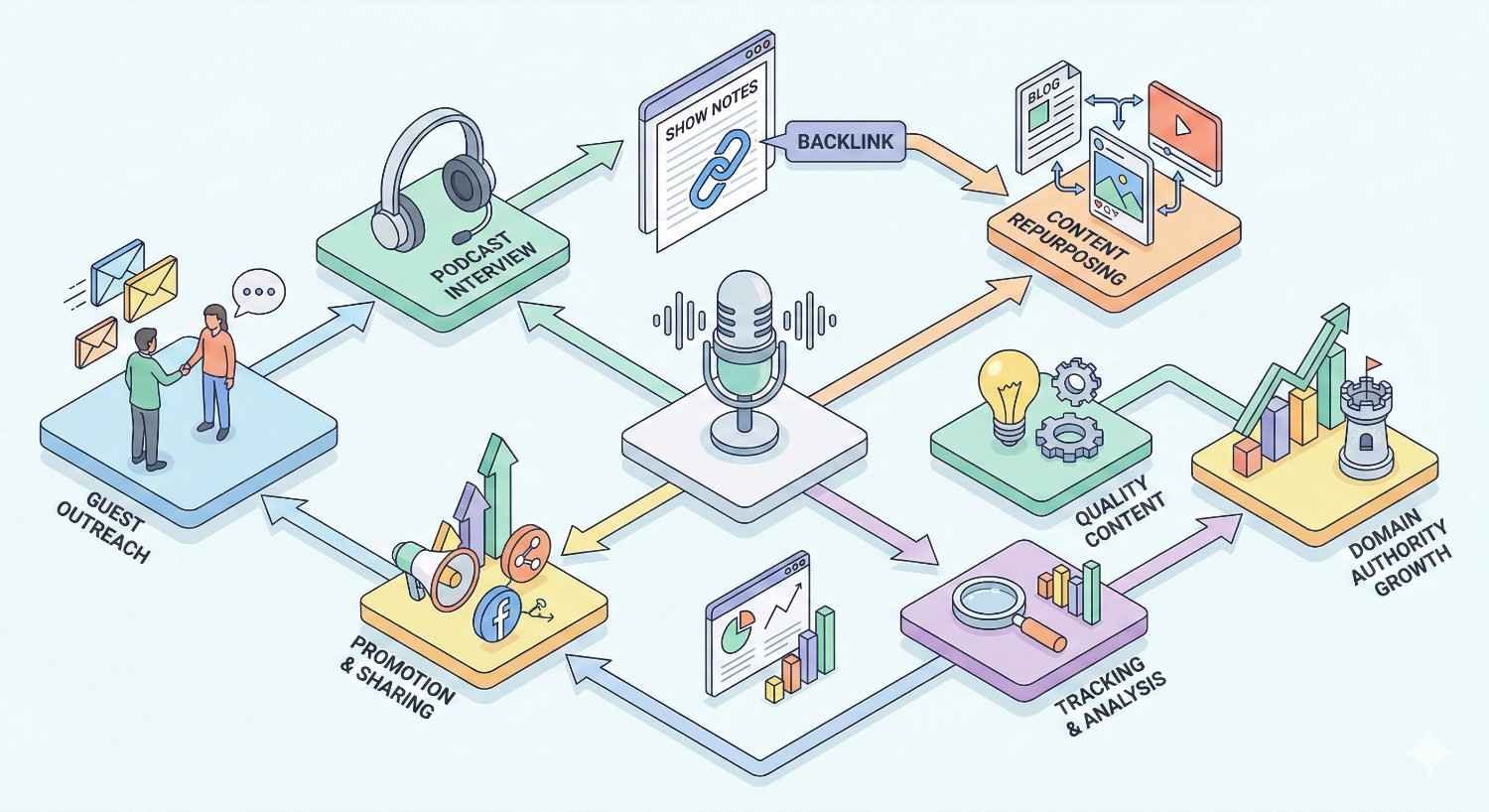
Best Practices for Podcast Link Building
Following proven practices maximizes results while building sustainable relationships with podcast hosts.
Prioritize Relevance Over Volume
Ten highly relevant podcast appearances outperform fifty irrelevant ones. Relevant audiences engage with your content, click through to your site, and convert at higher rates. Irrelevant appearances waste time and may even harm brand perception.
Evaluate every opportunity against your ideal listener profile. If the audience doesn’t match your target customers, the appearance provides limited business value regardless of domain authority.
Build Genuine Relationships with Hosts
Podcast link building works best as relationship building, not transactional outreach. Hosts who like you invite you back, recommend you to other hosts, and promote your appearances enthusiastically.
Engage with hosts beyond your appearance. Share their content, leave reviews, and maintain contact. These relationships compound over time, creating ongoing opportunities without repeated cold outreach.
Provide Value to the Audience First
Every appearance should prioritize listener value over self-promotion. Hosts notice when guests focus on helping their audience versus promoting themselves. Value-focused guests get invited back and recommended to peers.
Share actionable insights listeners can implement immediately. Avoid vague advice or constant product mentions. The best promotion is demonstrating expertise through genuinely helpful content.
Optimize Your Website for Podcast Traffic
Podcast listeners arriving at your site have specific expectations. Create landing pages tailored to podcast audiences with relevant resources, clear next steps, and content expanding on topics discussed.
Ensure your site loads quickly and works well on mobile devices. Many podcast listeners browse on phones while listening. A poor mobile experience wastes the referral traffic you’ve earned.
Diversify Your Link Profile
While podcast links provide excellent value, they shouldn’t be your only link building tactic. Combine podcast appearances with content marketing, digital PR, and other strategies for a balanced link profile.
Diversification also applies within podcast link building. Target shows across different platforms, audience sizes, and content formats. This variety creates a natural-looking link profile that search engines reward.
Maintain Consistent Outreach and Follow-Up
Podcast link building requires sustained effort. Sporadic outreach produces sporadic results. Establish a consistent weekly rhythm for prospecting, pitching, and following up.
Set realistic targets based on your capacity. 5-10 quality pitches per week typically outperforms 50 generic pitches. Consistency over months builds momentum that occasional bursts cannot match.
Common Podcast Link Building Mistakes to Avoid
Learning from common errors helps you avoid wasted effort and damaged relationships.
Targeting Irrelevant or Low-Quality Podcasts
Chasing any podcast that might accept you wastes time and dilutes your brand. Low-quality shows with minimal audiences provide negligible SEO value and may associate your brand with unprofessional content.
Establish clear quality thresholds and stick to them. Walking away from easy but low-value opportunities preserves resources for high-impact targets.
Generic or Spammy Outreach
Mass outreach with minimal personalization fails consistently. Hosts recognize template pitches immediately and delete them. Worse, spammy outreach damages your reputation within podcast communities where hosts communicate.
Invest time in genuine personalization. Reference specific episodes, demonstrate understanding of the audience, and propose topics tailored to the show’s focus.
Failing to Prepare or Provide Value
Unprepared guests deliver poor interviews that hosts regret booking. This burns bridges and prevents future opportunities. Worse, the resulting episode may not include links if the host is dissatisfied with the content.
Prepare thoroughly for every appearance. Know your key messages, practice your stories, and research the host’s style. Treat every podcast like a high-stakes opportunity regardless of audience size.
Neglecting Link Tracking and Measurement
Without tracking, you cannot evaluate strategy effectiveness or demonstrate ROI. Many teams invest in podcast appearances without knowing which efforts produce results.
Implement tracking from the start. Monitor backlinks, referral traffic, and conversions attributed to podcast appearances. Use this data to refine targeting and justify continued investment.
Over-Optimizing Anchor Text
Requesting specific keyword-rich anchor text raises red flags with hosts and search engines. Natural podcast links use varied anchor text like your name, company name, or generic phrases like “check out their website.”
Let hosts choose anchor text naturally. The contextual relevance of podcast links provides SEO value regardless of exact anchor text. Manipulative anchor text requests can result in nofollow links or no links at all.
How Long Does Podcast Link Building Take?
Understanding realistic timelines helps you plan resources and set appropriate expectations for results.
Timeline for Outreach and Booking
From initial outreach to confirmed booking typically takes 2-6 weeks. Response times vary widely based on host availability, inbox management, and content calendar openings.
High-demand podcasts may have booking queues extending 3-6 months. Factor this lead time into your planning, especially for time-sensitive campaigns or product launches.
Budget 4-8 weeks from starting outreach to having your first appearance scheduled. This accounts for research, pitching, follow-up, and scheduling coordination.
Recording to Publication Timeline
Most podcasts publish episodes 2-8 weeks after recording. Some shows maintain larger content buffers, publishing 3-6 months after recording. Confirm expected publication timing when booking.
This delay means links won’t appear immediately after your appearance. Plan for 1-3 months between recording and receiving the backlink.
SEO Impact and Ranking Timeline
Backlink impact on rankings typically becomes measurable 2-4 months after links are indexed. Search engines need time to crawl, evaluate, and incorporate new links into ranking calculations.
Cumulative impact from multiple podcast appearances compounds over 6-12 months. Early appearances may show minimal individual impact, but consistent effort produces measurable ranking improvements over time.
Setting Realistic Expectations
A realistic podcast link building timeline:
Month 1-2: Research, prospecting, and initial outreach. First bookings confirmed.
Month 3-4: First appearances recorded. Continued outreach builds pipeline.
Month 5-6: First episodes published. Backlinks begin appearing. Referral traffic starts.
Month 7-12: Cumulative SEO impact becomes measurable. Ranking improvements for target keywords. Refined strategy based on performance data.
Expect 6-12 months before podcast link building delivers significant, measurable SEO results. This timeline aligns with broader SEO expectations and reflects the relationship-building nature of the strategy.
Podcast Link Building Tools and Resources
The right tools streamline prospecting, outreach, and measurement. Build your toolkit based on campaign scale and budget.
Podcast Discovery Tools
Listen Notes: Comprehensive podcast search engine with over 3 million indexed shows. Advanced filters, contact information, and API access for bulk research.
Podchaser: Detailed podcast analytics and verified contact information. Strong for evaluating audience demographics and engagement metrics.
Rephonic: Specializes in podcast audience data and reach estimates. Helps identify shows whose listeners match your target customers.
Spotify for Podcasters: Provides insights into podcast performance and audience demographics for shows you’re considering.
Outreach and Email Tools
Pitchbox: Purpose-built for link building outreach with templates, sequencing, and response tracking. Integrates with SEO tools for prospect research.
BuzzStream: Manages outreach campaigns with contact management, email tracking, and team collaboration features.
Hunter.io: Finds and verifies email addresses for podcast hosts when contact information isn’t publicly available.
Mailshake: Email outreach automation with personalization, A/B testing, and follow-up sequences.
Backlink Monitoring Tools
Ahrefs: Industry-standard backlink analysis with comprehensive link databases. Monitors new and lost backlinks, anchor text distribution, and referring domain quality.
Semrush: Backlink analytics combined with broader SEO toolkit. Tracks link acquisition over time and identifies competitor podcast appearances.
Moz Link Explorer: Domain authority metrics and backlink tracking. Useful for evaluating podcast domain quality during prospecting.
Analytics and Tracking Platforms
Google Analytics: Track referral traffic from podcast websites. Set up goals to measure conversions from podcast-driven visits.
Google Search Console: Monitor backlink indexing and identify which podcast links Google has discovered. Track ranking changes for target keywords.
UTM Parameters: Add tracking parameters to links you provide podcasts. This enables precise attribution of traffic and conversions to specific appearances.
Podcast Link Building for Different Business Types
Podcast link building adapts to various business models and industries. Tailor your approach based on your specific context.
B2B and SaaS Companies
B2B companies benefit significantly from podcast link building because their target audiences actively consume industry podcasts. Decision-makers use podcasts for professional development and industry insights.
Focus on podcasts covering your industry vertical, business challenges you solve, and topics where your product provides solutions. Thought leadership positioning drives both links and qualified leads.
SaaS companies can leverage product expertise for technical podcasts while also targeting business-focused shows discussing the problems their software solves.
E-commerce and DTC Brands
E-commerce brands find podcast opportunities in lifestyle, hobby, and interest-based shows aligned with their products. A fitness equipment brand targets health and wellness podcasts. A sustainable fashion brand targets eco-conscious lifestyle shows.
Founder stories resonate well for DTC brands. Podcasts covering entrepreneurship, e-commerce, and brand building welcome founders sharing their journey and lessons learned.
Product expertise also creates opportunities. If you sell specialty coffee, coffee enthusiast podcasts want your knowledge about sourcing, roasting, and brewing.
Local and Service-Based Businesses
Local businesses benefit from regional podcasts covering their geographic area. Local business podcasts, community shows, and regional interest programs provide relevant audiences and local SEO signals.
Service-based businesses can target industry podcasts where their expertise applies broadly. A local accounting firm can appear on national small business podcasts discussing tax strategies, earning links while building credibility.
Agencies and Consultants
Agencies and consultants have natural podcast fit because their expertise translates directly to educational content. Marketing agencies discuss marketing strategies. HR consultants discuss workplace challenges. Financial advisors discuss money management.
The key is providing genuine value without overt sales pitches. Agencies that share actionable insights build trust and attract inbound inquiries from listeners.
Case studies and client results make compelling podcast content. Discuss specific challenges and solutions without naming clients if confidentiality requires.
Startups and Early-Stage Companies
Startups can leverage founder stories and innovative approaches for podcast appearances. Entrepreneurship podcasts actively seek founders at various stages sharing lessons learned.
Early-stage companies may lack the domain authority for traditional link building tactics. Podcast appearances provide a path to quality backlinks before establishing broader industry recognition.
Focus on what makes your approach unique. Podcasts want interesting perspectives, not generic advice. Your startup’s unconventional methods or hard-won lessons create compelling content.
Integrating Podcast Link Building into Your SEO Strategy
Podcast link building works best as part of a comprehensive SEO approach, not an isolated tactic.
Combining with Content Marketing
Podcast appearances generate content opportunities beyond the episode itself. Repurpose interview content into blog posts, social media content, and email newsletters.
Create supporting content on your site that expands on podcast topics. When listeners visit after hearing your appearance, they find deeper resources that demonstrate expertise and encourage conversion.
Link internally from podcast-related content to your core service and product pages. This distributes link equity from podcast backlinks throughout your site.
Supporting Technical SEO Foundations
Podcast link building amplifies technical SEO investments. Quality backlinks help pages rank, but only if those pages are properly optimized and crawlable.
Ensure your site has solid technical foundations before scaling link building. Fix crawl errors, optimize page speed, and implement proper internal linking. Links to a technically broken site waste their potential value.
Complementing Other Link Building Tactics
Podcast links should complement, not replace, other link building approaches. Combine with digital PR for news coverage, content marketing for organic link attraction, and strategic partnerships for industry links.
This diversification creates a natural link profile that search engines reward. Over-reliance on any single tactic creates vulnerability to algorithm changes or tactic saturation.
Aligning with Long-Term Authority Building
Podcast appearances build topical authority beyond individual backlinks. Consistent appearances on relevant shows establish your brand as an industry voice.
This authority compounds over time. As recognition grows, higher-profile podcasts become accessible. Better podcasts mean better links, creating a virtuous cycle of increasing authority.
Plan podcast link building as a 12-24 month initiative, not a short-term campaign. The relationship-building and authority-building aspects require sustained investment to realize full potential.
Measuring Podcast Link Building ROI
Demonstrating return on investment justifies continued resource allocation and guides strategy optimization.
Key Metrics to Track
Number of Backlinks Acquired
Track total backlinks earned from podcast appearances. Include show notes links, transcript links, and resource page links. Monitor link persistence over time, as some podcasts remove old content.
Domain Authority of Linking Sites
Not all links are equal. Track the domain authority of podcast sites linking to you. Calculate weighted link value based on DA to understand true portfolio quality.
Referral Traffic Volume
Monitor traffic from podcast websites using Google Analytics. Track both immediate traffic after episode publication and ongoing traffic from evergreen episodes.
Keyword Ranking Improvements
Track rankings for target keywords over time. While isolating podcast link impact is difficult, correlate ranking improvements with link acquisition timing to identify patterns.
Lead Generation and Conversions
Ultimately, podcast link building should drive business results. Track leads and conversions attributed to podcast referral traffic. Calculate cost per lead compared to other channels.
Attribution and Tracking Methods
Implement UTM parameters on all links provided to podcasts. This enables precise attribution in Google Analytics, separating podcast traffic from other referral sources.
Create dedicated landing pages for podcast audiences. These pages can include podcast-specific offers and tracking, improving both conversion rates and attribution accuracy.
Survey new leads and customers about how they discovered you. Podcast appearances often influence decisions even when not the direct traffic source.
Reporting and Optimization
Build monthly reports tracking key metrics over time. Visualize trends in link acquisition, traffic, and conversions to demonstrate progress and identify issues.
Use performance data to refine targeting. Double down on podcast types and topics that drive results. Reduce investment in approaches that underperform.
Share results with stakeholders to maintain support for continued investment. Podcast link building requires patience, and regular reporting maintains organizational commitment through the ramp-up period.
Case Studies: Successful Podcast Link Building Campaigns
Real-world examples illustrate how different businesses apply podcast link building strategies.
Case Study 1: B2B SaaS Company
A project management software company targeted podcasts covering productivity, remote work, and team management. Over 12 months, the founder appeared on 24 podcasts ranging from DA 35 to DA 65.
Results included 31 backlinks from podcast domains, a 15% increase in domain rating, and 2,400 referral visits from podcast traffic. More importantly, 18 qualified demo requests came directly from podcast listeners, with 4 converting to paying customers.
The company’s target keyword rankings improved measurably, with their primary term moving from position 14 to position 6 over the campaign period.
Case Study 2: E-commerce Brand
A sustainable home goods brand pursued lifestyle and eco-conscious podcasts. The founder’s story of leaving corporate life to build an ethical business resonated with entrepreneurship and sustainability audiences.
Over 8 months, 16 podcast appearances generated 22 backlinks. Referral traffic from podcasts converted at 3.2%, significantly higher than the site’s 1.8% average conversion rate.
Brand search volume increased 40% during the campaign period, indicating growing awareness beyond direct traffic. The company attributed $47,000 in revenue directly to podcast-driven customers.
Case Study 3: Agency Growth Strategy
A digital marketing agency used podcast appearances to establish thought leadership and generate inbound leads. Partners appeared on marketing, business, and entrepreneurship podcasts discussing client results and strategic approaches.
36 appearances over 18 months generated 52 backlinks from podcast domains. The agency’s domain authority increased from 38 to 51 during this period, though podcast links were one factor among several.
More significantly, 23% of new client inquiries mentioned hearing the agency on podcasts. These leads closed at higher rates and larger contract values than other lead sources, making podcast appearances the agency’s highest-ROI marketing channel.
Getting Started with Podcast Link Building
Ready to implement podcast link building? Follow this framework to launch your initiative.
Building Your Podcast Link Building Plan
Start with clear objectives. Define target metrics for links acquired, traffic generated, and business outcomes expected. Set realistic timelines based on the 6-12 month ramp-up period.
Identify 3-5 topic areas where you can provide unique expertise. These become your pitch angles and guide podcast targeting.
Create your initial prospect list of 50-100 podcasts meeting your quality criteria. Prioritize by potential impact and likelihood of booking.
Resource Requirements and Budget
Podcast link building requires time more than money. Budget 5-10 hours weekly for prospecting, outreach, preparation, and appearances.
Tool costs remain modest. Podcast discovery tools range from free to $50-100/month. Outreach tools cost $50-200/month depending on features and scale.
Consider equipment investments for quality recordings. A decent microphone costs $100-200 and dramatically improves audio quality.
In-House vs. Agency Support
In-house execution works well when you have team members with relevant expertise and available capacity. The personal nature of podcast appearances often requires founder or executive involvement regardless of who manages logistics.
Agencies can handle prospecting, outreach, and coordination while you focus on appearances themselves. This hybrid approach maximizes efficiency for resource-constrained teams.
Evaluate agencies based on their podcast-specific experience, not general link building track records. Podcast outreach requires different skills than traditional link building.
Next Steps and Action Items
Week 1: Define objectives, identify expertise areas, establish quality criteria.
Week 2: Build initial prospect list using discovery tools. Research top 20 targets in depth.
Week 3: Craft pitch templates and begin outreach to first batch of prospects.
Week 4: Follow up on initial outreach. Continue prospecting to maintain pipeline.
Ongoing: Maintain consistent weekly outreach rhythm. Track results and refine approach based on data.
Conclusion
Podcast link building combines SEO value with brand building in ways few other tactics match. The backlinks you earn come from genuine content created for engaged audiences, exactly what search engines reward.
Success requires patience and consistency. The 6-12 month timeline to meaningful results tests organizational commitment, but the compounding benefits of authority building justify the investment.
We help businesses implement comprehensive SEO strategies including podcast link building at White Label SEO Service. Contact our team to discuss how podcast appearances can strengthen your organic growth.
Frequently Asked Questions
How many podcast appearances do I need to see SEO results?
Most businesses see measurable impact after 10-15 quality podcast appearances accumulated over 6-12 months. Individual links contribute incrementally, but cumulative effect drives noticeable ranking improvements.
Do nofollow podcast links still provide value?
Yes. Nofollow links pass less direct ranking value but still drive referral traffic, brand awareness, and audience trust. Many successful podcast link building campaigns include a mix of dofollow and nofollow links.
Can I do podcast link building without being an expert speaker?
Absolutely. Podcast hosts value authentic perspectives and real experiences over polished presentation skills. Preparation and genuine expertise matter more than speaking experience. Most guests improve significantly after a few appearances.
What if podcasts in my industry have low domain authority?
Niche podcasts with lower DA often have highly engaged, relevant audiences. A DA 25 podcast perfectly aligned with your target customers may deliver better business results than a DA 60 show with mismatched audiences.
How do I track which podcast appearances drive conversions?
Use UTM parameters on links provided to podcasts, create dedicated landing pages for podcast traffic, and ask new leads how they discovered you. Combining these methods provides reasonable attribution accuracy.
Should I pay for podcast appearances or sponsorships?
Paid placements can supplement organic guest appearances but shouldn’t replace them. Editorial guest links typically carry more SEO weight than sponsored links. Evaluate paid opportunities based on audience fit and total value beyond just the backlink.
How do I handle podcasts that don’t include links in show notes?
Politely follow up after publication with your bio and links formatted for easy addition. Most hosts simply forgot or ran short on time. If a podcast consistently omits guest links, deprioritize them for future outreach.