
Professional PPC services deliver qualified traffic to your website within hours of campaign launch, not months. Unlike organic search strategies that require patience, pay-per-click advertising puts your business in front of ready-to-buy customers the moment your campaigns go live. For business owners and marketing managers seeking predictable lead generation and measurable returns, PPC represents one of the most controllable channels in digital marketing.
The challenge is that PPC complexity has grown exponentially. Between Google Ads algorithm updates, rising competition, and the proliferation of advertising platforms, managing campaigns effectively requires specialized expertise. Getting it wrong means burning through budget with little to show for it.
This guide covers everything you need to understand about PPC services: how they work, what they cost, which platforms matter for your industry, and how to evaluate providers. You will learn the core components of successful campaigns, key metrics to track, common mistakes to avoid, and emerging trends shaping the future of paid search.
What Are PPC Services?
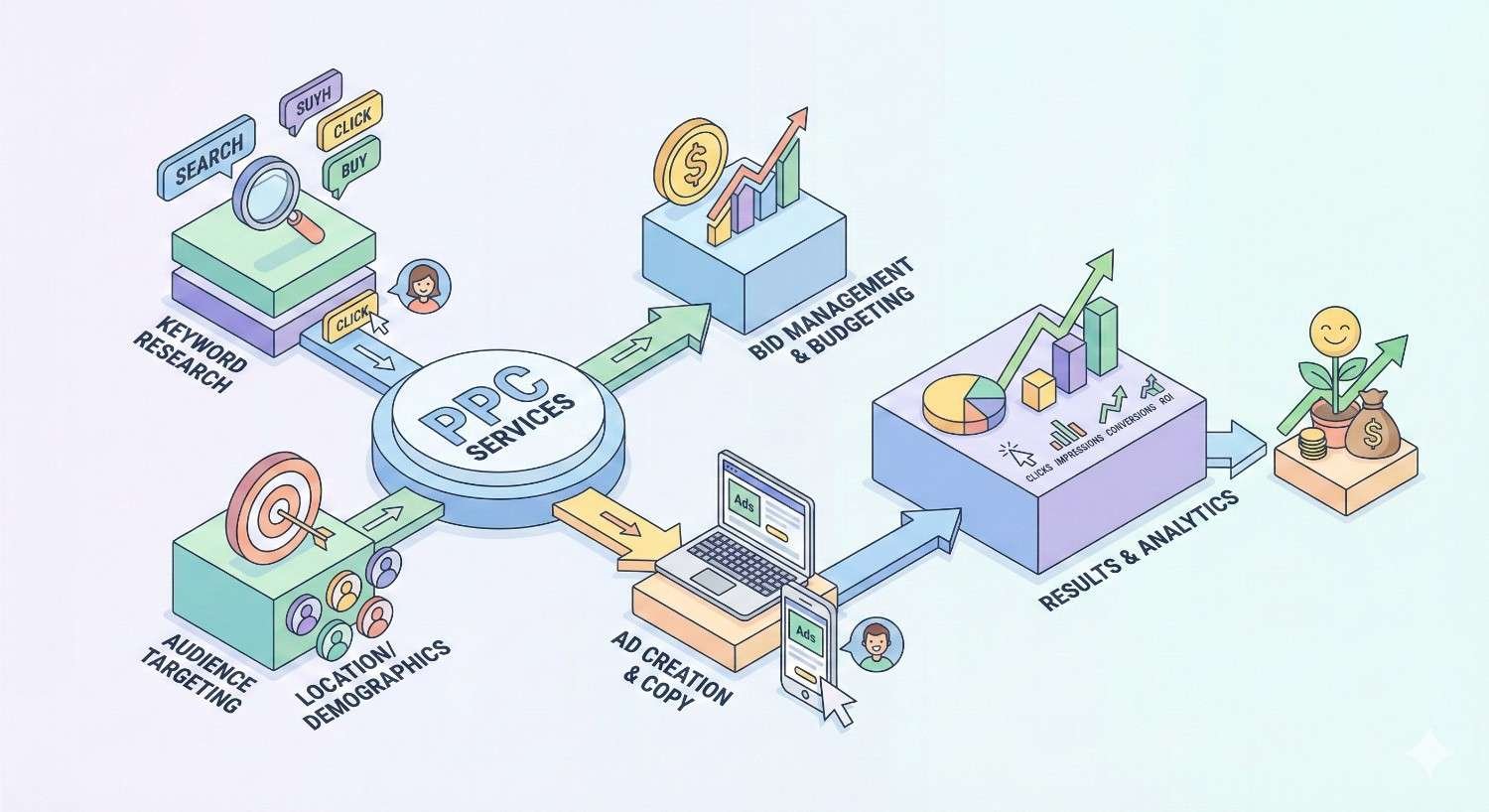
PPC services encompass the strategic planning, execution, and ongoing management of paid advertising campaigns across digital platforms. These services transform advertising budgets into targeted visibility, connecting businesses with potential customers actively searching for their products or services.
Definition of Pay-Per-Click Advertising
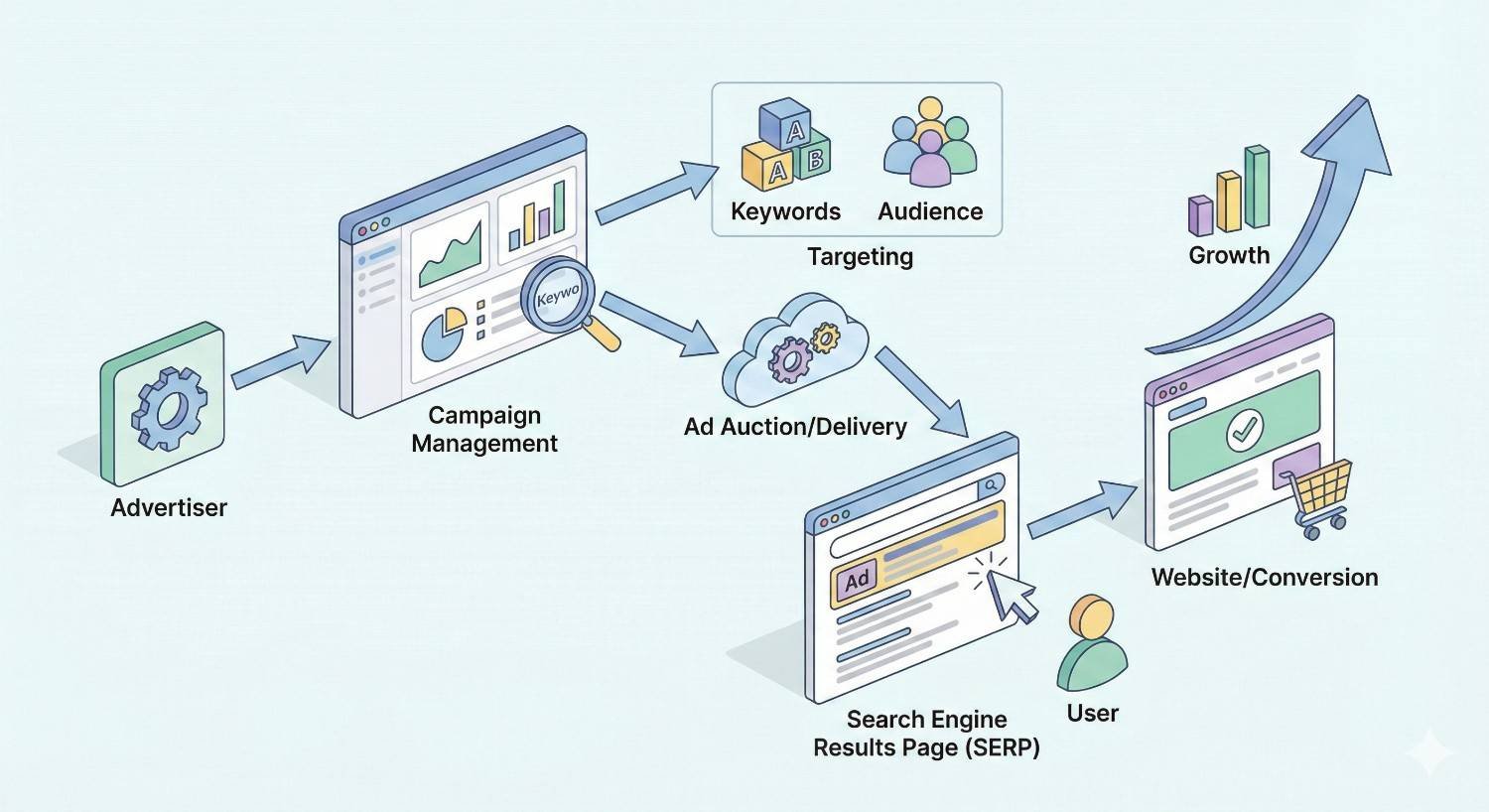
Pay-per-click advertising is a digital marketing model where advertisers pay a fee each time someone clicks on their ad. Rather than earning visits organically, you essentially purchase visits to your website, landing pages, or app. The model operates on an auction system where advertisers bid on keywords or audience segments relevant to their business.
The fundamental appeal of PPC lies in its directness. You only pay when someone takes action by clicking your ad. This creates a clear connection between advertising spend and measurable engagement. When structured properly, PPC campaigns generate traffic from users with demonstrated intent, whether they are searching for specific solutions, browsing related content, or matching your ideal customer profile.
PPC extends beyond simple text ads on search engines. The model now encompasses display advertising, video ads, shopping campaigns, social media promotions, and programmatic placements across millions of websites. Each format serves different objectives within the customer journey, from building awareness to driving immediate conversions.
How PPC Services Work
PPC services operate through a systematic process that begins with understanding your business objectives and ends with continuous optimization based on performance data. The workflow typically follows several interconnected phases.
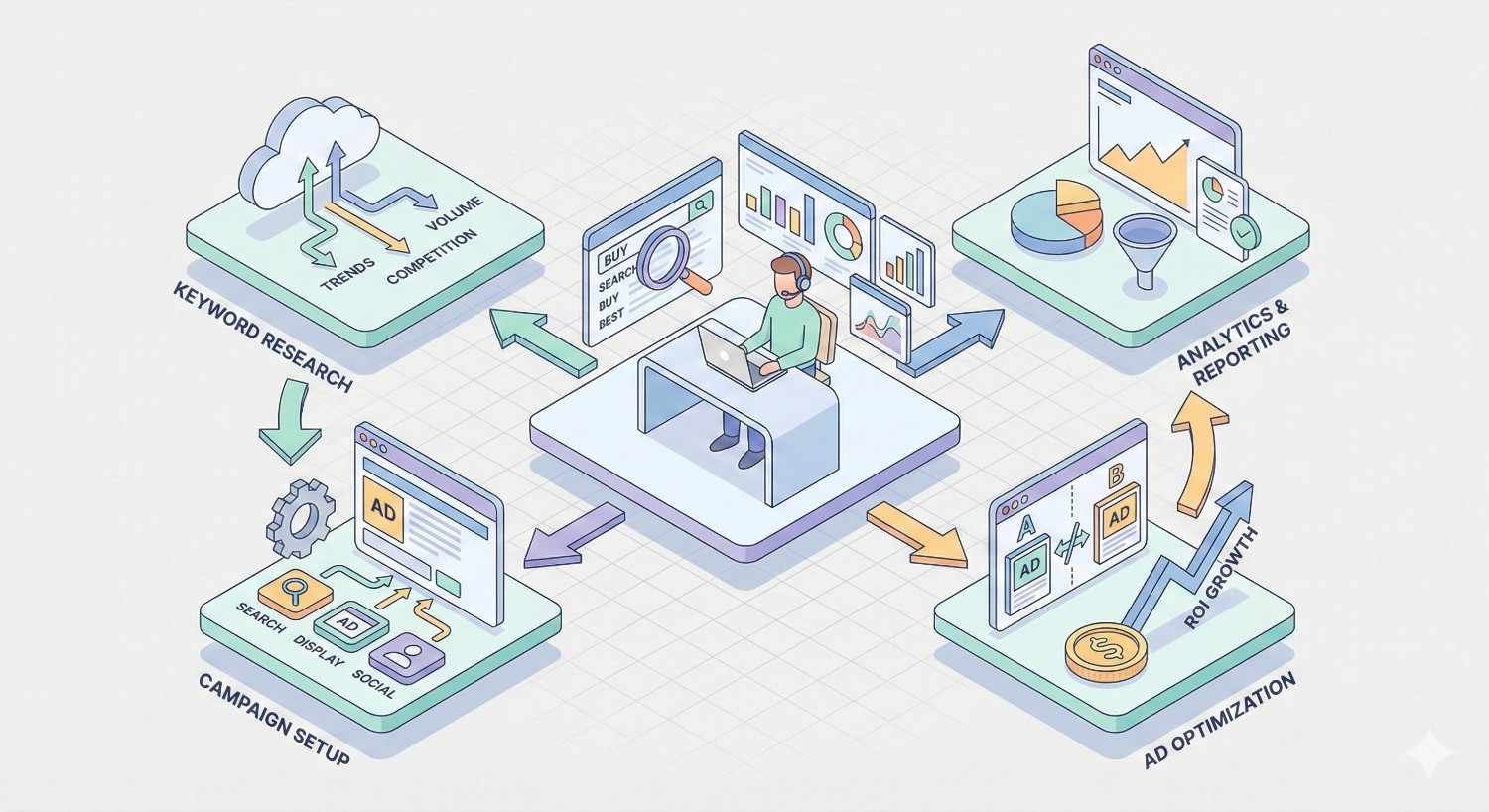
First, service providers conduct research to identify valuable keywords, audiences, and competitive opportunities. This foundation informs campaign structure, budget allocation, and targeting parameters. Campaigns are then built within advertising platforms, with ad copy, creative assets, and landing pages developed to maximize relevance and conversion potential.
Once campaigns launch, the real work begins. PPC management involves constant monitoring, testing, and refinement. Bids are adjusted based on performance patterns. Underperforming keywords get paused while successful ones receive increased investment. Ad copy undergoes A/B testing to improve click-through rates. Landing pages are optimized to convert more visitors into leads or customers.
The auction mechanics vary by platform but share common principles. When a user triggers an ad opportunity through a search query or by matching audience criteria, an instantaneous auction determines which ads appear and in what position. Factors influencing auction outcomes include bid amount, ad quality, expected click-through rate, landing page experience, and relevance to the user’s intent.
Types of PPC Service Providers
The PPC services landscape includes several provider categories, each offering distinct advantages depending on your needs, budget, and internal capabilities.
Full-Service PPC Agencies
Full-service agencies provide comprehensive campaign management across multiple platforms. These organizations typically employ specialists in different advertising channels, creative development, analytics, and strategy. They handle everything from initial audits and campaign builds to ongoing optimization and reporting.
Agencies suit businesses seeking hands-off management with access to diverse expertise. They bring experience across industries and platforms, often identifying opportunities that internal teams might miss. The tradeoff involves higher costs and potential communication layers between your business and the people managing your campaigns.
Freelance PPC Specialists
Independent consultants offer personalized attention and often lower rates than agencies. Freelancers typically specialize in specific platforms or industries, bringing deep expertise in their focus areas. They work directly with clients without agency overhead, enabling faster communication and more flexible arrangements.
Freelancers work well for businesses with focused needs, such as Google Ads management for a single product line. Limitations include capacity constraints, potential availability issues, and narrower expertise compared to full-service agencies.
In-House PPC Teams
Building internal PPC capabilities provides maximum control and alignment with business objectives. In-house teams develop deep knowledge of your products, customers, and competitive landscape. They can respond quickly to business changes and integrate closely with other marketing functions.
The in-house approach requires significant investment in hiring, training, and tools. It makes sense for businesses with substantial ad spend justifying dedicated resources and those in industries where proprietary knowledge creates competitive advantages.
PPC Management Software Platforms
Software solutions automate various aspects of PPC management, from bid optimization to reporting. These platforms range from basic tools handling specific tasks to comprehensive suites managing entire campaign lifecycles. They enable smaller teams to manage larger campaigns more efficiently.
Software platforms complement human expertise rather than replacing it. They excel at data processing, pattern recognition, and repetitive tasks. Strategic decisions, creative development, and nuanced optimization still require human judgment.
Types of PPC Advertising Platforms
The PPC ecosystem spans numerous platforms, each offering unique audience access, ad formats, and targeting capabilities. Selecting the right platforms depends on where your customers spend time and how they make purchasing decisions.
Google Ads (Search & Display Network)
Google Ads dominates the PPC landscape, capturing the majority of search advertising spend globally. The platform reaches users across Google Search, YouTube, Gmail, Google Maps, and millions of partner websites through the Display Network.
Search campaigns target users actively looking for products, services, or information. These campaigns capture high-intent traffic from people typing queries into Google. The immediacy of search intent makes these campaigns particularly valuable for businesses with clear solutions to specific problems.
The Display Network extends reach to users browsing websites, watching videos, or using apps. Display campaigns build awareness, reinforce messaging, and retarget previous visitors. While click-through rates typically run lower than search, display advertising reaches users earlier in their decision journey.
Google’s Performance Max campaigns represent the platform’s push toward automation, using machine learning to optimize placements across all Google properties. These campaigns require less manual management but offer less granular control over where ads appear.
Microsoft Advertising (Bing Ads)
Microsoft Advertising reaches users on Bing, Yahoo, AOL, and partner sites. While commanding smaller market share than Google, Microsoft’s network offers distinct advantages. Competition tends to be lower, often resulting in reduced cost-per-click. The audience skews slightly older and more affluent, with higher representation among desktop users.
For many advertisers, Microsoft Advertising serves as a valuable complement to Google campaigns. The platform’s import feature simplifies campaign migration, allowing advertisers to replicate Google Ads structures quickly. Performance often surprises advertisers who dismiss the platform based on market share alone.
Social Media PPC Platforms
Social platforms offer targeting based on user interests, behaviors, demographics, and connections rather than search queries. This enables reaching potential customers before they actively search for solutions.
Facebook & Instagram Ads
Meta’s advertising platform provides access to billions of users across Facebook, Instagram, Messenger, and the Audience Network. The platform excels at visual storytelling, brand building, and reaching users based on detailed interest and behavioral data.
Facebook and Instagram ads work particularly well for consumer products, lifestyle brands, and businesses with visually compelling offerings. The platforms support objectives ranging from awareness and engagement to direct conversions and app installations.
LinkedIn Ads
LinkedIn provides unmatched B2B targeting capabilities. Advertisers can reach users based on job title, company size, industry, seniority, skills, and professional interests. This precision makes LinkedIn essential for businesses selling to other businesses, particularly those targeting decision-makers.
Cost-per-click on LinkedIn typically exceeds other platforms, reflecting the value of reaching professional audiences. The higher costs often prove worthwhile when customer lifetime values justify the investment.
Twitter/X Ads
Twitter’s advertising platform reaches users engaged in real-time conversations around news, events, and trending topics. The platform suits brands seeking to join cultural moments, promote content, and engage audiences around timely subjects.
Advertising on X works best for brands comfortable with the platform’s conversational nature and those whose audiences actively engage there. Performance varies significantly by industry and campaign objective.
TikTok Ads
TikTok’s explosive growth has made it essential for reaching younger demographics. The platform’s algorithm-driven content discovery creates opportunities for brands to achieve viral reach. Ad formats emphasize short-form video content that blends with organic posts.
TikTok advertising requires creative approaches that feel native to the platform. Traditional advertising styles often underperform compared to content that embraces TikTok’s entertainment-first culture.
Amazon Advertising
For e-commerce businesses, Amazon Advertising provides direct access to shoppers with purchase intent. Sponsored Products, Sponsored Brands, and Sponsored Display campaigns reach users searching for products on the world’s largest online marketplace.
Amazon’s advertising platform has grown rapidly, with many product categories now requiring paid visibility to compete effectively. The platform’s closed-loop attribution connects ad spend directly to sales, providing clear ROI measurement.
YouTube Advertising
YouTube reaches over two billion logged-in users monthly, making it the second-largest search engine after Google. Video advertising on YouTube builds brand awareness, demonstrates products, and drives consideration through engaging visual content.
Ad formats include skippable and non-skippable in-stream ads, discovery ads appearing in search results, and bumper ads delivering brief messages. YouTube campaigns integrate with Google Ads, enabling coordinated strategies across search and video.
Programmatic Display Advertising
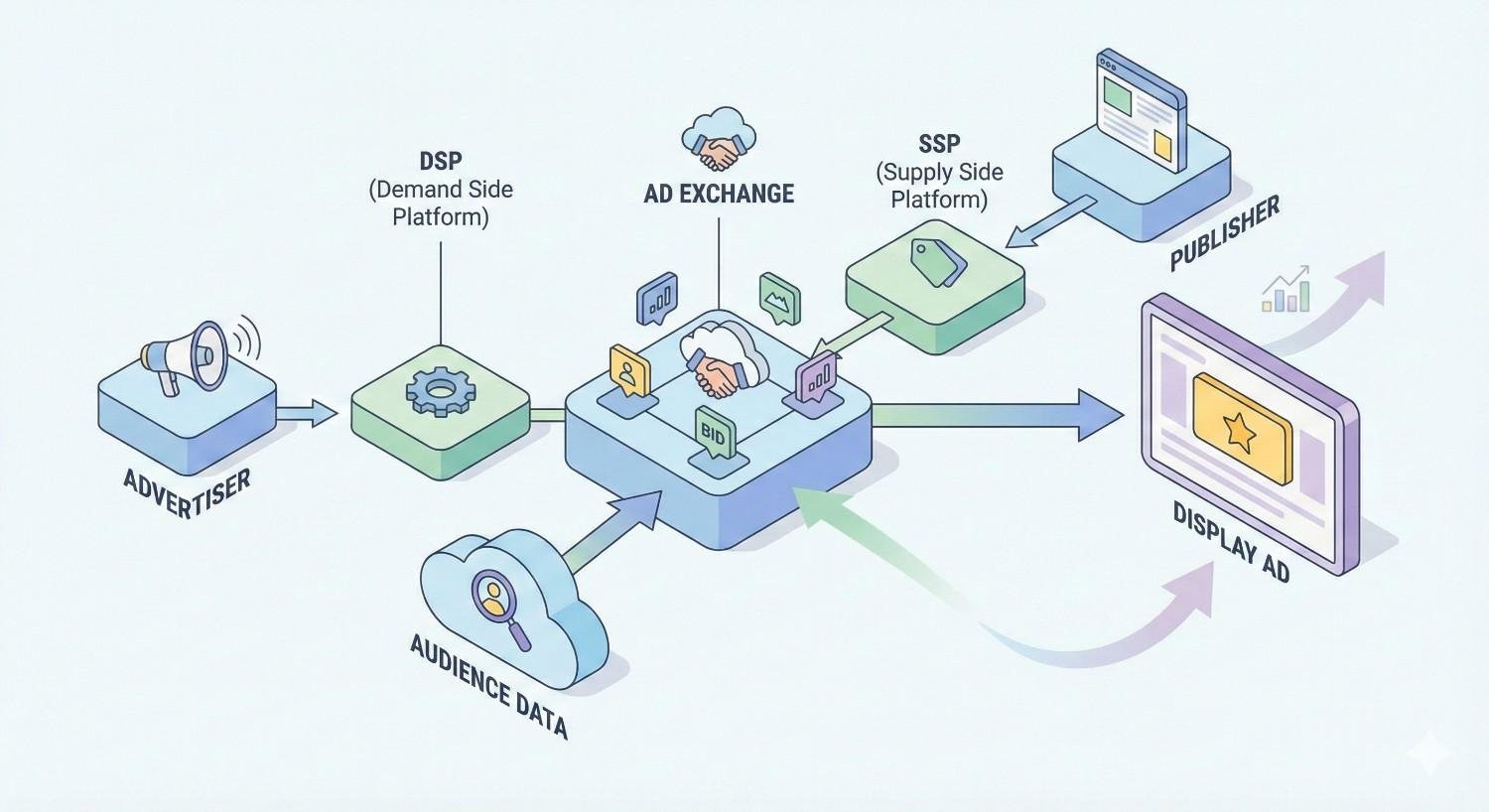
Programmatic advertising automates the buying and placement of display ads across vast networks of websites. Rather than negotiating directly with publishers, advertisers use demand-side platforms to bid on impressions in real-time auctions.
Programmatic enables sophisticated targeting, reaching specific audiences across millions of sites. The approach suits brand awareness campaigns, retargeting, and reaching niche audiences at scale. Success requires careful attention to brand safety and ad placement quality.
Core Components of PPC Services
Effective PPC management encompasses multiple interconnected disciplines. Understanding these components helps you evaluate service providers and set appropriate expectations for campaign performance.
Keyword Research & Strategy
Keywords form the foundation of search advertising campaigns. Research identifies the terms potential customers use when looking for products or services like yours. Strategy determines which keywords to target, how to organize them, and how much to bid.
Search Intent Analysis
Not all keywords carry equal value. Search intent analysis categorizes keywords by what users actually want when they search. Informational queries seek knowledge. Navigational queries look for specific websites. Commercial queries research options before purchasing. Transactional queries indicate readiness to buy.
Understanding intent shapes campaign structure and messaging. Targeting transactional keywords with educational content wastes opportunity. Similarly, pushing hard sales messages to users seeking information damages conversion rates and brand perception.
Keyword Match Types
Match types control how closely a user’s search query must align with your keywords to trigger ads. Broad match reaches the widest audience but risks irrelevant traffic. Phrase match requires queries to include your keyword’s meaning. Exact match limits triggers to queries matching your keyword’s precise intent.
Strategic match type selection balances reach against relevance. Newer campaigns often start with tighter match types to control costs while gathering data. As performance patterns emerge, expanding match types captures additional valuable traffic.
Negative Keyword Management
Negative keywords prevent ads from showing for irrelevant searches. This often-overlooked component significantly impacts campaign efficiency. Without proper negative keyword management, budgets drain on clicks from users who will never convert.
Effective negative keyword strategies evolve continuously. Search query reports reveal actual terms triggering ads, identifying irrelevant traffic to exclude. Proactive negative keyword lists block obvious mismatches before they consume budget.
Ad Campaign Structure & Setup
How campaigns are organized affects performance, management efficiency, and optimization potential. Thoughtful structure enables precise control over budgets, bids, and messaging.
Campaign Organization
Campaigns represent the highest organizational level, containing settings for budget, targeting, and bidding strategy. Organizing campaigns around business objectives, product lines, or customer segments enables appropriate resource allocation.
Common organizational approaches include separating campaigns by product category, geographic region, funnel stage, or match type. The right structure depends on business complexity, budget size, and management resources.
Ad Group Segmentation
Ad groups cluster related keywords with corresponding ads. Tight ad group themes improve relevance between keywords, ads, and landing pages. This relevance directly impacts Quality Score, affecting both ad position and cost-per-click.
The single keyword ad group approach takes segmentation to its extreme, creating separate ad groups for each keyword. While management-intensive, this structure maximizes relevance and control. Most advertisers find a middle ground, grouping closely related keywords while maintaining thematic consistency.
Account Architecture Best Practices
Well-architected accounts balance granularity against manageability. Overly complex structures become difficult to optimize and analyze. Overly simple structures sacrifice control and relevance.
Best practices include consistent naming conventions, logical hierarchy reflecting business structure, and separation of campaigns by objective. Documentation of account architecture helps teams maintain consistency as campaigns evolve.
Ad Copywriting & Creative Development
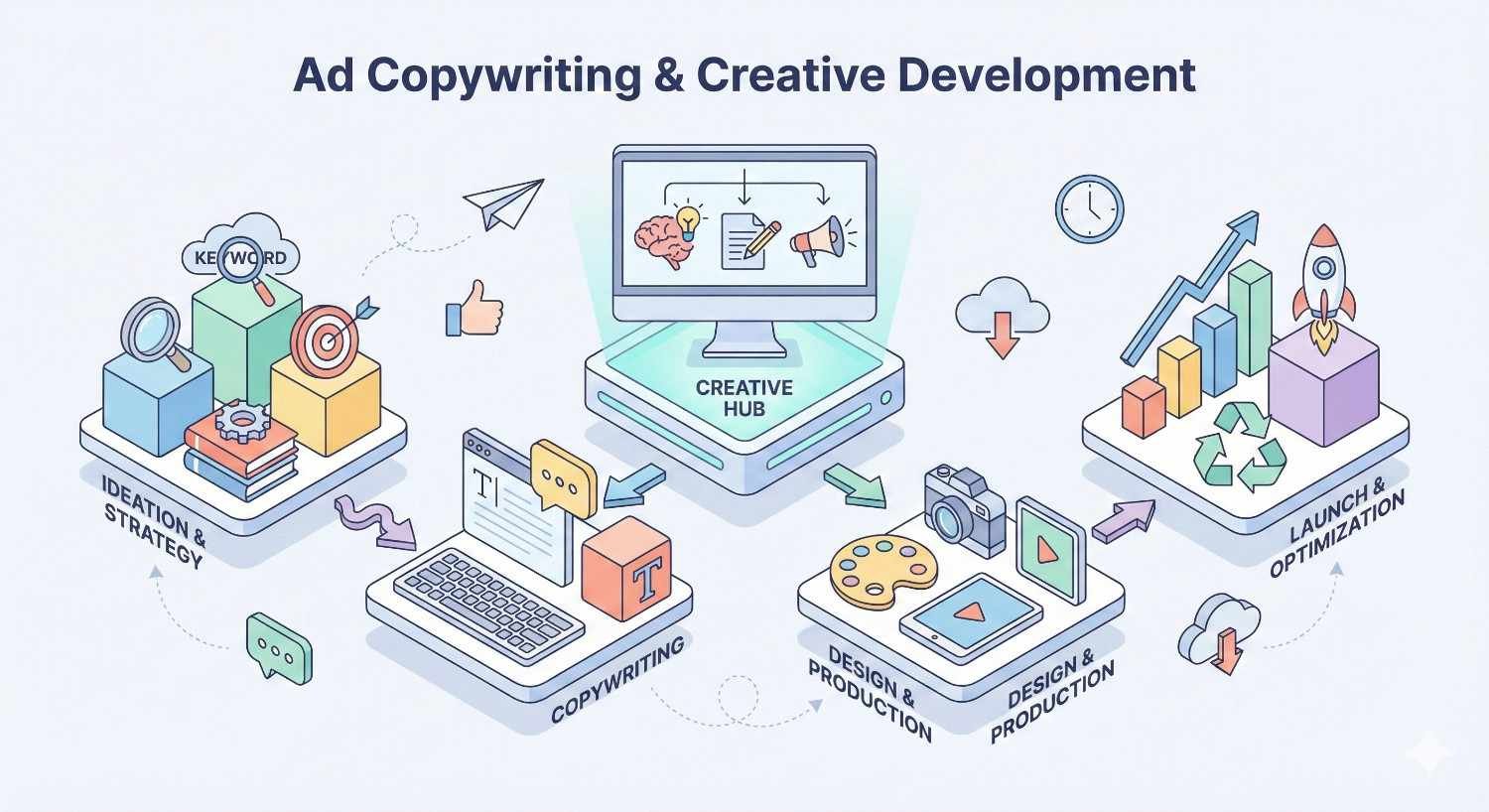
Compelling ads capture attention, communicate value, and motivate clicks. Creative development spans text ads, display banners, video content, and interactive formats.
Search Ad Copy
Search ads compete for attention in crowded results pages. Effective copy addresses user intent, highlights unique value, and includes clear calls to action. Headlines carry particular weight, often determining whether users read further.
Responsive search ads allow multiple headline and description variations, with Google’s machine learning assembling combinations for different queries. Providing diverse, high-quality components gives the system material to optimize against.
Display Ad Creative
Display advertising relies on visual impact to capture attention from users not actively searching. Effective display creative communicates brand identity, presents compelling offers, and drives curiosity or action.
Display campaigns require multiple ad sizes to access full inventory. Responsive display ads adapt to available placements, though custom-designed ads often outperform automated combinations for brand-conscious advertisers.
Ad Extensions & Assets
Extensions expand ads with additional information, increasing visibility and providing more reasons to click. Available extensions include sitelinks to specific pages, callouts highlighting features, structured snippets categorizing offerings, call buttons, location information, and more.
Extensions improve ad performance without additional cost per click. They increase ad real estate, push competitors lower on the page, and provide users with direct paths to relevant content.
Landing Page Optimization
Where ads send traffic matters as much as the ads themselves. Landing pages must deliver on ad promises and guide visitors toward conversion.
Conversion Rate Optimization (CRO)
CRO systematically improves the percentage of visitors who complete desired actions. Testing different headlines, layouts, forms, and calls to action identifies what resonates with your audience.
Effective CRO requires sufficient traffic for statistical significance. Small changes can produce meaningful improvements when applied to high-volume pages. Prioritizing tests based on potential impact and ease of implementation maximizes optimization efficiency.
Message Match & Quality Score
Message match ensures consistency between ad copy and landing page content. When users click ads promising specific solutions, landing pages must immediately reinforce that promise. Disconnects between ads and landing pages increase bounce rates and damage Quality Score.
Quality Score reflects Google’s assessment of keyword, ad, and landing page relevance. Higher Quality Scores reduce cost-per-click and improve ad position. Landing page experience contributes significantly to Quality Score, making optimization essential for campaign efficiency.
Bid Management & Budget Optimization
Bidding strategies and budget allocation determine how effectively advertising dollars convert into results. Getting these elements right separates profitable campaigns from money pits.
Manual vs. Automated Bidding
Manual bidding provides direct control over maximum cost-per-click for each keyword. This approach suits advertisers who want granular control and have time for detailed management. Manual bidding works well during campaign learning phases when gathering data to inform strategy.
Automated bidding strategies use machine learning to optimize bids based on conversion likelihood. Options include maximizing clicks, targeting specific cost-per-acquisition, achieving return on ad spend goals, or maximizing conversion value. Automated strategies require sufficient conversion data to function effectively.
Bid Strategies by Goal
Different business objectives call for different bidding approaches. Brand awareness campaigns might optimize for impressions or reach. Traffic-focused campaigns maximize clicks within budget. Conversion-focused campaigns target specific acquisition costs or return thresholds.
Aligning bid strategy with business objectives ensures optimization efforts support actual goals. Misalignment, such as optimizing for clicks when conversions matter, produces misleading performance metrics.
Budget Allocation & Pacing
Budget allocation distributes spend across campaigns based on performance and priority. High-performing campaigns deserve increased investment. Underperformers need optimization or reduced budgets.
Pacing controls how quickly budgets deplete throughout the day or month. Accelerated delivery spends budget quickly, potentially exhausting funds before peak hours. Standard delivery spreads budget evenly, ensuring presence throughout the day.
Audience Targeting & Segmentation
Beyond keywords, audience targeting reaches users based on who they are and how they behave. Layering audience signals onto campaigns improves relevance and efficiency.
Demographic Targeting
Demographic targeting adjusts bids or restricts delivery based on age, gender, household income, and parental status. This targeting helps focus spend on segments most likely to convert.
Demographic data comes from user account information and inferred signals. Accuracy varies, making demographic targeting best used for bid adjustments rather than strict exclusions.
Behavioral & Interest Targeting
Interest and behavioral targeting reaches users based on browsing history, content consumption, and inferred preferences. In-market audiences identify users actively researching specific product categories. Affinity audiences reach users with demonstrated long-term interests.
These targeting options prove particularly valuable for display and video campaigns where keyword targeting doesn’t apply. They enable reaching potential customers before active search behavior begins.
Remarketing & Retargeting
Remarketing reaches users who previously interacted with your website, app, or content. These audiences already know your brand, making them more likely to convert than cold traffic.
Effective remarketing segments audiences by behavior and recency. Users who abandoned shopping carts receive different messaging than those who only viewed blog content. Recent visitors warrant more aggressive bidding than those who visited months ago.
Custom & Lookalike Audiences
Custom audiences target users based on your own data, such as customer email lists or app users. Lookalike audiences find new users who resemble your existing customers based on shared characteristics.
These audience types leverage your business intelligence for targeting. They work particularly well for customer acquisition campaigns seeking users similar to your best existing customers.
Tracking, Analytics & Reporting
Measurement infrastructure determines whether you can evaluate campaign performance accurately. Without proper tracking, optimization becomes guesswork.
Conversion Tracking Setup
Conversion tracking records when users complete valuable actions after clicking ads. Setup involves placing tracking codes on confirmation pages or configuring event tracking for specific interactions.
Accurate conversion tracking requires careful implementation. Missing or duplicate conversions distort performance data, leading to poor optimization decisions. Regular auditing ensures tracking remains accurate as websites evolve.
Google Analytics Integration
Integrating Google Ads with Google Analytics provides deeper insight into user behavior after clicks. Analytics reveals how paid traffic navigates your site, which pages they visit, and where they drop off.
The integration also enables importing Analytics goals and audiences into Google Ads. This connection supports more sophisticated remarketing and conversion optimization.
Attribution Modeling
Attribution determines how credit for conversions distributes across touchpoints. Last-click attribution gives full credit to the final interaction before conversion. Other models distribute credit across multiple touchpoints based on different logic.
Attribution model selection significantly impacts how campaigns appear to perform. Campaigns driving early-funnel awareness may look ineffective under last-click attribution while proving valuable under models crediting assist interactions.
Performance Reporting Dashboards
Dashboards consolidate key metrics into accessible visualizations. Effective dashboards highlight performance trends, flag issues requiring attention, and support data-driven decision making.
Reporting frequency and depth should match stakeholder needs. Executive dashboards emphasize high-level outcomes. Tactical reports provide granular data for optimization decisions.
PPC Pricing Models & Cost Structures
Understanding PPC costs helps set realistic budgets and evaluate service provider proposals. Costs divide into two categories: advertising spend paid to platforms and management fees paid to service providers.
How Much Do PPC Services Cost?
Total PPC investment combines platform advertising costs with management service fees. Both components vary significantly based on industry, competition, and campaign scope.
Agency Management Fees
Agency fees typically range from $500 to $5,000+ monthly for small to mid-sized businesses, with enterprise accounts commanding higher fees. Fee structures vary by agency model and service scope.
Factors influencing management fees include number of platforms managed, campaign complexity, reporting requirements, and service level. Agencies serving highly competitive industries often charge premium rates reflecting the expertise required.
Ad Spend Budgets by Industry
Appropriate ad spend varies dramatically by industry and business model. Local service businesses might start with $1,000 to $3,000 monthly. E-commerce companies often invest $5,000 to $50,000+ monthly. Enterprise B2B campaigns can exceed $100,000 monthly.
Budget requirements depend on keyword costs, competitive intensity, and conversion economics. Industries with high customer lifetime values can justify higher acquisition costs.
Cost-Per-Click Benchmarks
Average cost-per-click varies by industry, with legal services and insurance among the most expensive at $50+ per click for competitive terms. Retail and e-commerce keywords often cost $1 to $3 per click. B2B software keywords typically range from $3 to $15 per click.
These benchmarks provide rough guidance, but actual costs depend on specific keywords, quality scores, and competitive dynamics. High-intent keywords command premium prices regardless of industry.
PPC Pricing Models
Service providers structure fees differently, each model carrying distinct implications for alignment and predictability.
Percentage of Ad Spend
Many agencies charge a percentage of monthly ad spend, typically 10% to 20%. This model aligns agency revenue with campaign scale, incentivizing growth. Critics note it can discourage efficiency improvements that reduce spend.
Percentage-based pricing suits growing accounts where increased investment correlates with increased results. It becomes less attractive for mature accounts where optimization should reduce waste rather than increase spend.
Flat Monthly Retainer
Flat retainers provide predictable costs regardless of ad spend fluctuations. Rates vary based on service scope, typically ranging from $1,000 to $10,000+ monthly depending on campaign complexity.
Retainer models work well when ad spend is stable and service requirements are well-defined. They provide budget predictability and avoid incentives to inflate spend.
Performance-Based Pricing
Performance models tie fees to results, such as cost per lead or percentage of revenue generated. This approach aligns agency incentives directly with client outcomes.
Performance pricing requires clear attribution and agreed-upon definitions of success. It works best for businesses with straightforward conversion paths and sufficient volume for meaningful measurement.
Hourly Consulting Rates
Hourly billing suits project-based work, audits, and advisory services. Rates typically range from $100 to $300+ per hour depending on expertise level and market.
Hourly models provide flexibility for variable workloads but create uncertainty about total costs. They work well for defined projects with clear scopes.
Factors That Affect PPC Costs
Multiple variables influence both advertising costs and management complexity, affecting total investment requirements.
Industry Competition
Competitive industries drive up keyword costs through auction dynamics. When multiple advertisers bid aggressively for the same keywords, prices rise. Industries with high customer values, such as legal, finance, and healthcare, tend toward highest competition.
Geographic Targeting
Geographic scope affects both reach and cost. National campaigns require larger budgets than local targeting. International campaigns add complexity through language, currency, and platform variations.
Urban areas typically show higher competition and costs than rural regions. Targeting specific cities or neighborhoods can reduce costs while maintaining relevance.
Keyword Competitiveness
Individual keyword costs vary based on commercial intent and advertiser demand. Generic informational keywords cost less than specific transactional terms. Long-tail keywords with lower search volume often provide better value than high-volume head terms.
Quality Score Impact
Quality Score directly affects cost-per-click. Higher Quality Scores earn discounts on auction prices, while lower scores incur premiums. Investing in relevance improvements reduces costs while improving performance.
A Quality Score of 10 can reduce costs by 50% compared to average scores, while scores below 5 can increase costs significantly. Quality Score optimization often provides better ROI than simply increasing bids.
Benefits of Professional PPC Services
Professional PPC management delivers advantages that justify investment for businesses seeking growth through paid advertising.
Immediate Traffic & Visibility
Unlike SEO, which requires months to build momentum, PPC delivers traffic immediately upon campaign launch. This speed proves valuable for new businesses, product launches, seasonal promotions, and time-sensitive opportunities.
Immediate visibility also provides rapid market feedback. Testing messaging, offers, and targeting generates data quickly, informing broader marketing strategy.
Measurable ROI & Performance Tracking
PPC provides clear attribution between advertising spend and business outcomes. Conversion tracking connects clicks to leads, sales, and revenue. This measurability enables confident investment decisions based on actual returns.
The data richness of PPC supports continuous improvement. Performance patterns reveal what works, enabling systematic optimization that compounds over time.
Precise Audience Targeting
PPC platforms offer targeting precision impossible through traditional advertising. Reaching users based on search intent, demographics, interests, and behaviors ensures ads appear before relevant audiences.
This precision reduces waste by avoiding impressions and clicks from unlikely converters. Budget concentrates on users most likely to become customers.
Budget Control & Flexibility
PPC provides complete control over advertising investment. Daily budgets cap spend. Campaigns pause instantly when needed. Budgets shift between campaigns based on performance.
This flexibility enables responsive marketing. Increase investment when results are strong. Pull back during slow periods. Test new approaches without long-term commitments.
Competitive Advantage
PPC enables competing for visibility regardless of organic search rankings. New businesses can appear alongside established competitors. Smaller companies can outmaneuver larger rivals through smarter targeting and messaging.
Competitive intelligence from PPC reveals market dynamics. Seeing which competitors bid on which keywords illuminates their strategies and priorities.
Scalability & Growth Potential
Successful PPC campaigns scale predictably. When campaigns generate positive returns, increasing budget typically increases results proportionally. This scalability supports aggressive growth when market conditions warrant.
Scaling also extends to new markets, products, and platforms. Proven campaign structures replicate across geographies and product lines.
Data-Driven Decision Making
PPC generates rich data informing decisions beyond advertising. Search query data reveals how customers describe their needs. Conversion data identifies which messages resonate. Geographic performance highlights strong and weak markets.
This intelligence supports product development, content strategy, and broader marketing planning. PPC becomes a research tool as much as an advertising channel.
PPC Services vs. SEO: Understanding the Difference
PPC and SEO both drive search visibility but operate through fundamentally different mechanisms. Understanding their relationship helps allocate marketing resources effectively.
PPC vs. SEO: Key Differences
The channels differ across multiple dimensions, each carrying strategic implications.
Timeline to Results
PPC delivers traffic within hours of campaign launch. SEO typically requires 3 to 6 months to show meaningful results, with competitive terms taking longer. This timeline difference makes PPC essential for immediate needs while SEO builds long-term assets.
Cost Structure Comparison
PPC requires ongoing investment to maintain traffic. Stop paying, and traffic stops. SEO requires upfront investment in content and optimization, but organic traffic continues without per-click costs once rankings establish.
Over time, SEO often provides lower cost-per-acquisition for sustained traffic. PPC provides predictable costs and immediate results but requires continuous funding.
Traffic Sustainability
Organic rankings, once achieved, tend to persist with maintenance. PPC traffic depends entirely on continued investment. This sustainability difference affects long-term marketing economics.
However, organic rankings face algorithm changes and competitive pressure. PPC provides stability through direct control over visibility.
Click-Through Rate Differences
Organic results typically earn higher click-through rates than paid ads for the same positions. Users often trust organic results more than advertisements. However, PPC ads appearing above organic results capture significant traffic despite lower per-position CTR.
When to Use PPC vs. SEO
Different situations favor different approaches. PPC suits immediate needs, competitive keywords where organic ranking proves difficult, and testing before SEO investment. SEO suits long-term traffic building, informational content, and reducing customer acquisition costs over time.
Most businesses benefit from both channels working together rather than choosing one exclusively.
How PPC and SEO Work Together
The channels complement each other when coordinated strategically.
Integrated Search Marketing Strategy
Integrated strategies use PPC to cover gaps in organic visibility while SEO builds. As organic rankings improve, PPC can shift to keywords where organic presence remains weak. This coordination maximizes search visibility while optimizing investment.
Shared keyword research benefits both channels. Competitive analysis reveals opportunities for paid and organic targeting. Unified messaging ensures consistent brand presentation across all search results.
Using PPC Data to Inform SEO
PPC provides rapid testing that informs SEO strategy. Testing headlines in ads reveals which messages drive clicks, informing title tag optimization. Conversion data identifies which keywords drive business results, prioritizing SEO targeting.
Search query reports from PPC reveal actual user language, uncovering long-tail opportunities for content development. This data accelerates SEO strategy development.
How to Choose the Right PPC Service Provider
Selecting the right partner significantly impacts campaign success. Thorough evaluation prevents costly mistakes and misaligned expectations.
Questions to Ask a PPC Agency
Effective vetting requires asking the right questions. Inquire about experience in your industry, typical client size, and team structure. Understand who will actually manage your account versus who presents in sales meetings.
Ask about their approach to strategy development, optimization cadence, and reporting. Request references from current clients in similar situations. Understand their communication practices and escalation procedures.
Clarify ownership of accounts and data. Ensure you retain access to advertising accounts and historical data if the relationship ends.
Red Flags to Avoid
Warning signs indicate potential problems. Guarantees of specific rankings or results suggest either dishonesty or misunderstanding of how PPC works. Reluctance to provide references or case studies raises credibility concerns.
Lack of transparency about pricing, processes, or account access indicates potential issues. Pressure to sign long-term contracts before demonstrating value suggests confidence problems.
Agencies unwilling to explain their strategies or educate clients may be hiding questionable practices. Quality providers welcome informed clients.
Certifications & Credentials to Look For
Certifications indicate baseline competency and platform relationships, though they don’t guarantee excellence.
Google Partner Status
Google Partner status requires meeting performance thresholds, maintaining certified individuals, and demonstrating ad spend levels. Premier Partner status indicates higher achievement. These designations provide some quality assurance and access to Google support.
Microsoft Advertising Certification
Microsoft certifications demonstrate proficiency with the Bing Ads platform. For businesses advertising on Microsoft’s network, certified partners bring validated expertise.
Meta Blueprint Certification
Meta Blueprint certifications cover Facebook and Instagram advertising. These credentials indicate training in Meta’s advertising ecosystem, valuable for social media PPC campaigns.
Evaluating PPC Agency Case Studies & Results
Case studies reveal how agencies approach challenges and deliver results. Look for studies relevant to your industry, business model, and objectives.
Evaluate the specificity of results claimed. Vague improvements matter less than concrete metrics. Understand the context, including starting points, budgets, and timeframes.
Ask how the agency contributed to results versus factors outside their control. Market conditions, product changes, and other variables affect outcomes.
Contract Terms & Transparency
Contract terms affect flexibility and risk. Understand minimum commitments, cancellation procedures, and fee structures. Clarify what happens to accounts and data upon termination.
Transparency about reporting, access, and decision-making authority prevents misunderstandings. Establish clear expectations about communication frequency and format.
PPC Campaign Management Process
Professional PPC management follows structured processes that maximize performance while maintaining efficiency.
Discovery & Strategy Phase
Effective campaigns begin with thorough discovery and strategic planning.
Business Goals Assessment
Understanding business objectives shapes campaign strategy. Revenue targets, growth priorities, and success metrics inform targeting, budgeting, and optimization approaches.
Clear goals enable meaningful performance evaluation. Without defined objectives, campaigns lack direction and accountability.
Competitor Analysis
Competitive research reveals market dynamics and opportunities. Understanding competitor positioning, messaging, and apparent strategies informs differentiation.
Tools like SEMrush and SpyFu provide visibility into competitor keywords and ad copy. This intelligence shapes targeting and messaging decisions.
Target Audience Definition
Detailed audience understanding improves targeting precision. Demographics, behaviors, pain points, and decision processes inform keyword selection, ad messaging, and landing page design.
Customer research, sales team input, and existing data contribute to audience profiles. The more specific the understanding, the more relevant the campaigns.
Campaign Build & Launch Phase
Strategy translates into campaign structures and assets during the build phase.
Account Setup & Structure
Account architecture implements strategic decisions about organization, targeting, and budget allocation. Proper setup creates foundations for efficient management and optimization.
Naming conventions, campaign settings, and structural decisions made during setup affect long-term manageability. Investing time in thoughtful architecture pays dividends.
Tracking Implementation
Conversion tracking must be in place before launch to measure results accurately. Implementation includes platform tracking codes, Google Analytics integration, and any third-party attribution tools.
Testing tracking before launch prevents data gaps. Verification ensures conversions record correctly and attribute properly.
Initial Campaign Launch
Launch involves activating campaigns, monitoring initial performance, and making rapid adjustments. Early data reveals setup issues, targeting problems, and optimization opportunities.
Conservative initial budgets limit risk while gathering data. Gradual scaling follows as performance patterns emerge.
Optimization & Testing Phase
Ongoing optimization transforms adequate campaigns into high performers.
A/B Testing Methodology
Systematic testing improves performance over time. Testing ad copy, landing pages, audiences, and bidding strategies identifies what works best.
Proper testing requires sufficient sample sizes for statistical significance. Testing one variable at a time isolates the impact of changes.
Bid Adjustments & Refinements
Bid optimization allocates budget toward highest-performing segments. Device, location, time, and audience bid adjustments fine-tune targeting.
Data-driven bid management balances volume against efficiency. Aggressive bids capture more traffic but may reduce profitability.
Quality Score Improvement
Quality Score optimization reduces costs while improving position. Improving ad relevance, expected CTR, and landing page experience raises scores.
Quality Score improvements compound over time. Higher scores enable competitive positioning at lower costs.
Scaling & Growth Phase
Successful campaigns warrant expansion to capture additional opportunity.
Expanding Keyword Coverage
Keyword expansion reaches additional relevant searches. Search query reports reveal new keyword opportunities. Competitor research identifies gaps in coverage.
Expansion should maintain relevance standards. Adding marginally relevant keywords dilutes performance.
New Platform Expansion
Proven strategies can extend to additional platforms. Success on Google Ads might translate to Microsoft Advertising. Search success might support social media expansion.
Platform expansion requires adapting strategies to different environments while maintaining core positioning.
Budget Scaling Strategies
Scaling budgets requires maintaining efficiency as spend increases. Gradual increases allow monitoring for diminishing returns. Expanding to new campaigns or keywords often scales better than simply increasing bids.
Ongoing Management & Reporting
Sustained performance requires continuous attention and clear communication.
Weekly/Monthly Optimization Tasks
Regular optimization maintains and improves performance. Weekly tasks include search query review, bid adjustments, and performance monitoring. Monthly tasks include deeper analysis, testing evaluation, and strategic review.
Consistent optimization cadence prevents performance decay and captures improvement opportunities.
Performance Review Cadence
Regular reporting keeps stakeholders informed and supports decision-making. Report frequency and depth should match stakeholder needs and campaign scale.
Effective reports highlight key metrics, explain performance drivers, and recommend actions. They tell stories rather than just presenting numbers.
Key PPC Metrics & KPIs to Track
Measuring the right metrics enables informed optimization and demonstrates value.
Click-Through Rate (CTR)
CTR measures the percentage of impressions resulting in clicks. Higher CTR indicates relevant, compelling ads. CTR affects Quality Score, making it both a performance indicator and cost factor.
Benchmark CTR varies by industry and ad type. Search ads typically achieve 2% to 5% CTR, while display ads often see below 1%.
Cost Per Click (CPC)
CPC measures average cost for each click. Lower CPC stretches budgets further, but CPC alone doesn’t indicate value. A higher CPC driving conversions beats a lower CPC generating worthless traffic.
CPC trends reveal competitive dynamics and Quality Score changes. Rising CPC without performance improvements signals problems.
Conversion Rate
Conversion rate measures the percentage of clicks resulting in desired actions. This metric reflects landing page effectiveness and traffic quality.
Improving conversion rate multiplies campaign value. A 1% conversion rate improvement can dramatically affect ROI.
Cost Per Acquisition (CPA)
CPA measures average cost to acquire a conversion. This metric directly connects advertising spend to business outcomes.
Target CPA depends on customer value and margin. Sustainable CPA must allow profitable customer acquisition.
Return on Ad Spend (ROAS)
ROAS measures revenue generated per dollar of ad spend. A 400% ROAS means $4 revenue for every $1 spent.
ROAS targets vary by margin and business model. E-commerce businesses often target 300% to 500% ROAS, while lead generation businesses use different calculations.
Quality Score
Quality Score rates keyword, ad, and landing page relevance on a 1-10 scale. Higher scores reduce costs and improve position.
Monitoring Quality Score trends identifies optimization opportunities. Declining scores warrant investigation and remediation.
Impression Share
Impression share measures the percentage of available impressions your ads capture. Lost impression share indicates missed opportunity from budget or rank limitations.
High-value keywords warrant maximizing impression share. Lower-priority keywords may accept lower share to conserve budget.
Lifetime Value (LTV) to CAC Ratio
LTV
ratio compares customer lifetime value to acquisition cost. Healthy ratios typically exceed 3
, meaning customers generate three times their acquisition cost.
This metric contextualizes acquisition costs within broader business economics. High LTV justifies higher acquisition investment.
PPC Services by Industry
Different industries require tailored PPC approaches reflecting their unique customer journeys and competitive dynamics.
PPC for E-commerce & Retail
E-commerce PPC focuses on driving product sales through search, shopping, and remarketing campaigns.
Shopping Campaigns
Google Shopping and Microsoft Shopping campaigns display product images, prices, and merchant information directly in search results. These campaigns capture high-intent product searches with visual appeal.
Shopping campaign success requires optimized product feeds with accurate titles, descriptions, and attributes. Feed quality directly affects visibility and relevance.
Dynamic Remarketing
Dynamic remarketing shows users ads featuring specific products they viewed. This personalization increases relevance and conversion likelihood.
Effective dynamic remarketing requires proper tracking implementation and creative templates. Frequency capping prevents ad fatigue.
PPC for B2B & SaaS Companies
B2B PPC addresses longer sales cycles and multiple decision-makers.
LinkedIn Advertising Strategies
LinkedIn’s professional targeting reaches decision-makers by title, company, and industry. Higher costs reflect the value of reaching qualified business audiences.
B2B LinkedIn campaigns often focus on content promotion and lead generation rather than direct sales. The platform suits awareness and consideration stages.
Lead Generation Campaigns
B2B lead generation campaigns optimize for form submissions, demo requests, and content downloads. Lead quality matters more than volume.
Integrating CRM data enables optimization toward leads that become customers, not just any conversion.
PPC for Local Businesses
Local businesses benefit from geographic targeting and local ad formats.
Local Search Ads
Local search ads appear for queries with local intent, such as “plumber near me.” These campaigns target users seeking nearby services.
Location extensions and call extensions prove particularly valuable for local campaigns, enabling direct contact.
Google Local Services Ads
Local Services Ads appear above traditional search results for qualifying service categories. These pay-per-lead ads include Google’s guarantee badge, building trust.
Eligibility requires background checks and licensing verification. The format suits home services, legal, and other local service providers.
PPC for Healthcare & Medical Practices
Healthcare PPC requires navigating advertising restrictions while reaching patients seeking care. Platform policies limit certain claims and targeting options.
HIPAA compliance considerations affect tracking and remarketing capabilities. Healthcare advertisers must balance effectiveness with regulatory requirements.
PPC for Legal Services
Legal PPC involves some of the highest keyword costs across industries. Competition for terms like “personal injury lawyer” drives CPCs above $100 in major markets.
Success requires precise targeting, compelling differentiation, and optimized conversion paths. Lead quality tracking proves essential given high acquisition costs.
PPC for Real Estate
Real estate PPC targets buyers, sellers, and renters at various journey stages. Campaigns often focus on specific property types, neighborhoods, or transaction types.
Long consideration cycles require nurturing strategies. Remarketing maintains visibility throughout extended decision processes.
PPC for Home Services
Home services PPC captures demand for plumbing, HVAC, electrical, and similar services. Local targeting and call tracking prove essential.
Seasonal patterns affect demand and competition. Budget flexibility accommodates fluctuating search volume.
Common PPC Mistakes to Avoid
Avoiding common errors prevents wasted spend and accelerates success.
Poor Keyword Selection
Targeting irrelevant or overly broad keywords wastes budget on unqualified traffic. Thorough research and ongoing refinement maintain keyword quality.
Chasing high-volume keywords without considering intent or competition often disappoints. Focused targeting typically outperforms broad approaches.
Ignoring Negative Keywords
Failing to exclude irrelevant searches drains budget on worthless clicks. Regular search query review identifies negative keyword opportunities.
Proactive negative keyword lists block obvious mismatches. Ongoing refinement captures emerging irrelevant traffic.
Weak Ad Copy & Messaging
Generic, uninspiring ad copy fails to differentiate or motivate clicks. Compelling copy addresses user needs, highlights unique value, and includes clear calls to action.
Testing ad variations identifies what resonates. Continuous creative improvement maintains competitive performance.
Landing Page Misalignment
Sending traffic to irrelevant or generic pages wastes clicks and damages Quality Score. Landing pages must deliver on ad promises and guide visitors toward conversion.
Message match between ads and landing pages improves both conversion rates and Quality Scores.
Inadequate Conversion Tracking
Without proper tracking, optimization becomes impossible. Incomplete or inaccurate conversion data leads to poor decisions.
Regular tracking audits ensure data accuracy. Testing conversions verifies proper recording.
Set-It-and-Forget-It Management
PPC requires ongoing attention. Campaigns left unmanaged decay as competition evolves and market conditions change.
Regular optimization maintains and improves performance. Neglected campaigns waste budget on preventable inefficiencies.
Ignoring Mobile Optimization
Mobile traffic dominates many industries. Campaigns and landing pages must perform well on mobile devices.
Mobile-specific bid adjustments, ad formats, and landing page optimization address mobile user needs.
Unrealistic Budget Expectations
Insufficient budgets limit data collection and competitive presence. Unrealistic expectations about what budgets can achieve lead to disappointment.
Budget requirements depend on keyword costs, competition, and objectives. Professional guidance helps set appropriate expectations.
PPC Tools & Software
Various tools support PPC management, from platform-native editors to third-party optimization platforms.
Google Ads Editor
Google Ads Editor enables offline campaign management and bulk editing. The free desktop application speeds up large-scale changes and campaign builds.
Editor functionality includes copying campaigns, find-and-replace operations, and bulk uploads. It proves essential for managing complex accounts.
Microsoft Advertising Editor
Microsoft’s editor provides similar functionality for Bing Ads campaigns. The tool supports bulk management and offline editing.
Import features simplify migrating Google Ads campaigns to Microsoft Advertising.
SEMrush PPC Toolkit
SEMrush provides competitive intelligence, keyword research, and ad monitoring. The platform reveals competitor strategies and identifies opportunities.
PPC-specific features include ad copy analysis, keyword gap identification, and CPC estimates.
SpyFu
SpyFu specializes in competitive PPC intelligence. The tool reveals competitor keywords, ad copy history, and estimated spend.
Historical data shows how competitor strategies have evolved, informing your own approach.
Optmyzr
Optmyzr automates optimization tasks and provides management efficiency tools. The platform offers rule-based automation, reporting, and analysis features.
Automation capabilities handle routine optimization while flagging issues requiring human attention.
WordStream
WordStream provides PPC management tools and performance grading. The platform suits small to mid-sized advertisers seeking efficiency improvements.
The free Google Ads Performance Grader provides quick account assessments.
Google Analytics 4 & Looker Studio
Google Analytics 4 provides website analytics integrated with Google Ads. Understanding post-click behavior informs optimization decisions.
Looker Studio (formerly Data Studio) creates custom dashboards combining data from multiple sources. Visualization capabilities support reporting and analysis.
PPC Trends & Future Outlook
The PPC landscape continues evolving, with several trends shaping future strategies.
AI & Machine Learning in PPC
Artificial intelligence increasingly drives PPC optimization and automation.
Smart Bidding Evolution
Google’s Smart Bidding strategies use machine learning to optimize bids in real-time. These systems consider signals impossible for humans to process manually.
Adoption of automated bidding continues growing as algorithms improve. Manual bidding remains relevant for specific situations but decreases overall.
Automated Ad Creation
AI-generated ad copy and creative assets are becoming more sophisticated. Responsive ad formats already use machine learning to assemble components.
Generative AI tools increasingly support creative development, though human oversight remains essential.
Privacy Changes & Cookieless Tracking
Privacy regulations and browser changes are transforming tracking capabilities.
First-Party Data Strategies
Reliance on third-party cookies is declining. First-party data from direct customer relationships becomes more valuable.
Building first-party data assets through email lists, customer accounts, and direct interactions supports future targeting capabilities.
Conversion Modeling
As tracking gaps grow, platforms increasingly use modeling to estimate conversions. Understanding modeled versus observed conversions affects performance interpretation.
Consent-based tracking and server-side implementations help maintain measurement accuracy.
Video & Visual Search Advertising
Video advertising continues growing across platforms. YouTube, TikTok, and social video formats capture increasing attention and ad spend.
Visual search capabilities are expanding, enabling searches based on images rather than text. Advertisers must adapt to these emerging behaviors.
Voice Search & PPC
Voice search through smart speakers and mobile assistants creates new advertising considerations. Conversational queries differ from typed searches.
While voice search advertising remains limited, preparing for its growth makes strategic sense.
Performance Max & Cross-Channel Campaigns
Google’s Performance Max campaigns represent a shift toward automated, cross-channel advertising. These campaigns optimize across Search, Display, YouTube, Gmail, and Maps.
Cross-channel automation reduces manual control while potentially improving overall performance. Advertisers must balance automation benefits against transparency concerns.
Conclusion: Maximizing ROI with Professional PPC Services
PPC services provide businesses with immediate, measurable, and scalable customer acquisition when executed properly. Success requires strategic keyword targeting, compelling creative, optimized landing pages, and continuous data-driven refinement across the right platforms for your audience.
Choosing the right approach depends on your resources, expertise, and objectives. Full-service agencies suit businesses wanting comprehensive management. Freelancers work for focused needs. In-house teams make sense for substantial, ongoing investment. The key is matching your choice to your actual situation rather than assumptions.
We help businesses build sustainable growth through integrated digital marketing strategies. Whether you need PPC management, SEO foundations, or comprehensive search visibility, White Label SEO Service provides the expertise to drive measurable results. Contact us to discuss how professional PPC services can accelerate your business growth.
Frequently Asked Questions
How long does it take to see results from PPC?
PPC campaigns can generate traffic within hours of launch. However, meaningful optimization typically requires 2 to 4 weeks of data collection. Expect 60 to 90 days before campaigns reach optimal performance through testing and refinement.
What is a good ROAS for PPC campaigns?
Good ROAS varies by industry and margin structure. E-commerce businesses often target 300% to 500% ROAS. Lead generation campaigns measure success differently, focusing on cost per qualified lead relative to customer value.
How much should I spend on PPC advertising?
Budget requirements depend on your industry, competition, and goals. Small local businesses might start with $1,000 to $2,000 monthly. Competitive industries or aggressive growth targets require significantly more. Start with what you can sustain while gathering data.
Can I run PPC campaigns myself or do I need an agency?
You can manage campaigns yourself, especially with smaller budgets and simpler needs. However, professional management typically improves performance enough to justify fees. Consider your time, expertise, and the opportunity cost of learning curves.
What’s the difference between PPC and CPC?
PPC (pay-per-click) describes the advertising model where you pay for clicks. CPC (cost-per-click) is the metric measuring what you actually pay per click. PPC is the system; CPC is the measurement.
How do I know if my PPC campaign is working?
Evaluate campaigns against defined goals. Track conversions, cost per acquisition, and return on ad spend. Compare performance to benchmarks and historical data. Working campaigns generate positive ROI on your defined success metrics.
What is Quality Score and why does it matter?
Quality Score is Google’s rating of keyword, ad, and landing page relevance on a 1-10 scale. Higher scores reduce your cost-per-click and improve ad position. Improving Quality Score directly impacts campaign profitability.