
Premium content writing rates typically range from $0.15 to $1.50+ per word, $500 to $5,000+ per project, or $75 to $250+ per hour depending on content type, industry complexity, and writer expertise. Understanding these pricing structures helps you budget effectively and avoid overpaying or underinvesting in content that directly impacts your organic visibility.
Content is the foundation of every successful SEO strategy. The difference between content that ranks and converts versus content that sits unread often comes down to the investment you make upfront. Cheap content costs more in the long run through rewrites, poor rankings, and missed opportunities.
This guide breaks down premium content writing rates across every major pricing model, content type, and industry vertical. You’ll learn what separates premium from standard content, how to evaluate pricing, and how to calculate the true ROI of quality content investments.
What Are Premium Content Writing Rates?
Premium content writing rates reflect the higher pricing tier charged by experienced writers, specialized agencies, and subject matter experts who deliver content that performs. These rates account for deeper research, strategic SEO integration, industry expertise, and revision processes that standard content services typically skip.
Understanding what qualifies as “premium” helps you set realistic expectations and avoid the common mistake of comparing apples to oranges when evaluating content providers.
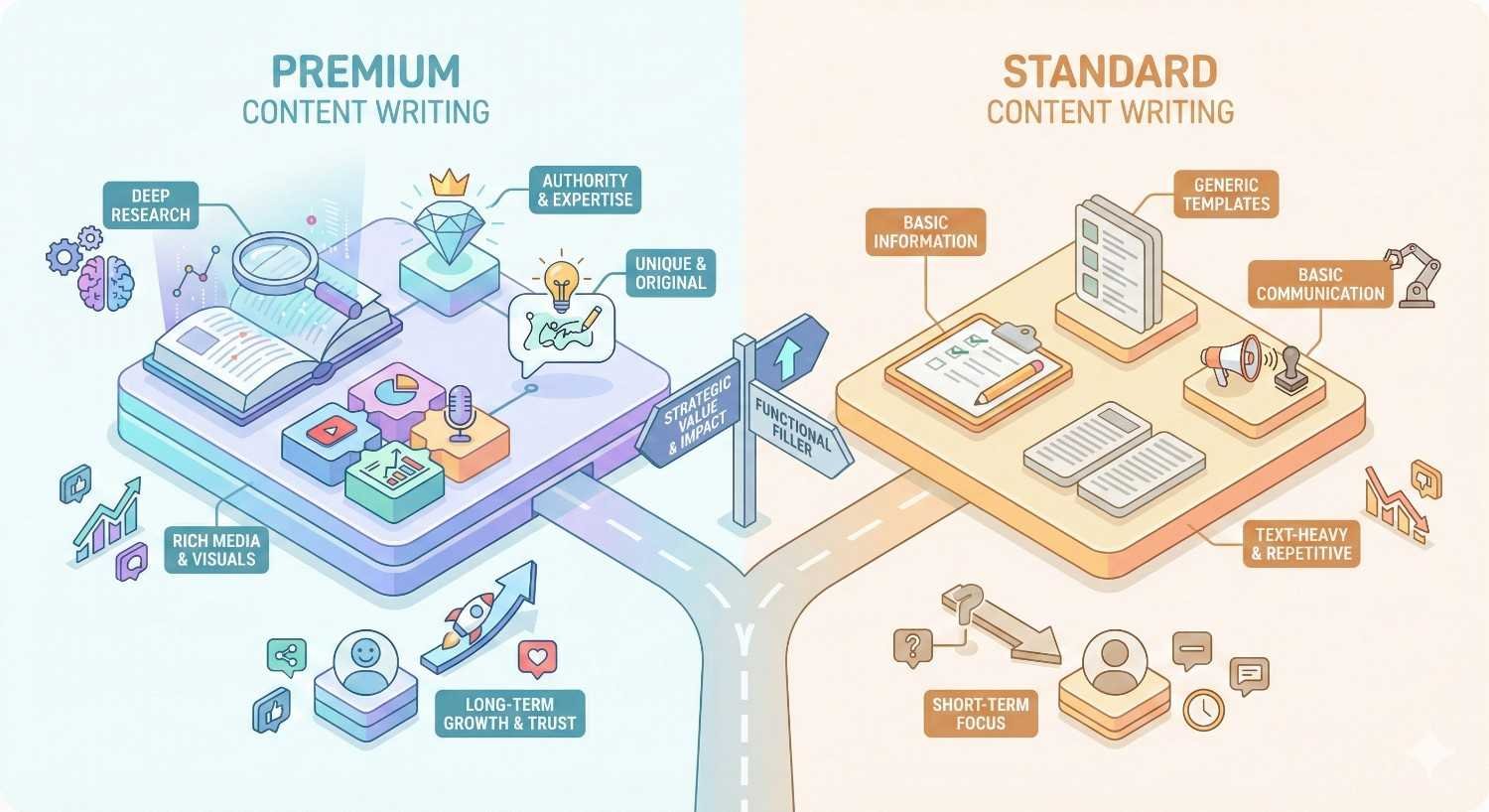
Defining Premium vs. Standard Content Writing
Standard content writing typically involves general-purpose writers producing content at scale with minimal research or strategic input. These writers often work from basic briefs, rely on surface-level information, and deliver content that meets word count requirements without deeper optimization.
Premium content writing involves writers with demonstrated expertise in specific industries or content types. These professionals conduct original research, interview subject matter experts when needed, and create content designed to achieve specific business outcomes like rankings, conversions, or thought leadership positioning.
The distinction matters because premium content typically requires fewer revisions, performs better in search results, and generates measurable returns. Standard content often needs significant editing, fails to rank competitively, and requires replacement within months.
Key Factors That Determine Premium Pricing
Writer expertise and specialization drive the largest pricing differences. A writer with ten years of experience in B2B SaaS content commands higher rates than a generalist because they understand the audience, terminology, and competitive landscape without extensive onboarding.
Research requirements significantly impact pricing. Content requiring original data analysis, expert interviews, or technical accuracy verification takes more time and skill than content assembled from existing online sources.
SEO integration adds value when writers understand keyword strategy, search intent, internal linking, and on-page optimization. Premium writers deliver content that’s publication-ready from an SEO perspective rather than requiring separate optimization passes.
Turnaround time, revision policies, and exclusivity arrangements also influence rates. Rush projects, unlimited revisions, and industry exclusivity all justify premium pricing.
Industry Benchmarks for Premium Content
Content Marketing Institute’s 2024 research indicates that B2B organizations allocate an average of 29% of their marketing budgets to content. This investment reflects growing recognition that quality content drives sustainable organic growth.
Premium content writing rates have increased steadily as demand for specialized expertise grows. General blog content from premium writers typically starts at $0.25 per word, while highly technical or regulated industry content can exceed $1.00 per word.
Project-based premium rates for comprehensive content pieces like pillar pages or whitepapers commonly range from $2,000 to $10,000+ depending on scope, research requirements, and strategic value.
Premium Content Writing Rate Structures
Content writing services use several pricing models, each with distinct advantages depending on your content needs, budget structure, and working relationship preferences. Understanding these models helps you compare quotes accurately and choose the structure that aligns with your content strategy.
Per-Word Pricing Models
Per-word pricing remains the most common structure for blog posts, articles, and standard web content. This model provides clear cost predictability based on content length requirements.
Premium per-word rates typically fall into these tiers:
- Entry-level premium: $0.15 to $0.30 per word for experienced generalists
- Mid-tier premium: $0.30 to $0.75 per word for specialized writers
- Expert-level premium: $0.75 to $1.50+ per word for industry authorities
Per-word pricing works well for straightforward content with defined length requirements. However, it can incentivize word count padding and doesn’t account for research complexity or strategic value.
Per-Project Flat Rates
Flat-rate pricing bundles all work into a single project fee regardless of final word count. This model works well for complex projects where scope is clearly defined but final length may vary.
Premium flat rates for common content types include:
- Blog posts (1,500-2,500 words): $500 to $2,000
- Pillar pages (3,000-5,000 words): $1,500 to $5,000
- Whitepapers (5,000-10,000 words): $3,000 to $10,000+
- Website copy (full site): $5,000 to $25,000+
Flat-rate pricing aligns incentives around quality rather than quantity. Writers focus on achieving project goals rather than hitting word counts.
Hourly Rate Structures
Hourly pricing suits ongoing relationships, consulting engagements, and projects with undefined scope. Premium content writers typically charge $75 to $250+ per hour depending on expertise level and project type.
Hourly rates work best when you need flexibility for strategy sessions, content audits, or iterative projects where requirements evolve. They’re less ideal for standard content production where per-word or per-project rates provide better cost control.
The challenge with hourly pricing is estimating total project costs. Experienced writers can provide time estimates, but actual hours may vary based on research complexity and revision requirements.
Retainer-Based Pricing
Retainer arrangements guarantee a set amount of content or hours per month at a negotiated rate. This model provides cost predictability, priority access to writers, and often includes discounted rates compared to one-off projects.
Premium content retainers typically range from $2,000 to $15,000+ per month depending on content volume, complexity, and service level. Retainers often include:
- Guaranteed monthly content deliverables
- Priority scheduling and faster turnaround
- Dedicated writer or team assignment
- Strategy consultation and planning
- Discounted per-piece rates
Retainers work best for businesses with consistent content needs and established content strategies. They’re less suitable for companies with unpredictable content requirements or those still testing content marketing effectiveness.
Value-Based Pricing Models
Value-based pricing ties content costs to business outcomes rather than inputs like words or hours. This model is less common but increasingly popular for high-stakes content like sales pages, product launches, or lead generation campaigns.
Under value-based pricing, writers may charge based on:
- Percentage of revenue generated
- Cost per lead or conversion
- Performance bonuses tied to traffic or ranking goals
- Equity or profit-sharing arrangements
Value-based pricing aligns writer incentives with business outcomes but requires clear attribution and trust between parties. It works best for established relationships where both sides understand the content’s potential impact.
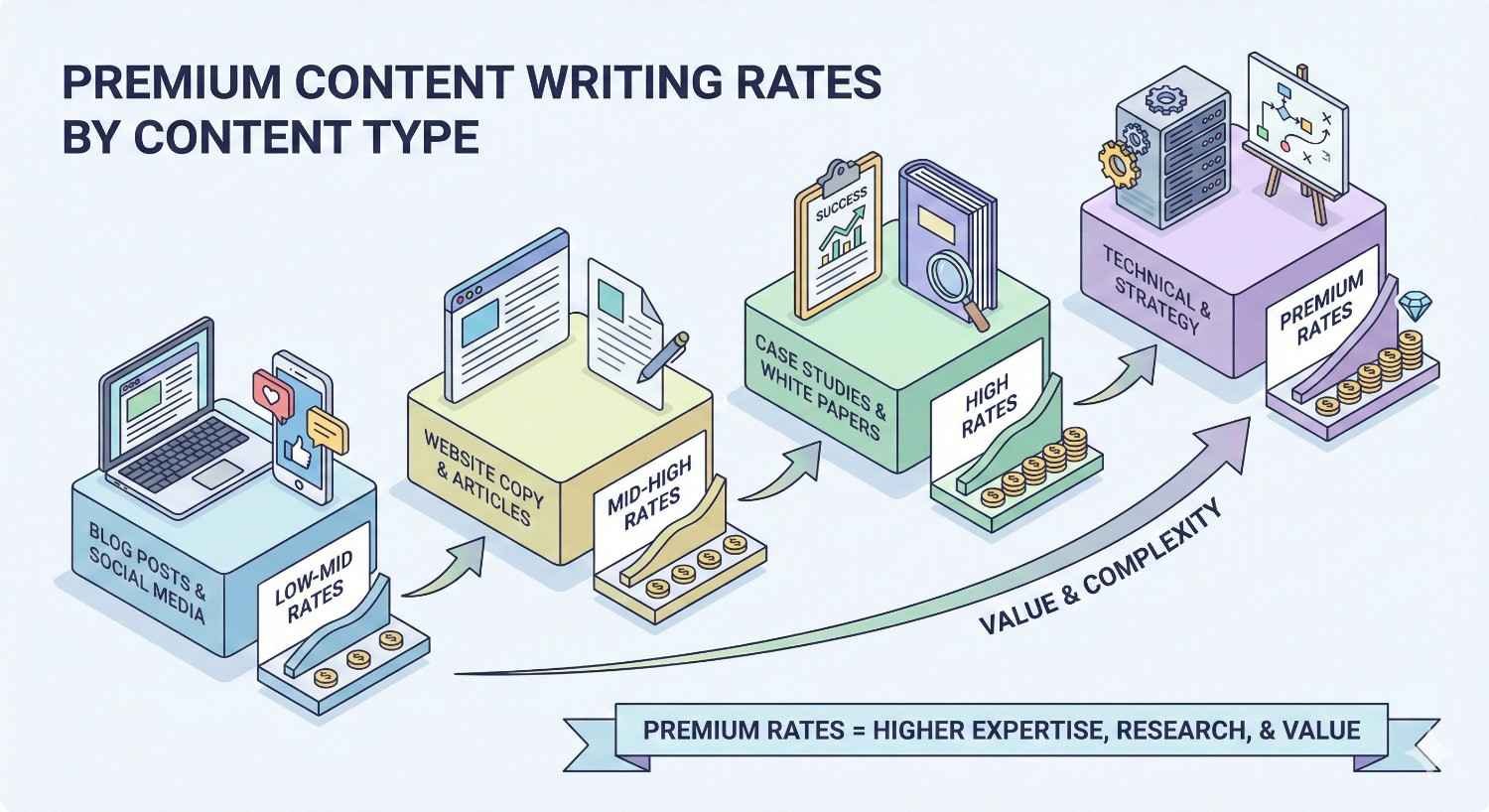
Premium Content Writing Rates by Content Type
Different content types require different skill sets, research depths, and strategic approaches. Understanding typical rates by content type helps you budget accurately and evaluate whether quotes align with market standards.
Blog Posts and Articles
Premium blog content rates vary significantly based on topic complexity, research requirements, and SEO expectations.
Standard premium blog rates:
- General topics (1,000-1,500 words): $300 to $750
- Specialized topics (1,500-2,500 words): $500 to $1,500
- Expert-level content (2,500+ words): $1,000 to $3,000+
Premium blog writers deliver content that’s strategically aligned with keyword targets, properly structured for featured snippets, and written to engage specific audience segments. They understand how individual posts fit within broader content strategies and topical authority building.
Website Copy and Landing Pages
Website copy requires conversion-focused writing skills beyond standard content creation. Premium website copywriters understand user psychology, conversion optimization, and brand voice development.
Premium website copy rates:
- Homepage copy: $500 to $2,500
- Service/product pages: $300 to $1,500 per page
- Landing pages: $500 to $3,000
- About pages: $300 to $1,000
- Full website (5-10 pages): $3,000 to $15,000
Landing page rates often sit at the higher end because these pages directly impact conversion rates and revenue. A well-written landing page can significantly improve campaign ROI, justifying premium investment.
SEO Content and Pillar Pages
SEO-focused content requires writers who understand search intent, keyword strategy, and technical optimization. Pillar pages demand comprehensive topic coverage that establishes topical authority.
Premium SEO content rates:
- SEO blog posts: $400 to $1,500
- Pillar pages (3,000-5,000 words): $1,500 to $5,000
- Topic cluster content: $2,500 to $10,000 for complete clusters
- Content refresh/optimization: $200 to $800 per piece
Premium SEO writers deliver content optimized for target keywords while maintaining natural readability. They understand semantic SEO principles, internal linking strategy, and how to structure content for featured snippets and AI overviews.
Whitepapers and Long-Form Content
Whitepapers require deep research, authoritative positioning, and professional presentation. These assets often serve as lead magnets or sales enablement tools, justifying higher investment.
Premium whitepaper rates:
- Standard whitepapers (3,000-5,000 words): $2,000 to $5,000
- Research-heavy whitepapers (5,000-10,000 words): $5,000 to $15,000
- Original research reports: $10,000 to $30,000+
Premium whitepaper writers understand how to present complex information accessibly, incorporate data visualization recommendations, and position content for lead generation effectiveness.
Case Studies and Technical Writing
Case studies require interviewing skills, storytelling ability, and understanding of business metrics. Technical writing demands subject matter expertise and ability to explain complex concepts clearly.
Premium case study rates:
- Standard case studies (1,000-2,000 words): $1,000 to $3,000
- Video script + written case study: $2,000 to $5,000
- Customer success stories: $500 to $1,500
Premium technical writing rates:
- Technical documentation: $0.30 to $1.00+ per word
- API documentation: $75 to $200 per hour
- User guides and manuals: $2,000 to $10,000+ per project
Technical writing rates vary dramatically based on subject complexity. Highly specialized fields like cybersecurity, medical devices, or financial compliance command premium rates due to limited qualified writer availability.
Email Sequences and Sales Copy
Email and sales copy directly impact revenue, justifying premium rates for writers who understand persuasion, segmentation, and conversion optimization.
Premium email and sales copy rates:
- Email sequences (5-7 emails): $1,000 to $5,000
- Sales pages: $1,500 to $10,000+
- Product descriptions: $50 to $500 per product
- Ad copy: $500 to $2,500 per campaign
Sales copy rates often include performance considerations. Writers with proven conversion track records command significantly higher rates than those without demonstrated results.
Social Media and Ad Copy
Social media content requires platform-specific expertise, brand voice consistency, and ability to communicate effectively within character limits.
Premium social media rates:
- Social media posts (batch of 20-30): $500 to $2,000
- Social media strategy + content: $2,000 to $5,000 per month
- Paid ad copy: $500 to $2,500 per campaign
- Video scripts (short-form): $200 to $1,000 per script
Premium social media writers understand platform algorithms, engagement optimization, and how to adapt brand messaging across different channels and formats.
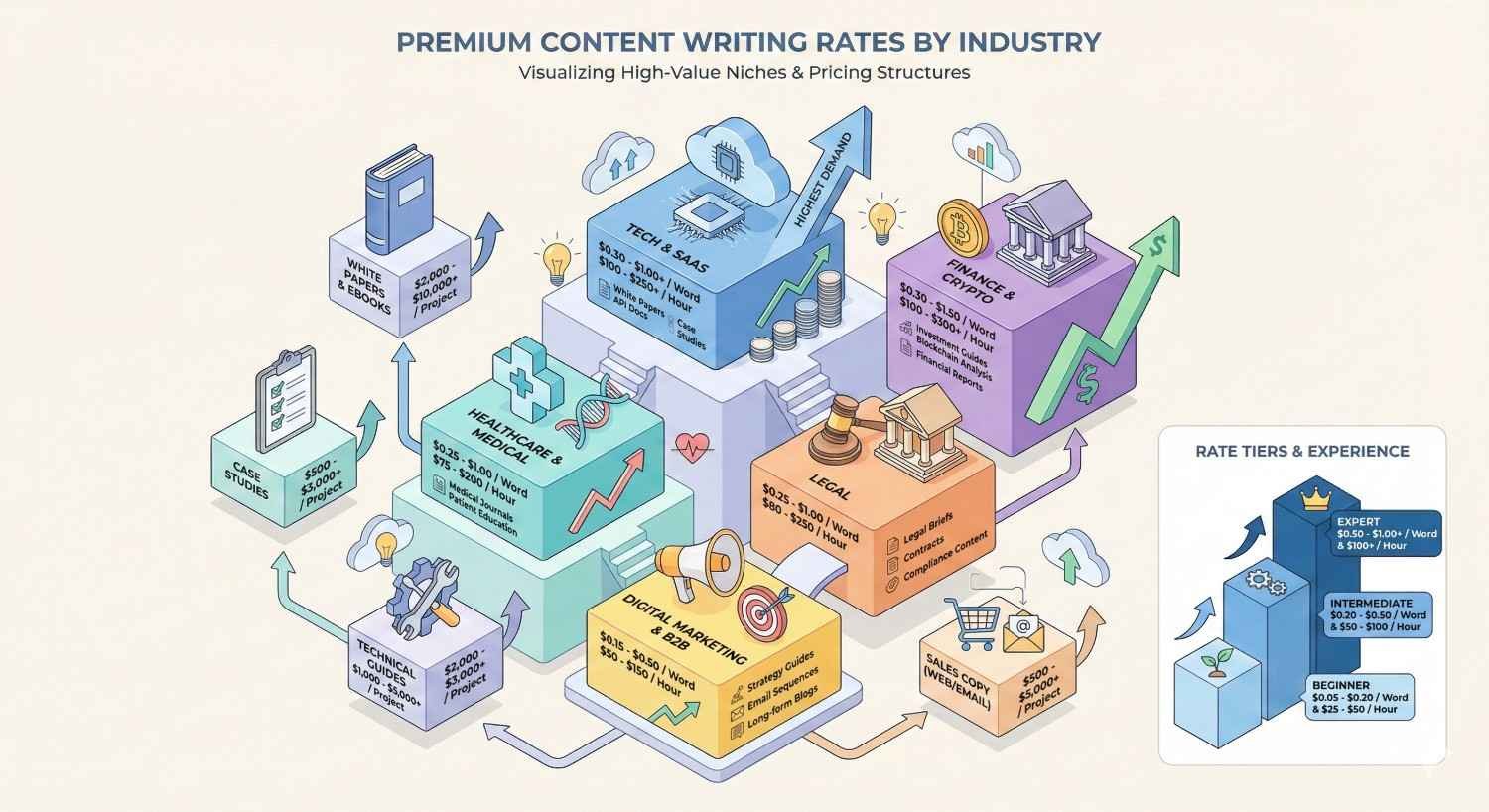
Premium Content Writing Rates by Industry
Industry specialization significantly impacts content writing rates. Regulated industries, technical fields, and high-value B2B sectors command premium rates due to expertise requirements and compliance considerations.
B2B and SaaS Content Rates
B2B and SaaS content requires understanding of complex buying cycles, multiple stakeholder audiences, and technical product positioning.
Typical B2B/SaaS premium rates:
- Per word: $0.30 to $0.75
- Blog posts: $500 to $2,000
- Case studies: $1,500 to $4,000
- Whitepapers: $3,000 to $8,000
B2B writers must understand how to address different buyer personas, from technical evaluators to C-suite decision-makers. This audience sophistication justifies higher rates compared to consumer-focused content.
Finance and Legal Content Rates
Financial and legal content requires accuracy, compliance awareness, and often regulatory review processes. Writers in these fields typically have relevant professional backgrounds or extensive industry experience.
Typical finance/legal premium rates:
- Per word: $0.50 to $1.50
- Blog posts: $750 to $3,000
- Compliance content: $1,000 to $5,000
- Financial reports: $2,500 to $10,000+
The stakes for inaccurate financial or legal content are significant, including regulatory penalties and liability exposure. Premium rates reflect the expertise required to navigate these risks.
Healthcare and Medical Content Rates
Healthcare content often requires medical writing credentials, understanding of regulatory requirements, and ability to translate clinical information for various audiences.
Typical healthcare premium rates:
- Per word: $0.50 to $2.00
- Patient education content: $500 to $2,000
- Clinical content: $1,000 to $5,000
- Medical device content: $1,500 to $7,500
Medical writers with clinical backgrounds or certifications command the highest rates. Content requiring medical review or compliance verification adds additional costs beyond writing fees.
Technology and Cybersecurity Rates
Technology content spans a wide complexity range, from consumer tech to enterprise cybersecurity. Rates scale with technical depth and audience sophistication.
Typical technology premium rates:
- Consumer tech: $0.25 to $0.50 per word
- Enterprise technology: $0.40 to $0.80 per word
- Cybersecurity: $0.50 to $1.25 per word
- Developer documentation: $0.40 to $1.00 per word
Cybersecurity content commands premium rates due to rapidly evolving threats, technical complexity, and the critical nature of accurate information in this space.
E-commerce and Retail Content Rates
E-commerce content focuses on conversion optimization, product positioning, and SEO for commercial intent keywords.
Typical e-commerce premium rates:
- Product descriptions: $25 to $200 per product
- Category pages: $200 to $800
- Buying guides: $500 to $2,000
- Brand storytelling: $1,000 to $5,000
E-commerce rates vary significantly based on product complexity and volume. Luxury brands and technical products justify higher per-item rates than commodity goods.
What Justifies Premium Content Writing Rates?
Understanding what you’re paying for helps you evaluate whether premium rates deliver proportional value. Premium pricing reflects tangible differences in process, expertise, and outcomes.
Writer Expertise and Specialization
Premium writers bring years of industry experience, established research networks, and deep understanding of audience needs. This expertise translates to faster production, fewer revisions, and content that resonates with target readers.
Specialized writers understand industry terminology, competitive landscapes, and content that has already been published on similar topics. They can identify unique angles and avoid rehashing existing content.
The expertise premium also includes professional development investments. Premium writers continuously update their skills, attend industry events, and maintain knowledge currency that generalist writers lack.
Research Depth and Subject Matter Knowledge
Premium content involves original research beyond Google searches. This may include:
- Expert interviews and source development
- Data analysis and original statistics
- Competitive content audits
- Customer research and persona development
- Technical documentation review
Deep research produces content that offers genuine value rather than repackaging existing information. This originality improves ranking potential and establishes thought leadership positioning.
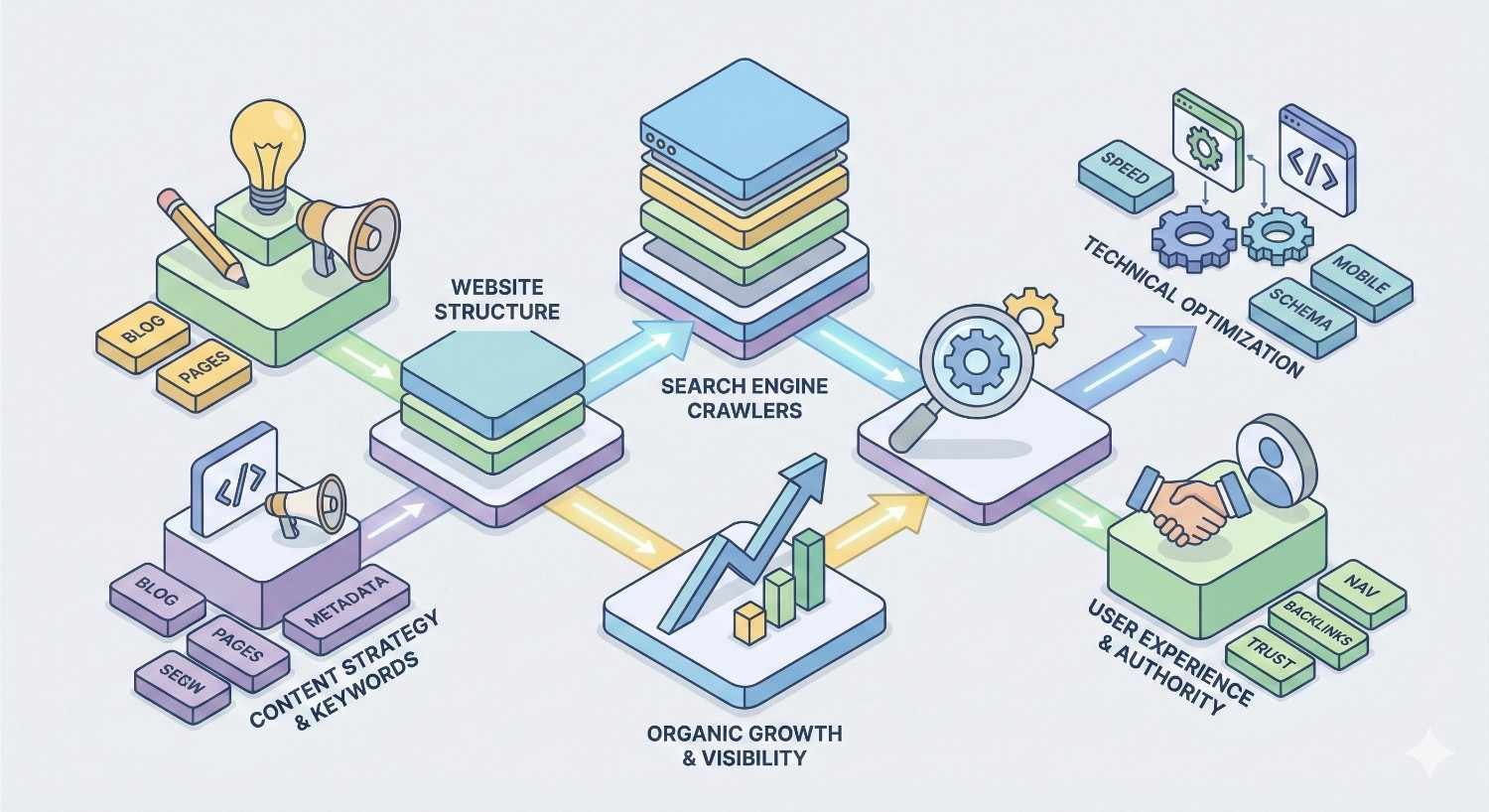
SEO Integration and Optimization
Premium SEO content goes beyond keyword insertion. It includes:
- Search intent analysis and alignment
- Semantic keyword integration
- Featured snippet optimization
- Internal linking strategy
- Technical SEO considerations (headings, schema, etc.)
- Competitive gap analysis
Writers who understand SEO deliver content that’s publication-ready without requiring separate optimization passes. This integration saves time and improves content performance.
Strategic Alignment with Business Goals
Premium writers understand how individual content pieces fit within broader marketing strategies. They consider:
- Buyer journey stage and content purpose
- Conversion goals and calls-to-action
- Brand voice and positioning
- Content distribution and promotion
- Performance metrics and success criteria
This strategic perspective ensures content serves business objectives rather than simply filling editorial calendars.
Revision Processes and Quality Assurance
Premium content services include robust quality assurance processes:
- Editorial review and fact-checking
- SEO optimization verification
- Brand voice consistency checks
- Plagiarism and AI detection screening
- Multiple revision rounds
These processes add cost but significantly reduce the risk of publishing content that damages brand credibility or fails to perform.
How to Evaluate Premium Content Writing Services
Choosing the right content partner requires systematic evaluation beyond comparing rates. The lowest-cost premium option isn’t always the best value, and the highest rates don’t guarantee superior results.
Portfolio and Sample Assessment
Request samples relevant to your industry, content type, and target audience. Evaluate samples for:
- Writing quality and readability
- Research depth and accuracy
- SEO optimization evidence
- Brand voice adaptability
- Engagement and value delivery
Ask about sample performance when possible. Writers who can share traffic, ranking, or conversion data demonstrate results-focused approaches.
Understanding Deliverables and Scope
Clarify exactly what’s included in quoted rates:
- Research and planning time
- Number of revision rounds
- SEO optimization level
- Image sourcing or recommendations
- Meta descriptions and title tags
- Internal linking suggestions
- Content briefs or outlines
Hidden costs often emerge when scope isn’t clearly defined upfront. Premium services should provide transparent deliverable lists.
Comparing Quotes and Rate Transparency
When comparing quotes, normalize for scope differences. A $500 blog post with unlimited revisions, SEO optimization, and strategic planning may deliver better value than a $300 post requiring additional optimization work.
Request itemized quotes when possible to understand cost components. This transparency helps you identify where providers add value versus where they may be overcharging.
Red Flags in Content Writing Pricing
Watch for warning signs that suggest quality issues:
- Rates significantly below market: Often indicates inexperienced writers or content mills
- No portfolio or samples available: Suggests limited track record
- Vague scope definitions: Creates risk of unexpected costs
- No revision policy: Indicates potential quality issues
- Guaranteed rankings or traffic: No writer can guarantee search performance
- Extremely fast turnaround promises: Quality research takes time
Premium services should be confident discussing their processes, showing relevant work samples, and explaining how their rates reflect value delivered.
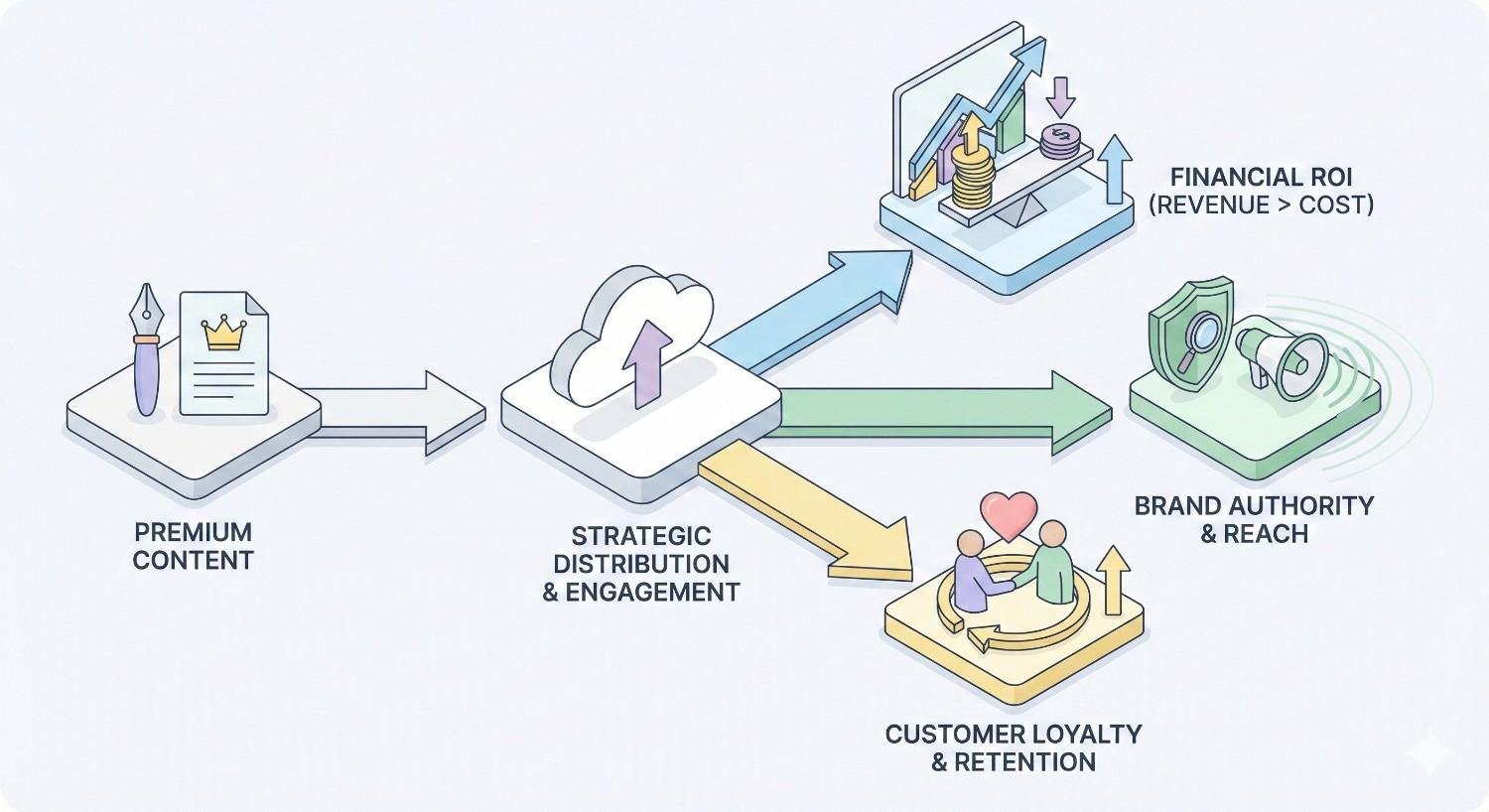
Premium Content Writing ROI and Business Impact
Content investment decisions should be grounded in expected returns rather than arbitrary budget limits. Understanding content ROI helps you justify premium rates and optimize content spending.
Calculating Content Marketing ROI
Content marketing ROI calculation requires tracking:
- Content costs: Writing, editing, design, promotion
- Traffic generated: Organic sessions attributed to content
- Conversions: Leads, sales, or other goal completions
- Revenue: Direct and attributed revenue from content-driven conversions
Basic ROI formula: (Revenue from Content – Content Costs) / Content Costs × 100
HubSpot’s research indicates that companies prioritizing blogging are 13x more likely to see positive ROI. This multiplier effect justifies premium content investment when content strategy aligns with business goals.
Traffic, Leads, and Revenue Attribution
Accurate attribution requires proper analytics setup:
- Google Analytics goal tracking and conversion paths
- UTM parameters for content promotion
- CRM integration for lead source tracking
- Multi-touch attribution models for complex buyer journeys
Premium content typically generates compounding returns as pieces age, build backlinks, and establish ranking positions. Initial ROI calculations often underestimate long-term value.
Long-Term Value of Quality Content Assets
Quality content functions as a depreciating asset that continues generating value over time. A well-optimized blog post can drive traffic for years with minimal maintenance.
Consider the lifetime value calculation:
- Year 1: Initial traffic and conversions
- Years 2-5: Continued organic traffic with periodic updates
- Cumulative value: Total traffic, leads, and revenue over content lifespan
Premium content typically has longer useful lifespans because it’s more comprehensive, better optimized, and more likely to earn backlinks that sustain rankings.
Cost of Cheap Content vs. Premium Investment
Cheap content often costs more in the long run through:
- Rewrite requirements: Poor content needs replacement
- Opportunity cost: Time spent on underperforming content
- Brand damage: Low-quality content hurts credibility
- SEO penalties: Thin content can trigger algorithmic issues
- Missed rankings: Inferior content loses to competitors
A $300 blog post that generates no traffic costs more than a $1,000 post that ranks and converts. Evaluate content investment based on expected outcomes, not just upfront costs.
How to Budget for Premium Content Writing
Effective content budgeting balances investment levels with business goals and growth stage. Underspending limits results while overspending strains resources without proportional returns.
Setting Realistic Content Budgets
Content budget benchmarks vary by company size and growth stage:
- Startups: 5-15% of marketing budget on content
- Growth-stage companies: 15-30% of marketing budget
- Established businesses: 20-40% of marketing budget
For specific dollar amounts, consider content volume needs:
- Minimal presence: $2,000-5,000/month (4-8 blog posts)
- Active content marketing: $5,000-15,000/month (8-20 pieces)
- Aggressive content strategy: $15,000-50,000+/month (20+ pieces plus premium assets)
These ranges assume premium content quality. Budgets for standard content would be lower but with proportionally reduced expected results.
Scaling Content Investment Over Time
Start with foundational content that addresses core audience needs and high-value keywords. Scale investment as you demonstrate ROI and identify content opportunities.
Recommended scaling approach:
- Months 1-3: Foundation building with pillar content and core pages
- Months 4-6: Expand topic clusters and supporting content
- Months 7-12: Increase volume based on performance data
- Year 2+: Optimize mix based on ROI analysis
Scaling too quickly before establishing content-market fit wastes budget. Scaling too slowly misses competitive opportunities.
Aligning Content Spend with Growth Goals
Content investment should correlate with growth targets:
- Traffic goals: More content volume, broader topic coverage
- Conversion goals: Higher-quality content, conversion optimization focus
- Authority goals: Premium thought leadership content, original research
- Competitive goals: Content gap analysis, competitive response content
Match content types and investment levels to specific business objectives rather than producing content without strategic purpose.
Working with Premium Content Writers and Agencies
The right content partner depends on your needs, budget, and internal capabilities. Each model offers distinct advantages and tradeoffs.
Freelance Writers vs. Content Agencies
Freelance writers offer:
- Direct relationships and communication
- Often lower rates (no agency overhead)
- Specialized expertise in specific niches
- Flexibility for variable content needs
Content agencies provide:
- Scalable capacity for high-volume needs
- Multiple writer access and backup coverage
- Project management and quality assurance
- Strategic services beyond writing
Choose freelancers for specialized, lower-volume needs. Choose agencies for scale, consistency, and comprehensive content services.
In-House vs. Outsourced Content Teams
In-house teams excel at:
- Deep brand and product knowledge
- Rapid response to business needs
- Long-term institutional knowledge building
- Cross-functional collaboration
Outsourced content works better for:
- Specialized expertise not available internally
- Variable content volume needs
- Cost efficiency at certain scales
- Fresh perspectives and diverse voices
Many organizations use hybrid models with in-house strategy and management plus outsourced content production.
Building Long-Term Writer Relationships
Long-term relationships with premium writers deliver compounding benefits:
- Reduced onboarding time and costs
- Deeper understanding of brand voice and audience
- Improved content quality through accumulated knowledge
- Priority access and scheduling flexibility
- Better rates through volume commitments
Invest in relationship building with writers who demonstrate quality and reliability. The switching costs of constantly finding new writers often exceed the savings from rate shopping.
Briefing and Collaboration Best Practices
Effective content briefs improve outcomes and reduce revision cycles:
- Clear objectives: What should this content achieve?
- Target audience: Who is reading and what do they need?
- Keyword targets: Primary and secondary keywords
- Competitive context: What exists and how should this differ?
- Brand guidelines: Voice, tone, and style requirements
- Technical requirements: Length, format, SEO specifications
- Examples: Reference content that demonstrates desired approach
Invest time in briefing to maximize writer effectiveness and minimize revision requirements.
Conclusion
Premium content writing rates reflect the expertise, research depth, and strategic value that quality content delivers. Understanding rate structures, industry benchmarks, and ROI calculations helps you make informed investment decisions that drive sustainable organic growth.
The difference between content that ranks and content that doesn’t often comes down to the investment you make in quality. Premium rates may seem high initially, but the long-term returns from content that performs consistently outweigh the savings from cheaper alternatives that require replacement.
At White Label SEO Service, we help businesses build content strategies that deliver measurable results. Whether you need premium content production, SEO optimization, or comprehensive organic growth services, our team provides the expertise and execution to achieve your visibility goals. Contact us to discuss how premium content fits within your growth strategy.
Frequently Asked Questions About Premium Content Writing Rates
What is the average rate for premium content writing?
Premium content writing rates typically range from $0.25 to $1.00+ per word, $500 to $3,000 per blog post, or $75 to $200 per hour depending on content type and industry specialization. Highly technical or regulated industries command rates at the upper end of these ranges.
Why do premium writers charge more?
Premium writers charge higher rates because they bring specialized expertise, conduct deeper research, and deliver content optimized for performance. Their experience reduces revision cycles, improves ranking potential, and generates better ROI than cheaper alternatives that often require replacement.
How do I negotiate content writing rates?
Negotiate content rates by committing to volume, offering long-term retainer arrangements, or adjusting scope and deliverables. Focus negotiations on value rather than just price. Writers are more flexible when they see reliable, ongoing work opportunities.
Should I pay per word or per project?
Per-project pricing typically works better for complex content where research depth matters more than word count. Per-word pricing suits straightforward content with defined length requirements. Choose the model that aligns incentives with your quality expectations.
How do premium rates vary by region?
Premium rates vary significantly by region, with US and UK writers typically charging 30-50% more than writers in other English-speaking markets. However, expertise and quality matter more than location. A specialized writer in any region often delivers better value than a generalist in a premium market.
What’s included in premium content writing services?
Premium services typically include research, writing, SEO optimization, revisions, and quality assurance. Clarify deliverables upfront, including revision rounds, keyword optimization, meta descriptions, and any strategic planning or consultation included in quoted rates.
How long does premium content take to produce?
Premium blog posts typically require 5-10 business days from brief to delivery. Complex content like whitepapers or pillar pages may need 2-4 weeks. Rush turnaround is often available at premium rates, but quality research requires adequate time regardless of budget.