

SaaS SEO requires a fundamentally different approach than traditional SEO because software companies sell subscriptions, not one-time purchases. The buyer journey is longer, the content needs are more complex, and success metrics extend far beyond rankings and traffic. Understanding these differences determines whether your organic strategy drives sustainable recurring revenue or wastes resources on tactics that work for e-commerce but fail for software.
This distinction matters now more than ever. SaaS markets are increasingly competitive, and companies using generic SEO playbooks consistently underperform against competitors with specialized strategies. The gap between SaaS-specific optimization and traditional approaches directly impacts customer acquisition costs, trial conversions, and long-term growth.
This guide breaks down exactly how SaaS SEO differs from traditional SEO across strategy, execution, and measurement. You’ll learn why software companies need specialized approaches, which tactics traditional SEO overlooks, and how to transition your strategy for better results.
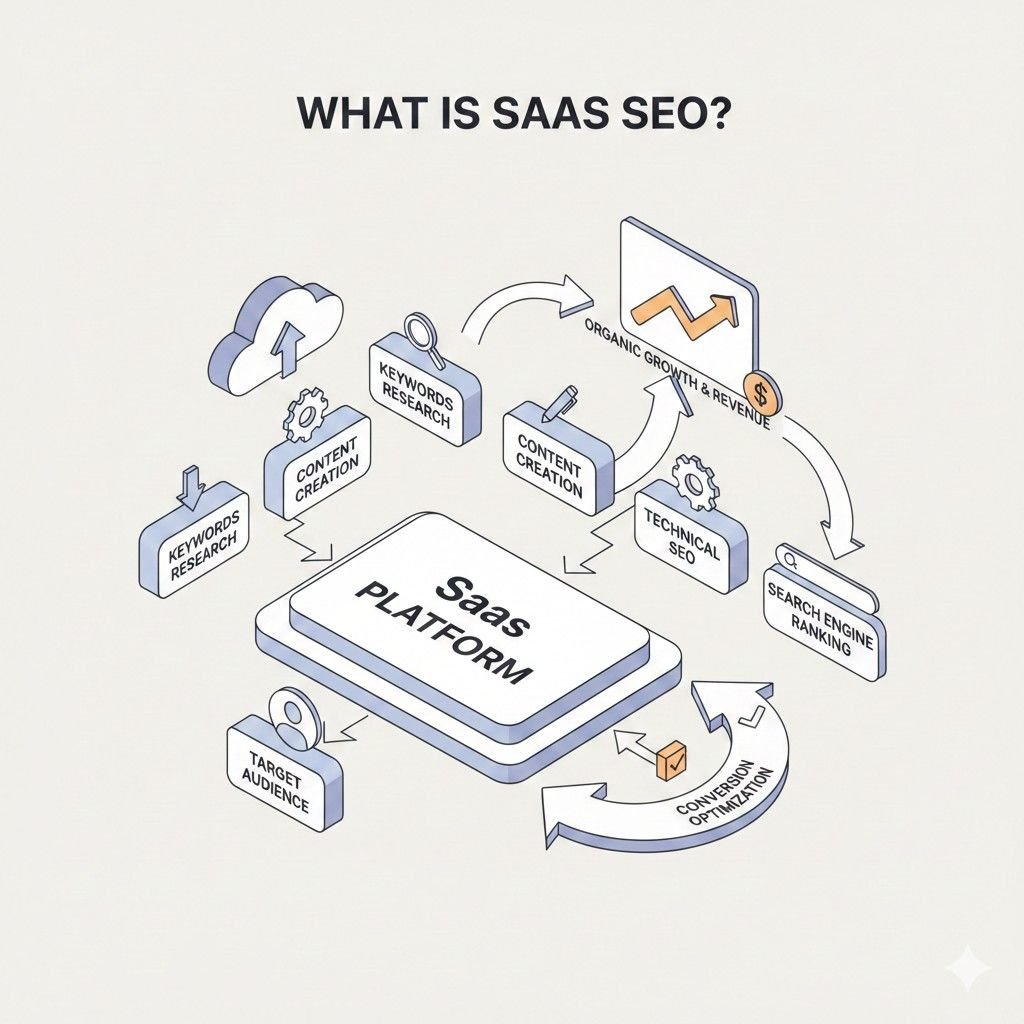
What Is SaaS SEO?
Defining SaaS SEO and Its Core Objectives
SaaS SEO is a specialized search optimization strategy designed specifically for software-as-a-service companies. Unlike general SEO approaches, it focuses on driving qualified users through extended evaluation cycles toward subscription-based conversions like free trials, product demos, and paid signups.
The core objectives differ significantly from traditional SEO goals. Where a retail site might optimize for immediate purchases, SaaS SEO prioritizes building awareness across multiple touchpoints, educating prospects about complex solutions, and nurturing leads through content until they’re ready to convert. This means targeting keywords at every funnel stage, from problem-aware searches to comparison queries to branded terms.
SaaS SEO also emphasizes retention-focused content. Since recurring revenue depends on keeping customers subscribed, optimization extends beyond acquisition to include help documentation, feature announcements, and educational resources that reduce churn. The strategy treats organic search as a full-lifecycle channel, not just a top-of-funnel traffic source.
The SaaS Business Model and Its Impact on SEO Strategy
The subscription model fundamentally reshapes SEO priorities. Customer lifetime value matters more than individual transaction value, which means SEO success depends on attracting users who stay subscribed for months or years. This shifts keyword targeting toward high-intent, high-fit prospects rather than maximum traffic volume.
SaaS products typically solve specific problems for defined audiences. This creates natural content opportunities around use cases, workflows, and pain points that traditional product-focused SEO misses. A project management tool doesn’t just compete for “project management software” but also for “how to run remote standups” and “agile sprint planning templates.”
The freemium and trial models common in SaaS also change conversion optimization. SEO must drive users to low-friction entry points where they can experience the product before committing. This requires landing pages optimized for trial signups rather than immediate purchases, with content that reduces perceived risk and demonstrates value quickly.
What Is Traditional SEO?
Core Principles of Traditional SEO
Traditional SEO focuses on improving website visibility in search engines through technical optimization, content creation, and link building. The fundamental principles include ensuring search engines can crawl and index pages, creating relevant content that matches user queries, and building authority through backlinks from other websites.
On-page optimization forms the foundation. This involves optimizing title tags, meta descriptions, header structures, and content for target keywords. Technical SEO ensures fast loading speeds, mobile responsiveness, secure connections, and clean site architecture that search engines can navigate efficiently.
Off-page SEO builds domain authority through external signals. Backlinks from reputable websites signal trustworthiness to search algorithms. Local citations, social signals, and brand mentions contribute to overall authority. Traditional SEO treats these elements as universal requirements regardless of business model or industry.
Common Industries Using Traditional SEO Approaches
E-commerce businesses typically use traditional SEO frameworks effectively. Product pages target transactional keywords, category pages capture broader searches, and blog content drives top-of-funnel traffic. The direct path from search to purchase aligns well with standard optimization practices.
Local service businesses also fit traditional SEO models. Plumbers, dentists, lawyers, and restaurants optimize for location-based searches with clear conversion goals like phone calls, form submissions, or store visits. The buyer journey is relatively short, and local pack rankings drive significant business.
Media and publishing sites use traditional SEO to maximize pageviews and ad revenue. Content optimization focuses on trending topics, evergreen articles, and keyword-rich headlines. Success metrics center on traffic volume, time on site, and pages per session rather than downstream conversions.
Informational websites and blogs follow similar patterns. They optimize for search visibility to build audiences, generate ad revenue, or establish thought leadership. The strategies work because the business model aligns with traffic-based success metrics.
Key Differences Between SaaS SEO and Traditional SEO
Target Audience and Buyer Journey Complexity
SaaS buyers rarely make immediate decisions. The typical B2B software purchase involves multiple stakeholders, extended evaluation periods, and significant research before commitment. According to Gartner research, B2B buyers spend only 17% of their time meeting with potential suppliers, with the rest dedicated to independent research.
This complexity requires content that serves different roles within buying committees. Technical evaluators need feature documentation and integration guides. Financial decision-makers want ROI calculators and pricing comparisons. End users search for workflow tutorials and use case examples. SaaS SEO must address all these audiences simultaneously.
Traditional SEO typically targets simpler buyer journeys. A consumer searching for running shoes moves from awareness to purchase within hours or days. The content needs are straightforward: product descriptions, reviews, and pricing information. SaaS SEO must map content to journeys that span weeks or months.
Keyword Strategy: Feature-Based vs. Product-Based
Traditional SEO often centers on product-category keywords. An online furniture store targets “leather sofa,” “dining table,” and “bedroom furniture.” These searches indicate clear purchase intent for specific product types.
SaaS keyword strategy operates differently. Software buyers search for solutions to problems, not product categories. They query “how to automate invoice processing” before they search “accounting software.” Feature-based keywords like “automated expense tracking” and “real-time collaboration tools” capture users earlier in their journey.
Comparison and alternative keywords also play a larger role in SaaS. Prospects actively research options, searching for “[Competitor] alternatives” and “[Product A] vs [Product B].” These high-intent keywords rarely exist in traditional retail contexts but drive significant qualified traffic for software companies.
Content Funnel Structure and Depth
SaaS content funnels require substantially more depth than traditional approaches. Top-of-funnel content must educate audiences who don’t yet know solutions exist. Middle-funnel content helps prospects evaluate options and understand capabilities. Bottom-funnel content converts researchers into trial users and paying customers.
Each stage demands different content types. Educational blog posts and guides serve awareness. Comparison pages, case studies, and feature breakdowns support consideration. Pricing pages, demo requests, and free trial landing pages drive conversion. Traditional SEO rarely requires this level of funnel sophistication.
The volume requirements also differ. SaaS companies often maintain hundreds of pages targeting specific use cases, integrations, and feature combinations. A traditional e-commerce site might succeed with product pages and a modest blog. SaaS SEO demands ongoing content production at scale.
Conversion Goals: Trials, Demos, and Signups vs. Direct Sales
Traditional SEO conversion optimization focuses on direct transactions. Add-to-cart buttons, checkout flows, and purchase completion rates define success. The optimization goal is removing friction between search and sale.
SaaS conversions are intermediate steps toward revenue. Free trial signups, demo requests, and freemium account creations represent conversion events, but revenue comes later. This changes how landing pages are structured and what calls-to-action appear throughout content.
The metrics cascade differently too. Traditional e-commerce tracks revenue per visitor directly. SaaS must track trial-to-paid conversion rates, time-to-activation, and customer lifetime value to understand true SEO impact. A high-traffic page driving low-quality trials may underperform a lower-traffic page attracting ideal customers.
Link Building and Authority Approaches
Traditional link building often relies on general authority signals. Directory submissions, guest posts on industry blogs, and resource page links build domain authority broadly. The goal is accumulating links from diverse sources to improve overall rankings.
SaaS link building emphasizes product-led and data-driven approaches. Original research, proprietary data studies, and free tools generate natural backlinks from industry publications. Integration partnerships create link opportunities through partner directories and co-marketing content. Product mentions in software review sites carry significant weight.
The competitive landscape also differs. SaaS companies compete against well-funded competitors with dedicated SEO teams and substantial content budgets. Building authority requires differentiated assets that earn links through genuine value, not just outreach volume.
Metrics and KPIs That Matter
Traditional SEO success often centers on rankings, traffic, and direct revenue attribution. Position tracking for target keywords, organic session growth, and e-commerce conversion rates provide clear performance indicators.
SaaS SEO requires expanded measurement frameworks. Trial signups from organic traffic matter more than raw visitor counts. Activation rates among organic users indicate traffic quality. Customer acquisition cost through organic channels determines channel efficiency. Monthly recurring revenue attributed to SEO demonstrates business impact.
Leading indicators also differ. Traditional SEO tracks keyword rankings as primary signals. SaaS SEO must monitor branded search volume growth, feature-keyword visibility, and comparison-page performance as indicators of market position and buyer intent capture.
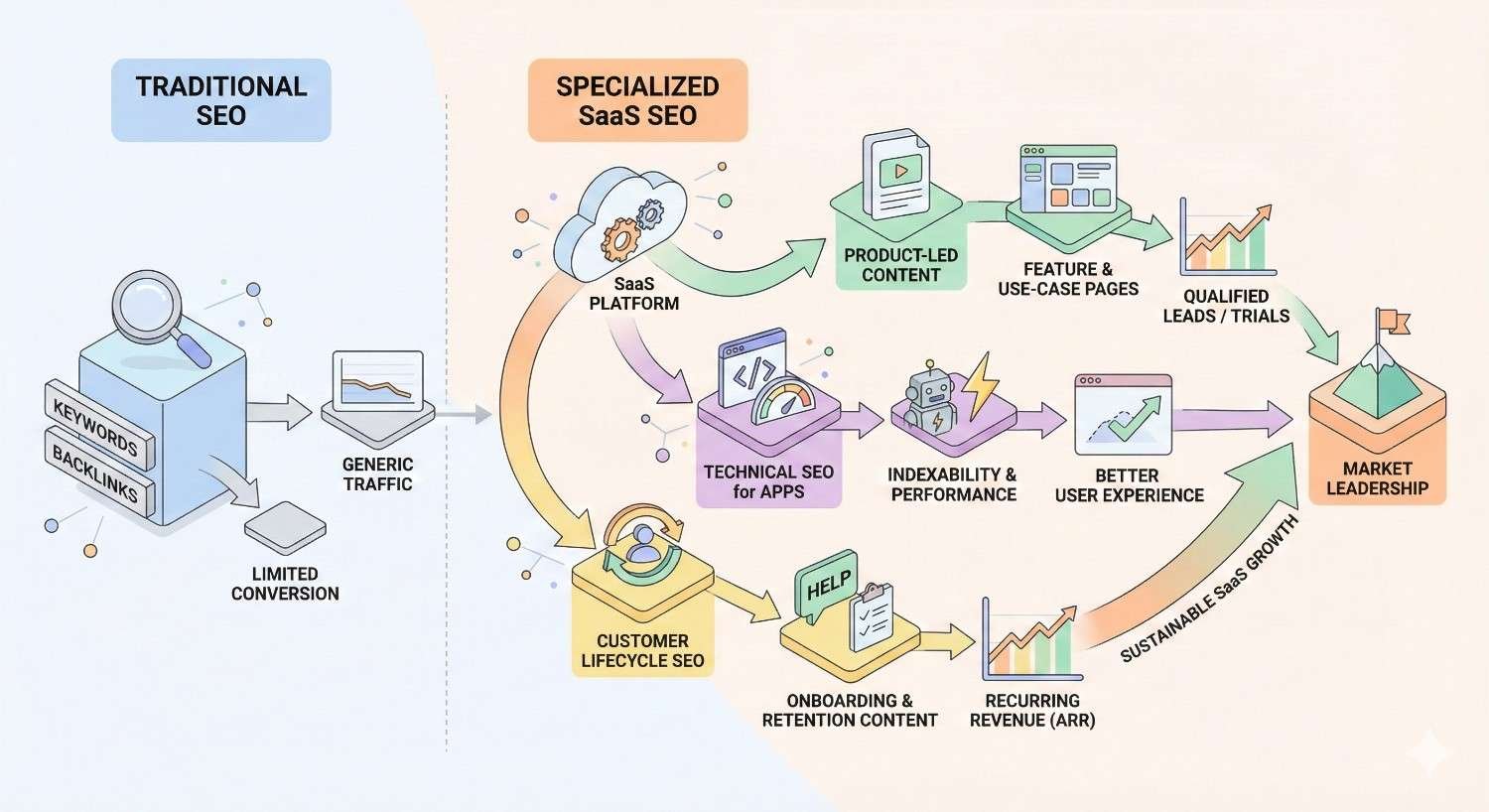
Why SaaS Companies Need a Specialized SEO Approach
Recurring Revenue Models Require Long-Term Visibility
Subscription businesses depend on continuous customer acquisition to offset natural churn. Unlike one-time purchases, SaaS revenue compounds when customers stay subscribed. This makes sustainable organic visibility essential rather than optional.
Paid advertising creates immediate traffic but stops when budgets pause. SEO builds compounding assets that generate leads month after month without incremental spend. For SaaS companies managing customer acquisition costs carefully, organic search provides predictable, scalable growth.
The long-term nature of SEO also aligns with SaaS planning horizons. Software companies invest in product development over years, not quarters. SEO investments similarly compound over time, making the channel strategically aligned with how SaaS businesses operate.
Competitive Landscapes in Software Markets
Software categories attract significant competition. Established players have years of content, thousands of backlinks, and strong brand recognition. New entrants must find strategic angles to compete rather than attacking head-on.
SaaS SEO addresses this through niche targeting and content differentiation. Instead of competing for broad category terms immediately, specialized strategies target long-tail keywords, specific use cases, and underserved audience segments. This builds authority progressively while generating qualified traffic.
The competitive intelligence requirements also exceed traditional SEO. Understanding competitor content strategies, identifying gaps in their coverage, and monitoring their SEO investments informs strategic decisions. SaaS SEO operates as competitive strategy, not just technical optimization.
Product-Led Growth and SEO Alignment
Product-led growth strategies depend on users discovering, trying, and adopting software through self-service experiences. SEO drives users directly into product experiences without sales team involvement, making it naturally aligned with PLG models.
Content can demonstrate product value before signup. Interactive demos, template libraries, and free tools let prospects experience capabilities through search-discovered content. This reduces friction and accelerates the path from awareness to activation.
The alignment extends to retention. Help documentation, feature guides, and best-practice content rank in search and serve existing customers. SEO investment supports both acquisition and retention, maximizing impact across the customer lifecycle.
How long does SaaS SEO take to show results?
SaaS SEO typically requires 6-12 months to show meaningful results, with significant impact often appearing after 12-18 months of consistent effort. The timeline depends on domain authority, competitive intensity, and content investment levels. Early wins may come from long-tail keywords and lower-competition terms, while category-defining keywords take longer to capture.
Can traditional SEO tactics work for SaaS?
Traditional SEO tactics provide necessary foundations but insufficient results for SaaS companies. Technical optimization, on-page best practices, and link building remain important. However, applying traditional frameworks without SaaS-specific adaptations typically underperforms because the content strategy, keyword targeting, and conversion optimization miss software-specific requirements.
SaaS SEO Strategy Components Traditional SEO Often Overlooks
Integration and Comparison Pages
Integration pages target high-intent searches from users already using complementary tools. Someone searching “Slack Salesforce integration” has clear software needs and evaluates solutions that connect their existing stack. These pages capture qualified traffic that traditional SEO frameworks rarely prioritize.
Comparison pages address prospects actively evaluating alternatives. “[Your Product] vs [Competitor]” searches indicate late-stage buying intent. Creating honest, detailed comparisons positions your product favorably while capturing traffic competitors might otherwise own.
Both page types require ongoing maintenance. Integration capabilities change, competitors update features, and new alternatives emerge. SaaS SEO treats these pages as living assets requiring regular updates rather than one-time content creation.
Use Case and Solution-Based Content
Use case pages target problem-aware searchers before they know specific solutions exist. A user searching “how to manage remote team communication” hasn’t decided on a product category yet. Content addressing their specific situation introduces your solution naturally.
Solution pages organize content around outcomes rather than features. Instead of listing capabilities, they explain how the product solves specific problems for defined audiences. This matches how buyers actually search and evaluate software.
These content types require deep customer understanding. Effective use case content reflects actual customer language, real workflow challenges, and genuine outcomes. Generic content fails because it doesn’t resonate with specific audience segments.
Feature Pages Optimized for Search Intent
Individual feature pages capture searches for specific capabilities. Users searching “automated reporting dashboard” want that specific functionality. Dedicated pages targeting feature keywords attract highly qualified traffic.
Feature pages must balance SEO optimization with product marketing. They need sufficient content depth to rank while clearly communicating value and driving conversions. Thin feature pages fail both objectives.
The feature page strategy also supports internal linking. Comprehensive feature coverage creates opportunities to link between related capabilities, building topical authority and improving crawlability across the product section.
Customer Journey Mapping for Content Clusters
Content clusters organize related content around pillar topics, creating topical authority signals that search engines recognize. For SaaS, clusters should map to customer journey stages and use case categories.
A project management SaaS might build clusters around “agile methodology,” “remote team collaboration,” and “resource planning.” Each cluster contains a comprehensive pillar page supported by detailed subtopic content. Internal linking connects cluster content, distributing authority and guiding users through related information.
Journey mapping ensures clusters address real customer needs at each stage. Awareness content introduces concepts and problems. Consideration content compares approaches and solutions. Decision content facilitates evaluation and conversion. This structure serves both SEO and user experience objectives.
Common Mistakes When Applying Traditional SEO to SaaS
Ignoring Bottom-of-Funnel Keywords
Traditional SEO often prioritizes high-volume keywords regardless of intent. This drives traffic but not necessarily conversions. SaaS companies making this mistake generate visitors who never convert because the content attracts the wrong audience.
Bottom-of-funnel keywords have lower search volume but higher conversion rates. Terms like “[product category] pricing,” “best [solution] for [use case],” and “[competitor] alternatives” indicate purchase readiness. Ignoring these keywords leaves revenue on the table.
The fix requires balancing traffic potential with conversion likelihood. SaaS SEO strategies should include dedicated bottom-funnel content targeting high-intent keywords, even when volume seems low. These pages often generate disproportionate business impact.
Underinvesting in Product-Led Content
Traditional content strategies emphasize blog posts and educational articles. While valuable for awareness, this content rarely converts directly. SaaS companies need product-led content that demonstrates capabilities and drives trial signups.
Product-led content includes interactive demos, template galleries, free tools, and feature showcases. This content ranks for relevant searches while providing immediate value that traditional blog posts cannot match. Users experience the product through content rather than just reading about it.
The investment requirements differ from traditional content. Product-led content often requires development resources, design support, and ongoing maintenance. The ROI justifies the investment, but companies applying traditional SEO frameworks may not allocate resources appropriately.
Misaligning Content with SaaS Sales Cycles
Traditional SEO assumes relatively short paths from search to conversion. Content optimization focuses on immediate action, whether purchases, form submissions, or phone calls. This approach fails for SaaS because buyers need multiple touchpoints before converting.
SaaS content must nurture prospects across extended evaluation periods. This means creating content sequences that guide users from problem awareness through solution evaluation to purchase decision. Single-touch content strategies underperform because they don’t account for how software buyers actually behave.
Alignment requires understanding your specific sales cycle length and touchpoint requirements. Some SaaS products convert quickly through self-service trials. Others require months of education and multiple stakeholder approvals. Content strategy must match these realities.
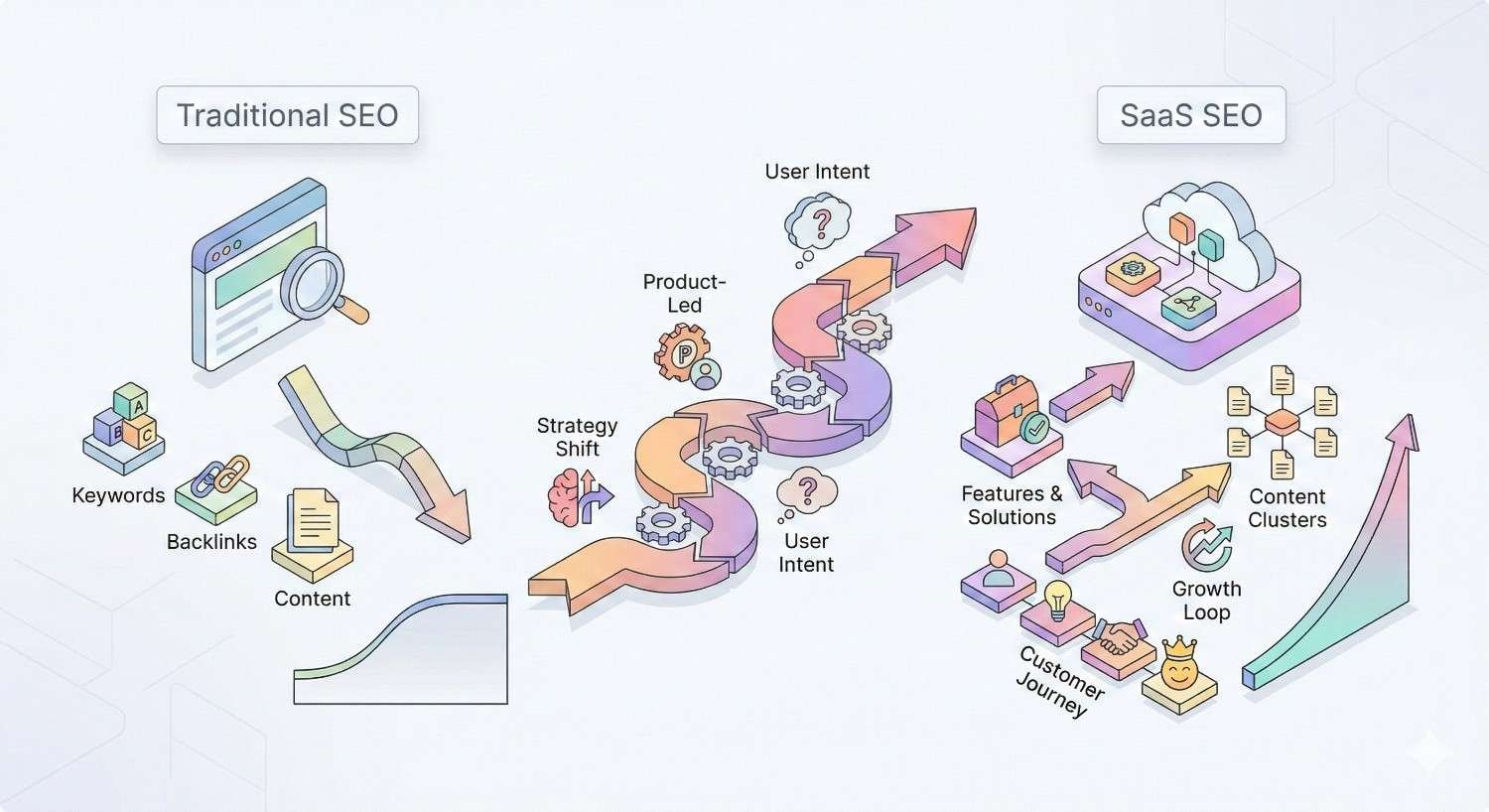
How to Transition from Traditional SEO to SaaS SEO
Auditing Your Current SEO Strategy
Begin by assessing what exists and what’s missing. Review current keyword targeting to identify gaps in feature-based, comparison, and bottom-funnel terms. Analyze content inventory to determine coverage across funnel stages and use cases.
Technical audits remain important but shouldn’t dominate the transition. Ensure crawlability, site speed, and mobile experience meet standards, then focus attention on strategic gaps. Most SaaS companies have adequate technical foundations but underdeveloped content strategies.
Competitive analysis reveals opportunities traditional approaches missed. Identify what competitors rank for that you don’t cover. Find content types they’ve invested in that you haven’t created. Use competitive gaps to prioritize transition efforts.
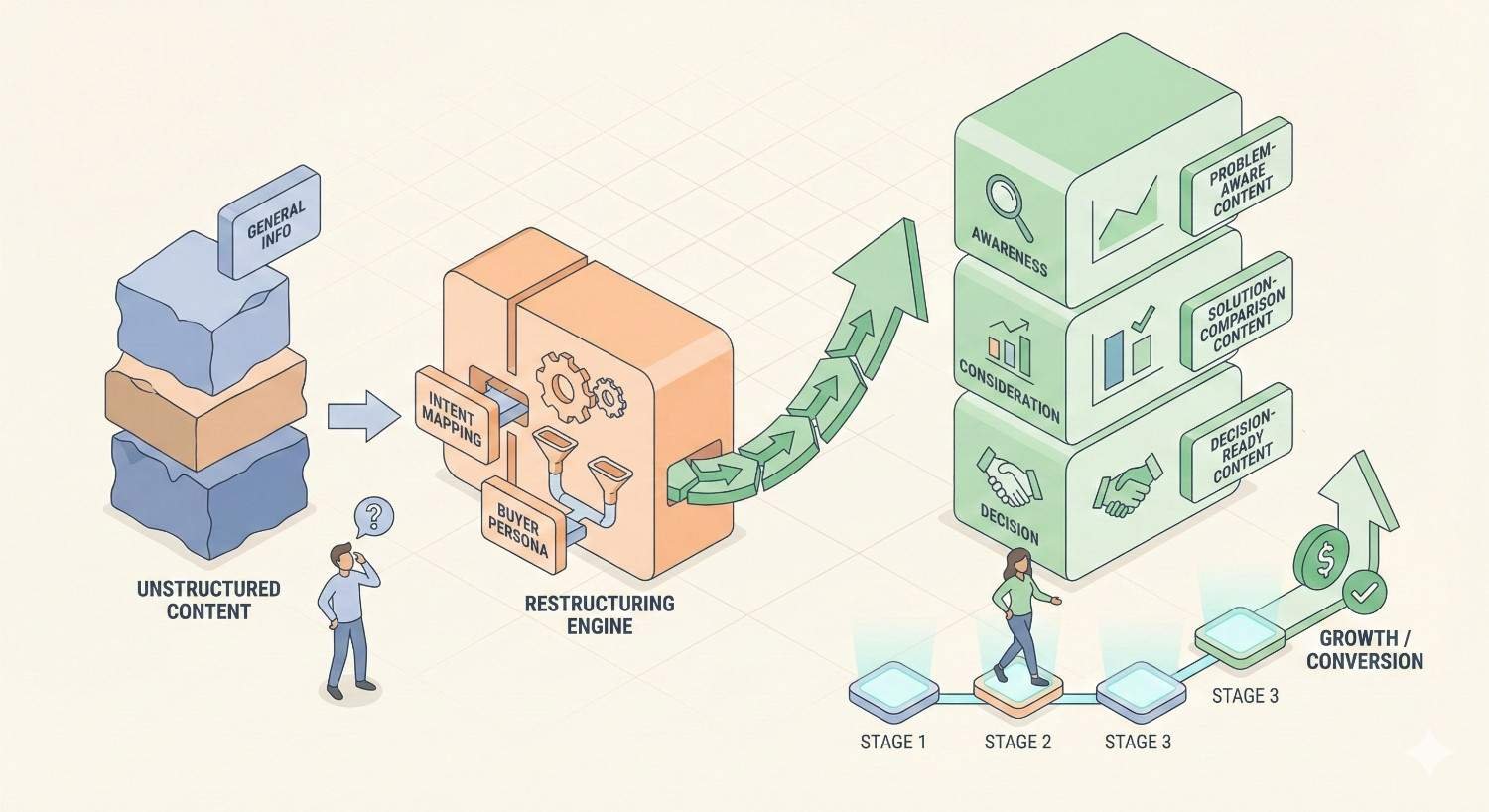
Restructuring Content for SaaS Buyer Intent
Map existing content to buyer journey stages. Identify which pieces serve awareness, consideration, and decision phases. Note gaps where entire journey stages lack content support.
Restructure navigation and internal linking to guide users through logical progressions. Connect awareness content to consideration content to decision content. Make it easy for users to find relevant information as their needs evolve.
Update existing content to better serve SaaS-specific intent. Add product connections to educational content. Include comparison elements in feature pages. Optimize conversion paths throughout the content experience.
Building a Scalable SaaS Content Engine
Sustainable SaaS SEO requires ongoing content production at scale. Establish processes for identifying new keyword opportunities, creating content efficiently, and maintaining existing assets.
Prioritize content types with compounding returns. Comparison pages, integration content, and feature pages generate qualified traffic indefinitely with periodic updates. Blog posts may require more frequent refreshes to maintain relevance.
Build measurement systems that connect SEO activity to business outcomes. Track not just rankings and traffic but trial signups, activation rates, and revenue attribution. Use these metrics to refine strategy and demonstrate value.
SaaS SEO vs. Traditional SEO: Comparison Table
| Aspect | SaaS SEO | Traditional SEO |
| Primary Goal | Trial signups, demos, subscriptions | Direct sales, leads, traffic |
| Buyer Journey | Extended, multi-stakeholder | Short, individual decision |
| Keyword Focus | Feature-based, problem-aware, comparison | Product-category, transactional |
| Content Depth | Deep funnel coverage, use cases, integrations | Product pages, blog, categories |
| Conversion Events | Free trials, demos, freemium signups | Purchases, form submissions |
| Success Metrics | MRR attribution, trial conversion, CAC | Revenue, traffic, rankings |
| Link Building | Product-led, data-driven, partnerships | General authority, outreach |
| Content Volume | High, ongoing production required | Moderate, campaign-based |
| Timeline to Results | 6-18 months typical | 3-12 months typical |
| Competitive Intensity | High, well-funded competitors | Varies by industry |
Conclusion: Choosing the Right SEO Approach for Your Business
SaaS SEO and traditional SEO share foundational principles but diverge significantly in strategy, execution, and measurement. Software companies applying generic SEO frameworks miss opportunities that specialized approaches capture. The differences in buyer journeys, keyword strategies, and conversion goals require purpose-built strategies.
Understanding these distinctions positions your company to invest SEO resources effectively. Whether you’re building a SaaS SEO program from scratch or transitioning from traditional approaches, the strategic clarity enables better decisions and faster results.
At White Label SEO Service, we help SaaS companies and their agency partners build organic growth engines designed for subscription businesses. Our specialized approach addresses the unique challenges software companies face in competitive markets. Contact us to discuss how we can support your SaaS SEO strategy.
Frequently Asked Questions
Is SaaS SEO more expensive than traditional SEO?
SaaS SEO typically requires higher investment due to greater content volume requirements and longer timelines to results. However, the cost per acquired customer often decreases over time as organic assets compound. The total investment depends on competitive intensity and growth targets.
What tools are best for SaaS SEO?
Essential tools include Ahrefs or Semrush for keyword research and competitive analysis, Google Search Console for performance monitoring, and analytics platforms for conversion tracking. SaaS-specific needs may require additional tools for trial attribution and customer journey analysis.
How do SaaS companies measure SEO success?
Effective measurement tracks trial signups from organic traffic, trial-to-paid conversion rates, customer acquisition cost through organic channels, and monthly recurring revenue attributed to SEO. Rankings and traffic serve as leading indicators but not primary success metrics.
Can a traditional SEO agency handle SaaS SEO?
Traditional agencies can execute foundational SEO work but may lack SaaS-specific strategic expertise. Look for agencies with demonstrated SaaS experience, understanding of subscription metrics, and case studies showing software company results. The strategic layer matters as much as tactical execution.
What’s the biggest mistake SaaS companies make with SEO?
The most common mistake is treating SEO as a traffic-generation channel rather than a revenue-generation channel. This leads to content strategies optimized for volume over conversion quality, resulting in high traffic but low trial rates and poor customer fit.
How important is technical SEO for SaaS companies?
Technical SEO provides necessary foundations but rarely differentiates SaaS companies competitively. Most software companies have adequate technical implementations. Strategic differentiation comes from content strategy, keyword targeting, and conversion optimization rather than technical superiority.
Should SaaS startups invest in SEO early?
Early SEO investment builds compounding assets that pay dividends as the company scales. However, startups must balance SEO timelines against immediate growth needs. A focused strategy targeting high-intent keywords can generate results faster than comprehensive approaches while establishing foundations for future expansion.