
Understanding SEO Writing Tools and Their Impact on Organic Growth
The right SEO writing tool can cut content optimization time by 50% while improving ranking potential, but choosing the wrong platform wastes budget and produces mediocre results. Most businesses struggle to evaluate these tools objectively because feature lists look similar on the surface.
This matters now because content competition has intensified dramatically. Search engines reward comprehensive, well-optimized content, and manual optimization simply cannot keep pace with algorithm sophistication.
This guide compares six leading SEO writing platforms across features, pricing, use cases, and limitations. You will understand exactly which tool matches your content volume, team size, and strategic goals.

What Are SEO Writing Tools and How Do They Support Content Strategy?
SEO writing tools analyze search engine results pages, extract optimization patterns, and provide actionable recommendations for content creation. These platforms bridge the gap between keyword research and published content by offering real-time guidance on structure, terminology, and topical coverage.
Unlike general writing assistants, SEO writing tools focus specifically on search visibility factors. They examine what currently ranks, identify content gaps, and suggest improvements based on competitive analysis rather than generic writing rules.
Core Functions of SEO Writing Tools
SEO writing tools perform several interconnected functions that support content optimization workflows.
Content scoring evaluates your draft against top-ranking competitors. The tool analyzes word count, keyword usage, heading structure, and semantic coverage to generate an optimization score. This score provides a benchmark for content completeness.
Keyword recommendations go beyond primary terms. Modern tools identify semantically related phrases, questions users ask, and terminology patterns from ranking content. This helps writers cover topics comprehensively without keyword stuffing.
Competitive analysis reveals what successful content includes. Tools extract common themes, subtopics, and structural elements from top results, giving writers a blueprint for competitive content.
Content briefs consolidate research into actionable outlines. These briefs specify target word counts, required headings, key terms to include, and questions to answer.
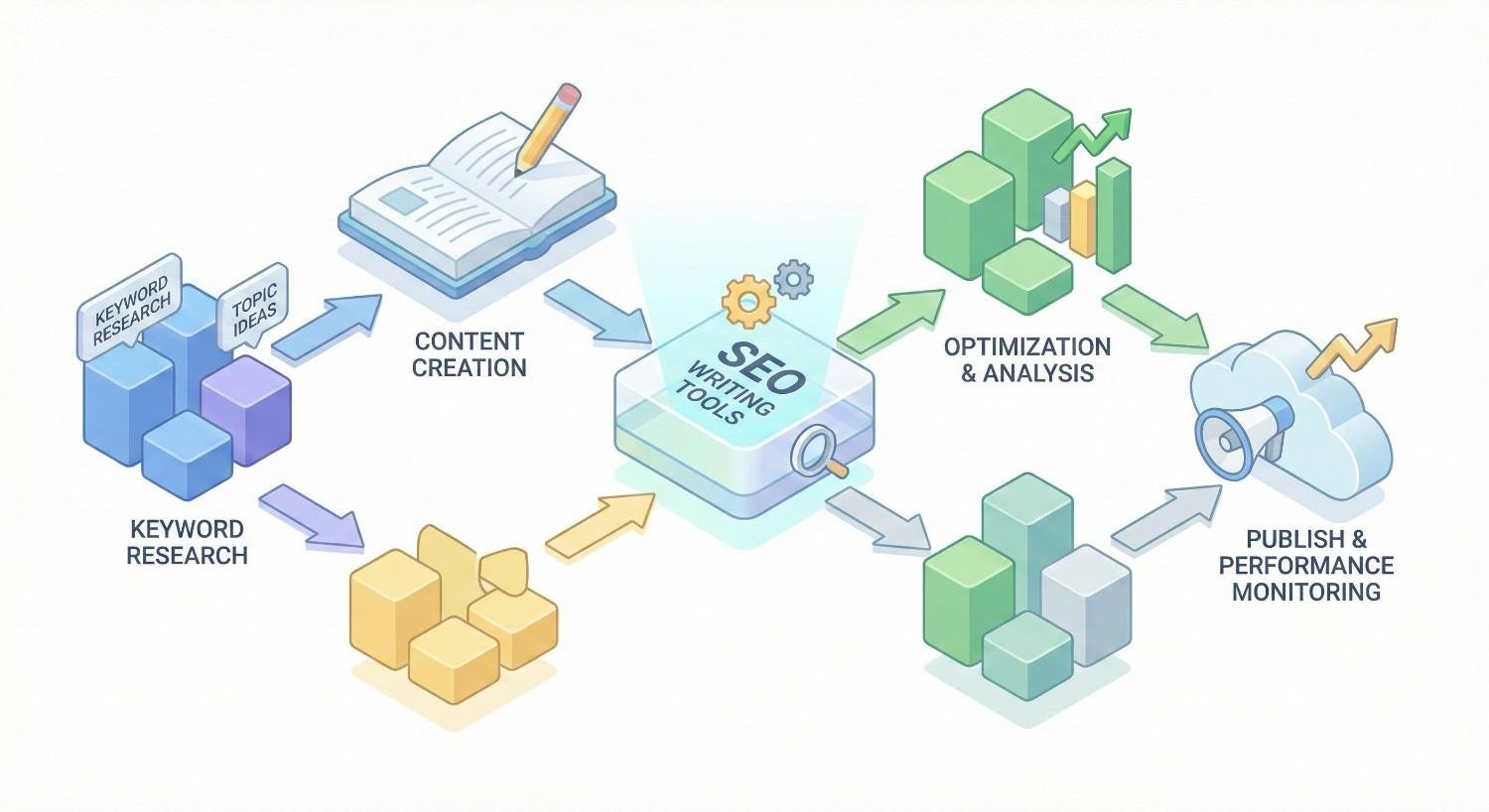
How SEO Writing Tools Fit Into Your Content Workflow
SEO writing tools integrate at multiple stages of content production.
During planning, tools generate briefs that guide writers before drafting begins. This prevents wasted effort on content that misses optimization targets.
During writing, real-time editors provide feedback as content develops. Writers see optimization scores update with each paragraph, allowing immediate adjustments.
During editing, tools identify gaps in existing content. Teams can audit published pages and prioritize updates based on optimization potential.
During quality control, editors verify that content meets optimization standards before publication. This creates consistency across multiple writers and content types.
The Difference Between AI Writing Tools and SEO-Specific Platforms
AI writing tools like ChatGPT or Jasper generate content based on language patterns. They produce grammatically correct, coherent text but lack real-time SERP analysis.
SEO-specific platforms analyze actual search results to inform recommendations. They know what currently ranks for your target keyword and adjust guidance accordingly.
The distinction matters because search optimization requires competitive context. A well-written article that ignores ranking factors will underperform compared to strategically optimized content.
Some platforms combine both capabilities. Jasper integrates with Surfer SEO to merge AI generation with optimization guidance. This hybrid approach offers efficiency but requires careful quality control.
Key Features to Evaluate When Comparing SEO Writing Tools
Not all SEO writing tools offer the same capabilities. Understanding feature categories helps you evaluate platforms against your specific requirements.
Content Optimization and On-Page SEO Capabilities
Content optimization features form the core of any SEO writing tool.
Real-time scoring shows optimization progress as you write. Look for tools that update scores instantly rather than requiring manual refreshes.
Term suggestions should include both exact keywords and semantic variations. The best tools distinguish between required terms and optional enhancements.
Structure recommendations guide heading hierarchy, paragraph length, and content organization. These suggestions should adapt to your specific keyword rather than applying generic rules.
NLP analysis evaluates content against natural language processing models similar to those search engines use. This goes beyond keyword counting to assess topical relevance.
Keyword Research and Semantic Analysis Features
Keyword capabilities vary significantly across platforms.
Primary keyword analysis examines search volume, difficulty, and SERP features for your target term.
Related keyword discovery identifies semantically connected phrases that strengthen topical coverage.
Question extraction pulls common queries from People Also Ask boxes and related searches.
Entity recognition identifies important concepts, brands, and topics that ranking content mentions.
Content Brief Generation and Topic Modeling
Brief generation saves hours of manual research.
Automated briefs should include target word count, required headings, key terms, and competitive insights.
Customizable templates allow teams to standardize brief formats across projects.
Collaboration features enable brief sharing between strategists and writers.
Export options let teams use briefs in their preferred writing environment.
Competitor Content Analysis and Gap Identification
Competitive analysis reveals optimization opportunities.
SERP analysis shows what currently ranks, including content type, word count, and structure.
Content gap identification highlights topics competitors cover that your content misses.
Backlink data indicates authority levels of ranking pages, helping you assess competitive difficulty.
Historical tracking shows how SERP composition changes over time.
Readability, Tone, and Quality Scoring
Quality metrics ensure content serves readers, not just algorithms.
Readability scores measure sentence complexity and vocabulary level.
Tone analysis evaluates whether content matches your brand voice.
Plagiarism detection identifies potential duplicate content issues.
Grammar checking catches errors that undermine credibility.
Integration with CMS, Analytics, and SEO Platforms
Integration capabilities affect workflow efficiency.
CMS plugins enable optimization directly in WordPress, Webflow, or other platforms.
Google integrations connect Search Console and Analytics data for performance tracking.
SEO platform connections sync with Ahrefs, SEMrush, or Moz for unified workflows.
API access allows custom integrations with proprietary systems.
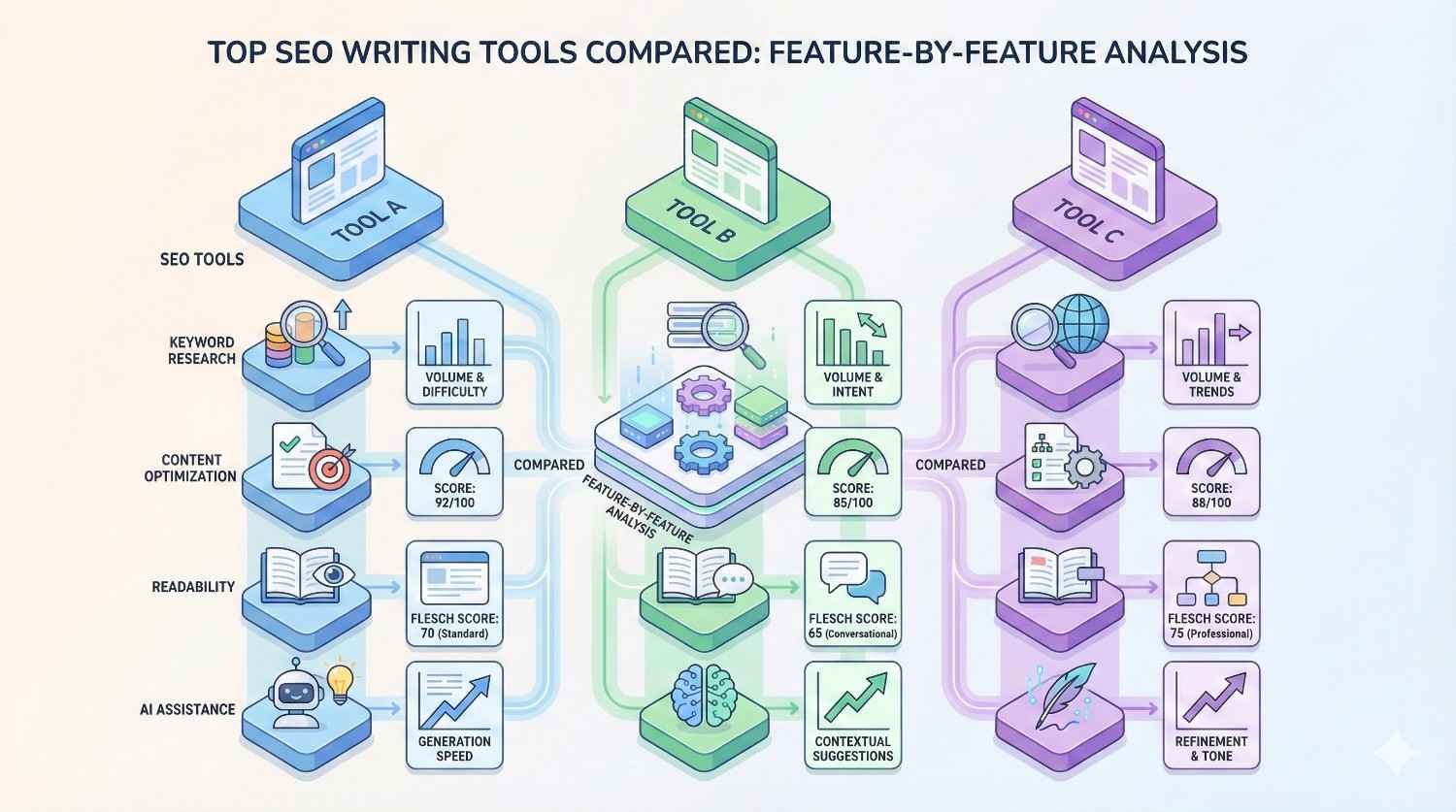
Top SEO Writing Tools Compared: Feature-by-Feature Analysis
This section examines six leading platforms in detail. Each analysis covers strengths, pricing, ideal use cases, and limitations to inform your evaluation.
Surfer SEO: Content Editor and SERP Analysis
Surfer SEO has established itself as a leading content optimization platform, particularly strong in SERP-based analysis and real-time content scoring.
Key Features and Strengths
Surfer’s Content Editor provides real-time optimization guidance based on analysis of top-ranking pages. The editor displays a content score that updates as you write, showing progress toward optimization targets.
SERP Analyzer examines ranking pages in detail, extracting word counts, heading structures, keyword usage patterns, and backlink profiles. This data informs content recommendations.
Keyword Research identifies related terms and questions, organized by relevance and search volume. The tool clusters keywords by topic to support content planning.
Audit functionality evaluates existing content against current SERP conditions, identifying optimization opportunities for published pages.
AI writing integration through Surfer AI generates optimized drafts based on your keyword and brief settings.
Pricing Structure
Surfer offers tiered pricing based on content editor credits and feature access.
The Essential plan starts at $89/month for 30 articles, suitable for small teams or individual content creators.
The Scale plan at $129/month includes 100 articles and additional features like audit capabilities.
The Scale AI plan at $219/month adds AI writing credits for automated content generation.
Enterprise pricing is available for high-volume needs.
Best Use Cases
Surfer excels for teams prioritizing data-driven content optimization. The platform works well when you need clear, actionable guidance based on competitive analysis.
Content agencies benefit from Surfer’s scalability and collaboration features. Multiple writers can access briefs and editors simultaneously.
In-house teams with dedicated content producers find value in the real-time feedback loop that improves content quality during creation.
SEO professionals use Surfer’s audit features to identify optimization opportunities across existing content libraries.
Limitations and Considerations
Surfer’s recommendations can feel prescriptive. Writers sometimes report that following all suggestions produces content that reads unnaturally.
The tool lacks deep AI writing capabilities in its core product. While Surfer AI exists, it requires additional investment and produces variable quality.
Learning curve exists for teams new to content optimization tools. Understanding how to interpret and selectively apply recommendations takes practice.
Credit-based pricing can become expensive for high-volume publishers who exceed plan limits.
Clearscope: Semantic Content Optimization
Clearscope focuses on semantic analysis and content grading, emphasizing comprehensive topic coverage over keyword density.
Key Features and Strengths
Clearscope’s Content Grade system evaluates content against a semantic model of topic coverage. The A++ to F scale provides intuitive feedback on content completeness.
Term importance weighting distinguishes between essential and supplementary terms. This helps writers prioritize coverage without over-optimizing.
Competitor content analysis shows how top-ranking pages approach the topic, including their content grades and term usage.
Google Docs and WordPress integrations enable optimization within familiar writing environments.
Readability metrics complement SEO guidance with quality indicators.
Pricing Structure
Clearscope positions itself as a premium solution with pricing reflecting enterprise-grade capabilities.
The Essentials plan starts at $189/month for 100 content reports, targeting growing content teams.
Business and Enterprise tiers offer increased report volumes and additional features like API access and custom integrations.
Clearscope does not offer a free trial, though demos are available.
Best Use Cases
Clearscope suits teams focused on content quality alongside optimization. The semantic approach encourages comprehensive coverage rather than keyword stuffing.
Enterprise content teams benefit from Clearscope’s clean interface and straightforward grading system. The tool requires minimal training.
Editorial teams appreciate that Clearscope recommendations enhance rather than constrain writing. The tool suggests topics to cover without dictating exact phrasing.
B2B companies with complex topics find Clearscope’s semantic analysis particularly valuable for ensuring thorough coverage.
Limitations and Considerations
Premium pricing places Clearscope beyond reach for many small businesses and individual creators.
The tool provides less granular guidance than competitors. Writers seeking specific word counts or exact keyword placements may find recommendations too general.
Limited keyword research capabilities mean teams often need supplementary tools for initial keyword discovery.
No AI writing features require teams to produce all content manually or use separate generation tools.
Frase: AI-Powered Content Research and Optimization
Frase combines content research, brief generation, and AI writing in an integrated platform designed for efficiency.
Key Features and Strengths
Content briefs generated automatically from SERP analysis include outlines, questions to answer, and statistics from ranking content.
AI writing assistant produces draft content based on briefs and optimization targets. The AI can generate full articles or expand specific sections.
Question research extracts queries from People Also Ask, Quora, Reddit, and other sources to inform content planning.
SERP analysis provides competitive insights including content structure, word counts, and topic coverage.
Answer engine helps writers quickly research topics by summarizing information from top-ranking sources.
Pricing Structure
Frase offers competitive pricing with generous feature access at lower tiers.
The Solo plan at $15/month includes 10 documents, suitable for individual bloggers or freelancers.
The Basic plan at $45/month provides 30 documents with full optimization features.
The Team plan at $115/month supports collaboration with unlimited users and 60 documents.
AI writing credits require additional purchase across all plans.
Best Use Cases
Frase excels for teams seeking research efficiency. The platform consolidates multiple research steps into a single workflow.
Content marketers producing high volumes of blog content benefit from Frase’s brief generation and AI assistance.
Freelance writers find value in Frase’s affordable entry point and comprehensive feature set.
Small teams without dedicated SEO specialists use Frase to guide content strategy without deep technical expertise.
Limitations and Considerations
AI content quality varies significantly. Generated drafts require substantial editing to meet publication standards.
Optimization scoring is less sophisticated than dedicated tools like Surfer or Clearscope.
Interface complexity can overwhelm new users. The platform offers many features but navigation takes time to master.
Document limits on lower tiers may constrain high-volume publishers.
MarketMuse: Content Intelligence and Planning
MarketMuse positions itself as a content intelligence platform, emphasizing strategic planning alongside optimization.
Key Features and Strengths
Content inventory analysis evaluates your entire site to identify topical strengths, weaknesses, and opportunities.
Topic modeling maps relationships between subjects, helping teams build comprehensive content clusters.
Personalized difficulty scores account for your site’s existing authority when estimating ranking potential.
Content briefs include detailed outlines with suggested word counts, headings, and related topics.
Competitive content analysis benchmarks your coverage against competitors across entire topic areas.
Pricing Structure
MarketMuse targets enterprise users with pricing reflecting advanced capabilities.
A Free plan offers limited access for evaluation purposes.
The Standard plan at $149/month provides core optimization features with usage limits.
The Team plan at $399/month adds collaboration features and increased capacity.
Premium pricing for enterprise needs is available through sales consultation.
Best Use Cases
MarketMuse suits organizations focused on topical authority building. The platform excels at strategic content planning across large topic areas.
Enterprise publishers with extensive content libraries benefit from inventory analysis and gap identification.
Content strategists use MarketMuse to plan comprehensive content programs rather than individual articles.
SEO agencies serving multiple clients leverage MarketMuse’s site-level analysis for strategic recommendations.
Limitations and Considerations
High pricing limits accessibility for smaller organizations.
Complexity requires significant investment in learning the platform’s strategic frameworks.
Overkill for simple needs. Teams producing occasional blog posts may not utilize MarketMuse’s advanced capabilities.
Slower workflow compared to tools focused purely on content optimization. Strategic analysis takes time.

SEMrush Writing Assistant: Integrated SEO Content Tool
SEMrush Writing Assistant integrates content optimization into the broader SEMrush SEO platform, offering convenience for existing users.
Key Features and Strengths
SEO recommendations based on target keywords include readability, tone, originality, and optimization scores.
Google Docs, WordPress, and MS Word integrations enable optimization in familiar environments.
Tone of voice analysis evaluates content against brand guidelines or competitor benchmarks.
Plagiarism checking identifies potential duplicate content issues.
Seamless SEMrush integration connects content optimization with keyword research, site audits, and rank tracking.
Pricing Structure
SEMrush Writing Assistant is included with SEMrush subscriptions.
The Pro plan at $139.95/month includes Writing Assistant alongside core SEMrush features.
The Guru plan at $249.95/month adds content marketing platform features.
The Business plan at $499.95/month provides enterprise capabilities.
Writing Assistant is not available as a standalone product.
Best Use Cases
SEMrush Writing Assistant suits teams already using SEMrush for SEO. The integration eliminates tool switching and consolidates workflows.
Marketing teams managing SEO alongside content production benefit from unified data and recommendations.
Agencies using SEMrush for client SEO can extend the platform to content optimization without additional subscriptions.
Small businesses with limited tool budgets appreciate getting content optimization included with their SEO platform.
Limitations and Considerations
Less sophisticated optimization compared to dedicated tools. Recommendations are useful but not as detailed as Surfer or Clearscope.
Requires SEMrush subscription. Teams not using SEMrush for other purposes face high costs for Writing Assistant alone.
Limited content brief capabilities. The tool focuses on optimization rather than research and planning.
No AI writing features in the core product.
Jasper AI with Surfer SEO Integration: AI Writing Meets Optimization
Jasper AI combined with Surfer SEO integration offers AI content generation with real-time optimization guidance.
Key Features and Strengths
AI content generation produces drafts across multiple formats including blog posts, landing pages, and social content.
Surfer SEO integration provides optimization scoring and recommendations within Jasper’s editor.
Brand voice training allows Jasper to learn your company’s tone and terminology.
Templates accelerate content creation for common formats and use cases.
Team collaboration features support content workflows across multiple users.
Pricing Structure
Jasper and Surfer require separate subscriptions for full functionality.
Jasper Creator starts at $49/month for individual users with limited features.
Jasper Pro at $69/month includes brand voice and additional capabilities.
Jasper Business offers custom pricing for enterprise needs.
Surfer integration requires a separate Surfer subscription starting at $89/month.
Combined costs range from $138/month minimum for basic integration.
Best Use Cases
The Jasper-Surfer combination suits teams prioritizing content production speed. AI generation accelerates drafting while Surfer ensures optimization.
High-volume publishers producing multiple articles weekly benefit from AI assistance with optimization guidance.
Marketing teams with limited writing resources use Jasper to scale content production.
Agencies serving multiple clients leverage AI efficiency while maintaining optimization standards.
Limitations and Considerations
AI content quality concerns persist. Generated content requires significant editing for accuracy, originality, and brand alignment.
Combined subscription costs add up quickly, potentially exceeding dedicated optimization tools.
Over-reliance risk. Teams may prioritize speed over quality, producing generic content that fails to differentiate.
Learning curve for effective AI prompting. Getting quality output from Jasper requires skill development.
SEO Writing Tools Comparison Table: Features, Pricing, and Performance
| Feature | Surfer SEO | Clearscope | Frase | MarketMuse | SEMrush WA | Jasper + Surfer |
| Starting Price | $89/mo | $189/mo | $15/mo | $149/mo | $139.95/mo* | $138/mo |
| Real-time Scoring | ✓ | ✓ | ✓ | ✓ | ✓ | ✓ |
| SERP Analysis | Advanced | Moderate | Moderate | Advanced | Basic | Advanced |
| Content Briefs | ✓ | Limited | ✓ | ✓ | Limited | ✓ |
| AI Writing | Add-on | ✗ | ✓ | Limited | ✗ | ✓ |
| Keyword Research | ✓ | Limited | ✓ | ✓ | Via SEMrush | Via Surfer |
| Site Audit | ✓ | ✗ | ✗ | ✓ | Via SEMrush | ✓ |
| Google Docs Plugin | ✓ | ✓ | ✓ | ✓ | ✓ | ✗ |
| WordPress Plugin | ✓ | ✓ | ✓ | ✓ | ✓ | ✗ |
| Team Collaboration | ✓ | ✓ | ✓ | ✓ | ✓ | ✓ |
| Best For | Data-driven optimization | Quality-focused teams | Budget-conscious | Enterprise strategy | SEMrush users | High-volume AI content |
*SEMrush Writing Assistant requires full SEMrush subscription
How to Choose the Right SEO Writing Tool for Your Business
Selecting the right tool requires matching platform capabilities to your specific situation. Consider these factors systematically.
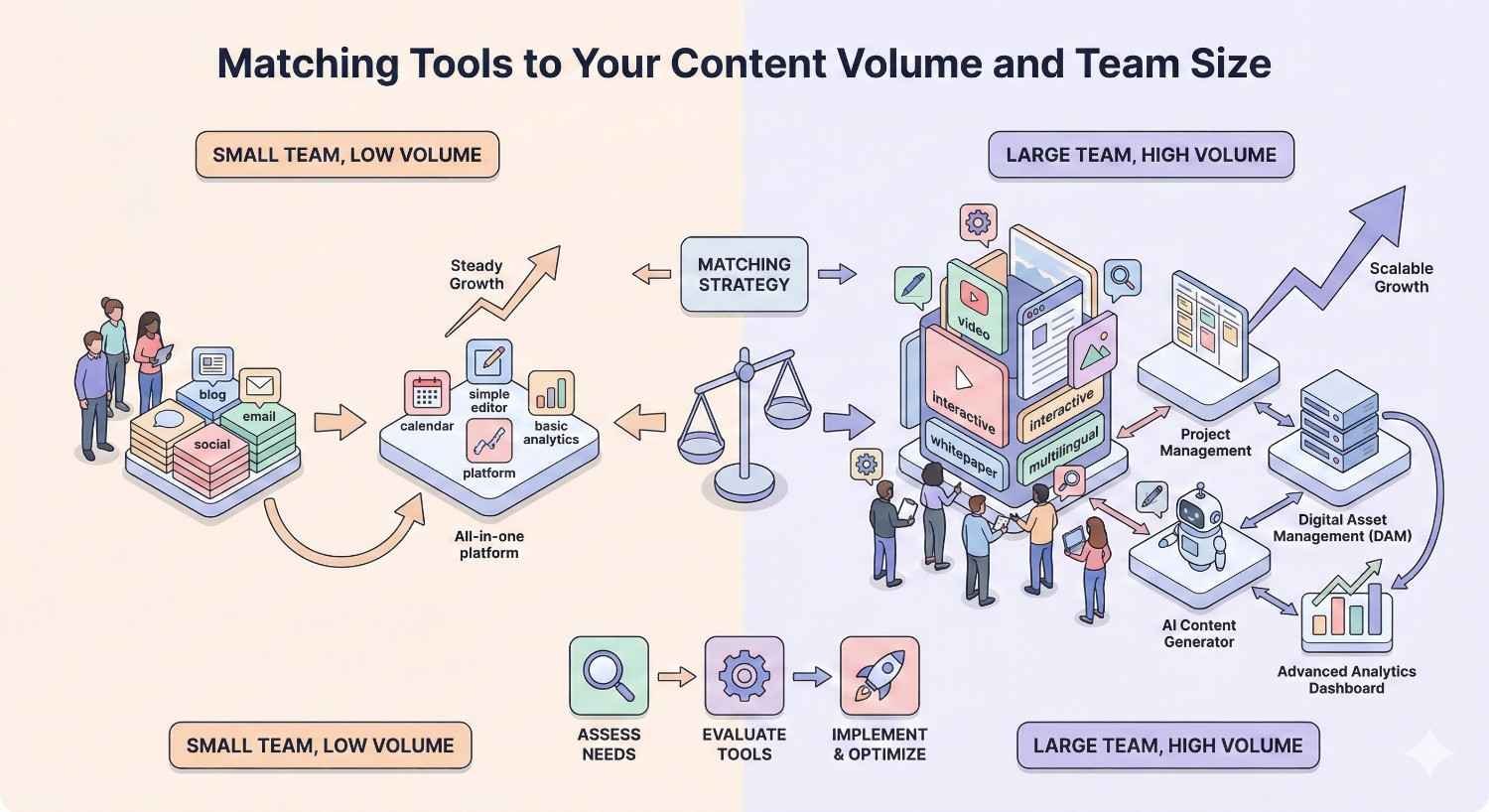
Matching Tools to Your Content Volume and Team Size
Content volume significantly impacts tool selection.
Low volume (1-5 articles/month): Frase’s affordable entry point or SEMrush Writing Assistant (if you already subscribe) provides sufficient capability without overspending.
Medium volume (5-20 articles/month): Surfer SEO or Clearscope offer robust optimization at reasonable per-article costs. Both scale well for growing teams.
High volume (20+ articles/month): Consider Surfer’s higher tiers or MarketMuse for strategic planning. Jasper integration may accelerate production if quality controls exist.
Team size affects collaboration requirements.
Solo creators need straightforward interfaces without complex team features. Frase or Surfer’s basic plans work well.
Small teams (2-5 people) benefit from shared workspaces and brief collaboration. Most tools support this scale adequately.
Large teams (5+ people) require robust permissions, workflow management, and consistent processes. MarketMuse or enterprise tiers of other tools provide necessary structure.
Budget Considerations: ROI and Cost-Effectiveness
Calculate tool ROI based on time savings and content performance improvements.
Time savings: If a tool saves 2 hours per article and you produce 10 articles monthly, that’s 20 hours saved. Value this time against tool costs.
Performance improvements: Track ranking changes and traffic growth for optimized content. Even modest improvements justify tool investments.
Opportunity costs: Consider what your team could accomplish with time saved. Content optimization tools often pay for themselves through increased productivity.
Hidden costs: Account for training time, integration setup, and potential need for supplementary tools.
Technical Requirements and Learning Curve
Evaluate your team’s technical comfort level.
Low technical comfort: Clearscope’s simple grading system or SEMrush Writing Assistant’s familiar interface minimize learning curves.
Moderate technical comfort: Surfer SEO and Frase offer more features but require understanding optimization concepts.
High technical comfort: MarketMuse’s strategic capabilities reward teams willing to invest in learning advanced features.
Consider existing workflows.
Google Docs users benefit from tools with strong Docs integration (Clearscope, Surfer, Frase).
WordPress publishers should prioritize tools with reliable WordPress plugins.
Custom CMS users may need API access for integration.
Integration with Your Existing SEO and Marketing Stack
Map tool capabilities against your current technology.
SEMrush users get immediate value from Writing Assistant without additional subscriptions.
Ahrefs users may prefer Surfer or Clearscope, which complement Ahrefs’ keyword and backlink data.
HubSpot or similar marketing platforms benefit from tools with broad integration capabilities.
Custom analytics setups require tools with API access or export functionality.
Real-World Performance: How SEO Writing Tools Impact Rankings and Traffic
Understanding realistic outcomes helps set appropriate expectations for tool-assisted content.
What SEO Writing Tools Can Actually Improve
SEO writing tools demonstrably improve several content factors.
Topical coverage increases when tools identify gaps in your content. Comprehensive coverage correlates with improved rankings for informational queries.
On-page optimization improves through systematic keyword placement, heading structure, and content organization guidance.
Content consistency increases when teams follow standardized briefs and optimization targets.
Production efficiency improves as research and optimization tasks become streamlined.
What Tools Cannot Replace: Strategy, Expertise, and Authority
Tools have clear limitations that human expertise must address.
Content strategy requires understanding business goals, audience needs, and competitive positioning. Tools provide data but cannot make strategic decisions.
Subject matter expertise ensures accuracy and depth. Tools cannot verify factual claims or provide genuine insights.
Brand voice emerges from human creativity and understanding. Tools can check consistency but cannot create authentic voice.
Link building and authority depend on relationships, outreach, and content quality. No tool can manufacture genuine authority signals.
Realistic Expectations for Tool-Assisted Content Performance
Set appropriate expectations for tool-assisted content.
Optimization scores do not guarantee rankings. A perfect Surfer score means your content matches optimization patterns, not that it will rank first.
Competition matters more than optimization. Highly competitive keywords require authority and backlinks beyond what any tool provides.
Time to results varies. New content typically takes 3-6 months to reach stable rankings regardless of optimization quality.
Diminishing returns exist. Moving from 80% to 100% optimization often provides less benefit than moving from 50% to 80%.
How to Maximize Results from SEO Writing Tools
Effective tool usage requires strategic thinking beyond following recommendations.
Combining Tool Recommendations with Strategic Thinking
Use tools as inputs to decisions, not decision-makers.
Evaluate recommendations critically. Not every suggested term improves content. Consider whether additions serve readers or just algorithms.
Prioritize user value. If a recommendation would make content less helpful, skip it. User satisfaction ultimately drives rankings.
Consider search intent. Tools analyze what ranks but cannot always interpret why. Ensure your content matches what users actually seek.
Balance optimization with readability. Over-optimized content often reads poorly. Find the balance that serves both goals.
Using Tools for Content Briefs vs. Final Content Creation
Different workflow stages benefit from different tool applications.
Brief generation is where tools provide maximum value. Automated research and competitive analysis save significant time.
Drafting benefits from real-time guidance but should not constrain creativity. Write naturally first, then optimize.
Editing is ideal for optimization refinement. Use tools to identify gaps and improvements in completed drafts.
Final review should verify optimization without over-adjusting. Trust your editorial judgment alongside tool scores.
Quality Control: When to Override Tool Suggestions
Know when to ignore tool recommendations.
Unnatural phrasing: If including a term requires awkward sentence construction, find alternatives or skip it.
Irrelevant topics: Tools sometimes suggest tangentially related content that would dilute focus.
Excessive length: Word count recommendations reflect averages, not requirements. Shorter, focused content often outperforms bloated articles.
Keyword stuffing signals: If recommendations push toward unnatural keyword density, prioritize readability.
Measuring Content Performance Beyond Tool Scores
Track metrics that matter for business outcomes.
Organic traffic indicates whether content attracts search visitors.
Ranking positions show competitive performance for target keywords.
Engagement metrics reveal whether content satisfies user needs.
Conversions connect content performance to business results.
Tool scores are leading indicators, not success metrics. High scores with poor traffic indicate misaligned optimization.
Common Mistakes When Using SEO Writing Tools
Avoid these frequent errors that undermine tool effectiveness.
Over-Optimizing Content Based on Tool Scores
Chasing perfect scores often backfires.
Keyword stuffing occurs when writers force every suggested term into content. This creates unnatural reading experiences.
Content bloat results from adding sections just to increase word count. Padding reduces content quality.
Lost focus happens when covering every tangential topic tools suggest. Maintain clear content purpose.
Diminishing returns mean the effort to reach 100% scores rarely justifies the time investment.
Ignoring User Intent and Search Context
Tools analyze patterns but cannot fully interpret intent.
Mismatched content types occur when tools suggest article formats that don’t match query intent. A product comparison query needs comparison content, not general information.
Missing the real question happens when optimizing for keywords without understanding what users actually want to know.
Ignoring SERP features means missing opportunities for featured snippets, People Also Ask, or other special results.
Relying on Tools Without Understanding SEO Fundamentals
Tools amplify expertise but cannot replace it.
Blind following of recommendations without understanding why leads to inconsistent results.
Missing context means not recognizing when tool suggestions conflict with SEO best practices.
Inability to troubleshoot when optimized content underperforms requires understanding beyond what tools provide.
Neglecting Content Quality for Optimization Metrics
Optimization serves content quality, not the reverse.
Sacrificing readability for keyword inclusion damages user experience.
Generic content that hits optimization targets but offers no unique value fails to differentiate.
Factual errors introduced while optimizing undermine credibility and trust.
SEO Writing Tools vs. Professional SEO Content Services
Understanding when tools suffice and when professional services deliver better ROI helps allocate resources effectively.
When DIY Tools Are Sufficient
Tools work well in specific situations.
Established content expertise means your team already produces quality content and needs optimization guidance.
Clear content strategy provides direction that tools can support with tactical execution.
Adequate time resources allow teams to learn tools and apply recommendations thoughtfully.
Lower competition keywords where optimization alone can drive rankings without extensive authority building.
When Professional Strategy and Execution Deliver Better ROI
Professional services outperform DIY approaches in certain contexts.
Competitive markets require strategic expertise beyond tool capabilities. Professionals understand how to differentiate and build authority.
Limited internal resources mean tool learning curves and execution time exceed available capacity.
Complex technical requirements benefit from professional implementation and integration.
High-stakes content where quality directly impacts revenue justifies professional investment.
Hybrid Approach: Tools + Expert Oversight
Many organizations benefit from combining approaches.
Professional strategy sets direction and priorities while internal teams execute with tool assistance.
Expert audits periodically review tool-assisted content to ensure quality and strategic alignment.
Training and enablement from professionals helps internal teams use tools more effectively.
Specialized content from professionals complements tool-assisted production for routine content.
The Future of SEO Writing Tools: AI, Automation, and Content Intelligence
Understanding emerging trends helps prepare for evolving tool capabilities.
Emerging Capabilities in AI-Powered Content Optimization
AI advancement is transforming tool capabilities.
Improved content generation produces higher quality drafts requiring less editing. Models continue advancing rapidly.
Predictive optimization will forecast ranking potential before publication, enabling better content prioritization.
Automated content updates will identify and refresh outdated content based on SERP changes.
Personalized recommendations will adapt to your site’s specific authority and competitive position.
How Search Algorithm Changes Affect Tool Effectiveness
Algorithm evolution impacts tool relevance.
Helpful content updates emphasize user value over optimization patterns. Tools must evolve beyond keyword matching.
AI-generated content detection may affect how search engines evaluate tool-assisted content.
Experience signals increasingly matter. Tools cannot manufacture genuine expertise or first-hand knowledge.
Entity understanding advances mean tools must better incorporate entity relationships and knowledge graph alignment.
Preparing Your Content Strategy for Evolving Tool Capabilities
Position your strategy for future developments.
Invest in expertise that tools cannot replicate. Subject matter knowledge and genuine experience remain valuable.
Build processes that incorporate tools flexibly. Avoid over-dependence on specific platforms.
Monitor tool evolution and adjust workflows as capabilities change.
Maintain quality standards regardless of tool assistance. User value remains the ultimate ranking factor.
Conclusion: Choosing the Right SEO Writing Tool for Sustainable Growth
SEO writing tools provide valuable optimization guidance, but effectiveness depends on matching capabilities to your specific needs, budget, and team expertise. The right tool accelerates content production and improves optimization consistency without replacing strategic thinking or subject matter expertise.
Surfer SEO, Clearscope, Frase, MarketMuse, SEMrush Writing Assistant, and Jasper with Surfer integration each serve different use cases. Evaluate based on content volume, team size, technical requirements, and existing tool stack rather than feature lists alone.
We help businesses build sustainable organic growth through strategic SEO that combines the right tools with expert execution. Contact White Label SEO Service to discuss how professional content strategy can accelerate your search visibility and drive measurable business results.
Frequently Asked Questions
Which SEO writing tool is best for beginners?
Frase offers the most accessible entry point with affordable pricing and comprehensive features. The interface requires some learning, but the combination of research, briefs, and optimization guidance provides everything beginners need without overwhelming complexity.
Do SEO writing tools actually improve rankings?
SEO writing tools improve content optimization factors that correlate with rankings, but they cannot guarantee results. Tools help ensure comprehensive topic coverage and proper keyword usage, which are necessary but not sufficient ranking factors. Authority, backlinks, and user engagement also matter significantly.
Can I use multiple SEO writing tools together?
Yes, many teams combine tools for different purposes. You might use MarketMuse for strategic planning, Surfer for content optimization, and Jasper for draft generation. However, overlapping subscriptions increase costs, so evaluate whether combined capabilities justify the investment.
How much should I spend on SEO writing tools?
Budget depends on content volume and business impact. For most small to medium businesses, $100-200/month provides adequate capability. Calculate ROI based on time savings and content performance improvements rather than feature comparisons alone.
Are free SEO writing tools worth using?
Free tools and free tiers provide limited value for serious content optimization. They work for occasional use or evaluation but lack the depth needed for consistent optimization. Most businesses benefit from paid tools that provide comprehensive guidance and adequate usage limits.
How do SEO writing tools compare to hiring an SEO content writer?
Tools and writers serve different functions. Tools provide optimization guidance but cannot create content independently. Writers produce content but may lack optimization expertise. The best approach often combines skilled writers with tool-assisted optimization or professional services that integrate both capabilities.
Will AI writing tools replace SEO content writers?
AI tools accelerate content production but cannot replace human expertise, creativity, and strategic thinking. Current AI generates competent drafts but requires significant editing for accuracy, originality, and brand alignment. Human oversight remains essential for quality content that builds genuine authority.