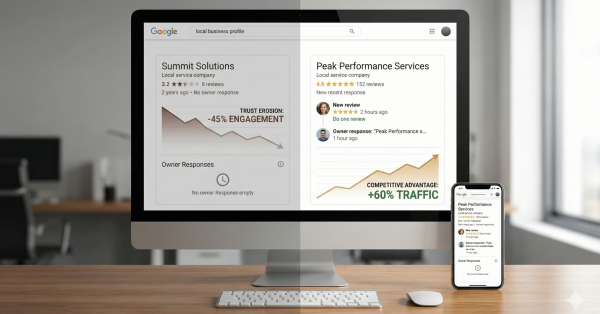
Skipping local content makes your business look generic, and generic businesses rarely earn clicks, calls, or trust locally.
Local search rewards relevance and familiarity, not vague service pages that could belong to any city.
Struggling to rank locally even with citations and a Google Business Profile?
White Label SEO Service builds human-first local content that agencies resell confidently and clients trust instantly.
What top competitors emphasize (and why)
Most white-label local SEO competitors focus heavily on infrastructure, automation, and fulfillment efficiency.
They emphasize listings management, citation accuracy, reporting dashboards, and Google Business Profile optimization for scale.
The common competitor pattern
Local content is usually treated as an add-on instead of a structured, conversion-driven system.
Pages exist, but they lack depth, local proof, and intent alignment that converts visitors into leads.
Why competitors avoid deep local content
High-quality local content requires research, quality control, and local context that tools cannot automate easily.
That complexity creates a gap agencies can exploit with better strategy and execution.
Gap analysis and new opportunities for White Label SEO Service
Most competitors fail to connect local content directly to rankings, trust, and conversion outcomes.
This opens the door for White Label SEO Service to lead with structured, scalable local content systems.
New opportunities you can package today
Local content can be productized into repeatable, high-margin deliverables agencies sell monthly.
High-impact deliverables include:
- Conversion-focused location pages written for real people
- Service-area support pages answering local objections
- Local FAQs built from real customer questions
- Short local case stories and recent job highlights
What “local content” actually means
Local content proves you actively serve a specific area with real experience, not just keyword placement.
It answers local questions clearly and reflects how customers actually search and decide.
Local content examples that work
Strong local content includes pricing factors, timelines, neighborhoods served, and common local challenges.
It sounds like a business talking to neighbors, not a website talking to algorithms.
Why skipping local content hurts rankings and leads
When pages lack local context, Google struggles to match them to nearby search intent.
Local results rely on relevance, distance, and popularity, and content directly supports relevance.
Trust and conversion suffer first
Thin pages feel unfinished and risky, especially when competitors show clear local experience.
Clear local proof reduces hesitation and increases conversion rate across calls and forms.
Other local SEO efforts stall
Listings and citations help discovery, but content closes the deal once users land on your site.
Without strong pages, traffic leaks instead of converting.
If your local rankings look fine but leads stay low, content may be the missing layer.
White Label SEO Service builds local pages that support rankings and close the click.
A simple local content plan you can use this week
Local content works best when it is published consistently and improved over time.
Focus on people-first writing that answers real questions clearly and honestly.
Step 1 Create one strong location page per location
Each page should explain why your business is the best choice in that area today.
Core sections to include:
- Services available locally
- Service boundaries and response times
- Reviews, photos, or short job proof
- FAQs and a clear next step
Step 2 Add support pages, not doorway pages
Support pages should add new value instead of copying the main page with swapped city names.
Google favors helpful content created for users, not thin variations for rankings.
Step 3 Use internal links like a map
Internal links guide users and search engines between services, locations, and proof naturally.
Link related pages consistently to strengthen topical and local relevance.
Google entities to reference naturally
Local content performs better when it aligns with how users interact across Google Search and Google Maps.
Mention Google Business Profile, services, service areas, and reviews in natural language.
E-E-A-T for local content that feels real
Experience
Show short local stories proving real work was done, including outcomes, timing, and customer context.
Even brief examples build credibility faster than generic claims.
Expertise
Explain processes in simple terms customers understand without industry jargon or marketing fluff.
People-first explanations improve trust and engagement.
Authoritativeness and Trust
Include author and reviewer bios, licenses, insurance, and consistent business details.
Transparency reduces friction and increases confidence before contact.
Who this service is for
This content strategy is ideal for SEO agencies, multi-location brands, and service businesses needing more calls.
It also helps teams tired of thin pages that rank briefly but fail to convert.
Key Takeaways
Skipping local content weakens relevance, trust, and conversions even when listings and citations look perfect.
Helpful local pages improve rankings and results when written for people first.
Remember:
- One strong location page beats ten thin ones
- Local proof matters more than keyword density
- Consistency beats perfection
Lessons learned
Local SEO works best when content sounds like a real business serving real people.
Publishing consistently and improving pages quarterly outperforms one-time content pushes.
FAQs
What is local content in SEO?
Local content is information tied to a real service area that answers local intent clearly.
It focuses on usefulness, not keyword repetition.
Are location pages still effective?
Yes, when they are unique, detailed, and helpful instead of thin doorway pages.
Quality matters more than quantity.
How often should local content be published?
Monthly publishing works well initially, with weekly expansion once processes are stable.
Consistency builds trust signals.
How do we avoid spammy local pages?
Write for people, add real local details, and avoid copy-paste city swaps.
People-first content scales safely.
Want a complete Local Content Sprint you can resell this week with confidence?
White Label SEO Service delivers strategy, writing, internal linking, and optimization fully under your brand.