
Technical SEO services form the invisible infrastructure that determines whether search engines can find, crawl, and rank your website. Without proper technical foundations, even exceptional content struggles to gain visibility in search results. Businesses investing in technical SEO typically see measurable improvements in organic traffic within 3 to 6 months.
Your website might have compelling products and valuable content, but if Google cannot efficiently access and understand your pages, rankings suffer. Technical barriers create a ceiling on your organic growth potential.
This guide covers everything you need to know about technical SEO services: core components, audit processes, pricing models, and how to select the right provider for your specific website type and business goals.
What Are Technical SEO Services?
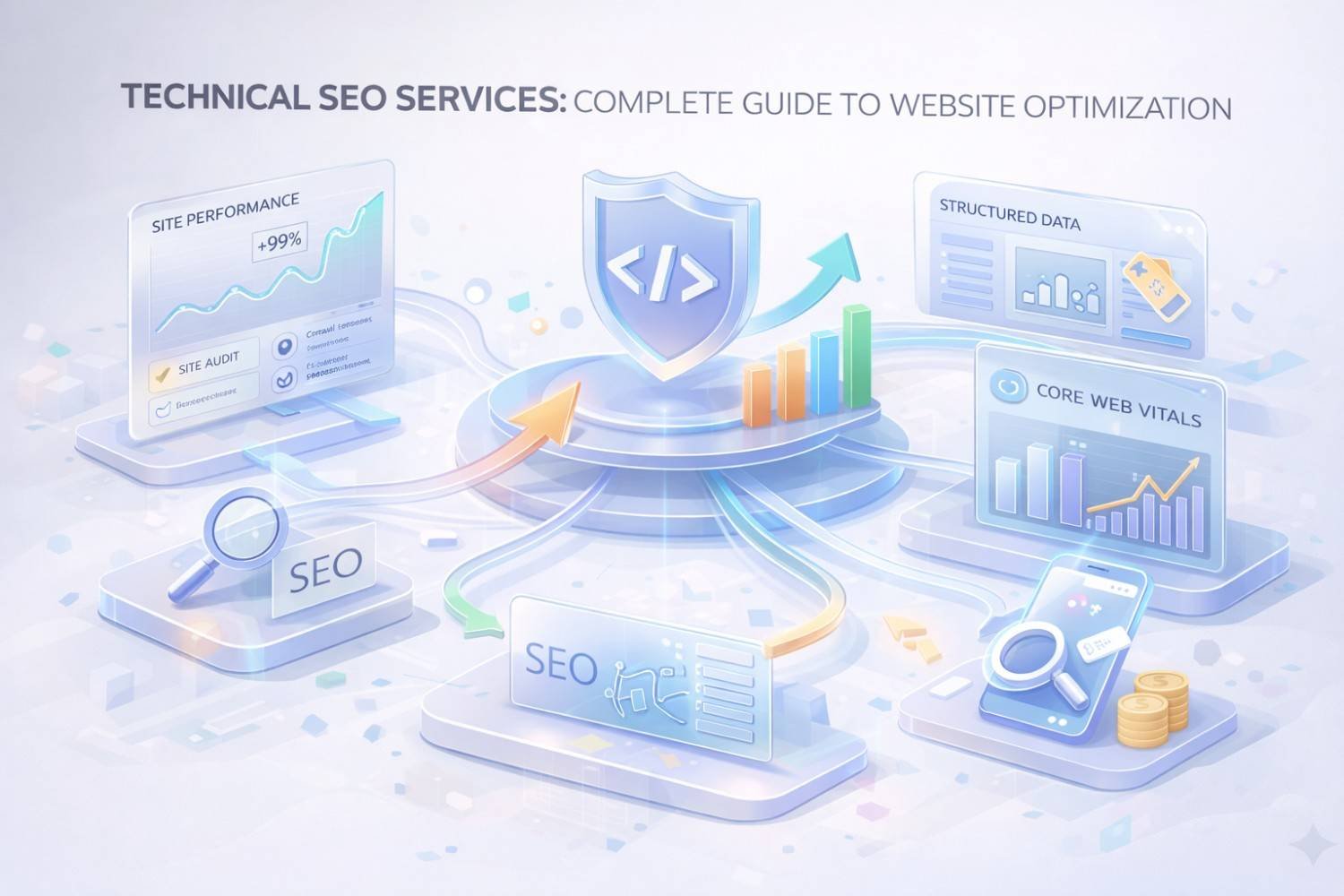
Technical SEO services focus on optimizing the backend elements of your website that affect search engine crawling, indexing, and ranking. These services address how search engines interact with your site rather than what content appears on your pages.
Definition and Core Components of Technical SEO
Technical SEO encompasses all optimization work that helps search engines access, crawl, render, and index your website more effectively. The core components include site architecture, server configuration, page speed optimization, mobile responsiveness, structured data implementation, and security protocols.
Unlike content creation or link building, technical SEO deals with the foundational elements that make your website machine-readable. Think of it as building the roads and infrastructure that allow search engine bots to navigate your digital property efficiently.
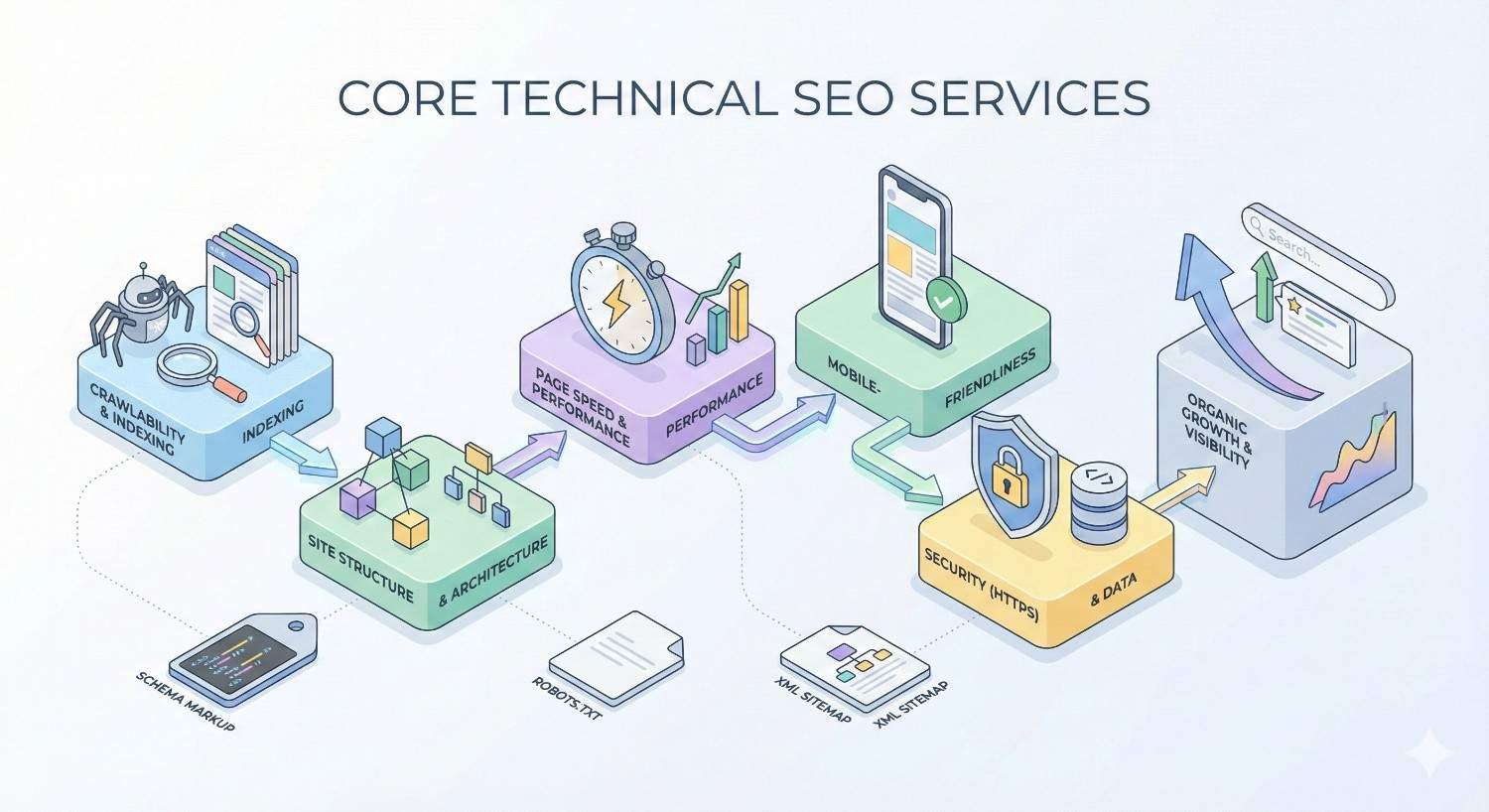
Key technical SEO components include crawlability management through robots.txt and XML sitemaps, URL structure optimization, Core Web Vitals performance, HTTPS security, mobile-first design, and schema markup implementation. Each element works together to create a website that search engines can easily understand and trust.
How Technical SEO Differs from On-Page and Off-Page SEO
On-page SEO focuses on content optimization: keywords, meta tags, headings, and the actual text users read. Off-page SEO involves external signals like backlinks, brand mentions, and social proof. Technical SEO sits beneath both, creating the foundation that allows on-page and off-page efforts to succeed.
Consider this distinction: on-page SEO is what you say, off-page SEO is what others say about you, and technical SEO is whether anyone can hear you at all. A website with severe technical issues may never get indexed regardless of content quality or backlink profile.
Technical SEO problems can completely negate your other SEO investments. If Googlebot cannot crawl your pages due to robots.txt errors, your carefully crafted content remains invisible. If your site loads slowly, users bounce before engaging with your optimized landing pages.
Why Technical SEO Is the Foundation of Search Visibility
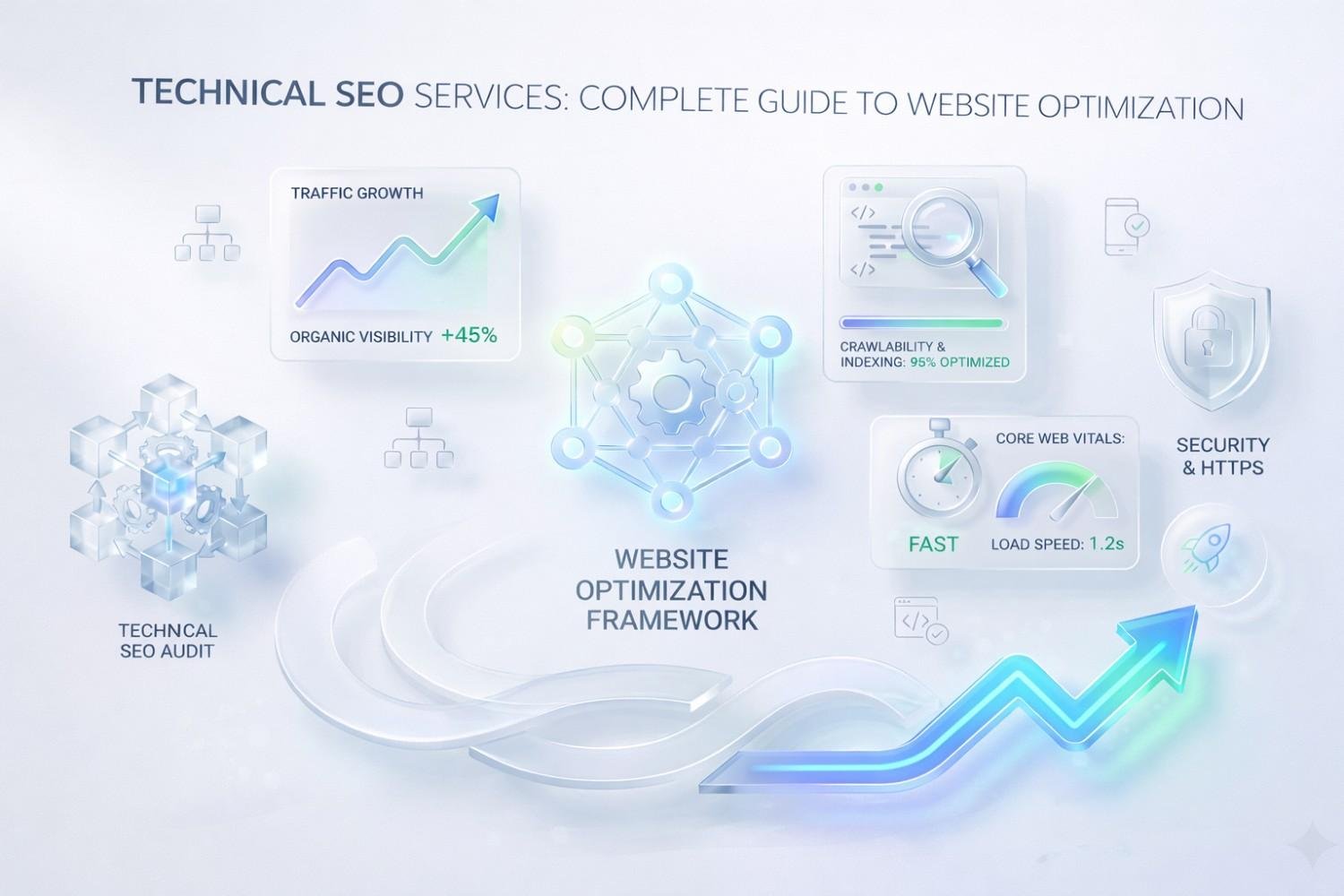
Search engines must complete three steps before ranking your content: discover your pages, crawl and render them, and index them in their database. Technical SEO directly influences each step.
Google’s own documentation confirms that crawling and indexing precede ranking. No amount of keyword optimization matters if technical barriers prevent indexation. This makes technical SEO a prerequisite rather than an optional enhancement.
Websites with strong technical foundations also benefit from better crawl efficiency. Google allocates a crawl budget to each site based on its size and authority. Technical optimization ensures search engines spend that budget on your most valuable pages rather than wasting resources on duplicate content or broken links.
Core Technical SEO Services Explained
Professional technical SEO services address multiple interconnected systems that affect search performance. Understanding each service category helps you prioritize investments based on your website’s specific needs.
Website Crawlability and Indexation Services
Crawlability determines whether search engine bots can access and navigate your website. Indexation controls which pages appear in search results. Both require careful configuration to maximize organic visibility.
Robots.txt Configuration and Optimization
The robots.txt file provides instructions to search engine crawlers about which pages or sections they should or should not access. Proper configuration prevents crawling of low-value pages while ensuring important content remains accessible.
Common robots.txt mistakes include accidentally blocking entire site sections, preventing CSS and JavaScript file access that affects rendering, or using overly permissive rules that waste crawl budget on administrative pages.
Technical SEO services audit your robots.txt for errors, optimize directives for crawl efficiency, and ensure alignment with your indexation strategy. This seemingly simple text file can dramatically impact how search engines interact with your entire website.
XML Sitemap Creation and Management
XML sitemaps provide search engines with a roadmap of your website’s important pages. They communicate page priority, update frequency, and help search engines discover content that might be difficult to find through normal crawling.
Effective sitemap management involves more than generating a file. Technical SEO services ensure sitemaps include only indexable pages, exclude duplicate or thin content, stay within size limits, and update automatically as content changes.
For larger websites, sitemap index files organize multiple sitemaps by content type or site section. This organization helps search engines understand your site structure and prioritize crawling of your most valuable pages.
Crawl Budget Optimization
Crawl budget represents the number of pages search engines will crawl on your site within a given timeframe. While smaller sites rarely face crawl budget constraints, larger websites must optimize how search engines allocate their crawling resources.
Technical SEO services identify pages consuming crawl budget without providing value: parameter-based URLs, faceted navigation pages, internal search results, and outdated content. Blocking or consolidating these pages redirects crawling attention to pages that actually drive organic traffic.
Server response time also affects crawl budget. Faster servers allow search engines to crawl more pages in less time. Technical optimization of server performance directly increases how much of your site gets crawled during each visit.
Site Architecture and URL Structure Optimization
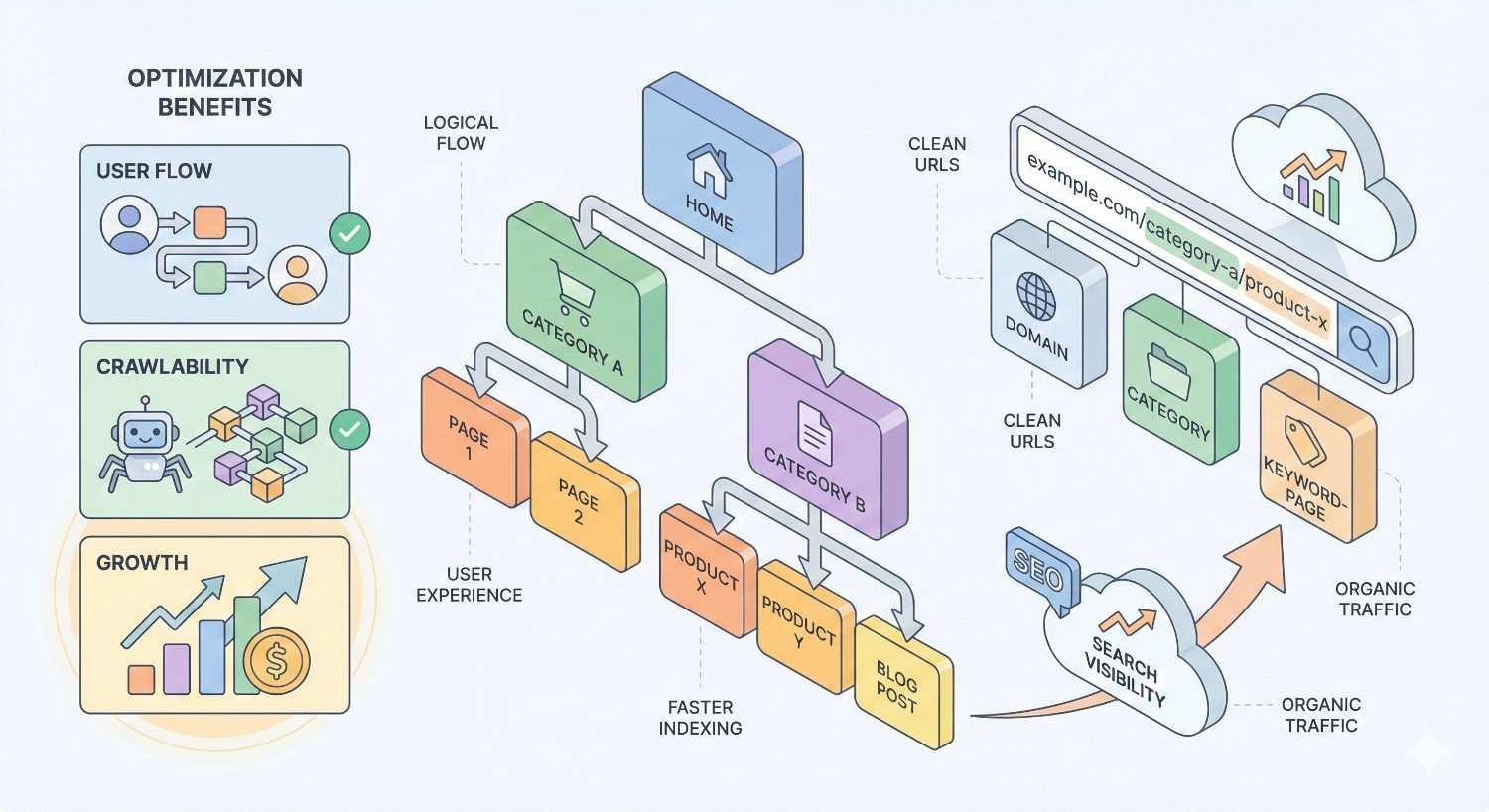
How your website organizes content affects both user experience and search engine understanding. Logical architecture helps visitors find information while signaling topical relationships to search algorithms.
Internal Linking Strategy
Internal links distribute page authority throughout your website and establish topical relationships between content. Strategic internal linking helps search engines understand which pages matter most and how topics connect.
Technical SEO services audit internal link distribution, identify orphan pages with no incoming links, and optimize anchor text usage. They also ensure important pages receive sufficient internal links to signal their value to search engines.
Link depth matters significantly. Pages requiring many clicks from the homepage receive less crawling attention and pass less authority. Flattening site architecture through strategic internal linking improves both crawlability and ranking potential.
URL Hierarchy and Canonicalization
URL structure should reflect your site’s logical organization while remaining clean and readable. Hierarchical URLs like /category/subcategory/page-name help both users and search engines understand content relationships.
Canonicalization addresses duplicate content by specifying the preferred version of pages that exist at multiple URLs. Without proper canonical tags, search engines may split ranking signals across duplicate pages or index the wrong version.
Technical SEO services implement consistent URL conventions, configure canonical tags correctly, and resolve issues like trailing slashes, www versus non-www variations, and HTTP versus HTTPS duplicates that create indexation problems.
Breadcrumb Navigation Implementation
Breadcrumbs provide secondary navigation showing users their location within site hierarchy. Beyond usability benefits, breadcrumbs create additional internal links and can appear in search results when properly marked up with structured data.
Technical implementation involves both visual breadcrumb trails and corresponding schema markup. This combination helps search engines understand your site structure while potentially earning enhanced search result displays.
Breadcrumb optimization ensures logical hierarchy representation, consistent implementation across page templates, and proper structured data that validates without errors in testing tools.
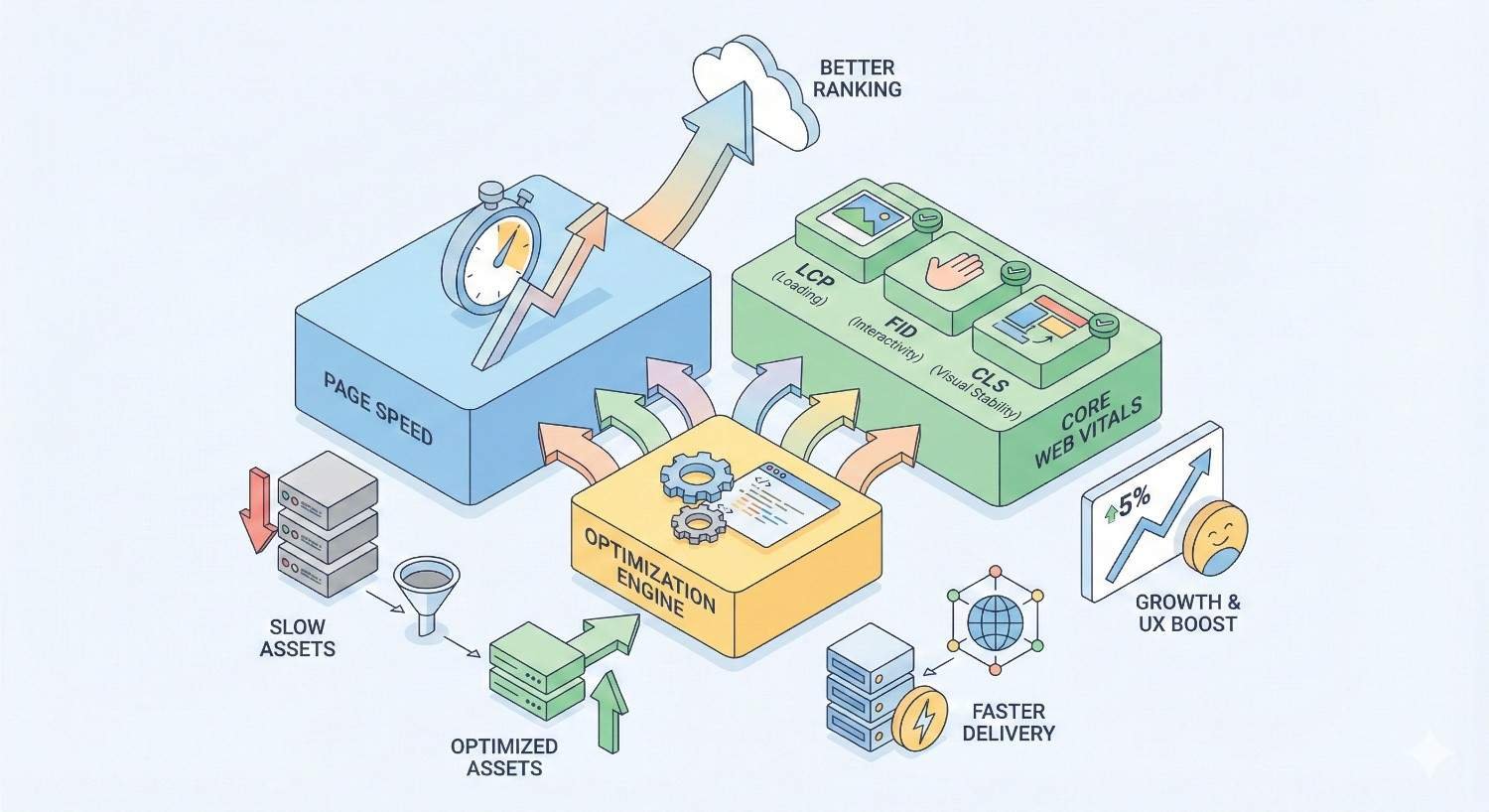
Page Speed and Core Web Vitals Optimization
Page speed directly affects both user experience and search rankings. Google’s Core Web Vitals metrics measure specific aspects of loading performance, interactivity, and visual stability that impact how users perceive your site.
Largest Contentful Paint (LCP) Optimization
LCP measures how long the largest visible content element takes to load. Google recommends LCP under 2.5 seconds for good user experience. Slow LCP often results from unoptimized images, slow server response, or render-blocking resources.
Technical optimization for LCP includes image compression and format conversion, implementing lazy loading for below-fold content, optimizing server response time, and removing or deferring render-blocking CSS and JavaScript.
Preloading critical resources and using content delivery networks can significantly improve LCP scores. Technical SEO services identify the specific bottlenecks affecting your largest content elements and implement targeted fixes.
First Input Delay (FID) and Interaction to Next Paint (INP)
FID measures the time between a user’s first interaction and the browser’s response. INP, which replaced FID as a Core Web Vital in 2024, measures responsiveness throughout the entire page visit rather than just the first interaction.
Poor interactivity scores typically result from heavy JavaScript execution blocking the main thread. When browsers process large scripts, they cannot respond to user inputs like clicks or taps.
Technical optimization involves breaking up long JavaScript tasks, removing unused code, and deferring non-critical scripts. Code splitting and lazy loading JavaScript modules reduce initial processing requirements and improve responsiveness.
Cumulative Layout Shift (CLS) Fixes
CLS measures visual stability by tracking unexpected layout shifts during page loading. When elements move after initially rendering, users may accidentally click wrong buttons or lose their reading position.
Common CLS causes include images without specified dimensions, dynamically injected content, web fonts causing text reflow, and ads or embeds loading without reserved space.
Technical fixes involve specifying width and height attributes for all media, reserving space for dynamic content, preloading fonts, and ensuring ads load in containers with defined dimensions. These changes prevent the jarring visual shifts that frustrate users.
Image Optimization and Compression
Images typically represent the largest portion of page weight. Unoptimized images dramatically slow loading times and consume unnecessary bandwidth for both servers and users.
Technical image optimization includes compression without visible quality loss, conversion to modern formats like WebP or AVIF, responsive image implementation serving appropriate sizes for different devices, and lazy loading for images below the initial viewport.
Automated image optimization pipelines ensure new content receives proper treatment without manual intervention. Technical SEO services configure these systems and audit existing image libraries for optimization opportunities.
Mobile-First Optimization Services
Google predominantly uses mobile versions of websites for indexing and ranking. Mobile optimization is no longer optional but essential for search visibility.
Responsive Design Implementation
Responsive design adapts layouts to different screen sizes using flexible grids and CSS media queries. This approach serves the same HTML to all devices while adjusting presentation based on viewport dimensions.
Technical implementation ensures touch targets meet minimum size requirements, text remains readable without zooming, and horizontal scrolling is eliminated. Navigation must work effectively on touchscreens without relying on hover states.
Responsive design also affects page speed on mobile devices with slower connections and less processing power. Technical optimization balances visual design with performance requirements specific to mobile contexts.
Mobile Usability Audits
Mobile usability audits identify issues that degrade experience on smartphones and tablets. Google Search Console reports mobile usability errors that may affect rankings, but comprehensive audits go deeper.
Technical audits examine viewport configuration, font sizing, button spacing, form usability, and content accessibility on mobile devices. They also test actual performance on real devices rather than just emulators.
Issues like intrusive interstitials, difficult-to-dismiss popups, and content hidden behind expandable sections can trigger ranking penalties or simply drive users away. Technical SEO services identify and resolve these mobile-specific problems.
Accelerated Mobile Pages (AMP) Considerations
AMP is a framework for creating fast-loading mobile pages using restricted HTML and cached delivery through Google’s servers. While AMP was once heavily promoted, its importance has diminished as Core Web Vitals became the primary speed metric.
For most websites, achieving good Core Web Vitals scores eliminates the need for AMP. However, certain publishers and news sites may still benefit from AMP’s integration with Google News and Top Stories carousels.
Technical SEO services evaluate whether AMP provides meaningful benefits for your specific situation or whether resources are better invested in optimizing your standard mobile experience.
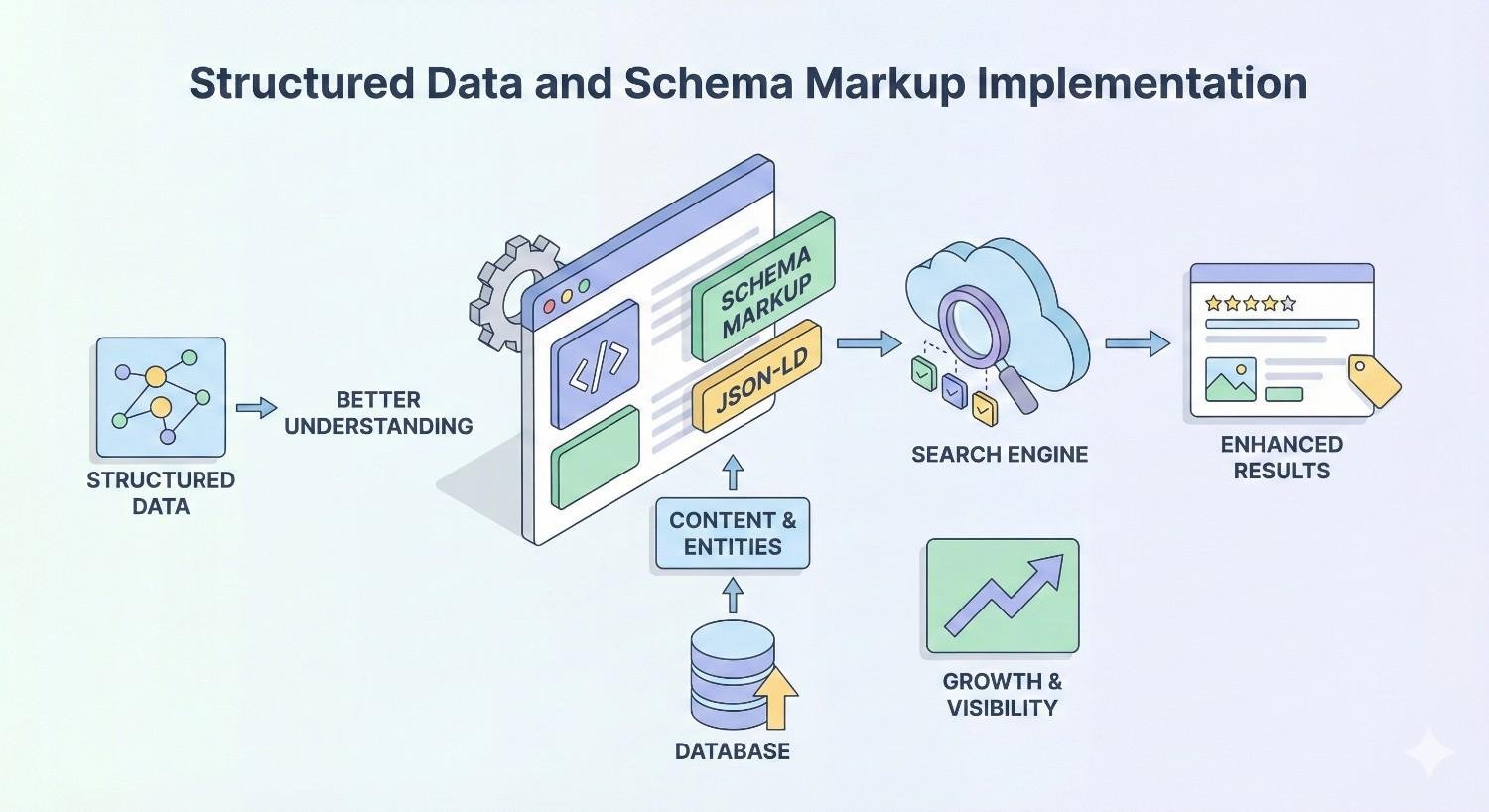
Structured Data and Schema Markup Implementation
Structured data helps search engines understand your content’s meaning and context. Schema markup can earn rich results that increase click-through rates and visibility in search results.
Organization and Local Business Schema
Organization schema provides search engines with information about your company: name, logo, contact information, and social profiles. This data can appear in knowledge panels and helps establish entity recognition.
Local Business schema extends organization markup with location-specific information including address, hours, service areas, and geographic coordinates. This markup is essential for businesses targeting local search visibility.
Technical implementation ensures schema validates without errors, contains accurate information, and follows Google’s guidelines for eligible rich results. Incorrect implementation can result in manual actions or simply fail to generate enhanced displays.
Product and Review Schema
E-commerce sites benefit significantly from product schema that can display prices, availability, and ratings directly in search results. Review schema aggregates customer feedback into star ratings visible before users click through.
Technical implementation involves mapping your product data to schema properties, ensuring price and availability information stays current, and properly aggregating review data. Dynamic schema generation must update as inventory and pricing change.
Google has specific requirements for review schema eligibility. Technical SEO services ensure your implementation meets guidelines and avoids practices that could result in rich result removal.
FAQ and How-To Schema
FAQ schema can display expandable question-and-answer content directly in search results, significantly increasing your listing’s visual footprint. How-To schema shows step-by-step instructions with optional images for each step.
These schema types work best for genuinely helpful content that answers common questions or provides practical instructions. Implementation requires structuring your content appropriately and adding corresponding markup.
Technical considerations include ensuring schema content matches visible page content, avoiding excessive FAQ markup that Google may ignore, and testing implementation across different page templates.
Article and Breadcrumb Schema
Article schema helps search engines understand your content type, publication date, author, and publisher. This markup is particularly important for news sites and blogs seeking visibility in Google News and Discover.
Breadcrumb schema displays your site hierarchy in search results, replacing the standard URL with a clickable path. This presentation helps users understand content context before clicking and can improve click-through rates.
Technical implementation coordinates article and breadcrumb schema with other markup types to create comprehensive structured data that maximizes rich result eligibility.
HTTPS Security and SSL Certificate Management
HTTPS encryption is a confirmed Google ranking factor and a baseline expectation for modern websites. Beyond SEO, HTTPS protects user data and builds trust with visitors.
Technical SEO services ensure proper SSL certificate installation, configure server redirects from HTTP to HTTPS, update internal links and canonical tags to use secure URLs, and resolve mixed content warnings where secure pages load insecure resources.
Certificate management includes monitoring expiration dates, ensuring proper certificate chain configuration, and implementing appropriate security headers. Expired or misconfigured certificates can completely block site access and devastate organic traffic.
International SEO and Hreflang Implementation
Websites targeting multiple countries or languages require specific technical configuration to help search engines serve the right content to the right users.
Multi-Language Site Configuration
Multi-language sites must clearly signal language targeting to search engines. Options include country-code top-level domains, subdomains, or subdirectories, each with different technical requirements and SEO implications.
Hreflang tags specify the language and optional regional targeting for each page version. These tags create relationships between equivalent content in different languages, helping search engines understand your international structure.
Technical implementation requires consistent hreflang annotation across all language versions, proper x-default designation for unmatched users, and validation that all referenced URLs exist and return appropriate status codes.
Geo-Targeting and Regional Optimization
Beyond language, some businesses need to target specific geographic regions with localized content. Google Search Console allows country targeting for generic top-level domains, while server location and local backlinks provide additional signals.
Technical configuration includes setting geographic targets in Search Console, implementing appropriate hreflang regional variants, and ensuring content delivery networks serve users from nearby locations for optimal performance.
International technical SEO also addresses currency display, date formats, measurement units, and other localization factors that affect user experience and conversion rates for international visitors.
Technical SEO Audit Process
A technical SEO audit systematically evaluates your website’s technical health and identifies issues affecting search performance. Comprehensive audits provide prioritized recommendations for improvement.
What a Technical SEO Audit Includes
Professional technical SEO audits examine crawlability, indexation, site architecture, page speed, mobile usability, structured data, security, and international configuration. The scope depends on your website’s size and complexity.
Audits begin with crawling your website to understand its structure and identify technical issues. This crawl data combines with information from Google Search Console, analytics platforms, and specialized testing tools.
The audit deliverable typically includes an executive summary of critical issues, detailed findings organized by category, specific recommendations for each issue, and prioritization based on impact and implementation difficulty.
Essential Technical SEO Audit Tools
Effective technical audits require multiple specialized tools that examine different aspects of website performance and configuration.
Google Search Console Analysis
Google Search Console provides direct insight into how Google sees your website. Coverage reports show indexation status, while enhancement reports identify structured data issues. Performance data reveals which queries drive traffic and which pages rank.
Technical audits analyze Search Console data for indexation problems, crawl errors, mobile usability issues, and Core Web Vitals failures. This first-party data from Google itself provides authoritative information about your site’s search health.
Search Console also shows manual actions if Google has penalized your site for guideline violations. Technical SEO services interpret this data and develop remediation strategies for any identified issues.
Screaming Frog and Crawling Tools
Screaming Frog SEO Spider and similar crawling tools simulate how search engines navigate your website. These tools identify broken links, redirect chains, duplicate content, missing meta tags, and numerous other technical issues.
Crawl data reveals your site’s actual structure versus intended architecture. Technical audits analyze crawl depth, internal link distribution, and page categorization to identify structural improvements.
Advanced crawling configurations can render JavaScript, respect robots.txt directives, and extract custom data points. Technical SEO services configure these tools appropriately for your specific website technology.
PageSpeed Insights and Lighthouse
Google’s PageSpeed Insights provides Core Web Vitals data from real users alongside lab-based performance testing. Lighthouse audits examine performance, accessibility, best practices, and SEO factors.
Technical audits use these tools to identify specific performance bottlenecks and prioritize optimization efforts. The combination of field data from actual users and lab data from controlled testing provides comprehensive performance insight.
Lighthouse also identifies accessibility issues that affect both user experience and SEO. Technical SEO services interpret these reports and translate recommendations into actionable implementation tasks.
Log File Analysis Tools
Server log files record every request made to your website, including search engine crawler visits. Log file analysis reveals how search engines actually crawl your site versus how you intend them to crawl.
This analysis identifies pages receiving excessive crawl attention, important pages being ignored, crawl frequency patterns, and response code distributions. Log data provides ground truth about crawler behavior that other tools cannot replicate.
Technical SEO services analyze log files to optimize crawl budget allocation, identify server errors affecting crawling, and verify that technical changes produce intended crawler behavior changes.
Common Technical SEO Issues and How to Fix Them
Technical audits consistently identify certain issues across websites of all sizes and industries. Understanding these common problems helps you recognize potential issues on your own site.
Duplicate Content and Canonicalization Errors
Duplicate content occurs when identical or substantially similar content exists at multiple URLs. This dilutes ranking signals and confuses search engines about which version to index.
Common causes include www and non-www variations, HTTP and HTTPS versions, trailing slash inconsistencies, URL parameters creating multiple paths to the same content, and printer-friendly page versions.
Fixes involve implementing proper canonical tags, configuring server redirects to consolidate URL variations, and using parameter handling in Search Console. Technical SEO services identify all duplicate content sources and implement comprehensive solutions.
Broken Links and 404 Errors
Broken internal links waste crawl budget and create poor user experiences. External links pointing to deleted pages lose potential ranking value. Excessive 404 errors can signal quality problems to search engines.
Technical audits identify broken links through crawling and Search Console data. Fixes involve updating or removing broken internal links, implementing redirects for deleted pages with external links, and creating helpful 404 pages for remaining errors.
Ongoing monitoring catches new broken links as they occur. Technical SEO services establish processes for regular link auditing and prompt resolution of identified issues.
Redirect Chains and Loops
Redirect chains occur when one redirect leads to another, creating multiple hops before reaching the final destination. Each hop adds latency and can lose ranking signal. Redirect loops occur when redirects create circular references that never resolve.
Technical audits map redirect paths and identify chains exceeding recommended lengths. Fixes involve updating redirects to point directly to final destinations, eliminating unnecessary intermediate redirects.
Redirect management becomes increasingly complex as websites age and accumulate historical URL changes. Technical SEO services create redirect strategies that maintain SEO value while minimizing chain length.
Thin Content and Index Bloat
Index bloat occurs when search engines index low-value pages that dilute your site’s overall quality signals. Thin content pages with minimal unique value can drag down your entire domain’s perceived quality.
Common sources include tag and category archive pages with little unique content, paginated series creating numerous similar pages, internal search results, and automatically generated pages with minimal content.
Fixes involve noindexing low-value pages, consolidating thin content into comprehensive resources, and improving content depth where pages have ranking potential. Technical SEO services identify bloat sources and recommend appropriate treatment for each page type.
JavaScript Rendering Issues
Modern websites increasingly rely on JavaScript to render content. If search engines cannot execute your JavaScript properly, they may see incomplete pages or miss content entirely.
Technical audits test JavaScript rendering using Google’s URL Inspection tool and compare rendered content to source HTML. Issues include content loaded only after user interaction, JavaScript errors preventing rendering, and excessive rendering time.
Fixes may involve server-side rendering, dynamic rendering for search engines, or restructuring JavaScript to ensure critical content renders quickly. Technical SEO services evaluate your JavaScript architecture and recommend appropriate solutions.
Prioritizing Technical SEO Fixes by Impact
Not all technical issues deserve equal attention. Effective prioritization focuses resources on fixes that will produce the greatest ranking and traffic improvements.
Critical issues affecting crawlability and indexation take highest priority. If search engines cannot access or index your pages, no other optimization matters. Server errors, robots.txt blocks, and noindex tags on important pages require immediate attention.
High-impact issues affecting Core Web Vitals and mobile usability come next. These factors directly influence rankings and user experience. Fixes often produce measurable improvements within weeks of implementation.
Medium-priority issues like redirect chains, duplicate content, and structured data errors affect efficiency and rich result eligibility. These fixes improve overall site health but may not produce dramatic ranking changes independently.
Lower-priority issues include minor validation errors, suboptimal configurations, and best practice violations that do not significantly impact performance. Address these after resolving more impactful problems.
Technical SEO for Different Website Types
Different website types face unique technical SEO challenges. Understanding these differences helps you focus on the issues most relevant to your specific situation.
Technical SEO for E-commerce Websites
E-commerce sites typically have large page counts, complex navigation, and dynamic content that create specific technical challenges.
Faceted Navigation and Filtering
Faceted navigation allows users to filter products by attributes like size, color, price, and brand. While useful for shoppers, faceted navigation can create thousands of URL variations that waste crawl budget and create duplicate content.
Technical solutions include using JavaScript to modify page content without creating new URLs, implementing canonical tags pointing to main category pages, blocking parameter combinations in robots.txt, and using noindex tags on filtered pages.
The optimal approach depends on your specific product catalog and user behavior. Technical SEO services analyze your faceted navigation patterns and implement solutions that preserve user functionality while protecting crawl efficiency.
Product Page Optimization
Product pages require specific technical attention including unique title tags and meta descriptions, proper canonical handling for products in multiple categories, structured data for rich product results, and image optimization for product photography.
Out-of-stock products present particular challenges. Options include maintaining pages with availability schema showing out-of-stock status, redirecting to similar products, or removing pages entirely. The right choice depends on whether products will return to stock.
Technical SEO services establish templates and processes ensuring all product pages meet technical requirements regardless of how they are created or updated.
Category Page Architecture
Category pages often drive significant organic traffic for commercial keywords. Technical optimization ensures proper hierarchy, internal linking, and content depth.
Pagination handling affects how search engines crawl and consolidate category pages. Options include rel=next/prev annotations, view-all pages, and infinite scroll implementations. Each approach has technical requirements for proper search engine handling.
Category page content beyond product listings helps establish topical relevance. Technical SEO services ensure category pages have sufficient unique content while maintaining fast load times despite numerous product images.
Technical SEO for Enterprise Websites
Enterprise websites with thousands or millions of pages face scale challenges that smaller sites never encounter.
Large-Scale Crawl Management
Enterprise sites must actively manage crawl budget to ensure search engines prioritize valuable pages. This requires sophisticated robots.txt rules, strategic internal linking, and ongoing log file analysis.
Technical solutions include segmenting sitemaps by content type and priority, implementing crawl rate limiting during peak traffic periods, and using server-side rendering to reduce crawl resource requirements.
Enterprise technical SEO also involves coordinating with development teams to ensure new features and content types receive proper technical treatment before launch.
Multi-Domain and Subdomain Strategy
Large organizations often operate multiple domains or subdomains for different brands, regions, or functions. Technical SEO must address how these properties relate to each other and whether to consolidate or maintain separation.
Subdomain versus subdirectory decisions affect how search engines attribute authority. Technical analysis evaluates current performance, competitive landscape, and business requirements to recommend optimal structure.
Cross-domain technical considerations include proper redirect handling during migrations, canonical tag usage across properties, and hreflang implementation for international domain structures.
Technical SEO for WordPress and CMS Platforms
WordPress powers a significant portion of websites, and its technical SEO requirements differ from custom-built sites.
WordPress technical SEO involves plugin selection and configuration, theme optimization for speed and mobile performance, database optimization, and proper permalink structure configuration.
Common WordPress issues include plugin conflicts causing errors, bloated themes with excessive code, and hosting limitations affecting performance. Technical SEO services audit WordPress installations and recommend specific optimizations.
Other CMS platforms like Shopify, Wix, and Squarespace have their own technical constraints and optimization opportunities. Technical SEO services understand platform-specific limitations and maximize performance within those constraints.
Technical SEO for SaaS and Web Applications
SaaS products and web applications often rely heavily on JavaScript, creating unique rendering and indexation challenges.
Single-page applications may require server-side rendering or prerendering to ensure search engines can access content. Technical evaluation determines whether your current architecture supports proper indexation.
Application URLs often include session parameters, user-specific content, and dynamic states that should not be indexed. Technical SEO services configure proper handling to prevent these URLs from consuming crawl budget.
Authentication walls present particular challenges for indexing marketing content while protecting application functionality. Technical solutions balance security requirements with search visibility needs.
How Technical SEO Impacts Business Results
Technical SEO investments should produce measurable business outcomes. Understanding these connections helps justify budgets and set appropriate expectations.
Technical SEO and Organic Traffic Growth
Technical improvements directly affect how much of your content search engines can discover, crawl, and index. Resolving indexation issues often produces immediate traffic increases as previously invisible pages begin ranking.
Page speed improvements affect both rankings and user behavior. Faster sites rank better and convert visitors more effectively. Google research indicates that as page load time increases from 1 to 3 seconds, bounce probability increases by 32%.
Mobile optimization ensures you capture the majority of searches now conducted on smartphones. Sites failing mobile usability tests may see reduced visibility in mobile search results where most users now search.
Technical SEO’s Role in Lead Generation and Conversions
Technical SEO affects conversion rates beyond just driving traffic. Fast, stable pages that work properly on all devices convert visitors more effectively than slow, broken experiences.
Structured data can increase click-through rates by making your search listings more prominent and informative. Rich results with ratings, prices, and availability information attract more qualified clicks.
Technical issues like broken forms, JavaScript errors, and mobile usability problems directly prevent conversions. Technical SEO audits identify these conversion-blocking issues alongside ranking factors.
Measuring Technical SEO ROI
Technical SEO ROI measurement tracks improvements in crawl efficiency, indexation rates, Core Web Vitals scores, and ultimately organic traffic and conversions.
Key metrics include pages indexed versus pages submitted, crawl frequency and coverage, Core Web Vitals pass rates, mobile usability error counts, and organic traffic to previously underperforming pages.
Attribution can be challenging since technical improvements often enable other SEO efforts rather than driving rankings independently. Technical SEO services establish measurement frameworks that capture both direct and indirect impacts.
Case Studies: Technical SEO Success Stories
E-commerce sites commonly see significant traffic increases after resolving faceted navigation issues that were causing massive index bloat. Consolidating thousands of low-value filtered pages into properly canonicalized category pages focuses ranking signals on pages that actually convert.
Publishers often experience traffic gains after implementing proper pagination handling and resolving duplicate content from syndication. Technical cleanup allows their best content to rank without competition from their own duplicate pages.
SaaS companies frequently see improvements after implementing server-side rendering for JavaScript-heavy marketing pages. Content that search engines previously could not render begins ranking once technical barriers are removed.
Technical SEO Timelines and Expectations
Understanding realistic timelines helps set appropriate expectations and measure progress effectively.
How Long Does Technical SEO Take to Show Results?
Technical SEO results typically appear faster than content or link building efforts because you are removing barriers rather than building new signals. However, timelines vary significantly based on issue severity and website size.
Critical fixes like resolving accidental noindex tags or robots.txt blocks can produce results within days as search engines recrawl affected pages. Core Web Vitals improvements may take weeks to reflect in field data as Google collects new user experience metrics.
Comprehensive technical overhauls for large sites may take 3 to 6 months to fully implement and see complete results. Search engines need time to recrawl your entire site and reassess its technical quality.
Factors That Affect Technical SEO Timeline
Website size directly affects implementation and results timelines. Larger sites take longer to audit, require more extensive fixes, and take longer for search engines to fully recrawl.
Development resources and processes affect how quickly recommendations can be implemented. Sites with agile development teams and staging environments can move faster than those with lengthy approval processes.
Issue severity matters significantly. Sites with fundamental crawlability problems may see dramatic improvements quickly once resolved. Sites with minor optimization opportunities may see more gradual gains.
Setting Realistic Technical SEO Goals
Effective goal-setting focuses on metrics you can directly influence rather than ranking positions affected by many factors.
Appropriate technical SEO goals include achieving specific Core Web Vitals thresholds, reducing crawl errors by a target percentage, increasing indexed page count for valuable content, and eliminating mobile usability errors.
These goals connect to business outcomes while remaining within technical SEO’s direct influence. Ranking and traffic goals are appropriate longer-term objectives but depend on technical foundations being in place.
Ongoing Technical SEO Maintenance Requirements
Technical SEO is not a one-time project but an ongoing discipline. Websites constantly change, and each change can introduce new technical issues.
Regular monitoring should track Core Web Vitals, crawl errors, indexation status, and mobile usability. Automated alerts can notify you of significant changes requiring attention.
Periodic audits, typically quarterly for active sites, catch issues that accumulate over time. New content, design changes, and platform updates all create opportunities for technical problems.
Technical SEO maintenance also involves staying current with search engine changes. Google regularly updates its algorithms, introduces new ranking factors, and changes technical requirements. Ongoing technical SEO ensures your site adapts to these changes.
How to Choose a Technical SEO Service Provider
Selecting the right technical SEO partner significantly affects the results you achieve. Understanding what to look for helps you make informed decisions.
Questions to Ask Before Hiring a Technical SEO Agency
Ask potential providers about their audit methodology and what tools they use. Comprehensive audits require multiple specialized tools and manual analysis, not just automated reports.
Inquire about their experience with your specific platform and website type. Technical SEO for WordPress differs from Shopify, and e-commerce challenges differ from SaaS applications.
Request case studies or references from similar projects. Past performance with comparable websites indicates likely results for your situation.
Ask how they prioritize recommendations and communicate findings. The best technical SEO providers translate complex issues into clear business terms and actionable priorities.
Red Flags to Avoid in Technical SEO Services
Avoid providers promising specific ranking positions or guaranteed traffic increases. Technical SEO improves your foundation but cannot guarantee rankings affected by many factors.
Be wary of providers who cannot explain their methodology or rely entirely on automated tools without manual analysis. Automated audits miss context-dependent issues and cannot prioritize effectively.
Watch for providers pushing unnecessary services or creating artificial urgency. Legitimate technical SEO focuses on issues actually affecting your performance, not theoretical problems.
Avoid providers unwilling to share their findings or explain their recommendations. You should understand what they are doing and why, even if you lack technical expertise to implement fixes yourself.
In-House vs. Agency Technical SEO: Pros and Cons
In-house technical SEO provides deep familiarity with your specific systems and immediate availability for issues. However, maintaining technical SEO expertise requires ongoing training and may not justify a full-time position for smaller organizations.
Agency technical SEO brings broader experience across many websites and industries, specialized tools and methodologies, and scalable resources for large projects. However, agencies require onboarding time and may have less context about your specific business.
Many organizations use a hybrid approach: agency audits and strategic guidance combined with in-house implementation and monitoring. This balances expertise access with institutional knowledge.
What to Expect from a Technical SEO Engagement
Initial engagements typically begin with a comprehensive audit taking 2 to 4 weeks depending on site size. The audit deliverable includes findings, recommendations, and prioritization.
Implementation support may involve working directly with your development team, providing detailed specifications for fixes, or handling implementation directly depending on the engagement structure.
Ongoing engagements include regular monitoring, periodic re-audits, and consultation on new initiatives. The frequency and depth depend on your website’s complexity and rate of change.
Communication should include regular reporting on key metrics, prompt notification of significant issues, and strategic guidance on technical decisions affecting SEO.
Technical SEO Services Pricing and Investment
Understanding pricing models and cost factors helps you budget appropriately and evaluate proposals effectively.
Technical SEO Pricing Models Explained
Technical SEO services are typically priced as one-time audits, monthly retainers, or project-based engagements. Each model suits different situations and needs.
One-Time Technical SEO Audit Pricing
One-time audits provide a comprehensive assessment and recommendations without ongoing commitment. Pricing typically ranges from $1,500 to $15,000 depending on website size and audit depth.
Small business sites with under 1,000 pages typically fall in the $1,500 to $5,000 range. Mid-size sites may cost $5,000 to $10,000. Enterprise sites with complex architectures can exceed $15,000 for thorough audits.
One-time audits work well for organizations with internal resources to implement recommendations or those seeking a second opinion on their technical health.
Monthly Retainer Technical SEO Services
Monthly retainers provide ongoing monitoring, maintenance, and consultation. Pricing typically ranges from $1,000 to $10,000 monthly depending on scope and website complexity.
Retainers often include regular monitoring and reporting, periodic re-audits, implementation support or direct implementation, and strategic consultation on technical decisions.
Monthly retainers suit organizations wanting ongoing technical SEO attention without building internal expertise or those with frequently changing websites requiring continuous optimization.
Project-Based Technical SEO Pricing
Project-based pricing applies to specific initiatives like site migrations, platform changes, or major technical overhauls. Pricing varies widely based on project scope.
Site migrations typically range from $5,000 to $50,000 depending on site size and complexity. Platform changes, international expansion, and major restructuring projects fall in similar ranges.
Project-based engagements include defined deliverables, timelines, and success criteria. They work well for specific initiatives with clear start and end points.
Factors That Influence Technical SEO Costs
Website size directly affects audit and implementation costs. More pages require more crawling, analysis, and optimization work.
Technical complexity increases costs. JavaScript-heavy sites, custom platforms, and complex architectures require more specialized expertise and analysis time.
Current technical health affects scope. Sites with severe issues require more extensive audits and remediation than well-maintained sites needing optimization.
Implementation requirements affect total investment. Some engagements include implementation while others provide recommendations for your team to execute.
Budgeting for Technical SEO: What’s a Reasonable Investment?
Technical SEO investment should align with your organic traffic value and growth goals. Sites generating significant revenue from organic traffic justify larger investments.
A reasonable starting point for small businesses is $2,000 to $5,000 for an initial audit plus $500 to $2,000 monthly for ongoing maintenance. Mid-size businesses might invest $5,000 to $15,000 initially plus $2,000 to $5,000 monthly.
Consider technical SEO investment relative to other marketing spend. If you invest significantly in content and link building, underinvesting in technical foundations limits returns on those investments.
Technical SEO vs. Other SEO Services
Understanding how technical SEO relates to other SEO disciplines helps you build a comprehensive strategy.
Technical SEO vs. Content SEO
Content SEO focuses on creating and optimizing content that ranks for target keywords. Technical SEO ensures search engines can access and understand that content.
Both are necessary. Excellent content on a technically broken site will not rank. A technically perfect site with thin content will not rank either. Technical SEO creates the foundation; content SEO builds upon it.
Technical SEO typically requires less ongoing investment once foundations are solid. Content SEO requires continuous creation and optimization. Budget allocation should reflect these different ongoing needs.
Technical SEO vs. Local SEO
Local SEO focuses on visibility in location-based searches and Google Business Profile optimization. Technical SEO supports local SEO through proper NAP consistency, local business schema, and location page optimization.
Local businesses need both technical and local SEO. Technical issues can prevent local pages from ranking, while local SEO tactics without technical foundations produce limited results.
Technical SEO for local businesses includes ensuring location pages are crawlable and indexable, implementing local business schema, and optimizing for mobile users who dominate local searches.
Technical SEO vs. Link Building
Link building acquires external links that signal authority and trust to search engines. Technical SEO ensures your site can receive and distribute that authority effectively.
Technical issues can waste link building investment. Links to pages that redirect, return errors, or are not indexed provide diminished value. Technical SEO ensures link equity flows properly throughout your site.
Internal linking, a technical SEO concern, distributes external link authority to pages throughout your site. Strategic internal linking amplifies the impact of link building efforts.
How Technical SEO Integrates with Full-Service SEO
Comprehensive SEO strategies integrate technical, content, and off-page elements. Technical SEO typically comes first, establishing the foundation for other efforts.
Full-service SEO providers coordinate these elements, ensuring technical changes support content strategy and link building efforts target technically sound pages.
When working with multiple providers or handling some elements internally, coordination becomes critical. Technical changes can affect content performance, and content additions can create technical issues.
Technical SEO Tools and Resources
The right tools make technical SEO more efficient and effective. Understanding available options helps you choose appropriate solutions.
Free Technical SEO Tools
Google Search Console provides essential data about how Google sees your site. Coverage reports, Core Web Vitals data, and mobile usability information come directly from Google at no cost.
Google’s PageSpeed Insights and Lighthouse offer detailed performance analysis and recommendations. These tools provide the same data Google uses to evaluate your site.
Bing Webmaster Tools provides similar functionality for Bing search, including crawl data and indexation information.
Google’s Rich Results Test and Schema Markup Validator help verify structured data implementation. These tools confirm your markup is valid and eligible for rich results.
Premium Technical SEO Software
Screaming Frog SEO Spider is the industry-standard crawling tool. The free version handles small sites, while the paid version removes limitations and adds advanced features.
Ahrefs, Semrush, and Moz offer technical SEO auditing alongside their broader SEO toolsets. These platforms provide ongoing monitoring and competitive analysis.
Specialized tools like Botify and Lumar serve enterprise needs with advanced crawling, log file analysis, and large-scale technical SEO management.
ContentKing and similar tools provide real-time monitoring, alerting you to technical changes as they occur rather than waiting for periodic audits.
Technical SEO Learning Resources
Google’s Search Central documentation provides authoritative guidance on technical requirements and best practices. This should be your primary reference for how Google handles technical elements.
Google’s Search Central YouTube channel and podcast offer insights from Google’s search team. These resources explain algorithm updates and technical requirements.
Industry publications like Search Engine Journal, Search Engine Land, and Moz Blog cover technical SEO developments and best practices.
Technical SEO conferences and webinars provide deeper education and networking with practitioners. Events like BrightonSEO and MozCon include technical SEO tracks.
Frequently Asked Questions About Technical SEO Services
What is included in technical SEO services?
Technical SEO services typically include crawlability and indexation optimization, site architecture improvements, page speed and Core Web Vitals optimization, mobile usability fixes, structured data implementation, and security configuration. Specific inclusions vary by provider and engagement type.
How often should technical SEO be performed?
Initial comprehensive audits establish your baseline. Ongoing monitoring should be continuous, with formal re-audits quarterly for active sites or after major changes. Sites with frequent updates or complex architectures may need more frequent attention.
Can I do technical SEO myself?
Basic technical SEO is accessible to website owners willing to learn. Tools like Google Search Console and Screaming Frog have learning curves but are usable without deep technical expertise. Complex issues involving server configuration, JavaScript rendering, or large-scale architecture typically require professional assistance.
What happens if I ignore technical SEO?
Ignoring technical SEO limits your organic visibility regardless of content quality or link building efforts. Search engines may not discover, crawl, or index your pages properly. Performance issues drive users away and can directly affect rankings. Technical debt accumulates over time, making eventual fixes more complex and expensive.
How do I know if my website has technical SEO issues?
Google Search Console reports many technical issues including crawl errors, indexation problems, Core Web Vitals failures, and mobile usability errors. Declining organic traffic without obvious cause often indicates technical problems. Professional audits identify issues that basic tools miss.
Is technical SEO a one-time fix or ongoing process?
Technical SEO requires both initial optimization and ongoing maintenance. Foundations can be established through comprehensive audits and implementation. However, websites constantly change, search engine requirements evolve, and new issues emerge. Ongoing monitoring and periodic re-optimization maintain technical health.
How long until I see results from technical SEO improvements?
Results timelines vary based on issue severity and website size. Critical fixes like resolving indexation blocks can show results within days. Core Web Vitals improvements may take weeks to reflect in Google’s data. Comprehensive technical overhauls for large sites may take 3 to 6 months to fully materialize.
Next Steps: Getting Started with Technical SEO Services
Taking action on technical SEO begins with understanding your current situation and identifying the right approach for your needs.
How to Request a Technical SEO Audit
Start by documenting your current organic performance, known issues, and specific concerns. This context helps auditors focus on your priorities.
Provide access to Google Search Console, Google Analytics, and your website’s backend if implementation support is needed. Comprehensive audits require this data access.
Request proposals from multiple providers, comparing methodology, deliverables, and pricing. Ask about their experience with your specific platform and website type.
What to Prepare Before Your Technical SEO Consultation
Gather information about your website’s technology stack, hosting environment, and any recent changes. Document known issues and previous SEO work.
Prepare questions about your specific concerns and goals. Understanding what you want to achieve helps providers tailor their approach.
Identify stakeholders who will be involved in implementation. Technical SEO often requires coordination between marketing, development, and IT teams.
Our Technical SEO Service Approach
We approach technical SEO as the foundation for sustainable organic growth. Our audits combine automated crawling with manual analysis to identify issues that tools alone miss.
We prioritize recommendations based on business impact, not just technical severity. Our goal is measurable improvement in organic performance, not just cleaner audit reports.
We work with your team to implement changes or provide detailed specifications for your developers. Either way, you understand what we are doing and why.
Conclusion
Technical SEO services address the foundational elements that determine whether search engines can effectively crawl, index, and rank your website. From crawlability and site architecture to page speed and structured data, these technical factors create the infrastructure supporting all other SEO efforts.
Understanding technical SEO components, audit processes, and realistic timelines empowers you to make informed decisions about your organic search strategy. Whether you handle technical SEO internally or partner with specialists, the principles remain the same: remove barriers, optimize efficiency, and maintain technical health over time.
We help businesses build sustainable organic growth through comprehensive technical SEO services. Contact White Label SEO Service to discuss your technical SEO needs and discover how proper technical foundations can accelerate your search visibility and business results.