
Tool-based link building transforms how businesses acquire high-quality backlinks by combining software automation with strategic outreach. Instead of manually searching for opportunities and tracking emails in spreadsheets, you leverage specialized platforms to prospect, analyze, and execute link campaigns at scale.
This approach matters because backlinks remain one of Google’s strongest ranking signals. Without the right tools, most teams hit a ceiling where manual processes cannot keep pace with competitive demands.
This guide covers everything from tool selection and step-by-step workflows to cost analysis, proven strategies, and common mistakes. You will learn exactly how to build a sustainable link building system that drives measurable SEO results.
What Is Tool-Based Link Building?
Definition and Core Concept
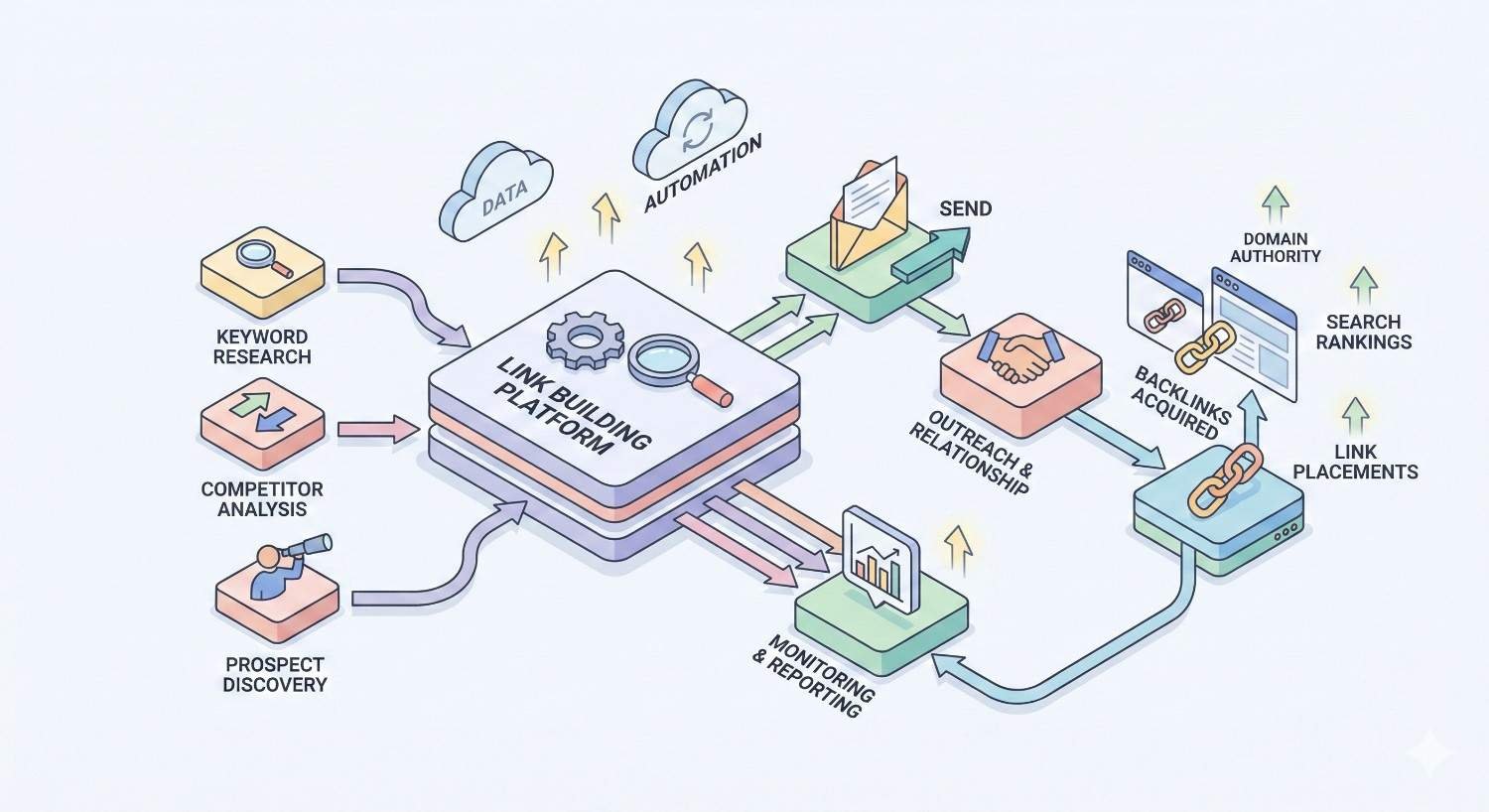
Tool-based link building is the practice of using specialized software platforms to streamline and scale the process of acquiring backlinks from external websites. These tools handle tasks that would otherwise consume hours of manual work: finding link prospects, analyzing competitor backlink profiles, locating contact information, managing outreach campaigns, and tracking results.
The core concept centers on efficiency without sacrificing quality. Rather than replacing human judgment, these tools amplify your team’s capacity. You still craft personalized pitches and build genuine relationships. The software simply removes repetitive tasks from your workflow.
A typical tool-based approach might involve using Ahrefs to identify sites linking to competitors, Hunter.io to find editor email addresses, and BuzzStream to manage outreach sequences. Each tool handles a specific function within the larger link building process.
How It Differs from Manual Link Building
Manual link building relies entirely on human effort for every step. You search Google for prospects, visit each site individually, hunt for contact pages, copy emails into spreadsheets, send messages one by one, and manually track responses. This approach works for small-scale campaigns but becomes unsustainable as you grow.
Tool-based link building automates the data-heavy portions of this workflow. Where manual prospecting might yield 20 qualified sites per hour, tools can surface hundreds of opportunities in minutes. Where manual email tracking leads to missed follow-ups, CRM tools ensure systematic outreach.
The key difference is scalability. Manual methods cap your output based on available hours. Tool-based methods cap your output based on strategy and budget. A single link builder using the right tools can accomplish what previously required an entire team.
Quality control also improves with tools. Backlink analysis platforms provide metrics like Domain Rating, traffic estimates, and spam scores that help you avoid low-quality sites. Manual evaluation of these factors would require visiting each site and making subjective judgments.
Why Tool-Based Link Building Matters for SEO
Impact on Domain Authority and Rankings
Backlinks function as votes of confidence from one website to another. When authoritative sites link to your content, search engines interpret this as a signal that your pages deserve higher rankings. Tool-based link building accelerates the acquisition of these signals.
Domain Authority and similar metrics from Moz, Ahrefs, and SEMrush attempt to quantify a site’s overall link strength. While these are third-party metrics rather than Google ranking factors, they correlate with ranking performance. Building links from high-authority sites improves these scores over time.
The ranking impact compounds. As your domain gains authority, new pages you publish start with a stronger baseline. They require fewer individual links to compete for keywords. This creates a flywheel effect where link building becomes progressively more efficient.
Tools enable you to target this impact strategically. Instead of accepting whatever links come naturally, you can identify exactly which competitor backlinks drive their rankings and pursue similar opportunities.
Scalability and Efficiency Benefits
Most businesses cannot dedicate unlimited resources to link building. Tool-based approaches maximize output from limited budgets and team capacity.
Consider the math. A skilled link builder might spend 30 minutes manually researching and qualifying a single prospect. With tools, that same evaluation takes under two minutes. Over a month, this efficiency gain translates to hundreds of additional qualified prospects entering your pipeline.
Outreach efficiency follows similar patterns. Email automation tools send personalized sequences, track opens and replies, and schedule follow-ups automatically. What once required constant manual attention now runs in the background while your team focuses on relationship building and content creation.
Scalability also means consistency. Manual processes suffer when team members take vacation, change roles, or face competing priorities. Tool-based systems maintain steady output regardless of individual availability.
Data-Driven Decision Making
Intuition has limits. Tool-based link building replaces guesswork with measurable data at every stage of the process.
Before launching a campaign, you can analyze exactly which types of content attract links in your niche. You can see which outreach angles competitors use successfully. You can identify the specific sites most likely to respond based on their linking patterns.
During campaigns, dashboards show real-time performance. Open rates reveal subject line effectiveness. Reply rates indicate pitch quality. Conversion rates highlight which prospect segments deliver results.
After campaigns conclude, you can attribute ranking improvements to specific links acquired. This closes the feedback loop, allowing continuous optimization of your approach.
Types of Link Building Tools
Prospecting and Outreach Tools
Prospecting tools help you discover websites that might link to your content. They typically combine search operators, database queries, and filtering capabilities to surface relevant opportunities quickly.
These platforms let you search for sites by topic, authority level, content type, and linking behavior. Many include features to identify sites that have linked to similar content in the past, making them warmer prospects for your outreach.
Outreach tools manage the communication process. They store contact information, send email sequences, track responses, and organize follow-up schedules. Advanced platforms personalize messages at scale using merge fields and conditional logic.
The best prospecting and outreach tools integrate tightly. Prospects flow directly from discovery into outreach workflows without manual data transfer.
Backlink Analysis and Monitoring Tools
Backlink analysis tools crawl the web to build databases of links between sites. They let you examine any domain’s backlink profile, including your own site, competitors, and potential link sources.
Key capabilities include viewing all linking domains, analyzing anchor text distribution, identifying new and lost links, and assessing link quality through proprietary metrics. These insights inform both offensive strategies (finding opportunities) and defensive monitoring (protecting existing links).
Monitoring features alert you when competitors gain notable links, when your own links disappear, or when new sites mention your brand. This real-time intelligence enables rapid response to both opportunities and threats.
Content Research and Gap Analysis Tools
Content research tools reveal what topics and formats attract links in your industry. They analyze top-performing content by backlink count, social shares, and engagement metrics.
Gap analysis features compare your content library against competitors. They identify topics where competitors have link-attracting content that you lack. This guides content creation toward proven link magnets.
These tools also surface trending topics before they become saturated. Early coverage of emerging subjects often attracts links from sites seeking authoritative sources.
Email Automation and CRM Tools
Email automation platforms handle the mechanics of outreach at scale. They send personalized emails, schedule follow-up sequences, and track engagement metrics like opens, clicks, and replies.
CRM functionality organizes your relationships with prospects and link partners. You can tag contacts by niche, track conversation history, set reminders for follow-up, and manage ongoing partnerships.
Integration capabilities connect these tools with your prospecting platforms, ensuring smooth data flow from discovery through conversion.
Broken Link and Unlinked Mention Finders
Broken link tools scan websites for outbound links pointing to dead pages. These represent opportunities: you can offer your content as a replacement, providing value to the site owner while earning a link.
Unlinked mention finders identify instances where sites reference your brand, products, or content without including a hyperlink. These are often the easiest links to acquire since the site has already demonstrated awareness and interest.
Both tool types surface low-hanging fruit that manual research would rarely uncover.
Best Link Building Tools in 2026
Ahrefs
Ahrefs maintains one of the largest backlink databases in the industry, crawling billions of pages to provide comprehensive link intelligence. Its Site Explorer feature lets you analyze any domain’s backlink profile in detail.
The Content Explorer tool surfaces link-worthy content by topic, showing what has attracted backlinks historically. This guides both content creation and prospecting strategies.
Ahrefs excels at competitor analysis. You can see exactly which sites link to competitors, filter by authority and relevance, and export prospects for outreach. The Intersect feature identifies sites linking to multiple competitors but not to you, highlighting high-probability opportunities.
Pricing starts at $99 per month for the Lite plan, scaling to $999 for Enterprise features.
SEMrush
SEMrush offers a comprehensive marketing suite with strong link building capabilities. Its Backlink Analytics tool provides detailed profile analysis, while the Link Building Tool guides you through prospect discovery and outreach.
The platform integrates link building with broader SEO workflows. You can move from keyword research to content planning to link acquisition within a single interface.
SEMrush’s Backlink Gap tool compares your profile against up to four competitors simultaneously, quickly identifying domains worth pursuing.
Plans range from $129.95 to $499.95 monthly, with link building features available at all tiers.
Moz Link Explorer
Moz pioneered many link analysis concepts, including the widely-used Domain Authority metric. Link Explorer provides backlink data alongside proprietary spam scores that help filter low-quality prospects.
The tool emphasizes link quality assessment. Its metrics help you prioritize opportunities based on potential ranking impact rather than raw numbers.
Moz integrates with its broader SEO toolset, making it valuable for teams already using Moz for keyword tracking and site audits.
Pricing starts at $99 monthly for the Standard plan.
Hunter.io
Hunter.io specializes in finding and verifying professional email addresses. Enter a domain, and it returns email patterns and specific addresses associated with that company.
The tool includes verification features that check whether addresses are valid and deliverable. This reduces bounce rates and protects your sender reputation.
Hunter integrates with popular CRM and outreach platforms, enabling seamless workflow from prospect identification to contact discovery to outreach execution.
Free accounts allow 25 searches monthly. Paid plans start at $49 per month for 500 searches.
BuzzStream
BuzzStream combines prospecting, contact management, and outreach automation in a single platform designed specifically for link building and digital PR.
The tool helps you research prospects, find contact information, send personalized emails, and track campaign performance. Its relationship management features maintain history across multiple campaigns and team members.
BuzzStream excels at team collaboration. Multiple users can work from shared prospect lists while avoiding duplicate outreach.
Plans start at $24 monthly for individuals, scaling to $999 for large teams.
Pitchbox
Pitchbox targets agencies and enterprise teams running high-volume link building campaigns. It automates prospecting through customizable search queries and integrates with major SEO platforms for data enrichment.
The outreach automation features support complex sequences with conditional logic. Emails can branch based on recipient behavior, enabling sophisticated follow-up strategies.
Reporting dashboards provide visibility into team performance, campaign metrics, and ROI calculations.
Pricing requires custom quotes, typically starting around $500 monthly.
Respona
Respona positions itself as an all-in-one outreach platform combining prospecting, contact finding, and email automation. Its AI features help personalize pitches at scale.
The tool includes built-in search capabilities that surface prospects based on content topics, making it useful for teams without separate prospecting tools.
Respona emphasizes ease of use, with guided workflows that help newer link builders execute effective campaigns.
Plans start at $99 monthly for basic features.
HARO and Connectively
HARO (Help A Reporter Out) connects journalists seeking sources with experts willing to provide quotes. Responding to relevant queries can earn high-authority links from major publications.
Connectively, the platform that acquired HARO, continues this service while adding features for managing responses and tracking placements.
These platforms require different skills than traditional outreach. Success depends on providing genuinely valuable expert commentary rather than promotional content.
Basic HARO access is free. Premium tiers with filtering and priority access range from $19 to $149 monthly.
How to Build Links Using Tools (Step-by-Step Process)
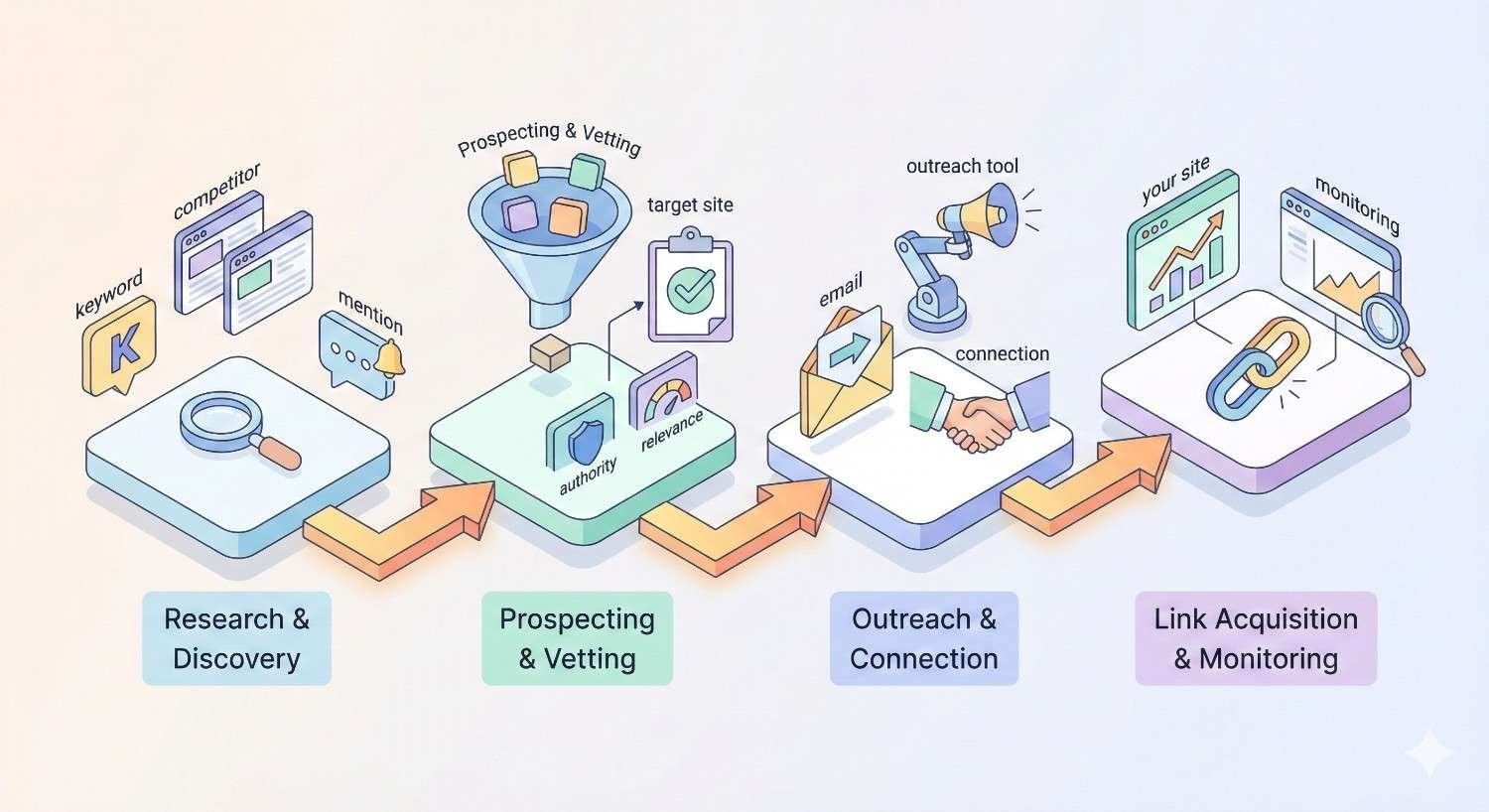
Step 1 – Competitor Backlink Analysis
Start by identifying your top organic competitors for target keywords. These may differ from your business competitors. Use Ahrefs, SEMrush, or Moz to pull their complete backlink profiles.
Export the linking domains and analyze patterns. Which types of sites link to them? What content attracts the most links? Which links appear across multiple competitors?
Focus on replicable links. Editorial links from major publications require different approaches than resource page links or guest post placements. Categorize opportunities by type and difficulty.
Look for link gaps where competitors have coverage you lack. These represent proven opportunities since the linking sites have demonstrated willingness to link within your niche.
Step 2 – Identifying Link Opportunities
Transform your competitor analysis into a prospect list. Filter for sites meeting your quality criteria: minimum authority scores, relevant topics, active publishing schedules, and clean spam profiles.
Expand beyond competitor backlinks. Use content research tools to find sites covering related topics that might not link to direct competitors. Search for resource pages, industry roundups, and content that references topics you can contribute to.
Organize prospects by opportunity type. Separate resource page targets from guest post opportunities from broken link candidates. Each requires different outreach approaches.
Step 3 – Qualifying Prospects
Not every prospect deserves outreach effort. Qualification filters your list to sites most likely to convert and provide SEO value.
Check authority metrics. Sites with Domain Ratings below 20-30 rarely move the needle for established domains. Adjust thresholds based on your current authority level.
Verify traffic. Tools like Ahrefs and SEMrush estimate organic traffic. Sites with zero traffic may be penalized, abandoned, or simply irrelevant to search engines.
Assess relevance. A high-authority site in an unrelated niche provides less value than a moderate-authority site directly in your space. Topical relevance influences how search engines weight links.
Review recent content. Active sites with fresh publishing schedules are more likely to respond and add new links. Dormant sites rarely engage with outreach.
Step 4 – Finding Contact Information
With qualified prospects identified, locate the right contacts. Generic info@ addresses rarely reach decision-makers. You need editors, content managers, or site owners.
Use Hunter.io or similar tools to find email addresses associated with target domains. Cross-reference with LinkedIn to identify specific individuals responsible for content.
For larger sites, look for contributor guidelines or editorial contact pages. These often list the exact person handling external submissions.
Verify email addresses before adding them to outreach sequences. Invalid addresses hurt deliverability and waste campaign resources.
Step 5 – Personalized Outreach at Scale
Effective outreach balances personalization with efficiency. Templates provide structure while merge fields and custom snippets add individual touches.
Reference specific content on the prospect’s site. Mention why your resource adds value to their audience. Avoid generic pitches that could apply to any site.
Keep initial emails concise. Busy editors scan quickly. Lead with value, make your ask clear, and provide easy next steps.
Use outreach tools to send sequences rather than single emails. Most responses come from follow-ups, not initial contact. Plan 2-3 follow-up messages spaced several days apart.
Step 6 – Tracking and Follow-Up
Outreach tools track opens, clicks, and replies automatically. Monitor these metrics to identify what works and what needs adjustment.
Follow up systematically. Set rules for when to send additional messages and when to move on. Persistence matters, but excessive follow-up damages relationships and reputation.
Log all interactions in your CRM. When prospects respond months later, you need context to continue conversations effectively.
Track which pitches convert. Over time, patterns emerge showing which angles, subject lines, and value propositions drive results.
Step 7 – Measuring Results and ROI
Connect link acquisition to SEO outcomes. Track new links in your backlink monitoring tools. Note the authority, relevance, and anchor text of each placement.
Monitor ranking changes for target keywords. While individual links rarely cause immediate jumps, sustained link building should correlate with ranking improvements over 3-6 months.
Calculate cost per link by dividing total campaign costs (tools, time, any paid placements) by links acquired. Compare this against the traffic and revenue value of ranking improvements.
Document what works. Successful campaigns become templates for future efforts. Failed approaches provide lessons to avoid repeating.
Tool-Based Link Building Strategies That Work
Skyscraper Technique with Tool Support
The Skyscraper Technique involves finding popular content in your niche, creating something substantially better, and reaching out to sites linking to the original.
Tools supercharge each step. Content research platforms identify high-link content worth improving. Backlink analysis tools export everyone linking to that content. Outreach tools manage campaigns to hundreds of prospects simultaneously.
Success requires genuine improvement. Your content must offer more depth, better design, updated information, or unique angles. Tools cannot substitute for quality, but they can amplify the reach of exceptional content.
Resource Page Link Building
Resource pages curate helpful links for specific topics. Getting included means earning a contextual link from a relevant, often authoritative page.
Use search operators to find resource pages: “keyword + resources,” “keyword + useful links,” “keyword + recommended sites.” Tools can automate these searches across thousands of variations.
Qualify pages by checking their authority and whether they actively maintain and update their lists. Reach out with a brief pitch explaining why your resource deserves inclusion.
Broken Link Building
Broken link building finds dead links on relevant sites and offers your content as a replacement. You provide value by helping site owners fix errors while earning links.
Tools like Ahrefs identify broken outbound links on any domain. Filter for pages relevant to your content and verify the broken links still exist.
Your outreach should lead with the problem you are solving. Site owners appreciate notifications about broken links, making them receptive to replacement suggestions.
Unlinked Brand Mention Reclamation
When sites mention your brand without linking, you have a warm opportunity. They already know and reference you. Converting mentions to links often requires just a polite request.
Set up alerts for brand mentions using tools like Ahrefs, SEMrush, or Google Alerts. Review new mentions regularly and identify those without links.
Outreach for unlinked mentions has high conversion rates. The site has already endorsed you implicitly. Adding a link benefits their readers by providing easy access to the referenced resource.
Guest Post Prospecting
Guest posting remains effective when focused on relevant, quality sites. Tools help identify opportunities and manage submissions at scale.
Search for sites accepting guest contributions using operators like “write for us + keyword” or “guest post guidelines + topic.” Filter results by authority and relevance.
Track submissions, responses, and publication status in your CRM. Guest posting involves longer timelines than other tactics, making organization essential.
Digital PR and HARO Automation
Digital PR earns links through newsworthy content and expert commentary. HARO and similar platforms connect you with journalists seeking sources.
Set up filtered alerts for relevant queries. Respond quickly with genuinely helpful information. Journalists receive dozens of pitches; standing out requires expertise and speed.
Tools can help monitor opportunities and track placements, but success depends on providing real value to journalists and their audiences.
Common Mistakes to Avoid
Over-Automation and Spam Signals
Automation enables scale but creates risks when overused. Sending identical emails to hundreds of prospects triggers spam filters and damages your domain reputation.
Personalization must remain genuine. Merge fields inserting first names do not constitute personalization. Reference specific content, demonstrate familiarity with the site, and explain relevance clearly.
Pace your outreach. Sending hundreds of emails daily from a new domain raises red flags. Warm up sending volumes gradually and maintain natural patterns.
Ignoring Link Quality Metrics
Chasing link quantity over quality wastes resources and can harm rankings. Links from spammy, irrelevant, or low-authority sites provide minimal value and potential risk.
Establish minimum quality thresholds before prospecting. Filter out sites with high spam scores, thin content, or obvious link schemes.
Evaluate each opportunity against your standards. Declining poor opportunities preserves resources for better targets.
Neglecting Personalization
Generic outreach fails. Recipients recognize templates immediately and delete them without reading.
Invest time in personalization that demonstrates genuine engagement. Reference recent articles, comment on site design, or connect your pitch to the recipient’s stated interests.
Personalization scales through research efficiency, not template shortcuts. Spend less time on unqualified prospects and more time crafting compelling pitches for high-value targets.
Focusing on Quantity Over Relevance
Relevance determines link value more than raw authority metrics. A link from a moderately authoritative site in your exact niche often outperforms a link from a high-authority site in an unrelated field.
Prioritize topical alignment in your prospecting. Sites covering your subject matter send stronger relevance signals to search engines.
Build relationships within your industry. Relevant sites are more likely to link repeatedly, creating compounding value over time.
How Long Does Tool-Based Link Building Take to Work?
Realistic Timelines for Results
Link building operates on extended timelines. Individual links rarely produce immediate ranking changes. Cumulative link acquisition over months drives measurable improvements.
Expect 3-6 months before seeing significant ranking movement from a new link building program. Search engines take time to discover, crawl, and evaluate new links. The ranking algorithm then gradually adjusts positions based on updated link signals.
Highly competitive keywords require longer timelines and more links. Less competitive terms may respond faster to smaller link gains.
Traffic and revenue impacts follow ranking improvements. Budget for 6-12 months before expecting meaningful business outcomes from link building investments.
Factors That Influence Speed
Domain age and existing authority affect how quickly new links impact rankings. Established sites with strong foundations see faster results than new domains building from scratch.
Link quality accelerates timelines. A single link from a highly authoritative, relevant site can outweigh dozens of lower-quality placements.
Content quality determines whether links translate to rankings. Links to thin or poorly optimized content produce weaker results than links to comprehensive, well-structured pages.
Competitive intensity shapes expectations. Ranking for terms where competitors actively build links requires matching or exceeding their pace.
Tool-Based Link Building Costs and ROI
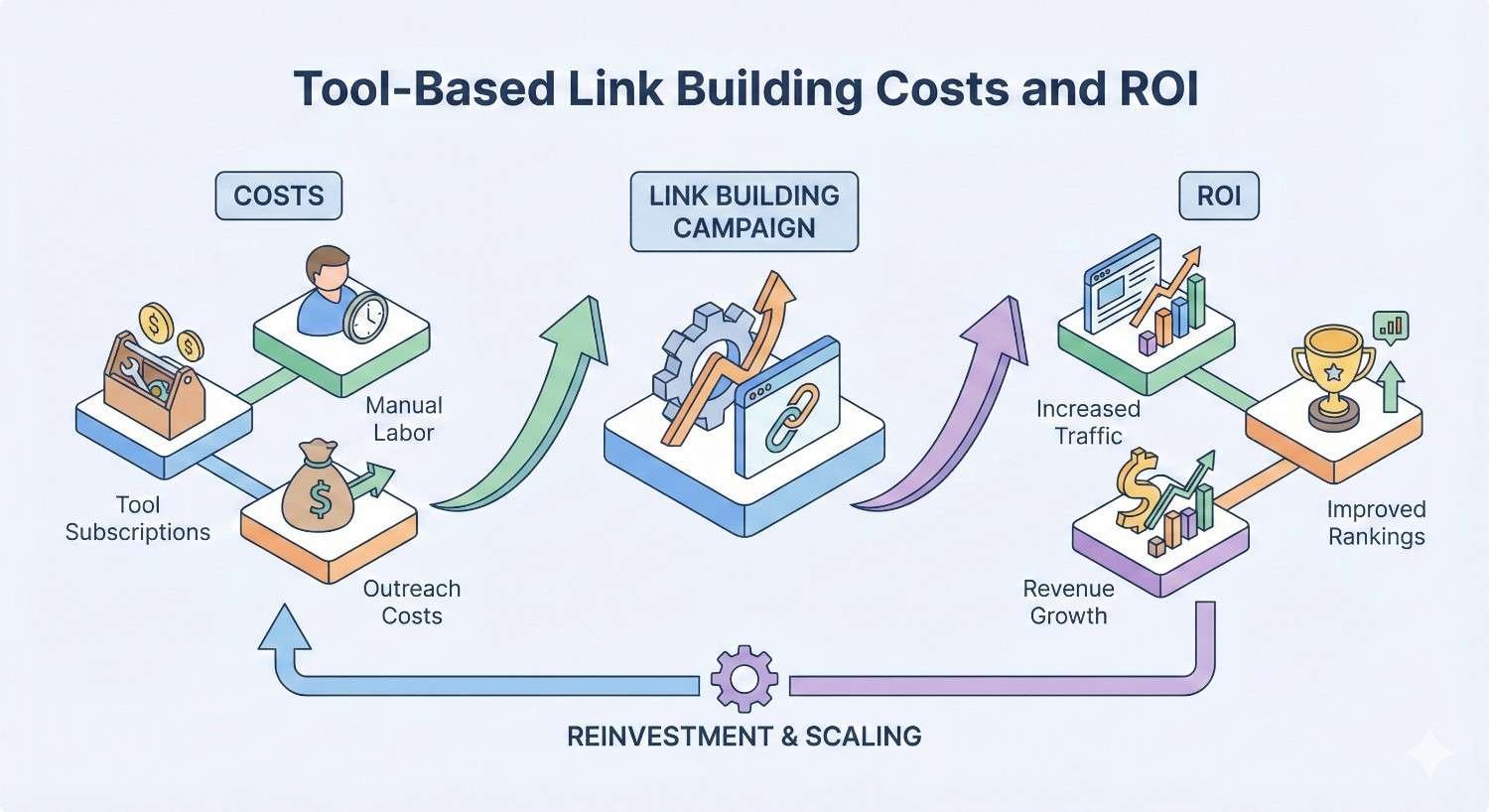
Tool Subscription Costs Breakdown
Basic link building tool stacks start around $200-300 monthly. This typically includes one major SEO platform (Ahrefs, SEMrush, or Moz) plus an email finder and basic outreach tool.
Comprehensive stacks for serious campaigns run $500-1,000 monthly. This adds dedicated outreach platforms, additional data sources, and monitoring tools.
Enterprise and agency stacks can exceed $2,000 monthly when including premium tiers, multiple seats, and specialized tools.
Most tools offer monthly billing, allowing you to scale costs with campaign intensity. Annual commitments typically save 15-20%.
In-House vs. Agency Costs
In-house link building requires tool subscriptions plus staff time. A dedicated link builder’s salary ranges from $50,000-80,000 annually depending on experience and location. Add tool costs and you are investing $60,000-100,000 yearly for one full-time resource.
Agencies charge $1,000-10,000 monthly depending on scope and quality. Lower-end agencies often deliver questionable links. Premium agencies with proven track records command higher fees but provide better results and less risk.
Hybrid approaches work for many businesses. Handle strategy and relationship building in-house while outsourcing prospecting and initial outreach to agencies or contractors.
Calculating Link Building ROI
ROI calculation requires connecting links to rankings to traffic to revenue. This chain involves multiple variables and time delays.
Start by tracking the cost per link. Divide total monthly investment by links acquired. Quality-adjusted metrics weight links by authority and relevance.
Estimate traffic value by calculating what equivalent paid traffic would cost. If a ranking improvement drives 1,000 monthly visits for a keyword with $5 CPC, that represents $5,000 monthly value.
For lead generation businesses, track conversions from organic traffic to calculate revenue impact. Attribute a portion of organic growth to link building based on ranking improvements for targeted keywords.
Free vs. Paid Link Building Tools
Best Free Tools for Beginners
Google Search Console provides basic backlink data for your own site. While limited compared to paid tools, it shows which sites link to you and which pages attract links.
Ubersuggest offers limited free backlink analysis. The free tier restricts daily searches but provides enough data for small-scale prospecting.
Hunter.io’s free tier allows 25 email searches monthly. Sufficient for testing the tool and handling occasional lookups.
Google Alerts monitors brand mentions at no cost. Set up alerts for your brand name and key products to catch unlinked mention opportunities.
Spreadsheets remain powerful for tracking outreach when budgets prohibit dedicated CRM tools. Google Sheets with proper organization handles small campaigns effectively.
When to Invest in Premium Tools
Invest in paid tools when free options limit your output. If you are spending more time working around tool limitations than building links, the upgrade pays for itself.
Scale triggers investment. Managing 50 prospects in spreadsheets works. Managing 500 requires proper CRM functionality.
Competitive intensity matters. If competitors use premium tools, matching their efficiency requires similar investments.
Calculate the break-even point. If a $100 monthly tool saves 10 hours of work, it pays for itself at any hourly rate above $10. Most link builders’ time is worth far more.
How to Choose the Right Link Building Tools
Assessing Your Link Building Goals
Define what you need before evaluating tools. Prospecting-heavy strategies require strong discovery features. Outreach-focused approaches prioritize email automation and CRM.
Consider your team structure. Solo operators need all-in-one platforms. Larger teams can specialize with dedicated tools for each function.
Evaluate your current gaps. If you already have strong prospecting but struggle with outreach management, invest there first.
Budget Considerations
Start with essential tools and expand as results justify investment. A single comprehensive platform often beats multiple specialized tools for smaller budgets.
Take advantage of free trials. Most tools offer 7-14 day trials. Test thoroughly before committing to annual contracts.
Consider annual billing only after confirming the tool fits your workflow. Monthly flexibility costs more but reduces risk of paying for unused subscriptions.
Integration with Existing Tech Stack
Tools that integrate with your existing platforms reduce friction and data silos. Check whether prospecting tools export to your CRM, whether email tools connect to your domain, and whether analytics integrate with your reporting.
API access matters for custom workflows. If you need to connect tools that lack native integrations, API availability enables custom solutions.
Evaluate the learning curve. Powerful tools with steep learning curves may underperform simpler alternatives if your team cannot use them effectively.
Tool-Based Link Building for Different Business Types
For Startups and Small Businesses
Limited budgets require efficiency. Focus on one comprehensive tool rather than spreading thin across multiple platforms.
Prioritize quick wins. Unlinked mention reclamation and broken link building require less content investment than strategies like the Skyscraper Technique.
Leverage founder networks. Personal connections often yield links that cold outreach cannot. Tools help identify where connections might facilitate introductions.
For E-commerce Websites
Product-focused link building requires different approaches. Seek product reviews, shopping guides, and comparison content opportunities.
Supplier and manufacturer relationships offer link opportunities. Many brands link to authorized retailers or feature customer success stories.
Seasonal content attracts links around shopping events. Create gift guides, deal roundups, and seasonal resources that naturally attract links during peak periods.
For SaaS Companies
Content marketing and link building align naturally for SaaS. Educational content, tools, and resources attract links while supporting product awareness.
Integration partnerships create link opportunities. Partner pages, app directories, and integration announcements generate relevant links.
Industry research and original data attract high-authority links. Invest in studies, surveys, and analyses that journalists and bloggers want to reference.
For Agencies Managing Multiple Clients
Multi-client management requires tools with workspace separation, team permissions, and consolidated reporting.
Standardize processes across clients while customizing strategies for each niche. Templates and workflows should flex to different industries.
White-label reporting matters for client communication. Choose tools that generate professional reports without exposing your internal processes.
Measuring Link Building Success
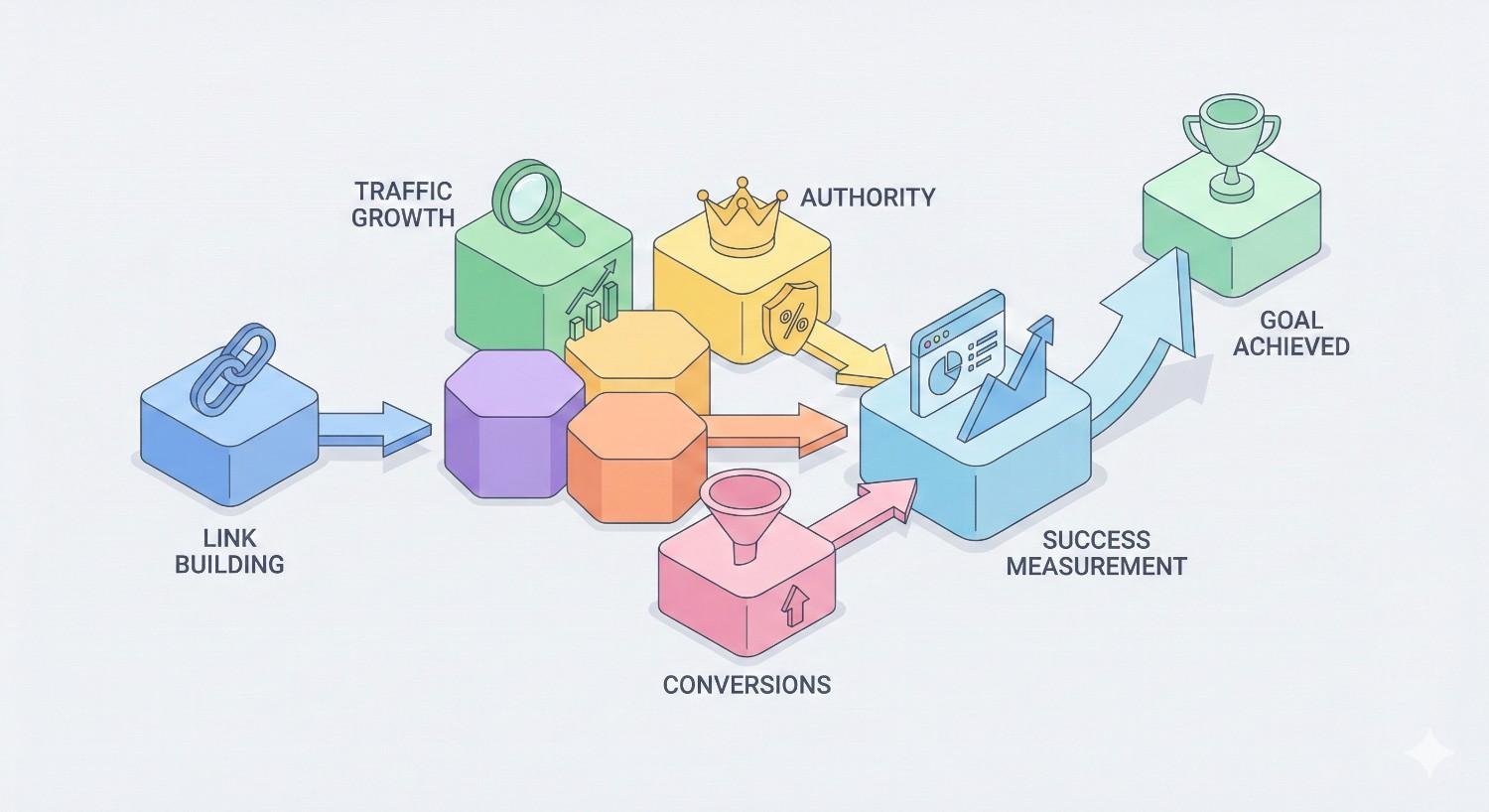
Key Metrics to Track
Track links acquired by quantity, quality, and relevance. Raw counts matter less than the authority and topical alignment of linking domains.
Monitor referring domain growth over time. Steady increases indicate sustainable programs. Spikes followed by drops suggest link quality issues.
Measure ranking changes for target keywords. Correlate link acquisition with position improvements, accounting for the typical 3-6 month delay.
Track organic traffic growth, particularly to pages receiving link building focus. Isolate link building impact from other SEO activities where possible.
Reporting and Dashboard Setup
Create dashboards combining link metrics with ranking and traffic data. Tools like Google Data Studio or Looker Studio can pull from multiple sources.
Report monthly on links acquired, quality metrics, and pipeline status. Quarterly reports should connect link building to ranking and traffic outcomes.
Visualize trends over time rather than focusing solely on point-in-time snapshots. Link building success compounds, making trend lines more meaningful than individual data points.
Attributing Traffic and Revenue to Links
Attribution requires connecting multiple data sources. Link acquisition data from your tools, ranking data from tracking platforms, and traffic data from analytics must align.
Use landing page analysis to isolate pages receiving link building focus. Compare their traffic growth against site averages to estimate link building contribution.
For revenue attribution, track conversions from organic traffic to target pages. Apply your standard conversion value to calculate revenue impact.
Accept that perfect attribution is impossible. Link building influences rankings alongside content quality, technical SEO, and competitive factors. Directional measurement guides decisions even without precise numbers.
Conclusion
Tool-based link building combines strategic thinking with software efficiency to build backlink profiles that drive sustainable ranking improvements. The right tools transform link building from a time-intensive manual process into a scalable system that compounds results over time.
Success requires balancing automation with authenticity. Tools handle data and logistics while humans provide the creativity, relationship building, and quality judgment that earn genuine editorial links.
At White Label SEO Service, we help businesses implement tool-based link building systems that deliver measurable organic growth. Contact our team to discuss how a strategic approach to link acquisition can strengthen your search visibility and drive long-term business results.
Frequently Asked Questions
Is tool-based link building safe for SEO?
Yes, when executed properly. Tools themselves are neutral. Safety depends on the strategies you implement. Focus on earning editorial links through valuable content and genuine outreach rather than manipulative tactics.
What is the best link building tool for beginners?
Ahrefs or SEMrush provide the most comprehensive starting points. Both offer prospecting, analysis, and tracking in single platforms. Choose based on interface preference and budget.
How many links should I build per month?
Quality matters more than quantity. Most sites benefit from 5-20 high-quality links monthly. Aggressive campaigns might target more, but never sacrifice quality for volume.
Can link building tools get my site penalized?
Tools do not cause penalties. Spammy tactics executed through tools can. Avoid mass automated outreach, link schemes, and low-quality placements regardless of what tools you use.
Do I need multiple tools or just one?
Start with one comprehensive platform. Add specialized tools only when specific limitations block your progress. Many successful link builders use just 2-3 core tools.
How do I know if a link is worth pursuing?
Evaluate authority metrics, topical relevance, traffic levels, and content quality. A link worth pursuing comes from an active site in your niche with genuine audience engagement.
Can I build links without any paid tools?
Yes, though efficiency suffers significantly. Free tools and manual research can support small-scale campaigns. Paid tools become essential as you scale beyond a handful of links monthly.