Finding the right web design agency in Los Angeles can transform your digital presence and directly impact revenue growth. With over 2,000 agencies operating across the LA metro area, choosing the wrong partner means wasted budgets, missed deadlines, and websites that fail to convert.
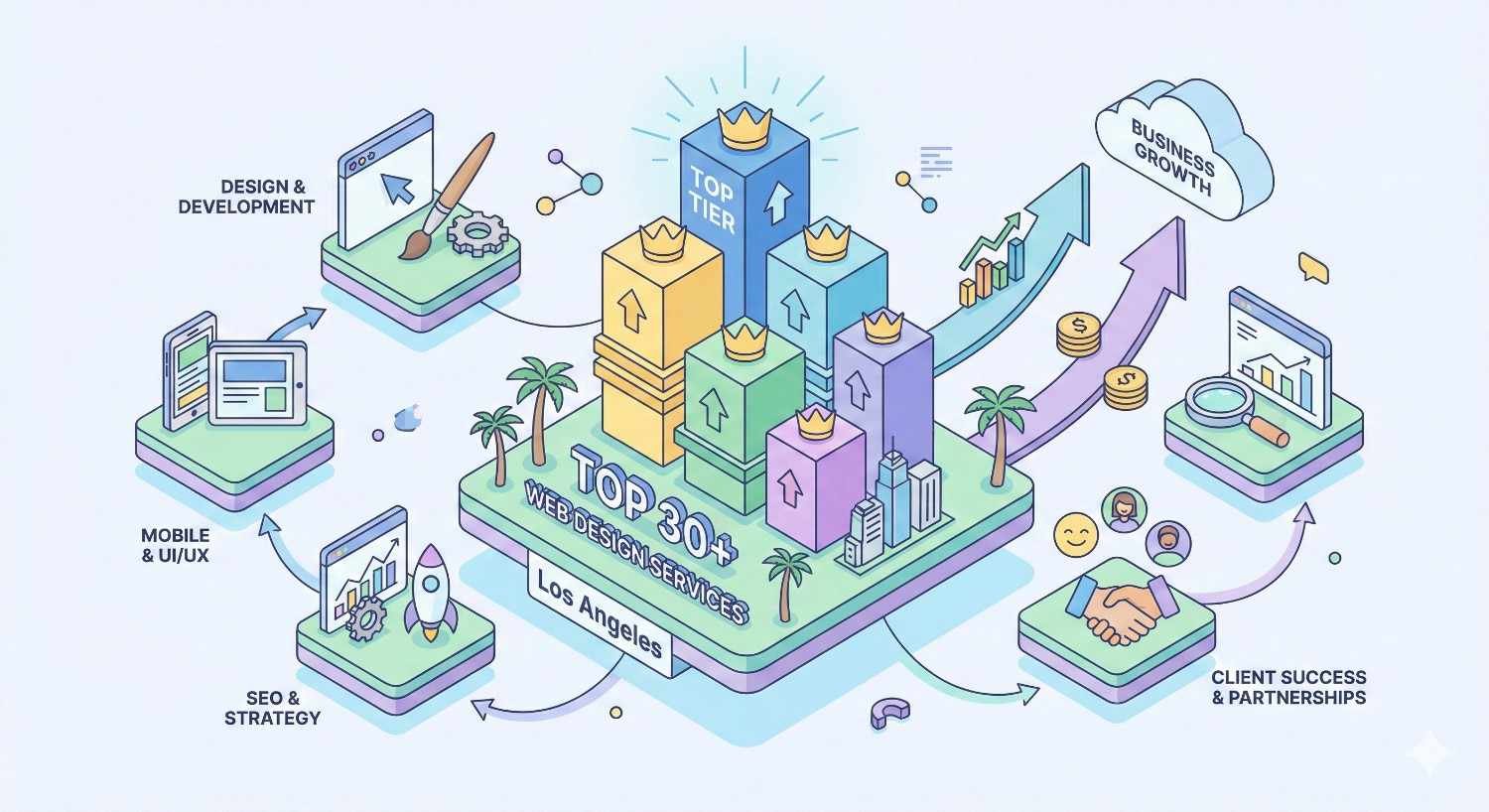
This comprehensive guide ranks and reviews the top 30+ web design services in Los Angeles for 2026. We evaluated each agency across technical capabilities, portfolio quality, pricing transparency, and client outcomes.
Whether you need enterprise-level custom development or a budget-friendly WordPress site, you will find the right match here. Let us break down exactly what each agency offers and who they serve best.
How We Ranked and Reviewed LA Web Design Agencies
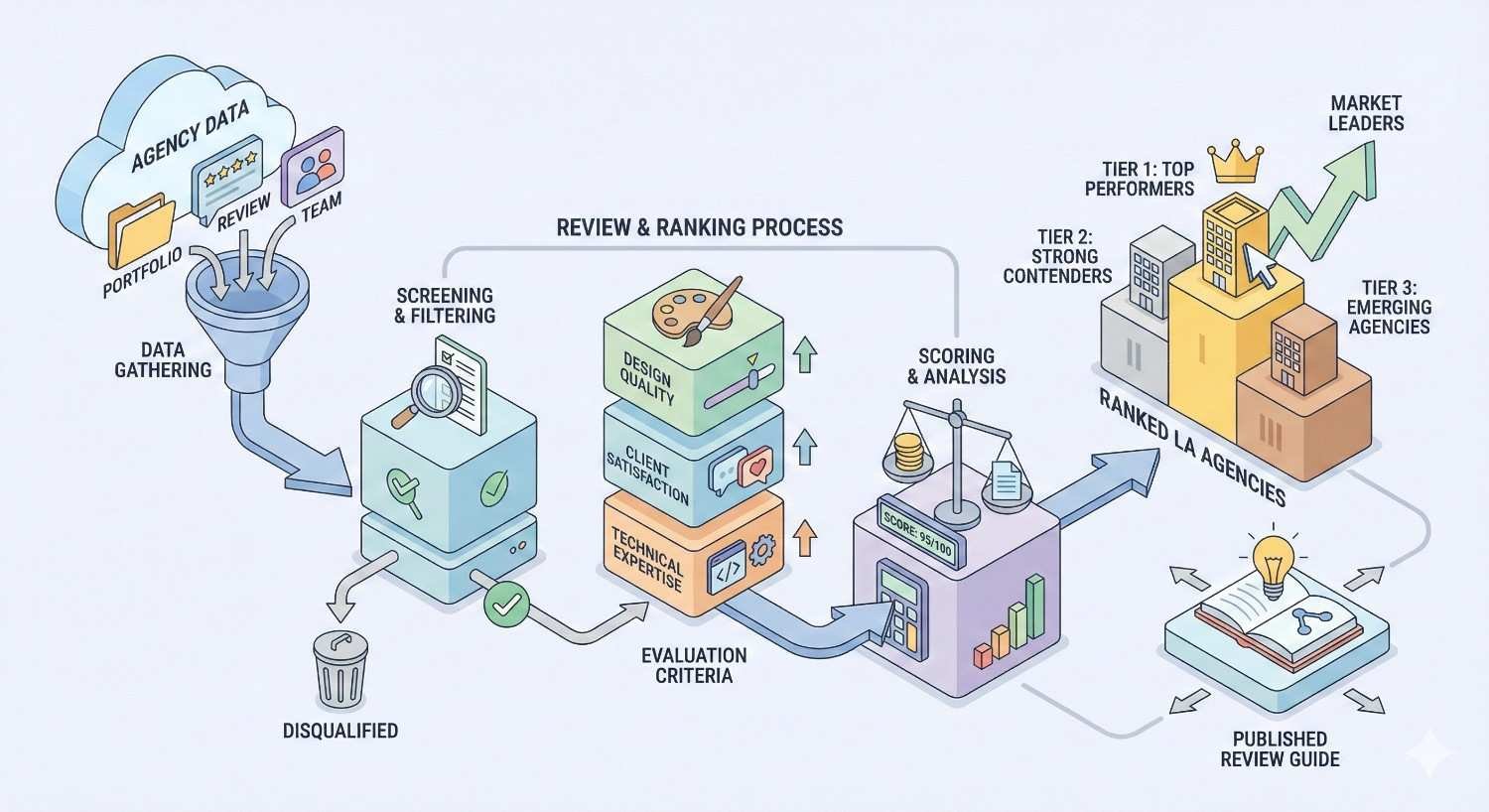
Selecting the best web design agencies requires more than browsing portfolios. Our evaluation process combines quantitative scoring with qualitative analysis to deliver rankings you can trust.
Evaluation Criteria and Scoring Methodology
We scored each agency across eight weighted categories. Technical expertise accounts for 20% of the total score, measuring proficiency in modern frameworks, CMS platforms, and custom development capabilities. Portfolio quality represents another 20%, evaluating design aesthetics, user experience principles, and conversion optimization evidence.
Client outcomes carry 15% weight, examining documented results like traffic increases, conversion improvements, and revenue impact. Pricing transparency scores 10%, rewarding agencies that publish clear rate structures. Industry reputation contributes 15% through aggregated review scores from Clutch, Google, and DesignRush.
Service breadth accounts for 10%, favoring agencies offering comprehensive solutions. Communication and process scores 5%, based on client feedback about responsiveness. Finally, innovation and trends contribute 5%, recognizing agencies adopting AI tools, accessibility standards, and performance optimization.
Data Sources and Verification Process
Our research draws from multiple verified sources. We analyzed over 500 client reviews across Clutch, Google Business, and industry directories. Direct portfolio analysis examined live websites built by each agency, testing Core Web Vitals scores and mobile responsiveness.
We verified pricing through direct inquiries and published rate cards. Case study claims were cross-referenced with client testimonials and third-party analytics where available. Agency credentials, certifications, and partnership statuses were confirmed through official channels.
What Makes a Top Web Design Service in 2026
The web design landscape has shifted dramatically. Top agencies in 2026 demonstrate mastery of AI-assisted design workflows while maintaining human creative direction. They prioritize Core Web Vitals compliance, understanding that page experience directly impacts search rankings.
Leading agencies build accessibility into every project, not as an afterthought. They offer transparent pricing models and clear project timelines. Most importantly, they measure success through business outcomes rather than just aesthetic appeal.
Top 30+ Web Design Services in Los Angeles – Complete Rankings
#1 – SUSPENDED STUDIOS – Best Overall Web Design Agency
Suspended Studios earns our top ranking through consistent excellence across all evaluation criteria. This full-service agency combines award-winning design with technical sophistication.
Services Offered
Suspended Studios delivers custom website design, e-commerce development, web application builds, and brand identity packages. Their team handles UX research, UI design, front-end and back-end development, and ongoing optimization. They specialize in headless CMS implementations and progressive web applications.
Pricing & Packages
Projects typically start at $25,000 for small business websites. Mid-market builds range from $50,000 to $150,000. Enterprise and custom application projects exceed $200,000. They offer retainer arrangements for ongoing development starting at $5,000 monthly.
Notable Clients & Portfolio
Their portfolio includes work for Sony Music, Red Bull, and multiple Fortune 500 brands. Recent projects demonstrate expertise in entertainment, technology, and luxury retail sectors. Their sites consistently score above 90 on Google PageSpeed Insights.
Pros and Cons
Pros: Exceptional design quality, strong technical team, proven enterprise experience, excellent project management.
Cons: Premium pricing excludes smaller budgets, longer project timelines, limited availability due to high demand.
Our Verdict
Suspended Studios represents the gold standard for LA web design. If budget allows, they deliver unmatched quality and results. Best suited for established brands seeking transformative digital experiences.
#2 – INSTRUMENT – Best for Enterprise Solutions
Instrument brings Silicon Valley rigor to Los Angeles enterprise clients. Their data-driven approach produces websites that perform as well as they look.
Services Offered
Enterprise web platforms, digital product design, design systems, and brand experiences comprise their core offerings. They excel at complex integrations, custom CRM connections, and scalable architecture. Their strategy team provides market research and competitive analysis.
Pricing & Packages
Enterprise engagements typically begin at $100,000. Complex platform builds range from $250,000 to $1 million+. They structure projects as fixed-fee or time-and-materials based on scope complexity.
Notable Clients & Portfolio
Instrument has partnered with Google, Nike, Spotify, and Airbnb. Their work emphasizes performance, accessibility, and scalability. Case studies document measurable business impact including conversion rate improvements averaging 35%.
Pros and Cons
Pros: World-class enterprise experience, rigorous methodology, exceptional talent, measurable outcomes focus.
Cons: Not accessible for SMBs, lengthy discovery phases, requires significant client involvement.
Our Verdict
For enterprise organizations requiring bulletproof digital platforms, Instrument delivers. Their systematic approach minimizes risk on high-stakes projects. The investment pays dividends through superior performance and longevity.
#3 – DIGITAL SILK – Best for Startups & SMBs
Digital Silk bridges the gap between boutique attention and agency capabilities. They understand startup constraints while delivering professional results.
Services Offered
Website design, branding, digital marketing, and software development form their service mix. They offer MVP development for startups, growth-focused design for scaling companies, and rebranding packages. Their team includes strategists, designers, and developers under one roof.
Pricing & Packages
Startup packages begin at $10,000 for foundational websites. Growth-stage builds range from $25,000 to $75,000. They offer flexible payment structures including milestone-based billing and equity arrangements for select startups.
Notable Clients & Portfolio
Their portfolio spans funded startups to established mid-market companies. Notable work includes projects for HP, Xerox, and numerous Y Combinator alumni. They showcase before-and-after metrics demonstrating traffic and conversion improvements.
Pros and Cons
Pros: Startup-friendly pricing, fast turnaround options, integrated marketing services, flexible engagement models.
Cons: Less suitable for highly complex technical builds, variable team assignments, some template-based approaches.
Our Verdict
Digital Silk offers the best value proposition for growing companies. They balance quality with accessibility, making professional web design achievable for businesses with limited budgets. Ideal for Series A through Series C companies.
#4 – LOUNGE LIZARD – Best for E-commerce Web Design
Lounge Lizard has built deep expertise in e-commerce over two decades. Their conversion-focused approach drives measurable revenue results.
Services Offered
Shopify Plus development, WooCommerce builds, custom e-commerce platforms, and marketplace integrations define their specialty. They handle product photography direction, inventory system connections, and payment gateway implementations. Post-launch services include conversion rate optimization and A/B testing.
Pricing & Packages
Basic Shopify builds start at $15,000. Mid-tier e-commerce sites range from $30,000 to $80,000. Enterprise Shopify Plus implementations begin at $100,000. Monthly optimization retainers start at $3,000.
Notable Clients & Portfolio
E-commerce clients include fashion brands, consumer electronics companies, and DTC startups. Their case studies document average conversion rate improvements of 25-40% post-launch. They maintain Shopify Plus Partner status.
Pros and Cons
Pros: Deep e-commerce expertise, conversion optimization focus, strong Shopify capabilities, proven ROI track record.
Cons: Less suited for non-commerce projects, traditional design aesthetic, limited custom platform experience.
Our Verdict
For businesses where online sales drive revenue, Lounge Lizard delivers. Their e-commerce specialization translates to faster launches and better conversion rates. The investment typically pays back within months through increased sales.
#5 – RUCKUS – Best for Custom Development
Ruckus tackles technical challenges other agencies avoid. Their engineering-first approach produces innovative digital products.
Services Offered
Custom web applications, API development, complex integrations, and technical consulting comprise their focus. They build on React, Vue, Node.js, and Python frameworks. Their team includes senior engineers with backgrounds at major tech companies.
Pricing & Packages
Custom development projects start at $50,000. Complex applications range from $100,000 to $500,000+. They offer technical discovery engagements starting at $15,000 to scope complex projects accurately.
Notable Clients & Portfolio
Their portfolio features custom platforms for media companies, fintech startups, and healthcare organizations. Projects demonstrate complex functionality including real-time data processing, machine learning integrations, and multi-tenant architectures.
Pros and Cons
Pros: Exceptional technical depth, innovative problem-solving, scalable architecture expertise, senior talent.
Cons: Premium pricing, longer timelines, less focus on visual design, requires technical client stakeholders.
Our Verdict
When your project requires custom functionality beyond standard CMS capabilities, Ruckus delivers. Their engineering excellence produces platforms that scale and perform. Best for technically complex requirements.
#6 – COLORMATICS – Best for Video-Integrated Web Design
Colormatics combines video production expertise with web development. Their multimedia approach creates immersive brand experiences.
Services Offered
Video-centric website design, motion graphics integration, interactive storytelling, and brand video production. They handle everything from concept development through final implementation. Their team includes directors, animators, and developers.
Pricing & Packages
Video-integrated websites start at $35,000. Full brand video and website packages range from $75,000 to $200,000. Standalone video production begins at $15,000.
Notable Clients & Portfolio
Entertainment, hospitality, and lifestyle brands dominate their portfolio. Their work features prominently on Awwwards and CSS Design Awards. Projects demonstrate seamless video integration without sacrificing page performance.
Pros and Cons
Pros: Unique video expertise, award-winning creative, immersive experiences, in-house production capabilities.
Cons: Higher budgets required, longer production timelines, less suited for content-heavy sites.
Our Verdict
For brands where visual storytelling drives engagement, Colormatics excels. Their integrated approach eliminates coordination between separate video and web vendors. Ideal for entertainment, hospitality, and lifestyle brands.
#7 – WPROMOTE – Best for Marketing-Integrated Web Design
Wpromote approaches web design as a marketing channel. Their performance marketing background informs every design decision.
Services Offered
Conversion-optimized website design, landing page development, marketing automation integration, and analytics implementation. They connect web projects directly to paid media, SEO, and email marketing strategies.
Pricing & Packages
Marketing-focused websites start at $20,000. Comprehensive digital transformation projects range from $50,000 to $150,000. Integrated marketing retainers begin at $10,000 monthly.
Notable Clients & Portfolio
B2B technology, healthcare, and financial services clients feature prominently. Case studies document lead generation improvements and customer acquisition cost reductions. They maintain Google Premier Partner status.
Pros and Cons
Pros: Marketing performance focus, integrated analytics, conversion optimization expertise, full-funnel thinking.
Cons: Design can prioritize function over form, less suited for brand-focused projects, agency size means variable team quality.
Our Verdict
When website success is measured in leads and revenue, Wpromote delivers. Their marketing DNA ensures every design decision supports business objectives. Best for B2B companies and lead generation focused businesses.
#8 – BAUNFIRE – Best for Brand-Focused Design
Baunfire creates websites that elevate brand perception. Their design-forward approach produces visually distinctive digital experiences.
Services Offered
Brand identity, website design, digital campaigns, and creative direction. They emphasize strategic positioning and visual differentiation. Their process begins with brand strategy before any design work.
Pricing & Packages
Brand and website packages start at $40,000. Comprehensive brand transformation projects range from $100,000 to $300,000. Standalone website projects begin at $30,000.
Notable Clients & Portfolio
Technology companies, professional services firms, and consumer brands comprise their client base. Their work has earned recognition from Communication Arts, Webby Awards, and AIGA. Projects demonstrate sophisticated typography and refined visual systems.
Pros and Cons
Pros: Exceptional design quality, strong brand strategy, award-winning creative, sophisticated aesthetic.
Cons: Premium pricing, longer timelines, less technical depth, design-first may not suit all objectives.
Our Verdict
For companies where brand perception directly impacts business value, Baunfire delivers. Their strategic approach ensures websites reinforce broader brand positioning. Ideal for professional services, technology, and premium consumer brands.
#9 – CLEVERLY – Best for B2B Lead Generation Sites
Cleverly specializes in websites that generate qualified B2B leads. Their LinkedIn marketing expertise informs their web design approach.
Services Offered
B2B website design, landing page optimization, lead capture systems, and CRM integration. They focus on messaging clarity, trust signals, and conversion pathways. Post-launch services include A/B testing and ongoing optimization.
Pricing & Packages
B2B websites start at $12,000. Lead generation focused builds range from $25,000 to $60,000. Monthly optimization and LinkedIn marketing packages begin at $3,000.
Notable Clients & Portfolio
SaaS companies, professional services firms, and B2B technology vendors dominate their portfolio. Case studies document lead volume increases and cost-per-lead reductions. They specialize in complex B2B buying journeys.
Pros and Cons
Pros: B2B expertise, lead generation focus, LinkedIn integration, measurable outcomes.
Cons: Limited B2C experience, functional over flashy design, narrower service scope.
Our Verdict
B2B companies struggling with lead generation should consider Cleverly. Their specialized focus produces websites optimized for complex sales cycles. Best for SaaS, professional services, and B2B technology companies.
#10 – SOCIALFLY – Best for Social-First Brands
Socialfly builds websites designed for social media integration. Their social marketing background shapes their web design philosophy.
Services Offered
Social-integrated website design, influencer landing pages, user-generated content displays, and social commerce implementations. They connect websites directly to social platforms and community management tools.
Pricing & Packages
Social-focused websites start at $15,000. Comprehensive social commerce builds range from $30,000 to $75,000. Integrated social marketing retainers begin at $5,000 monthly.
Notable Clients & Portfolio
Consumer brands, lifestyle companies, and influencer-driven businesses comprise their client base. Projects feature seamless Instagram, TikTok, and Pinterest integrations. They demonstrate expertise in social proof and community features.
Pros and Cons
Pros: Social platform expertise, influencer marketing integration, community features, trend awareness.
Cons: Less suited for B2B, limited enterprise experience, social-dependent strategies.
Our Verdict
Brands built on social media presence need websites that extend that experience. Socialfly bridges social platforms and owned digital properties effectively. Ideal for DTC brands, influencers, and lifestyle companies.
#11-20 – Strong Contenders
#11 – HUGE – Best for Digital Transformation Full-service digital consultancy handling complex organizational change. Projects start at $150,000. Best for enterprise digital transformation initiatives.
#12 – BASIC/DEPT – Best for Creative Innovation Award-winning creative agency pushing design boundaries. Projects start at $75,000. Best for brands seeking distinctive creative approaches.
#13 – PHENOMENON – Best for Entertainment Industry Deep entertainment sector expertise with major studio relationships. Projects start at $50,000. Best for film, television, and gaming clients.
#14 – BUTCHER BIRD STUDIOS – Best for Animation Integration Combines animation production with web development. Projects start at $40,000. Best for brands requiring custom animation and motion design.
#15 – TRAINA – Best for Healthcare Web Design HIPAA-compliant development with healthcare UX expertise. Projects start at $35,000. Best for healthcare providers and medical technology companies.
#16 – STRUCK – Best for Nonprofit Organizations Mission-driven agency with nonprofit sector experience. Projects start at $25,000. Best for foundations, associations, and cause-based organizations.
#17 – BLULEADZ – Best for HubSpot Integration HubSpot Diamond Partner with deep platform expertise. Projects start at $20,000. Best for companies committed to HubSpot ecosystem.
#18 – DIRECTIVE – Best for SaaS Companies SaaS-focused agency understanding subscription business models. Projects start at $30,000. Best for B2B SaaS companies at growth stage.
#19 – SINGLE GRAIN – Best for SEO-First Design SEO agency offering conversion-optimized web design. Projects start at $25,000. Best for companies prioritizing organic search performance.
#20 – KOBE DIGITAL – Best for Local Business Websites LA-focused agency serving local and regional businesses. Projects start at $8,000. Best for local service businesses and retail.
#21-30+ – Specialized Options
#21 – WEBIMAX – Affordable full-service digital agency. Projects from $5,000.
#22 – THRIVE AGENCY – WordPress specialists with SEO integration. Projects from $10,000.
#23 – SMARTSITES – Performance-focused design and development. Projects from $7,500.
#24 – IGNITE VISIBILITY – Marketing-first web design approach. Projects from $15,000.
#25 – COALITION TECHNOLOGIES – E-commerce and SEO specialists. Projects from $12,000.
#26 – FISHBAT – Long Island agency with LA presence. Projects from $8,000.
#27 – MAXBURST – Custom WordPress development focus. Projects from $10,000.
#28 – SACHS MARKETING – Local SEO integrated web design. Projects from $6,000.
#29 – 1SEO – Technical SEO and web development. Projects from $7,000.
#30 – VICTORIOUS – SEO agency offering web services. Projects from $10,000.
#31 – STRAIGHT NORTH – B2B lead generation websites. Projects from $15,000.
#32 – BLUE FOUNTAIN MEDIA – Enterprise web solutions. Projects from $50,000.
Quick Comparison Table: Top LA Web Design Agencies at a Glance
Comparison by Pricing Tier
| Pricing Tier | Agencies | Best For |
| Budget ($5K-$15K) | Kobe Digital, Webimax, SmartSites, Sachs Marketing | Local businesses, simple sites |
| Mid-Range ($15K-$50K) | Digital Silk, Lounge Lizard, Cleverly, Thrive | SMBs, e-commerce, lead gen |
| Premium ($50K-$150K) | Suspended Studios, Baunfire, Ruckus, Colormatics | Established brands, custom builds |
| Enterprise ($150K+) | Instrument, Huge, Basic/Dept | Fortune 500, complex platforms |
Comparison by Industry Specialization
| Industry | Top Agencies |
| E-commerce | Lounge Lizard, Coalition Technologies, SmartSites |
| Healthcare | Traina, Thrive Agency |
| Entertainment | Phenomenon, Colormatics, Butcher Bird |
| B2B/SaaS | Directive, Cleverly, Straight North |
| Nonprofit | Struck, Blue Fountain Media |
| Local Business | Kobe Digital, Sachs Marketing |
Comparison by Service Type
| Service Focus | Top Agencies |
| Custom Development | Ruckus, Instrument, Huge |
| WordPress/CMS | Thrive, Maxburst, Webimax |
| Shopify/E-commerce | Lounge Lizard, Coalition Technologies |
| Brand + Web | Baunfire, Basic/Dept, Suspended Studios |
| Marketing Integration | Wpromote, Single Grain, Ignite Visibility |
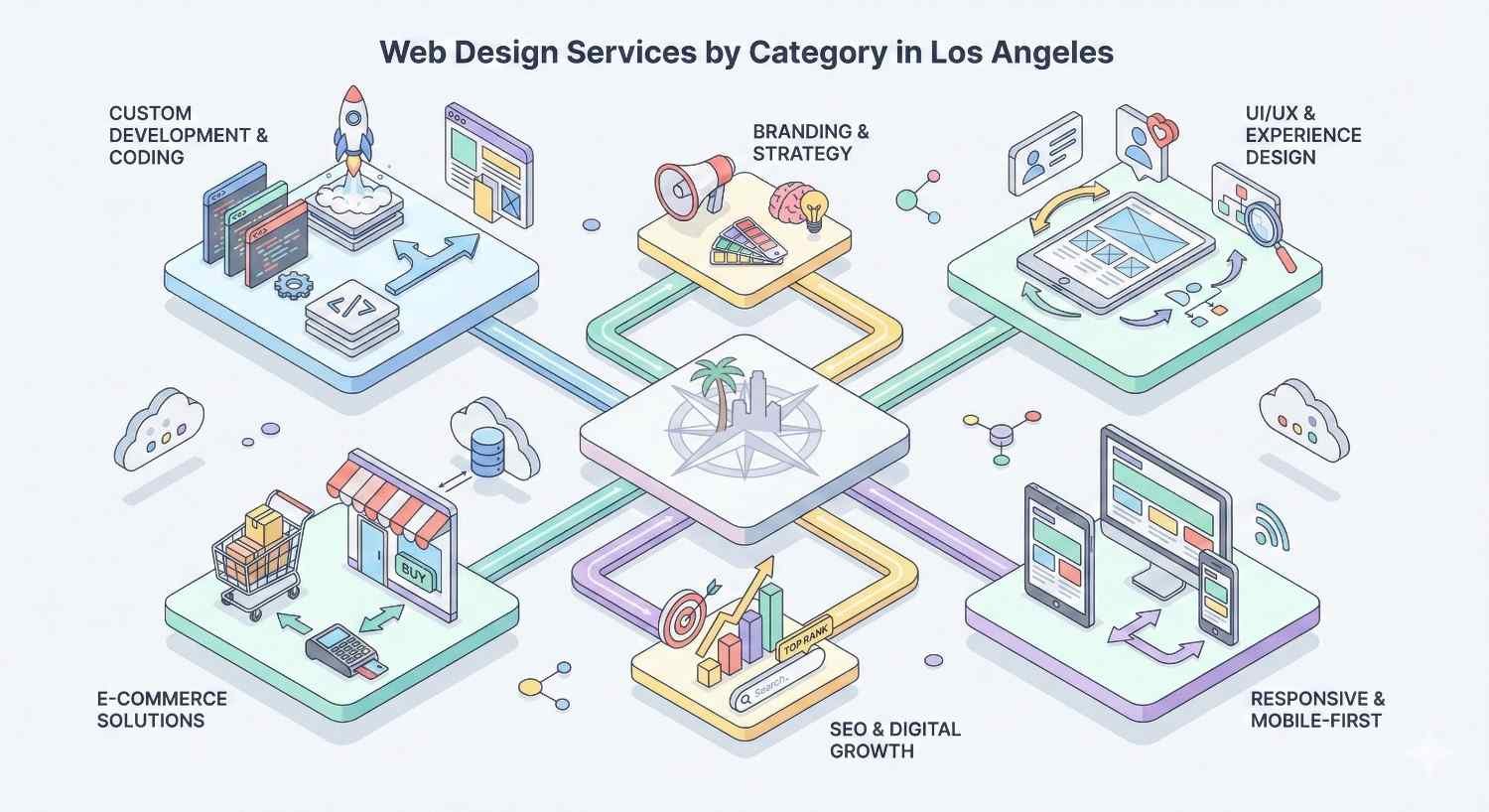
Web Design Services by Category in Los Angeles
Best Agencies for E-commerce & Shopify Development
E-commerce success requires more than attractive product pages. The best agencies understand conversion optimization, inventory management, and payment processing complexities.
Lounge Lizard leads this category with Shopify Plus Partner status and documented conversion improvements. Coalition Technologies offers strong SEO integration for product visibility. SmartSites provides budget-friendly Shopify builds without sacrificing quality.
For enterprise e-commerce, Instrument handles complex multi-channel implementations. Digital Silk serves growing DTC brands effectively.
Best Agencies for WordPress & CMS Solutions
WordPress powers over 40% of websites globally. Agencies specializing in this platform deliver faster launches and lower costs.
Thrive Agency combines WordPress expertise with SEO knowledge. Maxburst focuses exclusively on custom WordPress development. Webimax offers affordable WordPress solutions for smaller budgets.
For headless WordPress implementations, Ruckus provides technical sophistication. Wpromote integrates WordPress with marketing automation effectively.
Best Agencies for Custom Web Application Development
When off-the-shelf solutions fall short, custom development becomes necessary. These agencies build from scratch.
Ruckus leads in technical complexity and innovation. Instrument handles enterprise-scale custom platforms. Huge provides full digital transformation capabilities.
For startup MVPs, Digital Silk offers faster custom development cycles. Suspended Studios balances custom functionality with design excellence.
Best Agencies for UX/UI Design Focus
User experience determines whether visitors convert or bounce. These agencies prioritize research-driven design.
Baunfire creates sophisticated, user-centered interfaces. Basic/Dept pushes creative boundaries while maintaining usability. Suspended Studios balances aesthetics with functionality.
For B2B UX, Cleverly understands complex user journeys. Wpromote applies conversion research to interface design.
Best Agencies for SEO-Integrated Web Design
Websites built without SEO consideration require expensive retrofitting. These agencies build search visibility into foundations.
Single Grain approaches web design from an SEO perspective. Coalition Technologies combines technical SEO with development. Ignite Visibility integrates content strategy with design.
For local SEO focus, Sachs Marketing and Kobe Digital understand geographic targeting. Directive applies SEO principles to SaaS websites effectively.
Best Budget-Friendly Web Design Services
Quality web design does not always require premium budgets. These agencies deliver value at accessible price points.
Kobe Digital serves local businesses with projects starting at $8,000. Webimax offers full-service solutions from $5,000. SmartSites provides performance-focused design from $7,500.
Sachs Marketing combines local SEO with affordable web design. 1SEO delivers technically sound sites at competitive rates.
Web Design Pricing in Los Angeles: What to Expect in 2026
Average Cost Ranges by Project Type
Understanding typical pricing helps set realistic budgets. Los Angeles agencies generally charge premium rates reflecting talent costs and market positioning.
Simple brochure websites (5-10 pages) range from $5,000 to $15,000. These include basic design, responsive development, and CMS setup.
Small business websites (10-25 pages) typically cost $15,000 to $40,000. This tier includes custom design, content strategy, and basic SEO setup.
E-commerce websites range widely from $15,000 to $150,000+ depending on product count, customization, and integration requirements.
Custom web applications start at $50,000 and can exceed $500,000 for complex platforms.
Enterprise websites with multiple stakeholders, integrations, and compliance requirements typically begin at $100,000.
Hourly Rates vs. Fixed Project Pricing
Most LA agencies offer both pricing models. Each has advantages depending on project clarity.
Hourly rates in Los Angeles range from $100 to $300 depending on agency tier and role. Junior developers bill around $100-$150. Senior developers and designers command $175-$250. Strategy and creative direction reaches $250-$300.
Fixed project pricing works best when scope is clearly defined. Agencies typically add 15-25% buffer for scope uncertainty. This model provides budget predictability but less flexibility.
Retainer arrangements suit ongoing relationships. Monthly retainers range from $3,000 to $25,000 depending on hours and services included.
Hidden Costs to Watch For
Budget overruns often stem from overlooked expenses. Anticipate these common additions.
Content creation frequently falls outside web design scope. Photography, copywriting, and video production add $5,000 to $50,000 depending on needs.
Third-party tools including hosting, CDN services, security certificates, and premium plugins create ongoing costs. Budget $100 to $1,000 monthly.
Integrations with CRM, ERP, marketing automation, and payment systems often require additional development. Each integration adds $2,000 to $20,000.
Post-launch optimization including A/B testing, performance tuning, and conversion improvements requires ongoing investment.
Maintenance and updates including security patches, plugin updates, and content changes typically cost $500 to $5,000 monthly.
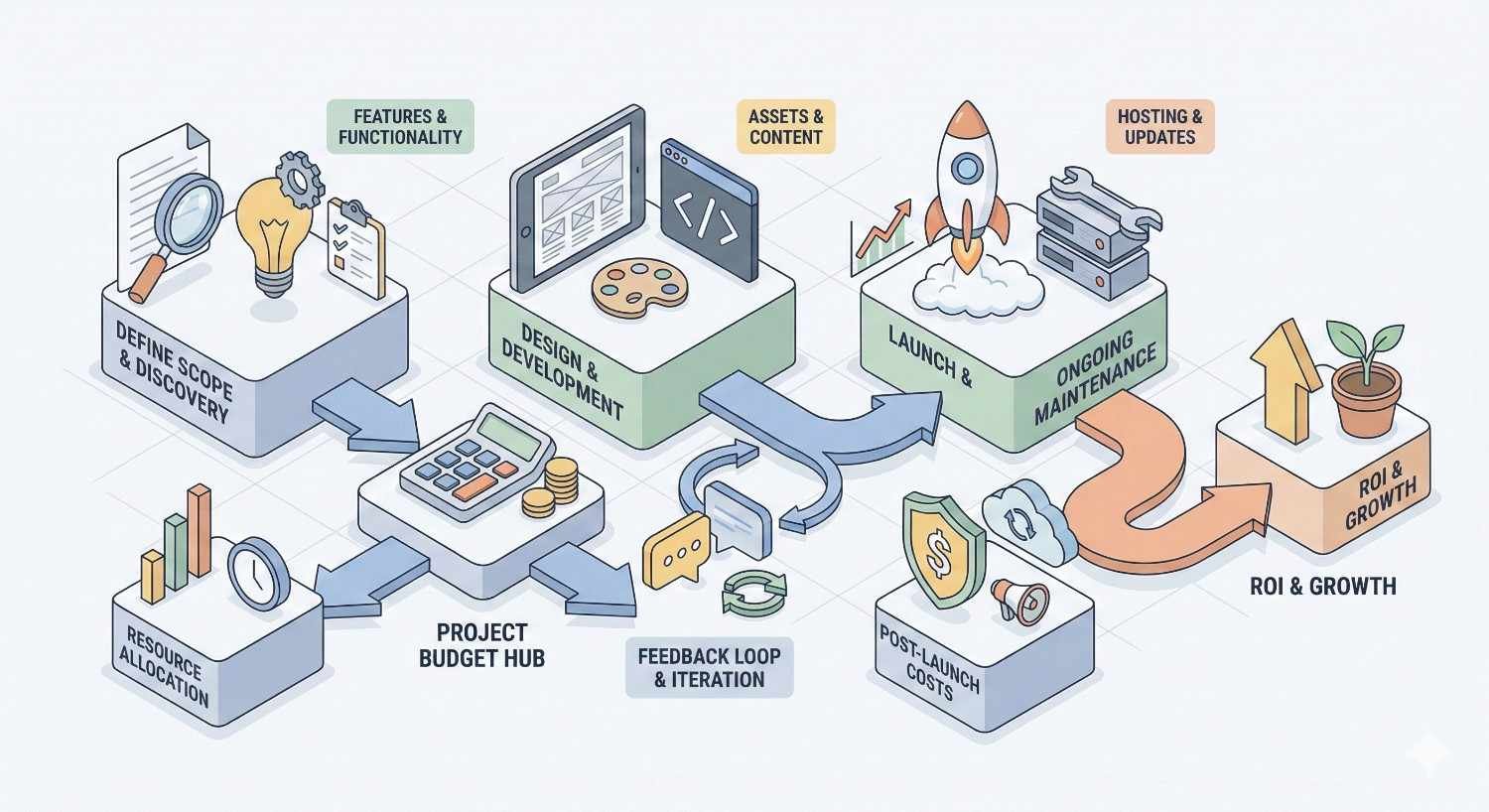
How to Budget for Your Web Design Project
Effective budgeting requires understanding total cost of ownership, not just initial build.
Start with business objectives. Define what success looks like in measurable terms. This clarifies necessary investment level.
Research comparable projects. Ask agencies for case studies with similar scope. Request ballpark ranges before detailed scoping.
Budget for phases. Consider launching MVP first, then enhancing. This spreads investment and validates assumptions.
Include contingency. Add 15-20% buffer for scope changes and discoveries during development.
Plan for ongoing costs. Budget monthly for hosting, maintenance, and optimization. Websites require continuous investment.
How to Choose the Right Web Design Agency in Los Angeles
Define Your Project Goals and Requirements
Clarity about objectives prevents misaligned partnerships. Document your requirements before agency conversations.
Business goals should drive technical decisions. Are you generating leads, selling products, building brand awareness, or providing information? Each goal suggests different approaches.
Technical requirements include platform preferences, integration needs, and performance expectations. List must-have features versus nice-to-haves.
Timeline constraints affect agency selection. Rush projects limit options. Flexible timelines enable better outcomes.
Budget parameters should be realistic. Sharing budget ranges helps agencies propose appropriate solutions.
Evaluate Portfolio and Industry Experience
Past work predicts future performance. Examine portfolios critically.
Industry relevance matters. Agencies with sector experience understand your audience and competitive landscape. They avoid common mistakes.
Design quality should match your brand aspirations. Look for consistency across projects, not just highlight reels.
Technical sophistication appears in details. Test portfolio sites on mobile. Check page speed scores. Examine code quality if possible.
Results documentation separates marketing from substance. Agencies showing measurable outcomes demonstrate accountability.
Assess Technical Capabilities and Tech Stack
Technical decisions have long-term implications. Ensure alignment with your needs.
Platform expertise should match your requirements. WordPress agencies may struggle with custom applications. Shopify specialists may not suit complex e-commerce needs.
Modern practices include responsive design, accessibility compliance, and performance optimization. Ask about Core Web Vitals approach.
Integration experience matters if connecting to existing systems. Verify experience with your specific tools.
Scalability planning ensures websites grow with your business. Ask how they handle traffic increases and feature additions.
Review Client Testimonials and Case Studies
Third-party validation reveals agency reality. Dig deeper than surface testimonials.
Clutch reviews provide verified client feedback with detailed project information. Look for patterns across multiple reviews.
Case studies should include specific metrics, not just pretty pictures. Ask for references you can contact directly.
Client retention indicates satisfaction. Agencies with long-term client relationships deliver consistent value.
Project types in testimonials should match your needs. Enterprise testimonials may not predict small business experience.
Understand Their Design and Development Process
Process quality determines project experience. Evaluate methodology before committing.
Discovery phase should precede design. Agencies jumping straight to mockups miss strategic foundations.
Communication cadence affects project success. Understand meeting frequency, reporting structure, and escalation paths.
Revision policies prevent scope creep conflicts. Clarify included revision rounds and change request processes.
Quality assurance processes catch issues before launch. Ask about testing protocols and browser/device coverage.
Launch support should include training and documentation. Understand handoff procedures and post-launch availability.
Red Flags to Avoid When Hiring
Warning signs indicate potential problems. Trust your instincts when these appear.
Vague pricing without clear scope definitions suggests future disputes. Reputable agencies provide detailed proposals.
Guaranteed rankings or unrealistic promises indicate inexperience or dishonesty. Web design affects SEO but cannot guarantee positions.
No discovery process means assumptions replace research. This leads to misaligned solutions.
Poor communication during sales predicts worse during projects. Slow responses and unclear answers signal problems.
Ownership ambiguity about code, design files, and content creates future complications. Clarify intellectual property before signing.
No maintenance options leaves you stranded post-launch. Websites require ongoing care.
Web Design Trends Shaping Los Angeles Agencies in 2026
AI-Powered Design and Personalization
Artificial intelligence has transformed web design workflows. Leading agencies leverage AI while maintaining human creativity.
Design assistance tools accelerate ideation and iteration. Agencies use AI for layout suggestions, color palette generation, and content drafting. Human designers refine and elevate AI outputs.
Personalization engines customize user experiences based on behavior, preferences, and context. Websites adapt content, offers, and navigation for individual visitors.
Chatbots and virtual assistants handle routine inquiries, qualifying leads and providing instant support. Integration with websites has become seamless.
Predictive analytics inform design decisions. AI analyzes user behavior to suggest optimization opportunities.
Mobile-First and Responsive Design Standards
Mobile traffic dominates most industries. Agencies design for small screens first, then enhance for larger displays.
Mobile-first methodology ensures core experiences work on phones. Desktop versions add enhancements rather than requiring reduction.
Touch-optimized interfaces account for finger navigation. Buttons, forms, and interactive elements accommodate touch input.
Progressive enhancement layers functionality based on device capabilities. Basic experiences work everywhere while advanced features appear on capable devices.
Cross-device consistency maintains brand experience across phones, tablets, and desktops. Design systems ensure coherent experiences.
Core Web Vitals and Performance Optimization
Google’s page experience signals directly impact search rankings. Performance optimization has become non-negotiable.
Largest Contentful Paint (LCP) measures loading performance. Top agencies target under 2.5 seconds through image optimization, efficient code, and CDN usage.
First Input Delay (FID) and Interaction to Next Paint (INP) measure interactivity. Agencies minimize JavaScript blocking and optimize event handlers.
Cumulative Layout Shift (CLS) measures visual stability. Proper image dimensions, font loading strategies, and reserved space prevent layout jumps.
Performance budgets establish limits for page weight, request counts, and load times. Agencies monitor and maintain these throughout development.
Accessibility and ADA Compliance
Legal requirements and ethical obligations drive accessibility focus. Inclusive design benefits all users.
WCAG 2.1 AA compliance represents the minimum standard. Leading agencies target AAA where feasible.
Keyboard navigation ensures functionality without mouse input. All interactive elements must be accessible via keyboard.
Screen reader compatibility requires proper semantic markup, alt text, and ARIA labels. Agencies test with actual assistive technologies.
Color contrast and text sizing accommodate visual impairments. Design systems include accessible color combinations.
Accessibility audits identify issues before launch. Ongoing monitoring catches regressions.
Sustainable and Green Web Design Practices
Environmental consciousness has reached web design. Agencies reduce digital carbon footprints.
Efficient code reduces server processing and energy consumption. Optimized websites require less infrastructure.
Green hosting uses renewable energy sources. Agencies recommend carbon-neutral hosting providers.
Reduced data transfer through image optimization, lazy loading, and efficient caching minimizes energy use.
Sustainable design choices favor simplicity over resource-intensive features. Dark modes reduce screen energy consumption.
Los Angeles Web Design Industry Overview
Why LA is a Hub for Creative Digital Agencies
Los Angeles attracts creative talent and innovative agencies. Several factors drive this concentration.
Entertainment industry proximity exposes agencies to world-class creative standards. Film, television, and gaming influence digital design aesthetics.
Diverse economy provides varied client opportunities. Technology, healthcare, retail, real estate, and professional services all require web design.
Talent pool includes graduates from UCLA, USC, Art Center, and other design programs. International talent also gravitates to LA.
Startup ecosystem generates demand for digital products. Silicon Beach companies require sophisticated web presence.
Cultural diversity informs design perspectives. LA agencies understand multicultural audiences better than most markets.
Key Industries Served by LA Web Designers
Los Angeles agencies develop expertise across multiple sectors.
Entertainment and media represents the largest vertical. Studios, production companies, streaming services, and talent require distinctive digital presence.
Technology and startups drive innovation demand. SaaS companies, apps, and platforms need conversion-focused websites.
Healthcare and wellness has grown significantly. Medical practices, health tech, and wellness brands require compliant, trustworthy sites.
Real estate and hospitality leverage visual storytelling. Property developers, hotels, and restaurants need immersive experiences.
Professional services including law firms, financial advisors, and consultants require credibility-building websites.
Retail and e-commerce spans fashion, beauty, food, and consumer goods. LA’s consumer culture drives sophisticated shopping experiences.
Remote vs. Local: Does Agency Location Matter?
Geographic proximity matters less than ever, but local presence offers advantages.
In-person collaboration facilitates complex projects. Discovery workshops, design reviews, and strategy sessions benefit from face-to-face interaction.
Local market knowledge helps agencies understand regional audiences. LA agencies know LA consumers.
Time zone alignment simplifies communication. Real-time collaboration becomes easier with shared working hours.
Relationship building happens more naturally locally. Long-term partnerships often develop through personal connections.
However, remote agencies can deliver excellent results. Video conferencing, collaborative tools, and asynchronous communication enable effective remote partnerships.
Hybrid approaches often work best. Local agencies with remote team members combine benefits of both models.
Frequently Asked Questions About Web Design Services in LA
How much does web design cost in Los Angeles?
Los Angeles web design costs range from $5,000 for basic sites to $500,000+ for complex platforms. Small business websites typically cost $15,000 to $40,000. E-commerce sites range from $15,000 to $150,000. Enterprise projects start at $100,000. Costs reflect LA’s premium talent market and agency overhead.
How long does it take to build a website?
Simple websites launch in 4-8 weeks. Mid-complexity projects require 8-16 weeks. Custom applications and enterprise sites take 4-12 months. Timeline depends on scope complexity, client responsiveness, and agency capacity. Rush timelines typically increase costs by 25-50%.
What’s the difference between web design and web development?
Web design focuses on visual appearance, user experience, and interface layout. Web development involves coding functionality, database integration, and technical implementation. Most agencies combine both disciplines. Some specialize in one area and partner for the other. Full-service agencies handle both under one roof.
Do I need ongoing maintenance after launch?
Yes. Websites require continuous maintenance for security updates, plugin patches, content updates, and performance optimization. Budget $500 to $5,000 monthly depending on complexity. Neglected websites become security vulnerabilities and performance liabilities. Most agencies offer maintenance retainers.
Should I hire a freelancer or an agency?
Freelancers suit simple projects with limited budgets. They offer lower rates but limited capacity and single points of failure. Agencies provide broader expertise, backup resources, and project management. They cost more but reduce risk on important projects. Consider project complexity, timeline, and budget when deciding.
What CMS platforms do LA agencies use most?
WordPress dominates with approximately 40% market share among LA agencies. Shopify leads e-commerce implementations. Webflow has grown significantly for marketing sites. Custom solutions using React, Vue, or headless CMS serve complex requirements. Enterprise clients often use Adobe Experience Manager or Sitecore.
How do I measure web design ROI?
Track metrics aligned with business objectives. E-commerce sites measure conversion rate, average order value, and revenue. Lead generation sites track form submissions, cost per lead, and sales qualified leads. Brand sites monitor traffic, engagement, and brand search volume. Compare pre and post-launch performance over 6-12 months.
Our Methodology: How This List Was Created
Research and Data Collection Process
Our ranking process began with comprehensive agency identification. We compiled an initial list of over 200 agencies operating in the Los Angeles market through directory research, industry publications, and referral networks.
We gathered data from multiple sources including Clutch, Google Business, DesignRush, and agency websites. Portfolio analysis examined live client websites for design quality, technical performance, and user experience.
Direct outreach verified pricing information and service offerings. We contacted agencies as prospective clients to evaluate responsiveness and sales processes.
Scoring Criteria Breakdown
Each agency received scores across eight weighted categories totaling 100 points.
Technical Expertise (20 points): Platform proficiency, modern development practices, performance optimization capabilities.
Portfolio Quality (20 points): Design aesthetics, UX principles, conversion optimization evidence, variety and consistency.
Client Outcomes (15 points): Documented results, case study specificity, measurable business impact.
Industry Reputation (15 points): Review scores, awards, industry recognition, thought leadership.
Pricing Transparency (10 points): Published rates, clear proposals, honest communication about costs.
Service Breadth (10 points): Range of offerings, ability to handle diverse requirements.
Communication Quality (5 points): Responsiveness, clarity, professionalism during evaluation.
Innovation (5 points): Adoption of emerging technologies, forward-thinking approaches.
Limitations and Disclaimers
This ranking reflects our evaluation methodology and available data. Other valid approaches might produce different results.
We could not evaluate every LA agency. Smaller or newer agencies may offer excellent services without appearing on this list.
Pricing information represents estimates based on available data. Actual project costs vary based on specific requirements.
Agency capabilities evolve. Rankings reflect evaluation period conditions and may change over time.
We have no financial relationships with ranked agencies. Rankings reflect independent evaluation.
How Often This List is Updated
We conduct comprehensive re-evaluation annually. Major updates publish each January reflecting the previous year’s performance and market changes.
Quarterly reviews address significant changes including agency closures, mergers, or major capability shifts.
Reader feedback informs ongoing refinement. Contact us with corrections or agency suggestions.
Final Verdict: Best Web Design Services in Los Angeles for 2026
Best Overall Pick
Suspended Studios earns our top recommendation for overall web design excellence. Their combination of award-winning design, technical sophistication, and proven results across diverse industries makes them the benchmark for LA web design.
For organizations with budgets supporting premium investment, Suspended Studios delivers transformative digital experiences that justify the cost through superior performance and longevity.
Best Value for Money
Digital Silk provides the strongest value proposition for growing companies. Their startup-friendly pricing, flexible engagement models, and integrated services deliver professional results at accessible investment levels.
Companies in growth stages benefit most from Digital Silk’s understanding of scaling challenges and budget constraints without sacrificing quality.
Best for Specific Use Cases
E-commerce: Lounge Lizard’s specialized expertise and conversion focus make them the clear choice for online retailers.
Enterprise: Instrument’s systematic approach and Fortune 500 experience suit complex organizational requirements.
Custom Development: Ruckus tackles technical challenges others avoid, ideal for innovative digital products.
B2B Lead Generation: Cleverly understands complex B2B buying journeys and optimizes accordingly.
Budget-Conscious: Kobe Digital delivers quality local business websites at accessible price points.
Next Steps: How to Get Started
Begin by clarifying your project objectives and budget parameters. Document must-have features, timeline constraints, and success metrics.
Review portfolios of agencies matching your requirements. Shortlist 3-5 candidates for deeper evaluation.
Request proposals from shortlisted agencies. Compare approaches, timelines, and pricing structures.
Conduct discovery calls to assess cultural fit and communication quality. Trust your instincts about working relationships.
Check references before final selection. Speak with past clients about their experiences.
Conclusion
Selecting the right web design agency in Los Angeles requires balancing technical capabilities, creative quality, and budget realities. The agencies ranked here represent the best options across various specializations and price points for 2026.
Your website serves as the foundation of digital presence and directly impacts business outcomes. Investing in quality web design pays dividends through improved conversions, stronger brand perception, and sustainable organic growth.
At White Label SEO Service, we help businesses maximize their web investments through comprehensive SEO strategy, technical optimization, and content development. Contact us to discuss how your new website can achieve its full search visibility potential.
Frequently Asked Questions
What questions should I ask a web design agency before hiring them?
Ask about their process, timeline estimates, revision policies, and post-launch support. Request case studies with measurable results. Clarify ownership of code and design files. Understand their communication cadence and project management approach.
How do I know if my website needs a redesign?
Consider redesign if your site is over 3-4 years old, performs poorly on mobile, loads slowly, or fails to convert visitors. Declining traffic, high bounce rates, and negative user feedback also signal redesign needs.
Can I update my website myself after it launches?
Most modern websites use content management systems allowing non-technical updates. Agencies should provide training and documentation. Complex changes may still require developer assistance. Clarify self-service capabilities before project completion.
What should be included in a web design contract?
Contracts should specify deliverables, timeline, payment schedule, revision limits, and ownership rights. Include provisions for scope changes, delays, and termination. Clarify maintenance responsibilities and post-launch support terms.
How important is mobile responsiveness for my website?
Mobile responsiveness is essential. Mobile devices account for over 60% of web traffic. Google uses mobile-first indexing for rankings. Non-responsive sites lose visitors and search visibility. Every modern website must function well on all devices.
What is the difference between a template and custom website?
Template websites use pre-built designs customized with your content. They cost less and launch faster but limit uniqueness. Custom websites are designed specifically for your brand and requirements. They cost more but provide distinctive experiences and greater flexibility.
How can I prepare content for my new website?
Gather existing content including text, images, and documents. Identify gaps requiring new content creation. Organize content by page and section. Prepare brand assets including logos, colors, and fonts. Consider hiring professional copywriters and photographers if needed.