

Professional website content writing services deliver SEO-optimized copy that drives organic traffic, builds authority, and converts visitors into customers. For business owners and marketing managers investing in search visibility, understanding how these services work is the difference between wasted budget and sustainable growth.
Content remains the foundation of every successful SEO strategy. Without strategic, well-written pages, even the best technical optimization and link building efforts fall flat. This guide covers everything you need to know about website content writing services, from core components and pricing to realistic timelines and ROI expectations.
We’ll walk through what professional content writing includes, how to evaluate providers, common mistakes to avoid, and how to integrate content into your broader SEO strategy. By the end, you’ll have a clear framework for making informed decisions about your content investment.

What Are Website Content Writing Services?
Website content writing services provide professionally crafted copy designed to attract search traffic, engage visitors, and drive conversions. These services go beyond basic writing. They combine SEO strategy, audience research, and conversion optimization into content that performs.
Professional content writing addresses a fundamental challenge most businesses face. Creating effective website content requires expertise in search algorithms, user psychology, and persuasive writing. Few in-house teams have the bandwidth or specialized skills to produce content that consistently ranks and converts.
Core Components of Professional Content Writing
Professional content writing services typically include several interconnected elements. Keyword research identifies the terms your audience actually searches for. Content strategy maps those keywords to specific pages and topics. Writing produces the actual copy. Optimization ensures proper structure, internal linking, and on-page SEO elements.
The best services also include editing and quality assurance. This means multiple rounds of review for accuracy, readability, and SEO compliance. Many providers offer content briefs before writing begins, ensuring alignment on goals, tone, and target keywords.
Some services extend into content performance tracking. They monitor how published content performs in search results and provide recommendations for updates or improvements. This ongoing optimization separates strategic content partners from one-time writing vendors.
Types of Website Content Covered
Website content writing services cover virtually every page type a business needs. Homepage copy establishes brand positioning and guides visitors deeper into the site. Service pages explain what you offer and why prospects should choose you. Product descriptions drive e-commerce conversions.
Blog posts and articles build topical authority and capture informational search queries. About pages establish credibility and connect with visitors on a human level. FAQ content addresses common questions while capturing long-tail search traffic.
Category pages and pillar content create the structural foundation for topic clusters. Landing pages focus on specific campaigns or conversion goals. Each content type requires different approaches to structure, tone, and optimization.
How Content Writing Services Differ from DIY Content
The gap between professional content writing and DIY efforts comes down to three factors: expertise, consistency, and scalability. Professional writers understand how search engines evaluate content quality. They know how to structure information for both algorithms and human readers.
DIY content often suffers from inconsistent publishing schedules. Business owners get busy. Marketing managers juggle multiple priorities. Content production falls behind, and SEO momentum stalls. Professional services maintain consistent output regardless of internal bandwidth constraints.
Scalability presents another challenge. Growing businesses need more content across more topics. Internal teams rarely scale efficiently. Professional services can ramp up production without the overhead of hiring, training, and managing additional staff.
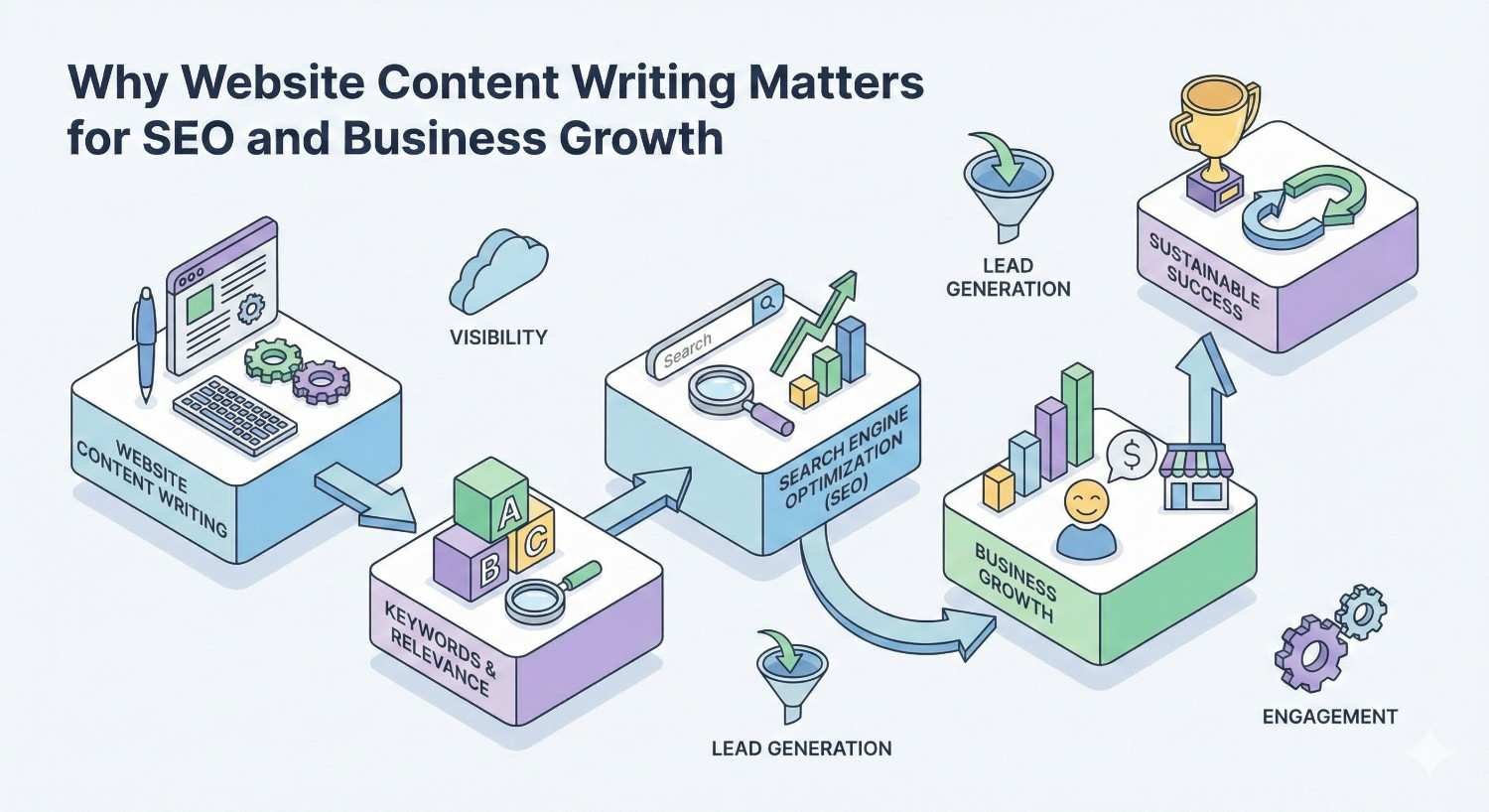
Why Website Content Writing Matters for SEO and Business Growth
Content sits at the center of modern SEO strategy. Search engines exist to connect users with relevant information. Without quality content, there’s nothing to rank. Technical SEO and link building amplify content performance, but they can’t replace it.
For business owners focused on organic growth, content writing represents the primary mechanism for capturing search demand. Every page you publish creates another opportunity to rank for relevant queries. Strategic content development compounds over time, building an asset that generates traffic without ongoing ad spend.
The Connection Between Quality Content and Organic Visibility
Google’s algorithms have evolved to prioritize content that genuinely helps users. Google’s helpful content system specifically rewards content created for people rather than search engines. This shift makes quality writing more important than ever.
Quality content earns organic visibility through several mechanisms. Well-researched, comprehensive pages satisfy user intent more completely than thin content. This leads to better engagement metrics. Users stay longer, explore more pages, and return more often.
Search engines track these signals. Pages that consistently satisfy users earn higher rankings over time. Quality content also attracts natural backlinks. Other websites link to genuinely useful resources, building the authority signals that drive rankings.
Content’s Role in User Experience and Conversion
Content does more than attract traffic. It shapes the entire user experience once visitors arrive. Clear, well-organized content helps users find what they need quickly. Persuasive copy guides them toward conversion actions.
Poor content creates friction. Visitors struggle to understand your offerings. They can’t find answers to their questions. They leave without converting, and your acquisition costs increase. Every page on your site either moves visitors closer to conversion or pushes them away.
Effective content addresses objections before they become barriers. It builds trust through transparency and expertise. It provides the information prospects need to make confident decisions. This conversion-focused approach transforms content from a cost center into a revenue driver.
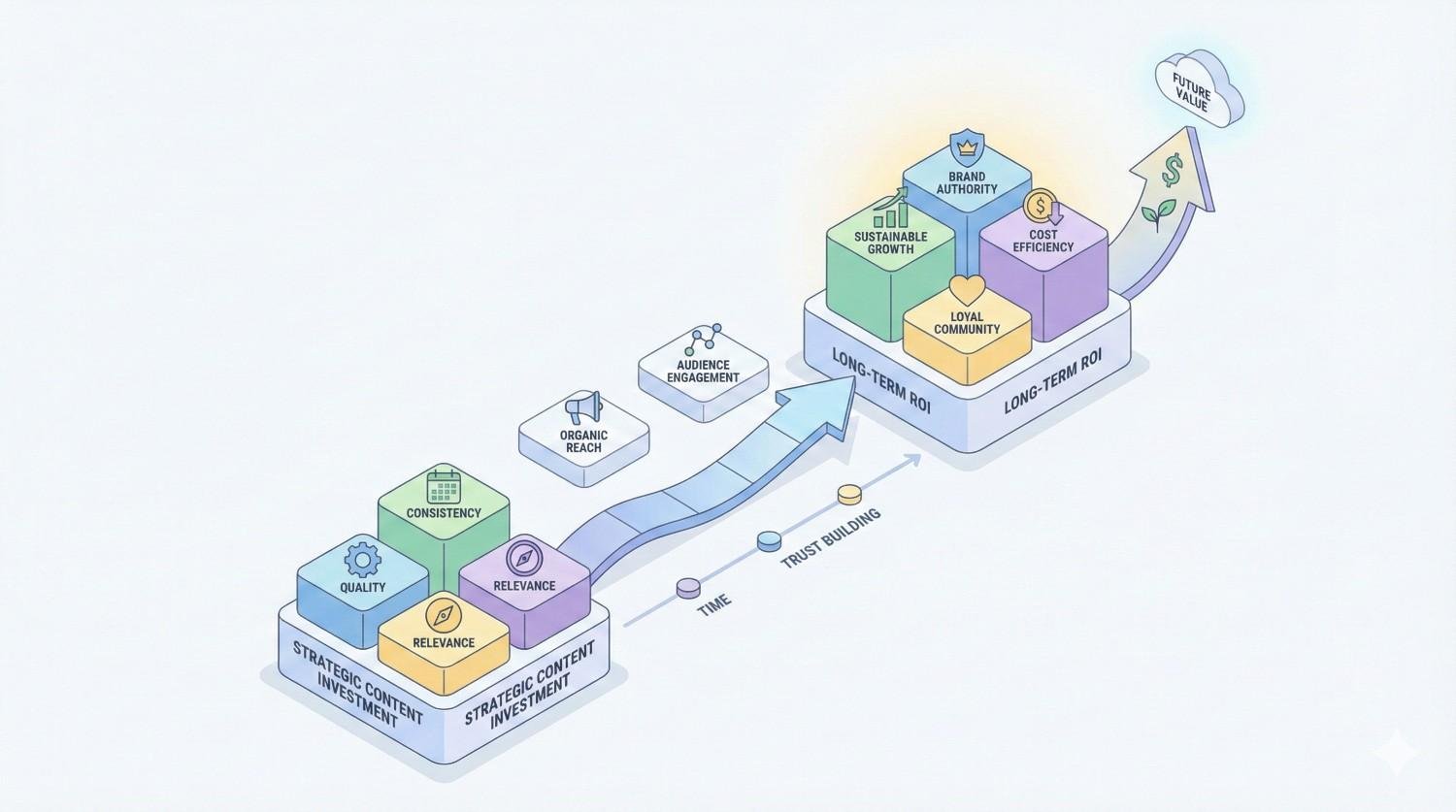
Long-Term ROI of Strategic Content Investment
Content marketing delivers compounding returns that paid advertising cannot match. A well-optimized blog post can generate traffic for years after publication. Service pages continue converting visitors month after month. The initial investment pays dividends long after the content goes live.
Research from Ahrefs shows that top-performing content can maintain rankings for 3-5 years with periodic updates. This longevity creates exceptional ROI compared to paid channels where traffic stops the moment you stop spending.
Strategic content investment also builds competitive moats. As you develop comprehensive coverage of your topic area, competitors face increasingly difficult catch-up efforts. Your established authority and backlink profile create barriers that protect your rankings over time.
Key Elements of Effective Website Content Writing
Effective website content balances multiple requirements simultaneously. It must satisfy search engine algorithms while engaging human readers. It must incorporate target keywords without sacrificing readability. It must inform and persuade without feeling salesy.
Understanding these elements helps you evaluate content quality and set appropriate expectations for your content writing partners. The best content achieves all these goals seamlessly, creating pages that rank well and convert effectively.
SEO-Optimized Content Structure
Content structure directly impacts both rankings and user experience. Search engines use heading hierarchy to understand topic organization. Users scan headings to find relevant information quickly. Proper structure serves both audiences.
Effective SEO structure starts with a clear H1 that includes the primary keyword. H2 headings break content into logical sections covering major subtopics. H3 headings provide additional granularity where needed. This hierarchy creates a clear information architecture.
Beyond headings, structure includes paragraph length, sentence variety, and content flow. Short paragraphs improve readability on mobile devices. Varied sentence lengths maintain reader engagement. Logical flow guides users through the content naturally.
Audience-Centric Messaging and Tone
Content must speak directly to your target audience. This means understanding their knowledge level, pain points, and decision criteria. Generic content that tries to appeal to everyone typically resonates with no one.
Audience-centric messaging starts with research. Who are your ideal customers? What problems are they trying to solve? What language do they use to describe their challenges? Effective content reflects this understanding in every paragraph.
Tone varies based on audience and industry. B2B technology content often requires a more technical, authoritative voice. Consumer services may benefit from a warmer, more conversational approach. The right tone builds connection and trust with your specific audience.
Strategic Keyword Integration
Keyword integration has evolved significantly from the early days of SEO. Modern best practices focus on natural language and semantic relevance rather than exact-match keyword density. Search engines understand synonyms, related terms, and contextual meaning.
Strategic keyword integration starts with primary keyword placement. Include your main target keyword in the H1, first paragraph, and conclusion. Use it naturally throughout the content where it fits contextually. Avoid forced repetition that disrupts readability.
Secondary keywords and related terms expand your content’s semantic footprint. These variations help search engines understand your topic comprehensively. They also capture long-tail search queries that your primary keyword alone might miss.
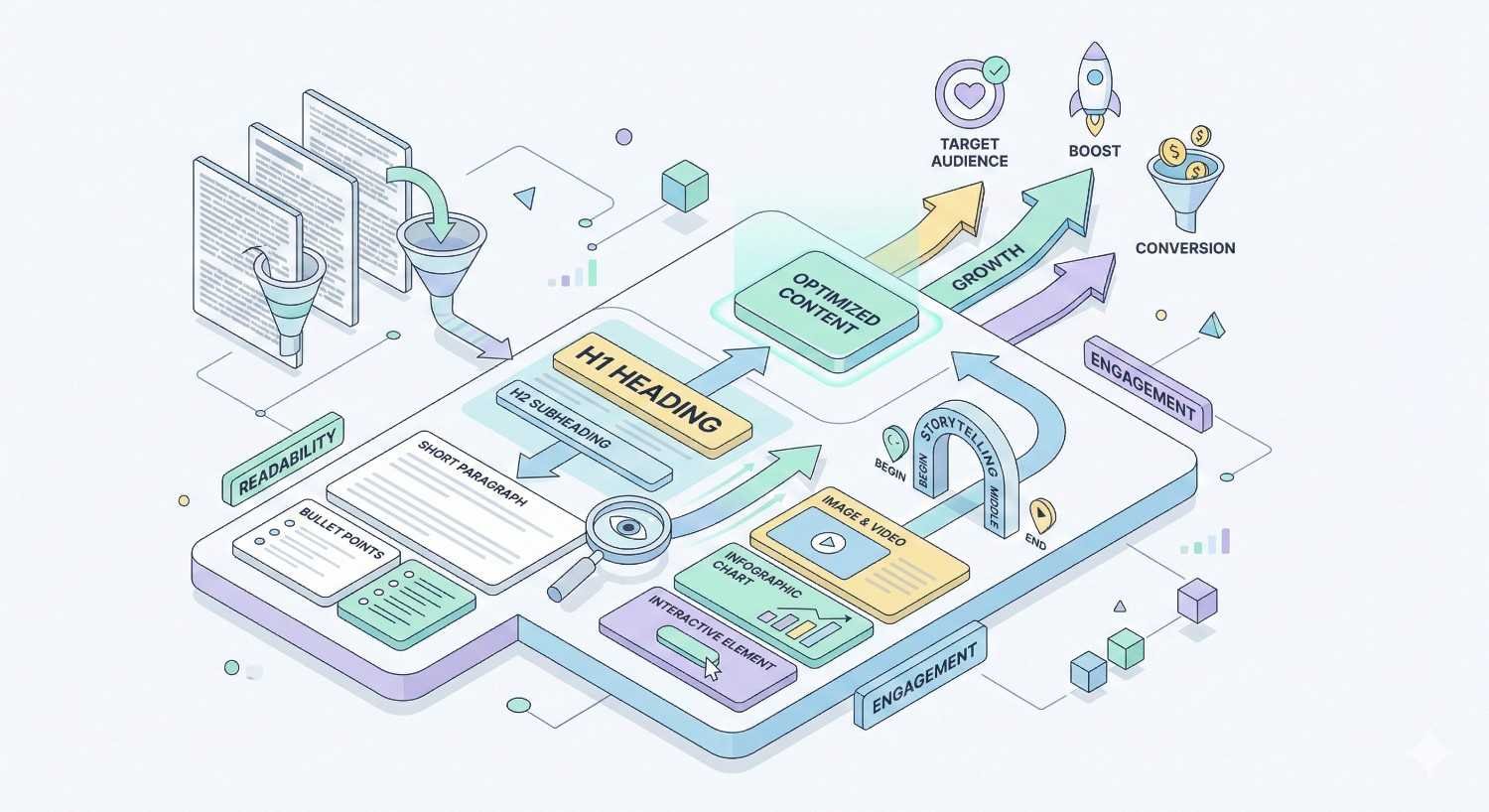
Content Formatting for Readability and Engagement
Formatting transforms walls of text into scannable, engaging content. Most web users don’t read every word. They scan for relevant information, then dive deeper into sections that interest them. Effective formatting supports this behavior.
Bullet points and numbered lists break complex information into digestible chunks. Bold text highlights key points and important terms. Short paragraphs create visual breathing room. White space prevents cognitive overload.
Strategic use of formatting also improves accessibility. Screen readers navigate formatted content more effectively. Mobile users appreciate content that doesn’t require horizontal scrolling or excessive zooming. Good formatting serves all users.
Types of Website Content Writing Services
Different page types serve different purposes in your content ecosystem. Understanding these distinctions helps you prioritize content investments and communicate requirements to your writing partners. Each content type requires specific approaches to structure, optimization, and messaging.
Homepage and Landing Page Copy
Homepage copy establishes your brand positioning and guides visitors into your site. It must communicate what you do, who you serve, and why you’re different within seconds. Most visitors decide whether to stay or leave based on homepage impressions.
Effective homepage copy balances clarity with persuasion. It addresses visitor questions immediately. What does this company do? Is this relevant to me? What should I do next? Clear answers to these questions reduce bounce rates and increase engagement.
Landing pages focus on specific conversion goals. They typically target particular audience segments or campaigns. Landing page copy eliminates distractions and guides visitors toward a single action. Every element supports the conversion objective.
Service and Product Page Content
Service pages explain your offerings in detail. They must provide enough information for prospects to understand value and make decisions. They also need to rank for commercial search queries where purchase intent is high.
Effective service page content addresses the full buyer journey. It explains what the service includes, how it works, and what results clients can expect. It handles common objections and differentiates from alternatives. It provides clear next steps for interested prospects.
Product descriptions face similar challenges at scale. E-commerce sites may need hundreds or thousands of unique product descriptions. Each must be informative, persuasive, and optimized for relevant search queries. Template-based approaches often fail to capture unique product benefits.
Blog Posts and Articles
Blog content builds topical authority and captures informational search queries. These visitors may not be ready to buy immediately, but they represent future customers entering your marketing funnel. Consistent blog publishing compounds traffic over time.
Effective blog content targets specific keywords with clear search intent. It provides comprehensive answers that satisfy user queries completely. It establishes expertise through depth, accuracy, and practical insights. It includes internal links that guide readers toward conversion-focused pages.
Blog strategy should align with your broader content architecture. Individual posts support pillar pages and topic clusters. They capture long-tail variations of your core keywords. They provide fresh content signals that search engines value.
About Us and Company Pages
About pages establish credibility and human connection. Visitors want to know who they’re doing business with. They look for signals of legitimacy, expertise, and shared values. About pages provide these trust signals.
Effective about content tells your company story authentically. It highlights relevant experience and credentials. It introduces key team members. It communicates your mission and values in ways that resonate with your target audience.
These pages also serve SEO purposes. They can rank for branded searches and “company name + reviews” queries. They provide opportunities to mention industry expertise and geographic service areas. They support E-E-A-T signals that influence overall site authority.
FAQ and Support Content
FAQ content serves dual purposes. It helps existing customers find answers quickly, reducing support burden. It also captures long-tail search queries where users seek specific information. Well-structured FAQ pages can rank for hundreds of question-based searches.
Effective FAQ content anticipates real user questions. It provides clear, complete answers without unnecessary fluff. It organizes questions logically so users can find relevant information quickly. It uses schema markup to enhance search visibility.
Support content extends beyond FAQs to include how-to guides, troubleshooting resources, and documentation. This content reduces customer friction and demonstrates commitment to customer success. It also builds topical authority around your product or service area.
Category and Pillar Page Content
Category pages organize products or services into logical groupings. They serve as navigation hubs and ranking targets for broader keyword categories. Effective category content balances user experience with SEO optimization.
Pillar pages anchor topic clusters. They provide comprehensive coverage of broad topics while linking to more specific supporting content. This structure signals topical authority to search engines and helps users navigate related information.
Both content types require strategic planning. They must fit within your overall site architecture. They need sufficient content depth to rank competitively. They should include internal links that distribute authority throughout your content ecosystem.
The Website Content Writing Process: What to Expect
Understanding the content writing process helps you set realistic expectations and collaborate effectively with your content partners. Professional services follow structured workflows that ensure quality and alignment with your goals.
Discovery and Audience Research
Every content project should begin with discovery. This phase establishes the foundation for all subsequent work. Writers need to understand your business, audience, and objectives before creating effective content.
Discovery typically includes stakeholder interviews, competitor analysis, and audience research. Writers learn about your unique value proposition, brand voice, and key differentiators. They identify your target audience’s pain points, questions, and decision criteria.
This research phase may also include keyword analysis. Writers identify target keywords for each content piece based on search volume, competition, and relevance. They map keywords to specific pages and content types within your overall strategy.
Content Strategy and Planning
Strategy translates research into actionable plans. This phase determines what content to create, in what order, and with what objectives. It ensures individual pieces support broader business goals.
Content planning includes editorial calendars, content briefs, and prioritization frameworks. Editorial calendars establish publishing schedules and deadlines. Content briefs provide writers with specific guidance for each piece. Prioritization ensures highest-impact content gets created first.
Strategy should also address content gaps and opportunities. Where does your current content fall short? What topics do competitors cover that you don’t? What search queries represent untapped opportunities? Strategic planning answers these questions.
Writing, Editing, and Optimization
The writing phase produces actual content based on approved briefs and strategies. Professional writers follow established guidelines for structure, tone, and optimization. They incorporate target keywords naturally while maintaining readability.
Editing ensures quality and consistency. This includes proofreading for errors, checking factual accuracy, and verifying SEO compliance. Multiple review rounds catch issues that single passes might miss. Quality editing separates professional content from amateur efforts.
Optimization fine-tunes content for search performance. This includes meta title and description optimization, internal linking, image alt text, and schema markup recommendations. Optimization ensures content has the best possible chance of ranking well.
Review, Revision, and Publishing
Client review provides opportunity for feedback and refinement. You should review content for accuracy, brand alignment, and messaging effectiveness. Professional services welcome feedback and incorporate revisions efficiently.
Revision cycles vary by provider and project scope. Most services include at least one round of revisions in their base pricing. Complex projects may require additional rounds. Clear communication about revision expectations prevents misunderstandings.
Publishing may be handled by your team or included in the service. Some providers offer CMS upload and formatting as part of their packages. Others deliver final content files for your team to publish. Clarify publishing responsibilities before projects begin.
How to Choose the Right Content Writing Service
Selecting the right content partner significantly impacts your results. The market includes everything from individual freelancers to large agencies, with quality varying dramatically. Careful evaluation helps you find partners who deliver consistent value.
Evaluating Writing Quality and Industry Expertise
Writing quality should be your primary evaluation criterion. Request samples relevant to your industry and content types. Look for clear, engaging prose that demonstrates subject matter understanding. Avoid providers who can’t show relevant work.
Industry expertise matters more for technical or specialized topics. Writers familiar with your industry require less ramp-up time and produce more accurate content. They understand industry terminology, common objections, and buyer psychology.
Evaluate samples critically. Is the writing clear and engaging? Does it demonstrate genuine expertise or just surface-level research? Would you trust this content to represent your brand? Quality samples predict quality deliverables.
Understanding SEO Capabilities
Not all content writers understand SEO. Some produce beautiful prose that never ranks. Others stuff keywords awkwardly and sacrifice readability. The best writers balance both requirements seamlessly.
Evaluate SEO capabilities by asking about their process. How do they approach keyword research? How do they structure content for search? How do they handle internal linking and on-page optimization? Knowledgeable providers answer these questions confidently.
Ask about their track record. Can they share examples of content that ranks well? Do they track content performance after publication? Providers who measure results typically produce better outcomes than those who don’t.
Pricing Models and Service Packages
Content writing services use various pricing models. Per-word pricing charges based on content length. Per-page pricing sets flat rates for specific content types. Retainer models provide ongoing content production for monthly fees.
Per-word pricing typically ranges from $0.10 to $1.00+ depending on quality and expertise level. Per-page pricing varies widely based on content type and complexity. Retainers often provide better value for consistent content needs.
Understand what’s included in quoted prices. Does the price include keyword research? How many revision rounds are included? Is optimization included or charged separately? Hidden costs can make seemingly affordable options expensive.
Questions to Ask Before Hiring
Prepare specific questions before engaging potential providers. Ask about their process, timelines, and communication practices. Understand how they handle revisions and what happens if you’re unsatisfied with deliverables.
Key questions include: What’s your typical turnaround time? Who will actually write my content? How do you ensure quality consistency? What’s your revision policy? Can you provide references from similar clients?
Also ask about their approach to your specific needs. How would they handle your industry? What content types do they specialize in? How do they stay current with SEO best practices? Thoughtful answers indicate experienced providers.
Common Questions About Website Content Writing Services
The following sections address specific questions business owners and marketing managers frequently ask about content writing services. These detailed answers help you make informed decisions about your content investment.
How Much Do Website Content Writing Services Cost?
Content writing costs vary significantly based on quality, expertise, and service scope. Understanding pricing factors helps you budget appropriately and evaluate quotes accurately. The cheapest option rarely delivers the best value.
Pricing Factors and Variables
Several factors influence content writing costs. Writer expertise and experience command premium rates. Industry specialization adds value for technical topics. SEO optimization requirements increase complexity and cost.
Content type also affects pricing. Homepage copy requires more strategic thinking than blog posts. Product descriptions at scale may offer volume discounts. Pillar pages demand comprehensive research and longer formats.
Turnaround time impacts cost as well. Rush projects typically carry premium pricing. Standard timelines allow writers to produce their best work at regular rates. Plan ahead to avoid rush fees when possible.
Typical Pricing Models (Per Word, Per Page, Retainer)
Per-word pricing remains common for blog content and articles. Quality providers typically charge $0.15 to $0.50 per word for SEO-optimized content. Premium specialists may charge $0.75 to $1.50+ for highly technical or specialized topics.
Per-page pricing works well for defined content types. Homepage copy might range from $500 to $2,500 depending on complexity. Service pages typically fall between $300 and $1,000. Landing pages vary based on length and conversion optimization requirements.
Retainer models suit businesses with ongoing content needs. Monthly retainers typically start around $2,000 to $5,000 for consistent blog production. Larger programs with multiple content types may run $10,000+ monthly. Retainers often include strategy and optimization services beyond pure writing.
Budget Planning for Content Projects
Plan content budgets based on your goals and competitive landscape. Analyze what top-ranking competitors publish. Estimate the content volume needed to compete effectively. Factor in ongoing production costs, not just initial investments.
A realistic content budget for most SMEs ranges from $2,000 to $10,000 monthly for meaningful SEO impact. Smaller budgets can work but require longer timelines to see results. Larger investments accelerate growth but require capacity to absorb and implement content.
Consider content as an investment with compounding returns. Unlike paid advertising, quality content continues generating traffic after publication. Budget accordingly, prioritizing quality over quantity when resources are limited.
How Long Does It Take to See Results from Content Writing?
Content marketing requires patience. Unlike paid advertising, organic results don’t appear immediately. Understanding realistic timelines helps you set appropriate expectations and measure progress accurately.
Content Indexing and Ranking Timelines
New content typically gets indexed within days to weeks of publication. Google’s crawlers discover and process new pages relatively quickly for established sites. New domains may experience longer indexing delays.
Initial rankings often appear within 1-3 months of publication. However, these early rankings rarely reflect final positions. Content typically continues climbing or adjusting for 6-12 months as search engines gather more data about performance.
Google’s John Mueller has stated that ranking for competitive terms can take months to years. Less competitive long-tail keywords may rank faster. Set expectations based on your specific keyword targets and competitive landscape.
Traffic Growth Expectations
Traffic growth follows a compounding pattern. Early months may show minimal gains as individual pieces begin ranking. Growth accelerates as your content library expands and authority builds.
Most businesses see meaningful traffic increases within 6-12 months of consistent content production. Significant results often require 12-24 months of sustained effort. The exact timeline depends on your starting point, competition, and content quality.
Expect non-linear growth patterns. Some content pieces will outperform expectations. Others will underperform despite quality execution. Portfolio-level thinking matters more than individual piece performance.
Measuring Content Performance
Track content performance through multiple metrics. Organic traffic shows overall visibility gains. Keyword rankings indicate progress toward specific targets. Engagement metrics reveal content quality and relevance.
Google Search Console provides essential data on impressions, clicks, and average positions. Google Analytics tracks user behavior after arrival. Combine both tools for comprehensive performance understanding.
Establish baseline measurements before launching content initiatives. Track progress monthly against these baselines. Look for trends rather than fixating on short-term fluctuations. SEO success requires consistent measurement over extended periods.
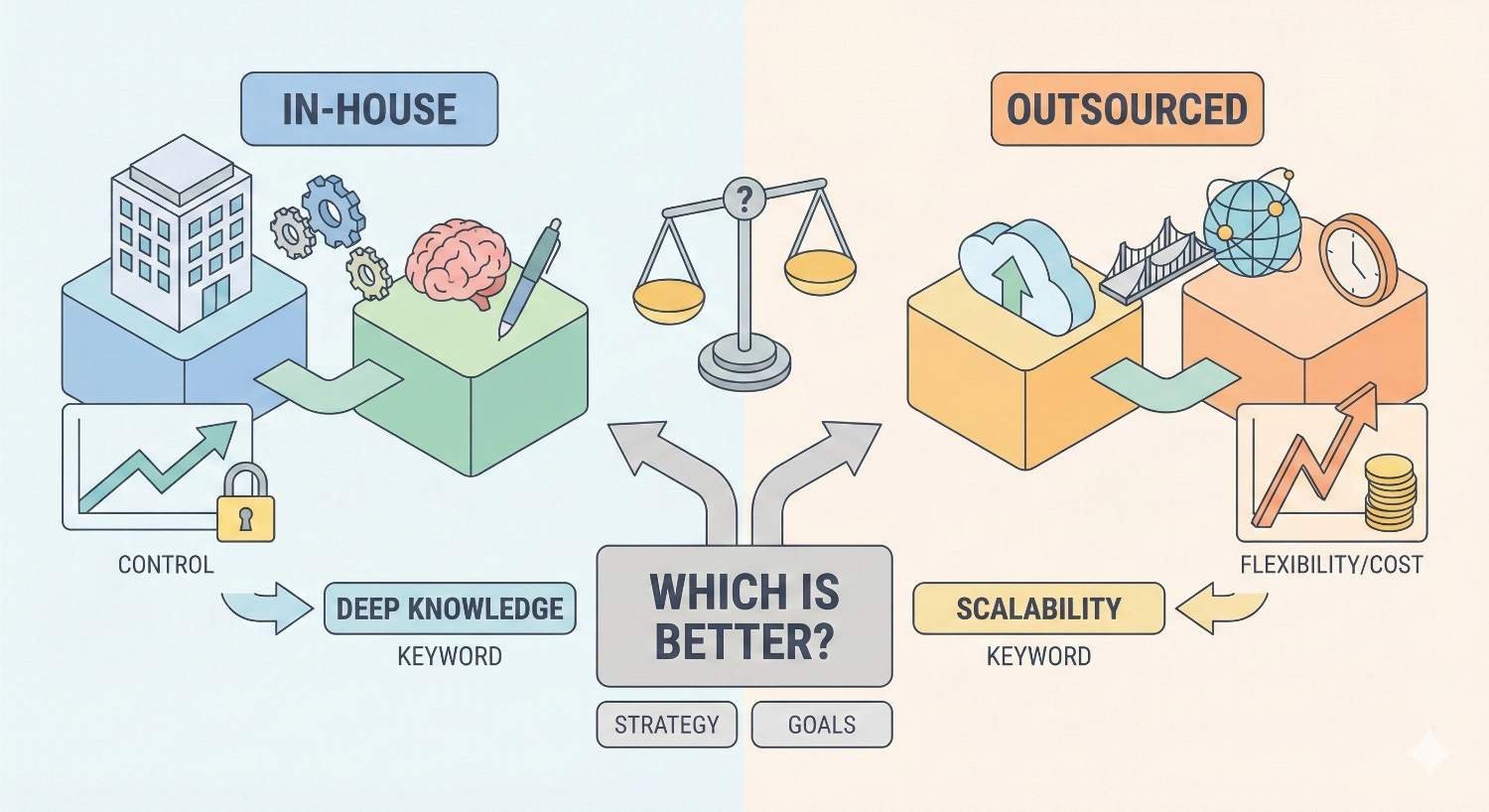
In-House vs. Outsourced Content Writing: Which Is Better?
Both approaches have merit depending on your situation. The right choice depends on your resources, expertise, and content needs. Many successful businesses use hybrid models combining internal and external capabilities.
Pros and Cons of In-House Content Teams
In-house teams offer deep brand knowledge and immediate availability. They understand your products, customers, and voice intimately. They can respond quickly to emerging opportunities or urgent needs.
However, in-house teams face limitations. Hiring skilled SEO writers is challenging and expensive. Training takes time. Individual writers have capacity constraints. Maintaining consistent output during vacations, illness, or turnover proves difficult.
In-house teams also risk developing blind spots. External perspectives often identify opportunities internal teams miss. Fresh eyes catch issues that familiarity obscures. Balancing internal knowledge with external perspective produces best results.
Benefits of Outsourcing to Specialists
Outsourced content services provide specialized expertise without hiring overhead. You access experienced SEO writers immediately. You scale production up or down based on needs. You avoid the management burden of additional employees.
Quality providers bring diverse experience across industries and content types. They stay current with SEO best practices as part of their core business. They’ve solved problems similar to yours for other clients.
Outsourcing also provides accountability. Professional services have reputations to protect. They’re motivated to deliver quality work that generates referrals. Poor performance has direct business consequences for them.
Hybrid Approaches
Many businesses combine internal and external resources effectively. Internal teams handle brand-sensitive content like about pages and company announcements. External partners produce scalable content like blog posts and product descriptions.
Hybrid models leverage each approach’s strengths. Internal teams provide brand guidance and quality control. External partners provide capacity and specialized expertise. Clear workflows ensure smooth collaboration.
Consider starting with outsourced content to establish momentum. Bring capabilities in-house as you understand your needs better. Or maintain hybrid arrangements indefinitely if they serve your goals effectively.
How Website Content Writing Integrates with Broader SEO Strategy
Content writing doesn’t exist in isolation. It connects to technical SEO, link building, and ongoing optimization efforts. Understanding these connections helps you maximize content investment returns.
Content’s Role in Technical SEO
Content and technical SEO work together. Technical foundations ensure search engines can crawl and index your content effectively. Content provides the substance that technical optimization makes accessible.
Technical SEO considerations influence content structure. Site architecture determines how content pages relate to each other. Internal linking distributes authority throughout your content ecosystem. URL structures affect both crawlability and user experience.
Content also supports technical SEO signals. Comprehensive content encourages longer visit durations. Quality content reduces bounce rates. These engagement signals influence how search engines evaluate your site overall.
Supporting Link Building and Authority
Quality content attracts natural backlinks. Other websites link to genuinely useful resources. This earned link building builds authority more sustainably than artificial link acquisition.
Content types vary in link-earning potential. Original research and data attract citations. Comprehensive guides become reference resources. Controversial or novel perspectives generate discussion and links.
Strategic content planning considers link-building potential. Include content specifically designed to earn links alongside conversion-focused pages. This balanced approach builds authority while driving business results.
Content Refresh and Maintenance
Published content requires ongoing maintenance. Information becomes outdated. Rankings decay without attention. Regular updates keep content performing optimally.
Content audits identify refresh opportunities. Which pages have declining traffic? Which contain outdated information? Which could rank higher with improvements? Systematic audits prioritize maintenance efforts.
Refresh strategies vary by content type. Evergreen content may need annual updates. Time-sensitive content requires more frequent attention. Establish maintenance schedules based on content characteristics and performance data.
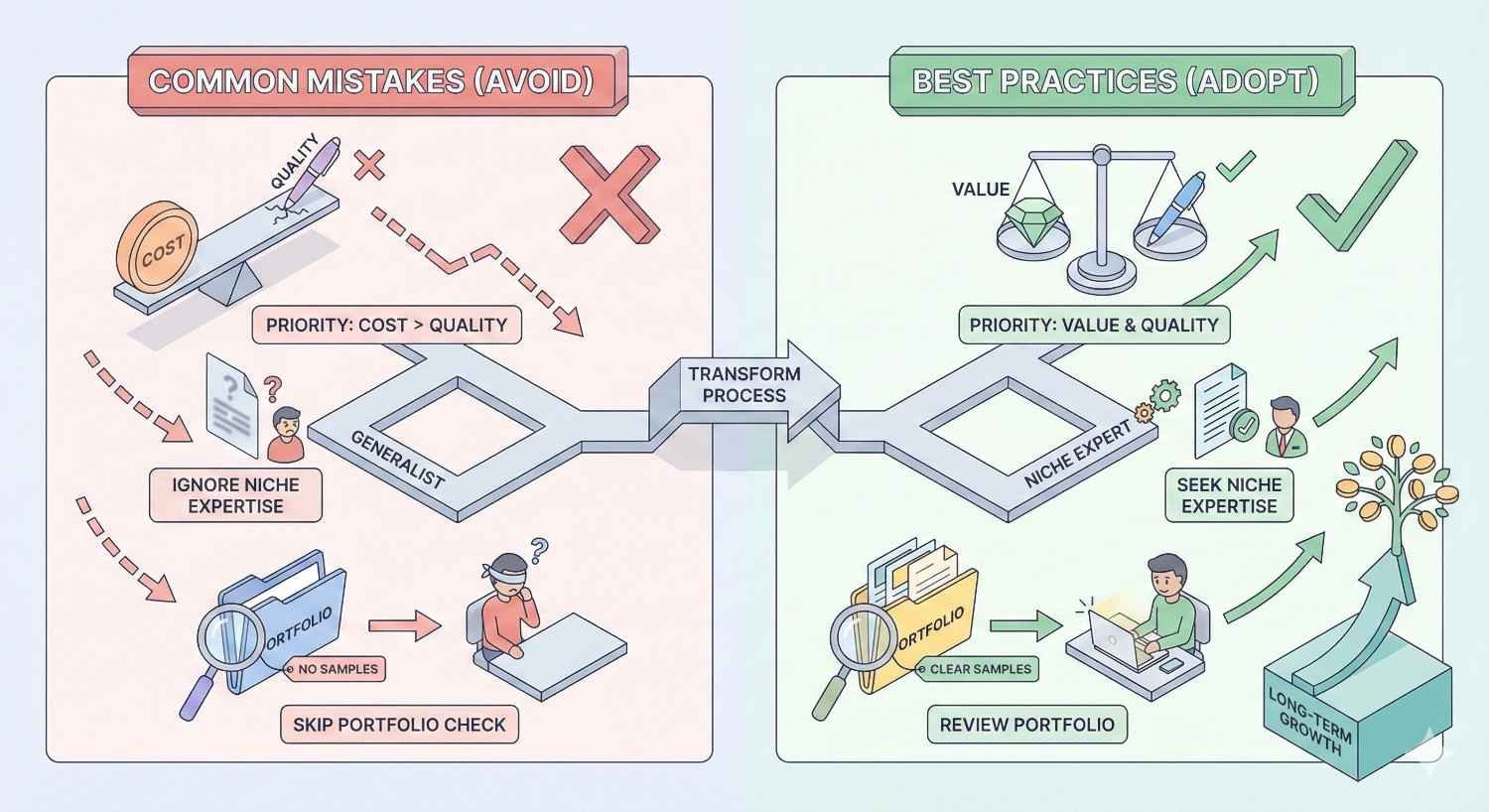
Common Mistakes to Avoid When Hiring Content Writers
Learning from others’ mistakes saves time and money. These common errors derail content initiatives. Avoiding them improves your chances of success.
Prioritizing Price Over Quality
Cheap content rarely delivers value. Low-cost providers cut corners on research, writing quality, and optimization. The resulting content fails to rank or convert, wasting your investment entirely.
Quality content costs more upfront but delivers better returns. Well-written, properly optimized content ranks higher and converts better. The ROI calculation favors quality over quantity in almost every scenario.
Evaluate providers on value, not just price. What results have they delivered for similar clients? What’s included in their pricing? How do they ensure quality? These questions matter more than hourly rates.
Ignoring SEO Fundamentals
Beautiful writing that ignores SEO fundamentals won’t generate organic traffic. Content must target relevant keywords, follow proper structure, and include optimization elements. Skipping these requirements limits content performance.
Ensure your content partners understand SEO. Ask about their keyword research process. Review their approach to on-page optimization. Verify they stay current with algorithm updates and best practices.
Balance SEO requirements with readability. Over-optimized content feels unnatural and performs poorly with users. Under-optimized content never reaches its audience. Skilled writers achieve both goals simultaneously.
Lack of Clear Briefs and Guidelines
Vague direction produces inconsistent results. Writers can’t read minds. Without clear briefs, they make assumptions that may not align with your expectations. Detailed guidance improves outcomes.
Effective content briefs include target keywords, audience description, key messages, and structural requirements. They specify tone, length, and any mandatory elements. They provide examples of content you admire.
Invest time in brief development. Clear briefs reduce revision cycles and improve first-draft quality. They ensure alignment before writing begins rather than after. This upfront investment pays dividends throughout the project.
Not Measuring Content Performance
Content without measurement is content without accountability. You can’t improve what you don’t measure. Tracking performance identifies what works and what doesn’t.
Establish KPIs before launching content initiatives. What metrics define success? How will you track them? When will you evaluate results? Clear measurement frameworks enable data-driven optimization.
Review performance regularly and adjust accordingly. Double down on content types that perform well. Revise or retire content that underperforms. Continuous improvement requires continuous measurement.
Getting Started with Professional Website Content Writing
Taking action transforms knowledge into results. These practical steps help you move from consideration to implementation effectively.
Preparing Your Content Requirements
Document your content needs before engaging providers. What content types do you need? How much content? What topics and keywords matter most? Clear requirements enable accurate quotes and better outcomes.
Gather existing brand materials. Style guides, messaging documents, and previous content examples help writers understand your voice. Competitor examples show what you’re competing against. Customer research reveals audience needs.
Prioritize your content needs. What’s most urgent? What will have the biggest impact? Limited budgets require focused investment. Start with highest-priority content and expand from there.
Setting Realistic Goals and KPIs
Define what success looks like before starting. Traffic goals, ranking targets, and conversion metrics provide accountability. Realistic goals acknowledge SEO timelines while maintaining ambition.
Align content goals with business objectives. Traffic without conversions doesn’t pay bills. Rankings for irrelevant keywords don’t generate leads. Ensure content KPIs connect to outcomes that matter.
Build in checkpoints for evaluation. Monthly traffic reviews, quarterly ranking assessments, and annual strategy reviews keep initiatives on track. Adjust goals based on actual performance data.
Next Steps: Partnering with a Content Writing Service
Research potential providers thoroughly. Review portfolios, check references, and evaluate proposals carefully. The right partner makes a significant difference in outcomes.
Start with a pilot project before committing to large engagements. Test quality, communication, and process fit with limited risk. Expand successful relationships into ongoing partnerships.
Maintain active involvement even with outsourced content. Provide feedback, share performance data, and collaborate on strategy. The best results come from true partnerships, not hands-off vendor relationships.
Conclusion
Website content writing services provide the strategic, SEO-optimized content that drives sustainable organic growth. From homepage copy to blog posts, professional content creation combines writing expertise with search optimization to deliver measurable business results.
Choosing the right content partner requires evaluating quality, SEO capabilities, and cultural fit. Understanding realistic timelines and pricing helps you budget appropriately and set achievable expectations. Avoiding common mistakes like prioritizing price over quality protects your investment.
We help businesses build comprehensive content strategies that drive traffic, generate leads, and deliver long-term ROI. White Label SEO Service provides full-service content writing as part of integrated SEO programs. Contact us to discuss how professional content writing can accelerate your organic growth.
Frequently Asked Questions
What’s the difference between content writing and copywriting?
Content writing focuses on informing and educating audiences, typically for SEO and organic traffic purposes. Copywriting emphasizes persuasion and conversion, often for ads and sales pages. Many website projects require both skills, and professional services often provide both.
How many blog posts do I need to publish monthly for SEO results?
Quality matters more than quantity, but consistency is important. Most businesses see results with 4-8 quality posts monthly. Competitive industries may require more. Focus on comprehensive, well-optimized content rather than hitting arbitrary volume targets.
Can content writing services match my brand voice?
Yes, professional services adapt to client brand voices. Provide style guides, examples, and detailed briefs to help writers understand your tone. Expect some calibration during initial projects as writers learn your preferences.
Should I provide topics or let the content service choose?
Collaborative approaches work best. Content services bring keyword research and SEO expertise. You bring industry knowledge and business priorities. Work together to identify topics that serve both SEO goals and business objectives.
How do I know if my content is working?
Track organic traffic growth, keyword rankings, and conversion metrics. Use Google Search Console and Google Analytics to monitor performance. Expect 3-6 months before seeing meaningful results from new content initiatives.
What happens if I’m not satisfied with the content?
Reputable services include revision rounds in their pricing. Communicate concerns clearly and specifically. Most quality issues stem from unclear briefs rather than writer incompetence. Work collaboratively to resolve issues.
How often should existing content be updated?
Review high-performing content annually at minimum. Update statistics, refresh examples, and add new information as your industry evolves. Declining traffic often signals content that needs refreshing. Prioritize updates based on traffic potential and business importance.