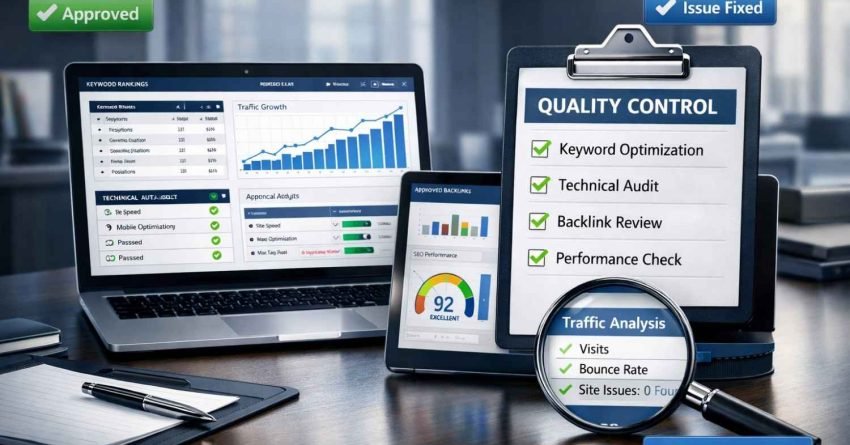
Delivering white label SEO without rigorous quality control is like selling a product you’ve never inspected. Your agency’s reputation rides on work you didn’t produce, making systematic quality assurance non-negotiable. When client rankings drop or technical errors surface, they blame you—not your invisible fulfillment partner.
Quality control in white label SEO bridges the gap between outsourced execution and client-facing accountability. It transforms variable contractor output into predictable, brand-safe deliverables that strengthen rather than jeopardize your client relationships.
This guide breaks down the complete quality control framework: from vetting providers and establishing standards to implementing review processes and measuring performance. You’ll walk away with actionable systems to protect your brand while scaling through white label partnerships.
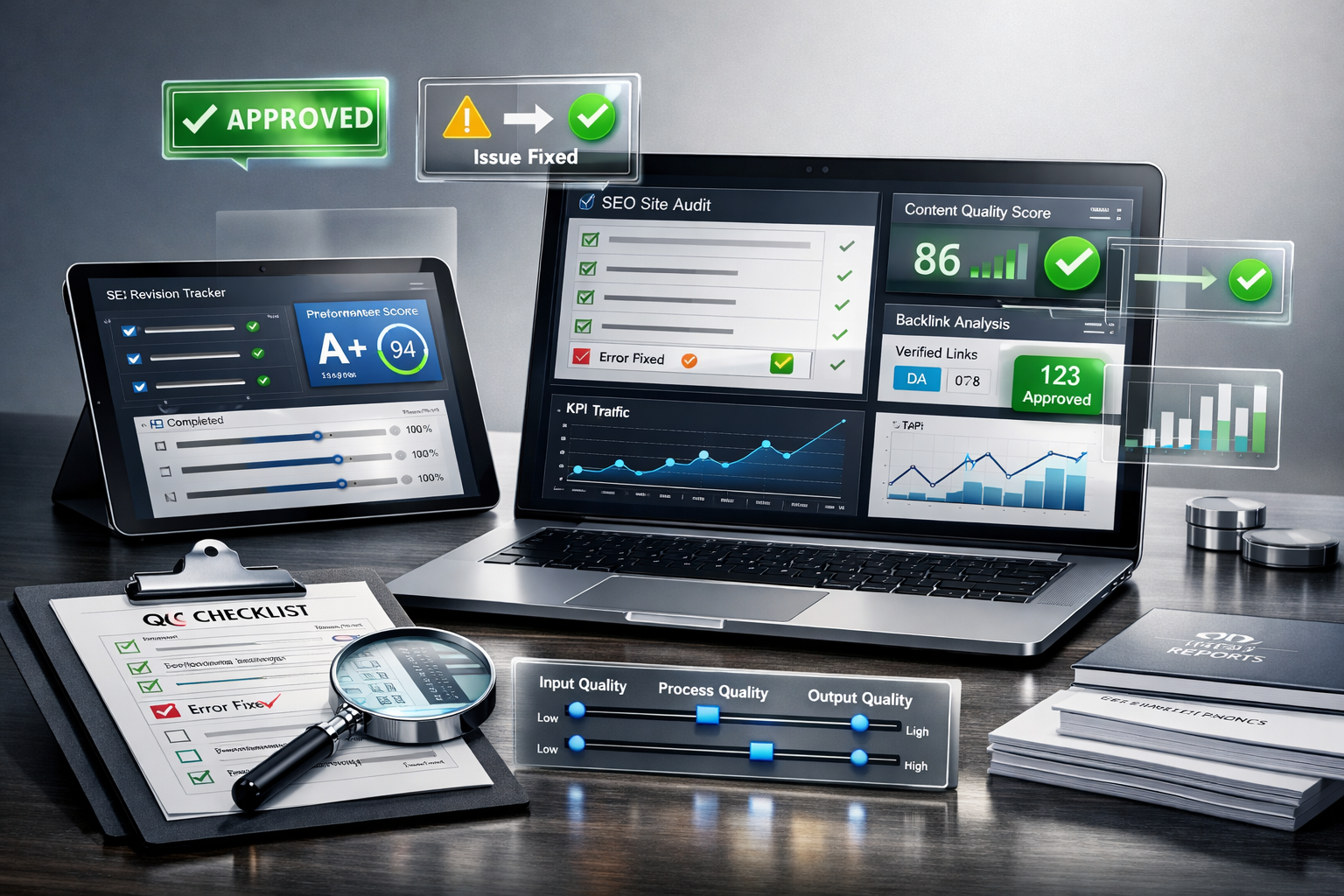
What Is White Label SEO Quality Control
White label SEO quality control encompasses the systematic processes, standards, and checkpoints that ensure outsourced SEO work meets your agency’s specifications before reaching clients. It’s the invisible infrastructure that transforms third-party deliverables into seamless extensions of your brand.
Unlike in-house quality assurance where you control every variable, white label QC requires managing work produced by external teams with different processes, skill levels, and priorities. This creates unique challenges around consistency, communication, and accountability.
The Core Components of White Label QC
Effective quality control operates across three dimensions. Input quality involves vetting providers, establishing clear briefs, and setting expectations before work begins. Process quality covers ongoing communication, milestone reviews, and real-time course corrections. Output quality focuses on final deliverable inspection against predetermined standards.
Each component requires specific protocols. Skipping input quality means constantly firefighting output problems. Neglecting process quality leads to expensive revisions and missed deadlines. Weak output controls risk client-facing failures that damage relationships permanently.
Why Standard QC Frameworks Fall Short
Generic quality assurance approaches fail in white label contexts for several reasons. Traditional QC assumes direct oversight of workers, but white label arrangements involve independent contractors or agencies with their own methodologies.
The distance between your client’s needs and the fulfillment team creates information decay. Requirements get simplified, context gets lost, and nuance disappears. Quality control must actively counteract this entropy through documentation, verification, and feedback loops.
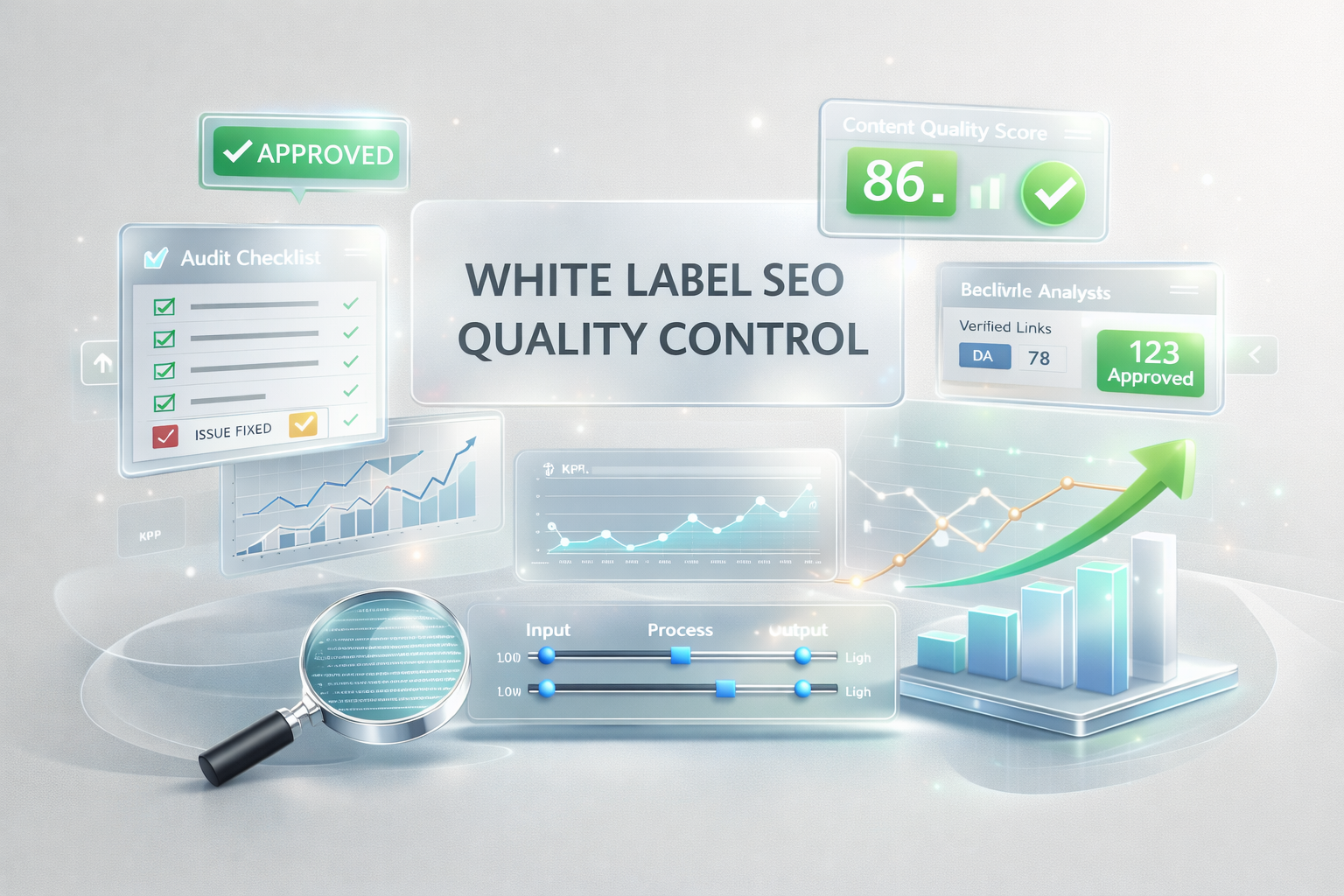
Why Quality Control Matters for White Label SEO
The stakes in white label SEO extend beyond individual deliverables. Every piece of work carries your brand, affects client retention, and influences referral potential. Quality failures compound quickly when you’re scaling through partnerships.
Protecting Client Relationships and Retention
Clients hire your agency based on trust and perceived expertise. When white label work underperforms, that trust erodes regardless of who actually produced the content or built the links. Research from HubSpot indicates that acquiring new customers costs 5-25x more than retaining existing ones.
Quality control directly impacts retention metrics. Consistent, high-quality deliverables build confidence and reduce client anxiety about results. Inconsistent quality triggers micromanagement, scope creep, and eventual churn.
Maintaining Brand Reputation at Scale
Your agency’s reputation is an asset that compounds over time. Positive client experiences generate referrals, case studies, and testimonials. Negative experiences spread faster—dissatisfied clients tell an average of 9-15 people about poor service experiences.
White label quality control protects this asset by ensuring every touchpoint reinforces your brand promise. When clients receive polished reports, strategic recommendations, and measurable results, they attribute that quality to your agency.
Reducing Costly Revisions and Rework
Poor quality control creates hidden costs that erode margins. Revision cycles consume project management time, delay other deliverables, and strain provider relationships. According to the Project Management Institute, poor quality costs organizations an average of 15-20% of their operating budgets.
Investing in upfront quality control reduces these downstream costs. Clear standards, thorough briefs, and systematic reviews catch issues before they reach clients, preserving both margins and relationships.
Essential Quality Control Standards for White Label SEO
Establishing clear standards transforms subjective quality judgments into objective, measurable criteria. These standards become the foundation for provider agreements, review processes, and performance evaluation.
Content Quality Benchmarks
Content represents the most visible white label deliverable and requires the most detailed standards. Effective benchmarks address multiple dimensions beyond basic grammar and spelling.
Accuracy standards require factual correctness, current statistics, and proper source attribution. Every claim should be verifiable, and outdated information should trigger automatic rejection. Originality thresholds typically require less than 10-15% similarity scores on plagiarism detection tools, with zero tolerance for copied passages.
SEO optimization criteria include keyword placement, semantic coverage, internal linking, and meta element optimization. Define specific requirements: primary keyword in H1 and first 100 words, semantic variations throughout, minimum word counts by content type.
Readability requirements should match target audience sophistication. B2B technical content might target Flesch-Kincaid grade levels of 10-12, while consumer content should aim for 7-8.
Technical SEO Specifications
Technical deliverables require precise specifications that leave no room for interpretation. Ambiguity in technical standards leads to inconsistent implementation and debugging headaches.
Audit standards should specify tools used, crawl depth, issue categorization, and prioritization frameworks. Define what constitutes critical, high, medium, and low priority issues. Establish minimum documentation requirements for each finding.
Implementation specifications cover coding standards, testing protocols, and rollback procedures. Require staging environment testing before production changes. Mandate documentation of all modifications with before/after comparisons.
Reporting formats should standardize data sources, visualization styles, and insight requirements. Every report should include methodology notes, data limitations, and actionable recommendations.
Link Building Quality Criteria
Link building carries significant risk when quality control fails. Low-quality links can trigger penalties, while undisclosed paid links violate search engine guidelines. Standards must address both quality and compliance.
Domain quality thresholds typically include minimum Domain Authority or Domain Rating scores, traffic requirements, and topical relevance criteria. Define acceptable link velocity ranges and anchor text distribution targets.
Placement standards specify acceptable page types, content context requirements, and disclosure policies. Require documentation of outreach methods and relationship nature for every acquired link.
Exclusion lists should explicitly prohibit link farms, PBNs, paid links without disclosure, and sites with spam histories. Regular audits should verify compliance with these exclusions.
Building Your White Label SEO Quality Control Process
Standards without processes remain theoretical. Effective quality control requires systematic workflows that apply standards consistently across all deliverables and providers.
Pre-Production Quality Gates
Quality control begins before any work starts. Pre-production gates ensure providers have everything needed to succeed and understand expectations clearly.
Brief completeness checks verify that all required information is included: target keywords, audience profiles, competitor references, brand guidelines, and success criteria. Incomplete briefs should be rejected and returned for completion.
Provider capability verification confirms the assigned team has relevant experience and capacity. Complex technical projects shouldn’t go to content-focused teams, and vice versa.
Timeline feasibility assessment evaluates whether deadlines allow for quality work. Rushed timelines often produce rushed results. Build buffer time for revisions into every project schedule.
In-Production Checkpoints
Waiting until completion to review work maximizes revision costs. Strategic checkpoints catch issues early when corrections are cheaper and faster.
Milestone reviews at 25%, 50%, and 75% completion allow course corrections before significant work is wasted. For content, this might mean outline approval, first draft review, and final draft review.
Communication protocols establish expected response times, escalation paths, and documentation requirements. Every significant decision should be recorded in writing to prevent misunderstandings.
Progress tracking monitors adherence to timelines and flags potential delays early. Proactive communication about timeline risks allows for client expectation management.
Post-Production Review Protocols
Final reviews represent the last line of defense before client delivery. These protocols should be thorough, documented, and consistently applied.
Multi-layer review involves different reviewers checking different aspects. A technical reviewer verifies SEO elements while an editorial reviewer checks content quality. Fresh eyes catch issues that become invisible to those close to the work.
Checklist-based verification ensures nothing is overlooked. Standardized checklists for each deliverable type create consistency across reviewers and projects.
Client-readiness assessment evaluates whether deliverables meet presentation standards. Formatting, branding, and professional polish matter as much as technical quality.
Quality Control Checklists for White Label Deliverables
Checklists transform quality standards into actionable verification steps. They reduce reliance on memory, ensure consistency, and create documentation trails.
Content Deliverable Checklist
Before approving any content piece, verify the following elements systematically.
Strategic alignment confirms the content addresses the assigned topic, targets specified keywords, and serves the intended audience. Content that drifts from the brief fails regardless of writing quality.
SEO elements include title tag optimization, meta description presence and quality, header hierarchy, keyword placement, internal links, and image optimization. Each element should meet predefined specifications.
Quality indicators cover grammar, spelling, readability, factual accuracy, source citations, and originality scores. Use tools like Grammarly, Hemingway Editor, and Copyscape to verify objectively.
Formatting standards ensure consistent styling, proper heading structure, appropriate paragraph length, and visual element placement. Deliverables should be client-ready without additional formatting work.
Technical Audit Checklist
Technical audits require verification of both completeness and accuracy.
Crawl verification confirms the audit covered the intended scope, identified all significant pages, and captured current site state. Partial crawls or outdated data invalidate findings.
Issue documentation checks that each finding includes clear description, location, impact assessment, and remediation guidance. Vague findings create implementation confusion.
Prioritization logic verifies that issue rankings reflect actual business impact, not just technical severity. A critical issue on a low-traffic page may matter less than a moderate issue on the homepage.
Recommendation quality ensures suggestions are specific, actionable, and appropriate for the client’s technical capabilities. Recommendations requiring enterprise-level resources for small business clients indicate poor audience understanding.
Link Building Verification Checklist
Link building verification protects against the highest-risk quality failures.
Link quality verification confirms each acquired link meets domain quality thresholds, appears on relevant content, and uses appropriate anchor text. Spot-check links manually rather than relying solely on reported metrics.
Compliance documentation verifies that acquisition methods align with search engine guidelines and client agreements. Require written confirmation of relationship nature for each placement.
Reporting accuracy cross-references reported links against actual placements. Verify links are live, followed, and indexed. Check for any signs of link manipulation or artificial patterns.
Vetting and Managing White Label SEO Providers
Quality control effectiveness depends heavily on provider selection and ongoing management. The best processes cannot compensate for fundamentally incapable providers.
Provider Evaluation Criteria
Thorough vetting before engagement prevents quality problems that no amount of downstream control can fix.
Track record assessment examines past work samples, client references, and case studies. Request examples specifically relevant to your client types and service needs. Generic portfolios may not reflect capability for your specific requirements.
Process transparency evaluates how providers describe their methodologies. Vague descriptions of “proprietary processes” often mask inconsistent or questionable practices. Quality providers explain their approaches clearly.
Communication capabilities test responsiveness, clarity, and professionalism during the sales process. Pre-engagement communication quality typically predicts post-engagement experience.
Capacity and scalability verify that providers can handle your volume requirements without quality degradation. Ask about team size, current utilization, and growth plans.
Establishing Provider Agreements
Formal agreements create accountability and set clear expectations for both parties.
Quality standards documentation incorporates your standards directly into provider agreements. Make compliance with specific benchmarks a contractual requirement, not just a preference.
Revision policies define acceptable revision limits, turnaround times, and cost allocation for quality failures. Clear policies prevent disputes and incentivize first-time quality.
Performance metrics establish measurable KPIs for quality, timeliness, and communication. Regular performance reviews against these metrics identify issues before they become patterns.
Termination provisions protect your ability to exit relationships that consistently fail quality standards. Include cure periods for isolated issues but clear termination rights for persistent problems.
Ongoing Provider Performance Management
Initial vetting matters less than ongoing performance management. Provider quality can drift over time without active monitoring.
Regular performance reviews compare actual deliverables against agreed standards. Track quality scores, revision rates, and timeline adherence over time. Identify trends before they become crises.
Feedback loops communicate quality issues promptly and specifically. Vague feedback like “improve quality” provides no actionable guidance. Specific feedback like “meta descriptions exceeded character limits in 40% of deliverables” enables targeted improvement.
Relationship investment recognizes that quality providers are valuable partners worth retaining. Provide positive feedback for excellent work, offer growth opportunities, and treat the relationship as a long-term investment.
Measuring White Label SEO Quality Control Effectiveness
Quality control systems require measurement to verify effectiveness and identify improvement opportunities. Without metrics, you’re guessing about quality rather than managing it.
Key Quality Metrics to Track
Effective measurement combines leading indicators that predict problems with lagging indicators that confirm outcomes.
First-pass acceptance rate measures the percentage of deliverables approved without revisions. This leading indicator reveals whether standards are clear and providers are meeting them. Target rates above 85% for mature relationships.
Revision cycle metrics track average revisions per deliverable, revision turnaround time, and revision cost. High revision rates indicate either unclear standards or provider capability gaps.
Client satisfaction scores capture the ultimate quality measure: whether clients are happy with deliverables. Regular feedback collection identifies issues that internal reviews might miss.
Escalation frequency monitors how often quality issues require management intervention. Decreasing escalations indicate improving quality control effectiveness.
Quality Control ROI Calculation
Quality control requires investment. Demonstrating ROI justifies continued investment and identifies optimization opportunities.
Cost of quality includes prevention costs (training, documentation, tools), appraisal costs (review time, testing), and failure costs (revisions, client credits, churn). Track each category separately.
Quality savings calculate avoided costs from prevented failures. Estimate what revision rates, client complaints, and churn would be without quality control, then calculate the difference.
Revenue protection quantifies retained revenue from clients who might have churned due to quality issues. Even modest retention improvements generate significant lifetime value.
Continuous Improvement Frameworks
Quality control should improve over time as you learn from experience and refine processes.
Root cause analysis investigates quality failures to identify systemic issues rather than just fixing symptoms. A content accuracy error might reveal brief template gaps, provider training needs, or review process weaknesses.
Process refinement updates standards, checklists, and workflows based on analysis findings. Document changes and communicate updates to all stakeholders.
Benchmarking compares your quality metrics against industry standards and your own historical performance. Continuous improvement requires knowing where you stand and where you’re heading.
Common White Label SEO Quality Control Mistakes
Learning from common mistakes accelerates quality control maturity. These patterns appear repeatedly across agencies struggling with white label quality.
Insufficient Upfront Investment
Many agencies treat quality control as an afterthought, investing only after problems emerge. This reactive approach costs more than proactive prevention.
Skipping provider vetting to save time leads to extended problem-solving later. Thorough upfront evaluation prevents months of quality struggles with unsuitable providers.
Inadequate documentation of standards and processes creates inconsistency. What seems obvious to you may be interpreted differently by providers. Write everything down explicitly.
Underestimating review time leads to rushed approvals and missed issues. Build realistic review time into project timelines rather than treating it as optional.
Over-Reliance on Provider Self-Reporting
Trusting providers to accurately report their own quality creates obvious conflicts of interest.
Unverified metrics may be inflated or selectively reported. Spot-check reported results against independent verification. Trust but verify.
Assumed compliance with standards without verification leads to gradual drift. Regular audits confirm that agreed standards are actually being followed.
Delayed feedback allows problems to compound. Issues identified months later are harder to correct than issues caught immediately.
Inconsistent Standard Application
Quality control loses effectiveness when standards are applied inconsistently across projects, clients, or time periods.
Client-specific exceptions that lower standards for “less important” clients create risk. Every client deserves consistent quality, and exceptions often become patterns.
Reviewer variability produces different outcomes depending on who reviews. Calibration sessions and detailed checklists reduce subjective variation.
Standard drift occurs when standards gradually relax over time. Regular standard reviews and updates maintain appropriate rigor.
Conclusion
White label SEO quality control determines whether outsourcing strengthens or undermines your agency. Systematic standards, rigorous processes, and continuous measurement transform variable contractor output into reliable, brand-enhancing deliverables.
The investment in quality control pays dividends through higher client retention, reduced revision costs, and protected reputation. Agencies that master white label QC scale confidently, knowing their brand is protected regardless of who produces the work.
White Label SEO Service provides the quality-controlled fulfillment infrastructure agencies need to scale without sacrificing standards. Our built-in quality processes, transparent reporting, and consistent deliverables let you grow your client base while maintaining the quality your reputation demands.
Frequently Asked Questions
What is the difference between white label SEO quality control and regular QA?
White label SEO quality control addresses the unique challenges of managing work produced by external teams you don’t directly supervise. Unlike internal QA where you control processes and training, white label QC requires explicit documentation, verification protocols, and provider management systems to ensure consistent output quality.
How often should I audit my white label SEO provider’s work?
Conduct comprehensive audits quarterly, with spot-checks on individual deliverables throughout each month. New provider relationships warrant more frequent auditing—weekly for the first month, then bi-weekly for months two and three before transitioning to standard quarterly reviews.
What are the most important quality metrics for white label SEO content?
Prioritize first-pass acceptance rate, factual accuracy scores, originality percentages, and client satisfaction ratings. These metrics collectively indicate whether content meets standards, requires excessive revisions, and ultimately satisfies the clients who receive it.
How do I handle quality failures with my white label provider?
Document the specific failure with examples, communicate the issue promptly and professionally, and request a remediation plan. For isolated incidents, allow correction opportunities. For patterns, escalate to account management and consider relationship termination if improvements don’t materialize.
Should I use the same quality standards for all white label SEO services?
Maintain consistent baseline standards across all services while adding service-specific criteria. Technical SEO audits require different verification than content or link building, but core principles around accuracy, completeness, and client-readiness apply universally.
How much time should quality control add to white label SEO projects?
Budget 15-25% additional time for quality control activities including brief preparation, milestone reviews, and final verification. This investment reduces total project time by preventing revision cycles that often consume more time than thorough upfront review.
What tools are essential for white label SEO quality control?
Essential tools include plagiarism checkers like Copyscape, grammar tools like Grammarly, SEO audit platforms like Screaming Frog or Sitebulb, backlink verification tools like Ahrefs or Moz, and project management systems that track deliverable status and revision history.