
Professional white paper writing services transform complex business insights into authoritative documents that generate qualified leads, establish thought leadership, and support B2B sales cycles. These specialized services combine deep research, strategic messaging, and polished design to create content assets that deliver measurable ROI over months or years.
White papers remain one of the highest-performing content formats for B2B marketers. They attract decision-makers actively researching solutions, making them invaluable for demand generation and pipeline development.
This guide covers everything you need to know about white paper services: what they include, how pricing works, what separates quality providers from average ones, and how to maximize your investment.
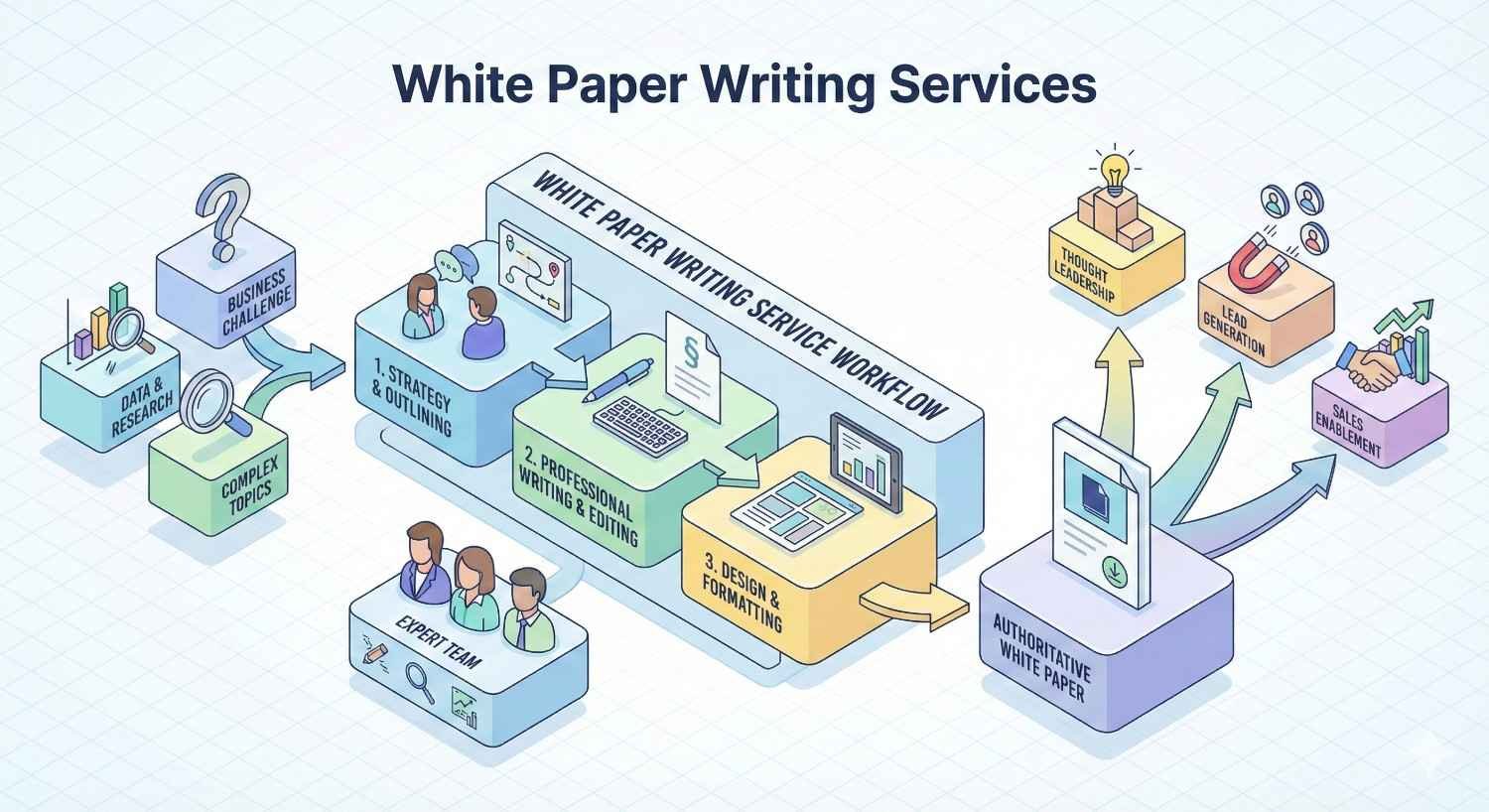
What Are White Paper Writing Services?
White paper writing services are specialized content development offerings that produce in-depth, research-backed documents designed to educate readers and position businesses as industry authorities. Unlike standard blog posts or marketing copy, white papers require a unique combination of technical expertise, rigorous research methodology, and strategic narrative construction.
Professional white paper services handle the entire production process. This includes initial strategy and research, writing and editing, design and formatting, and often distribution planning. The goal is delivering a polished, publication-ready asset that serves specific business objectives.
These services cater primarily to B2B companies in technology, finance, healthcare, manufacturing, and professional services. The documents they produce typically range from 2,500 to 5,000 words, though technical white papers can extend significantly longer depending on subject complexity.
Core Components of Professional White Paper Services
A comprehensive white paper service includes several interconnected deliverables. Understanding these components helps you evaluate providers and set realistic expectations.
Strategic planning forms the foundation. This involves defining target audience, identifying key messages, determining competitive positioning, and establishing the document’s role within your broader content strategy. Without strategic alignment, even well-written white papers underperform.
Research and analysis separates professional services from basic content writing. Quality providers conduct primary research, analyze industry data, review academic sources, and synthesize information into original insights. This research depth creates the credibility that makes white papers effective.
Writing and editing transforms research into compelling narrative. Professional writers structure arguments logically, explain complex concepts clearly, and maintain consistent voice throughout. Multiple editing rounds ensure accuracy, clarity, and polish.
Design and formatting elevate content into professional publications. This includes layout design, data visualization, typography, and brand integration. Visual presentation significantly impacts reader perception and engagement.
Project management coordinates all elements. Dedicated project managers handle timelines, stakeholder communication, revision cycles, and quality control. This coordination ensures smooth delivery and reduces client burden.
Types of White Papers Produced by Professional Writers
White paper services produce several distinct document types, each serving different strategic purposes.
Problem-solution white papers identify industry challenges and present your approach as the answer. These work well for companies introducing new methodologies or technologies. The structure typically moves from problem definition through analysis to solution presentation.
Technical white papers dive deep into product specifications, implementation details, or technical processes. They target engineers, IT professionals, and technical decision-makers who need detailed information before recommending purchases.
Backgrounder white papers provide comprehensive overviews of products, services, or technologies. They educate readers who are earlier in the buying journey and need foundational understanding before evaluating specific solutions.
Numbered list white papers organize information into digestible formats like “7 Trends Reshaping Manufacturing” or “5 Strategies for Reducing Cloud Costs.” These formats perform well for lead generation because they promise specific, actionable takeaways.
Research-based white papers present original data, survey findings, or industry analysis. They establish thought leadership by contributing new knowledge to industry conversations. These require significant research investment but generate substantial authority.
How White Paper Services Differ from Content Writing
White paper writing requires fundamentally different skills and processes than standard content creation. Understanding these differences helps you select appropriate providers.
Research intensity distinguishes white papers immediately. Blog posts might reference a few sources. White papers synthesize dozens of sources, often including primary research, to build comprehensive arguments. This research phase alone can take weeks.
Audience sophistication demands different writing approaches. White paper readers are typically senior professionals evaluating significant decisions. They expect depth, nuance, and evidence. Surface-level content fails immediately.
Production timelines reflect this complexity. A quality blog post might take days. A professional white paper typically requires four to eight weeks from kickoff to final delivery. Rushing this timeline compromises quality.
Stakeholder involvement increases substantially. White papers often require input from multiple subject matter experts, approval from legal and compliance teams, and alignment across marketing and sales. Managing this coordination requires dedicated project management.
Strategic integration connects white papers to broader business objectives. They support specific campaigns, target defined buyer personas, and align with sales enablement needs. This strategic layer doesn’t exist for most content writing.
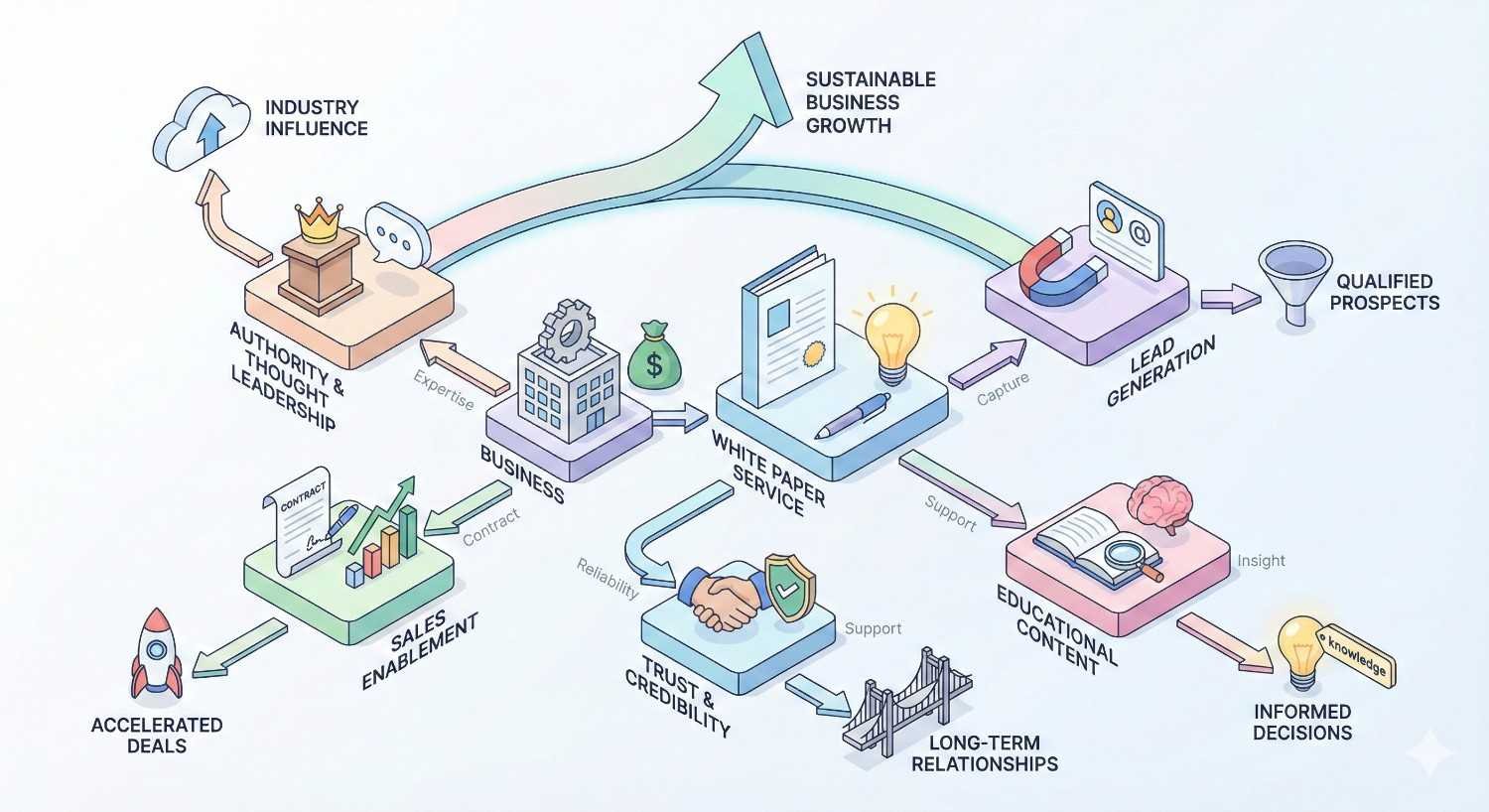
Why Businesses Invest in White Paper Writing Services
Companies invest in professional white paper services because these documents deliver measurable business outcomes that justify their cost. Understanding these benefits helps you build internal business cases and set appropriate expectations.
White papers function as strategic assets rather than disposable content. A well-executed white paper continues generating leads, supporting sales conversations, and building authority for years after publication. This longevity distinguishes them from most marketing content.
Lead Generation and Demand Generation Benefits
White papers consistently rank among the most effective lead generation tools for B2B marketers. Their effectiveness stems from the value exchange they enable: readers provide contact information in return for substantive, useful content.
Lead quality typically exceeds other content formats. Readers who download white papers are actively researching solutions. They’ve moved beyond casual browsing into serious evaluation. This intent makes them more valuable to sales teams.
Conversion rates for gated white papers often outperform other content offers. The perceived value of comprehensive, research-backed documents motivates form completion. Readers understand they’re receiving something substantial.
Pipeline influence extends beyond initial lead capture. White papers support nurturing sequences, provide sales teams with conversation starters, and help move prospects through consideration stages. A single white paper can touch multiple pipeline stages.
Cost efficiency improves over time. Unlike paid advertising that stops generating results when spending stops, white papers continue attracting organic traffic and generating leads indefinitely. The initial investment amortizes across months or years of performance.
Establishing Thought Leadership and Authority
White papers build brand authority in ways that shorter content formats cannot achieve. Their depth and rigor signal expertise to readers, industry peers, and search engines alike.
Credibility signals accumulate through comprehensive coverage. When your white paper demonstrates deep understanding of industry challenges, readers trust your solutions more. This trust transfers to sales conversations and vendor evaluations.
Industry recognition often follows quality white paper publication. Media outlets cite well-researched white papers. Industry analysts reference them. Conference organizers invite authors to speak. These secondary benefits amplify initial investment.
Competitive differentiation emerges from original insights. Companies that publish substantive white papers stand apart from competitors relying on surface-level content. This differentiation matters especially in crowded markets.
Internal expertise development accompanies external authority building. The research and writing process forces organizations to clarify their thinking, document their methodologies, and articulate their value propositions. These internal benefits often surprise clients.
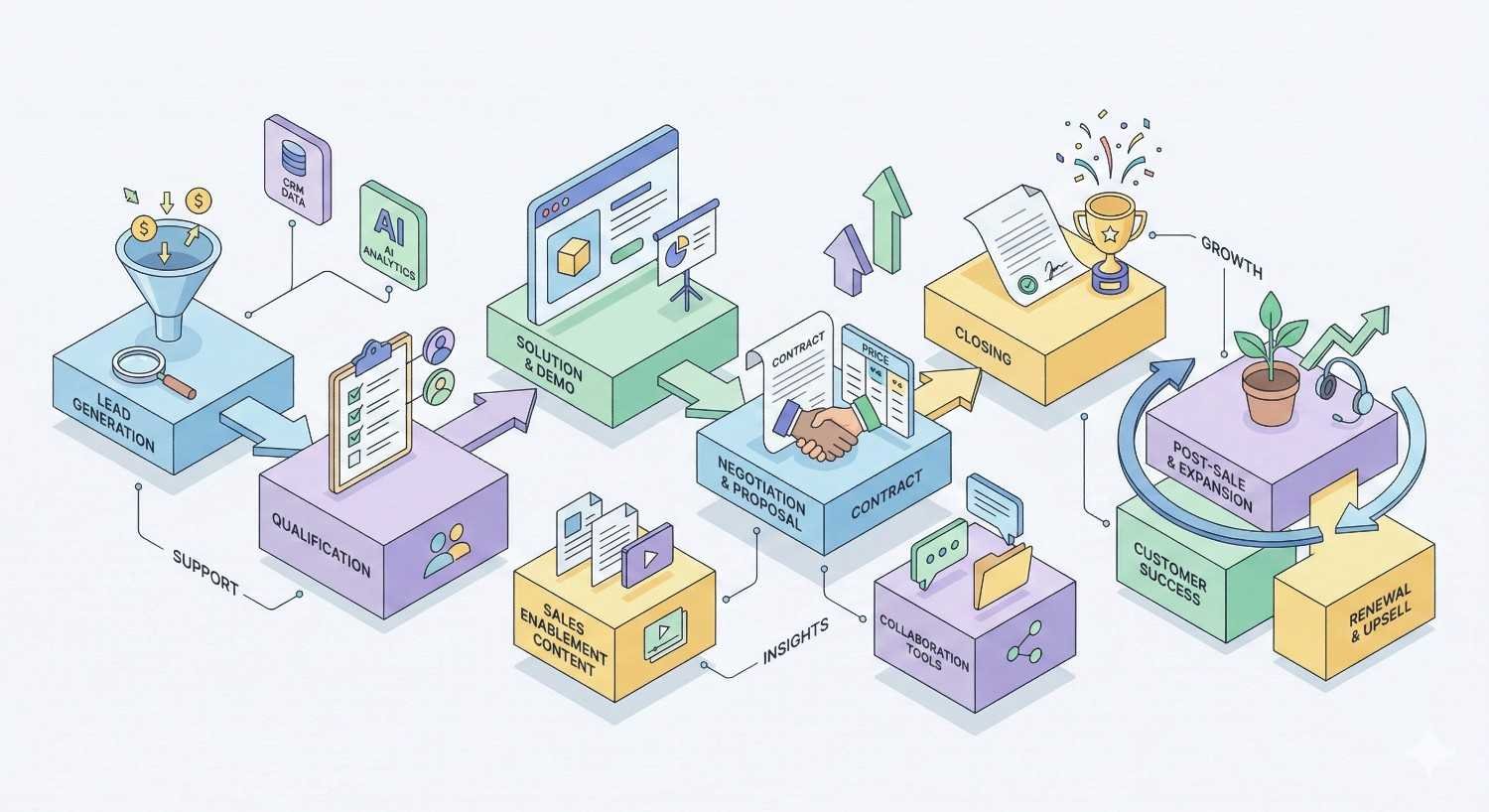
Supporting Complex B2B Sales Cycles
B2B sales cycles frequently extend across months and involve multiple stakeholders. White papers support these complex journeys in several ways.
Education at scale reduces sales team burden. Instead of explaining foundational concepts repeatedly, salespeople share white papers that handle education efficiently. This frees sales conversations for higher-value discussions.
Stakeholder alignment becomes easier when everyone reads the same document. White papers give champions internal tools for building consensus. Technical buyers, financial decision-makers, and executive sponsors can all engage with appropriate sections.
Objection handling improves when white papers address common concerns proactively. Well-structured documents anticipate questions and provide evidence-based answers. Sales teams reference specific sections during negotiations.
Deal velocity can increase when white papers accelerate education phases. Prospects who thoroughly understand problems and solutions move faster through evaluation. The time investment in reading pays back through shortened cycles.
SEO and Organic Visibility Advantages
White papers contribute to organic search performance through multiple mechanisms. Their depth and authority align with how search engines evaluate content quality.
Topical authority builds when white papers comprehensively cover subjects. Search engines recognize thorough treatment of topics and reward it with improved rankings across related queries. A single white paper can lift performance for dozens of keywords.
Backlink acquisition happens naturally when white papers provide citable research. Journalists, bloggers, and industry publications link to substantive sources. These editorial backlinks carry significant ranking weight.
Long-tail keyword coverage emerges from comprehensive content. White papers naturally address numerous specific queries that shorter content cannot cover. This breadth captures search traffic across the topic cluster.
Dwell time and engagement metrics improve when readers find genuinely useful content. Search engines interpret these signals as quality indicators. White papers that deliver value earn algorithmic rewards.
What Professional White Paper Writers Deliver
Understanding specific deliverables helps you evaluate proposals, compare providers, and set appropriate expectations. Professional services include far more than writing alone.
Research and Data Analysis
Research forms the foundation of effective white papers. Professional services invest significant effort in this phase.
Secondary research involves reviewing existing sources: industry reports, academic studies, news coverage, competitor content, and regulatory documents. Quality providers synthesize dozens of sources into coherent narratives.
Primary research may include surveys, interviews with subject matter experts, or original data analysis. This primary research creates unique value that competitors cannot replicate. It also generates citable findings that attract backlinks.
Data visualization transforms raw numbers into comprehensible graphics. Charts, graphs, and infographics make complex information accessible. Professional services either create these visualizations or coordinate with designers who do.
Source verification ensures accuracy and credibility. Reputable providers verify statistics, confirm citations, and flag questionable claims. This verification protects your brand from publishing inaccurate information.
Strategic Positioning and Messaging
Beyond research and writing, professional services help position your white paper strategically within market conversations.
Competitive analysis identifies how competitors address similar topics. Understanding existing content helps differentiate your approach and avoid redundancy.
Message development clarifies what you want readers to think, feel, and do after reading. These messaging decisions guide writing and ensure alignment with business objectives.
Audience mapping defines exactly who will read the document and what they need. Different audiences require different approaches. Technical buyers need different content than executive sponsors.
Value proposition refinement often emerges from the white paper process. Articulating your approach clearly for external audiences frequently clarifies internal thinking about differentiation and positioning.
Technical Writing and Subject Matter Expertise
White papers often address complex technical subjects. Professional services bring appropriate expertise to these challenges.
Industry knowledge enables writers to engage credibly with specialized topics. Quality providers either employ writers with relevant backgrounds or pair generalist writers with subject matter experts.
Technical accuracy requires understanding nuances that general writers miss. Professional services implement review processes that catch errors before publication.
Jargon calibration balances accessibility with credibility. Too much jargon alienates readers. Too little suggests superficial understanding. Skilled writers find appropriate levels for target audiences.
Complexity management structures information so readers can follow sophisticated arguments. This involves careful organization, clear transitions, and strategic use of examples and analogies.
Design, Formatting, and Visual Elements
Professional presentation significantly impacts white paper effectiveness. Design services typically include several elements.
Layout design creates visual hierarchy that guides readers through content. Professional layouts use typography, spacing, and visual elements to improve readability and engagement.
Brand integration ensures white papers align with existing visual identity. Colors, fonts, logos, and imagery should feel consistent with other brand materials.
Data visualization transforms statistics and findings into charts, graphs, and infographics. Visual presentation of data improves comprehension and retention.
Interactive elements may include clickable tables of contents, embedded videos, or interactive charts for digital distribution. These elements enhance reader experience.
Distribution and Promotion Strategy
Some white paper services extend beyond production into distribution planning.
Channel strategy identifies where and how to promote the finished document. This might include email campaigns, social media, paid promotion, or partner distribution.
Landing page optimization ensures the download experience converts visitors effectively. This includes page copy, form design, and thank-you page content.
Promotion calendar sequences distribution activities for maximum impact. Launch timing, follow-up campaigns, and ongoing promotion all require coordination.
Repurposing plans extract additional value from white paper content. Blog posts, social content, webinar scripts, and sales materials can all derive from white paper research.
The White Paper Writing Process: What to Expect
Understanding the typical production process helps you plan timelines, allocate resources, and collaborate effectively with service providers.
Discovery and Strategic Planning Phase
Every quality white paper project begins with discovery. This phase establishes foundation for everything that follows.
Kickoff meetings bring together stakeholders to align on objectives, audience, messaging, and logistics. These conversations surface assumptions and ensure shared understanding.
Brief development documents decisions from discovery conversations. The creative brief becomes the reference document guiding all subsequent work.
Competitive review examines existing content addressing similar topics. Understanding the landscape helps differentiate your approach.
Timeline establishment sets realistic expectations for all parties. Discovery typically takes one to two weeks depending on stakeholder availability.
Research and Outline Development
With strategy established, research and planning begin in earnest.
Research execution follows the plan established during discovery. Writers gather sources, conduct interviews, analyze data, and synthesize findings.
Outline creation structures the document before drafting begins. Detailed outlines identify sections, key points, supporting evidence, and logical flow.
Outline review involves client feedback before writing starts. Catching structural issues at this stage prevents costly revisions later.
Research typically requires two to three weeks depending on topic complexity and primary research requirements.
Drafting and Collaborative Review
Writing transforms research and outlines into readable content.
First draft development produces complete content following the approved outline. Professional writers focus on clarity, accuracy, and engagement.
Internal review catches issues before client review. Editors check accuracy, clarity, consistency, and alignment with brief.
Client review solicits feedback on content, messaging, and accuracy. Clear feedback processes prevent revision cycles from extending timelines.
Subject matter expert review may involve technical stakeholders verifying accuracy. Coordinating these reviews requires careful scheduling.
Drafting and review typically require two to three weeks including revision cycles.
Editing, Design, and Finalization
Final production transforms approved content into polished publications.
Copy editing addresses grammar, punctuation, and style consistency. Professional editing ensures error-free final documents.
Design production applies visual treatment to approved content. Designers create layouts, visualizations, and branded elements.
Design review ensures visual execution meets expectations. Revision cycles address any issues.
Final proofing catches any remaining errors before publication. Fresh eyes review the complete designed document.
Finalization typically requires one to two weeks depending on design complexity.
Typical Timelines and Project Duration
Complete white paper projects typically require four to eight weeks from kickoff to final delivery. Several factors influence specific timelines.
Topic complexity affects research and writing time. Highly technical subjects require more research and more careful writing.
Stakeholder availability often determines actual timelines. Projects stall when reviewers are unavailable or feedback delays occur.
Design requirements add time for visual production. Simple templates move faster than custom designs.
Revision cycles extend timelines when feedback requires significant changes. Clear communication and aligned expectations minimize revision needs.
Rush projects are possible but typically cost more and risk quality compromises. Building adequate time into project plans produces better outcomes.
Key Factors That Determine White Paper Quality
Not all white papers deliver equal results. Understanding quality factors helps you evaluate providers and set appropriate standards.
Industry Expertise and Subject Matter Knowledge
Writers who understand your industry produce better content faster. This expertise manifests in several ways.
Terminology accuracy signals credibility to knowledgeable readers. Misused jargon immediately undermines trust.
Contextual understanding enables writers to address nuances that generalists miss. Industry-specific challenges, regulations, and dynamics require familiarity.
Source recognition helps writers identify authoritative references. Knowing which analysts, publications, and research firms matter in your industry improves source quality.
Interview effectiveness improves when writers can engage substantively with subject matter experts. Knowledgeable writers ask better questions and capture insights more accurately.
Research Depth and Data Credibility
Research quality directly impacts white paper effectiveness. Superficial research produces superficial content.
Source diversity strengthens arguments. Drawing from multiple source types, including academic research, industry reports, news coverage, and primary data, builds comprehensive understanding.
Data recency matters for credibility. Outdated statistics undermine trust. Quality providers verify data currency and seek current sources.
Original research creates unique value. Surveys, interviews, or proprietary data analysis differentiate your white paper from competitors relying on the same secondary sources.
Citation practices demonstrate rigor. Proper attribution builds credibility and enables readers to verify claims.
Narrative Structure and Readability
Even excellent research fails if poorly presented. Structure and readability determine whether readers engage with content.
Logical flow guides readers through arguments. Each section should build on previous sections and lead naturally to conclusions.
Clear thesis establishes what the document argues. Readers should understand the central claim early and see how evidence supports it.
Appropriate depth matches audience needs. Too shallow disappoints expert readers. Too deep overwhelms generalists. Calibrating depth requires understanding your specific audience.
Scannable formatting accommodates how people actually read. Headers, bullet points, callouts, and visual breaks help readers navigate and find relevant sections.
Visual Design and Professional Presentation
Design quality significantly impacts reader perception and engagement.
Professional aesthetics signal organizational credibility. Polished design suggests attention to detail and quality standards.
Brand consistency reinforces identity. White papers should feel like natural extensions of your brand, not generic documents.
Data visualization improves comprehension. Well-designed charts and graphs communicate complex information more effectively than text alone.
Readability optimization considers typography, spacing, and layout. Design should enhance rather than impede reading experience.
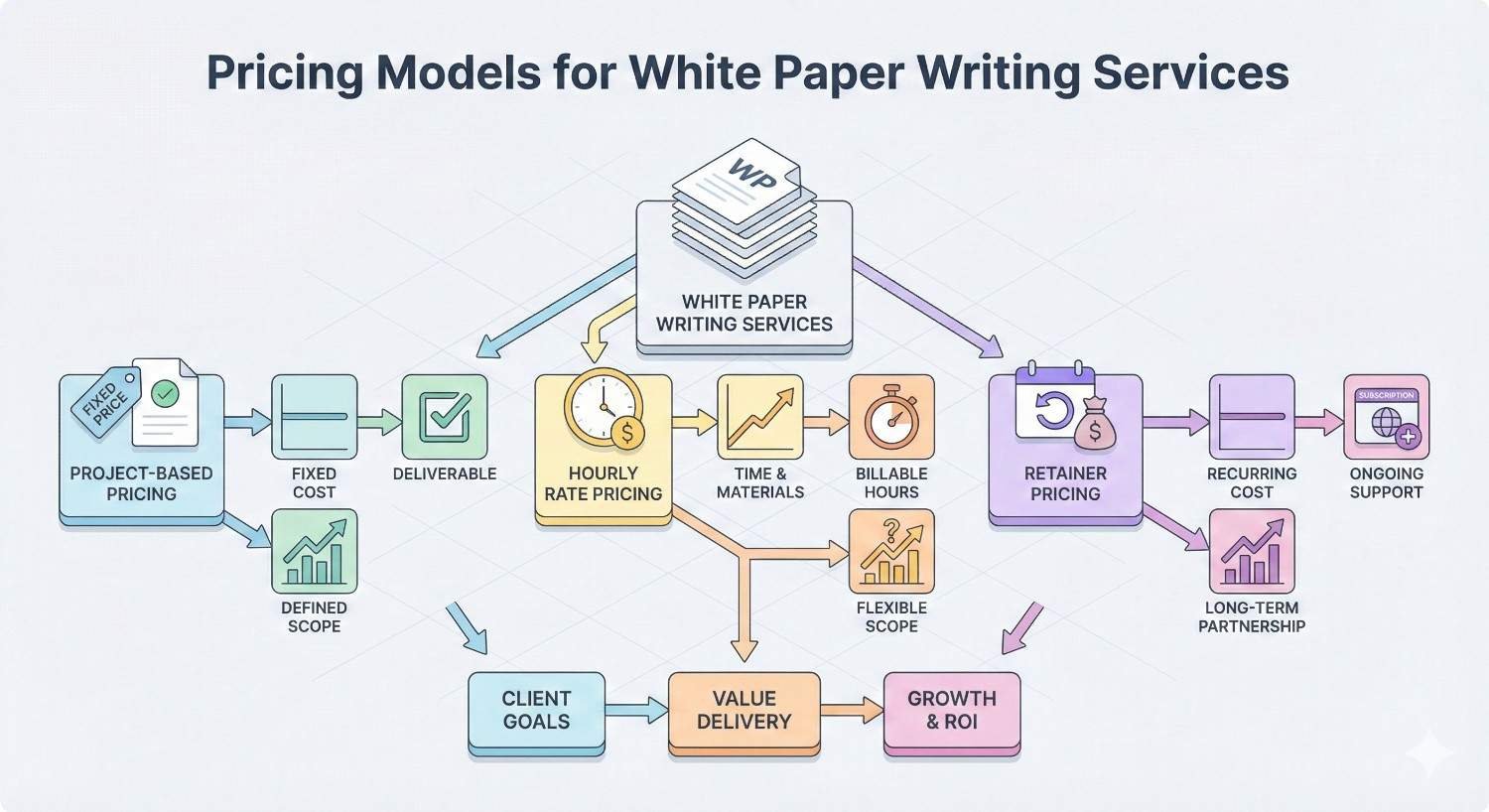
Pricing Models for White Paper Writing Services
Understanding pricing helps you budget appropriately and evaluate proposals. White paper costs vary significantly based on several factors.
Per-Project Pricing vs. Retainer Models
Most white paper services offer project-based pricing, though retainer arrangements exist for ongoing needs.
Per-project pricing charges fixed fees for defined deliverables. This model provides cost certainty and works well for occasional white paper needs.
Retainer models establish ongoing relationships with monthly fees covering agreed deliverables. These arrangements suit companies producing multiple white papers annually.
Hybrid approaches combine elements of both. Some providers offer discounted per-project rates for clients committing to multiple projects.
Factors That Influence White Paper Costs
Several variables affect white paper pricing. Understanding these factors helps you interpret quotes and compare proposals.
Research requirements significantly impact cost. Projects requiring primary research, extensive interviews, or original data analysis cost more than those relying on secondary sources.
Topic complexity affects writing time. Highly technical subjects requiring specialized expertise command premium rates.
Design scope adds cost. Custom design with original illustrations costs more than template-based layouts.
Timeline pressure increases pricing. Rush projects require providers to prioritize your work over others, justifying premium charges.
Revision expectations factor into pricing. Providers build revision allowances into quotes. Extensive revision needs may trigger additional charges.
What to Expect at Different Price Points
White paper pricing spans a wide range. Understanding what different price points typically include helps set realistic expectations.
Budget tier ($2,000-$5,000) typically provides basic white papers with limited research, template designs, and minimal strategic input. These work for straightforward topics where you can provide substantial source material.
Mid-range tier ($5,000-$10,000) delivers professional white papers with solid research, custom design, and strategic guidance. Most B2B companies find this range appropriate for standard white paper needs.
Premium tier ($10,000-$25,000+) includes extensive research, potentially primary research, sophisticated design, and comprehensive strategic support. Complex technical topics, highly regulated industries, or flagship content initiatives justify this investment.
ROI Considerations and Value Assessment
Evaluating white paper investment requires considering returns, not just costs.
Lead generation value provides one ROI framework. If a white paper generates 500 leads and your cost per lead from other channels is $50, the white paper delivered $25,000 in lead value.
Sales enablement value considers how white papers support revenue. If sales teams report that white papers help close deals, attributing even small percentages of deal value to content justifies significant investment.
Authority building value is harder to quantify but real. Improved brand perception, media coverage, and industry recognition all contribute to business outcomes.
Longevity considerations affect ROI calculations. White papers that perform for years deliver better returns than those with short shelf lives. Evergreen topics and quality execution extend useful life.
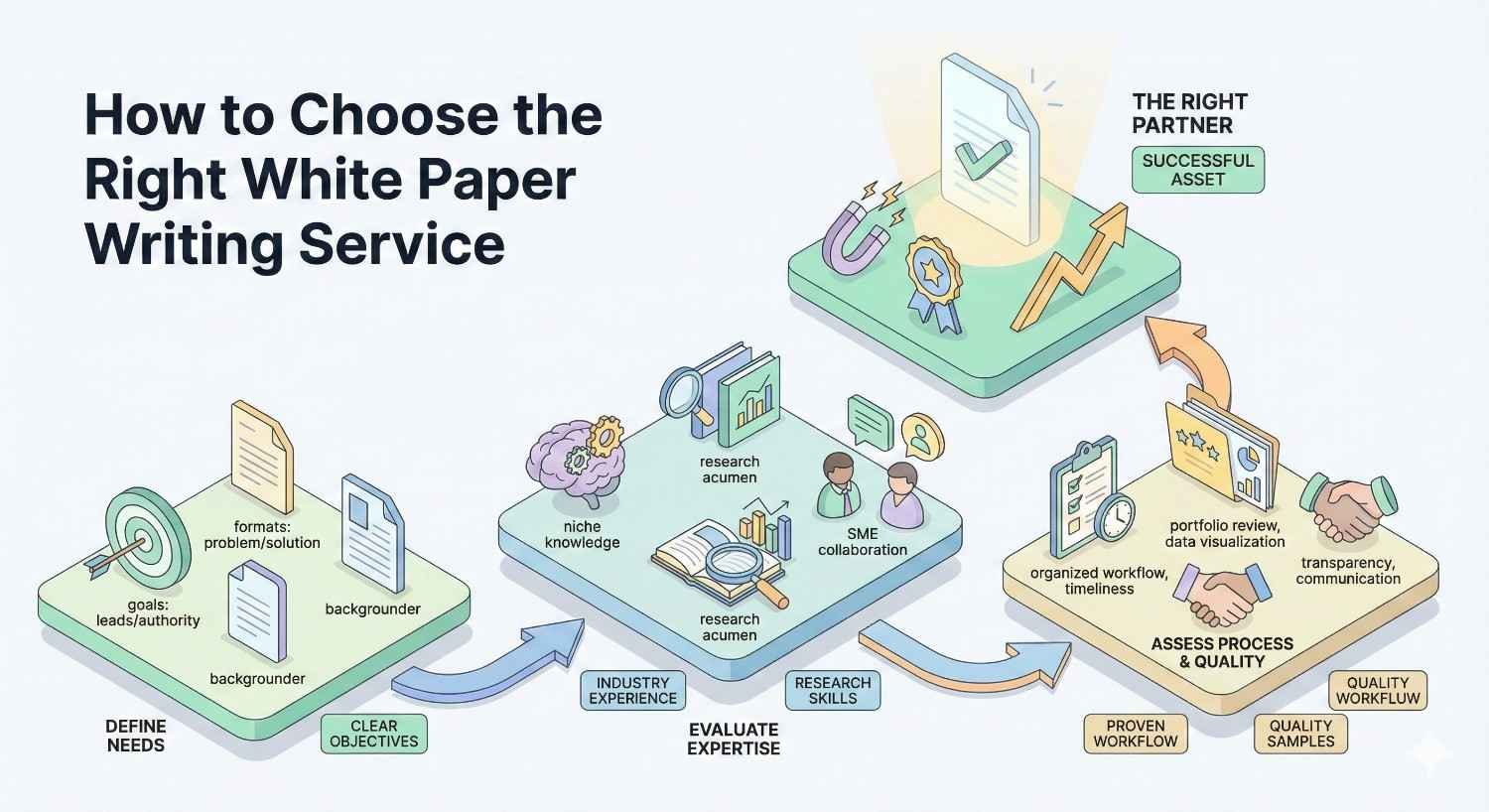
How to Choose the Right White Paper Writing Service
Selecting the right provider significantly impacts project outcomes. Systematic evaluation helps identify the best fit for your needs.
Evaluating Portfolio and Industry Experience
Past work provides the best indicator of future performance. Examine portfolios carefully.
Industry relevance matters significantly. Providers with experience in your industry understand context, terminology, and audience expectations.
Quality assessment requires actually reading samples. Evaluate research depth, writing quality, and design execution. Surface-level review misses important quality indicators.
Range demonstration shows versatility. Providers should show capability across different white paper types and complexity levels.
Recency indicates current capabilities. Recent samples reflect current team skills and processes better than older work.
Assessing Research Capabilities and Process
Research quality determines white paper effectiveness. Understand how providers approach research.
Methodology questions reveal sophistication. Ask how they identify sources, verify accuracy, and synthesize findings.
Primary research capabilities matter for certain projects. If you need surveys or interviews, confirm providers can execute these.
Subject matter expert access may be relevant. Some providers maintain networks of industry experts who can contribute to projects.
Fact-checking processes protect your brand. Understand how providers verify claims before publication.
Understanding Collaboration and Communication Style
Working relationships significantly impact project experience. Assess collaboration approaches.
Communication frequency should match your preferences. Some clients want daily updates. Others prefer weekly check-ins. Clarify expectations.
Feedback processes affect revision efficiency. Understand how providers collect, organize, and implement feedback.
Stakeholder management capabilities matter for complex organizations. Providers experienced with multiple reviewers handle coordination more smoothly.
Responsiveness indicates service orientation. Note how quickly providers respond during the sales process. This often predicts project communication.
Reviewing Testimonials and Case Studies
Social proof helps validate provider claims. Examine evidence carefully.
Specific results carry more weight than general praise. Look for testimonials mentioning concrete outcomes like lead generation numbers or sales impact.
Client relevance matters. Testimonials from companies similar to yours predict your likely experience better than those from different contexts.
Case study depth reveals actual capabilities. Detailed case studies showing process and results demonstrate more than brief success mentions.
Reference availability indicates confidence. Providers willing to connect you with past clients have nothing to hide.
Questions to Ask Before Hiring
Specific questions help evaluate providers and clarify expectations.
Who will actually write my white paper? Understand whether senior staff or junior writers handle projects. Ask about writer backgrounds and experience.
What does your research process involve? Detailed answers indicate rigorous approaches. Vague responses suggest superficial research.
How do you handle revisions? Understand what’s included in quoted prices and what triggers additional charges.
What’s your typical timeline for projects like mine? Realistic timeline estimates suggest experience. Overly optimistic promises may indicate inexperience or desperation.
Can you share samples similar to what I need? Relevant samples demonstrate capability. Inability to provide appropriate samples raises concerns.
What do you need from us to succeed? Providers who ask good questions about your inputs understand what makes projects successful.
Preparing Your Team for a White Paper Project
Internal preparation significantly impacts project success. Investing time upfront prevents problems later.
Internal Stakeholder Alignment
White papers often involve multiple internal stakeholders. Aligning these parties before engaging providers prevents conflicts.
Objective agreement ensures everyone understands what the white paper should accomplish. Conflicting objectives create revision cycles and delays.
Audience definition requires consensus. Different stakeholders may have different audiences in mind. Clarify who the primary readers are.
Messaging alignment prevents contradictory feedback. Agree on key messages before writing begins.
Approval process clarity prevents bottlenecks. Identify who must approve content and establish realistic review timelines.
Gathering Source Materials and Data
Providers work more efficiently when clients provide relevant materials upfront.
Existing content may inform white paper development. Share relevant blog posts, presentations, case studies, and previous white papers.
Internal data can strengthen arguments. Proprietary statistics, customer research, or performance data add unique value.
Subject matter expert access enables deeper content. Identify internal experts willing to participate in interviews or reviews.
Competitive intelligence helps differentiate your approach. Share what you know about competitor positioning and content.
Setting Clear Objectives and Success Metrics
Defining success upfront enables meaningful evaluation later.
Lead generation targets provide quantifiable goals. How many leads should this white paper generate in its first year?
Quality indicators establish standards. What characteristics must the final document have?
Timeline requirements set scheduling expectations. When must the white paper be complete, and why?
Usage plans clarify how the white paper will be deployed. Understanding distribution plans helps providers optimize content.
Maximizing White Paper Performance and ROI
Creating a quality white paper is only half the challenge. Effective distribution and optimization maximize returns on your investment.
Distribution Channels and Promotion Strategies
White papers require active promotion to reach target audiences.
Email marketing remains highly effective for white paper distribution. Segment lists to target relevant audiences with personalized messaging.
Social media promotion extends reach beyond existing contacts. LinkedIn performs particularly well for B2B white paper promotion.
Paid promotion accelerates initial distribution. LinkedIn ads, Google Ads, and content syndication platforms can drive targeted traffic.
Partner distribution leverages others’ audiences. Industry associations, complementary vendors, and media partners may share valuable content with their audiences.
Sales team enablement ensures direct distribution to prospects. Equip sales teams with white papers and guidance on when to share them.
Gating vs. Ungated Content Strategies
The decision to gate white papers behind forms involves tradeoffs.
Gated content captures lead information but reduces total readership. Fewer people will complete forms than would read ungated content.
Ungated content maximizes readership and SEO value but sacrifices lead capture. This approach works when brand awareness matters more than lead generation.
Hybrid approaches offer options. Some companies gate initially, then ungate after lead generation goals are met. Others offer ungated previews with gated full versions.
Form optimization improves gated content performance. Minimize required fields, clearly communicate value, and ensure mobile-friendly forms.
Lead Nurturing and Follow-Up Tactics
White paper downloads represent the beginning of relationships, not the end.
Immediate follow-up acknowledges downloads and provides additional value. Thank-you emails with related resources maintain engagement.
Nurturing sequences continue education over time. Automated email series can share related content, case studies, and offers.
Sales follow-up should be timely but not aggressive. Leads who download white papers are researching, not necessarily ready to buy.
Retargeting keeps your brand visible to white paper downloaders. Display ads and social retargeting maintain awareness during consideration phases.
Measuring Performance: Key Metrics to Track
Systematic measurement enables optimization and demonstrates ROI.
Download volume provides the most basic performance indicator. Track total downloads and download trends over time.
Conversion rates measure landing page effectiveness. What percentage of page visitors complete download forms?
Lead quality matters more than quantity. Track how white paper leads progress through your funnel compared to other lead sources.
Engagement metrics indicate content quality. Time on page, scroll depth, and return visits suggest whether readers find value.
Attribution data connects white papers to revenue. Track which deals involved white paper engagement and estimate influenced revenue.
Common White Paper Mistakes to Avoid
Understanding common failures helps you avoid them. These mistakes undermine white paper effectiveness.
Overly Promotional or Sales-Heavy Content
White papers should educate, not sell. Promotional content undermines the format’s credibility.
Trust erosion happens when readers feel manipulated. They downloaded expecting education and received a sales pitch.
Sharing reluctance increases with promotional content. Readers won’t share documents that make them look like they’re promoting vendors.
Competitive disadvantage results when competitors provide genuine value while you provide thinly veiled advertising.
Balance achievement requires discipline. Mention your solutions appropriately but focus primarily on educating readers about problems and approaches.
Insufficient Research or Weak Data
Thin research produces thin content. Readers recognize superficial treatment.
Credibility damage follows weak research. Knowledgeable readers identify missing context, outdated information, or unsupported claims.
Differentiation failure results when your white paper covers the same ground as freely available content. Original research creates unique value.
Authority undermining happens when competitors publish more substantive content. Your white paper becomes a liability rather than an asset.
Poor Structure and Lack of Clear Narrative
Even good research fails without effective organization.
Reader abandonment increases when content lacks clear structure. Confused readers stop reading.
Message dilution happens when key points get buried in disorganized content. Readers miss important insights.
Sharing reduction follows poor structure. Readers won’t recommend confusing documents to colleagues.
Neglecting Design and Visual Presentation
Unprofessional design undermines content quality.
First impression damage happens immediately. Readers judge content quality partly by visual presentation.
Readability reduction follows poor design. Bad typography, cramped layouts, and missing visual breaks make reading difficult.
Brand perception suffers when white papers look amateurish. Design quality signals organizational quality.

White Papers vs. Other Content Formats
Understanding how white papers compare to alternatives helps you choose appropriate formats for different objectives.
White Papers vs. Case Studies
Both formats support B2B marketing but serve different purposes.
White papers educate broadly about problems and approaches. They work early in buyer journeys when prospects are researching challenges.
Case studies demonstrate specific results with specific customers. They work later in buyer journeys when prospects want proof of outcomes.
Complementary usage often makes sense. White papers attract and educate prospects. Case studies help close deals.
White Papers vs. eBooks
These formats sometimes overlap but have distinct characteristics.
White papers typically focus on single topics with depth and rigor. They target professional audiences seeking substantive information.
eBooks often cover broader topics with lighter treatment. They may target wider audiences including less technical readers.
Format expectations differ. White papers suggest research and authority. eBooks suggest accessibility and ease.
White Papers vs. Research Reports
Both formats involve research but differ in approach.
White papers typically argue positions. They use research to support conclusions and recommendations.
Research reports typically present findings. They may avoid strong conclusions, letting data speak for itself.
Audience expectations vary. Research reports suit audiences wanting raw data. White papers suit audiences wanting interpreted insights.
Industry-Specific White Paper Considerations
Different industries have distinct white paper requirements. Understanding these differences helps you plan appropriately.
Technology and SaaS White Papers
Technology white papers face specific challenges and opportunities.
Rapid change requires frequent updates. Technology white papers can become outdated quickly as products and markets evolve.
Technical depth expectations vary by audience. Developer-focused white papers require different approaches than executive-focused ones.
Integration context often matters. Technology buyers want to understand how solutions fit with existing systems.
Security and compliance topics frequently arise. Many technology white papers address data protection, regulatory compliance, or security concerns.
Financial Services and Fintech White Papers
Financial industry white papers operate within specific constraints.
Regulatory compliance requirements affect content. Legal review is often mandatory. Certain claims may be prohibited.
Trust emphasis reflects industry dynamics. Financial services readers are particularly sensitive to credibility signals.
Data sensitivity limits what can be shared. Proprietary financial data often cannot be published.
Complexity management challenges writers. Financial concepts can be highly technical. Balancing accuracy with accessibility requires skill.
Healthcare and Life Sciences White Papers
Healthcare white papers face unique requirements.
Regulatory constraints limit claims. FDA regulations, HIPAA requirements, and other rules affect what can be published.
Evidence standards are high. Healthcare audiences expect rigorous research and proper citation of clinical evidence.
Stakeholder diversity complicates audience targeting. Clinicians, administrators, payers, and patients have different needs.
Approval processes often extend timelines. Medical, legal, and regulatory review can add weeks to projects.
Manufacturing and Industrial White Papers
Manufacturing white papers address distinct audience needs.
Technical specifications often matter significantly. Engineering audiences want detailed technical information.
ROI focus reflects buying criteria. Manufacturing decisions often hinge on cost savings, efficiency gains, or quality improvements.
Implementation practicality concerns readers. How will solutions work in actual production environments?
Long sales cycles mean white papers must remain relevant for extended periods. Evergreen content matters more than timely content.
Working with an SEO-Focused White Paper Service
White papers can significantly support organic search performance when created with SEO principles in mind.
How White Papers Support Organic Growth Strategy
White papers contribute to SEO through multiple mechanisms.
Topical authority builds when comprehensive content demonstrates expertise. Search engines recognize thorough topic coverage.
Backlink acquisition happens naturally when white papers provide citable research. Quality content attracts editorial links.
Keyword coverage expands through comprehensive content. White papers naturally address numerous related queries.
User engagement signals improve when readers find valuable content. Time on site, pages per session, and return visits all benefit.
Keyword Research and Topic Selection
Strategic topic selection maximizes SEO impact.
Search volume analysis identifies topics with audience demand. White papers should address questions people actually search for.
Competition assessment reveals opportunities. Topics with high demand but weak existing content offer the best opportunities.
Intent alignment ensures content matches what searchers want. Understanding why people search for topics guides content development.
Keyword mapping connects white papers to broader content strategy. White papers should support and link to related content.
On-Page Optimization for White Paper Landing Pages
Landing pages require optimization to capture organic traffic.
Title optimization incorporates target keywords naturally. Page titles should be compelling and keyword-relevant.
Meta description optimization improves click-through rates. Descriptions should summarize value and encourage clicks.
Header structure organizes content logically. Proper H1-H6 hierarchy helps search engines understand content organization.
Internal linking connects white paper pages to related content. Strategic linking distributes authority and guides users.
Building Authority Through Strategic Content Assets
White papers function as cornerstone content within broader strategies.
Pillar page integration connects white papers to topic clusters. White papers can serve as comprehensive resources that shorter content links to.
Content repurposing extends white paper value. Blog posts, social content, and other formats can derive from white paper research.
Link building campaigns can center on white paper content. Outreach promoting valuable research attracts quality backlinks.
Long-term performance compounds over time. Quality white papers continue generating traffic and links for years.
Conclusion
White paper writing services deliver strategic content assets that generate leads, establish authority, and support complex B2B sales cycles. Quality providers combine deep research, skilled writing, professional design, and strategic guidance to create documents that perform for years.
Choosing the right service requires evaluating industry expertise, research capabilities, and collaboration style. Investment levels should match your objectives, with quality providers typically charging $5,000-$15,000 for professional white papers.
We help businesses create white papers that drive organic growth and measurable results. Contact White Label SEO Service to discuss how strategic content assets can support your marketing objectives.
Frequently Asked Questions
How long does it take to produce a professional white paper?
Most professional white papers require four to eight weeks from kickoff to final delivery. This timeline includes discovery, research, writing, review cycles, and design. Rush projects are possible but typically cost more and may compromise quality.
What should I budget for white paper writing services?
Professional white paper services typically range from $5,000 to $15,000 for mid-range quality. Budget options exist below $5,000 but often sacrifice research depth or design quality. Premium services exceeding $15,000 include extensive research and sophisticated design.
How many leads can I expect from a white paper?
Lead generation varies significantly based on topic relevance, promotion investment, and audience size. Well-promoted white papers targeting relevant audiences often generate hundreds to thousands of leads over their lifetime. Setting specific targets based on your audience size and promotion plans provides realistic expectations.
Should I gate my white paper or make it freely available?
Gating captures lead information but reduces total readership. Ungating maximizes reach and SEO value but sacrifices lead capture. Consider your primary objective: if lead generation matters most, gate the content. If brand awareness or SEO matters more, consider ungating.
How do I measure white paper ROI?
Track download volume, conversion rates, lead quality, and attribution to revenue. Compare cost per lead from white papers to other channels. Consider long-term value since white papers often generate leads for years. Factor in qualitative benefits like authority building and sales enablement.
What makes a white paper different from an eBook or blog post?
White papers provide deeper research, more rigorous analysis, and more authoritative positioning than eBooks or blog posts. They target professional audiences seeking substantive information for business decisions. The format signals expertise and credibility in ways lighter content cannot match.
How often should we publish new white papers?
Publication frequency depends on your resources and objectives. Most B2B companies benefit from one to four white papers annually. Quality matters more than quantity. One excellent white paper outperforms several mediocre ones. Focus on topics where you can provide genuine value and original insights.