White label SEO technology is the software infrastructure, APIs, client portals, and platform integrations that lets agencies deliver SEO services under their own brand while relying on a third-party provider’s backend systems. I’ve watched agencies scale from five clients to fifty without hiring a single new analyst, and the technology stack behind that jump is rarely discussed openly. We built this guide because most explanations of white label SEO stop at the business model and skip the machinery that actually runs it.
Understanding this technology now matters more than ever. Agencies that pick the wrong stack lose client trust fast, and rebuilding that trust takes months.
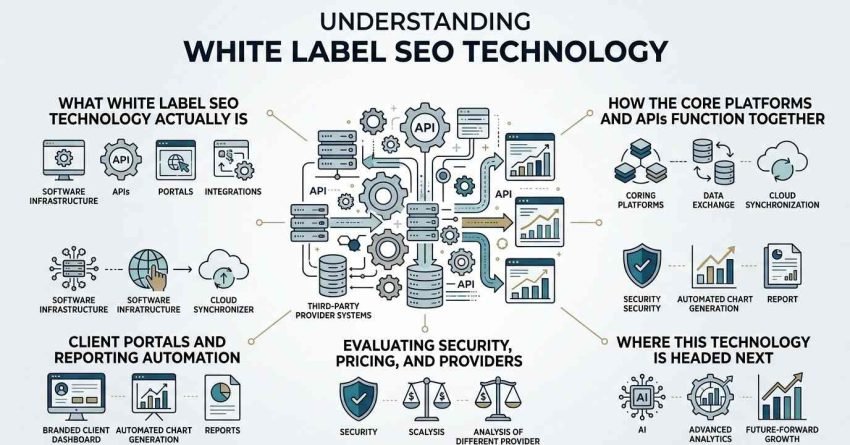
This guide covers what white label SEO technology actually is, how the core platforms and APIs function together, what client portals and reporting automation look like in practice, and how to evaluate security, pricing, and providers before committing. We also touch on where this technology is headed next.
What Is White Label SEO Technology?
White label SEO technology refers to the software systems platforms, APIs, and dashboards that let one company deliver SEO services branded as another company’s own work. I think of it as the invisible engine room behind thousands of agency-client relationships you’d never guess were powered by a shared backend.
Core Components of a White Label SEO Stack
A typical stack includes a rank tracking engine, a site audit tool, a reporting dashboard, and a data pipeline connecting them. These pieces rarely come from one vendor. Most agencies stitch together two or three specialized tools through APIs rather than buying a single all-in-one platform.
Who Uses White Label SEO Technology
Digital marketing agencies, web design firms, and even IT consultancies without in-house SEO expertise use this technology to add search services to their offering. A 2024 Clutch survey found that 68% of small marketing agencies outsource at least one SEO function through a white label partner. That number climbs each year as client demand for SEO outpaces agencies’ hiring capacity.
How White Label SEO Platforms Work Behind the Scenes
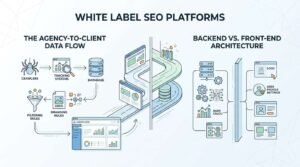
White label SEO platforms work by separating the technology layer from the client-facing brand layer, so the agency’s logo appears everywhere while the provider’s infrastructure does the processing. I always tell new agency partners to picture two parallel tracks running side by side one visible to the client, one invisible.
The Agency-to-Client Data Flow
Data moves from the SEO provider’s crawlers and tracking systems into a database, then gets filtered through branding rules before it reaches the client’s dashboard. Nothing the client sees carries the provider’s name anywhere in the interface. This flow has to happen in near real time, or reports feel stale the moment a client opens them.
Backend vs. Front-End Architecture
The backend handles crawling, data processing, and rank calculations, while the front end handles branding, user permissions, and display logic. Separating these two layers is what makes true white labeling possible instead of just slapping a logo onto someone else’s dashboard. Poorly separated architecture is usually the reason agencies get accidentally exposed to clients a stray mention of the vendor’s name buried in a PDF footer, for example.
White Label SEO APIs Explained
A white label SEO API is a programmatic interface that lets an agency’s own software request data, rankings, audits, and backlinks directly from a provider’s system without a manual export. An API is a set of protocols that allows two software systems to communicate and exchange data automatically. I rely on these constantly when a client wants their SEO data inside a custom dashboard we built ourselves rather than the provider’s default portal.
Common API Integration Types (Rank Tracking, Audit, Reporting)
Rank tracking APIs pull keyword position data on a schedule, usually daily or weekly. Audit APIs return crawl results and technical issue flags. Reporting APIs package all of it into a format ready for a PDF report generator or a live dashboard. Each type serves a distinct purpose, and most platforms expose all three separately rather than bundling them.
REST APIs vs. Webhooks in SEO Platforms
REST APIs require the agency’s system to ask for data on a schedule, while webhooks push data automatically the moment something changes, like a ranking drop. Webhooks are automated messages sent from an app when a specific event occurs. I’ve moved most of our critical rank-drop alerts to webhooks because waiting on a polling schedule meant clients sometimes found out about problems before we did.
White Label Client Portals and Dashboards
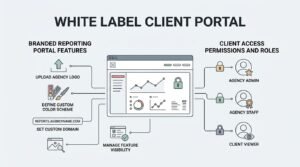
A white label client portal is a branded, password-protected dashboard where end clients log in to view their own SEO performance data under the agency’s name and visual identity. I still remember the first time a client complimented “our” dashboard, not realizing it was built by a provider three states away.
Branded Reporting Portal Features
Most portals let agencies upload their own logo, set custom color schemes, and use a custom domain like reports.agencyname.com instead of the provider’s default URL. Some go further and allow fully custom layouts, hiding any feature the provider added that doesn’t match the agency’s own service offering.
Client Access Permissions and Roles
Portals typically support multiple permission tiers: agency admin, agency staff, and client viewer, so sensitive pricing or vendor data stays hidden from end clients. Setting these permissions correctly the first time avoids the awkward conversation where a client stumbles onto information they were never meant to see.
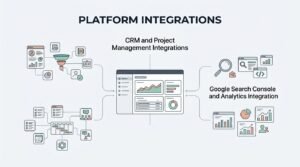
Platform Integrations: Connecting SEO Tools to Your Tech Stack
Platform integrations connect a white label SEO tool to the other software an agency already runs, including CRMs, project management tools, and analytics platforms. Every agency I’ve worked with has a different combination, and forcing them all into one rigid workflow never goes well.
CRM and Project Management Integrations
Integrations with tools like HubSpot or Asana let SEO task updates and client communication flow into systems the account team already checks daily, rather than requiring a separate login just to see if an audit finished. This kind of connection cuts down on the “did anyone see this?” messages that eat up account manager time.
Google Search Console and Analytics Integration
Google Search Console is a free tool that shows how a site performs in Google Search results, including clicks, impressions, and indexing status. Connecting it directly into a white label platform means agencies don’t have to manually export CSVs every month just to build a report. Analytics integration works the same way, pulling traffic and conversion data into the same unified view.
Rank Tracking Technology in White Label Platforms
Rank tracking technology monitors keyword positions across search engines on a recurring schedule and stores historical data so agencies can show clients movement over time. I check rank data almost every morning, and the platforms that update fastest are the ones that keep client trust intact during algorithm volatility.
Most tools track desktop and mobile positions separately, since mobile and desktop rankings differ for the same keyword in over 60% of searches, according to Search Engine Journal’s ranking volatility research. Local rank tracking adds another layer, checking positions from specific geographic coordinates rather than a generic national average.
Automated Site Audit Technology
Automated site audit technology crawls a website on a schedule and flags technical SEO issues like broken links, missing meta tags, slow page speed, and crawl errors without requiring a human to manually check each page. I’ve caught site-breaking issues at 2 a.m. because an automated audit flagged a server error before a client even noticed their site was partially down.
These crawlers typically run weekly or monthly, and the better ones prioritize issues by severity instead of dumping an undifferentiated list of hundreds of flags on a report. Overwhelming a client with unranked technical jargon usually does more harm than showing nothing at all.
White Label Reporting Automation Tools
White label reporting automation tools generate branded PDF or web-based reports on a set schedule, pulling data from rank tracking, audits, and analytics into one client-facing document without manual assembly. This single feature probably saves more agency hours than any other piece of the tech stack.
Custom Report Builder Capabilities
Report builders let agencies choose which metrics appear, reorder sections, and write custom commentary alongside the automated data. The best builders support white labeled charts and graphs that match an agency’s existing brand guide exactly, down to font choices. Some also support scheduled email delivery, so a report lands in a client’s inbox the same day every month without anyone pressing send manually.
Content and Keyword Research Technology
Content and keyword research technology within a white label stack identifies search volume, keyword difficulty, and content gaps to guide what an agency writes for its clients. I lean on this data before a single sentence of client content gets drafted, because guessing at topics wastes writing budget fast.
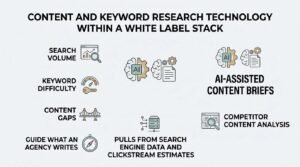
These tools typically pull from search engine data and clickstream estimates to approximate monthly search volume, then layer in competitor content analysis to show where gaps exist. Some platforms extend into AI-assisted content briefs, generating outlines based on what’s already ranking.
Link Building and Backlink Monitoring Platforms
Link building and backlink monitoring platforms track a website’s incoming links, flag toxic or spammy backlinks, and sometimes facilitate outreach for new link acquisition. I check backlink monitoring dashboards weekly because a sudden spike in low-quality links is often the first sign of a negative SEO attack or scraper site.
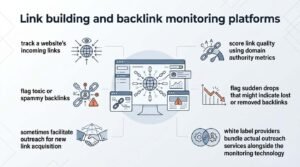
Monitoring platforms typically score link quality using domain authority metrics and flag sudden drops that might indicate lost or removed backlinks. Some white label providers bundle actual outreach services alongside the monitoring technology, though the outreach itself sits outside the software layer.
White Label SEO CRM and Sales Enablement Tools
White label SEO CRM and sales enablement tools help agencies pitch, close, and onboard new SEO clients using pre-built proposal templates, audit-based lead magnets, and pricing calculators branded to the agency. I’ve watched a well-built automated audit tool double as a sales tool just as often as a delivery tool.
These systems typically generate a free branded audit report as a lead magnet, then track the prospect through a sales pipeline once they’ve engaged with it. Some integrate directly with the same rank tracking and audit technology used for existing clients, so the sales and delivery data live in one connected system instead of two disconnected tools.
Data Security and Compliance in White Label SEO Platforms
Data security and compliance in white label SEO platforms covers how client data, login credentials, and website access are encrypted, stored, and governed under relevant privacy regulations. I never sign with a new provider before confirming their security certifications, because a breach on their end becomes my agency’s problem the moment a client finds out.
SOC 2, GDPR, and Data Handling Standards
SOC 2 is an auditing standard that verifies a company securely manages customer data based on five trust principles. Providers serving European clients also need GDPR compliance, which governs how personal data gets collected, stored, and deleted upon request. Agencies working with healthcare or financial clients should confirm additional data handling standards apply, since generic SOC 2 compliance doesn’t automatically cover industry-specific regulations.
How to Evaluate a White Label SEO Technology Provider
Evaluating a white label SEO technology provider means testing their platform’s reliability, checking their data accuracy against known benchmarks, and confirming their contract terms don’t lock you into unfavorable pricing as you scale. I’ve switched providers twice in my career, and both times the warning signs were visible in the contract before the technology ever failed.
Key Questions to Ask Before Integrating
Ask how often rank data refreshes, whether the API has rate limits that could bottleneck a growing agency, and what happens to historical client data if the contract ends. Also ask directly whether the provider’s branding can leak anywhere in the client-facing experience, including email headers and PDF metadata.
Red Flags in White Label Platform Contracts
Watch for long-term lock-in clauses, data export restrictions that make leaving difficult, and vague language around what happens to client history after cancellation. A provider unwilling to let you export your own client data in a standard format is a serious warning sign regardless of how good their dashboard looks.
White Label SEO Technology Pricing Models
White label SEO technology pricing models typically fall into three structures: per-client flat fees, tiered subscription plans based on feature access, and usage-based pricing tied to API call volume or number of tracked keywords. I’ve seen agencies get burned by usage-based pricing when a single client’s keyword list ballooned mid-contract and the bill tripled without warning.
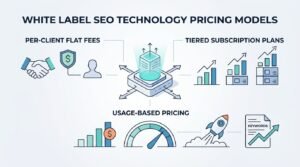
Flat per-client pricing works best for predictable margins, while tiered subscriptions suit agencies still figuring out how many features they actually need. Usage-based models can work well for agencies with very stable, small client rosters, but they punish rapid growth unless the contract includes volume discounts.
Common Challenges When Adopting White Label SEO Technology
Common challenges when adopting white label SEO technology include data migration from an old provider, staff training on unfamiliar dashboards, and unexpected branding leaks during the transition period. I always budget an extra two weeks beyond the provider’s stated onboarding timeline, because something in the migration always takes longer than promised.
Staff resistance is underrated as a challenge too. Account managers who’ve used one platform for years often push back hard against switching, even when the new system is objectively better, simply because relearning workflows costs time they don’t feel they have.
Future Trends in White Label SEO Technology
Future trends in white label SEO technology point toward heavier AI integration, particularly in automated content briefs, predictive ranking models, and AI-generated audit summaries written in plain language for non-technical clients. I expect the reporting layer to change the most over the next two years, since AI can already draft a decent client-facing summary from raw ranking data.
Gartner predicts that by 2026, over 80% of enterprise software will include embedded generative AI features, up from less than 5% in 2020. White label SEO platforms will likely follow that same trajectory, folding AI deeper into audits, content tools, and even automated client communication.
Conclusion
White label SEO technology connects APIs, client portals, and platform integrations into one working system that lets agencies deliver branded SEO at scale.
The cluster of tools covered here rank tracking, reporting, security keeps evolving as AI reshapes automation. Understanding the full stack prepares you for what’s next.
We built White Label SEO Service to help agencies choose, integrate, and scale this exact technology with confidence and clarity.
Frequently Asked Questions
What is white label SEO technology?
White label SEO technology is software APIs, dashboards, and platforms that lets one company deliver branded SEO services while a separate provider handles the backend processing. It typically includes rank tracking, audits, and reporting tools.
How do white label SEO APIs work?
White label SEO APIs let an agency’s software request ranking, audit, or backlink data directly from a provider’s system automatically. This removes the need for manual data exports between platforms.
Is white label SEO software secure?
Security depends entirely on the provider, so agencies should confirm SOC 2 certification and GDPR compliance before signing. Data encryption and access controls vary significantly between platforms.
What is a white label SEO client portal?
A white label client portal is a branded dashboard where end clients view their SEO performance under the agency’s own name and visual identity. It hides all references to the underlying technology provider.
How much does white label SEO technology cost?
Pricing typically follows flat per-client fees, tiered subscriptions, or usage-based models tied to API calls or keyword volume. Costs vary widely based on feature depth and client volume.
Can white label SEO platforms integrate with my existing tools?
Most modern platforms integrate with CRMs, project management tools, and analytics platforms like Google Search Console. Integration depth depends on the provider’s available API endpoints.
What should I look for in a white label SEO technology provider?
Look for reliable data refresh rates, transparent contract terms, and strong security certifications like SOC 2. Also confirm the provider allows full data export if you decide to switch platforms later.