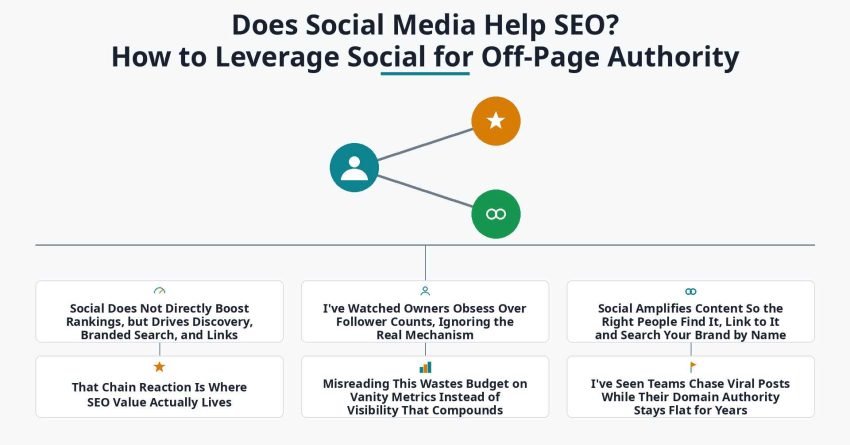
Social media does not directly boost Google rankings, but it drives the discovery, branded search, and link-earning behavior that shapes off-page authority over time. I’ve watched business owners obsess over follower counts while ignoring the real mechanism. Social amplifies content so the right people find it, link to it, and search for your brand by name. That chain reaction is where SEO value actually lives.
Misreading this connection wastes budget on vanity metrics instead of visibility that compounds. I’ve seen teams chase viral posts while their domain authority stays flat for years straight.
This guide covers whether social counts as a ranking factor and how it works indirectly instead, how social ties into E-E-A-T and off-page authority building, which platforms carry real weight and how to measure the impact, and how to fold all of it into a broader content and SEO strategy without the common mistakes that waste effort.
Does Social Media Directly Affect Google Rankings?
Social media posts and shares are not a direct Google ranking factor. Google’s own search liaison has repeatedly confirmed that social signals like likes, shares, and follower counts play no role in the core ranking algorithm.
I get asked this constantly by clients who assume a viral LinkedIn post should move the needle on page one. It doesn’t, at least not directly, and anyone selling “social SEO” as a ranking hack is selling a myth.
Do Social Signals Count as a Ranking Factor?
Social signals are not a ranking factor in the traditional sense Google uses for backlinks or content relevance. Google’s Search Central documentation never lists social engagement among the signals its algorithm evaluates directly.
I still track social activity for every client, just not as a ranking input. It matters for a different reason entirely, which is where the real opportunity sits.
How Social Media Indirectly Influences SEO Performance
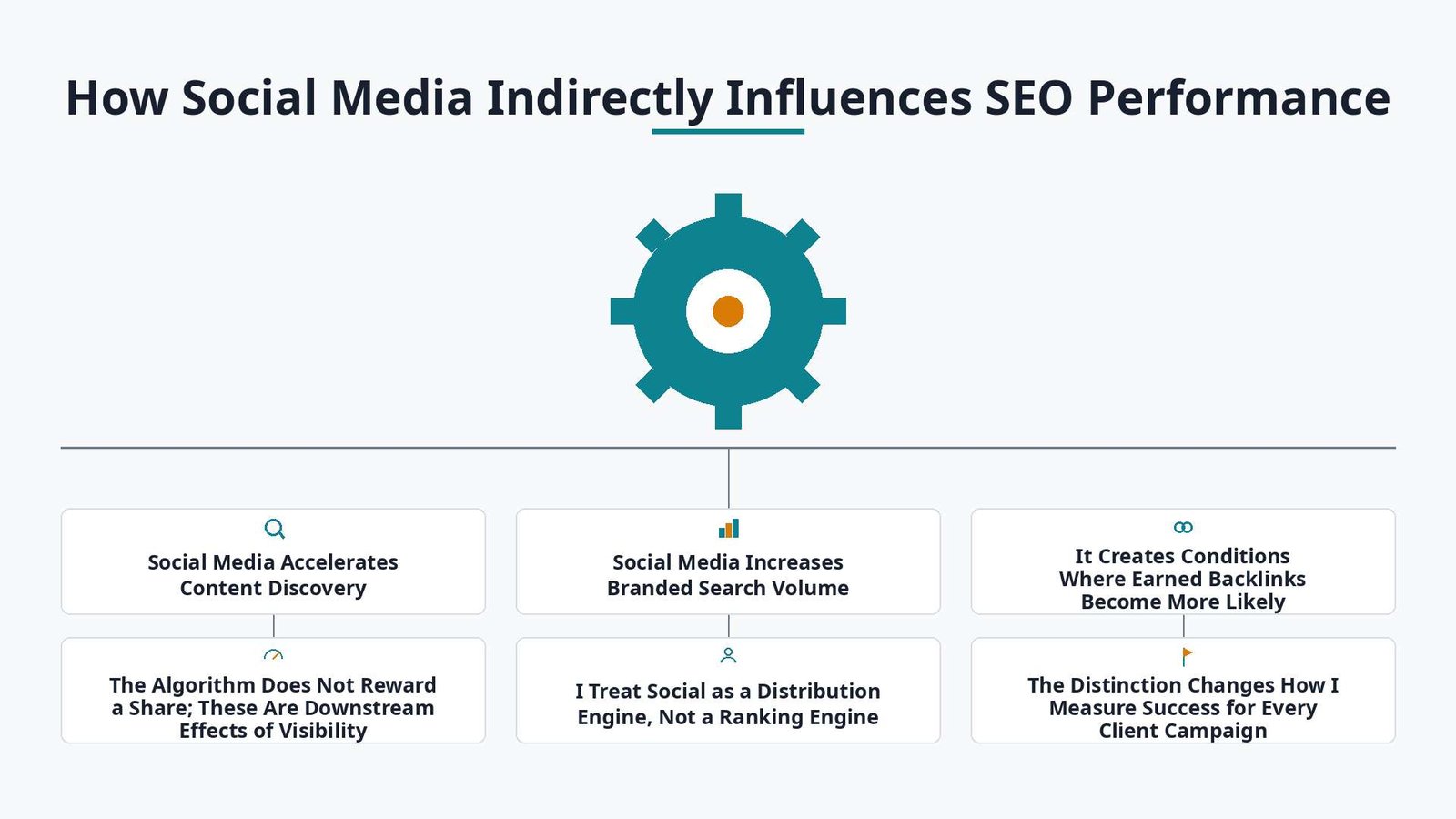
Social media influences SEO indirectly by accelerating content discovery, increasing branded search volume, and creating conditions where earned backlinks become more likely. None of these are the algorithm rewarding a share. They’re downstream effects of visibility.
I treat social as a distribution engine, not a ranking engine. The distinction changes how I measure success for every client campaign I run.
Content Discovery and Faster Indexing
New content shared widely on social platforms gets crawled and indexed faster in many cases, since bots and users both discover URLs through social links. I’ve watched pages get indexed within hours of a strong LinkedIn push versus days when a post sits quietly on a blog.
Faster indexing doesn’t guarantee ranking, but it shortens the feedback loop. That alone makes social worth the effort for time-sensitive content.
Brand Search Volume and Branded Queries
Branded search volume is a documented signal that search engines associate with authority and trust, since an increase in people searching your company name directly suggests real-world recognition. An Ahrefs study of branded search patterns found that branded query growth often precedes organic ranking improvements for competitive terms.
I’ve seen this play out directly. A client ran a six-month social campaign, branded searches doubled, and non-branded rankings improved three months later without any new backlinks.
Social Media and the E-E-A-T Framework
Social media profiles help reinforce the Experience, Expertise, Authoritativeness, and Trust signals that Google’s quality raters and algorithms increasingly weigh for E-E-A-T. An active, verifiable presence tells both humans and machines that a real entity stands behind the content.
I build out social profiles for every client specifically because Google’s own quality rater guidelines reference reputation signals found off the primary website.
Building Experience and Expertise Signals Publicly
Public social activity demonstrates experience in a way a static website bio cannot, since ongoing posts, commentary, and engagement show a real person actively working in the field. I push clients to post process, not just polish, because raters and readers both respond to visible expertise over time.
Author and Brand Entity Verification
Author entity verification is the process by which search engines connect a named individual to consistent credentials across multiple platforms, including social profiles, bylines, and professional directories. Consistent naming, photos, and bios across platforms make this verification easier for Google to establish.
I run entity audits for every new client, checking whether their founder’s name resolves consistently across LinkedIn, the company site, and any press mentions. Gaps here cost authority that’s easy to fix.
Social Media’s Role in Off-Page Authority Building
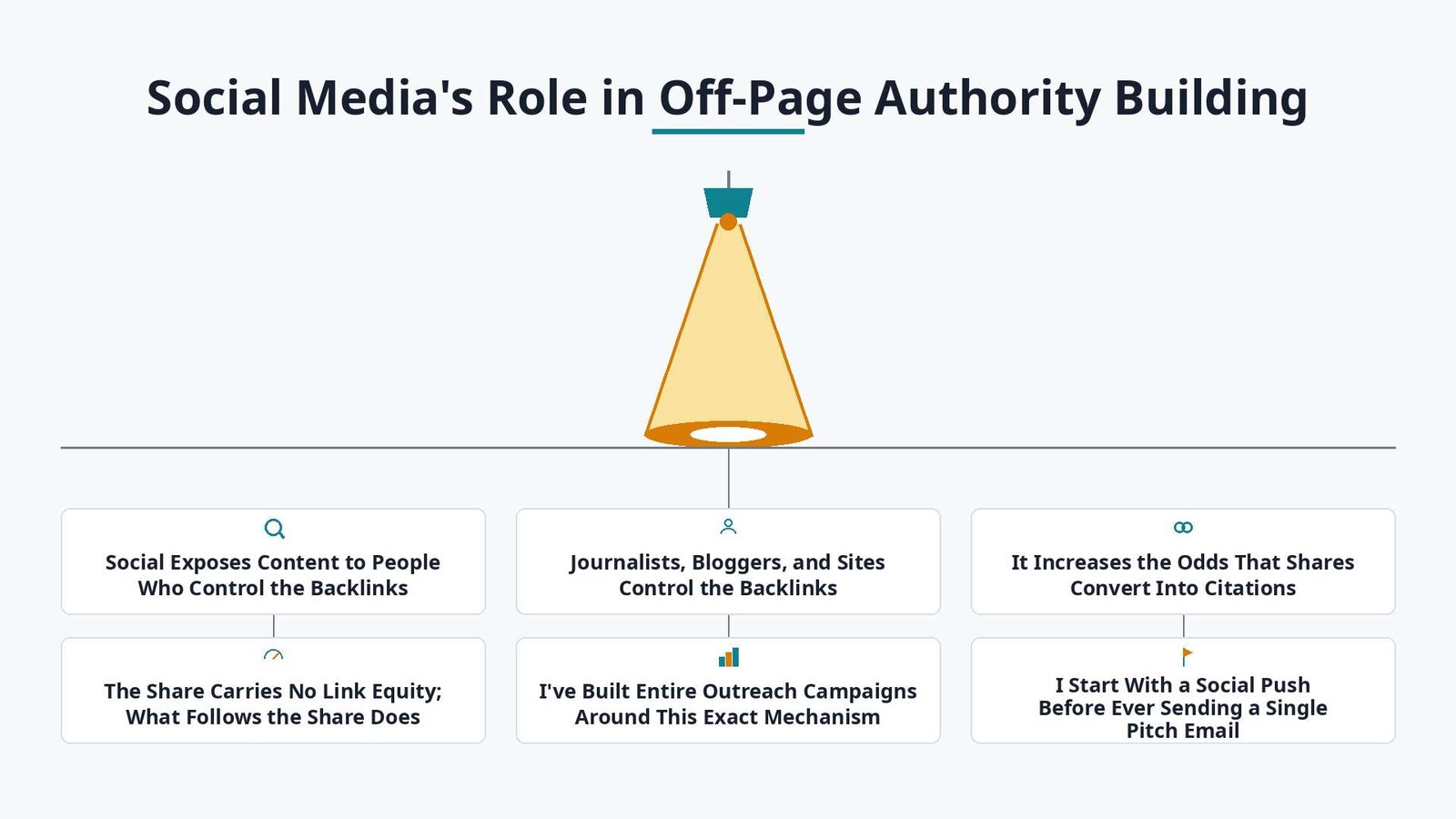
Social media supports off-page authority indirectly by exposing content to people who control backlinks, journalists, bloggers, and industry sites, increasing the odds that shares convert into citations. The share itself carries no link equity. What happens after the share does.
I’ve built entire outreach campaigns around this exact mechanism, starting with a social push before ever sending a single pitch email.
Social Shares vs. Backlinks — What Actually Counts
| Factor | Social Share | Backlink |
| Passes direct ranking value | No | Yes |
| Counted by Google’s algorithm | No | Yes |
| Drives content discovery | Yes | Yes |
| Builds branded search volume | Yes | Indirectly |
| Requires editorial placement | No | Often yes |
This table makes the distinction clear for anyone comparing the two as if they’re interchangeable currencies. They’re not, and treating them the same way misallocates effort.
How Social Amplification Earns Natural Links
Social amplification earns natural links when visibility reaches someone with the authority and platform to cite the content, which is why I target niche communities over broad reach. A thousand likes from the wrong audience produces nothing; fifty shares in the right Slack group or subreddit can produce three editorial links.
The Link Between Social Engagement and Content Virality
Content virality on social platforms increases the surface area for link discovery by exposing a piece to far more potential linkers than organic search alone would reach in the same timeframe. I’ve had single viral threads generate more referring domains in a week than three months of cold outreach.
Virality isn’t the goal by itself though. Reach without the right audience just inflates vanity metrics while authority stays flat.
Social Media’s Impact on Local SEO and Google Business Profile
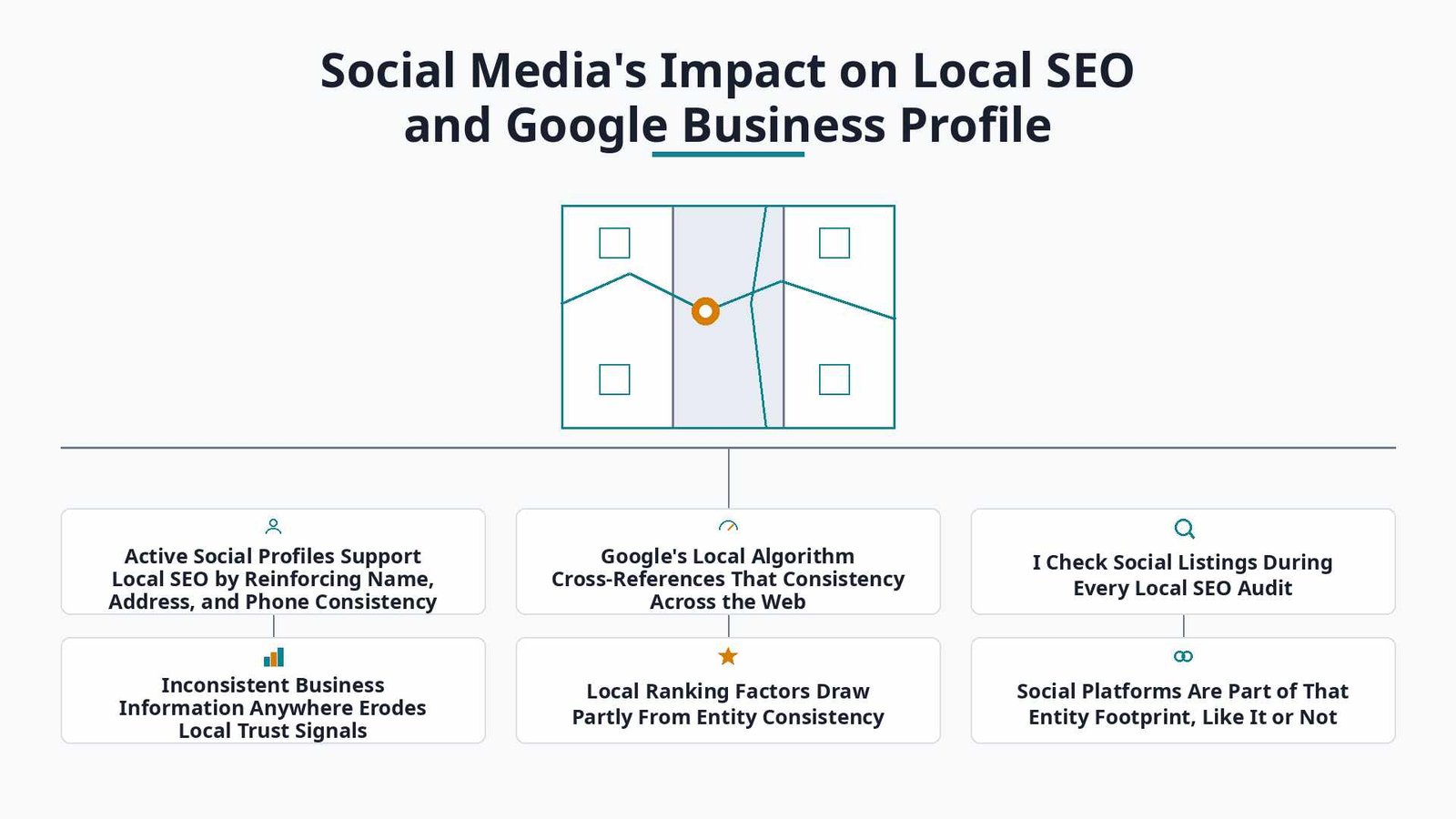
Active social profiles support local SEO by reinforcing the same name, address, and phone consistency that Google’s local algorithm cross-references across the web. I check social listings during every local SEO audit because inconsistent business information anywhere erodes local trust signals.
Google’s local ranking factors draw partly from entity consistency, and social platforms are part of that entity footprint whether a business treats them that way or not.
How Social Profiles Strengthen Knowledge Panels and Brand Entities
A knowledge panel is a Google-generated information box that compiles verified facts about an entity, pulling partly from structured data and partly from consistent cross-platform presence including social profiles. I’ve watched knowledge panels populate correctly only after a brand cleaned up conflicting information across its social accounts.
Entity reinforcement through social profiles strengthens how confidently Google associates a brand name with its actual business, which matters more as AI-driven search results lean harder on verified entities.
Which Social Platforms Matter Most for SEO in 2026
LinkedIn, YouTube, and Reddit carry the most indirect SEO weight in 2026, each supporting a different stage of discovery, authority, and branded search. Not every platform deserves equal investment, and spreading effort evenly across all of them dilutes the specific benefit each one provides.
LinkedIn, X, and Professional Authority Signals
LinkedIn strengthens B2B authority signals through visible thought leadership, employee advocacy, and executive presence that search engines associate with the underlying brand entity. I prioritize LinkedIn first for any B2B client because decision-makers and journalists both live there.
YouTube as a Search Engine in Its Own Right
YouTube functions as a search engine in its own right, since Google owns the platform and surfaces video results directly inside standard search queries for many informational searches. A well-optimized video can rank in traditional search results and inside YouTube’s own search simultaneously, doubling the discovery surface for the same content investment.
Reddit, Forums, and the Rise of Community-Driven Visibility
Reddit threads increasingly surface directly inside Google’s search results, a shift that accelerated after Google’s 2024 data licensing deal with Reddit gave the platform’s content new visibility in search. I now treat Reddit as a legitimate discovery channel rather than an afterthought community for every client in a consumer-facing niche.
How to Measure Social Media’s Impact on SEO Performance
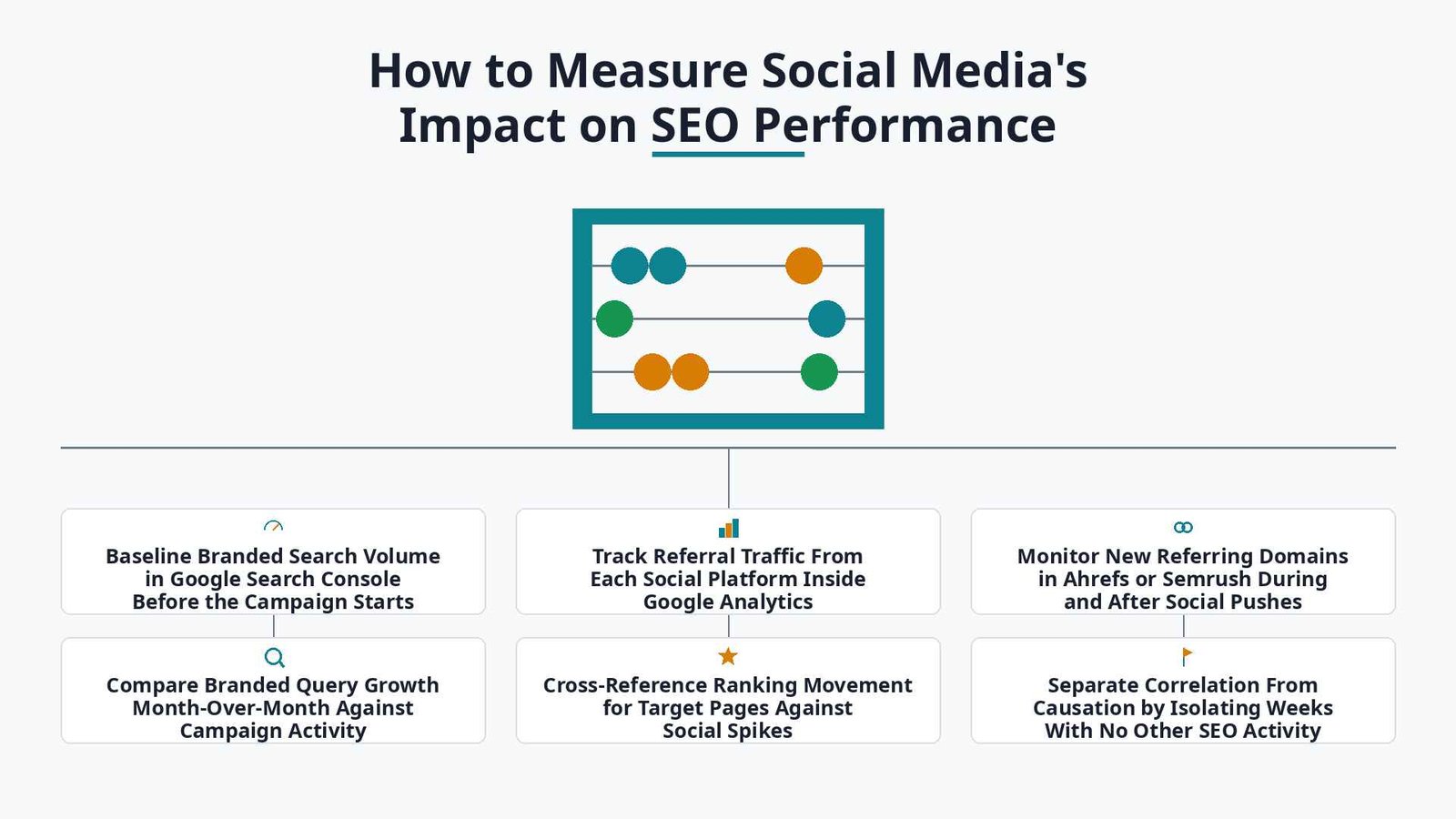
Measuring social media’s SEO impact requires tracking branded search volume, referral traffic to key pages, and new referring domains that originate after social campaigns, rather than tracking likes or shares directly. Vanity metrics feel good but tell you nothing about authority.
I pull these numbers through a consistent process for every client:
- Baseline branded search volume in Google Search Console before the campaign starts
- Track referral traffic from each social platform inside Google Analytics
- Monitor new referring domains in Ahrefs or Semrush during and after social pushes
- Compare branded query growth month-over-month against campaign activity
- Cross-reference ranking movement for target pages against social spikes
- Separate correlation from causation by isolating weeks with no other SEO activity
This process takes discipline, but guessing at social ROI wastes budget faster than almost anything else I see in SEO programs.
Social Media Content Strategies That Support SEO Goals
The most effective social strategies for SEO repurpose existing pillar and cluster content rather than creating disconnected social-only posts that live and die on one platform. Every piece of long-form content I write gets broken into five to ten social assets before it ever gets forgotten.
Repurposing Pillar and Cluster Content for Social
Repurposing turns one comprehensive guide into a dozen social touchpoints, each pointing a different audience segment back toward the same core asset. I build this into every content calendar now, because writing once and distributing many times beats constant original social creation.
Social-First Content That Earns Backlinks
Original data, surveys, and proprietary research designed first for social sharing often earn backlinks precisely because they give journalists and bloggers something citable that didn’t exist before. I run small proprietary surveys for clients specifically because a single stat-driven post can out-earn months of generic content.
Common Mistakes When Trying to Use Social Media for SEO
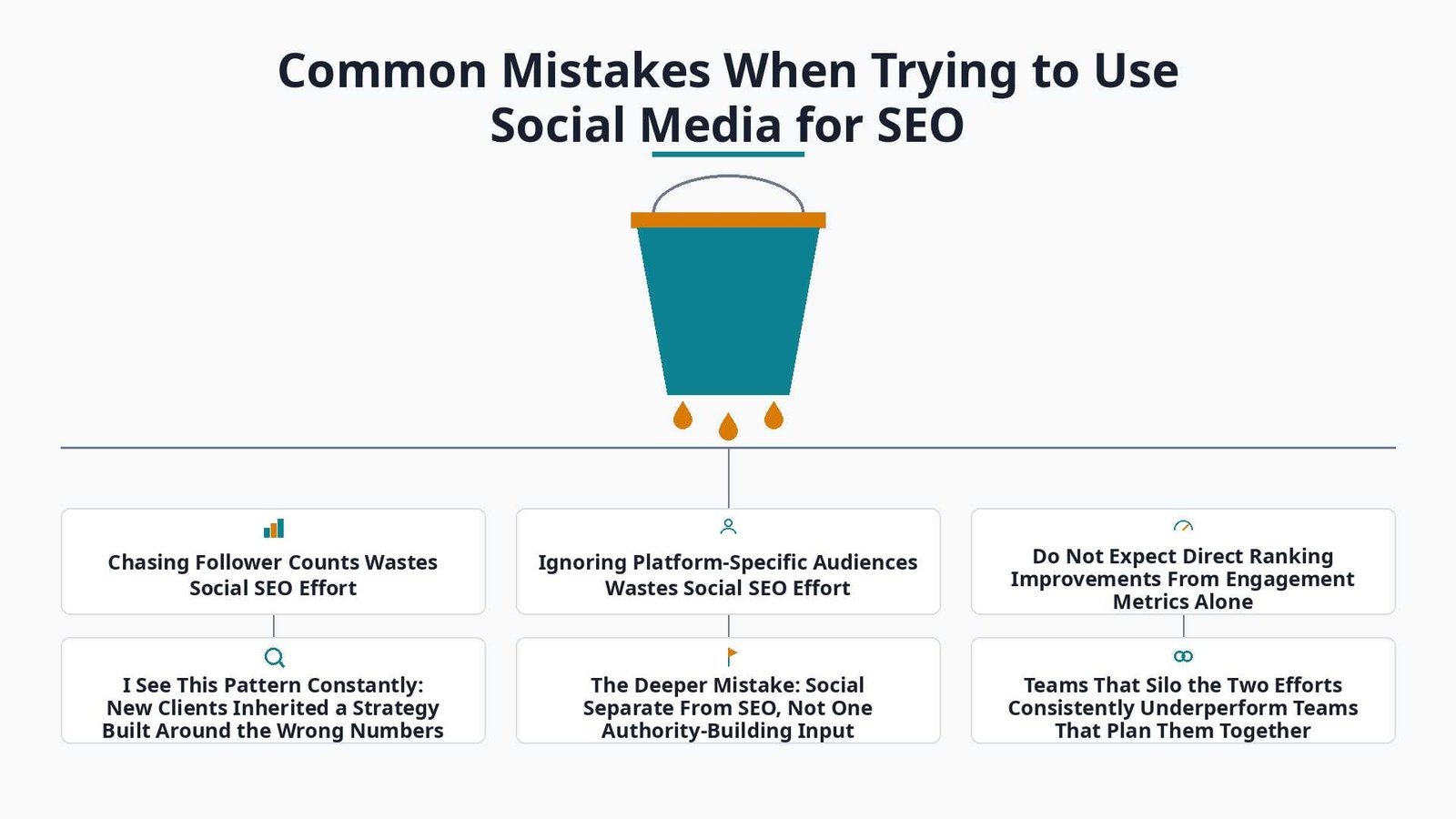
Businesses most often waste social SEO effort by chasing follower counts, ignoring platform-specific audiences, and expecting direct ranking improvements from engagement metrics alone. I see this pattern constantly with new clients who inherited a social strategy built around the wrong numbers entirely.
The deeper mistake is treating social as separate from SEO rather than as one input into the same authority-building system. Teams that silo the two efforts consistently underperform teams that plan them together from the start.
Integrating Social Media Into a Broader SEO and Content Strategy
Integration works best when social, content, and link building share the same editorial calendar and the same target keywords from the start of planning. I build campaigns this way for every client now, mapping social pushes directly against publish dates for pillar and cluster content.
This alignment means a single piece of content does triple duty: it targets a keyword, it feeds a social campaign, and it becomes outreach material for link building simultaneously.
Does Social Media Matter More for Certain Industries or Business Types?
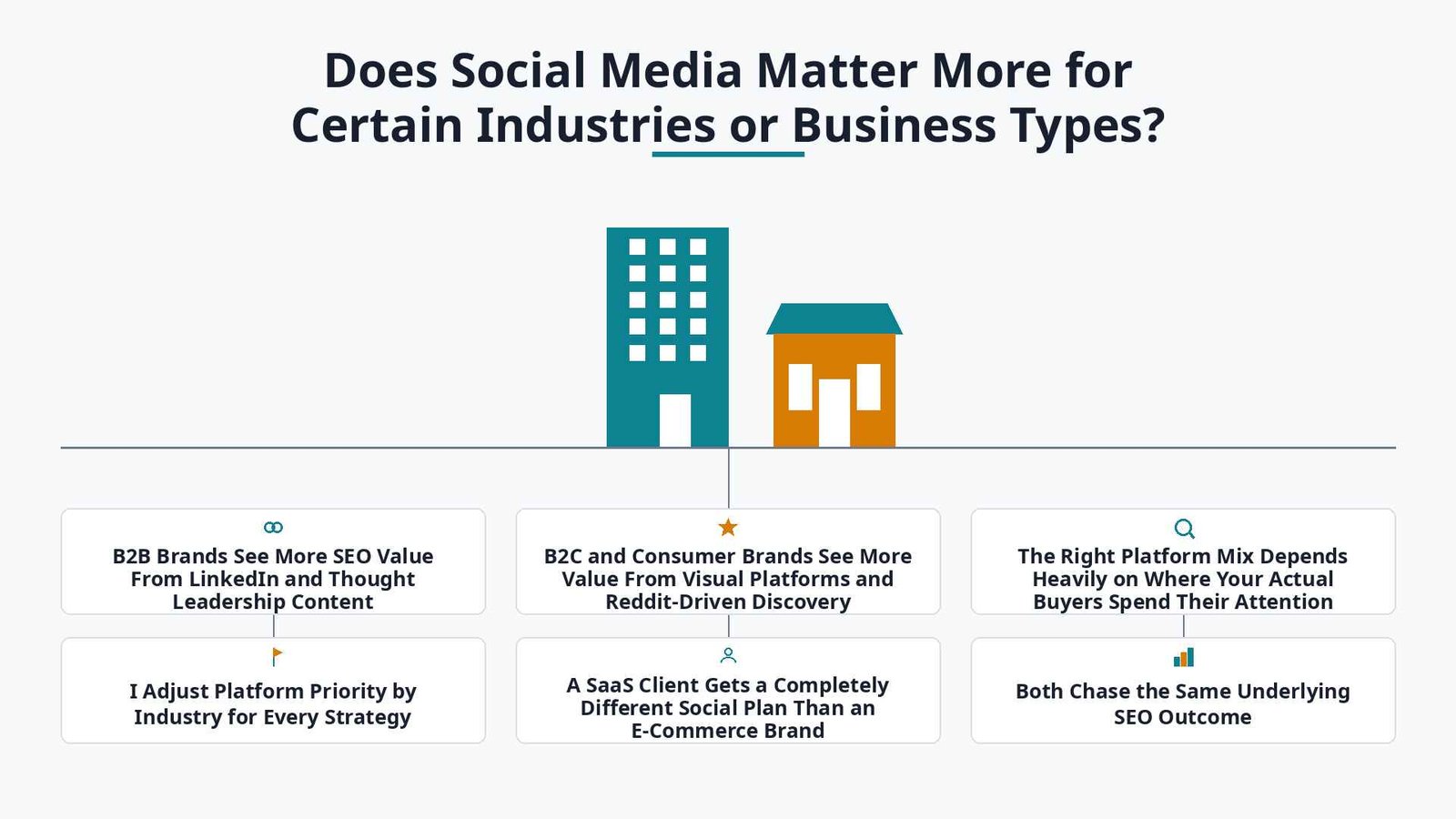
B2B brands generally see more SEO value from LinkedIn and thought leadership content, while B2C and consumer brands see more value from visual platforms and Reddit-driven discovery. The right platform mix depends heavily on where your actual buyers spend their attention.
I adjust platform priority by industry in every strategy I build. A SaaS client gets a completely different social plan than an e-commerce brand, even though both are chasing the same underlying SEO outcome.
Conclusion
Social media doesn’t rank pages directly, but it fuels the discovery, branded search, and link-earning cycle that builds real off-page authority. Understanding that distinction changes how you measure success.
The deeper opportunity sits in connecting social, content, and link building into one coordinated system rather than three separate efforts competing for the same budget.
We build that integrated approach for clients every day. Reach out to White Label SEO Service and let’s turn your social presence into measurable organic growth.
Frequently Asked Questions
Does posting on social media improve my Google rankings?
Posting alone does not improve rankings directly, since Google has confirmed social signals aren’t part of its ranking algorithm. The indirect benefit comes from faster content discovery and increased branded search activity.
Can social media backlinks pass SEO value?
Most links from social platforms are “nofollow” and don’t pass direct ranking value the way editorial backlinks do. Their value comes from exposing content to people who might link to it elsewhere.
Does Google index social media profiles and posts?
Google indexes many public social media profiles and some posts, making them appear in search results for branded queries. This supports entity recognition rather than direct ranking power.
How long does it take for social signals to influence SEO?
Indirect effects like branded search growth typically take three to six months of consistent activity to show measurable movement. Results depend heavily on platform choice and content quality.
Is LinkedIn or X better for SEO authority building?
LinkedIn generally performs better for B2B authority building due to its professional audience and thought leadership format. X works better for real-time visibility and journalist outreach in fast-moving industries.
Do social shares count the same as backlinks?
Social shares and backlinks are fundamentally different; shares carry no direct ranking value while backlinks do. Shares can lead to backlinks indirectly by increasing content visibility.
Should small businesses prioritize social media or link building first?
Small businesses typically benefit more from prioritizing link building first since it carries direct ranking value. Social media works best as a supporting channel that increases the odds of earning those links.