
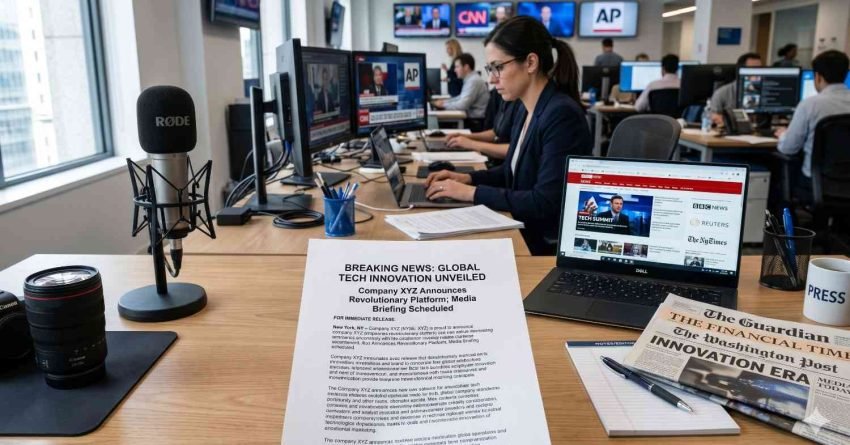
A press release is an official written statement issued by a business, organization, or individual to inform journalists, editors, and media outlets about a newsworthy event, announcement, or development. It is the primary tool of public relations, designed to generate earned media coverage rather than paid advertising. For business owners and marketers, understanding how press releases work is a foundational skill that connects your brand to journalists, publications, and audiences you cannot reach through owned channels alone.
Ignoring press releases means leaving earned media coverage, brand authority, and organic visibility on the table — opportunities your competitors are actively capturing through strategic announcements.
This guide covers what a press release is, why it still matters in 2025, the main types, the standard format, how to write one, how to distribute it, real examples, common mistakes, and how press releases fit into your broader SEO strategy.

What Is a Press Release?
A press release is a short, formally structured document written in journalistic style that announces something newsworthy about a business or organization. It is addressed to journalists and editors, not to consumers, and its purpose is to give media professionals the information they need to decide whether to cover the story and to write about it accurately.
The term “press release” comes from the practice of releasing information to the press — the collective term for newspapers, magazines, broadcast media, and, today, online publications and digital news outlets. A press release is also called a news release, media release, or press statement, though each term carries slightly different connotations depending on context and industry.
The Official Definition of a Press Release
A press release is a written communication directed at members of the news media for the purpose of announcing something newsworthy. It follows a standardized format that includes a headline, a dateline, a lead paragraph answering the Five Ws (who, what, when, where, and why), supporting body paragraphs, a company boilerplate, and media contact information.
The key distinction between a press release and other forms of business communication is its intended audience and its objective. A press release is not a marketing brochure, a blog post, or an advertisement. It is a journalistic document written to inform, not to sell.
Press Release vs. News Article: What Is the Difference?
A press release is written by the company or organization making the announcement. A news article is written by a journalist, often using the press release as a source. The press release provides the raw information; the journalist decides whether to cover it, how to frame it, and what additional sources to include.
This distinction matters because it shapes how you write a press release. You are not writing the final story. You are giving a journalist everything they need to write it themselves.
Who Writes a Press Release?
Press releases are written by public relations professionals, communications managers, marketing teams, or business owners themselves. In larger organizations, a dedicated PR team or external PR agency handles press release writing and distribution. In small businesses and startups, the founder or marketing manager often writes and distributes releases directly.
A press release only earns media coverage when it meets specific editorial standards — our guide to what makes a press release effective <!–NEW PAGE NEEDED–> breaks down every quality signal journalists look for, from headline strength to quote credibility, so you can write announcements that actually get picked up.
Why Press Releases Still Matter for Businesses in 2025
The rise of social media and content marketing has led some marketers to question whether press releases are still relevant. The answer is yes — but the role of the press release has evolved. Today, a well-distributed press release serves multiple strategic functions simultaneously: it generates earned media coverage, builds brand credibility, supports digital PR campaigns, and contributes to organic search visibility.
Press Releases and Brand Visibility
When a journalist covers your announcement in a publication, your brand reaches an audience that trusts that publication’s editorial judgment. This is earned media — coverage you did not pay for and that carries significantly more credibility than advertising. According to Nielsen’s Trust in Advertising report, 92% of consumers trust earned media more than any form of paid advertising, making media coverage one of the highest-value brand visibility channels available.
Press Releases and SEO: Do They Still Help Rankings?
Press releases contribute to SEO in two primary ways. First, when a publication covers your announcement and links back to your website, that backlink transfers authority and improves your domain’s search visibility. Second, press releases distributed through online wire services create brand mentions and citation signals that reinforce your entity’s presence in Google’s knowledge graph.
It is important to note that press releases distributed solely through wire services without genuine media pickup have limited direct SEO value. The real SEO benefit comes from earned coverage — when authoritative publications write about your announcement and link to your site.
Press Releases and Media Coverage
A single well-timed press release can generate coverage across multiple publications simultaneously, creating a compounding visibility effect that no single piece of owned content can replicate. For product launches, funding announcements, and major company milestones, press releases remain the most efficient mechanism for reaching journalists at scale.
Press releases contribute to organic visibility in ways that go well beyond a single news cycle — our dedicated resource on press release benefits for SEO <!–NEW PAGE NEEDED–> covers how strategic announcements generate backlinks, brand mentions, and authority signals that compound over time.
The Main Types of Press Releases
Not all press releases are the same. Different business announcements require different press release formats, each with its own structural conventions, tone, and distribution strategy. Understanding which type of press release applies to your situation is the first step toward writing one that journalists will take seriously.
Product Launch Press Releases
A product launch press release announces the availability of a new product or service. It leads with the product’s name, what it does, who it is for, and when it is available. The most effective product launch releases focus on the problem the product solves rather than its features, framing the announcement in terms of audience benefit.
Event Announcement Press Releases
An event announcement press release promotes an upcoming event — a conference, webinar, trade show appearance, or community initiative. It includes the event name, date, location (physical or virtual), registration details, and key speakers or highlights. Timing is critical: event press releases should be distributed four to six weeks before the event date to give journalists time to cover it in advance.
Company Milestone and Award Press Releases
Milestone press releases announce significant achievements: a funding round, a major client win, an industry award, a company anniversary, or a leadership appointment. These releases build credibility and reinforce brand authority. The news angle is the achievement itself, and the release should contextualize why the milestone matters to the industry or audience.
Crisis Communication Press Releases
A crisis communication press release is issued when a business needs to respond publicly to a negative event — a product recall, a data breach, a legal matter, or a public controversy. These releases prioritize transparency, accountability, and a clear statement of the steps being taken to address the situation. Speed and tone are critical in crisis communications.
Each announcement category follows different conventions, triggers different journalist responses, and serves a different business goal — our complete breakdown of types of press releases <!–NEW PAGE NEEDED–> covers every format in detail, with structural guidance and real-world examples for each.
The Standard Press Release Format and Structure
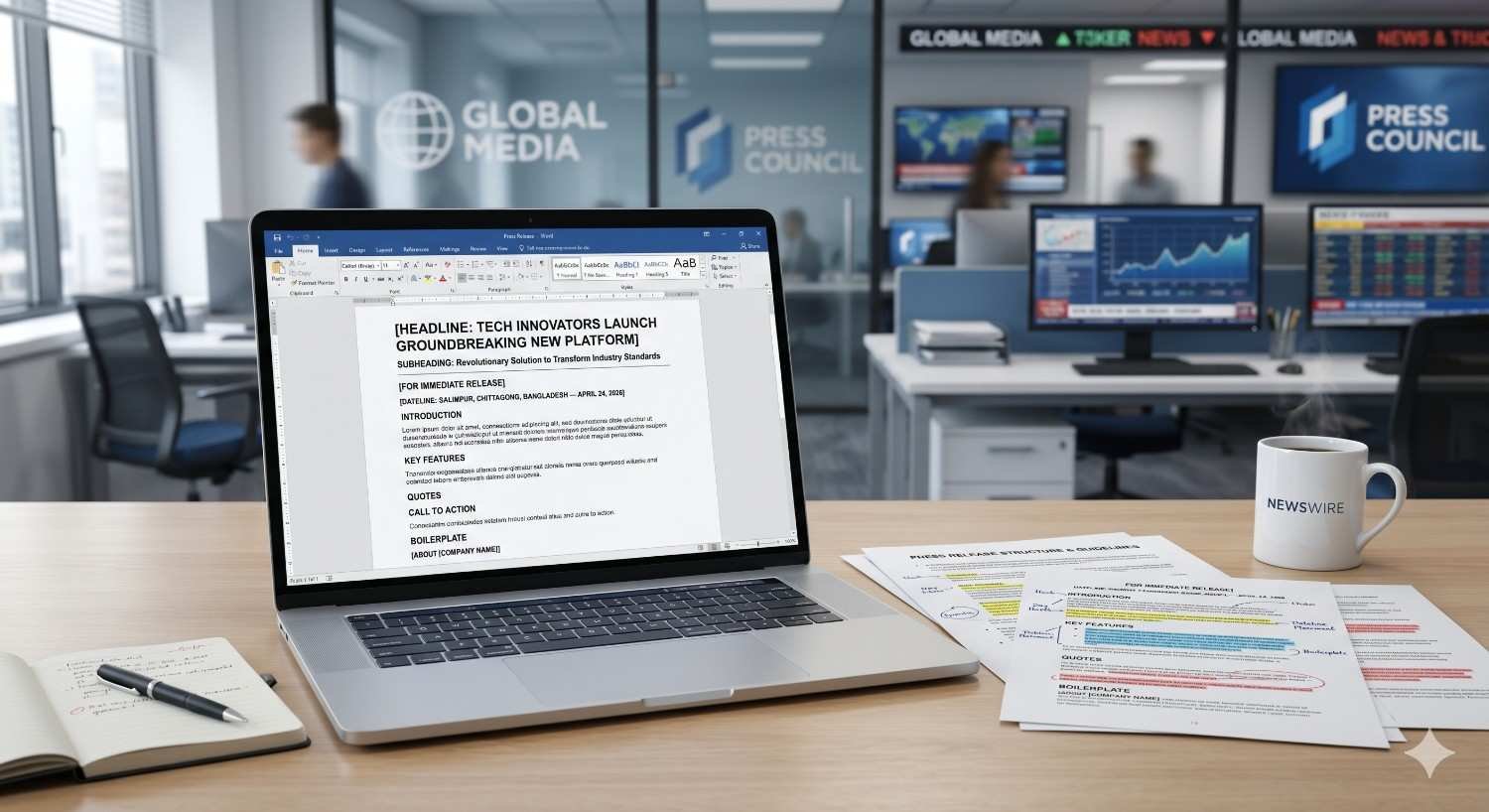
A press release follows a precise structural format that journalists recognize immediately. Deviating from this format signals inexperience and reduces the likelihood of coverage. Every element serves a specific purpose, and understanding each one is essential before you write your first release.
The Headline
The headline is the single most important element of a press release. It must communicate the news in one concise, compelling sentence — typically 10 words or fewer. A strong press release headline answers the core question: “What happened?” It avoids promotional language, superlatives, and vague claims. Journalists decide within seconds whether to read further based on the headline alone.
The Dateline and Lead Paragraph
The dateline appears at the beginning of the first paragraph and includes the city of origin and the date of release. The lead paragraph — the first paragraph of the body — must answer all Five Ws: who, what, when, where, and why. It is the most information-dense paragraph in the release and must stand alone as a complete summary of the announcement.
The Body Paragraphs
The body of a press release expands on the lead paragraph using the inverted pyramid structure: the most important information appears first, followed by supporting details, context, and background. Body paragraphs typically include a direct quote from a company spokesperson or executive, which gives journalists a ready-to-use attributed statement and adds a human voice to the announcement.
The Boilerplate
The boilerplate is a standardized paragraph at the end of the press release that describes the company — who you are, what you do, and where you operate. It appears after the body copy and before the media contact information, separated by the label “About [Company Name].” The boilerplate is reused across all press releases and updated periodically as the company evolves.
The Media Contact Information
The final element of a press release is the media contact block, which provides journalists with the name, title, phone number, and email address of the person they should contact for more information or to arrange an interview. This information must be accurate and monitored — a journalist who cannot reach your contact will move on to the next story.
Every element of a press release follows a precise structural convention that journalists expect to see — our press release format and structure guide <!–NEW PAGE NEEDED–> walks through each component with annotated examples so you can build a correctly formatted release from scratch.
How to Write a Press Release: The Core Principles
Writing a press release is a distinct skill that differs from marketing copywriting, blog writing, and advertising. The goal is not to persuade — it is to inform. A press release written in promotional language will be ignored by journalists, regardless of how significant the underlying news is.
The Inverted Pyramid Writing Style
The inverted pyramid is the foundational structure of journalistic writing. It places the most important information at the top of the document and progressively less critical details toward the bottom. This structure serves two purposes: it allows a journalist to understand the full story from the first paragraph alone, and it allows editors to cut the release from the bottom without losing essential information.
For press releases, the inverted pyramid means your lead paragraph must contain the complete story. Every subsequent paragraph adds context, detail, and supporting information — but the announcement must be fully communicated in the opening.
The Five Ws of Press Release Writing
Every press release lead paragraph must answer five questions:
- Who is making the announcement?
- What is being announced?
- When is it happening or when did it happen?
- Where is it taking place?
- Why does it matter?
A lead paragraph that fails to answer all five questions forces the journalist to search for basic information — and most will not bother.
What Makes a Press Release Newsworthy?
Newsworthiness is the quality that separates a press release from a marketing announcement. Journalists evaluate press releases against editorial criteria: Is this new? Is it significant? Does it affect a meaningful audience? Is it timely? Is there a human angle?
Common newsworthiness triggers include: a first-of-its-kind product or service, a significant funding milestone, a partnership with a recognized brand, a response to a current industry trend, or a measurable impact on a community or industry. If your announcement does not meet at least one of these criteria, it is unlikely to generate media coverage regardless of how well it is written.
Writing a press release that earns coverage requires more than filling in a template — it demands a clear news angle, journalistic objectivity, and a structure that puts the most important information first — our step-by-step guide on how to write a press release <!–NEW PAGE NEEDED–> covers every stage of the drafting process, from identifying your news hook to polishing your final quote.
How to Distribute a Press Release
Writing a strong press release is only half the work. Distribution determines whether your announcement reaches the journalists and publications most likely to cover it. There are three primary distribution channels, each suited to different goals and budgets.
Press Release Distribution Services
Wire services — also called press release distribution services — syndicate your release to a network of journalists, newsrooms, and online publications simultaneously. Major wire services include PR Newswire, Business Wire, and GlobeNewswire. These services offer broad reach and are particularly effective for announcements targeting national or international media. Costs range from a few hundred dollars for a basic distribution to several thousand for premium placement and targeted industry verticals.
Pitching Directly to Journalists and Editors
Direct pitching involves identifying specific journalists who cover your industry and sending them a personalized email with your press release attached or embedded. This approach is more time-intensive than wire distribution but often more effective for securing meaningful coverage, because it allows you to tailor your pitch to the journalist’s specific beat and recent work. A targeted pitch to 20 relevant journalists will typically outperform a wire distribution to 2,000 generic contacts.
Online Press Release Distribution for SEO
Several platforms specialize in online press release distribution for digital visibility rather than traditional media pickup. These services publish your release on their own platforms and syndicate it to partner sites, creating online citations and brand mentions. While these do not replace traditional media coverage, they contribute to your brand’s digital footprint and can support local SEO and entity-building strategies.
Getting your press release in front of the right journalists and publications requires a deliberate distribution strategy — our guide to press release distribution strategies <!–NEW PAGE NEEDED–> covers wire services, direct media pitching, and online distribution channels, with guidance on when to use each approach.
Press Release Examples: What Good Looks Like
Reading real press releases is one of the most effective ways to internalize the format, tone, and structure that journalists expect. The following orientation-level examples illustrate how the core principles apply in practice.
Example of a Product Launch Press Release
A product launch press release for a SaaS company might open with: “Acme Analytics today launched DataPulse, a real-time business intelligence platform that enables small businesses to track revenue, customer acquisition, and operational costs from a single dashboard.” The lead answers all Five Ws, uses plain language, and leads with the product’s benefit rather than its features. The body would follow with a spokesperson quote, key product details, pricing, and availability, closing with the company boilerplate and media contact.
Example of a Company Milestone Press Release
A milestone press release for a startup that has reached 10,000 customers might open with: “CloudBridge, the cloud infrastructure management platform, today announced it has surpassed 10,000 active customers across 42 countries, marking a 300% year-over-year growth milestone.” The lead quantifies the achievement, contextualizes its scale, and immediately establishes newsworthiness through specific numbers.
Seeing a correctly structured press release in context is one of the fastest ways to understand what works — our library of press release examples and templates <!–NEW PAGE NEEDED–> includes annotated samples across every major announcement type, ready to adapt for your own business.

Common Press Release Mistakes to Avoid
Even experienced marketers make predictable errors when writing press releases. These mistakes reduce the likelihood of media pickup and can damage your credibility with journalists over time.
Writing Without a Clear News Angle
The most common press release mistake is announcing something that is not genuinely newsworthy. Launching a new website, hiring a new employee, or updating your pricing are not press release-worthy events for most businesses. Before writing a release, ask: “Would a journalist at a relevant publication consider this worth covering for their readers?” If the honest answer is no, the announcement is better suited to a blog post or social media update.
Ignoring the Journalist’s Perspective
A press release written from the company’s perspective — focused on what the company wants to say rather than what the journalist’s audience wants to read — will be ignored. Journalists are not interested in your company’s internal milestones unless those milestones have a clear impact on their readers. Frame every announcement in terms of its significance to the audience, not its significance to you.
Poor Formatting and Structure
Sending a press release that does not follow the standard format — missing a dateline, burying the news in the third paragraph, omitting the boilerplate, or failing to include media contact information — signals to journalists that the sender is unfamiliar with PR conventions. Journalists receive hundreds of releases per week; a poorly formatted release is deleted without being read.
Even well-intentioned press releases fail when they fall into predictable structural and editorial traps — our guide to common press release mistakes <!–NEW PAGE NEEDED–> identifies the most frequent errors that cause journalists to ignore announcements, with clear corrections for each.
Press Releases and Your SEO Strategy
Press releases and SEO are more closely connected than many business owners realize. When a press release generates genuine media coverage, the resulting backlinks from authoritative publications transfer significant ranking power to your website. A single coverage placement in a high-authority publication can produce more SEO value than dozens of lower-quality links acquired through other methods.
How Press Releases Support Link Building and Authority
Digital PR — the practice of using press releases and media outreach to earn backlinks from authoritative publications — has become one of the most effective link building strategies available to businesses. Unlike traditional link building tactics, digital PR earns links that are editorially placed, contextually relevant, and associated with genuine brand mentions. These are exactly the types of links that Google’s algorithm values most.
Press releases also contribute to entity building — the process of establishing your brand as a recognized entity in Google’s knowledge graph. Consistent brand mentions across authoritative publications, combined with structured data and a well-optimized website, strengthen your brand’s entity signals and improve your visibility in branded and non-branded search results.
For businesses that want to integrate press releases into a broader organic growth strategy, working with an experienced team that understands both PR and search visibility can accelerate results significantly — our SEO services for growing businesses [URL TBD] combine content strategy, authority building, and technical SEO into a single, results-driven engagement.
Conclusion
Press releases are a foundational tool of public relations and digital marketing, connecting businesses to journalists, publications, and audiences through earned media coverage. Understanding what a press release is, how it is structured, and how it is distributed gives business owners and marketers the foundation they need to use this tool strategically.
When integrated with a broader content and SEO strategy, press releases become a compounding asset — each announcement building brand authority, generating backlinks, and expanding organic visibility across the publications your audience already trusts.
At White Label SEO Service, we help businesses build sustainable organic growth through strategies that connect PR, content, and technical SEO into a single, measurable system.
Frequently Asked Questions
What is the purpose of a press release?
A press release informs journalists and media outlets about a newsworthy business announcement, with the goal of generating earned media coverage. It gives reporters the information they need to decide whether to write about your story.
How long should a press release be?
A standard press release is 400 to 600 words. It should be long enough to answer all Five Ws and provide supporting context, but short enough that a journalist can read it in under two minutes.
When should a business send a press release?
A business should send a press release when it has genuinely newsworthy information to share — such as a product launch, funding announcement, major partnership, industry award, or significant company milestone. Routine updates do not warrant a press release.
Do press releases help with SEO?
Yes, when they generate genuine media coverage. Backlinks from authoritative publications that cover your announcement transfer ranking authority to your website. Press releases distributed only through wire services without media pickup have limited direct SEO impact.
What is the difference between a press release and a media pitch?
A press release is a formal, structured document announcing a specific piece of news. A media pitch is a shorter, personalized email sent to a specific journalist explaining why a story is relevant to their audience. A pitch often accompanies a press release but serves a different persuasive function.
How much does it cost to distribute a press release?
Distribution costs vary widely. Direct pitching to journalists is free but time-intensive. Wire services such as PR Newswire and Business Wire charge between $300 and $3,000 or more per release, depending on distribution reach and targeting options. Online-only distribution platforms offer lower-cost options starting around $50 to $200.
Can small businesses benefit from press releases?
Yes. Small businesses can use press releases to earn coverage in local publications, industry trade media, and niche online outlets — all of which can drive targeted traffic, build brand credibility, and generate backlinks that improve search visibility over time.